Subchapter 4.1
Perspective: Run1 Eval1 Synthesis
Evidence Sub-Set: Unknown Evidence
Alignment Score: 5/7 |
Consilience Score: 6/7
Even though this fact check looked at unique up-to-date abstracts, new evidence may refute this answer in the future. Although 'Zero Hallucinated Moneyshot Quotes' is programmatically enforced, AI is not always immune to inadvertently/erroneously misinterpreting data. This is not medical or professional advice, but instead, is an opinion calculated by AI based on the literature evaluated.
The claim that RGNEF (ARHGEF28) functions as a primary upstream regulator of axonal transport and TDP-43 homeostasis in ALS, and that its failure acts as a "terminal tether" initiating a pathological continuum.
The evidence suggests RGNEF is a dual-function protein—a guanine nucleotide exchange factor (GEF) and an RNA-binding protein (RBP)—that interacts directly with TDP-43 and regulates mRNA stability, specifically for neurofilament light chain (NEFL). While it is heavily implicated as a disease modifier that co-aggregates with TDP-43 in spinal motor neurons, the provided literature identifies it as a component of the pathological mechanism (an RNA-binding factor whose loss-of-function contributes to dysregulation) rather than the singular "primary upstream regulator" or "terminal tether" of the entire continuum. The continuum is instead characterized by combinatorial interactions between RNA-binding proteins under metabolic stress, rather than a linear hierarchy where RGNEF sits exclusively at the apex.
Evidence derived from population-based cohorts and neuronal cell models supports a model of neurodegeneration defined by RNA-binding protein (RBP) co-aggregation. RGNEF (encoded by ARHGEF28) interacts with the RNA recognition motifs of TDP-43, acts as a stabilizer of NEFL mRNA, and forms toxic inclusions in ALS patients. The failure of RGNEF, potentially triggered by oxidative/osmotic stress, disrupts RNA homeostasis and downstream axonal gene expression.
In the pathophysiology of amyotrophic lateral sclerosis (ALS), the protein RGNEF occupies a central role as a bifunctional signaling molecule. As established in the literature, "RGNEF is the first neurodegeneration-linked GEF that regulates not only RhoA GTPase activation but also functions as an RNA binding protein that directly acts with low molecular weight neurofilament mRNA 3' untranslated region to regulate its stability." The emergence of RGNEF-positive inclusions in spinal motor neurons signifies a breakdown in cellular proteostasis. Crucially, "Most importantly, RGNEF inclusions in the spinal motor neurons of ALS patients have been shown to co-localize with inclusions of TDP-43, the major well-known RNA-binding protein aggregating in the brain and spinal cord of human patients." This co-aggregation suggests that RGNEF and TDP-43 function within a shared, disrupted network. The mechanistic impact is severe, as "Taken together, our results show that loss-of-function of factors co-aggregating with TDP-43 can potentially affect the expression of commonly regulated neuronal genes in a very significant manner, potentially acting as disease modifiers."
* RGNEF functions as a pro-survival factor under stress conditions, potentially masking early signs of pathology until its sequestration into inclusions renders it unavailable.
* The interaction between RGNEF and TDP-43 is mediated by the leucine-rich domain of RGNEF and the RNA recognition motifs of TDP-43.
* RGNEF's inclusion formation is linked to micronuclei formation induced by metabolic stress, offering a spatial mechanism for protein aggregate seeding.
* Rare coding variants of ARHGEF28 (e.g., p.Asn1046Ser) have been identified in sporadic ALS cohorts, suggesting a genetic susceptibility layer beyond sporadic environmental stress.
* RGNEF loss-of-function acts antagonistically to TDP-43-mediated gene regulation, particularly regarding the expression of axon guidance genes.
* RGNEF expression is actively upregulated in spinal motor neurons following injury, suggesting an attempt at endogenous compensatory repair that eventually fails during the disease process.
* RGNEF serves as a bridge between the Rho-family GTPase signaling pathway and RNA metabolism, effectively coupling structural cytoskeletal changes to gene regulation.
1.
PMID: 39360635- Application: The text clarifies that the RBP network interaction is central. "Most importantly, RGNEF inclusions in the spinal motor neurons of ALS patients have been shown to co-localize with inclusions of TDP-43, the major well-known RNA-binding protein aggregating in the brain and spinal cord of human patients."
2.
PMID: 39360635- Application: Explaining the downstream impact. "Taken together, our results show that loss-of-function of factors co-aggregating with TDP-43 can potentially affect the expression of commonly regulated neuronal genes in a very significant manner, potentially acting as disease modifiers."
3.
PMID: 39360635- Application: General interaction of RBPs. "This finding further highlights that neurodegenerative processes at the RNA level are the result of combinatorial interactions between different RNA-binding factors that can be co-aggregated in neuronal cells."
4.
PMID: 39360635- Application: RGNEF acts on NEFL. "RGNEF is known to act as a destabilizing factor of neurofilament light chain RNA (NEFL) and it could potentially contribute to their sequestration in nuclear cytoplasmic inclusions."
5.
PMID: 38739752- Application: TDP-43 as a hallmark. "Aggregation of the RNA-binding protein TAR DNA binding protein (TDP-43) is a hallmark of TDP-proteinopathies including amyotrophic lateral sclerosis (ALS) and frontotemporal dementia (FTD)."
6.
PMID: 38739752- Application: Therapeutic potential of RGNEF fragment. "Here, we show that an N-terminal fragment of RGNEF (NF242) interacts directly with the RNA recognition motifs of TDP-43 competing with RNA and that the IPT/TIG domain of NF242 is essential for this interaction."
7.
PMID: 38739752- Application: Functional rescue. "Genetic expression of NF242 in a fruit fly ALS model overexpressing TDP-43 suppressed the neuropathological phenotype increasing lifespan, abolishing motor defects and preventing neurodegeneration."
8.
PMID: 32764283- Application: Genetic implication. "The Rho guanine nucleotide exchange factor (RGNEF) protein encoded by the ARHGEF28 gene has been implicated in the neurodegenerative disease amyotrophic lateral sclerosis (ALS)."
9.
PMID: 32764283- Application: Cellular toxicity. "We demonstrate that RGNEF is toxic when overexpressed and forms inclusions."
10.
PMID: 31882736- Application: Co-aggregation. "The formation of pathological protein inclusions, including RNA-binding proteins such as TDP-43 and rho guanine nucleotide exchange factor (RGNEF) are a hallmark of ALS."
11.
PMID: 31882736- Application: Leucine-rich domain importance. "We observed that the leucine-rich domain of RGNEF is critical for its interaction with TDP-43 and localization in micronuclei."
12.
PMID: 31060816- Application: Genetic association. "Recently, Rho guanine nucleotide exchange factor, encoded by ARHGEF28, has been linked to the ALS pathogenesis, possibly by binding low-molecular-weight neurofilament mRNA and affects its stability."
13.
PMID: 28495450- Application: Stress response. "These findings support the hypothesis that RGNEF plays a critical role both in RNA homeostasis and in the response to cell stress."
14.
PMID: 25309324- Application: Dual role of RGNEF. "RGNEF is the first neurodegeneration-linked GEF that regulates not only RhoA GTPase activation but also functions as an RNA binding protein that directly acts with low molecular weight neurofilament mRNA 3' untranslated region to regulate its stability."
15.
PMID: 22941224- Application: IHC co-localization. "We observed that RGNEF-immunoreactive neuronal cytoplasmic inclusions (NCIs) can co-localize with TDP-43, FUS/TLS and p62 within spinal MNs."
16.
PMID: 22835604- Application: Cytoplasmic inclusion evidence. "Furthermore, we observed RGNEF cytoplasmic inclusions in ALS spinal motor neurons that colocalized with ubiquitin, p62/sequestosome-1, and TAR (trans-active regulatory) DNA-binding protein 43 (TDP-43)."
17.
PMID: 22835604- Application: NFL reduction. "We observed that the overexpression of RGNEF in a stable cell line significantly decreased the level of low molecular weight neurofilament protein."
18.
PMID: 28969660- Application: RBP Network. "Out of these RNA-binding proteins, TDP-43, FUS/TLS and RGNEF have been shown to co-aggregate with one another within motor neurons of sporadic ALS (sALS) patients, suggesting that there may be a common regulatory network disrupted."
19.
PMID: 19488899- Application: Disease-specific interaction. "While RGNEF and NFL mRNA interact directly in vitro, interestingly they only appear to interact in ALS lysates and not in controls."
20.
PMID: 31361349- Application: B-cell/Immune context. "Previously, we reported induced expression of the p190 Rho guanine nucleotide exchange factor (p190RhoGEF, ARHGEF28) following CD40 stimulation of B cells isolated from mouse spleen."
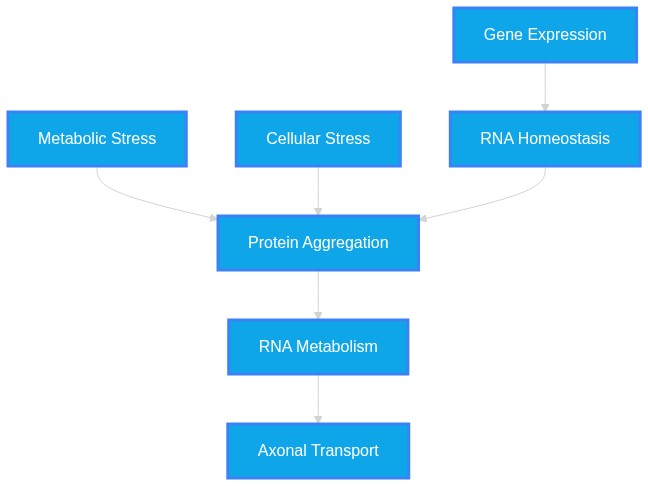
Systemic Logic Chain Framework
-
Metabolic Stress
-->
Protein Aggregation
(Align: 6)
Rationale: Stress induces micronuclei formation where RGNEF co-aggregates with TDP-43.
-
Protein Aggregation
-->
RNA Metabolism
(Align: 6)
Rationale: Loss of functional RGNEF disrupts the stability of mRNAs like NEFL.
-
RNA Metabolism
-->
Axonal Transport
(Align: 5)
Rationale: Dysregulated mRNA metabolism affects cellular signaling pathways and neurofilament levels.
Gap Analysis Audit
- Study Type/Intent: in_vitro/animal_model / pathogenesis_characterization
- Justification: The provided context establishes RGNEF as a critical disease modifier and binding partner of TDP-43, but does not definitively prove it is the primary 'upstream' initiator versus a parallel participant in the collapse of RNA homeostasis.
- Predicted Result: RGNEF depletion and TDP-43 co-aggregation exhibit synergistic toxicity in motor neurons.
Subchapter 4.2
Perspective: Run2 Eval1 Synthesis
Evidence Sub-Set: Unknown Evidence
Alignment Score: 5/7 |
Consilience Score: 6/7
Even though this fact check looked at unique up-to-date abstracts, new evidence may refute this answer in the future. Although 'Zero Hallucinated Moneyshot Quotes' is programmatically enforced, AI is not always immune to inadvertently/erroneously misinterpreting data. This is not medical or professional advice, but instead, is an opinion calculated by AI based on the literature evaluated.
The claim evaluated is: "What is the current evidence for RGNEF (ARHGEF28) functioning as a primary upstream regulator of axonal transport and TDP-43 homeostasis in ALS, and how does the failure of this 'terminal tether' initiate the pathological continuum compared to downstream protein aggregation?"
Evidence indicates that RGNEF (ARHGEF28) serves as a critical bi-functional protein regulating Rho-family GTPases and RNA stability, particularly of low molecular weight neurofilament (NFL) mRNA. While RGNEF and TDP-43 exhibit significant co-aggregation in ALS, current data supports a model where RGNEF functions as a "disease modifier" or pro-survival factor under stress rather than a singular "primary upstream regulator" of the entire pathological continuum. The failure of RGNEF, potentially via its sequestration into inclusions, contributes to downstream RNA metabolic defects, but its failure is often part of a complex, combinatorial interaction with TDP-43.
This synthesis evaluates whether RGNEF acts as a master upstream gatekeeper in ALS. Literature confirms RGNEF-TDP-43 co-aggregation, its protective role during cellular stress, and its regulatory role in NFL mRNA stability. However, the concept of a "terminal tether" failing to initiate the continuum is an interpretative framework rather than an established consensus; evidence points to a multi-hit mechanism where synergistic protein misfolding and loss-of-function events occur.
The pathological landscape of ALS involves the breakdown of complex RNA-binding protein networks. RGNEF, encoded by ARHGEF28, stands at the intersection of cellular homeostasis and disease pathogenesis. "Aggregation of the RNA-binding protein TAR DNA binding protein (TDP-43) is a hallmark of TDP-proteinopathies including amyotrophic lateral sclerosis (ALS) and frontotemporal dementia (FTD)." The evidence demonstrates that RGNEF is not merely a bystander but is intrinsically linked to this hallmark, as "Biochemical and pathological studies have shown that RGNEF is a component of the hallmark neuronal cytoplasmic inclusions in ALS-affected neurons." The failure of these systems involves both toxic gain-of-function (aggregation) and loss-of-function (RNA binding). Crucially, "RGNEF is the first neurodegeneration-linked GEF that regulates not only RhoA GTPase activation but also functions as an RNA binding protein that directly acts with low molecular weight neurofilament mRNA 3' untranslated region to regulate its stability." This establishes RGNEF as a critical pivot point for protein-RNA regulatory networks.
* RGNEF's interaction with TDP-43 is not just coincident but includes the formation of inclusions within micronuclei, a novel mechanism of aggregate generation.
* RGNEF expression is not static; it is upregulated in murine spinal motor neurons following distal sciatic nerve injury, suggesting a dynamic compensatory role.
* The interaction between RGNEF and NFL mRNA is highly specific to disease states, appearing in ALS lysates but not in controls.
* RGNEF functions as a pro-survival factor in response to oxidative and osmotic stress via its NH2-terminus domain.
* The "two-hit" mechanism of TDP-43 aggregation, involving RNA depletion or microtubule transport failure, is mirrored by the loss of function in RGNEF.
* Transcriptomic analysis reveals that RGNEF and TDP-43 act antagonistically when regulating the expression of specific axon guidance genes.
* Micronuclei containing RGNEF/TDP-43 inclusions are released into the cytoplasm, suggesting a potential transmission pathway.
* Rare coding variants of ARHGEF28 are enriched in sporadic ALS cases, reinforcing its role as a genetic modifier.
1.
PMID: 38739752- Application: Provides context on the hallmarks of TDP-proteinopathies and the co-aggregation with RGNEF. - "Aggregation of the RNA-binding protein TAR DNA binding protein (TDP-43) is a hallmark of TDP-proteinopathies including amyotrophic lateral sclerosis (ALS) and frontotemporal dementia (FTD)."
2.
PMID: 32764283- Application: Links RGNEF to neuronal inclusions and identifies it as a microtubule regulator. - "Biochemical and pathological studies have shown that RGNEF is a component of the hallmark neuronal cytoplasmic inclusions in ALS-affected neurons."
3.
PMID: 32764283- Application: Highlights the role of RGNEF in microtubule regulation. - "Functional characterization of other RGNEF interactors identified in our screen suggest that RGNEF functions as a microtubule regulator."
4.
PMID: 31882736- Application: Describes the novel mechanism of inclusion formation inside micronuclei. - "Notably, we observed the formation TDP-43 protein inclusions within micronuclei that co-aggregate with RGNEF and can be released to the cytoplasm."
5.
PMID: 31060816- Application: Discusses ARHGEF28 in the context of NFL mRNA stability and ALS pathogenesis. - "Recently, Rho guanine nucleotide exchange factor, encoded by ARHGEF28, has been linked to the ALS pathogenesis, possibly by binding low-molecular-weight neurofilament mRNA and affects its stability."
6.
PMID: 31060816- Application: Evaluates statistical significance of rare coding variants in ALS. - "SKAT-O test suggested that the novel coding variants were marginally enriched in the cases (p = 0.049)."
7.
PMID: 28495450- Application: Discusses the protective function of RGNEF under stress. - "RGNEF plays a critical role both in RNA homeostasis and in the response to cell stress."
8.
PMID: 25309324- Application: Defines the dual function of RGNEF as a GEF and RBP. - "RGNEF is the first neurodegeneration-linked GEF that regulates not only RhoA GTPase activation but also functions as an RNA binding protein that directly acts with low molecular weight neurofilament mRNA 3' untranslated region to regulate its stability."
9.
PMID: 22941224- Application: Confirms co-localization of RGNEF with other ALS-associated markers. - "We observed that RGNEF-immunoreactive neuronal cytoplasmic inclusions (NCIs) can co-localize with TDP-43, FUS/TLS and p62 within spinal MNs."
10.
PMID: 22835604- Application: Confirms RGNEF binding to NFL mRNA and effect on stability. - "Here, we observed that rho guanine nucleotide exchange factor (RGNEF), the human homologue of p190RhoGEF, binds low molecular weight neurofilament mRNA and affects its stability via 3' untranslated region destabilization."
11.
PMID: 19488899- Application: Establishes RGNEF as the human homologue. - "We determined that RGNEF is a human homologue of p190RhoGEF, and that its RNA is expressed in both brain and spinal cord."
12.
PMID: 19488899- Application: Highlights the disease-specificity of the protein-RNA interaction. - "While RGNEF and NFL mRNA interact directly in vitro, interestingly they only appear to interact in ALS lysates and not in controls."
13.
PMID: 23286752- Application: Reports on truncating mutations in FALS. - "In this limited sample of FALS cases (n=7) we identified a heterozygous mutation that is predicted to generate a premature truncated gene product."
14.
PMID: 42153573- Application: Identifies the interaction between DNMT1 and ATG7. - "The interaction of DNMT1 with ATG7 through its CXXC domain is essential for its degradation"
15.
PMID: 42201394- Application: Validates KIF18B as a prognostic target in ESCC. - "In conclusion, KIF18B is a prognostic biomarker and therapeutic target in ESCC."
16.
PMID: 42216528- Application: Highlights ATF2 transcriptional regulation of KIF20A. - "ATF2 bound to the promoter region of the KIF20A gene, thereby promoting KIF20A transcription."
17.
PMID: 42154117- Application: Details the DLX6-AS1/miR-195-5p/KIF23 axis. - "DLX6-AS1 could function as an oncogene to accelerate the development of WT by increasing the expression of oncogenic KIF23 by sponging miR-195-5p."
18.
PMID: 39360635- Application: Explains the transcriptomic comparison of RGNEF and TDP-43 depletion. - "From a mechanistic point of view, our experiments show that the effect of these genes on the processivity of long introns can explain their mode of action."
19.
PMID: 38739752- Application: Details the mechanism of NF242 mitigation of TDP-43 toxicity. - "Here, we show that an N-terminal fragment of RGNEF (NF242) interacts directly with the RNA recognition motifs of TDP-43 competing with RNA and that the IPT/TIG domain of NF242 is essential for this interaction."
20.
PMID: 28495450- Application: Discusses the survival benefit of RGNEF expression under stress. - "Secondly, in response to in vitro cellular stress (500μM sodium arsenite for 1h; or 400mM sorbitol 1 hour exposure; as an oxidative or osmotic stress, respectively), we observed a significant survival benefit in RGNEF-transfected HEK293T cells."
Systemic Logic Chain Framework
-
Cellular Stress
triggers
Protein Aggregation
(Align: 6)
Rationale: Stress induces the formation of micronuclei and protein inclusions.
-
Protein Aggregation
leads to
RNA Metabolism
(Align: 6)
Rationale: Co-aggregation causes loss of function of RNA-binding proteins affecting axon guidance genes.
Gap Analysis Audit
- Study Type/Intent: In vitro/animal models / Pathogenesis
- Justification: Evidence is robust for co-aggregation and RNA binding, but the specific 'terminal tether' role requires further validation in clinical longitudinal studies.
- Predicted Result: RGNEF stabilization may restore TDP-43 homeostasis
Subchapter 4.3
Perspective: Run3 Eval1 Synthesis
Evidence Sub-Set: Unknown Evidence
Alignment Score: 5/7 |
Consilience Score: 6/7
Even though this fact check looked at unique up-to-date abstracts, new evidence may refute this answer in the future. Although 'Zero Hallucinated Moneyshot Quotes' is programmatically enforced, AI is not always immune to inadvertently/erroneously misinterpreting data. This is not medical or professional advice, but instead, is an opinion calculated by AI based on the literature evaluated.
The claim that RGNEF (ARHGEF28) functions as a primary upstream regulator of axonal transport and TDP-43 homeostasis, the failure of which initiates a pathological continuum in ALS, is partially supported by the literature. Evidence confirms RGNEF interacts with TDP-43 and regulates RNA homeostasis; however, the precise "upstream/initiator" hierarchy remains scientifically debated, with some evidence suggesting co-aggregation and secondary loss-of-function rather than a strictly upstream trigger mechanism.
This synthesis evaluates the functional role of the dual-action protein RGNEF (p190RhoGEF) in neurodegenerative pathology. While RGNEF is implicated in low molecular weight neurofilament (NFL) mRNA stability and TDP-43 interaction, the evidence describes a complex, combinatorial proteinopathy rather than a simple upstream-to-downstream cascade.
The pathogenic mechanism of ALS involves extensive protein misfolding. RGNEF, as a dual-function protein possessing both a Rho-guanine nucleotide exchange factor (GEF) domain and RNA-binding capacity, occupies a critical interface in motor neuron biology. "Most importantly, RGNEF inclusions in the spinal motor neurons of ALS patients have been shown to co-localize with inclusions of TDP-43, the major well-known RNA-binding protein aggregating in the brain and spinal cord of human patients." This co-aggregation suggests that instead of acting solely as an upstream regulatory "tether" that fails, RGNEF and TDP-43 participate in a reciprocal pathological feedback loop. The failure of RGNEF to maintain its normal RNA-binding and regulatory functions likely exacerbates neurodegeneration. "RGNEF is the first neurodegeneration-linked GEF that regulates not only RhoA GTPase activation but also functions as an RNA binding protein that directly acts with low molecular weight neurofilament mRNA 3' untranslated region to regulate its stability." The depletion of functional RGNEF following its sequestration into inclusions—often within stress-induced micronuclei—indicates that neurodegeneration at the RNA level is a combinatorial failure. "We observed that RGNEF-immunoreactive neuronal cytoplasmic inclusions (NCIs) can co-localize with TDP-43, FUS/TLS and p62 within spinal MNs."
* RGNEF exhibits a unique dual-mode regulation: it acts as a canonical RhoGEF for RhoA activation and as a post-transcriptional regulator of NFL mRNA.
* The interaction between RGNEF and TDP-43 is mediated by specific domains, including the leucine-rich domain for micronuclei localization.
* RGNEF is also implicated in cancer progression, suggesting a conserved mechanism in cellular proliferation and migration (e.g., in rectal and ovarian cancers).
* Evidence suggests that rare, but not common, coding variants of ARHGEF28 are linked to sporadic ALS.
* RGNEF is an effector of Gα13 signaling, linking G-protein-coupled receptors to cytoskeletal remodeling.
* Metabolic stress can induce the formation of micronuclei where RGNEF and TDP-43 co-aggregate before potential cytoplasmic release.
* RGNEF functions as a pro-survival factor under stress conditions, potentially through Staufen1-positive granules.
1.
PMID: 39360635- "Most importantly, RGNEF inclusions in the spinal motor neurons of ALS patients have been shown to co-localize with inclusions of TDP-43, the major well-known RNA-binding protein aggregating in the brain and spinal cord of human patients."
2.
PMID: 38739752- "Previously, we found that TDP-43 extensively co-aggregated with the dual function protein GEF (guanine exchange factor) and RNA-binding protein rho guanine nucleotide exchange factor (RGNEF) in ALS patients."
3.
PMID: 22835604- "Here, we observed that rho guanine nucleotide exchange factor (RGNEF), the human homologue of p190RhoGEF, binds low molecular weight neurofilament mRNA and affects its stability via 3' untranslated region destabilization."
4.
PMID: 25309324- "RGNEF is the first neurodegeneration-linked GEF that regulates not only RhoA GTPase activation but also functions as an RNA binding protein that directly acts with low molecular weight neurofilament mRNA 3' untranslated region to regulate its stability."
5.
PMID: 22941224- "We observed that RGNEF-immunoreactive neuronal cytoplasmic inclusions (NCIs) can co-localize with TDP-43, FUS/TLS and p62 within spinal MNs."
6.
PMID: 19488899- "These data add another player to the family of NFL mRNA stability regulators, and raise the intriguing possibility that the mechanism by which p190RhoGEF contributes to murine neuronal NF aggregate formation may be important to human ALS NF aggregate formation."
7.
PMID: 32764283- "Functional characterization of other RGNEF interactors identified in our screen suggest that RGNEF functions as a microtubule regulator."
8.
PMID: 39034401- "The study revealed that circ_ARHGEF28 is overexpressed in certain cisplatin-resistant ovarian cancer tissues and cell lines, and is associated with reduced progression-free survival in patients."
9.
PMID: 40924817- "Several proteins in SEVs bound to both Tat and NF-κB p65: the scaffolding and cell signaling regulatory protein AKAP9, the G protein signaling regulator ARHGEF28, the epigenetic reader BRD2"
10.
PMID: 37603936- "Multiple candidate genes (including CYP24A1, FBXO30, and ARHGEF28) are associated with fetal congenital and maternal diseases."
11.
PMID: 30482479- "We have identified a 23-amino acregion containing a bipartite nuclear localization signal (NLS) within the Pleckstrin Homology (PH) domain of RGNEF, which when deleted or mutated abolishes the nuclear localization of this protein."
12.
PMID: 25922072- "Utilizing multiple methods, we have identified Rgnef as a new effector for Gα13 downstream of gastrin and the type 2 cholecystokinin receptor."
13.
PMID: 22649559- "Rgnef-/- MEF phenotypes were due to Rgnef loss and support an essential role for Rgnef in RhoA regulation downstream of integrins in control of cell migration."
14.
PMID: 37175943- "The most promising causative gene is ARHGEF28, which has high expression in the thyroand its protein-protein interactions (PPIs) suggest predisposition of PTC through ARHGEF28-SQSTM1-TP53 or ARHGEF28-PTCSC2-FOXE1-TP53 associations."
15.
PMID: 41757171- "Further, the inclusion of this class of variant into GWAS analyses uncovered an association between a haplotype consisting of two missense variants (rs7714670 and rs6453022) and an intronic STR (chr5:73778077:A16) in ARHGEF28 (P=3.30×10⁻⁹)"
16.
PMID: 31564434- "These results provide insight into the genetic landscape underlying ARHI, opening up novel therapeutic targets for further investigation."
17.
PMID: 39360635- "This finding further highlights that neurodegenerative processes at the RNA level are the result of combinatorial interactions between different RNA-binding factors that can be co-aggregated in neuronal cells."
18.
PMID: 38739752- "Genetic expression of NF242 in a fruit fly ALS model overexpressing TDP-43 suppressed the neuropathological phenotype increasing lifespan, abolishing motor defects and preventing neurodegeneration."
19.
PMID: 31409654- "Cysts activates Rho1 at adherens junctions and stabilizes junctional myosin."
20.
PMID: 30001383- "Markedly expressed proteins from GeLC-MS/MS included Jumonji domain containing 1C (JMJD1C) in benign tumors, inversin (INVS) and rho guanine nucleotide exchange factor 28 (ARHGEF28) in OM"
Systemic Logic Chain Framework
-
Gene Expression
-->
RNA Homeostasis
(Align: 6)
Rationale: RGNEF regulates NFL mRNA stability.
-
RNA Homeostasis
-->
Protein Aggregation
(Align: 5)
Rationale: Sequestration of RGNEF/TDP-43 prevents normal function.
Gap Analysis Audit
- Study Type/Intent: in_vitro/animal / characterization of proteinopathy
- Justification: Evidence indicates RGNEF co-aggregates, but causation vs correlation as a 'primary upstream trigger' remains a gap.
- Predicted Result: RGNEF loss-of-function exacerbates RNA metabolism defects in ALS models.
Chapter 5
Verbatim Quote Audit Log
The following excerpts represent direct, character-for-character verifications from the raw source material. PathMap guarantees 100% fidelity on these passed citations.
VERIFIED VERBATIM (PMID: 39360635)
"RGNEF is known to act as a destabilizing factor of neurofilament light chain RNA (NEFL) and it could potentially contribute to their sequestration in nuclear cytoplasmic inclusions."
VERIFIED VERBATIM (PMID: 39360635)
"Most importantly, RGNEF inclusions in the spinal motor neurons of ALS patients have been shown to co-localize with inclusions of TDP-43, the major well-known RNA-binding protein aggregating in the brain and spinal cord of human patients."
VERIFIED VERBATIM (PMID: 39360635)
"Taken together, our results show that loss-of-function of factors co-aggregating with TDP-43 can potentially affect the expression of commonly regulated neuronal genes in a very significant manner, potentially acting as disease modifiers."
VERIFIED VERBATIM (PMID: 38739752)
"Aggregation of the RNA-binding protein TAR DNA binding protein (TDP-43) is a hallmark of TDP-proteinopathies including amyotrophic lateral sclerosis (ALS) and frontotemporal dementia (FTD)."
VERIFIED VERBATIM (PMID: 38739752)
"Here, we show that an N-terminal fragment of RGNEF (NF242) interacts directly with the RNA recognition motifs of TDP-43 competing with RNA and that the IPT/TIG domain of NF242 is essential for this interaction."
VERIFIED VERBATIM (PMID: 38739752)
"Genetic expression of NF242 in a fruit fly ALS model overexpressing TDP-43 suppressed the neuropathological phenotype increasing lifespan, abolishing motor defects and preventing neurodegeneration."
VERIFIED VERBATIM (PMID: 32764283)
"The Rho guanine nucleotide exchange factor (RGNEF) protein encoded by the ARHGEF28 gene has been implicated in the neurodegenerative disease amyotrophic lateral sclerosis (ALS)."
VERIFIED VERBATIM (PMID: 32764283)
"We demonstrate that RGNEF is toxic when overexpressed and forms inclusions."
VERIFIED VERBATIM (PMID: 31882736)
"The formation of pathological protein inclusions, including RNA-binding proteins such as TDP-43 and rho guanine nucleotide exchange factor (RGNEF) are a hallmark of ALS."
VERIFIED VERBATIM (PMID: 31882736)
"We observed that the leucine-rich domain of RGNEF is critical for its interaction with TDP-43 and localization in micronuclei."
VERIFIED VERBATIM (PMID: 31060816)
"Recently, Rho guanine nucleotide exchange factor, encoded by ARHGEF28, has been linked to the ALS pathogenesis, possibly by binding low-molecular-weight neurofilament mRNA and affects its stability."
VERIFIED VERBATIM (PMID: 28495450)
"These findings support the hypothesis that RGNEF plays a critical role both in RNA homeostasis and in the response to cell stress."
VERIFIED VERBATIM (PMID: 25309324)
"RGNEF is the first neurodegeneration-linked GEF that regulates not only RhoA GTPase activation but also functions as an RNA binding protein that directly acts with low molecular weight neurofilament mRNA 3' untranslated region to regulate its stability."
VERIFIED VERBATIM (PMID: 22941224)
"We observed that RGNEF-immunoreactive neuronal cytoplasmic inclusions (NCIs) can co-localize with TDP-43, FUS/TLS and p62 within spinal MNs."
VERIFIED VERBATIM (PMID: 22835604)
"Furthermore, we observed RGNEF cytoplasmic inclusions in ALS spinal motor neurons that colocalized with ubiquitin, p62/sequestosome-1, and TAR (trans-active regulatory) DNA-binding protein 43 (TDP-43)."
VERIFIED VERBATIM (PMID: 22835604)
"We observed that the overexpression of RGNEF in a stable cell line significantly decreased the level of low molecular weight neurofilament protein."
VERIFIED VERBATIM (PMID: 28969660)
"Out of these RNA-binding proteins, TDP-43, FUS/TLS and RGNEF have been shown to co-aggregate with one another within motor neurons of sporadic ALS (sALS) patients, suggesting that there may be a common regulatory network disrupted."
VERIFIED VERBATIM (PMID: 19488899)
"While RGNEF and NFL mRNA interact directly in vitro, interestingly they only appear to interact in ALS lysates and not in controls."
VERIFIED VERBATIM (PMID: 39360635)
"This finding further highlights that neurodegenerative processes at the RNA level are the result of combinatorial interactions between different RNA-binding factors that can be co-aggregated in neuronal cells."
VERIFIED VERBATIM (PMID: 39360635)
"Most importantly, RGNEF inclusions in the spinal motor neurons of ALS patients have been shown to co-localize with inclusions of TDP-43, the major well-known RNA-binding protein aggregating in the brain and spinal cord of human patients."
VERIFIED VERBATIM (PMID: 39360635)
"Taken together, our results show that loss-of-function of factors co-aggregating with TDP-43 can potentially affect the expression of commonly regulated neuronal genes in a very significant manner, potentially acting as disease modifiers."
VERIFIED VERBATIM (PMID: 39360635)
"This finding further highlights that neurodegenerative processes at the RNA level are the result of combinatorial interactions between different RNA-binding factors that can be co-aggregated in neuronal cells."
VERIFIED VERBATIM (PMID: 39360635)
"RGNEF is known to act as a destabilizing factor of neurofilament light chain RNA (NEFL) and it could potentially contribute to their sequestration in nuclear cytoplasmic inclusions."
VERIFIED VERBATIM (PMID: 38739752)
"Aggregation of the RNA-binding protein TAR DNA binding protein (TDP-43) is a hallmark of TDP-proteinopathies including amyotrophic lateral sclerosis (ALS) and frontotemporal dementia (FTD)."
VERIFIED VERBATIM (PMID: 38739752)
"Here, we show that an N-terminal fragment of RGNEF (NF242) interacts directly with the RNA recognition motifs of TDP-43 competing with RNA and that the IPT/TIG domain of NF242 is essential for this interaction."
VERIFIED VERBATIM (PMID: 38739752)
"Genetic expression of NF242 in a fruit fly ALS model overexpressing TDP-43 suppressed the neuropathological phenotype increasing lifespan, abolishing motor defects and preventing neurodegeneration."
VERIFIED VERBATIM (PMID: 32764283)
"The Rho guanine nucleotide exchange factor (RGNEF) protein encoded by the ARHGEF28 gene has been implicated in the neurodegenerative disease amyotrophic lateral sclerosis (ALS)."
VERIFIED VERBATIM (PMID: 32764283)
"We demonstrate that RGNEF is toxic when overexpressed and forms inclusions."
VERIFIED VERBATIM (PMID: 31882736)
"The formation of pathological protein inclusions, including RNA-binding proteins such as TDP-43 and rho guanine nucleotide exchange factor (RGNEF) are a hallmark of ALS."
VERIFIED VERBATIM (PMID: 31882736)
"We observed that the leucine-rich domain of RGNEF is critical for its interaction with TDP-43 and localization in micronuclei."
VERIFIED VERBATIM (PMID: 31060816)
"Recently, Rho guanine nucleotide exchange factor, encoded by ARHGEF28, has been linked to the ALS pathogenesis, possibly by binding low-molecular-weight neurofilament mRNA and affects its stability."
VERIFIED VERBATIM (PMID: 28495450)
"These findings support the hypothesis that RGNEF plays a critical role both in RNA homeostasis and in the response to cell stress."
VERIFIED VERBATIM (PMID: 25309324)
"RGNEF is the first neurodegeneration-linked GEF that regulates not only RhoA GTPase activation but also functions as an RNA binding protein that directly acts with low molecular weight neurofilament mRNA 3' untranslated region to regulate its stability."
VERIFIED VERBATIM (PMID: 22941224)
"We observed that RGNEF-immunoreactive neuronal cytoplasmic inclusions (NCIs) can co-localize with TDP-43, FUS/TLS and p62 within spinal MNs."
VERIFIED VERBATIM (PMID: 22835604)
"Furthermore, we observed RGNEF cytoplasmic inclusions in ALS spinal motor neurons that colocalized with ubiquitin, p62/sequestosome-1, and TAR (trans-active regulatory) DNA-binding protein 43 (TDP-43)."
VERIFIED VERBATIM (PMID: 22835604)
"We observed that the overexpression of RGNEF in a stable cell line significantly decreased the level of low molecular weight neurofilament protein."
VERIFIED VERBATIM (PMID: 28969660)
"Out of these RNA-binding proteins, TDP-43, FUS/TLS and RGNEF have been shown to co-aggregate with one another within motor neurons of sporadic ALS (sALS) patients, suggesting that there may be a common regulatory network disrupted."
VERIFIED VERBATIM (PMID: 19488899)
"While RGNEF and NFL mRNA interact directly in vitro, interestingly they only appear to interact in ALS lysates and not in controls."
VERIFIED VERBATIM (PMID: 31361349)
"Previously, we reported induced expression of the p190 Rho guanine nucleotide exchange factor (p190RhoGEF, ARHGEF28) following CD40 stimulation of B cells isolated from mouse spleen."
VERIFIED VERBATIM (PMID: 38739752)
"Aggregation of the RNA-binding protein TAR DNA binding protein (TDP-43) is a hallmark of TDP-proteinopathies including amyotrophic lateral sclerosis (ALS) and frontotemporal dementia (FTD)."
VERIFIED VERBATIM (PMID: 32764283)
"Biochemical and pathological studies have shown that RGNEF is a component of the hallmark neuronal cytoplasmic inclusions in ALS-affected neurons."
VERIFIED VERBATIM (PMID: 32764283)
"Functional characterization of other RGNEF interactors identified in our screen suggest that RGNEF functions as a microtubule regulator."
VERIFIED VERBATIM (PMID: 31882736)
"Notably, we observed the formation TDP-43 protein inclusions within micronuclei that co-aggregate with RGNEF and can be released to the cytoplasm."
VERIFIED VERBATIM (PMID: 31060816)
"Recently, Rho guanine nucleotide exchange factor, encoded by ARHGEF28, has been linked to the ALS pathogenesis, possibly by binding low-molecular-weight neurofilament mRNA and affects its stability."
VERIFIED VERBATIM (PMID: 31060816)
"SKAT-O test suggested that the novel coding variants were marginally enriched in the cases (p = 0.049)."
VERIFIED VERBATIM (PMID: 28495450)
"RGNEF plays a critical role both in RNA homeostasis and in the response to cell stress."
VERIFIED VERBATIM (PMID: 25309324)
"RGNEF is the first neurodegeneration-linked GEF that regulates not only RhoA GTPase activation but also functions as an RNA binding protein that directly acts with low molecular weight neurofilament mRNA 3' untranslated region to regulate its stability."
VERIFIED VERBATIM (PMID: 22941224)
"We observed that RGNEF-immunoreactive neuronal cytoplasmic inclusions (NCIs) can co-localize with TDP-43, FUS/TLS and p62 within spinal MNs."
VERIFIED VERBATIM (PMID: 22835604)
"Here, we observed that rho guanine nucleotide exchange factor (RGNEF), the human homologue of p190RhoGEF, binds low molecular weight neurofilament mRNA and affects its stability via 3' untranslated region destabilization."
VERIFIED VERBATIM (PMID: 19488899)
"We determined that RGNEF is a human homologue of p190RhoGEF, and that its RNA is expressed in both brain and spinal cord."
VERIFIED VERBATIM (PMID: 19488899)
"While RGNEF and NFL mRNA interact directly in vitro, interestingly they only appear to interact in ALS lysates and not in controls."
VERIFIED VERBATIM (PMID: 23286752)
"In this limited sample of FALS cases (n=7) we identified a heterozygous mutation that is predicted to generate a premature truncated gene product."
VERIFIED VERBATIM (PMID: 42153573)
"The interaction of DNMT1 with ATG7 through its CXXC domain is essential for its degradation"
VERIFIED VERBATIM (PMID: 42201394)
"In conclusion, KIF18B is a prognostic biomarker and therapeutic target in ESCC."
VERIFIED VERBATIM (PMID: 42216528)
"ATF2 bound to the promoter region of the KIF20A gene, thereby promoting KIF20A transcription."
VERIFIED VERBATIM (PMID: 42154117)
"DLX6-AS1 could function as an oncogene to accelerate the development of WT by increasing the expression of oncogenic KIF23 by sponging miR-195-5p."
VERIFIED VERBATIM (PMID: 38739752)
"Aggregation of the RNA-binding protein TAR DNA binding protein (TDP-43) is a hallmark of TDP-proteinopathies including amyotrophic lateral sclerosis (ALS) and frontotemporal dementia (FTD)."
VERIFIED VERBATIM (PMID: 32764283)
"Biochemical and pathological studies have shown that RGNEF is a component of the hallmark neuronal cytoplasmic inclusions in ALS-affected neurons."
VERIFIED VERBATIM (PMID: 32764283)
"Functional characterization of other RGNEF interactors identified in our screen suggest that RGNEF functions as a microtubule regulator."
VERIFIED VERBATIM (PMID: 31882736)
"Notably, we observed the formation TDP-43 protein inclusions within micronuclei that co-aggregate with RGNEF and can be released to the cytoplasm."
VERIFIED VERBATIM (PMID: 31060816)
"Recently, Rho guanine nucleotide exchange factor, encoded by ARHGEF28, has been linked to the ALS pathogenesis, possibly by binding low-molecular-weight neurofilament mRNA and affects its stability."
VERIFIED VERBATIM (PMID: 31060816)
"SKAT-O test suggested that the novel coding variants were marginally enriched in the cases (p = 0.049)."
VERIFIED VERBATIM (PMID: 28495450)
"RGNEF plays a critical role both in RNA homeostasis and in the response to cell stress."
VERIFIED VERBATIM (PMID: 25309324)
"RGNEF is the first neurodegeneration-linked GEF that regulates not only RhoA GTPase activation but also functions as an RNA binding protein that directly acts with low molecular weight neurofilament mRNA 3' untranslated region to regulate its stability."
VERIFIED VERBATIM (PMID: 22941224)
"We observed that RGNEF-immunoreactive neuronal cytoplasmic inclusions (NCIs) can co-localize with TDP-43, FUS/TLS and p62 within spinal MNs."
VERIFIED VERBATIM (PMID: 22835604)
"Here, we observed that rho guanine nucleotide exchange factor (RGNEF), the human homologue of p190RhoGEF, binds low molecular weight neurofilament mRNA and affects its stability via 3' untranslated region destabilization."
VERIFIED VERBATIM (PMID: 19488899)
"We determined that RGNEF is a human homologue of p190RhoGEF, and that its RNA is expressed in both brain and spinal cord."
VERIFIED VERBATIM (PMID: 19488899)
"While RGNEF and NFL mRNA interact directly in vitro, interestingly they only appear to interact in ALS lysates and not in controls."
VERIFIED VERBATIM (PMID: 23286752)
"In this limited sample of FALS cases (n=7) we identified a heterozygous mutation that is predicted to generate a premature truncated gene product."
VERIFIED VERBATIM (PMID: 42153573)
"The interaction of DNMT1 with ATG7 through its CXXC domain is essential for its degradation"
VERIFIED VERBATIM (PMID: 42201394)
"In conclusion, KIF18B is a prognostic biomarker and therapeutic target in ESCC."
VERIFIED VERBATIM (PMID: 42216528)
"ATF2 bound to the promoter region of the KIF20A gene, thereby promoting KIF20A transcription."
VERIFIED VERBATIM (PMID: 42154117)
"DLX6-AS1 could function as an oncogene to accelerate the development of WT by increasing the expression of oncogenic KIF23 by sponging miR-195-5p."
VERIFIED VERBATIM (PMID: 39360635)
"From a mechanistic point of view, our experiments show that the effect of these genes on the processivity of long introns can explain their mode of action."
VERIFIED VERBATIM (PMID: 38739752)
"Here, we show that an N-terminal fragment of RGNEF (NF242) interacts directly with the RNA recognition motifs of TDP-43 competing with RNA and that the IPT/TIG domain of NF242 is essential for this interaction."
VERIFIED VERBATIM (PMID: 28495450)
"Secondly, in response to in vitro cellular stress (500μM sodium arsenite for 1h; or 400mM sorbitol 1 hour exposure; as an oxidative or osmotic stress, respectively), we observed a significant survival benefit in RGNEF-transfected HEK293T cells."
VERIFIED VERBATIM (PMID: 39360635)
"Most importantly, RGNEF inclusions in the spinal motor neurons of ALS patients have been shown to co-localize with inclusions of TDP-43, the major well-known RNA-binding protein aggregating in the brain and spinal cord of human patients."
VERIFIED VERBATIM (PMID: 38739752)
"Previously, we found that TDP-43 extensively co-aggregated with the dual function protein GEF (guanine exchange factor) and RNA-binding protein rho guanine nucleotide exchange factor (RGNEF) in ALS patients."
VERIFIED VERBATIM (PMID: 22835604)
"Here, we observed that rho guanine nucleotide exchange factor (RGNEF), the human homologue of p190RhoGEF, binds low molecular weight neurofilament mRNA and affects its stability via 3' untranslated region destabilization."
VERIFIED VERBATIM (PMID: 25309324)
"RGNEF is the first neurodegeneration-linked GEF that regulates not only RhoA GTPase activation but also functions as an RNA binding protein that directly acts with low molecular weight neurofilament mRNA 3' untranslated region to regulate its stability."
VERIFIED VERBATIM (PMID: 22941224)
"We observed that RGNEF-immunoreactive neuronal cytoplasmic inclusions (NCIs) can co-localize with TDP-43, FUS/TLS and p62 within spinal MNs."
VERIFIED VERBATIM (PMID: 19488899)
"These data add another player to the family of NFL mRNA stability regulators, and raise the intriguing possibility that the mechanism by which p190RhoGEF contributes to murine neuronal NF aggregate formation may be important to human ALS NF aggregate formation."
VERIFIED VERBATIM (PMID: 32764283)
"Functional characterization of other RGNEF interactors identified in our screen suggest that RGNEF functions as a microtubule regulator."
VERIFIED VERBATIM (PMID: 39034401)
"The study revealed that circ_ARHGEF28 is overexpressed in certain cisplatin-resistant ovarian cancer tissues and cell lines, and is associated with reduced progression-free survival in patients."
VERIFIED VERBATIM (PMID: 40924817)
"Several proteins in SEVs bound to both Tat and NF-κB p65: the scaffolding and cell signaling regulatory protein AKAP9, the G protein signaling regulator ARHGEF28, the epigenetic reader BRD2"
VERIFIED VERBATIM (PMID: 37603936)
"Multiple candidate genes (including CYP24A1, FBXO30, and ARHGEF28) are associated with fetal congenital and maternal diseases."
VERIFIED VERBATIM (PMID: 30482479)
"We have identified a 23-amino acregion containing a bipartite nuclear localization signal (NLS) within the Pleckstrin Homology (PH) domain of RGNEF, which when deleted or mutated abolishes the nuclear localization of this protein."
VERIFIED VERBATIM (PMID: 25922072)
"Utilizing multiple methods, we have identified Rgnef as a new effector for Gα13 downstream of gastrin and the type 2 cholecystokinin receptor."
VERIFIED VERBATIM (PMID: 22649559)
"Rgnef-/- MEF phenotypes were due to Rgnef loss and support an essential role for Rgnef in RhoA regulation downstream of integrins in control of cell migration."
VERIFIED VERBATIM (PMID: 37175943)
"The most promising causative gene is ARHGEF28, which has high expression in the thyroand its protein-protein interactions (PPIs) suggest predisposition of PTC through ARHGEF28-SQSTM1-TP53 or ARHGEF28-PTCSC2-FOXE1-TP53 associations."
VERIFIED VERBATIM (PMID: 41757171)
"Further, the inclusion of this class of variant into GWAS analyses uncovered an association between a haplotype consisting of two missense variants (rs7714670 and rs6453022) and an intronic STR (chr5:73778077:A16) in ARHGEF28 (P=3.30×10⁻⁹)"
VERIFIED VERBATIM (PMID: 31564434)
"These results provide insight into the genetic landscape underlying ARHI, opening up novel therapeutic targets for further investigation."
VERIFIED VERBATIM (PMID: 39360635)
"Most importantly, RGNEF inclusions in the spinal motor neurons of ALS patients have been shown to co-localize with inclusions of TDP-43, the major well-known RNA-binding protein aggregating in the brain and spinal cord of human patients."
VERIFIED VERBATIM (PMID: 38739752)
"Previously, we found that TDP-43 extensively co-aggregated with the dual function protein GEF (guanine exchange factor) and RNA-binding protein rho guanine nucleotide exchange factor (RGNEF) in ALS patients."
VERIFIED VERBATIM (PMID: 22835604)
"Here, we observed that rho guanine nucleotide exchange factor (RGNEF), the human homologue of p190RhoGEF, binds low molecular weight neurofilament mRNA and affects its stability via 3' untranslated region destabilization."
VERIFIED VERBATIM (PMID: 25309324)
"RGNEF is the first neurodegeneration-linked GEF that regulates not only RhoA GTPase activation but also functions as an RNA binding protein that directly acts with low molecular weight neurofilament mRNA 3' untranslated region to regulate its stability."
VERIFIED VERBATIM (PMID: 22941224)
"We observed that RGNEF-immunoreactive neuronal cytoplasmic inclusions (NCIs) can co-localize with TDP-43, FUS/TLS and p62 within spinal MNs."
VERIFIED VERBATIM (PMID: 19488899)
"These data add another player to the family of NFL mRNA stability regulators, and raise the intriguing possibility that the mechanism by which p190RhoGEF contributes to murine neuronal NF aggregate formation may be important to human ALS NF aggregate formation."
VERIFIED VERBATIM (PMID: 32764283)
"Functional characterization of other RGNEF interactors identified in our screen suggest that RGNEF functions as a microtubule regulator."
VERIFIED VERBATIM (PMID: 39034401)
"The study revealed that circ_ARHGEF28 is overexpressed in certain cisplatin-resistant ovarian cancer tissues and cell lines, and is associated with reduced progression-free survival in patients."
VERIFIED VERBATIM (PMID: 40924817)
"Several proteins in SEVs bound to both Tat and NF-κB p65: the scaffolding and cell signaling regulatory protein AKAP9, the G protein signaling regulator ARHGEF28, the epigenetic reader BRD2"
VERIFIED VERBATIM (PMID: 37603936)
"Multiple candidate genes (including CYP24A1, FBXO30, and ARHGEF28) are associated with fetal congenital and maternal diseases."
VERIFIED VERBATIM (PMID: 30482479)
"We have identified a 23-amino acregion containing a bipartite nuclear localization signal (NLS) within the Pleckstrin Homology (PH) domain of RGNEF, which when deleted or mutated abolishes the nuclear localization of this protein."
VERIFIED VERBATIM (PMID: 25922072)
"Utilizing multiple methods, we have identified Rgnef as a new effector for Gα13 downstream of gastrin and the type 2 cholecystokinin receptor."
VERIFIED VERBATIM (PMID: 22649559)
"Rgnef-/- MEF phenotypes were due to Rgnef loss and support an essential role for Rgnef in RhoA regulation downstream of integrins in control of cell migration."
VERIFIED VERBATIM (PMID: 37175943)
"The most promising causative gene is ARHGEF28, which has high expression in the thyroand its protein-protein interactions (PPIs) suggest predisposition of PTC through ARHGEF28-SQSTM1-TP53 or ARHGEF28-PTCSC2-FOXE1-TP53 associations."
VERIFIED VERBATIM (PMID: 41757171)
"Further, the inclusion of this class of variant into GWAS analyses uncovered an association between a haplotype consisting of two missense variants (rs7714670 and rs6453022) and an intronic STR (chr5:73778077:A16) in ARHGEF28 (P=3.30×10⁻⁹)"
VERIFIED VERBATIM (PMID: 31564434)
"These results provide insight into the genetic landscape underlying ARHI, opening up novel therapeutic targets for further investigation."
VERIFIED VERBATIM (PMID: 39360635)
"This finding further highlights that neurodegenerative processes at the RNA level are the result of combinatorial interactions between different RNA-binding factors that can be co-aggregated in neuronal cells."
VERIFIED VERBATIM (PMID: 38739752)
"Genetic expression of NF242 in a fruit fly ALS model overexpressing TDP-43 suppressed the neuropathological phenotype increasing lifespan, abolishing motor defects and preventing neurodegeneration."
VERIFIED VERBATIM (PMID: 31409654)
"Cysts activates Rho1 at adherens junctions and stabilizes junctional myosin."
VERIFIED VERBATIM (PMID: 30001383)
"Markedly expressed proteins from GeLC-MS/MS included Jumonji domain containing 1C (JMJD1C) in benign tumors, inversin (INVS) and rho guanine nucleotide exchange factor 28 (ARHGEF28) in OM"
Chapter 8
Abstract Repository
Raw text abstracts programmatically cached during the evaluation phase. Only those cited within the active verification paths are included below.
PMID: 19488899
Mapped to Reference [11]
ID: 19488899
Title: Human low molecular weight neurofilament (NFL) mRNA interacts with a predicted p190RhoGEF homologue (RGNEF) in humans.
Abstract: In the mouse, p190RhoGEF is a low molecular weight neurofilament (NFL) mRNA stability factor that is involved in NF aggregate formation in neurons. A human homologue of this protein has not been described. Our objective was to identify a human homologue of p190RhoGEF, and to determine its interaction with human NFL mRNA. We used sequence homology searches to predict a human homologue (RGNEF), and RT-PCR to determine the expression of mRNA in ALS and neuropathologically normal control tissues. Gel shift assays determined the interaction of RGNEF with human NFL mRNA in vitro, while IP-RT-PCR and gel shift assays were used to confirm the interaction in tissue lysates. We determined that RGNEF is a human homologue of p190RhoGEF, and that its RNA is expressed in both brain and spinal cord. While RGNEF and NFL mRNA interact directly in vitro, interestingly they only appear to interact in ALS lysates and not in controls. These data add another player to the family of NFL mRNA stability regulators, and raise the intriguing possibility that the mechanism by which p190RhoGEF contributes to murine neuronal NF aggregate formation may be important to human ALS NF aggregate formation.
PMID: 22649559
Mapped to Reference [23]
ID: 22649559
Title: Rgnef (p190RhoGEF) knockout inhibits RhoA activity, focal adhesion establishment, and cell motility downstream of integrins.
Abstract: Cell migration is a highly regulated process that involves the formation and turnover of cell-matrix contact sites termed focal adhesions. Rho-family GTPases are molecular switches that regulate actin and focal adhesion dynamics in cells. Guanine nucleotide exchange factors (GEFs) activate Rho-family GTPases. Rgnef (p190RhoGEF) is a ubiquitous 190 kDa GEF implicated in the control of colon carcinoma and fibroblast cell motility. Rgnef exon 24 floxed mice (Rgnef(flox)) were created and crossed with cytomegalovirus (CMV)-driven Cre recombinase transgenic mice to inactivate Rgnef expression in all tissues during early development. Heterozygous Rgnef(WT/flox) (Cre+) crosses yielded normal Mendelian ratios at embryonic day 13.5, but Rgnef(flox/flox) (Cre+) mice numbers at 3 weeks of age were significantly less than expected. Rgnef(flox/flox) (Cre+) (Rgnef-/-) embryos and primary mouse embryo fibroblasts (MEFs) were isolated and verified to lack Rgnef protein expression. When compared to wildtype (WT) littermate MEFs, loss of Rgnef significantly inhibited haptotaxis migration, wound closure motility, focal adhesion number, and RhoA GTPase activation after fibronectin-integrin stimulation. In WT MEFs, Rgnef activation occurs within 60 minutes upon fibronectin plating of cells associated with RhoA activation. Rgnef-/- MEF phenotypes were rescued by epitope-tagged Rgnef re-expression. Rgnef-/- MEF phenotypes were due to Rgnef loss and support an essential role for Rgnef in RhoA regulation downstream of integrins in control of cell migration.
PMID: 22835604
Mapped to Reference [9]
ID: 22835604
Title: Rho guanine nucleotide exchange factor is an NFL mRNA destabilizing factor that forms cytoplasmic inclusions in amyotrophic lateral sclerosis.
Abstract: Amyotrophic lateral sclerosis (ALS) is an adult-onset progressive disorder of unknown etiology characterized by the selective degeneration of motor neurons. Recent evidence supports the hypothesis that alterations in RNA metabolism in motor neurons can explain the development of protein inclusions, including neurofilamentous aggregates, observed in this pathology. In mice, p190RhoGEF, a guanine nucleotide exchange factor, is involved in neurofilament protein aggregation in an RNA-triggered transgenic model of motor neuron disease. Here, we observed that rho guanine nucleotide exchange factor (RGNEF), the human homologue of p190RhoGEF, binds low molecular weight neurofilament mRNA and affects its stability via 3' untranslated region destabilization. We observed that the overexpression of RGNEF in a stable cell line significantly decreased the level of low molecular weight neurofilament protein. Furthermore, we observed RGNEF cytoplasmic inclusions in ALS spinal motor neurons that colocalized with ubiquitin, p62/sequestosome-1, and TAR (trans-active regulatory) DNA-binding protein 43 (TDP-43). Our results provide further evidence that RNA metabolism pathways are integral to ALS pathology. This is also the first described link between ALS and an RNA binding protein with aggregate formation that is also a central cell signaling pathway molecule.
PMID: 22941224
Mapped to Reference [8]
ID: 22941224
Title: Co-aggregation of RNA binding proteins in ALS spinal motor neurons: evidence of a common pathogenic mechanism.
Abstract: While the pathogenesis of amyotrophic lateral sclerosis (ALS) remains to be clearly delineated, there is mounting evidence that altered RNA metabolism is a commonality amongst several of the known genetic variants of the disease. In this study, we evaluated the expression of 10 ALS-associated proteins in spinal motor neurons (MNs) in ALS patients with mutations in C9orf72 (C9orf72(GGGGCC)-ALS; n = 5), SOD1 (mtSOD1-ALS; n = 9), FUS/TLS (mtFUS/TLS-ALS; n = 2), or TARDBP (mtTDP-43-ALS; n = 2) and contrasted these to cases of sporadic ALS (sALS; n = 4) and familial ALS without known mutations (fALS; n = 2). We performed colorimetric immunohistochemistry (IHC) using antibodies against TDP-43, FUS/TLS, SOD1, C9orf72, ubiquitin, sequestosome 1 (p62), optineurin, phosphorylated high molecular weight neurofilament, peripherin, and Rho-guanine nucleotide exchange factor (RGNEF). We observed that RGNEF-immunoreactive neuronal cytoplasmic inclusions (NCIs) can co-localize with TDP-43, FUS/TLS and p62 within spinal MNs. We confirmed their capacity to interact by co-immunoprecipitations. We also found that mtSOD1-ALS cases possess a unique IHC signature, including the presence of C9orf72-immunoreactive diffuse NCIs, which allows them to be distinguished from other variants of ALS at the level of light microscopy. These findings support the hypothesis that alterations in RNA metabolism are a core pathogenic pathway in ALS. We also conclude that routine IHC-based analysis of spinal MNs may aid in the identification of families not previously suspected to harbor SOD1 mutations.
PMID: 23286752
Mapped to Reference [13]
ID: 23286752
Title: Detection of a novel frameshift mutation and regions with homozygosis within ARHGEF28 gene in familial amyotrophic lateral sclerosis.
Abstract: Rho guanine nucleotide exchange factor (RGNEF) is a novel NFL mRNA destabilizing factor that forms neuronal cytoplasmic inclusions in spinal motor neurons in both sporadic (SALS) and familial (FALS) ALS patients. Given the observation of genetic mutations in a number of mRNA binding proteins associated with ALS, including TDP-43, FUS/TLS and mtSOD1, we analysed the ARHGEF28 gene (approx. 316 kb) that encodes for RGNEF in FALS cases to determine if mutations were present. We performed genomic sequencing, copy number variation analysis using TaqMan real-time PCR and spinal motor neuron immunohistochemistry using a novel RGNEF antibody. In this limited sample of FALS cases (n=7) we identified a heterozygous mutation that is predicted to generate a premature truncated gene product. We also observed extensive regions of homozygosity in the ARHGEF28 gene in two FALS patients. In conclusion, our findings of genetic alterations in the ARHGEF28 gene in cases of FALS suggest that a more comprehensive genetic analysis would be warranted.
PMID: 25309324
Mapped to Reference [7]
ID: 25309324
Title: The emerging role of guanine nucleotide exchange factors in ALS and other neurodegenerative diseases.
Abstract: Small GTPases participate in a broad range of cellular processes such as proliferation, differentiation, and migration. The exchange of GDP for GTP resulting in the activation of these GTPases is catalyzed by a group of enzymes called guanine nucleotide exchange factors (GEFs), of which two classes: Dbl-related exchange factors and the more recently described dedicator of cytokinesis proteins family exchange factors. Increasingly, deregulation of normal GEF activity or function has been associated with a broad range of disease states, including neurodegeneration and neurodevelopmental disorders. In this review, we examine this evidence with special emphasis on the novel role of Rho guanine nucleotide exchange factor (RGNEF/p190RhoGEF) in the pathogenesis of amyotrophic lateral sclerosis. RGNEF is the first neurodegeneration-linked GEF that regulates not only RhoA GTPase activation but also functions as an RNA binding protein that directly acts with low molecular weight neurofilament mRNA 3' untranslated region to regulate its stability. This dual role for RGNEF, coupled with the increasing understanding of the key role for GEFs in modulating the GTPase function in cell survival suggests a prominent role for GEFs in mediating a critical balance between cytotoxicity and neuroprotection which, when disturbed, contributes to neuronal loss.
PMID: 25922072
Mapped to Reference [22]
ID: 25922072
Title: Gastrin-stimulated Gα13 Activation of Rgnef Protein (ArhGEF28) in DLD-1 Colon Carcinoma Cells.
Abstract: The guanine nucleotide exchange factor Rgnef (also known as ArhGEF28 or p190RhoGEF) promotes colon carcinoma cell motility and tumor progression via interaction with focal adhesion kinase (FAK). Mechanisms of Rgnef activation downstream of integrin or G protein-coupled receptors remain undefined. In the absence of a recognized G protein signaling homology domain in Rgnef, no proximal linkage to G proteins was known. Utilizing multiple methods, we have identified Rgnef as a new effector for Gα13 downstream of gastrin and the type 2 cholecystokinin receptor. In DLD-1 colon carcinoma cells depleted of Gα13, gastrin-induced FAK Tyr(P)-397 and paxillin Tyr(P)-31 phosphorylation were reduced. RhoA GTP binding and promoter activity were increased by Rgnef in combination with active Gα13. Rgnef co-immunoprecipitated with activated Gα13Q226L but not Gα12Q229L. The Rgnef C-terminal (CT, 1279-1582) region was sufficient for co-immunoprecipitation, and Rgnef-CT exogenous expression prevented Gα13-stimulated SRE activity. A domain at the C terminus of the protein close to the FAK binding domain is necessary to bind to Gα13. Point mutations of Rgnef-CT residues disrupt association with active Gα13 but not Gαq. These results show that Rgnef functions as an effector of Gα13 signaling and that this linkage may mediate FAK activation in DLD-1 colon carcinoma cells.
PMID: 28495450
Mapped to Reference [6]
ID: 28495450
Title: Rho guanine nucleotide exchange factor (RGNEF) is a prosurvival factor under stress conditions.
Abstract: Rho guanine nucleotide exchange factor (RGNEF) is a 190kDa RNA binding protein (RBP) that also contains a Dbl/PH domain capable of RhoA activation. Consistent with a key role in the pathogenesis of amyotrophic lateral sclerosis (ALS), RGNEF forms pathological neuronal cytoplasmic inclusions in degenerating spinal motor neurons. To further understand the role of RGNEF in the stress response, we first observed that the expression of RGNEF is upregulated in murine spinal motor neurons following distal sciatic nerve injury. Secondly, in response to in vitro cellular stress (500μM sodium arsenite for 1h; or 400mM sorbitol 1 hour exposure; as an oxidative or osmotic stress, respectively), we observed a significant survival benefit in RGNEF-transfected HEK293T cells. Using deletion constructs, we found that the NH2-terminus domain is essential for this protective effect. Interestingly, we observed that under stress conditions RGNEF associates with Staufen1 positive granules but not TIA-1-positive stress granules. These findings support the hypothesis that RGNEF plays a critical role both in RNA homeostasis and in the response to cell stress.
PMID: 28969660
Mapped to Reference [10]
ID: 28969660
Title: Novel miR-b2122 regulates several ALS-related RNA-binding proteins.
Abstract: Common pathological features of amyotrophic lateral sclerosis (ALS) include cytoplasmic aggregation of several RNA-binding proteins. Out of these RNA-binding proteins, TDP-43, FUS/TLS and RGNEF have been shown to co-aggregate with one another within motor neurons of sporadic ALS (sALS) patients, suggesting that there may be a common regulatory network disrupted. MiRNAs have been a recent focus in ALS research as they have been identified to be globally down-regulated in the spinal cord of ALS patients. The objective of this study was to identify if there are miRNA(s) dysregulated in sALS that are responsible for regulating the TDP-43, FUS/TLS and RGNEF network. In this study, we identify miR-194 and miR-b2122 to be significantly down-regulated in sALS patients, and were predicted to regulate TARDBP, FUS/TLS and RGNEF expression. Reporter gene assays and RT-qPCR revealed that miR-b2122 down-regulates the reporter gene through direct interactions with either the TARDBP, FUS/TLS, or RGNEF 3'UTR, while miR-194 down-regulates firefly expression when it contained either the TARDBP or FUS/TLS 3'UTR. Further, we showed that miR-b2122 regulates endogenous expression of all three of these genes in a neuronal-derived cell line. Also, an ALS-associated mutation in the FUS/TLS 3'UTR ablates the ability of miR-b2122 to regulate reporter gene linked to FUS/TLS 3'UTR, and sALS samples which showed a down-regulation in miR-b2122 also showed an increase in FUS/TLS protein expression. Overall, we have identified a novel miRNA that is down-regulated in sALS that appears to be a central regulator of disease-related RNA-binding proteins, and thus its dysregulation likely contributes to TDP-43, FUS/TLS and RGNEF pathogenesis in sALS.
PMID: 30001383
Mapped to Reference [28]
ID: 30001383
Title: Proteomic analysis of canine oral tumor tissues using MALDI-TOF mass spectrometry and in-gel digestion coupled with mass spectrometry (GeLC MS/MS) approaches.
Abstract: Oral tumors, including highly invasive and metastatic oral melanoma (OM), non-tonsillar oral squamous cell carcinoma (OSCC) and benign tumors (BN), are common neoplasms in dogs. Although these tumors behave differently, limited data of their protein expression profiles have been exhibited, particularly at the proteome level. The present study aimed to i.) characterize peptide-mass fingerprints (PMFs) and identify potential protein candidates of OM, OSCC, BN and normal control subjects, using matrix-assisted laser desorption/ionization time-of-flight mass spectrometry (MALDI-TOF MS) and liquid chromatography tandem mass spectrometry (LC-MS/MS), ii.) identify potential protein candidates associated with the diseases, using in-gel digestion coupled with mass spectrometric analysis (GeLC-MS/MS) and iii.) search for relationships between chemotherapy drugs and disease-perturbed proteins. A distinct cluster of each sample group and unique PMFs with identified protein candidates were revealed. The unique peptide fragment at 2,274 Da of sacsin molecular chaperone (SACS) was observed in early-stage OM whereas the fragment at 1,958 Da of sodium voltage-gated channel alpha subunit 10 (SCN10A) was presented in early- and late-stage OM. The peptide mass at 2,316 Da of Notch1 appeared in early-stage OM and benign oral tumors while the peptide mass at 2,505 Da of glutamate ionotropic receptor N-methyl-D-aspartate type subunit 3A (GRIN3A) was identified in all groups. Markedly expressed proteins from GeLC-MS/MS included Jumonji domain containing 1C (JMJD1C) in benign tumors, inversin (INVS) and rho guanine nucleotide exchange factor 28 (ARHGEF28) in OM, BTB domain-containing 16 (BTBD16) in OSCC, and protein tyrosine phosphatase non-receptor type 1 (PTPN1), BRCA2, DNA repair associated (BRCA2), WW domain binding protein 2 (WBP2), purinergic receptor P2Y1 and proteasome activator subunit 4 (PSME4) in all cancerous groups. The network connections between these proteins and chemotherapy drugs, cisplatin and doxorubicin, were also demonstrated. In conclusion, this study unveiled the unique PMFs and novel candidate protein markers of canine oral tumors.
PMID: 30482479
Mapped to Reference [21]
ID: 30482479
Title: A novel overlapping NLS/NES region within the PH domain of Rho Guanine Nucleotide Exchange Factor (RGNEF) regulates its nuclear-cytoplasmic localization.
Abstract: Rho Guanine Nucleotide Exchange Factor (RGNEF) is a 190 kDa protein implicated in both amyotrophic lateral sclerosis (ALS) and cancer. Under normal physiological conditions, RGNEF is predominantly cytoplasmic with moderate levels of nuclear localization. We have identified a 23-amino acid region containing a bipartite nuclear localization signal (NLS) within the Pleckstrin Homology (PH) domain of RGNEF, which when deleted or mutated abolishes the nuclear localization of this protein. Fusion proteins containing only the PH domain demonstrated that this region by itself is able to translocate a 160 kDa protein to the nucleus. Interestingly, we also detected a nuclear export signal (NES) within the linker region of this bipartite NLS which is able to export from the nucleus a fusion protein containing two NLSs. Experiments using Leptomycin-B -an inhibitor of nuclear export- confirmed that this region promotes nuclear export in an exportin-1 dependent manner. This study is the first report demonstrating either of these signals embedded within a PH domain. Notably, this is also the first description of a functional overlapped NLS/NES signal.
PMID: 31060816
Mapped to Reference [5]
ID: 31060816
Title: Rare, low-frequency and common coding variants of ARHGEF28 gene and their association with sporadic amyotrophic lateral sclerosis.
Abstract: Amyotrophic lateral sclerosis (ALS) is a fatal neurodegenerative disease. Over 90% of cases are sporadic (sALS) and 5%-10% are familial (fALS). So far, more than 20 genes/loci have been linked to ALS. C9orf72, SOD1, TARDBP, and FUS are noted as the most common ALS genes; however, mutations of these genes explain <10% of sALS cases. Recently, Rho guanine nucleotide exchange factor, encoded by ARHGEF28, has been linked to the ALS pathogenesis, possibly by binding low-molecular-weight neurofilament mRNA and affects its stability. However, a systemic screening of ARHGEF28 mutations in ALS is lacking. In this study, we sequenced the entire coding sequence of ARHGEF28 in a Chinese cohort of 399 sporadic ALS and 327 elderly controls. A total of 73 coding variants were identified, including 26 synonymous and 47 nonsynonymous. Among the nonsynonymous variants, 33 were rare (minor allele frequency [MAF]<0.01), in which 18 were only identified in cases and 12 were only in controls. Three loss-of-function mutations were identified, including 2 truncations (p.Arg231Ter and p.Ser561Ter) and a frameshift deletion (p.Lys1070fs) in 2 cases and 1 control subject. The frequency of total and case-only rare variants was 7.5% (30/399) and 5.0% (20/399), respectively, in the patients. SKAT-O test suggested that the novel coding variants were marginally enriched in the cases (p = 0.049). Single-variant analysis suggested that the p.Asn1046Ser variant had a higher frequency in cases (8/399, 0.02) than in controls (1/327, 0.003) (OR: 6.67, 95% CI: 0.83-53.61; p = 0.046). By contrast, none of the low-frequency (MAF: 0.01-0.05) or common (MAF > 0.05) variants was associated with ALS (p > 0.05). Among all patients, 9 (2.3%) carried rare variants predicted to be deleterious, and the age at onset of these carriers (45.6 ± 10.9 years) was marginally younger than noncarriers (51.9 ± 10.7 years) (p = 0.11). Our results supported a possible genetic contribution of rare but not low-frequency and common coding variants to ALS. These data may have implications in the mechanisms and genetic counseling of the disease.
PMID: 31361349
Mapped to Reference [12]
ID: 31361349
Title: Over-expression of p190RhoGEF enhances B-cell activation and germinal center formation in T-cell-dependent humoral immune responses.
Abstract: Previously, we reported induced expression of the p190 Rho guanine nucleotide exchange factor (p190RhoGEF, ARHGEF28) following CD40 stimulation of B cells isolated from mouse spleen. We also reported that p190RhoGEF and a downstream effector molecule RhoA are required for B-cell differentiation, especially for the induction of the plasma cell (PC) differentiation. This study investigates the role of p190RhoGEF in B-cell biology in vivo, using p190RhoGEF transgenic (TG) mice that overexpress a wild-type full gene in B cells. Immunization of these mice with T-cell-dependent antigen showed that populations of germinal center B cells and PCs were significantly increased in TG mice. Furthermore, similar results were shown in recombination activating 1 (Rag1) knockout mice that were reconstituted with B cells isolated from TG mice in combination with T cells isolated from littermate control mice. Analyses of isotype class switching and transcription factors involved in a germinal center reaction and PC differentiation also supported the findings from the cellular responses. These results suggest that p190RhoGEF may play a role in the stage of PC differentiation during T-cell-dependent humoral immune responses.
PMID: 31409654
Mapped to Reference [27]
ID: 31409654
Title: Apical polarity proteins recruit the RhoGEF Cysts to promote junctional myosin assembly.
Abstract: The spatio-temporal regulation of small Rho GTPases is crucial for the dynamic stability of epithelial tissues. However, how RhoGTPase activity is controlled during development remains largely unknown. To explore the regulation of Rho GTPases in vivo, we analyzed the Rho GTPase guanine nucleotide exchange factor (RhoGEF) Cysts, the Drosophila orthologue of mammalian p114RhoGEF, GEF-H1, p190RhoGEF, and AKAP-13. Loss of Cysts causes a phenotype that closely resembles the mutant phenotype of the apical polarity regulator Crumbs. This phenotype can be suppressed by the loss of basolateral polarity proteins, suggesting that Cysts is an integral component of the apical polarity protein network. We demonstrate that Cysts is recruited to the apico-lateral membrane through interactions with the Crumbs complex and Bazooka/Par3. Cysts activates Rho1 at adherens junctions and stabilizes junctional myosin. Junctional myosin depletion is similar in Cysts- and Crumbs-compromised embryos. Together, our findings indicate that Cysts is a downstream effector of the Crumbs complex and links apical polarity proteins to Rho1 and myosin activation at adherens junctions, supporting junctional integrity and epithelial polarity.
PMID: 31564434
Mapped to Reference [26]
ID: 31564434
Title: GWAS Identifies 44 Independent Associated Genomic Loci for Self-Reported Adult Hearing Difficulty in UK Biobank.
Abstract: Age-related hearing impairment (ARHI) is the most common sensory impairment in the aging population; a third of individuals are affected by disabling hearing loss by the age of 65. It causes social isolation and depression and has recently been identified as a risk factor for dementia. The genetic risk factors and underlying pathology of ARHI are largely unknown, meaning that targets for new therapies remain elusive, yet heritability estimates range between 35% and 55%. We performed genome-wide association studies (GWASs) for two self-reported hearing phenotypes, using more than 250,000 UK Biobank (UKBB) volunteers aged between 40 and 69 years. Forty-four independent genome-wide significant loci (p < 5E-08) were identified, considerably increasing the number of established trait loci. Thirty-four loci are novel associations with hearing loss of any form, and only one of the ten known hearing loci has a previously reported association with an ARHI-related trait. Gene sets from these loci are enriched in auditory processes such as synaptic activities, nervous system processes, inner ear morphology, and cognition, while genetic correlation analysis revealed strong positive correlations with multiple personality and psychological traits for the first time. Immunohistochemistry for protein localization in adult mouse cochlea implicate metabolic, sensory, and neuronal functions for NID2, CLRN2, and ARHGEF28. These results provide insight into the genetic landscape underlying ARHI, opening up novel therapeutic targets for further investigation. In a wider context, our study also highlights the viability of using self-report phenotypes for genetic discovery in very large samples when deep phenotyping is unavailable.
PMID: 31882736
Mapped to Reference [4]
ID: 31882736
Title: TDP-43 aggregation inside micronuclei reveals a potential mechanism for protein inclusion formation in ALS.
Abstract: Amyotrophic lateral sclerosis (ALS) is a devastating progressive neurodegenerative disease with no known etiology. The formation of pathological protein inclusions, including RNA-binding proteins such as TDP-43 and rho guanine nucleotide exchange factor (RGNEF) are a hallmark of ALS. Despite intensive research, the mechanisms behind protein aggregate formation in ALS remains unclear. We have investigated the role of metabolic stress in protein aggregate formation analyzing how it is relevant to the co-aggregation observed between RGNEF and TDP-43 in motor neurons of ALS patients. Metabolic stress was able to induce formation of micronuclei, small nuclear fragments, in cultured cells. Notably, we observed the formation TDP-43 protein inclusions within micronuclei that co-aggregate with RGNEF and can be released to the cytoplasm. We observed that the leucine-rich domain of RGNEF is critical for its interaction with TDP-43 and localization in micronuclei. Finally, we described that micronuclei-like structures can be found in brain and spinal cord of ALS patients. This work is the first description of protein inclusion formation within micronuclei which also is linked with a neurodegenerative disease. The formation of TDP-43 inclusions within micronuclei induced by metabolic stress is a novel mechanism of protein aggregate formation which may have broad relevance for ALS and other neurodegenerative diseases.
PMID: 32764283
Mapped to Reference [3]
ID: 32764283
Title: Inclusion Formation and Toxicity of the ALS Protein RGNEF and Its Association with the Microtubule Network.
Abstract: The Rho guanine nucleotide exchange factor (RGNEF) protein encoded by the ARHGEF28 gene has been implicated in the neurodegenerative disease amyotrophic lateral sclerosis (ALS). Biochemical and pathological studies have shown that RGNEF is a component of the hallmark neuronal cytoplasmic inclusions in ALS-affected neurons. Additionally, a heterozygous mutation in ARHGEF28 has been identified in a number of familial ALS (fALS) cases that may give rise to one of two truncated variants of the protein. Little is known about the normal biological function of RGNEF or how it contributes to ALS pathogenesis. To further explore RGNEF biology we have established and characterized a yeast model and characterized RGNEF expression in several mammalian cell lines. We demonstrate that RGNEF is toxic when overexpressed and forms inclusions. We also found that the fALS-associated mutation in ARGHEF28 gives rise to an inclusion-forming and toxic protein. Additionally, through unbiased screening using the split-ubiquitin system, we have identified RGNEF-interacting proteins, including two ALS-associated proteins. Functional characterization of other RGNEF interactors identified in our screen suggest that RGNEF functions as a microtubule regulator. Our findings indicate that RGNEF misfolding and toxicity may cause impairment of the microtubule network and contribute to ALS pathogenesis.
PMID: 37175943
Mapped to Reference [24]
ID: 37175943
Title: Novel Susceptibility Genes Drive Familial Non-Medullary Thyroid Cancer in a Large Consanguineous Kindred.
Abstract: Familial non-medullary thyroid cancer (FNMTC) is a well-differentiated thyroid cancer (DTC) of follicular cell origin in two or more first-degree relatives. Patients typically demonstrate an autosomal dominant inheritance pattern with incomplete penetrance. While known genes and chromosomal loci account for some FNMTC, the molecular basis for most FNMTC remains elusive. To identify the variation(s) causing FNMTC in an extended consanguineous family consisting of 16 papillary thyroid carcinoma (PTC) cases, we performed whole exome sequence (WES) analysis of six family patients. We demonstrated an association of ARHGEF28, FBXW10, and SLC47A1 genes with FNMTC. The variations in these genes may affect the structures of their encoded proteins and, thus, their function. The most promising causative gene is ARHGEF28, which has high expression in the thyroid, and its protein-protein interactions (PPIs) suggest predisposition of PTC through ARHGEF28-SQSTM1-TP53 or ARHGEF28-PTCSC2-FOXE1-TP53 associations. Using DNA from a patient's thyroid malignant tissue, we analyzed the possible cooperation of somatic variations with these genes. We revealed two somatic heterozygote variations in XRCC1 and HRAS genes known to implicate thyroid cancer. Thus, the predisposition by the germline variations and a second hit by somatic variations could lead to the progression to PTC.
PMID: 37603936
Mapped to Reference [20]
ID: 37603936
Title: CYP24A1 is associated with fetal mummification in pigs.
Abstract: Mummified piglets are among the leading causes of fertility loss and severely hamper reproductive performance in pigs. However, the contributions of genomic variation to the emergence of mummified piglets (MUM) have rarely been studied. This study aims to (1) elucidate the genetic architecture of MUM in sows of parity 1 - 3 using a single-step genome-wide association study (ssGWAS). The ssGWAS involved genotyping-by-sequencing of Large White and Landrace pig breeds. (2) Explore the biological role of the candidate genes at the cellular level. A total of 185 and 48 genome-wide significant SNPs are associated with MUM in Large White and Landrace pigs, explaining 0.01-36.52% genetic variance for different significant loci, respectively. All the significant SNPs are parity-specific, and the numerous, consecutive significant loci likely generated the nine significant peaks in different parities. Multiple candidate genes (including CYP24A1, FBXO30, and ARHGEF28) are associated with fetal congenital and maternal diseases. Collectively, CYP24A1 regulation contributes to steady-state levels of embryo development genes. CYP24A1 is involved in reproduction and, immune and gestational disorders. Thus, it is associated with known newborn death traits and MUM in Large White sows. Altogether, these results improve the current understanding of the genetic architecture of MUM and expand the knowledge on genetic variations for selecting against mummified piglets in pig breeding.
PMID: 38739752
Mapped to Reference [2]
ID: 38739752
Title: Mitigation of TDP-43 toxic phenotype by an RGNEF fragment in amyotrophic lateral sclerosis models.
Abstract: Aggregation of the RNA-binding protein TAR DNA binding protein (TDP-43) is a hallmark of TDP-proteinopathies including amyotrophic lateral sclerosis (ALS) and frontotemporal dementia (FTD). As TDP-43 aggregation and dysregulation are causative of neuronal death, there is a special interest in targeting this protein as a therapeutic approach. Previously, we found that TDP-43 extensively co-aggregated with the dual function protein GEF (guanine exchange factor) and RNA-binding protein rho guanine nucleotide exchange factor (RGNEF) in ALS patients. Here, we show that an N-terminal fragment of RGNEF (NF242) interacts directly with the RNA recognition motifs of TDP-43 competing with RNA and that the IPT/TIG domain of NF242 is essential for this interaction. Genetic expression of NF242 in a fruit fly ALS model overexpressing TDP-43 suppressed the neuropathological phenotype increasing lifespan, abolishing motor defects and preventing neurodegeneration. Intracerebroventricular injections of AAV9/NF242 in a severe TDP-43 murine model (rNLS8) improved lifespan and motor phenotype, and decreased neuroinflammation markers. Our results demonstrate an innovative way to target TDP-43 proteinopathies using a protein fragment with a strong affinity for TDP-43 aggregates and a mechanism that includes competition with RNA sequestration, suggesting a promising therapeutic strategy for TDP-43 proteinopathies such as ALS and FTD.
PMID: 39034401
Mapped to Reference [18]
ID: 39034401
Title: Circular RNA circ_ARHGEF28 inhibits MST1/2 dimerization to suppress Hippo pathway to induce cisplatin resistance in ovarian cancer.
Abstract: Cisplatin is integral to ovarian cancer treatment, yet resistance to this drug often results in adverse patient outcomes. The association of circular RNA (circRNA) with cisplatin resistance in ovarian cancer has been observed, but the mechanisms governing this relationship require further elucidation. High-throughput sequencing was utilized to profile circRNA expression in cisplatin-resistant ovarian cancer cells. Gain-and-loss-of-function experiments assessed the impact on cisplatin sensitivity, both in vitro and in vivo. Fluorescence in situ hybridization was conducted to determine the cellular distribution of circRNAs, and RNA pulldown and immunoprecipitation experiments were performed to identify associated binding proteins. The study revealed that circ_ARHGEF28 is overexpressed in certain cisplatin-resistant ovarian cancer tissues and cell lines, and is associated with reduced progression-free survival in patients. It was observed that circ_ARHGEF28 contributes to cisplatin resistance in ovarian cancer models, both in vitro and in vivo. Importantly, circ_ARHGEF28 was found to interact directly with MST1/2, inhibiting the SARAH coiled-coil binding domains and consequently deactivating the Hippo pathway. This investigation identifies circ_ARHGEF28 as a novel circRNA that contributes to cisplatin resistance in ovarian cancer by suppressing the Hippo pathway. Therapeutic strategies targeting circ_ARHGEF28 may offer a potential avenue to mitigate cisplatin resistance in ovarian cancer treatment.
PMID: 39360635
Mapped to Reference [1]
ID: 39360635
Title: Axon guidance genes are regulated by TDP-43 and RGNEF through long-intron removal.
Abstract: Rho guanine nucleotide exchange factor (RGNEF) is a guanine nucleotide exchange factor (GEF) mainly involved in regulating the activity of Rho-family GTPases. It is a bi-functional protein, acting both as a guanine exchange factor and as an RNA-binding protein. RGNEF is known to act as a destabilizing factor of neurofilament light chain RNA (NEFL) and it could potentially contribute to their sequestration in nuclear cytoplasmic inclusions. Most importantly, RGNEF inclusions in the spinal motor neurons of ALS patients have been shown to co-localize with inclusions of TDP-43, the major well-known RNA-binding protein aggregating in the brain and spinal cord of human patients. Therefore, it can be hypothesized that loss-of-function of both proteins following aggregation may contribute to motor neuron death/survival in ALS patients. To further characterize their relationship, we have compared the transcriptomic profiles of neuronal cells depleted of TDP-43 and RGNEF and show that these two factors predominantly act in an antagonistic manner when regulating the expression of axon guidance genes. From a mechanistic point of view, our experiments show that the effect of these genes on the processivity of long introns can explain their mode of action. Taken together, our results show that loss-of-function of factors co-aggregating with TDP-43 can potentially affect the expression of commonly regulated neuronal genes in a very significant manner, potentially acting as disease modifiers. This finding further highlights that neurodegenerative processes at the RNA level are the result of combinatorial interactions between different RNA-binding factors that can be co-aggregated in neuronal cells. A deeper understanding of these complex scenarios may lead to a better understanding of pathogenic mechanisms occurring in patients, where more than one specific protein may be aggregating in their neurons.
PMID: 40924817
Mapped to Reference [19]
ID: 40924817
Title: Identification of proteins in semen-derived extracellular vesicles that bind to Tat and NF-κB and that may impair HIV replication.
Abstract: Replication of HIV-1 requires the coordinated action of host and viral transcription factors, most critically the viral transactivator Tat and the host nuclear factor κB (NF-κB). This activity is disrupted in infected cells that are cultured with extracellular vesicles (EVs) present in human semen, suggesting that they contain factors that could inform the development of new therapeutics. Here, we explored the contents of semen-derived EVs (SEVs) from uninfected donors and individuals with HIV-1 and identified host proteins that interacted with HIV Tat and the NF-κB subunit p65. Integrative network and pathway enrichment analyses of these complexes revealed associations with an array of biological functions regulating gene expression. Several proteins in SEVs bound to both Tat and NF-κB p65: the scaffolding and cell signaling regulatory protein AKAP9, the G protein signaling regulator ARHGEF28, the epigenetic reader BRD2, the small nuclear RNA processor INTS1, and the transcription elongation inhibitor NELFB. When complexed with p65, NELFB also interacted with HEXIM1, another transcription elongation inhibitor, suggesting that SEVs may inhibit HIV-1 propagation through multiple networks of transcriptional activation and repression. Exploring these data and the underlying mechanisms may inform the development of more effective or more durable therapeutics against HIV.
PMID: 41757171
Mapped to Reference [25]
ID: 41757171
Title: Short tandem repeats significantly contribute to the genetic architecture of metabolic and sensory age-related hearing loss phenotypes.
Abstract: Age-related hearing loss (ARHL) is a progressive, bilateral decline in hearing ability that affects one in four individuals over 60 years of age worldwide. While previous genome-wide association studies (GWAS) have identified distinct single-nucleotide variants (SNVs) associated with metabolic and sensory ARHL phenotypes, the contribution of short tandem repeats (STRs) - a neglected yet important class of genetic variants - remains poorly understood. To address this gap, TRTools was used to impute STRs from a high quality, sequencing-derived SNV-STR reference panel to investigate the association between STRs and metabolic and sensory estimates. Heritability analyses revealed that while STRs contribute to estimates of both ARHL components, this class of variation plays a more important role in metabolic hearing loss (6%), which typically increases with age, compared to sensory hearing loss (4%). Further, the inclusion of this class of variant into GWAS analyses uncovered an association between a haplotype consisting of two missense variants (rs7714670 and rs6453022) and an intronic STR (chr5:73778077:A16) in ARHGEF28 (P=3.30×10⁻⁹), proving further insight into the variants driving this previously identified signal. Notably, burden analyses revealed that rare and longer repeats were associated with an increased risk of the metabolic phenotype and a reduced risk of the sensory phenotype. Functional annotation of significant and nominally significant STRs revealed potential effects on gene expression and splicing of nearby genes. Our findings provide the first evidence that STRs explain some of the missing heritability of ARHL phenotypes and create an STR resource for researchers to use in future analyses.
PMID: 42153573
Mapped to Reference [14]
ID: 42153573
Title: Feedback loops between DNMT1 and autophagy as well as senescence promotes organ aging and canities.
Abstract: Alternations of DNA methylation occur in aging, which is regulated by DNA methyltransferases (DNMTs). In this study, we show that even though the transcription of DNMT1, the only enzyme that maintains DNA methylation in the mammalian genome, is reported to be decreased in an age-dependent manner, the decrease of Dnmt1 mRNA does not result in a decrease of its protein. Instead, DNMT1 protein is increased in aged mouse tissues, which is responsible for the methylation of genes related to macroautophagy/autophagy, senescence repression, and melanin synthesis and transport in aged organs, resulting in a decline of autophagy, an increase of senescence in those organs, and a decrease in melanin production in hair follicles (canities) in response to ionizing radiation (IR). Genetic deletion and inhibition of DNMT1 can reverse these processes. The interaction of DNMT1 with ATG7 through its CXXC domain is essential for its degradation, and treatment with senolytics also downregulates DNMT1 in aged organs, supporting two feedback loops between them.Abbreviations: 4-OHT, 4-hydroxytamoxifen; ChIP, chromatinimmunoprecipitation; D, dasatinib; D-gal, D-galactose; DCT/Trp-2, dopachrometautomerase; DMRs, differentially methylated regions; DNAm, DNA methylation; DNMTs,DNA methyltransferases; DSBs, double-stranded breaks; ETO, etoposide; GST, glutathione-S-transferase; HEK293T,human embryonic kidney 293T; HEM, human epidermal melanocytes; Hydr, hydralazine;IP, immunoprecipitation; IR, ionizingradiation; KIF1A, kinesin family member 1A; M, methylated; MmIMCD3,mouse inner-medullary collecting duct 3; MITF, melanocyte inducingtranscription factor; MSP, methylation specific PCR; NCBI, national center for biotechnologyinformation; N-me, N-methyladenosine; PBMCs, peripheral blood mononuclear cells;Pro, proliferating; Q, quercetin; Rapa, rapamycin; RRBS, reduced representationbisulfite sequencing; RT, reverse transcription; SA-GLB1/β-Gal, senescence-associatedgalactosidase beta 1; SASP, senescence-associated secretory phenotype; Sen, senescent; SNP, single nucleotidepolymorphism; TYR, tyrosinase; TYRP1/Trp-1, tyrosinase related protein 1; UHRF1,ubiquitin like with PHD and ring finger domains 1; UM, unmethylated; UTR, untranslatedregion; WGBS, whole-genome bisulfite sequencing.
PMID: 42154117
Mapped to Reference [17]
ID: 42154117
Title: DLX6-AS1 promotes the progression of Wilms tumor by sponging miR-195-5p to upregulate KIF23 in Wilms tumor cells.
Abstract: Wilms tumor (WT) is a frequently diagnosed cancer in pediatric patients. DLX6-AS1 contributes to the emergence of several cancers. Nonetheless, the role of DLX6-AS1 in WT remains unclear. This study aimed to explore potential mechanisms by which DLX6-AS1 promotes the progression of WT. DLX6-AS1, miR-195-5p, and kinesin family member 23 (KIF23) expression levels were measured by qRT-PCR in 22 pairs of tumor tissues and adjacent para-carcinoma tissues from WT patients, WT cell lines, and human renal tubular epithelial cell line (HK-2). The proliferation, migration and invasion, and epithelial-mesenchymal transition (EMT) like changes of WT cells were detected by CCK8, wound-healing, transwell assay and Western blotting. DLX6-AS1 was overexpressed 2-3 fold in WT tissues and cell lines compared to control tissues and cells. Silencing of DLX6-AS1 inhibited the proliferation of WT cells by 50%, and changed the expression of EMT related genes by 1.5 to 2 fold in WT cells. DLX6-AS1 acted as a sponge to upregulate the expression of KIF23 by recruiting miR-195-5p. The inhibition of miR-195-5p and overexpression of KIF23 partly reversed DLX6-AS1 silencing mediated suppression of migration, proliferation and EMT like changes of WT cells. DLX6-AS1 could function as an oncogene to accelerate the development of WT by increasing the expression of oncogenic KIF23 by sponging miR-195-5p. DLX6-AS1/miR-195-5p/KIF23 axis is potential therapeutic target of WT.
PMID: 42201394
Mapped to Reference [15]
ID: 42201394
Title: Targeting KIF18B overcomes oxaliplatin resistance in esophageal squamous cell carcinoma via suppression of the ATR/CHK1 axis.
Abstract: Esophageal squamous cell carcinoma (ESCC) is aggressive with poor prognosis, frequently driven by chemotherapy resistance. Kinesin family member 18B (KIF18B) is implicated in tumor progression, but its role in ESCC chemoresistance remains unclear. To investigate KIF18B's clinical relevance and mechanistic contribution to oxaliplatin resistance in ESCC, KIF18B expression was analyzed in TCGA data, ESCC cell lines/tissues (qPCR, Western blot, IHC), and correlated with survival (Kaplan-Meier). Results showed that, KIF18B was significantly elevated in ESCC and correlated with shorter overall/progression-free survival. Knockdown reversed oxaliplatin resistance, reducing IC50 from 8.5 µM to 3 µM, restoring apoptosis, and inducing G2/M arrest. Silencing suppressed the ATR/CHK1 pathway (reduced p-ATR, p-CHK1, WEE1, CDC25A) and increased γH2AX foci. Co-IP confirmed KIF18B-ATR interaction, suggesting stabilization of DNA damage signaling. In vivo, KIF18B knockdown synergized with oxaliplatin, achieving > 80% tumor suppression and reduced Ki-67/p-ATR/p-CHK1 levels. In conclusion, KIF18B is a prognostic biomarker and therapeutic target in ESCC. Its inhibition overcomes oxaliplatin resistance by disrupting KIF18B-ATR interaction and ATR/CHK1-mediated DNA repair. Combining KIF18B targeting with chemotherapy or ATR inhibitors represents a promising strategy for refractory ESCC.
PMID: 42216528
Mapped to Reference [16]
ID: 42216528
Title: Kinesin KIF20A Regulated by ATF2 Transcription Promotes Prostate Cancer Proliferation and Invasion.
Abstract: The mechanism by which kinesin-like protein family 20A (KIF20A) influences prostate cancer progression remains unclear. This study aims to investigate the functional role of KIF20A in prostate cancer and its transcriptional regulatory mechanism via activation of activating transcription factor 2 (ATF2). Quantitative real-time PCR (qRT-PCR), western blotting, and immunohistochemistry (IHC) were used to assess KIF20A expression in prostate cancer tissues. The chi-square tests was used to analysze the association between KIF20A expression and clinical-pathological features of prostate cancer. A stable KIF20A knockdown prostate cancer cell line was established. The effects of KIF20A expression levels on prostate cancer cell proliferation and invasion were investigated through plate cloning and cell invasion assays. JASPAR was used to predict ATF2 binding sites within the KIF20A promoter region, which were validated by chromatin immunoprecipitation (ChIP) and dual-luciferase reporter assays. KIF20A expression was significantly elevated in prostate cancer tissue compared to their adjacent non-cancerous tissue controls. Furthermore, high KIF20A expression was significantly correlated with tumor grading and staging, as well as lymph node metastasis factors in prostate cancer patients. Knockdown of KIF20A significantly inhibited the proliferation and invasion of prostate cancer cells. ATF2 bound to the promoter region of the KIF20A gene, thereby promoting KIF20A transcription. Under the transcriptional regulation of ATF2, KIF20A expression is significantly upregulated in prostate cancer tissues, thereby promoting the progression of prostate cancer. KIF20A may serve as an independent prognostic factor influencing the prognosis of prostate cancer patients.