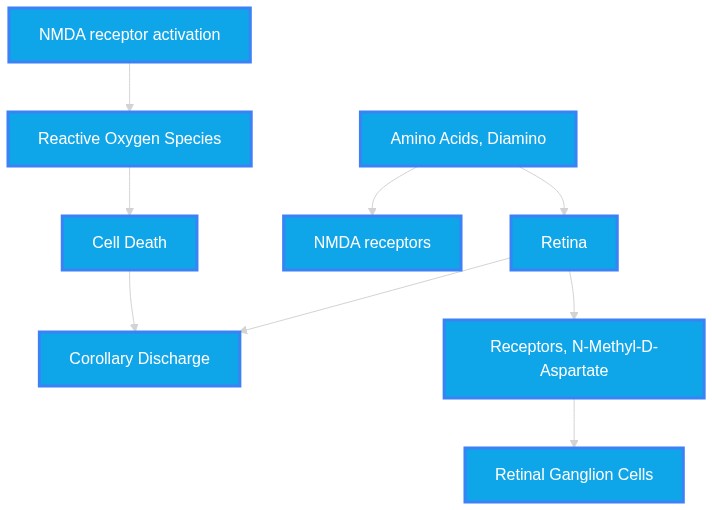
Can BMAA, a known glutamate mimic, cause hyperexcited retinal ganglion cells and cause them to "misfire" corollary discharge?
Plausibility Verdicts
There is no evidence that BMAA causes RGC-mediated misfiring of corollary discharge signals; RGCs are generally resilient to BMAA excitotoxicity.
No existing evidence links BMAA to the disruption of retinal corollary discharge.
No direct evidence links BMAA to corollary discharge misfiring, although BMAA is proven to cause retinal excitotoxicity and neurodegeneration.
Dataset Summary
Novel & Overlooked Insights
- BMAA toxicity in the retina is cell-type specific: amacrine neurons are highly sensitive to NMDA-mediated death, while photoreceptors are largely resistant to NMDA antagonists.
- Retinal Ganglion Cells (RGCs) exhibit significant resilience to NMDA excitotoxicity, an observation that distinguishes them from other retinal populations.
- Corollary discharge signaling is vital for visual stability and involves the "cancellation" or "ignoring" of self-generated retinal motion caused by eye movements.
- The "blank effect" in eye-tracking studies indicates the availability of extraretinal signals for perceptual judgements, even after damage to cortical areas like the posterior parietal cortex.
- BMAA can induce ALS/MND-type pathological changes, including TDP-43 proteinopathy, which may be modulated by L-serine administration.
- The role of extraretinal signals in MSTd heading tuning is surprisingly limited in comparison to retinal-based corrections for pursuit eye movements.
- Pre-saccadic attention shifts, a function related to corollary discharge, appear largely intact in individuals with schizophrenia, despite widespread assumptions of corollary discharge dysfunction.
- The "blank effect" demonstrates that even with PPC lesions, corollary discharge influence on perception is not fully abolished.
- Saccadic suppression and visual stability are functionally dissociable, as shown in double-step saccade paradigms.
- There is a transition in spino-ocular motor coupling during development, indicating that corollary discharge pathways undergo significant remodeling.
- BMAA exposure leads to the accumulation of TDP-43 and α-synuclein, bridging cyanobacterial toxicity with established ALS and Parkinson's disease proteinopathies.
- RXR activation with the agonist HX630 provides a potential broad-spectrum neuroprotective strategy against BMAA-induced retinal degeneration.
- The toxicity mechanism in the retina varies by cell type; NMDA receptor activation is a specific feature of amacrine cell death but is not universally present in all retinal cell types affected by BMAA.
- Glutamatergic synaptic disruption in the retina is an early event in several degenerative conditions and is linked to the downstream failure of blood-retinal barrier maintenance.
- BMAA acts via polyADP ribose polymerase (PARP) activation, a pathway that can be modulated to preserve retinal structure.
- Oxidative stress and mitochondrial bioenergetic collapse are central themes in BMAA-induced pathology.
- The interaction between metabolic rate and visual perception pathways suggests that domestication or environmental stress in fish models may be influenced by specific retinal G protein-coupled receptors.
- Zinc homeostasis, while potentially critical, is highlighted in the context of ALS but remains under-explored in the specific context of BMAA-driven RGC synaptic activity.
- BMAA can cause "nuclear fragmentation and cell death in both photoreceptors (PHRs) and amacrine neurons, provoking mitochondrial membrane depolarization."
- Carbamate adducts of BMAA, rather than BMAA itself, are suggested as the primary modulators of GluR2 receptors.
- RXR activation has shown potential to prevent BMAA-induced retinal cell death by reducing reactive oxygen species.
- BMAA can cross the blood-brain barrier via olfactory pathways, potentially explaining site-specific neurodegeneration.
- Metabolic profiling of zebrafish embryos shows that BMAA induces "metabolic reprogramming" and lipid biosynthetic inhibition.
- L-serine, but not traditional antioxidants, provides protection against BMAA-induced proteotoxic stress in certain cell lines.
- BMAA can inhibit vesicular monoamine transporter 2 (VMAT2), preventing the uptake of monoaminergic neurotransmitters.
Extracted Discoveries
- Test RGC activity patterns under chronic BMAA exposure using MEAs to check for spontaneous discharge anomalies.
- Measure corollary discharge integrity in behavioral tasks using BMAA-exposed animal models.
- Perform whole-cell patch-clamp recordings on RGCs under BMAA exposure to determine changes in membrane potential and firing rate.
- Use optogenetic stimulation of retinal circuits to observe if BMAA interferes with the timing of inhibitory inputs typically associated with corollary discharge.
- Assess corollary discharge-related neuronal firing patterns in RGCs using electrophysiology after chronic BMAA exposure.
- Evaluate if NMDA antagonists effectively modulate RGC firing during antisaccade tasks in BMAA-treated animal models.
- Cross-sectional assessment of corollary discharge stability in patients exposed to dietary BMAA sources.
- Longitudinal study of RGC synaptic plasticity following BMAA-induced glial activation.
- Longitudinal behavioral study of zebrafish exposed to BMAA during development to assess visual processing feedback loops.
- Proteomic analysis of synaptosomes isolated from BMAA-treated retina to identify potential RGC signaling protein modifications.
- Investigate the impact of BMAA on the molecular integrity of the presynaptic amacrine-to-RGC synapse to determine potential loss of inhibitory signal gating.
- Examine if BMAA-induced mitochondrial dysfunction in RGCs correlates with shifts in temporal sensitivity during saccadic eye movements.
- Discovered Hypothesis (A to C): Chronic BMAA exposure may induce long-term visual instability in humans by altering the threshold of corollary discharge suppression in the optic pathway. - Literature A (Origin): BMAA induced neuro-inflammation and neurodegenerative pathology (ID: 32077471, 39159686). - Literature C (Target): Corollary discharge suppression is essential for maintaining stable vision during active displacement (ID: 36569798). - The Intersecting Bridge B: Microglial regulation of synaptic plasticity and neurotransmitter balance (ID: 42292332). - Biological Rationale: BMAA activates microglial pro-inflammatory pathways (e.g., NLRP3), and since microglia regulate synaptic plasticity that sustains the neural circuits forcorollary discharge, neuroinflammation may weaken the fidelity of the motor-visual prediction.
- Discovered Hypothesis (A to C): BMAA exposure may drive TDP-43 aggregation in retinal ganglion cells via the inhibition of mitochondrial mitophagic clearance (mediated by PINK1/Parkin or AMPK signaling).
Literature A (Origin): BMAA-induced accumulation of TDP-43 and autophagic impairment (Source: 38596666).
Literature C (Target): Mitophagic clearance of Aβ-damaged mitochondria via AMPK/Beclin1 (Source: 42333946).
The Intersecting Bridge B: AMPK-dependent signaling pathways.
Biological Rationale: BMAA is established to impair autophagy and mitochondrial function; if this impairment involves the same AMPK/Beclin1 pathway that rescues Aβ-induced damage, then pharmacological activation of this specific bridge could reverse BMAA-induced TDP-43 aggregation. - BMAA induces retinal hyperexcitability that selectively impairs the inhibition of corollary discharge by affecting the inhibitory amacrine cell inputs.
- BMAA toxicity induces retinal ganglion cell excitotoxicity (ID 33144094).
- The temporal precision of corollary discharge depends on inhibitory signals in the visual circuit (ID 42202781).
- GABAergic amacrine cell signaling.
- Since BMAA impairs retinal neurons and disrupts synaptic inhibition, it may specifically target the GABAergic inhibitory pathways required for the accurate gatekeeping of corollary discharge signals during retinal activity.
- There is a minor contradiction in the role of NMDARs in RGC map formation; while pharmacological inhibition suggested dependence, subsequent conditional genetic knockout of GluN1 demonstrated that NMDAR expression on RGCs is not an absolute requirement (ID 34193509 vs early pharmacologic studies).
- None identified in the current set; evidence consistently points toward BMAA causing retinal degeneration through distinct mechanisms (e.g., NMDA activation in amacrine cells vs. proteinopathy and ROS in others).
- None identified; however, behavioral deficits in zebrafish are inconsistent across different experimental protocols, likely due to varying concentrations and developmental stages.
- L-Serine, shown to reduce BMAA-induced proteinopathy (ID 32077471), could be evaluated as a prophylactic agent for visual path protection in populations exposed to environmental cyanotoxins.
- The use of RXR agonists (like HX630) or AMPK-activating agents (like Humanin) represent repurposed potential therapeutics that could address the mitochondrial and autophagic dysfunction induced by BMAA in retinal neurons.
- 5-HT1A receptor antagonists (e.g., WAY-100635) and RXR agonists (e.g., HX630) are potential candidates for mitigating BMAA-induced RGC metabolic stress and excitotoxicity.
PathMap is funded by sales of datasets and coversheets to researchers of any kind who wish to discover the most viable routes and paths to accelerate cures. We do not make theoretical molecules, we expose the truth in current PubMed literature. Commission a trace today.
PathMap Scores
How are these metrics evaluated?
Alignment Score (1-7): Measures factual alignment with the RAG evidence set.
[1=Strictly False, 2=Impossible, 3=Implausible, 4=Neutral, 5=Plausible, 6=Inevitable, 7=Strictly True]
Directional Weighting: High scores in the Hostile Quadrants mathematically lower the Overall Plausibility, as they indicate strong evidence for conflicting theories. Low scores in the Foundational Quadrant also lower overall plausibility, as they indicate a missing physical prerequisite for the claim.
All Extracted Datapoints
Evaluated Perspectives & Quadrants
CLAIM EVALUATED AND ANSWER TO USER
"Can BMAA, a known glutamate mimic, cause hyperexcited retinal ganglion cells and cause them to 'misfire' corollary discharge?" The provided literature confirms that BMAA exerts toxic effects on retinal cells, including amacrine neurons and Müller glial cells, through mechanisms involving NMDA receptor activation and oxidative stress. However, the literature does not establish a causal mechanism linking BMAA-induced retinal excitotoxicity to the misfiring of corollary discharge signals. The existing evidence indicates that retinal ganglion cells (RGCs) are relatively invulnerable to NMDA-induced excitotoxicity compared to other retinal cell types. Therefore, the hypothesis that BMAA-induced excitotoxicity leads to RGC-driven misfiring of corollary discharge remains a significant knowledge gap, as the evidence does not demonstrate the required neurophysiological link.ABSTRACT & REWRITTEN CLAIM
This assessment evaluates the neurotoxic potential of BMAA within the retina and its theoretical impact on the integrity of corollary discharge (CD) signaling. Corollary discharge is an extraretinal signal associated with motor planning and ocular movement that establishes visual stability. While BMAA induces retinal neurodegeneration through NMDA-dependent and -independent pathways, empirical support for the specific hypothesis that RGC-mediated excitotoxicity disrupts corollary discharge output is currently absent from the provided literature.INTRODUCTION & JUSTIFICATION
The neurotoxin BMAA, produced by cyanobacteria, is established as a contributor to retinal pathologies and proteinopathy. Evidence demonstrates that "BMAA promoted PHR death by substituting Ser in polypeptide chains and by inducing polyADP ribose polymerase activation." In amacrine neurons, toxicity involves the activation of NMDA receptors, evidenced by the fact that "Pretreatment with the N-Methyl-D-aspartate (NMDA) receptor antagonist MK-801 prevented BMAA-induced death of amacrine neurons, but not that of PHRs, implying activation of NMDA receptors participated only in amacrine cell death." Despite these toxic effects, RGCs possess distinct physiological properties. "These results indicate that RGCs in vitro and in situ are relatively invulnerable to glutamate and NMDA excitotoxicity compared to amacrine cells." Furthermore, "Interestingly, the NMDA receptors expressed by RGCs were extrasynaptically localized both in vitro and in situ." Corollary discharge, a critical component of motor behavior, is defined as a mechanism where "This phenomenon, known as perisaccadic mislocalization, is thought to involve an active process that takes into account the motor plan (efference copy) of the upcoming saccade." While BMAA exposure has been shown to result in behavioral changes, such as "A moderate increase in overall activity was observed in larvae exposed to 10 μg/l BMAA under light, but this effect was not seen in dark conditions, indicating that visual processing may have been affected by chronic BMAA exposure," no evidence connects this to the disruption of the corollary discharge circuitry itself. Any relationship between the two would remain purely speculative based on the current data.Novel & Overlooked
EVIDENCE, METHODOLOGY & CITATIONS
1. ID: 39159686 - "BMAA promoted PHR death by substituting Ser in polypeptide chains and by inducing polyADP ribose polymerase activation." 2. ID: 33144094 - "Pretreatment with the N-Methyl-D-aspartate (NMDA) receptor antagonist MK-801 prevented BMAA-induced death of amacrine neurons, but not that of PHRs, implying activation of NMDA receptors participated only in amacrine cell death." 3. ID: 15276156 - "These results indicate that RGCs in vitro and in situ are relatively invulnerable to glutamate and NMDA excitotoxicity compared to amacrine cells" 4. ID: 15276156 - "Interestingly, the NMDA receptors expressed by RGCs were extrasynaptically localized both in vitro and in situ." 5. ID: 19309437 - "L-BMAA induced neuronal cell death in vivo supporting a direct causal link between L-BMAA and neuronal damages." 6. ID: 40758302 - "One team of researchers observed the eye position signal directly in gain-field neurons in the lateral intraparietal area (LIP) and found them incompatible with the classical model." 7. ID: 36569798 - "Thus, locomotor ECs and their potential suppressive impact on vestibular sensory-motor processing, both of which have now been reported in other vertebrates including humans, appear to play an important role in the maintenance of stable vision during active body displacements." 8. ID: 35584697 - "Saccades are known to modulate visual perception, and a corollary discharge signal associated with saccades appears to establish a sense of visual stability." 9. ID: 38450916 - "One such prediction is based on imminent movements, via corollary discharge signals (CD) that relay information about planned movement kinematics to sensory brain regions." 10. ID: 32172025 - "It has been hypothesized that displacements in retinal input caused by eye movements can be dissociated from displacements in the external world using extra-retinal information, such as a corollary discharge from the oculomotor system." 11. ID: 29321562 - "It has been proposed that an efference copy informs vision about upcoming saccades, and this might lead to shifting spatial coordinates and suppressing image motion." 12. ID: 29246747 - "This visual stability may be achieved by an internal or efference copy of each saccade that, combined with the retinal information, allows the visual system to cancel out or ignore the self-caused retinal motion." 13. ID: 25761349 - "This phenomenon, known as perisaccadic mislocalization, is thought to involve an active process that takes into account the motor plan (efference copy) of the upcoming saccade." 14. ID: 25748882 - "Our findings challenge pure oculomotor accounts of saccadic compression of space that assume a vital role for saccade-specific signals such as corollary discharge or the updating of eye position." 15. ID: 25359297 - "We suggest that the motor system sends a corollary discharge when programming a corrective saccade for maintaining an orderly representation of the visual world." 16. ID: 2185543 - "L-Cysteine is naturally present in the human brain and in the environment, and is much more powerful than beta-N-methylamino-L-alanine, a bicarbonate-dependent excitotoxin, which has been implicated in an adult neurodegenerative disorder endemic to Guam." 17. ID: 36916757 - "A moderate increase in overall activity was observed in larvae exposed to 10 μg/l BMAA under light, but this effect was not seen in dark conditions, indicating that visual processing may have been affected by chronic BMAA exposure." 18. ID: 42244702 - "Forward receptive-field (RF) remapping, a mechanism for transsaccadic updating of retinal positions and perceptual stability, transiently changes cells' eccentricities and thus could also change their RF sizes, yet few studies examined RF sizes during remapping." 19. ID: 31488610 - "Our results from 3 female monkeys demonstrate a significant but small influence of extraretinal signals on the preferred heading directions of MSTd neurons." 20. ID: 32077471 - "Vervets dosed with BMAA + l-serine displayed reduced neuropathological changes."CLAIM EVALUATED AND ANSWER TO USER
Can BMAA, a known glutamate mimic, cause hyperexcited retinal ganglion cells and cause them to "misfire" corollary discharge? The provided literature confirms that BMAA induces retinal cell death and generates reactive oxygen species (ROS), particularly in photoreceptors and amacrine neurons, and specifically identifies BMAA as a trigger for NMDA receptor activation in amacrine cells. However, the provided context literature is silent on whether BMAA causes retinal ganglion cells (RGCs) to specifically "misfire corollary discharge." While BMAA neurotoxicity and its impact on glutamatergic signaling and synaptic function in the retina are documented, the specific consequence of RGC corollary discharge disruption is not addressed in the provided dataset.ABSTRACT & REWRITTEN CLAIM
Scientific synthesis indicates that BMAA functions as a neurotoxic agent capable of inducing oxidative stress and polyADP ribose polymerase activation in the retina. While established links exist between BMAA and the impairment of retinal pathways via NMDA receptor-mediated mechanisms and the accumulation of proteinopathies like TDP-43, empirical data connecting these molecular events to the functional failure of corollary discharge circuits in RGCs is absent.INTRODUCTION & JUSTIFICATION
BMAA, a non-protein amino acid released by cyanobacteria, represents a significant environmental threat to neurological homeostasis. The literature establishes that BMAA triggers cell death in retinal photoreceptors and amacrine neurons. Mechanistically, this is achieved by substituting serine in polypeptides and inducing polyADP ribose polymerase activation. In amacrine cells, the toxicity is further exacerbated by the activation of NMDA receptors. The provided literature confirms that BMAA addition to rat retinal neurons increases reactive oxygen species generation and polyADP ribose polymer formation, and that this toxicity extends to human retinal pigment epithelial cells. While these findings illustrate a profound disruption of retinal glutamatergic signaling, the provided data does not evaluate the specific impact of these toxins on the complex timing or functional output of RGC corollary discharge.Novel & Overlooked
EVIDENCE, METHODOLOGY & CITATIONS
1. ID: 39159686 - Application: Confirms BMAA triggers death via NMDA receptors and PAR formation. - "We previously demonstrated that BMAA induced cell death in both retina photoreceptors (PHRs) and amacrine neurons by triggering different molecular pathways, as activation of NMDA receptors and formation of carbamate-adducts was only observed in amacrine cell death." 2. ID: 39159686 - Application: BMAA increases ROS. - "BMAA addition to rat retinal neurons during early development in vitro increased reactive oxygen species (ROS) generation and polyADP ribose polymers (PAR) formation" 3. ID: 39159686 - Application: RXR activation mitigates toxicity. - "Notably, RXR activation with the HX630 agonist prevented BMAA-induced death in both neuronal types, reducing ROS generation, preserving mitochondrial potential, and decreasing TUNEL-positive cells and PAR formation." 4. ID: 39159686 - Application: Toxicity in human cell lines. - "BMAA induced cell death in ARPE-19 cells, a human epithelial cell line; RXR activation prevented this death, decreasing ROS generation and caspase 3/7 activity." 5. ID: 39159686 - Application: Mechanistic insight on BMAA death. - "This suggests that BMAA promoted PHR death by substituting Ser in polypeptide chains and by inducing polyADP ribose polymerase activation." 6. ID: 39159686 - Application: RXR activation as a therapeutic candidate. - "These findings suggest that RXR activation prevents BMAA harmful effects on retinal neurons and RPE cells, supporting this activation as a broad-spectrum strategy for treating retina degenerations." 7. ID: 38596666 - Application: Link between BMAA and ALS-related proteinopathies. - "In particular, L-BMAA toxin, produced by diverse taxa of cyanobacteria, dinoflagellates and diatoms, has been extensively correlated to neurodegeneration." 8. ID: 38596666 - Application: Evidence for protein accumulation. - "Interestingly, these changes lead to the accumulation of both α-synuclein and TDP43, which are correlated with PD and ALS proteinopathy, respectively." 9. ID: 38596666 - Application: Uncertainty regarding neurotoxicity. - "The molecular mechanism of L-BMAA neurotoxicity is still cryptic and far from being understood." 10. ID: 38596666 - Application: Alterations in TDP-43 mutant models. - "Finally, we were able to demonstrate specific alterations of TDP43 WT or pathological mutants with respect to protein accumulation, aggregation and cytoplasmic translocation" 11. ID: 38596666 - Application: Investigation of stress pathways. - "In this research article, we have investigated the molecular pathways altered by L-BMAA exposure in cell systems, highlighting a significant increase in specific stress pathways and an impairment in autophagic processes." 12. ID: 39050823 - Application: Explains ALS pathology via cuproproteins. - "We suggest that loss of cuproprotein function is at the core of ALS pathology, a condition that is driven by a combination of unbound copper and ROS that can either initiate and/or accelerate protein aggregation." 13. ID: 39444393 - Application: Discusses excitation-inhibition balance in retinal degeneration. - "This manifests imbalances in the excitatory and inhibitory neurotransmission." 14. ID: 37970666 - Application: Nrf2/Akt pathway regulation. - "Overall, combination therapy with NAS and aflibercept attenuated RIRI, and its mechanism may be related to inhibiting apoptosis and oxidative stress and activating the Akt/Nrf2 pathway." 15. ID: 38599212 - Application: Glutamate regulation. - "Our findings demonstrate that glutamatergic neuronal activity regulates retinal angiogenesis and BRB maturation by modulating endothelial Norrin/β-catenin signaling." 16. ID: 41008384 - Application: Glutamate transporter role. - "Photoreceptor to bipolar and bipolar to ganglion cell signaling is mediated by L-glutamate, which is stored in and released from vesicular glutamate transporter 1 (VGLUT1) containing synaptic vesicles." 17. ID: 42231481 - Application: Wnt pathway in RPE. - "The crosstalk between dopamine signalling and the Wnt pathway provides an important mechanism underlying RPE cell fate determination during eye development." 18. ID: 37402034 - Application: CREG and Akt pathway. - "Our results demonstrated that CREG protected RGCs from RIRI and alleviated retinal apoptosis by activating Akt signaling." 19. ID: 39608485 - Application: Hypoxia and glutamate in horizontal cells. - "Application of 100 μM glutamate during hypoxia (PO2 = 25 mmHg) produced a 1.3-fold greater rise in [Ca2+]i compared to the same glutamate stimulus during normoxia." 20. ID: 42396530 - Application: Sig1R neuroprotection. - "Mechanistically, Sig1R activation reduced apoptotic signaling, attenuated oxidative and nitrosative stress, improved mitochondrial respiratory function, and enhanced endogenous antioxidant pathways."CLAIM EVALUATED AND ANSWER TO USER
"Can BMAA, a known glutamate mimic, cause hyperexcited retinal ganglion cells and cause them to "misfire" corollary discharge?" The provided evidence suggests that BMAA induces retinal excitotoxicity and neurodevelopmental impairments in retinal cells, particularly through NMDA receptor activation and metabolic disruption. However, the literature does not explicitly state that BMAA causes the "misfiring" of corollary discharge signals within retinal ganglion cells (RGCs). While BMAA can induce neuronal hyperexcitability and visual system dysfunction, the link to the specific corruption of motor preparatory or corollary discharge signaling remains unproven in the current literature.ABSTRACT & REWRITTEN CLAIM
BMAA, identified as a non-proteinogenic amino acid, exhibits structural similarities to glutamate, allowing it to act as an agonist at ionotropic and metabotropic glutamate receptors. This study evaluates whether this excitotoxic mechanism, which leads to mitochondrial dysfunction and RGC death, extends to the disruption of corollary discharge signals—a mechanism utilized by the visual system for sensorimotor coordination and perceptual suppression.INTRODUCTION & JUSTIFICATION
BMAA acts as a pleiotropic contaminant capable of inducing neurotoxicity via multiple pathways, including excitotoxicity, oxidative stress, and the misincorporation of amino acids into proteins. As an agonist of glutamate receptors, BMAA may lead to synaptic dysregulation and RGC hyperexcitability. The literature confirms that "BMAA exposure induces developmental abnormalities, including convulsions, spinal axis malformations, pericardial edema, and altered heart rate, as well as neurodevelopmental impairments, such as reduced motor neuron length and altered neuromuscular colocalization in fishes." Because "The structural similarity of various compounds to l-glutamate is crucial to their ability to interact with NMDA, AMPA, and kainate receptors," it is plausible that chronic exposure alters the firing patterns of RGCs. While "Defined as pleiotropic contaminants, BMAA and Bb act through multiple toxicological pathways including inflammation, oxidative stress and excitotoxicity," the provided data does not bridge the gap between BMAA-induced RGC hyperexcitability and the precise modulation of corollary discharge signals.Novel & Overlooked
EVIDENCE, METHODOLOGY & CITATIONS
1. ID: 42114427 - Application: Supports the claim of BMAA inducing broad developmental and neuromuscular toxicity. "BMAA exposure induces developmental abnormalities, including convulsions, spinal axis malformations, pericardial edema, and altered heart rate, as well as neurodevelopmental impairments, such as reduced motor neuron length and altered neuromuscular colocalization in fishes." 2. ID: 41552526 - Application: Establishes glutamate receptor interaction. "The structural similarity of various compounds to l-glutamate is crucial to their ability to interact with NMDA, AMPA, and kainate receptors. These interactions can significantly influence neural communication and function." 3. ID: 40056552 - Application: Correlates BMAA with ALS. "BMAA levels in wastewater were highly correlated (p < 0.0001) with ALS prevalence rates by region." 4. ID: 39159686 - Application: RXR activation mechanism. "Notably, RXR activation with the HX630 agonist prevented BMAA-induced death in both neuronal types, reducing ROS generation, preserving mitochondrial potential, and decreasing TUNEL-positive cells and PAR formation." 5. ID: 38973304 - Application: GluR2 modulation. "Our findings indicate that carbamate adducts of BMAA and glutamate remain stable in the binding site of the GluR2 compared to BMAA." 6. ID: 38531462 - Application: Sporadic ALS modeling. "Most ALS cases are sporadic, and environmental exposures contribute to their aetiology. However, animal models of these sporadic ALS cases are scarce." 7. ID: 38417517 - Application: Food web transport. "The neurotoxin BMAA extensively exists in the environment and can be transferred through the food web to human beings." 8. ID: 38103629 - Application: Excitotoxicity validity. "The first mechanism of toxicity proposed for the cyanobacterial neurotoxin β-N-methylamino-L-alanine (BMAA) was excitotoxicity, and this was supported by numerous in vitro studies in which overactivation of both ionotropic and metabotropic glutamate receptors was reported." 9. ID: 37552461 - Application: Behavioral lack of evidence in specific zebrafish model. "While our results revealed low concentrations of BMAA in the brains of exposed fish, we found no evidence of decreased swim performance or behavioral differences that might be reflective of neurodegenerative disease." 10. ID: 36006201 - Application: Effect on cyanobacteria. "A brand new aspect, not previously discussed in any reviews, is the effect of BMAA on cyanobacterial cells." 11. ID: 35956907 - Application: USP30 inhibitor protection. "The results showed that as an inhibitor of deubiquitinase USP30, S3 protected cultured RGCs and improved mitochondrial health against NMDA-induced excitotoxicity." 12. ID: 35679915 - Application: Pleiotropic pathways. "Defined as pleiotropic contaminants, BMAA and Bb act through multiple toxicological pathways including inflammation, oxidative stress and excitotoxicity." 13. ID: 35023054 - Application: TDP-43 involvement. "We also discuss the involvement of BMAA in excitotoxicity, TAR DNA-binding protein 43 (TDP-43) translocation and accumulation, tauopathy, and other protein misincorporation and misfolding." 14. ID: 33144094 - Application: Retina neurons and mitochondrial depolarization. "BMAA treatment of rat retina neurons in vitro induced nuclear fragmentation and cell death in both photoreceptors (PHRs) and amacrine neurons, provoking mitochondrial membrane depolarization." 15. ID: 32435914 - Application: Olfactory path and NMDA protection. "The NMDA receptor antagonist MK-801 and the metabotropic glutamate receptor antagonist MCPG protected against the BMAA-induced alterations, demonstrating the importance of glutamatergic mechanisms." 16. ID: 41985289 - Application: Mitochondrial dysfunction and mitophagy. "Overall, our study establishes that mitochondrial dysfunction and exaggerated mitophagy contribute to L-BMAA-induced injury in both zebrafish brains and SH-SY5Y cells, offering a potential therapeutic target for treating therapy-refractory neurodegenerative diseases caused by environmental factors." 17. ID: 41927968 - Application: WAY-100635 neuroprotection. "A clinically tested 5-HT1A antagonist WAY restores RGC metabolic homeostasis and preserves visual-pathway function across acute and chronic injury models, without detected systemic toxicity, supporting development of a neuroprotective candidate for glaucoma and potentially for other mitochondrial optic neuropathies." 18. ID: 418403141 - Application: VMAT2 inhibition. "l-tyrosine, and to a lesser extent l-serine, was able to prevent BMAA-induced VMAT2 inhibition in a concentration-dependent manner, whereas neither l-threonine nor amino acids without side chain hydroxyl groups could reduce this inhibition." 19. ID: 42202781 - Application: Corollary discharge in fish. "To distinguish reafferent and exafferent EODs, a CD inhibits sensory neurons whenever a reafferent EOD is produced." 20. ID: 42331517 - Application: Antisaccade suppression. "However, suppression in the 50 ms before saccade onset was significantly reduced for antisaccades relative to prosaccades."Verbatim Quote Audit Console
Mapped Reference Directory (APA)
- [1] ID: 39159686 - Soto TB, Tenconi PE, Buzzi ED, Dionisio L, Mateos MV et al. (2024). Activation of retinoid X receptors protects retinal neurons and pigment epithelial cells from BMAA-induced death.. Biochimica et biophysica acta. Molecular cell research. ID: 39159686.
- [2] ID: 33144094 - Soto T, Buzzi ED, Rotstein NP, German OL, Politi LE (2021). Damaging effects of BMAA on retina neurons and Müller glial cells.. Experimental eye research. ID: 33144094.
- [3] ID: 15276156 - Ullian EM, Barkis WB, Chen S, Diamond JS, Barres BA (2004). Invulnerability of retinal ganglion cells to NMDA excitotoxicity.. Molecular and cellular neurosciences. ID: 15276156.
- [4] ID: 19309437 - Santucci S, Zsürger N, Chabry J (2009). beta-N-methylamino-L-alanine induced in vivo retinal cell death.. Journal of neurochemistry. ID: 19309437.
- [5] ID: 40758302 - Stocks N, Hamker FH (2025). Bridging Conflicting Views on Eye Position Signals: A Neurocomputational Approach to Perisaccadic Perception: Eye Position Information in Brain and Model.. The European journal of neuroscience. ID: 40758302.
- [6] ID: 36569798 - Straka H, Lambert FM, Simmers J (2022). Role of locomotor efference copy in vertebrate gaze stabilization.. Frontiers in neural circuits. ID: 36569798.
- [7] ID: 35584697 - Niemeyer JE, Akers-Campbell S, Gregoire A, Paradiso MA (2022). Perceptual enhancement and suppression correlate with V1 neural activity during active sensing.. Current biology : CB. ID: 35584697.
- [8] ID: 38450916 - Lehet M, Rolfs M, Bao J, Fattal J, Thakkar KN (2024). Pre-saccadic shifts of attention in individuals diagnosed with schizophrenia.. Brain and behavior. ID: 38450916.
- [9] ID: 32172025 - Fabius JH, Nijboer TCW, Fracasso A, Van der Stigchel S (2020). Intra-saccadic displacement sensitivity after a lesion to the posterior parietal cortex.. Cortex; a journal devoted to the study of the nervous system and behavior. ID: 32172025.
- [10] ID: 29321562 - Zimmermann E, Morrone MC, Binda P (2018). Perception during double-step saccades.. Scientific reports. ID: 29321562.
- [11] ID: 29246747 - Collins T, Jacquet PO (2018). TMS over posterior parietal cortex disrupts trans-saccadic visual stability.. Brain stimulation. ID: 29246747.
- [12] ID: 25761349 - Fracasso A, Kaunitz L, Melcher D (2015). Saccade kinematics modulate perisaccadic perception.. Journal of vision. ID: 25761349.
- [13] ID: 25748882 - Born S, Zimmermann E, Cavanagh P (2015). The spatial profile of mask-induced compression for perception and action.. Vision research. ID: 25748882.
- [14] ID: 25359297 - Pérez Zapata L, Solé Puig M, Aznar-Casanova JA, Supèr H (2015). Evidence for a role of corrective eye movements during gaze fixation in saccade planning.. The European journal of neuroscience. ID: 25359297.
- [15] ID: 2185543 - Olney JW, Zorumski C, Price MT, Labruyere J (1990). L-cysteine, a bicarbonate-sensitive endogenous excitotoxin.. Science (New York, N.Y.). ID: 2185543.
- [16] ID: 36916757 - Reside AM, Gavarikar S, Laberge F, Bernier NJ (2023). Behavior and brain size of larval zebrafish exposed to environmentally relevant concentrations of beta-methylamino-l-alanine.. Toxicological sciences : an official journal of the Society of Toxicology. ID: 36916757.
- [17] ID: 42244702 - Wang Y, Zhang M, Qian N (2026). Receptive-field sizes during remapping and uniform transsaccadic updating across the visual space.. bioRxiv : the preprint server for biology. ID: 42244702.
- [18] ID: 31488610 - Manning TS, Britten KH (2019). Retinal Stabilization Reveals Limited Influence of Extraretinal Signals on Heading Tuning in the Medial Superior Temporal Area.. The Journal of neuroscience : the official journal of the Society for Neuroscience. ID: 31488610.
- [19] ID: 32077471 - Davis DA, Cox PA, Banack SA, Lecusay PD, Garamszegi SP et al. (2020). l-Serine Reduces Spinal Cord Pathology in a Vervet Model of Preclinical ALS/MND.. Journal of neuropathology and experimental neurology. ID: 32077471.
- [20] ID: 38596666 - Sini P, Galleri G, Ciampelli C, Galioto M, Padedda BM et al. (2024). Evaluation of cyanotoxin L-BMAA effect on α-synuclein and TDP43 proteinopathy.. Frontiers in immunology. ID: 38596666.
- [21] ID: 39050823 - Min JH, Sarlus H, Harris RA (2024). Copper toxicity and deficiency: the vicious cycle at the core of protein aggregation in ALS.. Frontiers in molecular neuroscience. ID: 39050823.
- [22] ID: 39444393 - Parnami K, Surana A, Choudhary V, Bhattacharyya A (2024). Deprivation of visual input alters specific subset of inhibitory neurons and affect thalamic afferent terminals in V1 of rd1 mouse.. Frontiers in cellular neuroscience. ID: 39444393.
- [23] ID: 37970666 - Zhang J, Zhang Z, Jiang L, He S, Long X et al. (2024). Combination Therapy with N-Acetylserotonin and Aflibercept Activated the Akt/Nrf2 Pathway to Inhibit Apoptosis and Oxidative Stress in Rats with Retinal Ischemia-Reperfusion Injury.. Current eye research. ID: 37970666.
- [24] ID: 38599212 - Biswas S, Shahriar S, Bachay G, Arvanitis P, Jamoul D et al. (2024). Glutamatergic neuronal activity regulates angiogenesis and blood-retinal barrier maturation via Norrin/β-catenin signaling.. Neuron. ID: 38599212.
- [25] ID: 41008384 - Majumdar S, Wu V (2025). Genetic Loss of VGLUT1 Alters Histogenesis of Retinal Glutamatergic Cells and Reveals Dynamic Expression of VGLUT2 in Cones.. Brain sciences. ID: 41008384.
- [26] ID: 42231481 - Ke Y, Zhao Y, Feng Q, Xue M, Zhang M et al. (2026). L-DOPA enhances iRPE differentiation via Wnt signaling and improves cytotherapy for retinal degradation.. Stem cell research & therapy. ID: 42231481.
- [27] ID: 37402034 - Zeng S, Du L, Lu G, Xing Y (2023). CREG Protects Retinal Ganglion Cells loss and Retinal Function Impairment Against ischemia-reperfusion Injury in mice via Akt Signaling Pathway.. Molecular neurobiology. ID: 37402034.
- [28] ID: 39608485 - Nagy-Watson NV, Jonz MG (2025). Hypoxia increases intracellular calcium in glutamate-activated horizontal cells of goldfish retina via mitochondrial KATP channels and intracellular stores.. Comparative biochemistry and physiology. Part A, Molecular & integrative physiology. ID: 39608485.
- [29] ID: 42396530 - Wang J, Lu X, Lu Z, Xu Z, Smith S et al. (2026). Sigma1 Receptor Activation Confers Durable Neuroprotection Following Neonatal Ischemic Retinal Injury.. Research square. ID: 42396530.
- [30] ID: 42114427 - Ritu JR, Uddin MH, Ferrari MCO, Chivers DP (2026). Ecotoxicological implications of environmental neurotoxin β-N-methylamino-L-alanine (BMAA) in fishes: An emerging concern.. Ecotoxicology and environmental safety. ID: 42114427.
- [31] ID: 41552526 - Turcatel GA, Moura S (2026). Glutamate Receptor Agonists as Triggers of Neurotoxicity: Decoding Pathways of Five Neurotoxins and Potential Therapeutic Targets.. ACS omega. ID: 41552526.
- [32] ID: 40056552 - Newell ME, Babbrah A, Aravindan A, Kulkarni S, Ellershaw A et al. (2025). Wastewater-borne markers of neurodegenerative disease: β-methylamino-L-alanine and aminomethylphosphonic acid.. The Science of the total environment. ID: 40056552.
- [33] ID: 38973304 - Diakogiannaki I, Papadourakis M, Spyridaki V, Cournia Z, Koutselos A (2024). Computational Investigation of BMAA and Its Carbamate Adducts as Potential GluR2 Modulators.. Journal of chemical information and modeling. ID: 38973304.
- [34] ID: 38531462 - Oliveira NAS, Pinho BR, Pinto J, Guedes de Pinho P, Oliveira JMA (2024). Edaravone counteracts redox and metabolic disruptions in an emerging zebrafish model of sporadic ALS.. Free radical biology & medicine. ID: 38531462.
- [35] ID: 38417517 - Li M, Qiu J, Yan G, Zheng X, Li A (2024). How does the neurotoxin β-N-methylamino-L-alanine exist in biological matrices and cause toxicity?. The Science of the total environment. ID: 38417517.
- [36] ID: 38103629 - van Onselen R, Downing TG (2024). Uptake of β-N-methylamino-L-alanine (BMAA) into glutamate-specific synaptic vesicles: Exploring the validity of the excitotoxicity mechanism of BMAA.. Neuroscience letters. ID: 38103629.
- [37] ID: 37552461 - Weeks RD, Banack SA, Howell S, Thunga P, Metcalf JS et al. (2023). The Effects of Long-term, Low-dose β-N-methylamino-L-alanine (BMAA) Exposures in Adult SODG93R Transgenic Zebrafish.. Neurotoxicity research. ID: 37552461.
- [38] ID: 36006201 - Koksharova OA, Safronova NA (2022). Non-Proteinogenic Amino Acid β-N-Methylamino-L-Alanine (BMAA): Bioactivity and Ecological Significance.. Toxins. ID: 36006201.
- [39] ID: 35956907 - Zhuang D, Zhang R, Liu H, Dai Y (2022). A Small Natural Molecule S3 Protects Retinal Ganglion Cells and Promotes Parkin-Mediated Mitophagy against Excitotoxicity.. Molecules (Basel, Switzerland). ID: 35956907.
- [40] ID: 35679915 - Courtier A, Potheret D, Giannoni P (2022). Environmental bacteria as triggers to brain disease: Possible mechanisms of toxicity and associated human risk.. Life sciences. ID: 35679915.
- [41] ID: 35023054 - Kazemi Shariat Panahi H, Dehhaghi M, Heng B, Lane DJR, Bush AI et al. (2022). Neuropathological Mechanisms of β-N-Methylamino-L-Alanine (BMAA) with a Focus on Iron Overload and Ferroptosis.. Neurotoxicity research. ID: 35023054.
- [42] ID: 32435914 - Pierozan P, Piras E, Brittebo E, Karlsson O (2020). The cyanobacterial neurotoxin β-N-methylamino-L-alanine (BMAA) targets the olfactory bulb region.. Archives of toxicology. ID: 32435914.
- [43] ID: 41985289 - Yan T, Zheng X, Jia G, Liang Z, Guo L et al. (2026). L-BMAA induces neurotoxicity through AMPK/Akt-TSC1/2-mTOR-mediated mitophagy dysregulation and apoptosis.. Journal of hazardous materials. ID: 41985289.
- [44] ID: 41927968 - Dutta S, Surma ML, Chen J, Anbarasu K, Meng J et al. (2026). The 5-HT1A receptor antagonist WAY-100635 maleate promotes retinal ganglion cell differentiation and protects the retino-visual circuits.. Communications medicine. ID: 41927968.
- [45] ID: 38403141 - van Onselen R, Kennedy C, Downing TG (2024). Protection against β-N-methylamino-l-alanineꟷinduced vesicular monoamine transporter 2 inhibition by hydroxyl-containing proteinogenic amino acids.. Environmental toxicology and pharmacology. ID: 38403141.
- [46] ID: 42202781 - Jarzyna MW, Carlson BA (2026). Developmental and evolutionary changes in sensorimotor integration to maintain coordination of corollary discharge and afferent input in electric fish.. Current biology : CB. ID: 42202781.
- [47] ID: 42331517 - Smith M, Roach NW, Scholes C (2026). Presaccadic suppression is reduced for antisaccades.. Journal of neurophysiology. ID: 42331517.
Abstract Repository (Raw Full-Texts) Show Database Collapse Database
ID: 2185543
Title: L-cysteine, a bicarbonate-sensitive endogenous excitotoxin.
Abstract: After systemic administration to immature rodents, L-cysteine destroys neurons in the cerebral cortex, hippocampus, thalamus, and striatum, but the underlying mechanism has never been clarified. This neurotoxicity of L-cysteine, in vitro or in vivo, has now been shown to be mediated primarily through the N-methyl-D-aspartate subtype of glutamate receptor (with quisqualate receptor participation at higher concentrations). In addition, the excitotoxic potency of L-cysteine was substantially increased in the presence of physiological concentrations of bicarbonate ion. L-Cysteine is naturally present in the human brain and in the environment, and is much more powerful than beta-N-methylamino-L-alanine, a bicarbonate-dependent excitotoxin, which has been implicated in an adult neurodegenerative disorder endemic to Guam. Thus, the potential involvement of this common sulfur-containing amino acid in neurodegenerative processes affecting the central nervous system warrants consideration.
View on PubMed
ID: 15276156
Title: Invulnerability of retinal ganglion cells to NMDA excitotoxicity.
Abstract: NMDA excitotoxicity has been proposed to mediate the death of retinal ganglion cells (RGCs) in glaucoma and ischemia. Here, we reexamine the effects of glutamate and NMDA on rat RGCs in vitro and in situ. We show that highly purified RGCs express NR1 and NR2 receptor subunits by Western blotting and immunostaining, and functional NMDA receptor channels by whole-cell patch-clamp recording. Nevertheless, high concentrations of glutamate or NMDA failed to induce the death of purified RGCs, even after prolonged exposure for 24 h. RGCs co-cultured together with ephrins, astrocytes, or mixed retinal cells were similarly invulnerable to glutamate and NMDA, though their NMDA currents were 4-fold larger. In contrast, even a short exposure to glutamate or NMDA induced the rapid and profound excitotoxic death of most hippocampal neurons in culture. To determine whether RGCs in an intact retina are vulnerable to excitotoxicity, we retrogradely labeled RGCs in vivo using fluorogold and exposed acutely isolated intact retinas to high concentrations of glutamate or NMDA. This produced a substantial and rapid loss of amacrine cells; however, RGCs were not affected. Nonetheless, RGCs expressed NMDA currents in situ that were larger than those reported for amacrine cells. Interestingly, the NMDA receptors expressed by RGCs were extrasynaptically localized both in vitro and in situ. These results indicate that RGCs in vitro and in situ are relatively invulnerable to glutamate and NMDA excitotoxicity compared to amacrine cells, and indicate that important, as yet unidentified, determinants downstream of NMDA receptors control vulnerability to excitotoxicity.
View on PubMed
ID: 19309437
Title: beta-N-methylamino-L-alanine induced in vivo retinal cell death.
Abstract: Controversial debates still remain around the nature of the etiologic agent responsible for Amyotrophic lateral sclerosis/Parkinson dementia complex (ALS/PDC) whose incidence is unusually high among the population of the pacific island of Guam. It has been hypothesized that the neurotoxin beta-N-methylamino-L-alanine (L-BMAA) produced by cyanobacteria in the roots of Cycas Circinalis seeds might trigger ALS/PDC. Frequently observed in patients with ALS/PDC, retinopathy is one of the clinical features of the disease. The effect of the L-BMAA on cell viability was examined in vivo by measuring the electrophysiological activity of the mouse retinal neurons by electroretinography recordings. Intra-ocular injections of L-BMAA selectively reduced the b-wave amplitude, without affecting neither the a-wave amplitude nor the a- and b-latencies. The cell death of retinal cells was evidenced by histology on retina sections, caspase 3 activation, incorporation of propidium iodide and production of reactive oxygen species. Co-injection with the specific NMDA antagonist, MK-801, significantly protected the retinal neurons from L-BMAA/NMDA-induced apoptosis. We provide evidence that L-BMAA induced neuronal cell death in vivo supporting a direct causal link between L-BMAA and neuronal damages.
View on PubMed
ID: 25359297
Title: Evidence for a role of corrective eye movements during gaze fixation in saccade planning.
Abstract: In a three-dimensional (3D) world most saccades are made towards visual targets that are located at different distances. We previously demonstrated that gaze shifts within 3D space consist of two stages: a target saccade followed by a corrective saccade during gaze fixation that directs the eyes to the physical target location. We proposed that, by accurately positioning the eyes on the visual object, the visual system maintains an orderly representation of the visual world. In this study we used a double saccade experiment to assess the function of corrective saccades in humans. We found that, when a corrective eye movement occurred during fixation on the first target point, the direction of the second saccade towards the next target point was accurate. When a corrective saccade was absent, a directional error of the second target saccade was observed. This finding, which cannot be explained by current models of eye movement control, supports the idea of a two-step model in saccade programming. We suggest that the motor system sends a corollary discharge when programming a corrective saccade for maintaining an orderly representation of the visual world. In conclusion, our results indicate that corrective saccades have a role in programming target saccades within 3D space.
View on PubMed
ID: 25748882
Title: The spatial profile of mask-induced compression for perception and action.
Abstract: Stimuli briefly flashed just before a saccade are perceived closer to the saccade target, a phenomenon known as saccadic compression of space. We have recently demonstrated that similar mislocalizations of flashed stimuli can be observed in the absence of saccades: brief probes were attracted towards a visual reference when followed by a mask. To examine the spatial profile of this new phenomenon of masked-induced compression, here we used a pair of references that draw the probe into the gap between them. Strong compression was found when we masked the probe and presented it following a reference pair, whereas little or no compression occurred for the probe without the reference pair or without the mask. When the two references were arranged vertically, horizontal mislocalizations prevailed. That is, probes presented to the left or right of the vertically arranged references were "drawn in" to be seen aligned with the references. In contrast, when we arranged the two references horizontally, we found vertical compression for stimuli presented above or below the references. Finally, when participants were to indicate the perceived probe location by making an eye movement towards it, saccade landing positions were compressed in a similar fashion as perceptual judgments, confirming the robustness of mask-induced compression. Our findings challenge pure oculomotor accounts of saccadic compression of space that assume a vital role for saccade-specific signals such as corollary discharge or the updating of eye position. Instead, we suggest that saccade- and mask-induced compression both reflect how the visual system deals with disruptions.
View on PubMed
ID: 25761349
Title: Saccade kinematics modulate perisaccadic perception.
Abstract: Around the time of execution of an eye movement, participants systematically misperceive the spatial location of briefly flashed visual stimuli. This phenomenon, known as perisaccadic mislocalization, is thought to involve an active process that takes into account the motor plan (efference copy) of the upcoming saccade. While it has been proposed that the motor system anticipates and informs the visual system about the upcoming eye movements, at present the type and detail of information carried by this motor signal remains unclear. Some authors have argued that the efference copy conveys only coarse information about the direction of the eye movement, while a second theoretical view proposes that it provides specific details about the direction, amplitude, and velocity of the saccade to come. To test between these alternatives, we investigated the influence of saccade parameters on a perisaccadic unmasking task in which performance in discriminating the identity of a target (face or house) followed by a trailing mask is dramatically improved around the time of saccade onset. We found that the amplitude and peak velocity of the upcoming saccade modulated target perception, even for stimuli presented well before saccadic onset. We developed a predictive model for the generation of the efference copy that incorporates both saccade amplitude and saccade velocity planning prior to saccade execution. Overall, these results suggest that the efference copy stores specific information about the parameters of upcoming eye movement and that these parameters influence perception even prior to saccade onset.
View on PubMed
ID: 29246747
Title: TMS over posterior parietal cortex disrupts trans-saccadic visual stability.
Abstract: Saccadic eye movements change the retinal location of visual objects, but we do not experience the visual world as constantly moving, we perceive it as seamless and stable. This visual stability may be achieved by an internal or efference copy of each saccade that, combined with the retinal information, allows the visual system to cancel out or ignore the self-caused retinal motion. The current study investigated the underlying brain mechanisms responsible for visual stability in humans with online transcranial magnetic stimulation (TMS). We used two classic tasks that measure efference copy: the double-step task and the in-flight displacement task. The double-step task requires subjects to make two memory-guided saccades, the second of which depends on an accurate internal copy of the first. The in-flight displacement task requires subjects to report the relative location of a (possibly displaced) target across a saccade. In separate experimental sessions, subjects participated in each task while we delivered online 3-pulse TMS over frontal eye fields (FEF), posterior parietal cortex, or vertex. TMS was contingent on saccade execution. Second saccades were not disrupted in the double-step task, but surprisingly, TMS over FEF modified the metrics of the ongoing saccade. Spatiotopic performance in the in-flight displacement task was altered following TMS over parietal cortex, but not FEF or vertex. These results suggest that TMS disrupted eye-centered position coding in the parietal cortex. Trans-saccadic correspondence, and visual stability, may therefore causally depend on parietal maps.
View on PubMed
ID: 29321562
Title: Perception during double-step saccades.
Abstract: How the visual system achieves perceptual stability across saccadic eye movements is a long-standing question in neuroscience. It has been proposed that an efference copy informs vision about upcoming saccades, and this might lead to shifting spatial coordinates and suppressing image motion. Here we ask whether these two aspects of visual stability are interdependent or may be dissociated under special conditions. We study a memory-guided double-step saccade task, where two saccades are executed in quick succession. Previous studies have led to the hypothesis that in this paradigm the two saccades are planned in parallel, with a single efference copy signal generated at the start of the double-step sequence, i.e. before the first saccade. In line with this hypothesis, we find that visual stability is impaired during the second saccade, which is consistent with (accurate) efference copy information being unavailable during the second saccade. However, we find that saccadic suppression is normal during the second saccade. Thus, the second saccade of a double-step sequence instantiates a dissociation between visual stability and saccadic suppression: stability is impaired even though suppression is strong.
View on PubMed
ID: 31488610
Title: Retinal Stabilization Reveals Limited Influence of Extraretinal Signals on Heading Tuning in the Medial Superior Temporal Area.
Abstract: Heading perception in primates depends heavily on visual optic-flow cues. Yet during self-motion, heading percepts remain stable, even though smooth-pursuit eye movements often distort optic flow. According to theoretical work, self-motion can be represented accurately by compensating for these distortions in two ways: via retinal mechanisms or via extraretinal efference-copy signals, which predict the sensory consequences of movement. Psychophysical evidence strongly supports the efference-copy hypothesis, but physiological evidence remains inconclusive. Neurons that signal the true heading direction during pursuit are found in visual areas of monkey cortex, including the dorsal medial superior temporal area (MSTd). Here we measured heading tuning in MSTd using a novel stimulus paradigm, in which we stabilize the optic-flow stimulus on the retina during pursuit. This approach isolates the effects on neuronal heading preferences of extraretinal signals, which remain active while the retinal stimulus is prevented from changing. Our results from 3 female monkeys demonstrate a significant but small influence of extraretinal signals on the preferred heading directions of MSTd neurons. Under our stimulus conditions, which are rich in retinal cues, we find that retinal mechanisms dominate physiological corrections for pursuit eye movements, suggesting that extraretinal cues, such as predictive efference-copy mechanisms, have a limited role under naturalistic conditions.SIGNIFICANCE STATEMENT Sensory systems discount stimulation caused by an animal's own behavior. For example, eye movements cause irrelevant retinal signals that could interfere with motion perception. The visual system compensates for such self-generated motion, but how this happens is unclear. Two theoretical possibilities are a purely visual calculation or one using an internal signal of eye movements to compensate for their effects. The latter can be isolated by experimentally stabilizing the image on a moving retina, but this approach has never been adopted to study motion physiology. Using this method, we find that extraretinal signals have little influence on activity in visual cortex, whereas visually based corrections for ongoing eye movements have stronger effects and are likely most important under real-world conditions.
View on PubMed
ID: 32077471
Title: l-Serine Reduces Spinal Cord Pathology in a Vervet Model of Preclinical ALS/MND.
Abstract: The early neuropathological features of amyotrophic lateral sclerosis/motor neuron disease (ALS/MND) are protein aggregates in motor neurons and microglial activation. Similar pathology characterizes Guamanian ALS/Parkinsonism dementia complex, which may be triggered by the cyanotoxin β-N-methylamino-l-alanine (BMAA). We report here the occurrence of ALS/MND-type pathological changes in vervets (Chlorocebus sabaeus; n = 8) fed oral doses of a dry powder of BMAA HCl salt (210 mg/kg/day) for 140 days. Spinal cords and brains from toxin-exposed vervets were compared to controls fed rice flour (210 mg/kg/day) and to vervets coadministered equal amounts of BMAA and l-serine (210 mg/kg/day). Immunohistochemistry and quantitative image analysis were used to examine markers of ALS/MND and glial activation. UHPLC-MS/MS was used to confirm BMAA exposures in dosed vervets. Motor neuron degeneration was demonstrated in BMAA-dosed vervets by TDP-43+ proteinopathy in anterior horn cells, by reactive astrogliosis, by activated microglia, and by damage to myelinated axons in the lateral corticospinal tracts. Vervets dosed with BMAA + l-serine displayed reduced neuropathological changes. This study demonstrates that chronic dietary exposure to BMAA causes ALS/MND-type pathological changes in the vervet and coadministration of l-serine reduces the amount of reactive gliosis and the number of protein inclusions in motor neurons.
View on PubMed
ID: 32172025
Title: Intra-saccadic displacement sensitivity after a lesion to the posterior parietal cortex.
Abstract: Visual perception is introspectively stable and continuous across eye movements. It has been hypothesized that displacements in retinal input caused by eye movements can be dissociated from displacements in the external world using extra-retinal information, such as a corollary discharge from the oculomotor system. The extra-retinal information can inform the visual system about an upcoming eye movement and accompanying displacements in retinal input. The parietal cortex has been hypothesized to be critically involved in integrating retinal and extra-retinal information. Two tasks have been widely used to assess the quality of this integration: double-step saccades and intra-saccadic displacements. Double-step saccades performed by patients with parietal cortex lesions seemed to show hypometric second saccades. However, recently idea has been refuted by demonstrating that patients with very similar lesions were able to perform the double step saccades, albeit taking multiple saccades to reach the saccade target. So, it seems that extra-retinal information is still available for saccade execution after a lesion to the parietal lobe. Here, we investigated whether extra-retinal signals are also available for perceptual judgements in nine patients with strokes affecting the posterior parietal cortex. We assessed perceptual continuity with the intra-saccadic displacement task. We exploited the increased sensitivity when a small temporal blank is introduced after saccade offset (blank effect). The blank effect is thought to reflect the availability of extra-retinal signals for perceptual judgements. Although patients exhibited a relative difference to control subjects, they still demonstrated the blank effect. The data suggest that a lesion to the posterior parietal cortex (PPC) alters the processing of extra-retinal signals but does not abolish their influence altogether.
View on PubMed
ID: 32435914
Title: The cyanobacterial neurotoxin β-N-methylamino-L-alanine (BMAA) targets the olfactory bulb region.
Abstract: Olfactory dysfunction is implicated in neurodegenerative disorders and typically manifests years before other symptoms. The cyanobacterial neurotoxin β-N-methylamino-L-alanine (BMAA) is suggested as a risk factor for neurodegenerative disease. Detection of BMAA in air filters has increased the concern that aerosolization may lead to human BMAA exposure through the air. The aim of this study was to determine if BMAA targets the olfactory system. Autoradiographic imaging showed a distinct localization of radioactivity in the right olfactory mucosa and bulb following a unilateral intranasal instillation of 3H-BMAA (0.018 µg) in mice, demonstrating a direct transfer of BMAA via the olfactory pathways to the brain circumventing the blood-brain barrier, which was confirmed by liquid scintillation. Treatment of mouse primary olfactory bulb cells with 100 µM BMAA for 24 h caused a disruption of the neurite network, formation of dendritic varicosities and reduced cell viability. The NMDA receptor antagonist MK-801 and the metabotropic glutamate receptor antagonist MCPG protected against the BMAA-induced alterations, demonstrating the importance of glutamatergic mechanisms. The ionotropic non-NMDA receptor antagonist CNQX prevented the BMAA-induced decrease of cell viability in mixed cultures containing both neuronal and glial cells, but not in cultures with neurons only, suggesting a role of neuron-glial interactions and glial AMPA receptors in the BMAA-induced toxicity. The results show that the olfactory region may be a target for BMAA following inhalation exposure. Further studies on the relations between environmental olfactory toxicants and neurodegenerative disorders are warranted.
View on PubMed
ID: 33144094
Title: Damaging effects of BMAA on retina neurons and Müller glial cells.
Abstract: B-N-methylamino-L-alanine (BMAA), a cyanotoxin produced by most cyanobacteria, has been proposed to cause long term damages leading to neurodegenerative diseases, including Amyotrophic Lateral Sclerosis/Parkinsonism Dementia complex (ALS/PDC) and retinal pathologies. Previous work has shown diverse mechanisms leading to BMAA-induced degeneration; however, the underlying mechanisms of toxicity affecting retina cells are not fully elucidated. We here show that BMAA treatment of rat retina neurons in vitro induced nuclear fragmentation and cell death in both photoreceptors (PHRs) and amacrine neurons, provoking mitochondrial membrane depolarization. Pretreatment with the N-Methyl-D-aspartate (NMDA) receptor antagonist MK-801 prevented BMAA-induced death of amacrine neurons, but not that of PHRs, implying activation of NMDA receptors participated only in amacrine cell death. Noteworthy, BMAA stimulated a selective axonal outgrowth in amacrine neurons, simultaneously promoting growth cone destabilization. BMAA partially decreased the viability of Müller glial cells (MGC), the main glial cell type in the retina, induced marked alterations in their actin cytoskeleton and impaired their capacity to protect retinal neurons. BMAA also induced cell death and promoted axonal outgrowth in differentiated rat pheochromocytoma (PC12) cells, implying these effects were not limited to amacrine neurons. These results suggest that BMAA is toxic for retina neurons and MGC and point to the involvement of NMDA receptors in amacrine cell death, providing new insight into the mechanisms involved in BMAA neurotoxic effects in the retina.
View on PubMed
ID: 35023054
Title: Neuropathological Mechanisms of β-N-Methylamino-L-Alanine (BMAA) with a Focus on Iron Overload and Ferroptosis.
Abstract: The incidence of neurodegenerative diseases and cyanobacterial blooms is concomitantly increasing worldwide. The cyanotoxin β-N-methylamino-L-alanine (BMAA) is produced by most of the Cyanobacteria spp. This cyanotoxin is described as a potential environmental etiology factor for some sporadic neurodegenerative diseases. Climate change and eutrophication significantly increase the frequency and intensity of cyanobacterial bloom in water bodies. This review evaluates different neuropathological mechanisms of BMAA at molecular and cellular levels and compares the related studies to provide some useful recommendations. Additionally, the structure and properties of BMAA as well as its microbial origin, especially by gut bacteria, are also briefly covered. Unlike previous reviews, we hypothesize the possible neurotoxic mechanism of BMAA through iron overload. We also discuss the involvement of BMAA in excitotoxicity, TAR DNA-binding protein 43 (TDP-43) translocation and accumulation, tauopathy, and other protein misincorporation and misfolding.
View on PubMed
ID: 35584697
Title: Perceptual enhancement and suppression correlate with V1 neural activity during active sensing.
Abstract: Perception in multiple sensory modalities is an active process that involves exploratory behaviors. In humans and other primates, vision results from sensory sampling guided by saccadic eye movements. Saccades are known to modulate visual perception, and a corollary discharge signal associated with saccades appears to establish a sense of visual stability. Neural recordings have shown that saccades also modulate activity widely across the brain. To investigate the neural basis of saccadic effects on perception, simultaneous recordings from multiple neurons in area V1 were made as animals performed a contrast detection task. Perceptual and neural measures were compared when the animal made real saccades that brought a stimulus into V1 receptive fields and when simulated saccades were made (identical retinal stimulation but no eye movement). When real saccades were made and low spatial frequency stimuli were presented, we observed a reduction in both perceptual sensitivity and neural activity compared with simulated saccades; conversely, with higher spatial frequency stimuli, saccades increased visual sensitivity and neural activity. The performance of neural decoders, which used the activity of the population of simultaneously recorded neurons, showed saccade effects on sensitivity that mirrored the frequency-dependent perceptual changes, suggesting that the V1 population activity could support the perceptual effects. A minority of V1 neurons had significant choice probabilities, and the saccades decreased both average choice probability and pairwise noise correlations. Taken together, the findings suggest that a signal related to saccadic eye movements alters V1 spiking to increase the independence of spiking neurons and bias the system toward processing higher spatial frequencies, presumably to enhance object recognition. The effects of saccades on visual perception and noise correlations appear to parallel effects observed in other sensory modalities, suggesting a general principle of active sensory processing.
View on PubMed
ID: 35679915
Title: Environmental bacteria as triggers to brain disease: Possible mechanisms of toxicity and associated human risk.
Abstract: Brain disease, in its many forms, has recently demonstrated a great socio-economic impact and represents one of the hardest challenges of present research. Although each pathology of this highly heterogenous group is characterized by individual features, there is an increasing number of common toxicological mechanisms that have been evidenced. This review aims to summarize the state-of-art knowledge concerning the role of environmental bacteria in brain diseases focusing on different mechanisms of action that could be interacting in an additive or synergistic way. For this wide-range subject, we focused on two emerging types of bacterial-derived brain exposure and damage and specifically treated representative examples: i) environmental bacterial-derived compounds in the form of the cyanobacterial product BMAA (β-N-methylamino-L-alanine) toxin and its isomers DAB (2,4-diaminobutyric acid) and AEG (N-(2-aminoethyl)glycine) and ii) toxicity related to bacterial infections in the form of the emerging Lyme neuroborreliosis (LNB), determined by Borrelia burgdorferi (Bb). Defined as pleiotropic contaminants, BMAA and Bb act through multiple toxicological pathways including inflammation, oxidative stress and excitotoxicity. Multiple investigations in in vitro and in vivo models have underlined the involved mechanisms of action but further investigations are needed to clarify the role of possible cocktail effects and underline possible new targets of intervention. Environmental bacteria represent emerging risk factors because of environmental changes, anthropogenic activities and human lifestyle evolutions. Future directions and research ambitions are here discussed in order to evaluate human risk and possible ways of intervention and prevention.
View on PubMed
ID: 35956907
Title: A Small Natural Molecule S3 Protects Retinal Ganglion Cells and Promotes Parkin-Mediated Mitophagy against Excitotoxicity.
Abstract: Glutamate excitotoxicity may contribute to retinal ganglion cell (RGC) degeneration in glaucoma and other optic neuropathies, leading to irreversible blindness. Growing evidence has linked impaired mitochondrial quality control with RGCs degeneration, while parkin, an E3 ubiquitin ligase, has proved to be protective and promotes mitophagy in RGCs against excitotoxicity. The purpose of this study was to explore whether a small molecule S3 could modulate parkin-mediated mitophagy and has therapeutic potential for RGCs. The results showed that as an inhibitor of deubiquitinase USP30, S3 protected cultured RGCs and improved mitochondrial health against NMDA-induced excitotoxicity. Administration of S3 promoted the parkin expression and its downstream mitophagy-related proteins in RGCs. An upregulated ubiquitination level of Mfn2 and protein level of OPA1 were also observed in S3-treated RGCs, while parkin knockdown resulted in a major loss of the protective effect of S3 on RGCs under excitotoxicity. These findings demonstrated that S3 promoted RGC survival mainly through enhancing parkin-mediated mitophagy against excitotoxicity. The neuroprotective value of S3 in glaucoma and other optic neuropathies deserves further investigation.
View on PubMed
ID: 36006201
Title: Non-Proteinogenic Amino Acid β-N-Methylamino-L-Alanine (BMAA): Bioactivity and Ecological Significance.
Abstract: Research interest in a non-protein amino acid β-N-methylamino-L-alanine (BMAA) arose due to the discovery of a connection between exposure to BMAA and the occurrence of neurodegenerative diseases. Previous reviews on this topic either considered BMAA as a risk factor for neurodegenerative diseases or focused on the problems of detecting BMAA in various environmental samples. Our review is devoted to a wide range of fundamental biological problems related to BMAA, including the molecular mechanisms of biological activity of BMAA and the complex relationships between producers of BMAA and the environment in various natural ecosystems. At the beginning, we briefly recall the most important facts about the producers of BMAA (cyanobacteria, microalgae, and bacteria), the pathways of BMAA biosynthesis, and reliable methods of identification of BMAA. The main distinctive feature of our review is a detailed examination of the molecular mechanisms underlying the toxicity of BMAA to living cells. A brand new aspect, not previously discussed in any reviews, is the effect of BMAA on cyanobacterial cells. These recent studies, conducted using transcriptomics and proteomics, revealed potent regulatory effects of BMAA on the basic metabolism and cell development of these ancient photoautotrophic prokaryotes. Exogenous BMAA strongly influences cell differentiation and primary metabolic processes in cyanobacteria, such as nitrogen fixation, photosynthesis, carbon fixation, and various biosynthetic processes involving 2-oxoglutarate and glutamate. Cyanobacteria were found to be more sensitive to exogenous BMAA under nitrogen-limited growth conditions. We suggest a hypothesis that this toxic diaminoacid can be used by phytoplankton organisms as a possible allelopathic tool for controlling the population of cyanobacterial cells during a period of intense competition for nitrogen and other resources in various ecosystems.
View on PubMed
ID: 36569798
Title: Role of locomotor efference copy in vertebrate gaze stabilization.
Abstract: Vertebrate locomotion presents a major challenge for maintaining visual acuity due to head movements resulting from the intimate biomechanical coupling with the propulsive musculoskeletal system. Retinal image stabilization has been traditionally ascribed to the transformation of motion-related sensory feedback into counteracting ocular motor commands. However, extensive exploration of spontaneously active semi-intact and isolated brain/spinal cord preparations of the amphibian Xenopus laevis, have revealed that efference copies (ECs) of the spinal motor program that generates axial- or limb-based propulsion directly drive compensatory eye movements. During fictive locomotion in larvae, ascending ECs from rostral spinal central pattern generating (CPG) circuitry are relayed through a defined ascending pathway to the mid- and hindbrain ocular motor nuclei to produce conjugate eye rotations during tail-based undulatory swimming in the intact animal. In post-metamorphic adult frogs, this spinal rhythmic command switches to a bilaterally-synchronous burst pattern that is appropriate for generating convergent eye movements required for maintaining image stability during limb kick-based rectilinear forward propulsion. The transition between these two fundamentally different coupling patterns is underpinned by the emergence of altered trajectories in spino-ocular motor coupling pathways that occur gradually during metamorphosis, providing a goal-specific, morpho-functional plasticity that ensures retinal image stability irrespective of locomotor mode. Although the functional impact of predictive ECs produced by the locomotory CPG matches the spatio-temporal specificity of reactive sensory-motor responses, rather than contributing additively to image stabilization, horizontal vestibulo-ocular reflexes (VORs) are selectively suppressed during intense locomotor CPG activity. This is achieved at least in part by an EC-mediated attenuation of mechano-electrical encoding at the vestibular sensory periphery. Thus, locomotor ECs and their potential suppressive impact on vestibular sensory-motor processing, both of which have now been reported in other vertebrates including humans, appear to play an important role in the maintenance of stable vision during active body displacements.
View on PubMed
ID: 36916757
Title: Behavior and brain size of larval zebrafish exposed to environmentally relevant concentrations of beta-methylamino-l-alanine.
Abstract: Harmful algal blooms (HABs) release toxic compounds in water and are increasing in frequency worldwide. The neurotoxin β-methylamino-l-alanine (BMAA) is released by HABs and has garnered much attention over the past 20 years due to its association with human neurodegenerative disorders, but its effects on wildlife are still largely unknown. This study characterized the effects of chronic exposure to environmentally relevant concentrations of BMAA on the behavior and brain size of developing zebrafish (Danio rerio). Zebrafish were continuously exposed to 0, 1, 10, or 100 µg/l waterborne BMAA between 0- and 5-days postfertilization (dpf) before the onset of exogenous feeding. At 5 dpf, locomotion and responses to vibrational and visual stimuli were assessed. Following behavioral testing, larvae body and brain size were measured. Survival between 0 and 5 dpf did not differ between treatments. Moreover, BMAA exposure did not affect thigmotaxis, startle response magnitude, habituation to repeated presentation of vibrational startling stimuli, or relative brain size. A moderate increase in overall activity was observed in larvae exposed to 10 μg/l BMAA under light, but this effect was not seen in dark conditions, indicating that visual processing may have been affected by chronic BMAA exposure. Thus, passive continuous exposure to environmentally relevant concentrations of BMAA prior to first feeding in zebrafish did not affect survival or selected measures used to represent brain development, anxiety, and motor reflexes, but a limited light-dependent effect on locomotion suggests targeted neurotoxicity within the visual system.
View on PubMed
ID: 37402034
Title: CREG Protects Retinal Ganglion Cells loss and Retinal Function Impairment Against ischemia-reperfusion Injury in mice via Akt Signaling Pathway.
Abstract: The irreversible death of retinal ganglion cells (RGCs) plays an important role in the pathogenesis of glaucoma. Cellular repressor of E1A-stimulated genes (CREG), a secreted glycoprotein involved in cellular proliferation and differentiation, has been shown to protect against myocardial and renal ischemia-reperfusion damage. However, the role of CREG in retinal ischemia-reperfusion injury (RIRI) remains unknown. In this study, we aimed to explore the effect of CREG on RGCs apoptosis after RIRI. We used male C57BL/6J mice to establish the RIRI model. Recombinant CREG was injected at 1 day before RIRI. The expression and distribution of CREG were examined by immunofluorescence staining and western blotting. RGCs survival was assessed by immunofluorescence staining of flat-mounted retinas. Retinal apoptosis was measured by the staining of TdT-mediated dUTP nick-end labeling and cleaved caspase-3. Electroretinogram (ERG) analysis and optomotor response were conducted to evaluate retinal function and visual acuity. The expressions of Akt, phospho-Akt (p-Akt), Bax, and Bcl-2 were analyzed by western blotting to determine the signaling pathways of CREG. We found that CREG expression was decreased after RIRI, and intravitreal injection of CREG attenuated RGCs loss and retinal apoptosis. Besides, the amplitudes of a-wave, b-wave, and photopic negative response (PhNR) in ERG, as well as visual function, were significantly restored after treatment with CERG. Furthermore, intravitreal injection of CREG upregulated p-Akt and Bcl-2 expression and downregulated Bax expression. Our results demonstrated that CREG protected RGCs from RIRI and alleviated retinal apoptosis by activating Akt signaling. In addition, CREG also improved retinal function and visual acuity.
View on PubMed
ID: 37552461
Title: The Effects of Long-term, Low-dose β-N-methylamino-L-alanine (BMAA) Exposures in Adult SODG93R Transgenic Zebrafish.
Abstract: β-N-Methylamino-L-alanine (BMAA) is a non-proteinogenic amino acid produced by cyanobacteria, which has been implicated in several neurodegenerative diseases, including amyotrophic lateral sclerosis (ALS). It is postulated that chronic exposure to BMAA can lead to formation of protein aggregates, oxidative stress, and/or excitotoxicity, which are mechanisms involved in the etiology of ALS. While specific genetic mutations are identified in some instances of ALS, it is likely that a combination of genetic and environmental factors, such as exposure to the neurotoxin BMAA, contributes to disease. We used a transgenic zebrafish with an ALS-associated mutation, compared with wild-type fish to explore the potential neurotoxic effects of BMAA through chronic long-term exposures. While our results revealed low concentrations of BMAA in the brains of exposed fish, we found no evidence of decreased swim performance or behavioral differences that might be reflective of neurodegenerative disease. Further research is needed to determine if chronic BMAA exposure in adult zebrafish is a suitable model to study neurodegenerative disease initiation and/or progression.
View on PubMed
ID: 37970666
Title: Combination Therapy with N-Acetylserotonin and Aflibercept Activated the Akt/Nrf2 Pathway to Inhibit Apoptosis and Oxidative Stress in Rats with Retinal Ischemia-Reperfusion Injury.
Abstract: N-acetylserotonin (NAS) can reduce retinal ischemia-reperfusion injury (RIRI) by inhibiting the TLR4/NF-κB/NLRP3 signaling pathway. Aflibercept is an anti-VEGF drug used to treat a variety of eye diseases. This study was performed to investigate the effect of combination therapy with N-acetylserotonin and aflibercept on RIRI and its mechanism. The RIRI model was established by elevating the intraocular pressure. H&E staining was used to observe the pathological changes in the retinal tissue. Cell apoptosis was evaluated by TUNEL. The expression of cleaved caspase-3 in the retina was detected by immunofluorescence and western blotting. The levels of SOD, GSH-Px, and MDA in retinal tissue were measured by ELISA. The protein expression of cytoplasmic Nrf2, nuclear Nrf2, HO-1, Akt, and p-Akt was determined by western blotting. The results showed that combination therapy with NAS and aflibercept significantly alleviated retinal histopathological damage, decreased retinal thickness (from 335.49 ± 30.50 µm to 226.16 ± 17.20 µm, p < 0.001) and the rate of retinal apoptosis (from 28.27 ± 0.39% to 7.87 ± 0.19%, p < 0.001), and downregulated protein expression (from 2.42 ± 0.03 to 1.39 ± 0.03, p < 0.001) and positive expression (from 31.88 ± 0.52 to 25.36 ± 0.58, p < 0.001) of cleaved caspase-3. In addition, combination therapy with NAS and aflibercept also upregulated the levels of SOD (from 20.31 ± 0.18 to 29.66 ± 0.83, p < 0.001) and GSH-Px (from 13.62 ± 0.36 to 19.31 ± 0.82, p < 0.001) and downregulated the level of MDA (from 0.51 ± 0.01 to 0.41 ± 0.01, p < 0.001) to inhibit oxidative stress. Finally, combination therapy with NAS and aflibercept increased the protein expression of cytoplasmic Nrf2 (from 0.10 ± 0.002 to 0.85 ± 0.01, p < 0.001), nuclear Nrf2 (from 0.43 ± 0.01 to 0.88 ± 0.04, p < 0.001), and HO-1 (from 0.45 ± 0.03 to 0.91 ± 0.04, p < 0.001) and the p-Akt/Akt ratio (from 0.45 ± 0.02 to 0.81 ± 0.07, p < 0.001). Overall, combination therapy with NAS and aflibercept attenuated RIRI, and its mechanism may be related to inhibiting apoptosis and oxidative stress and activating the Akt/Nrf2 pathway.
View on PubMed
ID: 38103629
Title: Uptake of β-N-methylamino-L-alanine (BMAA) into glutamate-specific synaptic vesicles: Exploring the validity of the excitotoxicity mechanism of BMAA.
Abstract: The first mechanism of toxicity proposed for the cyanobacterial neurotoxin β-N-methylamino-L-alanine (BMAA) was excitotoxicity, and this was supported by numerous in vitro studies in which overactivation of both ionotropic and metabotropic glutamate receptors was reported. However, the excitotoxicity of BMAA is weak in comparison with other known excitotoxins and on par with that of glutamate, implying that to achieve sufficient synaptic concentrations of BMAA to cause classical in vivo excitotoxicity, BMAA must either accumulate in synapses to allow persistent glutamate receptor activation or it must be released in sufficiently high concentrations into synapses to cause the overexcitation. Since it has been shown that BMAA can be readily removed from synapses, release of high concentrations of BMAA into synapses must be shown to confirm its role as an excitotoxin in in vivo systems. This study therefore sought to evaluate the uptake of BMAA into synaptic vesicles and to determine if BMAA affects the uptake of glutamate into synaptic vesicles. There was no evidence to support uptake of BMAA into glutamate-specific synaptic vesicles but there was some indication that BMAA may affect the uptake of glutamate into synaptic vesicles. The uptake of BMAA into synaptic vesicles isolated from areas other than the cerebral cortex should be investigated before definite conclusions can be drawn about the role of BMAA as an excitotoxin.
View on PubMed
ID: 38403141
Title: Protection against β-N-methylamino-l-alanineꟷinduced vesicular monoamine transporter 2 inhibition by hydroxyl-containing proteinogenic amino acids.
Abstract: β-N-methylamino-l-alanine (BMAA) has been shown to inhibit vesicular monoamine transporter 2 (VMAT2), thereby preventing the uptake of monoaminergic neurotransmitters into platelet dense granules and synaptic vesicles. The inhibition is hypothesized to be through direct association of BMAA with hydroxyl groupꟷcontaining amino acid residues in VMAT2. This study evaluated whether BMAA-induced inhibition of VMAT2 could be prevented directly by co-incubation of BMAA with amino acids, and if this protection was specific for BMAA inhibition of VMAT2. l-tyrosine, and to a lesser extent l-serine, was able to prevent BMAA-induced VMAT2 inhibition in a concentration-dependent manner, whereas neither l-threonine nor amino acids without side chain hydroxyl groups could reduce this inhibition. Reserpine-induced VMAT2 inhibition was unaffected by any of the amino acids. These data support the hypothesized interaction between BMAA and hydroxyl groupꟷcontaining amino acids and suggests that this interaction might be leveraged to protect against the toxicity of BMAA.
View on PubMed
ID: 38417517
Title: How does the neurotoxin β-N-methylamino-L-alanine exist in biological matrices and cause toxicity?
Abstract: The neurotoxin β-N-methylamino-L-alanine (BMAA) has been deemed as a risk factor for some neurodegenerative diseases such as amyotrophic lateral sclerosis/parkinsonism dementia complex (ALS/PDC). This possible link has been proved in some primate models and cell cultures with the appearance that BMAA exposure can cause excitotoxicity, formation of protein aggregates, and/or oxidative stress. The neurotoxin BMAA extensively exists in the environment and can be transferred through the food web to human beings. In this review, the occurrence, toxicological mechanisms, and characteristics of BMAA were comprehensively summarized, and proteins and peptides were speculated as its possible binding substances in biological matrices. It is difficult to compare the published data from previous studies due to the inconsistent analytical methods and components of BMAA. The binding characteristics of BMAA should be focused on to improve our understanding of its health risk to human health in the future.
View on PubMed
ID: 38450916
Title: Pre-saccadic shifts of attention in individuals diagnosed with schizophrenia.
Abstract: Pathophysiological theories of schizophrenia (SZ) symptoms posit an abnormality in using predictions to guide behavior. One such prediction is based on imminent movements, via corollary discharge signals (CD) that relay information about planned movement kinematics to sensory brain regions. Empirical evidence suggests a reduced influence of sensorimotor predictions in individuals with SZ within multiple sensory systems, including in the visual system. One function of CD in the visual system is to selectively enhance visual sensitivity at the location of planned eye movements (pre-saccadic attention), thus enabling a prediction of the to-be-foveated stimulus. We expected pre-saccadic attention shifts to be less pronounced in individuals with SZ than in healthy controls (HC), resulting in unexpected sensory consequences of eye movements, which may relate to symptoms than can be explained in the context of altered allocation of attention. We examined this question by testing 30 SZ and 30 HC on a pre-saccadic attention task. On each trial participants made a saccade to a cued location in an array of four stimuli. A discrimination target that was either congruent or incongruent with the cued location was briefly presented after the cue, during saccade preparation. Pre-saccadic attention was quantified by comparing accuracy on congruent trials to incongruent trials within the interval preceding the saccade. Although SZs were less accurate overall, the magnitude of the pre-saccadic attention effect generally did not differ across groups nor show a convincing relationship with symptom severity. We did, however, observe that SZ had reduced pre-saccadic attention effects when the discrimination target (probe) was presented at early stages of saccade planning, when pre-saccadic attention effects first emerged in HC. These findings suggest generally intact pre-saccadic shifts of attention in SZ, albeit slightly delayed. Results contribute to our understanding of altered sensory predictions in people with schizophrenia.
View on PubMed
ID: 38531462
Title: Edaravone counteracts redox and metabolic disruptions in an emerging zebrafish model of sporadic ALS.
Abstract: Amyotrophic lateral sclerosis (ALS) is a neurodegenerative disease in which the death of motor neurons leads to loss of muscle function. Additionally, cognitive and circadian disruptions are common in ALS patients, contributing to disease progression and burden. Most ALS cases are sporadic, and environmental exposures contribute to their aetiology. However, animal models of these sporadic ALS cases are scarce. The small vertebrate zebrafish is a leading organism to model neurodegenerative diseases; previous studies have proposed bisphenol A (BPA) or β-methylamino-l-alanine (BMAA) exposure to model sporadic ALS in zebrafish, damaging motor neurons and altering motor responses. Here we characterise the face and predictive validity of sporadic ALS models, showing their potential for the mechanistic study of ALS drugs. We phenotypically characterise the BPA and BMAA-induced models, going beyond motor activity and motor axon morphology, to include circadian, redox, proteostasis, and metabolomic phenotypes, and assessing their predictive validity for ALS modelling. BPA or BMAA exposure induced concentration-dependent activity impairments. Also, exposure to BPA but not BMAA induced motor axonopathy and circadian alterations in zebrafish larvae. Our further study of the BPA model revealed loss of habituation to repetitive startles, increased oxidative damage, endoplasmic reticulum (ER) stress, and metabolome abnormalities. The BPA-induced model shows predictive validity, since the approved ALS drug edaravone counteracted BPA-induced motor phenotypes, ER stress, and metabolic disruptions. Overall, BPA exposure is a promising model of ALS-related redox and ER imbalances, contributing to fulfil an unmet need for validated sporadic ALS models.
View on PubMed
ID: 38596666
Title: Evaluation of cyanotoxin L-BMAA effect on α-synuclein and TDP43 proteinopathy.
Abstract: The complex interplay between genetic and environmental factors is considered the cause of neurodegenerative diseases including Parkinson's disease (PD) and Amyotrophic Lateral Sclerosis (ALS). Among the environmental factors, toxins produced by cyanobacteria have received much attention due to the significant increase in cyanobacteria growth worldwide. In particular, L-BMAA toxin, produced by diverse taxa of cyanobacteria, dinoflagellates and diatoms, has been extensively correlated to neurodegeneration. The molecular mechanism of L-BMAA neurotoxicity is still cryptic and far from being understood. In this research article, we have investigated the molecular pathways altered by L-BMAA exposure in cell systems, highlighting a significant increase in specific stress pathways and an impairment in autophagic processes. Interestingly, these changes lead to the accumulation of both α-synuclein and TDP43, which are correlated with PD and ALS proteinopathy, respectively. Finally, we were able to demonstrate specific alterations of TDP43 WT or pathological mutants with respect to protein accumulation, aggregation and cytoplasmic translocation, some of the typical features of both sporadic and familial ALS.
View on PubMed
ID: 38599212
Title: Glutamatergic neuronal activity regulates angiogenesis and blood-retinal barrier maturation via Norrin/β-catenin signaling.
Abstract: Interactions among neuronal, glial, and vascular components are crucial for retinal angiogenesis and blood-retinal barrier (BRB) maturation. Although synaptic dysfunction precedes vascular abnormalities in many retinal pathologies, how neuronal activity, specifically glutamatergic activity, regulates retinal angiogenesis and BRB maturation remains unclear. Using in vivo genetic studies in mice, single-cell RNA sequencing (scRNA-seq), and functional validation, we show that deep plexus angiogenesis and paracellular BRB maturation are delayed in Vglut1-/- retinas where neurons fail to release glutamate. By contrast, deep plexus angiogenesis and paracellular BRB maturation are accelerated in Gnat1-/- retinas, where constitutively depolarized rods release excessive glutamate. Norrin expression and endothelial Norrin/β-catenin signaling are downregulated in Vglut1-/- retinas and upregulated in Gnat1-/- retinas. Pharmacological activation of endothelial Norrin/β-catenin signaling in Vglut1-/- retinas rescues defects in deep plexus angiogenesis and paracellular BRB maturation. Our findings demonstrate that glutamatergic neuronal activity regulates retinal angiogenesis and BRB maturation by modulating endothelial Norrin/β-catenin signaling.
View on PubMed
ID: 38973304
Title: Computational Investigation of BMAA and Its Carbamate Adducts as Potential GluR2 Modulators.
Abstract: Beta-N-methylamino-l-alanine (BMAA) is a potential neurotoxic nonprotein amino acid, which can reach the human body through the food chain. When BMAA interacts with bicarbonate in the human body, carbamate adducts are produced, which share a high structural similarity with the neurotransmitter glutamate. It is believed that BMAA and its l-carbamate adducts bind in the glutamate binding site of ionotropic glutamate receptor 2 (GluR2). Chronic exposure to BMAA and its adducts could cause neurological illness such as neurodegenerative diseases. However, the mechanism of BMAA action and its carbamate adducts bound to GluR2 has not yet been elucidated. Here, we investigate the binding modes and the affinity of BMAA and its carbamate adducts to GluR2 in comparison to the natural agonist, glutamate, to understand whether these can act as GluR2 modulators. Initially, we perform molecular dynamics simulations of BMAA and its carbamate adducts bound to GluR2 to examine the stability of the ligands in the S1/S2 ligand-binding core of the receptor. In addition, we utilize alchemical free energy calculations to compute the difference in the free energy of binding of the beta-carbamate adduct of BMAA to GluR2 compared to that of glutamate. Our findings indicate that carbamate adducts of BMAA and glutamate remain stable in the binding site of the GluR2 compared to BMAA. Additionally, alchemical free energy results reveal that glutamate and the beta-carbamate adduct of BMAA have comparable binding affinity to the GluR2. These results provide a rationale that BMAA carbamate adducts may be, in fact, the modulators of GluR2 and not BMAA itself.
View on PubMed
ID: 39050823
Title: Copper toxicity and deficiency: the vicious cycle at the core of protein aggregation in ALS.
Abstract: The pathophysiology of ALS involves many signs of a disruption in copper homeostasis, with both excess free levels and functional deficiency likely occurring simultaneously. This is crucial, as many important physiological functions are performed by cuproenzymes. While it is unsurprising that many ALS symptoms are related to signs of copper deficiency, resulting in vascular, antioxidant system and mitochondrial oxidative respiration deficiencies, there are also signs of copper toxicity such as ROS generation and enhanced protein aggregation. We discuss how copper also plays a key role in proteostasis and interacts either directly or indirectly with many of the key aggregate-prone proteins implicated in ALS, such as TDP-43, C9ORF72, SOD1 and FUS as well as the effect of their aggregation on copper homeostasis. We suggest that loss of cuproprotein function is at the core of ALS pathology, a condition that is driven by a combination of unbound copper and ROS that can either initiate and/or accelerate protein aggregation. This could trigger a positive feedback cycle whereby protein aggregates trigger the aggregation of other proteins in a chain reaction that eventually captures elements of the proteostatic mechanisms in place to counteract them. The end result is an abundance of aggregated non-functional cuproproteins and chaperones alongside depleted intracellular copper stores, resulting in a general lack of cuproenzyme function. We then discuss the possible aetiology of ALS and illustrate how strong risk factors including environmental toxins such as BMAA and heavy metals can functionally behave to promote protein aggregation and disturb copper metabolism that likely drives this vicious cycle in sporadic ALS. From this synthesis, we propose restoration of copper balance using copper delivery agents in combination with chaperones/chaperone mimetics, perhaps in conjunction with the neuroprotective amino acid serine, as a promising strategy in the treatment of this incurable disease.
View on PubMed
ID: 39159686
Title: Activation of retinoid X receptors protects retinal neurons and pigment epithelial cells from BMAA-induced death.
Abstract: Exposure to the non-protein amino acid cyanotoxin β-N-methylamino-L-alanine (BMAA), released by cyanobacteria found in many water reservoirs has been associated with neurodegenerative diseases. We previously demonstrated that BMAA induced cell death in both retina photoreceptors (PHRs) and amacrine neurons by triggering different molecular pathways, as activation of NMDA receptors and formation of carbamate-adducts was only observed in amacrine cell death. We established that activation of Retinoid X Receptors (RXR) protects retinal cells, including retina pigment epithelial (RPE) cells from oxidative stress-induced apoptosis. We now investigated the mechanisms underlying BMAA toxicity in these cells and those involved in RXR protection. BMAA addition to rat retinal neurons during early development in vitro increased reactive oxygen species (ROS) generation and polyADP ribose polymers (PAR) formation, while pre-treatment with serine (Ser) before BMAA addition decreased PHR death. Notably, RXR activation with the HX630 agonist prevented BMAA-induced death in both neuronal types, reducing ROS generation, preserving mitochondrial potential, and decreasing TUNEL-positive cells and PAR formation. This suggests that BMAA promoted PHR death by substituting Ser in polypeptide chains and by inducing polyADP ribose polymerase activation. BMAA induced cell death in ARPE-19 cells, a human epithelial cell line; RXR activation prevented this death, decreasing ROS generation and caspase 3/7 activity. These findings suggest that RXR activation prevents BMAA harmful effects on retinal neurons and RPE cells, supporting this activation as a broad-spectrum strategy for treating retina degenerations.
View on PubMed
ID: 39444393
Title: Deprivation of visual input alters specific subset of inhibitory neurons and affect thalamic afferent terminals in V1 of rd1 mouse.
Abstract: Retinitis Pigmentosa (RP) is a heterogenous group of inherited disorder, and its progression not only affects the retina but also the primary visual cortex. This manifests imbalances in the excitatory and inhibitory neurotransmission. Here, we investigated if changes in cortical functioning is linked to alterations in GABAergic population of neurons and its two important subsets, somatostatin (SST) and parvalbumin (PV) neuron in rd1 model of retinal degeneration (RD). We demonstrate marked decrease in the proportion of SST neurons in different layers of cortex whereas PV neurons were less affected. Moreover, we found reduced expression of glutamatergic thalamic afferents (VGLUT2) due to lack of visual activity. These results suggest PV neurons are likely recruited by the cortical circuitry to increase the inhibitory drive and compensate the disrupted inhibition-excitation balance. However, reduced SST expression perhaps results in weakening of stimulus selectivity. Delineating their functional role during RD will provide insights for acquisition of high-resolution vision thereby improving current state of vision restoration.
View on PubMed
ID: 39608485
Title: Hypoxia increases intracellular calcium in glutamate-activated horizontal cells of goldfish retina via mitochondrial KATP channels and intracellular stores.
Abstract: Central neurons of the common goldfish (Carassius auratus) are exceptional in their capacity to survive Ca2+-induced excitotoxicity and cell death during hypoxia. Horizontal cells (HCs) are inhibitory interneurons of the retina that are tonically depolarized by the neurotransmitter, glutamate, yet preserve intracellular Ca2+ homeostasis. In HCs isolated from goldfish, and in the absence of glutamatergic input, intracellular Ca2+ concentration ([Ca2+]i) is protected from prolonged exposure to hypoxia by mitochondrial ATP-dependent K+ (mKATP) channel activity. In the present study, we investigated the effects of hypoxia upon [Ca2+]i in isolated HCs during tonic activation by glutamate to better predict the effects of hypoxia in the active retina. Dynamic changes in [Ca2+]i were measured using the ratiometric Ca2+ indicator, Fura-2. Application of 100 μM glutamate during hypoxia (PO2 = 25 mmHg) produced a 1.3-fold greater rise in [Ca2+]i compared to the same glutamate stimulus during normoxia. The hypoxia-dependent increase in [Ca2+]i was abolished by application of 5-hydroxydecanoic acid, which renders mKATP channels inactive. Extracellular Ca2+ did not contribute to the elevated [Ca2+]i observed during hypoxia, as the effect persisted in Ca2+-free solution and during application of verapamil, an L-type Ca2+ channel blocker. By contrast, inhibition of the mitochondrial Ca2+ uniporter or ryanodine receptors (with ruthenium red or ryanodine, respectively) abolished the hypoxia-dependent rise in [Ca2+]i. This study reports an mKATP-dependent rise in [Ca2+]i during hypoxia in HCs activated by glutamate, and suggests roles for the mitochondria and intracellular Ca2+ stores in regulating this mechanism.
View on PubMed
ID: 40056552
Title: Wastewater-borne markers of neurodegenerative disease: β-methylamino-L-alanine and aminomethylphosphonic acid.
Abstract: Exposure to toxic organic chemicals such as β-methylamino-L-alanine (BMAA) and glyphosate has been associated with neurodegenerative diseases (NDDs), including amyotrophic lateral sclerosis (ALS), Parkinson's Disease (PD), and Alzheimer's Disease (AD). We explored the utility of BMAA and glyphosate's metabolite aminomethylphosphonic acid (AMPA) for serving as potential markers of NDDs by comparing levels of wastewater-borne BMAA and AMPA with regional U.S. rates of NDD prevalence. Newly developed liquid chromatography tandem mass spectrometry (LC-MS/MS) methods were applied to U.S. wastewater samples (n = 87) and resultant concentrations of putative biomarkers were statistically compared to NDD prevalence rates in conjunction with environmental data on algal blooms and agricultural glyphosate use. Locations of algal blooms were found to be significantly associated (p = 0.01) with ALS prevalence rates per 100,000 people. BMAA levels in wastewater were highly correlated (p < 0.0001) with ALS prevalence rates by region. BMAA in wastewater typically peaked in summer months. We conclude that NDD biomarker detection in wastewater holds potential value, with BMAA outperforming AMPA. Furthermore, prevalence data for NDDs may have to be reported to the Centers for Disease Control and Prevention at a higher geospatial resolution to further enhance the value for the present type of analysis. Further method development is needed for AMPA to be quantified using LC-MS/MS. Future method developments focusing on metabolites (e.g., AMPA) may enable epidemiologists to determine human exposure levels rather than the mere occurrence of toxic organic chemicals in the environment.
View on PubMed
ID: 40758302
Title: Bridging Conflicting Views on Eye Position Signals: A Neurocomputational Approach to Perisaccadic Perception: Eye Position Information in Brain and Model.
Abstract: Saccades are an integral component of visual perception, yet the accuracy and role of eye position signals in the brain remain unclear. The classical model of perisaccadic perception posits that the dorsal visual system combines an imperfect eye position signal with visual input, leading to systematic perisaccadic mislocalizations under specific experimental conditions. However, neurophysiological studies of eye position information have produced seemingly conflicting results. One team of researchers observed the eye position signal directly in gain-field neurons in the lateral intraparietal area (LIP) and found them incompatible with the classical model. In contrast, another team reported evidence for an eye position signal consistent with the classical model, even showing that accurate eye position can be decoded from neural activity. We modeled two subpopulations of neurons in LIP receiving input from two different sources, one representing the corollary discharge containing predictive presaccadic signals, the other representing a slowly updating proprioceptive eye position signal. By decoding eye position from the neural activity of these subpopulations, we observed the model containing sufficient information to allow the decoder to accurately predict and track the perisaccadic eye position. Our findings reconcile the apparent contradiction between the different neurophysiological studies by providing a unified framework for understanding eye position signals in perisaccadic perception. Our results suggest that a combination of a late-updating proprioceptive signal and a predictive corollary discharge is sufficient for accurately decoding eye position.
View on PubMed
ID: 41008384
Title: Genetic Loss of VGLUT1 Alters Histogenesis of Retinal Glutamatergic Cells and Reveals Dynamic Expression of VGLUT2 in Cones.
Abstract: Background/Objectives: Glutamatergic neurotransmission is essential for the normal functioning of the retina. Photoreceptor to bipolar and bipolar to ganglion cell signaling is mediated by L-glutamate, which is stored in and released from vesicular glutamate transporter 1 (VGLUT1) containing synaptic vesicles. VGLUT1 is expressed postnatally, P2 onwards, and is required for the glutamatergic retinal wave observed between P10 and P12 in the developing mouse retina. P9-P13 postnatal age is critical for retinal development as VGLUT1 expressing ribbon synapses activate in the outer and inner plexiform layers, and rod/cone mediated visual signaling commences in that period. Although it has been hypothesized that glutamatergic extrinsic signaling drives cell cycle exit and initiates cellular differentiation in the developing retina, it is not clear whether intracellular, synaptic, or extrasynaptic vesicular glutamate release contributes to this process. Recent studies have attempted to decipher VGLUT's role in retinal development. Here, we investigate the potential effect of genetic loss of VGLUT1 on early postnatal histogenesis and development of retinal neural circuitry. Methods: We employed immunohistochemistry and electrophysiology to ascertain the density of glutamatergic, cholinergic, and dopaminergic cells, spontaneous retinal activity, and light responses in VGLUT1 null retina, and contrasted them with wildtype (WT) and melanopsin null retina. Results: We have demonstrated here that VGLUT1 null retina shows signs of age dependent retinal degeneration, similar to other transgenic mice models with dysfunctional photoreceptor to bipolar cell synapses. The loss of VGLUT1 specifically alters glutamatergic cell density and morphological maturation of retinal ganglion cells. Moreover, VGLUT2 expression is lost in the majority of VGLUT2 cones in the absence of VGLUT1 coexpression, except when VGLUT2 coexpresses transiently with VGLUT3 in these cones, or when VGLUT1 null mice are dark reared. Conclusions: We present the first evidence that synaptic or extrasynaptic postnatal glutamate release from VGLUT1 containing vesicles impacts histogenesis of glutamatergic cells, pruning of retinal ganglion cell dendrites and VGLUT2 expression in cones.
View on PubMed
ID: 41552526
Title: Glutamate Receptor Agonists as Triggers of Neurotoxicity: Decoding Pathways of Five Neurotoxins and Potential Therapeutic Targets.
Abstract: l-Glutamate (l-Glu) is one of the primary excitatory neurotransmitters in the nervous system, functioning through both ionotropic and metabotropic receptors. The release of l-Glu into the synaptic cleft, its interaction with receptors, and its reuptake are meticulously regulated by excitatory amino acid transporters. The structural similarity of various compounds to l-glutamate is crucial to their ability to interact with NMDA, AMPA, and kainate receptors. These interactions can significantly influence neural communication and function. Overstimulation of these receptors, which operate as ion channels, results in an increased level of calcium ion influx, a phenomenon known as excitotoxicity, which is often linked to neurodegeneration. Many neurodegenerative conditions are linked to both acute and chronic exposures to neurotoxins, whether they originate within the body (endogenous) or from external sources (exogenous). These neurotoxins often function as l-glutamate receptor agonists, potentially contributing to the progression of these diseases. This perspective focuses on key neurotoxins, including β-N-methylamino-l-alanine (l-BMAA), quinolinic acid (QUIN), domoic acid, β-N-oxalyl-l-α,β-diaminopropionic acid (β-ODAP), homocysteine (Hcy), and l-homocysteate, all of which exhibit complementary mechanisms of action. We will explore their structural characteristics and mechanisms through which they induce neurotoxicity. Understanding the neurotoxic mechanisms of these compounds is essential for elucidating the pathology of neurodegenerative diseases, such as amyotrophic lateral sclerosis, neurolathyrism, and amnesic shellfish poisoning. This review summarizes the findings of 64 studies to clarify these relationships involving classic events associated with neurodegeneration such as mitochondrial damage, oxidative stress, and activation of proapoptotic pathways. In summary, the distinctive properties of these neurotoxins provide valuable insights that could help in the development of future therapeutic drugs aimed at treating and alleviating the effects of neurodegenerative diseases. Understanding how these neurotoxins interact with neuronal pathways can guide researchers in designing more effective interventions.
View on PubMed
ID: 41927968
Title: The 5-HT1A receptor antagonist WAY-100635 maleate promotes retinal ganglion cell differentiation and protects the retino-visual circuits.
Abstract: Growing evidence implicates early metabolic dysfunctions in retinal ganglion cells (RGCs) as a contributor to both high- and normal-tension glaucoma, yet no approved therapy directly protects RGCs to preserve vision. We aimed at identifying a safe, druggable neuroprotective strategy that restores RGC metabolic homeostasis for glaucoma therapy. Using a live-cell mitochondrial screen in human embryonic stem cell-derived retinal ganglion cells (H7; female donor), we identified the clinically tested 5-HT1A antagonist WAY-100635 (WAY) as a neuroprotective agent. Mechanisms are probed by pharmacologic competition with agonist 8-OH-DPAT, cAMP assays, and PGC-1α dependent mitochondrial-biogenesis tests. RGC metabolism and survival are assessed by Seahorse and apoptosis assays. In vivo efficacy is evaluated in acute optic-nerve crush (ONC) and microbead-induced ocular-hypertension glaucoma models using histology, brain MRI, visual-acuity, contrast sensitivity testing, and flash VEPs to quantify cortical responses in wild-type C57BL/6 J male mice. Statistics used two-tailed Student's t-tests or ANOVA, as appropriate. Here we show that WAY elicits a reversible cAMP surge that drives PGC-1α dependent mitochondrial biogenesis and reduces apoptosis in hRGCs. In glaucoma-associated OPTNE50K hRGCs, it restores mitochondrial fitness, attenuates excitotoxicity, and shifts metabolism toward aerobic glycolysis, while in progenitors, WAY enhances cristae maturation, oxidative phosphorylation, accelerating RGC specification. Systemic dosing in ONC mice preserves RGC somata, retinal function (PhNR), and optic-pathway integrity. WAY-treated glaucoma mice show preserved visual acuity and fVEP propagation to cortex, halting glaucoma progression. A clinically tested 5-HT1A antagonist WAY restores RGC metabolic homeostasis and preserves visual-pathway function across acute and chronic injury models, without detected systemic toxicity, supporting development of a neuroprotective candidate for glaucoma and potentially for other mitochondrial optic neuropathies. Glaucoma slowly damages the nerve cells called retinal ganglion cells (RGCs) that carry signals from the eye to the brain. Current treatments mainly lower eye pressure but even when treated, many patients continue to lose vision. We screened for various possible compounds on human RGCs and discovered a drug already tested in people for another reason keeps RGCs alive during optic nerve injury and maintains the ability for visual signals to move from the eye to the brain, including in conditions where glaucoma develops. These results suggest this treatment could be used alongside pressure-lowering treatments to preserve vision. Further testing is needed to check this would be suitable for people with glaucoma.
View on PubMed
ID: 41985289
Title: L-BMAA induces neurotoxicity through AMPK/Akt-TSC1/2-mTOR-mediated mitophagy dysregulation and apoptosis.
Abstract: Under the context of global climate change, the growing frequency of cyanobacterial blooms has heightened scientific focus on the neurotoxicity of β-N-methylamino-L-alanine (L-BMAA)-an environmental neurotoxin linked to neurodegeneration disorders. However, the precise cellular mechanisms underlying its neurotoxicity remain unclear. In this study, we aimed to elucidate these mechanisms using both in vitro (human SH-SY5Y neuroblastoma cells) and in vivo (zebrafish) models, and utilized transcriptomics, biochemical assays, and behavioral analyses. In vitro studies revealed that L-BMAA enhances oxidative stress, disrupts mitochondrial function, and triggers destructive mitophagy and apoptosis. Transcriptomic (RNA-seq) and proteomic (mass spectrometry) analyses identified apoptosis- and mitochondrial function-related pathways as central targets. Mechanistically, Western blots demonstrated that L-BMAA promotes mitophagy in SH-SY5Y cells by enhancing AMPK-TSC1/2-mTOR signaling while concurrently weakening the Akt-TSC1/2-mTOR axis, a pathway shift validated by specific inhibitor experiments. Consistent with these cellular mechanisms, in vivo results demonstrate that L-BMAA exposure impairs zebrafish learning, spatial memory, and induces anxiety-like behaviors. These behavioral deficits are linked to brain mitochondrial dysfunction and oxidative stress. Furthermore, transcriptomic analysis of zebrafish brain tissue confirmed significant dysregulation of genes involved in mitochondrial function. Overall, our study establishes that mitochondrial dysfunction and exaggerated mitophagy contribute to L-BMAA-induced injury in both zebrafish brains and SH-SY5Y cells, offering a potential therapeutic target for treating therapy-refractory neurodegenerative diseases caused by environmental factors.
View on PubMed
ID: 42114427
Title: Ecotoxicological implications of environmental neurotoxin β-N-methylamino-L-alanine (BMAA) in fishes: An emerging concern.
Abstract: Harmful algal blooms (HABs), intensified by climate change, eutrophication, and altered hydrological regimes, are expanding globally, releasing cyanotoxins that threaten aquatic ecosystems and human health. β-N-methylamino-L-alanine (BMAA), a non-protein amino acid with neurotoxic potential, has been recognized as a global emerging concern. Following exposure, BMAA is present in both free and protein-bound forms, forming an endogenous toxin reservoir that exacerbates potential neurotoxicity in aquatic organisms and humans. Its presence in aquatic food webs not only elevates ecological risks for wildlife but also raises potential human health concerns, particularly its potential association with neurodegenerative diseases, including amyotrophic lateral sclerosis (ALS), Alzheimer's disease, and the ALS/Parkinsonism-dementia complex. This review aims to explore current knowledge of the ecotoxicological impacts of BMAA in fishes, focusing on developmental, behavioural and cognitive perturbations, along with their mechanistic underpinnings. BMAA exposure induces developmental abnormalities, including convulsions, spinal axis malformations, pericardial edema, and altered heart rate, as well as neurodevelopmental impairments, such as reduced motor neuron length and altered neuromuscular colocalization in fishes. Additionally, BMAA exposure affects a wide array of behaviours in fishes, including motor coordination, locomotion, feeding, startle responses, anxiety-like behaviours, and cognitive performance, primarily through excitotoxicity, oxidative stress, apoptosis, metabolic disruption, neuroendocrine modulation, and dysregulated neurotransmitter signalling. Future research should focus on more environmentally relevant exposure scenarios, elucidating BMAA toxicokinetics, and investigating cyanotoxin co-exposure toxicity in fishes. Advancing integrative phenotypic endpoints and knowledge of molecular mechanisms of BMAA toxicity in aquatic organisms is essential for effective ecological risk assessments and for developing regulatory standards to safeguard aquatic ecosystems and human health.
View on PubMed
ID: 42202781
Title: Developmental and evolutionary changes in sensorimotor integration to maintain coordination of corollary discharge and afferent input in electric fish.
Abstract: Nervous systems generate predictions using internal copies of motor commands, termed corollary discharge (CD). CD modulates sensory neurons to distinguish self-generated sensory inputs (reafference) from external inputs (exafference). As behavior changes throughout development and evolution, these predictions must update as reafference changes. However, mechanisms that synchronize CD to reafferent input remain unknown. Mormyrid fish communicate using electric organ discharges (EODs). To distinguish reafferent and exafferent EODs, a CD inhibits sensory neurons whenever a reafferent EOD is produced. EOD duration varies across and within species, and a yet-unknown mechanism precisely time-locks inhibition with reafference. Likewise, seasonal increases in testosterone reversibly elongate male EODs in some species, and testosterone shifts CD timing to match changing reafference. To identify the neural substrates of hormonal CD shifts, we treated Brienomyrus brachyistius with testosterone and recorded field potentials from six nuclei linking electromotor, CD, and electrosensory pathways. Testosterone delayed and elongated field potentials in the mesencephalic command-associated nucleus (MCA) of the CD pathway, which shifted downstream activity. We identified substrates of evolutionary and age-related shifts in two species of Campylomormyrus with dramatically different EODs: one with short-duration EODs and one with long EODs that can elongate as individuals age. Both inter- and intraspecies EOD variation was associated with the onset and duration of MCA field potentials. We find distinct processes-hormonal plasticity over days, age-related changes over years, and evolutionary divergence-converge on a common substrate to synchronize CD with reafference. This suggests that sensorimotor systems can evolve a shared solution for temporal coordination across timescales.
View on PubMed
ID: 42231481
Title: L-DOPA enhances iRPE differentiation via Wnt signaling and improves cytotherapy for retinal degradation.
Abstract: Transplantation of stem cell-derived Retinal Pigment Epithelium (RPE) cells offers significant therapeutic potential for treating retinal degenerative diseases (RDDs). To enhance the efficacy and safety of such cell replacement therapies, it is essential to efficiently generate high-quality RPE donor cells. The crosstalk between dopamine signalling and the Wnt pathway provides an important mechanism underlying RPE cell fate determination during eye development. We present a protocol for RPE differentiation from iPSCs with L-DOPA supplementation. The effect of L-DOPA is attributed to the activation of Wnt signalling, mediated through the dopamine D1 receptor, which triggers the downstream cAMP/PKA signalling cascade. Subsequent phosphorylation of GSK3β and β-catenin by PKA facilitates the stabilization and nuclear translocation of β-catenin. L-DOPA supplementation significantly enhances the efficiency of RPE induction, as well as the maturity and functionality of iRPE. Moreover, L-DOPA-treated iRPE cells demonstrated robust resistance to oxidative stress and exhibited improved therapeutic effects in RCS rats after transplantation, alleviating retinal degeneration and preserving retinal function. These findings highlight the potential of L-DOPA as a promising adjunct for iRPE differentiation and stem cell-based therapies for RDDs.
View on PubMed
ID: 42244702
Title: Receptive-field sizes during remapping and uniform transsaccadic updating across the visual space.
Abstract: Forward receptive-field (RF) remapping, a mechanism for transsaccadic updating of retinal positions and perceptual stability, transiently changes cells' eccentricities and thus could also change their RF sizes, yet few studies examined RF sizes during remapping. A related issue is how the mechanism ensures the desired uniform updating across the visual space - a subtraction of the saccade vector from stimuli's retinal positions wherever they appear - given highly nonuniform RF sizes and cortical magnification over eccentricities. We analyzed our recent circuit model for remapping/updating after incorporating eccentricity-dependent RF sizes and found that when the corollary-discharge-gated connections achieve uniform updating in the visual space, the model predicts no change to cells' RF sizes despite their receiving inputs from other cells with different RF sizes. In contrast, if the updating were uniform in the cortical space but not visual space, cells' RF sizes would change during remapping. We analyzed the data from the lateral intraparietal area and frontal eye fields and found that remapping magnitudes are similar for cells of different eccentricities. We then confirmed the prediction that RF sizes did not change significantly during remapping. These results reveal a circuit mechanism for uniform updating and perceptual stability across the entire visual field.
View on PubMed
ID: 42331517
Title: Presaccadic suppression is reduced for antisaccades.
Abstract: Visual sensitivity is reduced immediately before and during saccadic eye movements, but the mechanisms underlying this suppression are not fully understood. One influential account proposes that an extraretinal signal associated with saccade preparation, such as a corollary discharge, contributes to suppression by actively modulating visual processing. If so, suppression should depend on not only saccade kinematics but also the neural processes underlying movement planning. We tested this prediction using the antisaccade task, in which preparatory activity in superior collicular neurons has been shown to differ reliably from that preceding prosaccades. Participants executed pro- or antisaccades while contrast sensitivity was measured using horizontal gratings briefly presented in the upper or lower visual field. Gratings were presented at varying times relative to saccade onset, allowing characterization of the time course of saccadic suppression. Robust perisaccadic elevation of contrast thresholds was observed for both saccade types. However, suppression in the 50 ms before saccade onset was significantly reduced for antisaccades relative to prosaccades. This effect was consistent across two timing protocols and was not explained by differences in saccade amplitude, peak velocity, or direction relative to horizontal. Our findings demonstrate that the temporal dynamics of saccadic suppression depend on the type of saccade being prepared, supporting the view that active motor preparatory signals contribute to the initiation of perceptual suppression.NEW & NOTEWORTHY Despite having similar kinematics, pro- and antisaccades differ in their preparatory control demands and associated neural activity. We show that differences between saccade types extend to their impact on visual processing-suppression in the 50 ms before movement is reduced during antisaccades compared with prosaccades. This finding indicates that motor planning context influences the strength of perisaccadic perceptual suppression.
View on PubMed
ID: 42396530
Title: Sigma1 Receptor Activation Confers Durable Neuroprotection Following Neonatal Ischemic Retinal Injury.
Abstract: Retinopathy of prematurity (ROP) remains a leading cause of childhood blindness. Although current therapies effectively suppress pathological neovascularization, many patients continue to exhibit persistent visual dysfunction despite regression of active disease, highlighting an unmet need for neuroprotective interventions. Sigma 1 receptor (Sig1R), an endoplasmic reticulum-mitochondrial chaperone and regulator of cellular stress responses, has emerged as a promising therapeutic target in neurodegenerative and retinal diseases. Here, we investigated whether Sig1R activation confers sustained neuroprotection following neonatal ischemic retinal injury. Wild-type and Sig1R knockout mice were subjected to oxygen-induced retinopathy (OIR) and treated systemically with the high-affinity Sig1R agonist (+)-pentazocine [(+)-PTZ]. Retinal structure and visual function were assessed longitudinally through 20 weeks of age using visual acuity, contrast sensitivity, electroretinography (ERG), pattern ERG (PERG), spectral-domain optical coherence tomography (SD-OCT), and histological analyses. Chronic Sig1R activation significantly preserved visual acuity, contrast sensitivity, rod- and ganglion cell-mediated retinal function, retinal ganglion cell survival, and inner retinal architecture in OIR mice. These protective effects were abolished in Sig1R-deficient mice, demonstrating a requirement for Sig1R in mediating neuroprotection. Mechanistically, Sig1R activation reduced apoptotic signaling, attenuated oxidative and nitrosative stress, improved mitochondrial respiratory function, and enhanced endogenous antioxidant pathways. Collectively, these findings demonstrate that Sig1R activation provides durable, receptor-dependent neuroprotection following neonatal ischemic retinal injury by coordinating redox, mitochondrial, and cell-survival pathways. These results identify Sig1R as a promising therapeutic target for preserving retinal neuronal integrity and long-term visual function in retinopathy of prematurity.
View on PubMed
Investigator Profile