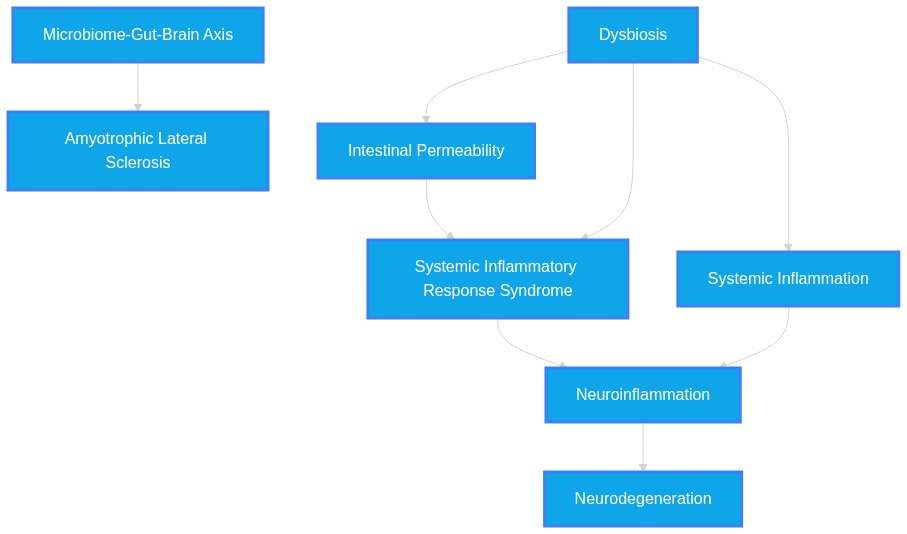
How does the gut-brain axis play a role in Alzheimer's Disease? Is there a potential link for gut-brain axis for other neurological disorders such as Amyotrophic Lateral Sclerosis?
Plausibility Verdicts
The gut-brain axis is a bidirectional highway for systemic neuroinflammation, metabolic dysfunction, and protein misfolding in both AD and ALS.
The gut-brain axis is a confirmed, bidirectionally linked pathway in AD and ALS pathology, acting through immune-inflammatory and microbial-metabolic signaling.
The gut-brain axis is a major factor in AD and ALS through inflammation and metabolism; current evidence is promising but requires more clinical trials.
Dataset Summary
Novel & Overlooked Insights
- Amyloid-β may function as an innate immune mediator rather than a primary toxin.
- The enteric nervous system (ENS) is a potential primary anatomical site for amyloid deposition.
- Tryptophan-kynurenine pathway metabolites are key bridges between gut inflammation and neurotoxicity.
- Dietary factors like B vitamins and fiber are correlated with psychological health in ALS.
- Microplastic exposure is a newly recognized environmental driver of GBA-mediated neuroinflammation.
- Gastric juice miRNAs (e.g., miR-106a-5p) are emerging as non-invasive biomarkers of neurodegeneration.
- The "Microbiota-Apoptosis Axis" is an emerging framework for understanding gastrointestinal health.
- Nutritional status and systemic metabolic reserve, rather than cholesterol levels alone, may dictate ALS prognosis.
- Intranasal interventions (like SDF-1α) are being explored to bypass the BBB and regulate the GBA.
- Precision nutrition and postbiotics (e.g., C. glutamicum lysates) may offer safer, more stable alternatives to live probiotics.
- Amyloid-β (Aβ) is understood to possess evolutionarily conserved antimicrobial and immunomodulatory properties, reframing amyloid deposition as an initially protective host-defense response.
- The "gut-immune-metabolic" cycle in mild cognitive impairment (MCI) creates a specific metabolic imbalance favoring neurotoxic quinolinic acid over neuroprotective kynurenic acid.
- Periodontal pathogens such as *Porphyromonas gingivalis* are implicated as risk factors for AD via the systemic dissemination of neutrophil extracellular traps (NETs).
- Functional food biscuits and natural polysaccharides like PF30-3 from *Pseudostellaria heterophylla* show therapeutic potential by reshaping the gut microbiota and rebalancing inflammatory cytokines.
- Chronic stress-induced systemic inflammation is linked to gut barrier deterioration, which can be mitigated by specific receptor modulators like alamandine.
- The "Microbiota-Apoptosis Axis" is a proposed framework for understanding mucosal homeostasis in the context of anthraquinone-induced melanosis coli.
- Healthy fecal microbiota transplantation (H-FMT) appears to alleviate cerebral ischemia-reperfusion injury through the activation of Caspase-8 dependent inhibition of necroptosis.
- Amyloid-β deposition may be a protective host-defense response that turns maladaptive due to chronic, systemic immune-metabolic stress.
- The enteric nervous system, which expresses the amyloid precursor protein (APP), may serve as a primary site of amyloid deposition before it appears in the brain.
- Gut microbiota-derived extracellular vesicles can deliver proteins and nucleic acids to host cells, precisely regulating metabolic and immune homeostasis.
- The appendix has been identified as a critical priming site for inflammatory bowel diseases, with appendectomy showing inverse association with certain inflammatory conditions, suggesting its role as a microbial and immunological hub.
- Metabolic profiling of cervicovaginal fluids and urine has identified sphingolipid signatures that function as robust readouts of host-microbiome interactions in HPV pathogenesis.
- Dietary intake of specific fibers can promote Treg cell differentiation through the ETS1/RUNX1/Foxp3 axis, thereby modulating intestinal inflammation.
- Limosilactobacillus reuteri* exerts neuroprotective effects in Parkinson's models by modulating bile acid metabolism, specifically the TGR5-GLP-1R signaling cascade.
- Intranasal administration of therapeutic agents effectively bypasses the blood-brain barrier to directly mitigate neuroinflammation.
Extracted Discoveries
- Longitudinal assessment of fecal microbial metabolite signatures alongside PET-based neuroinflammation imaging in early-stage ALS patients.
- Comparative metagenomic profiling of the oral-gut-brain axis in familial versus sporadic ALS cohorts to delineate subtype-specific dysbiosis.
- Assess the effect of targeted butyrate-producing consortiums on the blood-brain barrier permeability in P301S tau transgenic mice.
- Assess the longitudinal effect of specific microbial metabolites (e.g., kynurenine derivatives) on blood-brain barrier permeability in ALS murine models.
- Evaluate the impact of PF30-3 on neuroinflammation in hTau.P301S mice to determine if non-amyloid-based tau models show similar therapeutic sensitivity.
- Assess the effect of fecal microbiota transplantation from ALS patients into GF mice on motor neuron survival and glial activation markers.
- Conduct a longitudinal study tracking intestinal mucosal permeability biomarkers relative to Aβ plasma levels in at-risk AD populations.
- Test the therapeutic efficacy of selective butyrate-producing bacterial cocktails on cognitive scores in early-stage AD patients.
- A prospective cohort study tracking the transition from MCI to AD in patients undergoing standardized nutritional intervention aimed at restoring Lachnospiraceae abundance.
- A multi-center meta-analysis on the efficacy of FMT in modulating peripheral inflammatory cytokines across heterogeneous ALS cohorts.
- Investigating the correlation between gastric miR-106a-5p and cognitive performance in patients with pre-symptomatic neurodegenerative markers.
- Multicenter prospective clinical study correlating oral microbiome shifts (specifically Porphyromonas gingivalis) with disease progression markers in early-stage AD patients.
- Comparative longitudinal study of the gut microbiome in ALS patients vs. healthy age-matched controls using AI-driven multi-omics integration.
- A multicenter randomized trial comparing the efficacy of prebiotic interventions on systemic inflammatory biomarkers in ALS and AD cohorts.
- A bibliometric and clinical registry analysis mapping the incidence of neurodegeneration in post-appendectomy vs. control cohorts.
- Long-term monitoring of oral and gut microbiota compositions in patients receiving standard neurodegenerative pharmacotherapies to identify microbial signatures of treatment resistance.
- Intestinal Aβ-associated barrier degradation acts as a peripheral priming mechanism for neuroinflammatory progression in ALS via the ENS-Vagus pathway.
- Amyloid-β expression in the gut epithelium (ID: 42356271)
- Motor neuron degeneration in ALS (ID: 42411482)
- Enteric Nervous System (ENS) vagal signaling (ID: 42400761)
- The ENS acts as a reservoir for pathological proteins and inflammatory signals; Aβ accumulation in the gut may trigger persistent vagal afferent activation, which subsequently exacerbates motor neuron susceptibility to excitotoxicity via systemic inflammation.
- Modulation of the mitochondrial-microbiota axis via pharmacological restoration of the p53 pathway may mitigate neurodegeneration in ALS.
- Role of p53 pathway in glioma proliferation (ID: 42373257)
- Gut microbiota-mitochondria axis in neurodegeneration (ID: 42371165)
- PGC-1α / Mitochondrial bioenergetics
- The p53 pathway and PGC-1α are critical regulators of mitochondrial homeostasis. Since ALS involves mitochondrial dysfunction and gut dysbiosis, targeting the bridge between PGC-1α and p53 signaling could resolve the systemic neurodegenerative cycle.
- Intestinal neutral ceramidase levels may serve as a modifiable biomarker for the progression of motor neuron degeneration in ALS.
- Intestinal neutral ceramidase (Asah2) regulates microbiota and MASH (ID: 42403915).
- Gut microbiome dysbiosis and neuroinflammation in ALS pathogenesis (ID: 42411482).
- Microbiota-driven neuroinflammation and gut-brain barrier dysfunction.
- Since both MASH and ALS are driven by gut-originating inflammatory signals transmitted via the gut-brain axis, and neutral ceramidase activity modulates lipid-based inflammatory markers, it is plausible that intestinal ceramide metabolism dictates the severity of the inflammatory milieu reaching the CNS in ALS patients.
- There is a notable discrepancy between α-diversity findings in AD/MCI cohorts; while some studies suggest taxonomic community-structure disruption, meta-analyses often reveal no robust significant differences in Shannon indices between AD/MCI and CN controls, suggesting α-diversity is an insufficient standalone biomarker.
- There is a contradiction regarding the clinical efficacy of probiotics. ID: 42390710 indicates 'limited and heterogeneous effects' for probiotics in MCI/AD patients, while ID: 42388392 and ID: 42395216 suggest them as promising therapeutic platforms, acknowledging that evidence is currently variable and requires standardization.
- Conflicting evidence exists regarding TMAO levels in neurodegeneration, with some studies linking elevated levels to risk while others show reduced levels, highlighting the inconsistency of circulating metabolites as reliable biomarkers across diverse clinical cohorts.
- The use of 'postbiotics'—such as the L. rhamnosus IDCC 3201 preparation (RHT3201)—is a highly promising repurposable candidate to provide standardized, stable, and safe neuroprotective metabolic benefits compared to the variability of live probiotics.
- The use of intranasal SDF-1α, originally identified for neuroprotection in PD, could be repurposed to treat intestinal barrier disruption in other neurological disorders given the axis-wide efficacy demonstrated in MPTP-models (ID: 42379412).
- Repurposing of SGLT2 inhibitors (like Sotagliflozin) for neuroinflammatory depression and the use of bacterial-derived metabolites like PCA (from ZZCD) to cross the BBB and modulate M1/M2 microglial polarization.
PathMap is funded by sales of datasets and coversheets to researchers of any kind who wish to discover the most viable routes and paths to accelerate cures. We do not make theoretical molecules, we expose the truth in current PubMed literature. Commission a trace today.
PathMap Scores
How are these metrics evaluated?
Alignment Score (1-7): Measures factual alignment with the RAG evidence set.
[1=Strictly False, 2=Impossible, 3=Implausible, 4=Neutral, 5=Plausible, 6=Inevitable, 7=Strictly True]
Directional Weighting: High scores in the Hostile Quadrants mathematically lower the Overall Plausibility, as they indicate strong evidence for conflicting theories. Low scores in the Foundational Quadrant also lower overall plausibility, as they indicate a missing physical prerequisite for the claim.
All Extracted Datapoints
Evaluated Perspectives & Quadrants
CLAIM EVALUATED AND ANSWER TO USER
"How does the gut-brain axis play a role in Alzheimer's Disease? Is there a potential link for gut-brain axis for other neurological disorders such as Amyotrophic Lateral Sclerosis?"ABSTRACT & REWRITTEN CLAIM
The gut-brain axis (GBA) serves as a bidirectional communication system linking the intestinal microbiome with the central nervous system. In Alzheimer's Disease (AD), GBA dysbiosis is linked to systemic inflammation, blood-brain barrier (BBB) disruption, and metabolic shifts (e.g., tryptophan-kynurenine pathway). Similarly, in Amyotrophic Lateral Sclerosis (ALS), gut dysfunction and microbial changes are emerging as critical pathogenic features that influence neuroinflammation and motor neuron health.INTRODUCTION & JUSTIFICATION
The microbiota-gut-brain axis is a dynamic trans-kingdom ecosystem that contributes to host immunological, metabolic, and neuroendocrine homeostasis through the microbiota-gut-brain axis (MGBA). In AD, dysbiosis disrupts intestinal barrier function, triggering systemic inflammation and modulating amyloid precursor protein (APP) regulation. Importantly, amyloid-β (Aβ) is now understood to possess evolutionarily conserved antimicrobial and immunomodulatory properties, suggesting that amyloid deposition may initially represent a protective host-defense response rather than solely a toxic pathological event. Furthermore, the enteric nervous system, which expresses APP, may serve as an initial site of amyloid deposition, affecting gastrointestinal motility and inflammatory susceptibility. This inflammatory milieu upregulates indoleamine 2,3-dioxygenase 1 (IDO1), shifting tryptophan metabolism toward the kynurenine pathway and resulting in the dominance of neurotoxic branches (3-hydroxykynurenine [3-HK], quinolinic acid [QUIN]) over neuroprotective kynurenic acid (KYNA). In ALS, the involvement of gut microbiome dysbiosis in the pathophysiology of ALS has provided a unifying biological framework linking the peripheral, metabolic, and neuroinflammatory processes. However, the mechanisms by which luminal changes relay to the central nervous system (CNS), where motor neurons reside, have yet to be completely defined. Evidence suggests that GBA disruptions in ALS are linked to emotional disturbances, as a nutritional factor composed of vitamins B1, B2, B9, C, and fiber, revealing a significant inverse association with anxiety and depression levels. Therapeutic strategies targeting these pathways, such as the use of E. hirae Y-HS, show that E. hirae Y-HS alleviates UC through coordinated modulation of gut microbiota, host metabolism, inflammation and barrier function.Novel & Overlooked
EVIDENCE, METHODOLOGY & CITATIONS
1. ID: 42404763 - "The gut microbiota is a dynamic trans-kingdom ecosystem that contributes to host immunological, metabolic, and neuroendocrine homeostasis through the microbiota-gut-brain axis (MGBA)." 2. ID: 42411493 - "Importantly, amyloid-β (Aβ) is now understood to possess evolutionarily conserved antimicrobial and immunomodulatory properties, suggesting that amyloid deposition may initially represent a protective host-defense response rather than solely a toxic pathological event." 3. ID: 42377735 - "Moreover, the enteric nervous system, which expresses APP, may serve as an initial site of amyloid deposition, affecting gastrointestinal motility and inflammatory susceptibility." 4. ID: 42411439 - "This inflammatory milieu upregulates indoleamine 2,3-dioxygenase 1 (IDO1), shifting tryptophan metabolism toward the kynurenine pathway and resulting in the dominance of neurotoxic branches (3-hydroxykynurenine [3-HK], quinolinic acid [QUIN]) over neuroprotective kynurenic acid (KYNA)." 5. ID: 42411482 - "The involvement of gut microbiome dysbiosis in the pathophysiology of ALS has provided a unifying biological framework linking the peripheral, metabolic, and neuroinflammatory processes." 6. ID: 42374626 - "The mechanisms by which luminal changes relay to the central nervous system (CNS), where motor neurons reside, have yet to be completely defined." 7. ID: 42338888 - "Confirmatory factor analysis identified a nutritional factor composed of vitamins B1, B2, B9, C, and fiber, revealing a significant inverse association with anxiety and depression levels." 8. ID: 42412323 - "E. hirae Y-HS alleviates UC through coordinated modulation of gut microbiota, host metabolism, inflammation and barrier function." 9. ID: 42346280 - "Patients with neurodegenerative changes exhibited significantly lower gastric miR-106a-5p expression compared to controls (p = 0.044)." 10. ID: 42389275 - "We therefore present the "Microbiota-Apoptosis Axis" as a proposed framework rather than a validated causal pathway." 11. ID: 42406299 - "Overall, the findings demonstrate that chronic exposure to environmentally relevant PE- and PP-MPs disrupts intestinal homeostasis and promotes neuroinflammatory toxicity through GBA dysregulation." 12. ID: 42398608 - "Instead, PF30-3 exerted its effects through multiple indirect pathways, including inhibition of glial cell hyperactivation, repair of intestinal barrier integrity, rebalancing of serum inflammatory cytokines, and remodeling of gut microbiota composition" 13. ID: 42410982 - "Microbiome dysbiosis is linked to cardiovascular, metabolic, inflammatory, neurological, hepatic, renal, and cancer-related illnesses by interfering with immune modulation, metabolic balance, and epithelial barrier integrity" 14. ID: 42412324 - "Proatherogenic substances like trimethylamine-N-oxide (TMAO), which are produced from dietary precursors through gut microbial and hepatic metabolism, aggravate foam cell production, platelet aggregation, and vascular inflammation." 15. ID: 42346775 - "GV-971 exerts antidepressant effects by coordinately remodeling the gut microbiota, normalizing tryptophan and SCFA metabolism, restoring gut barrier integrity, and dampening central neuroinflammation" 16. ID: 42356271 - "These findings support the belief in early intestinal involvement in AD and highlight the potential of the microbiota as a target for early intervention aimed at modifying the progression to neurodegeneration." 17. ID: 42405758 - "Chronic cold reduces beneficial bacteria and increases pro-inflammatory species, impairing intestinal barrier integrity and inducing systemic inflammation, ultimately leading to metabolic disorders and immunosuppression." 18. ID: 42404072 - "As a result, the lower dose increased the presence of probiotics and lactic acid bacteria, while the higher dose showed more bacterial taxa and a mixed microbial shift." 19. ID: 42346775 - "Mechanistically, GV-971 significantly suppressed neuroinflammation by inhibiting microglial hyperactivation in the prefrontal cortex and hippocampus." 20. ID: 42344833 - "LOAD risk was predominantly associated with innate immune dysfunction and perturbations in amino acid and gut-derived metabolite turnover, such as hippurate."CLAIM EVALUATED AND ANSWER TO USER
"How does the gut-brain axis play a role in Alzheimer's Disease? Is there a potential link for gut-brain axis for other neurological disorders such as Amyotrophic Lateral Sclerosis?" The gut-brain axis constitutes a critical, bidirectional pathway in the pathogenesis of Alzheimer's disease (AD) and Amyotrophic lateral sclerosis (ALS). In AD, dysbiosis promotes systemic inflammation, which contributes to amyloidogenic processing and neuroinflammation. Similarly, in ALS, the gut-brain axis serves as a unifying framework linking peripheral metabolic and neuroinflammatory processes to motor neuron degeneration.ABSTRACT & REWRITTEN CLAIM
The gut-brain axis functions as a dynamic system where microbial composition, metabolites, and intestinal barrier integrity regulate neuroinflammatory states. Evidence suggests that microbial dysbiosis in AD and ALS acts as a modifier of disease progression, influencing central nervous system (CNS) homeostasis through immune-metabolic signaling.INTRODUCTION & JUSTIFICATION
The gut-brain axis is a multi-dimensional regulatory system that connects the gastrointestinal tract and the CNS via neural, immune, and endocrine pathways. In AD, gut microbiota dysbiosis triggers a "gut-immune-metabolic" vicious cycle characterized by the enrichment of pro-inflammatory taxa, depletion of beneficial butyrate-producing bacteria, and systemic inflammation. This inflammatory milieu leads to the upregulation of IDO1, shifting tryptophan metabolism toward neurotoxic kynurenine pathway metabolites, which drive NMDA receptor-mediated excitotoxicity and oxidative stress. Furthermore, oral-gut-brain axis disruptions involving periodontal pathogens have been shown to exacerbate AD-related neuropathology through Toll-like receptor (TLR) signaling. In ALS, the understanding of the disease has expanded from a neuron-centered model to a multisystemic disorder involving gastrointestinal dysfunction and immune dysregulation. The microbiome-gut-brain axis provides a biological framework that links peripheral metabolic and neuroinflammatory processes to the motor neuron degeneration observed in ALS. Integrative approaches, such as combining conventional therapies with microbiome-targeted interventions, are currently being evaluated to target these gut-brain-muscle interactions.Novel & Overlooked
EVIDENCE, METHODOLOGY & CITATIONS
1. ID: 42411493 - "Importantly, amyloid-β (Aβ) is now understood to possess evolutionarily conserved antimicrobial and immunomodulatory properties, suggesting that amyloid deposition may initially represent a protective host-defense response rather than solely a toxic pathological event." 2. ID: 42411439 - "This review synthesizes current evidence to present a coherent pathological cascade driving MCI progression: gut microbiota dysbiosis (e.g., enrichment of Prevotella and depletion of Akkermansia) triggers a butyrate deficit and compromise of intestinal integrity, leading to systemic inflammation." 3. ID: 42411439 - "This inflammatory milieu upregulates indoleamine 2,3-dioxygenase 1 (IDO1), shifting tryptophan metabolism toward the kynurenine pathway and resulting in the dominance of neurotoxic branches (3-hydroxykynurenine [3-HK], quinolinic acid [QUIN]) over neuroprotective kynurenic acid (KYNA)." 4. ID: 42411482 - "The involvement of gut microbiome dysbiosis in the pathophysiology of ALS has provided a unifying biological framework linking the peripheral, metabolic, and neuroinflammatory processes." 5. ID: 42377381 - "Emerging evidence suggests positive effects on metabolism, gut microbiota, inflammation and the gut-brain axis, although its clinical relevance has not yet been clearly established." 6. ID: 42374626 - "Better understanding of the dynamic interactions among the microbiota, microbial metabolites, neuroactive metabolites, and inflammation through the ENS/CNS in ALS will provide innovative insights into ALS prevention and treatment." 7. ID: 42383392 - "Recent studies suggest a potential role for Toll-like receptor (TLR) signaling pathways in the induction of neuroinflammation via the oral-gut-brain axis." 8. ID: 42377390 - "In conclusion, P. gingivalis-induced NETs play pivotal roles in the relationship between neuroinflammation and cognitive impairment. Furthermore, the effects of P. gingivalis-induced NETs on neuron-glia unit were related to TLR4 activation." 9. ID: 42378068 - "Systemic pleiotropy of F. nucleatum is further substantiated by its involvement in chemoresistance, placental dysfunction, vascular inflammation, and neuronal injury, substantiating its systemic pleiotropy." 10. ID: 42380200 - "Disrupting the gut microbiome via chronic antibiotic treatment exacerbates cognitive deficits and tau pathology in hTau.P301S mice, demonstrating a causal influence of the microbiome on tau-driven disease progression." 11. ID: 42380200 - "Systemic administration of these metabolites worsens cognitive impairment and tau pathology in hTau.P301S mice." 12. ID: 42398608 - "Mechanistically, PF30-3 reduced cerebral Aβ deposition in vivo, an effect not attributable to direct aggregation inhibition as shown by ThT and CD assays." 13. ID: 42398608 - "Instead, PF30-3 exerted its effects through multiple indirect pathways, including inhibition of glial cell hyperactivation, repair of intestinal barrier integrity, rebalancing of serum inflammatory cytokines, and remodeling of gut microbiota composition" 14. ID: 42403487 - "In vitro functional screening for the production of neuroactive metabolites confirmed four strains, Lactiplantibacillus plantarum TUCC00000144, Limosilactobacillus fermentum TUCC00000777, Levilactobacillus brevis TO10, Lentilactobacillus diolivorans B92, as the most promising candidates" 15. ID: 42404903 - "Within the central nervous system, cholinergic signaling interacts with resident immune cells, particularly microglia, and influences inflammatory tone, neuronal vulnerability, and tissue repair." 16. ID: 42379368 - "The results of this project demonstrate that MFGM tended to increase the production of serotonin and significantly increase EPS production from select LAB strains during the later stages of growth." 17. ID: 42393404 - "Alamandine treatment attenuated inflammatory and oxidative responses and improved intestinal mucosal integrity, with partial restoration of goblet cells." 18. ID: 42389275 - "Finally, we review GM-targeted strategies, including probiotics, synbiotics, and fecal microbiota transplantation, while emphasizing that direct clinical evidence in MC remains limited and that cessation of anthraquinone laxatives remains the primary management strategy." 19. ID: 42371176 - "H-FMT significantly ameliorated neurological deficits and intestinal barrier disruption, reduced infarct volume and neuronal loss, and attenuated mitochondrial damage." 20. ID: 42412140 - "SOTA pretreatment attenuates acute LPS-induced depression-like behavioral abnormalities in association with reduced systemic inflammation, blunted synaptic protein loss, and altered gut microbiota profiles."CLAIM EVALUATED AND ANSWER TO USER
"How does the gut-brain axis play a role in Alzheimer's Disease? Is there a potential link for gut-brain axis for other neurological disorders such as Amyotrophic Lateral Sclerosis?" The gut-brain axis functions as a bidirectional communication system critical to both Alzheimer's disease (AD) and Amyotrophic Lateral Sclerosis (ALS). In AD, dysbiosis promotes systemic inflammation, contributes to amyloid-β (Aβ) deposition, and exacerbates neuroinflammation. In ALS, gut microbiome dysbiosis provides a unifying biological framework linking systemic metabolic and neuroinflammatory processes to motor neuron degeneration.ABSTRACT & REWRITTEN CLAIM
Neurodegenerative conditions, specifically AD and ALS, are increasingly viewed as systems-level disorders where the gut microbiota serves as a primary modulator. Dysbiosis-induced intestinal barrier dysfunction leads to systemic inflammation and metabolic disturbances that signal to the central nervous system (CNS), contributing to pathogenic protein aggregation, microglial activation, and synaptic dysfunction.INTRODUCTION & JUSTIFICATION
The gut-brain axis is a complex, bidirectional pathway where microbial signaling profoundly influences CNS homeostasis. In Alzheimer's Disease, gastrointestinal dysbiosis triggers a "gut-immune-metabolic" vicious cycle. This is evidenced by the enrichment of pro-inflammatory taxa and the depletion of beneficial species like *Akkermansia*, which compromises intestinal integrity. This breakdown allows for the systemic dissemination of inflammatory mediators and potentially Aβ, which is now understood to possess antimicrobial and immunomodulatory properties that become maladaptive during aging. Similarly, Amyotrophic Lateral Sclerosis is no longer considered solely a motor-neuron-centric disease. The involvement of gut microbiome dysbiosis in ALS provides a framework that bridges peripheral metabolism, skeletal muscle pathology, and neuroinflammation. Through the production of neuroactive metabolites and the modulation of the enteric nervous system, the microbiota influences motor neuron health. Emerging therapies targeting this axis, including probiotics and microbial-derived metabolites, represent a shift toward restorative, system-oriented medicine in both AD and ALS.Novel & Overlooked
EVIDENCE, METHODOLOGY & CITATIONS
1. ID: 42411493 - Application: AD as a multifactorial disorder. - "amyloid-β (Aβ) is now understood to possess evolutionarily conserved antimicrobial and immunomodulatory properties, suggesting that amyloid deposition may initially represent a protective host-defense response rather than solely a toxic pathological event." 2. ID: 42411482 - Application: ALS as a systemic disease. - "The involvement of gut microbiome dysbiosis in the pathophysiology of ALS has provided a unifying biological framework linking the peripheral, metabolic, and neuroinflammatory processes." 3. ID: 42411439 - Application: MCI/AD pathology. - "gut microbiota dysbiosis (e.g., enrichment of Prevotella and depletion of Akkermansia) triggers a butyrate deficit and compromise of intestinal integrity, leading to systemic inflammation." 4. ID: 42406299 - Application: Microplastics/GBA. - "chronic exposure to environmentally relevant PE- and PP-MPs disrupts intestinal homeostasis and promotes neuroinflammatory toxicity through GBA dysregulation." 5. ID: 42398608 - Application: Polysaccharides in AD. - "PF30-3 exerted its effects through multiple indirect pathways, including inhibition of glial cell hyperactivation, repair of intestinal barrier integrity, rebalancing of serum inflammatory cytokines, and remodeling of gut microbiota composition" 6. ID: 42377735 - Application: Enteric nervous system/AD. - "the enteric nervous system, which expresses APP, may serve as an initial site of amyloid deposition, affecting gastrointestinal motility and inflammatory susceptibility." 7. ID: 42374626 - Application: Microbiome-ENS-CNS. - "Better understanding of the dynamic interactions among the microbiota, microbial metabolites, neuroactive metabolites, and inflammation through the ENS/CNS in ALS will provide innovative insights into ALS prevention and treatment." 8. ID: 42394275 - Application: Oral-gut-brain axis. - "There is growing evidence of a complex oral-gut-brain axis linking mouth and gut microbiomes with the central nervous system." 9. ID: 42409075 - Application: Microbiome/Thrombosis. - "Gut microbiome has emerged as an important modulator of thrombotic disease through complex immunometabolic and interorgan pathways." 10. ID: 42394830 - Application: Appendix in UC. - "There is growing evidence that the appendix functions as a critical priming site for UC." 11. ID: 42353109 - Application: Sepsis/Encephalopathy. - "gut-brain axis (component 6) functioning as a bidirectional regulatory node that intersects and modulates all four stages." 12. ID: 42350326 - Application: PPD/H2. - "EL@HRG provided sustained hydrogen release and efficiently encapsulated viable bacteria." 13. ID: 42399985 - Application: Microbial vesicles. - "Gut microbiota-derived extracellular vesicles have emerged as crucial mediators in microbe-host communication" 14. ID: 42403915 - Application: MASH/2-HHA. - "These findings identify intestinal neutral ceramidase as a key driver of MASH through a microbiota-2-HHA-AhR axis that impairs intestinal fucosylation and barrier function" 15. ID: 42397430 - Application: CD/Fiber. - "MF alleviates colitis by reshaping the gut microbiota and suppressing SAM-dependent m6A methylation, resulting in ETS1 downregulation and the restoration of Treg homeostasis through the ETS1/RUNX1/Foxp3 axis." 16. ID: 42402302 - Application: Polysaccharides. - "Tryptophan metabolite-mediated regulation and the gut-brain axis remain largely associative or preclinical, with limited validation in controlled human studies." 17. ID: 42392383 - Application: Periodontal-Brain. - "Chronic periodontitis, driven by Porphyromonas gingivalis, has emerged as a modifiable risk factor for Alzheimer's disease (AD) and Parkinson's disease (PD)" 18. ID: 42402632 - Application: ASD. - "Growing evidence indicates that disruption of the microbiota-gut-brain (MGB) axis is a key factor in autism spectrum disorder (ASD), affecting neurodevelopment, neural circuit function, and behavior." 19. ID: 42404061 - Application: HPV/Metabolites. - "Integrative multiomics approaches combining metabolomics with microbiome- and host-derived data are beginning to uncover coordinated biological pathways underlying HPV pathogenesis" 20. ID: 42400749 - Application: PD/L. reuteri. - "L. reuteri may exert neuroprotective effects by modulating bile acid metabolism, particularly CDCA, and potentially involving the TGR5-GLP-1R axis."Verbatim Quote Audit Console
Mapped Reference Directory (APA)
- [1] ID: 42411482 - Yang EJ (2026). Amyotrophic Lateral Sclerosis as a Systemic Disease: Why Integrative and Microbiome-Focused Approaches Deserve Re-Evaluation.. Frontiers in bioscience (Landmark edition). ID: 42411482.
- [2] ID: 42411439 - Zhu J, Xie H, Ouyang Y, Zhu T, Liu Q et al. (2026). Exploring the Microbiome-Kynurenine Axis in Mild Cognitive Impairment: From Gut to Brain.. Journal of integrative neuroscience. ID: 42411439.
- [3] ID: 42377735 - Das K, Khatun R, Begum S, Bhattacharyya K, Datta M et al. (2026). The interplay between gut microbiota and Alzheimer's disease: mechanistic insights from dysbiosis to disease modulation.. Metabolic brain disease. ID: 42377735.
- [4] ID: 42411493 - Stefano GB (2026). Beyond Amyloid: Evolutionary and Immune-Metabolic Perspectives on Alzheimer's Disease.. Frontiers in bioscience (Landmark edition). ID: 42411493.
- [5] ID: 42338888 - Sanchis-Sanchis CE, Sancho-Cantus D, Sanchis-Sanchis E, Privado J, Roig FJ et al. (2026). Interplay between B vitamins, fiber, and Bacteroides abundance: a predictive model for anxiety and depression in amyotrophic lateral sclerosis.. Frontiers in microbiology. ID: 42338888.
- [6] ID: 42346280 - Birsan S, Roman-Filip I, Rusu M, Anca F, Boicean A et al. (2026). Gastric Juice miR-106a-5p as a Non-Invasive Biomarker of Neuroinflammation and Neurodegeneration: A Prospective Observational Study.. Diseases (Basel, Switzerland). ID: 42346280.
- [7] ID: 42374626 - Walton EI, Sun J (2026). Microbiome and metabolites impact enteric and central nervous systems in ALS.. Gut microbes. ID: 42374626.
- [8] ID: 42389275 - Zhang P, Zhuang YD, Lv WW, Zhao Y, Wang JH et al. (2026). Role of gut microbiota in melanosis coli: from anthraquinone biotransformation to mucosal homeostasis dysbiosis.. Frontiers in pharmacology. ID: 42389275.
- [9] ID: 42412323 - You F, Bao H, Li W, Zhang H, Li Y et al. (2026). Enterococcus hirae Y-HS Alleviates Ulcerative Colitis by Activating PXR/Nrf2-mediated Metabolic-immune Crosstalk.. Probiotics and antimicrobial proteins. ID: 42412323.
- [10] ID: 42406299 - Ghosh A, Karmakar V, Saha B, Lye A, Nandi U et al. (2026). Microplastic-Induced Disruption of Intestinal Barrier Integrity and Triggering Neuroinflammatory Responses Through Gut-Brain Axis Dysregulation Mediated by NF-κB/PPAR-γ/BDNF Signalling Pathways.. Molecular neurobiology. ID: 42406299.
- [11] ID: 42398608 - Chen L, Kang X, Deng W, Zhang Y, Zhao Y et al. (2026). Structural characterization of a branched α-glucan from Pseudostellaria heterophylla and its neuroprotective effect against Alzheimer's disease via regulating the microbiota-gut-brain axis.. International journal of biological macromolecules. ID: 42398608.
- [12] ID: 42410982 - Alanazi A (2026). Organ-Specific Human Microbiomes and Dysbiosis: Mechanistic Links to Disease and Emerging Therapeutic Strategies.. Journal of clinical laboratory analysis. ID: 42410982.
- [13] ID: 42412324 - Adiga U, Vasishta S, Adiga S, Augustine AJ (2026). Targeting the Gut-Heart Axis in Atherosclerosis: Microbial Metabolites, Molecular Mechanisms, and Precision Therapeutics.. Probiotics and antimicrobial proteins. ID: 42412324.
- [14] ID: 42346775 - He Z, Nie Y, Li C, Sun G, Zheng W et al. (2026). GV-971 Ameliorates Chronic Restraint Stress-Induced Depression-like Phenotypes Accompanied by Reshaping of the Microbiota-Gut-Brain Axis.. Marine drugs. ID: 42346775.
- [15] ID: 42356271 - Sarti G, Tognozzi G, Magni G, Lana D, Rossi F et al. (2026). The Multiple Functions of Amyloid Beta in the Gut Epithelium and the Role of the Microbiota: A Study in the APP/PS1 Animal Model Subjected to Chronic Synbiotic Treatment.. Nutrients. ID: 42356271.
- [16] ID: 42404763 - Wang X, Piao Y, Xia B, Chu W, Yao X et al. (2026). Diet, gut microbiota, and the gut-brain axis: mechanistic interactions and therapeutic implications in neuropsychiatric disorders.. Frontiers in cellular and infection microbiology. ID: 42404763.
- [17] ID: 42405758 - Zhang S, Tu J, Hong W, Liu J, Xue C et al. (2026). Gut microbiota as key mediators of animal acclimation to temperature changes: mechanisms and interventions.. Applied and environmental microbiology. ID: 42405758.
- [18] ID: 42404072 - Chin S, Min Y, Moniruzzaman M, Heo Y, Ansari MM et al. (2026). Evaluation of dietary curcumin-loaded mesoporous silica nanoparticles on growth, blood biochemistry, gut barrier integrity and enteric gas emissions in weaned piglets.. Veterinary and animal science. ID: 42404072.
- [19] ID: 42344833 - Wang Y, Wang L, Zhan D (2026). Differential Causal Associations of Gut Microbiota, Blood Metabolites, and Immune Cell Phenotypes With Early- and Late-Onset Alzheimer's Disease: A Bidirectional Mendelian Randomization Analysis.. Cureus. ID: 42344833.
- [20] ID: 42377381 - Clemene Velasco S, Martínez López S, Gálvez BG, Larrosa M (2026). [Clinical evidence on kefir consumption and human health].. Nutricion hospitalaria. ID: 42377381.
- [21] ID: 42383392 - Sabouri E, Shahmoradi T, Keshvari NZ, Khodaee P, Saleki K et al. (2026). Role of Toll-like receptors and oral-gut-brain axis in neurodegenerative and neuropsychiatric disorders.. Reviews in the neurosciences. ID: 42383392.
- [22] ID: 42377390 - Xu L, Zhou Y, Chen H, Zhuang J, Jiang Y et al. (2026). Porphyromonas gingivalis-Induced NETs Mediate Neuroinflammation via TLR4 Activation.. Journal of dental research. ID: 42377390.
- [23] ID: 42378068 - Siddarth Ragunagam G, Anbarasu A, Kodiveri Muthukaliannan G (2026). Is Fusobacterium nucleatum the key mediator between oral infections and systemic diseases? Mechanistic insights and therapeutic implications.. Gut microbes. ID: 42378068.
- [24] ID: 42380200 - Kazmi SA, Chandra F, Wasney M, Cheng J, Lum GR et al. (2026). Select microbial metabolites promote tau aggregation in a murine tauopathy model.. Nature communications. ID: 42380200.
- [25] ID: 42403487 - Calvanese CM, Valentino V, Sequino G, De Vivo A, Buzzanca D et al. (2026). Lactobacilli, best allies of mental health: a probiogenomic approach to identify potential psychobiotic strains.. Current research in food science. ID: 42403487.
- [26] ID: 42404903 - Guo H, Yang Z, Cheng L (2026). Cholinergic regulation of neuroinflammation: linking microglia, immunometabolism, and neuromodulation.. Frontiers in immunology. ID: 42404903.
- [27] ID: 42379368 - Miller C, Jiménez-Flores R (2026). The milk fat globule membrane increases bacterial serotonin and exopolysaccharide production for maintenance of intestinal cell differentiation.. Journal of dairy science. ID: 42379368.
- [28] ID: 42393404 - Kilic A, Ipek BE, Cimen YA, Yilmaz M, Cimen FBK et al. (2026). Alamandine attenuates stress-induced inflammation, oxidative stress, and intestinal histopathological alterations in a chronic unpredictable mild stress model of depression.. Naunyn-Schmiedeberg's archives of pharmacology. ID: 42393404.
- [29] ID: 42371176 - Shen Z, Xu D, Wang K, Chen Y, Dou Q et al. (2026). Gut-brain axis modulation by fecal microbiota transplantation improves dual-organ injury after cerebral ischemia-reperfusion via Caspase-8 dependent inhibition of necroptosis.. Metabolic brain disease. ID: 42371176.
- [30] ID: 42412140 - Zeng J, Zhou L, Liao L, Wu D, Yang R et al. (2026). Sotagliflozin pretreatment attenuates acute LPS-induced depression-like behavioral abnormalities and modulates the gut microbiota-immune-brain axis.. Psychopharmacology. ID: 42412140.
- [31] ID: 42394275 - Hernandez-Kapila YL, Weisenberger DJ (2026). Of mice and men-The emerging oral-gut-brain axis of health and disease.. Periodontology 2000. ID: 42394275.
- [32] ID: 42409075 - Tsante K, Petrou E, Tsalas S, Tsantes AG, Lianou A et al. (2026). Gut Microbiome-Associated Thrombosis: Approaching Validation?. Seminars in thrombosis and hemostasis. ID: 42409075.
- [33] ID: 42394830 - AbdelGhani O, Elhariri S, Bhatnagar P, Aung HH, Abdel Wahab M et al. (2026). Appendix in ulcerative colitis pathogenesis and therapy: An updated narrative review.. World journal of gastrointestinal pathophysiology. ID: 42394830.
- [34] ID: 42353109 - Tan H, Su W, Niu Z (2026). Research Advances in the Pathogenesis of Sepsis-Associated Encephalopathy.. International journal of molecular sciences. ID: 42353109.
- [35] ID: 42350326 - Gao H, Liu J, Qu Q, Wang N, Yang X et al. (2026). A Mechanism-Guided Delivery System for Long-Acting Postpartum Depression Therapy via Hydrogen-Facilitated Gut Microbiota Reprogramming.. ACS applied materials & interfaces. ID: 42350326.
- [36] ID: 42399985 - Ma K, Zhang Q, Jin Z, Hao R, Sun X et al. (2026). Gut microbiota-derived extracellular vesicles: bridging microbial-host crosstalk in metabolic disorders.. Cell communication and signaling : CCS. ID: 42399985.
- [37] ID: 42403915 - Wang T, Chen L, Lei C, Song X, Tuohongerbieke A et al. (2026). Intestinal neutral ceramidase exacerbates MASH pathogenesis.. eGastroenterology. ID: 42403915.
- [38] ID: 42397430 - Liu Y, Jiang W, Wang J, Cheng S, Cheng C et al. (2026). A special multifiber dietary mixture ameliorates Crohn's-like colitis in an IL-10-/- mouse model by promoting treg differentiation through the ETS1/RUNX1/Foxp3 axis.. European journal of nutrition. ID: 42397430.
- [39] ID: 42402302 - An Y, You Q, Wang B, Shi Y, Han C et al. (2026). Polysaccharide-gut microbiota interactions in metabolic diseases: Structural selectivity, mediating mechanisms, and evidence deficiencies: A review.. International journal of biological macromolecules. ID: 42402302.
- [40] ID: 42392383 - Dhar I, Gupta S, Mishra R, Dadhich A (2026). Gingipains as macromolecular mediators at the periodontal-brain interface: Mechanistic, diagnostic, and therapeutic evidence in Alzheimer's and Parkinson's diseases.. International journal of biological macromolecules. ID: 42392383.
- [41] ID: 42402632 - Wang G, Liu W, Chen Y, Zhang S (2026). Microbiota-gut-brain axis in autism spectrum disorder: integrating brain structure, function, and transcriptomics.. Translational psychiatry. ID: 42402632.
- [42] ID: 42404061 - Molina MA, Dai W (2026). Microbiome-Metabolome Crosstalk in HPV Pathogenesis: From Ecosystem Dynamics to Translational Biomarkers.. Computational and structural biotechnology journal. ID: 42404061.
- [43] ID: 42400749 - Li D, Gong J, Sun Z, Wang G, Zhang F (2026). Limosilactobacillus reuteri Alleviates Parkinson's Disease by Regulating CDCA Secretion.. Probiotics and antimicrobial proteins. ID: 42400749.
Abstract Repository (Raw Full-Texts) Show Database Collapse Database
ID: 42338888
Title: Interplay between B vitamins, fiber, and Bacteroides abundance: a predictive model for anxiety and depression in amyotrophic lateral sclerosis.
Abstract: Amyotrophic lateral sclerosis (ALS) is a progressive and incurable neurodegenerative disease that not only affects motor function but is also associated with gastrointestinal and emotional disturbances. Recent research highlights the potential role of gut microbiota and diet in modulating these symptoms, suggesting a complex interaction between nutrition, intestinal health, and presence of anxiety and depression in ALS patients. This study aims to investigate the relationship between dietary intake, gut microbiota composition, and presence of anxiety and depression in patients with amyotrophic lateral sclerosis (ALS). A cross-sectional study conducted with a sample of 48 patients with bulbar-onset or spinal-onset ALS from different regions of Spain. Dietary intake was assessed through 24-h records and food frequency questionnaires, while anxiety and depression were evaluated using validated scales that formed a latent factor called emotional distress. Stool consistency was assessed following the Bristol Stool Scale and the abundance of bacterial microbiota was quantified. Confirmatory factor analysis identified a nutritional factor composed of vitamins B1, B2, B9, C, and fiber, revealing a significant inverse association with anxiety and depression levels. The predictive model revealed both direct and indirect effects of this factor on presence of anxiety and depression, mediated by Bacteroides abundance and stool consistency. This model explained 19% of the variance in psychological distress. Our findings suggest that a diet rich in B vitamins, C vitamin and fiber may help improve emotional well-being in patients with ALS, highlighting the importance of nutritional strategies, as well as the role of Bacteroides related to stool consistency in patients with ALS.
View on PubMed
ID: 42344833
Title: Differential Causal Associations of Gut Microbiota, Blood Metabolites, and Immune Cell Phenotypes With Early- and Late-Onset Alzheimer's Disease: A Bidirectional Mendelian Randomization Analysis.
Abstract: Alzheimer's disease (AD) is a heterogeneous syndrome with distinct genetic and clinical profiles between early-onset AD (EOAD) and late-onset AD (LOAD) subtypes. However, specific causal etiologies linking the gut microbiota-immune-metabolic axis to these subtypes remain poorly understood. We employed a comprehensive bidirectional two-sample Mendelian randomization (MR) framework to systematically investigate the causal associations of gut microbiota, immune cell phenotypes, and blood metabolites with EOAD and LOAD. Large-scale genome-wide association study (GWAS) summary statistics were utilized from the MiBioGen consortium, Sardinian cohort, and Canadian Longitudinal Study on Aging, alongside AD outcome data from the FinnGen consortium. Causal estimates were generated using the inverse variance-weighted method, with rigorous sensitivity analyses including false discovery rate (FDR) correction and Steiger directionality tests to ensure robustness. Our analysis revealed divergent multi-omics signatures for AD subtypes. While the genus Veillonella and myeloid dendritic cells emerged as shared protective factors, the risk profiles were distinct. EOAD susceptibility was primarily driven by adaptive immune dysregulation and lipid metabolism disturbances. In contrast, LOAD risk was predominantly associated with innate immune dysfunction and perturbations in amino acid and gut-derived metabolite turnover, such as hippurate. This study provides genetic evidence that EOAD and LOAD are driven by fundamentally different peripheral mechanisms across the gut-immune-metabolic axis. These findings challenge the monolithic view of AD pathogenesis and underscore the critical necessity of stratifying patients by onset age to develop precision therapeutic interventions.
View on PubMed
ID: 42346280
Title: Gastric Juice miR-106a-5p as a Non-Invasive Biomarker of Neuroinflammation and Neurodegeneration: A Prospective Observational Study.
Abstract: Neuroinflammation is a key contributor to the progression of several neurodegenerative disorders, including Alzheimer's disease, stroke, and small vessel disease. Emerging evidence highlights the role of circulating microRNAs (miRNAs) as non-invasive biomarkers of neuroinflammation and neuronal injury. miR-106a-5p, a member of the miR-17~92 cluster, is known to regulate inflammation, apoptosis, and vascular function. While typically studied in plasma or cerebrospinal fluid, gastric juice miRNAs represent a novel and underexplored source for biomarker discovery within the gut-brain axis. This exploratory study aimed to investigate the association between gastric juice miR-106a-5p expression and markers of neuroinflammation, including C-reactive protein (CRP), lactate dehydrogenase (LDH), and imaging-based evidence of neurodegeneration. A prospective, observational study was conducted on 38 participants (22 with neurodegenerative pathology and 16 healthy controls). Gastric juice samples were analyzed for miR-106a-5p using RT-qPCR, normalized to U6 snRNA. ΔCt values were used to determine relative expression. Statistical analyses included t-tests/Wilcoxon tests, ROC curve analysis, and correlation testing, with significance set at p < 0.05. Patients with neurodegenerative changes exhibited significantly lower gastric miR-106a-5p expression compared to controls (p = 0.044). Elevated CRP and LDH levels were associated with higher ΔCt values (indicating lower expression), with p-values of 0.019 and 0.023, respectively. ROC analysis showed moderate diagnostic accuracy (AUC = 0.701) for miR-106a in identifying neurodegenerative status. miR-106a levels also correlated inversely with carotid intima-media thickness and brain MRI abnormalities, also reduced gastric miR-106a-5p expression is associated with systemic inflammation and neuroimaging evidence of neurodegeneration. While causality cannot be inferred, these findings suggest that gastric miR-106a may serve as a promising non-invasive biomarker within the gut-brain axis framework. Further longitudinal and mechanistic studies are warranted to validate its clinical utility and explore its potential role in monitoring neuroinflammatory conditions.
View on PubMed
ID: 42346775
Title: GV-971 Ameliorates Chronic Restraint Stress-Induced Depression-like Phenotypes Accompanied by Reshaping of the Microbiota-Gut-Brain Axis.
Abstract: Depression is increasingly linked to microbiota-gut-brain axis dysfunction, yet current monoaminergic antidepressants show limited efficacy. This study investigated the therapeutic potential and underlying mechanisms of GV-971, a marine-derived oligosaccharide, in a chronic restraint stress (CRS) mouse model. We first established that 8 h of daily restraint for 4-8 weeks induces a stable depression-like phenotype characterized by behavioral despair and significant reduction in peripheral monoamine neurotransmitters (5-HT and norepinephrine). GV-971 treatment robustly attenuated CRS-induced depression- and anxiety-like behaviors, restored hippocampal serotonin levels, reduced elevated plasma corticosterone concentrations, and ameliorated CRS-induced adrenal cortical hyperplasia. Mechanistically, GV-971 significantly suppressed neuroinflammation by inhibiting microglial hyperactivation in the prefrontal cortex and hippocampus. Concurrently, it repaired intestinal barrier dysfunction, evidenced by reduced permeability, restored mucosal integrity, and recovered goblet cell numbers. Crucially, integrated shot-gun metagenomics and plasma metabolomics revealed that GV-971 not only reshaped microbial taxonomy but also functionally recalibrated the gut ecosystem. It enriched beneficial taxa (e.g., Bifidobacterium pseudolongum, Bacteroides uniformis) and specific metabolic pathways, leading to increased short-chain fatty acids (valeric and caproic acids) and a significant reduction in plasma levels of tryptophan-kynurenine pathway metabolites, specifically the neurotoxic compounds kynurenine and quinolinic acid. Fecal microbiota transplantation (FMT) from GV-971-treated donors partially recapitulated the antidepressant and gut-protective effects in CRS recipients, confirming a causal role for the remodeled microbiota. Collectively, GV-971 exerts antidepressant effects by coordinately remodeling the gut microbiota, normalizing tryptophan and SCFA metabolism, restoring gut barrier integrity, and dampening central neuroinflammation, supporting its potential as a novel gut-brain axis-targeted therapy for depression.
View on PubMed
ID: 42350326
Title: A Mechanism-Guided Delivery System for Long-Acting Postpartum Depression Therapy via Hydrogen-Facilitated Gut Microbiota Reprogramming.
Abstract: To address the limitations of current pharmacotherapies for postpartum depression (PPD), this study developed an innovative oral delivery system (EL@HRG) based on calcium-cross-linked alginate/WPI emulsion nanogel particles, leveraging the mechanism reported in Cell where in hydrogen (H2) drives the gut commensal bacterium Eggerthella lenta to convert host corticosterone into the neuroactive steroid allopregnanolone. The core innovation of this work lies in the of a controlled hydrogen-release carrier with a probiotic delivery platform into a unified system. Using a scaffold of sodium alginate and whey protein integrated with corn oil to form an emulsion, we leveraged the higher solubility of H2 in the oil phase to overcome the key bottleneck of maintaining effective intestinal hydrogen concentration after oral administration. Concurrently, l-arginine, an essential nutrient for E. lenta growth, was incorporated into the gel network, achieving an integrated "delivery-colonization-activation" function. In vitro experiments confirmed that EL@HRG provided sustained hydrogen release and efficiently encapsulated viable bacteria. In vivo studies demonstrated that EL@HRG significantly enhanced the intestinal colonization and retention of E. lenta, leading to sustained activation of the steroid conversion pathway and elevated levels of allopregnanolone in the brain. In a PPD mouse model, EL@HRG, acting via the gut-brain axis, inhibited hippocampal neuroinflammation, restored synaptic plasticity and GABAergic signaling, and consequently markedly improved depressive-like behaviors, anxiety, and maternal behavior deficits. Its therapeutic efficacy showed enhanced sustainability compared to the short-term effects of injected allopregnanolone, with no observed systemic toxicity. Metabolomic analysis further revealed a reshaping of the "steroid hormone biosynthesis" pathway, underpinning the therapeutic effect. In conclusion, this study provides a novel, nonpharmacological, long-acting, and safe interventional strategy for PPD. It also establishes a new paradigm of mechanism-guided delivery systems for precisely modulating the gut microenvironment to achieve specific physiological functions.
View on PubMed
ID: 42353109
Title: Research Advances in the Pathogenesis of Sepsis-Associated Encephalopathy.
Abstract: Sepsis-associated encephalopathy (SAE) is a frequent neurological complication of sepsis, driven by six interconnected pathophysiological components: (1) systemic inflammation-triggered neuroinflammatory cascades, initiated by systemic recognition of pathogen-associated molecular patterns (PAMPs) and damage-associated molecular patterns (DAMPs) and propagated by pro-inflammatory mediators; (2) central nervous system (CNS) immune cell-mediated neuroinflammation, wherein microglia, regulatory T cells, and neutrophils dynamically regulate inflammatory progression; (3) blood-brain barrier (BBB) disruption, progressing from functional disturbance to structural damage via tight junction degradation and immune infiltration; (4) multimodal programmed cell death, encompassing autophagy, apoptosis, pyroptosis, and ferroptosis driven by mitochondrial dysfunction; (5) neurotransmitter network imbalance, manifesting as cholinergic deficiency and glutamate excitotoxicity; and (6) gut-brain axis dysregulation, characterized by reduced microbiota-derived metabolites such as butyrate and indolepropionic acid. These components are organized along a core pathological axis comprising four sequential stages: neuroinflammatory storm (encompassing components 1 and 2) → BBB disruption and microcirculatory disturbances (component 3) → multimodal programmed cell death (component 4) → neurotransmitter imbalance (component 5), with the gut-brain axis (component 6) functioning as a bidirectional regulatory node that intersects and modulates all four stages. Mitochondrial dysfunction serves as the central converging node linking these pathological axes. Targeted interventions against neuroinflammation, immune cell modulation, BBB restoration, inhibition of aberrant cell death, neurotransmitter homeostasis, and gut microbiota remodeling hold therapeutic promise. Elucidating the crosstalk among these pathways will accelerate the clinical translation of precision therapies for SAE.
View on PubMed
ID: 42356271
Title: The Multiple Functions of Amyloid Beta in the Gut Epithelium and the Role of the Microbiota: A Study in the APP/PS1 Animal Model Subjected to Chronic Synbiotic Treatment.
Abstract: Background:/ Over the past decade, increasing evidence has shifted attention from the brain to the gut microbiota (MB) as a source and site of systemic dissemination of amyloid-β (Aβ), an APP derivative responsible for plaque formation in the brains of Alzheimer's disease (AD) patients. Furthermore, AD patients and APP/PS1 mice, a transgenic model of AD, exhibit dysbiosis. Objectives: Using APP/PS1 mice treated from 2 to 8 months of age, we studied ileal and colonic epithelial integrity, intestinal barrier (IB) integrity assessed through tight junction (TJ) protein expression, local immune system, the presence/increase in Aβ expression in enterocytes, and the protective effects of synbiotic treatment. Methods: The tissue was stained with Periodic Acid-Schiff and Alcian Blue to evaluate epithelial morphology and mucus production, and immunohistochemistry was performed to assess TJs, immune markers, and Aβ expression. Results: Our results demonstrate that colonic and ileal epithelium of 8-month-old APP/PS1 mice displays IB impairment in term of alterations of goblet cells staining and TJ protein expression and signs of immune involvement. The ileum was more severely affected, showing a reduced epithelial surface area, decreased lysozyme production, and fewer tuft cells. Long-term synbiotic treatment largely prevented APP/PS1 mouse changes and caused a significant increase in Aβ expression in all treated mice. Conclusions: These findings support the belief in early intestinal involvement in AD and highlight the potential of the microbiota as a target for early intervention aimed at modifying the progression to neurodegeneration. Increased epithelial Aβ labeling after treatment raises the possibility of intestinal management of Aβ, which requires further validation.
View on PubMed
ID: 42371176
Title: Gut-brain axis modulation by fecal microbiota transplantation improves dual-organ injury after cerebral ischemia-reperfusion via Caspase-8 dependent inhibition of necroptosis.
Abstract: The pathological features of cerebral ischemia-reperfusion (CIR) include necroptosis activation. This study investigated how healthy fecal microbiota transplantation (H-FMT) improves CIR and intestinal barrier damage. Rats subjected to middle cerebral artery occlusion and reperfusion (MCAO/R) were treated with H-FMT and/or a Cysteine-aspartic acid protease-8 (Caspase-8) inhibitor. Survival and body weight were monitored throughout the experiment. Neurological function, tissue damage, inflammatory cytokines, and Caspase-8/Receptor-interacting protein kinase 1 (RIPK1)-Receptor-interacting protein kinase 3 (RIPK3)-Mixed lineage kinase domain-like protein (MLKL) expression were assessed. Ultrastructural changes were examined by transmission electron microscopy (TEM), p-RIPK1/p-RIPK3 expression by immunohistochemistry (IHC), and gut microbiota by 16 S sequencing. H-FMT significantly ameliorated neurological deficits and intestinal barrier disruption, reduced infarct volume and neuronal loss, and attenuated mitochondrial damage. These effects were accompanied by reduced apoptosis and inflammation, increased Caspase-8 activation, and suppressed RIPK1-RIPK3-MLKL phosphorylation. IHC confirmed reduced p-RIPK1/p-RIPK3 signals after H-FMT. 16 S sequencing revealed that H-FMT restored microbial diversity, reduced pathogenic Proteobacteria, and enriched beneficial Lactobacillus, which positively correlated with Caspase-8 activation. Our findings suggest that H-FMT alleviates CIR injury by activating Caspase-8 and suppressing necroptosis. However, due to the small sample size, these results should be considered preliminary.
View on PubMed
ID: 42374626
Title: Microbiome and metabolites impact enteric and central nervous systems in ALS.
Abstract: Amyotrophic lateral sclerosis (ALS) has been linked to gastrointestinal symptoms and alterations in the gut microbiota. The enteric nervous system (ENS) coordinates intestinal function and sits at the host-microbe interface. The mechanisms by which luminal changes relay to the central nervous system (CNS), where motor neurons reside, have yet to be completely defined. In this narrative review, we first present evidence from ALS patient cohorts and preclinical models alongside mechanistic studies of infection, dysbiosis, and related neurodegenerative diseases to discuss how the microbiota and its metabolites may affect the ENS and CNS in ALS. Next, we propose a plausible mechanism of ALS pathogenesis through the gut-microbiome-brain axis. We further offer a summary of clinical trials that have studied the impacts of the microbiota on human ALS. Finally, we discuss future directions for studies of microbiota-ENS-CNS interactions in ALS. Better understanding of the dynamic interactions among the microbiota, microbial metabolites, neuroactive metabolites, and inflammation through the ENS/CNS in ALS will provide innovative insights into ALS prevention and treatment.
View on PubMed
ID: 42377381
Title: [Clinical evidence on kefir consumption and human health].
Abstract: kefir is a fermented drink rich in bioactive metabolites and microorganisms with potential as a functional food. Emerging evidence suggests positive effects on metabolism, gut microbiota, inflammation and the gut-brain axis, although its clinical relevance has not yet been clearly established. to synthesise the existing clinical evidence on how kefir consumption affects human health, including metabolic, gastrointestinal, immunological, cognitive and physical performance aspects. narrative review of human clinical studies, randomised controlled trials and meta-analyses evaluating kefir consumption in different population groups. Results relating to metabolic markers, inflammation, cognitive function, physical activity, gut health and safety were analysed. kefir consumption is consistently associated with increased insulin sensitivity and a slight reduction in fasting glucose levels. The effects on lipid profile, blood pressure and systemic inflammation are mixed. A modulation of the gut microbiota is observed, with an increase in beneficial bacteria and improved intestinal permeability. The evidence regarding brain health is preliminary, with some indications of cognitive improvement and enhanced well-being. Potential benefits in physical performance and recovery have also been reported. Kefir has a favourable safety profile, with mild and transient adverse effects. kefir has modest but promising beneficial effects in various areas of health, particularly in metabolism and gut function. However, methodological heterogeneity and the limited quality of the studies prevent firm conclusions from being drawn. Robust, standardised clinical trials are required to define its efficacy and clinical applicability.
View on PubMed
ID: 42377390
Title: Porphyromonas gingivalis-Induced NETs Mediate Neuroinflammation via TLR4 Activation.
Abstract: Periodontitis, caused by periodontal pathogens such as Porphyromonas gingivalis, is a risk factor for Alzheimer's disease (AD) progression. Neutrophils, which are abundant in patients with periodontitis, release neutrophil extracellular traps (NETs) to resist microbial infection. We explored the mechanism and effects of P. gingivalis-induced NETs on the relationship between periodontitis and neuroinflammation. A murine periodontitis model was established via oral local application of P. gingivalis with or without tak242 (TLR4 inhibitor). Maxillary bones were evaluated via micro-computed tomography. The proportion of neutrophils was determined by flow cytometry. NET formation and morphology were analyzed via a cell-free DNA kit, a neutrophil elastase enzyme-linked immunosorbent assay (ELISA) and myeloperoxidase ELISA kit, reverse transcription polymerase chain reaction (RT-PCR), western blotting and immunofluorescence. Behavior tests were used to investigate cognitive ability. Neuroinflammation was assayed by immunohistochemistry (IHC) and RT-PCR. Amyloid precursor protein (APP) processing was measured by IHC. In vitro experiments explored the functional mechanism underlying the effects of P. gingivalis-induced NETs on the neuron-glia unit. We observed significant alveolar bone resorption with elevated neutrophil count and increased NET formation in mice with periodontitis. Cognitive abilities were impaired by periodontitis. Neuroinflammation manifested as glia activation and upregulated inflammatory cytokines, and APP processing was altered by the elevated expression of APP and PSEN1. These changes were specifically reversed by tak242. In vitro, P. gingivalis-induced NETs mediated M1 polarization in BV2 cells and changed APP processing in N2a cells, along with the activation of TLR4/Myd88/NF-κB and GSK3β/Akt, which is consistent with the in vivo findings. In conclusion, P. gingivalis-induced NETs play pivotal roles in the relationship between neuroinflammation and cognitive impairment. Furthermore, the effects of P. gingivalis-induced NETs on neuron-glia unit were related to TLR4 activation.
View on PubMed
ID: 42377735
Title: The interplay between gut microbiota and Alzheimer's disease: mechanistic insights from dysbiosis to disease modulation.
Abstract: Alzheimer's disease (AD) is a chronic, progressive, neurodegenerative condition marked by memory loss and cognitive decline. It is characterized by neuropathological features such as amyloid plaque accumulation, neurofibrillary tangles of tau protein, and inflammatory changes in the brain. Recent research emphasizes how gut microbes influence the onset and progression of AD primarily through the gut-brain connection, a bidirectional communication system. The human gastrointestinal tract (GI) contains trillions of bacteria, primarily Bacteroidetes, Firmicutes, and Actinobacteria, which play vital roles in digestion, metabolic regulation, and immune modulation. However, factors such as diet, lifestyle, and environmental exposure can disrupt microbial balance, weaken intestinal barrier function, and initiate systemic inflammation. Such dysbiosis has been linked to defective regulation of the amyloid precursor protein (APP), leading to increased deposition of amyloidogenic peptides (Aβ). Moreover, the enteric nervous system, which expresses APP, may serve as an initial site of amyloid deposition, affecting gastrointestinal motility and inflammatory susceptibility. The gut microbiota also produces key bioactive compounds, including neurotransmitters such as serotonin, dopamine, acetylcholine, histamine, and gamma-aminobutyric acid (GABA), which influence the central nervous system (CNS) through neural, immune, and endocrine pathways. An imbalance in these neuroactive molecules may disrupt synaptic signaling and contribute to Alzheimer's-related cognitive dysfunction. Therefore, improving our understanding of gut-brain communication may advance knowledge of AD development and support the creation of new therapies. This review highlights the strong association between intestinal microbes and Alzheimer's pathogenesis, emphasizing microbiota modulation through probiotics, prebiotics, postbiotics, synbiotics, and antibiotics as potential therapeutic approaches, supported by emerging clinical trial evidence.
View on PubMed
ID: 42378068
Title: Is Fusobacterium nucleatum the key mediator between oral infections and systemic diseases? Mechanistic insights and therapeutic implications.
Abstract: Fusobacterium nucleatum has emerged as a pathobiont that associates oral dysbiosis with systemic diseases through coaggregation, hematogenous dissemination, and immune modulation. This review provides molecular insights through which they are involved in systemic diseases such as colorectal cancer, adverse pregnancy outcomes, cardiovascular diseases, neurodegenerative disorders, and diabetes mellitus. Key virulence factors include the adhesins of FadA, Fap2, and RadD, lipopolysaccharides, and outer membrane vesicles, which mediate epithelial invasion and endothelial permeafbility and facilitate immune suppression through TLR4-NF-κB, β-catenin/Wnt, and MAPK signaling pathways. These interactions result in impaired tissue homeostasis, propagate chronic inflammation, and promote oncogenic and metabolic modulation. Systemic pleiotropy of F. nucleatum is further substantiated by its involvement in chemoresistance, placental dysfunction, vascular inflammation, and neuronal injury, substantiating its systemic pleiotropy. Emerging therapeutic strategies, such as blocking adhesins, neutralizing outer membrane vesicles, microbiome manipulation, and using CRISPR-based clearance, provide precision techniques for mitigating diseases. Therefore, this review identifies F. nucleatum as the primary microbial mediator of oral-systemic pathology and its translational significance in the development of targeted antimicrobial and host-directed therapies.
View on PubMed
ID: 42379368
Title: The milk fat globule membrane increases bacterial serotonin and exopolysaccharide production for maintenance of intestinal cell differentiation.
Abstract: Serotonin is a neurotransmitter that is primarily produced in the gut and is produced by lactic acid bacteria (LAB). It plays a crucial role in regulating mood and mental health disorders via the gut-brain axis using the enteric nervous system. Exopolysaccharides (EPS) are complex metabolic end products of probiotic LAB that contribute to health-promoting activities in the intestine. Interactions between LAB and components in the food matrix, such as the milk fat globule membrane (MFGM), may alter the production of serotonin and EPS in the gastrointestinal tract. The objectives of this work were to determine if supplementing LAB growth medium with MFGM increases serotonin and EPS production and to uncover the impact of the bacterial secretome on intestinal cell differentiation. We screened 137 strains of LAB for serotonin production, and the top 10 highest producing strains received supplementation with MFGM, and their growth curves were measured spectrophotometrically. Samples were collected during the growth, early stationary, and late stationary phases. The cell-free supernatant (CFS) samples were evaluated for serotonin as well as EPS. These CFS were used to treat Caco-2 intestinal cell lines for 6 h on d 0 and 7 of confluency. From Caco-2 cells, RNA was extracted with TRIzol and used for RT-qPCR analysis of occludin tight junction protein expression. Protein was extracted using RIPA lysis buffer and used for detection of alkaline phosphatase using an analysis kit and for sucrase-isomaltase and dipeptidyl peptidase 4 using antibody detection with slot blot. The results of this project demonstrate that MFGM tended to increase the production of serotonin and significantly increase EPS production from select LAB strains during the later stages of growth. We further observed that upon the presence of low concentrations of the metabolites in the secretome of some strains, there was a significant increase in the expression of occluding from Caco-2 cells. These results indicate that there is a high potential of the use of MFGM for intestinal health such as prevention of 'leaky gut syndrome' and warrants further research on this subject.
View on PubMed
ID: 42380200
Title: Select microbial metabolites promote tau aggregation in a murine tauopathy model.
Abstract: The gut microbiome is emerging as a modifier of risk for neurodegenerative diseases, but underlying mechanisms remain poorly understood. Here, we show that the hTau.P301S mouse model for progressive tauopathy develops alterations in the composition and function of the gut microbiome that are not recapitulated in amyloid-based 5xFAD or 3xTg models for Alzheimer's disease. Disrupting the gut microbiome via chronic antibiotic treatment exacerbates cognitive deficits and tau pathology in hTau.P301S mice, demonstrating a causal influence of the microbiome on tau-driven disease progression. This corresponds with widespread alterations in microbiome-dependent metabolites in the sera and brains of hTau.P301S mice, including subsets that correlate with the severity of tau pathology. By screening against tau biosensor cells, we identify select microbial metabolites-trimethylamine-N-oxide, 3-indoxyl sulfate, phenol sulfate, thymidine, and 2'deoxyuridine-that promote tau seeding and aggregation. Systemic administration of these metabolites worsens cognitive impairment and tau pathology in hTau.P301S mice. These findings establish a mechanistic link between the gut microbiome, serum and brain metabolites, as well as tau aggregation, suggesting that select microbial metabolites could potentially serve as therapeutic targets for tau-driven diseases.
View on PubMed
ID: 42383392
Title: Role of Toll-like receptors and oral-gut-brain axis in neurodegenerative and neuropsychiatric disorders.
Abstract: The oral-gut-brain axis is a path connecting the gastrointestinal tract and the central nervous system (CNS). The gut microbiota influences the immune system, metabolism, and nerve cells through the production of neurotransmitters and microbial metabolites that can cross the blood-brain barrier (BBB). The interplay between neuroinflammation and altered oral and gut microbiota is a bidirectional complex path modulated by inflammatory mediators. Recent studies suggest a potential role for Toll-like receptor (TLR) signaling pathways in the induction of neuroinflammation via the oral-gut-brain axis. As neuroinflammation is one of the key elements in the pathophysiology of neurodegenerative and neuropsychiatric disorders, this review was conducted to reflect on the pathophysiological pathways and clinical evidence on the role of TLR and inflammasome signaling pathways via oral-gut-brain axis in neurodegenerative diseases such as cognitive impairment, Alzheimer's disease, Multiple sclerosis, Parkinson's disease, Huntington's disease, and Amyotrophic lateral sclerosis, and psychiatric disorders such as major depressive disorder, anxiety disorders, schizophrenia, bipolar disorders, and Autism spectrum disorders. Because the contributing factors have not been fully understood yet, further studies could help provide novel therapeutic opportunities.
View on PubMed
ID: 42389275
Title: Role of gut microbiota in melanosis coli: from anthraquinone biotransformation to mucosal homeostasis dysbiosis.
Abstract: Melanosis coli (MC) is a benign and usually reversible condition characterized by brownish-black pigmentation of the colonic mucosa and is commonly associated with chronic exposure to anthraquinone laxatives (ALs). The best-established histopathological sequence involves AL-related epithelial apoptosis, phagocytosis of apoptotic bodies by macrophages, and subsequent lipofuscin deposition. Emerging evidence suggests that the gut microbiota (GM) may contribute to this process by converting pharmacologically inactive anthraquinone glycosides into active anthrone metabolites, including rhein anthrone. This narrative review summarizes available MC-specific findings and clearly distinguishes them from mechanistic hypotheses extrapolated from constipation, intestinal barrier, and microbiome literature. We discuss microbial β-glucosidases and reductases involved in AL biotransformation, reported changes in microbial diversity and SCFA-producing taxa in MC or constipation-associated cohorts, and plausible links with barrier dysfunction, bile-acid metabolism, tryptophan-derived metabolites, and LPS-TLR4 signaling. We therefore present the "Microbiota-Apoptosis Axis" as a proposed framework rather than a validated causal pathway. Finally, we review GM-targeted strategies, including probiotics, synbiotics, and fecal microbiota transplantation, while emphasizing that direct clinical evidence in MC remains limited and that cessation of anthraquinone laxatives remains the primary management strategy.
View on PubMed
ID: 42392383
Title: Gingipains as macromolecular mediators at the periodontal-brain interface: Mechanistic, diagnostic, and therapeutic evidence in Alzheimer's and Parkinson's diseases.
Abstract: Chronic periodontitis, driven by Porphyromonas gingivalis, has emerged as a modifiable risk factor for Alzheimer's disease (AD) and Parkinson's disease (PD) the two most prevalent and socioeconomically burdensome neurodegenerative disorders through systemic dissemination of its signature cysteine proteases, gingipains (RgpA, RgpB, Kgp). This narrative critical review is explicitly scoped to AD and PD, the only neurodegenerative conditions for which postmortem detection of gingipains in affected brain regions, mechanistic evidence from cellular and animal models, and clinical epidemiological data currently exist in sufficient depth to support an integrated synthesis. Robust meta-analyses confirm that periodontitis is associated with elevated AD/PD risk (OR/HR 1.2-3.5), while gingipains have been detected in a high proportion (>85-90%) of postmortem AD/PD brains, correlating with tau/α-synuclein pathology, neuroinflammation, and neuronal loss. Mechanistic studies in cellular and animal models demonstrate that gingipains can disrupt blood-brain barrier integrity via tight-junction cleavage, trigger NF-κB/NLRP3-driven glial activation, catalyse amyloid-β/α-synuclein seeding, induce tau truncation/hyperphosphorylation, and precipitate mitochondrial oxidative damage, thereby generating self-amplifying neurotoxic cascades. Salivary gingipain activity offers a non-invasive, high-sensitivity biomarker candidate for early risk stratification that may outperform conventional fluid markers in prodromal cohorts. Therapeutically, small-molecule gingipain inhibitors have shown neuroprotective effects in preclinical models (e.g., atuzaginstat/COR388 failed primary endpoints in the Phase 2/3 GAIN trial but demonstrated subgroup benefits in P. gingivalis-positive participants; the next-generation inhibitor LHP588 is advancing in the Phase 2 SPRING trial). Emerging approaches including nanotechnology, CRISPR-based virulence gene disruption, and targeted delivery platforms aim to improve brain exposure and specificity. This review provides an integrated, isoform-resolved framework linking gingipain structure-function to neurodegeneration. While associative and mechanistic evidence is compelling, definitive causation in humans and disease-modifying efficacy require further validation through biomarker-guided clinical trials. Precision inhibition of gingipains represents a promising upstream strategy for addressing a potentially modifiable microbial contributor at the oral-brain interface.
View on PubMed
ID: 42393404
Title: Alamandine attenuates stress-induced inflammation, oxidative stress, and intestinal histopathological alterations in a chronic unpredictable mild stress model of depression.
Abstract: Depression is increasingly recognized as a systemic disorder associated with chronic inflammation, oxidative stress, and disturbances in the gut-brain axis. This study aimed to investigate whether alamandine modulates chronic stress-induced alterations in the intestine and liver by assessing histopathological changes, inflammatory responses, and oxidative stress parameters in a chronic unpredictable mild stress (CUMS) model. Male rats were exposed to CUMS for 35 days, and the effects of Alamandine and the Mas receptor antagonist A779 were evaluated. Serum inflammatory cytokines (TNF-α, IL-6), liver cytokines (IL-6, IL-1β), oxidative stress markers including superoxide dismutase (SOD), catalase (CAT), and malondialdehyde (MDA), as well as biochemical parameters (AST, ALT, total protein) were analyzed. Histopathological examination of intestinal and colonic tissues was also performed. CUMS significantly increased serum cortisol and pro-inflammatory cytokines, indicating systemic inflammation, while elevated IL-6 and IL-1β levels in liver tissue suggested a localized inflammatory response. Oxidative stress findings showed impaired antioxidant defense and increased lipid peroxidation. Despite these changes, AST, ALT, and total protein levels remained unchanged, indicating no overt hepatic injury. Histologically, CUMS caused intestinal villus degeneration, inflammatory infiltration, and reduced goblet cell numbers, whereas the colon exhibited milder epithelial alterations. Alamandine treatment attenuated inflammatory and oxidative responses and improved intestinal mucosal integrity, with partial restoration of goblet cells. These findings suggest that alamandine attenuates chronic stress-induced inflammatory, oxidative, and histopathological alterations in intestinal and hepatic tissues. The results further support a potential protective role of the RAS pathway in peripheral tissue injury associated with chronic stress.
View on PubMed
ID: 42394275
Title: Of mice and men-The emerging oral-gut-brain axis of health and disease.
Abstract: Oral health's inextricable links to systemic health are highlighted by the emerging oral-gut-brain axis and other well-known axes. There is growing evidence of a complex oral-gut-brain axis linking mouth and gut microbiomes with the central nervous system. Axis disruptions, characterized as oral and gut dysbiosis or microbial imbalances, can trigger oral and systemic inflammation and neuroinflammation, contributing to diseases such as Alzheimer's disease and Parkinson's disease. We summarize the oral-gut-brain axis mechanistic pathways, key evidence from human clinical and animal studies, and how the oral microbiome modulates human health and disease. Periodontal disease (PD) is associated with increased oral pathogen presence in diseased tissues throughout the human body. Preclinical models recapitulate these findings. Experimental periodontal infection induces dysbiosis that is linked to activation of inflammatory pathways that promote diseased phenotypes. Novel therapeutic approaches, including the probiotic fbacteriocin nisin, are increasingly recognized for targeted microbiome therapy at multiple inflection points across the axis. Nisin restores microbial balance, reduces inflammation, inhibits end-organ pathology, prevents periodontal bone loss, and reduces brain amyloid/tau accumulation and cytokine expression. These findings highlight the complexity of the oral-gut-brain axis and the ability to modulate the axis using bacteriocin-based approaches. Future probiotic or antimicrobial strategies aimed at ameliorating neuroinflammatory and metabolic diseases via microbiome-targeted therapy hold clinical promise.
View on PubMed
ID: 42394830
Title: Appendix in ulcerative colitis pathogenesis and therapy: An updated narrative review.
Abstract: Ulcerative colitis (UC) is a chronic inflammatory disorder of the colon. Its pathogenesis has been linked to chronic intestinal inflammation stemming from genetic predisposition, immune dysregulation, changes in gut microbiome, and various environmental factors. There is emerging evidence for autophagy dysfunction in the UC setting, suggesting a compromise of the intestinal epithelial barrier and microbial clearance in patients, resulting in chronic activation of the immune system. There is growing evidence that the appendix functions as a critical priming site for UC. Dysregulation of various lymphocyte subsets, dysbiosis, propagation of inflammation into the colon, as well as autophagy dysfunction, have been listed as contributing to this early appendiceal priming phase. While initially thought of as a vestigial organ, current evidence points towards the appendix as an active immunological and microbial hub. Epidemiological data demonstrate an inverse association between early appendectomy and UC risk, suggesting its potential as a therapeutic strategy. According to recent ACCURE (2025) and COSTA (2026) clinical trials, improved remission outcomes were observed post-appendectomy in selected patients, particularly in patients unresponsive to biologic therapy. Together, the evidence positions appendectomy as a legitimate adjunctive treatment option for UC, warranting further mechanistic and clinical investigation. In this narrative review, current evidence on the pathogenesis and risk factors of UC are summarized, including the emerging role of the appendix and the therapeutic potential of appendectomy in UC.
View on PubMed
ID: 42397430
Title: A special multifiber dietary mixture ameliorates Crohn's-like colitis in an IL-10-/- mouse model by promoting treg differentiation through the ETS1/RUNX1/Foxp3 axis.
Abstract: Crohn's disease (CD) is a chronic inflammatory disorder characterized by immune dysregulation. Regulatory T cells (Tregs) play a pivotal role in maintaining mucosal tolerance, and their dysfunction directly contributes to CD pathogenesis. We used interleukin-10-/- mice to evaluate the therapeutic effects of a special multifiber mixture (MF) on colitis. T cell phenotypes, transcriptional profiles, gut microbiota composition, and N6-methyl adenosine (m6A) ribonucleic acid (RNA) methylation were analyzed using flow cytometry, RNA sequencing, metagenomics, and methylated RNA immunoprecipitation-quantitative polymerase chain reaction. MF significantly reduced intestinal inflammation, restored epithelial barrier function, and promoted Treg differentiation while suppressing Th1/Th17 polarization. Integrated transcriptomic and proteomic analyses identified ETS1 as a negative regulator of Treg differentiation, modulated by gut microbiota-derived S-adenosylmethionine (SAM) through methyltransferase-like protein 3-mediated m6A methylation. MF feeding reduced SAM levels and m6A enrichment on ETS1 messenger RNA, leading to decreased ETS1 expression. Silencing of ETS1 enhanced Foxp3 expression and expanded the Treg population. RUNX1 was identified as a functional interactor of ETS1, with reciprocal expression patterns validated in both mouse models and colonic tissues from patients with CD. MF alleviates colitis by reshaping the gut microbiota and suppressing SAM-dependent m6A methylation, resulting in ETS1 downregulation and the restoration of Treg homeostasis through the ETS1/RUNX1/Foxp3 axis. These findings reveal a mechanistic link between microbiota, epigenetics, and immunity, highlighting MF feeding as a promising nutritional intervention for CD treatment.
View on PubMed
ID: 42398608
Title: Structural characterization of a branched α-glucan from Pseudostellaria heterophylla and its neuroprotective effect against Alzheimer's disease via regulating the microbiota-gut-brain axis.
Abstract: Alzheimer's disease (AD) is a progressive neurodegenerative disorder with limited therapeutic options. Emerging evidence highlights the gut-brain axis as a promising target, and natural polysaccharides offer multi-target advantages. Here, we isolated and structurally characterized PF30-3, a homogeneous branched α-D-glucan (69.91 kDa) from Pseudostellaria heterophylla, featuring a (1 → 4)-α-d-glucopyranosyl backbone with (1 → 4,6)-α-d-glucopyranosyl branching points. In LPS-stimulated RAW264.7 macrophages, 200 μg/mL PF30-3 significantly inhibited nitric oxide release, restored cell viability, and rebalanced inflammatory cytokines. The in vivo efficacy was first validated in an Aβ₁₋₄₂-induced zebrafish AD-like model, where 20 mg/kg PF30-3 effectively rescued spatial memory and learning impairments. These findings were further translated to 5 × FAD mice, in which oral administration of 50 mg/kg PF30-3 for 24 consecutive days significantly improved the recognition and spatial memory without observable acute toxicity. Mechanistically, PF30-3 reduced cerebral Aβ deposition in vivo, an effect not attributable to direct aggregation inhibition as shown by ThT and CD assays. Instead, PF30-3 exerted its effects through multiple indirect pathways, including inhibition of glial cell hyperactivation, repair of intestinal barrier integrity, rebalancing of serum inflammatory cytokines, and remodeling of gut microbiota composition, characterized by a decreased Firmicutes/Bacteroidota ratio and enrichment of beneficial genera such as Muribaculum, Bacteroides, and Prevotellaceae_UCG-001. Correlation analyses linked these microbial shifts to improved cognitive outcomes and reduced neuroinflammation. Collectively, these findings demonstrate that PF30-3 exerts neuroprotective effects through modulation of the microbiota-gut-brain axis, highlighting it as a promising natural polysaccharide-based candidate for AD therapy.
View on PubMed
ID: 42399985
Title: Gut microbiota-derived extracellular vesicles: bridging microbial-host crosstalk in metabolic disorders.
Abstract: Gut microbiota-derived extracellular vesicles have emerged as crucial mediators in microbe-host communication, not only facilitating intracellular communication, quorum sensing, and horizontal gene transfer among bacteria but also playing a central role in cross-kingdom dialogue. In recent years, bacterial extracellular vesicles (BEVs) have attracted widespread attention due to their ability to carry a diverse array of bioactive molecules-such as proteins, lipids, and nucleic acids-and deliver them to host cells, thereby precisely regulating host metabolic and immune homeostasis. This review systematically elaborates the entire biological process of BEVs, from their biogenesis to functional interactions with host cells, with a specific emphasis on revealing their roles in the pathogenesis of various metabolic diseases-including obesity, type 2 diabetes (T2DM), metabolic dysfunction-associated steatotic liver disease (MASLD), atherosclerosis, and hypertension-at both molecular and cellular levels. Furthermore, leveraging their inherent stability, biocompatibility, and targeting capabilities, we discuss the translational potential and challenges of BEVs in the diagnosis and treatment of metabolic disorders. Beyond summarizing the latest research advances on BEVs in metabolic disorders, this review provides a critical analysis of current mechanistic insights and clinical translation pathways, aiming to establish a theoretical framework for developing novel microbiome-based metabolic interventions. Deciphering the BEV-mediated microbiota-host interaction network holds promise for pioneering new strategies for the precision prevention and treatment of metabolic disease.
View on PubMed
ID: 42400749
Title: Limosilactobacillus reuteri Alleviates Parkinson's Disease by Regulating CDCA Secretion.
Abstract: To explore potential therapeutic agents for Parkinson's disease (PD), we investigated the impact of Limosilactobacillus reuteri (L. reuteri), a probiotic found to be significantly depleted in 6-hydroxydopamine (6-OHDA)-induced PD rat model. Despite its known benefits, the specific effects and underlying mechanisms of L. reuteri in PD remain poorly understood. In this study, we demonstrated that supplementation with L. reuteri alleviated motor deficits and attenuated dopamine (DA) neuron damage in 6-OHDA-induced PD rats. 16 S rRNA sequencing and untargeted metabolomics revealed that L. reuteri modulated gut microbiota composition and partially restored Chenodeoxycholic acid (CDCA) levels, which were reduced in PD model rats. CDCA treatment also attenuated 6-OHDA-induced neurotoxicity in vivo. To elucidate the underlying mechanisms, a Transwell co-culture system consisting of enteroendocrine and neuronal cells was established. While CDCA did not exert a direct neuroprotective effect on neurons, it significantly stimulated glucagon-like peptide-1 (GLP-1) secretion. This effect was markedly suppressed by the TGR5 inhibitor (Triamterene). Importantly, the neuroprotective benefits of CDCA were abolished by the GLP-1 receptor (GLP-1R) antagonist Exendin (9-39), confirming the necessity of the TGR5-GLP-1-GLP-1R signaling cascade. Collectively, these findings suggest that L. reuteri may exert neuroprotective effects by modulating bile acid metabolism, particularly CDCA, and potentially involving the TGR5-GLP-1R axis. This study highlights a possible gut microbiota-bile acid-brain axis and provides a basis for microbiota-based therapeutic strategies in PD.
View on PubMed
ID: 42402302
Title: Polysaccharide-gut microbiota interactions in metabolic diseases: Structural selectivity, mediating mechanisms, and evidence deficiencies: A review.
Abstract: Polysaccharides from food and medicinal sources are promising candidates for nutritional interventions in chronic metabolic diseases. Because intact polysaccharides are generally poorly absorbed after oral administration, their systemic effects cannot be fully explained by conventional models of absorption and direct action on target organs. Increasing attention has therefore focused on their gastrointestinal fate and on how microbial utilization and gut-derived metabolites may influence host metabolism. This review examines how molecular weight, monosaccharide composition, glycosidic linkage type, branching, charge, and conformation affect resistance to upper gastrointestinal digestion, microbial recognition, and fermentation. It further evaluates the roles of short-chain fatty acids, bile acids, tryptophan-derived metabolites, and barrier-associated inflammatory signals in glucose homeostasis, lipid metabolism, and immune regulation. The strength of evidence varies substantially across these pathways. Short-chain fatty acid-related mechanisms and the gut-liver axis have relatively consistent preclinical support, whereas bile acid signaling and intestinal barrier pathways are supported by moderate mechanistic evidence. Tryptophan metabolite-mediated regulation and the gut-brain axis remain largely associative or preclinical, with limited validation in controlled human studies. These gut-derived processes may contribute to the regulation of metabolic dysfunction-associated steatotic liver disease (MASLD), obesity, insulin resistance, and cardiometabolic disorders. Future studies should establish causal links among defined glycan structures, selective microbial utilization, gut-derived mediators, and clinically relevant outcomes, while advancing standardized characterization, biomarker-guided evaluation, and carefully validated precision nutrition strategies.
View on PubMed
ID: 42402632
Title: Microbiota-gut-brain axis in autism spectrum disorder: integrating brain structure, function, and transcriptomics.
Abstract: Growing evidence indicates that disruption of the microbiota-gut-brain (MGB) axis is a key factor in autism spectrum disorder (ASD), affecting neurodevelopment, neural circuit function, and behavior. This review synthesizes multidisciplinary data to clarify mechanistic links between the MGB axis and ASD and to evaluate microbiota-targeted therapeutic strategies. We conducted a narrative synthesis of clinical and translational studies, including human cohort and case-control investigations, animal models, multi-omics analyses, immune profiling, multimodal brain assessments (structural/functional MRI and transcriptomics), and interventional trials. Emphasis was placed on evidence of microbiota-brain associations, intervention outcomes, and methodological limitations. Key findings reveal that individuals with ASD commonly exhibit gut microbiome dysbiosis and altered metabolomic signatures that can influence central nervous system function; three core bidirectional signaling routes link gut microbes to brain outcomes-microbial metabolite production (e.g., short-chain fatty acids, tryptophan metabolites), immune-mediated pathways, and neuroendocrine-vagal communication. Accumulating data associate ASD-related microbial profiles with changes in brain structure, functional connectivity, and transcriptomic patterns, supporting a mechanistic role for the MGB axis in ASD phenotypes. Microbiota-targeted interventions show promising effects on gastrointestinal symptoms, metabolic biomarkers, and selected behavioral measures in small studies, but results are heterogeneous and current evidence is insufficient for widespread clinical application. Integrating multimodal neuroimaging with multi-omics and machine learning provides a promising framework to identify reproducible microbial-brain biomarkers for early detection, clinical subtyping, and stratified treatment. Key challenges include methodological heterogeneity, limited causal inference, small and heterogeneous cohorts, and ethical/safety concerns for pediatric interventions. The MGB axis is a plausible pathogenic mechanism and therapeutic target in ASD. Translating mechanistic insights into precision clinical applications requires standardized, multicenter, longitudinal deep-phenotyping studies that combine multimodal imaging, comprehensive multi-omics, rigorous randomized trials, and careful ethical oversight.
View on PubMed
ID: 42403487
Title: Lactobacilli, best allies of mental health: a probiogenomic approach to identify potential psychobiotic strains.
Abstract: Targeted dietary strategies and supplements represent a promising approach for the treatment of cognitive problems. Multi-omic approaches may facilitate and accelerate the discovery of new psychobiotic strains and their applications. In this work, we applied metagenomics and comparative genomics to guide the isolation and screening of novel psychobiotic strains from fermented foods. Metagenomes of 1185 fermented food were screened, revealing the occurrence of genes coding for the biosynthesis of neuroactive molecules, supporting the isolation of 73 novel Lactic Acid Bacteria (LAB) strains. Comparative genomic analysis highlighted species-specific patterns, identifying Levilactobacillus brevis, Lactiplantibacillus plantarum, Limosilactobacillus fermentum as potential psychobiotics. In vitro functional screening for the production of neuroactive metabolites confirmed four strains, Lactiplantibacillus plantarum TUCC00000144, Limosilactobacillus fermentum TUCC00000777, Levilactobacillus brevis TO10, Lentilactobacillus diolivorans B92, as the most promising candidates for the development of dietary supplements or innovative fermented food products aimed at supporting mental health.
View on PubMed
ID: 42403915
Title: Intestinal neutral ceramidase exacerbates MASH pathogenesis.
Abstract: Metabolic dysfunction-associated steatotic liver disease and its more severe manifestation, metabolic dysfunction-associated steatohepatitis (MASH), are intimately linked to genetic factors, gut microbiota and barrier alteration. Ceramidases and ceramides are associated with MASH, yet the role of intestinal neutral ceramidase in MASH development remains unclear. Murine models with intestinal epithelial cell (IEC)-specific depletion of neutral ceramidase (Asah2ΔIEC ) or aryl hydrocarbon receptor (AhR ΔIEC) were subjected to either a Western diet (WD) at 6 weeks old for 10-12 months to induce MASH, or a hydrogenated vegetable oil, sucrose, palmitate and cholesterol (HSPC) diet to accelerate MASH progression. Fecal microbiota transplantation was performed in germ-free mice. MASH is associated with the induction of neutral ceramidase, which reshapes the intestinal microbiota and metabolite profiles, leading to increased production of 2-hydroxyhippuric acid (2-HHA). We identified 2-HHA as an inhibitor of AhR signalling, a pathway that normally promotes intestinal fucosylation. Elevated 2-HHA suppresses AhR activity, reduces fucosylation and contributes to MASH and associated airway inflammation in mice fed WD or HSPC diet. Notably, IEC-specific deletion of neutral ceramidase decreases 2-HHA levels, restores AhR signalling, enhances fucosylation and protects against MASH. Consistently, intestinal AhR deficiency exacerbates MASH by reducing intestinal fucosylation, whereas supplementation with fucoidan increases fucosylation, improves barrier function and attenuates MASH. These findings identify intestinal neutral ceramidase as a key driver of MASH through a microbiota-2-HHA-AhR axis that impairs intestinal fucosylation and barrier function, highlighting a potential therapeutic target.
View on PubMed
ID: 42404061
Title: Microbiome-Metabolome Crosstalk in HPV Pathogenesis: From Ecosystem Dynamics to Translational Biomarkers.
Abstract: High-risk human papillomavirus (hrHPV) infection alters the cervicovaginal microenvironment, driving metabolic reprogramming that influences viral persistence and progression to cervical cancer. This review adopts a systems-level perspective to synthesize findings from recent metabolomic studies across urine, vaginal swabs, and cervicovaginal fluids, highlighting consistent trends from cervicovaginal health through hrHPV infection, persistence, cervical lesion development, and cancer. HPV infection is characterized by increased microbial amines and oxidative stress, whereas viral persistence and high-grade cervical lesions exhibit disrupted metabolism of amino acids, lipids, and nucleotides. Cervical cancer is associated with distinct metabolic signatures involving sphingolipids, ketone bodies, and intermediates of the tricarboxylic acid cycle. Collectively, metabolic profiles emerge as functional readouts of host-microbiome interactions, often showing stronger associations with clinical outcomes than microbial composition alone. Integrative multiomics approaches combining metabolomics with microbiome- and host-derived data are beginning to uncover coordinated biological pathways underlying HPV pathogenesis and may improve risk stratification and biomarker discovery. Despite methodological heterogeneity, converging evidence supports the potential of metabolic profiling for early detection of cervical neoplasia and stratification of hrHPV-positive women, although reproducibility across studies remains limited. Future longitudinal and integrative studies, supported by standardized analytical frameworks and computational modeling, are needed to clarify causal mechanisms and enable the development of clinically actionable biomarkers and targeted interventions.
View on PubMed
ID: 42404072
Title: Evaluation of dietary curcumin-loaded mesoporous silica nanoparticles on growth, blood biochemistry, gut barrier integrity and enteric gas emissions in weaned piglets.
Abstract: Weaning stress often impairs growth, metabolic function, gut barrier integrity, and microbial balance in piglets, underscoring the need for effective nutritional interventions to enhance post-weaning health. This study evaluated the effects of dietary curcumin-loaded mesoporous silica nanoparticles (SL@Cur) on growth performance, serum biochemical profiles, antioxidant capacity, gut epithelial integrity, gut microbial diversity, and fecal noxious gas emissions in weaned piglets. Thirty-six piglets (Duroc × [Yorkshire × Landrace]; 28 ± 1 days of age; 6-7 kg) were randomly assigned to diets containing 0, 30, or 60 mg/kg SL@Cur for 21 days. Piglets fed 30 or 60 mg/kg SL@Cur exhibited significantly higher final body weight, weight gain and average daily gain compared with control diet (p < 0.05). Myogenic gene expressions such as Pax7, Myf5 and Myf6 were significantly enhanced in piglets fed at 60 mg/kg SL@Cur compared to the control diet (p < 0.05). Serum triglycerides and total cholesterol levels were significantly reduced at 30 mg/kg (p < 0.05). The 30 mg/kg dose of SL@Cur also significantly decreased alanine aminotransferase and increased high-density lipoprotein concentrations than the control diet (p < 0.05). Serum glucose declined dose-dependently, whereas superoxide dismutase and cortisol remained unaffected. Gut barrier integrity was enhanced, as evidenced by significantly increased expression of tight junction proteins, zonula occludens-1 (ZO-1) and claudin-2 concentrations in SL@Cur supplied diets (p < 0.05). Analyzing the piglets' intestinal microbiomes showed that different dietary treatments lead to variations in their bacterial communities. As a result, the lower dose increased the presence of probiotics and lactic acid bacteria, while the higher dose showed more bacterial taxa and a mixed microbial shift. Additionally, SL@Cur markedly reduced fecal NH₃ and H2S gas emissions (p < 0.05). Overall, SL@Cur supplementation enhanced growth performance, improved metabolic and intestinal health parameters, and reduced enteric gas emissions in weaned piglets.
View on PubMed
ID: 42404763
Title: Diet, gut microbiota, and the gut-brain axis: mechanistic interactions and therapeutic implications in neuropsychiatric disorders.
Abstract: The gut microbiota is a dynamic trans-kingdom ecosystem that contributes to host immunological, metabolic, and neuroendocrine homeostasis through the microbiota-gut-brain axis (MGBA). Diet is one of the major environmental factors shaping this axis, as it influences microbial composition, microbial production of neuroactive metabolites, and intestinal barrier integrity. Dysbiosis has been increasingly associated with neurological, psychiatric, and neurodevelopmental disorders, including Alzheimer's disease, Parkinson's disease, depression, autism spectrum disorder, and attention-deficit/hyperactivity disorder. Experimental studies have identified several potential mechanisms linking gut microbiota to brain function, including immune modulation, vagus nerve signaling, microbial metabolite production, and blood-brain barrier regulation. However, translating these findings into clinical practice remains challenging because human studies are affected by genetic heterogeneity, dietary variation, medication use, lifestyle factors, and disease-specific confounders. In this review, we summarize current evidence on the interactions among diet, gut microbiota, and brain function, with particular emphasis on microbial metabolites, immune mediators, and barrier-related mechanisms. We also critically discuss microbiota-targeted interventions, including precision nutrition, probiotics, and fecal microbiota transplantation, highlighting both their therapeutic potential and their current limitations. A more cautious and mechanistically integrated understanding of the MGBA may support the development of personalized strategies for neuropsychiatric disease prevention and management.
View on PubMed
ID: 42404903
Title: Cholinergic regulation of neuroinflammation: linking microglia, immunometabolism, and neuromodulation.
Abstract: Neuroinflammation is increasingly recognized as a core pathological process in various neurological diseases, including neurodegenerative disorders, stroke, autoimmune demyelinating diseases, and acute brain dysfunction associated with systemic inflammation. Among its regulatory mechanisms, the cholinergic anti-inflammatory pathway links neural activity with immune regulation. However, its neurological relevance extends beyond the classical peripheral vagus nerve-mediated inflammatory reflex. Within the central nervous system, cholinergic signaling interacts with resident immune cells, particularly microglia, and influences inflammatory tone, neuronal vulnerability, and tissue repair. Recent advances in immunometabolism further suggest that metabolic reprogramming may bridge cholinergic signaling and microglial inflammatory phenotypes. In this review, we discuss the role of cholinergic regulation of neuroinflammation from three interrelated perspectives: microglia as the hub of core cells, immune metabolism as the basis of mechanism, and neural regulation as the frontier of transformation. We first reviewed the cholinergic system and its role in neuroimmune communication, then discussed how cholinergic signals shape microglial state and metabolic process, and finally evaluated its disease-specific evidence in Alzheimer's disease, Parkinson's disease, stroke, multiple sclerosis and acute inflammatory brain dysfunction. We will also discuss pharmacological and bioelectronic methods, including targeting cholinergic receptors and vagus nerve stimulation, as emerging therapeutic strategies. By integrating cholinergic biology, microglial heterogeneity, and metabolic reprogramming, this review proposes an updated framework for understanding neuroinflammation in neurology, and highlights the future opportunities for precise neuroimmune intervention.
View on PubMed
ID: 42405758
Title: Gut microbiota as key mediators of animal acclimation to temperature changes: mechanisms and interventions.
Abstract: With the intensification of global climate change, temperature fluctuations profoundly affect animal physiology and health. Research has shown that the gut microbiota, as a critical bridge between the host and its environment, helps animals adapt to temperature changes by regulating intestinal barrier stability, immune function, and energy metabolism. This adaptive capacity underscores the indispensable role of gut microbiota in temperature change responses. In cold environments, animals increase food intake and activate brown adipose tissue to maintain body temperature, but prolonged exposure causes metabolic overload and gut microbiota imbalance. Chronic cold reduces beneficial bacteria and increases pro-inflammatory species, impairing intestinal barrier integrity and inducing systemic inflammation, ultimately leading to metabolic disorders and immunosuppression. Similarly, heat exposure leads to pathogenic overgrowth and immune dysfunction, reducing microbial diversity and increasing the abundance of harmful bacteria, ultimately impairing animal health. Furthermore, the gut-brain axis plays a central role in coping with environmental stress, as temperature change alters microbial composition and metabolites, impacting neurotransmitter synthesis and release, thereby regulating physiological states and emotional responses. Finally, targeted microbial interventions-such as fecal microbiota transplantation (FMT), probiotics, prebiotics, synbiotics, and postbiotics-are discussed as effective strategies to restore gut microbiota homeostasis, enhance host resilience to temperature change, and improve animal health under temperature fluctuations.
View on PubMed
ID: 42406299
Title: Microplastic-Induced Disruption of Intestinal Barrier Integrity and Triggering Neuroinflammatory Responses Through Gut-Brain Axis Dysregulation Mediated by NF-κB/PPAR-γ/BDNF Signalling Pathways.
Abstract: Microplastics (MPs) are emerging environmental contaminants increasingly implicated in intestinal dysfunction and neuroinflammatory alterations through gut-brain axis (GBA) dysregulation. However, the mechanistic involvement of polyethylene (PE) and polypropylene (PP) MPs in GBA-associated neurotoxicity remains insufficiently understood. Therefore, the present study aimed to evaluate the impact of PE- and PP-MPs on intestinal barrier integrity, oxidative stress, neuroinflammation, and synaptic dysfunction. Following physicochemical characterization, experimental animals were orally exposed to PE- and PP-MPs (10 and 100 mg/kg BW) for 45 consecutive days. MP exposure significantly disrupted intestinal barrier integrity, reduced zonula occludens-1 expression, and altered short-chain fatty acid profiles, indicating impaired gut microbial metabolic activity. Concurrently, oxidative stress and inflammatory responses were evidenced by reduced antioxidant defence, increased lipid peroxidation, elevated inflammatory mediators, and altered neurochemical markers in small intestine and brain tissues. Behavioral abnormalities, increased amyloid precursor protein (APP) expression, tau-associated pathological alterations, and histopathological changes further indicated GBA impairment following MP exposure. Notably, PE-MPs produced comparatively greater toxicological effects than PP-MPs, particularly at higher dose. Overall, the findings demonstrate that chronic exposure to environmentally relevant PE- and PP-MPs disrupts intestinal homeostasis and promotes neuroinflammatory toxicity through GBA dysregulation.
View on PubMed
ID: 42409075
Title: Gut Microbiome-Associated Thrombosis: Approaching Validation?
Abstract: Gut microbiome has emerged as an important modulator of thrombotic disease through complex immunometabolic and interorgan pathways. Microbiome-derived metabolites have been associated with platelet activation, endothelial injury, and adverse cardiovascular outcomes. However, evidence remains stronger for arterial than for venous thrombosis, although accumulating data suggest that dysbiosis may represent an important yet underrecognized contributor to the pathogenesis of venous thromboembolism. While current evidence supports a biologically plausible association between the gut microbiome and thrombosis, further studies are needed to clarify the underlying mechanisms and determine their clinical significance.
View on PubMed
ID: 42410982
Title: Organ-Specific Human Microbiomes and Dysbiosis: Mechanistic Links to Disease and Emerging Therapeutic Strategies.
Abstract: The human microbiome is a dynamic and diverse community of microorganisms that affects susceptibility to illness and promotes wellness. Dysbiosis, or disruption of this delicately regulated microbial ecology, has been identified as a major factor in the emergence and development of systemic and organ-specific disorders. With an emphasis on dysbiosis-driven illness processes and therapeutic intervention implications, this study attempts to critically analyze host-microbiome interactions across key human organ systems. Using predetermined microbiome-related keywords, a systematic literature search (2001-2025) was carried out in PubMed, Scopus, Web of Science, and Google Scholar. To assess microbiome formation, organ-specific distribution, disease correlations, and therapeutic implications, English-language peer-reviewed original papers, meta-analyses, and clinical or validated animal studies were chosen and methodically compiled. Microbiome dysbiosis is linked to cardiovascular, metabolic, inflammatory, neurological, hepatic, renal, and cancer-related illnesses by interfering with immune modulation, metabolic balance, and epithelial barrier integrity, according to evidence from human and verified animal research. Modified production of short-chain fatty acids, immunological signaling imbalance, chronic inflammation, and communication between the gut-organ axis are examples of mechanistic linkages. Immune and metabolic indicators improved condition-specifically with interventions such as probiotics, fecal microbiota transplantation, and diet-based regulation. Collectively, current evidence supports the microbiome as a modifiable determinant of disease risk and therapeutic response, underscoring its translational potential for precision medicine.
View on PubMed
ID: 42411439
Title: Exploring the Microbiome-Kynurenine Axis in Mild Cognitive Impairment: From Gut to Brain.
Abstract: Mild cognitive impairment (MCI) represents a critical prodromal stage of Alzheimer's disease. This review synthesizes current evidence to present a coherent pathological cascade driving MCI progression: gut microbiota dysbiosis (e.g., enrichment of Prevotella and depletion of Akkermansia) triggers a butyrate deficit and compromise of intestinal integrity, leading to systemic inflammation. This inflammatory milieu upregulates indoleamine 2,3-dioxygenase 1 (IDO1), shifting tryptophan metabolism toward the kynurenine pathway and resulting in the dominance of neurotoxic branches (3-hydroxykynurenine [3-HK], quinolinic acid [QUIN]) over neuroprotective kynurenic acid (KYNA). This metabolic imbalance promotes N-methyl-D-aspartate (NMDA) receptor-mediated excitotoxicity, oxidative stress, and neuroinflammation, which collectively precipitate synaptic dysfunction and cognitive decline. We explicitly highlight this "gut-immune-metabolic" vicious cycle as the core framework of MCI pathology. Targeting this cycle through a dual strategy-restoring microbial diversity and pharmacologically inhibiting the IDO1/kynurenine 3-monooxygenase (KMO) enzymes-represents a promising therapeutic approach to delay the transition from MCI to dementia.
View on PubMed
ID: 42411482
Title: Amyotrophic Lateral Sclerosis as a Systemic Disease: Why Integrative and Microbiome-Focused Approaches Deserve Re-Evaluation.
Abstract: Despite decades of intensive research, therapeutic advances in amyotrophic lateral sclerosis (ALS) remain limited. Increasing evidence suggests that ALS is a multisystem disorder involving motor neuron degeneration, immune dysregulation, skeletal muscle pathology, and gastrointestinal dysfunction, thereby challenging the adequacy of current therapeutic strategies. Complementary and alternative medicine (CAM) approaches are widely used by patients with ALS. However, their efficacy remains controversial owing to limited clinical evidence and methodological limitations. The multicomponent herbal medicine and system-level characteristics of CAM conceptually align with the emerging view of ALS as a multisystemic disease. The involvement of gut microbiome dysbiosis in the pathophysiology of ALS has provided a unifying biological framework linking the peripheral, metabolic, and neuroinflammatory processes. These findings suggest that the combination of CAM and conventional therapy may serve as a potential integrative approach to target gut-brain-muscle interactions and systemic disease pathways. This article highlights critical gaps in the existing evidence and proposes that microbiome-focused, biomarker-driven clinical trials are essential to thoroughly evaluate CAM-based interventions in ALS. Embracing a system-oriented therapeutic framework may help address the complexity of ALS beyond traditional neuron-centered approaches.
View on PubMed
ID: 42411493
Title: Beyond Amyloid: Evolutionary and Immune-Metabolic Perspectives on Alzheimer's Disease.
Abstract: Alzheimer's disease (AD) is increasingly recognized as a multifactorial and systems-level disorder that extends beyond the classical amyloid cascade hypothesis. Rather than dismissing established concepts such as tau pathology, synaptic dysfunction, vascular compromise, mitochondrial abnormalities, and impaired proteostasis, emerging evidence suggests that these processes may interact dynamically with chronic immune activation, microbial signaling, and systemic metabolic stress. Recent studies examining the microbiome-gut-brain axis, chronic infection, innate immunity, and systemic immune-metabolic dysfunction have broadened the conceptual framework of AD pathogenesis. Importantly, amyloid-β (Aβ) is now understood to possess evolutionarily conserved antimicrobial and immunomodulatory properties, suggesting that amyloid deposition may initially represent a protective host-defense response rather than solely a toxic pathological event. This perspective does not overturn the amyloid cascade model but instead reframes amyloid biology within a broader adaptive evolutionary context in which chronic or dysregulated activation becomes maladaptive during aging. The present opinion article integrates these converging concepts into a unified framework in which AD emerges from the prolonged interaction among immune responses, microbial exposures, metabolic disturbances, mitochondrial dysfunction, vascular injury, and age-associated failures in proteostatic resilience. This integrative interpretation seeks to humanize the disease process by viewing neurodegeneration not simply as isolated protein accumulation, but as the gradual exhaustion of ancient host-defense and energy-regulatory systems that were originally evolutionarily advantageous for survival.
View on PubMed
ID: 42412140
Title: Sotagliflozin pretreatment attenuates acute LPS-induced depression-like behavioral abnormalities and modulates the gut microbiota-immune-brain axis.
Abstract: Inflammation-driven depression is increasingly recognized as a major therapeutic target, yet effective pharmacological strategies remain limited. Sotagliflozin (SOTA), a dual inhibitor of sodium-glucose cotransporters 1 and 2 (SGLT1/2), has demonstrated anti-inflammatory and metabolic benefits, but its neuropsychiatric effects remain unclear. This study investigated whether SOTA pretreatment attenuates acute lipopolysaccharide (LPS)-induced depression-like behavioral abnormalities and modulates the gut microbiota-immune-brain axis. Male mice received SOTA for 7 days before LPS injection. Behavioral outcomes were assessed using the open field test and forced swimming test. Systemic inflammation, hippocampal synaptic protein expression, and gut microbiota composition were evaluated using ELISA, Western blotting, and 16S rRNA sequencing, respectively. SOTA pretreatment attenuated the LPS-induced reduction in open field center time and increase in forced swimming immobility time. SOTA also reduced LPS-induced splenomegaly and serum IL-6 and TNF-α levels. Western blotting showed that SOTA blunted the LPS-induced reductions in hippocampal GluA1 and PSD-95 expression. 16S rRNA sequencing demonstrated that SOTA partially normalized LPS-associated gut dysbiosis and modulated the relative abundance of genera including Enterococcus, Coriobacteriaceae UCG-002, and Parvibacter. Exploratory correlation and functional prediction analyses linked these taxa to behavioral and inflammatory markers and implicated predicted steroid and triterpenoid biosynthesis pathways. SOTA pretreatment attenuates acute LPS-induced depression-like behavioral abnormalities in association with reduced systemic inflammation, blunted synaptic protein loss, and altered gut microbiota profiles. Dual SGLT1/2 inhibition warrants further investigation in inflammation-associated mood disorders.
View on PubMed
ID: 42412323
Title: Enterococcus hirae Y-HS Alleviates Ulcerative Colitis by Activating PXR/Nrf2-mediated Metabolic-immune Crosstalk.
Abstract: Ulcerative colitis (UC) is a chronic inflammatory bowel disease with limited non-invasive biomarkers and variable responses to probiotics. This study investigates the probiotic potential of Enterococcus hirae Y-HS isolated from healthy beef cattle and its mechanisms in alleviating UC. In vitro probiotic properties of Y-HS were assessed. Public transcriptomic datasets (GSE179285, GSE87466, GSE206285) were analysed to identify differentially expressed genes in UC patients. Machine learning integrated with protein-protein interaction network analysis identified core diagnostic genes. A DSS-induced murine colitis model was established to evaluate Y-HS intervention effects. Y-HS exhibited excellent gastrointestinal tolerance, no haemolytic activity and antibiotic susceptibility. Transcriptomic analysis identified 768 DEGs in UC patients. Machine learning yielded four metabolism-associated signature genes-CYP3A4, UGT1A6, HSD17B6 and SRD5A3-with diagnostic accuracy (AUC 0.72-0.84). In DSS-induced colitis, Y-HS dose-dependently attenuated disease activity, remodelled gut microbiota (increasing Lactobacillus, decreasing Escherichia-Shigella), activated PXR/Nrf2 signalling, upregulated detoxification enzymes (CYP3A4, UGT1A6) and tight junction proteins, while downregulating HSD17B6, SRD5A3 and cleaved caspase-3. These changes were accompanied by reduced pro-inflammatory cytokines and elevated IL-10. E. hirae Y-HS alleviates UC through coordinated modulation of gut microbiota, host metabolism, inflammation and barrier function. The identified metabolic gene signature offers potential non-invasive biomarkers for UC.
View on PubMed
ID: 42412324
Title: Targeting the Gut-Heart Axis in Atherosclerosis: Microbial Metabolites, Molecular Mechanisms, and Precision Therapeutics.
Abstract: Despite advances in lipid-lowering and anti-inflammatory medications, atherosclerotic cardiovascular disease (ASCVD) continues to be the leading cause of morbidity and mortality worldwide. Recent studies have identified the gut microbiota as a key modulator of cardiovascular health via the gut-heart axis. This review investigates the molecular processes by which microbial metabolites affect atherogenesis. Proatherogenic substances like trimethylamine-N-oxide (TMAO), which are produced from dietary precursors through gut microbial and hepatic metabolism, aggravate foam cell production, platelet aggregation, and vascular inflammation. Short chain fatty acids (SCFAs), such as butyrate and propionate, have been shown to protect against atherosclerosis by activating G-protein-coupled receptors, regulating gene expression, and improving endothelial function. Additionally, secondary bile acids, tryptophan derivatives, and phenylacetylglutamine have emerged as important microbial metabolites involved in vascular disease. The review also summarizes various therapeutic strategies such as use of probiotics, prebiotics, postbiotics, precision microbiome editing (using bacteriophages and CRISPR-Cas systems), and fecal microbiota transplantation (FMT) for targeting gut-heart axis. Multi-omic systems combined with artificial intelligence can now detect disease-specific microbial signatures, improving risk stratification and paving the way for precision microbiome-based therapeutics. However, challenges such as determining causality, regulatory intricacies, and inter-individual variability in host-microbiome interactions remain. Despite these obstacles, the gut-heart axis provides a disruptive paradigm in preventive cardiology by emphasizing tailored microbiome therapies as a complement to traditional ASCVD care.
View on PubMed
Investigator Profile