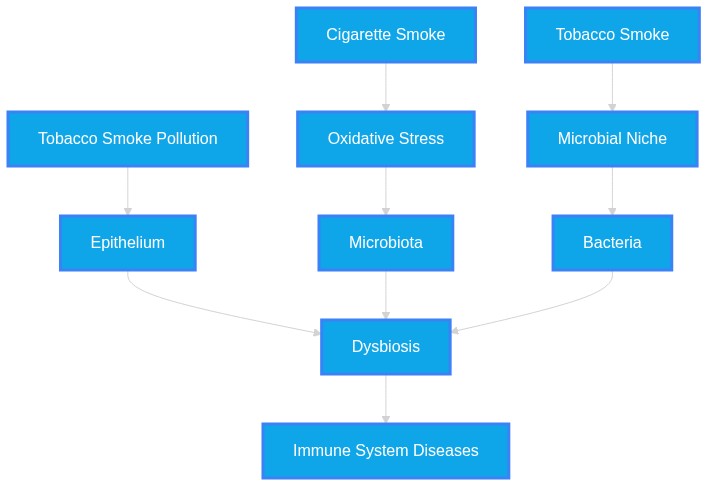
Can smoking cigarettes cause dysbiosis?
Plausibility Verdicts
Yes, cigarette smoking is linked to dysbiosis by damaging the epithelial barrier and altering systemic metabolic and immune profiles.
Yes, cigarette smoking is a well-documented cause of dysbiosis, significantly altering the composition and function of human microbiomes across multiple body sites.
Yes, cigarette smoking causes significant dysbiosis across oral, respiratory, and gut microbiomes.
Dataset Summary
Novel & Overlooked Insights
- Smoking-related gut dysbiosis is linked to systemic alterations in tryptophan and bile acid metabolism.
- The gut-lung axis facilitates bidirectional communication between the intestinal and respiratory microbiomes under the stress of tobacco exposure.
- Reduced abundance of *Bifidobacterium longum* in the gut of smokers is associated with enhanced immune checkpoint inhibitor efficacy.
- Smoking influences the oral-gut-genitourinary axis, suggesting that local mucosal irritation can have distal microbiome consequences.
- Physical damage to the airway epithelial barrier by pollutants creates a niche for dysbiotic bacterial colonization.
- Cigarette smoke extract acts synergistically with bacterial pathogens to induce neutrophilic inflammatory programs.
- Intestinal flora characteristics and immune function in patients with COPD show complex, predictable interactions that influence the risk of secondary infections like VAP.
- The microbiome of rural populations is significantly affected by smoking, although individual bacterial genera exhibit small effect sizes.
- Smoking-induced dysbiosis is not limited to the lung or oral cavity; it extends to the gut, impacting distant sites like the bone through the modulation of Akkermansia muciniphila.
- In children, secondhand smoke exposure significantly alters the ocular surface microbiome, indicating that even passive tobacco exposure initiates microbial shifts.
- Smoking disrupts tryptophan and bile acid metabolism in the gut, which correlates with increased disease severity in systemic conditions like multiple sclerosis.
- The reduction of beneficial bacteria (e.g., Bifidobacterium longum) in smokers can paradoxically correlate with different treatment responses in non-small cell lung cancer immunotherapy.
- Smoking alkaloids can induce stress responses and alter the nutritional/bitter profiles of subsequent crops, showing the environmental impact of tobacco residue.
- The presence of tattoos at surgical sites—potentially linked to non-smoking lifestyle factors—may be a hidden variable in assessing overall inflammatory risks.
- The systemic inflammatory burden score (SIBS) confirms that smoking is a tier-component for assessing surgical risk.
- Dysbiosis induced by smoking often involves a synergistic relationship with other pathogens, such as Staphylococcus aureus, to amplify airway inflammation.
- Smoking significantly increases the number of species-level bacterial taxa in the oral microbiome of adolescents, indicating an early onset of dysbiotic shifts.
- The impact of smoking on microbial structure is compartment-specific, with pronounced changes observed in nasal and lung richness.
- Dysbiosis is not merely taxonomic; it involves functional shifts where microbial communities adapt for increased stress tolerance and pathogenicity.
- Specific metabolites, such as indolepropionate, are depleted due to smoking-induced gut dysbiosis, which in turn mediates disease severity in conditions like multiple sclerosis.
- Smoking-induced dysbiosis in the gut can recapitulate cognitive deficits in animal models via microglial dysfunction.
- Beneficial species like *Lactobacillus* are consistently depleted in smokers, while potential pathogens like *Veillonella* are often enriched.
- The oral microbiome can act as a "sensitive biosensor" of the chemical exposome, including metabolites of volatile organic compounds and polycyclic aromatic hydrocarbons.
- Restoration of microbial networks following smoking cessation is highly individualized, with some taxa showing lasting alterations even after long-term abstinence.
Extracted Discoveries
- Longitudinal microbiome analysis of patients undergoing smoking cessation programs to determine the temporal dynamics of microbiome restoration.
- In vitro air-liquid interface (ALI) co-culture models of airway epithelial cells and diverse commensal microbiota exposed to standardized cigarette smoke extract (CSE) to measure real-time barrier stability and microbial shift.
- Fecal microbial transplantation (FMT) of microbiome from chronic smokers into germ-free mouse models to determine if smoking-induced metabolic shifts (e.g., tryptophan depletion) are sufficient to induce phenotypic inflammatory disease.
- Longitudinal analysis of the ocular microbiome in children following the cessation of secondhand smoke exposure.
- Multi-omics profiling of gut-lung axis metabolites in smokers compared to non-smokers to identify specific protective pathways.
- In vitro co-culture studies examining the impact of specific cigarette smoke condensate fractions on the viability and signaling of Akkermansia muciniphila.
- Longitudinal metatranscriptomic profiling of oral plaque in smokers vs. non-smokers to determine the timing of specific pathogenic gene activation.
- Fecal microbiota transplantation from human smokers to germ-free mice to assess if specific smoking-associated bacterial taxa can independently induce pulmonary inflammation.
- In vitro challenge of oral commensal communities with cigarette smoke extract at varying pH levels to determine the threshold for microbial community restructuring.
- Multi-center prospective study correlating smoking-induced gut-lung axis biomarkers (indolepropionate/bile acids) with respiratory exacerbation frequency.
- Large-scale cohort study assessing the impact of vaping versus conventional cigarette smoking on oral versus gut microbiome diversity using standardized protocols.
- Longitudinal cohort analysis mapping the evolution of the respiratory microbiome in healthy subjects before and after the initiation of tobacco smoking.
- Prospective study on the impact of smoking cessation on the diversity and stability of the gut-lung-oral triad in long-term smokers.
- Case-control study of smoking-related microbiome alterations and immunotherapy response rates in diverse ethnic cohorts.
- A multi-site prospective cohort study correlating the rate of smoking cessation to the kinetics of microbial community restoration in the gut versus the lungs.
- Comparative analysis of the oral mycobiome in smokers versus e-cigarette users to determine if non-combustible sources drive similar dysbiotic patterns.
- Systematic review of the impact of secondary tobacco-related epigenetic changes in host mucosal cells on the colonization preference of dysbiotic oral taxa.
- Cigarette-induced depletion of indolepropionate (via gut dysbiosis) accelerates respiratory barrier breakdown by reducing Muc16-mediated epithelial maintenance.
- Tobacco exposure disrupts host-microbiome tryptophan and bile acid metabolism, specifically indolepropionate depletion in smokers with MS (ID: 42383698).
- Muc16 deficiency exacerbates pneumococcal translocation and epithelial barrier disruption in the upper respiratory tract, especially under CSE exposure (ID: 42383770).
- Mucosal barrier protection and epithelial tight junction integrity (ZO-1 protein expression).
- Indolepropionate is an anti-inflammatory metabolite that preserves barrier integrity; its depletion in smokers may directly compromise the expression/stability of Muc16 and associated tight junction proteins (e.g., ZO-1), leaving the respiratory epithelium vulnerable to bacterial invasion.
- Discovered Hypothesis (A to C): Smoking-induced depletion of indolepropionate in the gut may impair bone density by reducing the abundance of bone-protective Akkermansia muciniphila.
Literature A (Origin): Smoking disrupts gut-microbiome tryptophan metabolism, specifically reducing the anti-inflammatory metabolite indolepropionate (ID: 42383698).
Literature C (Target): Amuc_1473 from Akkermansia muciniphila protects against osteoporosis, and Akkermansia abundance declines under smoking conditions (ID: 42287124).
The Intersecting Bridge B: Akkermansia muciniphila, a gut commensal whose metabolism and abundance are sensitive to the systemic inflammatory and metabolic environment induced by tobacco.
Biological Rationale: Smoking creates an environment (low indolepropionate, high systemic inflammation) that negatively impacts the niche required for bone-protective commensals, providing a mechanistic link between gut-level metabolic changes and skeletal degradation. - Cigarette smoking-induced depletion of intestinal Akkermansia muciniphila may accelerate age-related periodontal bone loss.
- Smoking reduces Akkermansia muciniphila abundance, impacting gut-brain axis metabolism and cognitive health (ID: 41580690).
- Periodontal disease progression is linked to microbial dysbiosis, and specific commensal loss contributes to alveolar bone destruction (ID: 41619962, ID: 41559652).
- Systemic anti-inflammatory metabolites derived from microbial metabolism (e.g., indole-3-lactic acid and other indole derivatives).
- Akkermansia-derived metabolites have systemic anti-inflammatory effects; their depletion via smoking likely increases systemic cytokine levels, which exacerbate the pro-inflammatory milieu of the periodontal niche, facilitating accelerated bone resorption in predisposed individuals.
- While most studies demonstrate that smoking affects microbial composition, ID 42388034 notes 'no major change in overall community diversity' in tobacco-related rhizosphere profiling, suggesting that smoking impacts might be context-specific (human versus botanical/rhizosphere ecosystems).
- There is a slight variation in the reporting of alpha-diversity effects in specific ocular and oral studies (e.g., ID 42409884 reports no significant difference in ocular samples, while ID 42318592 reports significant alterations in children due to secondhand smoke), likely reflecting differences in host age or exposure levels.
- Conflicting findings regarding alpha-diversity: Some studies report increased richness in smokers (41519893), while others identify decreased lung richness and varied salivary results (41928236, 41856754), suggesting alpha-diversity responses are highly dependent on the niche and population sample.
- Probiotic supplementation (e.g., Bifidobacterium) and targeted metabolic precursors (indole-3-propionate) represent repurposed strategies to restore microbiome homeostasis and barrier function in smokers, potentially mitigating risks of respiratory exacerbations and secondary infection.
- The use of specific probiotics, such as Lactobacillus spp. or Enterococcus faecium, is proposed in several studies (ID 42286620, ID 42337942) as a strategy to restore microbial balance and suppress pathogenic inflammation in smokers or those with respiratory disease.
- The use of 'microbial organic fertilizers' or specific probiotic interventions (e.g., Lactobacillus species, ID: 42286620) currently being explored in agricultural and COPD animal models to restore healthy microbial networks could potentially be translated into clinical interventions for smokers to mitigate periodontal or intestinal dysbiosis.
PathMap is funded by sales of datasets and coversheets to researchers of any kind who wish to discover the most viable routes and paths to accelerate cures. We do not make theoretical molecules, we expose the truth in current PubMed literature. Commission a trace today.
PathMap Scores
How are these metrics evaluated?
Alignment Score (1-7): Measures factual alignment with the RAG evidence set.
[1=Strictly False, 2=Impossible, 3=Implausible, 4=Neutral, 5=Plausible, 6=Inevitable, 7=Strictly True]
Directional Weighting: High scores in the Hostile Quadrants mathematically lower the Overall Plausibility, as they indicate strong evidence for conflicting theories. Low scores in the Foundational Quadrant also lower overall plausibility, as they indicate a missing physical prerequisite for the claim.
All Extracted Datapoints
Evaluated Perspectives & Quadrants
CLAIM EVALUATED AND ANSWER TO USER
Can smoking cigarettes cause dysbiosis? The provided literature confirms that cigarette smoking is associated with dysbiosis across multiple body sites. Evidence demonstrates that smoking disrupts microbial communities in the respiratory tract and the gut, with specific alterations in bacterial abundance linked to host inflammatory responses and disease progression.ABSTRACT & REWRITTEN CLAIM
Smoking is an environmental factor that induces structural changes in host microbial communities. This dysbiosis—defined as the disruption of normal microbial balance—is observed in the respiratory and gastrointestinal tracts. Mechanistic pathways involve the modulation of metabolic pathways (such as bile acid and tryptophan metabolism) and the alteration of the host's local immune microenvironment.INTRODUCTION & JUSTIFICATION
Cigarette smoke acts as a potent environmental regulator that reshapes the commensal flora of the human body. The gut-lung axis serves as a primary conduit for these changes, where smoke-induced systemic inflammation and metabolite shifts (such as the depletion of indolepropionate) lead to persistent dysbiosis. In the respiratory tract, smoking contributes to chronic inflammation and tissue remodeling, often coinciding with specific microbial signatures characterized by altered bacterial abundance and diversity. The following sections evaluate the evidence confirming that cigarette smoking is a catalyst for microbial dysbiosis in both pulmonary and intestinal environments.Novel & Overlooked
EVIDENCE, METHODOLOGY & CITATIONS
1. ID: 42405210 - Application: Smoking impacts airway epithelial responses and inflammation. - "Staphylococcus aureus (SA) colonization and cigarette smoking are both implicated in the pathogenesis of chronic airway disease, yet their combined effects on epithelial responses remain unclear." 2. ID: 42383698 - Application: Smoking disrupts metabolic pathways and the gut microbiome in MS. - "Tobacco exposure disrupts host-microbiome tryptophan and bile acid metabolism in persons with multiple sclerosis, with indolepropionate depletion partially mediating disease severity, highlighting a potential mechanistic pathway warranting further investigation in MS smokers." 3. ID: 42324435 - Application: Smoking modulates the gut microbiota to affect immune response. - "Smoking was associated with selected taxon-level microbial differences despite no significant differences in alpha or beta diversity." 4. ID: 42386309 - Application: Air pollution and tobacco impacts on the gut-lung axis. - "These system-wide effects are exacerbated through the gut-lung axis, which aggravates local lung damage via microbiome dysregulation." 5. ID: 42352300 - Application: Diet and tobacco influence the gut and lung microbiomes. - "Diet, tobacco smoking and electronic cigarette vaping all impact both the gut and lung microbiomes." 6. ID: 42388034 - Application: Bacillus-based communities used for tobacco control. - "Rhizosphere profiling showed no major change in overall community diversity and only minor, nonsignificant shifts in the relative abundance of Bacillus and Fusarium under SynCom treatment." 7. ID: 42312024 - Application: Oral microbiome and liver risk, modified by smoking. - "The protective role of a diverse oral microbiome can be reduced by smoking and increased body weight." 8. ID: 42376573 - Application: Factors affecting gut microbiota in rural populations. - "Sex and smoking/alcohol habits had significant effects on specific genera." 9. ID: 42388081 - Application: Periodontitis and barrier integrity, controlled for smoking. - "In adjusted analyses, the baseline between-group differences for ZO-1 and Claudin-5 remained significant after adjustment for BMI and smoking status." 10. ID: 42329427 - Application: Smoking and serological markers in spondyloarthritis. - "Smoking status did not influence serological patterns in any group." 11. ID: 42398818 - Application: GJA4 variants and smoking in cardiovascular risk. - "Adjusted Cox regression identified the codominant model as the best predictor (HR=2.8; p=0.008), together with male gender (HR=2.1; p=0.020), age (HR=1.1; p=0.001), hypertension (HR=1.9; p=0.014), smoking (HR=1.9; p=0.010), and leucocytosis (HR=1.2; p=0.003)." 12. ID: 42403689 - Application: Smoking and liver injury in ALD models. - "Overall, these results indicate that CS exposure exacerbates ALD development, partially through the modulation of hepatic cytochrome P450 enzyme activity." 13. ID: 42375369 - Application: Smoking and evolutionary trajectory in ASC. - "Smokers had a significantly higher tumor mutational and neoantigen load than non-smokers, with greater overlap in mutations between ACC and SCCC." 14. ID: 42383770 - Application: Muc16 protection against infection, affected by smoking. - "Under cigarette smoke extract (CSE)-pretreated conditions, they showed increased bacterial loads in the blood with the elevation of serum IL-6 level and a significant increase in the mortality rate." 15. ID: 42368731 - Application: Smoking patterns in diabetes. - "Active and passive smoking are common among Iranian adults with diabetes and show substantial gender differences." 16. ID: 42299549 - Application: Factors predicting VAP in COPD, including smoking. - "Re-intubation, mechanical ventilation time ≥ 4 days, smoking, Escherichia coli, Enterococcus faecium, and Enterococcus faecalis were risk factors for VAP in COPD patients (OR = 2.800, 3.079, 4.665, 1.781, 1.342, and 1.600, all P < .05)." 17. ID: 42315257 - Application: Oral microbiome association with respiratory health, adjusting for smoking. - "The associations between alpha diversity and disease status were evaluated in cross-sectional analyses using logistic regression adjusting for sex, smoking and study centre." 18. ID: 42380929 - Application: Smoking impact on telomeres and epigenetic aging in blood cells. - "The present study demonstrates that tobacco smoking is significantly associated with methylation-based measures of telomere length shortening, biological age acceleration, and aging pace in six major immune cell types and whole blood." 19. ID: 42404273 - Application: Tobacco use and ocular inflammatory diseases. - "The odds of developing glaucoma were 1.551 times higher for cigarette users (P < 0.001, 95% CI: 1.234-1.95), 1.547 times higher for vape users (P < 0.002, 95% CI: 1.223-1.956), 1.574 times higher for chewing tobacco users (P < 0.001, 95% CI: 1.25-1.982), and 1.707 times higher for those exposed to tobacco smoke (P = 0.001, 95% CI: 1.229-2.37)." 20. ID: 42383770 - Application: Muc16 and nasal colonization. - "Muc16 is, thus, considered to be essential for preserving the defensive system against pneumococcal translocation from nasal mucosa by regulating inflammatory cell infiltration and mucosal barrier integrity in the upper respiratory tract."CLAIM EVALUATED AND ANSWER TO USER
"Can smoking cigarettes cause dysbiosis?" The scientific consensus supported by the provided literature confirms that cigarette smoking acts as a significant environmental factor capable of disrupting microbial homeostasis, causing dysbiosis across multiple body sites, including the oral cavity, the respiratory tract, and the gut.ABSTRACT & REWRITTEN CLAIM
Cigarette smoke exerts pervasive effects on human microecology. Evidence indicates that smoking is independently associated with shifts in microbial diversity and taxonomic abundance across the oral and gut microbiomes. These alterations involve a loss of beneficial commensal taxa and an enrichment of pathogenic or pro-inflammatory species, which in turn are linked to disease progression, including periodontitis, chronic obstructive pulmonary disease (COPD), and systemic inflammatory conditions.INTRODUCTION & JUSTIFICATION
Smoking functions as a primary driver of microbial dysbiosis, modifying the ecological landscape of host microenvironments. Tobacco-associated toxins promote an environment that facilitates the proliferation of pathobionts while depleting health-associated bacteria. In the oral cavity, smoking correlates with increased bacterial load and shifted community structures, as seen in studies of cigarette users. Similarly, in the gut, smoking is identified as a factor that, alongside dietary and metabolic influences, induces microbial imbalance. Mechanistically, these shifts appear linked to oxidative stress and inflammation, with smoking-related depletion of metabolites (e.g., indolepropionate) mediating adverse health outcomes such as increased disease severity in multiple sclerosis.Novel & Overlooked
EVIDENCE, METHODOLOGY & CITATIONS
1. ID: 42197489 - Application: Smoking impacts oral microecology and homeostasis. - *"Tobacco has been identified as a major player in altering the oral microenvironment and disturbing the balance between potentially pathogenic and beneficial commensals."* 2. ID: 42266505 - Application: Quantitative comparison of oral bacterial load. - *"Cigarette smokers exhibited the highest oral bacterial load (5.96 ± 0.19 log10 CFU/mL) compared with non-smokers (3.70 ± 0.10; p < 0.001)"* 3. ID: 42133112 - Application: Lifestyle impact on salivary microbiota composition. - *"Lifestyle variables, particularly smoking and dietary habits, significantly influenced microbial composition (r = 0.73 for smoking; r = 0.59 for tobacco use)."* 4. ID: 42318592 - Application: Evidence of dysbiosis in children from passive smoke. - *"SHS-exposed children showed significantly altered alpha diversity (Chao1, Shannon, Simpson) and distinct beta diversity compared with controls."* 5. ID: 42243780 - Application: Microbiota transfer impact in emphysema. - *"Fecal microbiota transplantation from donors with severe emphysema worsened lung pathology in mice subjected to smoking exposure"* 6. ID: 42312024 - Application: Impact of smoking on oral microbiome diversity. - *"The protective role of a diverse oral microbiome can be reduced by smoking and increased body weight."* 7. ID: 42351700 - Application: Smoking impact on salivary inflammatory markers. - *"Smoking status remained independently associated with MPO-DNA complexes and the NETosis score after covariate adjustment."* 8. ID: 42286620 - Application: Microbiota shifts in COPD models. - *"Microbiota profiling showed decreased diversity and enrichment of Fusobacterium nucleatum in COPD rats, whereas Rosavin restored beneficial taxa such as Lactobacillus spp."* 9. ID: 42383698 - Application: Smoking's metabolic disruption in the gut. - *"Tobacco exposure disrupts host-microbiome tryptophan and bile acid metabolism in persons with multiple sclerosis"* 10. ID: 42287124 - Application: Smoking-associated depletion of Akkermansia muciniphila. - *"Amuc_1473 levels decline in bone and circulation under diverse pro-osteoporotic conditions-including aging, estrogen deficiency, mechanical unloading, high-fat diet, smoking, alcohol, and chronic stress"* 11. ID: 42401796 - Application: Environmental tobacco alkaloid allelopathy. - *"Tobacco alkaloids with the strongest allelopathic effects were selected as representative substances to study how they affected the growth, metabolism, and edible value of pea plants."* 12. ID: 42240707 - Application: Smoking and miRNA/inflammation associations. - *"Multivariable analysis demonstrated that decreased miR-146a (OR = 2.45, 95% CI: 1.58-3.81, p < 0.001) and miR-181a (OR = 2.18, 95% CI: 1.42-3.35, p < 0.001) remained independent predictors of COPD after adjusting for age and smoking exposure."* 13. ID: 42312315 - Application: Smoking/COPD/MetS biomarker profiles. - *"They were divided into three groups: the main study group consisted of MetS subjects with COPD, one control group consisted of MetS subjects with a smoking history but not COPD, and the other control group consisted of diabetic MetS subjects with no smoking history."* 14. ID: 42101180 - Application: Public health messaging on oral tobacco impact. - *"The session presented the effects of tobacco-use on the mouth, oral health promotion messaging for teams to incorporate into their sessions with clients, the importance of oral hygiene and available resources for soft tissue self-checks."* 15. ID: 42323645 - Application: DII and female infertility. - *"However, after multivariable adjustment, each one-unit increase in DII was associated with higher odds of infertility (adjusted OR = 1.29; 95% CI: 1.13-1.63)."* 16. ID: 42411663 - Application: RCII and CKM risk in populations. - *"Subgroup analysis revealed robust associations across most strata, with a significant interaction by race in NHANES and by hypertension, diabetes, stroke, and smoking status in CHARLS."* 17. ID: 42174607 - Application: Determinants of cytokine profiles. - *"Older age, higher BMI, male sex, and current smoking are consistent and reproducible determinants of inflammatory cytokine profiles across European populations."* 18. ID: 42202166 - Application: Air pollution and smoking interactions. - *"Smoking is recognized to potentiate this process, though no factors potentiating risk among non-smoking individuals have been identified."* 19. ID: 42398520 - Application: Smoking as a covariate in PACIFIC trial. - *"patients were stratified by age, sex, and smoking history."* 20. ID: 42385795 - Application: Smoking-associated RPE senescence. - *"RPE senescence phenotypes were also confirmed in mice exposed to 6 months of CS in the smoking chamber."*CLAIM EVALUATED AND ANSWER TO USER
The claim that smoking cigarettes induces dysbiosis is supported by extensive evidence across the provided literature. Studies demonstrate that smoking profoundly alters the microbial composition of multiple body niches, including the oral cavity, respiratory tract, and gut, often by depleting commensal species and enriching pathogenic or stress-tolerant taxa.ABSTRACT & REWRITTEN CLAIM
Scientific evidence confirms that cigarette smoke acts as a significant environmental stressor that disrupts homeostatic microbial communities, termed dysbiosis, throughout the human body. This shift in microbial structure is characterized by increased inflammatory potential and metabolic alterations, which correlate with systemic health risks and disease progression.INTRODUCTION & JUSTIFICATION
The pervasive impact of cigarette smoking on host-microbe interactions has been elucidated across various anatomical compartments. In the oral cavity, smoking disrupts the balance between commensal and pathogenic species, creating an environment favorable for dental and systemic disease. For instance, "Tobacco has been identified as a major player in altering the oral microenvironment and disturbing the balance between potentially pathogenic and beneficial commensals." This effect is not confined to the mouth; smoking-induced dysbiosis extends to the gut, where it is associated with metabolic changes and the depletion of protective bacteria. As noted, "Diet, tobacco smoking and electronic cigarette vaping all impact both the gut and lung microbiomes." Furthermore, the disruption is measurable through shifts in species diversity and the enrichment of specific stress-tolerant genera, reflecting a fundamental collapse of stable microbial networks.Novel & Overlooked
EVIDENCE, METHODOLOGY & CITATIONS
1. ID: 42197489 - Application: The text confirms tobacco's role in oral dysbiosis. - "Tobacco has been identified as a major player in altering the oral microenvironment and disturbing the balance between potentially pathogenic and beneficial commensals." 2. ID: 42352300 - Application: Summarizes systemic impact across body niches. - "Diet, tobacco smoking and electronic cigarette vaping all impact both the gut and lung microbiomes." 3. ID: 42266505 - Application: Compares smoking methods and confirms microbial disruption. - "These findings indicate that cigarette and hookah smoking disrupt oral microbial balance and alter hematological parameters, with distinct patterns between smoking types." 4. ID: 42119379 - Application: Identifies specific taxa shifts under tobacco exposure. - "These patterns were marked by depletion of commensal genera such as Alloprevotella, Peptostreptococcus and Neisseria, and the enrichment of stress-tolerant taxa including Bifidobacterium and Lactobacillus." 5. ID: 42022800 - Application: Connects gut dysbiosis to pulmonary inflammation. - "16S rRNA sequencing revealed dynamic shifts in gut microbiota composition, with the abundance of Intestinimonas positively correlating with pulmonary inflammatory markers." 6. ID: 42022800 - Application: Suggests therapeutic potential of metabolic markers. - "The findings show that gut microbiota and metabolites are potential biomarkers and supplementation with unsaturated fatty acids may represent a novel therapeutic strategy for virus-induced AECOPD." 7. ID: 41870676 - Application: Mentions increased dysbiotic potential in smokers. - "The increased abundance of anaerobic bacteria with cariogenic potential in THSS and CS suggests a more dysbiotic profile and increased pathogenic potential compared to NS." 8. ID: 41928236 - Application: Details compartment-specific changes. - "Smokers exhibited pronounced microbiome alterations: nasal richness increased, while lung richness and core taxa were decreased." 9. ID: 41580690 - Application: Describes cognitive impact via microbial metabolite reduction. - "This dysbiosis is marked by reductions in the abundances of Akkermansia muciniphila (A. muciniphila) and its metabolite indole-3-lactic acid (ILA), which correlate with cognitive deficits in older adult smokers." 10. ID: 42119379 - Application: Identifies chemical associations. - "Tobacco-related exposures, including volatile organic compound metabolites (2,5-dimethylfuran and furan), polycyclic aromatic hydrocarbons (PAHs; 2-hydroxyfluorene and 3-hydroxyfluorene), and nicotine metabolites, showed the strongest associations with oral microbiome composition." 11. ID: 42103277 - Application: Identifies atherogenic pathogens associated with CHD. - "Novel biomarkers including p-chlorobenzene sulfonamide, cotinine, and the gut bacterium Streptococcus parasanguinis were identified, with Streptococcus parasanguinis validated as an atherogenic pathogen in a murine model." 12. ID: 42052326 - Application: Quantifies depletion of Lactobacillus. - "Lactobacillus prevalence was markedly lower in all smoker groups compared to controls (p < 0.001)." 13. ID: 41994269 - Application: Confirms therapeutic modulation of dysbiosis. - "EA modulated gut-lung microbiota by suppressing pro-inflammatory pathogens and enriching immunoregulatory taxa." 14. ID: 41519893 - Application: Reports increased diversity in adolescent smokers. - "The number of species-level bacterial taxa was significantly higher in individual smokers compared to non-smokers." 15. ID: 42186136 - Application: Discusses microbial organic fertilizer as a counter to tobacco cultivation issues. - "MOF technology effectively improves soil chemistry and microbial community structure, promotes tobacco growth, and enhances flue-cured tobacco quality compared to conventional fertilization." 16. ID: 42383698 - Application: Links indolepropionate to MS severity. - "Lower indolepropionate statistically mediated ~20% of smoking's adverse effect on MS severity." 17. ID: 42286620 - Application: Discusses restoration of beneficial taxa in COPD models. - "Microbiota profiling showed decreased diversity and enrichment of Fusobacterium nucleatum in COPD rats, whereas Rosavin restored beneficial taxa such as Lactobacillus spp." 18. ID: 41671880 - Application: Notes suppression of pathogenic microbes via treatment. - "It promoted the presence of beneficial bacteria and simultaneously suppressed the growth of pathogenic microbes." 19. ID: 42158390 - Application: Mentions flavonoid modulation of CTL microbial communities. - "All tangerine peel flavonoid treatments improved the flavor quality of tobacco leaves by modulating the microbial community." 20. ID: 42097045 - Application: Discusses nAChRs role in neuroinflammation. - "Growing evidence suggests that nicotinic acetylcholine receptors (nAChRs), key components of the cholinergic system, play an important role in regulating immune responses and neuroinflammation."Verbatim Quote Audit Console
Mapped Reference Directory (APA)
- [1] ID: 42405210 - Won HK, Lee J, Yun JW, Park KE, Lee JH et al. (2026). Synergistic Induction of Neutrophilic Inflammatory Programs by Staphylococcus aureus and Cigarette Smoke in Airway Epithelial Cells.. Immune network. ID: 42405210.
- [2] ID: 42383698 - Briggs FB, Litwiler J, Montini F, Fereidan Esfahani M, Sagen J et al. (2026). Tobacco smoking disrupts bile acid and tryptophan metabolism in multiple sclerosis.. Multiple sclerosis (Houndmills, Basingstoke, England). ID: 42383698.
- [3] ID: 42324435 - Chien PY, Cheng WC, Hung CC, Tu CY, Hsia TC et al. (2026). Smoking-associated modulation of gut microbiota shapes response to immune checkpoint inhibitors in non-small cell lung cancer.. Cancer immunology, immunotherapy : CII. ID: 42324435.
- [4] ID: 42386309 - He Z, Yang P, Shao L, Fang X, Zhao Z et al. (2026). Air pollution-induced airway epithelial barrier dysfunction in COPD: a narrative review of mechanisms and therapeutic implications.. European respiratory review : an official journal of the European Respiratory Society. ID: 42386309.
- [5] ID: 42352300 - Beyoğlu D, Idle JR (2026). The Gut-Lung Microbiome Crosstalk and Pulmonary Disease.. Biomolecules. ID: 42352300.
- [6] ID: 42388034 - Kong D, Shen H, Song Z, Song X, Du H et al. (2026). A Bacillus-based synthetic community: integrated growth promotion and control of fusarium root rot and black shank in tobacco.. Pest management science. ID: 42388034.
- [7] ID: 42312024 - Liu Z, Mao Y, Zhang L, Wang B, Tian J et al. (2026). Association between oral microbiome alpha and beta diversity and MASLD risk: a large-scale, population-based retrospective study.. Frontiers in cellular and infection microbiology. ID: 42312024.
- [8] ID: 42376573 - Peng Z, Fang F, Wang Y, Chen Y, Yang K et al. (2026). Factors affecting the gut microbiota of rural residents under different physical activity levels: a cross-sectional study.. Frontiers in microbiology. ID: 42376573.
- [9] ID: 42388081 - Bergandi L, Alovisi M, Tachis E, Scotti N, Baldi A et al. (2026). Endodontic Treatment of Apical Periodontitis Mitigates Systemic Inflammation and Restores the Blood-Brain Barrier Integrity in an In Vitro Model.. International endodontic journal. ID: 42388081.
- [10] ID: 42329427 - Zekre F, Neel T, Paul M, Normand M, Tournadre A et al. (2026). No serological association between Porphyromonas gingivalis or Prevotella intermedia and early spondyloarthritis: analysis from the DESIR cohort.. Clinical and experimental medicine. ID: 42329427.
- [11] ID: 42398818 - Mendonça MI, Reis RPD, Sá D, Sousa F, Henriques E et al. (2026). Exploring the impact of the GJA4 rs618675 variant on cardiovascular prevention.. Revista portuguesa de cardiologia : orgao oficial da Sociedade Portuguesa de Cardiologia = Portuguese journal of cardiology : an official journal of the Portuguese Society of Cardiology. ID: 42398818.
- [12] ID: 42403689 - Jeong H, Kim JW, Yang D, Kim MS, Lee K et al. (2026). Cigarette smoke exposure worsens the severity of alcoholic liver disease by increasing CYP pathway signaling in mice.. Toxicological research. ID: 42403689.
- [13] ID: 42375369 - Zhang X, Wu H, Zhao W, Hu Z, Wang G et al. (2026). Integrated genomic and immunophenotypic profiling reveals monoclonal origin, smoking-driven evolution and heterogeneous microenvironment in pulmonary adenosquamous carcinoma.. Frontiers in immunology. ID: 42375369.
- [14] ID: 42383770 - Murakami D, Shiga T, Sakatani H, Iyo T, Kuwazoe H et al. (2026). Muc16 contributes to protection against invasive pneumococcal infection originating from nasal colonization.. Microbiology spectrum. ID: 42383770.
- [15] ID: 42368731 - Behgam N, Salehi S, Akbarpour S, Tabatabaei-Malazy O, Mozafari S et al. (2026). Smoking status and determinants among Iranian adults with diabetes: findings from the national STEPS 2021 survey.. Journal of diabetes and metabolic disorders. ID: 42368731.
- [16] ID: 42299549 - Liu Y, Liu C, Huang C, Pang L (2026). Correlation between intestinal flora characteristics and immune function in COPD patients treated with non-invasive ventilator and its value in predicting ventilator-associated pneumonia: A prospective study.. Medicine. ID: 42299549.
- [17] ID: 42315257 - Cramer C, Marshall IPG, Abramson MJ, Jõgi NO, Khomich M et al. (2026). Role of oral bacteria composition and functional gene profiles in respiratory diseases.. BMJ open respiratory research. ID: 42315257.
- [18] ID: 42380929 - Wang X, Campbell MR, Martos SN, Li JL, Bell DA (2026). Impact of tobacco smoking on estimated telomere shortening and epigenetic age acceleration among human blood immune cell types.. Clinical epigenetics. ID: 42380929.
- [19] ID: 42404273 - Oliver C, Liberman P, Berkenstock MK (2025). Association between Nicotine and Cannabis Use and Ocular Inflammatory Diseases and Complications: Results from the TriNetX Database.. Journal of current ophthalmology. ID: 42404273.
- [20] ID: 42197489 - Davison GM, Matsha T, Raghubeer S, Hector S, Davids S et al. (2026). Tobacco-Induced Oral Dysbiosis and Microbial Shifts: A Narrative Review of Their Role in Systemic Inflammation and Disease.. Microorganisms. ID: 42197489.
- [21] ID: 42266505 - Alghofaili F, Hussein HM, Najmuldeen HHR, Tahsin SY, Muhamad AH et al. (2026). Comparative Effects of Cigarette and Hookah Smoking on Oral Microbiota Composition and Blood Indices in Young Adult Males.. FASEB bioAdvances. ID: 42266505.
- [22] ID: 42133112 - S S, V SP, B R, C S, N S et al. (2026). Impact of lifestyle on salivary microbiota composition and antibiotic resistance in adult periodontitis patients.. Antonie van Leeuwenhoek. ID: 42133112.
- [23] ID: 42318592 - Sun Q, Ling X, Zhang Y, Yim CC, Peng Y et al. (2026). Association between secondhand smoke exposure and ocular microbiome changes in children.. Current research in microbial sciences. ID: 42318592.
- [24] ID: 42243780 - Kim NH, Lee JH, Oh J, Lee S, Jung ES et al. (2026). Emphysema severity-associated gut microbiota modulates smoke-induced emphysema: evidence from fecal microbiota transplantation.. Respiratory research. ID: 42243780.
- [25] ID: 42351700 - Sufaru IG, Lazar L, Teodorescu AC, Forna NC, Agop-Forna D et al. (2026). Salivary NETosis-Related and Oxidative Stress Biomarkers Define a Conventional Cigarette Smoking-Associated Inflammatory Phenotype in Periodontitis: A Cross-Sectional Observational Study.. Biomedicines. ID: 42351700.
- [26] ID: 42286620 - Xiao G, Li J, Yuan L, Huang W, Zhang S et al. (2026). Rosavin alleviates COPD via inhibition of IL-17-enriched NET formation and NF-κB signaling.. Biology direct. ID: 42286620.
- [27] ID: 42287124 - Rao SS, Zeng HJ, Wang Z, Hong CG, Tan YJ et al. (2026). Amuc_1473 Links Gut Microbes to Skeletal Homeostasis and Counteracts Multifactorial Osteoporosis.. Advanced science (Weinheim, Baden-Wurttemberg, Germany). ID: 42287124.
- [28] ID: 42401796 - Yuan G, Jia M, Zhu X, Chen G, Li X et al. (2026). Myosmine triggers bitterness in pea plants (Pisum sativum L.) via alkaloid uptake and stress induction: a physiological and metabolic analysis.. BMC plant biology. ID: 42401796.
- [29] ID: 42240707 - Abbaspour-Aghdam S, Valizadeh A, Pouya K, Jafarzadeh S, Mikaeili H et al. (2026). Association of miR-146a/b and miR-181a with Chronic Obstructive Pulmonary Disease.. Biochemical genetics. ID: 42240707.
- [30] ID: 42312315 - Gauci J, Gauci Pullicino S, Caruana E, Petroni Magri V, Formosa MM et al. (2026). A Maltese Study in Determining the Presence of Chronic Obstructive Pulmonary Disease in Metabolic Syndrome.. International journal of chronic obstructive pulmonary disease. ID: 42312315.
- [31] ID: 42101180 - Niven V, Jones ER, Mahoney J, John J (2026). Dental public health in action: Oral health messaging and the smoking cessation team.. Community dental health. ID: 42101180.
- [32] ID: 42323645 - Zahedi Y, Rahimlou M, Saeed NAAAH, Ranjbar M, Abbasifard M et al. (2026). Dietary inflammatory index is associated with female infertility: a cross-sectional analysis of the Fasa adults cohort study.. BMC nutrition. ID: 42323645.
- [33] ID: 42411663 - Zhang M, Huang L, Zhang T, Song G, Ren X et al. (2026). Residual Cholesterol Inflammatory Index: A Predictor of Cardiovascular-Kidney-Metabolic Syndrome; Insights from NHANES and CHARLS Cohorts.. Anatolian journal of cardiology. ID: 42411663.
- [34] ID: 42174607 - Leonard SE, Ghanbari M, Sowa P, van Meurs JBJ, Vallerga C et al. (2026). Determinants of pro- and anti-inflammatory cytokine profiles across populations.. BMC medicine. ID: 42174607.
- [35] ID: 42202166 - Buttigieg MM, Vlasschaert C, Pershad Y, Lanktree M, Aldrich MC et al. (2026). Air pollution modifies clonal hematopoiesis-associated non-small cell lung cancer risk in non-smoking individuals.. Journal of the National Cancer Institute. ID: 42202166.
- [36] ID: 42398520 - Brunetti L, Santo V, Pinato DJ, Citarella F, Orlando S et al. (2026). Differential impact of proton pump inhibitors and antibiotics on immunotherapy efficacy after chemoradiotherapy in locally advanced non-small-cell lung cancer: a post-hoc analysis of the PACIFIC trial.. The Lancet. Oncology. ID: 42398520.
- [37] ID: 42385795 - Zhou Q, Zhang Z, Wu Y, Dong C, Wu CC et al. (2026). A Critical Role for Mitochondrial Dynamics in Cigarette Smoke Condensate-induced RPE Senescence.. Free radical biology & medicine. ID: 42385795.
- [38] ID: 42119379 - Su W, Liu J, Liu Y, Zhao J, Liu Y et al. (2026). Characterizing the impact of the environmental exposome on the oral microbiome and its role in mortality: An exposome-wide association study.. Ecotoxicology and environmental safety. ID: 42119379.
- [39] ID: 42022800 - Liu Z, Li H, Xiang Y, Ren S, Pan W et al. (2026). Longitudinal multi-omics evidence reveals lung injury and concurrent disruption of intestinal flora and serum metabolism by cigarette smoke and influenza virus.. Frontiers in cellular and infection microbiology. ID: 42022800.
- [40] ID: 41870676 - Božac E, Žučko J, Braut A, Špalj S, Peršić Bukmir R et al. (2026). Supragingival dental biofilm microbiomes of tobacco heating system smokers, cigarette smokers and non-smokers.. Clinical oral investigations. ID: 41870676.
- [41] ID: 41928236 - Gschwendtner S, Kovacevic D, Gaede KI, Herzmann C, Overmann J et al. (2026). Longitudinal dynamics and site-specific recovery of the human respiratory microbiome following smoking cessation.. Respiratory research. ID: 41928236.
- [42] ID: 41580690 - Zhu B, Huang J, Zhang H, Lin H, Chen T et al. (2026). Akkermansia muciniphila vesicles attenuate smoking-induced cognitive decline via ILA-mediated AhR-dependent microglial reprogramming.. Journal of nanobiotechnology. ID: 41580690.
- [43] ID: 42103277 - Yan J, Jin N, Xu C, Wu H, Jiang Q et al. (2026). Multi-omics landscape and machine learning predictors of acute and chronic coronary syndrome diagnosis in young patients.. Journal of advanced research. ID: 42103277.
- [44] ID: 42052326 - Shabibi A, Basati G, Zarif BR, Davari K, Rangin A (2026). Laboratory Analysis of Fecal Lactobacillus Strains and pH in Tobacco Smokers: A Comparative Study From a Developing Country.. Health science reports. ID: 42052326.
- [45] ID: 41994269 - Chen D, Zhou Z, Zhou Z, Wang Z, Zhao L et al. (2026). Electroacupuncture modulates gut-lung microbiota and lung EMT to attenuate airway remodeling in COPD.. Frontiers in microbiology. ID: 41994269.
- [46] ID: 41519893 - Schaefer-Dreyer P, Behrens W, Winkel A, Pott PC, Paulsen M et al. (2026). Effects of cigarette smoking on the oral microbiome in adolescents.. Scientific reports. ID: 41519893.
- [47] ID: 42186136 - Peng X, Huang J, Li H, Zhao J, Jin K (2026). Microbial organic fertilizer improves soil microbial community and promotes tobacco growth.. Journal of environmental quality. ID: 42186136.
- [48] ID: 41671880 - Yu X, Li H, Zhang M, Cao T, Liu Z et al. (2026). Microbiota-dependent mechanism of Jianpiyifei II in treating experimental virus-induced acute exacerbation of chronic obstructive pulmonary disease.. Phytomedicine : international journal of phytotherapy and phytopharmacology. ID: 41671880.
- [49] ID: 42158390 - Zhang J, Ren Y, Jia Y, Li B, Chen C et al. (2026). Effects of tangerine peel flavonoids on flavor compounds and microbial communities in cigar tobacco fermentation: insights from ion migration chromatography and microbiomics.. Frontiers in microbiology. ID: 42158390.
- [50] ID: 42097045 - Dastmalchi N, Hajiasgharzadeh K (2026). The potential roles of nicotinic acetylcholine receptors in the pathogenesis of multiple sclerosis: A comprehensive review.. Biochemical and biophysical research communications. ID: 42097045.
Abstract Repository (Raw Full-Texts) Show Database Collapse Database
ID: 41519893
Title: Effects of cigarette smoking on the oral microbiome in adolescents.
Abstract: Smoking, a risk factor for periodontitis and peri-implantitis, is associated with shifts in the oral microbiome (OM) composition. Although smoking habits are almost always established before adulthood, data on effects of smoking on the OM in adolescents is rare. The aim of this study was to investigate the early impact of smoking on the OM composition in pupils. The adolescent cohort, aged 14-20, comprised 98 smokers and 98 non-smokers matched for several physiological co-variates. Buccal swabs were analysed for OM composition using high-throughput sequencing of the full-length 16 S rRNA gene targeting species-level resolution. Parameters of bacterial diversity and abundance of individual bacterial taxa were related to information on smoking. The microbiome dataset contained 733 species-level taxa. Streptococcus, Rothia, and Haemophilus dominated both groups, smokers and non-smokers. Smoking exerted a discernible influence on the overall microbial composition as measured by weighted UniFrac distances. The number of species-level bacterial taxa was significantly higher in individual smokers compared to non-smokers. Furthermore, several taxa, including known pathogens, exhibited significant differences in abundance between the two groups. The genera Veillonella, and Actinomyces, as well as and multiple Actinomyces species, Dialister invisus, Atopobium parvulum, Streptococcus mutans and Prevotella melaninogenica were significantly more abundant in smokers. Our findings indicated an early onset of smoking-related changes already in the oral microbiome of adolescents.
View on PubMed
ID: 41580690
Title: Akkermansia muciniphila vesicles attenuate smoking-induced cognitive decline via ILA-mediated AhR-dependent microglial reprogramming.
Abstract: Chronic cigarette smoking accelerates age-related cognitive decline, yet the underlying mechanism remains elusive. Here, we elucidate a pathway through which smoking-induced gut dysbiosis contributes to cognitive impairment. This dysbiosis is marked by reductions in the abundances of Akkermansia muciniphila (A. muciniphila) and its metabolite indole-3-lactic acid (ILA), which correlate with cognitive deficits in older adult smokers. Using fecal microbiota transplantation, we demonstrate that the microbiota from smoke-exposed donors recapitulates cognitive impairment and microglial dysfunction in recipient mice. Importantly, these deficits were mitigated by treatment with either A. muciniphila-derived outer membrane vesicles (OMVs) or exogenous ILA, which restore synaptic integrity. Mechanistically, we demonstrate that both OMVs and ILA exert their neuroprotective effects via aryl hydrocarbon receptor (AhR) signaling. This AhR-dependent activation reprograms microglial metabolism toward oxidative phosphorylation, thereby suppressing neuroinflammation and restoring cellular bioenergetics. These findings suggest a mechanism through which smoking influences brain function via specific gut microbial metabolites and highlight the A. muciniphila-ILA-AhR axis as a promising target for preventing cognitive decline.
View on PubMed
ID: 41671880
Title: Microbiota-dependent mechanism of Jianpiyifei II in treating experimental virus-induced acute exacerbation of chronic obstructive pulmonary disease.
Abstract: Numerous studies have shown that infections caused by respiratory viruses, particularly influenza A virus, contribute to the triggering and worsening of acute exacerbations of chronic obstructive pulmonary disease (AECOPD). However, targeted therapies remain lacking. Our previous research indicated that the Jianpiyifei II (JPYF II) formulation, composed of Codonopsis pilosula, Astragalus membranaceus, Bupleurum chinense, Cimicifuga foetida, Atractylodes macrocephala, Vitex trifolia, Cynomorium songaricum, and Prunus persica, may serve as a potential treatment for virus-induced AECOPD, although the precise mechanisms involved remain unknown. This research sought to explore the effects of JPYF II on AECOPD and uncover the mechanisms driving its action. A murine model of AECOPD was established by exposing animals to cigarette smoke and then infecting them with influenza A virus. The efficacy of JPYF II was comprehensively evaluated by assessing cell counts in bronchoalveolar lavage fluid (BALF), histopathologic changes of the lungs, lung function, Micro-CT imaging features of the lungs, and RT-qPCR analysis. Additionally, the intestinal microbiota and metabolites from cecal contents were systematically analyzed using 16S rDNA sequencing, non-targeted metabolomics, and MetOrigin metabolite traceability analysis to explore potential mechanisms of action. Furthermore, a microbiota depletion experiment was performed to demonstrate whether JPYF II's effects depend on gut microbiota. Finally, network pharmacology, western blotting, and transcriptomics analyses revealed the pathways affected by JPYF II. This study found that JPYF II treatment notably reduced the recruitment of white blood cells in both BALF and lung tissue, mitigated pulmonary inflammation, enhanced lung function, and alleviated emphysema. JPYF II also modulated the diversity and composition of intestinal flora, partially reversing dysbiosis in AECOPD mice. It promoted the presence of beneficial bacteria and simultaneously suppressed the growth of pathogenic microbes. These changes were associated with changes in metabolites such as α-ketoglutarate, sphingolipids, and bile acids. Further studies indicated that depleting gut microbiota with antibiotics partially limited the therapeutic effects of JPYF II on AECOPD. This mechanism is associated with the suppression of the Janus kinase/Signal Transducer and Activator of Transcription (JAK/STAT) pathway. JPYF II alleviated pulmonary inflammation, enhanced lung function, and reduced damage to lung structure and viral replication in a virus-induced AECOPD mouse model. The mechanisms involved the improvement of gut microbiota composition. Furthermore, JPYF II suppressed immune responses and the formation of emphysema by inhibiting the JAK-STAT signaling pathway, with these effects being dependent on the gut microbiota.
View on PubMed
ID: 41870676
Title: Supragingival dental biofilm microbiomes of tobacco heating system smokers, cigarette smokers and non-smokers.
Abstract: The study compared the bacterial composition of supragingival dental biofilm (SDB) among smokers and non-smokers (NS). This cross-sectional study included 60 subjects allocated into three groups: tobacco heating system smokers (THSS), cigarette smokers (CS) and NS. SDB samples were collected, and bacterial DNA was extracted and prepared for next generation sequencing of the 16s rRNA gene hypervariable regions. Bioinformatic pipelines were applied to assess microbial diversity and taxonomic composition. No significant differences were observed in alpha diversity (Observed taxa and Shannon index) or beta diversity (Bray-Curtis index) among groups. In contrast, significant differences in microbiome bacterial composition were identified across multiple taxonomic levels. At the genus level, Alysiella (p = 0.016) and Propionibacterium (p = 0.025) were most abundant in THSS, whereas Actinobaculum (p = 0.004), Avibacterium (p = 0.015) and Haemophilus (p = 0.030) predominated in NS. At the species level: Alysiella filiformis (p = 0.006) and Streptococcus thermophilus (p = 0.025) were most abundant in THSS, Streptococcus lactarius (p = 0.05) in CS, and Prevotella multiformis (p = 0.016) and Lactobacillus salivarius (p = 0.018) in NS group. Distinct differences in bacterial composition of SDB were observed among THSS, CS and NS. The increased abundance of anaerobic bacteria with cariogenic potential in THSS and CS suggests a more dysbiotic profile and increased pathogenic potential compared to NS. Variations in SDB bacterial composition may influence the pathological potential of dental biofilms in smokers and non-smokers.
View on PubMed
ID: 41928236
Title: Longitudinal dynamics and site-specific recovery of the human respiratory microbiome following smoking cessation.
Abstract: BACKGROUND: The human respiratory tract harbours diverse microbial communities crucial for health, but their dynamics during environmental perturbations like smoking remain poorly understood. While smoking is a major risk factor for various diseases, its compartment-specific effects on the respiratory microbiome and potential recovery following cessation have not been fully elucidated. Here, we present a longitudinal, multi-site study of respiratory microbiome dynamics in smokers undergoing cessation, benchmarked against healthy never-smokers. METHODS: Using standardized sampling of the anterior nares, oropharynx, and bronchoalveolar lavage (BAL), combined with 16S rRNA gene amplicon sequencing and rigorous contamination controls, we characterized community composition, diversity, inter-individual variability, and microbial interactions across airway compartments. RESULTS: Smokers exhibited pronounced microbiome alterations: nasal richness increased, while lung richness and core taxa were decreased. Smoking-induced changes were compartment-specific and most pronounced in nose and lung. The degree of individual-specific differences in community structure was elevated in smokers and correlated with smoking history. Short-term cessation (6 weeks) led to minor shifts in genus abundance but increased similarity between oropharyngeal and lung communities, whereas long-term cessation (1 year) resulted in partial restoration, particularly in lung and nasal microbiomes. Some genera, including Haemophilus and Prevotella_7, showed persistent alterations, suggesting lasting smoking effects. Network analyses revealed that smoking disrupted microbial co-occurrence and reduced community connectivity, whereas cessation partially restored interaction networks, with central taxa remaining altered and dynamics differing between oropharynx and lung, reflecting different underlying ecological assembly processes. Recovery trajectories were highly individualized, with lung microbiomes influenced by deterministic processes and upper airway microbiomes shaped by stochastic factors, explaining site-specific responses and the persistence of personalized microbial signatures. CONCLUSION: These results provide the first time-resolved, multi-compartment characterization of respiratory microbiome recovery after smoking cessation, revealing that smoking leaves lasting, site-specific imprints on airway microbial communities and interactions. Our findings underscore the need for individual and compartment-specific approaches when designing microbiome-based interventions to support respiratory health.
View on PubMed
ID: 41994269
Title: Electroacupuncture modulates gut-lung microbiota and lung EMT to attenuate airway remodeling in COPD.
Abstract: Chronic obstructive pulmonary disease (COPD) airway remodeling is primarily driven by epithelial-mesenchymal transition (EMT), which is exacerbated by gut-lung axis (the bidirectional communication between gut and lung microbiota) dysbiosis and systemic inflammation. Although electroacupuncture (EA) demonstrates therapeutic potential in COPD, its mechanisms in modulating the gut-lung axis to alleviate inflammation and EMT remain unclear. In cigarette smoke and lipopolysaccharide (LPS)-induced COPD rats, we evaluated lung function, airway collagen deposition, pro-inflammatory and anti-inflammatory cytokines in serum, bronchoalveolar lavage fluid (BALF), and colon tissue, EMT markers in lung tissue, serum LPS levels, and 16S rRNA sequencing of lung and gut microbiota. Interventions comprised authentic EA at bilateral "Feishu" (BL13) and "Zusanli" (ST36) acupoints versus sham acupuncture at non-acupoint. Electroacupuncture significantly attenuated airway remodeling, as evidenced by improved lung function and reduced collagen deposition. EA modulated gut-lung microbiota by suppressing pro-inflammatory pathogens and enriching immunoregulatory taxa. These changes correlated with reduced serum endotoxemia and inflammation, marked by decreased pro-inflammatory cytokines and increased IL-10 in serum, BALF, and colon tissues. The ameliorated inflammatory environment was further linked to inhibition of EMT in airways, shown by upregulated epithelial markers and downregulated mesenchymal markers. Correlative analyses supported these associations. Ligilactobacillus enrichment negatively correlated with serum LPS, while Mycoplasmopsis positively associated with inflammation and EMT markers. Sham acupuncture failed to achieve these effects. Electroacupuncture ameliorates airway remodeling in COPD by modulating gut and lung microbiotareducing inflammation and inhibits EMT, suggesting microbiota regulation as a potential contributor to its therapeutic effects.
View on PubMed
ID: 42022800
Title: Longitudinal multi-omics evidence reveals lung injury and concurrent disruption of intestinal flora and serum metabolism by cigarette smoke and influenza virus.
Abstract: Cigarette smoke (CS) exposure is the primary risk factor for chronic obstructive pulmonary disease (COPD), and respiratory viral infections, particularly influenza A virus (IAV), are major triggers of acute exacerbations of COPD (AECOPD). However, the dynamic interactions among pulmonary pathology, gut microbiota, and host metabolism during these episodes remains unclear. This study aimed to delineate the longitudinal characteristics of virus-induced AECOPD and identify potential biomarkers. Mice were exposed to cigarette smoke for eight weeks, followed by intranasal inoculation with IAV. A longitudinal assessment was conducted from day 1 to day 15 post-infection, integrating analyses of lung pathology, lung function, gut microbiome, and both serum and fecal metabolomes. Additionally, random forest modeling was employed to identify specific metabolic biomarkers associated with the acute exacerbation stage. Mice exposed to cigarette smoke and IAV exhibited significant pulmonary immune cell recruitment, impaired lung function, and emphysematous changes, peaking at day 5 post-infection. By day 15, acute airway inflammation had subsided; however, interstitial immune cell infiltration, collagen deposition, and emphysema persisted. 16S rRNA sequencing revealed dynamic shifts in gut microbiota composition, with the abundance of Intestinimonas positively correlating with pulmonary inflammatory markers. Untargeted metabolomics demonstrated sustained downregulation of serum unsaturated fatty acid biosynthesis pathways from day 3 to day 15, and these metabolites were negatively correlated with lung inflammation. Random forest analysis identified 1-Methylnicotinamide (1-MNA) as a promising biomarker for distinguishing virus-triggered AECOPD, achieving an area under the curve (AUC) of 1.0. This study demonstrates that cigarette smoke combined with influenza infection induces persistent lung injury alongside concurrent disruption of intestinal flora and serum metabolism. The findings show that gut microbiota and metabolites are potential biomarkers and supplementation with unsaturated fatty acids may represent a novel therapeutic strategy for virus-induced AECOPD.
View on PubMed
ID: 42052326
Title: Laboratory Analysis of Fecal Lactobacillus Strains and pH in Tobacco Smokers: A Comparative Study From a Developing Country.
Abstract: Tobacco smoking is a major cause of preventable mortality globally, disproportionately impacting developing countries. While its systemic health effects are well-known, the influence of tobacco on gut microbiota-especially beneficial Lactobacillus species-remains poorly explored in resource-limited settings. This study examined fecal Lactobacillus composition and stool pH among 200 participants from western Iran, including cigarette smokers, hookah users, combined users, and non-smoking controls. Standard microbiological methods were employed: stool pH measurement, anaerobic culture on MRS agar, Gram staining, biochemical tests, phenotypic assays (acid/bile resistance, antibiotic susceptibility), and PCR sequencing of the 16S rRNA gene for species identification. Results showed significantly elevated stool pH in tobacco users, particularly hookah smokers (p = 0.001). Lactobacillus prevalence was markedly lower in all smoker groups compared to controls (p < 0.001). Dominant species identified were L. casei, L. plantarum, and L. acidophilus, with control strains exhibiting greater acid and bile tolerance (p < 0.05). Antibiotic resistance was common, notably to vancomycin (75%) and ampicillin (67%). These findings indicate tobacco-associated gut dysbiosis characterized by increased stool pH and diminished Lactobacillus viability, potentially impairing gut barrier integrity. The study highlights the importance of clinical microbiological evaluation of smoking-related microbiota alterations, especially in populations with limited probiotic access.
View on PubMed
ID: 42097045
Title: The potential roles of nicotinic acetylcholine receptors in the pathogenesis of multiple sclerosis: A comprehensive review.
Abstract: Multiple sclerosis (MS) is a chronic immune-mediated disorder of the central nervous system characterized by inflammation, demyelination, and neurodegeneration. Growing evidence suggests that nicotinic acetylcholine receptors (nAChRs), key components of the cholinergic system, play an important role in regulating immune responses and neuroinflammation. In the present review, we summarize and critically evaluate experimental and clinical evidence supporting the involvement of nAChRs in MS pathogenesis. Particular emphasis is placed on receptor subtype-specific effects, including the anti-inflammatory and immunomodulatory properties of α7-containing nAChRs and the emerging roles of α9 and α10 subunits. We also discuss the complex relationship between smoking, nicotine exposure, and MS progression, highlighting the divergent effects of pure nicotine versus other tobacco smoke constituents. Understanding the mechanisms by which nAChRs influence immune cell function, cytokine production, and neurodegeneration may provide novel therapeutic insights and identify new molecular targets for MS treatment.
View on PubMed
ID: 42101180
Title: Dental public health in action: Oral health messaging and the smoking cessation team.
Abstract: Smoking cessation has been a public health focus for many years due to the impact of tobacco-use on the health system, society and wider economy. Evidence based information on supporting patients with smoking cessation is already available to dental teams but there appears to be limited information on the effects of tobacco on oral health for smoking cessation teams. Smoking affects the mouth, including increasing the risk of oral cancer, with prevention and early detection of oral diseases, a key priority in supporting health. There are opportunities for smoking cessation advisers to pass on oral health messages to their clients to help them maintain a good level of oral hygiene and encourage them to visit the dentist for regular checks. We developed and delivered a training session for smoking cessation advisors in a Southeast local authority. The session presented the effects of tobacco-use on the mouth, oral health promotion messaging for teams to incorporate into their sessions with clients, the importance of oral hygiene and available resources for soft tissue self-checks. The role of the dental team in oral health care was described and the importance of regular dental visits highlighted. This paper reflects the development, delivery and learning from this training initiative, particularly around future opportunities and challenges. Public Health Competencies being illustrated: oral health promotion, strategic leadership and collaborative working for health and oral health improvement.
View on PubMed
ID: 42103277
Title: Multi-omics landscape and machine learning predictors of acute and chronic coronary syndrome diagnosis in young patients.
Abstract: Acute coronary syndrome (ACS) is a leading global cause of death, and its incidence is increasingly rising in young adults, who exhibit distinct clinical characteristics from elderly patients. However, multi-omics studies focusing specifically on young coronary heart disease (CHD) patients remain scarce, hindering precise diagnosis and mechanism exploration. Here, we enrolled 206 young chest pain patients (18-45 years old), including 122 ACS patients, 38 chronic coronary syndrome (CCS) patients, and 46 individuals with healthy coronary arteries (NC). We performed integrated analyses of peripheral blood mononuclear cell transcriptomics, serum metabolomics, stool metabolomics, and gut microbiome metagenomics to characterize CHD subtypes and develop targeted diagnostic tools. Our results showed that single omics layers had limited ability to distinguish CHD subtypes, while multi-omics integration significantly improved diagnostic efficacy. We identified unique molecular signatures for different subtypes: STEMI was associated with abnormal amino acid and carbohydrate metabolism, CCS was dominated by amino acid metabolism disturbances, and both STEMI and ACS showed enriched inflammation-related pathways. Novel biomarkers including p-chlorobenzene sulfonamide, cotinine, and the gut bacterium Streptococcus parasanguinis were identified, with Streptococcus parasanguinis validated as an atherogenic pathogen in a murine model. We constructed three multi-omics fusion diagnostic models (ACS vs. NACS, CCS vs. NC, STEMI vs. NSTE-ACS) with AUC values of 0.99, 0.95, and 0.96, respectively, and integrated them into a comprehensive diagnostic pipeline. Furthermore, multi-omics functional analysis unraveled a synergistic "microbiota-metabolism-immunity" regulatory network underlying CHD subtypes, linked to disordered amino acid and carbohydrate metabolism and aberrant inflammatory activation. This study provides a systematic molecular landscape of young CHD, a high-precision diagnostic strategy, and novel targets for mechanism research and targeted intervention, addressing the unmet clinical need for precise management of young CHD patients.
View on PubMed
ID: 42119379
Title: Characterizing the impact of the environmental exposome on the oral microbiome and its role in mortality: An exposome-wide association study.
Abstract: The oral microbiome is a critical interface between environmental influences and human health, but its response to the cumulative exposome remains poorly characterized. We investigated the associations among the environmental exposome, the oral microbiome, and all-cause mortality. Among 6901 nationally representative U.S. adults, we implemented an Exposome-Wide Association Study (ExWAS) framework and the Deletion/Substitution/Addition algorithm to assess associations of 100 environmental chemical exposures with oral microbial diversity and taxa using survey-weighted linear regression models. Survey-weighted Cox proportional hazards models assessed associations between exposures and all-cause mortality. Multiple comparisons were controlled using the Benjamini-Hochberg false discovery rate. Mediation analysis explored the potential role of the oral microbiome in the exposure-mortality associations. Tobacco-related exposures, including volatile organic compound metabolites (2,5-dimethylfuran and furan), polycyclic aromatic hydrocarbons (PAHs; 2-hydroxyfluorene and 3-hydroxyfluorene), and nicotine metabolites, showed the strongest associations with oral microbiome composition. These patterns were marked by depletion of commensal genera such as Alloprevotella, Peptostreptococcus and Neisseria, and the enrichment of stress-tolerant taxa including Bifidobacterium and Lactobacillus. Most of these exposures, particularly PAHs, were nominally associated with higher all-cause mortality. Exploratory mediation analyses suggested that overall community structure and specific taxa (e.g., Bifidobacterium, Haemophilus) represent a potential mediation pathway in the associations of cadmium, furan, PAHs, and nicotine metabolites with mortality. The oral microbiome may serve as a sensitive biosensor of the chemical exposome and a potential intermediate factor linking environmental exposures to mortality risk. These hypothesis-generating findings highlight the oral cavity as a key arena for environmental health impacts.
View on PubMed
ID: 42133112
Title: Impact of lifestyle on salivary microbiota composition and antibiotic resistance in adult periodontitis patients.
Abstract: Adult periodontitis is a chronic inflammatory disease characterized by microbial dysbiosis and host-microbe imbalance in the oral cavity. In this study, the composition and antibiotic susceptibility of the salivary microbiota in adults with mild periodontitis were analyzed to emphasize the influence of lifestyle factors on microbial ecology and resistance trends. Saliva samples collected from clinically diagnosed individuals were analyzed using selective culture-based methods and the Kirby-Bauer disc diffusion assay. Statistical analyses were performed to evaluate interspecies growth variability and antimicrobial responses. It revealed distinct salivary microbial profiles in patients with periodontitis compared to those of healthy individuals. Fusobacterium nucleatum exhibited the highest optical density, indicating increased proliferation and potential involvement in disease progression. Lifestyle variables, particularly smoking and dietary habits, significantly influenced microbial composition (r = 0.73 for smoking; r = 0.59 for tobacco use). Antibiotic susceptibility testing has revealed substantial interspecies variation, with ciprofloxacin and tetracycline showing the highest inhibitory efficacy, whereas azithromycin and clindamycin were largely ineffective. Moderate positive correlations between Prevotella, Clostridium, and F. nucleatum (r = 0.61-0.65) suggest possible shared resistance mechanisms or ecological adaptation. Overall, combined effects of behavioral and microbial factors can shape early periodontal dysbiosis and antibiotic resistance.
View on PubMed
ID: 42158390
Title: Effects of tangerine peel flavonoids on flavor compounds and microbial communities in cigar tobacco fermentation: insights from ion migration chromatography and microbiomics.
Abstract: It is reported that addition of tangerine peel extract (flavonoids) can significantly improve the quality and flavor of tobacco leaves during fermentation. Nobiletin, tangeretin and hesperidin are the predominant flavonoids present in tangerine peel. However, their effects on the fermentation process of cigar tobacco leaves (CTL) have not yet been elucidated. Three major tangerine peel flavonoids, hesperidin (CPG), nobiletin (CCPS) and tangeretin (JPS), were applied during the fermentation of CTL) to evaluate their effects on fermentation outcomes. Gas chromatography-ion mobility spectrometry (GC-IMS) and microbiome analysis based on 16S rRNA and internal transcribed spacer sequencing were employed to characterize volatile flavor compounds and microbial community dynamics during the 30 days of fermentation. A total of 157 volatile compounds were identified in CTL in this study. All tangerine peel flavonoid treatments improved the flavor quality of tobacco leaves by modulating the microbial community. The CPG group was enriched in esters and acids (e.g., n-amyl formate and propyl acetate), contributing to fruity aroma, with high relative abundances of Firmicutes and Staphylococcus, and a slight increase in Bacillus. The CCPS group accumulated abundant ketones (e.g., 3-methyl-2-cyclopenten-1-one, 3-pentanone, and 2-hydroxy-2-methyl-4-pentanone), providing caramel-like sweetness and enhancing the smoke body, while the enrichment of Sphingomonas, Rhizobium and other genera elevated bacterial diversity. The JPS group formed characteristic volatile compounds showed the highest fungal richness among all treatments. The mixed flavonoid (HHHT) group exhibited the highest abundance of Firmicutes and Staphylococcus, the lowest proportion of Proteobacteria, nearly undetectable harmful microorganisms, and the lowest microbial diversity. All treatment groups shared certain microbial trends, but distinct microbial profiles were observed among the CPG, CCPS, JPS, and HHHT groups, with significant correlations between key microorganisms and volatile flavor compounds. In this study, the influence of tangerine peel flavonoids on CTL flavor quality and microbial community was systematically analyzed. These findings demonstrated that tangerine peel flavonoids enhanced flavor of CTL by modulating microbial communities during fermentation, and this provides new insights into CTL processing.
View on PubMed
ID: 42174607
Title: Determinants of pro- and anti-inflammatory cytokine profiles across populations.
Abstract: Cytokine dysregulation contributes to chronic inflammation and immune-mediated diseases, yet population-level determinants of pro- and anti-inflammatory cytokines remain poorly characterized. We aimed to identify demographic and lifestyle determinants of plasma cytokine levels and evaluate reproducibility of inflammatory patterns across European populations. In the population-based Rotterdam Study cohort (n = 3,456; mean age 57 years; 56% female), we examined associations between plasma levels of nine cytokines (Olink Inflammation Panel) and age, sex, smoking, body mass index (BMI), and alcohol consumption. Linear and non-linear regression models were applied, with stratified analyses where appropriate. Cytokine clustering was assessed using principal component analysis (PCA). Findings were replicated in two independent European cohorts using identical protocols. Additionally, associations between raw IL-6 levels and determinants were meta-analyzed across the two replication cohorts (total n > 4,000). Plasma IL-10, IL-6, IL-17 A, TNF, IFN-γ, IL-18, and IL-17 C increased with age; IL-18 and IL-17 C followed non-linear trends (P < 0.01). Females had lower IL-18 and IL-17 C levels (β: - 0.41 and - 0.32, respectively) but higher IFN-γ (β: 0.17). Smoking was associated with higher IL-10, IL-6, IL-18, and IL-17 C (β range: 0.10-0.54) and lower IFN-γ (β: -0.15) and IL-13 (β: - 0.10). BMI was positively associated with IL-6, IL-18, TNF, and IL-17 A levels (P < 0.05), and inversely with IL-10 (P < 0.001). Sex-specific associations were observed for alcohol use. PCA revealed stable pro-inflammatory cytokine clustering, consistent across cohorts. Replication in analyses confirmed a robust, shared pro-inflammatory signature, and meta-analysis supported consistent associations with older age, higher BMI, and current smoking. Older age, higher BMI, male sex, and current smoking are consistent and reproducible determinants of inflammatory cytokine profiles across European populations. These findings support the use of cytokine profiling in enhancing risk stratification for inflammation-related diseases.
View on PubMed
ID: 42186136
Title: Microbial organic fertilizer improves soil microbial community and promotes tobacco growth.
Abstract: Continuous cropping obstacles pose a significant threat to sustainable tobacco (Nicotiana tabacum L.) production. To mitigate these obstacles and soil degradation in tobacco cultivation, thereby improving economic returns, this study implemented field experiments with different fertilization regimes. We systematically investigated changes in soil chemical properties, rhizosphere microbial community structure, tobacco growth parameters, chemical composition of flue-cured tobacco, and yield. The effects of microbial organic fertilizer (MOF) on soil improvement were comprehensively evaluated. Compared to conventional fertilization (control), MOF application resulted in a soil pH increase of 0.37 units at the bunching stage and 0.49 units after topping, along with a 36.42% (p < 0.001) elevation in total phosphorus content. Rhizosphere bacterial α-diversity (Shannon index) increased by 6.19% (p < 0.001), with higher relative abundance of beneficial microorganisms. Meanwhile, MOF application significantly increased the yield of flue-cured tobacco by 20.40% (p < 0.01), reaching 2128.2 kg/hm2 compared with 1767.6 kg/hm2 in the conventional fertilization control. These improvements collectively enhanced tobacco growth and flue-cured tobacco quality. Overall, MOF technology effectively improves soil chemistry and microbial community structure, promotes tobacco growth, and enhances flue-cured tobacco quality compared to conventional fertilization. To address soil degradation in continuous tobacco farming, this study tested microbial organic fertilizer (MOF) versus conventional methods. MOF improved soil health by raising pH and increasing phosphorus. It also enhanced microbial diversity and beneficial bacteria around roots. These changes supported better tobacco growth and higher quality leaves. MOF offers an effective way to improve soil and boost sustainable tobacco production.
View on PubMed
ID: 42197489
Title: Tobacco-Induced Oral Dysbiosis and Microbial Shifts: A Narrative Review of Their Role in Systemic Inflammation and Disease.
Abstract: The oral cavity is home to a diverse community of microbiota comprising bacteria, viruses, protozoa, and fungi. These microorganisms inhabit several oral niches and play a significant role in supporting both oral and systemic health. The fine balance between the microbial communities can be influenced by genetics and environmental factors, potentially leading to dysbiosis. Alterations in the oral microbiota have been implicated in periodontitis, chronic inflammation, and systemic disease. Tobacco has been identified as a major player in altering the oral microenvironment and disturbing the balance between potentially pathogenic and beneficial commensals. The resulting dysbiosis promotes inflammation and assists in the passage of pathogenic microorganisms into the blood system. This narrative review examines current evidence linking the use of tobacco with the dominance of pathogenic oral bacteria and a dysfunctional immune response. We explore how the chemicals and toxins in cigarettes promote a reduction in oxygen and cause changes in the abundance of anaerobic bacteria. After discussing the mechanistic pathways leading to periodontitis and the entry of microorganisms into the circulation, the review will interrogate previous studies and identify opportunities and priorities for future research.
View on PubMed
ID: 42202166
Title: Air pollution modifies clonal hematopoiesis-associated non-small cell lung cancer risk in non-smoking individuals.
Abstract: Small particulate matter air pollution (PM2.5) is a recognized driver of non-small cell lung cancer (NSCLC), including in non-smoking individuals. Inhaled PM2.5 recruits pro-inflammatory macrophages to the air-lung interface, which promotes malignant lung epithelial cell growth and progression to overt cancer. Smoking is recognized to potentiate this process, though no factors potentiating risk among non-smoking individuals have been identified. We sought to determine whether clonal hematopoiesis of indeterminate potential (CHIP), a common age-related condition characterized by hyperinflammatory macrophages, synergizes with PM2.5 to promote NSCLC in non-smoking individuals using genetic, environmental, and phenotypic data from over 650,000 people in the UK Biobank and All of Us cohorts. In meta-analysis, CHIP was associated with a greater risk of NSCLC in never-smoking participants (hazard ratio (HR)=1.76[1.07-2.89]). This risk is exacerbated in the setting of above-median PM2.5 levels (HR = 2.51[1.55 to 4.05]; p-interaction = 0.02). The CHIP x PM2.5 interaction also associated with elevated markers of systemic inflammation (CRP, IL-6, and IL-1β). Together, these results suggest CHIP and PM2.5 form a novel somatic gene × environment interaction promoting inflammation and NSCLC tumorigenesis in non-smoking individuals.
View on PubMed
ID: 42240707
Title: Association of miR-146a/b and miR-181a with Chronic Obstructive Pulmonary Disease.
Abstract: miRNAs play critical roles in regulating inflammatory responses in chronic obstructive pulmonary disease (COPD). This study investigated the expression patterns of miR-146a/b and miR-181a, along with associated inflammatory mediators, in COPD patients. This cross-sectional study included 40 patients with acute exacerbation of COPD (AECOPD), 40 patients with stable COPD, and 40 healthy controls. Expression levels of miR-146a, miR-146b, and miR-181a in peripheral blood mononuclear cells (PBMCs) were quantified using quantitative real-time PCR. Serum concentrations of high-mobility group box 1 (HMGB1), interleukin-6 (IL-6), tumor necrosis factor-alpha (TNF-α), and interleukin-10 (IL-10) were measured by ELISA. Cytokine mRNA expression was assessed in PMA-stimulated PBMCs. Multivariable logistic regression was performed to adjust for potential confounders including age and smoking pack-years. Expression of miR-146a, miR-146b, and miR-181a was significantly decreased in both COPD and AECOPD groups compared to controls (all p < 0.001), with further reduction in AECOPD patients. Multivariable analysis demonstrated that decreased miR-146a (OR = 2.45, 95% CI: 1.58-3.81, p < 0.001) and miR-181a (OR = 2.18, 95% CI: 1.42-3.35, p < 0.001) remained independent predictors of COPD after adjusting for age and smoking exposure. Serum HMGB1, IL-6, and TNF-α levels were significantly elevated in COPD patients, while IL-10 showed decreased expression. PMA-stimulated PBMCs from COPD patients demonstrated enhanced pro-inflammatory cytokine production capacity. In exploratory ROC analysis, miR-146a showed moderate discriminatory capacity (AUC = 0.78, 95% CI: 0.65-0.91). Dysregulation of miR-146a/b and miR-181a is independently associated with COPD, even after accounting for smoking exposure. These findings suggest potential roles in disease pathophysiology, though prospective validation in larger, independent cohorts is required before clinical applicability can be determined.
View on PubMed
ID: 42243780
Title: Emphysema severity-associated gut microbiota modulates smoke-induced emphysema: evidence from fecal microbiota transplantation.
Abstract: Cigarette smoking is the key risk factor for chronic obstructive pulmonary disease, but even similar levels of smoking can result in different disease severity. We hypothesize that differences in gut microbiota and metabolites contribute to differences in emphysema severity through the gut-lung axis. In this study, we compared the microbiome and metabolome among non-emphysema, non-severe emphysema and severe emphysema groups. Additionally, the impact of fecal microbiota transplantation from non-emphysema, non-severe emphysema and severe emphysema groups on emphysema were investigated. A total of 78 participants with a smoking history were included in this study and categorized into three groups: non-emphysema, non-severe emphysema, and severe emphysema. Gut microbiota and metabolites were analyzed, and germ-free mice underwent fecal microbiota transplantation with feces from donors representative of each group prior to smoking exposure. Significant differences in gut microbiota and metabolites were observed among the groups, with lower acetic acid levels in patients with severe emphysema, and a greater abundance of Prevotellaceae and Megasphaera in patients without emphysema. Fecal microbiota transplantation from donors with severe emphysema worsened lung pathology in mice subjected to smoking exposure, whereas fecal microbiota transplantation from donors without emphysema attenuated emphysema development. Gut microbiota and metabolites in participants with a smoking history differ according to the presence of emphysema and its severity, and can affect emphysema development. This suggests a role for gut microbiota in lung disease and provides a foundation for exploring gut microbiota as a potential therapeutic target for chronic obstructive pulmonary disease.
View on PubMed
ID: 42266505
Title: Comparative Effects of Cigarette and Hookah Smoking on Oral Microbiota Composition and Blood Indices in Young Adult Males.
Abstract: Cigarette and hookah smoking remain prevalent worldwide, yet their comparative effects on oral microbiota and hematological parameters are not fully understood. This cross-sectional study investigated these impacts among 87 healthy males (18-40 years) in Sulaymaniyah, Iraq, divided into cigarette smokers, hookah smokers, and non-smokers (n = 29 each). Oral rinses were analyzed for microbial load and species distribution using selective media and standard identification techniques, while venous blood samples were evaluated for complete blood counts using an automated analyzer. Cigarette smokers exhibited the highest oral bacterial load (5.96 ± 0.19 log10 CFU/mL) compared with non-smokers (3.70 ± 0.10; p < 0.001), followed by hookah smokers. Colonization by Candida albicans and Gram-positive cocci (Staphylococcaceae, Streptococcaceae) was more frequent in smokers. Both smoking methods significantly increased RBC count, hemoglobin, and hematocrit levels (p < 0.01). Mean corpuscular volume increased significantly only in cigarette smokers, whereas red cell distribution width and mean platelet volume were significantly higher in hookah smokers (p < 0.01). Exploratory correlation analysis revealed strong positive associations between oral bacterial load and erythrocyte-related parameters (RBC, HGB, HCT; r = 0.91-0.94), while weak correlations were observed with inflammatory and platelet indices (WBC, RDW, MPV). These findings indicate that cigarette and hookah smoking disrupt oral microbial balance and alter hematological parameters, with distinct patterns between smoking types. The observed correlations likely reflect parallel systemic effects of smoking-related toxicants rather than a direct causal link between oral dysbiosis and erythropoiesis. Overall, the results reinforce that hookah smoking is not a safer alternative to cigarette use and highlight the need for targeted public health interventions.
View on PubMed
ID: 42286620
Title: Rosavin alleviates COPD via inhibition of IL-17-enriched NET formation and NF-κB signaling.
Abstract: Chronic obstructive pulmonary disease (COPD) is the third leading cause of death worldwide and is characterized by persistent inflammation, microbiota dysbiosis, and excessive neutrophil extracellular trap (NET) formation. Rosavin, a natural phenylpropanoid glycoside, exhibits anti-inflammatory and immunomodulatory activities, but its therapeutic potential in COPD remains unclear. A COPD rat model was induced by intratracheal lipopolysaccharide instillation combined with chronic passive cigarette smoke exposure. Rosavin (50 or 100 mg/kg) or the NF-κB inhibitor BAY 11-7082 (3 mg/kg) was administered for treatment. Pulmonary function tests (FEV1/FVC, PEF, and airway resistance), histopathological evaluation (HE and PAS staining), bronchoalveolar lavage fluid (BALF) inflammatory cell counts, ELISA-based cytokine assays, and oxidative stress markers (MDA, MPO, and SOD) were systematically assessed. NET formation was evaluated using MPO-DNA ELISA, Western blotting, and immunofluorescence for CitH3 and MPO/IL-17 colocalization. In addition, lung microbiota composition was analyzed by 16 S rRNA gene sequencing. Cigarette smoke extract (CSE)-stimulated BEAS-2B cells were used to assess the direct effects of Rosavin on NF-κB activation in vitro. Rosavin significantly inhibited NF-κB activation, improved lung function, and reduced structural damage, oxidative stress, and inflammatory cytokines in COPD rats. It also suppressed NET formation, including IL-17-enriched NETs, by downregulating MPO, NE, and CitH3. In BEAS-2B cells, Rosavin similarly reduced CSE-induced NF-κB activation and cytokine release. Microbiota profiling showed decreased diversity and enrichment of Fusobacterium nucleatum in COPD rats, whereas Rosavin restored beneficial taxa such as Lactobacillus spp. BAY 11-7082 produced comparable effects, supporting NF-κB inhibition as a key mechanism. Rosavin ameliorates COPD-associated pathology through integrated mechanisms involving NF-κB inhibition, reduction of IL-17-enriched NET formation, and modulation of lung microbiota composition. These findings identify Rosavin as a promising multi-target therapeutic candidate for COPD.
View on PubMed
ID: 42287124
Title: Amuc_1473 Links Gut Microbes to Skeletal Homeostasis and Counteracts Multifactorial Osteoporosis.
Abstract: Emerging evidence suggests that gut microbiota-derived signals can influence distant organs including the skeleton, yet the key microbial effectors remain elusive. Here, we identify Amuc_1473, a previously uncharacterized protein enriched in extracellular vesicles (EVs) from the commensal bacterium Akkermansia muciniphila (Akk), as a critical mediator of gut-bone communication. Amuc_1473 directly promotes osteogenesis and suppresses osteoclastogenesis by binding to negative elongation factor E (NELF-E) and ribosomal protein L26 (RPL26), regulators of transcriptional pausing and mRNA translation, respectively. Notably, Amuc_1473 levels decline in bone and circulation under diverse pro-osteoporotic conditions-including aging, estrogen deficiency, mechanical unloading, high-fat diet, smoking, alcohol, and chronic stress-paralleling reductions in Akk and its EVs. Intermittent fasting robustly restores Akk abundance, Amuc_1473 levels, and bone quality in these models, via enhanced mucin production. Our findings establish Amuc_1473 as a microbial effector that systemically regulates bone homeostasis, offering a translatable strategy to prevent or treat multifactorial osteoporosis.
View on PubMed
ID: 42299549
Title: Correlation between intestinal flora characteristics and immune function in COPD patients treated with non-invasive ventilator and its value in predicting ventilator-associated pneumonia: A prospective study.
Abstract: To explore the relationship between intestinal flora characteristics and immune function in patients with chronic obstructive pulmonary disease (COPD) treated with noninvasive ventilator (NIV), and to analyze the factors affecting the occurrence of ventilator-associated pneumonia (VAP) in patients. A prospective study analyzed 280 COPD patients on noninvasive ventilation from August 2023 to August 2024, divided into VAP group and non-VAP group based on 48-hour VAP occurrence. The study explored links between gut microbiota and immune function and utilized binary logistic regression and a random forest model to predict VAP risk. A correlation was observed between intestinal flora characteristics and immune features in COPD patients, revealing complex interactions between bacterial subgroups and immune cell levels. Re-intubation, mechanical ventilation time ≥ 4 days, smoking, Escherichia coli, Enterococcus faecium, and Enterococcus faecalis were risk factors for VAP in COPD patients (OR = 2.800, 3.079, 4.665, 1.781, 1.342, and 1.600, all P < .05). In addition, Bifidobacterium, Lactobacillus, CD3+, CD4+, and CD8+ were protective factors (OR = 0.557, 0.801, 0.534, 0.349, and 0.134, all P < .05). Among these, the top 3 important factors were Lactobacillus, Enterococcus faecalis, and CD3+, (%IncMse × 10-2: 37.962%, 31.552%, 29.141%, respectively). The random forest model demonstrated significant predictive capability (P = .01, r2 =0.538); with the highest diagnostic performance under 10 factors (area under the curve = 0.908), including flora and immune characteristics. In addition, the area under the curve of the random forest model for predicting the occurrence of VAP in COPD patients was 0.857. This study preliminarily suggests that the characteristics of intestinal flora in COPD patients treated with NIV may be associated with immune function and may be involved in the occurrence of VAP. The random forest model based on intestinal flora has shown preliminary predictive value in predicting the occurrence of VAP, but more large-scale and multi-center studies are needed to further verify its clinical applicability.
View on PubMed
ID: 42312024
Title: Association between oral microbiome alpha and beta diversity and MASLD risk: a large-scale, population-based retrospective study.
Abstract: Metabolic dysfunction-associated steatotic liver disease (MASLD) is the most common chronic liver disease globally, yet its pathogenesis remains incompletely understood. The "oral-gut-liver axis" hypothesis suggests that oral microbiota may influence liver metabolism through direct or indirect pathways; however, large-scale population-based evidence is still limited. Data from the 2009 to 2012 National Health and Nutrition Examination Survey (NHANES) included 2,759 U.S. adults aged ≥ 20 years. MASLD was defined using a U.S. Fatty Liver Index score ≥ 30. Oral rinse samples were sequenced targeting the 16S rRNA V4 region to evaluate alpha diversity (Observed OTUs, Faith's Phylogenetic Diversity, Shannon-Wiener Index, and Inverse Simpson Index) and beta diversity (Bray-Curtis dissimilarity and UniFrac distance). Survey-weighted multivariable logistic regression models with sequential adjustment for demographic, lifestyle, and clinical metabolic covariates evaluated the association between oral microbial diversity and MASLD. Analyses were stratified by body mass index and smoking status. The final analysis included 2,759 adults, of whom 183 individuals had MASLD. Oral microbial richness and diversity were significantly lower in individuals with MASLD. Multivariable analyses demonstrated a strong inverse association between oral microbial diversity and MASLD risk: Each increase in diversity was associated with a substantially reduced likelihood of MASLD. A clear dose-response relationship was observed, with individuals in the highest bacterial diversity group having a 65% lower risk than those in the lowest group. This association remained significant after adjusting for age, body weight, and diabetes. Stratified analysis revealed that the association was consistent across different body weight groups but was modified by smoking status. Finally, we identified that the overall makeup of the bacterial communities in the mouth was distinctly different between individuals with and without MASLD. This study demonstrates the association between oral bacteria and liver disorders. We found that lower diversity of oral microbes is independently correlated with a higher risk of disease, even after accounting for factors such as weight and blood sugar. The protective role of a diverse oral microbiome can be reduced by smoking and increased body weight. These findings establish the oral microbiome as a new and independent factor in liver health.
View on PubMed
ID: 42312315
Title: A Maltese Study in Determining the Presence of Chronic Obstructive Pulmonary Disease in Metabolic Syndrome.
Abstract: Both Chronic Obstructive Pulmonary Disease (COPD) and Metabolic Syndrome (MetS) are pro-inflammatory states, and while the diagnosis of MetS in COPD has been extensively studied, the diagnosis of COPD in MetS is poorly studied. The study focuses on determining the presence of COPD in persons living with diabetes and MetS in Malta, and aims to identify differences in biomarkers between MetS subjects with and without COPD. Diabetic MetS subjects at Malta's main general hospital were assessed through St George's Respiratory Questionnaire for COPD (SGRQ-C), modified Medical Research Council scale (mMRC), COPD Assessment Test (CAT), Centre for Epidemiological Studies Depression scale (CES-D), Functional Assessment of Chronic Illness Therapy (FACIT) Fatigue scale, Spirometry, Six Minute Walk Test (6MWT), BODE index (composed of Body Mass Index, Obstruction, Dyspnoea, Exercise capacity) and routine blood tests. They were divided into three groups: the main study group consisted of MetS subjects with COPD, one control group consisted of MetS subjects with a smoking history but not COPD, and the other control group consisted of diabetic MetS subjects with no smoking history. A total of 67 MetS subjects were included. Those with COPD had significantly worse outcomes in SGRQ-C scores, mMRC, CAT, spirometry, BODE, CES-D and FACIT Fatigue scale than smokers without COPD and non-smokers. 25-hydroxy-vitamin D levels were significantly lower in MetS subjects with COPD compared to smokers without COPD (p=0.030) and non-smokers (p=0.043). C-reactive protein (p=0.036), triglycerides (p=0.023) and total cholesterol (p=0.039) were significantly higher in MetS subjects with COPD compared to smokers without COPD. Screening for depression and fatigue in subjects with COPD and MetS is recommended. Low vitamin D, high CRP, high triglyceride and high total cholesterol levels are correlated with a COPD diagnosis within the local MetS population, and monitoring these parameters would enable timely management.
View on PubMed
ID: 42315257
Title: Role of oral bacteria composition and functional gene profiles in respiratory diseases.
Abstract: The oral microbiome has been shown to be associated with respiratory health, primarily in adult case studies or among children. This relationship has been scarcely investigated in adult population-based cohorts. To investigate the association between oral microbiome and respiratory health, more specifically asthma, chronic rhinosinusitis (CRS), lung function and fractional exhaled nitric oxide (FeNO) in a population-based cross-continental multicentre study among adults. Subgingival samples from 355 adult European Community Respiratory Health Survey participants from Norway, Australia and Estonia underwent metagenomic sequencing. Respiratory disease was defined from questionnaires and sensitisation from specific immunoglobulin E (IgE)/skin prick tests. Spirometry and FeNO were measured. The associations between alpha diversity and disease status were evaluated in cross-sectional analyses using logistic regression adjusting for sex, smoking and study centre. Differential abundance analyses were performed using analysis of compositions of microbiomes with bias correction. Alpha diversity differed by study centre and sensitisation status and was associated with non-allergic CRS (richness: 1.12, 95% CI 1.03 to 1.22). A similar though not statistically significant pattern was seen for forced vital capacity (FVC) below the lower limit of normal (LLN). Lachnospiraceae and Xanthomonas were more abundant in the oral microbiome of non-asthmatics and individuals without CRS, respectively, as compared with asthmatics and CRS patients. Several functional genes (1477-3391) and genera (54-98) were only present in the non-case groups, whereas individuals with affected respiratory health had 0-74 unique functional genes, but no unique genera present only in their respective groups. Increased alpha diversity was associated with non-allergic CRS and a similar trend was seen for FVC below LLN. Bacterial composition and functional profiles of the oral microbiome differed by respiratory health status. This study is novel in exploring functional gene profiling in relation to asthma and FeNO.
View on PubMed
ID: 42318592
Title: Association between secondhand smoke exposure and ocular microbiome changes in children.
Abstract: To investigate whether secondhand smoke (SHS) exposure alters the ocular surface microbiome (OSM) in children and to explore potential functional consequences. 432 children aged 3-18 years were enrolled, including 111 SHS-exposed and 321 unexposed controls. Conjunctival swabs were collected and analyzed by 16S rRNA gene sequencing targeting the V3-V4 region. Sequencing data were processed with Qiime2 and DADA2, and taxonomic classification was based on the SILVA 138 database. Alpha diversity and beta diversity were compared using t-tests and PERMANOVA. Differentially abundant taxa were identified using LEfSe, and predicted functional pathways were analyzed using PICRUSt2 with MetaCyc and KEGG annotation. SHS-exposed children showed significantly altered alpha diversity (Chao1, Shannon, Simpson) and distinct beta diversity compared with controls. LEfSe analysis revealed enrichment of several phyla and genera, including Lactobacillus and Rubellimicrobium in controls, with no taxa enriched in SHS-exposed children. Functional prediction showed enrichment of metabolism pathways such as L-methionine salvage, biphenyl, heparin, and toluene degradation and immune-related pathways, including complement activation, T and B cell receptor signaling, MAPK, and TGF-beta pathways. SHS exposure in children is associated with significant alterations in ocular surface microbial diversity, community structure, and predicted functional pathways related to environmental stress and immune signaling. These findings highlight the sensitivity of the pediatric OSM to SHS exposure and underscore the importance of minimizing environmental tobacco smoke to protect children's ocular health.
View on PubMed
ID: 42323645
Title: Dietary inflammatory index is associated with female infertility: a cross-sectional analysis of the Fasa adults cohort study.
Abstract: Infertility is a major public health concern with substantial biological, psychological, and social consequences for women. Accumulating evidence suggests that chronic low-grade inflammation may contribute to female reproductive dysfunction. Diet is an important modifiable determinant of systemic inflammation, and the Dietary Inflammatory Index (DII) has been developed to quantify the inflammatory potential of habitual dietary intake. However, evidence regarding the association between DII and female infertility remains limited, particularly in Middle Eastern populations. This study aimed to examine the association between DII and self-reported female infertility among women participating in the Fasa Adults Cohort Study, Iran. This cross-sectional analysis included 2,036 women aged 35-45 years. Dietary intake was assessed using a validated 118-item food frequency questionnaire, and DII scores were calculated from 31 available dietary components. Infertility was defined as self-reported inability to conceive after at least 12 months of regular unprotected sexual intercourse. Logistic regression models were used to estimate odds ratios (ORs) and 95% confidence intervals (CIs) for infertility according to DII, after adjustment for demographic, anthropometric, and lifestyle covariates. Among the study participants, 595 women (29.2%) reported a history of infertility. Mean DII score was significantly higher among women with infertility than among fertile women. In the crude model, DII was not significantly associated with infertility. However, after multivariable adjustment, each one-unit increase in DII was associated with higher odds of infertility (adjusted OR = 1.29; 95% CI: 1.13-1.63). This association remained after adjustment for BMI, smoking status, age, educational level, waist circumference, and total energy intake. Higher DII scores were independently associated with greater odds of self-reported infertility in this Iranian cohort. These findings suggest that the inflammatory potential of diet may be related to female reproductive health. However, because of the cross-sectional design, causality and temporality cannot be inferred, and further prospective and mechanistic studies are warranted.
View on PubMed
ID: 42324435
Title: Smoking-associated modulation of gut microbiota shapes response to immune checkpoint inhibitors in non-small cell lung cancer.
Abstract: Smoking status has been associated with differences in immune checkpoint inhibitor (ICI) efficacy in non-small cell lung cancer (NSCLC), though the underlying mechanisms remain unclear. This prospective cohort study evaluated whether smoking-related changes in the gut microbiota are linked to ICI response. Baseline fecal samples from 225 patients with NSCLC were analyzed using full-length 16S rRNA sequencing. Microbial composition, predicted functional features, and clinical variables were examined in relation to treatment response and progression-free survival (PFS). Associations with treatment response were assessed using multivariable ordinal logistic regression. PFS was evaluated using Kaplan-Meier analysis and the log-rank test. Smoking was associated with selected taxon-level microbial differences despite no significant differences in alpha or beta diversity. Compared with never-smokers, smokers exhibited reduced abundance of Bifidobacterium longum and enrichment of Gram-negative taxa. Functional prediction indicated increased potential for lipopolysaccharide, Kdo₂-lipid A, and lipid IVA biosynthesis in smokers. Predicted lpxM abundance, encoding a lipid A myristoyltransferase, was positively correlated with the Gram-negative bacterial fraction. Moreover, increased abundance of lpxM-linked Gammaproteobacteria was associated with improved ICI response in the NSCLC cohort. Conversely, lower B. longum abundance was associated with favorable ICI response and prolonged PFS. These results indicate that smoking-related gut microbial alterations, particularly reduced B. longum abundance, are associated with enhanced ICI efficacy in NSCLC, supporting a role for the gut microbiota in smoking-associated differences in immunotherapy outcomes.
View on PubMed
ID: 42329427
Title: No serological association between Porphyromonas gingivalis or Prevotella intermedia and early spondyloarthritis: analysis from the DESIR cohort.
Abstract: Porphyromonas gingivalis and Prevotella intermedia are key oral pathogens implicated in periodontal disease and have been associated with rheumatoid arthritis and specific categories of juvenile idiopathic arthritis. Whether oral dysbiosis involving Porphyromonas gingivalis or Prevotella intermedia contributes to axial spondyloarthritis pathogenesis remains unclear. We evaluated Porphyromonas gingivalis- and Prevotella intermedia-specific IgG titres across early axial spondyloarthritis phenotypes within the DESIR cohort and assessed the potential influence of smoking status. Serum samples from 554 participants in the DESIR cohort were analyzed. Anti-Porphyromonas gingivalis and anti-Prevotella intermedia IgG titres were measured using a validated in-house enzyme-linked immunosorbent assay. Patients were classified into axial spondyloarthritis, axial spondyloarthritis with psoriasis, axial spondyloarthritis with inflammatory bowel disease, undifferentiated axial spondyloarthritis, or chronic low back pain controls. Antibody titres were compared using non-parametric tests. In addition, multivariable logistic and linear regression analyses were performed adjusting for age, sex, BMI and smoking status. Anti-Porphyromonas gingivalis and anti-Prevotella intermedia IgG titres did not differ significantly across axial spondyloarthritis phenotypes or between axial spondyloarthritis subgroups and chronic low back pain controls (Porphyromonas gingivalis: p = 0.622; Prevotella intermedia: p = 0.491). These findings remained unchanged after multivariable adjustment for age, sex, BMI, and smoking status (all p > 0.1). Smoking status did not influence serological patterns in any group. Distributional analyses confirmed strong overlap in antibody titres across all phenotypes, with no subgroup showing a distinct P. gingivalis or P. intermedia serological signature. In this large early axial spondyloarthritis cohort, antibody responses to Porphyromonas gingivalis and Prevotella intermedia did not differ across phenotypes and showed no detectable serological association with axSpA. These findings did not support a major role of Porphyromonas gingivalis - or Prevotella intermedia-related systemic humoral responses in early axial spondyloarthritis, although they did not exclude a broader role of mucosal dysbiosis in disease pathogenesis.
View on PubMed
ID: 42351700
Title: Salivary NETosis-Related and Oxidative Stress Biomarkers Define a Conventional Cigarette Smoking-Associated Inflammatory Phenotype in Periodontitis: A Cross-Sectional Observational Study.
Abstract: Background/Objectives: Cigarette smoking is a major risk factor for periodontitis, but the salivary host-response profile associated with smoking-related periodontal inflammation remains incompletely characterized. This study compared salivary NETosis-related and oxidative-inflammatory biomarkers among current smokers, former smokers, and never-smokers with periodontitis. Methods: This cross-sectional study included 159 systemically healthy adults with periodontitis (53 per group: current smokers, former smokers, never-smokers). Individuals with systemic diseases or concomitant medications that could interfere were excluded. Unstimulated whole saliva was analyzed for NETosis-related biomarkers (MPO-DNA complexes, citrullinated histone H3, neutrophil elastase, cell-free DNA) and oxidative-inflammatory markers (MMP-8, IL-1β, IL-6, TNF-α, 8-OHdG, total antioxidant capacity). Results: Salivary MPO-DNA complexes differed significantly among groups (current smokers 33.52 ± 9.96, former smokers 26.90 ± 8.38, never-smokers 19.20 ± 7.50 ng/mL; p < 0.001, η2 = 0.317). The composite NETosis score (η2 = 0.702) and oxidative-inflammatory score (η2 = 0.718) showed the same graded pattern. Biochemical verification confirmed clear group separation (salivary cotinine: current smokers 312.3 ± 77.0, former smokers 9.7 ± 5.1, never-smokers 3.2 ± 1.4 ng/mL). Smoking exposure was positively correlated with biomarker levels and the severity of periodontal disease. Smoking status remained independently associated with MPO-DNA complexes and the NETosis score after covariate adjustment. Conclusions: Current smoking was associated with an enhanced salivary NETosis-related and oxidative-inflammatory phenotype. Former smokers displayed an intermediate profile. Salivary MPO-DNA complexes and composite biomarker scores warrant further investigation as candidate non-invasive indicators of smoking-associated periodontal inflammatory burden, pending diagnostic performance analyses and prospective validation.
View on PubMed
ID: 42352300
Title: The Gut-Lung Microbiome Crosstalk and Pulmonary Disease.
Abstract: Both the gut and the lungs possess a microbiome, a community of commensal bacteria, archaea, fungi, and viruses that perform important housekeeping functions in those organs. The colonic microbiome primarily ferments indigestible dietary fibers into essential short-chain fatty acids, synthesizes essential vitamins, regulates the mucosal immune system, and forms a protective barrier against pathogenic colonization. The lung microbiome maintains respiratory health primarily by regulating mucosal immunity, providing a physical barrier against invading pathogens, and producing beneficial metabolites. Several colonic microbiota metabolites, including the short-chain fatty acids acetate, propionate, and butyrate, together with the tryptophan metabolites indole-3-acetate and indole-3-propionate, secondary bile acids, and the polyamines spermidine and putrescine, are transported to the lungs via the gut-lung axis. These colonic microbiota biomolecules suppress lung inflammation, strengthen immune homeostasis, and reduce the severity of respiratory diseases. In contrast, lung microorganisms and their metabolites can travel to the gut via the gut-lung axis, influencing intestinal immune responses and potentially leading to an imbalance of gut microorganisms or dysbiosis. This means that respiratory diseases may lead to digestive issues, intestinal inflammation and chronic diseases. Here, we have reviewed this crosstalk and its impact on the principal pulmonary diseases: asthma, chronic obstructive pulmonary disease, cystic fibrosis, bronchogenic carcinoma, COVID-19, interstitial lung diseases, pneumonia, and tuberculosis. It is concluded that the gut microbiome plays a significant part in lung health and disease. Diet, tobacco smoking and electronic cigarette vaping all impact both the gut and lung microbiomes.
View on PubMed
ID: 42368731
Title: Smoking status and determinants among Iranian adults with diabetes: findings from the national STEPS 2021 survey.
Abstract: Understanding patterns of active and passive smoking among individuals with diabetes is essential for targeted prevention, improved glycemic control, and reduction of cardiometabolic complications. The Middle East and North Africa (MENA) region, which includes Iran, has the highest age-standardized diabetes prevalence worldwide, yet evidence on smoking patterns among Iranian adults with diabetes remains limited. We used data from the 2021 WHO STEPS survey, a nationally representative population-based study conducted across all 31 provinces of Iran. Adults aged ≥ 25 years were included. Diabetes was defined by self-reported physician diagnosis, glucose-lowering medication use, fasting plasma glucose (FPG) ≥ 126 mg/dL, or hemoglobin A1c (HbA1c) ≥ 6.5%. Among 18,119 eligible participants, 3,078 adults with complete data met diabetes criteria and were included in weighted analyses. We estimated the prevalence of current smoking and passive smoke exposure and compared cardiometabolic indicators across smoking categories. Survey-weighted logistic regression identified determinants of smoking behavior. Among 3,078 adults with diabetes, mean age was 58.4 years (95% CI: 57.8, 59.0) and 53.1% (95% CI: 50.3, 55.9) were female. Overall, 12.2% (95% CI: 10.6, 14.0) were current smokers and 26.0% (95% CI: 23.8, 28.3) reported passive exposure. Smoking patterns varied substantially by sex, age, body mass index (BMI), residence, and employment status. Compared with never smokers, current smokers had lower high-density lipoprotein cholesterol (HDL-C), higher triglycerides, and lower systolic blood pressure (SBP). Male sex strongly predicted current smoking (aOR: 4.69, 95% CI: 3.65, 6.01), whereas age ≥ 60 years was associated with lower odds of both active smoking (aOR: 0.61, 95% CI: 0.48, 0.77) and passive exposure (aOR: 0.67, 95% CI: 0.53, 0.86). Active and passive smoking are common among Iranian adults with diabetes and show substantial gender differences. Their associations with unfavorable lipid profiles underscore the need for integrating gender-responsive tobacco control approaches into diabetes care and prevention programs. The online version contains supplementary material available at 10.1007/s40200-026-01990-9.
View on PubMed
ID: 42375369
Title: Integrated genomic and immunophenotypic profiling reveals monoclonal origin, smoking-driven evolution and heterogeneous microenvironment in pulmonary adenosquamous carcinoma.
Abstract: Pulmonary adenosquamous carcinoma (ASC) is a rare, aggressive subtype of non-small cell lung cancer (NSCLC), characterized by both adenocarcinoma (ACC) and squamous cell carcinoma (SCCC) components. Due to its rarity, the clonal origin, evolutionary drivers, and tumor microenvironment (TME) of ASC remain poorly understood. We conducted clinical and prognostic analyses on 76 ASC patients. Nine patients with available tissues underwent microdissection to isolate matched ACC and SCCC regions, which were then analyzed using whole-exome sequencing (WES), copy-number analysis, phylogenetic reconstruction, and multiplex immunofluorescence (mIF) for immune profiling. Multivariate Cox regression identified the histological subtype of the ACC component as an independent prognostic factor, with solid and micropapillary subtypes associated with the poorest overall survival. WES revealed frequent mutations in TP53 (56%), EGFR (33%), MET (33%), and PIK3CA (22%) across tumor regions. Shared truncal mutations and copy-number alterations between ACC and SCCC regions suggest a common monoclonal origin. Smokers had a significantly higher tumor mutational and neoantigen load than non-smokers, with greater overlap in mutations between ACC and SCCC. Phylogenetic analysis showed distinct evolutionary patterns: smokers' tumors displayed smoking-related and APOBEC mutational signatures, while non-smokers had aging-related signatures. mIF analysis revealed significantly higher immune cell infiltration (CD8+ T cells, CD4+ T cells, B cells, macrophages, CAFs) in ACC regions compared to SCCC. Our findings support a monoclonal origin for ASC, with smoking influencing divergent evolutionary trajectories and immune microenvironment characteristics between ACC and SCCC. These insights provide a molecular framework for personalized ASC therapies.
View on PubMed
ID: 42376573
Title: Factors affecting the gut microbiota of rural residents under different physical activity levels: a cross-sectional study.
Abstract: Physical activity levels modulate the gut microbiota and thereby influence health status. However, few studies have focused on rural populations. This study aimed to identify the factors influencing the gut microbiota of rural residents under different physical activity levels. A total of 311 rural residents (range: 18-90 years) were included in this cross-sectional study. Physical activity levels were assessed using the International Physical Activity Questionnaire (IPAQ). Gut microbial composition was evaluated via 16S rRNA gene sequencing. Spearman's rank correlation coefficient was used to examine the associations between gut microbiota and physical activity level, age, Body mass index (BMI), and sex. Multiple regression analyses were also performed to further explore these associations. Among the surveyed rural residents, 9.97% engaged in low-intensity physical activity, 23% in moderate-intensity physical activity, and 67% in high-intensity physical activity. Across different levels of physical activity, age was the most broadly influential variable affecting the microbiota. Sex and smoking/alcohol habits had significant effects on specific genera. BMI was positively correlated with Escherichia_Shigella (r = 0.192, p < 0.001) and negatively correlated with Bacteroides (r = -0.121, p = 0.033). After adjusting for covariates in multiple regression analysis, Blautia [B (95% CI): -0.002 (-0.003, -0.001)] was negatively associated with age, Collinsella [B (95% CI): -0.015 (-0.027, -0.004)] was negatively associated with sex, and Segatella [B (95% CI): 0.000005 (0.0000006, 0.0000009)] was positively associated with physical activity level. Although Spearman correlation and multiple linear regression analyses revealed that the relative abundances of a few bacterial genera were positively or negatively correlated with physical activity level, all effect sizes were very small. Our study indicated that there were no differences in gut microbiota diversity across different physical activity levels, and only specific genera were associated with physical activity level. Age was the most important factor influencing the gut microbiota. In addition, sex, BMI, smoking, alcohol consumption, and pesticide exposure were also significantly associated with gut microbiota composition. However, the LPA group was composed predominantly of males (93.5%), and the effects observed in the LPA group were essentially limited to males.
View on PubMed
ID: 42380929
Title: Impact of tobacco smoking on estimated telomere shortening and epigenetic age acceleration among human blood immune cell types.
Abstract: Tobacco smoke exposure has been shown to dramatically alter the methylome of whole blood DNA, and we have previously observed that effects are very different among blood cell types. In the present work, we compare smoking effects on DNA methylation-based telomere length (DNAmTL) shortening, age acceleration (DNAmAA) of 6 DNAmAge clocks (Horvath, Hannum, Skin_Blood, PhenoAge, FitAge, GrimAge2), aging pace (DunedinPACE), and Stochastic Epigenetic Mitotic Timer of Cancer (stemTOC) in six major immune cell types isolated from the whole blood samples of the same individuals from 74 nonsmokers and 69 smokers. Telomere shortening in all cell types was significantly associated with smoking status, with smokers displaying greater telomere shortening. Examining the difference in DNAmTL shortening between smokers and nonsmokers across cell types, CD8+ T cells had the greatest DNAmTL shortening, while CD15+ granulocytes had the least shortening. Among six DNAmAge models tested, the strongest association between DNAmAge Acceleration (DNAmAA) and smoking status was observed for the GrimAge2 model, followed by the FitAge model and then the PhenoAge model, with smokers displaying greater age acceleration. For the GrimAge2 and FitAge models, as expected, smokers revealed greater age acceleration in whole blood samples. Across all cell types, the effect size in epigenetic age acceleration associated with smoking was significantly correlated with smoking effect as measured by mean AHRR cg05575921 demethylation values, with myeloid cell types showing the greatest effect and T cells least. However, the Hannum, Horvath, and Skin_Blood models (which were trained only by chronological age) were generally not significantly associated with smoking status in isolated cell types. We observed the DunedinPACE model was significantly associated with smoking status in all cell types and whole blood samples. Smokers had significantly higher aging pace in all cell types relative to nonsmokers. The stemTOC was not significantly associated with smoking status in isolated cell types. The present study demonstrates that tobacco smoking is significantly associated with methylation-based measures of telomere length shortening, biological age acceleration, and aging pace in six major immune cell types and whole blood. The effect of smoking on these outcomes differs among cell types, suggesting shifts in cell composition may play an important role in human aging as measured by DNA methylation models and epigenetic aging may play a role in smoking-related diseases.
View on PubMed
ID: 42383698
Title: Tobacco smoking disrupts bile acid and tryptophan metabolism in multiple sclerosis.
Abstract: Smokers with multiple sclerosis (MS) experience worse disease, yet underlying mechanisms remain unknown. Smoking disrupts bile acid and tryptophan metabolism in non-MS populations; both pathways involve host-microbiome co-metabolism and have been linked to MS. Determine whether smoking perturbs these metabolic pathways in MS and whether such alterations statistically mediate smoking's effect on MS severity. We analyzed serum bile acid, tryptophan, and tobacco-related metabolites across four independent MS cohorts (N = 266) using discovery-replication analyses. Mixed-effects regression assessed replicating associations with current smoking and nicotine exposure. Mediation analyses tested if replicating metabolites were potential mediators between smoking and MS severity. Hypothesis-generating metagenomic analyses explored smoking-associated gut-microbial shifts and metabolite correlations. Current smokers and nicotine-exposed MS subjects had reductions in bile acids and tryptophan metabolites, notably indolepropionate, a neuroprotective, anti-inflammatory gut-microbial metabolite. Lower indolepropionate statistically mediated ~20% of smoking's adverse effect on MS severity. Metagenomic analyses identified potential smoking-enriched MS-linked taxa, and that indolepropionate broadly co-occurs with microbial networks (e.g. Lachnoclostridium appeared inversely associated with indolepropionate in smokers with MS). Tobacco exposure disrupts host-microbiome tryptophan and bile acid metabolism in persons with multiple sclerosis, with indolepropionate depletion partially mediating disease severity, highlighting a potential mechanistic pathway warranting further investigation in MS smokers.
View on PubMed
ID: 42383770
Title: Muc16 contributes to protection against invasive pneumococcal infection originating from nasal colonization.
Abstract: Streptococcus pneumoniae asymptomatically colonizes upper respiratory mucosa and invades into deeper tissue through mucosal membrane. Invasive pneumococcal disease has a significantly high rate of mortality, making its control an urgent concern. Mucin is a defensive system against respiratory infection. However, the role of transmembrane mucin against the development of invasive infection has been unclear. In this study, we demonstrate the roles of Muc16 on invasive pneumococcal disease. Muc16 knockout mice had significantly increased bacterial loads in the lungs and brain after nasal pneumococcal challenge, whereas bacterial loads in the nasal cavity had no difference. Under cigarette smoke extract (CSE)-pretreated conditions, they showed increased bacterial loads in the blood with the elevation of serum IL-6 level and a significant increase in the mortality rate. Infiltration of polymorphonuclear leukocytes was suppressed by deficiency of Muc16. The proportion of mucosal disruption in the olfactory epithelium was significantly increased by deficiency of Muc16, and the expression of tight junction molecule ZO-1 was inhibited in CSE-pretreated Muc16 knockout mice. Muc16 is, thus, considered to be essential for preserving the defensive system against pneumococcal translocation from nasal mucosa by regulating inflammatory cell infiltration and mucosal barrier integrity in the upper respiratory tract. MUC16 could be a new target in preventive strategy against pneumococcal infection.IMPORTANCEStreptococcus pneumoniae commonly colonizes the upper respiratory tract without causing symptoms but can sometimes invade deeper tissues and lead to life-threatening diseases, such as pneumonia, bacteremia, and meningitis. The mechanisms that prevent bacteria from spreading beyond the nasal mucosa are still incompletely understood. In this study, we demonstrate that the transmembrane mucin MUC16 plays an important role in protecting against invasive pneumococcal infection. Using a mouse model, we show that loss of Muc16 does not alter nasal colonization but increases bacterial dissemination to systemic organs and worsens survival, particularly under cigarette smoke exposure. Our findings suggest that MUC16 contributes to mucosal defense by maintaining epithelial barrier integrity and supporting neutrophil recruitment at the nasal surface. These results highlight the importance of transmembrane mucins in preventing bacterial invasion and provide new insight into how disruption of mucosal barriers may promote invasive pneumococcal disease.
View on PubMed
ID: 42385795
Title: A Critical Role for Mitochondrial Dynamics in Cigarette Smoke Condensate-induced RPE Senescence.
Abstract: Age-related macular degeneration (AMD) is the leading cause of blindness in the elderly. Its pathogenesis remains incompletely understood, partly due to the complex interplay of genetic risk, aging, and environmental stressors. Cigarette smoking (CS) is a major modifiable risk factor for AMD, yet the mechanism linking CS to disease progression remains unclear. We hypothesize that CS accelerates AMD pathogenesis by exacerbating cellular senescence in the retinal pigment epithelium (RPE), thereby driving age-related RPE dysfunction and degeneration. In this study, differentiated ARPE-19 cells or mice were exposed to low-dose cigarette smoke condensate (CSC), and stress-induced senescence-like RPE phenotypes were induced, characterized by increased senescence markers, mitochondrial dysfunction, and retinal functional impairment. RPE senescence phenotypes were also confirmed in mice exposed to 6 months of CS in the smoking chamber. CSC-induced RPE senescence was associated with a biphasic alteration in mitochondrial morphology, progressing from early mitochondrial fragmentation to late mitochondrial hyperfusion, as well as impaired mitophagy flux, reduced mitochondrial turnover, and decreased mitochondrial biogenesis. Mechanistically, CSC increased dynamin-related protein 1 (DRP1) phosphorylation and promoted cleavage of the mitochondrial phosphatase PGAM5, mitochondrial remodeling associated with decreased DRP1 activities, elevated mitochondrial oxidative stress, and activation of mTOR signaling. Notably, overexpression of a DRP1 activity mutant (K38A) mimics the CSC-induced RPE senescence, while overexpression of the phosphodeficient DRP1-S637A mutant significantly attenuates both mTOR signaling and CSC-induced RPE senescence by restoring mitochondrial fission balance, improving mitochondrial quality-control responses, reducing mitochondrial oxidative stress. Collectively, these findings identify impaired DRP1-dependent mitochondrial remodeling as a key mechanism linking CSC exposure to RPE senescence. While we confirmed the RPE senescence phenotype in mice after 6 months of CS exposure, the specific mechanisms observed in this study require further validation in a chronic CS model. These findings encourage future research into mitochondrial dynamics and RPE senescence in AMD, suggesting that modulating RPE mitochondrial dynamics holds therapeutic potential for delaying AMD progression.
View on PubMed
ID: 42386309
Title: Air pollution-induced airway epithelial barrier dysfunction in COPD: a narrative review of mechanisms and therapeutic implications.
Abstract: Air pollution is particularly harmful to people with chronic obstructive pulmonary disease (COPD). Exposure to air pollution from sources such as biomass burning leads to a unique COPD phenotype. This phenotype mainly shows airway damage, with less emphysema than typical smoking-related phenotypes. Across various COPD phenotypes, airway epithelial barrier dysfunction is a basic pathological mechanism. This narrative review summarises the current available evidence on how different types of airborne pollutants, including particulate matter (PM), ozone (O3), diesel exhaust and microplastics, damage the airway epithelial barrier. The toxicity of fine PM with a diameter of ≤2.5 µm, one of its main constituents, largely depends on its chemical composition. Some metals or organic chemicals with redox properties can initiate oxidation reactions and induce pathologic responses. The main injury mechanisms are direct physical damage to apical junctional complexes, serious impairment of mucociliary clearance and induction of oxidative stress. Apart from these immediate harms, pollutants also create epigenetic modifications and disturbed epithelium-immune cell cross-talk, which breaks down the equilibrium of the airway epithelial barrier. These system-wide effects are exacerbated through the gut-lung axis, which aggravates local lung damage via microbiome dysregulation. We evaluate emerging therapeutic strategies that aim to restore barrier integrity, including antioxidants, natural compounds, inhibitors directing specific pathways (e.g. epidermal growth factor receptor (EGFR), NLR family pyrin domain containing 3 (NLRP3)) and microbiome modulation via probiotics. Protection and repair of the airway epithelial barrier offer a promising approach to reducing the onset and progression of pollution-related COPD in populations vulnerable to highly polluted environments.
View on PubMed
ID: 42388034
Title: A Bacillus-based synthetic community: integrated growth promotion and control of fusarium root rot and black shank in tobacco.
Abstract: Soil-borne diseases such as Fusarium root rot and black shank severely threaten tobacco (Nicotiana tabacum L.) production. We assembled a Bacillus-based synthetic microbial community (SynCom) from three well-characterized strains with complementary antagonistic and plant growth-promoting traits: B. amyloliquefaciens G12 (isolated from the tobacco rhizosphere), and two tobacco endophytic strains, B. pumilus Y4 and B. velezensis X25. Prior studies showed that G12 strongly antagonizes Fusarium oxysporum, whereas Y4 and X25 inhibit Phytophthora nicotianae. The SynCom members showed good compatibility (inhibition rate <25%) and the SynCom exhibited higher indole-3-acetic acid production (11.57 ± 0.24 mg·L-1) than any single strain. Glasshouse assays showed significant disease suppression (82.9% preventive; 65.3% curative), accompanied by enhanced activities of defense-related enzymes and improved root traits. Root activity increased by >40%, and root length and surface area were 1.5-2.0-fold greater than those of the single-strain treatments. Transcriptome analysis identified 12 475 differentially expressed genes and suggested possible involvement of jasmonic acid -related signaling and secondary metabolism pathways in the plant response to SynCom treatment. Field trials confirmed ≤40% disease reduction and a 37.5-41.3% increase in middle-leaf-based estimated yield, outperforming a commercial B. subtilis product. Rhizosphere profiling showed no major change in overall community diversity and only minor, nonsignificant shifts in the relative abundance of Bacillus and Fusarium under SynCom treatment. This Bacillus SynCom provides enhanced disease control and growth promotion relative to single-strain treatments, with limited alteration of the overall rhizosphere community structure, supporting its potential as a sustainable strategy for the management of Fusarium root rot and black shank in tobacco. © 2026 Society of Chemical Industry.
View on PubMed
ID: 42388081
Title: Endodontic Treatment of Apical Periodontitis Mitigates Systemic Inflammation and Restores the Blood-Brain Barrier Integrity in an In Vitro Model.
Abstract: A growing body of research supports an association between periapical inflammation and an increased risk of various systemic effects. However, there is currently no scientific evidence demonstrating a causal relationship between this inflammation and changes in epithelial or endothelial permeability in patients with apical periodontitis (AP). This study aimed to evaluate the potential association between AP, circulating inflammatory cytokines known to affect cellular permeability, and serum proteins associated with an impaired cellular barrier permeability. Additionally, we investigated the effect of endodontic treatment on in vitro endothelial barrier integrity. A total of 27 patients with AP and 27 healthy control subjects were enrolled. AP patients underwent root canal treatment and were followed up at 6 and 12 months post-treatment. Serum levels of human ZO-1, Claudin-5, and VE-cadherin were measured using enzyme-linked immunosorbent assays (ELISA). An in vitro model of the microvascular endothelial blood-brain barrier (hCMEC/D3 cells) was used to assess the biological activity of patient sera on barrier function and cellular permeability. At baseline, patients with AP showed significantly higher serum levels of ZO-1 and Claudin-5 compared with controls (p < 0.001), whereas VE-cadherin levels did not differ significantly between groups. Serum ZO-1 and Claudin-5 levels progressively decreased at 6 and 12 months following root canal treatment. In adjusted analyses, the baseline between-group differences for ZO-1 and Claudin-5 remained significant after adjustment for BMI and smoking status. ZO-1 and Claudin-5 levels showed moderate correlations with IL-1β and IL-6 in the AP group at baseline. In vitro, exposure to baseline AP sera increased endothelial permeability, indicating barrier disruption, while sera collected after treatment did not impair barrier integrity. Moreover, cellular ZO-1 expression remained stable in cells treated with control sera but was markedly reduced after exposure to sera from untreated AP patients (t0), whereas post-treatment sera (t6 and t12) restored ZO-1 expression to control levels. Systemic inflammation in patients with apical periodontitis to deranged endothelial barrier function. Successful endodontic treatment was associated with reduced levels of inflammatory cytokines and the restoration of serum and cellular proteins essential for barrier integrity.
View on PubMed
ID: 42398520
Title: Differential impact of proton pump inhibitors and antibiotics on immunotherapy efficacy after chemoradiotherapy in locally advanced non-small-cell lung cancer: a post-hoc analysis of the PACIFIC trial.
Abstract: Baseline exposure to antibiotics and proton pump inhibitors has been associated with reduced efficacy of immune checkpoint inhibitors in patients with advanced tumours, possibly through gut microbiome disruption. Whether this outcome extends to those with earlier-stage disease remains unclear. We aimed to assess the association of baseline antibiotics and proton pump inhibitors with progression-free survival and overall survival in patients with unresectable stage III non-small cell lung cancer (NSCLC). PACIFIC was a randomised, double-blind, placebo-controlled phase 3 trial done in patients aged 18 years or older with unresectable stage III squamous or non-squamous NSCLC, WHO performance status 0-1, and no progression after two or more cycles of concurrent chemoradiotherapy. Patients were randomly assigned (2:1) to durvalumab 10 mg/kg intravenously every 2 weeks for up to 12 months or placebo, starting 1-42 days after chemoradiotherapy; patients were stratified by age, sex, and smoking history. This post-hoc analysis was based on the final 5-year data cutoff date of the completed trial and included the treated population with consent for exploratory analyses. Co-primary endpoints were progression-free survival and overall survival, assessed according to baseline exposure to proton pump inhibitors and systemic antibiotics. This trial is registered on ClinicalTrials.gov (NCT02125461). Between May 9, 2014, and April 22, 2016, 713 patients were randomly assigned; 660 were included in this post-hoc analysis, of whom 449 received durvalumab and 211 received placebo; 203 (30·8%) were female and 453 (68·6%) were male. Race was reported as Asian in 153 (23·1%) patients, Black or African American in five (0·7%), White in 424 (64·2%), and unknown in 78 (11·8%). Baseline proton pump inhibitor exposure was recorded in 263 (40%) of 660 patients and antibiotic exposure was recorded in 69 (10%). Median follow-up in the pooled population was 62·4 (IQR 61·9-63·2) months. In the durvalumab group baseline exposure to proton pump inhibitors was associated with shorter progression-free survival (9·4 months [95% CI 7·6-13·7] vs 17·2 months [15·4-23·2]; hazard ratio [HR] 1·57 [95% CI 1·28-1·93]; p<0·0001) and overall survival (33·0 months [95% CI 21·9-46·7] vs 57·9 months [48·7-not computable (NC)]; HR 1·66 [95% CI 1·30-2·13]; p<0·0001) compared to no exposure to proton pump inhibitors, while baseline exposure to antibiotics was associated with shorter progression-free survival (9·2 months [95% CI 4·9-18·1] vs 15·6 months [13·6-17·6]; HR 1·50 [95% CI 1·08-2·10]; p=0·016) compared to no exposure to antibiotics, but there was no significant change in overall survival (37·7 months [95% CI 18·8-NC; 28 events] vs 49·2 months [39·7-57·3]; HR 1·33 [95% CI 0·90-1·97]; p=0·16). In the placebo group, neither proton pump inhibitor exposure nor antibiotic exposure was associated with changes in progression-free survival and overall survival. Interactions between treatment and proton pump inhibitors for progression-free survival (p=0·023) and overall survival (p<0·0001) were significant, but not for antibiotics. Baseline exposure to proton pump inhibitors and antibiotics was associated with inferior outcomes with durvalumab, but not with placebo, consistent with potential attenuation of the benefit of durvalumab with proton pump inhibitors and antibiotics in patients with unresectable stage III NSCLC. None.
View on PubMed
ID: 42398818
Title: Exploring the impact of the GJA4 rs618675 variant on cardiovascular prevention.
Abstract: The gap junction alpha-4 (GJA4) gene, which encodes connexin37, regulates endothelial function and influences inflammation, platelet adhesion, and thrombus formation in vascular endothelial cells, which may favour atherosclerosis and cardiovascular (CV) events. The main objective is to assess whether the GJA4 rs618675 T>C variant is a risk factor for the onset of CV events in an asymptomatic Portuguese population. 1421 individuals without CV disease (52.2±8.3 years, 73.6% male) were followed up during a mean of 7.3±6.0 years, and CV events were recorded. GJA4 rs618675 T>C was genotyped by real-time PCR (TaqMan), and four genetic models were created. We analysed traditional, biochemical and clinical risk factors. We performed bivariate analysis and adjusted logistic regression with respective OR. Kaplan-Meier estimated event-free survival and Cox regression, adjusted for confounding, evaluated the association between four genetic models and CV events (HR). Wild TT genotype, TC, and CC were 50.6%, 39.2%, and 10.1% in the CV events group and 66.2%, 30.4% and 3.4% in the non-events group (p=0.001). After logistic regression, the codominant model (CCvsTT and CTvsTT) showed an OR of 3.9 (p=0.002). Kaplan-Meier showed 87.6% event-free time for TT and 64.8% for CC (p=0.005). Adjusted Cox regression identified the codominant model as the best predictor (HR=2.8; p=0.008), together with male gender (HR=2.1; p=0.020), age (HR=1.1; p=0.001), hypertension (HR=1.9; p=0.014), smoking (HR=1.9; p=0.010), and leucocytosis (HR=1.2; p=0.003). We have demonstrated that the CC variant of GJA4 is significantly associated with CV events. Further investigations into this biomarker may improve CV risk prediction, leading to better primary prevention.
View on PubMed
ID: 42401796
Title: Myosmine triggers bitterness in pea plants (Pisum sativum L.) via alkaloid uptake and stress induction: a physiological and metabolic analysis.
Abstract: Considering the potential ecological risks and food safety issues of tobacco alkaloid accumulation, this study builds upon the noted bitterness in the edible parts of the peas (Pisum sativum L.) after their growth following continuous tobacco cropping. Based on previous study using peas as the research object, the field-measured values of six tobacco alkaloids with obvious soil accumulation trends were used to evaluate the allelopathic effects of various tobacco alkaloids. Tobacco alkaloids with the strongest allelopathic effects were selected as representative substances to study how they affected the growth, metabolism, and edible value of pea plants. Notably, mysomine had the strongest synthetical allelopathic index (SE). Myosmine was absorbed by pea plants primarily through the roots and subsequently translocated, accumulating in organs in the order of leaves > roots > stems. This organ-specific distribution led to pronounced bitterness concentrated mainly in the leaves. The accumulation of tobacco alkaloids reduced the content of photosynthetic pigments (chlorophyll and carotenoids) in the pea leaves and caused oxidative damage to the cell membranes (MDA, GSH, Pro, POD, SOD increased significantly.), reducing the content of sugar substances (such as sucrose and D-frutose) in the leaves. Under the stress of tobacco alkaloids, the hormone (IAA, JA, SA) content of the pea plants increased, which stimulated the synthesis of flavonoids, terpenoids, and amino acids. This increased the source of bitter substances in the leaves, changing the structure of leaf nutrients and further aggravating the bitterness. This study systematically elucidates the physiological effects of tobacco alkaloids on pea seed germination, seedling growth, plant metabolism, and quality formation, reveals the potential risks of their residues to subsequent crop production and food safety, and thereby provides a theoretical basis for scientifically evaluating the allelopathic effects of alkaloids and optimizing cropping systems.
View on PubMed
ID: 42403689
Title: Cigarette smoke exposure worsens the severity of alcoholic liver disease by increasing CYP pathway signaling in mice.
Abstract: Cigarette smoke (CS) is a major risk factor for both acute and chronic diseases, predominantly impacting the lungs and cardiovascular system. Increasing evidence indicates that CS also has substantial but underappreciated effects on liver health, including accelerating the progression of alcoholic liver disease (ALD). Because smoking and alcohol consumption often co-occur in clinical populations, understanding their combined effects is important for translational research. This study aimed to elucidate the mechanisms by which CS intensifies ALD through a comprehensive assessment of histopathological changes, biochemical indices, and molecular alterations in the liver. Six-week-old male C57BL/6 mice were initially exposed to three concentrations of CS (150, 300, and 600 μg/L) or filtered air for 2 h per day, 5 days each week, and then administered ethanol to induce ALD. Exposure to CS markedly worsened alcohol-induced liver injury, as evidenced by higher serum alanine aminotransferase and aspartate transaminase activities, increased hepatic lipid accumulation, enhanced oxidative stress, and elevated inflammation. Mice subjected to both CS and ethanol displayed more pronounced hepatic injury than those exposed to either stimulus alone, suggesting an additive deleterious effect that accelerates ALD progression. Importantly, CS strongly induced hepatic cytochrome P450 enzymes, particularly CYP1A2 and CYP2E1, thereby enhancing ethanol metabolism and worsening ALD progression. This mechanistic effect provides an insight that contributes a notable element of novelty to the study. Confirmatory results were observed in ex vivo studies, where primary hepatocytes treated with various concentrations of CS extract and 100 mM ethanol showed comparable injury patterns and CYP induction. Overall, these results indicate that CS exposure exacerbates ALD development, partially through the modulation of hepatic cytochrome P450 enzyme activity. The online version contains supplementary material available at 10.1007/s43188-025-00336-6.
View on PubMed
ID: 42404273
Title: Association between Nicotine and Cannabis Use and Ocular Inflammatory Diseases and Complications: Results from the TriNetX Database.
Abstract: To analyze the incidence of ocular inflammatory diseases and related ocular complications in patients with and without a history of cigarette, cannabis, vaping, and chewing tobacco use or exposure to tobacco smoke. Patients aged 18 years and older with and without a history of cigarette, vape, cannabis, or chewing tobacco use, patients with and without a history of exposure to second-hand smoke, and patients with a diagnosis of an ocular inflammatory disease were included in our study. Odds ratios (ORs) were calculated to analyze the proportion of individuals who developed uveitis, scleritis, ocular mucous membrane pemphigoid (oMMP), and each ocular complication after cigarette, cannabis, vaping, and chewing tobacco use and exposure to tobacco smoke, compared to nonusers or those not exposed to tobacco smoke. Compared to nonsmokers, the OR for developing uveitis was 1.459 times higher for cannabis users (P = 0.016, 95% confidence interval [CI]: 1.072-1.985) and 1.712 times higher for those exposed to tobacco smoke (P < 0.001, 95% CI: 1.366-2.146). The odds of developing scleritis were 2.596 times higher for cannabis users (P = 0.002, 95% CI: 1.389-4.853), 1.667 times higher for vape users (P = 0.008, 95% CI: 1.14-2.438), and 1.612 times higher for chewing tobacco users (P = 0.013, 95% CI: 1.102-2.357). The odds of developing oMMP were 1.923 times higher for cigarette users (P = 0.042, 95% CI: 1.011-3.657). The odds of developing glaucoma were 1.551 times higher for cigarette users (P < 0.001, 95% CI: 1.234-1.95), 1.547 times higher for vape users (P < 0.002, 95% CI: 1.223-1.956), 1.574 times higher for chewing tobacco users (P < 0.001, 95% CI: 1.25-1.982), and 1.707 times higher for those exposed to tobacco smoke (P = 0.001, 95% CI: 1.229-2.37). Finally, the odds of developing cataracts were 2.513 times higher for cigarette users (P < 0.001, 95% CI: 1.821-3.469), 1.923 times higher for cannabis users (P = 0.005, 95% CI: 1.204-3.069), 2.151 times higher for vape users (P < 0.001, 95% CI: 1.509-3.064), 2.162 times higher for chewing tobacco users (P < 0.001, 95% CI: 1.525-3.064), and 4.205 times higher for those exposed to tobacco smoke (P < 0.001, 95% CI: 2.89-6.068). History of cannabis use and exposure to second-hand smoke are significantly associated with an increased risk of uveitis, whereas a history of chewing tobacco, vape, and cannabis use is significantly associated with an increased risk of scleritis. Cigarette use is also associated with a significantly increased risk of oMMP.
View on PubMed
ID: 42405210
Title: Synergistic Induction of Neutrophilic Inflammatory Programs by Staphylococcus aureus and Cigarette Smoke in Airway Epithelial Cells.
Abstract: Staphylococcus aureus (SA) colonization and cigarette smoking are both implicated in the pathogenesis of chronic airway disease, yet their combined effects on epithelial responses remain unclear. We investigated transcriptomic changes in human bronchial epithelial cells (BEAS-2B) following co-exposure to SA and cigarette smoke extract (CSE). RNA sequencing revealed that combined SA+CSE co-exposure was associated with a marked increase in differentially expressed genes, compared with single exposures. Functional enrichment and network analyses identified significant activation of pathways related to neutrophil migration, extracellular matrix remodeling, and inflammatory cascades, including TNF and IL-17 signaling. Key hub genes, notably CCL20, CXCL1, CXCL8, and IL-24, showed marked synergistic upregulation, which was validated by quantitative RT-PCR. These findings suggest that SA and cigarette smoke co-exposure is associated with a transcriptomic profile suggestive of neutrophilic inflammation. The involvement of IL-24 and IL-17 signaling suggests potential pathways linking bacterial colonization and smoking to airway inflammation and remodeling.
View on PubMed
ID: 42411663
Title: Residual Cholesterol Inflammatory Index: A Predictor of Cardiovascular-Kidney-Metabolic Syndrome; Insights from NHANES and CHARLS Cohorts.
Abstract: Cardiovascular-kidney-metabolic syndrome (CKM) is a multi-organ metabolic disorder with an increased risk of morbidity and mortality among populations worldwide. Identifying effective biomarkers for early risk assessment is important. The residual cholesterol (RC) inflammatory index (RCII), which is derived from the combination of RC and C-reactive protein (CRP), represents a novel biomarker that captures the interplay between dyslipidemia and systemic inflammation. The interaction between RCII and CKM risk in the general populations of the US and China and evaluated its dose-response pattern, nonlinear relationship, and subgroup variations were evaluated. Data were retrieved by accessing 2 nationally representative cohorts: the US National Health and Nutrition Examination Survey (NHANES, n = 10,669) and the China Health and Retirement Longitudinal Study (CHARLS, n = 9,496). Multivariate logistic regression models (Model 1-3) were constructed to determine the relationship between RCII (as a continuous and quartile-categorized variable) and CKM. Progressive adjustments were made for demographic, socioeconomic, lifestyle, and anthropometric factors. In addition, a restricted cubic spline (RCS) analysis was conducted to examine nonlinearity and stratified analyses to assess effect modification across subgroups. Increased RCII was significantly linked with increased CKM risk in both models. In fully adjusted models, each 1-unit increment in RCII was associated with a 4% increase in CKM risk in NHANES (odds ratio (OR) = 1.04, 95% CI: 1.03-1.06, P < .001) and a 3% increase in CHARLS (OR = 1.03, 95% CI: 1.02-1.05, P < .001). Quartile analysis revealed a strong dose-response pattern. In CHARLS, individuals in the highest quartile (Q4) exhibited a 9.60-fold higher CKM risk compared with that in Q1 (95% CI: 7.83-11.80). RCS models confirmed a nonlinear, upward-sloping relationship between RCII and CKM risk in both datasets. Subgroup analysis revealed robust associations across most strata, with a significant interaction by race in NHANES and by hypertension, diabetes, stroke, and smoking status in CHARLS. RCII exhibited an independent and positive association with CKM risk in the US and Chinese populations, with consistent dose-response and nonlinear trends. This index may be a practical and integrative biomarker for identifying individuals with an increased CKM risk, particularly during the early stages of metabolic dysregulation. Prospective studies are warranted to validate their predictive performance and establish clinically relevant thresholds for risk stratification.
View on PubMed
Investigator Profile