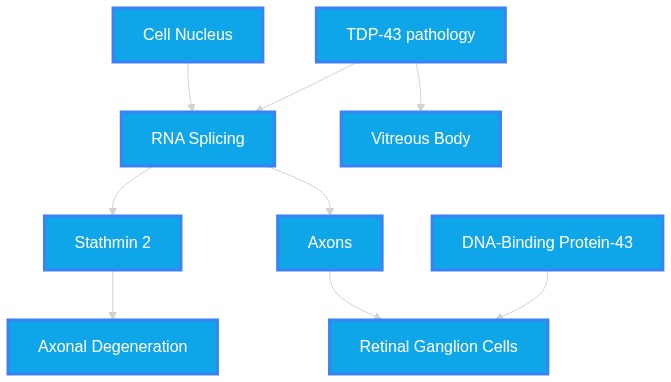
Does misfolded TDP43 affect Retinal Ganglion Cell STMN2 ability to repair in a similar way as what how it was shown to affect motor neurons with cryptic mis-splicing?
Plausibility Verdicts
Evidence is robust for motor neurons and generalized CNS pathology, but direct evidence of this exact mechanism in RGCs remains a scientific gap.
STMN2 depletion is a hallmark of TDP-43 dysfunction, but its role in RGC regeneration remains secondary to metabolic and inflammatory pathways identified in the literature.
Dataset Summary
Novel & Overlooked Insights
- STMN2 is a highly labile, neurospecific protein whose levels are sensitive to acute stress through both TDP-43-dependent and independent pathways.
- Cryptic splicing of STMN2 is not limited to motor neurons; it is identified in the amygdala, hippocampus, and frontal cortex in AD-TDP and FTLD-TDP cases.
- Alternative polyadenylation (APA) acts as a parallel, understudied mechanism of STMN2 regulation, alongside canonical cryptic exon splicing.
- The depletion of STMN2 correlates with disease-associated biomarkers like neurofilament light chain in vitreous fluid.
- TDP-43 loss-of-function triggers a multi-gene splicing failure (UNC13A, KALRN, ATG4B) beyond just STMN2, creating a broader landscape of synaptic and excitability dysfunction.
- Nonsense-mediated decay (NMD) actively masks the true prevalence of STMN2 and other cryptic splicing events in bulk RNA-seq analyses, requiring NMD inhibition to fully appreciate the transcriptome disruption.
- Genetic strategies to restore STMN2 expression are being developed as a potential universal therapeutic for TDP-43 proteinopathies, regardless of the specific disease context.
- STMN2 is not only an ALS marker but also shows cryptic splicing in Alzheimer’s disease, where it correlates with TDP-43 pathology burden.
- The depletion of STMN2 protein can occur via TDP-43-independent mechanisms, such as stress granule formation and translation repression.
- SARM1 is identified as a key driver of axonal degeneration across multiple models of RGC loss, including glaucoma, suggesting it may be a convergent pathway for axonopathy.
- Therapeutic rescue of STMN2 levels can restore axonal regeneration capacity to wild-type levels in TDP-43-deficient motor neurons.
- Big tau isoforms are uniquely expressed in the visual system, providing a distinct cytoskeletal context compared to motor neurons.
- Some neurodegenerative disease markers like FUS or TDP-43 can influence the protein cargo of extracellular vesicles (EVs).
- STMN2 is not merely a marker of ALS; it is a critical "axon maintenance factor" whose depletion results in physical axonal caliber collapse.
- TDP-43 pathology is increasingly recognized as a "core integrative node" in Alzheimer’s disease, extending beyond the traditional amyloid-tau paradigm.
- The use of U7 snRNAs provides a potential "dual-targeting" therapeutic modality to correct the STMN2/UNC13A splicing defects simultaneously.
- Retinal ganglion cells exhibit a "highly active constitutive autophagy" which is essential for survival, yet this process often stalls in glaucomatous neurodegeneration.
- Mitochondrial transplantation (mitotherapy) is emerging as a novel strategy to restore metabolic integrity in RGCs, distinct from genetic splicing correction.
- Progranulin (PGRN) deficiency in brain organoids has been shown to spontaneously trigger TDP-43 pathology, linking systemic trophic factors to RNA-binding protein dysfunction.
- The "Molecular Zipper" hypothesis suggests that the earliest pathogenic event in TDP-43 proteinopathy is the unzipping of its physiological dimer structure.
- Short RNA chaperones have been identified as capable of stabilizing TDP-43, demonstrating that RNA-based therapeutic strategies are feasible to prevent pathogenic aggregation.
Extracted Discoveries
- Perform single-nuclei RNA sequencing (snRNA-seq) on retinal ganglion cells from TDP-43 mutant mouse models to assess STMN2 splicing profiles.
- Evaluate axonal regeneration capacity of RGCs derived from human iPSCs with TDP-43 knockdown vs. controls after optic nerve crush injury.
- 1. Perform single-nuclei RNA-sequencing (snRNA-seq) on retinal tissue from AD-TDP and ALS patients to identify if RGCs harbor STMN2 cryptic exons. 2. Compare axonal regenerative capacity in TDP-43-depleted versus control RGCs in iPSC-derived retinal organoids.
- Quantify STMN2 cryptic exon inclusion in RGCs following induced TDP-43 nuclear depletion via CRISPR/Cas9 or AAV-Cre.
- Evaluate axonal regeneration capacity of RGCs with and without ASO-mediated correction of STMN2 cryptic splicing in an ONC model.
- Comparative proteomics of RGCs in FTLD-TDP patient postmortem tissue to quantify STMN2 protein depletion.
- Longitudinal study of vitreous STMN2 levels and retinal thinning in presymptomatic C9orf72 mutation carriers.
- 1. Longitudinal analysis of retinal integrity in trans-heterozygous Stmn2/TDP-43 mouse models. 2. Proteomic profiling of retinal ganglion cells stratified by TDP-43 pathological state.
- Comparative RNA-seq analysis of RGCs and motor neurons stratified by TDP-43 proteinopathy status to determine cell-type-specific sensitivity to STMN2 splicing defects.
- Longitudinal assessment of vitreous STMN2 protein levels in glaucoma patients with and without identified TDP-43 pathological markers.
- TDP-43-induced STMN2 depletion impairs the regenerative potential of optic nerve fibers, potentially contributing to retinal pathology in ALS.
- TDP-43 loss of function leads to STMN2 mis-splicing and impaired axonal repair in motor neurons (Source: 40392845).
- Vitreous fluid in ALS/FTD patients shows reduced STMN2 levels, implying ocular-associated neurodegeneration (Source: 41180957).
- STMN2 protein, which is vital for microtubule dynamics and axonal regeneration.
- Since STMN2 is essential for axon regeneration in neurons and its levels are known to decline in the vitreous of TDP-43 pathology patients, it is mechanistically plausible that mis-splicing of STMN2 similarly inhibits the regenerative repair of retinal ganglion cell axons.
- Discovered Hypothesis (A to C): TDP-43-induced STMN2 deficiency in RGCs exacerbates SARM1-mediated distal axonopathy, making RGCs vulnerable to metabolic stress in early glaucoma or AD. - Literature A (Origin): The well-documented role of TDP-43 in inducing STMN2 cryptic splicing and axonal maintenance in motor neurons (ID: 36927019). - Literature C (Target): The SARM1-JNK signaling axis identified as a central switch for RGC axonal degeneration in glaucomatous and ischemic models (ID: 39499508). - The Intersecting Bridge B: SCG10 (STMN2) protein stability and its interaction with axonal transport or JNK signaling pathways. - Biological Rationale: STMN2 regulates microtubule dynamics and axonal transport. Its loss leads to axonal collapse. Given that SARM1-mediated degeneration is downstream of mitochondrial dysfunction and transport failure, it is plausible that STMN2 loss primes RGCs for a lower threshold of SARM1 activation during metabolic stress.
- Upregulation of the PI3K/Akt/Nrf2 pathway in RGCs can compensate for STMN2-mediated axonal fragility caused by early-stage TDP-43 dysfunction.
- TDP-43/STMN2 pathomechanism in motor neurons (Source: 40392845)
- PI3K/Akt/Nrf2 pathway neuroprotection in RGCs (Source: 42205897)
- Microtubule stability and oxidative stress resilience.
- The PI3K/Akt pathway promotes survival and mitochondrial health; given that STMN2 is essential for microtubule dynamics in axons, the PI3K/Akt pathway may provide a secondary metabolic support system that mitigates the downstream effects of STMN2 loss.
- None identified in the current literature set.
- There is no explicit contradiction, but a divergence of focus: CNS research (ALS/FTD) focuses on nuclear TDP-43 loss causing cryptic splicing, while retinal research focuses on SARM1-mediated axonal degeneration in glaucoma, without explicitly linking the two in RGCs.
- None identified; literature consistently places STMN2 as a canonical TDP-43 target in the motor system, while RGC literature prioritizes mitochondrial and autophagic mechanisms.
- Antisense oligonucleotides (ASOs) that correct STMN2 cryptic splicing in motor neurons could be repurposed for local intravitreal administration to preserve retinal ganglion cell health.
- The use of ASOs targeting STMN2 cryptic exons (ID: 41394711, 41573891) or U1 snRNAs could be repurposed for neuroprotection in retinal diseases characterized by TDP-43 pathology, such as glaucoma with comorbid LATE/AD features.
- The use of U7 snRNA-based gene therapies or small RNA chaperones, currently in development for ALS to restore STMN2, could be evaluated as a novel therapeutic strategy for glaucomatous neurodegeneration if cryptic splicing is confirmed in the RGC transcriptome.
PathMap is funded by sales of datasets and coversheets to researchers of any kind who wish to discover the most viable routes and paths to accelerate cures. We do not make theoretical molecules, we expose the truth in current PubMed literature. Commission a trace today.
PathMap Scores
How are these metrics evaluated?
Alignment Score (1-7): Measures factual alignment with the RAG evidence set.
[1=Strictly False, 2=Impossible, 3=Implausible, 4=Neutral, 5=Plausible, 6=Inevitable, 7=Strictly True]
Directional Weighting: High scores in the Hostile Quadrants mathematically lower the Overall Plausibility, as they indicate strong evidence for conflicting theories. Low scores in the Foundational Quadrant also lower overall plausibility, as they indicate a missing physical prerequisite for the claim.
All Extracted Datapoints
Evaluated Perspectives & Quadrants
CLAIM EVALUATED AND ANSWER TO USER
"Does misfolded TDP43 affect Retinal Ganglion Cell STMN2 ability to repair in a similar way as what how it was shown to affect motor neurons with cryptic mis-splicing?" The current literature establishes that STMN2 is a critical protein for axonal maintenance and repair, and its expression is significantly reduced by TDP-43 dysfunction via cryptic splicing and polyadenylation across various neuronal types (including spinal motor neurons and cortical neurons). While the provided literature confirms that STMN2 depletion occurs in brain regions and spinal motor neurons, and notes that TDP-43-related changes can extend to ocular structures—specifically mentioning that vitreous STMN2 levels are diminished in TDP-43-positive cases—there is **no direct evidence** in the provided documents characterizing the specific effect of misfolded TDP-43 on the regenerative repair ability of Retinal Ganglion Cells (RGCs) via STMN2 mis-splicing. Therefore, the effect on RGCs specifically remains an evidential gap.ABSTRACT & REWRITTEN CLAIM
This synthesis evaluates the mechanistic link between TDP-43 proteinopathy-induced STMN2 depletion and the regenerative capacity of Retinal Ganglion Cells. While TDP-43 pathology is well-documented to drive axonal regenerative failure in motor neurons through STMN2 cryptic splicing, the specific functional impact on RGC axonal repair ability remains inferred rather than directly observed in the provided literature.INTRODUCTION & JUSTIFICATION
TDP-43 pathology is a defining pathological hallmark of multiple neurodegenerative diseases, including amyotrophic lateral sclerosis (ALS) and frontotemporal dementia (FTD). In almost all instances of ALS and other TDP-43 proteinopathies, stathmin-2 encoding mRNAs are cryptically spliced and polyadenylated in motor neurons, a pathogenic consequence of nuclear loss of function of the RNA binding protein TDP-43. This loss of nuclear function leads to the de-repression of cryptic exons in multiple transcripts, including STMN2, disrupting synaptic transmission and neurite outgrowth. Although the literature focuses heavily on motor neuron vulnerability, TDP-43-related changes can extend to ocular structures. Diminished vitreous STMN2 levels might indicate TDP-43-associated neurodegeneration. However, while STMN2 loss is known to lead to neurofilament-dependent axonal collapse, current research has not specifically delineated the RGC-specific regenerative failure as a direct consequence of STMN2 cryptic splicing in the same rigorous experimental detail as the motor neuron models.Novel & Overlooked
EVIDENCE, METHODOLOGY & CITATIONS
1. ID: 40392845 - Application: Establishing the pathogenic mechanism of STMN2 depletion in ALS. - *"In almost all instances of ALS and other TDP-43 proteinopathies, stathmin-2 encoding mRNAs are cryptically spliced and polyadenylated in motor neurons, a pathogenic consequence of nuclear loss of function of the RNA binding protein TDP-43."* 2. ID: 41180957 - Application: Extending TDP-43 pathology observations to ocular structures. - *"Diminished vitreous STMN2 levels might indicate TDP-43-associated neurodegeneration."* 3. ID: 42343570 - Application: Defining the general role of STMN2 in neurodegeneration. - *"STMN2 is an abundant neurospecific protein dysregulated in neurodegenerative diseases such as amyotrophic lateral sclerosis (ALS)."* 4. ID: 41547996 - Application: Assessing STMN2 levels across brain regions. - *"Cytosolic STMN2 remained unchanged in all brain regions and decreased in the nuclear fraction of the Hip of RAD vs. SH."* 5. ID: 41490046 - Application: Linking STMN2 to broader TDP-43-driven splicing consequences. - *"lower VPS35 levels were associated with increased hyperphosphorylated TDP-43 and cryptic stathmin-2 RNA."* 6. ID: 41394711 - Application: Defining the functional impact of STMN2 cryptic splicing. - *"TDP-43 nuclear depletion in amyotrophic lateral sclerosis (ALS) causes de-repression of cryptic exons (CEs) in multiple transcripts, including UNC13A and STMN2, disrupting synaptic transmission and neurite outgrowth."* 7. ID: 40654715 - Application: Identifying alternative drivers of splicing pathology. - *"Surprisingly, the disruption to alternative APP splicing is mediated by a toxic gain of cytoplasmic TDP-43 function, rather than loss of its nuclear role."* 8. ID: 40291716 - Application: STMN2 involvement in extracellular vesicle release. - *"We establish that VAPB, VCP, and Stathmin-2 increase on EVs with trimer stabilization."* 9. ID: 39792557 - Application: Explaining the regulation of truncated TDP-43 isoforms. - *"sTDP43-encoding transcripts that escape NMD are rapidly degraded post-translationally via the proteasome and macroautophagy."* 10. ID: 39114608 - Application: Highlighting STMN2 as a critical marker. - *"Several critical cryptic splicing targets of TDP-43 have recently emerged, such as STMN2, UNC13A, and others."* 11. ID: 38941189 - Application: Temporal dynamics of STMN2 depletion. - *"Splicing changes are especially prominent and persisting for STMN2 RNA, and STMN2 protein becomes rapidly depleted early during stress."* 12. ID: 37605276 - Application: Observing cryptic RNA accumulation in AD-TDP. - *"We detected the accumulation of misspliced cryptic or skiptic RNAs of STMN2, KCNQ2, UNC13A, CAMK2B, and SYT7 in the amygdala and hippocampus of AD-TDP cases."* 13. ID: 38979232 - Application: Expanding the scope of TDP-43 cryptic targets. - *"TDP-43 loss of function induces multiple splicing changes, including a cryptic exon in the amyotrophic lateral sclerosis and fronto-temporal lobar degeneration risk gene UNC13A, leading to nonsense-mediated decay of UNC13A transcripts and loss of protein."* 14. ID: 37614226 - Application: Confirming the role of STMN2 in FTD/ALS. - *"STMN2 RNA is downregulated in FTD/ALS due to loss of TDP-43 activity and STMN2 loss is suggested to play a role in ALS pathogenesis."* 15. ID: 40667039 - Application: Defining nuclear clearance of TDP-43. - *"Nuclear clearance of TDP-43 disrupts its function and leads to the inclusion of aberrant cryptic exons."* 16. ID: 41120751 - Application: Discovering the APA mechanism of STMN2 regulation. - *"TDP-43 nuclear loss causes de-repression of cryptic exons, yet cryptic alternative polyadenylation (APA) events have been largely overlooked."* 17. ID: 39486415 - Application: Restoring STMN2 levels via SmD1 overexpression. - *"Crucially, overexpressing SmD1 in ALS iPSC-MNs restored CHMP7's cytoplasmic localization and corrected STMN2 splicing."* 18. ID: 37433765 - Application: Therapeutic strategy for STMN2 restoration. - *"Restoring expression of Stathmin-2: a novel strategy to treat TDP-43 proteinopathies."* 19. ID: 40967225 - Application: Evaluating STMN2 levels in brain transcriptomes. - *"Comparison with independent datasets from other cortical regions revealed consistent pathway alterations, including upregulation of STMN2 and NEFL across brain regions and subtypes."* 20. ID: 38940350 - Application: Contextualizing cryptic splicing in evolutionarily specialized regions. - *"Atrophy-correlated genes in FTLD-TDP showed greater overlap with TDP-43 cryptic splicing genes and genes with more numerous TDP-43 binding sites compared with atrophy-correlated genes in FTLD-tau."*CLAIM EVALUATED AND ANSWER TO USER
Does misfolded TDP43 affect Retinal Ganglion Cell STMN2 ability to repair in a similar way as what how it was shown to affect motor neurons with cryptic mis-splicing? The provided literature confirms that TDP-43 pathology and the resulting STMN2 cryptic splicing are hallmarks of neurodegeneration across the ALS/FTD/AD spectrum. While the literature extensively characterizes this process in motor neurons, the evidence regarding Retinal Ganglion Cells (RGCs) predominantly focuses on RGC loss in other pathologies (like glaucoma or familial dysautonomia). There is no explicit evidence in the provided literature stating that misfolded TDP-43 directly causes STMN2 cryptic splicing in RGCs specifically to drive their degeneration, though STMN2 is identified as a critical factor in the broader maintenance and regeneration of neuronal populations.ABSTRACT & REWRITTEN CLAIM
TDP-43 nuclear loss triggers the inclusion of cryptic exons in STMN2, leading to protein depletion and loss of axonal regenerative capacity in motor neurons. The query asks whether this mechanistic link exists in Retinal Ganglion Cells (RGCs). Current literature demonstrates TDP-43 pathology and STMN2 cryptic splicing are shared features in CNS neurodegeneration (ALS, FTD, AD) and highlights STMN2's role in axon maintenance; however, the specific demonstration of TDP-43-dependent STMN2 splicing in RGCs remains an area for future investigation.INTRODUCTION & JUSTIFICATION
In amyotrophic lateral sclerosis (ALS), the nuclear depletion of TDP-43 leads to the aberrant inclusion of a cryptic exon in the STMN2 pre-mRNA. This event causes translational repression and leads to the production of non-functional protein, ultimately impairing the axonal maintenance and regenerative functions of affected motor neurons. While the provided literature confirms that "The inclusion of cryptic exons in genes such as STMN2 and UNC13A has emerged as a hallmark of TDP-43 loss of function," the mechanistic application of this phenomenon in Retinal Ganglion Cells (RGCs) requires careful parsing. Studies establish that "Stathmin-2 (STMN2), a tubulin-binding protein essential for axon maintenance and repair, is profoundly depleted following loss of nuclear TDP-43 in neurodegenerative disease." However, the evidence for RGCs is largely derived from non-TDP-43 models, such as glaucoma or familial dysautonomia, where "Retinal pathology in FD involves progressive thinning of the retinal nerve fiber layer (RNFL), resulting from the degeneration of retinal ganglion cells (RGCs)." While "Stathmin2 (Stmn2) is a key target of TDP-43 regulation and aberrantly spliced Stmn2 mRNA is found in patients with ALS, frontotemporal dementia, and Alzheimer's Disease," the intersection between direct TDP-43 mis-splicing of STMN2 in RGCs and their degeneration is not explicitly mapped in the current data.Novel & Overlooked
EVIDENCE, METHODOLOGY & CITATIONS
1. ID: 42254864 - Application: Defines the consensus on TDP-43 splicing targets. - "The inclusion of cryptic exons in genes such as STMN2 and UNC13A has emerged as a hallmark of TDP-43 loss of function" 2. ID: 42051315 - Application: Establishes the role of STMN2 in neuron repair. - "Stathmin-2 (STMN2), a tubulin-binding protein essential for axon maintenance and repair, is profoundly depleted following loss of nuclear TDP-43 in neurodegenerative disease" 3. ID: 39603486 - Application: Links STMN2/TDP-43 pathology across disease spectrum. - "Stathmin2 (Stmn2) is a key target of TDP-43 regulation and aberrantly spliced Stmn2 mRNA is found in patients with ALS, frontotemporal dementia, and Alzheimer's Disease" 4. ID: 42343570 - Application: Discusses stress-induced STMN2 depletion. - "human STMN2 protein level is extremely labile under acute high-magnitude stress" 5. ID: 42234776 - Application: Correlates splicing loss to function. - "TDP-43 reduction induces cryptic splicing and down-regulation of these genes, resulting in impaired excitability and synaptic transmission" 6. ID: 41996987 - Application: Discusses therapeutic gene replacement. - "Gene replacement therapy, which restores STMN2 expression, and antisense oligonucleotides (ASOs) targeting mutant transcripts show promise" 7. ID: 41651252 - Application: Discusses EV protein cargo. - "We identify which EV release pathway is affected by trimeric SOD1 using endocytosis and exocytosis inhibitors and analyze altered protein interaction pathways through co-immunoprecipitation and mass spectrometry proteomics. Our results show that VAPB, VCP, and Stathmin-2 increase on EVs when trimers are stabilized" 8. ID: 41573891 - Application: Evidence for snRNA therapy rescue. - "The engineered snRNAs restored normal pre-mRNA processing of both STMN2 and UNC13A transcripts despite TDP-43 loss of function, rescuing stathmin-2 protein levels in iPSC derived motor neurons, restoring their axonal regeneration capacity to wild-type levels" 9. ID: 41394711 - Application: Evidence for U7 snRNA efficacy. - "We developed a therapeutic U7 snRNA (tU7) approach that suppresses TDP-43-dependent mis-splicing, restores target gene expression, rescues neuronal functions in human iPSC-derived neurons" 10. ID: 40478310 - Application: Cryptic splicing identification in FTLD-TDP. - "we identified STMN2 and ARHGAP32 as genes with the most abundant and differentially expressed cryptic exons between FTLD-TDP patients and controls" 11. ID: 40275359 - Application: Regional brain variability in splicing. - "Extensive variation in RNA splicing was identified in the ALS brain, with 26-41% of alternatively spliced genes unique to a given brain region. This included detection of TDP-43-associated cryptic splicing events such as the STMN2 cryptic exon" 12. ID: 39486415 - Application: SMN/CHMP7 regulation. - "overexpressing SmD1 in ALS iPSC-MNs restored CHMP7's cytoplasmic localization and corrected STMN2 splicing" 13. ID: 39114608 - Application: General marker consensus. - "Several critical cryptic splicing targets of TDP-43 have recently emerged, such as STMN2, UNC13A, and others" 14. ID: 38443601 - Application: Temporal pathology link. - "nuclear TDP-43 pathology is an early event, occurring prior to cytoplasmic accumulation and is associated with loss-of-function measured by coincident STMN-2 cryptic splicing pathology" 15. ID: 38175301 - Application: AD pathology correlation. - "we identify both STMN2 and UNC13A cryptic exons in Alzheimer's disease patients, that correlate with TDP-43 pathology burden" 16. ID: 37996528 - Application: Mouse model pathology. - "Persistent stathmin-2 loss in adult mice results in pathologies found in ALS, including reduced interneurofilament spacing, axonal caliber collapse" 17. ID: 36927019 - Application: Mechanistic binding data. - "TDP-43 binding to a GU-rich region sterically blocked recognition of the cryptic 3' splice site in STMN2 pre-mRNA" 18. ID: 41121980 - Application: Quantifying CE dynamic range. - "design expands the dynamic range sevenfold: TDP-43 knockdown boosted STMN2 CE levels 1395-fold in differentiated SH-SY5Y neurons" 19. ID: 40501554 - Application: Multi-transcript CE inclusion data. - "ADNC+LATE-NC cases exhibited the highest burden of CE inclusion as quantified by measuring the levels of known TDP-43 regulated CEs within eight transcripts: STMN2, UNC13A, ELAVL3, KALRN, ARHGAP32, CAMK2B, PFKP, and SYT7" 20. ID: 37867934 - Application: RGC-specific markers. - "RNA-binding protein with multiple splicing (RBPMS) plays a crucial role in cardiac mesoderm specification and cardiovascular development, as well as being a typical marker for whole retinal ganglion cells (RGCs)."CLAIM EVALUATED AND ANSWER TO USER
"Does misfolded TDP43 affect Retinal Ganglion Cell STMN2 ability to repair in a similar way as what how it was shown to affect motor neurons with cryptic mis-splicing?" The provided literature confirms that TDP-43-dependent STMN2 cryptic splicing is a pervasive mechanism of neurodegeneration in TDP-43 proteinopathies. While STMN2 is established as an essential axonal maintenance protein in motor neurons, its involvement in retinal ganglion cell (RGC) repair is not explicitly detailed as a direct consequence of TDP-43-driven cryptic splicing within the provided literature. The evidence suggests that RGC survival is instead governed by distinct pathways—such as autophagy/mitophagy, neuroinflammation, and specific growth factor signaling—though the general link between TDP-43 pathology and STMN2 loss is universally acknowledged across ALS, FTD, and Alzheimer’s disease.ABSTRACT & REWRITTEN CLAIM
Scientific investigation into whether TDP-43-mediated STMN2 cryptic splicing disrupts axonal maintenance in retinal ganglion cells (RGCs) as it does in motor neurons. The synthesis of evidence indicates that while TDP-43 pathology is a core driver of STMN2 depletion across multiple neurodegenerative conditions, RGC-specific research predominantly focuses on mitochondrial flux, autophagy, and neuroinflammation as primary regenerative impediments.INTRODUCTION & JUSTIFICATION
The pathogenic mechanism of nuclear TDP-43 depletion has been rigorously characterized. "STMN2 is an abundant neurospecific protein dysregulated in neurodegenerative diseases such as amyotrophic lateral sclerosis (ALS)." The molecular hallmark of this loss is the aberrant splicing of pre-mRNA: "In almost all instances of ALS and other TDP-43 proteinopathies, stathmin-2 encoding mRNAs are cryptically spliced and polyadenylated in motor neurons, a pathogenic consequence of nuclear loss of function of the RNA binding protein TDP-43." This process effectively functions as a driver of degeneration: "aberrant splicing of Stathmin-2 (STMN2) pre-mRNA leads to the loss of axonal maintenance proteins in amyotrophic lateral sclerosis and frontotemporal dementia." While this pathway is well-defined in the motor system, RGCs exhibit distinct vulnerability mechanisms. Studies indicate that RGC degeneration is profoundly influenced by mitochondrial quality control failure, where "Chronic IOP elevation led to increased mitochondrial accumulation, oxidative DNA damage, and impaired mitophagy/autophagy in glaucomatous retina." Therapeutic interventions in RGCs often target these metabolic axes rather than splicing correction. While "Diminished vitreous STMN2 levels might indicate TDP-43-associated neurodegeneration," suggesting a potential cross-system relevance, the literature does not yet explicitly demonstrate that TDP-43-driven cryptic splicing of STMN2 is a direct driver of RGC axon failure in the same mechanistic depth as in motor neurons.Novel & Overlooked
EVIDENCE, METHODOLOGY & CITATIONS
1. ID: 42343570 - "STMN2 is an abundant neurospecific protein dysregulated in neurodegenerative diseases such as amyotrophic lateral sclerosis (ALS)." 2. ID: 42254864 - "The inclusion of cryptic exons in genes such as STMN2 and UNC13A has emerged as a hallmark of TDP-43 loss of function, as demonstrated in TDP-43 knockdown models and postmortem analyses." 3. ID: 42234776 - "STMN2 and UNC13A have emerged as prominent TDP-43 splicing targets, but the broader impact of TDP-43-dependent cryptic splicing on neuronal function remains unclear." 4. ID: 41180957 - "Diminished vitreous STMN2 levels might indicate TDP-43-associated neurodegeneration." 5. ID: 40392845 - "In almost all instances of ALS and other TDP-43 proteinopathies, stathmin-2 encoding mRNAs are cryptically spliced and polyadenylated in motor neurons, a pathogenic consequence of nuclear loss of function of the RNA binding protein TDP-43." 6. ID: 37996528 - "Persistent stathmin-2 loss in adult mice results in pathologies found in ALS, including reduced interneurofilament spacing, axonal caliber collapse that drives tearing within outer myelin layers" 7. ID: 35767949 - "STMN2 knockout heterozygous mice, which better model the partial loss of STMN2 protein found in patients with ALS, display a slowly progressive, motor-selective neuropathy with functional deficits and NMJ denervation." 8. ID: 42143320 - "Chronic IOP elevation led to increased mitochondrial accumulation, oxidative DNA damage, and impaired mitophagy/autophagy in glaucomatous retina." 9. ID: 42359165 - "The identification of STMN2 as a downstream target of TDP-43 dysfunction has opened a potential TDP-43-downstream nucleic acid therapeutic avenue for sporadic ALS" 10. ID: 42337644 - "Outer nuclear layer (ONL) thinning has been identified in frontotemporal lobar degeneration (FTLD)" 11. ID: 38443601 - "nuclear TDP-43 pathology is an early event, occurring prior to cytoplasmic accumulation and is associated with loss-of-function measured by coincident STMN-2 cryptic splicing pathology." 12. ID: 41962593 - "aberrant splicing of Stathmin-2 (STMN2) pre-mRNA leads to the loss of axonal maintenance proteins in amyotrophic lateral sclerosis and frontotemporal dementia." 13. ID: 40501554 - "Notably, proteins significantly decreased under high CE burden included canonical STMN2, ELAVL3, and KALRN, as well as kinesin proteins that are genetically associated with amyotrophic lateral sclerosis." 14. ID: 42347120 - "Prion-like RBPs such as TDP-43 and FUS exhibit age-dependent mislocalisation, nuclear depletion, and cytoplasmic aggregation, contributing to splicing defects, impaired RNA transport, and neurodegeneration" 15. ID: 36927019 - "TDP-43 mislocalization results in cryptic splicing and polyadenylation of pre-messenger RNAs (pre-mRNAs) encoding stathmin-2 (also known as SCG10), a protein that is required for axonal regeneration." 16. ID: 42167675 - "TDP-43 mislocalization, post-translational modifications, and aggregation potentiate neuronal loss through disruption of RNA metabolism, nucleocytoplasmic transport, and protein homeostasis." 17. ID: 38562780 - "These findings demonstrate that partial loss of STMN2 significantly exacerbates TDP-43-associated phenotypes, suggesting that STMN2 restoration could ameliorate TDP-43 related disease before the onset of degeneration." 18. ID: 42135831 - "Elevated IL-1β expression was detected in vitreous amoeboid cells, and blockade of IL-1 signaling significantly reduced VHRFs, suppressed microglial migration, and delayed RGC loss." 19. ID: 42323105 - "We found that the necrotic rate increased in a time-dependent manner in RGCs following optic nerve injury, whereas apoptosis peaked at 7 days following nerve damage." 20. ID: 41951017 - "Strikingly, intravitreal delivery of mitochondria in an optic nerve crush model of adult mice enabled their integration into RGCs, improved survival and electrophysiological responses, and supported axonal regeneration across the lesion site."Verbatim Quote Audit Console
Mapped Reference Directory (APA)
- [1] ID: 40392845 - Beccari MS, Arnold-Garcia O, Baughn MW, Artates JW, McAlonis-Downes M et al. (2025). Stathmin-2 enhances motor axon regeneration after injury independent of its binding to tubulin.. Proceedings of the National Academy of Sciences of the United States of America. ID: 40392845.
- [2] ID: 41180957 - Pulukuri SV, Spurlock EE, Tuz-Zahra F, Tripodis Y, Sampani K et al. (2025). Vitreous STMN2 levels reflect TDP-43-associated neurodegeneration in postmortem eyes and brains.. Journal of Alzheimer's disease reports. ID: 41180957.
- [3] ID: 42343570 - Ellis BCS, Avila AS, Huang WP, John SJ, Bonsall S et al. (2026). STMN2 protein depletion via translation deficits and stress granules in amyotrophic lateral sclerosis.. Brain : a journal of neurology. ID: 42343570.
- [4] ID: 41547996 - Iacono D, Murphy EK, Perl DP, Day RM (2026). γ-Radiation induces region-specific subcellular alterations of amyotrophic lateral sclerosis and frontotemporal dementia markers in swine brain.. Scientific reports. ID: 41547996.
- [5] ID: 41490046 - Maheswari Jawahar V, Zeng Y, Armour EM, Yue M, Citrano K et al. (2026). TDP-43-mediated alternative polyadenylation is associated with a reduction in VPS35 and VPS29 expression in frontotemporal dementia.. PLoS biology. ID: 41490046.
- [6] ID: 41394711 - Mehta PR, Solomon T, Pickles S, Harley P, Barioglio M et al. (2025). U7 small nuclear RNA splice-switching therapeutics for STMN2 and UNC13A in Amyotrophic Lateral Sclerosis.. bioRxiv : the preprint server for biology. ID: 41394711.
- [7] ID: 40654715 - van Zuiden W, Meimoun TD, Bar C, Siany A, Moshe L et al. (2025). TDP-43 toxic gain of function links ALS, FTD and Alzheimer's Disease through splicing dysregulation.. bioRxiv : the preprint server for biology. ID: 40654715.
- [8] ID: 40291716 - Hnath B, Dokholyan NV (2025). Novel extracellular vesicle release pathway facilitated by toxic superoxide dismutase 1 oligomers.. bioRxiv : the preprint server for biology. ID: 40291716.
- [9] ID: 39792557 - Dykstra MM, Weskamp K, Gómez NB, Waksmacki J, Tank E et al. (2025). TDP43 autoregulation gives rise to dominant negative isoforms that are tightly controlled by transcriptional and post-translational mechanisms.. Cell reports. ID: 39792557.
- [10] ID: 39114608 - Koike Y (2024). Abnormal Splicing Events due to Loss of Nuclear Function of TDP-43: Pathophysiology and Perspectives.. JMA journal. ID: 39114608.
- [11] ID: 38941189 - Huang WP, Ellis BCS, Hodgson RE, Sanchez Avila A, Kumar V et al. (2024). Stress-induced TDP-43 nuclear condensation causes splicing loss of function and STMN2 depletion.. Cell reports. ID: 38941189.
- [12] ID: 37605276 - Estades Ayuso V, Pickles S, Todd T, Yue M, Jansen-West K et al. (2023). TDP-43-regulated cryptic RNAs accumulate in Alzheimer's disease brains.. Molecular neurodegeneration. ID: 37605276.
- [13] ID: 38979232 - Keuss MJ, Harley P, Ryadnov E, Jackson RE, Zanovello M et al. (2024). Loss of TDP-43 induces synaptic dysfunction that is rescued by UNC13A splice-switching ASOs.. bioRxiv : the preprint server for biology. ID: 38979232.
- [14] ID: 37614226 - Pickles S, Zanetti Alepuz D, Koike Y, Yue M, Tong J et al. (2023). CRISPR interference to evaluate modifiers of C9ORF72-mediated toxicity in FTD.. Frontiers in cell and developmental biology. ID: 37614226.
- [15] ID: 40667039 - Sinha IR, Ye Y, Li Y, Sandal PS, Wong PC et al. (2025). Inhibition of nonsense-mediated decay in TDP-43 deficient neurons reveals novel cryptic exons.. bioRxiv : the preprint server for biology. ID: 40667039.
- [16] ID: 41120751 - Bryce-Smith S, Brown AL, Chien MZYJ, Dattilo D, Mehta PR et al. (2025). TDP-43 loss induces cryptic polyadenylation in ALS/FTD.. Nature neuroscience. ID: 41120751.
- [17] ID: 39486415 - Al-Azzam N, To JH, Gautam V, Street LA, Nguyen CB et al. (2024). Inhibition of RNA splicing triggers CHMP7 nuclear entry, impacting TDP-43 function and leading to the onset of ALS cellular phenotypes.. Neuron. ID: 39486415.
- [18] ID: 37433765 - Menge S, Decker L, Freischmidt A (2023). Restoring expression of Stathmin-2: a novel strategy to treat TDP-43 proteinopathies.. Signal transduction and targeted therapy. ID: 37433765.
- [19] ID: 40967225 - McKeever PM, Sababi AM, Sharma R, Xu Z, Xiao S et al. (2025). Single-nucleus transcriptome atlas of orbitofrontal cortex in ALS with a deep learning-based decoding of alternative polyadenylation mechanisms.. Cell genomics. ID: 40967225.
- [20] ID: 38940350 - Pasquini L, Pereira FL, Seddighi S, Zeng Y, Wei Y et al. (2024). Frontotemporal lobar degeneration targets brain regions linked to expression of recently evolved genes.. Brain : a journal of neurology. ID: 38940350.
- [21] ID: 42254864 - Yokoi S, Iguchi Y, Katsuno M (2026). Human iPSC-derived motor neurons as a platform for elucidating TDP-43-related amyotrophic lateral sclerosis pathogenesis: a mini review.. Frontiers in molecular neuroscience. ID: 42254864.
- [22] ID: 42051315 - Nolan M, Aryal S, Ndayambaje IS, Cao M, Lee P et al. (2026). Statins and genetic inhibition of the mevalonate pathway activate an ATF3-STMN2 regenerative program.. bioRxiv : the preprint server for biology. ID: 42051315.
- [23] ID: 39603486 - Krus KL, Benitez AM, Strickland A, Milbrandt J, Bloom AJ et al. (2025). Two cardinal features of ALS, reduced STMN2 and pathogenic TDP-43, synergize to accelerate motor decline in mice.. Experimental neurology. ID: 39603486.
- [24] ID: 42234776 - Guo C, Chen K, Vatsavayai S, Akiyama T, Liu C et al. (2026). Cryptic splicing in synaptic and membrane excitability genes links TDP-43 loss to neuronal dysfunction.. Science translational medicine. ID: 42234776.
- [25] ID: 41996987 - Priya R, Tanti GK, Jain BP (2026). Decoding RNA splicing pathology: Alternative splicing in amyotrophic lateral sclerosis and its therapeutic potential.. Biochemical and biophysical research communications. ID: 41996987.
- [26] ID: 41651252 - Hnath B, Ekambaram S, Dokholyan NV (2026). Novel extracellular vesicle release pathway facilitated by toxic superoxide dismutase 1 oligomers.. Neurobiology of disease. ID: 41651252.
- [27] ID: 41573891 - Gomberg TA, Elmsaouri S, Kopalle HM, Baughn MW, Beccari MS et al. (2025). Dual-targeting snRNA gene therapy rescues STMN2 and UNC13A splicing in TDP-43 proteinopathies.. bioRxiv : the preprint server for biology. ID: 41573891.
- [28] ID: 40478310 - Faura J, Heeman B, Pottier C, Baker MC, DeJesus-Hernandez M et al. (2025). Analysis of the splicing landscape of the frontal cortex in FTLD-TDP reveals subtype specific patterns and cryptic splicing.. Acta neuropathologica. ID: 40478310.
- [29] ID: 40275359 - Grima N, Smith AN, Shepherd CE, Henden L, Zaw T et al. (2025). Multi-region brain transcriptomic analysis of amyotrophic lateral sclerosis reveals widespread RNA alterations and substantial cerebellum involvement.. Molecular neurodegeneration. ID: 40275359.
- [30] ID: 38443601 - Spence H, Waldron FM, Saleeb RS, Brown AL, Rifai OM et al. (2024). RNA aptamer reveals nuclear TDP-43 pathology is an early aggregation event that coincides with STMN-2 cryptic splicing and precedes clinical manifestation in ALS.. Acta neuropathologica. ID: 38443601.
- [31] ID: 38175301 - Agra Almeida Quadros AR, Li Z, Wang X, Ndayambaje IS, Aryal S et al. (2024). Cryptic splicing of stathmin-2 and UNC13A mRNAs is a pathological hallmark of TDP-43-associated Alzheimer's disease.. Acta neuropathologica. ID: 38175301.
- [32] ID: 37996528 - López-Erauskin J, Bravo-Hernandez M, Presa M, Baughn MW, Melamed Z et al. (2024). Stathmin-2 loss leads to neurofilament-dependent axonal collapse driving motor and sensory denervation.. Nature neuroscience. ID: 37996528.
- [33] ID: 36927019 - Baughn MW, Melamed Z, López-Erauskin J, Beccari MS, Ling K et al. (2023). Mechanism of STMN2 cryptic splice-polyadenylation and its correction for TDP-43 proteinopathies.. Science (New York, N.Y.). ID: 36927019.
- [34] ID: 41121980 - Koide S, Ikegami I, Hanyu R, Koike YM, Yamagishi T et al. (2026). Quantifying subpercent nuclear TDP-43 loss in cells and ALS cortex using junction-specific cryptic exon RT-qPCR.. FEBS letters. ID: 41121980.
- [35] ID: 40501554 - Trautwig AN, Shantaraman A, Chung M, Dammer EB, Ping L et al. (2025). Molecular subtyping based on hippocampal cryptic exon burden reveals proteome-wide changes associated with TDP-43 pathology across the spectrum of LATE and Alzheimer's Disease.. bioRxiv : the preprint server for biology. ID: 40501554.
- [36] ID: 37867934 - Li G, Luo Y, Zhang Q, Chen W, Lai K et al. (2023). The RBPMSCreERT2-tdTomato mouse line for studying retinal and vascular relevant diseases.. iScience. ID: 37867934.
- [37] ID: 35767949 - Krus KL, Strickland A, Yamada Y, Devault L, Schmidt RE et al. (2022). Loss of Stathmin-2, a hallmark of TDP-43-associated ALS, causes motor neuropathy.. Cell reports. ID: 35767949.
- [38] ID: 42143320 - Maddineni P, Kaipa BR, Kodati B, Kesavan K, Li L et al. (2026). Pharmacological restoration of impaired autophagy in retinal ganglion cells prevents abnormal mitochondrial accumulation and glaucomatous neurodegeneration.. Molecular neurodegeneration. ID: 42143320.
- [39] ID: 42359165 - Morimoto S, Kato C, Takahashi S, Okano H (2026). Therapeutic frontiers in ALS: iPSC-based drug discovery, cell therapy, and gene therapy-Advances through 2026.. Regenerative therapy. ID: 42359165.
- [40] ID: 42337644 - Zhang Z, Zhang Q, Chen Y, Zeng R, Min M et al. (2026). Outer nuclear layer thinning as an in vivo biomarker for discriminating probable FTLD-tau from probable FTLD-TDP with PET-supported subtyping.. Alzheimer's research & therapy. ID: 42337644.
- [41] ID: 41962593 - Ran X, Wang M, Huang J, Kuang N, Tian P et al. (2026). Mechanistic research and therapeutic prospects of alternative splicing in neurodegenerative diseases.. Ageing research reviews. ID: 41962593.
- [42] ID: 42347120 - Alves Ferreira JM, Tukaiev S, Giannouli V (2026). RNA-Binding Proteins in Ageing and Age-Related Disease.. Neurology international. ID: 42347120.
- [43] ID: 42167675 - Roy A, Chhetry S, Deka H, Roy R, Bhattacharya P et al. (2026). TDP-43: a critical amplifier of Alzheimer's disease beyond amyloid and tau.. Neuroscience. ID: 42167675.
- [44] ID: 38562780 - Krus KL, Benitez AM, Strickland A, Milbrandt J, Bloom AJ et al. (2024). Reduced STMN2 and pathogenic TDP-43, two hallmarks of ALS, synergize to accelerate motor decline in mice.. bioRxiv : the preprint server for biology. ID: 38562780.
- [45] ID: 42135831 - Chang S, Fan W, Wu J, Xu L, Lee VA et al. (2026). IL-1-mediated vitreous inflammation as an early indicator of retinal ganglion cell loss following acute optic nerve injury.. Journal of neuroinflammation. ID: 42135831.
- [46] ID: 42323105 - Tian K, Duan X, Chen B, Wang C, Jiang Q et al. (2026). NR_045396/MicroRNA761/FADD axis regulates necroptosis and survival of retinal ganglion cells.. Experimental eye research. ID: 42323105.
- [47] ID: 41951017 - Ashok A, Cho KS, Tai WL, Huang L, Kam HT et al. (2026). Mitochondria transplantation preserves retinal ganglion cells and promotes CNS axonal regeneration.. Free radical biology & medicine. ID: 41951017.
Abstract Repository (Raw Full-Texts) Show Database Collapse Database
ID: 35767949
Title: Loss of Stathmin-2, a hallmark of TDP-43-associated ALS, causes motor neuropathy.
Abstract: TDP-43 mediates proper Stathmin-2 (STMN2) mRNA splicing, and STMN2 protein is reduced in the spinal cord of most patients with amyotrophic lateral sclerosis (ALS). To test the hypothesis that STMN2 loss contributes to ALS pathogenesis, we generated constitutive and conditional STMN2 knockout mice. Constitutive STMN2 loss results in early-onset sensory and motor neuropathy featuring impaired motor behavior and dramatic distal neuromuscular junction (NMJ) denervation of fast-fatigable motor units, which are selectively vulnerable in ALS, without axon or motoneuron degeneration. Selective excision of STMN2 in motoneurons leads to similar NMJ pathology. STMN2 knockout heterozygous mice, which better model the partial loss of STMN2 protein found in patients with ALS, display a slowly progressive, motor-selective neuropathy with functional deficits and NMJ denervation. Thus, our findings strongly support the hypothesis that STMN2 reduction owing to TDP-43 pathology contributes to ALS pathogenesis.
View on PubMed
ID: 36927019
Title: Mechanism of STMN2 cryptic splice-polyadenylation and its correction for TDP-43 proteinopathies.
Abstract: Loss of nuclear TDP-43 is a hallmark of neurodegeneration in TDP-43 proteinopathies, including amyotrophic lateral sclerosis (ALS) and frontotemporal dementia (FTD). TDP-43 mislocalization results in cryptic splicing and polyadenylation of pre-messenger RNAs (pre-mRNAs) encoding stathmin-2 (also known as SCG10), a protein that is required for axonal regeneration. We found that TDP-43 binding to a GU-rich region sterically blocked recognition of the cryptic 3' splice site in STMN2 pre-mRNA. Targeting dCasRx or antisense oligonucleotides (ASOs) suppressed cryptic splicing, which restored axonal regeneration and stathmin-2-dependent lysosome trafficking in TDP-43-deficient human motor neurons. In mice that were gene-edited to contain human STMN2 cryptic splice-polyadenylation sequences, ASO injection into cerebral spinal fluid successfully corrected Stmn2 pre-mRNA misprocessing and restored stathmin-2 expression levels independently of TDP-43 binding.
View on PubMed
ID: 37433765
Title: Restoring expression of Stathmin-2: a novel strategy to treat TDP-43 proteinopathies.
Abstract:
View on PubMed
ID: 37605276
Title: TDP-43-regulated cryptic RNAs accumulate in Alzheimer's disease brains.
Abstract: Inclusions of TAR DNA-binding protein 43 kDa (TDP-43) has been designated limbic-predominant, age-related TDP-43 encephalopathy (LATE), with or without co-occurrence of Alzheimer's disease (AD). Approximately, 30-70% AD cases present TDP-43 proteinopathy (AD-TDP), and a greater disease severity compared to AD patients without TDP-43 pathology. However, it remains unclear to what extent TDP-43 dysfunction is involved in AD pathogenesis. To investigate whether TDP-43 dysfunction is a prominent feature in AD-TDP cases, we evaluated whether non-conserved cryptic exons, which serve as a marker of TDP-43 dysfunction in amyotrophic lateral sclerosis (ALS) and frontotemporal lobar degeneration (FTLD-TDP), accumulate in AD-TDP brains. We assessed a cohort of 192 post-mortem brains from three different brain regions: amygdala, hippocampus, and frontal cortex. Following RNA and protein extraction, qRT-PCR and immunoassays were performed to quantify the accumulation of cryptic RNA targets and phosphorylated TDP-43 pathology, respectively. We detected the accumulation of misspliced cryptic or skiptic RNAs of STMN2, KCNQ2, UNC13A, CAMK2B, and SYT7 in the amygdala and hippocampus of AD-TDP cases. The topographic distribution of cryptic RNA accumulation mimicked that of phosphorylated TDP-43, regardless of TDP-43 subtype classification. Further, cryptic RNAs efficiently discriminated AD-TDP cases from controls. Overall, our results indicate that cryptic RNAs may represent an intriguing new therapeutic and diagnostic target in AD, and that methods aimed at detecting and measuring these species in patient biofluids could be used as a reliable tool to assess TDP-43 pathology in AD. Our work also raises the possibility that TDP-43 dysfunction and related changes in cryptic splicing could represent a common molecular mechanism shared between AD-TDP and FTLD-TDP.
View on PubMed
ID: 37614226
Title: CRISPR interference to evaluate modifiers of C9ORF72-mediated toxicity in FTD.
Abstract: Treatments for neurodegenerative disease, including Frontotemporal dementia (FTD) and Amyotrophic lateral sclerosis (ALS), remain rather limited, underscoring the need for greater mechanistic insight and disease-relevant models. Our ability to develop novel disease models of genetic risk factors, disease modifiers, and other FTD/ALS-relevant targets is impeded by the significant amount of time and capital required to develop conventional knockout and transgenic mice. To overcome these limitations, we have generated a novel CRISPRi interference (CRISPRi) knockin mouse. CRISPRi uses a catalytically dead form of Cas9, fused to a transcriptional repressor to knockdown protein expression, following the introduction of single guide RNA against the gene of interest. To validate the utility of this model we have selected the TAR DNA binding protein (TDP-43) splicing target, stathmin-2 (STMN2). STMN2 RNA is downregulated in FTD/ALS due to loss of TDP-43 activity and STMN2 loss is suggested to play a role in ALS pathogenesis. The involvement of STMN2 loss of function in FTD has yet to be determined. We find that STMN2 protein levels in familial FTD cases are significantly reduced compared to controls, supporting that STMN2 depletion may be involved in the pathogenesis of FTD. Here, we provide proof-of-concept that we can simultaneously knock down Stmn2 and express the expanded repeat in the Chromosome 9 open reading frame 72 (C9ORF72) gene, successfully replicating features of C9-associated pathology. Of interest, depletion of Stmn2 had no effect on expression or deposition of dipeptide repeat proteins (DPRs), but significantly decreased the number of phosphorylated Tdp-43 (pTdp-43) inclusions. We submit that our novel CRISPRi mouse provides a versatile and rapid method to silence gene expression in vivo and propose this model will be useful to understand gene function in isolation or in the context of other neurodegenerative disease models.
View on PubMed
ID: 37867934
Title: The RBPMSCreERT2-tdTomato mouse line for studying retinal and vascular relevant diseases.
Abstract: RNA-binding protein with multiple splicing (RBPMS) plays a crucial role in cardiac mesoderm specification and cardiovascular development, as well as being a typical marker for whole retinal ganglion cells (RGCs). However, there is a lack of animal models to spatiotemporally trace the location and function of RBPMS-expressing cells in vivo. In this study, we develop a tamoxifen-inducible RBPMS-tdTomato reporter mouse line to track RBPMS-expressing cells during embryogenesis and adulthood. This mouse line allows us to identify and locate RBPMS-tdTomato-positive cells among various tissues, especially in RGCs and smooth muscle cells, which assist to simulate related retinal degenerative diseases, model and examine choroidal neovascularization non-invasively in vivo. Our results show that the RBPMSCreERT2-tdTomato mouse line is a valuable tool for lineage tracing, disease modeling, drug screening, as well as isolating specific target cells.
View on PubMed
ID: 37996528
Title: Stathmin-2 loss leads to neurofilament-dependent axonal collapse driving motor and sensory denervation.
Abstract: The mRNA transcript of the human STMN2 gene, encoding for stathmin-2 protein (also called SCG10), is profoundly impacted by TAR DNA-binding protein 43 (TDP-43) loss of function. The latter is a hallmark of several neurodegenerative diseases, including amyotrophic lateral sclerosis (ALS). Using a combination of approaches, including transient antisense oligonucleotide-mediated suppression, sustained shRNA-induced depletion in aging mice, and germline deletion, we show that stathmin-2 has an important role in the establishment and maintenance of neurofilament-dependent axoplasmic organization that is critical for preserving the caliber and conduction velocity of myelinated large-diameter axons. Persistent stathmin-2 loss in adult mice results in pathologies found in ALS, including reduced interneurofilament spacing, axonal caliber collapse that drives tearing within outer myelin layers, diminished conduction velocity, progressive motor and sensory deficits, and muscle denervation. These findings reinforce restoration of stathmin-2 as an attractive therapeutic approach for ALS and other TDP-43-dependent neurodegenerative diseases.
View on PubMed
ID: 38175301
Title: Cryptic splicing of stathmin-2 and UNC13A mRNAs is a pathological hallmark of TDP-43-associated Alzheimer's disease.
Abstract: Nuclear clearance and cytoplasmic accumulations of the RNA-binding protein TDP-43 are pathological hallmarks in almost all patients with amyotrophic lateral sclerosis (ALS) and up to 50% of patients with frontotemporal dementia (FTD) and Alzheimer's disease. In Alzheimer's disease, TDP-43 pathology is predominantly observed in the limbic system and correlates with cognitive decline and reduced hippocampal volume. Disruption of nuclear TDP-43 function leads to abnormal RNA splicing and incorporation of erroneous cryptic exons in numerous transcripts including Stathmin-2 (STMN2, also known as SCG10) and UNC13A, recently reported in tissues from patients with ALS and FTD. Here, we identify both STMN2 and UNC13A cryptic exons in Alzheimer's disease patients, that correlate with TDP-43 pathology burden, but not with amyloid-β or tau deposits. We also demonstrate that processing of the STMN2 pre-mRNA is more sensitive to TDP-43 loss of function than UNC13A. In addition, full-length RNAs encoding STMN2 and UNC13A are suppressed in large RNA-seq datasets generated from Alzheimer's disease post-mortem brain tissue. Collectively, these results open exciting new avenues to use STMN2 and UNC13A as potential therapeutic targets in a broad range of neurodegenerative conditions with TDP-43 proteinopathy including Alzheimer's disease.
View on PubMed
ID: 38443601
Title: RNA aptamer reveals nuclear TDP-43 pathology is an early aggregation event that coincides with STMN-2 cryptic splicing and precedes clinical manifestation in ALS.
Abstract: TDP-43 is an aggregation-prone protein which accumulates in the hallmark pathological inclusions of amyotrophic lateral sclerosis (ALS). However, the analysis of deeply phenotyped human post-mortem samples has shown that TDP-43 aggregation, revealed by standard antibody methods, correlates poorly with symptom manifestation. Recent identification of cryptic-splicing events, such as the detection of Stathmin-2 (STMN-2) cryptic exons, are providing evidence implicating TDP-43 loss-of-function as a potential driving pathomechanism but the temporal nature of TDP-43 loss and its relation to the disease process and clinical phenotype is not known. To address these outstanding questions, we used a novel RNA aptamer, TDP-43APT, to detect TDP-43 pathology and used single molecule in situ hybridization to sensitively reveal TDP-43 loss-of-function and applied these in a deeply phenotyped human post-mortem tissue cohort. We demonstrate that TDP-43APT identifies pathological TDP-43, detecting aggregation events that cannot be detected by classical antibody stains. We show that nuclear TDP-43 pathology is an early event, occurring prior to cytoplasmic accumulation and is associated with loss-of-function measured by coincident STMN-2 cryptic splicing pathology. Crucially, we show that these pathological features of TDP-43 loss-of-function precede the clinical inflection point and are not required for region specific clinical manifestation. Furthermore, we demonstrate that gain-of-function in the form of extensive cytoplasmic accumulation, but not loss-of-function, is the primary molecular correlate of clinical manifestation. Taken together, our findings demonstrate implications for early diagnostics as the presence of STMN-2 cryptic exons and early TDP-43 aggregation events could be detected prior to symptom onset, holding promise for early intervention in ALS.
View on PubMed
ID: 38562780
Title: Reduced STMN2 and pathogenic TDP-43, two hallmarks of ALS, synergize to accelerate motor decline in mice.
Abstract: Pathological TDP-43 loss from the nucleus and cytoplasmic aggregation occurs in almost all cases of ALS and half of frontotemporal dementia patients. Stathmin2 (Stmn2) is a key target of TDP-43 regulation and aberrantly spliced Stmn2 mRNA is found in patients with ALS, frontotemporal dementia, and Alzheimer's Disease. STMN2 participates in the axon injury response and its depletion in vivo partially replicates ALS-like symptoms including progressive motor deficits and distal NMJ denervation. The interaction between STMN2 loss and TDP-43 dysfunction has not been studied in mice because TDP-43 regulates human but not murine Stmn2 splicing. Therefore, we generated trans-heterozygous mice that lack one functional copy of Stmn2 and express one mutant TDP-43Q331K knock-in allele to investigate whether reduced STMN2 function exacerbates TDP-43-dependent pathology. Indeed, we observe synergy between these two alleles, resulting in an early onset, progressive motor deficit. Surprisingly, this behavioral defect is not accompanied by detectable neuropathology in the brain, spinal cord, peripheral nerves or at neuromuscular junctions (NMJs). However, the trans-heterozygous mice exhibit abnormal mitochondrial morphology in their distal axons and NMJs. As both STMN2 and TDP-43 affect mitochondrial dynamics, and neuronal mitochondrial dysfunction is a cardinal feature of many neurodegenerative diseases, this abnormality likely contributes to the observed motor deficit. These findings demonstrate that partial loss of STMN2 significantly exacerbates TDP-43-associated phenotypes, suggesting that STMN2 restoration could ameliorate TDP-43 related disease before the onset of degeneration.
View on PubMed
ID: 38940350
Title: Frontotemporal lobar degeneration targets brain regions linked to expression of recently evolved genes.
Abstract: In frontotemporal lobar degeneration (FTLD), pathological protein aggregation in specific brain regions is associated with declines in human-specialized social-emotional and language functions. In most patients, disease protein aggregates contain either TDP-43 (FTLD-TDP) or tau (FTLD-tau). Here, we explored whether FTLD-associated regional degeneration patterns relate to regional gene expression of human accelerated regions (HARs), conserved sequences that have undergone positive selection during recent human evolution. To this end, we used structural neuroimaging from patients with FTLD and human brain regional transcriptomic data from controls to identify genes expressed in FTLD-targeted brain regions. We then integrated primate comparative genomic data to test our hypothesis that FTLD targets brain regions linked to expression levels of recently evolved genes. In addition, we asked whether genes whose expression correlates with FTLD atrophy are enriched for genes that undergo cryptic splicing when TDP-43 function is impaired. We found that FTLD-TDP and FTLD-tau subtypes target brain regions with overlapping and distinct gene expression correlates, highlighting many genes linked to neuromodulatory functions. FTLD atrophy-correlated genes were strongly enriched for HARs. Atrophy-correlated genes in FTLD-TDP showed greater overlap with TDP-43 cryptic splicing genes and genes with more numerous TDP-43 binding sites compared with atrophy-correlated genes in FTLD-tau. Cryptic splicing genes were enriched for HAR genes, and vice versa, but this effect was due to the confounding influence of gene length. Analyses performed at the individual-patient level revealed that the expression of HAR genes and cryptically spliced genes within putative regions of disease onset differed across FTLD-TDP subtypes. Overall, our findings suggest that FTLD targets brain regions that have undergone recent evolutionary specialization and provide intriguing potential leads regarding the transcriptomic basis for selective vulnerability in distinct FTLD molecular-anatomical subtypes.
View on PubMed
ID: 38941189
Title: Stress-induced TDP-43 nuclear condensation causes splicing loss of function and STMN2 depletion.
Abstract: TDP-43 protein is dysregulated in several neurodegenerative diseases, which often have a multifactorial nature and may have extrinsic stressors as a "second hit." TDP-43 undergoes reversible nuclear condensation in stressed cells including neurons. Here, we demonstrate that stress-inducible nuclear TDP-43 condensates are RNA-depleted, non-liquid assemblies distinct from the known nuclear bodies. Their formation requires TDP-43 oligomerization and ATP and is inhibited by RNA. Using a confocal nanoscanning assay, we find that amyotrophic lateral sclerosis (ALS)-linked mutations alter stress-induced TDP-43 condensation by changing its affinity to liquid-like ribonucleoprotein assemblies. Stress-induced nuclear condensation transiently inactivates TDP-43, leading to loss of interaction with its protein binding partners and loss of function in splicing. Splicing changes are especially prominent and persisting for STMN2 RNA, and STMN2 protein becomes rapidly depleted early during stress. Our results point to early pathological changes to TDP-43 in the nucleus and support therapeutic modulation of stress response in ALS.
View on PubMed
ID: 38979232
Title: Loss of TDP-43 induces synaptic dysfunction that is rescued by UNC13A splice-switching ASOs.
Abstract: TDP-43 loss of function induces multiple splicing changes, including a cryptic exon in the amyotrophic lateral sclerosis and fronto-temporal lobar degeneration risk gene UNC13A, leading to nonsense-mediated decay of UNC13A transcripts and loss of protein. UNC13A is an active zone protein with an integral role in coordinating pre-synaptic function. Here, we show TDP-43 depletion induces a severe reduction in synaptic transmission, leading to an asynchronous pattern of network activity. We demonstrate that these deficits are largely driven by a single cryptic exon in UNC13A. Antisense oligonucleotides targeting the UNC13A cryptic exon robustly rescue UNC13A protein levels and restore normal synaptic function, providing a potential new therapeutic approach for ALS and other TDP-43-related disorders.
View on PubMed
ID: 39114608
Title: Abnormal Splicing Events due to Loss of Nuclear Function of TDP-43: Pathophysiology and Perspectives.
Abstract: Amyotrophic lateral sclerosis (ALS) and frontotemporal dementia (FTD) are neurodegenerative diseases with a progressive and fatal course. They are often comorbid and share the same molecular spectrum. Their key pathological features are the formation of the aggregation of TDP-43, an RNA-binding protein, in the cytoplasm and its depletion from the nucleus in the central nervous system. In the nucleus, TDP-43 regulates several aspects of RNA metabolism, ranging from RNA transcription and alternative splicing to RNA transport. Suppressing the aberrant splicing events during RNA processing is one of the significant functions of TDP-43. This function is impaired when TDP-43 becomes depleted from the nucleus. Several critical cryptic splicing targets of TDP-43 have recently emerged, such as STMN2, UNC13A, and others. UNC13A is an important ALS/FTD risk gene, and the genetic variations, single nucleotide polymorphisms, cause disease via the increased susceptibility for cryptic exon inclusion under the TDP-43 dysfunction. Moreover, TDP-43 has an autoregulatory mechanism that regulates the splicing of its mRNA (TARDBP mRNA) in the healthy state. This study provides recent findings on the splicing regulatory function of TDP-43 and discusses the prospects of using these aberrant splicing events as efficient biomarkers.
View on PubMed
ID: 39486415
Title: Inhibition of RNA splicing triggers CHMP7 nuclear entry, impacting TDP-43 function and leading to the onset of ALS cellular phenotypes.
Abstract: Amyotrophic lateral sclerosis (ALS) is linked to the reduction of certain nucleoporins in neurons. Increased nuclear localization of charged multivesicular body protein 7 (CHMP7), a protein involved in nuclear pore surveillance, has been identified as a key factor damaging nuclear pores and disrupting transport. Using CRISPR-based microRaft, followed by gRNA identification (CRaft-ID), we discovered 55 RNA-binding proteins (RBPs) that influence CHMP7 localization, including SmD1, a survival of motor neuron (SMN) complex component. Immunoprecipitation-mass spectrometry (IP-MS) and enhanced crosslinking and immunoprecipitation (CLIP) analyses revealed CHMP7's interactions with SmD1, small nuclear RNAs, and splicing factor mRNAs in motor neurons (MNs). ALS induced pluripotent stem cell (iPSC)-MNs show reduced SmD1 expression, and inhibiting SmD1/SMN complex increased CHMP7 nuclear localization. Crucially, overexpressing SmD1 in ALS iPSC-MNs restored CHMP7's cytoplasmic localization and corrected STMN2 splicing. Our findings suggest that early ALS pathogenesis is driven by SMN complex dysregulation.
View on PubMed
ID: 39603486
Title: Two cardinal features of ALS, reduced STMN2 and pathogenic TDP-43, synergize to accelerate motor decline in mice.
Abstract: Pathological TDP-43 loss from the nucleus and cytoplasmic aggregation occurs in almost all cases of ALS and half of frontotemporal dementia patients. Stathmin2 (Stmn2) is a key target of TDP-43 regulation and aberrantly spliced Stmn2 mRNA is found in patients with ALS, frontotemporal dementia, and Alzheimer's Disease. STMN2 participates in the axon injury response and its depletion in vivo partially replicates ALS-like symptoms including progressive motor deficits and distal NMJ denervation. The interaction between STMN2 loss and TDP-43 dysfunction has not been studied in mice because TDP-43 regulates human but not murine Stmn2 splicing. Therefore, we generated trans-heterozygous mice that lack one functional copy of Stmn2 and express one mutant TDP-43Q331K knock-in allele to investigate whether reduced STMN2 function exacerbates TDP-43-dependent pathology. Indeed, we observe synergy between these two alleles, resulting in an early onset, progressive motor deficit. Surprisingly, this behavioral defect is not accompanied by detectable neuropathology in the brain, spinal cord, peripheral nerves or at neuromuscular junctions (NMJs). However, the trans-heterozygous mice exhibit abnormal mitochondrial morphology in their distal axons and NMJs. As both STMN2 and TDP-43 affect mitochondrial dynamics, and neuronal mitochondrial dysfunction is a cardinal feature of many neurodegenerative diseases, this abnormality likely contributes to the observed motor deficit. These findings demonstrate that partial loss of STMN2 significantly exacerbates TDP-43-associated phenotypes, suggesting that STMN2 restoration could ameliorate TDP-43 related disease before the onset of degeneration.
View on PubMed
ID: 39792557
Title: TDP43 autoregulation gives rise to dominant negative isoforms that are tightly controlled by transcriptional and post-translational mechanisms.
Abstract: The nuclear RNA-binding protein TDP43 is integrally involved in the pathogenesis of amyotrophic lateral sclerosis (ALS) and frontotemporal lobar degeneration (FTLD). Previous studies uncovered N-terminal TDP43 isoforms that are predominantly cytosolic in localization, prone to aggregation, and enriched in susceptible spinal motor neurons. In healthy cells, however, these shortened (s)TDP43 isoforms are difficult to detect in comparison to full-length (fl)TDP43, raising questions regarding their origin and selective regulation. Here, we show that sTDP43 is created as a by-product of TDP43 autoregulation and cleared by nonsense-mediated RNA decay (NMD). sTDP43-encoding transcripts that escape NMD are rapidly degraded post-translationally via the proteasome and macroautophagy. Circumventing these regulatory mechanisms by overexpressing sTDP43 results in neurodegeneration via N-terminal oligomerization and impairment of flTDP43 splicing activity, in addition to RNA-binding-dependent gain-of-function toxicity. Collectively, these studies highlight endogenous mechanisms that tightly regulate sTDP43 expression and underscore the consequences of aberrant sTDP43 accumulation in disease.
View on PubMed
ID: 40275359
Title: Multi-region brain transcriptomic analysis of amyotrophic lateral sclerosis reveals widespread RNA alterations and substantial cerebellum involvement.
Abstract: Amyotrophic lateral sclerosis (ALS) is a neurodegenerative disease that primarily affects the motor neurons, causing progressive muscle weakness and paralysis. While research has focused on understanding pathological mechanisms in the motor cortex and spinal cord, there is growing evidence that extra-motor brain regions may also play a role in the pathogenesis or progression of ALS. We generated 165 sample-matched post-mortem brain transcriptomes from 22 sporadic ALS patients with pTDP-43 pathological staging and 11 non-neurological controls. For each individual, five brain regions underwent mRNA sequencing: motor cortex (pTDP-43 inclusions always present), prefrontal cortex and hippocampus (pTDP-43 inclusions sometimes present), and occipital cortex and cerebellum (pTDP-43 inclusions rarely present). We examined gene expression, cell-type composition, transcript usage (% contribution of a transcript to total gene expression) and alternative splicing, comparing ALS-specific changes between brain regions. We also considered whether post-mortem pTDP-43 pathological stage classification defined ALS subgroups with distinct gene expression profiles. Significant gene expression changes were observed in ALS cases for all five brain regions, with the cerebellum demonstrating the largest number of total (> 3,000) and unique (60%) differentially expressed genes. Pathway enrichment and predicted activity were largely concordant across brain regions, suggesting that ALS-linked mechanisms, including inflammation, mitochondrial dysfunction and oxidative stress, are also dysregulated in non-motor brain regions. Switches in transcript usage were identified for a small set of genes including increased usage of a POLDIP3 transcript, associated with TDP-43 loss-of-function, in the cerebellum and a XBP1 transcript, indicative of unfolded protein response activity, in the motor cortex. Extensive variation in RNA splicing was identified in the ALS brain, with 26-41% of alternatively spliced genes unique to a given brain region. This included detection of TDP-43-associated cryptic splicing events such as the STMN2 cryptic exon which was shown to have a pTDP-43 pathology-specific expression pattern. Finally, ALS patients with stage 4 pTDP-43 pathology demonstrated distinct gene and protein expression changes in the cerebellum. Together our findings highlighted widespread transcriptome alterations in ALS post-mortem brain and showed that, despite the absence of pTDP-43 pathology in the cerebellum, extensive and pTDP-43 pathological stage-specific RNA changes are evident in this brain region.
View on PubMed
ID: 40291716
Title: Novel extracellular vesicle release pathway facilitated by toxic superoxide dismutase 1 oligomers.
Abstract: Amyotrophic lateral sclerosis (ALS) is a devastating neurodegenerative disease resulting in paralysis and death within three to five years. Mutations in over forty different proteins have been linked to ALS, leading to controversy whether ALS is one disease or many diseases with a similar phenotype. Mutations in Cu,Zn superoxide dismutase 1 (SOD1) are only found in 2-3% of ALS cases, yet misfolded SOD1 is found in both sporadic (sALS) and familial (fALS) patients. Yet, mutations in TDP-43 or FUS increase the level of misfolded SOD1 on extracellular vesicles (EVs). Additionally, small EVs isolated from ALS patient samples caused cell death of wild type motor neurons and myotubules. The toxicity and protein alterations of ALS EVs have led to the theory that EVs are responsible for the spread of ALS. We hypothesize that previously-identified toxic trimeric SOD1 is spreading on EVs in ALS and altering the spread of other ALS-related proteins, linking them to a common mechanism. To test our hypothesis, we isolate EVs from motor neuron-like cells expressing trimer stabilizing mutations and perform a sandwich enzyme-linked immunoassay (ELISA) (CD9 capture antibody) to quantify whether misfolded SOD1 and 17 other ALS-related proteins increase or decrease on EVs with trimer stabilization. We identify which EV release pathway is being affected by trimeric SOD1 utilizing endocytosis and exocytosis inhibitors, and determine if any specific EV-related proteins are altered with trimer stabilization. We establish that VAPB, VCP, and Stathmin-2 increase on EVs with trimer stabilization. The common pathway between SOD1 and three other ALS-associated proteins is affected by multiple pathways, including the Caveolae endocytosis pathway, suggesting a novel hybrid pathway of EV release present in ALS.
View on PubMed
ID: 40392845
Title: Stathmin-2 enhances motor axon regeneration after injury independent of its binding to tubulin.
Abstract: Stathmin-2 (also known as SCG10) is encoded by the STMN2 gene, whose mRNA is one of the most abundantly expressed in human motor neurons. In almost all instances of ALS and other TDP-43 proteinopathies, stathmin-2 encoding mRNAs are cryptically spliced and polyadenylated in motor neurons, a pathogenic consequence of nuclear loss of function of the RNA binding protein TDP-43. While stathmin-2 has been shown to enhance regeneration after axonal injury to axons of cultured motor neurons, here, we show that after crush injury within the adult murine nervous system of wild-type or stathmin-2-null mice, the presence of stathmin-2 reduces axonal and neuromuscular junction degeneration and stimulates reinnervation and functional recovery. Mechanistically, although stathmin-2 has been proposed to function through direct binding to α/β tubulin heterodimers and correspondingly to affect microtubule assembly and dynamics, stathmin-2's role in axon regeneration after axotomy is shown to be independent of its tubulin binding abilities.
View on PubMed
ID: 40478310
Title: Analysis of the splicing landscape of the frontal cortex in FTLD-TDP reveals subtype specific patterns and cryptic splicing.
Abstract: Dysregulation of TDP-43 as seen in TDP-43 proteinopathies leads to specific RNA splicing dysfunction. While discovery studies have explored novel TDP-43-driven splicing events in induced pluripotent stem cell (iPSC)-derived neurons and TDP-43 negative neuronal nuclei, transcriptome-wide investigations in frontotemporal lobar degeneration with TDP-43 aggregates (FTLD-TDP) brains remain unexplored. Such studies hold promise for identifying widespread novel and relevant splicing alterations in FTLD-TDP patient brains. We conducted the largest differential splicing analysis (DSA) using bulk short-read RNAseq data from frontal cortex (FCX) tissue of 127 FTLD-TDP (A, B, C, GRN and C9orf72 carriers) and 22 control subjects (Mayo Clinic Brain Bank), using Leafcutter. In addition, long-read bulk cDNA sequencing data were generated from FCX of 9 FTLD-TDP and 7 controls and human TARDBP wildtype and knock-down iPSC-derived neurons. Publicly available RNAseq data (MayoRNAseq, MSBB and ROSMAP studies) from Alzheimer's disease patients (AD) was also analyzed. Our DSA revealed extensive splicing alterations in FTLD-TDP patients with 1881 differentially spliced events, in 892 unique genes. When evaluating differences between FTLD-TDP subtypes, we found that C9orf72 repeat expansion carriers carried the most splicing alterations after accounting for differences in cell-type proportions. Focusing on cryptic splicing events, we identified STMN2 and ARHGAP32 as genes with the most abundant and differentially expressed cryptic exons between FTLD-TDP patients and controls in the brain, and we uncovered a set of 17 cryptic events consistently observed across studies, highlighting their potential relevance as biomarkers for TDP-43 proteinopathies. We also identified 16 cryptic events shared between FTLD-TDP and AD brains, suggesting potential common splicing dysregulation pathways in neurodegenerative diseases. Overall, this study provides a comprehensive map of splicing alterations in FTLD-TDP brains, revealing subtype-specific differences and identifying promising candidates for biomarker development and potential common pathogenic mechanisms between FTLD-TDP and AD.
View on PubMed
ID: 40501554
Title: Molecular subtyping based on hippocampal cryptic exon burden reveals proteome-wide changes associated with TDP-43 pathology across the spectrum of LATE and Alzheimer's Disease.
Abstract: TDP-43 pathology is a defining feature of Limbic-Predominant Age-Related TDP-43 Encephalopathy neuropathologic change (LATE-NC) and is frequently comorbid with Alzheimer's disease neuropathologic change (ADNC). However, the molecular consequences of co-occurring LATE-NC and ADNC pathology (TDP-43, β-amyloid, and tau protein pathologies) remain unclear. Here, we conducted a comparative biochemical, molecular, and proteomic analysis of hippocampal tissue from 90 individuals spanning control, LATE-NC, ADNC, and ADNC+LATE-NC groups to assess the impact of cryptic exon (CE) inclusion, phosphorylated TDP-43 pathology (pTDP-43), and AD-related pathologies (β-amyloid, and tau) on the proteome. ADNC+LATE-NC cases exhibited the highest burden of CE inclusion as quantified by measuring the levels of known TDP-43 regulated CEs within eight transcripts: STMN2, UNC13A, ELAVL3, KALRN, ARHGAP32, CAMK2B, PFKP, and SYT7. While CE levels correlated with pTDP-43 pathology, they were more strongly correlated with each other, suggesting that the molecular signature of CE inclusion may serve as a more sensitive measure of TDP-43 dysfunction than pTDP-43 pathology alone. Unbiased classification based on the relative abundance of these eight CEs stratified individual cases into low, intermediate, and high CE burden subtypes, largely independent of β-amyloid and tau pathology. Proteome-wide correlation analysis revealed a bias toward reduced protein levels from genes harboring TDP-43-regulated CEs in cases with high cumulative CE burden. Notably, proteins significantly decreased under high CE burden included canonical STMN2, ELAVL3, and KALRN, as well as kinesin proteins that are genetically associated with amyotrophic lateral sclerosis. Co-expression network analysis identified both shared and distinct biological processes across CE subtypes and pathways associated with pTDP-43, tau, β-amyloid pathologies, and CE accumulation in the hippocampus. Protein modules associated with TDP-43 loss of function were prioritized by integrating proteomic data from TDP-43-depleted human neurons with the hippocampal co-expression network. Specifically, we observed decreased endosomal vesicle, microtubule-binding, and synaptic modules, alongside an increase in RNA-binding modules. These results provide new insights into the proteomic impact of CE burden across the spectrum of LATE and AD pathological severity, highlighting the molecular consequences of TDP-43 dysfunction in neurodegenerative disease.
View on PubMed
ID: 40654715
Title: TDP-43 toxic gain of function links ALS, FTD and Alzheimer's Disease through splicing dysregulation.
Abstract: Loss of nuclear TDP-43 splicing activity is a common feature across neurodegenerative diseases including amyotrophic lateral sclerosis (ALS) and frontotemporal lobar degeneration (FTLD), but its relevance to Alzheimer's disease (AD) remains unclear. Here, we show that TDP-43 pathology in AD is broadly associated with splicing abnormalities, including aberrant splicing of amyloid precursor protein (APP). TDP-43 drives the formation of elongated APP isoforms, disrupting alternative splicing across ALS, FTLD-TDP and AD, providing a compelling mechanism for a long-standing observation of APP isoform dysregulation. We further establish a mechanistic link between TDP-43, APP splicing, and Aβ pathology. Surprisingly, the disruption to alternative APP splicing is mediated by a toxic gain of cytoplasmic TDP-43 function, rather than loss of its nuclear role. Using proximity proteomics and base editing in human iPSC-derived neurons, we show that TDP-43 pathology causes cytoplasmic co-sequestration of splicing regulators SCAF11, SRSF5, and TIAL1. Knockdown of these regulators also results in APP mis-splicing and increased Aβ burden, without affecting other TDP-43 targets such as STMN2 or UNC13A. Together, our findings suggest that TDP-43-mediated splicing dysfunction upstream of APP contributes to the pathogenesis of seemingly disparate neurodegenerative diseases, uniting AD and ALS/FTLD-TDP through a shared molecular mechanism.
View on PubMed
ID: 40667039
Title: Inhibition of nonsense-mediated decay in TDP-43 deficient neurons reveals novel cryptic exons.
Abstract: TAR DNA-binding protein 43 kDa (TDP-43) is an essential splicing repressor whose loss of function underlies the pathophysiology of amyotrophic lateral sclerosis and frontotemporal dementia (ALS-FTD). Nuclear clearance of TDP-43 disrupts its function and leads to the inclusion of aberrant cryptic exons. These cryptic exons frequently introduce premature termination codons resulting in the degradation of affected transcripts through nonsense-mediated mRNA decay (NMD). Conventional RNA sequencing approaches thus may fail to detect cryptic exons that are efficiently degraded by NMD, precluding identification of potential therapeutic targets. We generated a comprehensive set of neuronal targets of TDP-43 in human iPSC-derived i3Neurons (i3N) by combining TDP-43 knockdown with inhibition of multiple factors essential for NMD, revealing novel cryptic targets. We then restored expression of selected NMD targets in TDP-43 deficient i3Ns and determined which genes improved neuronal viability. Our findings highlight the role of NMD in masking cryptic splicing events and identify novel potential therapeutic targets for TDP-43-related neurodegenerative disorders.
View on PubMed
ID: 40967225
Title: Single-nucleus transcriptome atlas of orbitofrontal cortex in ALS with a deep learning-based decoding of alternative polyadenylation mechanisms.
Abstract: Amyotrophic lateral sclerosis (ALS) and frontotemporal lobar degeneration (FTLD) are fatal neurodegenerative diseases sharing clinical and pathological features. Both involve complex neuron-glia interactions, but cell-type-specific alterations remain poorly defined. We performed single-nucleus RNA sequencing of the frontal cortex from C9orf72-related ALS (with and without FTLD) and sporadic ALS (sALS). Neurons showed prominent changes in mitochondrial function, protein homeostasis, and chromatin remodeling. Comparison with independent datasets from other cortical regions revealed consistent pathway alterations, including upregulation of STMN2 and NEFL across brain regions and subtypes. We further examined dysregulation of alternative polyadenylation (APA), an understudied post-transcriptional mechanism, uncovering cell-type-specific APA patterns. To investigate its regulation, we developed the alternative polyadenylation network (APA-Net), a multi-modal deep learning model integrating transcript sequences and RNA-binding protein (RBP) expression profiles to predict APA. This atlas advances our understanding of ALS/FTLD molecular pathology and provides a valuable resource for future mechanistic studies.
View on PubMed
ID: 41120751
Title: TDP-43 loss induces cryptic polyadenylation in ALS/FTD.
Abstract: Nuclear depletion and cytoplasmic aggregation of the RNA-binding protein TDP-43 are cellular hallmarks of amyotrophic lateral sclerosis (ALS). TDP-43 nuclear loss causes de-repression of cryptic exons, yet cryptic alternative polyadenylation (APA) events have been largely overlooked. In this study, we developed a bioinformatic pipeline to reliably identify alternative last exons, 3' untranslated region (3'UTR) extensions and intronic polyadenylation APA event types, and we identified cryptic APA sites induced by TDP-43 loss in induced pluripotent stem cell (iPSC)-derived neurons. TDP-43 binding sites are enriched at sites of these cryptic events, and TDP-43 can both repress and enhance APA. All categories of cryptic APA were also identified in ALS and frontotemporal dementia (FTD) postmortem brain tissue. RNA sequencing (RNA-seq), thiol(SH)-linked alkylation for the metabolic sequencing of RNA (SLAM-seq) and ribosome profiling (Ribo-seq) revealed that distinct cryptic APA categories have different downstream effects on transcript levels and that cryptic 3'UTR extensions can increase RNA stability, leading to increased translation. In summary, we demonstrate that TDP-43 nuclear depletion induces cryptic APA, expanding the palette of known consequences of TDP-43.
View on PubMed
ID: 41121980
Title: Quantifying subpercent nuclear TDP-43 loss in cells and ALS cortex using junction-specific cryptic exon RT-qPCR.
Abstract: Amyotrophic lateral sclerosis (ALS) and frontotemporal dementia (FTD) are progressive neurodegenerative diseases characterised by nuclear TDP-43 loss. Its hallmark, cryptic exon (CE) splicing, is often masked in bulk tissue analyses by the low abundance of affected neurons. We developed an ultrasensitive RT-qPCR assay targeting STMN2 CE using one exon-CE junction-spanning primer and the other within the CE. The design expands the dynamic range sevenfold: TDP-43 knockdown boosted STMN2 CE levels 1395-fold in differentiated SH-SY5Y neurons. Spike-in tests set detection at 0.16% deficient cells. Crucially, the assay revealed a 42-fold CE increase in ALS motor cortex, previously missed by conventional primers. This streamlined tool enables precise quantification of TDP-43 dysfunction and sensitive pharmacodynamic monitoring for future ALS-FTD therapeutic studies. Impact statement Because cryptic-exon signals are diluted in bulk tissue, we developed a junction-spanning STMN2 RT-qPCR with sub-percent sensitivity. This deployable biomarker will aid ALS/FTD researchers and drug developers by standardizing measurements and enabling sensitive pharmacodynamic monitoring of therapies targeting nuclear TDP-43 dysfunction.
View on PubMed
ID: 41180957
Title: Vitreous STMN2 levels reflect TDP-43-associated neurodegeneration in postmortem eyes and brains.
Abstract: Stathmin-2 (STMN2) levels decline in brains with transactive response DNA binding protein-43 (TDP-43) inclusions. TDP-43-related changes could extend to ocular structures, although vitreous STMN2 levels remain uncharacterized. This exploratory study analyzed 72 post-mortem brains and eyes depending on the presence or absence of TDP-43 inclusions in the brain and across neuropathological diagnostic groups (Alzheimer's disease [AD], chronic traumatic encephalopathy [CTE], AD and CTE, or neither). Results showed decreased vitreous STMN2 levels in TDP-43-positive cases but no association with diagnostic groups. Vitreous STMN2 was correlated with vitreous neurofilament light chain. Diminished vitreous STMN2 levels might indicate TDP-43-associated neurodegeneration.
View on PubMed
ID: 41394711
Title: U7 small nuclear RNA splice-switching therapeutics for STMN2 and UNC13A in Amyotrophic Lateral Sclerosis.
Abstract: TDP-43 nuclear depletion in amyotrophic lateral sclerosis (ALS) causes de-repression of cryptic exons (CEs) in multiple transcripts, including UNC13A and STMN2, disrupting synaptic transmission and neurite outgrowth. We developed a therapeutic U7 snRNA (tU7) approach that suppresses TDP-43-dependent mis-splicing, restores target gene expression, rescues neuronal functions in human iPSC-derived neurons, and shows target engagement in vivo, positioning tU7-mediated splicing correction as a promising therapeutic strategy for ALS.
View on PubMed
ID: 41490046
Title: TDP-43-mediated alternative polyadenylation is associated with a reduction in VPS35 and VPS29 expression in frontotemporal dementia.
Abstract: TAR DNA-binding protein 43 (TDP-43) dysfunction is a hallmark of several neurodegenerative diseases, including frontotemporal dementia, amyotrophic lateral sclerosis, and Alzheimer's disease. Although cryptic exon inclusion is a well-characterized consequence of TDP-43 loss of function, emerging evidence reveals broader roles in RNA metabolism, notably in the regulation of alternative polyadenylation (APA) of disease-relevant transcripts. In the present study, we examined 3' untranslated region lengthening events in the brains of individuals with frontotemporal lobar degeneration with TDP-43 pathology (FTLD-TDP), focusing on the functional impact of APA dysregulation. To investigate whether TDP-43-mediated APA events occur in the postmortem brain, we measured the 3' untranslated region length of the retromer component vacuolar protein sorting 35 (VPS35) and the ETS transcription factor (ELK1) in the frontal cortex of a large cohort of FTLD-TDP patients and of healthy controls, and evaluated if these APA events are associated with FTLD-TDP clinical characteristic, markers of TDP-43 pathology [e.g., hyperphosphorylated TDP-43 and cryptic stathmin-2 RNA], or the expression of VPS35 and VPS29 proteins, the latter being essential to the retromer complex. We identified robust 3' untranslated region lengthening of VPS35 and ELK1 in FTLD-TDP, which strongly associated with markers of TDP-43 pathology, and ELK1 APA also associated with an earlier age of disease onset. Functionally, VPS35 APA was associated with reduced VPS35 and VPS29 protein expression, and lower VPS35 levels were associated with increased hyperphosphorylated TDP-43 and cryptic stathmin-2 RNA. Together, these data implicate APA dysregulation as a critical downstream consequence of TDP-43 dysfunction and suggest that TDP-43 loss may contribute to retromer impairment through APA-mediated repression of retromer subunits.
View on PubMed
ID: 41547996
Title: γ-Radiation induces region-specific subcellular alterations of amyotrophic lateral sclerosis and frontotemporal dementia markers in swine brain.
Abstract: Low-dose radiation (LDR) effects on the brain have been poorly investigated. Studies have also questioned whether radiation increases ALS risk. We assessed the expression levels of a series of proteins associated with ALS and ALS-FTD in the brains of swine exposed to low-dose radiation to explore this notion. Male Gottingen minipigs were exposed to a single total-body γ-radiation (1.79 Gy). After 28 days, brains from 9 RAD to 6 SH animals were collected. Using neuroanatomically based dissection and Western Blotting, we compared levels of ALS/ALS-FTD markers (SOD1, FUS/TLS, C9orf72, STMN2, ubiquitin, TDP43 (N and C terminal), and pTDP43) in RAD vs. SH animals in frontal cortex (FCtx), striatum (Str), hippocampus (Hip), thalamus/hypothalamus (Thal/Hyp), and cerebellum (Cere). Cytosolic FUS/TLS decreased in the Thal/Hyp and remained unchanged in all other regions; nuclear levels increased in the FCtx and decreased in the Hip of RAD vs. SH. Cytosolic C9orf72 remained unchanged across all brain regions; nuclear levels decreased in the Hip of RAD vs. SH. Cytosolic STMN2 remained unchanged in all brain regions and decreased in the nuclear fraction of the Hip of RAD vs. SH. Cytosolic and nuclear ubiquitin remained unchanged across brain regions, except for an increase in the FCtx. TDP-43 (N and C terminal) levels remained unchanged in cytosolic and nuclear fractions across all brain regions; finally, cytosolic pTDP43 (S403/404) increased in the FCtx, Str and Thal/Hyp of RAD vs. SH. LDR-induced ALS/ALS-FTD-marker changes differ across brain regions and subcellular compartments. These changes are not necessarily associated with increased activation or potentiation of the main molecular processes associated with ALS pathogenesis; surprisingly, they may produce beneficial effects.
View on PubMed
ID: 41573891
Title: Dual-targeting snRNA gene therapy rescues STMN2 and UNC13A splicing in TDP-43 proteinopathies.
Abstract: Amyotrophic lateral sclerosis (ALS) is a neurodegenerative disorder caused by the selective deterioration of motor neurons in the central nervous system (CNS). A key driver of this pathogenesis is nuclear loss of ALS-associated protein TDP-43, leading to mis-splicing of TDP-43 targets including important neuronal genes STMN2 and UNC13A . Here, we have developed a gene therapy strategy for ALS and related TDP-43 proteinopathies, to correct mis-splicing of both STMN2 and UNC13A cryptic exons using small nuclear RNAs (snRNAs) encoded from a single vector. We identified promoter sequence elements to increase therapeutic snRNA expression by 10-fold, then further optimized the expression cassette with combinatorial snRNA targeting to rescue multiple cryptic splicing targets. The engineered snRNAs restored normal pre-mRNA processing of both STMN2 and UNC13A transcripts despite TDP-43 loss of function, rescuing stathmin-2 protein levels in iPSC derived motor neurons, restoring their axonal regeneration capacity to wild-type levels. In addition, adeno-associated virus (AAV) delivery of the snRNAs to the murine central nervous system in the constitutive cryptic splicing model Stmn2 HumΔGU fully restored cortical Stmn2 pre-mRNA processing, highlighting the utility of snRNAs as a therapeutic modality in vivo . Together, this study demonstrates that snRNAs are a promising and versatile therapeutic strategy for the simultaneous correction of multiple aberrant transcripts affected by cryptic splicing in TDP-43 proteinopathies.
View on PubMed
ID: 41651252
Title: Novel extracellular vesicle release pathway facilitated by toxic superoxide dismutase 1 oligomers.
Abstract: Amyotrophic lateral sclerosis (ALS) is a fatal neurodegenerative disease that results in paralysis and death within three to five years. Mutations in over forty different proteins have been linked to ALS, raising debate over whether ALS is a single disease or multiple disorders with similar symptoms. Mutations in Cu,Zn superoxide dismutase 1 (SOD1) are found in only 2-3% of ALS cases, yet misfolded SOD1 appears in both sporadic (sALS) and familial (fALS) patients. Furthermore, mutations in TDP-43 or FUS increase levels of misfolded SOD1 on extracellular vesicles (EVs). Small EVs isolated from ALS patient samples have been shown to cause death of wild-type motor neurons and myotubes, supporting the theory that EVs play a role in spreading disease. We hypothesize that the previously identified toxic trimeric SOD1 spreads via EVs in ALS and influences the distribution of other ALS-related proteins, suggesting a common mechanism. To test this, we isolate EVs from motor neuron-like cells expressing mutations that stabilize trimers. We then perform a sandwich enzyme-linked immunosorbent assay (ELISA) using a CD9 capture antibody to measure whether misfolded SOD1 and 17 other ALS-related proteins increase or decrease on EVs with trimer stabilization. We identify which EV release pathway is affected by trimeric SOD1 using endocytosis and exocytosis inhibitors and analyze altered protein interaction pathways through co-immunoprecipitation and mass spectrometry proteomics. Our results show that VAPB, VCP, and Stathmin-2 increase on EVs when trimers are stabilized. The common pathway linking these ALS-associated proteins and SOD1 appears to involve multiple mechanisms, including the Caveolae endocytosis pathway, pointing to a novel hybrid EV release pathway in ALS. Overall, our findings show that trimeric SOD1 influences EV cargo and spread in ALS.
View on PubMed
ID: 41951017
Title: Mitochondria transplantation preserves retinal ganglion cells and promotes CNS axonal regeneration.
Abstract: Mitochondrial dysfunction is a central driver of retinal ganglion cell (RGC) loss in glaucoma and other forms of optic neuropathies, leading to irreversible blindness. Here, we demonstrate that replenishing the mitochondrial pool through exogenous mitochondrial transplantation ("mitotherapy") in adult mice not only preserves neuronal survival but also promotes regenerative competence in the central nervous system (CNS). In aging or injured RGCs, we identified profound deficits in mitochondrial biogenesis, fission-fusion balance, and mitophagy. Transplantation of functional mitochondria in in vitro models of trophic deprivation and glutamate excitotoxicity restored mitochondrial homeostasis, improved energy production, reduced reactive oxygen species, enhanced RGC survival, and drove robust neurite outgrowth, with transplanted mitochondria actively trafficking to growth cones. This effect was dampened following inhibition of mitochondrial fusion, indicating a pivotal role of fusion-dependent functional integration of exogenous mitochondria. Strikingly, intravitreal delivery of mitochondria in an optic nerve crush model of adult mice enabled their integration into RGCs, improved survival and electrophysiological responses, and supported axonal regeneration across the lesion site. These findings indicate that mitochondrial transplantation strategy rescues bioenergetic failure and supports a pro-regenerative activity of neurons, highlighting the potential of mitotherapy as a transformative approach for neurodegenerative eye diseases and CNS injuries.
View on PubMed
ID: 41962593
Title: Mechanistic research and therapeutic prospects of alternative splicing in neurodegenerative diseases.
Abstract: One essential post-transcriptional regulatory mechanism that increases protein diversity in eukaryotes is alternative splicing. This process is crucial for maintaining nervous system function and is highly active in neurons. Dysregulation of alternative splicing is a common pathogenic factor in many neurodegenerative diseases. For example, splicing variants of tau protein and amyloid precursor protein are implicated in Alzheimer's disease; aberrant splicing of α-synuclein (SNCA) and upregulation of specific transcript variants of the Parkin (PARK2) gene occurs in Parkinson's disease; and aberrant splicing of Stathmin-2 (STMN2) pre-mRNA leads to the loss of axonal maintenance proteins in amyotrophic lateral sclerosis and frontotemporal dementia. This process is precisely regulated by trans-acting factors, a class of RBPs that specifically recognize and bind to cis-acting elements on precursor mRNA (pre-mRNA). These factors are primarily categorized into two major groups: serine/arginine-rich (SR) proteins and heterogeneous nuclear ribonucleoproteins (hnRNPs). Although hnRNPs and SR proteins have been shown to regulate neuronal alternative splicing, their complex regulatory networks and associated disease mechanisms remain incompletely understood, hindering the development of targeted therapies. This review summarizes the molecular mechanisms of alternative splicing and its regulatory features in neurodegenerative diseases. It also summarizes recent advances in splicing-based therapies and biomarkers, providing insights into disease mechanisms and therapeutic development.
View on PubMed
ID: 41996987
Title: Decoding RNA splicing pathology: Alternative splicing in amyotrophic lateral sclerosis and its therapeutic potential.
Abstract: Amyotrophic lateral sclerosis (ALS) is a fatal neurodegenerative disorder marked by progressive motor neuron loss, leading to muscle weakness, paralysis, and respiratory failure. Dysregulation of RNA metabolism and splicing has emerged as a central mechanism in ALS pathogenesis. TARDBP (TAR DNA-binding protein), FET family proteins (FUS, EWSR1, TAF15), SOD1 (Superoxide Dismutase 1), and C9orf72 (Chromosome 9 Open Reading Frame 72) are key genes associated with ALS that regulate RNA processing, alternative splicing, and nuclear-cytoplasmic transport. Mutations or mislocalization of these proteins result in nuclear loss-of-function and cytoplasmic gain-of-function toxicity, promoting protein aggregation, sequestering spliceosomal components, and impairing spliceosome assembly. This leads to the aberrant inclusion of cryptic exons in essential neuronal genes, such as STMN2 (Stathmin 2) and UNC13A (Unc-13 Homolog A), resulting in the production of truncated proteins, defective axonal maintenance, and impaired synaptic function. TDP-43 pathology, a hallmark of ALS, disrupts splicing and RNA transport, while C9orf72 repeat expansions and FET protein mutations exacerbate cytoplasmic aggregation and stress granule dynamics. Mutant SOD1 contributes via mitochondrial dysfunction, endoplasmic reticulum stress, and disrupted axonal transport. Therapeutic strategies targeting these mechanisms are advancing rapidly. Gene replacement therapy, which restores STMN2 expression, and antisense oligonucleotides (ASOs) targeting mutant transcripts show promise in preclinical and early clinical studies. Complementary approaches, including the inhibition of stress kinases and the activation of autophagy, reduce cytoplasmic protein aggregation and support neuronal homeostasis. This review provides a comprehensive overview of RNA splicing regulation, spliceosomal dysfunction, and cryptic exon incorporation in ALS. Understanding the interplay among splicing defects, RNA-binding protein pathology, and neuronal degeneration is critical for developing next-generation multimodal therapies to restore RNA processing, reduce toxic protein accumulation, and promote motor neuron survival.
View on PubMed
ID: 42051315
Title: Statins and genetic inhibition of the mevalonate pathway activate an ATF3-STMN2 regenerative program.
Abstract: Loss of neuronal regenerative capacity is a common feature of neurodegenerative disease and axonal injury, yet the transcriptional programs governing this state remain poorly defined. Stathmin-2 (STMN2), a tubulin-binding protein essential for axon maintenance and repair, is profoundly depleted following loss of nuclear TDP-43 in neurodegenerative disease. Here, we identify statins as potent inducers of STMN2 expression. Pharmacological and genetic suppression of the mevalonate pathway, and subsequent prevention of protein geranylgeranylation, restored STMN2 levels in TDP-43 deficient cells and promoted neurite growth. STMN2 induction was abrogated when using a statin analogue unable to interact with HMG-CoA reductase, and through co-administration of mevalonate or geranylgeranyl diphosphate substrates. RNA-seq revealed that statins induce a coordinated pro-regenerative transcriptional response, including activation of the AP-1 transcription factor complex gene, ATF3. Loss of ATF3 attenuated STMN2 induction in vitro, and diminished injury-induced Stmn2 upregulation in spinal motor neurons in vivo. These results demonstrate statins as modulators of ATF3 and STMN2 expression and highlight their therapeutic potential in neurodegenerative disease.
View on PubMed
ID: 42135831
Title: IL-1-mediated vitreous inflammation as an early indicator of retinal ganglion cell loss following acute optic nerve injury.
Abstract: Retinal ganglion cell (RGC) degeneration in optic neuropathies is often preceded by neuroinflammatory changes, yet the earliest in vivo indicators of this process remain poorly defined. Vitreous hyperreflective foci (VHRFs) emerging within 24 h following optic nerve crush (ONC) might represent a promising early in vivo indicator of RGC loss. VHRFs were longitudinally tracked by visible-light optical coherence tomography (vis-OCT) imaging post-ONC. Whole-eye sectioning, immunohistochemistry, and confocal imaging revealed the identity and migration of the VHRFs. RNAscope in situ hybridization detected cytokine mRNA expression, and IL-1 signaling was pharmacologically inhibited by intracameral administration of an IL-1 receptor antagonist: Anakinra post-ONC. Statistical differences between experimental groups were assessed by Student's t-test, one-way and two-way ANOVA. Longitudinal vis-OCT imaging revealed that VHRFs emerged as early as 6 h post-injury and peaked before the significant RGC loss. The VHRFs corresponded to activated amoeboid cells undergoing vertical migration from the outer to inner retina and horizontal movement toward the optic nerve head area. Similar amoeboid cells were also observed in the anterior segment, suggesting a global ocular inflammatory response to the ONC injury. Elevated IL-1β expression was detected in vitreous amoeboid cells, and blockade of IL-1 signaling significantly reduced VHRFs, suppressed microglial migration, and delayed RGC loss. Our findings identify VHRFs as a previously unrecognized early danger signal for RGC degeneration and highlight IL-1-mediated inflammation as a tractable early therapeutic target for preventing RGC degeneration and vision loss.
View on PubMed
ID: 42143320
Title: Pharmacological restoration of impaired autophagy in retinal ganglion cells prevents abnormal mitochondrial accumulation and glaucomatous neurodegeneration.
Abstract: Progressive loss of retinal ganglion cells (RGCs) and degeneration of optic nerve (ON) axons are the key pathological hallmarks of glaucoma, the leading cause of irreversible blindness. Elevated intraocular pressure (IOP), primarily due to dysfunction of the trabecular meshwork (TM), remains the most significant and only known modifiable risk factor. However, vision loss persists in some patients despite effective IOP control, highlighting the critical need to elucidate the mechanisms driving glaucomatous neurodegeneration. Emerging evidence links mitochondrial dysfunction to glaucomatous neurodegeneration, yet the precise mechanisms remain poorly defined. Here, we investigate whether defective autophagy/mitophagy, which removes damaged mitochondria, contributes to mitochondrial accumulation, oxidative stress, and neurodegeneration in glaucoma. We further explore the therapeutic potential of enhancing autophagy to improve mitochondrial turnover, mitigate RGC loss, and preserve visual function. Glucocorticoid (GC)-induced and myocilin (MYOC)-associated glaucoma mouse models were used to assess the expression of mitochondrial markers (TOM20/COX IV), oxidative DNA damage (8-OHdG), and mitophagy/autophagy-related proteins (p62, LC3, Phospho-ubiquitin (Ser65), and LAMP1) in retinal tissues. Transmission electron microscopy (TEM) was employed to analyze mitochondrial accumulation in glaucomatous ON. Mitophagy flux was assessed at early and late stages of neurodegeneration using mitophagy reporter Mt-Keima mice. The effect of RGC-specific autophagy deficiency on mitochondrial accumulation and neurodegeneration was further investigated using Atg5flox/flox mice, in which Atg5 deletion was induced by AAV2-Cre delivery. Additionally, the therapeutic effect of enhancing autophagy with Torin 2 to restore mitochondrial turnover and prevent glaucomatous neurodegeneration was evaluated in both GC-induced and myocilin-associated glaucoma models, as well as in ex vivo human retinal explants. Chronic IOP elevation led to increased mitochondrial accumulation, oxidative DNA damage, and impaired mitophagy/autophagy in glaucomatous retina. TEM analysis further confirmed the accumulation of structurally abnormal mitochondria in glaucomatous ON. In Mt-Keima mice, chronic IOP elevation significantly reduced mitophagy flux prior to RGC loss, indicating that mitophagy impairment precedes neurodegeneration. RGC-specific Atg5 deletion induced the accumulation of damaged mitochondria, leading to neurodegeneration in Atg5 flox/flox mice. Notably, pharmacological restoration of impaired autophagy with Torin 2 prevented mitochondrial accumulation and preserved the structural and functional integrity of RGCs and their axons in glaucoma mouse models and ex vivo human retinal explant cultures. Our study indicates impaired autophagy contributes to damaged mitochondrial accumulation and oxidative stress, leading to glaucomatous neurodegeneration. Enhancing autophagy in RGCs represents a promising therapeutic strategy to prevent glaucomatous neurodegeneration.
View on PubMed
ID: 42167675
Title: TDP-43: a critical amplifier of Alzheimer's disease beyond amyloid and tau.
Abstract: TAR DNA-binding protein 43 (TDP-43) proteinopathy has recently emerged as a pivotal, yet underrecognized, contributor to the multifaceted neuropathology of Alzheimer's disease (AD). While amyloid-β and tau have long been established as cardinal pathological hallmarks, growing evidence delineates TDP-43 as a critical participant of neurodegeneration, intricately interwoven with amyloid and tau pathologies. TDP-43 mislocalization, post-translational modifications, and aggregation potentiate neuronal loss through disruption of RNA metabolism, nucleocytoplasmic transport, and protein homeostasis. This tripartite interplay manifests in synergistic and possibly multidirectional pathological cascades that amplify neuronal vulnerability and cognitive decline, thereby complicating the clinical and pathological complexity of AD. Here, we critically reviewed the mechanistic crosstalk among TDP-43, amyloid-β, and tau, focusing on preclinical and clinical evidence, highlighting possible convergent pathways of aggregation, propagation, and neurodegeneration. Moreover, this review also evaluates mitochondrial dysfunction, autophagy failure, and inflammation as underlying events associated with TDP-43 pathology. Therefore, we argue for a reconceptualization of AD as a dynamic proteinopathy network, with TDP-43 as a core integrative node influencing disease onset and its progression. Notably, we discuss emerging diagnostic modalities associated with molecular tracers of TDP-43, providing prospects for future biomarker identification. Finally, this review articulates the translational relevance of TDP-43 therapy in AD and related neurological disorders, emphasizing the necessity of holistic approaches that transcend the traditional amyloid-tau paradigm to effectively tackle the full spectrum of AD pathobiology.
View on PubMed
ID: 42234776
Title: Cryptic splicing in synaptic and membrane excitability genes links TDP-43 loss to neuronal dysfunction.
Abstract: TAR DNA binding protein 43 (TDP-43) pathology is a defining pathological hallmark of multiple neurodegenerative diseases, including amyotrophic lateral sclerosis (ALS) and frontotemporal dementia (FTD). A major feature of TDP-43 pathology is its nuclear depletion, leading to the aberrant inclusion of cryptic exons during RNA splicing. STMN2 and UNC13A have emerged as prominent TDP-43 splicing targets, but the broader impact of TDP-43-dependent cryptic splicing on neuronal function remains unclear. Here, we report previously unidentified TDP-43 splicing targets critical for membrane excitability and synaptic function, including KALRN, RAP1GAP, SYT7, and KCNQ2. Using human stem cell-derived neurons, we showed that TDP-43 reduction induces cryptic splicing and down-regulation of these genes, resulting in impaired excitability and synaptic transmission. In postmortem brains from patients with FTD, these cryptic splicing events occurred selectively in neurons with TDP-43 pathology. Suppressing individual cryptic splicing events using antisense oligonucleotides partially restored neuronal function, and combined targeting almost fully rescued the synaptic deficit caused by TDP-43 loss. Together, our findings provide evidence that cryptic splicing in these synaptic and membrane excitability genes is not only a downstream marker but instead a direct driver of neuronal dysfunction, establishing a mechanistic link between TDP-43 pathology and neurodegeneration in ALS and FTD.
View on PubMed
ID: 42254864
Title: Human iPSC-derived motor neurons as a platform for elucidating TDP-43-related amyotrophic lateral sclerosis pathogenesis: a mini review.
Abstract: TAR DNA-binding protein 43 (TDP-43) is a major pathogenic RNA-binding protein associated with amyotrophic lateral sclerosis (ALS). Heterozygous mutations in TDP-43 cause familial ALS, known as ALS10. TDP-43 is predominantly localized in the nucleus under physiological conditions. Not only ALS patients with TARDBP mutations but also the majority of sporadic ALS patients exhibit TDP-43 pathology, which is defined by nuclear clearance and cytoplasmic aggregation. The inclusion of cryptic exons in genes such as STMN2 and UNC13A has emerged as a hallmark of TDP-43 loss of function, as demonstrated in TDP-43 knockdown models and postmortem analyses. However, it is not yet clear how TDP-43 levels and location change from healthy to pathological conditions in ALS. Motor neurons derived from induced pluripotent stem cells (iPSCs) have been widely used in ALS research and provide a promising platform to investigate early-stage disease mechanisms. However, challenges remain in generating models that faithfully recapitulate ALS pathogenesis. In this review, we summarize recent advances in TDP-43-related iPSC-derived motor neuron models and discuss future perspectives for elucidating ALS pathogenesis. We propose that longitudinal analyses of TDP-43 dynamics and co-culture systems will be essential to better model early ALS pathogenesis.
View on PubMed
ID: 42323105
Title: NR_045396/MicroRNA761/FADD axis regulates necroptosis and survival of retinal ganglion cells.
Abstract: The involvement of necroptosis and the underlying mechanism in retinal ganglion cell (RGC) death is not fully understood. We aim to determine whether the NR_045396/miRNA761/Fas-associated protein with death domain (FADD) axis participates in the regulation of necroptosis in RGCs. A mouse model of optic nerve crush was employed for in vivo experiments. Apoptosis and necrosis were assessed by TUNEL and Propidium iodide (PI) exclusion. We found that the necrotic rate increased in a time-dependent manner in RGCs following optic nerve injury, whereas apoptosis peaked at 7 days following nerve damage. Immunohistochemistry revealed that the expression levels of key markers of necroptosis, pRIP3 and pMLKL, were upregulated, whereas FADD expression was reduced in RGCs at 14 days after optic nerve injury. Enforced expression of FADD in RGCs by an AAV vector attenuated necrotic response and promoted RGC survival. A dual-luciferase reporter gene assay showed that miR761 directly regulated FADD expression. Intraocular application of AAV2 expressing sequences complementary to miR761 binding site (AAV2-miR761 sponge) enhanced FADD expression and regulated RGC necrosis and survival. Moreover, the long non-coding RNA (lncRNA) NR_045396 binds directly to miR761 and modulates the necrotic program of RGCs. Thus, we demonstrate the anti-necroptosis and neuroprotective effects of the NR_045396/miR761/FADD axis.
View on PubMed
ID: 42337644
Title: Outer nuclear layer thinning as an in vivo biomarker for discriminating probable FTLD-tau from probable FTLD-TDP with PET-supported subtyping.
Abstract: Outer nuclear layer (ONL) thinning has been identified in frontotemporal lobar degeneration (FTLD); however, its utility for distinguishing the subtypes of FTLD-tauopathy (FTLD-tau) and TDP-43 proteinopathy (FTLD-TDP) remains unknown. We investigated whether ONL thickness provides a subtype-informative retinal signal for differentiating PET-supported probable FTLD-tau (pFTLD-tau) from probable FTLD-TDP (pFTLD-TDP) in vivo. Patients clinically diagnosed with FTLD were subtyped into pFTLD-tau and pFTLD-TDP groups based on multimodal PET and clinical criteria. Normal controls (NCs) were cognitively unimpaired on standardized testing and clinical evaluation. Macular images were acquired using swept-source OCT. A custom deep learning algorithm segmented the retina into eight sublayers. The thickness of each retinal sublayer was assessed across the eight sectors of the Early Treatment Diabetic Retinopathy Study (ETDRS) grid. Retinal thickness differences were analyzed using generalized estimating equations, and exploratory discrimination models were evaluated using age- and sex-adjusted stepwise logistic regression with apparent and bootstrap optimism-corrected AUCs reported. Exploratory partial correlation analysis was conducted to examine the associations between ONL thickness and cognitive scores. A total of 86 participants were included (21 pFTLD-tau, 27 pFTLD-TDP and 38 NCs). Widespread ONL thinning was observed in pFTLD-tau (Cohen's d= -0.753 to -1.268 vs. controls; -0.666 to -1.069 vs. pFTLD-TDP; all FDR-adjusted P < 0.05), while ONL in pFTLD-TDP remained preserved. A model combining retinal nerve fiber layer (RNFL), ONL, and myoid-ellipsoid zone (MEZ) thickness showed exploratory discrimination for differentiating pFTLD-tau from pFTLD-TDP (apparent AUC, 0.922; optimism-corrected AUC, 0.866). The outer thickness model yielded higher AUC estimates than the inner thickness model (0.884/0.835 vs. 0.713/0.630), and the individual ONL model showed moderate exploratory discrimination (0.808/0.765). ONL thickness was correlated with cognitive scores in pFTLD-tau (partial r = 0.433-0.483; all P < 0.05), whereas corresponding associations in pFTLD-TDP did not reach statistical significance. ONL thinning was preferentially observed in pFTLD-tau and contributed to exploratory discrimination between PET-supported probable FTLD subtypes. These findings suggest that ONL thickness may provide complementary, noninvasive information for probable FTLD subtype stratification, with potential to facilitate therapeutic trial enrollment and personalized management. Future studies incorporating neuropathological confirmation and fluid biomarkers are warranted to validate these findings.
View on PubMed
ID: 42343570
Title: STMN2 protein depletion via translation deficits and stress granules in amyotrophic lateral sclerosis.
Abstract: STMN2 is an abundant neurospecific protein dysregulated in neurodegenerative diseases such as amyotrophic lateral sclerosis (ALS). We previously reported that cellular stress can lead to STMN2 loss due to TDP-43 nuclear condensation. Here, using human and murine neuronal cell models, multiple pharmacological tools, in situ single-molecule analysis of translation and RNA localisation, and longitudinal analysis of neuronal fitness/survival, we establish TDP-43-independent mechanisms of STMN2 depletion under stress. We find that human STMN2 protein level is extremely labile under acute high-magnitude stress. Early in stress, STMN2 is suppressed via activated proteasomal degradation, phosphorylation and translation repression by stress granules, independently of TDP-43 loss of function in splicing. We further show that STMN2 protein level is highly sensitive to chronic translation deficits, such as those elicited by prolonged low-grade stress. We find that low pre-stress STMN2 sensitises neuronal cells to stress-induced apoptosis, whereas moderately increased STMN2 is protective under stress. Finally, we demonstrate that STMN2 mRNA is upregulated in non-TDP ALS (ALS-FUS) models, which may compensate for translation/stress granule defects in this disease subtype. Consistent with the compensation hypothesis, STMN2 mRNA is also upregulated in the relatively spared (cortex), but not severely affected (spinal cord), CNS regions in ALS-TDP. In conclusion, our study implicates two common denominators in neurodegeneration - dysregulation of translation and stress granules - in STMN2 depletion, independent of TDP-43 loss of function. It also describes an RNA-based compensatory mechanism in ALS underling the unique vulnerability of neurons with developing TDP-43 pathology.
View on PubMed
ID: 42347120
Title: RNA-Binding Proteins in Ageing and Age-Related Disease.
Abstract: RNA-binding proteins (RBPs) are essential regulators of all aspects of RNA metabolism, including splicing, stability, localisation, translation, and degradation. Through their ability to recognise specific cis-elements in target transcripts, often via RNA-recognition motifs or other conserved domains, RBPs enable rapid cellular adaptation to stress and maintain proteostasis, particularly in post-mitotic tissues with limited transcriptional flexibility. Accumulating evidence positions RBPs as both modulators and drivers of the molecular hallmarks of ageing, including genomic instability, loss of proteostasis, mitochondrial dysfunction, cellular senescence, and chronic inflammation. This review synthesises peer-reviewed studies on the multifaceted roles of RNA-binding proteins in organismal ageing and age-related diseases. Key themes include the tissue- and age-dependent changes in expression of turnover and translation regulatory RBPs such as HuR (ELAVL1), AUF1 (HNRNPD), TIA-1, and tristetraprolin (ZFP36), which alter the stability of mRNAs encoding cell-cycle regulators, pro-inflammatory cytokines, and stress-response proteins. Systematic downregulation of core splicing factors, including PTBP1 and several heterogeneous nuclear ribonucleoproteins, drives widespread senescence-associated splicing alterations in pathways governing cell division, autophagy, DNA repair, and mitochondrial function, suggesting a causal contribution to the senescent phenotype. Prion-like RBPs such as TDP-43 and FUS exhibit age-dependent mislocalisation, nuclear depletion, and cytoplasmic aggregation, contributing to splicing defects, impaired RNA transport, and neurodegeneration in amyotrophic lateral sclerosis, frontotemporal dementia, and limbic-predominant age-related TDP-43 encephalopathy. Interactions between RBPs and non-coding RNAs, together with disrupted liquid-liquid phase separation dynamics, further exacerbate age-related decline. By integrating mechanistic studies from cellular and animal models with observations in human cohorts, this review underscores RBPs as central nodes linking multiple ageing hallmarks and highlights their potential as biomarkers and therapeutic targets to promote healthy ageing. Limitations of current models and priorities for future translational research are discussed.
View on PubMed
ID: 42359165
Title: Therapeutic frontiers in ALS: iPSC-based drug discovery, cell therapy, and gene therapy-Advances through 2026.
Abstract: Three converging therapeutic paradigms-iPSC-based drug discovery, cell transplantation, and gene therapy-have substantially expanded the therapeutic pipeline for amyotrophic lateral sclerosis (ALS) between 2020 and 2026. The FDA's accelerated approval of tofersen (Qalsody) in April 2023 marked the first treatment targeting a genetic cause of ALS. iPSC-derived drug candidates, including ropinirole and bosutinib, have completed early-phase clinical trials led by Japanese institutions. Cell therapies targeting neuroinflammation through regulatory T cells are being actively explored as immunomodulatory strategies, although efficacy remains to be established in adequately powered trials. Next-generation gene-silencing approaches-including RNA interference (RNAi) therapeutics and AAV-delivered microRNA-entered first-in-human trials in 2024-2025. The identification of STMN2 as a downstream target of TDP-43 dysfunction has opened a potential TDP-43-downstream nucleic acid therapeutic avenue for sporadic ALS, which constitutes approximately 90% of all cases, with company-reported interim data suggesting target engagement in the ongoing Phase 1/2 ANQUR trial (QRL-201). This review synthesizes the latest evidence across all three therapeutic domains, with attention to the hierarchy of evidence, regulatory milestones, and the pioneering contributions of Japanese research groups.
View on PubMed
Investigator Profile