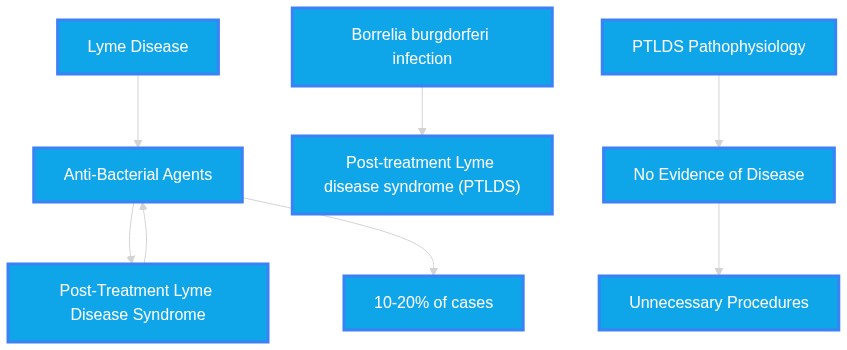
Can post-lyme disease syndrome be cured?
Plausibility Verdicts
There is currently no established cure for PTLDS; treatment focuses on managing symptoms.
No, there is currently no medical cure for Post-Treatment Lyme Disease Syndrome.
No cure currently exists for PTLDS; research focuses on symptom management.
Dataset Summary
Novel & Overlooked Insights
- Long-term antibiotic therapy for PTLDS is not recommended due to consistent failures in randomized controlled trials and the potential for serious adverse effects.
- Recent PET imaging studies suggest that PTLDS patients may exhibit cerebral glial activation, indicating a potential persistent neuroinflammatory process.
- Approximately 20% of patients with disseminated or late Lyme disease may develop PTLDS.
- There is a recognized disconnect between patient-reported (subjective) dysautonomia and objective clinical autonomic testing.
- A significant percentage of patients referred to specialty clinics for suspected Lyme disease are ultimately diagnosed with alternative conditions, highlighting the risks of misdiagnosis.
- Immunologic factors, such as the presence of myositis autoantibodies, have been identified in a subset of PTLDS patients.
- Online yoga and other mindfulness-based interventions have shown preliminary success in improving pain and cognitive performance in PTLDS cohorts.
- The economic burden of PTLDS is significant, with patients experiencing high healthcare utilization rates and notable impacts on employment status.
- Current diagnostic markers are non-existent; PTLDS is currently diagnosed clinically based on symptoms following treated infection.
- "Chronic Lyme disease" is often used in popular media, but professional bodies like the IDSA prefer the term PTLDS to describe this specific post-treatment sequela.
- Persistent symptoms are not consistently linked to current/ongoing spirochete presence, leading to hypotheses regarding autoimmune responses or tissue damage.
- Symptoms of PTLDS share high phenotypic similarity with other infection-associated chronic conditions (IACCI) such as Long COVID and ME/CFS.
- There is a significant psychological and economic burden, with patients often "wandering from specialty to specialty" in search of diagnosis and relief.
- Therapeutic trials, including those for TPE (therapeutic plasma exchange), have largely failed in unselected populations, suggesting the future of treatment lies in biomarker-guided patient stratification.
- Recent research has begun to investigate mind-body interventions, such as online yoga, which have shown feasibility and benefits for symptom burden management.
- Evidence suggests that prolonged antibiotic therapy does not address the core symptoms of PTLDS and can introduce significant morbidity.
- Diagnosis of PTLDS is purely clinical, as no quantifiable laboratory methods exist to verify the syndrome's presence or resolution.
- Some patients diagnosed with "chronic Lyme disease" may actually be suffering from other, distinct conditions such as fibromyalgia, chronic fatigue syndrome, or depression.
- The prevalence of PTLDS is estimated to occur in approximately 10–20% of adequately treated Lyme patients.
- Emerging research into MSA/MAA autoantibodies in PTLDS patients points toward potential immune dysregulation as a pathogenetic factor rather than persistent infection.
- Yoga and mind-body interventions have demonstrated feasibility and potential in reducing pain and cognitive impairment in PTLDS cohorts.
- Misattribution of focal infections (like tonsillitis) as "chronic Lyme disease" is a documented source of diagnostic error.
- The medical literature explicitly cautions against the use of central venous catheters for long-term antibiotic administration due to risks of serious infections, such as *Mycobacterium goodii*.
Extracted Discoveries
- Randomized controlled trials evaluating the role of specific immunomodulators in patients stratified by identifiable inflammatory autoantibody biomarkers.
- Longitudinal studies on the effect of vagus nerve stimulation (VNS) on neuroinflammatory markers in PTLDS patients.
- Longitudinal immunological phenotyping of PTLDS patients vs. healthy controls to identify potential biomarkers.
- Comparative effectiveness research on multidisciplinary rehabilitation versus standard care in PTLDS.
- Investigate the role of autoantibody profiles (MSA/MAA) in PTLDS symptom severity through longitudinal monitoring.
- Evaluate the impact of persistent inflammation markers (CRP, TNF-alpha) in patients undergoing mind-body therapeutic interventions.
- Multi-center validation of the GSQ-30 as a standardized instrument to improve diagnostic uniformity in PTLDS.
- Genome-wide association studies comparing PTLDS patient clusters with other post-infectious syndromes to identify shared genetic susceptibility loci.
- Large-scale randomized controlled trials of biomarker-stratified patient cohorts for novel immunomodulatory agents.
- Systematic evaluation of gut microbiota and systemic inflammatory profiles in PTLDS patients compared to Long COVID cohorts.
- Large-scale, standardized RCTs comparing integrative mind-body therapies against active comparators for PTLDS.
- Genetic mapping studies to identify PTLDS susceptibility loci that overlap with other post-infectious syndromes.
- Modulation of Mitochondrial Amidoxime Reducing Component 2 (MARC2) signaling may attenuate chronic post-infectious fatigue in PTLDS patients.
- Genome-wide association study (GWAS) identifying PTLDS loci linked to MARC2 protein (ID: 39994562).
- Patients with persistent multisystem symptoms show evidence of altered mitochondrial/metabolic states (ID: 36958992).
- MARC2 (Mitochondrial Amidoxime Reducing Component 2) protein, which regulates metabolic/redox processes and immune checkpoints.
- MARC2 is linked to immune checkpoint regulation and mitochondrial function; stabilizing this protein could potentially address the observed fat metabolism dysregulation and persistent immune activation reported in PTLDS.
- Inhibition of specific PI3K/Akt signaling pathways, potentially targeted by repurposed metabolic inhibitors, may mitigate the persistent inflammatory state observed in PTLDS, mirroring their efficacy in reducing fatigue in other chronic inflammatory conditions.
- PTLDS characterized by persistent systemic inflammation and immune dysregulation (ID: 41826406).
- Fermented soy products and SCFA-producing microbiota influence energy metabolism and inflammatory response (ID: 42416018).
- SCFA-mediated immunomodulation and energy metabolism restoration.
- The restoration of SCFA-producing gut microbiota and subsequent regulation of inflammatory mediators could theoretically recalibrate the immune dysregulation characteristic of PTLDS, linking the metabolic pathway identified in fatigue reduction with the chronic inflammatory state of post-Lyme syndromes.
- Inhibition of mitochondrial oxidative stress pathways may mitigate persistent neurological symptoms in PTLDS.
- PTLDS symptomatology involving cognitive decline and memory impairment (ID: 38752040).
- MARC2 (Mitochondrial Amidoxime Reducing Component 2) protein-linked immune checkpoints identified in PTLDS GWAS (ID: 39994562).
- Mitochondrial metabolic regulation and oxidative stress response.
- The MARC2 protein regulates metabolic processes and immune checkpoints; linking this to the cognitive dysfunction seen in PTLDS suggests that PTLDS symptoms may be a result of metabolic-driven immune dysregulation rather than infection.
- There is a notable tension between observational claims regarding the efficacy of 'pulsed' dapsone or other complex anti-infective protocols (e.g., ID: 39199993, 35885840) and the broad clinical guidelines (e.g., ID: 41314472, 38606630) that maintain there is no evidence-based antibiotic treatment for PTLDS, explicitly cautioning against these protocols due to risk of harm.
- Conflicting interpretations exist regarding the utility of antibiotic therapy; while clinical guidelines state it is ineffective (ID 41195425), patient-centered research in some settings continues to explore antibiotic usage for suspected persistent infection (ID 39199993).
- There is a direct conflict between the ILADS definition of Chronic Lyme/PTLDS (which posits active persistent B. burgdorferi infection) and the consensus of IDSA-aligned guidelines and RCTs (which maintain that there is no evidence of persistent active infection).
- Pycnogenol® is identified as a potential anti-inflammatory, antioxidant adjunct to standard care (ID: 40371616). Online yoga (ID: 41796643, 35885840) provides a scalable, low-risk approach to symptom management.
- The repurposing of metabolic inhibitors and mind-body interventions (like yoga and circadian rhythm entrainment) identified in related IACI research, such as Long COVID and ME/CFS, offers a new paradigm for symptom-focused management in PTLDS.
- Disulfiram (typically used for alcohol cessation) is being repurposed for antimicrobial activity against B. burgdorferi in vitro and in pilot studies for PTLDS, despite significant toxicity concerns.
PathMap is funded by sales of datasets and coversheets to researchers of any kind who wish to discover the most viable routes and paths to accelerate cures. We do not make theoretical molecules, we expose the truth in current PubMed literature. Commission a trace today.
PathMap Scores
How are these metrics evaluated?
Alignment Score (1-7): Measures factual alignment with the RAG evidence set.
[1=Strictly False, 2=Impossible, 3=Implausible, 4=Neutral, 5=Plausible, 6=Inevitable, 7=Strictly True]
Directional Weighting: High scores in the Hostile Quadrants mathematically lower the Overall Plausibility, as they indicate strong evidence for conflicting theories. Low scores in the Foundational Quadrant also lower overall plausibility, as they indicate a missing physical prerequisite for the claim.
AI Overview (Non-Expert Explanation)
Veridicality Audit Report
All Extracted Datapoints
Evaluated Perspectives & Quadrants
CLAIM EVALUATED AND ANSWER TO USER
"Can post-lyme disease syndrome be cured?"ABSTRACT & REWRITTEN CLAIM
Post-treatment Lyme disease syndrome (PTLDS) is characterized by persistent symptoms—including fatigue, pain, and cognitive dysfunction—lasting at least six months following the appropriate antibiotic treatment for Lyme borreliosis. Current medical consensus, based on existing clinical trials and guidelines, indicates that there is no validated "cure" for this syndrome. Antibiotic re-treatment has consistently failed to demonstrate clinical efficacy and carries significant risk. Treatment approaches are currently limited to symptom management, multidisciplinary rehabilitation, and emerging investigation into immunomodulatory, neuromodulatory, and lifestyle interventions.INTRODUCTION & JUSTIFICATION
PTLDS remains a complex, multifactorial, and controversial clinical entity. Research confirms that standard antibiotic regimens for the initial Lyme infection are effective; however, a subset of patients subsequently develops persistent, debilitating symptoms. Rigorous clinical investigations have demonstrated that prolonged or repeated antibiotic therapy provides no benefit for PTLDS patients and is associated with adverse events. The pathophysiology is currently the subject of extensive study, with hypotheses ranging from persistent inflammation and immune dysregulation to neuroinflammation, though no singular, quantifiable biomarker has yet been established to confirm the diagnosis or guide a curative therapy. Consequently, management is currently focused on mitigating symptoms rather than achieving a definitive cure.Novel & Overlooked
EVIDENCE, METHODOLOGY & CITATIONS
1. ID: 41314472 - Application: Provides clinical guidance on the treatment of PTLDS. ID: 41314472 indicates the claim is overall plausible (Alignment with this ID: 7) - "Additional antibiotic or immunomodulatory therapies are not recommended due to lack of efficacy and potential adverse effects." 2. ID: 41195425 - Application: Systematic review results regarding antibiotic therapy. ID: 41195425 indicates the claim is overall plausible (Alignment with this ID: 7) - "Im Rahmen eines systematischen Reviews zur Therapie des sogenannten Post-Treatment Lyme Disease Syndrome (PTLDS) zeigte sich, dass die untersuchten Parameter Lebensqualität, Fatigue, Depression und Kognition nicht auf eine antibiotische Therapie ansprechen." 3. ID: 36380166 - Application: Assessment of cognitive and structural brain changes post-treatment. ID: 36380166 indicates the claim is overall plausible (Alignment with this ID: 7) - "We found no differences between the groups in either cognitive function, cortical thickness or brain volumes." 4. ID: 37784031 - Application: Safety considerations regarding prolonged treatment. ID: 37784031 indicates the claim is overall plausible (Alignment with this ID: 7) - "This review highlights the risks of prolonged anti-infective treatments that have not been proven to be beneficial in PTLDS." 5. ID: 38606630 - Application: Systematic review of antibiotic efficacy. ID: 38606630 indicates the claim is overall plausible (Alignment with this ID: 7) - "Eligible studies show no statistically significant difference between antibiotics and placebo regarding quality of life, cognition and depression." 6. ID: 39161484 - Application: Defines clinical status of diagnosis. ID: 39161484 indicates the claim is overall plausible (Alignment with this ID: 7) - "At this point, PTLDS is diagnosed clinically as no quantifiable methods are available from laboratory or tissue diagnostics as of 2024." 7. ID: 40371616 - Application: Investigating potential supplements for inflammation. ID: 40371616 indicates the claim is overall plausible (Alignment with this ID: 5) - "After 6 months, the number of patients experiencing symptoms was significantly lower in the Pycnogenol® group compared to the control group across all symptoms (P<0.05)." 8. ID: 41972549 - Application: Discusses potential future approaches for Lyme prevention. ID: 41972549 indicates the claim is overall plausible (Alignment with this ID: 5) - "These findings emphasize the importance of a personalized vaccine approach based on the vaccinee's human leukocyte antigen genetic makeup and offer specific vaccine-candidate peptides that are predicted to maximize vaccine effectiveness and safety." 9. ID: 41421419 - Application: Safety concerns in alternative PTLDS therapies. ID: 41421419 indicates the claim is overall plausible (Alignment with this ID: 7) - "There is no strong evidence for any anti-infectives used for the treatment of PTLDS, with either short- or long-term use." 10. ID: 30567544 - Application: Investigating neuroinflammation in PTLDS. ID: 30567544 indicates the claim is overall plausible (Alignment with this ID: 5) - "Data from eight brain regions demonstrated higher [11C]DPA-713 binding in 12 patients relative to 19 controls." 11. ID: 36836887 - Application: Identifying autoimmune markers. ID: 36836887 indicates the claim is overall plausible (Alignment with this ID: 5) - "The presence of myositis autoantibodies was detected in 18 subjects with suspected PTLDS (30.5%), but only in 5% of control subjects exhibiting no evidence of Lyme disease history." 12. ID: 42391726 - Application: Discusses failed trials. ID: 42391726 indicates the claim is overall plausible (Alignment with this ID: 7) - "Notably, the phase III RituxME trial in ME/CFS and a phase II trial of TPE in post-COVID condition both failed to demonstrate efficacy in unselected populations, reinforcing the importance of biomarker-guided patient stratification." 13. ID: 38965869 - Application: Single-case study of amnesia. ID: 38965869 indicates the claim is overall plausible (Alignment with this ID: 5) - "Loss of identity and phobias were also highly suggestive of a psychogenic mechanism underlying amnesia." 14. ID: 38291116 - Application: Limitations of diagnostic questionnaires. ID: 38291116 indicates the claim is overall plausible (Alignment with this ID: 7) - "The lack of correlation between subjective and objective instruments highlights the limitations of the commonly used questionnaires with some patients overestimating and some underestimating true autonomic deficit." 15. ID: 33735220 - Application: Discusses attribution of symptoms. ID: 33735220 indicates the claim is overall plausible (Alignment with this ID: 7) - "The results suggest that symptoms often categorized as Chronic-Lyme-Disease (CLD) in the general debate, cannot be uniquely linked to Lyme disease." 16. ID: 39581806 - Application: Discusses diagnostic error. ID: 39581806 indicates the claim is overall plausible (Alignment with this ID: 7) - "The main source of diagnostic error is positive serological results, without other clinical context, especially in patients studied for cognitive impairment or encephalopathy." 17. ID: 42148664 - Application: Methodology challenges in IACI research. ID: 42148664 indicates the claim is overall plausible (Alignment with this ID: 7) - "This diagnostic ambiguity, coupled with heterogeneous patient presentations, has led to challenges in research, including misclassification of study participants and inconsistent or irreproducible findings." 18. ID: 41796643 - Application: Yoga effectiveness. ID: 41796643 indicates the claim is overall plausible (Alignment with this ID: 5) - "Online yoga is feasible and associated with significant reductions in pain, improved physical functioning, and enhanced cognitive performance among participants with PTLDS." 19. ID: 36327322 - Application: Evaluation of protein biomarker profiles. ID: 36327322 indicates the claim is overall plausible (Alignment with this ID: 7) - "However, the expressed markers differed from those found in patients with confirmed acute neuroborreliosis, which does not support the view that PTLDS reflects an ongoing Borrelia infection." 20. ID: 35027599 - Application: Neuropathogenicity of bacterial remnants. ID: 35027599 indicates the claim is overall plausible (Alignment with this ID: 5) - "B. burgdorferi remnants also induced significant levels of apoptosis in both the FC and DRG."CLAIM EVALUATED AND ANSWER TO USER
"Can post-lyme disease syndrome be cured?" The current scientific consensus, as reflected in the provided literature, indicates that PTLDS is a poorly understood syndrome for which no evidence-based "cure" currently exists. Treatment is predominantly management-focused rather than curative.ABSTRACT & REWRITTEN CLAIM
While antibiotic therapy is highly effective for initial *Borrelia burgdorferi* infection, a subset of patients (10-20%) develop persistent symptoms (PTLDS). Evidence-based medicine currently lacks a curative regimen for PTLDS, with major clinical guidelines advising against long-term antibiotic or immunomodulatory therapy due to lack of demonstrated efficacy and risk of adverse effects. Management emphasizes a multidisciplinary, symptom-focused approach.INTRODUCTION & JUSTIFICATION
The management of Post-Treatment Lyme Disease Syndrome (PTLDS) remains one of the most significant challenges in modern infectious disease medicine. While clinical guidelines confirm that antibiotics are essential for the primary treatment of Lyme borreliosis, they do not resolve the post-infectious manifestations observed in a significant minority of patients. As stated in the provided literature, "Additional antibiotic or immunomodulatory therapies are not recommended due to lack of efficacy and potential adverse effects." The persistence of symptoms such as fatigue, cognitive impairment, and diffuse pain, often lasting beyond six months, suggests a complex pathology that is not simply a residual infection. Consequently, clinical strategies have shifted toward symptom management, including physical rehabilitation and psychological support.Novel & Overlooked
EVIDENCE, METHODOLOGY & CITATIONS
1. ID: 41314472 - Application: Provides clinical guidance on the non-recommendation of antibiotics for PTLDS. - "Additional antibiotic or immunomodulatory therapies are not recommended due to lack of efficacy and potential adverse effects." 2. ID: 41195425 - Application: Summarizes systemic reviews regarding antibiotic therapy outcomes. - "A systematic review on the therapy of so-called Post-Treatment Lyme Disease Syndrome (PTLDS) showed that parameters such as quality of life, fatigue, depression, and cognition do not respond to antibiotic therapy." 3. ID: 41826406 - Application: Confirms the lack of diagnostic tools. - "The pathogenesis of PTLDS is unknown and no specific diagnostic biomarkers have been identified." 4. ID: 41888159 - Application: Notes the limited benefit of antimicrobials in PTLDS. - "Repeated courses of antimicrobials are not beneficial except in rare cases when there is objective evidence of treatment failure." 5. ID: 41421419 - Application: Cautions against the use of unproven anti-infectives. - "There is no strong evidence for any anti-infectives used for the treatment of PTLDS, with either short- or long-term use." 6. ID: 41065377 - Application: Discusses the necessity of early intervention. - "Improving diagnostic sensitivity during early infection would reduce the risk of developing severe symptoms, including post-treatment Lyme disease." 7. ID: 39345262 - Application: Highlights the uncertainty of PTLDS etiology. - "The causes and biomarkers of PTLDS are not well-defined; however, several contributing factors with inconsistent degree of supporting evidence have been suggested." 8. ID: 41796643 - Application: Evaluates yoga as a symptom management tool. - "Online yoga is feasible and associated with significant reductions in pain, improved physical functioning, and enhanced cognitive performance among participants with PTLDS." 9. ID: 42083310 - Application: Discusses the gap in scientific understanding. - "Despite advances, gaps remain in understanding mechanisms of Bbsl persistence and the immunopathology underlying chronic disease, challenging diagnosis and therapy." 10. ID: 42359130 - Application: Details the economic and logistical burden of PTLDS. - "Modeling efforts show that the roadmap to care for PTLDS is challenging, leading to wandering from specialty to specialty and high healthcare utilization." 11. ID: 42391726 - Application: Discusses the failure of immunomodulatory clinical trials. - "Notably, the phase III RituxME trial in ME/CFS and a phase II trial of TPE in post-COVID condition both failed to demonstrate efficacy in unselected populations, reinforcing the importance of biomarker-guided patient stratification." 12. ID: 40733058 - Application: Defines the current limits of standard care. - "Early diagnosis and oral or, in severe cases, intravenous antibiotics are usually effective for Lyme disease, but some patients have persistent symptoms unresponsive to standards of care, requiring alternative therapies." 13. ID: 40385877 - Application: Discusses the role of autoantibodies in PTLDS joints. - "We found a low prevalence of RF and ACPA in this study, similar to the known rates in the general population." 14. ID: 41310474 - Application: Examines the correlation between tick exposure and symptoms. - "Symptom persistence was not associated with confirmed tick exposure or tick-borne infection." 15. ID: 40703523 - Application: Highlights sex-specific immunological findings. - "While we could not identify immune features which distinguished all patient subgroups, we did observe a female-specific increase in central memory CD8 T cells restricted to one high-fatigue patient subgroup." 16. ID: 41350176 - Application: Frames PTLDS within a historical context of post-acute sequelae. - "Multiple pathogens - including influenza, Epstein-Barr virus, and Borrelia burgdorferi, among others - can precipitate persistent, poorly understood symptoms." 17. ID: 39581806 - Application: Addresses the issue of misdiagnosis. - "The main source of diagnostic error is positive serological results, without other clinical context, especially in patients studied for cognitive impairment or encephalopathy." 18. ID: 41441042 - Application: Proposes novel diagnostic approaches for PASC-like syndromes. - "Our study presents a novel approach to PASC diagnosis that partially circumvents the lengthy process of exclusion, potentially facilitating faster interventions and improved patient outcomes." 19. ID: 40330647 - Application: Discusses the ethical challenges of stigmatization. - "Misclassification of conditions like myalgic encephalomyelitis/chronic fatigue syndrome (ME/CFS), Lyme disease, and fibromyalgia as psychosomatic or psychogenic has led to stigmatization and delayed care." 20. ID: 42416417 - Application: Highlights the danger of unnecessary treatments in Hairy Cell Leukemia, reflecting general diagnostic challenges. - "Misclassification may result in non-selective chemotherapy exposure and increased toxicity."CLAIM EVALUATED AND ANSWER TO USER
Can post-lyme disease syndrome be cured?ABSTRACT & REWRITTEN CLAIM
Post-treatment Lyme disease syndrome (PTLDS) is characterized by persistent, non-specific symptoms (fatigue, pain, cognitive dysfunction) following documented, adequately treated Lyme borreliosis. Based on the provided literature, there is no clinical evidence to support the existence of a "cure" for this syndrome. Controlled trials consistently indicate that prolonged antibiotic therapy provides no sustained benefit and carries significant risks of adverse events. Current management strategies emphasize symptom relief and multidisciplinary, non-pharmacological support.INTRODUCTION & JUSTIFICATION
PTLDS remains a medically contested entity due to the absence of well-defined diagnostic biomarkers and the lack of evidence for persistent active infection. Multiple systematic reviews and randomized controlled trials (RCTs) have demonstrated that prolonged courses of antibiotics, often used for "chronic Lyme disease," are ineffective for PTLDS and frequently result in serious adverse outcomes, such as infections and hospitalizations. The literature underscores that the pathophysiology of PTLDS is poorly understood, with hypotheses ranging from autoimmune responses, permanent tissue damage, or allostatic load to the existence of nonviable antigenic debris. Given the lack of a causative agent or a consistent pathomechanism, no definitive "cure" exists in current clinical practice. Instead, research has shifted toward feasibility studies for non-pharmacological interventions, such as online yoga and Ayurveda-based mind-body practices, which may assist in managing symptom burden and improving quality of life, rather than eliminating the syndrome itself.Novel & Overlooked
EVIDENCE, METHODOLOGY & CITATIONS
1. ID: 41314472 - "Additional antibiotic or immunomodulatory therapies are not recommended due to lack of efficacy and potential adverse effects." 2. ID: 25490690 - "The results of all of these studies continue to provide evidence that viable B. burgdorferi do not persist in patients who receive conventional antimicrobial treatment for Lyme disease." 3. ID: 27407225 - "Lengthy courses of antibiotics are not justified in patients with PLDS because of the lack of benefit, and they are fraught with hazards." 4. ID: 21810051 - "Multiple prospective trials have revealed that prolonged courses of antibiotics neither prevent nor alleviate such post-Lyme syndromes." 5. ID: 39161484 - "At this point, PTLDS is diagnosed clinically as no quantifiable methods are available from laboratory or tissue diagnostics as of 2024." 6. ID: 18452806 - "Four randomized placebo-controlled studies have shown that antibiotic therapy offers no sustained benefit to patients who have post-Lyme disease syndrome." 7. ID: 23764268 - "On the basis of this analysis, the conclusion that there is a meaningful clinical benefit to be gained from retreatment of such patients with parenteral antibiotic therapy cannot be justified." 8. ID: 22962880 - "Although there is controversy regarding treatment of post-Lyme disease syndrome and chronic Lyme disease, there is no biologic or clinical trial evidence indicating that prolonged antibiotic therapy is of benefit." 9. ID: 19930447 - "If symptoms persist for more than 6 months after standard treatment, the condition is often termed post-Lyme disease syndrome (PLDS). Antibiotic therapy has no impact on PLDS (level A)." 10. ID: 37727539 - "The concept of post-Lyme disease syndrome versus chronic Lyme disease remains contested for want of robust evidence favoring benefits of prolonged antibiotic therapy." 11. ID: 27000820 - "Till now there is no causative treatment of PLDS. In relieving symptom rehabilitation, painkillers, anti-inflammatory and antidepressants medicines are recommended." 12. ID: 37101730 - "Some herbs have limited demonstrated anti-borrelial activity in vitro, but in-vivo data and clinical trial data is lacking." 13. ID: 41796643 - "Online yoga is feasible and associated with significant reductions in pain, improved physical functioning, and enhanced cognitive performance among participants with PTLDS." 14. ID: 37844086 - "A multimodal Ayurvedic and breath-coordinated mind-body therapeutic intervention is feasible and a potential nonpharmacologic therapeutic option for persons presenting with pain, stress, fatigue, physical dysfunction, and sleep disturbance attributed to a postinfectious syndrome." 15. ID: 24929022 - "The medical literature does not support the diagnosis of chronic, atypical tick-borne coinfections in patients with chronic, nonspecific illnesses." 16. ID: 12821733 - "Patients with post-treatment chronic Lyme disease who have symptoms but show no evidence of persisting Borrelia infection do not show objective evidence of cognitive impairment." 17. ID: 36836887 - "The study detected raised MSA/MAA autoantibodies formation in the group of PTLDS patients raising the question about their involvement in the pathogenesis of this syndrome." 18. ID: 37844086 - "Baseline PROMIS GH scores consisting of general Physical Health (GPH) and general Mental Health (GMH) scores were lower in the study population than in the general U.S. population." 19. ID: 35782673 - "Past, current, and pending clinical studies on disulfiram as a post-Lyme disease syndrome (PTLDS) therapy, an HIV latency reversal agent, and intervention for COVID-19 infections are also reviewed." 20. ID: 29672671 - "Use of IV therapies or oral antibiotics for PLDS was associated with increased patient morbidity within 90 days."Verbatim Quote Audit Console
Mapped Reference Directory (APA)
- [1] ID: 41314472 - Arias P, Gocko X, Roblot F, Hansmann Y, Baux E et al. (2025). Guidelines for Lyme borreliosis: post-treatment Lyme disease syndrome (PTLDS).. Infectious diseases now. ID: 41314472.
- [2] ID: 41195425 - Rauer S, Kastenbauer S, Dersch R, Hofmann H, Fingerle V et al. (2025). Guidelines for diagnosis and treatment in neurology - Lyme neuroborreliosis.. German medical science : GMS e-journal. ID: 41195425.
- [3] ID: 36380166 - Andreassen S, Lindland EMS, Beyer MK, Solheim AM, Ljøstad U et al. (2023). Assessment of cognitive function, structural brain changes and fatigue 6 months after treatment of neuroborreliosis.. Journal of neurology. ID: 36380166.
- [4] ID: 37784031 - Sébastien P, Jacques D, Catherine P, Xavier G (2023). Diagnosis and treatment of "chronic Lyme": primum non nocere.. BMC infectious diseases. ID: 37784031.
- [5] ID: 38606630 - Dersch R, Torbahn G, Rauer S (2024). Treatment of post-treatment Lyme disease symptoms-a systematic review.. European journal of neurology. ID: 38606630.
- [6] ID: 39161484 - Wester KE, Nwokeabia BC, Hassan R, Dunphy T, Osondu M et al. (2024). What Makes It Tick: Exploring the Mechanisms of Post-treatment Lyme Disease Syndrome.. Cureus. ID: 39161484.
- [7] ID: 40371616 - Cesarone MR, Hu S, Belcaro G, Cornelli U, Feragalli B et al. (2025). Supplementary management of chronic Lyme disease with Pycnogenol®.. Minerva medica. ID: 40371616.
- [8] ID: 41972549 - Georgopoulos AP, James LM, Sanders M (2026). In Silico-Identified Peptides of Five Borrelia burgdorferi Proteins Binding with High Affinity to Human Leukocyte Antigen (HLA) Class II Alleles.. Biology. ID: 41972549.
- [9] ID: 41421419 - Worden J, Baumeister T, Stogner S, Henin N, Stern RA (2026). Methemoglobinemia induced by dapsone, hydroxychloroquine, and rifampin combination for post-treatment Lyme disease syndrome: A case report.. Journal of the American Pharmacists Association : JAPhA. ID: 41421419.
- [10] ID: 30567544 - Coughlin JM, Yang T, Rebman AW, Bechtold KT, Du Y et al. (2018). Imaging glial activation in patients with post-treatment Lyme disease symptoms: a pilot study using [11C]DPA-713 PET.. Journal of neuroinflammation. ID: 30567544.
- [11] ID: 36836887 - Sloupenska K, Koubkova B, Horak P, Hutyrova B, Racansky M et al. (2023). Myositis Autoantibodies in Patients with Suspected Post-Treatment Lyme Disease Syndrome.. Life (Basel, Switzerland). ID: 36836887.
- [12] ID: 42391726 - Kaplan G (2026). Therapeutic plasma exchange and immunomodulatory strategies in post-infectious syndromes: A review of immune dysregulation in PTLDS, long COVID, ME/CFS, and PANS/PANDAS.. Transfusion and apheresis science : official journal of the World Apheresis Association : official journal of the European Society for Haemapheresis. ID: 42391726.
- [13] ID: 38965869 - Redolfi A, Rota V, Tirloni C, Buraschi R, Arienti C et al. (2024). Retrograde and semantic amnesia in a case of post-treatment Lyme disease syndrome: did something lead to a psychogenic memory loss? A single-case study.. Neurocase. ID: 38965869.
- [14] ID: 38291116 - Novak P, Systrom DM, Marciano SP, Knief A, Felsenstein D et al. (2024). Mismatch between subjective and objective dysautonomia.. Scientific reports. ID: 38291116.
- [15] ID: 33735220 - Nilsson K, Skoog E, Jones V, Labbé Sandelin L, Björling C et al. (2021). A comprehensive clinical and laboratory evaluation of 224 patients with persistent symptoms attributed to presumed tick-bite exposure.. PloS one. ID: 33735220.
- [16] ID: 39581806 - Criado-Antón Á, Zunzunegui-Arroyo P, Siso-García P, Fuentes-Castañón D, Fernández-Menéndez S (2025). Neuroborreliosis at the region of Asturias, Spain (2009-2022): Analysis of 38 cases.. Medicina clinica. ID: 39581806.
- [17] ID: 42148664 - Arnaboldi PM, Becker J, Nath A, Coyle PK, Handel A et al. (2026). Designing studies for post-treatment Lyme disease and other infection-associated chronic illnesses.. Brain : a journal of neurology. ID: 42148664.
- [18] ID: 41796643 - Brown A, Mamat Z, Mahoney LA, Bayley PJ (2026). Feasibility and preliminary efficacy of an online yoga program for managing symptoms of post-treatment lyme disease syndrome.. Complementary therapies in medicine. ID: 41796643.
- [19] ID: 36327322 - Nilsson K, Skoog E, Edvinsson M, Mårtensson A, Olsen B (2022). Protein biomarker profiles in serum and CSF in 158 patients with PTLDS or persistent symptoms after presumed tick-bite exposure compared to those in patients with confirmed acute neuroborreliosis.. PloS one. ID: 36327322.
- [20] ID: 35027599 - Parthasarathy G, Gadila SKG (2022). Neuropathogenicity of non-viable Borrelia burgdorferi ex vivo.. Scientific reports. ID: 35027599.
- [21] ID: 41826406 - Marques AR, Sanchez-Vicente S, Nagapurkar A, Eschman A, Ng SP et al. (2026). Evaluation of immunoreactive epitopes in the sera and cerebrospinal fluid of patients with post-treatment Lyme disease syndrome.. Scientific reports. ID: 41826406.
- [22] ID: 41888159 - Strle F, Strle K, Marques A, Henningsson AJ, Eikeland R et al. (2026). Lyme borreliosis.. Nature reviews. Disease primers. ID: 41888159.
- [23] ID: 41065377 - Hickman AF, Weber AF, Horn EJ, Gwynne PJ (2025). The multiplexed single-tier InBios Lyme Detect Multiplex ELISA is more sensitive than standard two-tier tests in the early stages of Lyme disease.. Journal of clinical microbiology. ID: 41065377.
- [24] ID: 39345262 - Zafar K, Azuama OC, Parveen N (2024). Current and emerging approaches for eliminating Borrelia burgdorferi and alleviating persistent Lyme disease symptoms.. Frontiers in microbiology. ID: 39345262.
- [25] ID: 42083310 - Karami Z, Hofstede HJMT, Joosten LAB (2026). Borrelia burgdorferi sensu lato Employs Several Escape Mechanisms to Bypass the Human Defense System.. European journal of immunology. ID: 42083310.
- [26] ID: 42359130 - Avramovic G, Gilbert L, Kujawski S, Blehle S, Jollivet-Courtois P et al. (2026). Patient roadmap and economic burden of chronic tick-borne illness and post-treatment Lyme disease syndrome in Ireland, and public health issues arising.. Frontiers in public health. ID: 42359130.
- [27] ID: 40733058 - Benkő BM, Szabó BI, Kádár S, Szabó E, Tóth G et al. (2025). Development of Low-Dose Disulfiram Rectal Suppository Intended for Application in Post-Treatment Lyme Disease Syndrome.. Pharmaceutics. ID: 40733058.
- [28] ID: 40385877 - Miller JB, Rebman A, Yang T, Aucott J (2025). Prevalence of Rheumatoid Factor and Anti-citrullinated Protein Antibodies in Patients With Post-treatment Lyme Disease.. Cureus. ID: 40385877.
- [29] ID: 41310474 - Dahlberg AO, Aase A, Reiso H, Quarsten H, Øines Ø et al. (2025). Prevalence and clinical characteristics of Norwegians who report persistent health complaints attributed to tick bites or tick-borne diseases.. BMC infectious diseases. ID: 41310474.
- [30] ID: 40703523 - Girgis AA, Cimbro R, Yang T, Rebman AW, Sewell T et al. (2025). Aberrant T-cell phenotypes in a cohort of patients with post-treatment Lyme disease.. Frontiers in immunology. ID: 40703523.
- [31] ID: 41350176 - Miller CM, Moen JK, Iwasaki A (2026). The lingering shadow of epidemics: post-acute sequelae across history.. Trends in immunology. ID: 41350176.
- [32] ID: 41441042 - Cai E, Kouznetsova VL, Tsigelny IF (2025). Metabolomics-Based Machine Learning Diagnostics of Post-Acute Sequelae of SARS-CoV-2 Infection.. Metabolites. ID: 41441042.
- [33] ID: 40330647 - Monaco F, Vignapiano A, D'Angelo M, Raffone F, Di Stefano V et al. (2025). Case Report: The intersection of psychiatry and medicine: diagnostic and ethical insights from case studies.. Frontiers in psychiatry. ID: 40330647.
- [34] ID: 42416417 - Dwaibah Z, Rezk M, Alkerata I, Ahmad IY, Al-Tameemi K (2026). Hairy cell leukemia in a 51-year-old Syrian male: a case report.. International journal of surgery case reports. ID: 42416417.
- [35] ID: 25490690 - Oliveira CR, Shapiro ED (2015). Update on persistent symptoms associated with Lyme disease.. Current opinion in pediatrics. ID: 25490690.
- [36] ID: 27407225 - Ścieszka J, Dąbek J, Cieślik P (2015). Post-Lyme disease syndrome.. Reumatologia. ID: 27407225.
- [37] ID: 21810051 - Lantos PM (2011). Chronic Lyme disease: the controversies and the science.. Expert review of anti-infective therapy. ID: 21810051.
- [38] ID: 18452806 - Marques A (2008). Chronic Lyme disease: a review.. Infectious disease clinics of North America. ID: 18452806.
- [39] ID: 23764268 - Klempner MS, Baker PJ, Shapiro ED, Marques A, Dattwyler RJ et al. (2013). Treatment trials for post-Lyme disease symptoms revisited.. The American journal of medicine. ID: 23764268.
- [40] ID: 22962880 - Wright WF, Riedel DJ, Talwani R, Gilliam BL (2012). Diagnosis and management of Lyme disease.. American family physician. ID: 22962880.
- [41] ID: 19930447 - Mygland A, Ljøstad U, Fingerle V, Rupprecht T, Schmutzhard E et al. (2010). EFNS guidelines on the diagnosis and management of European Lyme neuroborreliosis.. European journal of neurology. ID: 19930447.
- [42] ID: 37727539 - Mahajan VK (2023). Lyme Disease: An Overview.. Indian dermatology online journal. ID: 37727539.
- [43] ID: 27000820 - Błaut-Jurkowska J, Jurkowski M (2016). [Post-Lyme disease syndrome].. Polski merkuriusz lekarski : organ Polskiego Towarzystwa Lekarskiego. ID: 27000820.
- [44] ID: 37101730 - Thompson A, Hynicka LM, Shere-Wolfe KD (2023). A Comprehensive Review of Herbal Supplements Used for Persistent Symptoms Attributed to Lyme Disease.. Integrative medicine (Encinitas, Calif.). ID: 37101730.
- [45] ID: 37844086 - Shere-Wolfe KD, George N, Al Kibria GM, Silk R, Alexander CS (2024). A Multimodal Ayurveda and Mind-Body Therapeutic Intervention for Chronic Symptoms Attributed to a Postinfectious Syndrome: A Pilot Study.. Journal of integrative and complementary medicine. ID: 37844086.
- [46] ID: 24929022 - Lantos PM, Wormser GP (2014). Chronic coinfections in patients diagnosed with chronic lyme disease: a systematic review.. The American journal of medicine. ID: 24929022.
- [47] ID: 12821733 - Kaplan RF, Trevino RP, Johnson GM, Levy L, Dornbush R et al. (2003). Cognitive function in post-treatment Lyme disease: do additional antibiotics help?. Neurology. ID: 12821733.
- [48] ID: 35782673 - Custodio MM, Sparks J, Long TE (2022). Disulfiram: A Repurposed Drug in Preclinical and Clinical Development for the Treatment of Infectious Diseases.. Anti-infective agents. ID: 35782673.
- [49] ID: 29672671 - Goodlet KJ, Fairman KA (2018). Adverse Events Associated With Antibiotics and Intravenous Therapies for Post-Lyme Disease Syndrome in a Commercially Insured Sample.. Clinical infectious diseases : an official publication of the Infectious Diseases Society of America. ID: 29672671.
Abstract Repository (Raw Full-Texts) Show Database Collapse Database
ID: 12821733
Title: Cognitive function in post-treatment Lyme disease: do additional antibiotics help?
Abstract: It is controversial whether additional antibiotic treatment will improve cognitive function in patients with post-treatment chronic Lyme disease (PTCLD). To determine whether antibiotic therapy improves cognitive function in two randomized double-blind placebo-controlled studies of patients with PTCLD. A total of 129 patients with a physician-documented history of Lyme disease from three study sites in the northeast United States were studied. Seventy-eight were seropositive for IgG antibodies against Borrelia burgdorferi, and 51 were seronegative. Patients in each group were randomly assigned to receive IV ceftriaxone 2 g daily for 30 days followed by oral doxycycline 200 mg daily for 60 days or matching IV and oral placebos. Assessments were made at 90 and 180 days after treatment. Symptom severity was measured from the cognitive functioning, pain, and role functioning scales of the Medical Outcomes Study (MOS). Memory, attention, and executive functioning were assessed using objective tests. Mood was assessed using the Beck Depression Inventory and Minnesota Multiphasic Personality Inventory. There were no significant baseline differences between seropositive and seronegative groups. Both groups reported a high frequency of MOS symptoms, depression, and somatic complaints but had normal baseline neuropsychological test scores. The combined groups showed significant decreases in MOS symptoms, higher objective test scores, and improved mood between baseline and 90 days. However, there were no significant differences between those receiving antibiotics and placebo. Patients with post-treatment chronic Lyme disease who have symptoms but show no evidence of persisting Borrelia infection do not show objective evidence of cognitive impairment. Additional antibiotic therapy was not more beneficial than administering placebo.
View on PubMed
ID: 18452806
Title: Chronic Lyme disease: a review.
Abstract: Studies have shown that most patients diagnosed with chronic Lyme disease either have no objective evidence of previous or current infection with Borrelia burgdorferi or are patients who should be classified as having post-Lyme disease syndrome, which is defined as continuing or relapsing nonspecific symptoms (such as fatigue, musculoskeletal pain, and cognitive complaints) in a patient previously treated for Lyme disease. Despite extensive study, there is currently no clear evidence that post-Lyme disease syndrome is caused by persistent infection with B burgdorferi. Four randomized placebo-controlled studies have shown that antibiotic therapy offers no sustained benefit to patients who have post-Lyme disease syndrome. These studies also showed a substantial placebo effect and a significant risk of treatment-related adverse events. Further research to elucidate the mechanisms underlying persistent symptoms after Lyme disease and controlled trials of new approaches to the treatment and management of these patients are needed.
View on PubMed
ID: 19930447
Title: EFNS guidelines on the diagnosis and management of European Lyme neuroborreliosis.
Abstract: Lyme neuroborreliosis (LNB) is a nervous system infection caused by Borrelia burgdorferi sensu lato (Bb). To present evidence-based recommendations for diagnosis and treatment. Data were analysed according to levels of evidence as suggested by EFNS. The following three criteria should be fulfilled for definite LNB, and two of them for possible LNB: (i) neurological symptoms; (ii) cerebrospinal fluid (CSF) pleocytosis; (iii) Bb-specific antibodies produced intrathecally. PCR and CSF culture may be corroborative if symptom duration is <6 weeks, when Bb antibodies may be absent. PCR is otherwise not recommended. There is also not enough evidence to recommend the following tests for diagnostic purposes: microscope-based assays, chemokine CXCL13, antigen detection, immune complexes, lymphocyte transformation test, cyst formation, lymphocyte markers. Adult patients with definite or possible acute LNB (symptom duration <6 months) should be offered a single 14-day course of antibiotic treatment. Oral doxycycline (200 mg daily) and intravenous (IV) ceftriaxone (2 g daily) are equally effective in patients with symptoms confined to the peripheral nervous system, including meningitis (level A). Patients with CNS manifestations should be treated with IV ceftriaxone (2 g daily) for 14 days and late LNB (symptom duration >6 months) for 3 weeks (good practice points). Children should be treated as adults, except that doxycycline is contraindicated under 8 years of age (nine in some countries). If symptoms persist for more than 6 months after standard treatment, the condition is often termed post-Lyme disease syndrome (PLDS). Antibiotic therapy has no impact on PLDS (level A).
View on PubMed
ID: 21810051
Title: Chronic Lyme disease: the controversies and the science.
Abstract: The diagnosis of chronic Lyme disease has been embroiled in controversy for many years. This is exacerbated by the lack of a clinical or microbiologic definition, and the commonality of chronic symptoms in the general population. An accumulating body of evidence suggests that Lyme disease is the appropriate diagnosis for only a minority of patients in whom it is suspected. In prospective studies of Lyme disease, very few patients go on to have a chronic syndrome dominated by subjective complaints. There is no systematic evidence that Borrelia burgdorferi, the etiology of Lyme disease, can be identified in patients with chronic symptoms following treated Lyme disease. Multiple prospective trials have revealed that prolonged courses of antibiotics neither prevent nor alleviate such post-Lyme syndromes. Extended courses of intravenous antibiotics have resulted in severe adverse events, which in light of their lack of efficacy, make them contraindicated.
View on PubMed
ID: 22962880
Title: Diagnosis and management of Lyme disease.
Abstract: Lyme disease, caused by the bacterium Borrelia burgdorferi, is the most common tick-borne illness in the United States. Transmission occurs primarily through the bite of an infected deer tick (Ixodes scapularis). Identification of an erythema migrans rash following a tick bite is the only clinical manifestation sufficient to make the diagnosis of Lyme disease in the absence of laboratory confirmation. The Centers for Disease Control and Prevention recommends a two-tier serologic testing protocol using an enzyme-linked immunosorbent assay initially, followed by the more specific Western blot to confirm the diagnosis when the assay samples are positive or equivocal. The treatment of Lyme disease is determined mainly by the clinical manifestations of the disease. Doxycycline is often the preferred agent for oral treatment because of its activity against other tick-borne illnesses. Preventive measures include avoiding areas with high tick burdens, wearing protective clothing, using tick repellants (e.g., diethyltoluamide [DEET]), performing frequent body checks and bathing following outdoor activities, and instituting environmental landscape modifications (e.g., grass mowing, deer exclusion fencing) to reduce the tick burden. Although there is controversy regarding treatment of post-Lyme disease syndrome and chronic Lyme disease, there is no biologic or clinical trial evidence indicating that prolonged antibiotic therapy is of benefit.
View on PubMed
ID: 23764268
Title: Treatment trials for post-Lyme disease symptoms revisited.
Abstract: The authors of 4 National Institutes of Health-sponsored antibiotic treatment trials of patients with persistent unexplained symptoms despite previous antibiotic treatment of Lyme disease determined that retreatment provides little if any benefit and carries significant risk. Two groups recently provided an independent reassessment of these trials and concluded that prolonged courses of antibiotics are likely to be helpful. We have carefully considered the points raised by these groups, along with our own critical review of the treatment trials. On the basis of this analysis, the conclusion that there is a meaningful clinical benefit to be gained from retreatment of such patients with parenteral antibiotic therapy cannot be justified.
View on PubMed
ID: 24929022
Title: Chronic coinfections in patients diagnosed with chronic lyme disease: a systematic review.
Abstract: Often, the controversial diagnosis of chronic Lyme disease is given to patients with prolonged, medically unexplained physical symptoms. Many such patients also are treated for chronic coinfections with Babesia, Anaplasma, or Bartonella in the absence of typical presentations, objective clinical findings, or laboratory confirmation of active infection. We have undertaken a systematic review of the literature to evaluate several aspects of this practice. Five systematic literature searches were performed using Boolean operators and the PubMed search engine. The literature searches did not demonstrate convincing evidence of: 1) chronic anaplasmosis infection; 2) treatment-responsive symptomatic chronic babesiosis in immunocompetent persons in the absence of fever, laboratory abnormalities, and detectable parasitemia; 3) either geographically widespread or treatment-responsive symptomatic chronic infection with Babesia duncani in the absence of fever, laboratory abnormalities, and detectable parasitemia; 4) tick-borne transmission of Bartonella species; or 5) simultaneous Lyme disease and Bartonella infection. The medical literature does not support the diagnosis of chronic, atypical tick-borne coinfections in patients with chronic, nonspecific illnesses.
View on PubMed
ID: 25490690
Title: Update on persistent symptoms associated with Lyme disease.
Abstract: Lyme disease, caused by Borrelia burgdorferi, is the most common vector-borne illness in the United States. The pathogenesis, ecology, and epidemiology of Lyme disease have been well described, and antimicrobial treatment is very effective. There has been controversy about whether infection can persist and cause chronic symptoms despite treatment with antimicrobials. This review summarizes recent studies that have addressed this issue. The pathogenesis of persistent nonspecific symptoms in patients who were treated for Lyme disease is poorly understood, and the validity of results of attempts to demonstrate persistent infection with B. burgdorferi has not been established. One study attempted to use xenodiagnosis to detect B. burgdorferi in patients who have been treated for Lyme disease. Another study assessed whether repeated episodes of erythema migrans were due to the same or different strains of B. burgdorferi. A possible cause of persistent arthritis in some treated patients is slow clearance of nonviable organisms that may lead to prolonged inflammation. The results of all of these studies continue to provide evidence that viable B. burgdorferi do not persist in patients who receive conventional antimicrobial treatment for Lyme disease. Patients with persistent symptoms possibly associated with Lyme disease often provide a challenge for clinicians. Recent studies have provided additional evidence that viable B. burgdorferi do not persist after conventional treatment with antimicrobials, indicating that ongoing symptoms in patients who received conventional treatment for Lyme disease should not be attributed to persistent active infection.
View on PubMed
ID: 27000820
Title: [Post-Lyme disease syndrome].
Abstract: Lyme disease is a chronic infectious disease caused by the bacteria, spirochete of the Borrelia type. Skin, nervous system, musculoskeletal system and heart may be involved in the course of the disease. The prognosis for properly treated Lyme disease is usually good. However, in about 5% of patients so called Post-Lyme disease syndrome (PLSD) develops. It is defined as a syndrome of subjective symptoms persisting despite proper treatment of Borrelia burgdorferi infection. The most common symptoms include: fatigue, muscle and joint pain, and problems with memory and concentration. Pathogenesis of PLDS remains unknown. The differential diagnosis should include neurological, rheumatic and mental diseases. Till now there is no causative treatment of PLDS. In relieving symptom rehabilitation, painkillers, anti-inflammatory and antidepressants medicines are recommended. Emotional and psychological supports are also necessary. Non-specific symptoms reported by patients with post- Lyme disease syndrome raise the suspicion of other pathologies. This can lead to misdiagnosis and implementation of unnecessary, potentially harmful to the patient's therapy. An increase in tick-borne diseases needs to increase physicians awareness of these issues.
View on PubMed
ID: 27407225
Title: Post-Lyme disease syndrome.
Abstract: About 10% of patients with Lyme disease continue to experience musculoskeletal pain and cognitive dysfunction after recommended antibiotic treatment. This condition is called post-Lyme disease syndrome (PLDS) or post-treatment Lyme disease syndrome. These two terms are used interchangeably. The pathogenesis of PLDS has been controversial. The hypothesis that patients with PLDS may harbor hidden reservoirs of Borrelia burgdorferi after their initial antibiotic treatment is difficult to accept. The prospective, double-blind studies contradict this point of view. Also, recently published research applying xenodiagnosis to PLDS supports the opinion that PLDS most likely has an autoimmune background. Lengthy courses of antibiotics are not justified in patients with PLDS because of the lack of benefit, and they are fraught with hazards. Most patients with PLDS recover from persistent symptoms with time. However, it can take months before they feel completely well.
View on PubMed
ID: 29672671
Title: Adverse Events Associated With Antibiotics and Intravenous Therapies for Post-Lyme Disease Syndrome in a Commercially Insured Sample.
Abstract: Non-guideline-endorsed posttreatment courses of antibiotics for post-Lyme disease syndrome (PLDS) have been linked to adverse patient outcomes, but these findings have yet to be validated in large systematic evaluations. A retrospective cohort analysis of medical and pharmacy claims derived from the Truven Health Market Scan Commercial Claims and Encounters Database assessed 90-day incidence rates of adverse events (AEs) associated with PLDS treatment (PLDS-Tx). Patients were diagnosed with PLDS ≥6 months after initial diagnosis and standard antibiotic treatment for Lyme disease. Comparison cohorts included intravenous (IV) PLDS-Tx with or without oral antibiotics; oral antibiotic-only PLDS-Tx; or neither. Composite AE incidence rates were higher for patients treated with IV or oral PLDS-Tx than for patients not receiving either treatment (18.7%, 16.8%, and 13.4%, respectively; P = .019). Significant between-group differences in AE incidence rates were noted for electrolyte imbalance (4.0%, 1.5%, and 0.7%, respectively; P = .001) and infection (14.0%, 12.7%, and 9.3%; P = .006). Infection prevalence increased by 22.0% in the IV treatment group and 17.7% in the oral group. Incidence rates for all-cause and AE-related hospital stays and emergency department visits were higher for treated than nontreated patients, particularly when treatment was IV (all P < .01). Of IV-treated patients, 7.3% experienced an incident all-cause inpatient stay and 11.3% an incident all-cause emergency department visit, compared with, respectively, 2.2% and 3.4% of those treated with oral antibiotics and 0.9% and 1.9% of nontreated patients. Use of IV therapies or oral antibiotics for PLDS was associated with increased patient morbidity within 90 days.
View on PubMed
ID: 30567544
Title: Imaging glial activation in patients with post-treatment Lyme disease symptoms: a pilot study using [11C]DPA-713 PET.
Abstract: The pathophysiology of post-treatment Lyme disease syndrome (PTLDS) may be linked to overactive immunity including aberrant activity of the brain's resident immune cells, microglia. Here we used [11C]DPA-713 and positron emission tomography to quantify the 18 kDa translocator protein, a marker of activated microglia or reactive astrocytes, in the brains of patients with post-treatment Lyme disease symptoms of any duration compared to healthy controls. Genotyping for the TSPO rs6971 polymorphism was completed, and individuals with the rare, low affinity binding genotype were excluded. Data from eight brain regions demonstrated higher [11C]DPA-713 binding in 12 patients relative to 19 controls. [11C]DPA-713 PET is a promising tool to study cerebral glial activation in PTLDS and its link to cognitive symptoms.
View on PubMed
ID: 33735220
Title: A comprehensive clinical and laboratory evaluation of 224 patients with persistent symptoms attributed to presumed tick-bite exposure.
Abstract: Persistent symptoms attributed to presumed tick-bite exposure constitute an unresolved medical controversy. We evaluated whether Swedish adults who met the criteria for post-treatment Lyme disease syndrome (PTLDS) exhibited characteristics distinguishable from adults who did not, but who displayed similar symptoms and disease course after suspected previous tick-bite infection (TBI). During 2015-2018, 255 patients-referred to the Centre for Vector-borne Infections, Uppsala University Hospital, Sweden with symptoms lasting longer than six months-were recruited. Of this group, 224 completed the study. Each patient was examined by an infectious disease specialist and, besides a full medical history, underwent a panel of blood and cerebrospinal fluid laboratory tests including hematological, biochemical, microbiological and immunological analyses, and the RAND-36 scale to measure quality of life. For analysis purposes, patients were divided into five subgroups, of which one represented PTLDS. According to serological results indicating TBI and documented/ reported objective signs of Lyme disease, 85 (38%) patients fulfilled the criteria for PTLDS and were compared with the other 139 (62%) serologically classified patients. In the PTLDS group, erythema chronicum migrans (ECM) was documented/reported in 86% of patients, previous neuroborreliosis in 15%, and acrodermatitis chronica atroficans (ACA) in 3.5%. However, there were no significant differences regarding symptoms, laboratory results or disease course between patients with PTLDS and those without laboratory evidence of Borrelia exposition. Most reported symptoms were fatigue-related (70%), musculoskeletal (79%), neurological (82%) and neurocognitive (57%). Tick bites were recalled by 74%. The RAND-36 score was significantly below that of the general Swedish population. Signs of immunological/inflammatory reactivity with myositis antibodies were detected in 20% of patients, fibrinogen levels were moderately increased in 21% and elevated rheumatoid factor in 6%. The PTLDS group did not differ exclusively in any respect from the other subgroups, which either lacked previously documented/reported evidence of borreliosis or even lacked detectable serological signs of exposure to Lyme disease. The results suggest that symptoms often categorized as Chronic-Lyme-Disease (CLD) in the general debate, cannot be uniquely linked to Lyme disease. However, approximately 20% of the total group of patients showed signs of autoimmunity. Further studies are needed to elucidate the underlying causes and mechanisms of PTLDS and there is reason to consider a multifactorial approach.
View on PubMed
ID: 35027599
Title: Neuropathogenicity of non-viable Borrelia burgdorferi ex vivo.
Abstract: Even after appropriate treatment, a proportion of Lyme disease patients suffer from a constellation of symptoms, collectively called Post-Treatment Lyme Disease Syndrome (PTLDS). Brain PET scan of patients with PTLDS have demonstrated likely glial activation indicating persistent neuroinflammatory processes. It is possible that unresolved bacterial remnants can continue to cause neuroinflammation. In previous studies, we have shown that non-viable Borrelia burgdorferi can induce neuroinflammation and apoptosis in an oligodendrocyte cell line. In this follow-up study, we analyze the effect of sonicated remnants of B. burgdorferi on primary rhesus frontal cortex (FC) and dorsal root ganglion (DRG) explants. Five FC and three DRG tissue fragments from rhesus macaques were exposed to sonicated B. burgdorferi and analyzed for 26 inflammatory mediators. Live bacteria and medium alone served as positive and negative control, respectively. Tissues were also analyzed for cell types mediating inflammation and overall apoptotic changes. Non-viable B. burgdorferi induced significant levels of several inflammatory mediators in both FC and DRG, similar to live bacteria. However, the levels induced by non-viable B. burgdorferi was often (several fold) higher than those induced by live ones, especially for IL-6, CXCL8 and CCL2. This effect was also more profound in the FC than in the DRG. Although the levels often differed, both live and dead fragments induced the same mediators, with significant overlap between FC and DRG. In the FC, immunohistochemical staining for several inflammatory mediators showed the presence of multiple mediators in astrocytes, followed by microglia and oligodendrocytes, in response to bacterial remnants. Staining was also seen in endothelial cells. In the DRG, chemokine/cytokine staining was predominantly seen in S100 positive (glial) cells. B. burgdorferi remnants also induced significant levels of apoptosis in both the FC and DRG. Apoptosis was confined to S100 + cells in the DRG while distinct neuronal apoptosis was also detected in most FC tissues in response to sonicated bacteria. Non-viable B. burgdorferi can continue to be neuropathogenic to both CNS and PNS tissues with effects likely more profound in the former. Persistence of remnant-induced neuroinflammatory processes can lead to long term health consequences.
View on PubMed
ID: 35782673
Title: Disulfiram: A Repurposed Drug in Preclinical and Clinical Development for the Treatment of Infectious Diseases.
Abstract: This article reviews preclinical and clinical studies on the repurposed use of disulfiram (Antabuse) as an antimicrobial agent. Preclinical research covered on the alcohol sobriety aid includes uses as an anti-MRSA agent, a carbapenamase inhibitor, antifungal drug for candidiasis, and treatment for parasitic diseases due to protozoa (e.g., giardiasis, leishmaniasis, malaria) and helminthes (e.g., schistosomiasis, trichuriasis). Past, current, and pending clinical studies on disulfiram as a post-Lyme disease syndrome (PTLDS) therapy, an HIV latency reversal agent, and intervention for COVID-19 infections are also reviewed..
View on PubMed
ID: 36327322
Title: Protein biomarker profiles in serum and CSF in 158 patients with PTLDS or persistent symptoms after presumed tick-bite exposure compared to those in patients with confirmed acute neuroborreliosis.
Abstract: Current diagnostics for patients with lingering symptoms categorized as post-treatment Lyme disease syndrome (PTLDS) have their limitations and may be difficult to interpret. The aim of this exploratory study was to evaluate the feasibility of protein biomarker profiling as a diagnostic platform for this category of patients and to compare these results with similarly obtained results from a group of patients with acute neuroborreliosis. Two groups of patient cohorts (Cohort 1 and 2) were analyzed for biomarkers in serum and cerebrospinal fluid (CSF); the results were used for group-level comparison. Cohort 1 comprised 158 adult patients selected from 224 previously diagnosed patients, who between October 2015 and December 2018, after referral, were enrolled and structurally investigated based on defined inclusion criteria. They displayed similar lingering symptoms, with a duration of at least 6 months, after presumed previous tick-borne infection (TBI) and are fully described in a previously published study originating from the Center for Vector-borne Infections (CVI), Uppsala University Hospital, Sweden. Cohort 2, comprised 30 patients diagnosed at Uppsala University Hospital between 2016 and 2019 with laboratory-confirmed acute neuroborreliosis. Their proteomic results, based on serum and CSF analyses, were compared with the 158 patients in Cohort 1. The expression and the concentration of potential biomarkers in each patient's serum and CSF samples were measured based on two multiplex protein panels enabling simultaneous analysis of 92 inflammatory and neurology biomarkers. The PTLDS patient subgroup showed no nominally significant proteins compared to the other CVI patients in Cohort 1. However, CVI patients with signs of inflammation, which were evenly distributed in Cohort 1, showed 16 significantly (p <0.05) different proteins in both CSF and serum, but no association was seen with laboratory-confirmed exposure to Borrelia spp or other TBIs. When comparing the two cohorts, different protein profiles were observed, with 125/148 significantly different proteins in CSF and 93/174 in serum, in patients with laboratory confirmed acute neuroborreliosis, of which 6 in CSF and 6 in serum were significant at the p <0.001 level. In this first comprehensive inflammatory and neurological biomarker profile study no differences in biomarker profiles were detected between patients with PTLDS and patients with similar persisting symptoms but who did not meet the PTLDS criteria, regardless of whether laboratory verified previous exposure to Borrelia or other TBI's were present. However, the expressed markers differed from those found in patients with confirmed acute neuroborreliosis, which does not support the view that PTLDS reflects an ongoing Borrelia infection. Further studies are needed to understand and assess the usefulness of biosignatures of patients with PTLDS before they can be applied in a clinical setting.
View on PubMed
ID: 36380166
Title: Assessment of cognitive function, structural brain changes and fatigue 6 months after treatment of neuroborreliosis.
Abstract: Complete recovery after adequately treated neuroborreliosis is common, but studies report that some patients experience persistent symptoms like self-reported cognitive problems and fatigue. Persisting symptoms are often termed post-Lyme disease syndrome, of which etiology is not clearly understood. The aim of this study was to investigate cognitive function, possible structural changes in brain regions and level of fatigue. We have not found previous studies on neuroborreliosis that use standardized neuropsychological tests and MRI with advanced image processing to investigate if there are subtle regional changes in cortical thickness and brain volumes after treatment. We examined 68 patients treated for neuroborreliosis 6 months earlier and 66 healthy controls, with a comprehensive neuropsychological test protocol, quantitative structural MRI analysis of the brain and Fatigue Severity Scale. We found no differences between the groups in either cognitive function, cortical thickness or brain volumes. The patients had higher score on Fatigue Severity Scale 3.8 vs. 2.9 (p = 0.001), and more patients (25.4%) than controls (5%) had severe fatigue (p = 0.002), but neither mean score nor proportion of patients with severe fatigue differed from findings in the general Norwegian population. The prognosis regarding cognitive function, brain MRI findings and fatigue after adequately treated neuroborreliosis is favorable.
View on PubMed
ID: 36836887
Title: Myositis Autoantibodies in Patients with Suspected Post-Treatment Lyme Disease Syndrome.
Abstract: Most patients suffering from Lyme disease are effectively treated with antibiotics. In some patients, however, problems persist for a long time despite appropriate therapy. The term post-treatment Lyme disease syndrome (PTLDS) is currently used for this condition in scientific literature. The pathogenesis is still not precisely known, but the involvement of immunopathological mechanisms is assumed. In our study, we analyzed the presence of autoantibodies including myositis-specific (MSA) and myositis-associated autoantibodies (MAA) in patients with laboratory proven history of Lyme disease and with clinical symptoms of PTLDS. A total of 59 patients meeting the criteria for PTLDS were enrolled in this study. The control group consisted of 40 patients undergoing differential diagnosis of neurological disorders without clinical and/or laboratory-proven history of Lyme disease. The presence of autoantibodies was determined by immunoblot methods and positive samples were further tested for serum creatine kinase (CK) and myoglobin levels. The presence of myositis autoantibodies was detected in 18 subjects with suspected PTLDS (30.5%), but only in 5% of control subjects exhibiting no evidence of Lyme disease history. The difference was statistically significant (p = 0.002). The subsequent biochemical analysis of muscle-damage markers in positive subjects found a mild elevation in six MSA/MAA-positive PTLDS patients. The study detected raised MSA/MAA autoantibodies formation in the group of PTLDS patients raising the question about their involvement in the pathogenesis of this syndrome.
View on PubMed
ID: 37101730
Title: A Comprehensive Review of Herbal Supplements Used for Persistent Symptoms Attributed to Lyme Disease.
Abstract: Lyme disease is the most common, tick-borne disease in the USA. While most patients successfully recover with antibiotics, some patients experience persistent symptoms for months to years. Patients who attribute chronic symptoms to Lyme disease commonly use herbal supplements. The complexity, variability in dose and formulation, and lack of data for these herbal compounds make it difficult to assess their efficacy and safety. This review examines the evidence for the antimicrobial activity, safety, and drug-drug interactions of 18 herbal supplements that patients commonly use for treatment of persistent symptoms attributed to Lyme disease. The research team performed a narrative review by searching the PubMed, Embase, Scopus, Natural Medicines databases, and NCCIH website. The search used the keywords for 18 herbal compounds: (1) andrographis (Andrographis paniculate), (2) astragalus (Astragalus propinquus), (3) berberine, (4) cat's claw bark (Uncaria tomentosa), (5) cordyceps (Cordyceps sinensis), (6) cryptolepis (Cryptolepis sanguinolenta), (7) Chinese skullcap (Scutellaria baicalensis), (8) garlic (Allium sativum), (9) Japanese knotwood (Polygonum cuspidatum), (10) reishi mushrooms (Ganoderma lucidum), (11) sarsaparilla (Smilax medica), (12) Siberian ginseng (Eleutherococcus senticosus), (13) sweet wormwood (Artemisia annua), (14) teasle root (Dipsacus fullonum), (15) lemon balm (Melissa officinalis), (16) oil of oregano (Origanum vulgare), (17) peppermint (Mentha x piperita), and (18) thyme (Thymus vulgaris). The team also searched for terms related to protocols, including Dr. Rawls' protocol and the Buhner protocol. University of Maryland Medical Center, Baltimore MD. Seven of the 18 herbs reviewed had evidence for in-vitro activity against B. burgdorferi. These compounds included: (1) cat's claw (2) cryptolepis, (3) Chinese skullcap, (4) Japanese knotweed, (5) sweet wormwood, (6) thyme, and (7) oil of oregano. With the exception of oil of oregano these compounds also have anti-inflammatory activity. In vivo data and clinical trials are lacking. Clinicians should be cautious as many of the identified compounds have drug interactions and additive effects that could lead to increased risks for bleeding, hypotension, and hypoglycemia. Many of the herbs that alternative and integrative practitioners use to treat Lyme disease have anti-inflammatory effects that may contribute to patients' perceptions of symptomatic improvement. Some herbs have limited demonstrated anti-borrelial activity in vitro, but in-vivo data and clinical trial data is lacking. Further research is required to determine the efficacy, safety and appropriate use of these herbs for this patient population.
View on PubMed
ID: 37727539
Title: Lyme Disease: An Overview.
Abstract: Lyme disease, a tick-borne multisystem disease, is caused by spirochete Borrelia burgdorferi (sensu lato). It is a common illness in temperate countries, especially the United States, but the incidence is increasing across continents due to increasing reforestation, travel and adventure tourism, increased intrusion in the vector habitat, and changing habitat of the vector. Transmission primarily occurs via bite of an infected tick (Ixodes spp.). The appearance of an erythema migrans rash following a tick bite is diagnostic of early Lyme disease even without laboratory evidence. Borrelia lymphocytoma and acrodermatitis chronica atrophicans along with multisystem involvement occur in late disseminated and chronic stages. A two-step serologic testing protocol using an enzyme-linked immunosorbent assay (ELISA) followed by confirmation of positive and equivocal results by Western immunoblot is recommended for the diagnosis. Transplacental transmission to infant occurs in the first trimester with possible congenital Lyme disease making treatment imperative during antenatal period. The treatment is most effective in the early stages of the disease, whereas rheumatological, neurological, or other late manifestations remain difficult to treat with antibiotics alone. Treatment with oral doxycycline is preferred for its additional activity against other tick-borne illnesses which may occur concurrently in 10%-15% of cases. New-generation cephalosporins and azithromycin are alternative options in patients with doxycycline contraindications. No vaccine is available and one episode of the disease will not confer life-long immunity; thus, preventive measures remain a priority. The concept of post-Lyme disease syndrome versus chronic Lyme disease remains contested for want of robust evidence favoring benefits of prolonged antibiotic therapy.
View on PubMed
ID: 37784031
Title: Diagnosis and treatment of "chronic Lyme": primum non nocere.
Abstract: Approximately 10% of patients experience prolonged symptoms after Lyme disease. PTLDS (post treatment Lyme disease syndrome) is a controversial topic. It has been described as a source of overdiagnosis and off-label treatment. This review aims to describe the diagnostic errors and adverse events associated with the diagnosis and treatment of PTLDS. systematic review of the literature in the Medline and Cochrane Library databases, according to PRISMA criteria, including randomized clinical trials (RCT), observational studies, and case reports addressing diagnostic errors and adverse events published between January 2010 and November 2020 in English or French. Selection used a quadruple reading process on the basis of the titles and abstracts of the different articles, followed by a full reading. 17 studies were included: 1 RCT, 6 observational studies and 10 case reports. In the 6 observational studies, overdiagnosis rates were very high, ranging from 80 to 100%. The new diagnoses were often psychiatric, rheumatological and neurological. Disorders with somatic symptoms were often cited. Diagnostic delays were identified for cancers and frontoparietal dementia. In the RCT and observational studies, prolonged anti-infective treatments were also responsible for adverse events, with emergency room visits and/or hospitalization. The most common adverse events were diarrhea, sometimes with Clostridium difficile colitis, electrolyte abnormalities, sepsis, bacterial and fungal infections, and anaphylactic reactions. This review highlights the risks of prolonged anti-infective treatments that have not been proven to be beneficial in PTLDS. It emphasizes the ethical imperative of the "primum non nocere" principle, which underscores the importance of not causing harm to patients. Physicians should exercise caution in diagnosing PTLDS and consider the potential risks associated with off-label treatments.
View on PubMed
ID: 37844086
Title: A Multimodal Ayurveda and Mind-Body Therapeutic Intervention for Chronic Symptoms Attributed to a Postinfectious Syndrome: A Pilot Study.
Abstract: Objective: Evaluate feasibility and impact of a multimodal integrative therapeutic intervention in patients presenting with chronic symptoms attributed to a postinfectious syndrome. Design: This was a prospective longitudinal single-center pilot study conducted from January 2019 to December 2020. Setting/Location: University of Maryland Lyme Program, Baltimore Maryland. Subjects: Persons presenting for Lyme evaluation for symptoms attributed to Lyme disease. Interventions: Participants attended two 1-h individual instructional sessions consisting of Ayurveda-based dietary intervention and breath-coordinated mind-body practice to be used for home practice. Outcome measures: Standard measures of impact were obtained at baseline, 1, 3, 6, and 12 months using the following validated survey instruments: Perceived Stress Scale (PSS), PROMIS Global Health v1.2 (GH), and PROMIS 29 v2.0 survey. Results: From 216 patients presenting for Lyme evaluation, 19 participants enrolled with 84% completing the study (N = 16). Baseline PROMIS GH scores consisting of general Physical Health (GPH) and general Mental Health (GMH) scores were lower in the study population than in the general U.S. population. PROMIS 29 scores were higher for fatigue, anxiety, and pain than those in the general U.S. population. Over 12-month period, improvement in both the GPH and GMH was 6.09 (confidence interval [95% CI] = 2.71-9.46; p < 0.001) and 4.65 (95% CI = 1.50-7.80; p = 0.004), respectively. PROMIS 29 scores showed the greatest improvement in fatigue at -7.91 (95% CI = -12.34 to -3.48; p < 0.001), pain interference -5.08 (95% CI = -9.20 to -0.96; p = 0.016), and ability to participate in social roles and activities 7.48 (95% CI = 3.21-11.75; p = 0.001) and least with depression -1.82 (95% CI = -4.74 to 1.10; p = 0.223). Employment status had significant effects on almost all outcome scores. Postinfectious state was associated with improvement in anxiety and PSS scores. Conclusions: A multimodal Ayurvedic and breath-coordinated mind-body therapeutic intervention is feasible and a potential nonpharmacologic therapeutic option for persons presenting with pain, stress, fatigue, physical dysfunction, and sleep disturbance attributed to a postinfectious syndrome. Further research is needed to determine efficacy in this population and in other groups with similar symptom complexes due to postinfectious syndromes.
View on PubMed
ID: 38291116
Title: Mismatch between subjective and objective dysautonomia.
Abstract: Autonomic symptom questionnaires are frequently used to assess dysautonomia. It is unknown whether subjective dysautonomia obtained from autonomic questionnaires correlates with objective dysautonomia measured by quantitative autonomic testing. The objective of our study was to determine correlations between subjective and objective measures of dysautonomia. This was a retrospective cross-sectional study conducted at Brigham and Women's Faulkner Hospital Autonomic Laboratory between 2017 and 2023 evaluating the patients who completed autonomic testing. Analyses included validated autonomic questionnaires [Survey of Autonomic Symptoms (SAS), Composite Autonomic Symptom Score 31 (Compass-31)] and standardized autonomic tests (Valsalva maneuver, deep breathing, sudomotor, and tilt test). The autonomic testing results were graded by a Quantitative scale for grading of cardiovascular reflexes, sudomotor tests and skin biopsies (QASAT), and Composite Autonomic Severity Score (CASS). Autonomic testing, QASAT, CASS, and SAS were obtained in 2627 patients, and Compass-31 in 564 patients. The correlation was strong between subjective instruments (SAS vs. Compass-31, r = 0.74, p < 0.001) and between objective instruments (QASAT vs. CASS, r = 0.81, p < 0.001). There were no correlations between SAS and QASAT nor between Compass-31 and CASS. There continued to be no correlations between subjective and objective instruments for selected diagnoses (post-acute sequelae of COVID-19, n = 61; postural tachycardia syndrome, 211; peripheral autonomic neuropathy, 463; myalgic encephalomyelitis/chronic fatigue syndrome, 95; preload failure, 120; post-treatment Lyme disease syndrome, 163; hypermobile Ehlers-Danlos syndrome, 213; neurogenic orthostatic hypotension, 86; diabetes type II, 71, mast cell activation syndrome, 172; hereditary alpha tryptasemia, 45). The lack of correlation between subjective and objective instruments highlights the limitations of the commonly used questionnaires with some patients overestimating and some underestimating true autonomic deficit. The diagnosis-independent subjective-objective mismatch further signifies the unmet need for reliable screening surveys. Patients who overestimate the symptom burden may represent a population with idiosyncratic autonomic-like symptomatology, which needs further study. At this time, the use of autonomic questionnaires as a replacement of autonomic testing cannot be recommended.
View on PubMed
ID: 38606630
Title: Treatment of post-treatment Lyme disease symptoms-a systematic review.
Abstract: Residual symptoms after treatment of Lyme disease, sometimes called post-treatment Lyme disease symptoms (PTLDs), are a matter of ongoing controversy. To guide treatment recommendations, a systematic review was performed of the available literature on specific treatment for PTLDs. A systematic literature search of MEDLINE and CENTRAL was performed. No restrictions on case definitions, study types or specific interventions were applied to enable a comprehensive overview of the available literature. Risk of bias was assessed using the Cochrane risk of bias tools for randomized controlled trials. Certainty of the evidence was assessed using the Grading of Recommendations, Assessment, Development and Evaluation approach. Outcomes of interest were quality of life, fatigue, depression and cognition as well as adverse events. After screening 1274 records, eight eligible randomized controlled trials were included. Heterogeneity was observed regarding inclusion criteria, intervention, length of treatment and outcome measures. For efficacy outcomes, results are presented narratively due to heterogeneity. Eligible studies show no statistically significant difference between antibiotics and placebo regarding quality of life, cognition and depression. Results for fatigue were inconsistent whilst studies with low risk of bias showed no statistically significant difference between antibiotics and placebo. Meta-analysis of safety outcomes showed statistically significantly more adverse events for antibiotics compared to placebo. Available literature on treatment of PTLDs is heterogeneous, but overall shows evidence of no effect of antibiotics regarding quality of life, depression, cognition and fatigue whilst showing more adverse events. Patients with suspected PTLDs should not be treated with antibiotics.
View on PubMed
ID: 38965869
Title: Retrograde and semantic amnesia in a case of post-treatment Lyme disease syndrome: did something lead to a psychogenic memory loss? A single-case study.
Abstract: To describe a case of Post-Treatment Lyme Disease Syndrome (PTLDS) with an atypical cognitive profile. A 41-year-old PTLDS patient underwent comprehensive neuropsychological testing and psychological assessment. The patient exhibited impaired intensive attention but preserved selective attention. Executive functions were normal. Short-term and anterograde memory were intact, while retrograde and semantic memory were significantly impaired. The patient also experienced identity loss, specific phobias, dissociative symptoms, and depressed mood. Severe episodic-autobiographical and retrograde semantic amnesia was consistent with some reports of dissociative amnesia. Loss of identity and phobias were also highly suggestive of a psychogenic mechanism underlying amnesia.
View on PubMed
ID: 39161484
Title: What Makes It Tick: Exploring the Mechanisms of Post-treatment Lyme Disease Syndrome.
Abstract: Post-treatment Lyme disease syndrome (PTLDS), which may also be referred to incorrectly as "chronic Lyme disease," is defined by the Infectious Diseases Society of America (IDSA) as the presence of fatigue, pain, and/or cognitive complaints with the functional impact that persists for more than six months after completing treatment for Lyme disease (LD). These symptoms occur in 10%-20% of patients previously diagnosed with LD caused by the bacteria Borrelia burgdorferi and appropriately treated with a course of antibiotics. The symptoms of PTLDS can be easily overlooked or misdiagnosed as a psychiatric manifestation in geographic locations that rarely see LD. In contrast, geographic locations with a higher prevalence of LD may be more aware of PTLDS symptoms and have higher clinical suspicion leading to this diagnosis. The pathophysiology behind the persistent symptoms some people experience from a primary infection is still largely unknown. Some mechanisms that have been proposed include permanent tissue damage and inflammation, immune system dysfunction, autoimmune response, co-infection, and even persistent infection refractory to treatment. We propose that ongoing PTLDS symptoms seem to be related to an autoimmune response to the tissue damage and inflammation caused by the viable or nonviable spirochete pathogen. At this point, PTLDS is diagnosed clinically as no quantifiable methods are available from laboratory or tissue diagnostics as of 2024. Similar pathophysiological features of PTLDS are seen in diseases such as COVID-19 or chronic fatigue syndrome (CFS). More effective diagnostic approaches might include further studies looking at a possible connection in the genomes of individuals developing PTLDS, quantifiable biomarkers, common inflammatory markers/pathways, and careful histopathological studies of human tissues.
View on PubMed
ID: 39345262
Title: Current and emerging approaches for eliminating Borrelia burgdorferi and alleviating persistent Lyme disease symptoms.
Abstract: Lyme disease is the most prevalent tick-borne infection caused by Borrelia burgdorferi bacteria in North America. Other Borrelia species are predominately the cause of this disease in Eurasia with some distinct and various overlapping manifestations. Consequently, caution must be exercised when comparing the disease and its manifestations and treatment regimens in North America and Europe. Diagnosis of the early Lyme disease remains difficult using the currently FDA approved serological tests in the absence of a reported tick bite or of erythema migrans in many individuals, non-specific initial symptoms, and the absence of detectable anti-Borrelia antibodies in the prepatent period of infection. Furthermore, it is difficult to distinguish persistence of infection and disease versus reinfection in the endemic regions of Lyme disease by serological assays. If early infection remains untreated, spirochetes can disseminate and could affect various organs in the body with a variety of disease manifestations including arthralgias and musculoskeletal pain, neurologic symptoms and anomalies, and acrodermatitis chronicum atrophicans (ACA) in Europe. Although most patients recover after antibiotic treatment, an estimated ∼10-20% patients in the United States show persistence of symptoms known as post-treatment Lyme disease syndrome (PTLDS). The causes and biomarkers of PTLDS are not well-defined; however, several contributing factors with inconsistent degree of supporting evidence have been suggested. These include antigenic debris, dysregulation of immunological response, bacterial persisters, or combination of these features. This review highlights currently employed treatment approaches describing different antimicrobials used, and vaccine candidates tried to prevent B. burgdorferi infection.
View on PubMed
ID: 39581806
Title: Neuroborreliosis at the region of Asturias, Spain (2009-2022): Analysis of 38 cases.
Abstract: Diagnosis of neurological involvement in Lyme disease is based on two-step serological testing and cerebrospinal fluid pleocytosis. In Spain its incidence is much lower than in other European countries, being Asturias the region with the highest incidence. We tried to analyse the clinical and epidemiological aspects in the main hospital in Asturias. Retrospective observational study of patients admitted for Lyme disease in our center over 14years (2009-2022). Clinical, analytical and evolutionary variables were analyzed after one year. Active neuroborreliosis was diagnosed after registering pleocytosis and positive serologies at the cerebrospinal fluid. 108 episodes were analyzed, corresponding to 100 patients coded at discharge as Lyme disease. 58 episodes are discarded due to diagnostic or coding error. 51 episodes were considered active disease, being 38 diagnosed of neuroborreliosis. Tick bite recall and erythema were reported in 55.3% and 31.6% of patients. The most frequent neurological syndromes were radiculoneuritis (36.84%), bilateral facial palsy (13.56%), radiculoneuritis and bilateral facial palsy (10.52%) and multiple cranial mononeuropathy (10.52%), among others. 78.9% achieved a complete recovery, and 15.79% developed post-treatment Lyme disease syndrome. Despite the high incidence of Lyme disease in Asturias, the cases based on hospital admission that can be classified as active disease are lower than those published based on hospital coding. The main source of diagnostic error is positive serological results, without other clinical context, especially in patients studied for cognitive impairment or encephalopathy.
View on PubMed
ID: 40330647
Title: Case Report: The intersection of psychiatry and medicine: diagnostic and ethical insights from case studies.
Abstract: The intersection of psychiatry and medicine presents unique diagnostic and ethical challenges, particularly for conditions involving significant brain-body interactions, such as psychosomatic, somatopsychic, and complex systemic disorders. This article explores the historical and contemporary issues in diagnosing such conditions, emphasizing the fragmentation of medical and psychiatric knowledge, biases in clinical guidelines, and the mismanagement of complex illnesses. Diagnostic errors often arise from insufficient integration between general medicine and psychiatry, compounded by the reliance on population-based guidelines that neglect individual patient needs. Misclassification of conditions like myalgic encephalomyelitis/chronic fatigue syndrome (ME/CFS), Lyme disease, and fibromyalgia as psychosomatic or psychogenic has led to stigmatization and delayed care. While these conditions are referenced as emblematic examples of misclassified and poorly understood disorders, the five clinical cases discussed in this article do not directly illustrate these diseases. Instead, they exemplify shared diagnostic and ethical dilemmas at the medicine-psychiatry interface, including uncertainty, fragmentation, and the risk of epistemic injustice. The article critically examines terms like medically unexplained symptoms and functional disorders, highlighting their limitations and potential for misuse. Case examples underscore the consequences of diagnostic inaccuracies and the urgent need for improved approaches. Ethical considerations are also explored, emphasizing respecting patient experiences, promoting individualized care, and acknowledging the inherent uncertainties in medical diagnosis. Advances in technologies such as brain imaging and molecular diagnostics offer hope for bridging the gap between psychiatry and medicine, enabling more accurate assessments and better patient outcomes. The article concludes by advocating comprehensive training at the medicine-psychiatry interface and a patient-centered approach that integrates clinical observation, research insights, and a nuanced understanding of mind-body dynamics.
View on PubMed
ID: 40371616
Title: Supplementary management of chronic Lyme disease with Pycnogenol®.
Abstract: The aim of this pilot supplement registry study was to investigate the efficacy of the anti-inflammatory supplement Pycnogenol® in subjects with history of Lyme disease and persistent symptoms with no active bacteria present (Stage 2 and 3 of Lyme disease), on the reduction of inflammation and the relieve of the main symptoms. There is currently no specific treatment for this condition. The subjects were divided into two groups: one group received 150 mg/day of Pycnogenol® alongside standard management, while the control group received only standard management. The observation period lasted for six months. Forty subjects with history of Lyme Disease and persistent symptoms completed the study: 20 in the Pycnogenol® group, 20 in the control group. No side effects from the supplementation were observed. The tolerability was optimal as no supplemented subject had to stop management and compliance was optimal with 97% of the Pycnogenol® capsules correctly used. The two groups were comparable for sex, age distribution and for their main clinical findings and signs/symptoms at inclusion. During the study, corticosteroids at low dose were used on demand in 10% of subjects using Pycnogenol® and significantly more, in 45% of the control patients (P<0.05). After 6 months, the number of patients experiencing symptoms was significantly lower in the Pycnogenol® group compared to the control group across all symptoms (P<0.05). After 6 months, the intensity of all symptoms in the Pycnogenol® group, was significantly lower, according to the scores in comparison with the control group (P<0.05). Plasma oxidative stress was significantly reduced in subjects of the Pycnogenol® group (P<0.05) in comparison with controls. The improvement in plasma oxidative stress was seen in all subjects using Pycnogenol®. Knee effusion on ultrasound was seen in 12 subjects of the supplement group at inclusion and in 3 Pycnogenol® subjects at the end of the study in comparison with 12/20 subjects in the control group at inclusion and 8/20 at the end of the study. (P<0.05). Finally, ESR (Erythrocyte sedimentation rate, a global marker of inflammation) was significantly more reduced in the Pycnogenol® group by the end of the study compared to controls (P<0.05). In conclusion, the present registry study showed that Pycnogenol® intake for 6 months in patients with persistent symptoms of Lyme disease can help relieve the main symptoms by reducing inflammation and oxidative stress. Pycnogenol's anti-inflammatory and antioxidant double activity may help safely and effectively controlling the chronic inflammatory process.
View on PubMed
ID: 40385877
Title: Prevalence of Rheumatoid Factor and Anti-citrullinated Protein Antibodies in Patients With Post-treatment Lyme Disease.
Abstract: Post-treatment Lyme disease (PTLD) occurs in a portion of patients after initial antibiotic treatment of Lyme disease (LD) and is often characterized by arthralgia without synovitis. Rheumatoid factor (RF) and anti-citrullinated protein antibodies (ACPA) are often used to assess joint pain in this setting; however, their clinical utility remains unknown. Our objective was to define the frequency of these autoantibodies in a large cohort of carefully characterized patients with PTLD meeting a research case definition and to determine the clinical implications of these tests. RF and ACPA were tested as indicated clinically and abstracted by chart review. The prevalence of antibodies and their relationship to symptoms were examined. Of the 167 patients included in the analysis, RF status was documented at least once for 78.4% (131 of 167), and ACPA status was available at least once for 88.0% (147 of 167). RF was positive in 3.8% (five of 131), and ACPA was positive in 4.8% (seven of 147) at least at one time point. A total of 7.2% (12 of 167) patients were found to have a positive RF or ACPA test at least at one time point. There was no difference in the proportion of patients with RF and/or ACPA based on the initial presenting manifestations of their LD, nor the symptoms of PTLD at later evaluation; however, the small sample size may limit our ability to detect these clinical differences. We found a low prevalence of RF and ACPA in this study, similar to the known rates in the general population. This reflects the lack of inflammatory arthritis in this population with clinically defined PTLD and arthralgia only.
View on PubMed
ID: 40703523
Title: Aberrant T-cell phenotypes in a cohort of patients with post-treatment Lyme disease.
Abstract: Post-treatment Lyme Disease (PTLD) is a poorly understood complication of Borrelia burgdorferi infection with significant patient morbidity. Characterized by fatigue, generalized myalgias, and cognitive impairment, PTLD symptomatology closely resembles long COVID and other post-acute infection syndromes. While prior studies suggest immune dysregulation as a factor in PTLD pathogenesis, the mechanisms underlying its heterogeneous presentation and severity remain unclear. To associate symptom burden with discrete immune phenotypes, we applied factor analysis to self-reported symptom data from 272 PTLD patients to generate patient subgroups. We then immunophenotyped peripheral blood cells of these individuals and 28 healthy controls through 19-parameter flow cytometry and cytokine profiling to associate PTLD status and the newly defined subgroups with specific immune states. Our PTLD cohort had fewer circulating CXCR5+ CD4+ naïve T cells relative to healthy controls (5.2% vs. 8.3%, Padj < 0.001). These cells were positively associated with musculoskeletal pain in PTLD participants, but not healthy controls. This and additional immunophenotypic alterations, including an increased prevalence of CXCR3+ CCR4- CCR6- CD8 T cells (43.1% vs. 25.7%, Padj < 0.01), permitted the creation of an elastic net classifier which identified PTLD with moderate efficacy (AUC 0.83). Measurement of cytokines did not reveal associations with PTLD and did not improve the performance of the model. While we could not identify immune features which distinguished all patient subgroups, we did observe a female-specific increase in central memory CD8 T cells restricted to one high-fatigue patient subgroup. Additionally, factor analysis revealed multiple associations between immune cell frequency and the severity of specific symptoms. Collectively, our findings add to growing evidence of immune dysfunction as a prominent feature of PTLD.
View on PubMed
ID: 40733058
Title: Development of Low-Dose Disulfiram Rectal Suppository Intended for Application in Post-Treatment Lyme Disease Syndrome.
Abstract: Background/Objectives: Early diagnosis and oral or, in severe cases, intravenous antibiotics are usually effective for Lyme disease, but some patients have persistent symptoms unresponsive to standards of care, requiring alternative therapies. Disulfiram (DIS), a drug for alcoholism, is under investigation as a potential adjunctive treatment, but its low bioavailability, rapid metabolism, and safety concerns urge the development of improved formulations for clinical translation. Methods: Screening dissolution and permeation studies were investigated for vehicle and excipient selection, following the pharmacopeia perspectives to develop and optimize the low-dose DIS rectal suppository intended for application in post-treatment Lyme disease syndrome (PTLDS). Further characterizations were carried out by differential scanning calorimetry, X-ray diffraction, and infrared spectroscopy. Results: Cyclodextrin (CD) encapsulation was investigated to improve the aqueous solubility of the hydrophobic drug. The dissolution of DIS from fatty base suppository was very slow; it was remarkably improved by the molecular encapsulation of the drug with CDs. The dissolution of DIS from a water-soluble base was more favorable, but incomplete. In the polyethylene glycol (PEG) based suppositories, the addition of CDs already in a physical mixture ensured the dissolution of the drug. The presented drug delivery system relates to a novel preparation for rectal administration comprising a low-dose disulfiram with improved solubility and permeability by the PEG and hydroxypropyl-β-cyclodextrin (HPBCD) synergistic matrix. Conclusions: The rectal dosage form containing the drug and CD in the physical mixture is advantageous, avoiding the hepatic first-pass effect, minimizing dose-limiting toxicity, simplifying production, and fasting the availability of the repositioned drug.
View on PubMed
ID: 41065377
Title: The multiplexed single-tier InBios Lyme Detect Multiplex ELISA is more sensitive than standard two-tier tests in the early stages of Lyme disease.
Abstract: There are nearly 500,000 cases of Lyme disease each year in the United States; 10%-20% of them result in the development of a debilitating chronic disease known as post-treatment Lyme disease. Existing standardized and modified two-tier tests (STT/MTT) suffer from poor detection rates in the first weeks of infection, where the antibody response, the basis of diagnosis, is developing but is not robust enough for detection. During this early window, false negative results are common, which leads to delayed treatment and increases the likelihood of developing severe symptoms. The InBios Lyme Detect Multiplex ELISA is a microarray-based assay designed to capture a set of commonly used diagnostic antibodies specific to Borrelia burgdorferi from human serum. The multiplex array captures common diagnostic antibodies, including those to C6, VlsE, and OspC, and has in-line controls. Diagnostic index scores are calculated from the relative abundance of controls and antibodies using a proprietary machine learning algorithm. The assay was evaluated here for reproducibility, accuracy, and performance. It was found to be reproducible using a group of 30 samples run in triplicate. The assay performed well in a blinded panel, correctly identifying all standard two-tier test-positive samples and controls while also detecting 21 of 79 samples that were clinically diagnosed but undetectable by standard Lyme serologic tests. There was one false positive from 66 look-alike disease samples and 146 healthy controls. The InBios assay has the potential to improve diagnostic sensitivity within the early weeks of infection while matching the specificity of current diagnostic tests. During initial Lyme disease infection, existing diagnostic tests have poor sensitivity, resulting in a high number of false-negative tests. This is due to the lag between infection and a robust immune response capable of being detected by such tests. With a multiplexed array of nine unique antibody targets specific for Borrelia burgdorferi, interpreted by a proprietary machine learning algorithm, the InBios Lyme Detect Multiplex ELISA has the potential to increase diagnostic sensitivity within the first few weeks of infection, reducing the number of false-negative tests. Improving diagnostic sensitivity during early infection would reduce the risk of developing severe symptoms, including post-treatment Lyme disease.
View on PubMed
ID: 41195425
Title: Guidelines for diagnosis and treatment in neurology - Lyme neuroborreliosis.
Abstract: Lyme disease is the most common tick-borne infectious disease in Europe. Neurological manifestations occur in 3-15% of infections and can present as polyradiculitis, meningitis, and rarely as encephalomyelitis. The disease is treatable with antibiotics. The S3 guideline "Neuroborreliosis" has been updated in accordance with the methodological standards of the "Arbeitsgemeinschaft der Wissenschaftlichen Medizinischen Fachgesellschaften e. V." (AWMF register number 030/071). Eighteen AWMF member societies, the Robert Koch Institute, the "Paul-Ehrlich-Gesellschaft für Infektionstherapie", the "Schweizerische Neurologische Gesellschaft", the "Österreichische Gesellschaft für Neurologie", the "Deutsche Borreliose-Gesellschaft" and two patient organizations were involved in the update. The guideline aimed at physicians in practice and hospital settings who are involved in the treatment of neuroborreliosis in children and adults. For the first time, there is Class Ia evidence that a 14-day course of antibiotics is therapeutically sufficient in early neuroborreliosis. Additionally, it is now recommended that the administration of steroids alongside antibiotic therapy is not advised in cases of facial palsy within the context of a neuroborreliosis that is probable or confirmed according to diagnostic criteria. The age limit for doxycycline in the treatment of neuroborreliosis in children under 8 years has been removed. There are still no valid study data on the effectiveness of combination antibiotic treatments. A systematic review on the therapy of so-called Post-Treatment Lyme Disease Syndrome (PTLDS) showed that parameters such as quality of life, fatigue, depression, and cognition do not respond to antibiotic therapy. Die Lyme-Borreliose ist die häufigste durch Zecken übertragene Infektionskrankheit in Europa. Eine neurologische Manifestation kommt bei 3–15% der Infektionen vor und kann sich als Polyradikulitis, Meningitis sowie selten als Enzephalomyelitis manifestieren. Die Erkrankung ist durch Antibiotika behandelbar. Die bisher gültige S3-Leitlinie „Neuroborreliose“ wurde entsprechend den methodischen Vorgaben der Arbeitsgemeinschaft der Wissenschaftlichen Medizinischen Fachgesellschaften e. V. (AWMF-Registernr. 030/071) aktualisiert. An der Aktualisierung waren 18 AWMF-Mitgliedsgesellschaften, das Robert Koch-Institut, die Paul-Ehrlich-Gesellschaft für Infektionstherapie, die Schweizerische Neurologische Gesellschaft, die Österreichische Gesellschaft für Neurologie, die Deutsche Borreliose-Gesellschaft und 2 Patientenorganisationen beteiligt. Die Leitlinie richtet sich an Ärzte in Praxis und Klinik, die mit der Behandlung der Neuroborreliose bei Kindern und Erwachsenen befasst sind. Erstmals liegt jetzt eine Klasse-Ia-Evidenz vor, dass eine 14-tägige Dauer der Antibiotikagabe bei früher Neuroborreliose therapeutisch ausreichend ist. Neu ist außerdem, dass eine Steroidgabe zusätzlich zur Antibiotikatherapie bei Fazialisparese im Rahmen einer entsprechend den Diagnosekriterien wahrscheinlichen oder gesicherten Neuroborreliose nicht empfohlen wird und dass die Altersbegrenzung für Doxycyclin bei Kindern unter 8 Jahren zur Therapie der Neuroborreliose entfällt. Über die Wirksamkeit von Antibiotika-Kombinationsbehandlungen liegen weiterhin keine validen Studiendaten vor. Im Rahmen eines systematischen Reviews zur Therapie des sogenannten Post-Treatment Lyme Disease Syndrome (PTLDS) zeigte sich, dass die untersuchten Parameter Lebensqualität, Fatigue, Depression und Kognition nicht auf eine antibiotische Therapie ansprechen. Für die Wirksamkeit anderer Therapieverfahren fanden sich keine aussagekräftigen Studien.
View on PubMed
ID: 41310474
Title: Prevalence and clinical characteristics of Norwegians who report persistent health complaints attributed to tick bites or tick-borne diseases.
Abstract: Persistent symptoms attributed to tick bites or tick-borne diseases are poorly understood. We estimate regionally adjusted prevalence of persistent symptoms, investigate seroprevalence (IgG) and ongoing infections, and examine associated demographic and clinical factors. Persons aged 18 years or older with persistent symptoms lasting six months or more attributed to tick bites or tick-borne diseases, were recruited into a nationwide cross-sectional study. Demographic data were recorded. Medical records were collected (February 2020 - April 2022) and reviewed for tick bites, tick-borne infections, antibiotic treatment, and clinical findings. Outcome measures included somatic symptoms (PHQ-15), fatigue (Fatigue Severity Scale), physical health (RAND-36), and affective symptoms (HAD Scale). Laboratory assessments included polymerase chain reaction (PCR) analysis of blood samples for Borrelia burgdorferi (Bb) and other known tick-borne pathogens, along with IgG antibody detection. The highest prevalence of persistent symptoms attributed to tick bites or tick-borne diseases was found in southwestern Norway (0.152-0.155%); the lowest was in the north (0.033%), which also had significantly lower Bb-IgG seroprevalence (15.4% compared to the national average 37.5%). Symptom persistence was not associated with confirmed tick exposure or tick-borne infection. Somatic symptoms were associated with low physical activity and comorbidity. Fatigue and poor physical health were strongly associated with underemployment. Fatigue was also associated with depressive symptoms, low activity, sick leave, and comorbidities. Persistent symptoms were most prevalent in tick-endemic regions but were not associated with prior tick exposure or tick-borne infections. Symptom burden was primarily associated with comorbidities, especially physical inactivity and underemployment. Not applicable.
View on PubMed
ID: 41314472
Title: Guidelines for Lyme borreliosis: post-treatment Lyme disease syndrome (PTLDS).
Abstract: Persistent symptoms following appropriate treatment of confirmed Lyme borreliosis (LB) require a systematic clinical reassessment. The diagnostic approach should verify the accuracy of the initial diagnosis, adherence to and adequacy of antibiotic therapy, and consider potential sequelae or differential diagnoses such as new-onset diseases or comorbidities. When no alternative explanation is found, symptoms may correspond to Post-Treatment Lyme Disease Syndrome (PTLDS), as defined by the French National Authority for Health (HAS). PTLDS is characterized by fatigue, diffuse pain, and cognitive dysfunction lasting more than six months after a documented and adequately treated LB episode. The syndrome significantly impairs daily functioning and quality of life and is not attributable to persistent infection or other identifiable causes. Management relies on long-term, multidisciplinary, and personalized care coordinated between reference centers and primary physicians, focusing on physical rehabilitation and psychological support. Additional antibiotic or immunomodulatory therapies are not recommended due to lack of efficacy and potential adverse effects. Future research should prioritize high-quality clinical studies to clarify therapeutic indications, integrate social science perspectives to better understand the illness and its controversies, and actively involve patients to ensure that research and care strategies align with their lived experiences.
View on PubMed
ID: 41350176
Title: The lingering shadow of epidemics: post-acute sequelae across history.
Abstract: The SARS-CoV-2 pandemic has drawn global attention to post-acute infection syndromes (PAIS), with millions affected by post-acute sequelae of COVID-19 (PASC, or Long COVID). While Long COVID is newly defined, PAIS have been described for over a century following epidemic infections. Multiple pathogens - including influenza, Epstein-Barr virus, and Borrelia burgdorferi, among others - can precipitate persistent, poorly understood symptoms. Chronic illnesses such as myalgic encephalomyelitis/chronic fatigue syndrome (ME/CFS) have long been linked to infectious triggers. This recurring association highlights critical knowledge gaps and underscores the need for systematic investigation. Unlike prior pandemics, the current era offers advanced technologies and analytic tools to address these gaps. Defining the biology of Long COVID may yield broader insights into host-pathogen interactions and mechanisms of chronic illness.
View on PubMed
ID: 41421419
Title: Methemoglobinemia induced by dapsone, hydroxychloroquine, and rifampin combination for post-treatment Lyme disease syndrome: A case report.
Abstract: A patient presented to the emergency department with drug-induced methemoglobinemia due to a combination of medications prescribed for post-treatment Lyme disease syndrome (PTLDS). This case highlights the potential risks of dapsone, hydroxychloroquine (HCQ), and rifampin for the management of PTLDS. A 62-year-old female presented to the hospital with shortness of breath and low oxygen saturation. Past medical history included a diagnosis of PTLDS, for which she was prescribed a combination of dapsone, HCQ, doxycycline, rifampin, and ivermectin at home. The patient had an oxygen saturation of 88% on room air but was otherwise clinically stable. Arterial blood gas was obtained and demonstrated an elevated methemoglobin level (11.2%). Analysis of peripheral blood smear revealed oxidative hemolysis, indicating medication-induced methemoglobinemia. Glucose-6-phosphate-dehydrogenase (G6PD) testing was ordered to assess for G6PD deficiency, as this is a known risk factor for methemoglobinemia and had not previously been evaluated for this patient. Testing did not demonstrate a G6PD deficiency for this patient. A negative Lyme total antibody test confirmed no active infection. Both dapsone and HCQ are known to induce methemoglobinemia and the addition of rifampin may enhance this effect. Patient improved on supplemental oxygen, ascorbic acid, and discontinuation of dapsone, HCQ, ivermectin, doxycycline, and rifampin therapy. There is no strong evidence for any anti-infectives used for the treatment of PTLDS, with either short- or long-term use. Dapsone and HCQ can each cause methemoglobinemia. That effect may be increased when used together, especially in combination with rifampin. Appropriate risk assessment and monitoring should be considered when utilizing this combination.
View on PubMed
ID: 41441042
Title: Metabolomics-Based Machine Learning Diagnostics of Post-Acute Sequelae of SARS-CoV-2 Infection.
Abstract: Background: COVID-19 has taken millions of lives and continues to affect people worldwide. Post-Acute Sequelae of SARS-CoV-2 Infection (also known as Post-Acute Sequelae of COVID-19 (PASC) or more commonly, Long COVID) occurs in the aftermath of COVID-19 and is poorly understood despite its widespread effects. Methods: We created a machine-learning model that distinguishes PASC from PASC-similar diseases. The model was trained to recognize PASC-dysregulated metabolites (p ≤ 0.05) using molecular descriptors. Results: Our multi-layer perceptron model accurately recognizes PASC-dysregulated metabolites in the independent testing set, with an AUC-ROC of 0.8991, and differentiates PASC from myalgic encephalomyelitis/chronic fatigue syndrome (ME/CFS), Lyme disease, postural orthostatic tachycardia syndrome (POTS), and irritable bowel syndrome (IBS). However, it was unable to differentiate fibromyalgia (FM) from PASC. Conclusions: By creating and testing models pairwise on each of these diseases, we elucidated the unique strength of the similarity between FM and PASC relative to other PASC-similar diseases. Our approach is unique to PASC diagnosis, and our use of molecular descriptors enables our model to work with any metabolite where molecular descriptors can be identified, as these descriptors can be generated and compared for any metabolite. Our study presents a novel approach to PASC diagnosis that partially circumvents the lengthy process of exclusion, potentially facilitating faster interventions and improved patient outcomes.
View on PubMed
ID: 41796643
Title: Feasibility and preliminary efficacy of an online yoga program for managing symptoms of post-treatment lyme disease syndrome.
Abstract: We evaluated the feasibility and efficacy of a 12-week synchronous online yoga program for managing post-treatment Lyme disease syndrome (PTLDS) symptoms, focusing on pain, physical functioning, and cognitive performance. Thirteen participants with PTLDS (aged 21-60 years; 92% female) participated in 75-minute weekly sessions led by certified yoga instructors, with 15-20 min of daily homework on five non-treatment days. Outcome measures included the Health-Related Quality of Life - Short Form (SF-36), Brief Pain Inventory (BPI), and the Cambridge Neuropsychological Test Automated Battery (CANTAB). The primary feasibility goals were met with a retention rate of 92.50%, treatment adherence of 82.70%, and a treatment satisfaction score of 3.4/4. The missing data rate was low at 3.90%. Significant improvements were observed in pain levels, as indicated by the SF-36 pain scale (t[11] = -3.19, p = 0.01, d = -0.92), and pain interference significantly decreased during daily activities, as measured by the BPI (t[11] = 2.61, p = 0.02, d = 0.75). Participants also reported fewer physical limitations during personal activities (t[11] = -2.46, p = 0.03, d = -0.71; SF-36). Cognitive improvement was indicated by a significant reduction in errors on the CANTAB Spatial Working Memory task (t[8] = 3.11, p = 0.02, d = 1.04). Online yoga is feasible and associated with significant reductions in pain, improved physical functioning, and enhanced cognitive performance among participants with PTLDS. These findings suggest that online yoga may be a scalable, accessible, and effective intervention for managing PTLDS symptoms.
View on PubMed
ID: 41826406
Title: Evaluation of immunoreactive epitopes in the sera and cerebrospinal fluid of patients with post-treatment Lyme disease syndrome.
Abstract: While most patients fully recover after treatment for Lyme disease with recommended antibiotic regimens, some report non-specific symptoms after treatment. When these symptoms are unexplained by other conditions and persist for ≥ 6 months, this condition is called post-treatment Lyme disease symptoms or syndrome (PTLDS). The pathogenesis of PTLDS is unknown and no specific diagnostic biomarkers have been identified. In this study, we used a high-density peptide array to examine antibody responses to > 60 primary antigens of B. burgdorferi from a cohort of patients diagnosed with PTLDS and recovered patients with similar Lyme disease manifestations. Using matched serum and cerebrospinal fluid (CSF), we mapped the primary reactive B. burgdorferi epitopes associated with PTLDS. We found that VlsE had a greater antibody response within the PTLDS cohort than recovered patients. The reactivity to OspC-specific epitopes revealed a predominance of antibodies to OspC type K and A in the PTLDS cohort. However, the major immunodominant epitopes were similar in PTLDS and recovered patients, and we were unable to identify specific diagnostic targets for PTLDS. We found a more robust reactivity in the serum over CSF and did not identify antigenic regions that were specifically associated with the infection of the central nervous system.
View on PubMed
ID: 41888159
Title: Lyme borreliosis.
Abstract: Lyme borreliosis is the most common tick-borne disease in the northern hemisphere. It is a zoonosis caused by several species of Borrelia burgdorferi sensu lato and transmitted by the bite of infected ticks of the Ixodes ricinus complex. Lyme borreliosis in North America and Europe differs in certain respects, likely reflecting the different Borrelia species that cause human disease in these locations. The earliest manifestation of Lyme borreliosis is the skin lesion erythema migrans, which develops at the tick bite site, typically 7-14 days after the bite. Some untreated patients will then (within the first few weeks or months after onset of the infection) develop additional erythema migrans skin lesions or other clinical manifestations such as borrelial lymphocytoma, nervous system involvement or carditis. Several months or even years after infection onset, Lyme arthritis or acrodermatitis chronica atrophicans may develop. The diagnosis of typical erythema migrans is clinical, whereas for all other manifestations the diagnosis is supported via serological testing. Treatment with an appropriate antibiotic will result in resolution of clinical symptoms in most patients; however, some patients experience prolonged subjective symptoms, which usually improve over time. Repeated courses of antimicrobials are not beneficial except in rare cases when there is objective evidence of treatment failure.
View on PubMed
ID: 41972549
Title: In Silico-Identified Peptides of Five Borrelia burgdorferi Proteins Binding with High Affinity to Human Leukocyte Antigen (HLA) Class II Alleles.
Abstract: To date, Lyme vaccine development has largely overlooked the vaccinee's human leukocyte antigen (HLA) genetic makeup on which antibody production critically depends. Here, we evaluated in silico the predicted binding affinities of 192 HLA-II alleles with all 15-mer peptide sequences of five Borrelia burgdorferi proteins to identify peptides with strong binding affinity, as they would be the best candidates for antibody production in response to vaccination. We found the following: (a) 226 of the 1067 peptides tested (21.2%) were found to bind strongly to HLA-II molecules; (b) decorin-binding protein A had the greatest number of strongly binding peptides; and (c) 69 HLA-II alleles (primarily of the DRB1 gene) bound with strong affinity to peptides from Borrelia burgdorferi proteins. Finally, we tested for possible susceptibility to autoimmunity by any one of the 226 peptides above by searching for their occurrence in ~84,000 proteins of the human proteome and found overlap with only two 8-mer peptide sequences (embedded within the 226 15-mer peptides), neither of which was characterized by strong binding to HLA-I, suggesting a reduced likelihood of autoimmunity. These findings emphasize the importance of a personalized vaccine approach based on the vaccinee's human leukocyte antigen genetic makeup and offer specific vaccine-candidate peptides that are predicted to maximize vaccine effectiveness and safety. The results of this computational study provide novel directions for future development of Lyme vaccines.
View on PubMed
ID: 42083310
Title: Borrelia burgdorferi sensu lato Employs Several Escape Mechanisms to Bypass the Human Defense System.
Abstract: Lyme borreliosis (LB), caused by Borrelia burgdorferi sensu lato (Bbsl) through Ixodes tick bites, presents diverse clinical manifestations and may lead to persistent symptoms. This review summarizes current knowledge on the pathogen-host interactions and immune responses. Early infection can be influenced by tick saliva, which suppresses local host defense and promotes spirochete survival, and by pattern recognition receptors activating proinflammatory cascades. Bbsl employs a variety of immune evasion strategies, notably impairing antigen presentation-through disruption of MHC II and IFN-γ pathways-and continuously varying surface antigens to hinder long-lasting antibody formation. Autophagy plays a central role in modulating inflammation and T helper 17 adaptive immune responses, representing an underappreciated mechanism potentially influencing disease outcome. Adaptive immunity in LB is characterized by robust but often dysregulated humoral and cellular responses, with transient germinal centers and enduring IgM production contributing to incomplete pathogen clearance. Persistent immune defects include impaired long-term B cell memory, suppressed T cell activation, and ongoing immunosuppression after pathogen clearance. Similar patterns are observed in other postinfectious fatigue syndromes. Despite advances, gaps remain in understanding mechanisms of Bbsl persistence and the immunopathology underlying chronic disease, challenging diagnosis and therapy. Emerging molecular and cellular approaches offer new avenues to address immunity, diagnostics, and prevention. A multidisciplinary effort will be needed to improve long-term patient outcomes in the evolving epidemiology of LB.
View on PubMed
ID: 42148664
Title: Designing studies for post-treatment Lyme disease and other infection-associated chronic illnesses.
Abstract: Infection-associated chronic illnesses (IACIs) encompass a spectrum of poorly understood syndromes often marked by significant neurologic and multisystem symptoms following an infectious event. This review focuses on several diseases representative of the IACI spectrum. These are post-treatment Lyme disease syndrome (PTLDS), long COVID, myalgic encephalomyelitis/chronic fatigue syndrome (ME/CFS) and multiple sclerosis (MS). Their clinical and biological complexity, combined with a lack of clear diagnostic criteria and objective available laboratory biomarkers, makes them difficult to distinguish from conditions with overlapping features. This presents challenges for research studies, as well as diagnosis and clinical management. This diagnostic ambiguity, coupled with heterogeneous patient presentations, has led to challenges in research, including misclassification of study participants and inconsistent or irreproducible findings. Some PTLDS research exemplifies these issues, which also extend to other IACIs. To advance the field, we highlight key methodological refinements and approaches for studying IACIs, including rigorous participant selection, standardized sample collection protocols, and the use of appropriate control groups, including those with microbiologic proof of the initial infection when known and technologically feasible. We also address broader influences on research quality, such as stigma, historical neglect, and the urgency to find treatments, which have contributed to the proliferation of poorly controlled studies and questionable practices. Drawing lessons from past challenges, we propose a path forward grounded in fit-for-purpose methodological rigour to improve scientific understanding and support evidence-based therapeutic development for IACIs.
View on PubMed
ID: 42359130
Title: Patient roadmap and economic burden of chronic tick-borne illness and post-treatment Lyme disease syndrome in Ireland, and public health issues arising.
Abstract: Lyme borreliosis (LB), commonly referred to as Lyme disease (LD), is a prominent global health issue, exhibiting a seroprevalence rate of 14.5%. Heightened incidence levels of LD have been recorded in parts of Europe, Poland, Eastern Europe, and the Baltic States. The research aimed to inform the cost of LD and post-treatment Lyme disease syndrome (PTLDS) in Ireland through results from a patient questionnaire, disease modelling, the construction of a patient roadmap, and attempts to arrive at prevalence calculation estimates based on local data. Patient data encompassed sociodemographic particulars, disease attributes, healthcare resource utilization, and the influence on their employment status. Of 301 patients, 210 were diagnosed with LD and/or a tick-borne infection (TBI), the cohort's average age was 40.07 (SD 13.5) (N = 210; Female:Male 60:40). The mean duration of symptoms in PTLDS patients was 7.15 years. The average number of visits to other healthcare professionals was 16.8 per patient. Regarding current employment status, the data indicates that 50.2% of respondents were currently working, 10.1% were unemployed, 8.7% were retired, 5.3% had caring responsibilities, 11.1% were on sick leave, and 14.5% fell into the "Other" category. Additionally, when asked if symptoms had affected their employment status, 69% of respondents said yes, 26% said no, and 5% did not respond. Modeling efforts show that the roadmap to care for PTLDS is challenging, leading to wandering from specialty to specialty and high healthcare utilization. Utilizing a novel method of indirect reverse estimation, our lifetime risk or cumulative incidence of PTLDS estimation is at 0.003%. Lack of data collection from Irish health authorities is leaving the issue of the cost of LD and PTLDS hard to address, despite efforts from our single-site study.
View on PubMed
ID: 42391726
Title: Therapeutic plasma exchange and immunomodulatory strategies in post-infectious syndromes: A review of immune dysregulation in PTLDS, long COVID, ME/CFS, and PANS/PANDAS.
Abstract: Post-infectious syndromes including post-treatment Lyme disease syndrome (PTLDS), long COVID, myalgic encephalomyelitis/chronic fatigue syndrome (ME/CFS), and pediatric acute-onset neuropsychiatric syndrome (PANS)/pediatric autoimmune neuropsychiatric disorders associated with streptococcal infections (PANDAS) share overlapping clinical phenotypes characterized by fatigue, cognitive dysfunction, sleep disturbance, and neuropsychiatric symptoms. Increasing evidence suggests that immune dysregulation-including persistent inflammation, autoantibody production, and cellular immune dysfunction-may underlie these conditions. This narrative review synthesizes peer-reviewed literature describing immune abnormalities across these syndromes and evaluates the rationale for immunomodulatory therapies, including intravenous immunoglobulin (IVIG), rituximab, and therapeutic plasma exchange (TPE). Evidence supporting immune-targeted treatment strategies is strongest in subsets of patients with identifiable immunologic abnormalities. Notably, the phase III RituxME trial in ME/CFS and a phase II trial of TPE in post-COVID condition both failed to demonstrate efficacy in unselected populations, reinforcing the importance of biomarker-guided patient stratification. TPE functions by removing circulating immune complexes, autoantibodies, and inflammatory mediators, and observational data suggest benefit in patients with demonstrable autoantibody burden. Further controlled studies incorporating immunologic phenotyping and early intervention are needed to define the therapeutic role of immune-directed interventions across these conditions.
View on PubMed
ID: 42416417
Title: Hairy cell leukemia in a 51-year-old Syrian male: a case report.
Abstract: Hairy cell leukemia (HCL), a rare B-cell lymphoproliferative disorder, originates from the splenic marginal zone B cell. However, diagnosis can be particularly challenging in resource-limited settings where advanced tests are not readily available. Misclassification may result in non-selective chemotherapy exposure and increased toxicity. Reporting such cases is important to highlight diagnostic challenges in resource-limited countries. A 51-year-old male presented with abdominal discomfort, weight loss, and fatigue. Examination revealed splenomegaly. Initial evaluation suggested lymphoplasmacytic lymphoma, and the patient received multi-agent chemotherapy (R-CHOP), which was complicated by severe cytopenias. Splenectomy was performed, yielding a spleen weighing 2216 g. Histopathology and immunophenotyping confirmed hairy cell leukemia. Molecular testing for BRAF V600E (the gold standard for diagnosis) was unavailable due to financial and infrastructural restrictions. Treatment was switched to single-agent cladribine, resulting in marked clinical improvement and a significant reduction in chemotherapy adverse effects. Follow-up imaging and blood work revealed that the patient was in complete remission. In our case, we emphasize the diagnostic challenges of HCL in low-resource environments and clarify how the empirical administration of R-CHOP chemotherapy led to unnecessary toxicity and suboptimal outcomes. Splenectomy played a crucial diagnostic role when bone marrow tests were directional but not conclusive. We provide an extensive review of differential diagnoses, immunophenotypic hallmarks, what lies beyond the BRAF V600E mutation, and therapeutic approaches. Early recognition of HCL is crucial to avoid delayed optimal therapy and to enhance patient outcomes. This case emphasizes the critical role of morphology and immunophenotyping in confirming HCL, especially in resource-limited countries.
View on PubMed
Investigator Profile