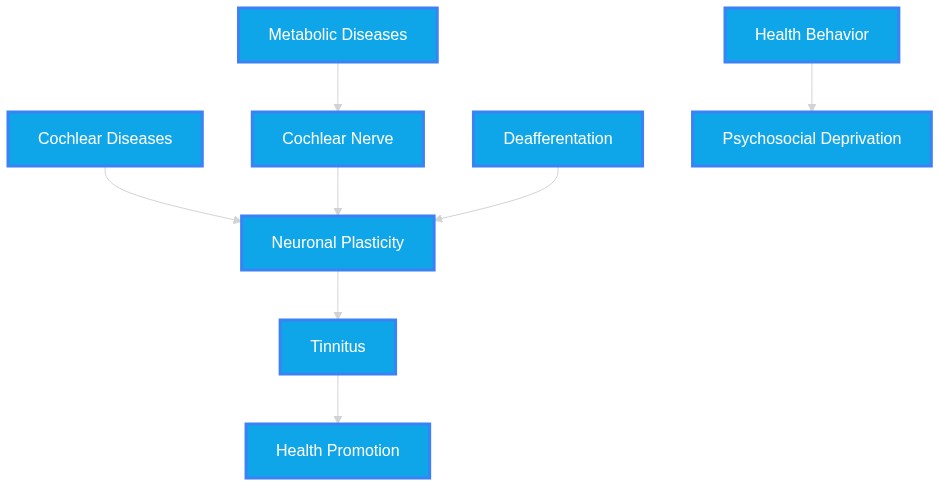
Why do people get tinnitus and are there any wellness alternatives to help reduce the impact it has on lifestyle and comfort?
Plausibility Verdicts
Tinnitus arises from complex neurological maladaptation. Wellness alternatives like customized sound therapy, MAT, and lifestyle adjustments (e.g., physical activity, zinc supplementation) can mitigate impact.
Dataset Summary
Novel & Overlooked Insights
- The condition is highly comorbid with anxiety; addressing the patient’s personality type (e.g., red or blue types in the Color Code system) may guide more effective, customized counseling.
- Zinc deficiency is a specific, actionable metabolic factor linked to increased tinnitus severity in normal-hearing populations.
- Musical hallucinations often co-occur with tinnitus, suggesting a broader distribution of multimodal perceptual syndromes.
- Physical activity exhibits a "domain-specific paradox": while recreational activity reduces tinnitus odds, work-related physical activity is associated with higher odds of tinnitus.
- Ginkgo biloba extract shows potential in reducing tinnitus symptoms, though data are predominantly derived from dementia populations.
- The "Severe Anxiety Isolated" psychosocial phenotype is a high-risk group that may benefit from early, targeted biopsychosocial interventions.
- Intratympanic steroid delivery is highly dependent on head positioning; the optimal position for reaching the round window is looking directly upward in the supine position.
- Tinnitus severity often appears louder over time in many individuals, yet the functional handicap often decreases, suggesting long-term adaptation.
- There is a shift toward "digital health literacy" through gamified platforms like the Erasmus+ TinWise project.
- "Bimodal stimulation" combining customized acoustic tones with vagus nerve stimulation is proving superior to unimodal sound therapy alone.
- Tinnitus severity correlates with personality type; individuals with red or blue personality profiles report higher distress.
- Zinc deficiency is a modifiable risk factor, significantly associated with greater tinnitus severity in patients with normal audiograms.
- High non-work-related physical activity is associated with lower odds of tinnitus, whereas work-related physical activity correlates with higher odds.
- Venous sinus stenting in patients with pulsatile tinnitus shows a high rate of clinical success, with diverticulum presence predicting structural bone remodeling.
- Musical Auditory Training (MAT) enhances auditory neuroplasticity and reduces symptom intensity, outperforming passive stimulation.
- Tinnitus often co-occurs with hyperacusis, which in turn is managed effectively through sound generator therapy.
- There is a "domain-specific paradox" in how physical activity influences tinnitus risk based on work vs. leisure environments.
- Low free T4 thyroid hormone levels are independently associated with an increased prevalence of tinnitus.
- Bimodal stimulation, combining acoustic stimulation with transcutaneous auricular vagus nerve stimulation, is more effective than unimodal acoustic stimulation alone.
- The transition from acute to chronic tinnitus reflects distinct neurophysiological changes; objective markers like the Intensity Dependence of Auditory Evoked Potential (IDAEP) are currently being explored.
- Hypertension Correlation:** Morning blood pressure surges (MBPS) are independently associated with tinnitus, and even controlled hypertension increases risk compared to normotension (ID: 41901590, 42259562).
- Gut-Brain Axis:** Emerging evidence links specific gut microbiota, such as *Actinobacteria*, to altered brain network connectivity and increased tinnitus risk (ID: 41183671).
- Zinc Deficiency:** Screening for zinc deficiency is clinically relevant, as it is associated with higher functional impairment in chronic tinnitus patients (ID: 42378546).
- Bimodal Stimulation:** Customized acoustic stimulation paired with transcutaneous auricular vagus nerve stimulation (tAVNS) significantly modulates auditory sensory gating (ID: 42403966).
- Spiritual Well-being:** Patients with chronic tinnitus who report higher spiritual "Meaning and Peace" often experience better quality of life and lower symptom severity (ID: 40583800).
- Cognitive Burden:** The interplay between hearing loss and tinnitus leads to structural gray matter volume changes, particularly in the planum polare and insula (ID: 39369776).
- Gender and Age:** Anxiety levels in younger patients are strongly correlated with tinnitus, while depressive symptoms dominate the profile of middle-aged women (ID: 42131799).
Extracted Discoveries
- Investigate the long-term impact of bimodal tAVNS on the structural integrity of the inferior colliculus using longitudinal rs-fMRI.
- Evaluate the efficacy of personalized, low-molecular-weight hyaluronic acid infiltration combined with interocclusal devices in patients with comorbid tinnitus and TMD.
- Assess the efficacy of combined zinc supplementation and cognitive behavioral therapy on THI scores in zinc-deficient tinnitus patients.
- Evaluate the long-term structural remodeling of the sigmoid sinus in response to personalized sound stimulation protocols.
- Measure longitudinal IDAEP changes in patients undergoing multimodal auditory-somatosensory therapy.
- Test the therapeutic efficacy of probiotic supplementation (Actinobacteria-targeted) on tinnitus-related functional brain connectivity.
- Evaluate long-term impacts of morning blood pressure surge (MBPS) stabilization on tinnitus severity index in patients with essential hypertension.
- A randomized controlled trial comparing mindfulness-based cognitive therapy versus customized sound therapy for tinnitus-related distress.
- A prospective study assessing the dose-dependent impact of cannabis use on the progression of tinnitus severity over a 5-year period.
- A longitudinal study identifying the exact transition window between acute and chronic tinnitus using objective neuroimaging markers.
- Multi-center clinical trial comparing the efficacy of individualized vs. standardized music-embedded sound therapies for long-term tinnitus suppression.
- Assessment of personality-trait-specific counseling efficacy in improving Tinnitus Reaction Questionnaire (TRQ) outcomes.
- A prospective longitudinal study examining the causal link between menopause transition, vasomotor symptoms, and the progression of isolated episodic vestibular tinnitus.
- A systematic assessment of the impact of spiritual-based interventions on the cortisol levels of chronic subjective tinnitus patients.
- Potassium channel modulation may be a mechanism by which physical activity attenuates tinnitus severity.
- Tinnitus pathophysiology involves ion channel dysfunction, particularly potassium channels (Source: 42378543).
- Vigorous physical activity is associated with favorable tinnitus severity trajectories (Source: 42228109).
- Oxidative stress and mitochondrial homeostasis.
- Physical activity is known to influence redox-sensitive pathways and ion channel stability; it is plausible that exercise-induced metabolic shifts influence the potassium homeostasis dysregulated in tinnitus patients.
- {"Discovered Hypothesis (A to C)":"Zinc supplementation may alleviate tinnitus-related distress by enhancing sensory gating mechanisms via the modulation of glutamatergic signaling in the auditory pathway.","Literature A (Origin)":"Zinc deficiency is linked to tinnitus severity (ID: 42378546).","Literature C (Target)":"Sensory gating (SG) processes are impaired in tinnitus patients (ID: 42403966).","The Intersecting Bridge B":"Glutamatergic signaling pathways.","Biological Rationale":"Zinc serves as a modulator of glutamatergic neurotransmission in the auditory system; restoring zinc levels may reduce excitotoxicity and facilitate improved sensory gating in the auditory midbrain\/cortex."}
- Enhancement of GABAergic inhibition via probiotic-mediated modulation of the gut-brain axis may serve as a novel therapeutic pathway for reducing maladaptive auditory cortex hyperexcitability.
- GABA-mediated signaling reduces neuroinflammation and excitatory receptor expression (ID: 42086103).
- Gut microbiota (Actinobacteria) contribute to tinnitus via alterations in brain network connectivity (ID: 41183671).
- Neuroinflammation and neural excitation-inhibition balance modulation.
- Since Actinobacteria abundance is linked to increased tinnitus risk via brain connectivity changes and GABAergic signaling directly normalizes excitatory receptor expression, manipulating the gut-brain axis could restore the excitation-inhibition balance in the auditory cortex.
- There is a contradiction regarding the role of noise exposure as a predictive marker. ID: 42373579 suggests unilateral tinnitus is a poor discriminator for vestibular schwannoma, while ID: 42409638 identifies noise-induced nerve damage as the core driver for central hyperactivity. Additionally, the role of Ginkgo biloba in tinnitus treatment remains cautious due to the heterogeneity of studies focusing largely on dementia populations.
- Conflicting evidence exists regarding the correlation between hearing loss degree and tinnitus-related vertigo/disease activity in Ménière's disease (ID 42403960 vs. general consensus that hearing loss is the primary risk factor for tinnitus).
- Meta-analyses on music therapy (e.g., TMNMT vs. SMT) show conflicting results, with some finding no significant difference compared to standard music, likely due to methodological heterogeneity (ID: 38759414, 38964476).
- Repurposing stellate ganglion blocks (SGB), traditionally for pain, as a potential therapy for tinnitus-related distress in refractory hearing loss cases (Source: 42345410); use of interocclusal dental devices to assist in the management of tinnitus associated with TMD (Source: 42346194).
- Repurposing of neurodegenerative disease therapeutics—specifically those targeting neuroinflammatory cascades and glutamate-mediated excitotoxicity—is proposed as a novel therapeutic pathway for tinnitus management (ID 42293152).
- Repurposing antihypertensive clinical monitoring (MBPS) as a standard risk screening tool for early identification and therapeutic stratification of patients with chronic subjective tinnitus (ID: 41901590, 42259562).
PathMap is funded by sales of datasets and coversheets to researchers of any kind who wish to discover the most viable routes and paths to accelerate cures. We do not make theoretical molecules, we expose the truth in current PubMed literature. Commission a trace today.
PathMap Scores
How are these metrics evaluated?
Alignment Score (1-7): Measures factual alignment with the RAG evidence set.
[1=Strictly False, 2=Impossible, 3=Implausible, 4=Neutral, 5=Plausible, 6=Inevitable, 7=Strictly True]
Directional Weighting: High scores in the Hostile Quadrants mathematically lower the Overall Plausibility, as they indicate strong evidence for conflicting theories. Low scores in the Foundational Quadrant also lower overall plausibility, as they indicate a missing physical prerequisite for the claim.
AI Overview (Non-Expert Explanation)
Veridicality Audit Report
All Extracted Datapoints
Evaluated Perspectives & Quadrants
CLAIM EVALUATED AND ANSWER TO USER
"Why do people get tinnitus and are there any wellness alternatives to help reduce the impact it has on lifestyle and comfort?" The development of tinnitus is linked to peripheral auditory damage, such as noise exposure, which can initiate central neural hyperactivity due to reduced spontaneous activity in auditory nerve fibers. Additionally, genetic predispositions (e.g., *GJB2* variants, miRNA polymorphisms), metabolic factors like central obesity, and psychological stressors contribute to its emergence. Wellness alternatives, including mindfulness, physical activity, and music-based therapies, serve as effective adjuncts to help mitigate the functional impact of tinnitus on a patient's quality of life.ABSTRACT & REWRITTEN CLAIM
Tinnitus, a phantom perception of sound, arises from a complex interaction between peripheral cochlear dysfunction and central maladaptive plasticity. Current evidence highlights that intervention strategies focusing on neuromodulation, psychosocial support, and lifestyle modification can significantly alleviate tinnitus-related distress.INTRODUCTION & JUSTIFICATION
Tinnitus is initiated through a peripheral-to-central pathway. Animal studies demonstrate that "These findings suggest that tinnitus-related central hyperactivity may be initiated by reduced spontaneous rates of its innervating auditory nerve fibers." Once established, tinnitus manifests through intricate genetic and molecular changes, including those involving "The analysis revealed significant enrichment of neuroinflammatory pathways, glutamatergic signaling, and ion channel activity, particularly potassium channels." Furthermore, "The findings suggest that polymorphisms in miR-206, miR-30e, and miR-124 may influence the auditory pathway by modulating BDNF gene expression, potentially contributing to the pathophysiology of chronic tinnitus." Beyond the biology of initiation, lifestyle and metabolic factors exacerbate the condition. For example, "Our findings indicate a causal relationship between waist circumference, an indicator of central obesity, and tinnitus." Psychological distress, particularly anxiety, acts as a primary mediator, where "Anxiety serves as a central mediating mechanism linking sleep disturbances and depressive symptoms to tinnitus severity." To manage these impacts, several non-pharmacological interventions are supported by the literature. "The specialists consider mindfulness to be a therapeutic resource for tinnitus, but not as monotherapy." Similarly, lifestyle modifications are paramount, as "In this longitudinal observational study, higher and sustained levels of physical activity-particularly vigorous-intensity leisure-time activity-were consistently associated with more favorable tinnitus severity trajectories over time, whereas reductions in physical activity were associated with worsening tinnitus severity." Specialized auditory training also holds potential, as "After four weeks, MAT proved to be superior to passive stimulation, promoting positive changes in auditory neuroplasticity, a greater reduction in tinnitus intensity and annoyance, and a significant improvement in participants' quality of life."Novel & Overlooked
EVIDENCE, METHODOLOGY & CITATIONS
1. ID: 42409638 - Application: Confirms peripheral nerve activity changes. - "These findings suggest that tinnitus-related central hyperactivity may be initiated by reduced spontaneous rates of its innervating auditory nerve fibers." 2. ID: 42378543 - Application: Identifies the molecular networks in tinnitus. - "The analysis revealed significant enrichment of neuroinflammatory pathways, glutamatergic signaling, and ion channel activity, particularly potassium channels." 3. ID: 42417817 - Application: Supports mindfulness as a therapeutic tool. - "The specialists consider mindfulness to be a therapeutic resource for tinnitus, but not as monotherapy." 4. ID: 42345410 - Application: Effectiveness of SGB for tinnitus. - "Tinnitus relief and psychological outcomes were also significantly better in the SGB group (P < .05)." 5. ID: 42307512 - Application: Use of PBM to restore circuit balance. - "Targeted transcranial PBM reverses these molecular alterations, restores local circuit balance, and provides rapid, sustained behavioral improvement without affecting peripheral hearing or sensorimotor gating." 6. ID: 42302460 - Application: Epidemiological trends post-COVID. - "There was a decrease on post-COVID cases along the pandemic's timeline: 9.8% in 2020, 6.7% in 2021, 4.4% in 2022 and 0% in 2023 and 2024 (p = 0.058)." 7. ID: 42352653 - Application: Efficacy of music-embedded stimulation. - "Embedding desynchronization-based tonal stimulation within music may represent a promising and well-tolerated non-invasive approach for chronic tinnitus management." 8. ID: 42355598 - Application: Superiority of customized sound therapy. - "Customized sound therapy is superior to non-customized therapy in terms of short-term efficacy." 9. ID: 42334208 - Application: Link between obesity and tinnitus. - "Our findings indicate a causal relationship between waist circumference, an indicator of central obesity, and tinnitus." 10. ID: 42345427 - Application: Role of melatonin in sleep/tinnitus interaction. - "The older-aged patients with lower serum melatonin levels have more severe tinnitus, worse QoL, and sleep problems compared to the younger patients." 11. ID: 42254732 - Application: Mediation of anxiety in tinnitus severity. - "Anxiety serves as a central mediating mechanism linking sleep disturbances and depressive symptoms to tinnitus severity." 12. ID: 42201118 - Application: Relationship between duration and impact. - "Our findings indicated louder tinnitus was associated with a longer duration of tinnitus. However, in general, the functional impact of the tinnitus was associated with a decrease." 13. ID: 42345411 - Application: Genetic factors and BDNF. - "The findings suggest that polymorphisms in miR-206, miR-30e, and miR-124 may influence the auditory pathway by modulating BDNF gene expression, potentially contributing to the pathophysiology of chronic tinnitus." 14. ID: 42394931 - Application: Safety profile of Ginkgo biloba. - "The intervention was generally well tolerated, with significantly lower risks of angina pectoris (OR 0.51, 95% CI 0.31 to 0.85) and tinnitus (OR 0.37, 95% CI 0.22 to 0.63) and no significant increase in other adverse events." 15. ID: 42378546 - Application: Impact of zinc deficiency. - "Zinc deficiency is associated with greater tinnitus severity in patients with normal hearing, particularly affecting functional aspects of daily life." 16. ID: 42307286 - Application: Efficacy of Musical Auditory Training. - "After four weeks, MAT proved to be superior to passive stimulation, promoting positive changes in auditory neuroplasticity, a greater reduction in tinnitus intensity and annoyance, and a significant improvement in participants' quality of life." 17. ID: 42157291 - Application: Shared genetics between tinnitus and SIN. - "Tinnitus and SIN deficits are comorbid conditions with a shared genetic basis." 18. ID: 42345421 - Application: Surgical management of lipomas. - "Simultaneous cochlear implantation may represent a viable strategy for auditory restoration in selected cases." 19. ID: 42346194 - Application: Ultrasound-guided infiltration in TMD. - "A statistically significant temporal reduction in pain was observed at all follow-up points (p < 0.001), with the mean VAS score decreasing from 70.5 ± 11.4 mm at baseline to 43.0 ± 11.1 mm at 90 days." 20. ID: 42228109 - Application: Impact of physical activity on tinnitus. - "In this longitudinal observational study, higher and sustained levels of physical activity-particularly vigorous-intensity leisure-time activity-were consistently associated with more favorable tinnitus severity trajectories over time, whereas reductions in physical activity were associated with worsening tinnitus severity."CLAIM EVALUATED AND ANSWER TO USER
"Why do people get tinnitus and are there any wellness alternatives to help reduce the impact it has on lifestyle and comfort?"ABSTRACT & REWRITTEN CLAIM
Tinnitus, the perception of sound without an external stimulus, arises from complex interactions between peripheral auditory damage, neuroplasticity, and central network reorganization. The condition is frequently associated with hearing loss, trauma, systemic metabolic dysfunction, and personality-dependent distress. While no single curative monotherapy exists, multimodal wellness and clinical approaches, including customized sound therapy, behavioral training, and physiological management, offer strategies to mitigate symptom severity and enhance quality of life.INTRODUCTION & JUSTIFICATION
Tinnitus pathophysiology involves a convergence of neuroinflammatory pathways, glutamatergic signaling, and ion channel dysfunction. Evidence indicates that tinnitus is linked to multiple common variants of small effect size, whereas tinnitus disorder—characterized by emotional and cognitive impairment—involves rarer variants. Peripheral damage, often following acoustic overexposure, triggers central hyperactivity initiated by reduced spontaneous rates in auditory nerve fibers. Lifestyle impacts are profound, with patients often exhibiting comorbid anxiety, depression, and sleep disturbance. Wellness and therapeutic alternatives show clinical promise: customized sound therapy is superior to non-customized protocols, and Musical Auditory Training (MAT) has demonstrated positive effects on neuroplasticity. Furthermore, lifestyle interventions such as physical activity and addressing nutritional deficiencies (e.g., zinc) or metabolic states (e.g., thyroid hormones) show evidence of modulating tinnitus prevalence and severity.Novel & Overlooked
EVIDENCE, METHODOLOGY & CITATIONS
1. ID: 42417817 - Application: General treatment approach. - "The specialists consider mindfulness to be a therapeutic resource for tinnitus, but not as monotherapy." 2. ID: 42409067 - Application: Evidence-based management guidelines. - "Behavioral and rehabilitative interventions provided the strongest evidence for reducing tinnitus-related distress." 3. ID: 42378546 - Application: Nutritional risk factors. - "Zinc deficiency is associated with greater tinnitus severity in patients with normal hearing, particularly affecting functional aspects of daily life." 4. ID: 42378543 - Application: Pathophysiological mechanisms. - "The analysis revealed significant enrichment of neuroinflammatory pathways, glutamatergic signaling, and ion channel activity, particularly potassium channels." 5. ID: 42307286 - Application: Neuroplasticity intervention. - "After four weeks, MAT proved to be superior to passive stimulation, promoting positive changes in auditory neuroplasticity, a greater reduction in tinnitus intensity and annoyance, and a significant improvement in participants' quality of life." 6. ID: 42352596 - Application: Non-invasive stimulation/blinding. - "For most participants, tinnitus loudness either decreased or stayed the same in both conditions." 7. ID: 42345411 - Application: Genetic basis of tinnitus. - "The findings suggest that polymorphisms in miR-206, miR-30e, and miR-124 may influence the auditory pathway by modulating BDNF gene expression, potentially contributing to the pathophysiology of chronic tinnitus." 8. ID: 42345427 - Application: Melatonin and age. - "The older-aged patients with lower serum melatonin levels have more severe tinnitus, worse QoL, and sleep problems compared to the younger patients." 9. ID: 42345629 - Application: Physical activity domains. - "High NW physical activity (PA) was associated with significantly lower odds of tinnitus (OR = 0.70, 95% CI: 0.488-0.995, p = 0.0475)" 10. ID: 42309570 - Application: Thyroid hormone association. - "Each 1ng/dL increase in FT4 was associated with approximately 67% lower odds of tinnitus (adjusted OR, 0.33; 95%CI, 0.11-0.94, p=0.0387)." 11. ID: 42403965 - Application: Psychological/personality aspects. - "Respondents with blue and red personality types were more likely to report bothersome tinnitus." 12. ID: 42309185 - Application: Sound therapy for hyperacusis. - "These nine studies collectively demonstrated that sound generator therapy significantly reduced the debilitating symptoms of hyperacusis, with all investigations reporting substantial symptomatic improvement post-intervention." 13. ID: 42285301 - Application: Sub-audiogram pathology. - "Our findings provide compelling clinical evidence for subtle, measurable peripheral (cochlear and neural) and central auditory dysfunction in tinnitus patients with normal audiograms." 14. ID: 42291209 - Application: Neural pathway classification. - "Neuroimaging identifies three interrelated neural pathways: a lateral "loudness" pathway, a descending "inhibitory" pathway, and a medial "distress" pathway that is specifically activated in tinnitus disorder, providing a neural basis for tinnitus related suffering." 15. ID: 42403966 - Application: Bimodal therapy efficacy. - "As a treatment option for tinnitus, bimodal stimulation appears to be more effective than unimodal stimulation." 16. ID: 42338403 - Application: Treatment-induced tinnitus. - "The most frequent treatment-related symptoms were polyneuropathy, tinnitus, retrograde ejaculation, and circulatory disorders, particularly among patients receiving multiple lines of chemotherapy." 17. ID: 42355598 - Application: Comparative sound therapy. - "Both sound therapies can alleviate tinnitus severity and reduce anxiety in the short term." 18. ID: 42403966 - Application: Sensory gating mechanism. - "Tinnitus perception may be associated with impairments in the mechanisms of sensory gating (SG), which is a preattentive process that filters redundant auditory stimuli to prevent sensory overload." 19. ID: 42409067 - Application: Evidence certainty. - "Most available evidence was predominantly of low or very low certainty." 20. ID: 42363722 - Application: Acute to chronic transition. - "Once persistent for around a month, tinnitus typically persists permanently."CLAIM EVALUATED AND ANSWER TO USER
"Why do people get tinnitus and are there any wellness alternatives to help reduce the impact it has on lifestyle and comfort?"ABSTRACT & REWRITTEN CLAIM
Tinnitus is defined as the perception of sound in the absence of an external acoustic source, with complex etiologies involving maladaptive neuroplasticity, thalamocortical dysrhythmia, and peripheral or central auditory network disturbances. Therapeutic management increasingly shifts toward multimodal approaches including behavioral, lifestyle, and neuromodulatory interventions to mitigate the psychosocial burden and functional impairment caused by the condition.INTRODUCTION & JUSTIFICATION
Tinnitus is a prevalent neurotologic condition affecting approximately 14% of the adult population. The pathophysiology is heterogeneous, involving peripheral deafferentation, central gain increases, and involvement of salience and limbic networks. The "Tinnitus is the perception of sound without a corresponding external sound source." (ID: 42168216) phenomenon is frequently comorbid with anxiety, depression, and somatic complaints, such as hypertension. Research emphasizes that "Tinnitus disorder can have a significant negative impact on quality of life, especially when refractory to standard care." (ID: 41260987). Emerging wellness and digital therapeutics offer pathways to manage the condition. For instance, "This randomized clinical trial found that use of a tinnitus therapeutic app resulted in substantial and lasting improvement in tinnitus-related distress and functional impairment." (ID: 42096236). Furthermore, integrative approaches addressing the "sensory-emotion-cognition" dimensions, including psychological support, have proven effective.Novel & Overlooked
EVIDENCE, METHODOLOGY & CITATIONS
1. ID: 42168216 - "Tinnitus is the perception of sound without a corresponding external sound source." 2. ID: 41260987 - "Tinnitus disorder can have a significant negative impact on quality of life, especially when refractory to standard care." 3. ID: 42096236 - "This randomized clinical trial found that use of a tinnitus therapeutic app resulted in substantial and lasting improvement in tinnitus-related distress and functional impairment." 4. ID: 42167498 - "The auditory phantom sound perception tinnitus is accompanied by maladaptive neurophysiological changes." 5. ID: 42378546 - "Zinc deficiency is associated with greater tinnitus severity in patients with normal hearing, particularly affecting functional aspects of daily life." 6. ID: 42307286 - "only the SG demonstrated consistent reductions in tinnitus volume and discomfort, as well as in the impact on quality of life, as reflected in THI scores." 7. ID: 42155139 - "Notably, CBT elements (eg, cognitive restructuring, attention training, and relaxation training) are implemented less frequently, despite CBT being recommended in tinnitus treatment guidelines." 8. ID: 41912403 - "Among patients older than 45 years, males have a lower risk of tinnitus than females." 9. ID: 41183671 - "Our results provide novel evidence that gut microbiota may contribute to tinnitus via alterations in brain network connectivity, suggesting the gut-brain axis as a potential therapeutic target." 10. ID: 40583800 - "Spiritual well-being measures were associated with better results (particularly for Meaning and Peace); meanwhile, negative religious coping was associated with worse outcomes for all variables." 11. ID: 41901590 - "MBPS was significantly higher in the tinnitus group compared to the non-tinnitus group (35 ± 9 vs. 26 ± 11 mm Hg, p < 0.001)." 12. ID: 42259562 - "Importantly, even controlled hypertension was associated with elevated odds, indicating that tinnitus screening may be warranted in all hypertensive patients, regardless of control status." 13. ID: 42131799 - "The findings indicate that anxiety in younger patients is closely related to tinnitus, whereas depressive symptoms are more prominent among middle-aged and older women." 14. ID: 42403966 - "After the intervention, the results showed that the bimodal group experienced a significant decrease in ASG and loudness and awareness VAS scores relative to those of the unimodal group (p < 0.05)." 15. ID: 41838155 - "Audiovestibular symptoms, including tinnitus and dizziness, may accompany IH." 16. ID: 42086103 - "In addition, modulation of γ-aminobutyric acid (GABA)-mediated inhibitory signaling reduced inflammation, normalized excitatory receptor expression, and alleviated hypersensitivity." 17. ID: 42054586 - "Survivors with hearing/vestibular problems had higher average impairment scores (worse physical function) than those without." 18. ID: 41912095 - "The most frequently reported post-acute sequela was hearing loss, with a pooled prevalence of 18% (95% CI 9-32) across 6 studies." 19. ID: 38723376 - "Although our study failed to demonstrate the superiority of combining binaural beats with music, both groups experienced significant improvements." 20. ID: 42345416 - "Cochlear implantation is effective in improving both audiological and speech outcomes, and it also alleviates symptoms such as tinnitus and vertigo."Verbatim Quote Audit Console
Mapped Reference Directory (APA)
- [1] ID: 42409638 - Heeringa AN (2026). Emergence of behavioral tinnitus in gerbils is associated with reduced spontaneous rates in single auditory nerve fibers.. The Journal of neuroscience : the official journal of the Society for Neuroscience. ID: 42409638.
- [2] ID: 42378543 - Kumar KP, Adiga U, Sindhu BS (2025). Tinnitus Pathophysiology: A Systems Biology Analysis of Gene Networks and Cellular Pathways.. The journal of international advanced otology. ID: 42378543.
- [3] ID: 42417817 - Honorato MCM, Martins ML, Ferreira LMBM, Mantello EB, Rosa MRDD (2026). Use of mindfulness in the treatment of tinnitus: consensus based on the opinion of Brazilian experts.. CoDAS. ID: 42417817.
- [4] ID: 42345410 - Li H, Zhao C, Zhang W, Fu Y (2026). Efficacy of the Additional Effect of Stellate Ganglion Block in Combination of Intratympanic Steroid and Hyperbaric Oxygen Therapy for Refractory Sudden Sensorineural Hearing Loss.. The journal of international advanced otology. ID: 42345410.
- [5] ID: 42307512 - Zhang Z, Wu Z, He D, Zhang C, Xue X et al. (2026). Auditory Cortex Photobiomodulation Ameliorates Tinnitus-like Behavior by Reversing Synaptic Excitation/Inhibition Imbalance in Mice.. Neuromodulation : journal of the International Neuromodulation Society. ID: 42307512.
- [6] ID: 42302460 - Figueiredo RR, de Azevedo AA, Figueiredo GMR, Langguth B, Penido NO (2026). Trajectory of COVID-related tinnitus over the pandemic timeline.. Brazilian journal of otorhinolaryngology. ID: 42302460.
- [7] ID: 42352653 - Henriquez PI, Delano PH, Herrada J, Guevara C, Breinbauer HA (2026). Personalized Music-Embedded Sound Therapy Based on Gating Modulation and Neural Decoupling Reduces Tinnitus Severity.. Brain sciences. ID: 42352653.
- [8] ID: 42355598 - Xie H, Liu Y, Yang S, Ni T, Ruan J et al. (2026). An Open Comparative Study on the Effectiveness of Customized and Non-Customized Sound Therapy for Tinnitus Patients.. Journal of clinical medicine. ID: 42355598.
- [9] ID: 42334208 - Zheng K, Zheng Y, Lei Y, Lin J (2026). Modifiable risk factors for tinnitus: A Mendelian randomization study.. The Journal of international medical research. ID: 42334208.
- [10] ID: 42345427 - Yüksel Aslıer NG, Cangül B, Ekim B, Ercan İ (2026). Cluster Analysis of Clinical Characteristics, Sleep Quality, Depression and Melatonin Levels in Patients with Idiopathic Subjective Tinnitus.. The journal of international advanced otology. ID: 42345427.
- [11] ID: 42254732 - Fan L, Fan L, Wu Q, Zhou J, Wu L et al. (2026). Beyond the auditory: anxiety bridges sleep disturbances and depressive symptoms to tinnitus handicap.. Frontiers in psychiatry. ID: 42254732.
- [12] ID: 42201118 - Barros ACMP, Berger JI, Tyler RS (2026). Tinnitus and Reactions to Tinnitus: A Cross-Sectional Survey Across Different Tinnitus Durations.. Audiology research. ID: 42201118.
- [13] ID: 42345411 - Dogan G, Boyacioglu O, Dogan M, Sahin M, Boyacioglu SO (2026). Link Between Chronic Tinnitus and miR-30e, miR-206 , and miR-124 Polymorphisms Modulating the Brain-Derived Neurotrophic Factor Gene.. The journal of international advanced otology. ID: 42345411.
- [14] ID: 42394931 - Jeon YH, Kim JA, Kang DY, Lee S, Choi NK et al. (2026). Ginkgo biloba extract for dizziness-related symptoms in central neurological disorders: a systematic review and meta-analysis.. Frontiers in neurology. ID: 42394931.
- [15] ID: 42378546 - Choi SJ, Lee SU, Chang J, Im GJ, Park E (2025). Is Zinc Deficiency a Risk Factor for Tinnitus? An Analysis from Chronic Idiopathic Tinnitus Patients with Normal Hearing.. The journal of international advanced otology. ID: 42378546.
- [16] ID: 42307286 - Schumacher CG, Freire KGM, Moraes DAO, Garcia MV, Didoné DD (2026). Tinnitus disorder and musical auditory training: a double-blind randomized controlled clinical trial.. CoDAS. ID: 42307286.
- [17] ID: 42157291 - Grama Bhagavan S, Ingalls V, Raygoza Garay JA, Washnik N, Bhatt IS (2026). Can Tinnitus Cause Speech-in-Noise Deficits?. Ear and hearing. ID: 42157291.
- [18] ID: 42345421 - Van de Kerkhof J, Vermaete E, Hermans R, Loos E, Verhaert N (2026). Intravestibular Lipoma with Intracochlear Extension: A Case Report on Surgical Management and Cochlear Implantation.. The journal of international advanced otology. ID: 42345421.
- [19] ID: 42346194 - Messina G, Mantia F, Cataldo P, Iovane A (2026). Ultrasound-Guided Intra-Articular Infiltration of Hyaluronic Acid, Lidocaine, and Methylprednisolone in Patients with Temporomandibular Disorders (TMD): A Preliminary Pilot Case Series.. Clinics and practice. ID: 42346194.
- [20] ID: 42228109 - Chalimourdas A, Hansen D, Verboven K, Michiels S (2026). Increments in physical activity relate to reductions in tinnitus severity: a 2-year prospective observational study.. European archives of oto-rhino-laryngology : official journal of the European Federation of Oto-Rhino-Laryngological Societies (EUFOS) : affiliated with the German Society for Oto-Rhino-Laryngology - Head and Neck Surgery. ID: 42228109.
- [21] ID: 42409067 - Park E, Lee HY, Kim HJ, Lee JM, An YH et al. (2026). Clinical Practice Guideline for the Diagnosis and Management of Tinnitus in Korea.. Clinical and experimental otorhinolaryngology. ID: 42409067.
- [22] ID: 42352596 - Hinton P, Labree B, Kaiser M, Pourhoseingholi MA, Sereda M (2026). Auricular Ultrasonic Vagus Nerve Stimulation: Effectiveness of Blinding and the Occurrence of Adverse Effects in People with Tinnitus.. Brain sciences. ID: 42352596.
- [23] ID: 42345629 - Britton M, Hosick PA (2026). Domain-Specific Associations Between Physical Activity and Tinnitus in NHANES 2015-2018.. Audiology research. ID: 42345629.
- [24] ID: 42309570 - Zhang W, Xiao Y (2026). Association between low free T4 values and prevalence of tinnitus in US adults: 2009-2012.. Endocrinologia, diabetes y nutricion. ID: 42309570.
- [25] ID: 42403965 - Grayless B, Plyler P, Plyler E, Thompson K, DeNiro T (2026). Reactions to Tinnitus Based on Color Code Personality Type.. Journal of the American Academy of Audiology. ID: 42403965.
- [26] ID: 42309185 - Hamid NFN, Yashu MA, Bhat M, Ahmed W (2026). A systematic review on sound-based therapy for individuals with hyperacusis.. Acta otorrinolaringologica espanola. ID: 42309185.
- [27] ID: 42285301 - Abo-Ollo EM, Assal SI, Abdelmotaleb HI (2026). Evaluation of Cochlear Function, Hidden Hearing Loss, and Auditory Temporal Processing in Tinnitus Patients with Normal Audiograms.. Acta otorrinolaringologica espanola. ID: 42285301.
- [28] ID: 42291209 - De Ridder D, Kleinjung T, Song JJ, Adhia D, Hall M et al. (2026). Tinnitus and tinnitus disorder: Genetic, neurobiological, and clinical differentiation.. iScience. ID: 42291209.
- [29] ID: 42403966 - Bolandi M, Shaabani M, Bakhshi E, Farahani A, Javanbakht M (2026). Bimodal Stimulation of the Auditory-Somatosensory System Improves Auditory Sensory Gating Function in Patients with Tinnitus.. Journal of the American Academy of Audiology. ID: 42403966.
- [30] ID: 42338403 - Pongratanakul P, Hadjizada T, Thy S, Vermeulen-Spohn M, Niegisch G et al. (2026). Impact of Treatment Intensity on Quality of Life in Patients With Metastatic Testicular Cancer.. Andrology. ID: 42338403.
- [31] ID: 42363722 - Umashankar A, Alter K, Gander PE, Sedley W (2026). Evidence for a Transient State of Auditory Hypersensitivity During Initial Onset of Tinnitus: IDAEP Changes Between Acute and Chronic Tinnitus.. Trends in hearing. ID: 42363722.
- [32] ID: 42168216 - Vanneste S, De Ridder D, Gallus S, Husain FT, Kleinjung T et al. (2026). Tinnitus.. Nature reviews. Disease primers. ID: 42168216.
- [33] ID: 41260987 - Babakry S, Devos JVP, Hellingman CA, Ackermans L, Smit JV et al. (2026). Deep brain stimulation of the medial geniculate body for refractory tinnitus: A feasibility study.. Neurotherapeutics : the journal of the American Society for Experimental NeuroTherapeutics. ID: 41260987.
- [34] ID: 42096236 - Wasano K, Kawasaki T, Goto F, Hiraga Y, Nagai S et al. (2026). Mobile Application as a Digital Therapeutic for Chronic Tinnitus: A Randomized Clinical Trial.. JAMA otolaryngology-- head & neck surgery. ID: 42096236.
- [35] ID: 42167498 - Schoisswohl S, Langguth B, Neff P, Schecklmann M, Kleinjung T et al. (2026). E-field guided repetitive transcranial magnetic stimulation modulates oscillatory brain activity dynamics in tinnitus.. Brain research bulletin. ID: 42167498.
- [36] ID: 42155139 - Rinn A, Goetsch S, Hannibal S, Lehr D, Weise C (2026). Mobile Apps for Tinnitus: Systematic Search in App Stores and Review of Intervention Components and Behavior Change Techniques.. JMIR mHealth and uHealth. ID: 42155139.
- [37] ID: 41912403 - Wu XN, Liu CY, Liu YT, Cao Y, Li J et al. (2026). [Gender differences in comorbidity characteristics among patients with sudden sensorineural hearing loss].. Zhonghua yi xue za zhi. ID: 41912403.
- [38] ID: 41183671 - Fang C, Lin L, Chen W, Xu Q, Tong Z et al. (2025). The hidden gut-brain connection in tinnitus: Insight from a cross-sectional and genetic causal mediation study in over 900,000 individuals.. NeuroImage. ID: 41183671.
- [39] ID: 40583800 - Ouverney LOC, Lucchetti G, Hansen da Silva C, Berzoini Albuquerque J, da Silva Ezequiel O et al. (2025). Influence of Spirituality on Severity, Quality of Life, and Mental Health of Tinnitus Patients.. The Annals of otology, rhinology, and laryngology. ID: 40583800.
- [40] ID: 41901590 - Kucukcan NE, Yildirim A, Ardic ML, Koca F, Caf H et al. (2026). Association Between Morning Blood Pressure Surge and Tinnitus in Hypertensive Patients: A Cross-Sectional Study.. Medicina (Kaunas, Lithuania). ID: 41901590.
- [41] ID: 42259562 - Najibi A, Bazmi S, Moradi M, Mohammadi Z, Al Kamel A et al. (2026). Association between hypertension status and severity and tinnitus: a cross-sectional analysis of the Fasa adult cohort study.. BMJ open. ID: 42259562.
- [42] ID: 42131799 - Zhou J, Liu Y, Xie H, Yang S, Jiang Y et al. (2026). Analysis of Depression and Anxiety in Patients With Tinnitus: A Focus on Specific Age Groups and Sex-Related Differences.. Depression and anxiety. ID: 42131799.
- [43] ID: 41838155 - Henderson D, Pirlog B, Hautefort C, Herman P, Eliezer M et al. (2026). Audiovestibular manifestations of intracranial hypotension: a descriptive clinical series.. European archives of oto-rhino-laryngology : official journal of the European Federation of Oto-Rhino-Laryngological Societies (EUFOS) : affiliated with the German Society for Oto-Rhino-Laryngology - Head and Neck Surgery. ID: 41838155.
- [44] ID: 42086103 - Zhong H, Pan C, Zhao Y, Tang X, Sun J et al. (2026). Gabaergic modulation alleviates auditory hypersensitivity and neuroinflammation in sodium salicylate-treated male mice.. Neuroscience. ID: 42086103.
- [45] ID: 42054586 - Freeman JQ, Zhao F, Guo W, Huisingh-Scheetz MJ, Pinto JM et al. (2026). Hearing/vestibular problems, racial differences, and associations with physical function impairment among breast cancer survivors.. JNCI cancer spectrum. ID: 42054586.
- [46] ID: 41912095 - Wei Q, Zhang T, Schmit N (2026). Post-acute sequelae after Lassa fever: A systematic review and meta-analysis.. The Journal of infection. ID: 41912095.
- [47] ID: 38723376 - Bakhtarikia S, Tavanai E, Rouhbakhsh N, Sayadi AJ, Sabet VK (2024). Investigating the effectiveness of music therapy combined with binaural beats on chronic tinnitus: A randomized controlled trial.. American journal of otolaryngology. ID: 38723376.
- [48] ID: 42345416 - Ramasamy S, Vadivu AS, Nandhan SR, Kameswaran M (2026). Management Options and Their outcomes in Bilateral Advanced Otosclerosis.. The journal of international advanced otology. ID: 42345416.
Abstract Repository (Raw Full-Texts) Show Database Collapse Database
ID: 38723376
Title: Investigating the effectiveness of music therapy combined with binaural beats on chronic tinnitus: A randomized controlled trial.
Abstract: Binaural beat stimulation (BBS) involve presenting two sinusoidal waves with specific frequency differences to induce neural changes in the brain, often used for mental state induction and symptom reduction. However, there are limited studies on its effectiveness for tinnitus. This study aimed to assess the effectiveness of combining binaural beats with music containing nature sounds for chronic tinnitus. A total of 30 men, aged 45.87 on average (SD = 8.09), who had chronic tinnitus and symmetrical mild to moderate hearing loss, were included in this study. The participants were randomly assigned to two groups: MT group (Music therapy; n = 15), which received relaxing music containing the sound of sea waves, and MT + BBS group (Music therapy plus binaural beats; n = 15), which received the same music combined with alpha frequency (8 Hz) binaural beats. The therapy sessions were conducted twice a day for 15 min, over a period of 4 weeks. Outcome measures, including the Tinnitus Handicap Inventory (THI), Tinnitus Functional Index (TFI), Hospital Anxiety and Depression Scale (HADS), Visual Analog Scale (VAS) and the pitch and loudness of tinnitus were administered before, immediately after, and during the three-month follow-up period. The findings revealed improvements in loudness and annoyance VAS, as well as THI total and all subscale scores in both groups (p < 0.001). Additionally, TFI total score showed improvement in both groups (MT: p = 0.001; MT + BBS: p < 0.001) except for the sense of control subscale in both groups and the cognitive subscale in the MT group after the treatment and during the three-month follow-up period. Furthermore, both groups exhibited a decrease in scores for both subscales of HADS. However, there were no significant differences between the two groups in any of the measurement outcomes (p > 0.05), except for the emotional subscale scores of TFI (p = 0.049) and the functional subscale scores of THI (p = 0.034). In other words, during the follow-up period, the MT + BBS group exhibited lower scores in these two subscales compared to the MT group. Although our study failed to demonstrate the superiority of combining binaural beats with music, both groups experienced significant improvements. This suggest that there are potential benefits to be gained from these types of stimuli. Given the sustained effect of both methods and the even greater improvements in follow-up observed in the binaural beats group for some scales, it seems that the changes in neural response and brain waves caused by our stimulations are persistent. This necessitates further research involving brain mapping, especially with longer follow-up durations.
View on PubMed
ID: 40583800
Title: Influence of Spirituality on Severity, Quality of Life, and Mental Health of Tinnitus Patients.
Abstract: Despite the growing evidence on the role of spiritual and religious beliefs on physical and mental health outcomes, this remains inadequately explored in the field of otolaryngology, particularly for chronic conditions such as tinnitus. This study aims to investigate the influence of spiritual and religious beliefs on symptom severity, quality of life, and mental health of Brazilian patients with chronic subjective tinnitus. Cross-sectional study including patients with chronic subjective tinnitus. Specialized outpatient center in Brazil. Religious and spiritual variables (Duke Religion Index, FACIT-Sp 12, and SRCOPE - religious coping) were investigated on the relationship with tinnitus severity (Tinnitus Handicap Inventory), mental health (DASS-21), and quality of life (WHOQOL-Bref), adjusting for sociodemographics, clinical data, and physical examination findings. Linear Regression models were used. A total of 313 patients were included. Spiritual well-being measures were associated with better results (particularly for Meaning and Peace); meanwhile, negative religious coping was associated with worse outcomes for all variables. Religiosity has presented a mixed effect, with nonorganizational religiosity having better outcomes for mental health and quality of life, and intrinsic religiosity having worse outcomes for tinnitus severity. The present study found that religious and spiritual beliefs can have an important influence on the perception of tinnitus severity, mental health, and quality of life of individuals with chronic tinnitus. These findings support the importance of otolaryngologists' and audiologists' understanding of their patients' beliefs to provide more comprehensive and integrative care.
View on PubMed
ID: 41183671
Title: The hidden gut-brain connection in tinnitus: Insight from a cross-sectional and genetic causal mediation study in over 900,000 individuals.
Abstract: The gut-brain axis has been implicated in various neurological conditions, but its involvement in tinnitus remains unclear. In this study, we investigated whether brain functional connectivity (FC) mediates the relationship between gut microbiota and tinnitus. Using data from the UK Biobank, we identified FC alterations in tinnitus patients, particularly reduced connectivity across the default mode, salience, and central executive networks. Mendelian randomization (MR) analyses revealed that decreased FC in the parietal, temporal, cingulate, and frontal regions (ICA25 edge 87) was causally linked to increased tinnitus risk. Further MR analyses showed that higher abundance of Actinobacteria was associated with reduced FC and increased tinnitus risk, while the chorismate biosynthesis I pathway enhanced FC and reduced tinnitus risk. Mediation analysis confirmed that brain FC partially mediated the effects of both microbial features on tinnitus, with mediation proportions of 31.0% and 17.2%, respectively. Findings were replicated in independent datasets. To enhance transparency and accessibility, we developed an interactive web tool to visualize key associations (https://sysu.nixang.com). Our results provide novel evidence that gut microbiota may contribute to tinnitus via alterations in brain network connectivity, suggesting the gut-brain axis as a potential therapeutic target.
View on PubMed
ID: 41260987 Title: Deep brain stimulation of the medial geniculate body for refractory tinnitus: A feasibility study. Abstract: Tinnitus disorder can have a significant negative impact on quality of life, especially when refractory to standard care. Deep brain stimulation (DBS) of the medial geniculate body (MGB) attenuates pathological neuronal activity in the central auditory pathway and is a potential treatment for severe tinnitus. The aim of this pilot study was to assess the safety and feasibility of bilateral MGB DBS in patients with refractory tinnitus disorder. This randomised double-blind 2 × 2 cross-over study was conducted at Maastricht University Medical Centre, Maastricht, the Netherlands. The included patients had treatment refractory, severe, and chronic tinnitus without an anatomical substrate. Patients with bilateral MGB DBS were randomised to an ON-OFF or OFF-ON stimulation order for two cross-over phases. Primary outcomes consisted of safety and feasibility. Secondary outcomes on tinnitus severity, psychiatric and cognitive functioning and quality of life were assessed at screening, after both cross-over phases and at one-year follow-up. Four patients were included. No irreversible stimulation-induced side effects were observed. Surgical-related side effects were transient and resolved within two weeks. All patients experienced DBS as an acceptable treatment. Three of four patients showed improvement of tinnitus complaints based on the Tinnitus Functional Index. In the non-responder, electrodes had the largest distance from the centre of the MGB. To conclude, this study shows that bilateral MGB DBS is safe and feasible for patients with refractory tinnitus. Findings suggest the potential for clinically meaningful reduction in tinnitus burden through DBS. Effectiveness needs to be further evaluated in a follow-up study.
View on PubMed
ID: 41838155
Title: Audiovestibular manifestations of intracranial hypotension: a descriptive clinical series.
Abstract: BACKGROUND: Intracranial hypotension (IH) results from decreased cerebrospinal fluid (CSF) volume or pressure and typically presents with orthostatic headache. IH may also manifest with audiovestibular symptoms with variable association to endolymphatic hydrops (EH). However, the nature of this relationship remains unclear. OBJECTIVES: To describe the clinical, audiometric, vestibular, and imaging characteristics of patients with IH presenting with cochleovestibular dysfunction. METHODS: We conducted a retrospective observational study including 12 patients diagnosed with IH based on MRI findings between 2016 and 2025 in a tertiary referral center. Data included demographic, audiovestibular, neurological, and imaging results. Descriptive statistics including patients with and without EH on MRI were reported. RESULTS: Twelve patients (mean age 53.4 ± 19.2 years; 50% female) with MRI-confirmed non iatrogenic IH were included. Orthostatic headache was present in 83.3% of cases. Audiovestibular symptoms were common, including tinnitus (66.7%), rotational vertigo (50.0%), positional vertigo (16.67%), instability (41.7%), ear fullness (41.7%), and hearing loss (41.7%). Audiometry revealed overall mild sensorineural hearing impairment, while vestibular testing showed largely preserved video head impulse test gains and minimal caloric deficits. Delayed post-contrast 3D FLAIR MRI identified EH in four patients (33.3%), with bilateral involvement in two (16.7%); all cases were classified as low-grade saccular hydrops. CONCLUSIONS: Audiovestibular symptoms, including tinnitus and dizziness, may accompany IH. MRI evidence of EH may support the hypothesis of a potential underlying CSF–inner ear pressure interaction. Future prospective studies should explore mechanistic pathways linking CSF hypovolemia to cochleovestibular dysfunction and EH, and gather data from larger cohorts. At this stage, the therapeutic implications remain uncertain. To our knowledge, this is the first study to perform delayed 3D FLAIR MRI in a cohort of patients with IH and cochleovestibular symptoms.
View on PubMed
ID: 41901590
Title: Association Between Morning Blood Pressure Surge and Tinnitus in Hypertensive Patients: A Cross-Sectional Study.
Abstract: Background and Objectives: Despite extensive research into its vascular mechanisms, the relationship between tinnitus and morning blood pressure surge (MBPS) remains unexplored. This study aims to investigate the association between tinnitus and MBPS in hypertensive patients. Materials and Methods: The study included 266 hypertensive patients, 86 with tinnitus and 180 without. Office blood pressure (BP) measurements, 24 h ambulatory BP monitoring (ABPM), echocardiographic findings, and laboratory parameters were analyzed. Tinnitus severity was assessed using the Tinnitus Handicap Inventory (THI). MBPS was calculated as the difference between the average systolic BP (SBP) in the first two hours after waking and the lowest three SBP values measured during sleep. Statistical analyses included regression models, ROC curve analysis, and the Boruta feature selection method. Results: MBPS was significantly higher in the tinnitus group compared to the non-tinnitus group (35 ± 9 vs. 26 ± 11 mm Hg, p < 0.001). Office BP and ABPM were significantly lower in the tinnitus group, while DBP showed no differences. The regression analysis identified MBPS (OR = 1.15, 95% CI: 1.08-1.23, p < 0.001), SBP (OR = 1.09, 95% CI: 1.03-1.15, p = 0.004), age (OR = 0.89, 95% CI: 0.82-0.96, p = 0.003), and smoking status (OR = 3.54, 95% CI: 1.09-11.61, p = 0.037) as independent predictors of tinnitus. The ROC analysis demonstrated that MBPS >28 mm Hg predicted tinnitus with 73.3% sensitivity and 68.3% specificity (AUC = 0.742, 95% CI: 0.685-0.793, p < 0.001). The comparative analysis showed that MBPS had a superior predictive accuracy for tinnitus compared to other BP parameters (p < 0.001). The 5-fold cross-validated ROC analysis further validated the moderate discriminatory power of MBPS, with an average AUC of 0.735 (95% CI: 0.672-0.798). Conclusions: This study demonstrates a significant association between tinnitus and MBPS in hypertensive patients. MBPS may serve as a useful indicator for identifying patients at risk of tinnitus, highlighting the importance of circadian BP monitoring in clinical practice.
View on PubMed
ID: 41912095
Title: Post-acute sequelae after Lassa fever: A systematic review and meta-analysis.
Abstract: Post-acute sequelae are symptoms that persist or arise after the acute phase of an infection, but their frequency following outbreaks remains poorly understood. Recurrent Lassa fever outbreaks pose a significant public health threat in West Africa and may have long-term health effects. This study systematically reviewed the prevalence, incidence, duration, and characteristics of post-acute sequelae in survivors of Lassa virus infection. We searched PubMed and Web of Science up to November 17, 2025. Two reviewers screened and extracted data independently. We included six articles in the review. The most frequently reported post-acute sequela was hearing loss, with a pooled prevalence of 18% (95% CI 9-32) across 6 studies. Odds ratios for the association between Lassa fever and hearing loss were heterogeneous, with a statistically significant positive association in 2 of 5 studies and a positive effect direction in 2 further studies. Of an additional 37 potential post-acute sequelae, several with high prevalence also related to the audiovestibular system (e.g., tinnitus, balance disorder, and vertigo). Our findings highlight that Lassa fever survivors can experience diverse symptoms after recovery from acute infection, with hearing loss being the best-characterised. However, data gaps remain on its incidence after mild infections and its duration. A better understanding of post-acute sequelae after Lassa fever is necessary for accurate disease burden estimation and mathematical modelling studies.
View on PubMed
ID: 41912403
Title: [Gender differences in comorbidity characteristics among patients with sudden sensorineural hearing loss].
Abstract: Objective: To investigate gender differences in comorbidity profiles among patients with sudden sensorineural hearing loss (SSNHL). Methods: The study was a cross-sectional analysis based on patients with SSNHL enrolled from the Chinese Refractory Inner Ear Disease Cohort, which covered 29 provinces (autonomous regions/municipalities) in China. Patients were consecutively included between July 2024 and November 2025. Demographic characteristics, lifestyle factors, systemic comorbidities, and inner ear comorbidities were collected using a standardized questionnaire. Baseline characteristics and comorbidity distributions were compared between males and females. Multivariable logistic regression models were applied to evaluate the associations between gender and inner ear comorbidities. Results: A total of 2 844 patients aged 48.7 (37.0, 60.3) years were included, with 1 217 males and 1 627 females. Male patients had significantly higher proportions of smoking, alcohol consumption, and noise exposure, whereas a history of motion sickness was more common in females (P<0.001). Regarding systemic comorbidities, female patients showed higher prevalences of migraine, thyroid dysfunction, cervical spondylosis, and autoimmune diseases, while male patients had higher prevalences of hypertension, coronary heart disease, diabetes mellitus, hyperlipidemia, and cerebrovascular disease (all P<0.05). Multivariable logistic regression analysis demonstrated that, compared with females, males had increased risks of hypertension (OR=2.28, 95%CI: 1.62-3.22), coronary heart disease (OR=3.10, 95%CI: 1.53-6.29), cerebrovascular disease (OR=2.26, 95%CI: 1.15-4.41), and sinusitis (OR=1.59, 95%CI: 1.13-2.22), but lower risks of migraine (OR=0.18, 95%CI: 0.10-0.32), thyroid disease (OR=0.20, 95%CI: 0.09-0.41), cervical spondylosis (OR=0.43, 95%CI: 0.30-0.60), and autoimmune disease (OR=0.34, 95%CI: 0.11-0.90). Regarding inner ear comorbidities, aural fullness (77.7%, 2 189/2 816) and tinnitus (87.1%, 2 454/2 816) were highly prevalent, with no significant differences between males and females (all P>0.05). Age-stratified analysis showed that among patients older than 45 years, males had a significantly lower risk of tinnitus compared with females (OR=0.58, 95%CI: 0.36-0.95). Conclusions: Gender differences exist in the comorbidity spectrum of patients with SSNHL. Male patients are more likely to be accompanied by hypertension, coronary heart disease, cerebrovascular disease, and sinusitis, whereas female patients are more prone to migraine, thyroid disease, cervical spondylosis, and autoimmune diseases. Among patients older than 45 years, males have a lower risk of tinnitus than females. 目的: 分析突发性聋患者共病特征的性别差异。 方法: 本研究为横断面研究,纳入中国难治性内耳病队列中收集的突发性聋患者。该队列覆盖我国29个省(自治区、直辖市),病例纳入时间为2024年7月至2025年11月。通过统一问卷收集人口学特征、生活方式、疾病共病以及内耳共病资料。比较不同性别患者间基线特征及共病分布差异,采用多因素logistic回归模型评估性别与共病之间的关联。 结果: 共纳入2 844例突发性聋患者,男1 217例,女1 627例,年龄[M(Q1,Q3)]48.7(37.0,60.3)岁。男性患者吸烟、饮酒及噪声暴露比例高于女性患者,而晕车史比例低于女性患者(均P<0.001)。在系统共病方面,女性患者偏头痛、甲状腺功能异常、颈椎病及自身免疫病患病率较高,男性患者高血压、冠心病、糖尿病、高脂血症及脑血管病患病率较高(均P<0.05)。多因素logistic回归模型分析结果显示,与女性患者相比,男性患者高血压(OR=2.28,95%CI:1.62~3.22)、冠心病(OR=3.10,95%CI:1.53~6.29)、脑血管病(OR=2.26,95%CI:1.15~4.41)及鼻窦炎(OR=1.59,95%CI:1.13~2.22)的共病风险较高,而偏头痛(OR=0.18,95%CI:0.10~0.32)、甲状腺疾病(OR=0.20,95%CI:0.09~0.41)、颈椎病(OR=0.43,95%CI:0.30~0.60)及自身免疫病(OR=0.34,95%CI:0.11~0.90)的共病风险较低。在内耳共病方面,耳闷(77.7%,2 189/2 816)、耳鸣(87.1%,2 454/2 816)总体发生率较高,不同性别间差异均无统计意义(均P>0.05);年龄分层分析显示,在>45岁的患者中男性发生耳鸣的风险低于女性(OR=0.58,95%CI:0.36~0.95)。 结论: 突发性聋患者中,共病谱存在性别差异,男性患者更易合并高血压、冠心病、脑血管病及鼻窦炎,女性患者则更易合并偏头痛、甲状腺疾病、颈椎病及自身免疫病。在>45岁患者群体中男性共病耳鸣风险低于女性。.
View on PubMed
ID: 42054586
Title: Hearing/vestibular problems, racial differences, and associations with physical function impairment among breast cancer survivors.
Abstract: Breast cancer survivors face many health challenges, including tinnitus, hearing loss, and vertigo which will grow with an aging population and improved treatment outcomes. However, the prevalence of hearing/vestibular problems, racial differences, and relationships to physical function are poorly characterized in breast cancer survivors. Between July and September 2023, we surveyed the Chicago Multiethnic Epidemiologic Breast Cancer Cohort. Tinnitus, hearing loss, and vertigo were self-reported and verified through electronic health records. Physical function impairment was measured using the SF-36 10-item instrument. We fit logistic regression models for hearing/vestibular problems and linear regression models for physical function score, controlling for sociodemographic and clinical factors. Of 1466 breast cancer survivors (mean [SD] age, 63.5 [11.8] years), 16.6%, 17.3%, and 8.6% reported experiencing tinnitus, hearing loss, and vertigo, respectively. Black survivors had lower odds of hearing loss (adjusted odds ratio [AOR] = 0.51; 95% confidence interval [CI] = 0.31 to 0.86) but greater odds of vertigo (AOR = 2.29; 95% CI = 1.34 to 3.89) than White survivors. Survivors with hearing/vestibular problems had higher average impairment scores (worse physical function) than those without. In the adjusted regression models, survivors who reported experiencing tinnitus (β = 0.76; 95% CI = 0.10 to 1.43), hearing loss (β = 0.73; 95% CI = 0.06 to 1.40), or vertigo (β = 1.70; 95% CI = 0.81 to 2.58) had a higher level of physical function impairment. This study demonstrates racial differences in hearing/vestibular problems and associations between these problems and physical function impairment. Survivorship programs should consider routine screening and interventions to improve hearing health and physical function among breast cancer survivors.
View on PubMed
ID: 42086103
Title: Gabaergic modulation alleviates auditory hypersensitivity and neuroinflammation in sodium salicylate-treated male mice.
Abstract: Auditory hypersensitivity, or hyperacusis, is characterized by increased sensitivity to sound and is often associated with tinnitus, yet its underlying mechanisms remain unclear. This study investigated the mechanisms of sodium salicylate-induced auditory hypersensitivity in mice, focusing on neuroinflammation, microglial activation, and neuronal excitability. Male C57BL/6 mice were used to establish the model, and auditory sensitivity was evaluated by behavioral testing. Inflammatory cytokines, excitatory receptor expression, and microglial activation in the auditory cortex were assessed using enzyme-linked immunosorbent assay, Western blotting, and immunofluorescence. Sodium salicylate treatment increased auditory sensitivity and was accompanied by elevated pro-inflammatory cytokines, enhanced microglial activation, and upregulation of excitatory receptor subunits. Pharmacological inhibition of microglial activation with minocycline attenuated these changes and improved auditory sensitivity. In addition, modulation of γ-aminobutyric acid (GABA)-mediated inhibitory signaling reduced inflammation, normalized excitatory receptor expression, and alleviated hypersensitivity. These findings suggest that sodium salicylate-induced auditory hypersensitivity involves an interaction between neuroinflammation and neuronal hyperexcitability, and that targeting microglial activation and restoring inhibitory neurotransmission may provide potential therapeutic strategies for hyperacusis and related auditory disorders.
View on PubMed
ID: 42096236
Title: Mobile Application as a Digital Therapeutic for Chronic Tinnitus: A Randomized Clinical Trial.
Abstract: Tinnitus is a highly prevalent condition that has no cure and can severely impair quality of life. Patients who receive cognitive behavioral therapy (CBT) and hearing aid therapy for chronic tinnitus accompanied by hearing loss have shown some improvement, but access to these interventions is limited. To develop a prototype digital therapeutic mobile app that provides educational counseling and CBT elements for treating chronic tinnitus symptoms and test its efficacy and safety for 16 weeks in patients reporting distressing chronic tinnitus. This double-blind, sham-controlled randomized clinical trial was conducted from September 2023 to February 2025 in individuals diagnosed with mild to severe chronic tinnitus. The trial included a 16-week treatment phase followed by an 8-week follow-up phase. Data were analyzed from February to March 2025. Participants used either the therapeutic app or a sham control app that lacked the therapeutic functions. During the 8-week follow-up, the app's therapeutic functions were blocked and only the app's recording function was available. The primary outcome was change from baseline to week 16 in the Tinnitus Handicap Inventory (THI) score, an index of tinnitus-related distress and functional impairment. Secondary outcomes were patient-reported and included THI, Tinnitus Functional Index, tinnitus loudness and control numeric rating scales, Hospital Anxiety and Depression Scale, Athens Insomnia Scale, and Patient Global Impression of Improvement. A total of 60 participants (33 [55%] female; median [IQR] age, 58.5 [52.0-64.0] years) were assessed, including 30 participants in the therapeutic app group and 30 participants in the sham-control app group. The overall mean (SD) baseline THI was 41.3 (16.9). At week 16, the therapeutic app group showed significantly greater improvement in THI scores compared with the sham-control app group (between-group difference in change in THI, -20.4; 95% CI, -28.2 to -12.6). The therapeutic effect was maintained up to week 24 (mean between-group difference, -18.3; 95% CI, -26.4 to -10.1). Tinnitus worsened in 1 patient in the sham-control app group. No serious adverse events or device malfunctions with potential for health hazards were observed. This randomized clinical trial found that use of a tinnitus therapeutic app resulted in substantial and lasting improvement in tinnitus-related distress and functional impairment. The therapeutic app may serve as an effective and standardized intervention for individuals with chronic tinnitus. jrct.mhlw.go.jp Identifier: 032230359.
View on PubMed
ID: 42131799
Title: Analysis of Depression and Anxiety in Patients With Tinnitus: A Focus on Specific Age Groups and Sex-Related Differences.
Abstract: To investigate the relationships between anxiety, depression, and insomnia and tinnitus severity among high-functioning employed adults, stratified by age and gender, and to describe age- and gender-specific patterns of prevalence and symptom burden in order to support a biopsychosocial framework for understanding tinnitus onset, progression, and clinical management. An analysis was performed on data from 745 patients with chronic subjective tinnitus, aged 25-60 years, to assess levels of anxiety (HADS-A), depression (HADS-D), insomnia (ISI), and the perceived severity of tinnitus (THI and VAS). The findings showed that anxiety was significantly correlated with the tinnitus Handicap Inventory in younger patients, particularly in men (r = 0.611, p  < 0.001) and women (r = 0.577, p  < 0.001) aged 25-40 years. In women aged 51-60 years, depression demonstrated the strongest association with tinnitus (r = 0.545, p  < 0.001). In the overall cohort, insomnia exhibited a weak but statistically significant correlation with tinnitus (r ≤ 0.3). Additionally, women were more likely to link tinnitus loudness to reduced quality of life, especially in the 25-40 (r = 0.722, p  < 0.01) and 51-60 (r = 0.689, p  < 0.01) age groups. The findings indicate that anxiety in younger patients is closely related to tinnitus, whereas depressive symptoms are more prominent among middle-aged and older women. These variations indicate that patients with tinnitus may present different psychological profiles across gender and age groups. Future research may further explore the underlying pathophysiological mechanisms of tinnitus and examine its progression through long-term follow-up to improve understanding of its clinical heterogeneity.
View on PubMed
ID: 42155139
Title: Mobile Apps for Tinnitus: Systematic Search in App Stores and Review of Intervention Components and Behavior Change Techniques.
Abstract: Previous research suggests that 14.4% of the general population is affected by tinnitus. For some of those affected, the ear noise is bothersome or associated with severe distress. There are various treatment options such as cognitive behavioral therapy (CBT), sound therapy, or hearing aids. In addition to browser-based online interventions, mobile apps have been introduced as novel treatment approaches. Previous studies have identified several apps aimed at supporting users with tinnitus. Yet, knowledge about the content of tinnitus apps is limited. This study aimed to provide an overview of apps specifically developed for tinnitus by analyzing general app characteristics, as well as app content, focusing on intervention components and behavior change techniques (BCTs). A systematic search using 7 search terms (eg, tinnitus and ear noise) was conducted in the Google Play Store and the Apple App Store. Apps designed specifically for tinnitus and available in German or English met the inclusion criteria. Two independent trained raters assessed general app characteristics (eg, age group and costs) using the app description section of the German version of the Mobile App Rating Scale. In addition, raters analyzed app content using the BCT taxonomy (v1) and a list of typical intervention components in tinnitus treatment. Differences in ratings were discussed, and a third trained rater was consulted if no consensus was reached. A total of 1198 apps were identified in the systematic search. Of those, 69 apps were included in the final analysis. Fifty-two apps were available for free, 23 of which offered in-app purchases. Among the 17 paid apps, costs ranged between €0.69 (US $0.81) and €450 (US $527) per 12 months. Fifty-eight of 69 apps provided sounds (eg, white noise and nature sounds). Many apps assessed tinnitus characteristics (n=38) and provided information about tinnitus (n=27). The most frequently used BCTs were "instruction on how to perform the behavior" (n=25; eg, audio instructions for relaxation techniques), "feedback on behavior" (n=11), "behavioral practice/rehearsal" (n=11), "information about health consequences" (n=11), "information about emotional consequences" (n=11), and "prompts/cues" (n=11). The number of BCTs implemented varied widely across apps (0-18 per app). Most tinnitus apps offer sound-based interventions (eg, white noise and nature sounds). Notably, CBT elements (eg, cognitive restructuring, attention training, and relaxation training) are implemented less frequently, despite CBT being recommended in tinnitus treatment guidelines. Further research on the efficacy of tinnitus apps is needed. Transparent reporting of intervention techniques may help clarify mechanisms of action and support the replication of effective interventions. Given the large number of readily accessible apps, this study provides an overview relevant to both researchers and health care professionals.
View on PubMed
ID: 42157291
Title: Can Tinnitus Cause Speech-in-Noise Deficits?
Abstract: Studies examining the relationship between tinnitus and speech-in-noise (SIN) perception have produced conflicting results, possibly due to observational study designs and confounders related to aging, hearing loss, and tinnitus-related distress. To address this concern, the present study investigated the relationship between tinnitus and SIN perception using complementary observational and genetic epidemiological approaches across multiple independent cohorts, enabling the identification of converging evidence to clarify this relationship. A total of 216 young adults, including 87 with continuous chronic tinnitus (bothersome tinnitus for >1 y), aged 18 to 37 y, with hearing thresholds (HTs) ≤20 dB HL for 250 to 8000 Hz, participated in the study. Speech perception was evaluated using the Speech, Spatial, and Quality of Hearing scale (SSQ12), QuickSIN, and 3-digit Dichotic Digit Test. Extended high-frequency HTs (up to 16 kHz) were evaluated. A linear mixed-effects model was used to assess the influence of tinnitus on audiological measures while controlling for confounders, including lifetime noise exposure (LNE), firearm use, and a history of recurring ear infections. To obtain causal inference, we employed latent causal variant (LCV) analysis using the summary statistics of genome-wide association studies, followed by functional enrichment analyses to identify shared tissues and pathways between tinnitus and SIN deficits. Multimarker Analysis of GenoMic Annotation was conducted to obtain gene-based statistics. Gene-based gene statistics were integrated with single-cell transcriptomic data from mice cochlear tissues to identify cell types shared between the two phenotypes. Tinnitus was associated with lower SSQ12 scores and poorer dichotic digit test performance, even after statistically controlling for the differences in HTs. Tinnitus severity was negatively correlated with SSQ12 scores. Lifetime noise exposure and firearm use were associated with elevated HTs and lower SSQ12 scores. Tinnitus and SIN deficits revealed significant genetic correlations, but the latent causal variant analysis found no evidence of a causal impact of tinnitus on SIN deficits. The Multimarker Analysis of GenoMic Annotation-based analysis identified several brain tissues, including the frontal cortex, anterior cingulate cortex, cerebellum, nucleus accumbens, caudate, putamen, hippocampus, amygdala, and hypothalamus, that were shared between tinnitus and SIN deficits. Gene ontology terms for synaptic functioning were jointly enriched. No cochlear cell types revealed significant associations with tinnitus and SIN deficits. Tinnitus and SIN deficits are comorbid conditions with a shared genetic basis. Tinnitus is not causally associated with SIN deficits; rather, a shared genetic architecture independently predisposes individuals to both phenotypes. A converging line of evidence from observational and genome-wide association study-based enrichment analyses suggests that a shared genetic basis likely alters synaptic functioning in key brain regions involved in audition, cognition, and emotional regulation. Future studies are necessary to elucidate the shared biological pathways underlying tinnitus and SIN deficits.
View on PubMed
ID: 42167498
Title: E-field guided repetitive transcranial magnetic stimulation modulates oscillatory brain activity dynamics in tinnitus.
Abstract: The auditory phantom sound perception tinnitus is accompanied by maladaptive neurophysiological changes. In tinnitus treatment, repetitive transcranial magnetic stimulation (rTMS) is applied to counteract these pathological alterations. Previous work showed that single-session rTMS can induce short-term tinnitus loudness suppression and modulate tinnitus-associated oscillatory brain activity. This study aimed to contribute to this research branch by addressing previous methodological shortcomings, including the absence of neuronavigation and adequate sham control. The objective was to assess tinnitus loudness and ongoing brain activity changes following various brief rTMS protocols, and to characterize modulations related to patient-specific most effective protocols, potentially uncovering electrophysiological markers of tinnitus suppression. Three active protocols (1,10,20 Hz; 200 pulses) and one sham protocol (0.1 Hz; 20 pulses) were delivered to the left and right temporo-parietal junction of 22 chronic subjective tinnitus patients using e-field-guided neuronavigation. Resting state EEG was recorded before and after each stimulation, along with tinnitus loudness ratings. Patient-specific protocols eliciting maximal suppression were identified via significant pre-to-post loudness reductions exceeding sham. Right 10 Hz rTMS induced strongest loudness suppressions. Significant and sham-superior EEG modulations were observed after right 10 Hz, right 20 Hz and left 20 Hz. Power increases in the Delta, Theta, Alpha and Gamma frequency bands were mainly observed in frontal and temporal areas but did not correlate with reported tinnitus suppression. In 16 patients it was feasible to identify a protocol inducing significant loudness reduction exceeding sham. Here suppression was associated with increased Alpha activity in the frontal cortex. Our findings demonstrate that brief rTMS protocols can transiently suppress tinnitus and modulate tinnitus-related oscillatory brain activity dynamics. Frontal Alpha power increases may reflect local enhanced inhibitory processes and reduced tinnitus percept processing, emphasizing frontal Alpha as a potential candidate marker for effective tinnitus suppression.
View on PubMed
ID: 42168216
Title: Tinnitus.
Abstract: Tinnitus is the perception of sound without a corresponding external sound source. This condition affects approximately 14% of adults, with approximately 2% experiencing severe symptoms. Underlying mechanisms of tinnitus suggest involvement of both peripheral and central processes, in which cochlear injury and deafferentation may trigger maladaptive plasticity, increased central gain, and thalamocortical dysrhythmia, modulated by limbic and salience networks. Neuroinflammation, somatosensory-auditory coupling and other factors, such as stress, may contribute to chronicity. Clinical expression is heterogeneous. Tinnitus is often comorbid with hearing loss, hyperacusis, migraine, anxiety, depression, mild cognitive impairment, insomnia and temporomandibular disorders, influencing assessment and care. Diagnosis comprises distinguishing objective (including pulsatile) from subjective tinnitus, recognizing red flags (for example, pulse-synchronous tinnitus requiring vascular imaging), quantifying hearing with audiometry and screening for modulating somatic factors. Multimodal management can reduce the effect of tinnitus: tinnitus-focused counselling and cognitive behavioural therapy are first-line treatments, and hearing rehabilitation and targeted treatment of somatosensory contributors are valuable adjuncts. Moreover, emerging neuromodulation, including bimodal stimulation, benefits selected subgroups. New areas of research include biomarkers, deciphering tinnitus genetic architecture, inner ear regeneration, closed-loop neuromodulation and digital therapeutics.
View on PubMed
ID: 42201118
Title: Tinnitus and Reactions to Tinnitus: A Cross-Sectional Survey Across Different Tinnitus Durations.
Abstract: Background/Objectives: Tinnitus and reactions to the tinnitus are different dimensions that can be explored in research and in clinical settings. Notably, these dimensions can elucidate priorities and the most problematic areas for patient-centered approaches. The aim of this study is to determine how tinnitus is perceived and impacts people who have experienced tinnitus for different durations. Methods: People with tinnitus were invited to participate in a survey at the University of Iowa Tinnitus Website. 709 people responded and documented their perceived sound, problems experienced, and duration of tinnitus. We assessed correlations between the duration of tinnitus and the pitch rating, the loudness rating, and the Tinnitus Primary Function Questionnaire scores. Additionally, we performed a multiple linear regression analysis, considering the dependent variable 'duration of tinnitus', to explore associations between duration of tinnitus and the aforementioned factors. This was a cross-sectional study based on comparisons of responses from patients with different tinnitus durations, rather than examining the same patients longitudinally. Results: The analysis demonstrated that respondents with a longer duration of tinnitus reported higher loudness ratings (p = 0.010). However, their reactions to tinnitus (Tinnitus Primary Function Questionnaire) were associated with a decrease compared with a shorter duration of tinnitus (p = 0.048). There was no association between pitch rating and duration of tinnitus. Conclusions: Our findings indicated louder tinnitus was associated with a longer duration of tinnitus. However, in general, the functional impact of the tinnitus was associated with a decrease. Notably, there was considerable variability among individuals, suggesting that additional factors contribute to these relationships. These findings can be considered in treatment decisions and counseling strategies.
View on PubMed
ID: 42228109
Title: Increments in physical activity relate to reductions in tinnitus severity: a 2-year prospective observational study.
Abstract: Tinnitus, the perception of sound without external stimuli, affects approximately 14.4% of adults, significantly impacting quality of life. Previous cross-sectional research has shown that individuals who engage in greater levels of physical activity (PA) reported lower tinnitus severity. While these findings are promising, they are limited by the inherent constraints of cross-sectional designs. Hence, the current study investigated whether longitudinal changes in PA are associated with concurrent changes in tinnitus severity. In an observational longitudinal study, 2,751 individuals with subacute and chronic tinnitus were recruited through an online survey. Data were collected at baseline and three annual follow-ups (T2, T3, or T4), assessing demographic variables, tinnitus severity (Likert scale), and PA using the International Physical Activity Questionnaire (IPAQ). Associations between changes in PA and tinnitus severity were analyzed using discrete-time Cox proportional hazards regression, adjusted for demographic and health-related confounders, such as age, sex, hearing loss, noise exposure, stress, anxiety, and depression. Higher levels of leisure-time vigorous-intensity physical activity were associated with a lower hazard of reporting stable or increased tinnitus severity relative to baseline during follow-up (HR = 0.966; 95% CI: 0.957-0.975, p < 0.001). Participants who were physically inactive at baseline but increased their physical activity to meet World Health Organization recommendations at any follow-up time point exhibited a 64.2% lower hazard of reporting stable or increased tinnitus severity relative to baseline (HR = 0.358; 95% CI: 0.310-0.413, p < 0.001). Conversely, participants who became physically inactive during follow-up showed a 60.7% higher hazard of reporting increased tinnitus severity relative to baseline (HR = 1.607; 95% CI: 1.215-2.127, p < 0.001). In this longitudinal observational study, higher and sustained levels of physical activity-particularly vigorous-intensity leisure-time activity-were consistently associated with more favorable tinnitus severity trajectories over time, whereas reductions in physical activity were associated with worsening tinnitus severity.
View on PubMed
ID: 42254732
Title: Beyond the auditory: anxiety bridges sleep disturbances and depressive symptoms to tinnitus handicap.
Abstract: Tinnitus is closely associated with psychological factors including anxiety, depression, and sleep disturbances. However, how these variables interact to influence tinnitus severity remains poorly understood, warranting further exploration. This retrospective study analyzed data from 285 patients with tinnitus, utilizing the Tinnitus Handicap Inventory (THI), Self-Rating Depression Scale (SDS), Self-Rating Scale of Sleep (SRSS), and Self-Rating Anxiety Scale (SAS) as assessment instruments. Univariate and multivariate regression analyses were performed to identify psychosocial factors associated with THI scores. Structural equation modeling (SEM) was employed to examine the mediating role of anxiety-specifically, whether sleep disturbances and depression exacerbate tinnitus handicap indirectly through heightened anxiety. Subgroup analyses were further conducted to evaluate the stability of this psychological mediation pathway across different demographic and clinical subgroups (e.g., age, gender, disease duration). Tinnitus severity was significantly positively correlated with scores on the SRSS, SDS, and SAS (all P < 0.05). Multivariate regression analysis identified age, sleep quality (SRSS), and anxiety (SAS) as independent predictors of increased Tinnitus Handicap Inventory (THI) scores. Structural equation modeling further confirmed that SAS partially mediated the relationship between SRSS and THI (mediation effect: 31.7%) and fully mediated the relationship between SDS and THI. Subgroup analyses revealed that the mediating effect of anxiety was more pronounced in middle-aged and elderly individuals, females, and patients with left-sided tinnitus. Anxiety serves as a central mediating mechanism linking sleep disturbances and depressive symptoms to tinnitus severity. The present findings demonstrate that anxiety not only directly exacerbates tinnitus-related handicap but also mediates the influence of sleep and mood disturbances on tinnitus distress. These findings underscore the critical role of anxiety in personalized tinnitus treatment.
View on PubMed
ID: 42259562
Title: Association between hypertension status and severity and tinnitus: a cross-sectional analysis of the Fasa adult cohort study.
Abstract: Previous studies and meta-analyses suggest an association between hypertension and tinnitus; however, the influence of hypertension severity and control status remains unclear. We aimed to investigate the association between hypertension and tinnitus in detail using a large, population-based dataset from a rural setting.DesignObservational cross-sectional study.SettingSheshdeh, Fasa, Iran. We analysed data from 9775 individuals in the general population, aged 35-70 years, excluding those with a history of cancer, pregnancy or medical conditions known to cause tinnitus, such as stroke, seizures or multiple sclerosis. Additionally, although the study design aimed to exclude participants using aminoglycosides because of their significant ototoxic effects, no such users were identified during the study period. Hypertension was defined as a systolic blood pressure (SBP) of ≥140 mm Hg or a diastolic blood pressure (DBP) of ≥90 mm Hg on at least two separate measurements or as current use of antihypertensive medications following a prior diagnosis. These medications included ACE inhibitors, angiotensin receptor blockers, diuretics, aldosterone antagonists and atenolol. Stage I hypertension was classified as an SBP of 140-159 mm Hg or a DBP of 90-99 mm Hg, while stage II was defined as an SBP of ≥160 mm Hg or a DBP of ≥100 mm Hg. Controlled blood pressure was defined as values below these thresholds. Tinnitus, assessed by a self-reported questionnaire, was defined as a continuous wheezing sound in the ear persisting for more than 1 week. Among participants (4446 males, 5309 females; mean age 48.55 (SD 9.53) years), the prevalence of tinnitus and hypertension was 7.4% and 19.3%, respectively. Hypertension was significantly associated with higher odds of tinnitus (adjusted OR=1.34; 95% CI 1.10 to 1.62). Notably, even participants with controlled hypertension had a 27% increased odds (OR=1.27; 95% CI 1.02 to 1.59) compared with normotensive individuals. The odds were highest in those with uncontrolled grade II hypertension (OR=2.08; 95% CI 1.25 to 3.47), demonstrating a dose-response relationship. Our findings suggest a positive association between hypertension and tinnitus, with odds increasing alongside the severity and poor control of hypertension. Importantly, even controlled hypertension was associated with elevated odds, indicating that tinnitus screening may be warranted in all hypertensive patients, regardless of control status. These results underscore the need for heightened clinical awareness and further research into the pathophysiological mechanisms linking vascular health and auditory symptoms.
View on PubMed
ID: 42285301
Title: Evaluation of Cochlear Function, Hidden Hearing Loss, and Auditory Temporal Processing in Tinnitus Patients with Normal Audiograms.
Abstract: Some patients complain of tinnitus despite having normal conventional audiograms. However, normal audiograms don't exclude the presence of subtle cochlear or neural damage. The study's objective was to assess cochlear function and the cochlear nerve in tinnitus patients with normal audiograms, as well as assessing temporal processing in these patients. The study included a total of 40 participants: 20 tinnitus patients with normal audiograms and 20 healthy controls without tinnitus. All participants underwent otoscopic examination, tympanometry, acoustic reflex (AR) testing, pure-tone audiometry, extended high-frequency (EHF) audiometry, distortion product otoacoustic emissions (DPOAEs), auditory brainstem response (ABR), and auditory temporal processing assessments, including the auditory fusion test-revised and the pitch pattern sequence test. The tinnitus group showed significant findings across multiple tests, including: elevated EHF thresholds and reduced DPOAE amplitudes (indicating cochlear dysfunction); reduced acoustic reflex responses and delayed ABR wave I latency (suggesting cochlear nerve/synapse involvement); and poorer performance in auditory temporal processing tests. Our findings provide compelling clinical evidence for subtle, measurable peripheral (cochlear and neural) and central auditory dysfunction in tinnitus patients with normal audiograms. These deficits in the auditory system are essential components of tinnitus pathology and require the integration of advanced audiological assessments for proper diagnosis and management.
View on PubMed
ID: 42291209
Title: Tinnitus and tinnitus disorder: Genetic, neurobiological, and clinical differentiation.
Abstract: Tinnitus is the conscious perception of sound in the absence of an external acoustic source. When accompanied by emotional distress, cognitive dysfunction, or autonomic arousal leading to behavioral and functional impairment, it is termed "tinnitus disorder." This perspective synthesizes genetic, epidemiological, and neuroimaging evidence supporting the distinction between tinnitus and tinnitus disorder. Genetic studies indicate that tinnitus is linked to multiple common variants of small effect size, whereas tinnitus disorder involves rarer variants exerting larger effects. Epidemiologically, hearing loss is the primary risk factor for tinnitus, whereas personality traits like neuroticism, mood, and sleep disturbances predict tinnitus disorder. Neuroimaging identifies three interrelated neural pathways: a lateral "loudness" pathway, a descending "inhibitory" pathway, and a medial "distress" pathway that is specifically activated in tinnitus disorder, providing a neural basis for tinnitus related suffering. Future needs include the establishment of standardized diagnostic criteria and a severity grading system of tinnitus disorder.
View on PubMed
ID: 42302460
Title: Trajectory of COVID-related tinnitus over the pandemic timeline.
Abstract: COVID-19 is a respiratory disease caused by the coronavirus SARS-CoV-2. Previous studies reported cases of tinnitus following COVID infection, most of them mild and with similar characteristics to other forms of tinnitus. Our aim is to further explore the relationship between COVID-19 and tinnitus. For this purpose, we analyzed people in our city after a COVID-19 infection. 233 patients over 18-years old and previously confirmed diagnosis of COVID-19 confirmed by either a RT-PCR, antibodies or antigens test were included. Patients were subdivided in three groups: No Tinnitus (NT), tinnitus that already existed before COVID-19 (Chronic Tinnitus, CT) and tinnitus that arose during or after COVID-19 (Post-COVID-19 Tinnitus, PCT). Data concerning COVID-19 symptoms, drugs prescribed for COVID-19, tinnitus characteristics, comorbidities and other otological symptoms were collected. Tinnitus assessment included pure tone audiograms, the Tinnitus Handicap Inventory, visual-analog scales for loudness and distress as well as the hospital anxiety and depression scale. Patients with CT were additionally asked whether their tinnitus worsened after their COVID-19 infection. No statistical difference was found between CT and PCT concerning hearing, tinnitus characteristics and tinnitus distress. There was also no statistically significant difference between PCT and NT with respect to COVID-19 symptoms and pharmacological COVID-19 treatment. Only 7% of the patients with CT reported worsening of their tinnitus after COVID-19. There was a decrease on post-COVID cases along the pandemic's timeline: 9.8% in 2020, 6.7% in 2021, 4.4% in 2022 and 0% in 2023 and 2024 (p = 0.058). Our data demonstrated that PCT tinnitus is very similar to other forms of tinnitus and generally mild. Also, PCT cases decreased along the pandemic's timeline, possibly due to the onset of vaccination, emergence of omicron as the dominant variant and improvement on the psychological aspects related to the pandemics. 3b.
View on PubMed
ID: 42307286
Title: Tinnitus disorder and musical auditory training: a double-blind randomized controlled clinical trial.
Abstract: To evaluate the effect of Musical Auditory Training (MAT) on auditory system neuroplasticity and on tinnitus perception in adults. A randomized double-blind clinical trial, approved by the Research Ethics Committee. Twenty adults with tinnitus complaints for at least six months, intensity greater than four points on the Visual Analog Scale (VAS), normal bilateral hearing thresholds, and preserved neural synchrony at the brainstem level were included. Participants were randomly assigned to two groups: Control Group (CG, n=10), submitted to passive stimulation with audiovisual material without tasks, and Study Group (SG, n=10), submitted to MAT. Both groups underwent eight sessions, twice a week, over a four-week period. Assessments included verbal Long-Latency Auditory Evoked Potentials (LLAEP), to investigate neuroplasticity, as well as the VAS (volume and discomfort) and the Tinnitus Handicap Inventory (THI), to measure symptom perception. Both groups showed improvement in tinnitus perception after the intervention. However, a differentiated analysis revealed that the CG presented restricted changes, with improvement only in the duration of the P3 component of the LLAEP. In contrast, the SG showed broader changes, including significant alterations in both amplitude and duration of P3, suggesting greater neural recruitment associated with auditory processing. In addition, only the SG demonstrated consistent reductions in tinnitus volume and discomfort, as well as in the impact on quality of life, as reflected in THI scores. After four weeks, MAT proved to be superior to passive stimulation, promoting positive changes in auditory neuroplasticity, a greater reduction in tinnitus intensity and annoyance, and a significant improvement in participants' quality of life. Verificar o efeito do Treinamento Auditivo Musical (TAM) na neuroplasticidade do sistema auditivo e na percepção do zumbido em adultos. Ensaio clínico randomizado duplo-cego, aprovado pelo Comitê de Ética em Pesquisa. Foram incluídos vinte adultos com queixa de zumbido há pelo menos seis meses, intensidade maior que quatro pontos na Escala Visual Analógica (EVA), limiares auditivos normais bilateralmente e sincronia neural preservada em tronco encefálico. Os participantes foram distribuídos aleatoriamente em dois grupos: Controle (GC, n=10), submetido à estimulação passiva com material audiovisual sem tarefas, e Estudo (GE, n=10), submetido ao TAM. Ambos realizaram oito sessões, duas vezes por semana, ao longo de quatro semanas. As avaliações compreenderam Potenciais Evocados Auditivos de Longa Latência (PEALL) verbais, para investigar neuroplasticidade, além da EVA (volume e incômodo) e do Tinnitus Handicap Inventory (THI), para mensurar a percepção do sintoma. Ambos os grupos apresentaram melhora na percepção do zumbido após a intervenção. Contudo, a análise diferenciada mostrou que o GC apresentou mudanças restritas, com melhora apenas na duração do componente P3 dos PEALL. Já o GE apresentou alterações mais amplas, incluindo mudanças significativas na amplitude e duração do P3, indicando maior recrutamento neural associado ao processamento auditivo. Além disso, apenas o GE demonstrou reduções consistentes no volume e no incômodo do zumbido, bem como no impacto sobre a qualidade de vida, refletido nas pontuações do THI. Após quatro semanas, o TAM mostrou-se superior à estimulação passiva, promovendo alterações positivas na neuroplasticidade auditiva, diminuição mais expressiva da intensidade e do incômodo do zumbido e melhora significativa na qualidade de vida dos participantes. Verificar o efeito do Treinamento Auditivo Musical (TAM) na neuroplasticidade do sistema auditivo e na percepção do zumbido em adultos. Ensaio clínico randomizado duplo-cego, aprovado pelo Comitê de Ética em Pesquisa. Foram incluídos vinte adultos com queixa de zumbido há pelo menos seis meses, intensidade maior que quatro pontos na Escala Visual Analógica (EVA), limiares auditivos normais bilateralmente e sincronia neural preservada em tronco encefálico. Os participantes foram distribuídos aleatoriamente em dois grupos: Controle (GC, n=10), submetido à estimulação passiva com material audiovisual sem tarefas, e Estudo (GE, n=10), submetido ao TAM. Ambos realizaram oito sessões, duas vezes por semana, ao longo de quatro semanas. As avaliações compreenderam Potenciais Evocados Auditivos de Longa Latência (PEALL) verbais, para investigar neuroplasticidade, além da EVA (volume e incômodo) e do Tinnitus Handicap Inventory (THI), para mensurar a percepção do sintoma. Ambos os grupos apresentaram melhora na percepção do zumbido após a intervenção. Contudo, a análise diferenciada mostrou que o GC apresentou mudanças restritas, com melhora apenas na duração do componente P3 dos PEALL. Já o GE apresentou alterações mais amplas, incluindo mudanças significativas na amplitude e duração do P3, indicando maior recrutamento neural associado ao processamento auditivo. Além disso, apenas o GE demonstrou reduções consistentes no volume e no incômodo do zumbido, bem como no impacto sobre a qualidade de vida, refletido nas pontuações do THI. Após quatro semanas, o TAM mostrou-se superior à estimulação passiva, promovendo alterações positivas na neuroplasticidade auditiva, diminuição mais expressiva da intensidade e do incômodo do zumbido e melhora significativa na qualidade de vida dos participantes.
View on PubMed
ID: 42307512
Title: Auditory Cortex Photobiomodulation Ameliorates Tinnitus-like Behavior by Reversing Synaptic Excitation/Inhibition Imbalance in Mice.
Abstract: To investigate whether transcranial photobiomodulation (PBM) targeting the auditory cortex can ameliorate noise-induced tinnitus-like behavior in mice by reversing synaptic excitation/inhibition (E/I) imbalance. A noise-induced tinnitus mouse model was established (116 dB SPL, 1 h). Tinnitus-like behavior was assessed using gap prepulse inhibition (PPI) of acoustic startle (Gap-PPI), with PPI as a control for sensorimotor gating. Auditory brainstem responses (ABR) were recorded to evaluate peripheral hearing. Immunohistochemistry was performed to quantify c-Fos, GluN1, and GABAA R-α1 expression in the auditory cortex, including colocalization analysis within activated neurons. Transcranial PBM (830 nm, 40 mW/cm2) was delivered to the auditory cortex. The nonthermal nature of PBM was confirmed by intracerebral temperature monitoring and optical transmission measurements. PBM at 40 mW/cm2 penetrated the skull with negligible optical drift and induced <0.5 °C brain temperature rise, confirming nonthermal neuromodulation. Noise exposure selectively reduced Gap-PPI ratio without affecting PPI, indicating tinnitus-like behavior. ABR thresholds showed mid-to-high frequency hearing loss that was not reversed by PBM. In tinnitus mice, auditory cortex exhibited increased c-Fos+ cells, upregulation of GluN1 and downregulation of GABAA R-α1 specifically within c-Fos+ neurons, reflecting E/I imbalance and hyperexcitability. A single session of PBM rapidly (from day four) and sustainably (≥28 days) alleviated tinnitus-like behavior, reversed the molecular alterations, and restored coexpression ratios of GluN1 and GABAA R-α1 in activated neurons. Sham-PBM had no effect. Linear regression confirmed significant correlations between receptor coexpression and Gap-PPI (GluN1: negative; GABAA R-α1: positive). Auditory cortex E/I imbalance driven by neuron-subtype-specific changes in GluN1 and GABAA R-α1 underlies noise-induced tinnitus-like behavior. Targeted transcranial PBM reverses these molecular alterations, restores local circuit balance, and provides rapid, sustained behavioral improvement without affecting peripheral hearing or sensorimotor gating. PBM represents a promising noninvasive neuromodulation strategy for tinnitus.
View on PubMed
ID: 42309185
Title: A systematic review on sound-based therapy for individuals with hyperacusis.
Abstract: Hyperacusis is marked by an abnormal sensitivity to everyday sounds, causing considerable distress and hindrance in daily life. It is frequently linked with other hearing disorders like tinnitus and may occur alongside neurological and psychiatric conditions such as autism, migraines, and depression. Recent research into hyperacusis treatment has explored various sound therapy methods, including counselling and the use of therapeutic sounds. Consequently, the current systematic review investigated whether sound-based therapy programs could alleviate the effects of hyperacusis. A total of 149 articles were retained for this study. After a thorough examination of the full text of the 14 articles that satisfied the inclusion criteria, nine quantitative studies were ultimately selected. These comprised one retrospective study, three studies comparing pre- and post-intervention outcomes, three randomized controlled trials, and two case studies. These nine studies collectively demonstrated that sound generator therapy significantly reduced the debilitating symptoms of hyperacusis, with all investigations reporting substantial symptomatic improvement post-intervention. Collectively, the nine studies demonstrated significant therapeutic benefits of sound generator interventions in reducing hyperacusis-related disability. However, the current evidence base would benefit from further randomized controlled trials to more comprehensively evaluate the clinical efficacy of sound-based treatments for this condition.
View on PubMed
ID: 42309570
Title: Association between low free T4 values and prevalence of tinnitus in US adults: 2009-2012.
Abstract: Tinnitus is a prevalent subjective auditory sensation affecting over 740 million people worldwide and often co-occurs with various systemic diseases. To date, the relationship between tinnitus and thyroid hormones has not been thoroughly studied. This study aimed to investigate the association between tinnitus and thyroid hormone levels in US adults. We used data from the 2009-2012 National Health and Nutrition Examination Survey (NHANES). A total of 1527 participants were included and stratified by the presence or absence of tinnitus. Logistic regression analysis was performed to assess the association between thyroid hormone levels and tinnitus. Furthermore, subgroup analyses were performed to explore the relationship between FT4 levels and tinnitus in different subgroups. Each 1ng/dL increase in FT4 was associated with approximately 67% lower odds of tinnitus (adjusted OR, 0.33; 95%CI, 0.11-0.94, p=0.0387). FT3 and TSH showed no significant association with tinnitus after adjustment. Lower FT4 levels were independently associated with higher tinnitus prevalence.
View on PubMed
ID: 42334208
Title: Modifiable risk factors for tinnitus: A Mendelian randomization study.
Abstract: ObjectiveThe topic of tinnitus has received considerable scholarly interest. Contributing factors to the development of tinnitus encompass aging, exposure to loud noise, smoking, and hearing impairment. Nevertheless, the precise risk factors, particularly those that can be modified, remain uncertain. This study aimed to explore the potential genetic factors that may be associated with an increased susceptibility to tinnitus.MethodsMendelian randomization analyses were performed using data from the United Kingdom Biobank and the FinnGen Biobank data infrastructure. The present study examined the correlation between 13 prevalent life factors, which were identified as potential risk factors for tinnitus through a comprehensive review of the literature. The inverse-variance weighted model was employed to analyze the associations. To mitigate database source bias and strengthen the reliability of our findings, data from the United Kingdom Biobank were used for the discovery cohort, whereas data from FinnGen were used for the validation cohort. Subsequently, a meta-analysis was conducted to combine the findings, thereby bolstering the robustness of the results.ResultsIn the United Kingdom Biobank discovery cohort, waist circumference (odds ratio = 1.37, 95% confidence interval 1.09-1.71, p = 0.006), waist-to-hip ratio (odds ratio = 1.71, 95% confidence interval 1.17-2.50, p = 0.005), fasting glucose (odds ratio = 0.70, 95% confidence interval 0.54-0.90, p = 0.007), and fasting insulin (odds ratio = 2.07, 95% confidence interval 1.07-4.01, p = 0.03) showed significant associations with tinnitus. In the FinnGen validation cohort, smoking was associated with tinnitus (odds ratio = 1.20, 95% confidence interval 1.03-1.40, p = 0.018). However, in the meta-analysis combining both cohorts, only waist circumference remained significantly associated with tinnitus (odds ratio = 1.27, 95% confidence interval 1.08-1.49, p = 0.003).ConclusionsOur findings indicate a causal relationship between waist circumference, an indicator of central obesity, and tinnitus. This implies that abdominal obesity could serve as a modifiable target for the prevention of tinnitus. Other factors that initially appeared to be associated did not demonstrate consistent results across different cohorts, underscoring the critical role of meta-analysis in Mendelian randomization studies.
View on PubMed
ID: 42338403
Title: Impact of Treatment Intensity on Quality of Life in Patients With Metastatic Testicular Cancer.
Abstract: Testicular cancer (TC) is the most common malignancy in young men and is highly curable with platinum-based chemotherapy. With growing survivorship rates, treatment-related symptom burden and quality of life (QoL) have become increasingly important. This study evaluates the impact of different TC treatments on symptom burden and QoL. Of 715 patients with TC and primary or postchemotherapy retroperitoneal lymph node dissection (RPLND) treated at the University Hospital Düsseldorf between 2010 and 2024, 486 eligible survivors were contacted, and 124 (25.5 %) completed a standardized questionnaire. Treatment-related symptoms, including QoL and mental health status, were assessed using the EORTC QLQ-C30 and PHQ-9 questionnaires, respectively. Results were compared with age-matched reference values from the general population. A subgroup comparison of clinical stage (CS) II patients treated with primary RPLND versus first-line chemotherapy followed by RPLND was performed to identify chemotherapy-specific effects. The median time between last treatment and survey response was 55 months. Twenty-four patients were treated with primary RPLND, 80 patients with adjuvant or first-line chemotherapy and RPLND, and 20 patients with multiple lines of chemotherapy and RPLND. Overall, TC survivors reported high global QoL scores comparable to age-matched normative data. The most frequent treatment-related symptoms were polyneuropathy, tinnitus, retrograde ejaculation, and circulatory disorders, particularly among patients receiving multiple lines of chemotherapy. Subgroup analysis showed that CS II patients treated with a single first-line chemotherapy reported lower social functioning and greater financial distress compared with those managed with surgery alone. Despite the physical impact, depression rates were low and similar to the general population, indicating preserved psychological well-being. TC survivors maintain good QoL comparable to the general population despite therapy-related symptoms. While persistent side effects such as polyneuropathy and tinnitus are common, their impact on QoL is limited. However, even first-line chemotherapy affects sexual health, social functioning, and financial well-being, highlighting the importance of the development of new treatment approaches and clinical studies focusing on surgery as a QoL-preserving option in selected low-metastatic cases.
View on PubMed
ID: 42345410
Title: Efficacy of the Additional Effect of Stellate Ganglion Block in Combination of Intratympanic Steroid and Hyperbaric Oxygen Therapy for Refractory Sudden Sensorineural Hearing Loss.
Abstract: Refractory sudden sensorineural hearing loss (RSSNHL) underscores the need for more effective salvage therapies. This study aimed to investigate the efficacy of stellate ganglion block (SGB) combined with intratympanic steroid (ITS) and hyperbaric oxygen therapy (HBO) as triple salvage therapy in patients with RSSNHL. This retrospective study analyzed 73 patients with unilateral RSSNHL admitted between January 2022 and December 2023. All patients underwent salvage therapy with HBO and ITS, with (n=31) or without SGB (n=42). The primary efficacy endpoint was the change in pure tone average thresholds, with secondary endpoints comprising demographic characteristics, tinnitus evaluation, and psychological distress scores. Both groups showed post-treatment hearing improvement (P < .05), but the SGB group achieved greater hearing gain, higher efficacy rates, and superior low-frequency recovery (P < .05). Tinnitus relief and psychological outcomes were also significantly better in the SGB group (P < .05). Patients with both shorter intervals from symptom onset to salvage therapy and relatively lower baseline hearing thresholds demonstrated significantly greater hearing improvement. Neither group experienced severe adverse events. Lower baseline hearing thresholds and earlier therapy initiation predicted better outcomes. The triple salvage therapy significantly improved hearing recovery in RSSNHL patients, particularly in low-frequency ranges, while also reducing tinnitus severity and enhancing psychological well-being.
View on PubMed
ID: 42345411
Title: Link Between Chronic Tinnitus and miR-30e, miR-206 , and miR-124 Polymorphisms Modulating the Brain-Derived Neurotrophic Factor Gene.
Abstract: Brain-derived neurotrophic factor (BDNF) plays a crucial role in the initial formation of the central auditory system and the sensory epithelium within the inner ear. Mounting evidence indicates that BDNF administration promotes microRNA (miRNA) production in neurons, despite the typical suppressive effect of miRNAs on BDNF expression. Therefore, miRNAs regulating BDNF expression may impact the auditory system and serve as potential gene polymorphisms affecting human hearing ability. This study aimed to investigate the contribution of miRNA polymorphisms affecting BDNF to tinnitus pathophysiology. A total of 70 tinnitus patients aged 18-55 years and 70 age-matched healthy controls without tinnitus or systemic illnesses were recruited from an Ear, Nose & Throat clinic. Tinnitus assessment included tympanometric, audiological, and psychoacoustic evaluations. Seven miRNA single-nucleotide polymorphisms (miR-30e rs112439044, rs10489167, miR-206 rs16882131, miR-30a rs1491500379, miR-26b rs565919718, rs188612260, and miR-124 rs5315564) regulating the BDNF gene were analyzed using the Fluidigm platform. Significant differences in genotype distributions were observed for miR-30e rs112439044, miR-124 rs5315564, and miR-206 rs16882131 between the tinnitus patients and controls (P < .05). Genetic inheritance-model analysis revealed that miR-30e rs112439044 was associated with 0.20- and 0.83-fold risks under dominant and additive models, respectively. The miR-124 rs5315564 showed a 1.65-fold risk in the dominant model, while miR-206 rs16882131 exhibited an 11.1-fold protective effect under the dominant model and an 8.57-fold risk under the additive model. The findings suggest that polymorphisms in miR-206, miR-30e, and miR-124 may influence the auditory pathway by modulating BDNF gene expression, potentially contributing to the pathophysiology of chronic tinnitus.
View on PubMed
ID: 42345416
Title: Management Options and Their outcomes in Bilateral Advanced Otosclerosis.
Abstract: Otosclerosis is a hereditary disorder that causes progressive hearing loss in the adult population. Owing to its progressive nature, a multimodal treatment approach is often required. Management options were offered to patients following comprehensive audiological and radiological evaluation, incorporating the Merkus algorithm in clinical decision-making. This study aims to compare the audiological and speech-related outcomes of cochlear implantation (CI) and stapedotomy with hearing aid use in patients with bilateral advanced otosclerosis. This cohort study included 38 patients divided into 2 groups: Group A consisted of patients who underwent CI (n=15), and Group B comprised patients who underwent stapedotomy followed by hearing aid use (n=23). Outcomes were compared using paired t-tests both within and between the groups. Both groups demonstrated significant improvement in hearing and speech outcomes post-intervention. Speech-related outcomes were superior in Group A (cochlear implant recipients) with a statistically significant P value (<.005), whereas hearing-related outcomes were comparable between the 2 groups. Vertigo and tinnitus symptoms showed greater improvement in Group A compared to the Group B cohort. In cases of progressive hearing loss, early and appropriate intervention is crucial to preserve residual hearing. Cochlear implantation is effective in improving both audiological and speech outcomes, and it also alleviates symptoms such as tinnitus and vertigo. Conversely, stapedotomy combined with hearing aid use remains a cost-effective management option, providing comparable audiological outcomes.
View on PubMed
ID: 42345421
Title: Intravestibular Lipoma with Intracochlear Extension: A Case Report on Surgical Management and Cochlear Implantation.
Abstract: Intracochlear and intravestibular lipomas are rare benign lesions that may clinically and radiologically mimic retrocochlear pathologies such as vestibular schwannomas. They typically present with progressive sensorineural hearing loss, tinnitus, or dizziness. Due to their rarity, optimal management strategies, particularly in pediatric patients, remain challenging and require individualized decision-making. We report the case of an 8-year-old girl who presented with progressive right-sided sensorineural hearing loss. Magnetic resonance imaging (MRI) revealed an intravestibular lipoma extending into the cochlea. Considering the patient's young age and the potential for tumor growth, surgical excision was performed via a translabyrinthine approach. Simultaneous cochlear implantation was undertaken to facilitate auditory rehabilitation. Histopathological analysis was conducted to confirm the diagnosis. Histopathological examination confirmed the lesion as a lipoma. The postoperative course was uneventful. The cochlear implant was successfully activated and provided effective hearing restoration. Intravestibular lipomas are rare entities that require careful radiological evaluation to ensure accurate diagnosis and differentiation from other retrocochlear lesions. Management should be individualized, particularly in pediatric patients, balancing surgical risks against the benefits of tumor removal and hearing rehabilitation. Simultaneous cochlear implantation may represent a viable strategy for auditory restoration in selected cases.
View on PubMed
ID: 42345427
Title: Cluster Analysis of Clinical Characteristics, Sleep Quality, Depression and Melatonin Levels in Patients with Idiopathic Subjective Tinnitus.
Abstract: Since the relationship between tinnitus and quality of sleep is still a subject of research, serum melatonin levels may have a role. The aim was to reveal the structural similarities or dissimilarities regarding clinical features, tinnitus-related quality of life (QoL) effects, serum melatonin levels, and sleep quality in patients who have unilateral idiopathic subjective tinnitus. A total of 83 cases (46 males, 55.4%; 37 females, 44.6%), with a median age of 51 (range: 18-73) years, were included in the study. Cluster analysis was used to analyze demographic, laboratory, clinical, and sleep-related features of the whole sample in a multivariate manner. Two separate sets of clusters were organized. In Cluster-2, age was older, serum melatonin levels were lower, tinnitus pitch and loudness were higher, and duration was longer; air-conduction pure tone averages were higher, Visual Analog Scale, Tinnitus Handicap Inventory, Beck Depression Inventory, and Pittsburgh Sleep Quality Index scores were also significantly higher than Cluster-1. A stronger correlation was observed between poor sleep quality and depression in Cluster-2. However, in Cluster-1 with younger cases, the negative correlation between tinnitus loudness and serum melatonin values was found to be higher. The older-aged patients with lower serum melatonin levels have more severe tinnitus, worse QoL, and sleep problems compared to the younger patients. Among younger individuals, the more pronounced correlations between hearing levels, tinnitus loudness, sleep quality, and serum melatonin levels indicate that this group may particularly benefit from melatonin as a potential therapeutic option for tinnitus as well.
View on PubMed
ID: 42345629
Title: Domain-Specific Associations Between Physical Activity and Tinnitus in NHANES 2015-2018.
Abstract: Tinnitus is a prevalent auditory condition associated with significant psychological burden and limited treatment efficacy. While physical activity confers broad health benefits, its relationship with tinnitus remains understudied. This study examined associations between domain-specific physical activity and tinnitus in a nationally representative sample of U.S. adults. Data from NHANES 2015-2018 were analyzed. The final analytic sample comprised 4301 adults aged 20 years and older. Tinnitus was assessed via the NHANES audiometry questionnaire. Physical activity was categorized as low, moderate, and high (MET-min/week) separately for work-related (WORK) and non-work-related (NW) domains. Survey-weighted multivariable logistic regression models, adjusted for age, sex, race, BMI, poverty-income ratio, sedentary time, smoking, education, noise exposure, hypertension, diabetes, and depressive symptoms, were used to examine associations. Linear trends across ordered physical activity categories were evaluated using ordinal trend analyses. The weighted prevalence of tinnitus was 17.3%. High NW physical activity (PA) was associated with significantly lower odds of tinnitus (OR = 0.70, 95% CI: 0.488-0.995, p = 0.0475), while high WORK PA was associated with significantly higher odds (OR = 1.30, 95% CI: 1.06-1.60, p = 0.018). Trend analyses confirmed opposing linear trends across ordered categories: inverse for NW PA (OR = 0.83 per category, p-trend = 0.0406) and positive for WORK PA (OR = 1.14 per category, p-trend = 0.017). Noise exposure and depressive symptoms were independently associated with tinnitus across both models. These findings suggest a domain-specific paradox: NW PA was associated with lower odds of tinnitus, whereas WORK PA was associated with higher odds. These results highlight the importance of domain-specific assessment and identify recreational activity as a potential modifiable factor warranting further investigation. Given the cross-sectional design, these associations should not be interpreted as causal.
View on PubMed
ID: 42346194
Title: Ultrasound-Guided Intra-Articular Infiltration of Hyaluronic Acid, Lidocaine, and Methylprednisolone in Patients with Temporomandibular Disorders (TMD): A Preliminary Pilot Case Series.
Abstract: This preliminary pilot case series aims to evaluate the feasibility and temporal evolution of pain and function following an ultrasound-guided infiltration technique with hyaluronic acid and methylprednisolone in a specific patient population with Temporomandibular Disorders (TMD) characterized by MRI-confirmed retrodiscal tissue hyperemia. Given the absence of a control group, this study represents a preliminary exploration of a clinical approach utilizing individualized interocclusal devices during infiltration. Twenty-eight patients (16 females, 12 males) with TMD and MRI evidence of retrodiscal tissue hyperemia were enrolled in this prospective, uncontrolled study. A unique protocol was employed, utilizing individualized interocclusal devices to optimize joint space access during bilateral ultrasound-guided infiltration of a mixture containing low-molecular-weight hyaluronic acid, lidocaine, and methylprednisolone acetate. Pain intensity (VAS 0-100 mm) and associated symptoms (tinnitus, vertigo, headache, joint clicking) were assessed at baseline and at 30, 60, and 90 days' follow-up. A statistically significant temporal reduction in pain was observed at all follow-up points (p < 0.001), with the mean VAS score decreasing from 70.5 ± 11.4 mm at baseline to 43.0 ± 11.1 mm at 90 days. Joint clicking disappeared in 80% of patients immediately after treatment. The ultrasound-guided infiltration technique, combined with personalized interocclusal support, demonstrated preliminary feasibility and short-term temporal improvement in pain and joint clicking in this specific patient cohort. Due to the lack of a control group and the multimodal nature of the intervention, these findings should be considered preliminary and do not allow for causal inferences regarding the efficacy of individual components.
View on PubMed
ID: 42352596
Title: Auricular Ultrasonic Vagus Nerve Stimulation: Effectiveness of Blinding and the Occurrence of Adverse Effects in People with Tinnitus.
Abstract: Background/Objectives: Vagus Nerve Stimulation (VNS) has been suggested as a treatment for tinnitus, but its effect on the condition remains unclear. Ultrasonic Vagus Nerve Stimulation (U-VNS) involves non-invasive stimulation of the auricular branch of the vagus nerve, potentially providing an alternative to traditional VNS. To pre-emptively address some of the methodological challenges of future trials investigating U-VNS, a highly blindable sham device is needed. This study aimed to (1) investigate the effectiveness of blinding of a U-VNS device and (2) record any adverse effects, including any negative effects on tinnitus loudness, alongside their onset and duration. Methods: In this single-blind randomized controlled study, 20 volunteers with chronic tinnitus received two 29 min sessions of true U-VNS followed by sham U-VNS, or vice versa. Sessions were a week apart, and in a randomized order. The effectiveness of blinding and adverse effects, including changes in tinnitus loudness, were measured using self-report questionnaires. Results: James' Blinding Index revealed that blinding was highly effective in both the real U-VNS condition, BI = 0.79, 95% CI (0.61-0.92), and the sham condition, BI = 0.76, 95% CI (0.60-0.89). Adverse effects were uncommon and mild, primarily consisting of sensations on the skin beneath the transducer. For most participants, tinnitus loudness either decreased or stayed the same in both conditions. Conclusions: A high level of blinding was achieved, suggesting that the ZenBud sham device may be suitable as an effective placebo control in future trials. Adverse effects were uncommon and mild. These findings will help inform the design of future clinical trials to evaluate the safety and efficacy of U-VNS.
View on PubMed
ID: 42352653
Title: Personalized Music-Embedded Sound Therapy Based on Gating Modulation and Neural Decoupling Reduces Tinnitus Severity.
Abstract: Background: Tinnitus is a prevalent auditory disorder associated with maladaptive cortical plasticity and aberrant neural synchronization across auditory and non-auditory brain networks. Acoustic desynchronization-based sound therapies, such as coordinated reset neuromodulation, aim to counteract pathological oscillatory patterns but commonly require prolonged daily listening sessions and specialized delivery formats, which may limit their accessibility and practicality in routine clinical settings. To address this limitation, a modified desynchronization protocol embedding therapeutic tones within music was developed to improve tolerability and engagement. This study aimed to evaluate the clinical effects of modified Music-Integrated Desynchronization Sound Therapy (mMIDST) on tinnitus severity in patients with chronic tinnitus. Methods: In this prospective, randomized, controlled, single-blind pilot trial conducted at the Otolaryngology Department of Hospital Clínico Universidad de Chile (Santiago, Chile) between July 2024 and July 2025, adults aged 18-75 years with chronic non-pulsatile tinnitus were assigned to receive either mMIDST or an active control intervention consisting of low-frequency stimulation (LFS) embedded within identical music tracks. Participants listened to personalized sound files for one hour daily, five days per week. Tinnitus severity was assessed using the Tinnitus Handicap Inventory (THI), with audiometric evaluations performed at baseline and after one, two, and three months. Between-group differences were analyzed using the Mann-Whitney U test. Results: Twenty-five participants completed the study (15 mMIDST, 10 LFS). Baseline audiometric thresholds and THI scores were comparable between groups. The mMIDST group showed significantly greater reductions in THI scores than the LFS group at two and three months of treatment (p < 0.05). Conclusions: mMIDST was associated with time-dependent improvements in tinnitus-related distress compared with an active control condition. Embedding desynchronization-based tonal stimulation within music may represent a promising and well-tolerated non-invasive approach for chronic tinnitus management.
View on PubMed
ID: 42355598
Title: An Open Comparative Study on the Effectiveness of Customized and Non-Customized Sound Therapy for Tinnitus Patients.
Abstract: Objectives: Sound therapy is a common treatment for tinnitus. This study aims to explore the efficacy of non-customized and customized sound therapy for subjective tinnitus. Treatment progress was assessed by comparing changes in monthly scales. The main scales used are the Tinnitus Handicap Inventory, Hospital Anxiety and Depression Scale, and Loudness Visual Analogue Scale. Methods: The subjects of this study were patients with tinnitus who visited outpatient from 2024 to 2025. Total of 732 patients were included (customized group, n = 653; non-customized group, n = 79). Customized sound therapy is tailored to patient's specific tinnitus condition, while non-customized sound consists of soothing natural sounds. The daily treatment duration was 2 h. Treatment assignment was not randomized; patients were free to choose between customized and non-customized sound therapy, which may have introduced a preference bias. Results: The study found that, in both groups of patients, regardless of whether they were treated or not, the severity of tinnitus was positively correlated with the level of anxiety (p < 0.01)/depression (p < 0.01) and the loudness of tinnitus (p < 0.01). Patients with severe tinnitus were more likely to choose customized sound therapy (p < 0.01). THI score for the non-customized group showed a downward trend at 1 and 3 months after treatment (p < 0.01 at 1 and 3 months). HADS-A score also decreased 1 and 3 months after treatment compared to before treatment (p < 0.05 at 1 and 3 months). THI scores for the customized group showed a downward trend at 1, 3, 6, 9, and 12 months after treatment (p < 0.001 at 1 and 3 & 6 and 9 & 12 months). HADS-A/D scores decreased at 1, 3, 6, 9 and 12 months after treatment (p < 0.01 at 1 & 3 & 6 and 9 & 12 months). The efficacy of the customized group was greater than that of the non-customized group 1 month after treatment (χ2 = 6.39, p = 0.011). Conclusions: Both sound therapies can alleviate tinnitus severity and reduce anxiety in the short term. Customized sound therapy is superior to non-customized therapy in terms of short-term efficacy. Additionally, customized sound therapy is more effective than non-customized therapy in alleviating tinnitus severity and managing anxiety and depression over a longer period. Therefore, customized sound therapy may be a more effective treatment option for subjective tinnitus. However, it should be emphasized that this was an open study in which patients freely chose between the two therapies, which may have introduced bias. Therefore, these findings are not as well founded as those from a randomized controlled trial, and future RCTs are warranted to verify the observed benefits.
View on PubMed
ID: 42363722
Title: Evidence for a Transient State of Auditory Hypersensitivity During Initial Onset of Tinnitus: IDAEP Changes Between Acute and Chronic Tinnitus.
Abstract: Once persistent for around a month, tinnitus typically persists permanently. This transition from acute to chronic tinnitus is thought to reflect dynamic neurophysiological changes and plasticity within central auditory and non-auditory networks, but empirical evidence has been lacking. We hypothesized that, bottom-up neural mechanisms linked to tinnitus initiation, such as central gain and neural synchrony, are maximal around the time of its initiation, but subsequently return towards baseline as central plastic changes develop. We evaluated part of this hypothesis by measuring central auditory reactivity through the Intensity Dependence of Auditory Evoked Potential (IDAEP), a non-invasive index of higher-order inhibitory processing within the auditory system. A steeper IDAEP slope is associated with heightened sensory reactivity (higher sensitivity to changes in auditory stimuli), indicative of reduced central inhibition, whereas a shallower slope reflects greater inhibitory control. Studying a group with acute tinnitus (onset within past six weeks), with a repeated assessment after six months from onset, we found a significant longitudinal reduction in the IDAEP slope following initial tinnitus onset, and non-significantly higher IDAEP slope in Acute and Chronic tinnitus groups compared to matched controls. These findings support our hypothesis, indicating that IDAEP may serve as an objective marker of auditory reactivity for characterising the time course of certain tinnitus mechanisms.
View on PubMed
ID: 42378543
Title: Tinnitus Pathophysiology: A Systems Biology Analysis of Gene Networks and Cellular Pathways.
Abstract: Tinnitus, characterized by phantom sound perception in the absence of external auditory stimuli, affects approximately 10%-15% of the adult population worldwide. Despite its prevalence, the molecular mechanisms underlying tinnitus remain incompletely understood. This study aimed to identify key molecular networks and pathways implicated in tinnitus pathophysiology using a systems biology approach through comprehensive enrichment analysis of tinnitus-associated genes. Tinnitus-associated genes were identified from the DisGeNET database (CUI ID: C0040264) and subsequently analyzed using EnrichR across 7 databases: WikiPathways 2024 Human, GO Biological Process 2025, GO (Gene Ontology) Cellular Component 2025, GO Molecular Function 2025, CellMarker 2024, HMDB (Human Metabolome Database) Metabolites, and TargetScan microRNA 2017. Top results from each database were retained and analyzed to identify significant biological patterns. The analysis revealed significant enrichment of neuroinflammatory pathways, glutamatergic signaling, and ion channel activity, particularly potassium channels. Key inflammatory cytokines including IL-10 (interleukin), IL-1β, IL-6, and tumor necrosis factor emerged as central molecular players. The results highlighted the involvement of neuronal components including N-methyl-D-aspartate receptors, voltage-gated potassium channels, and cellular structures critical for auditory signal transduction. Metabolite analysis implicated potassium homeostasis and several microRNAs showed potential regulatory roles in tinnitus-related gene networks. This comprehensive analysis suggests tinnitus pathophysiology involves complex interactions between neuroinflammation, excitotoxicity, ion channel dysfunction, and neuronal structural changes, presenting potential targets for therapeutic intervention and biomarker development.
View on PubMed
ID: 42378546
Title: Is Zinc Deficiency a Risk Factor for Tinnitus? An Analysis from Chronic Idiopathic Tinnitus Patients with Normal Hearing.
Abstract: To investigate whether zinc deficiency is associated with tinnitus severity in patients with chronic idiopathic tinnitus and normal hearing. This prospective, cross-sectional study included 107 patients with chronic idiopathic tinnitus and normal hearing selected from 409 patients evaluated at the tinnitus clinic between January 2021 and December 2023. Serum zinc levels, Tinnitus Handicap Inventory (THI) scores, and tinnitus loudness matching tests were assessed. Zinc deficiency was defined as serum zinc <66 μg/dL. Of 107 patients, 22 (20.6%) had zinc deficiency. Zinc-deficient patients showed significantly higher total THI scores (48.09 ± 25.95 vs. 36.28 ± 21.91, P=.032) and functional component scores (19.09 ± 11.87 vs. 13.13 ± 9.68, P=.016). Correlation analysis revealed negative correlations between continuous serum zinc levels and all THI components, though none reached statistical significance. Objective tinnitus loudness did not differ significantly between groups. Zinc deficiency is associated with greater tinnitus severity in patients with normal hearing, particularly affecting functional aspects of daily life. Screening for zinc deficiency and targeted supplementation might offer a potential therapeutic approach for this specific patient population.
View on PubMed
ID: 42394931
Title: Ginkgo biloba extract for dizziness-related symptoms in central neurological disorders: a systematic review and meta-analysis.
Abstract: Dizziness associated with central neurological disorders-broadly defined as dizziness or vertigo attributable to central nervous system pathology affecting central vestibular processing-is a clinically challenging and heterogeneous condition with limited treatment options. Ginkgo biloba extract-through its microcirculatory, neuroprotective, and anti-inflammatory mechanisms-represents a biologically plausible intervention. However, its efficacy in this setting has not been comprehensively established. We evaluated the efficacy and safety of Ginkgo biloba extract through a systematic review and meta-analysis of randomized controlled trials (RCTs). Nine international and Korean databases were searched from January 1974 through November 2025. Studies were eligible if they were RCTs enrolling adults aged 18 years or older with cerebrovascular disease, neurodegenerative disease, or central vestibular dysfunction who had dizziness, vertigo, or balance-related symptoms or relevant outcome assessments. Cochrane RoB 2.0 tool and certainty of evidence was rated using the Assessment, Development and Evaluations (GRADE) approach. Prespecified subgroup analyses by underlying etiology and intervention type, together with leave-one-out sensitivity analyses, were performed to explore heterogeneity. Nine RCTs (N = 2,394) were included; participants were predominantly drawn from dementia populations (71.6%), with smaller contributions from cerebral arteriosclerosis (23.0%) and vertebrobasilar or posterior circulation disorders (5.4%). Ginkgo biloba significantly reduced dizziness/vertigo severity on the 11-point box scale (MD - 0.76, 95% CI - 1.35 to -0.18; p = 0.01) and VAS (SMD - 0.38, 95% CI - 0.58 to -0.19; p = 0.0001). Moderate-certainty evidence suggested improvements in functional outcomes and quality of life, including the Alzheimer's Disease Activities of Daily Living International Scale (MD = -0.17, 95% CI: -0.22 to -0.13) and the Dementia Quality of Life - Proxy (MD = 2.00, 95% CI: 0.85 to 3.15). The intervention was generally well tolerated, with significantly lower risks of angina pectoris (OR 0.51, 95% CI 0.31 to 0.85) and tinnitus (OR 0.37, 95% CI 0.22 to 0.63) and no significant increase in other adverse events. Ginkgo biloba extract may reduce dizziness severity and improve daily functioning in patients with central neurological disorders accompanied by dizziness or vertigo, with a favorable safety profile. However, given the small number of eligible trials, substantial clinical and statistical heterogeneity, and the predominance of dementia-derived data, these findings should be interpreted with caution. Well-designed RCTs in clearly defined central vestibular populations, ideally confirmed by neuroimaging or vestibular testing, are needed to confirm these results. https://www.crd.york.ac.uk/prospero/display_record.php?ID=CRD420251229692, PROSPERO: CRD420251229692.
View on PubMed
ID: 42403965
Title: Reactions to Tinnitus Based on Color Code Personality Type.
Abstract: Although studies of tinnitus and personality are prevalent in tinnitus research, studies of tinnitus-related distress across personality types using the Color Code Personality Assessment are lacking. The purpose of this research was to evaluate the relationship between personality type and the reaction to tinnitus using the Color Code Personality Assessment and the Tinnitus Reaction Questionnaire (TRQ). We conducted an online survey involving 178 participants. The survey included the TRQ to evaluate tinnitus-related distress and the Color Code Personality Assessment to determine personality type. The Color Code Personality Assessment results in one of four personality colors, red, blue, white, or yellow, and focuses on how to interact and communicate with different personality subtypes. The survey was posted to 11 different social media groups on Facebook and was open for 3 months. A one-way analysis of variance (ANOVA) was conducted to evaluate the effect of personality type on the TRQ score. One-sample chi-square tests were conducted to determine if the number of respondents with tinnitus-related distress was greater than chance for each personality type. The one-way ANOVA revealed a significant main effect for personality type. Follow-up tests comprising the Bonferroni test indicated that the TRQ scores for red personality types were significantly higher than those for white personality types. Analyses using one-sample chi-square tests for each personality type indicated significant results for respondents with blue or red personality types. Reactions to tinnitus differed across personality types. Respondents with the red personality type reported higher tinnitus-related distress than that of respondents with the white personality type. Respondents with blue and red personality types were more likely to report bothersome tinnitus. Although various tinnitus questionnaires that assess tinnitus distress and its effect on different areas of the patient's life are available, audiologists do not have a tool that allows insight regarding how to appropriately counsel and treat patients with tinnitus based on their reaction to it. Understanding the personality of patients and how personality will impact their reaction to tinnitus can guide the clinician's ability to provide effective counseling, thus adding to the clinician's skillset the ability to deliver customized treatment options to patients with tinnitus.
View on PubMed
ID: 42403966
Title: Bimodal Stimulation of the Auditory-Somatosensory System Improves Auditory Sensory Gating Function in Patients with Tinnitus.
Abstract: Tinnitus perception may be associated with impairments in the mechanisms of sensory gating (SG), which is a preattentive process that filters redundant auditory stimuli to prevent sensory overload. Acoustic stimulation of the auditory system alone (unimodal intervention), electrical stimulation of the vagus nerve alone, or a combination of both (bimodal intervention) can effectively treat tinnitus by influencing SG. This study aimed to examine the impact of unimodal and bimodal interventions on auditory SG (ASG). Participants were assigned to unimodal or bimodal intervention groups using block randomization after obtaining consent. Thirty-four participants with tonal tinnitus were divided equally into unimodal (n = 17) and bimodal (n = 17) groups. Participants in the bimodal group received customized acoustic stimulation combined with transcutaneous auricular vagus nerve stimulation (tAVNS). Participants in the unimodal group received the same acoustic stimulation paired with sham tAVNS. Each group underwent six 20-minute treatment sessions. Participants were assessed using the ASG (dividing the P1-N1 amplitude of the second cortical auditory evoked potential [CAEP] by the P1-N1 amplitude of the first CAEP) and an 11-point Visual Analog Scale (VAS) for loudness, awareness, and annoyance before and after the intervention sessions. Patients rated these items from 0 to 10, with 0 representing no tinnitus and 10 representing intense loudness, awareness, and annoyance. Postintervention group comparisons were performed using a covariance analysis. Within-group changes were assessed with paired t tests. Correlations were evaluated with Pearson's test. After the intervention, the results showed that the bimodal group experienced a significant decrease in ASG and loudness and awareness VAS scores relative to those of the unimodal group (p < 0.05). No significant change in the annoyance VAS score was found between groups. A correlation was observed between ASG and the awareness and annoyance VAS scores, but no correlation was found between ASG and the loudness VAS score. As a treatment option for tinnitus, bimodal stimulation appears to be more effective than unimodal stimulation. This method may be particularly beneficial for tonal tinnitus with hearing loss; however, it may not be effective for all patients. Therefore, a clinical protocol is required. Bimodal stimulation may offer a clinically meaningful intervention for patients with tinnitus, particularly those with hearing loss who experience tonal tinnitus.
View on PubMed
ID: 42409067
Title: Clinical Practice Guideline for the Diagnosis and Management of Tinnitus in Korea.
Abstract: Standardized, evidence-based guideline for tinnitus management is currently lacking in Korea. This guideline aims to provide evidence-based recommendations for the diagnosis and management of tinnitus in Korean adults, adapted to the Korean healthcare system. A multidisciplinary panel (eight otorhinolaryngologists, one neurologist, one psychiatrist, and one audiologist) conducted systematic literature searches up to 2025 using PubMed, Embase, Cochrane Library, KoreaMed, and KMBASE. Evidence quality was assessed using the GRADE methodology. Nine key clinical questions (KQs) were developed in PICO format, and recommendations were finalized through a modified Delphi process (≥80% agreement threshold). Imaging is recommended for the evaluation of patients with pulsatile tinnitus or asymmetric hearing loss (Grade B). Tinnitus retraining therapy (TRT) and cognitive behavioral therapy (CBT) are conditionally recommended for patients with tinnitus (Grade B). Hearing aids are conditionally recommended for patients with tinnitus and coexisting hearing loss (Grade B). Sound therapy is conditionally recommended to reduce tinnitus-related distress (Grade B). Neuromodulation (transcranial direct current stimulation (tDCS) or repetitive transcranial magnetic stimulation (rTMS)) is conditionally recommended as an adjunctive treatment (Grade B). Routine zinc and vitamin supplementation are strongly recommended against for tinnitus symptom improvement (Grade D†), whereas Ginkgo biloba may be considered for patients with subjective tinnitus (Grade B). Most available evidence was predominantly of low or very low certainty. This guideline provides the first comprehensive evidence-based framework for tinnitus management in Korea. Behavioral and rehabilitative interventions provided the strongest evidence for reducing tinnitus-related distress. Considerations of Korean National Health Insurance coverage, regional accessibility, and patient preferences were integrated throughout the guideline development process. The primary therapeutic goal is to reduce tinnitus-related distress and improve functional outcomes, thereby enhancing overall quality of life.
View on PubMed
ID: 42409638
Title: Emergence of behavioral tinnitus in gerbils is associated with reduced spontaneous rates in single auditory nerve fibers.
Abstract: Tinnitus is often initiated by damage to the peripheral auditory system, for example by acoustic overexposure. Animal studies have shown that such noise-induced tinnitus is related to increased spontaneous activity in the dorsal cochlear nucleus as well as further along the central auditory pathway. However, the role of spontaneous activity of the auditory nerve, connecting the peripheral and central auditory systems, in tinnitus emergence remains unknown. In the current study, tinnitus was induced by exposing anesthetized Mongolian gerbils of either sex to a 115-dB SPL narrowband noise. After one day of recovery, animals were behaviorally tested for gap detection deficits using a gap-prepulse inhibition of the acoustic startle reflex (GPIAS) paradigm, indicative of tinnitus. Noise-induced threshold shifts did not differ between animals with and without signs of tinnitus. Interestingly, single auditory nerve fibers recorded from animals with signs of tinnitus had significantly reduced spontaneous rates compared to both noise-exposed animals without signs of tinnitus and sham-exposed animals. Furthermore, spontaneous rate reduction was specific to fibers tuned to frequencies within the frequency bands that showed gap detection deficits. On the other hand, inter-spike interval variability and bursting behavior increased in fibers from noise-exposed compared to sham-exposed animals but did not differ with gap detection deficits. These findings suggest that tinnitus-related central hyperactivity may be initiated by reduced spontaneous rates of its innervating auditory nerve fibers. This is consistent with theoretical models explaining the central manifestation of tinnitus and offers a more detailed definition of tinnitus-related deafferentation.Significance statement Decades of previous research showed that tinnitus strongly connects to peripheral cochlear damage and to neural aberrations in the central auditory system. However, up to now, the role of the auditory nerve, connecting the peripheral to the central auditory system, in the emergence of tinnitus pathology has remained unclear. The current study showed that spontaneous activity is significantly reduced in auditory nerve fibers recorded from noise-exposed animals with behavioral signs of tinnitus shortly after the exposure. This insight helps us to understand why certain central neural correlates of tinnitus emerge. Furthermore, understanding the physiological basis of the initiation phase of tinnitus may lead to new intervention strategies to treat it.
View on PubMed
ID: 42417817
Title: Use of mindfulness in the treatment of tinnitus: consensus based on the opinion of Brazilian experts.
Abstract: To develop a consensus among otolaryngologists, speech-language-hearing pathologists, and physical therapists regarding the criteria for recommending and using mindfulness in the treatment of tinnitus. Observational, descriptive, quantitative, cross-sectional study conducted online. The convenience sample initially consisted of 23 specialists. The Delphi method was applied in two stages, providing feedback with anonymous responses. The first stage consisted of objective and subjective questions. The second stage involved 10 participants, who evaluated 34 statements derived from the initial stage. The specialists analyzed each item and demonstrated their agreement on a 5-point Likert scale. The content validity coefficient (CVC) was used to investigate the degree of interrater agreement and select the final items. There was consensus on 25 of the 34 items (CVC ≥ 0.70). The specialists consider mindfulness to be a therapeutic resource for tinnitus, but not as monotherapy. There was consensus on recommending application once a week, for at least 30 minutes, with daily home practice. Follow-up therapy after 8 weeks can be done using scales such as the Tinnitus Handicap Inventory and the Visual Analogue Scale. There is consensus on the combined (not alone) use of mindfulness in the treatment of tinnitus with a weekly protocol (8 weeks), lasting 30 minutes per session, monitored using the THI and VAS. These recommendations should be explored in clinical trials, investigating the short- and long-term effects to provide scientific evidence and standardize clinical protocols. Desenvolver um consenso com experts otorrinolaringologistas, fonoaudiólogos e fisioterapeutas acerca dos critérios de recomendação e uso da mindfulness aplicada no tratamento do zumbido. Estudo observacional, descritivo, quantitativo e transversal, conduzido de forma online. A amostra por conveniência contou, inicialmente, com 23 especialistas. Aplicou-se o método Delphi em duas etapas, com fornecimento de feedback e anonimato das respostas. A primeira etapa consistiu em perguntas objetivas e subjetivas. A segunda etapa contou com 10 participantes, que avaliaram 34 afirmativas derivadas da etapa inicial. Os especialistas analisaram cada item e demonstraram sua concordância em uma escala likert de cinco pontos. Utilizou-se o coeficiente de validade de conteúdo (CVC) para investigar o grau de concordância entre os juízes e selecionar os itens finais. Houve consenso em 25 dos 34 itens (CVC ≥ 0,70). Os especialistas consideram que a mindfulness é um recurso terapêutico para o zumbido, porém não como monoterapia. Foi consenso a indicação da aplicação uma vez por semana, pelo menos, 30 minutos, com prática diária domiciliar. O seguimento da terapia após 8 semanas pode ser feito por meio de escalas como Tinnitus Handicap Inventory e a Escala Visual Analógica. Há consenso sobre o uso da mindfulness no tratamento (não isolado) do zumbido com protocolo semanal (8 semanas), duração de 30 minutos cada sessão e acompanhamento por meio do THI e EVA. Tais recomendações devem ser exploradas em ensaios clínicos, investigando os efeitos a curto e longo prazo, em prol de evidências científicas e padronização de protocolos clínicos.
View on PubMed
Investigator Profile