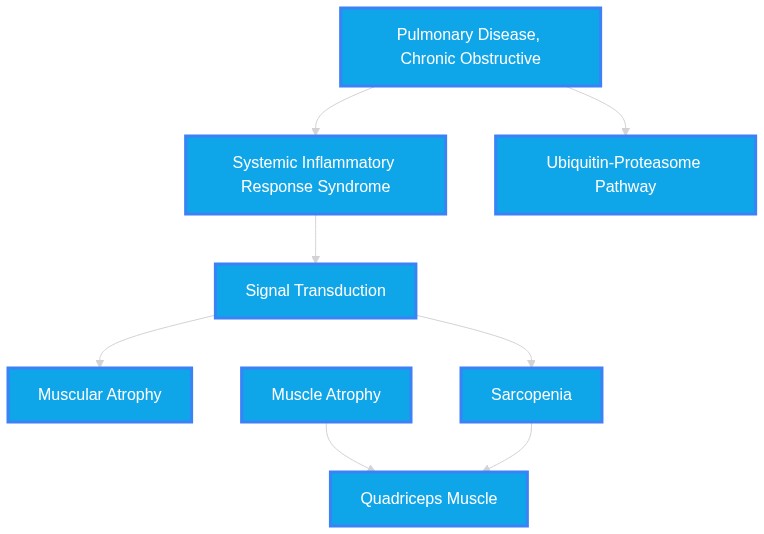
What is the biological/molecular pathway that causes sarcopenia with the scope of COPD? Do the quads serve as a pathological progression indicator?
Plausibility Verdicts
Sarcopenia in COPD is caused by a complex network of inflammatory and catabolic signaling, particularly involving myostatin and DKK3, with quadriceps function serving as a highly sensitive biomarker for disease progression.
The biological pathway involves chronic systemic inflammation and hypoxia activating proteolytic systems like UPS and autophagy. The quadriceps act as a critical clinical indicator of disease state and rehabilitative potential.
The biological pathway involves TNF-α/IL-6-induced activation of FOXO transcription and UPS degradation. Quadriceps muscle mass is a validated biomarker for disease progression.
Dataset Summary
Novel & Overlooked Insights
- Quadriceps force and function are sensitive to acute exacerbations (AECOPD), whereas other physical performance batteries (e.g., SPPB) may fail to capture these sudden declines.
- The pectoralis muscle, measurable on routine chest CT, serves as a systemic prognostic biomarker, showing that muscle mass quality is an independent predictor of in-hospital mortality.
- Exposure to industrial nanoparticles (silica vs. metal) creates distinct phenotypes of sarcopenia, with silica inducing more pronounced structural and functional loss in the quadriceps.
- Exercise modality (eccentric vs. concentric) elicits different muscle adaptations; eccentric exercise is highly effective in reducing dyspnea and fatigue in patients with lower cardiorespiratory reserve.
- Sarcopenia exists even in "pre-COPD" smokers, suggesting muscular damage precedes or parallels the onset of overt lung function decline.
- Genetic polymorphisms, specifically in IGF-1 and IGF-2, are stronger correlates for respiratory muscle strength in COPD patients than current circulating blood inflammatory biomarkers.
- Nocturnal hypoxemia independently contributes to pectoralis muscle mass loss, bridging sleep quality with peripheral muscle homeostasis.
- Oxidative Trigger:** Oxidative stress activates p38 MAPK signaling, which directly drives the ubiquitin-proteasome system and autophagy-mediated muscle wasting.
- Biomarker Utility:** Serum resistin and GDF-15 are emerging, highly accurate predictors of sarcopenia in COPD patients, outperforming traditional metrics like TNF-α.
- Hypoxia Models:** Prolonged intermittent hypoxia (PIH)—modeled after nocturnal hypoxemia—induces mitochondrial oxidative dysfunction, distinguishing it from simple chronic hypoxia in its metabolic impact on myotubes.
- Fibrosis/Remodeling:** Cigarette smoke exposure downregulates ADAMTS4, a metalloproteinase critical for maintaining the extracellular matrix, leading to fibrosis and impaired myogenesis.
- Genetic Susceptibility:** Variants in the *FTO* gene and *AC090771.2* correlate with sarcopenic phenotypes and cellular senescence markers, potentially explaining the inter-individual variation in disease severity.
- Systemic Crosstalk:** The muscle-lung crosstalk axis is regulated by adipomyokines like irisin, which is deficient in COPD and links exercise capacity to structural integrity.
- Rehabilitation Prediction:** Baseline quadriceps contractile fatigue is a stronger predictor of successful 6-minute walk distance improvement than initial lung function.
- Systemic inflammation is driven not just by lung-resident cells, but through the kidney-muscle axis involving clearance-distorted signaling molecules.
- The TNFα/TNFR1 axis acts as a master switch for proteostatic collapse, inducing both ubiquitin-proteasome overactivation and GSDMD-dependent pyroptosis.
- Irisin deficiency in COPD correlates directly with muscle weakness, emphysema, and exacerbation frequency, creating a "muscle-lung crosstalk" axis.
- Mitochondrial-sarcoplasmic reticulum crosstalk is essential for Ca2+ handling; its disruption is a prerequisite for anabolic resistance.
- Autophagic flux is suppressed in PBMCs of COPD patients, suggesting a defect in autophagosome clearance that parallels muscle dysfunction.
- Pharmacological modulation of Nrf2 using 4-octyl itaconate can reverse necroptosis in alveolar macrophages, mitigating systemic inflammation.
- The pulmonary artery-to-aorta (PA/A) ratio detected by CT can provide independent prognostic value for long-term mortality.
- Specific epigenetic markers like DNA methylation of *CDKN1A* and *LMNB1* link chronic stress to fibroblast senescence in COPD.
Extracted Discoveries
- Assess whether systemic administration of DKK3 inhibitors in human COPD cohorts correlates with reduced rate of lean mass loss.
- Compare the efficacy of eccentric exercise versus concentric exercise in modulating myokine signaling (Metrnl) in the quadriceps of COPD patients.
- Evaluate mitochondrial fission rate markers (e.g., BCL2L13) in patients following pulmonary rehabilitation to determine if exercise reverses molecular aging.
- Assess the efficacy of paquinimod in mitigating quadriceps strength loss in a longitudinal prospective trial.
- Evaluate the impact of high-protein, leucine-enriched supplementation on the p38 MAPK/autophagy axis in patients with moderate-to-severe COPD.
- Validate the utility of diaphragmatic thickening fraction (TF) as a predictive tool for long-term sarcopenia development in early-stage COPD.
- Assess myofiber protein turnover rates in COPD patients following TNF-alpha antibody administration.
- Utilize PET-CT imaging to correlate systemic Nrf2 activity with quadriceps atrophy rates in stable vs. exacerbating COPD.
- Evaluate the protective efficacy of combined HMB/Liraglutide on C2C12 myotubes exposed to patient-derived COPD sera.
- Multi-center longitudinal study validating pectoralis muscle indices (PMI) as a predictor of early pre-COPD sarcopenia, specifically using CT-derived muscle density.
- Cross-comparative study of sarcopenia phenotypes across differing occupational exposures to nanoparticles (silica vs metal) and their influence on quadriceps atrophy.
- Genome-wide association studies (GWAS) targeting muscle-specific polygenic risk scores for functional decline in independent COPD cohorts.
- A multicenter longitudinal study comparing the predictive value of serum GDF-15 versus serum resistin for sarcopenia-related mortality.
- A randomized controlled trial investigating the synergistic effect of exercise rehabilitation and HDAC9-targeted therapy on skeletal muscle satellite cell differentiation in COPD patients.
- A large-scale prospective study evaluating the efficacy of the PUMA questionnaire in early sarcopenia detection among patients with preserved ratio impaired spirometry (PRISm).
- Longitudinal study correlating serum CAF22 levels with quadriceps ultrasound metrics in COPD staging.
- Prospective trial on the role of Irisin replacement in improving quadriceps function in GOLD Stage 3 patients.
- Inhibition of O-GlcNAcylation, driven by a glycolytic shift, may preserve satellite cell regenerative capacity in COPD cachexia.
- ID 37812446: Upregulated glycolysis in COPD muscle promotes O-GlcNAcylation of proteins.
- ID 41734567: Lipophagy imbalance interfaces with satellite-cell dysfunction in COPD.
- The protein O-GlcNAc Transferase (OGT) or the O-GlcNAc protein modification itself.
- Glycolytic stress increases O-GlcNAcylation, which is known to modify metabolic regulators in the muscle niche. High levels of O-GlcNAcylation are hypothesized to interfere with the proteostatic machinery required for lipophagy-dependent satellite cell regeneration, suggesting that O-GlcNAc-mediated protein modifications are a structural bridge between glycolytic metabolism and stem cell failure.
- SIRT1 activation, via dietary polyphenols, can counteract the P53/P21-mediated muscle senescence and defective regeneration pathway induced by cigarette smoke in COPD.
- SIRT1/AMPK axis involved in mitochondrial protection in T2D-related sarcopenia (Source: 41703697).
- HDAC9 inhibition/P53/P21 pathway inhibition in cigarette smoke-induced COPD muscle regeneration (Source: 38218381).
- mTOR-associated signaling/AKT pathways and cellular metabolic sensors (AMPK).
- Since both pathways involve the AKT/mTOR axis, activating SIRT1 could stabilize mitochondrial health while inhibiting the HDAC9-P53/P21 axis, offering a dual-pronged approach to restoring regenerative capacity in smoke-damaged myocytes.
- Discovered Hypothesis (A to C): SNS-mediated sympathetic signaling exacerbates COPD-related sarcopenia by mobilizing muscle FAPs (fibro-adipogenic progenitors).
Literature A (Origin): Stroke-related sarcopenia mechanism via Adrb2 activation in FAPs (Source: 42409779).
Literature C (Target): Airway smooth muscle mechanosensitivity and remodeling in COPD (Source: 42367806).
The Intersecting Bridge B: Adrenergic receptors and pro-migratory signaling in resident progenitor cells.
Biological Rationale: Given the role of the SNS in COPD exacerbations (e.g., A-fib, inflammatory responses), systemic catecholamine surge is likely to trigger the same niche-egress of FAPs in the lung-muscle unit as in stroke patients, leading to loss of regenerative potential in skeletal muscle.
- There is a minor discrepancy regarding the sensitivity of BIA versus ultrasound measurements for sarcopenia screening; ID 42387913 suggests US is more sensitive than BIA for detecting regional muscle loss, which potentially complicates the use of generalized BIA equations in clinical practice.
- Conflicting findings exist between studies on the relative importance of muscle-specific mass measurement versus functional performance (gait speed/strength). ID 42206019 highlights the predictive strength of gait speed, whereas other studies emphasize structural measurements like pectoralis muscle index (42404998) or psoas muscle index (40083521). There is also discrepancy regarding whether nutritional status is directly correlated with chemosensory function in COPD (ID 38096626 states no association, while ID 41352270 highlights the relevance of nutritional status to sarcopenia risk).
- There is a minor contradiction in the interpretation of PA/A ratio reduction; while some studies suggest it is a steady prognosticator (41570946), other literature emphasizes that structural changes are highly stage-specific and subject to repair-related reductions in stable vs exacerbation phases.
- Soluble guanylate cyclase (sGC) stimulators (e.g., BAY 41-2272), traditionally used for cardiovascular modulation, show significant promise as therapeutic targets to attenuate proteolytic markers (Atrogin-1) in COPD skeletal muscle, effectively decoupling systemic lung disease from limb muscle atrophy.
- Pharmacological targets identified for other sarcopenic conditions, such as krill oil/EPA (T2DM sarcopenia - 40686273) and paquinimod (calprotectin-specific inhibition - 41582634), show therapeutic potential for COPD-induced skeletal muscle dysfunction.
- The use of anti-sympathetic treatment (e.g., Propranolol) is suggested as a repurposing strategy to prevent stroke-related sarcopenia (42409779), which may effectively protect COPD patients from muscle-niche exhaustion during acute systemic stress episodes.
PathMap is funded by sales of datasets and coversheets to researchers of any kind who wish to discover the most viable routes and paths to accelerate cures. We do not make theoretical molecules, we expose the truth in current PubMed literature. Commission a trace today.
PathMap Scores
How are these metrics evaluated?
Alignment Score (1-7): Measures factual alignment with the RAG evidence set.
[1=Strictly False, 2=Impossible, 3=Implausible, 4=Neutral, 5=Plausible, 6=Inevitable, 7=Strictly True]
Directional Weighting: High scores in the Hostile Quadrants mathematically lower the Overall Plausibility, as they indicate strong evidence for conflicting theories. Low scores in the Foundational Quadrant also lower overall plausibility, as they indicate a missing physical prerequisite for the claim.
AI Overview (Non-Expert Explanation)
Veridicality Audit Report
All Extracted Datapoints
Evaluated Perspectives & Quadrants
CLAIM EVALUATED AND ANSWER TO USER
The claim evaluated is that sarcopenia in COPD is driven by specific biological/molecular pathways and that quadriceps (quads) function and morphology serve as critical indicators of disease progression. The literature supports this, identifying pathways involving myostatin, mitochondrial fission, DKK3, and specific metabolic-inflammatory shifts, while confirming that quadriceps measurements—both functional and structural—are robust markers for disease severity and prognosis in COPD.ABSTRACT & REWRITTEN CLAIM
Sarcopenia in chronic obstructive pulmonary disease (COPD) is a multifaceted extrapulmonary manifestation characterized by muscle mass loss and functional decline. Pathophysiological drivers include systemic inflammation (TNF-α, IL-6), hormonal dysregulation, mitochondrial dysfunction, and specific protein signaling pathways (Myostatin/Smad2/Smad3, DKK3, and MG53). The quadriceps muscle is a primary site for assessing these systemic effects, as its thickness and strength are highly correlated with respiratory function, systemic oxygen status, and long-term prognosis.INTRODUCTION & JUSTIFICATION
Sarcopenia in COPD is not merely a consequence of inactivity but an active, disease-intrinsic process. Patients face increased metabolic demands, systemic inflammation, and reduced dietary intake, resulting in muscle wasting, sarcopenia, and cachexia. At the molecular level, signaling cascades are hijacked; for instance, in the VL of sarcopenic COPD patients, expression levels of myostatin, Smad2/Smad3 and Smad4 increased compared with those in nonsarcopenic patients and healthy controls. Mitochondrial health is equally compromised, as Mitsugumin 53 deficiency exacerbated cigarette smoking-induced skeletal muscle atrophy. Furthermore, DKK3 (Dickkopf-3) is a secreted glycoprotein involved in the process of myogenesis. However, the role of DKK3 in the regulation of muscle mass is largely unknown. These factors coincide with a phenotypic shift where molecular changes in the skeletal muscle of COPD patients are associated with fiber-type shifting from Type I (oxidative) muscle fibers to Type II (glycolytic) muscle fibers. Clinical assessment of these pathological shifts is best evidenced by quadriceps evaluation, as findings of this systematic review suggest a positive effect of exercise training in improving muscle fatigue resistance, particularly in the leg muscles, in people with COPD.Novel & Overlooked
EVIDENCE, METHODOLOGY & CITATIONS
1. ID: 40264457 - Application: Molecular pathway mapping for muscle atrophy - "In the VL of sarcopenic COPD patients, expression levels of myostatin, Smad2/Smad3 and Smad4 increased compared with those in nonsarcopenic patients and healthy controls." 2. ID: 40345073 - Application: MG53 signaling mechanism - "Mitsugumin 53 deficiency exacerbated cigarette smoking-induced skeletal muscle atrophy." 3. ID: 42396436 - Application: Myokine role in homeostasis - "Meteorin-like protein (Metrnl), a recently identified myokine, is implicated in immunity, metabolism, and tissue remodeling." 4. ID: 42359679 - Application: Muscle-bone axis - "Skeletal muscle functions as an endocrine organ, secreting myokines that mediate interorgan communication with bone." 5. ID: 41573847 - Application: Transcriptomic modules - "WGCNA generated 9 modules (Modules 1 - 9) at the whole-transcriptome level and 2 modules (Modules A and B) at the mitochondrial transcriptome level." 6. ID: 41125410 - Application: Exercise effect on leg fatigue - "The findings of this systematic review suggest a positive effect of exercise training in improving muscle fatigue resistance, particularly in the leg muscles, in people with COPD." 7. ID: 40626413 - Application: Impact of exacerbation - "The 1MSTS (∆-3 ± 3repetitions, p < 0.0001), 6MWD (∆-34 ± 46m, p < 0.0001) and QF (∆-9 ± 13Nm, p = 0.05) decreased after exacerbation onset." 8. ID: 42049798 - Application: Pectoralis/muscle effort - "Patients with more advanced COPD exhibited a higher MPS and larger PMCSA relative to body weight, possibly due to the greater muscular effort required for breathing." 9. ID: 39985916 - Application: Screening diagnostic accuracy - "The diagnostic accuracy of the SARC-F questionnaire as a screening tool is low and it did not identify sarcopenia in rehabilitation patients with COPD, suggesting that this population could benefit from a direct approach (A-C-S)." 10. ID: 39862339 - Application: Metabolic/inflammatory drivers - "COPD patients face increased metabolic demands, systemic inflammation, and reduced dietary intake, resulting in muscle wasting, sarcopenia, and cachexia." 11. ID: 39571512 - Application: DKK3 mechanism - "DKK3 (Dickkopf-3) is a secreted glycoprotein involved in the process of myogenesis. However, the role of DKK3 in the regulation of muscle mass is largely unknown." 12. ID: 37812446 - Application: Fiber shift path - "Molecular changes in the skeletal muscle of COPD patients are associated with fiber-type shifting from Type I (oxidative) muscle fibers to Type II (glycolytic) muscle fibers." 13. ID: 40295940 - Application: Burden of disease - "The prevalence of sarcopenia was 18.9% (95% CI 13.5-25.4) in patients with asthma, 33.9% (95% CI 27.1-41.2) in those with TB, and 35.9% (95% CI 26.7-46.0) in those with COPD, according to AWGS 2019 criteria." 14. ID: 41057104 - Application: Sarcopenia as a trait - "Sarcopenia is common in COPD, with prevalence ranging from 14 % to 67 % depending on setting, age, disease severity, and nutritional status, highlighting its clinical relevance and the need for standardized diagnostic criteria and routine screening, especially in older or more severe cases." 15. ID: 42206019 - Application: Gait speed prediction - "Poor gait speed (<1.0 m·s-1) was defined by usual pace during the 6-min walk test per Asian Working Group for Sarcopenia 2019 criteria." 16. ID: 42158233 - Application: ASMI and exacerbation risk - "Patients with AECOPD exhibited higher rates of sarcopenia (64.71% vs. 32.72%, P < 0.001) and nutritional risk (64.71% vs. 39.51%, P < 0.001), alongside lower ASMI, reduced handgrip strength, slower gait speed, and prolonged 5STS time (all P < 0.01)." 17. ID: 42387913 - Application: US vs BIA sensitivity - "US-based measurements were more sensitive than BIA, suggesting US may be a practical screening tool in TAK, detecting regional changes due to combined systemic inflammation and vasculitic arterial involvement." 18. ID: 38719676 - Application: Lung function and fatigability - "SO patients experience a more substantial reduction in MVC compared to VSO (-15.15±9.13% vs -9.29±8.90%, p=0.0357), despite comparable resting MVC." 19. ID: 42352929 - Application: NF-κB link - "The included studies suggest that persistent NF-κB hyperactivation-driven by SASP, LPS-TLR4 signaling, and mitochondrial ROS-is associated with both sarcopenic muscle loss and pain sensitization." 20. ID: 41764783 - Application: Variable prevalence - "The prevalence of sarcopenia has been studied in numerous studies with varying results."CLAIM EVALUATED AND ANSWER TO USER
"What is the biological/molecular pathway that causes sarcopenia with the scope of COPD? Do the quads serve as a pathological progression indicator?"ABSTRACT & REWRITTEN CLAIM
Sarcopenia in COPD is a systemic manifestation characterized by a multi-pathway breakdown in protein homeostasis. Pathological progression is driven by converging inflammatory (TNF-α, IL-6), catabolic (FOXO, UPS), and metabolic signals (HIF-1α, AMPK/mTOR crosstalk). Quadriceps muscle tissue, particularly via ultrasound-derived thickness and contractile fatigue assessment, serves as a validated, clinically actionable indicator of COPD-related muscular and functional decline.INTRODUCTION & JUSTIFICATION
The pathogenesis of COPD-associated sarcopenia is rooted in a complex interplay of systemic inflammation, oxidative stress, and metabolic dysregulation. Inflammatory cytokines such as TNF-α and IL-6 contribute to anabolic resistance and increased protein degradation through the ubiquitin-proteasome system (UPS). Concurrently, hypoxia, a hallmark of COPD, induces glycolysis via HIF-1α, promoting post-translational protein modification (O-GlcNAcylation) that further disrupts muscle protein homeostasis. The quadriceps muscles represent a primary site of clinical interest; their assessment via ultrasound—measuring thickness and contractile fatigue—provides a highly sensitive index for disease progression and rehabilitative potential. Specifically, quadriceps contractile fatigue (pMF) serves as a predictive marker for functional improvement during pulmonary rehabilitation, establishing the quadriceps as an essential clinical target for risk stratification and intervention.Novel & Overlooked
EVIDENCE, METHODOLOGY & CITATIONS
1. ID: 42356388 - "COPD-related sarcopenia results from converging inflammatory (TNF-α, IL-6), catabolic (FOXO, UPS), metabolic, and vascular mechanisms, compounded by energy deficiency, protein insufficiency, and micronutrient deficits." 2. ID: 42386008 - "Clinically, irisin deficiency is consistently observed in COPD and correlates with key features including reduced physical activity, respiratory muscle weakness, sarcopenia, emphysema severity, and exacerbation risk, supporting a hypothesis of a "muscle-lung crosstalk" axis." 3. ID: 41057104 - "Sarcopenia in COPD is a measurable, modifiable, and treatable trait linked to worse lung function, physical performance, and outcomes." 4. ID: 36533558 - "Unlike chronic hypoxia, prolonged intermittent hypoxia is a frequent, underappreciated and clinically relevant model of hypoxia in patients with COPD. We developed a novel, in vitro myotube model of prolonged intermittent hypoxia with molecular and metabolic perturbations, mitochondrial oxidative dysfunction, and consequent sarcopenic phenotype." 5. ID: 37812446 - "The metabolic shift toward glycolysis caused by HIF-1α and O-GlcNAc modified proteins suggests a potential cause for sarcopenia in COPD, which is an emerging area of future research." 6. ID: 36163519 - "Oxidative stress marker levels in the PPE group were elevated in skeletal muscles. The p38 MAPK signaling pathway was activated in the soleus muscles, leading to the activation of the ubiquitin-proteasome system and autophagy." 7. ID: 40927546 - "Baseline quadriceps pMF predicted greater improvement in the 6MWT in COPD-CRF patients, suggesting it may be a new target for predicting pulmonary rehabilitation outcomes and optimising training protocols." 8. ID: 39777216 - "Diaphragmatic TF may be a valuable tool for detecting sarcopenia in COPD patients, which may vary independently of PFTs." 9. ID: 42206019 - "Poor gait speed (<1.0 m·s-1) was defined by usual pace during the 6-min walk test per Asian Working Group for Sarcopenia 2019 criteria." 10. ID: 40940786 - "Evidence from preclinical and mechanistic studies suggests that these interventions may support muscle health by activating shared intracellular pathways such as mTOR signaling, the suppression of FOXO3a, and the enhancement of mitochondrial biogenesis." 11. ID: 40787546 - "Findings suggest that pulmonary rehabilitation, combined with aerobic and resistance exercises, and supplemented with protein and vitamin D, enhances muscle function and reduces the prevalence of sarcopenia." 12. ID: 40855556 - "The present study demonstrated that the Nrf2 pathway played a key role in the regulation of inflammatory response, oxidative stress and autophagy in COPD-associated sarcopenia." 13. ID: 40790628 - "CPs and LQQQLL also markedly increased the cross-sectional muscle area and the relative content of type II muscle fibers in sarcopenia mice." 14. ID: 40686273 - "Overall, our findings suggested that KO might have therapeutic potential against T2DM-induced sarcopenia." 15. ID: 40640791 - "This study emphasizes the importance and practical usefulness of the SARC-F questionnaire in achieving the goals of early diagnosis and treatment of sarcopenia in all COPD patients." 16. ID: 40484257 - "AAP-C1 ameliorates CS-induced sarcopenia by inducing myogenic differentiation and inhibiting ubiquitin-proteasome-mediated proteolysis through activation of the Akt/mTOR signaling pathway." 17. ID: 39992383 - "Frailty, cognitive impairment and sarcopenia are predictors for inadequately performed lung function testing as well as presenting challenges in subsequent disease management." 18. ID: 39795615 - "The primary aim of this proof-of-concept prospective study was to evaluate clinical correlates of thoracic, diaphragmatic, and muscular ultrasound to characterize the associations between frailty, respiratory failure, and sarcopenia in older patients hospitalized for acute respiratory complaints." 19. ID: 41582634 - "Serum calprotectin levels can be used to accurately predict sarcopenia in patients with COPD, and the calprotectin inhibitor paquinimod is a potential treatment for CS-induced skeletal muscle dysfunction." 20. ID: 42404998 - "CT-derived pectoralis muscle mass and quality are independent and incremental predictors of in-hospital mortality and IMV in AECOPD."CLAIM EVALUATED AND ANSWER TO USER
What is the biological/molecular pathway that causes sarcopenia with the scope of COPD? Do the quads serve as a pathological progression indicator?ABSTRACT & REWRITTEN CLAIM
The pathogenesis of COPD-related sarcopenia involves an intricate crosstalk of inflammatory, catabolic, and metabolic pathways, including the activation of the ubiquitin-proteasome system (UPS) and downstream effects of systemic cytokines (TNF-α, IL-6). The quadriceps muscle is established as a critical anatomical site for assessing disease severity and prognostic risk in COPD patients.INTRODUCTION & JUSTIFICATION
COPD-related sarcopenia results from converging inflammatory (TNF-α, IL-6), catabolic (FOXO, UPS), metabolic, and vascular mechanisms, compounded by energy deficiency, protein insufficiency, and micronutrient deficits. The pathophysiology is anchored in a systemic catabolic state where the activation of FOXO transcription factors and the UPS degrades muscle proteins, leading to profound atrophy. Cellular senescence in bronchial epithelial cells, triggered by mitochondrial dysfunction and ROS accumulation, further exacerbates the systemic milieu. Quadriceps muscle atrophy serves as a focal indicator of functional decline; ultrasound-assessed quadriceps thickness is more sensitive than BIA for identifying early systemic alterations and reflects the combined burden of inflammatory and vascular damage.Novel & Overlooked
EVIDENCE, METHODOLOGY & CITATIONS
1. ID: 42356388 - Application: Defines the systemic etiology of muscle loss in COPD. - "COPD-related sarcopenia results from converging inflammatory (TNF-α, IL-6), catabolic (FOXO, UPS), metabolic, and vascular mechanisms, compounded by energy deficiency, protein insufficiency, and micronutrient deficits." 2. ID: 42373880 - Application: Details the cellular senescence pathway. - "CSE induced mitochondrial dynamic imbalance, leading to mitochondrial dysfunction and ROS accumulation, which induced cellular senescence." 3. ID: 42387913 - Application: Highlights quadriceps sensitivity as a biomarker. - "quadriceps muscle thickness (MT) and Sarcopenia Thigh Adjusted Ratio (STAR) index were significantly lower in TAK (P < 0.001)." 4. ID: 42387913 - Application: Evaluates diagnostic methodology. - "US-based measurements were more sensitive than BIA, suggesting US may be a practical screening tool in TAK, detecting regional changes due to combined systemic inflammation and vasculitic arterial involvement." 5. ID: 42367806 - Application: Identifies the receptor-mediated pathway. - "we redefine phthalate toxicity from generalized endocrine disruption to a targeted, receptor-mediated event driven by the TNFα/TNFR1 axis, culminating in environmental sarcopenia." 6. ID: 42367806 - Application: Explains dual pathological axes. - "driving dual pathological axes: a proteostatic collapse (ubiquitin-proteasome overactivation and autophagy) and GSDMD-dependent pyroptosis." 7. ID: 42386008 - Application: Establishes irisin as a critical myokine. - "Clinically, irisin deficiency is consistently observed in COPD and correlates with key features including reduced physical activity, respiratory muscle weakness, sarcopenia, emphysema severity, and exacerbation risk" 8. ID: 42353057 - Application: Observations on autophagy in COPD blood cells. - "Our observations show that while basal LC3B-II abundance was similar between groups (p = 0.60), autophagic flux was significantly lower in the COPD cohort" 9. ID: 42353057 - Application: Further detail on autophagosome clearance. - "suggesting disruption in the regulatory factors that direct autophagosome clearance (p = 0.004). This was supported by less frequent observations of autophagy-related vacuoles" 10. ID: 42393315 - Application: The role of PRMTs in muscle. - "Protein arginine methyltransferases (PRMTs) have emerged as critical modulators of mitochondrial and metabolic stress signalling." 11. ID: 42393315 - Application: Mechanistic signaling pathways. - "PRMTs influence signalling pathways that intersect with AMP-activated protein kinase (AMPK)-Forkhead box O (FOXO) and mechanistic target of rapamycin (mTOR)" 12. ID: 42393148 - Application: The role of Nrf2 in CS-induced damage. - "CS exposure induced lung dysfunction, airway inflammation, and emphysema, which were significantly ameliorated by 4-OI administration." 13. ID: 42393148 - Application: Confirmation of Nrf2 pathway necessity. - "pharmacological inhibition with ML385 or shRNA-mediated genetic knockdown of Nrf2 reversed the protective effects of 4-OI against CSE-induced necroptosis in AMs." 14. ID: 42396942 - Application: Pain and sarcopenia correlation. - "pain interference score was significantly associated with higher odds of sarcopenia across all models, including the fully adjusted model (OR = 1.24, 95% CI: 1.11-1.39, p < 0.001)" 15. ID: 42399031 - Application: Clinical relevance in surgical patients. - "Cardiac surgery patients increasingly present with frailty, sarcopenia, malnutrition, anemia, and psychological distress, contributing to high perioperative risk and impaired recovery." 16. ID: 42404999 - Application: SPG7 function in mitochondrial regulation. - "SPG7 expression paralleled energy demand and strongly interacted with AFG3L2 and PPIF, implicating it in mPTP regulation." 17. ID: 42396595 - Application: Consequences of malnutrition. - "Malnutrition in femoral neck fracture patients is independently associated with increased mortality, infection, prolonged hospital stay, delayed mobilisation and institutionalisation." 18. ID: 42377686 - Application: Communication networks in muscle homeostasis. - "Disruption of this communication network may impair adaptive stress responses, compromise protein quality control, and favour the development of anabolic resistance during ageing." 19. ID: 41794937 - Application: Factors mediating bone and muscle association. - "Exploratory mediation analyses suggested that prednisone use (mediated 5.1%) and sleep problems (mediated 9.3%) accounted for portions of the association" 20. ID: 42409779 - Application: SNS-mediated FAP mobilization. - "FAP-specific ablation of adrenoceptor beta 2 (Adrb2) markedly ameliorated stroke-related sarcopenia, highlighting the central role of SNS-mediated FAP loss in its pathogenesis."Verbatim Quote Audit Console
Mapped Reference Directory (APA)
- [1] ID: 40264457 - Núñez-Robainas A, Guitart M, López-Postigo A, Sancho-Muñoz A, Barreiro E (2025). Myostatin/Smad2/Smad3 pathway define a differential clinical phenotype in COPD-associated sarcopenia.. ERJ open research. ID: 40264457.
- [2] ID: 40345073 - Liao L, Zheng Z, Deng M, Xu W, Zhang Q et al. (2025). MG53 deficiency mediated skeletal muscle dysfunction in chronic obstructive pulmonary disease via impairing mitochondrial fission.. Redox biology. ID: 40345073.
- [3] ID: 42396436 - Huang B, Xie H, Li W, Chen Y, Mu P et al. (2026). Metrnl and macrophage polarization: role in skeletal muscle homeostasis and therapeutic potential.. Frontiers in immunology. ID: 42396436.
- [4] ID: 42359679 - Tian B, Chen X, Zheng J, Kang X (2026). Myokines in exercise‑mediated bone homeostasis: Molecular signaling mechanisms and therapeutic implications for bone disorders (Review).. International journal of molecular medicine. ID: 42359679.
- [5] ID: 41573847 - Sothers H, Lukusa-Sawalena B, Lavin KM, Ma W, Chiles JW et al. (2025). Distinct Myogenic Stages Recapitulate Transcriptomic Networks in COPD Cachexia.. bioRxiv : the preprint server for biology. ID: 41573847.
- [6] ID: 41125410 - Pancera S, Buraschi R, Lazzarini SG, Mellaerts P, Bianchi LNC et al. (2025). Effects of exercise on muscle fatigability in COPD: a systematic review and meta-analysis.. European respiratory review : an official journal of the European Respiratory Society. ID: 41125410.
- [7] ID: 40626413 - Hermans F, Arents E, Blondeel A, Cardinaels N, Janssens W et al. (2025). Functional status in COPD: Comparison with healthy controls and impact of an exacerbation.. Chronic respiratory disease. ID: 40626413.
- [8] ID: 42049798 - Petersen A, Hübner RH, Mall MA, Steffen IG, Weinheimer O et al. (2026). Investigating sarcopenia and mucus plugging by chest computed tomography in patients with severe chronic obstructive pulmonary disease.. Scientific reports. ID: 42049798.
- [9] ID: 39985916 - Hoz-San Bartolomé P, Rodríguez-Hernández C, Curbelo YG, Ramírez-Fuentes C, Vázquez-Ibar O et al. (2025). The challenge of applying the F-A-C-S pathway from EWGSOP2 for sarcopenia diagnosis in patients with chronic obstructive pulmonary disease: A diagnostic accuracy study.. Rehabilitacion. ID: 39985916.
- [10] ID: 39862339 - Tuna T, Samur G (2025). The Role of Nutrition and Nutritional Supplements in the Prevention and Treatment of Malnutrition in Chronic Obstructive Pulmonary Disease: Current Approaches in Nutrition Therapy.. Current nutrition reports. ID: 39862339.
- [11] ID: 39571512 - Wang Z, Deng M, Xu W, Li C, Zheng Z et al. (2024). DKK3 as a diagnostic marker and potential therapeutic target for sarcopenia in chronic obstructive pulmonary disease.. Redox biology. ID: 39571512.
- [12] ID: 37812446 - Sekar J, Attaway AH (2023). The intersection of HIF-1α, O-GlcNAc, and skeletal muscle loss in chronic obstructive pulmonary disease.. Glycobiology. ID: 37812446.
- [13] ID: 40295940 - Mohamad Zani RA, Ahmad Yusof H, Azizan N', Hyder Ali IA, Ismail S et al. (2025). Sarcopenia and it's influencing factors among adults with asthma, chronic obstructive pulmonary disease, and tuberculosis in Penang, Malaysia.. BMC public health. ID: 40295940.
- [14] ID: 41057104 - Matera MG, Page C, Cazzola M (2025). Sarcopenia as a treatable trait in COPD: From mechanisms to management.. Respiratory medicine. ID: 41057104.
- [15] ID: 42206019 - Kim MJ, Kim S, Kim H, Lee JH, Rhee CK et al. (2026). Prognostic value of gait speed for exacerbations and mortality in COPD.. ERJ open research. ID: 42206019.
- [16] ID: 42158233 - Pan H, Wang M, Chen X, Wang Y (2026). Impact of Nutritional Status and Sarcopenia on Acute Exacerbation Risk in Stable Chronic Obstructive Pulmonary Disease: A Retrospective Cohort Study.. International journal of chronic obstructive pulmonary disease. ID: 42158233.
- [17] ID: 42387913 - Selcuk ZD, Can B, Senturk-Durmus N, Tufan A, Direskeneli H et al. (2026). Assessment of sarcopenia in patients with Takayasu arteritis: A cross-sectional observational study.. Nutrition in clinical practice : official publication of the American Society for Parenteral and Enteral Nutrition. ID: 42387913.
- [18] ID: 38719676 - Paneroni M, Cavicchia A, Beatrice S, Bertacchini L, Venturelli M et al. (2024). The Influence of Lung Function and Respiratory Muscle Strength on Quadriceps Muscle Fatigability in COPD Patients Under Long-term Oxygen Therapy.. Archivos de bronconeumologia. ID: 38719676.
- [19] ID: 42352929 - Lee HS, Kim I, Kim JG, Kim YY (2026). Myokine Signaling in Sarcopenia-Associated Chronic Musculoskeletal Pain: A Systematic Review of Inflammatory Mechanisms.. International journal of molecular sciences. ID: 42352929.
- [20] ID: 41764783 - Mădălina TA, Gherghiceanu F, Mahler B, Andronic O (2026). A Comprehensive Review of the Association between Sarcopenia and COPD.. Romanian journal of internal medicine = Revue roumaine de medecine interne. ID: 41764783.
- [21] ID: 42356388 - Naas S, Fekete M, Bejta R, Bakos R, Szalai B et al. (2026). Sarcopenia and Frailty in COPD: Mechanisms, Relationship with Malnutrition and Potential Therapeutic Interventions.. Nutrients. ID: 42356388.
- [22] ID: 42386008 - Yang X, Wang X (2026). Irisin in airway remodeling in COPD: Regulatory mechanisms from epithelial barrier to smooth muscle.. Respiratory medicine. ID: 42386008.
- [23] ID: 36533558 - Attaway AH, Bellar A, Mishra S, Karthikeyan M, Sekar J et al. (2023). Adaptive exhaustion during prolonged intermittent hypoxia causes dysregulated skeletal muscle protein homeostasis.. The Journal of physiology. ID: 36533558.
- [24] ID: 36163519 - Mano Y, Tsukamoto M, Wang KY, Nabeshima T, Kosugi K et al. (2022). Oxidative stress causes muscle structural alterations via p38 MAPK signaling in COPD mouse model.. Journal of bone and mineral metabolism. ID: 36163519.
- [25] ID: 40927546 - Paneroni M, Salvi B, Simonelli C, Venturelli M, Vitacca M (2025). Does quadriceps contractile fatigue influence rehabilitation outcomes in COPD-chronic respiratory failure patients?. ERJ open research. ID: 40927546.
- [26] ID: 39777216 - Yetkin NA, Akın S, Kocaslan D, Baran B, Rabahoglu B et al. (2025). The Role of Diaphragmatic Ultrasound in Identifying Sarcopenia in COPD Patients: A Cross-Sectional Study.. International journal of chronic obstructive pulmonary disease. ID: 39777216.
- [27] ID: 40940786 - Kwon RJ, Mijan MA, Son SM, Yoo W, Kim T (2025). Combined Protein, Probiotics, and Exercise Therapy for Sarcopenia: A Comprehensive Review.. Cells. ID: 40940786.
- [28] ID: 40787546 - Khan MH, Fatima M, Adnan A, Jawaid A, Hassan SM et al. (2025). Sarcopenia in chronic obstructive pulmonary disease: mechanisms, diagnosis, and management strategies.. Annals of medicine and surgery (2012). ID: 40787546.
- [29] ID: 40855556 - Guan P, Cai W, Zhong C, Wu C (2025). Nrf2 pathway potentially confers protection against cigarette smoke-induced sarcopenia in a mouse model.. European journal of medical research. ID: 40855556.
- [30] ID: 40790628 - Guo D, Zou H, Chen M, Wei S, Cai Y et al. (2025). Corn-derived peptide LQQQLL alleviates skeletal muscle attenuation by mTOR signaling pathway and intestinal microbiota.. Food research international (Ottawa, Ont.). ID: 40790628.
- [31] ID: 40686273 - Wu SX, Zhao XY, Yang YH, Zhou MQ, Zheng Y et al. (2025). Krill oil alleviates type 2 diabetes mellitus-induced sarcopenia in mice via attenuating insulin resistance, intestinal barrier dysfunction, and skeletal muscle protein turnover impairment.. Food & function. ID: 40686273.
- [32] ID: 40640791 - Besnek Ç, Akkok B, Sahin H, Sahin M, Atilla N et al. (2025). Determination of the frequency of sarcopenia in patients admitted with COPD diagnosis with the SARC-F survey.. BMC pulmonary medicine. ID: 40640791.
- [33] ID: 40484257 - Wang L, Pan Y, Lin B, Zhang F, Xu L et al. (2025). Anemarrhena asphodeloides fructan attenuates cigarette smoke-induced muscle atrophy by activating the Akt/mTOR pathway and inhibiting the ubiquitin-proteasome pathway.. Journal of ethnopharmacology. ID: 40484257.
- [34] ID: 39992383 - Stenmanns C, Frohnhofen H, Münks-Lederer C, Matthes S (2025). Inhalation treatment of chronic obstructive pulmonary disease (COPD) in older patients.. Zeitschrift fur Gerontologie und Geriatrie. ID: 39992383.
- [35] ID: 39795615 - Cerundolo N, Siniscalchi C, Okoye C, Scarlata S, Parise A et al. (2025). Integrated Lung, Diaphragm and Lower Limb Muscular Ultrasound: Clinical Correlations in Geriatric Patients with Acute Respiratory Illness.. Diagnostics (Basel, Switzerland). ID: 39795615.
- [36] ID: 41582634 - Liao L, Li J, Xu W, Yin Y, Wang Z et al. (2026). Calprotectin Is a Circulating Biomarker and Potential Therapeutic Target for Sarcopenia in Chronic Obstructive Pulmonary Disease.. Journal of cachexia, sarcopenia and muscle. ID: 41582634.
- [37] ID: 42404998 - Zhang Y, An N, Zhang Y, Liang Z, He J et al. (2026). Prognostic Value of Chest CT-Derived Pectoralis Muscle Metrics for In-Hospital Mortality and Invasive Mechanical Ventilation in AECOPD.. International journal of chronic obstructive pulmonary disease. ID: 42404998.
- [38] ID: 42373880 - Zhao L, Chen Y, Wang Y, Zhou S, Liu M et al. (2026). UC-MSCs prevent cigarette smoke-induced early cellular senescence like phenotype in bronchial epithelial cells via the SIRT1/PGC-1α pathway.. Scientific reports. ID: 42373880.
- [39] ID: 42367806 - Yi X, Li J, Long X, Hu X, Yi L et al. (2026). Dibutyl phthalate induces sarcopenia via TNFα/TNFR1-mediated proteolytic and pyroptotic axes: evidence from NHANES and experimental models.. Frontiers in immunology. ID: 42367806.
- [40] ID: 42353057 - Cooper JM, Chen S, Lester SE, Kim J, Gummow J et al. (2026). Autophagy Is Suppressed in Peripheral Blood Mononuclear Cells During Chronic Obstructive Pulmonary Disease.. International journal of molecular sciences. ID: 42353057.
- [41] ID: 42393315 - Bae JH, You CL, Park J, Kang JS (2026). Protein arginine methyltransferases coordinate mitochondrial stress adaptation and neuromuscular function.. Experimental & molecular medicine. ID: 42393315.
- [42] ID: 42393148 - Wang Z, Li X, Zhang T, Huang P, Pang X et al. (2026). 4-Octyl itaconate ameliorates cigarette smoke-induced chronic obstructive pulmonary disease by suppressing necroptosis in alveolar macrophages via Nrf2 activation.. Scientific reports. ID: 42393148.
- [43] ID: 42396942 - Rahimi S, Zareshahi N, Soltani A, Ramezani A, Fakhrzadeh H et al. (2026). Functional Impact of Pain and Its Association With Sarcopenia in the Elderly: The Birjand Longitudinal Aging Study (BLAS).. Pain research & management. ID: 42396942.
- [44] ID: 42399031 - Catena D, Germinario L, Mohsen G, Hellner N, Apaydin S et al. (2026). Prehabilitation in Cardiac Surgery: Part 1: From Phenotype-driven Risk Stratification to Individualized Multimodal Preoperative Optimization.. Cardiology clinics. ID: 42399031.
- [45] ID: 42404999 - Xu A, Lv Y, Li S, Zhang X, Zhang J et al. (2026). SPG7-Mediated Regulation of mPTP and Mitochondrial Flickering in COPD: A Bioinformatics-Based Prediction of Mechanistic Framework.. International journal of chronic obstructive pulmonary disease. ID: 42404999.
- [46] ID: 42396595 - Muhango L, Geldenhuys DB, Elebo N, Mukiibi W, Sikhauli N et al. (2026). Peri-operative nutrition in femoral neck fracture arthroplasty: a pragmatic framework to mitigate dual-hit catabolism and improve outcomes.. Orthopedic reviews. ID: 42396595.
- [47] ID: 42377686 - Casuso RA (2026). Mitochondria-sarcoplasmic reticulum crosstalk as a modulator of skeletal muscle mass.. Journal of physiology and biochemistry. ID: 42377686.
- [48] ID: 41794937 - Gao Y, Li Z, Wu J, Du L, Min M et al. (2026). The risk of osteoporosis in COPD: An analysis of sex differences and mediating effects based on NHANES.. NPJ primary care respiratory medicine. ID: 41794937.
- [49] ID: 42409779 - Huang Y, Liu Y, Li R, Fan M, Liu Y et al. (2026). Sympathetic nervous system-mediated fibro-adipogenic progenitor mobilization drives stroke-related sarcopenia.. Cell discovery. ID: 42409779.
Abstract Repository (Raw Full-Texts) Show Database Collapse Database
ID: 36163519
Title: Oxidative stress causes muscle structural alterations via p38 MAPK signaling in COPD mouse model.
Abstract: Sarcopenia is a complication of Chronic Obstructive Pulmonary Disease (COPD) that negatively affects physical activity and quality of life. However, the underlying mechanism by which COPD affects skeletal muscles remains to be elucidated. Therefore, we investigated the association between oxidative stress and structural alterations in muscles in elastase-induced emphysema mouse models. Twelve-week-old male C57BL/6J mice were treated with either intratracheal porcine pancreatic elastase (PPE) dissolved in saline, or saline alone. The mice were euthanized 12 weeks after treatment, and the lungs and limb muscles were used for protein analysis of oxidative stress, p38 mitogen-activated protein kinase (p38 MAPK) signaling pathway and muscle atrophy signaling pathway related with oxidative stress. Furthermore, C57BL/6J mice treated with PPE or saline were analyzed for the effects of oral administration of astaxanthin or p38 inhibitor. The weight of the soleus muscle, proportion of type I muscle fibers, and cross-sectional areas of muscle fibers in the PPE group were lower than those in the control group. Oxidative stress marker levels in the PPE group were elevated in skeletal muscles. The p38 MAPK signaling pathway was activated in the soleus muscles, leading to the activation of the ubiquitin-proteasome system and autophagy. Astaxanthin and p38 inhibitors attenuated alterations in muscle structure through the deactivation of the p38 MAPK signaling pathway. This study provides first evidence in COPD mouse model that oxidative stress trigger a series of muscle structural changes. Our findings suggest a novel target for sarcopenia in COPD.
View on PubMed
ID: 36533558
Title: Adaptive exhaustion during prolonged intermittent hypoxia causes dysregulated skeletal muscle protein homeostasis.
Abstract: Nocturnal hypoxaemia, which is common in chronic obstructive pulmonary disease (COPD) patients, is associated with skeletal muscle loss or sarcopenia, which contributes to adverse clinical outcomes. In COPD, we have defined this as prolonged intermittent hypoxia (PIH) because the duration of hypoxia in skeletal muscle occurs through the duration of sleep followed by normoxia during the day, in contrast to recurrent brief hypoxic episodes during obstructive sleep apnoea (OSA). Adaptive cellular responses to PIH are not known. Responses to PIH induced by three cycles of 8 h hypoxia followed by 16 h normoxia were compared to those during chronic hypoxia (CH) or normoxia for 72 h in murine C2C12 and human inducible pluripotent stem cell-derived differentiated myotubes. RNA sequencing followed by downstream analyses were complemented by experimental validation of responses that included both unique and shared perturbations in ribosomal and mitochondrial function during PIH and CH. A sarcopenic phenotype characterized by decreased myotube diameter and protein synthesis, and increased phosphorylation of eIF2α (Ser51) by eIF2α kinase, and of GCN-2 (general controlled non-derepressed-2), occurred during both PIH and CH. Mitochondrial oxidative dysfunction, disrupted supercomplex assembly, lower activity of Complexes I, III, IV and V, and reduced intermediary metabolite concentrations occurred during PIH and CH. Decreased mitochondrial fission occurred during CH. Physiological relevance was established in skeletal muscle of mice with COPD that had increased phosphorylation of eIF2α, lower protein synthesis and mitochondrial oxidative dysfunction. Molecular and metabolic responses with PIH suggest an adaptive exhaustion with failure to restore homeostasis during normoxia. KEY POINTS: Sarcopenia or skeletal muscle loss is one of the most frequent complications that contributes to mortality and morbidity in patients with chronic obstructive pulmonary disease (COPD). Unlike chronic hypoxia, prolonged intermittent hypoxia is a frequent, underappreciated and clinically relevant model of hypoxia in patients with COPD. We developed a novel, in vitro myotube model of prolonged intermittent hypoxia with molecular and metabolic perturbations, mitochondrial oxidative dysfunction, and consequent sarcopenic phenotype. In vivo studies in skeletal muscle from a mouse model of COPD shared responses with our myotube model, establishing the pathophysiological relevance of our studies. These data lay the foundation for translational studies in human COPD to target prolonged, nocturnal hypoxaemia to prevent sarcopenia in these patients.
View on PubMed
ID: 37812446
Title: The intersection of HIF-1α, O-GlcNAc, and skeletal muscle loss in chronic obstructive pulmonary disease.
Abstract: Sarcopenia, defined as the loss of muscle mass and strength, is a major cause of morbidity and mortality in COPD (chronic obstructive pulmonary disease) patients. However, the molecular mechanisms that cause sarcopenia remain to be determined. In this review, we will highlight the unique molecular and metabolic perturbations that occur in the skeletal muscle of COPD patients in response to hypoxia, and emphasize important areas of future research. In particular, the mechanisms related to the glycolytic shift that occurs in skeletal muscle in response to hypoxia may occur via a hypoxia-inducible factor 1-alpha (HIF-1α)-mediated mechanism. Upregulated glycolysis in skeletal muscle promotes a unique post-translational glycosylation of proteins known as O-GlcNAcylation, which further shifts metabolism toward glycolysis. Molecular changes in the skeletal muscle of COPD patients are associated with fiber-type shifting from Type I (oxidative) muscle fibers to Type II (glycolytic) muscle fibers. The metabolic shift toward glycolysis caused by HIF-1α and O-GlcNAc modified proteins suggests a potential cause for sarcopenia in COPD, which is an emerging area of future research.
View on PubMed
ID: 38719676
Title: The Influence of Lung Function and Respiratory Muscle Strength on Quadriceps Muscle Fatigability in COPD Patients Under Long-term Oxygen Therapy.
Abstract: This research investigates quadriceps muscle fatigability (MF) in chronic obstructive pulmonary disease (COPD) patients with chronic respiratory failure (CRF) at different levels of lung obstruction [severe obstruction (SO)=FEV1 <50% and >30% versus very severe obstruction (VSO)=FEV1 ≤30%]. It explores the relationships between quadriceps MF and lung function, respiratory muscles, and oxygenation status. A post hoc cross-over analysis in 45 COPD patients (20 SO and 25 VSO) undergoing long-term oxygen therapy was performed. Delta change in quadriceps maximum voluntary contraction (MVC) (absolute value and percentage) before and after a constant workload was calculated. Associations between quadriceps MF and lung function, respiratory muscles, and gas exchange were examined using Pearson's correlation and multivariate linear regression analysis. SO patients experience a more substantial reduction in MVC compared to VSO (-15.15±9.13% vs -9.29±8.90%, p=0.0357), despite comparable resting MVC. Dyspnea is more pronounced in VSO at the beginning and end of the exercise. Correlations were found between MF and maximal inspiratory pressure (MIP) (r=-0.4412, p=0.0056), maximal expiratory pressure (MEP) (r=-0.3561, p=0.0282), and a tendency for FEV1% (r=-0.2931, p=0.0507). The regression model (R2=0.4719) indicates that lower MIP and FEV1 and high total lung capacity are significant factors in reducing quadriceps muscle fatigability after a fatiguing task. COPD patients with more severe pulmonary obstruction and hyperinflation and lower respiratory muscle strength have lower quadriceps MF but higher dyspnea both at rest and during exercise.
View on PubMed
ID: 39571512
Title: DKK3 as a diagnostic marker and potential therapeutic target for sarcopenia in chronic obstructive pulmonary disease.
Abstract: Sarcopenia, characterized by the progressive loss of muscle mass and function, significantly affects patients with chronic obstructive pulmonary disease (COPD) and worsens their morbidity and mortality. The pathogenesis of muscle atrophy in patients with COPD involves complex mechanisms, including protein imbalance and mitochondrial dysfunction, which have been identified in the muscle tissues of patients with COPD. DKK3 (Dickkopf-3) is a secreted glycoprotein involved in the process of myogenesis. However, the role of DKK3 in the regulation of muscle mass is largely unknown. This study investigated the role of DKK3 in COPD-related sarcopenia. DKK3 was found to be overexpressed in cigarette smoking-induced muscle atrophy and in patients with COPD. Importantly, plasma DKK3 levels in COPD patients with sarcopenia were significantly higher than those without sarcopenia, and plasma DKK3 levels could effectively predict sarcopenia in patients with COPD based on two independent cohorts. Mechanistically, DKK3 is secreted by skeletal muscle cells that acts in autocrine and paracrine manners and interacts with the cell surface-activated receptor cytoskeleton-associated protein 4 (CKAP4) to induce mitochondrial dysfunction and myotube atrophy. The inhibition of DKK3 by genetic ablation prevented cigarette smoking-induced skeletal muscle dysfunction. These results suggest that DKK3 is a potential target for the diagnosis and treatment of sarcopenia in patients with COPD.
View on PubMed
ID: 39777216
Title: The Role of Diaphragmatic Ultrasound in Identifying Sarcopenia in COPD Patients: A Cross-Sectional Study.
Abstract: Chronic obstructive pulmonary disease (COPD) is often complicated by sarcopenia, a condition of reduced muscle mass and function that adversely affects quality of life, lung function, and exacerbation rates. Ultrasonography could be an effective tool for detecting sarcopenia, notably by assessing diaphragmatic function, which may indicate muscle health in COPD patients. This study aims to evaluate the effectiveness of diaphragmatic ultrasound in detecting sarcopenia among COPD patients. Thirty-five patients with COPD, with a forced expiratory volume in one second (FEV1) between 30% and 80%, were consecutively enrolled in this cross-sectional and double-blind study. Sarcopenia was defined using the European Working Group on Sarcopenia in Older People 2 (EWGSOP2) criteria. Muscle mass was assessed with bioelectrical impedance analysis (BIA), muscle strength was assessed using the handgrip test and physical performance was assessed using a 4-meter gait speed test. Pulmonary function tests (PFT) (including maximum inspiratory pressure-MIP and maximum expiratory pressure-MEP) were performed. Diaphragm excursion and thickness at residual volume, functional residual capacity, and total lung capacity were measured using ultrasound. The diaphragm thickening fraction was calculated during normal (TF) and deep breathing (TLC-TF). Seventeen of 35 patients (48.6%) were found to be sarcopenic. Diaphragm thickness did not show significant variation between the groups. Both TF (27.43%) and TLC-TF (39.7%) were found to be lower in the sarcopenic group (p<0.05). The diaphragmatic excursion in the sarcopenic group was found to be 1.38 cm (p=0.078). There was no difference in median MIP and MEP values between the groups. Diaphragmatic TF may be a valuable tool for detecting sarcopenia in COPD patients, which may vary independently of PFTs. This study highlights TF as a potential auxiliary measure, but further research with larger sample sizes and additional parameters is needed to confirm its clinical utility.
View on PubMed
ID: 39795615
Title: Integrated Lung, Diaphragm and Lower Limb Muscular Ultrasound: Clinical Correlations in Geriatric Patients with Acute Respiratory Illness.
Abstract: Background/Objectives: Point-of-care lung ultrasonography (LUS) represents an accurate diagnostic tool in older patients with respiratory failure. The integration of LUS with ultrasonographic assessment of diaphragm thickness and excursion, right vastus lateralis (RVL) muscle thickness and cross-sectional area (CSA) could provide real-time information on frailty and sarcopenia. The primary aim of this proof-of-concept prospective study was to evaluate clinical correlates of thoracic, diaphragmatic, and muscular ultrasound to characterize the associations between frailty, respiratory failure, and sarcopenia in older patients hospitalized for acute respiratory complaints. Methods: Each of 52 participants (age median 84, IQR 80-89 years old) underwent integrated LUS, diaphragm and RVL ultrasound examination upon admission (T0) and after 72 h of hospitalization (T1). LUS score was used to estimate lung interstitial syndrome severity. Diaphragm excursion, thickness, RVL thickness and CSA were measured following a standardized protocol. Frailty was assessed with the PC-FI (Primary Care-Frailty Index). Results: All patients exhibited multifactorial causes of respiratory symptoms. The LUS score on T0 predicted 3-month rehospitalization. Frail patients exhibited higher LUS scores on T1. Diaphragm excursion on T0 was reduced in patients with COPD and heart failure and in those developing delirium during hospitalization. Diaphragm excursion on T1 was negatively associated with PC-FI. Diaphragm thickness, RVL thickness, and CSA exhibited a positive association with obesity. Right vastus lateralis CSA on T1, however, was also negatively associated with PC-FI. Conclusions: Integrated lung, diaphragm, and RVL ultrasound shows clinical correlations with several aspects of frailty that may help to improve the management of geriatric patients with respiratory illness.
View on PubMed
ID: 39862339
Title: The Role of Nutrition and Nutritional Supplements in the Prevention and Treatment of Malnutrition in Chronic Obstructive Pulmonary Disease: Current Approaches in Nutrition Therapy.
Abstract: Malnutrition is a significant comorbidity in Chronic Obstructive Pulmonary Disease (COPD), contributing to disease progression and reduced quality of life. This narrative review examines the role of nutritional therapy in the prevention and management of malnutrition in COPD, emphasizing evidence-based approaches and their clinical implications. COPD patients face increased metabolic demands, systemic inflammation, and reduced dietary intake, resulting in muscle wasting, sarcopenia, and cachexia. Recent evidence highlights the efficacy of targeted nutritional strategies, including essential amino acid supplementation, omega-3 fatty acids, vitamin D, and antioxidants, in improving respiratory function, muscle strength, and patient well-being. Comprehensive nutritional assessments and personalized interventions are increasingly recognized as critical components of COPD care. However, long-term efficacy data remain limited. Nutritional therapy plays a pivotal role in managing malnutrition and improving clinical outcomes in COPD. This review synthesizes the latest evidence, identifies gaps in current research, and proposes strategies for integrating personalized nutrition into COPD care. Future studies are needed to establish the long-term benefits of these interventions and to develop tailored nutritional guidelines for COPD patients.
View on PubMed
ID: 39985916
Title: The challenge of applying the F-A-C-S pathway from EWGSOP2 for sarcopenia diagnosis in patients with chronic obstructive pulmonary disease: A diagnostic accuracy study.
Abstract: The main objective was to evaluate the performance of the SARC-F questionnaire and muscle function tests used in pulmonary rehabilitation settings following the F-A-C-S (Find cases-Assess-Confirm-Severity) algorithm of the European Working Group on Sarcopenia in Older People (EWGSOP2). Diagnostic accuracy study in consecutive patients with chronic obstructive pulmonary disease (COPD) referred to pulmonary rehabilitation. Of 205 patients (66.8 years; 74.1% men), 29 (14.1%) met the diagnostic criteria for sarcopenia according to EWGSOP2. The sensitivity and specificity of SARC-F were 13% and 92.8%, respectively. Cutoff points with the highest diagnostic accuracy were calculated, with handgrip at 30.3kg in men and quadriceps maximal voluntary isometric contraction (Q-MVIC) at 17.3kg in women. The diagnostic accuracy of the SARC-F questionnaire as a screening tool is low and it did not identify sarcopenia in rehabilitation patients with COPD, suggesting that this population could benefit from a direct approach (A-C-S). Handgrip strength determination provided the best diagnostic accuracy in men, with a cutoff point of 30.3kg, and in women, Q-MVIC determination showed better performance for sarcopenia diagnosis, with a cutoff point of 17.3kg.
View on PubMed
ID: 39992383
Title: Inhalation treatment of chronic obstructive pulmonary disease (COPD) in older patients.
Abstract: Chronic obstructive pulmonary disease (COPD) is frequent in older patients. Frailty, cognitive impairment and sarcopenia are predictors for inadequately performed lung function testing as well as presenting challenges in subsequent disease management. Underdiagnosis and suboptimal treatment are often the result of incomplete assessment of older COPD patients. Problems associated with older COPD patients are not adequately addressed in international guidelines, although numerous evidence-based strategies are available. A key aspect is the management of the various inhaler devices. Up to 60-80% of older patients with COPD do not use the inhalers correctly. Even when the inhaler technique is correct, there is undertreatment if the required inspiratory flow cannot be achieved. Given the high rate of suboptimal inhaler treatment in older patients with COPD, an analysis of the pitfalls is important. An objective measurement of inspiratory flow and assessment of cognition and coordination are essential. A possible clinical algorithm for the assessment of older patients with respect to inhaler treatment of COPD is presented in a consensus approach by the Pneumological Geriatric Medicine Working Group of the German Society of Pulmonologists. Chronisch-obstruktive Lungenerkrankung (COPD) ist bei älteren Patienten häufig. Gebrechlichkeit, kognitive Beeinträchtigung und Sarkopenie sind für qualitativ nicht aussagekräftige Lungenfunktionstests verantwortlich und stellen Herausforderungen bei der anschließenden Behandlung der Krankheit dar. Eine unzureichende Diagnose und eine suboptimale Behandlung sind häufig das Ergebnis einer unvollständigen Beurteilung des älteren COPD-Patienten. Probleme im Zusammenhang mit älteren COPD-Patienten werden in internationalen Leitlinien nicht ausreichend berücksichtigt, obwohl zahlreiche evidenzbasierte Strategien verfügbar sind. Ein Schlüsselaspekt bleibt die Handhabung der verschiedenen Inhalationsgeräte. Bis zu 60–80 % der älteren Patienten mit COPD wenden ihre Inhalativa nicht korrekt an. Selbst bei korrekter Handhabe besteht Untertherapie dann, wenn die notwendige Atemarbeit nicht verrichtet wird, da der erforderliche Inspirationsfluss nicht aufgebracht werden kann. Angesichts der hohen Anzahl suboptimaler Inhalationstherapien bei älteren COPD-Patienten ist eine Analyse der Fallstricke wichtig. Eine objektive Messung des Inspirationsflusses und Assessment der Kognition und Koordination sind unerlässlich. In einem Konsensusansatz der Arbeitsgemeinschaft „Pneumologische Geriatrie“ der Deutschen Gesellschaft für Pneumologie wird ein möglicher klinischer Algorithmus zur Beurteilung älterer Patienten hinsichtlich einer inhalativen Therapie der COPD vorgestellt.
View on PubMed
ID: 40264457
Title: Myostatin/Smad2/Smad3 pathway define a differential clinical phenotype in COPD-associated sarcopenia.
Abstract: Sarcopenia, defined as the loss of muscle mass and function, represents one of the most relevant comorbidities in patients with COPD even at early stages. We hypothesised that sarcopenia defines a specific clinical phenotype in COPD irrespective of respiratory disease severity. Markers of myostatin/Smad2/Smad3 and IGF-1/PI3K/Akt may be differentially expressed in the vastus lateralis (VL) of patients with COPD-associated sarcopenia. In muscle specimens from VL, markers of the myostatin/Smad2/Smad3, Smad4 and IGF-1/PI3K/Akt pathways were evaluated (real-time PCR and immunoblotting) and correlations between clinical and biological variables of patients with sarcopenia (n=23), without sarcopenia (n=18) and healthy controls (n=13) were examined. In the VL of sarcopenic COPD patients, expression levels of myostatin, Smad2/Smad3 and Smad4 increased compared with those in nonsarcopenic patients and healthy controls. In sarcopenic limb muscles of patients with COPD, the myostatin Smad2/Smad3 pathway was differentially activated from patients without sarcopenia and healthy controls. Among sarcopenic patients, myostatin and p-Smad3/Smad3 levels negatively correlated with fat-free mass index (r=-0.727, p=0.026 and r=-0.703, p=0.035, respectively), myostatin and Smad4 levels correlated with quadriceps strength (r=-0.886, p=0.003 and r=-0.431, p=0.040, respectively) and myostatin correlated with diffusion capacity (r=-0.781, p=0.022). Remarkable negative correlations were observed between clinical parameters related to body composition and quadriceps muscle strength and levels of the myostatin Smad2/Smad3 pathway, suggesting its implication in the process of muscle atrophy in COPD. IGF1 gene expression was also upregulated in the VL of sarcopenic patients. Collectively, these findings offer a potential therapeutic target in COPD-associated sarcopenia.
View on PubMed
ID: 40295940
Title: Sarcopenia and it's influencing factors among adults with asthma, chronic obstructive pulmonary disease, and tuberculosis in Penang, Malaysia.
Abstract: Chronic respiratory diseases like asthma, chronic obstructive pulmonary disease (COPD), and tuberculosis (TB) are increasing globally, leading to systemic symptoms like skeletal muscle dysfunction. Ageing and physical inactivity exacerbate sarcopenia, reducing functional capacity, disability, and quality of life. However, limited research exists on the prevalence of sarcopenia among chronic respiratory diseases in low-middle-income countries like Malaysia. Hence, this study aims to investigate the prevalence of sarcopenia and its associated risk factors among adults with asthma, COPD, and TB in Penang, Malaysia. A cross-sectional study was conducted from June 2023 to March 2024. This study included 469 patients (mean age: 52.62 ± 16.61 years) diagnosed with asthma (n = 180), COPD (n = 186), or TB (n = 103) receiving treatment in chest clinics of two governmental hospitals in Penang. The SARC-F and SARC-CalF questionnaires were used to assess the participants' risk of sarcopenia. Sarcopenia was identified using the 2019 criteria of the Asian Working Group for Sarcopenia (AWGS). The risk factors for sarcopenia in asthma, COPD, and TB patients were investigated using multivariable logistic regression. The prevalence of sarcopenia was 18.9% (95% CI 13.5-25.4) in patients with asthma, 33.9% (95% CI 27.1-41.2) in those with TB, and 35.9% (95% CI 26.7-46.0) in those with COPD, according to AWGS 2019 criteria. The SARC-CalF screening tool showed that 27.3% of participants had a positive risk of having sarcopenia. The independent risk factors associated with sarcopenia in asthma patients were age, physical activity and body mass index (BMI). For TB patients, significant risk factors included Chinese and other ethnicities, foreigners, lower daily protein intake, and BMI. In COPD patients, independent risk factors included age, moderate physical activity, BMI and history of heart failure. This study highlighted a significant burden of sarcopenia among patients with asthma, COPD and TB. Non-clinical interventions such as lifestyle modification and nutritional support to the patients are crucial to maintain muscle strength and delay the onset of sarcopenia, particularly in people with chronic respiratory diseases.
View on PubMed
ID: 40345073
Title: MG53 deficiency mediated skeletal muscle dysfunction in chronic obstructive pulmonary disease via impairing mitochondrial fission.
Abstract: Myokine dysregulation and mitochondrial dysfunction are implicated in the pathogenesis of sarcopenia in chronic obstructive pulmonary disease. The objective of this study is to explore the role of myokines and mitochondrial dysfunction in sarcopenia in chronic obstructive pulmonary disease. We identified mitsugumin 53 and its clinical correlation through an enzyme-linked immunosorbent assay using the plasma samples of patients with chronic obstructive pulmonary disease. The role of mitsugumin 53 was confirmed in mitsugumin 53-knockout mice. The underlying mechanisms were investigated using multi-omics sequencing, live-cell imaging, and histological and molecular experiments. The effectiveness and safety of recombinant mitsugumin 53 in treating cigarette smoke-induced muscle dysfunction were evaluated in vitro and in vivo. Plasma mitsugumin 53 levels were decreased in patients with chronic obstructive pulmonary disease and were associated with skeletal muscle dysfunction. Mitsugumin 53 deficiency exacerbated cigarette smoking-induced skeletal muscle atrophy. In muscle cells, mitsugumin 53 co-localized with the mitochondria and regulated mitochondrial fission. As a lipid transporter, mitsugumin 53 directly bound to the mitochondria-specific lipid cardiolipin and participated in maintaining mitochondrial homeostasis and membrane integrity. As an E3-ligase, mitsugumin 53 deletion triggered BCL2L13-mediated mitochondrial fission upon cigarette smoking stimulation. Supplementation with recombinant mitsugumin 53 significantly alleviated cigarette smoking-induced muscle atrophy and rescued mitochondrial dysfunction in vitro and in vivo. Mitsugumin 53 is a vital regulator of sarcopenia in patients with chronic obstructive pulmonary disease. Thus, mitsugumin 53 and mitochondrial fission may be promising therapeutic targets for muscle dysfunction in chronic obstructive pulmonary disease.
View on PubMed
ID: 40484257
Title: Anemarrhena asphodeloides fructan attenuates cigarette smoke-induced muscle atrophy by activating the Akt/mTOR pathway and inhibiting the ubiquitin-proteasome pathway.
Abstract: Anemarrhena asphodeloides is a traditional herbal medicine for treating respiratory disorders. Cigarette smoke (CS) exposure is closely associated with increased risk of skeletal muscle atrophy. We isolated a bioactive polysaccharide from Anemarrhena asphodeloides and investigated its efficacy in attenuating CS-induced sarcopenia and the underlying mechanisms. Bioactivity-guided isolation approach was used to purify AAP-C1, a bioactive polysaccharide from Anemarrhena asphodeloides. Spectroscopic and chromatographic analyses were performed to characterize its structural details. CS-exposed C2C12 myoblasts and model mice were used to evaluate the therapeutic effects of AAP-C1 on skeletal muscle atrophy and elucidate the underlying molecular mechanisms. Structural analysis identified AAP-C1 as a heteropolysaccharide (Molecular weight: 3.2 kDa) with fructose and glucose residues in a molar ratio of 18.6:1. AAP-C1 consists of a backbone with →1)-β-D-Fruf-(2→, →6)-β-D-Fruf-(2→, and →6)-α-D-Glcp-(1→ units and β-D-Fruf-(2→ side chains at O-6 positions. AAP-C1 enhanced myoblast proliferation by upregulating myogenic regulators (MyoD1 and MHC) and suppressing muscle proteolysis markers (MuRF-1 and Atrogin1) in the CS-exposed C2C12 cells. AAP-C1 treatment improved muscle function in the CS-exposed mice, as evidenced by increased grip strength, climbing endurance, and wheel-running activity. Mechanistically, AAP-C1 promoted MyoD1-mediated myogenesis by activating the Akt/mTOR signaling pathway. Concurrently, AAP-C1 inhibited the ubiquitin-proteasome pathway by reducing the expression levels of muscle atrophy-related ubiquitin ligases. AAP-C1 ameliorates CS-induced sarcopenia by inducing myogenic differentiation and inhibiting ubiquitin-proteasome-mediated proteolysis through activation of the Akt/mTOR signaling pathway. Therefore, AAP-C1 demonstrates immense therapeutic potential in alleviating CS-related muscle atrophy.
View on PubMed
ID: 40626413
Title: Functional status in COPD: Comparison with healthy controls and impact of an exacerbation.
Abstract: BackgroundFunctional status is a marker for evaluating fall risk and predicting mortality and hospitalisations in elderly and patients with COPD. Acute exacerbations of COPD result in sudden declines in exercise capacity, quadriceps force (QF) and physical activity (PA), but their impact on functional status remains unclear. This study aimed to (i) compare the functional status of patients with COPD to healthy controls and (ii) assess prospectively the impact of an exacerbation on functional status.MethodsHealthy controls and patients were assessed. Patients were followed up every 6 months and were tested again immediately if they reported an exacerbation. The short physical performance battery (SPPB), timed up and go test (TUG), 1-minute sit-to-stand test (1MSTS), 6-minute walking distance (6MWD), QF and PA (accelerometery) were measured.ResultsThirty-six patients (69 ± 7 years, 69% male) and 25 matched healthy controls (68 ± 7 years, 80% male) were included. Functional status was decreased in patients compared to healthy controls. Twelve patients were retested 10 ± 7 days after a moderate (n = 11) or severe (n = 1) exacerbation. The 1MSTS (∆-3 ± 3repetitions, p < 0.0001), 6MWD (∆-34 ± 46m, p < 0.0001) and QF (∆-9 ± 13Nm, p = 0.05) decreased after exacerbation onset. No changes in SPPB and PA were observed.ConclusionAn exacerbation negatively impacts the already reduced functional status in patients with COPD. The SPPB is not able to capture this decline.
View on PubMed
ID: 40640791
Title: Determination of the frequency of sarcopenia in patients admitted with COPD diagnosis with the SARC-F survey.
Abstract: Sarcopenia is recognized as a consequence of hormones, immune system changes, and chronic inflammatory diseases that occur with aging. For the diagnosis of sarcopenia, the European Working Group on Sarcopenia in Older People (EWGSOP2) criteria are used. Furthermore, the fat-free mass index (FFMI), a marker of sarcopenia, is used to predict sarcopenic patients. In patients with chronic obstructive pulmonary disease (COPD), systemic inflammation, advanced age, sedentary lifestyle, and poor nutrition may lead to sarcopenia. This study aimed to investigate the contribution of the SARC-F questionnaire, a simple questionnaire to rapidly diagnose sarcopenia, in the prediction of sarcopenic patients secondary to COPD. Our study included patients aged 50 years and older who were diagnosed with COPD and who signed an informed consent form. Demographic data, symptoms, anthropometric measurements, pulmonary function tests, a 6-minute walk test, and blood parameters were evaluated. The SARC-F questionnaire was administered to the participants. In our study, the correlation of sarcopenic patients according to FFMI with the SARC-F questionnaire was analyzed. The significance value was accepted as p < 0.05 in the statistical analysis of the study's data. The data from 130 participants were analyzed in the study. Of the patients, 99 (76.2%) were male, 31 (23.8%) were female, and the mean age was 68.0 ± 9.6 years. According to the SARC-F results, the number of patients with < 4 points was 103 and the number of patients with ≥ 4 points was 27. According to the FFMI, the number of patients without sarcopenia was 96 and the number of patients with sarcopenia was 34. A statistically significant correlation was found between the FFMI and the sarcopenia indicators assessed by the SARC-F (p < 0.001). Patients' adaptation to a sedentary lifestyle, COPD exacerbations causing systemic inflammation, and advanced age increase the likelihood of sarcopenia. The advanced age of patients diagnosed with COPD normalizes the loss of muscle strength, which delays the early diagnosis and treatment of sarcopenia. This study emphasizes the importance and practical usefulness of the SARC-F questionnaire in achieving the goals of early diagnosis and treatment of sarcopenia in all COPD patients.
View on PubMed
ID: 40686273
Title: Krill oil alleviates type 2 diabetes mellitus-induced sarcopenia in mice via attenuating insulin resistance, intestinal barrier dysfunction, and skeletal muscle protein turnover impairment.
Abstract: Krill oil (KO), a source of EPA, DHA, phospholipids, and astaxanthin, has emerged as a promising functional ingredient to maintain skeletal muscle health. However, its protective role against type 2 diabetes mellitus (T2DM)-induced sarcopenia has remained poorly characterized. Hence, the present study aimed to investigate the protective effects and underlying mechanisms of KO against sarcopenia in both a T2DM mouse model induced by the combination of streptozotocin and high-fat, high-sucrose diet, and a C2C12 myotube atrophy model induced by high glucose (HG), advanced glycation end products (AGEs), and lipopolysaccharide (LPS). Incorporation of 1.5% KO (w/w) in the diet of mice with T2DM for 24 weeks significantly enhanced insulin sensitivity, lowered blood glucose levels, and decreased serum and muscle AGEs levels. Additionally, dietary KO markedly ameliorated intestinal barrier dysfunction in mice with T2DM, as evidenced by the improvement of intestinal pathological injuries, the decrease of serum and muscle LPS levels, and the restoration of the expression of tight junction proteins. Dietary KO also significantly mitigated skeletal muscle mass and strength loss in mice with T2DM, and alleviated HG/AGEs/LPS-induced C2C12 myotube atrophy. Moreover, dietary KO effectively reduced the overproduction of pro-inflammatory cytokines and ROS accumulation in the skeletal muscle of mice with T2DM and in HG/AGEs/LPS-stimulated C2C12 myotubes. Furthermore, dietary KO alleviated T2DM-induced skeletal muscle protein turnover impairment both in vivo and in vitro, as demonstrated by increased de novo protein synthesis via activating the PI3K/Akt/mTOR signaling pathway, and inhibited excessive protein degradation through inactivating the FoxO3a- and NF-κB-mediated up-regulation of MAFbx and MuRF1. Overall, our findings suggested that KO might have therapeutic potential against T2DM-induced sarcopenia.
View on PubMed
ID: 40787546
Title: Sarcopenia in chronic obstructive pulmonary disease: mechanisms, diagnosis, and management strategies.
Abstract: Sarcopenia affects 20%-40% of chronic obstructive pulmonary disease (COPD) patients, significantly reducing muscle strength and functional capacity, leading to a decline in quality of life. This study reviews the impact of sarcopenia in COPD and evaluates effective therapeutic strategies. Findings suggest that pulmonary rehabilitation, combined with aerobic and resistance exercises, and supplemented with protein and vitamin D, enhances muscle function and reduces the prevalence of sarcopenia. Additionally, emerging interventions such as inspiratory muscle training, myostatin inhibitors, selective androgen receptor modulators, and hormonal therapies show promise in improving patient outcomes. A multidisciplinary approach, incorporating personalized exercise programs, targeted nutrition, and psychological support, is crucial for addressing the complex challenges of sarcopenia in COPD. Given its substantial burden, this research highlights critical strategies for optimizing care and improving functional outcomes in this high-risk population.
View on PubMed
ID: 40790628
Title: Corn-derived peptide LQQQLL alleviates skeletal muscle attenuation by mTOR signaling pathway and intestinal microbiota.
Abstract: A novel peptide attenuating skeletal muscle atrophy was prepared, identified, screened from corn and its molecular mechanism was explored using two-step enzymatic hydrolysis, molecular docking, and sarcopenia mice model. The results showed that the DPPH free radical scavenging rate of corn peptides (CPs) was 45.20 % under the optimum preparation conditions. Fifty-one peptide fragments were identified from CPs, among which QQPIVGGA, QYQLPSY, LQQQLL, and LQQQQL presented superior affinity with mTORC1 and FOXO in molecular docking. LQQQLL (0.02 mM) significantly increased the proliferative activity of senescent C2C12 cells by 41.67 % compared with the model group (P < 0.05), showing the potential to attenuate skeletal muscle atrophy. The sarcopenia mice model results indicated that CPs and LQQQLL significantly improved the content of total superoxide dismutase (T-SOD), skeletal muscle mass index (SMI), and decreased the level of malondialdehyde (MDA), tumor necrosis factor (TNF)-α, muscle atrophy protein Fbox-1 (Atrogin-1), and 8-hydroxydeoxyguanosine (8-OHdG) (P < 0.05). CPs and LQQQLL also markedly increased the cross-sectional muscle area and the relative content of type II muscle fibers in sarcopenia mice. Additionally, CPs and LQQQLL significantly up-regulated the expression levels of PI3K, AKT and mTOR proteins (P < 0.05), reduced the proliferation of Proteobacteria, Actinobacteriota, Desulfobacterota, and Staphylococcus and promoted the proliferation of Bacteroidota, and Lactobacillus. In conclusion, CPs and LQQQLL could activate the PI3K/AKT/mTOR signaling pathway, and reduce the proliferation of pathogens and promote the proliferation of intestinal microorganisms, thus improving the attenuation of skeletal muscle.
View on PubMed
ID: 40855556
Title: Nrf2 pathway potentially confers protection against cigarette smoke-induced sarcopenia in a mouse model.
Abstract: Nuclear factor erythroid-2-related factor 2 (Nrf2) could alleviate chronic obstructive pulmonary disease (COPD)-induced muscle dysfunction, and this study aimed to explore the specific mechanisms involved. We successfully established a 12-week cigarette smoke-induced mouse model to replicate COPD-related sarcopenia. The Nrf2 agonist sulforaphane (SFN) and inhibitor ML385 were used to comprehensively assess the regulatory function of Nrf2 in COPD-related sarcopenia. Lung function tests, muscle tension measurements, flow cytometry, H&E staining, qRT-PCR, Western blotting, and biochemical assays were performed to evaluate changes in inflammation, oxidative stress, autophagy, and the Nrf2/Keap1 axis, so as to verify the pivotal role of Nrf2 signaling in modulating immune responses and skeletal muscle injury from multiple perspectives. In the COPD model group, FEV0.1/FVC was significantly decreased (p < 0.05), along with markedly reduced quadriceps muscle mass and grip strength (p < 0.05). Additionally, the numbers of neutrophils, monocytes, and macrophages in the lung tissues were notably increased (p < 0.05), accompanied by elevated levels of inflammatory cytokines IL-1b, IL-6, and IL-18 (p < 0.05). The level of Malondialdehyde (MDA) was increased (p < 0.05), while that of heme oxygenase 1 (HO-1), glutathione-S-transferase (GST), and total superoxide dismutase (T-SOD) was decreased (p < 0.05). SFN treatment significantly upregulated Nrf2 and downregulated Keap1 expression (p < 0.05), reversed the changes in inflammatory and oxidative stress markers (p < 0.05), and inhibited the protein levels of ATG7 and LC3 (p < 0.05). In contrast, the ML385-treated group showed opposite trends. The present study demonstrated that the Nrf2 pathway played a key role in the regulation of inflammatory response, oxidative stress and autophagy in COPD-associated sarcopenia.
View on PubMed
ID: 40927546
Title: Does quadriceps contractile fatigue influence rehabilitation outcomes in COPD-chronic respiratory failure patients?
Abstract: In patients with moderate COPD, response to pulmonary rehabilitation including exercise training varies according to the presence of peripheral muscle fatigue (pMF) of quadriceps. This study investigates the role of pMF in predicting pulmonary rehabilitation outcomes in more severe COPD patients who have already developed chronic respiratory failure (COPD-CRF). A post hoc analysis of a prospective randomised controlled trial was performed at Istituti Clinici Scientifici Maugeri Lumezzane (Brescia, Italy), involving 30 COPD-CRF patients undergoing a pulmonary rehabilitation programme comprising 20 endurance training sessions. Pre-to-post assessment included a 6-min walk test (6MWT), Fatigue Severity Scale (FSS), Barthel dyspnoea index, and quality-of-life questionnaires. We assessed the contractile pMF of quadriceps via electrical nerve stimulation pre-to-post a cycling fatiguing task, using the change in potentiated quadriceps twitch for pMF. At baseline, 12 (40%) patients developed pMF (pMF group), while 18 (60%) did not (no-pMF group). The pMF group had a lower baseline 6-min walk distance (6MWD) with greater FSS and lower quadriceps thickness. After pulmonary rehabilitation, no change in contractile pMF was found in the overall group, but pMF ameliorated only in the pMF group. The pMF group had a greater increase in 6MWD (71.67±53.64 m versus 35.28±36.01 m, p<0.05) and was more likely to exceed the minimal clinically important difference in 6MWD (OR 6.25, 95% CI 1.05-37.07; p=0.044). Other pulmonary rehabilitation outcomes improved similarly between groups. Baseline quadriceps pMF predicted greater improvement in the 6MWT in COPD-CRF patients, suggesting it may be a new target for predicting pulmonary rehabilitation outcomes and optimising training protocols.
View on PubMed
ID: 40940786
Title: Combined Protein, Probiotics, and Exercise Therapy for Sarcopenia: A Comprehensive Review.
Abstract: Sarcopenia, a progressive loss of muscle mass and strength, is a major health concern primarily affecting older adults worldwide. With no pharmaceutical cure for sarcopenia, dietary protein, probiotic supplementation, and physical exercise have gained increasing attention as lifestyle-based interventions. Dietary protein has shown promising effects in preventing the loss of skeletal muscle and physical strength by favorably influencing muscle protein synthesis in sarcopenic individuals. Probiotic supplementation has been associated with muscle regeneration, increased muscle protein synthesis among adults with sarcopenia, and improved exercise performance based on preliminary and emerging evidence. Multimodal or hybrid exercise programs have been shown to improve muscle strength, mobility, and overall physical function in individuals with sarcopenia. This paper reviews how combining protein, probiotics, and multimodal exercise may offer complementary strategies for sarcopenia management. Evidence from preclinical and mechanistic studies suggests that these interventions may support muscle health by activating shared intracellular pathways such as mTOR signaling, the suppression of FOXO3a, and the enhancement of mitochondrial biogenesis.
View on PubMed
ID: 41057104
Title: Sarcopenia as a treatable trait in COPD: From mechanisms to management.
Abstract: Sarcopenia is common in COPD, with prevalence ranging from 14 % to 67 % depending on setting, age, disease severity, and nutritional status, highlighting its clinical relevance and the need for standardized diagnostic criteria and routine screening, especially in older or more severe cases. It results from a complex interplay of systemic inflammation, oxidative stress, mitochondrial dysfunction, physical inactivity, hypoxia, malnutrition, hormonal imbalances, and structural muscle remodeling, all contributing to muscle catabolism and impaired regeneration. These factors form a vicious cycle that worsens functional decline, highlighting the need for multifaceted, integrated therapeutic approaches. Sarcopenia in COPD is a measurable, modifiable, and treatable trait linked to worse lung function, physical performance, and outcomes. Early detection using the EWGSOP2 algorithm, starting with SARC-F screening, muscle strength testing, and confirmation via imaging and targeted interventions, can enable timely, effective interventions to improve outcomes. Targeted sarcopenia treatment in COPD includes pulmonary rehabilitation, nutritional support, and behavioral strategies. Exercise and high-protein, vitamin D-rich diets improve muscle strength and function. Pharmacological options remain experimental. Multidisciplinary care involving pulmonologists, physiotherapists, dietitians, and primary care providers ensures early detection, individualized treatment, and better outcomes through integrated interventions that address both respiratory impairment and muscle loss. Despite promising advances, key research gaps remain in sarcopenia as a treatable trait in COPD, including the need for standardized diagnostic criteria, longitudinal studies, optimal intervention strategies, and integration of functional outcomes. Future research should prioritize equity, mechanistic insights, and implementation science to refine personalized care and improve clinical outcomes in COPD.
View on PubMed
ID: 41125410
Title: Effects of exercise on muscle fatigability in COPD: a systematic review and meta-analysis.
Abstract: This systematic review aims to summarise the impact of exercise training on peripheral muscle fatigability in people with COPD, addressing different assessment methods and exercise interventions (i.e. endurance, resistance and combined training).PubMed, CENTRAL, CINAHL and PEDro databases and trial registers were searched from inception to September 2024. We identified randomised and nonrandomised trials assessing pre-to-post-training changes in muscle fatigue resistance, assessed as a reduction in volitional or non-volitional measures of muscle strength or muscle total work output during standardised fatiguing protocols. The Cochrane Risk of Bias 2 (RoB 2) and Risk of Bias in Non-randomized Studies - of Interventions (ROBIN-I) tools were used for assessing risk of bias in randomised controlled trials and nonrandomised studies of interventions, respectively, and meta-analyses were performed.A total of 20 studies (574 participants from 14 randomised controlled trials and 217 from six nonrandomised studies of interventions) were included. Overall, combined endurance and resistance training appeared to improve muscle fatigue resistance. While results varied by study design, type of training and fatiguing protocols, similar improvements were observed in quadriceps fatigue resistance regardless of the assessment method. In contrast, no significant improvements were observed in the fatigue resistance of the arm muscles. However, the presence of moderate to high risk of bias in several included studies may have influenced the results.The findings of this systematic review suggest a positive effect of exercise training in improving muscle fatigue resistance, particularly in the leg muscles, in people with COPD. Future research should establish standardised protocols for assessing muscle fatigability and explore alternative tools to facilitate the clinical implementation of muscle fatigability outcomes into COPD rehabilitation.
View on PubMed
ID: 41573847
Title: Distinct Myogenic Stages Recapitulate Transcriptomic Networks in COPD Cachexia.
Abstract: Cachexia is an extrapulmonary manifestation of Chronic Obstructive Pulmonary Disease (COPD) characterized by weight loss and muscle wasting. Transcriptomic profiling of vastus lateralis biopsies enables profiling of COPD-cachexia relevant dysregulation. As obtaining muscle biopsies is invasive and yields limited tissue, human muscle derived cultures (HMDC) may enable mechanistic research into cachexia. However, questions remain regarding the extent to which HMDC recapitulate transcriptomic signatures of bulk skeletal muscle in COPD-cachexia. To address this gap, we tested whether COPD and COPD-cachexia associated transcriptional dysregulation signatures in bulk skeletal muscle are preserved in derived myoblasts, myocytes, and myotubes. Vastus lateralis biopsies were collected from 13 (6M/7F, 64±9 years) participants; COPD n=5, COPD-cachexia n=4, and 4 age-matched controls. Cachexia was defined using a composite measure of weight loss coupled with reduced muscle strength, fatigue, anorexia, low muscle mass and/or systemic inflammation. Satellite cells were isolated and differentiated into myoblasts, myocytes, and myotubes. Differential gene expression testing, generated from RNA-sequencing, identified transcripts significantly dysregulated (p>0.05) in bulk tissue. Weighted gene co-expression network analysis (WGCNA) was performed to identify modules of co-expressed genes at the whole-transcriptome and mitochondrial transcriptome levels. Bulk tissue modules were tested for preservation in HMDC (Z-summary >2) and correlated with clinical traits. Gene set enrichment analysis was performed for all modules. 1,379 genes were significantly differentially expressed in bulk samples from all COPD participants compared to controls. The top upregulated gene was IL32 (L2FC=4.5, p=1.3×10 - 3 ) and top downregulated CGN (L2FC=-5.8, p=8.8×10 - 3 ). A total of 632 genes were significantly differentially expressed in bulk samples from COPD participants with and without cachexia. The top upregulated gene was SEMA4F (L2FC=5.0, p=6.9×10 - 4 ) and top downregulated ARC (L2FC=-4.9, p=3.1×10 - 2 ). WGCNA generated 9 modules (Modules 1 - 9) at the whole-transcriptome level and 2 modules (Modules A and B) at the mitochondrial transcriptome level. Modules 1, 4, 5, and 9 were significantly correlated with COPD-cachexia. Of these, module 1 was preserved in myoblasts and modules 4, 5 and 9 in myocytes. These modules are enriched with genes involved in metabolic and inflammatory remodeling, catabolic stress and atrophy, and chromatin-driven regeneration. These results provide a foundation for using myocytes and myoblasts as in vitro models of degeneration and repair pathway dysregulation in COPD-cachexia. Several modules were preserved between bulk skeletal muscle and HMDC, suggesting HMDC have utility for studying COPD-cachexia.
View on PubMed
ID: 41582634
Title: Calprotectin Is a Circulating Biomarker and Potential Therapeutic Target for Sarcopenia in Chronic Obstructive Pulmonary Disease.
Abstract: Sarcopenia, an important complication of chronic obstructive pulmonary disease (COPD), is significantly associated with increased mortality. Systemic inflammation is an important trigger of COPD-related skeletal muscle dysfunction. Calprotectin is a damage-associated molecular pattern involved in the inflammatory response, but its exact role and mode of action in COPD-related skeletal muscle dysfunction remain unclear. This study aimed to determine whether calprotectin is involved in COPD-related sarcopenia. In this study, 235 patients with stable COPD were divided into the development (n = 117) and validation (n = 118) groups, and serum calprotectin concentrations were measured by enzyme-linked immunosorbent assays (ELISAs). Paquinimod, an oral calprotectin-specific inhibitor, was used to investigate the involvement of calprotectin in cigarette smoke (CS)-induced skeletal muscle dysfunction in vivo. Handgrip strength and quadriceps muscle strength, essential indicators of muscle strength, were negatively correlated with serum calprotectin levels (r = -0.367, p < 0.001; r = -0.409, p < 0.001). The 5-time sit-to-stand test results, which reflect endurance and physical strength, were positively correlated with serum calprotectin levels (r = 0.290, p = 0.006). Ultrasound measurement of the rectus femoris muscle revealed negative correlations of serum calprotectin levels with both muscle thickness (r = -0.448, p < 0.001) and cross-sectional area (r = -0.495, p < 0.001). Furthermore, serum calprotectin levels were significantly greater in patients with sarcopenia than in those without sarcopenia (90.09 ± 25.72 ng/mL vs. 59.56 ± 23.22 ng/mL, p < 0.001). Importantly, serum calprotectin levels could effectively predict sarcopenia in COPD patients in the development set (AUC = 0.811) and validation set (AUC = 0.805). In C57BL/6 mice with CS-induced muscle dysfunction, paquinimod (10 mg/kg/day) reduced CS-induced muscle mass loss (skeletal muscle weight 1.15% ± 0.09% vs. 1.33% ± 0.09%; p = 0.005) and increased the muscle cross-sectional area (1375 ± 536.9 μm2 vs. 2094 ± 470.2 μm2; p < 0.001). Paquinimod also reduced CS-induced muscle weakness, as indicated by increased grip strength (214.9 ± 31.38 g vs. 333.1 ± 34.93 g; p < 0.01). Paquinimod inhibited ubiquitin-proteasome system activity, reduced protein degradation marker levels, attenuated oxidative stress and increased antioxidant enzyme levels in CS-exposed mice. Serum calprotectin levels can be used to accurately predict sarcopenia in patients with COPD, and the calprotectin inhibitor paquinimod is a potential treatment for CS-induced skeletal muscle dysfunction.
View on PubMed
ID: 41764783
Title: A Comprehensive Review of the Association between Sarcopenia and COPD.
Abstract: COPD is a complex disease with pulmonary and extrapulmonary manifestations intensively studied due to the numerous pathologic processes involved. Its prevalence is increasing, representing the fourth leading cause of mortality worldwide. Sarcopenia can occur in COPD patients with common risk factors. Sarcopenia is characterized by a decrease in muscle mass and function with consequences on muscle performance. Muscle changes can be measured by different methods: MRI, DXA, BIA, CT or biopsy. The prevalence of sarcopenia has been studied in numerous studies with varying results. This review identifies the main risk factors that contribute to the variable outcomes with a focus on the characteristics of the studied population, the criteria for defining sarcopenia and the methods used to measure muscle mass, strength and physical performance. BPOC este o afecțiune complexă, cu manifestări pulmonare și extrapulmonare intens studiate datorită numeroaselor procese patologice implicate. Prevalența sa este în creștere, reprezentând a patra cauză de mortalitate la nivel mondial. Sarcopenia poate apărea la pacienții cu BPOC, având factori de risc comuni. Aceasta se caracterizează prin scăderea masei și funcției musculare, cu impact asupra performanței musculare. Modificările musculare pot fi evaluate prin diverse metode: IRM, DXA, BIA, CT sau biopsie. Prevalența sarcopeniei a fost studiată în numeroase cercetări, cu rezultate variabile. Această revizuire identifică principalii factori de risc care contribuie la aceste variații, cu accent pe caracteristicile populației studiate, criteriile utilizate pentru definirea sarcopeniei și metodele aplicate pentru evaluarea masei musculare, a forței și a performanței fizice.
View on PubMed
ID: 41794937
Title: The risk of osteoporosis in COPD: An analysis of sex differences and mediating effects based on NHANES.
Abstract: Chronic obstructive pulmonary disease (COPD) and osteoporosis are significant public health concerns, often co-occurring due to shared risk factors such as ageing, smoking, and systemic inflammation, as well as treatment-related factors such as long-term glucocorticoid use. However, large-scale studies exploring these associations, their sex-specific effects, and mediating factors remain limited. A total of 8,274 participants aged ≥50 years from NHANES cycles 2005-2018 were included. COPD and osteoporosis were identified based on self-reported diagnoses, with Bone Mineral Density (BMD), measured by Dual-energy X-ray Absorptiometry (DXA), used as a sensitivity outcome. Weighted logistic regression analyzed the association between COPD and osteoporosis. Interaction and stratified analyses explored effect modification by sex, BMI, prednisone use, vitamin D, and race. Exploratory mediation analysis examined the indirect effects of prednisone, sleep problems, and vitamin D. COPD was significantly associated with osteoporosis risk (OR = 2.24, P < 0.001). A nominal sex interaction was observed (unadjusted P = 0.03), with a stronger association in males (adjusted OR = 4.85, 95% CI: 2.49-9.42, P < 0.001) than females (adjusted OR = 1.86, 95% CI: 1.30-2.65, P < 0.001). Exploratory mediation analyses suggested that prednisone use (mediated 5.1%) and sleep problems (mediated 9.3%) accounted for portions of the association, while vitamin D level did not show meaningful mediation. Sensitivity analyses confirmed an association between COPD and lower BMD (β = -0.032, P < 0.001), with significant mediation by prednisone (2.2%, P = 0.034). COPD is significantly associated with osteoporosis, with a stronger relative effect observed in males. Exploratory findings suggest potential mediation by prednisone use and sleep disorders. These results highlight the importance of integrated bone health management in COPD patients, with particular attention to sex-specific risks and modifiable factors such as glucocorticoid exposure and sleep quality.
View on PubMed
ID: 42049798
Title: Investigating sarcopenia and mucus plugging by chest computed tomography in patients with severe chronic obstructive pulmonary disease.
Abstract: To determine the relationship between mucus plugging and CT-derived parameters of sarcopenia in routine chest CT-scans. Patients with advanced Chronic Obstructive Lung Disease (COPD GOLD 3 or 4) were investigated. Mucus plug score (MPS) and cross-sectional muscle area (CSA) of pectoralis and erector spinae muscle of each patient was assessed by two radiologists. Statistics included non-parametric group comparison, multivariate analysis, and inter- and intrarater agreement. Median age of 123 patients (47 female) was 66 years. In 63 patients (15 females) no mucus plugging was found. 31 patients (15 females) had 1-2 mucus plugs and 29 patients (17 females) had a mucus plug of ≥ 3. PMCSA and ESMCSA were not independently associated with MPS; however, the association between PMCSA and MPS was modified by body weight, with a significant negative correlation between body weight and PMCSA in patients with higher MPS (≥ 3). Inter- and intrarater agreement was very good (ICC 0.899 or higher). Imaging based evaluation of MPS and CSA is reliable on routine chest CT-scans. Patients with more advanced COPD exhibited a higher MPS and larger PMCSA relative to body weight, possibly due to the greater muscular effort required for breathing.
View on PubMed
ID: 42158233
Title: Impact of Nutritional Status and Sarcopenia on Acute Exacerbation Risk in Stable Chronic Obstructive Pulmonary Disease: A Retrospective Cohort Study.
Abstract: Acute exacerbations of chronic obstructive pulmonary disease (AECOPD) drive disease progression and mortality. This study aims to investigate whether nutritional risk and sarcopenia independently predict (AECOPD) in patients with stable COPD. In this single-center retrospective cohort study, 264 hospitalized patients with stable COPD were followed for 12 months. Nutritional risk was assessed using the Nutritional Risk Screening 2002. Sarcopenia was defined according to the Asian Working Group for Sarcopenia 2019 criteria. Appendicular skeletal muscle index (ASMI), handgrip strength, gait speed, and five-repetition sit-to-stand (5STS) time were measured. Independent predictors of AECOPD were identified using multivariable logistic regression. Discrimination was evaluated using the area under the receiver operating characteristic curve (AUC). During follow-up, 102 patients (38.6%) developed AECOPD. Patients with AECOPD exhibited higher rates of sarcopenia (64.71% vs. 32.72%, P < 0.001) and nutritional risk (64.71% vs. 39.51%, P < 0.001), alongside lower ASMI, reduced handgrip strength, slower gait speed, and prolonged 5STS time (all P < 0.01). After adjustment for age, sex, smoking history, forced expiratory volume in 1 second (FEV1)% predicted, and prior AECOPD, and comorbidity burden, both sarcopenia (OR 6.265, 95% CI 3.008-13.049) and nutritional risk (OR 3.016, 95% CI 1.571-5.793) remained independent predictors. ASMI demonstrated a protective association (OR 0.266, 95% CI 0.177-0.399), while TNF-α was positively associated with AECOPD risk (OR 1.175, 95% CI 1.044-1.322). The ASMI-based model achieved the highest discrimination (AUC 0.893). Sarcopenia and nutritional risk independently increase AECOPD risk in stable COPD. Incorporating muscle mass parameters into risk stratification may improve predictive accuracy.
View on PubMed
ID: 42206019
Title: Prognostic value of gait speed for exacerbations and mortality in COPD.
Abstract: Gait speed, a key component of exercise capacity, has been underutilised in COPD, despite its prognostic potential. We aimed to evaluate the association between gait speed and clinical outcomes in COPD using 3-year longitudinal data from the Korean COPD Subgroup Study cohort. Poor gait speed (<1.0 m·s-1) was defined by usual pace during the 6-min walk test per Asian Working Group for Sarcopenia 2019 criteria. Lung function, symptoms, acute exacerbations (AEs) and mortality were compared between gait speed groups. Analyses included propensity score-matching, quartile classification, subgroup analyses and longitudinal trajectory modelling using random coefficient models. Among 2063 participants, poor gait speed (n=831, 40.3%) was associated with older age, higher symptom burden and more previous AEs despite similar lung function. This group showed higher AE risk and frequency than the normal-speed group: adjusted odds ratios 1.37-1.45 for moderate and 1.64-1.65 for severe AEs; adjusted incidence rate ratios 1.24-1.36 for moderate and 1.63-1.86 for severe AEs. The 3-year mortality was significantly higher in the poor-gait-speed group (adjusted hazard ratio 2.30, 95% CI 1.42-3.73). Longitudinally, the poor-gait-speed group demonstrated persistently worse COPD Assessment Test (CAT) and St George's Respiratory Questionnaire for COPD scores at baseline, with modest CAT worsening over time (+0.44 point/year, p=0.01), while lung function decline was similar. Gait speed provides a simple, integrative marker that independently predicts exacerbation risk, mortality and symptom progression in COPD.
View on PubMed
ID: 42352929
Title: Myokine Signaling in Sarcopenia-Associated Chronic Musculoskeletal Pain: A Systematic Review of Inflammatory Mechanisms.
Abstract: Chronic musculoskeletal pain and sarcopenia co-occur at rates exceeding epidemiological independence in older adults. However, no systematic review has examined whether exercise-induced myokine signaling suppresses shared NF-κB-driven inflammatory pathways to concurrently address chronic pain and sarcopenic muscle loss in older adults. Following PRISMA 2020 guidelines, we searched PubMed, Web of Science, Scopus, and Embase (January 2000-March 2026) and included 32 studies (RCTs, cohort, cross-sectional, and mechanistic designs) in adults aged ≥45 years with chronic musculoskeletal pain and/or sarcopenia; studies lacking an exercise component or human mechanistic relevance were excluded, and findings were qualitatively synthesized. The included studies suggest that persistent NF-κB hyperactivation-driven by SASP, LPS-TLR4 signaling, and mitochondrial ROS-is associated with both sarcopenic muscle loss and pain sensitization. Evidence from included studies indicates that contracting skeletal muscle secretes IL-6, IL-15, irisin, BDNF, and myostatin, which were frequently associated with suppression of NF-κB activity, attenuation of NLRP3 inflammasome activation, and improvement in pain inhibition-suggesting a hypothesized shared mechanistic pathway that awaits direct validation in trials enrolling older adults with co-confirmed sarcopenia and chronic pain. Multicomponent training emerged as the modality most consistently associated with concurrent benefits for both conditions across included studies. The synthesized evidence supports considering a two-phase approach-pain neuroscience education followed by progressive resistance training-as a hypothesis-driven framework to improve exercise adherence and myokine responses. These findings suggest that myokine signaling represents a plausible shared mechanistic pathway linking exercise to concurrent improvements in sarcopenia and chronic pain, warranting direct validation in future trials.
View on PubMed
ID: 42353057
Title: Autophagy Is Suppressed in Peripheral Blood Mononuclear Cells During Chronic Obstructive Pulmonary Disease.
Abstract: Assessing autophagy may offer insights into the pathogenesis of chronic obstructive pulmonary disease (COPD). However, measuring the dynamic aspect of autophagy is challenging, and sample manipulation can cause signal fluctuations that deviate from physiological conditions. We applied an organotypic method to quantify autophagy in COPD, where it frequently demonstrates disease-related dysregulation. Blood from control and COPD participants was treated with or without chloroquine. Microtubule-associated protein 1 light chain 3B II (LC3B-II) abundance was quantified in peripheral blood mononuclear cells (PBMCs), and findings were validated by transmission electron microscopy. Our observations show that while basal LC3B-II abundance was similar between groups (p = 0.60), autophagic flux was significantly lower in the COPD cohort, suggesting disruption in the regulatory factors that direct autophagosome clearance (p = 0.004). This was supported by less frequent observations of autophagy-related vacuoles in the cytosol of COPD-derived PBMCs. Our findings indicate that the suppression of autophagy can be detected in the blood of individuals with COPD, which warrants further investigation into its contribution to extrapulmonary disease processes.
View on PubMed
ID: 42356388
Title: Sarcopenia and Frailty in COPD: Mechanisms, Relationship with Malnutrition and Potential Therapeutic Interventions.
Abstract: Background: Sarcopenia and frailty are highly prevalent extrapulmonary manifestations of chronic obstructive pulmonary disease (COPD) and are strongly associated with reduced exercise tolerance, exacerbation risk, hospitalizations, and mortality. Beyond inflammation, oxidative stress, and physical inactivity, emerging evidence highlights nutrition as a major modifiable driver of muscle deterioration in COPD. Nutritional deficits impair anabolic signaling, exacerbate proteolysis, worsen mitochondrial dysfunction, and contribute to frailty progression. Methods: This narrative review synthesizes evidence from PubMed, Embase, Scopus, and Web of Science up to 2025, integrating mechanistic, metabolic, nutritional, and biomarker-related pathways underlying muscle dysfunction in COPD. Studies examining inflammation, hypoxemia, oxidative stress, hormonal imbalance, nutrition, and emerging biomarkers were included. Results: COPD-related sarcopenia results from converging inflammatory (TNF-α, IL-6), catabolic (FOXO, UPS), metabolic, and vascular mechanisms, compounded by energy deficiency, protein insufficiency, and micronutrient deficits. Inadequate intake of protein, vitamin D, antioxidants, and omega-3 fatty acids increase anabolic resistance, enhance muscle catabolism, and worsen frailty. Nutritional interventions, particularly high-protein supplementation, leucine-enriched formulas, vitamin D repletion, omega-3 fatty acids, and multimodal nutrition-exercise programs, demonstrate benefits in muscle mass, strength, and physical performance. Biomarkers such as GDF-15, CAF22, and specific microRNAs reflect nutritional status and correlate with muscle health in COPD. Conclusions: Sarcopenia and frailty in COPD arise from a complex interplay of inflammatory, metabolic, nutritional, and lifestyle-related factors. Integrating nutritional assessment and targeted dietary interventions with exercise and pulmonary rehabilitation is essential to counteract anabolic resistance and improve functional outcomes. Advances in biomarker research may support earlier diagnosis and personalized nutrition-based therapeutic strategies.
View on PubMed
ID: 42359679
Title: Myokines in exercise‑mediated bone homeostasis: Molecular signaling mechanisms and therapeutic implications for bone disorders (Review).
Abstract: Skeletal muscle functions as an endocrine organ, secreting myokines that mediate interorgan communication with bone. Exercise‑induced myokines regulate bone homeostasis by orchestrating osteoblast differentiation, osteoclastogenesis, and osteocyte mechano‑sensing through key signaling pathways, including the Wnt/β‑catenin, mitogen‑activated protein kinase, phosphatidylinositol‑3‑kinase/AKT, nuclear factor kappa B and transforming growth factor‑beta/bone morphogenetic protein pathways. The present review provides a critical synthesis of the current evidence and proposes a conceptual framework for the tripartite muscle‑bone‑immune axis, which has not been systematically integrated into previous reviews. Emerging evidence highlights a tripartite muscle‑bone immune axis, wherein myokines modulate immune cells within the bone niche, with dysregulation contributing to age‑related osteoporosis and sarcopenia. Methodological innovations such as multi‑omics, single cell and spatial transcriptomics, organ‑on‑a‑chip platforms, and artificial intelligence are accelerating discovery. The present review synthesizes current knowledge on myokine mediated muscle‑bone crosstalk and evaluates the therapeutic implications for bone disorders.
View on PubMed
ID: 42367806
Title: Dibutyl phthalate induces sarcopenia via TNFα/TNFR1-mediated proteolytic and pyroptotic axes: evidence from NHANES and experimental models.
Abstract: Environmental exposure to plasticizer dibutyl phthalate (DBP) is increasingly implicated in skeletal muscle decline, yet the effects and underlying mechanisms remain elusive. This study investigates the impact of DBP on skeletal muscle using a cross-scale integration of epidemiological modeling, computational toxicology, and experimental validations. Mixture modeling of 3,514 NHANES adults (2011-2018) demonstrated that combined phthalate exposure negatively correlated with skeletal muscle mass not only in aged but also in young populations. DBP metabolite monobutyl phthalate (MBP) emerged as the predominant toxic driver, mediated by inflammation and oxidative stress (Uric acid to High-density lipoprotein cholesterol Ratio, 20.8%). Phenotypically, in vitro/in vivo models showed that DBP exposure impairs myogenic differentiation, drives transition from oxidative-glycolytic type IIA fibers toward glycolytic type IIB fibers, and depletes regenerative Pax7+ satellite cells, accompanied by myofiber atrophy and lipid infiltration, mirroring environmentally-induced myosteatosis. Mechanistically, systems-level analyses and molecular docking suggest a predictive model wherein DBP/MBP could act as pseudo-ligands that dock into the active pocket of the primary trigger TNFα, which specifically upregulates TNFR1 (but not TNFR2), driving dual pathological axes: a proteostatic collapse (ubiquitin-proteasome overactivation and autophagy) and GSDMD-dependent pyroptosis. Pharmacological intervention with Morroniside successfully inhibited TNFα-driven dual axes, restoring homeostasis and alleviating DBP-induced atrophy. Ultimately, our findings expand the traditional paradigm of sarcopenia beyond age-related decline and nutritional deficits, establishing it additionally as an environmentally-driven metabolic pathology and a pressing public health risk. Furthermore, we redefine phthalate toxicity from generalized endocrine disruption to a targeted, receptor-mediated event driven by the TNFα/TNFR1 axis, culminating in environmental sarcopenia.
View on PubMed
ID: 42373880
Title: UC-MSCs prevent cigarette smoke-induced early cellular senescence like phenotype in bronchial epithelial cells via the SIRT1/PGC-1α pathway.
Abstract: Chronic obstructive pulmonary disease (COPD) is an age-related chronic disease, and most of the patients are elderly. Smoking is the main pathogenic factor, and the course of disease continues to develop. Cigarette smoke exposure leads to mitochondrial dysfunction and activation of cellular senescence. Umbilical cord mesenchymal stem cells (UC-MSCs) play a significant role in mitochondrial protection, airway repair and tissue regeneration.SIRT1/PGC-1α is a key regulator of mitochondrial function and cellular senescence. Therefore, this study aims to explore whether UC-MSCs can improve cigarette smoke extract (CSE)-induced mitochondrial dysfunction and cellular senescence in bronchial epithelial cells by activating the SIRT1/PGC-1α pathway. In vitro results show that: (1) CSE induced mitochondrial dynamic imbalance, leading to mitochondrial dysfunction and ROS accumulation, which induced cellular senescence. (2) UC-MSCs activate the SIRT1/PGC-1α pathway and significantly reduce the expression of markers related to cellular senescence and improving mitochondrial function after CSE induction. (3) The SIRT1 inhibitor EX527 reversed the protective effect of UC-MSCs. This study, for the first time, reveals that UC-MSCs can improve CSE-induced mitochondrial dysfunction and cellular senescence in bronchial epithelial cells by activating the SIRT1/PGC-1α pathway. It provides a new target for COPD treatment and a strategy for slowing the progression of the disease.
View on PubMed
ID: 42377686
Title: Mitochondria-sarcoplasmic reticulum crosstalk as a modulator of skeletal muscle mass.
Abstract: Preservation of skeletal muscle mass and function is a key feature of healthy ageing and relies on the tight coordination between protein synthesis and breakdown to maintain proteostatic balance. These processes impose a substantial energetic demand, highlighting the importance of mitochondrial function in skeletal muscle homeostasis. Increasing evidence indicates that mitochondria and the sarcoplasmic reticulum are functionally interconnected. Effective crosstalk between these organelles contributes to the integration of bioenergetic supply, Ca²⁺ handling, and proteostasis. Disruption of this communication network may impair adaptive stress responses, compromise protein quality control, and favour the development of anabolic resistance during ageing. This review synthesizes current evidence on mitochondria-sarcoplasmic reticulum communication. It further discusses how disruption of this crosstalk may promote anabolic resistance and skeletal muscle atrophy, with particular emphasis on its implications for age-related muscle decline.
View on PubMed
ID: 42386008
Title: Irisin in airway remodeling in COPD: Regulatory mechanisms from epithelial barrier to smooth muscle.
Abstract: This review synthesizes the emerging evidence positioning irisin, a myokine released during physical activity, as a critical molecular link in chronic obstructive pulmonary disease (COPD) airway remodeling. Clinically, irisin deficiency is consistently observed in COPD and correlates with key features including reduced physical activity, respiratory muscle weakness, sarcopenia, emphysema severity, and exacerbation risk, supporting a hypothesis of a "muscle-lung crosstalk" axis. At the cellular level, irisin exerts direct protective effects on airway structural cells by preserving epithelial barrier integrity via anti-apoptotic and antioxidant mechanisms, while modulating airway smooth muscle tone, proliferation, and extracellular matrix dynamics. Mechanistically, these actions converge on core signaling networks centered on AMPK activation, coordinating downstream pathways such as PGC-1α-mediated mitochondrial regulation, mTOR-dependent autophagy, and SIRT1-driven anti-inflammatory cascades. Emerging layers of complexity involve non-coding RNAs, extracellular vesicles, integrin αVβ5 receptor signaling, and intracellular interactions like Enolase 1 (ENO1) ubiquitination. Collectively, these findings form an "exercise/pharmacology-irisin-airway structural cell-signaling pathway-airway remodeling" framework. Beyond irisin, other adipomyokines (leptin, adiponectin, BDNF, and erythropoietin) exhibit distinct-often opposing-inflammatory and immune profiles in COPD, underscoring a broader multi-hormone network. Future directions should focus on validating irisin as a clinical biomarker and exploring irisin-based therapeutic interventions, which represent a promising avenue for improving COPD management.
View on PubMed
ID: 42387913
Title: Assessment of sarcopenia in patients with Takayasu arteritis: A cross-sectional observational study.
Abstract: We aimed to evaluate muscle mass, muscle function, and sarcopenia prevalence in patients with Takayasu arteritis (TAK), and to explore associations with disease activity and vascular involvement. A total of 103 TAK patients and 75 age- and sex-matched healthy controls (HC) were included. The muscle strength of the participants was assessed using handgrip and chair-stand tests, while muscle mass was evaluated through two separate measurement methods: bioelectrical impedance analysis (BIA) and ultrasonography (US). For US measurement, the quadriceps and the biceps muscle were measured. Prevalence of sarcopenia was defined using the updated European Working Group on Sarcopenia in Older People (EWGSOP2) and International Society of Physical and Rehabilitation Medicine (ISarcoPRM) algorithm. Probable, confirmed and severe sarcopenia were collectively categorized as sarcopenia. Sarcopenia prevalence was 29.1% in TAK and 12% in HC by ISarcoPRM (P < 0.001), and 59.2% versus 26.7% by EWGSOP2 (P < 0.001). Agreement between the EWGSOP2 and ISarcoPRM definitions for sarcopenia were poor (P = 0.062, ĸ = 0.153). No difference in BIA-based muscle mass was observed between the TAK and HC groups; however, quadriceps muscle thickness (MT) and Sarcopenia Thigh Adjusted Ratio (STAR) index were significantly lower in TAK (P < 0.001). This first study of sarcopenia in TAK shows that the prevalence of sarcopenia is higher in TAK compared with HC. US-based measurements were more sensitive than BIA, suggesting US may be a practical screening tool in TAK, detecting regional changes due to combined systemic inflammation and vasculitic arterial involvement.
View on PubMed
ID: 42393148
Title: 4-Octyl itaconate ameliorates cigarette smoke-induced chronic obstructive pulmonary disease by suppressing necroptosis in alveolar macrophages via Nrf2 activation.
Abstract: Cigarette smoke (CS)-induced necroptosis of alveolar macrophages (AMs) is critical in chronic obstructive pulmonary disease (COPD) pathogenesis. The itaconate derivative 4-octyl itaconate (4-OI) is a macrophage immunomodulator; however, its effects on AMs in COPD remain unclear. In this study, a COPD mouse model was established via CS exposure, and a murine alveolar macrophage (MH-S) cell model was generated via cigarette smoke extract (CSE) stimulation to investigate the protective effects of 4-OI and elucidate the underlying mechanisms. In vivo, CS exposure induced lung dysfunction, airway inflammation, and emphysema, which were significantly ameliorated by 4-OI administration. Furthermore, CS exposure upregulated the necroptosis-related proteins RIPK1, RIPK3, MLKL, and p-MLKL in lung tissue and triggered the excessive extracellular release of HMGB1, all of which were suppressed by 4-OI. In vitro, 4-OI inhibited CSE-induced necroptosis and the release of cytokines from AMs. Mechanistically, Nrf2 pathway-mediated antioxidant defenses were impaired in the lungs of COPD model mice and in CSE-stimulated AMs, and 4-OI partially restored antioxidant protein activity. Critically, pharmacological inhibition with ML385 or shRNA-mediated genetic knockdown of Nrf2 reversed the protective effects of 4-OI against CSE-induced necroptosis in AMs. In conclusion, 4-OI ameliorates CS-induced COPD by alleviating necroptosis in AMs, which depends on Nrf2 antioxidant pathway activation.
View on PubMed
ID: 42393315
Title: Protein arginine methyltransferases coordinate mitochondrial stress adaptation and neuromuscular function.
Abstract: Sarcopenia and neuromuscular degeneration are key drivers of functional decline during ageing and arise not solely from muscle loss but also from failure of mitochondrial and metabolic stress adaptation across the neuromuscular system. Mitochondrial dysfunction, characterized by impaired oxidative phosphorylation, defective quality control and redox imbalance, contributes directly to muscle weakness, neuromuscular junction instability and motor unit degeneration. However, the upstream mechanisms governing the transition from adaptive remodelling to degenerative collapse remain incompletely defined. Protein arginine methyltransferases (PRMTs) have emerged as critical modulators of mitochondrial and metabolic stress signalling. Beyond epigenetic regulation, PRMTs influence signalling pathways that intersect with AMP-activated protein kinase (AMPK)-Forkhead box O (FOXO) and mechanistic target of rapamycin (mTOR), thereby regulating mitochondrial biogenesis, selective autophagy and mitophagy, proteostatic balance, and anabolic restraint. Distinct PRMT family members exert non-redundant functions across muscle fibres, satellite cells and motor neurons, collectively shaping neuromuscular stress resilience. We propose that PRMTs act as molecular rheostats that bias cellular responses to mitochondrial stress towards adaptive resolution or progression to neuromuscular degeneration, thereby positioning PRMT-regulated metabolic signalling as a unifying mechanism underlying sarcopenia and compromised healthspan.
View on PubMed
ID: 42396436
Title: Metrnl and macrophage polarization: role in skeletal muscle homeostasis and therapeutic potential.
Abstract: Macrophage polarization has a significant influence on the immune microenvironment of skeletal muscle, regulating metabolic and repair homeostasis. Meteorin-like protein (Metrnl), a recently identified myokine, is implicated in immunity, metabolism, and tissue remodeling. It regulates macrophage polarization through a complex, integrated signaling network, conferring multiple metabolic benefits on skeletal muscle. This review outlines the dynamics of macrophage polarization in maintaining skeletal muscle homeostasis and discusses the signaling pathways through which Metrnl exerts its effects. Drawing on human and rodent in vivo studies, the focus is on the pivotal role of this regulatory axis in skeletal muscle destabilization, particularly in glucose metabolic disorders and age-related sarcopenia. Notably, Metrnl acts as a bidirectional regulator whose biological effects are highly tissue- and disease-dependent. The review further concludes by examining potential pathological mechanisms linking Metrnl-modulated macrophage polarization to skeletal muscle microenvironmental homeostasis, and highlights unresolved questions regarding Metrnl receptor distribution and subset-specific macrophage regulation, putting forward multi-omics and in vivo imaging technologies as core avenues for subsequent exploration.
View on PubMed
ID: 42396595
Title: Peri-operative nutrition in femoral neck fracture arthroplasty: a pragmatic framework to mitigate dual-hit catabolism and improve outcomes.
Abstract: Femoral neck fracture patients represent one of the most metabolically vulnerable populations undergoing total hip arthroplasty, with malnutrition prevalence frequently exceeding 40-50%. - Acute trauma, enforced fasting, inflammation and comorbidity amplify the surgical stress response, accelerating protein catabolism, immune dysfunction and muscle loss. - Malnutrition in femoral neck fracture patients is independently associated with increased mortality, infection, prolonged hospital stay, delayed mobilisation and institutionalisation. - Unlike elective arthroplasty, opportunities for pre-operative optimisation are limited, making early identification and aggressive peri-operative nutritional support critical. - A phase-specific nutritional framework-focused on rapid screening, intra-operative metabolic protection and early post-operative feeding-offers a pragmatic, low-cost strategy to improve outcomes, particularly in LMIC settings.
View on PubMed
ID: 42396942
Title: Functional Impact of Pain and Its Association With Sarcopenia in the Elderly: The Birjand Longitudinal Aging Study (BLAS).
Abstract: Sarcopenia, characterized by the loss of muscle mass and strength, is a prevalent geriatric condition associated with increased morbidity and healthcare burden. Understanding its multifactorial etiology is essential for effective prevention and management. This study aimed to investigate the association between chronic pain and sarcopenia and to identify demographic, nutritional, and functional factors associated with sarcopenia in a cohort of older Iranian adults. A cross-sectional analysis was conducted using baseline data from 1344 participants aged ≥ 60 years from the Birjand Longitudinal Aging Study (BLAS). Participants were classified into four groups based on the European Working Group on Sarcopenia in Older People-version 2 (EWGSOP2) criteria: robust, probable sarcopenia, sarcopenia, and severe sarcopenia. Pain was assessed using the brief pain inventory (BPI), with pain severity score and pain interference score (BPI9) as primary variables. Multivariable and multinomial logistic regression models adjusted for socioeconomic, nutritional, and functional covariates were used to assess associations. In logistic regression analyses, pain interference score was significantly associated with higher odds of sarcopenia across all models, including the fully adjusted model (OR = 1.24, 95% CI: 1.11-1.39, p < 0.001), whereas pain severity score was not associated with higher odds of sarcopenia in binary models (p > 0.05). In multinomial logistic regression, pain interference score demonstrated a graded association with sarcopenia severity, with the strongest effect observed for severe sarcopenia (final model RRR = 1.32, 95% CI: 1.15-1.52, p < 0.001) and a moderate effect for probable sarcopenia (RRR = 1.13, 95% CI: 1.05-1.22, p = 0.003). The association between pain severity and sarcopenia severity was not significant in final adjusted model. Sensitivity analyses using an alternative sarcopenia definition confirmed these findings. Pain interference, rather than pain severity, is significantly associated with sarcopenia. These findings highlight the importance of addressing pain-related functional limitations in efforts to prevent and manage sarcopenia, particularly in aging populations within low- and middle-income countries.
View on PubMed
ID: 42399031
Title: Prehabilitation in Cardiac Surgery: Part 1: From Phenotype-driven Risk Stratification to Individualized Multimodal Preoperative Optimization.
Abstract: Cardiac surgery patients increasingly present with frailty, sarcopenia, malnutrition, anemia, and psychological distress, contributing to high perioperative risk and impaired recovery. Prehabilitation has emerged within Enhanced Recovery after Surgery cardiac frameworks as a proactive strategy to enhance physiologic and psychological resilience before surgery. This article summarizes current evidence on risk stratification and the core components of multimodal prehabilitation, including nutrition, exercise, patient blood management, and psychological support. Emphasis is placed on phenotype-driven patient selection and intervention tailoring, as well as practical considerations and future directions for integrating prehabilitation into routine cardiac surgical care.
View on PubMed
ID: 42404998
Title: Prognostic Value of Chest CT-Derived Pectoralis Muscle Metrics for In-Hospital Mortality and Invasive Mechanical Ventilation in AECOPD.
Abstract: The clinical significance of pectoralis muscle depletion during acute exacerbations of chronic obstructive pulmonary disease (AECOPD) remains unclear. This study investigated the independent prognostic value of computed tomography (CT)-derived pectoralis muscle metrics for in-hospital mortality and invasive mechanical ventilation (IMV) in AECOPD. This retrospective study included 464 consecutive AECOPD patients who underwent chest CT within 48 hours of admission. Pectoralis muscle area and muscle density (PMD) were quantified from CT. The pectoralis muscle index (PMI) was calculated by normalizing muscle area to height squared. Multivariable Cox regression models evaluated associations between these indices and adverse outcomes. The incremental predictive value of adding muscle indices to DECAF and BAP-65 scores was assessed using the area under the curve (AUC). Among 464 patients, 44 (9.5%) died and 86 (18.5%) required IMV during hospitalization. Both PMI and PMD were significantly lower in non-survivors and IMV patients (all P<0.001). In fully adjusted models, each 1 cm2/m2 increase in PMI was associated with reduced risks of in-hospital mortality (HR 0.68, 95% CI 0.58-0.78) and IMV (HR 0.72, 95% CI 0.64-0.81). Each 5 HU increase in PMD independently predicted lower in-hospital mortality (HR 0.77, 95% CI 0.66-0.90) and IMV (HR 0.59, 95% CI 0.50-0.70). Incorporation of both PMI and PMD into the DECAF and BAP-65 scores substantially increased the predictive AUCs for in-hospital mortality (AUC: 0.70 to 0.89 for DECAF; 0.71 to 0.89 for BAP-65) and for IMV (AUC: 0.61 to 0.78 for DECAF; 0.69 to 0.81 for BAP-65). CT-derived pectoralis muscle mass and quality are independent and incremental predictors of in-hospital mortality and IMV in AECOPD. Opportunistic muscle assessment from routine chest CT may enhance early risk stratification and inform clinical decision-making.
View on PubMed
ID: 42404999
Title: SPG7-Mediated Regulation of mPTP and Mitochondrial Flickering in COPD: A Bioinformatics-Based Prediction of Mechanistic Framework.
Abstract: During the staged progression of chronic obstructive pulmonary disease (COPD), mitophagy homeostasis is disrupted and exhibits a typical dual role. Mitophagy is tightly regulated by ion channel-controlled mitochondrial membrane potential (ΔΨm) and may associate with mitochondrial permeability transition pore (mPTP) dynamics. However, this regulatory mechanism remains largely unknown, and the stage-specific requirements of mitophagy in COPD progression have yet to be established. This study proposed a novel theoretical framework from prior literature. Using public databases, we linked mPTP-related genes to COPD state transitions via differential analysis and Mendelian randomization (MR). Key biomarkers were validated through gene enrichment, functional annotation, immune infiltration, and single-cell RNA sequencing (scRNA-seq) to assess biological significance. Finally, molecular docking confirmed their potential roles. We preliminarily aligned the "mitochondria-cell survival architecture" hypothesis with COPD progression. Compared with stable COPD (STCOPD), acute exacerbation of COPD (AECOPD) showed massive type II alveolar epithelial (AT2) cell death, hyperinflammation, increased energy demand, and impaired intercellular communication, consistent with activated ubiquitin-proteasome system (UPS), mitochondrial gene expression, macroautophagy initiation, and vesicle trafficking. Six biomarkers (including SPG7) were associated with AECOPD (AUC=0.705, 95% CI 0.554-0.705). SPG7 was positively correlated with AECOPD (OR=1.126, 95% CI 1.008-1.257), while the other five showed negative correlations. These markers were enriched in ion channel and G protein-coupled receptors (GPCRs) pathways. SPG7 expression paralleled energy demand and strongly interacted with AFG3L2 and PPIF, implicating it in mPTP regulation. This study preliminarily supports the mitochondria-cell survival hypothesis. Bioinformatic analysis suggests that mPTP-triggered mitochondrial flickering maintains mitochondrial quality control. Furthermore, transient mPTP opening via SPG7-mediated CypD activation may constitute an independent protective pathway, potentially involving unique SPG7-CypD modifications. However, non-significant colocalization limits study robustness, necessitating rigorous experimental validation of these predictions.
View on PubMed
ID: 42409779
Title: Sympathetic nervous system-mediated fibro-adipogenic progenitor mobilization drives stroke-related sarcopenia.
Abstract: Patients who survive stroke usually experience rapid muscle wasting and an increased risk of physical disability. Although multifactorial interactions, including malnutrition, disuse, systemic catabolic imbalance, and neurohormonal dysregulation, are thought to contribute to the progression of stroke-related sarcopenia, the underlying mechanisms of this brain-muscle crosstalk remain elusive. Muscle-resident fibro-adipogenic progenitors (FAPs) are indispensable for maintaining muscle homeostasis and function as initial sensors of external perturbations. In the present study, we report that FAPs rapidly respond to the overactive sympathetic nervous system (SNS) and egress from the muscle niche into circulation during the acute phase of stroke. FAP-specific ablation of adrenoceptor beta 2 (Adrb2) markedly ameliorated stroke-related sarcopenia, highlighting the central role of SNS-mediated FAP loss in its pathogenesis. Mechanistically, increased norepinephrine release initiates FAP mobilization through the activation of pro-migratory signals and the degradation of extracellular matrix components. Using transcriptomic profiling, we further characterized insulin growth factor-1 (IGF-1) as a key anti-atrophic executive factor predominantly derived from FAPs. Collectively, our work demonstrates that the SNS-mediated loss of FAPs and subsequent compromised IGF-1 secretion contribute to sarcopenia in mice following stroke. Targeting this mechanism by early anti-sympathetic treatment with propranolol may effectively restore muscle homeostasis and mass after stroke.
View on PubMed
Investigator Profile