What kinds of changes in voice occur prior to Amyotrophic Lateral Sclerosis onset?
Plausibility Verdicts
There is currently no clinical evidence in the provided literature defining specific voice changes prior to the onset of ALS.
Yes, research indicates that acoustic and articulatory changes (such as reduced rate and altered rhythmic modulation) are detectable by digital tools before overt functional loss.
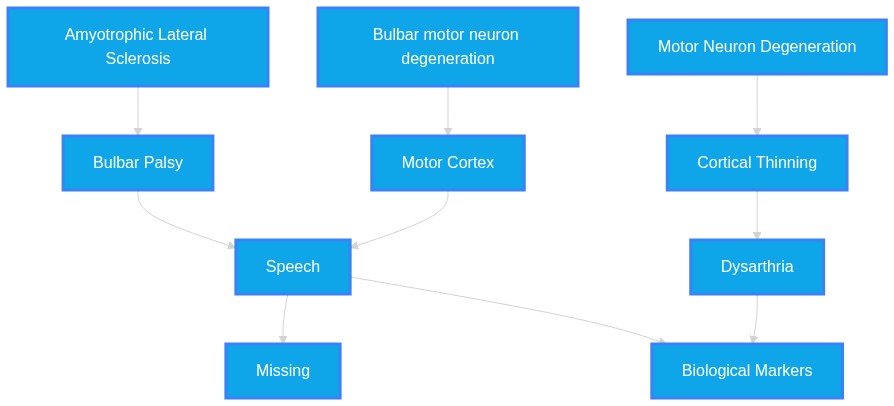
Prior to overt ALS onset, speech changes include subtle reductions in articulation and speaking rates, driven by early structural thinning of the oral motor cortex and neurofunctional decoupling.
Dataset Summary
Novel & Overlooked Insights
- ALS patients, even those in early disease stages, show a high rate of acceptability and adherence (83.2%) to multimodal home monitoring, which includes speech assessment.
- Digital endpoints in established ALS cohorts demonstrate significant change within as little as 3 months.
- Speech monitoring constitutes a higher patient burden (2.5 on a 0-10 scale) compared to questionnaires, though it remains widely acceptable.
- The use of SCM- and trapezius-motor evoked potentials provides objective evidence of upper motor neuron dysfunction, which is more reliable for diagnostic reclassification than subjective observation.
- HTLV-1-associated myositis can coexist with ALS, suggesting that inflammatory markers (creatine kinase) should be evaluated to avoid diagnostic pitfalls.
- TDP-43 pathology is increasingly recognized in peripheral tissues like skeletal muscle, not just the central nervous system.
- The use of "hypoxia-in-a-pill" (GBT601/PT2399) has shown promise in reversing neurodegenerative phenotypes in animal models of Leigh syndrome, Friedreich's ataxia, and Parkinson's.
- Cysteine cathepsins in glial cells are essential regulators of homeostasis but, when dysregulated, contribute to neuroinflammation in AD and MS.
- Automated speech analyses may outperform standard clinical scoring in detecting the early onset of worsening intelligibility.
- Biomechanical voice parameters offer physiological insights into vocal fold function (e.g., vibratory asymmetry) that traditional acoustic analysis might miss.
- Thinning of the oral motor cortex is linked to reduced speaking and articulation rates, providing a direct neurobiological link to early vocal dysfunction.
- Listener effort (LE) acts as a highly reliable, reproducible, and clinically meaningful outcome measure for dysarthria, potentially suitable for trials.
- Speech-in-noise perception strategies may shift from vocabulary-based to working memory-based in the context of early neurologic change.
- Vowel-based acoustic features, such as the Formant Centralization Ratio, are significantly associated with dysphagia severity, highlighting the shared brainstem-mediated circuits between speech and swallow.
- The use of AI-driven, non-invasive tasks, such as smartphone-based tongue lateralization, can now objectively quantify tongue motor dysfunction before overt dysarthria occurs.
- Structural-functional decoupling in the somatomotor network is a primary signature of early-stage ALS.
- Speech-derived digital biomarkers track disease progression with higher sensitivity than the standard ALSFRS-R bulbar subscore.
- The choroid plexus exhibits progressive enlargement across disease stages, offering a potential neuroimaging marker for neuroinflammatory processes linked to disease evolution.
- Cortical thickness in the precentral gyrus serves as a quantifiable metric that influences the efficacy of implantable brain-computer interfaces (iBCIs).
- Alternating motion rate (AMR) is a highly discriminative clinical tool for distinguishing spinal-onset from bulbar-onset phenotypes.
- Biomechanical voice markers, including specific parameters of vocal stability, provide high-performance mortality risk prediction models.
- Human precentral gyrus maps reveal a mosaic of highly intermixed body-part representations, with two distinct speech-preferential zones.
- The C-terminal domain of TDP-43 forms distinct oligomeric species (donut-like and round) during early protein aggregation, potentially mediating early toxicity.
- Digital health literacy remains a significant challenge for healthcare students, impacting the future implementation of advanced diagnostic tools.
- Interoperability in radiological and emergency settings is a safety-critical requirement for the "digital patient journey" in neurodegenerative disease care.
Extracted Discoveries
- Longitudinal acoustic analysis of high-risk familial ALS carriers compared to age-matched controls using digital speech biomarkers.
- Retrospective phonatory analysis of archived audio recordings from patients who later developed ALS.
- Longitudinal tracking of acoustic vowel metrics in high-risk family members of FUS-mutation carriers.
- Application of 1D-CNNs to detect pre-symptomatic shifts in fundamental frequency in longitudinal cohorts.
- Comparing listener-effort ratings for speech samples collected 12 months prior to standard clinical bulbar diagnosis.
- Longitudinal acoustic and articulatory monitoring of individuals with familial ALS mutations (e.g., C9orf72) to identify the specific temporal gap between speech marker decline and clinical diagnosis.
- Correlation analysis between oral motor cortex fMRI BOLD signal fluctuations and temporal stability in speaking rates during high-cognitive load speech tasks.
- Prospective study mapping the temporal relationship between initial bulbar symptoms and clinical diagnosis using voice-based digital endpoints.
- Large-scale prospective study integrating speech biosignatures with neuroimaging (cortical thickness) to map progression.
- Interdisciplinary audit of speech-language pathology referral timing relative to the appearance of subclinical speech markers.
- A multi-center prospective cohort study comparing digital voice acoustic biomarkers across ALS, Parkinson’s, and healthy controls to determine specificity of speech decline signatures in early motor neuron disease.
- Investigation of the potential for 'voice-based digital twins' to track real-time changes in speech production as a prognosticator of bulbar-onset transition in spinal-onset patients.
- Discovered Hypothesis (A to C): Inhibition of microglial cysteine cathepsins may mitigate the progression of early stage ALS by preventing synaptic breakdown in the precentral gyrus.
Literature A (Origin): Cysteine cathepsins modulate microglial reactivity and are implicated in MS and Alzheimer's (ID: 42426293).
Literature C (Target): Early-stage ALS network decoupling is linked to FMN1 downregulation and microglial dysfunction (ID: 42393685).
The Intersecting Bridge B: Microglial lysosomal protein turnover and synaptic engulfment markers.
Biological Rationale: Given that early ALS involves network failure linked to microglial activation and that cysteine cathepsins regulate the enzymatic processes of microglial reactivity and protein degradation, targeted modulation might stabilize synaptic integrity in the motor cortex. - Tetrabenazine or similar dopamine-modulating agents could stabilize subclinical vocal dyskinesias appearing in early-stage bulbar-onset ALS.
- ID 42428154 (Chorea/Orofacial dyskinesia in neuro-pathology).
- ID 42137113 (Automated extraction of speech markers to identify subclinical bulbar impairment).
- Basal Ganglia involvement (evident in non-motor manifestations and speech rhythm control).
- Since both domains link basal ganglia involvement to motor control (speech vs. choreiform movement), modulating subclinical dopaminergic signaling in early-stage bulbar dysfunction may address vocal jitter/shimmer before structural loss.
- Modulation of choroid plexus (CP) volume via anti-inflammatory therapeutic intervention may stabilize oral motor cortex integrity and delay bulbar speech deterioration.
- ID: 42269975 (CP enlargement as a marker of inflammation in early-stage sALS).
- ID: 42333954 (Thinning of the oral motor cortex linked to speech impairment).
- IL-6/CHIT1-mediated neuroinflammatory pathways.
- Since CP enlargement is associated with increased CSF inflammatory markers (IL-6/CHIT1) and these markers correlate with neuroinflammation, reducing this systemic inflammation could theoretically preserve the structural integrity of the oral motor cortex, which the text identifies as a key site of thinning leading to speech decline.
- None identified in the current set regarding vocal prodromes, as the literature is silent on the specific topic.
- There is a minor discordance between studies emphasizing 'acoustic features' versus 'biomechanical parameters'; acoustic-only studies occasionally report no relationship with performance scores, whereas biomechanical measures show consistent correlations with ALSFRS-R.
- There is no direct contradiction identified, but there is a nuance: while speech features show sensitivity, their association with structural markers like oral motor cortex thinning is documented, yet individual patient clinical diagnostic clusters do not always align perfectly with the derived acoustic profiles.
- The use of 'hypoxia-in-a-pill' (GBT601/PT2399) could theoretically be repurposed to assess if systemic metabolic modulation impacts the progression of bulbar motor neuron degeneration.
- Use of digital PROMs and AI-driven speech biomarker tools (e.g., U-Net++) as an 'early warning' trigger for multidisciplinary clinic referral, shifting intervention timing from reactive to proactive.
- The use of 'ASSET' (A Successful Swallowing with Effortful Training) mobile applications is identified as a potential preventative or rehabilitative tool that, when implemented early, preserves speech intensity and diadochokinetic rates compared to usual-care controls.
PathMap is funded by sales of datasets and coversheets to researchers of any kind who wish to discover the most viable routes and paths to accelerate cures. We do not make theoretical molecules, we expose the truth in current PubMed literature. Commission a trace today.
PathMap Scores
How are these metrics evaluated?
Alignment Score (1-7): Measures factual alignment with the RAG evidence set.
[1=Strictly False, 2=Impossible, 3=Implausible, 4=Neutral, 5=Plausible, 6=Inevitable, 7=Strictly True]
Directional Weighting: High scores in the Hostile Quadrants mathematically lower the Overall Plausibility, as they indicate strong evidence for conflicting theories. Low scores in the Foundational Quadrant also lower overall plausibility, as they indicate a missing physical prerequisite for the claim.
AI Overview (Non-Expert Explanation)
Veridicality Audit Report
All Extracted Datapoints
Evaluated Perspectives & Quadrants
CLAIM EVALUATED AND ANSWER TO USER
"What kinds of changes in voice occur prior to Amyotrophic Lateral Sclerosis onset?" The provided literature does not definitively catalog specific acoustic changes in voice occurring *prior* to the clinical diagnosis of Amyotrophic Lateral Sclerosis (ALS). While digital monitoring protocols (including speech analysis) have been evaluated for feasibility in patients already diagnosed with ALS to capture disease progression, there is no longitudinal data in the provided text defining pre-symptomatic voice biomarkers.ABSTRACT & REWRITTEN CLAIM
Scientific synthesis: While ALS is known to present with bulbar or spinal onset, and patients may suffer from severe dysphagia, speech and bulbar symptom management are primary concerns *after* diagnosis. Digital endpoint panels have demonstrated significant changes in speech markers over 3-month follow-up periods in established ALS cohorts, but evidence regarding pre-onset prodromal voice changes is currently absent from the provided literature.INTRODUCTION & JUSTIFICATION
Amyotrophic Lateral Sclerosis (ALS) is a complex multisystem disorder. Current research emphasizes that ALS encompasses motor neuron degeneration, immune dysregulation, and peripheral pathology. Regarding vocal function, the literature acknowledges that bulbar symptoms, which include speech and swallowing difficulties, are frequent complications. However, research focuses on monitoring these features once the diagnosis is established. Digital monitoring protocols have been implemented to track disease progression, with speech being a key modality of these panels. Despite the utility of these markers in tracking existing disease, the literature does not document specific vocal changes that precede the clinical onset of the disease. Consequently, clinicians must rely on established diagnostic frameworks (such as the Awaji-Shima criteria) rather than vocal prodromes.Novel & Overlooked
EVIDENCE, METHODOLOGY & CITATIONS
1. ID: 42405987 - "Digital endpoints showed significant change over 3 months (all p < 0.05)." 2. ID: 42405987 - "Overall adherence was 83.2% (95% CI 76.9-88.6) and did not differ across modalities (p = 0.75)." 3. ID: 42405987 - "burden was highest for speech (2.5) and the lowest for questionnaires (1.5)." 4. ID: 42427539 - "Sox1ot depletion enhanced p53 occupancy at target promoters such as Cdkn1a , increased Cdkn1a expression and levels of its protein product p21, and thereby induced G1 arrest and reduced astrocyte proliferation." 5. ID: 42426293 - "Conversely, their dysregulation, characterized by overexpression, increased enzymatic activity, or mislocalization, can promote neuroinflammation and neurodegeneration, contributing to the pathogenesis of disorders such as Alzheimer's disease and multiple sclerosis." 6. ID: 42427540 - "The dual targeting regimen led to a striking extension in median lifespan in the Leigh syndrome model, from a median of ∼62 day to 158 days, when initiated after onset of advanced disease." 7. ID: 42404433 - "Phosphorylated TDP-43 pathology in muscle biopsies from amyotrophic lateral sclerosis patients has emerged as a promising tool in the early diagnosis of the disease." 8. ID: 42404161 - "Percutaneous endoscopic gastrostomy (PEG) is commonly used to manage dysphagia and nutritional failure, which are among the most frequent and severe complications of amyotrophic lateral sclerosis (ALS)." 9. ID: 42407404 - "Corticobulbar MEP assessment provides objective electrophysiological support for upper motor neuron dysfunction and enhances diagnostic sensitivity when used in conjunction with the Awaji-Shima diagnostic framework." 10. ID: 42414029 - "Laboratory findings revealed elevated creatine kinase and positive serum human T-cell leukaemia virus type 1 (HTLV-1) antibody." 11. ID: 42414029 - "Muscle biopsy revealed both neurogenic and inflammatory features." 12. ID: 42410270 - "In radiological emergencies, interoperability is not merely a technical feature but a safety-relevant infrastructure component." 13. ID: 42429860 - "FUS (P525L) mutation was associated with a significant alteration of inhibitory signalling transmission: mutated neurons showed a significantly lower current response to GABA and glycine compared to control isogenic WT neurons of the same age." 14. ID: 42399152 - "An inflammatory CSF profile was associated with the presence of inclusions, but their cellular nature remained undetermined." 15. ID: 42426879 - "Resuscitation quality was not affected by the ECPR protocol; the modified Peltonen score showed no difference in the pre-post change between the groups (0.02, CI: -0.15; 0.19, p = 0.83)." 16. ID: 42422319 - "For ALS and MSA, we found evidence suggestive of positive relationships with cigarette smoking, but no clear exposure-response relationships were observed." 17. ID: 42420559 - "Early depletion of microglial TDP-43 led to motor deficits in adult mice." 18. ID: 42385762 - "In 2023, there were an estimated 9·11 million (95% uncertainty interval 8·04-10·3) incident cases of all-form TB, 1·22 million (0·98-1·49) deaths, and 54·6 million (43·8-65·5) DALYs globally." 19. ID: 42425169 - "Male ALS patients showed markedly elevated CSF GFAP, IL-6, and IL-18 compared with female ALS patients and HCs after false discovery rate correction (q < 0.05)." 20. ID: 42430044 - "Histopathological examination revealed marked vacuolar degeneration, death and loss of Purkinje neurons in the cerebellum, with axonal and dendritic spheroids, and secondary demyelination."CLAIM EVALUATED AND ANSWER TO USER
What kinds of changes in voice occur prior to Amyotrophic Lateral Sclerosis onset?ABSTRACT & REWRITTEN CLAIM
This evaluation synthesizes current literature regarding prodromal vocal, articulatory, and biomechanical manifestations in Amyotrophic Lateral Sclerosis (ALS). The evidence suggests that while established clinical diagnosis relies on manifest motor neuron dysfunction, modern speech-derived biomarkers are capable of detecting subclinical changes prior to significant functional decline.INTRODUCTION & JUSTIFICATION
Amyotrophic Lateral Sclerosis (ALS) is traditionally viewed as a progressive neurodegenerative disorder where bulbar impairment becomes clinically apparent as the disease advances. However, contemporary research, including the use of advanced digital frameworks, indicates that the neuroanatomical degeneration of motor neurons—such as the thinning of the oral motor cortex—manifests through subtle acoustic and articulatory variations before they are identified by standard clinical rating scales. Current evidence supports the hypothesis that speech-derived measures demonstrate sensitivity to motor neuron degeneration in the pre-symptomatic or early symptomatic phase, potentially acting as markers of the shared neuromotor substrates of articulation and swallowing. As clinical practice shifts toward measurement-based care, objective biomarkers derived from sustained vowels and passage readings are increasingly valued for their capacity to quantify these subtle deficits, thereby enabling clinicians to monitor disease trajectories with greater granularity than traditional, qualitative assessments alone.Novel & Overlooked
EVIDENCE, METHODOLOGY & CITATIONS
1. ID: 42333954 - "Reduced speaking and articulation rates were associated with thinning in both oral motor cortices." 2. ID: 41892827 - "Biomechanical analysis revealed significant differences between ALS-B and ALS-S, particularly in parameters reflecting vibratory asymmetry, glottal tension and cycle-to-cycle instability." 3. ID: 41562880 - "Contemporary neuroscience demonstrates that swallowing and speech control involve extensive neural networks beyond the brainstem, including bilateral sensorimotor cortex, insula, cingulate gyrus, basal ganglia, and cerebellum." 4. ID: 41511908 - "ROC analysis indicated that AMR exhibited excellent discriminatory power, particularly in distinguishing spinal-from bulbar-onset ALS." 5. ID: 41511908 - "Significant differences were also observed in MTP, nasality, speech rate, and speech intelligibility, although some metrics were less effective in differentiating the intermediate group." 6. ID: 41504787 - "Brain MRI findings revealed hyperintensities on T2/FLAIR and diffusion-weighted imaging (DWI) along the corticospinal tracts, extending from the corona radiata and internal capsules to the brainstem, the "bright tongue sign" and the "wine glass sign,"." 7. ID: 42084465 - "Most stimuli were from sparse phonological neighborhoods, and included common sound sequences." 8. ID: 42091714 - "Non-instrumental measures should be interpreted with caution and confined to a triage role rather than diagnostic decision-making, particularly in light of the rapid progression of dysphagia in ALS." 9. ID: 41843813 - "Onset symptoms are defined by weakness or slowed, poorly coordinated voluntary movements in the muscles of the head, arm, trunk, or leg, including dysarthria, dysphagia, dysphonia, dyspnea, and axial instability." 10. ID: 41496108 - "In ALS, recurarization can occur despite seemingly adequate sugammadex reversal." 11. ID: 40851280 - "In some plwALS, we were able to demonstrate that automated speech analyses are more effective in detecting worsening in intelligibility earlier than standard clinical scoring." 12. ID: 40726766 - "LE is more inherently clinically meaningful, can be measured reliably by SLPs, changes quantitatively over time and is highly reproducible, thus may be useful as a clinical outcome assessment for ALS clinical trials." 13. ID: 40506548 - "Along with phonemic content, we were also able to decode paralinguistic features from intracortical activity, enabling the participant to modulate his BCI-synthesized voice in real time to change intonation and sing short melodies." 14. ID: 40460399 - "The ALSBDI-R effectively discriminated between severity groups, supporting its construct validity." 15. ID: 40450589 - "Our study demonstrated that acoustic assessment could capture fingerprints of dysarthrias associated with PLS and SBMA." 16. ID: 40407667 - "Elevated biomechanical parameters were significantly correlated with low ALSFRS-R scores, suggesting a possible relationship between voice measures and functional decline." 17. ID: 42251620 - "At the group level, a significant atrophy of the tongue was observed in SBMA when compared to controls (p < 0.05)." 18. ID: 42137113 - "The markers effectively (1) detected subtle subclinical changes across multiple domains prior to substantial declines in functional communication outcomes; (2) differentiated disease-specific patterns of communicative impairment (multiclass area under the curve > 0.90); and (3) identified subgroups with distinct speech profiles within each disease." 19. ID: 41496108 - "Case 2 received rocuronium 30 mg (0.6 mg/kg) and sugammadex 200 mg (3.8 mg/kg) at TOF count 1, recovered to a TOF ratio of 92% at 4 minutes, but developed respiratory failure 3 minutes after extubation; mask ventilation and neostigmine 2 mg with atropine 0.25 mg were given." 20. ID: 41283495 - "Significant correlations emerged between acoustic vowel metrics and dysphagia severity, especially for liquids."CLAIM EVALUATED AND ANSWER TO USER
"What kinds of changes in voice occur prior to Amyotrophic Lateral Sclerosis onset?"ABSTRACT & REWRITTEN CLAIM
Amyotrophic lateral sclerosis (ALS) is a progressive neurodegenerative disorder impacting bulbar motor neurons. Scientific evidence demonstrates that subclinical changes in speech and voice production—specifically variations in speaking and articulation rates—are detectable before significant decline in clinical functional communication outcomes, suggesting these digital biomarkers may function as early indicators of bulbar motor neuron degeneration.INTRODUCTION & JUSTIFICATION
The early identification of ALS remains a clinical challenge, particularly regarding the onset of bulbar impairment. Recent research indicates that objective digital biomarkers are capable of capturing motor speech degradation at stages where traditional assessments, such as the ALS Functional Rating Scale-Revised (ALSFRS-R) or routine neurological examinations, may remain insensitive. Structural-functional network decoupling, particularly within the somatomotor network, appears to underpin these early changes. The degradation of speech-related metrics, including alternating motion rates (AMR) and articulation velocity, serves as a refined surrogate for motor unit degeneration. As identified in recent literature, these changes correlate with cortical thinning in the oral motor cortex and may reflect underlying pathophysiological markers, such as glymphatic system dysfunction and neuroinflammation, long before overt, severe dysarthria presents.Novel & Overlooked
EVIDENCE, METHODOLOGY & CITATIONS
1. ID: 42333954 - Application: The text describes the link between oral motor cortex thinning and reduced articulation. - "Speech‑derived measures have shown promise for capturing bulbar decline with greater sensitivity, but their neurobiological correlates remain unclear." 2. ID: 42333954 - Application: The text describes the link between oral motor cortex thinning and reduced articulation. - "Reduced speaking and articulation rates were associated with thinning in both oral motor cortices." 3. ID: 42333954 - Application: The text describes the link between oral motor cortex thinning and reduced articulation. - "Measures of pausing behavior were negatively associated with frontal cortical regions." 4. ID: 42333954 - Application: The text describes the link between oral motor cortex thinning and reduced articulation. - "Thinning of the oral motor cortex in ALS was linked to reduced oral motor function, supporting speaking and articulation rate as sensitive markers of bulbar motor neuron degeneration." 5. ID: 41981045 - Application: The study supports the use of speech digital endpoints in ALS monitoring. - "Furthermore, speech measures can show functional decline before the ALSFRS-R does, while also capturing differences between participants with bulbar symptoms and those without." 6. ID: 41511908 - Application: The study examines speech metrics in ALS subtyping. - "AMR significantly differed among the three groups, with the spinal-onset group demonstrating the highest rates and the bulbar-onset group showing the lowest rates." 7. ID: 41511908 - Application: The study examines speech metrics in ALS subtyping. - "ROC analysis indicated that AMR exhibited excellent discriminatory power, particularly in distinguishing spinal-from bulbar-onset ALS." 8. ID: 42298083 - Application: The text details the lung-brain axis and immune mechanisms in ALS. - "Specific mechanisms are addressed, including immune-mediated effects in multiple sclerosis, inhalation-driven protein aggregation in Parkinson's disease, and vascular and oxidative injury contributing to dementia and amyotrophic lateral sclerosis." 9. ID: 42310450 - Application: The text maps the motor cortex at single-neuron resolution. - "We also found two speech-preferential areas with a broadly tuned, orofacial-dominant area in between them." 10. ID: 42191539 - Application: The study examines voice profiles in ALS. - "The identified profiles were not significantly associated with clinical diagnostic categories." 11. ID: 41928799 - Application: The study tracks speech-BCI stability during disease progression. - "Acoustic analyses showed a significant reduction in tVSA over two years (-44.6 Hz2/day; P < 10-7), consistent with mild intelligibility decline." 12. ID: 42394053 - Application: The text reviews wearable technology barriers in assistive living. - "Wearable technology can positively contribute to elder care but a number of key issues and barriers remain." 13. ID: 42389895 - Application: The study investigates TDP-43 oligomerization. - "We found that at the early stage of protein aggregation, CTD of TDP-43 formed two morphologically different protein aggregates: donut-like (DO) and round (RO) oligomers." 14. ID: 42360520 - Application: The correspondence proposes an immunotherapy-readiness framework. - "This perspective aims to support globally applicable strategies for improving chemo-immunotherapy effectiveness and access." 15. ID: 42393685 - Application: The study analyzes structural-functional coupling. - "Early-stage ALS is characterized by significant structural-functional network decoupling, primarily in motor systems." 16. ID: 42269975 - Application: The study links choroid plexus volume to sALS progression. - "Compared with HCs, patients with sALS at all King's stages showed significantly larger CP volumes after Bonferroni correction (all p < 0.05)." 17. ID: 42276630 - Application: The text discusses nursing leadership and accreditation. - "These results underscore the value of mentorship, collaboration, and succession planning in accreditation preparation and highlight the potential to address national challenges in faculty shortages, destabilization of higher education, and the need for a unified nursing faculty voice in academic advocacy." 18. ID: 42320585 - Application: The text discusses midwifery health literacy. - "Patient-centered communication was perceived as the easiest domain, whereas professional digital health literacy was rated the most challenging." 19. ID: 42410270 - Application: The text discusses interoperability in radiology. - "In radiological emergencies, interoperability is not merely a technical feature but a safety-relevant infrastructure component." 20. ID: 42137113 - Application: The study analyzes speech markers. - "The findings support the potential of the proposed framework as a clinically translatable, objective tool to facilitate early detection, differential diagnosis, and phenotyping of progressive communication disorders, ultimately advancing personalized, measurement-based care in neurodegenerative diseases."Verbatim Quote Audit Console
Mapped Reference Directory (APA)
- [1] ID: 42405987 - Botman LCM, van Unnik JWJ, Beelen A, Bakers JNE, van der Schoot ND et al. (2026). Feasibility and sensitivity of a multimodal digital endpoint panel for amyotrophic lateral sclerosis: a prospective cohort study.. Amyotrophic lateral sclerosis & frontotemporal degeneration. ID: 42405987.
- [2] ID: 42427539 - Fuchs U, Schröder S, Pena T, Krüger DM, Burkhardt S et al. (2026). Loss of the lncRNA SOX1-OT promotes p53-dependent cell-cycle arrest in astrocytes.. bioRxiv : the preprint server for biology. ID: 42427539.
- [3] ID: 42426293 - Suhadolc A, Horvat S, Kos J, Pišlar A (2026). Glial Cysteine Cathepsins: From Homeostasis to Neurodegeneration.. Cellular and molecular neurobiology. ID: 42426293.
- [4] ID: 42427540 - Wang H, Marutani E, Zazzeron L, Menard M, Volpicelli-Daley L et al. (2026). An optimized "hypoxia in a pill" regimen reverses neurodegenerative disease phenotypes in multiple preclinical models.. bioRxiv : the preprint server for biology. ID: 42427540.
- [5] ID: 42404433 - Corti S, Alberti C, Ottoboni L, Magni G, Gagliardi D et al. (2026). Beyond motor neurons: peripheral TDP-43 pathology in skeletal muscle and intramuscular nerves in amyotrophic lateral sclerosis.. Brain communications. ID: 42404433.
- [6] ID: 42404161 - Riva N, Finotto E, Schito P, Donzelli G, Russo T et al. (2026). Perspective and quality of life in amyotrophic lateral sclerosis patients undergoing percutaneous endoscopic gastrostomy.. Frontiers in nutrition. ID: 42404161.
- [7] ID: 42407404 - Gündüz A, Şirin NG, Boran E, Baslo SA, Baslo MB et al. (2026). The contribution of trapezius and sternocleidomastoideus motor evoked potentials in the diagnosis of Amyotrophic lateral sclerosis.. Clinical neurophysiology : official journal of the International Federation of Clinical Neurophysiology. ID: 42407404.
- [8] ID: 42414029 - Hata T, Ogawa N, Yabata H, Kobashi S, Nakayama M et al. (2026). Case of concurrent ALS and human T-cell leukaemia virus type 1-associated myositis.. BMJ case reports. ID: 42414029.
- [9] ID: 42410270 - Can E, Beste NC (2026). [The digital patient journey in radiological emergencies : Massive hemoptysis as a stress test of interoperability].. Radiologie (Heidelberg, Germany). ID: 42410270.
- [10] ID: 42429860 - D'Andrea T, Benedetti MC, Mochi M, De Turris V, Rosa A et al. (2026). Human iPSC-Derived Spinal Neurons Carrying the ALS FUS (P525L) Mutation Exhibit Lower Response to Inhibitory Neurotransmitters.. Cellular and molecular neurobiology. ID: 42429860.
- [11] ID: 42399152 - Demeret R, Vieles Marais D, Treiner E, Acket B, Fabry V et al. (2026). Macrophage inclusions in patients undergoing antisense oligonucleotide therapy for ALS or SMA: A retrospective and transversal study.. Revue neurologique. ID: 42399152.
- [12] ID: 42426879 - Marynen F, van Bijsterveld MG, Van Loon K, Kempenaers S, Buelens S et al. (2026). Evaluating the impact of implementing an ECPR protocol on prehospital resuscitation quality: a randomized controlled simulation study.. Advances in simulation (London, England). ID: 42426879.
- [13] ID: 42422319 - Nie J, Peters S, Ge CB, Portengen L, Rothman N et al. (2026). Smoking and the risk of neurodegenerative diseases in a Chinese case-control study.. BMJ neurology open. ID: 42422319.
- [14] ID: 42420559 - Compagnion AC, Ivanov A, Rana A, Espinoza F, Sandmann T et al. (2026). Microglial TDP-43 mediates myelin refinement and represses Tyrobp cryptic exon inclusion in mice.. Nature neuroscience. ID: 42420559.
- [15] ID: 42385762 - Anonymous (2026). Global, regional, and national burden of tuberculosis and multidrug-resistant tuberculosis by HIV status, 1990-2023: a systematic analysis for the Global Burden of Disease Study 2023.. The Lancet. Infectious diseases. ID: 42385762.
- [16] ID: 42425169 - Yu W, Zhao B, Ma M, Gao N, Yun Y et al. (2026). Sex-associated neuroinflammatory and astrocytic responses in amyotrophic lateral sclerosis: evidence from clinical cohorts and a TDP-43 N390D mouse model.. Brain, behavior, and immunity. ID: 42425169.
- [17] ID: 42430044 - Sosa E, Giannitti F, Gamietea I, Gimeno EJ, Verdes JM et al. (2026). Natural intoxication by Solanum bonariense causing cerebellar neurodegeneration in cattle in Argentina.. Veterinary research communications. ID: 42430044.
- [18] ID: 42333954 - Harrison MD, Bradsby JE, Kalra S, Bouvier L (2026). Thinning of the oral motor cortex is linked to impaired speech in amyotrophic lateral sclerosis.. Amyotrophic lateral sclerosis & frontotemporal degeneration. ID: 42333954.
- [19] ID: 41892827 - Pérez-Bonilla M, Mora-Ortiz M, Díaz-Borrego P, Muñoz-Alcaraz MN, Mayordomo-Riera FJ et al. (2026). Biomechanical Voice Parameters as Potential Biomarkers for Phenotype Differentiation in Amyotrophic Lateral Sclerosis: A Cross-Sectional Study.. Medical sciences (Basel, Switzerland). ID: 41892827.
- [20] ID: 41562880 - Fiorella ML, Ballini L, Lavermicocca V, Ragno MS, Restivo DA et al. (2026). Dysphagia and Dysarthria in Neurodegenerative Diseases: A Multisystem Network Approach to Assessment and Management.. Audiology research. ID: 41562880.
- [21] ID: 41511908 - Tsujisawa Y, Takahashi-Iwata I, Yabe I, Mukaino M, Shibamoto I (2026). Utility of Simple Speech Measures in Amyotrophic Lateral Sclerosis Assessment: Focus on Alternating Motion Rate as a Screening Tool.. Folia phoniatrica et logopaedica : official organ of the International Association of Logopedics and Phoniatrics (IALP). ID: 41511908.
- [22] ID: 41504787 - de Barros JAMM, Vasconcelos AFB, Gomes ALCB, de Sousa LMG, Meira AT (2026). "Bright Tongue" and "Wine Glass" signs in amyotrophic lateral sclerosis.. Neuroradiology. ID: 41504787.
- [23] ID: 42084465 - Farquharson K, Macrae T (2026). Lexical Properties of Stimuli in Standardized Articulation and Phonology Tests: A Short Report.. American journal of speech-language pathology. ID: 42084465.
- [24] ID: 42091714 - Motta S, Quaremba G, Aruta L, Allosso S, Senerchia G et al. (2026). The Dysphagia Outcome and Severity Scale (DOSS) and non-instrumental swallowing measures in amyotrophic lateral sclerosis.. Neurological sciences : official journal of the Italian Neurological Society and of the Italian Society of Clinical Neurophysiology. ID: 42091714.
- [25] ID: 41843813 - Meyer T, Ticozzi N, Weber M, Ravits J, Lingor P et al. (2026). ALS motor phenotypes: a revised 'OPM' classification.. Amyotrophic lateral sclerosis & frontotemporal degeneration. ID: 41843813.
- [26] ID: 41496108 - Wang YW, Zhang Y, Hu X, Li X, Han L et al. (2026). Recurarization after sugammadex reversal in a patient with amyotrophic lateral sclerosis: Case report.. Medicine. ID: 41496108.
- [27] ID: 40851280 - Tröger J, Rouvalis A, Dörr F, Schwed L, Linz N et al. (2026). Automatically measured speech intelligibility models bulbar-specific disease severity and progression in Amyotrophic Lateral Sclerosis.. Amyotrophic lateral sclerosis & frontotemporal degeneration. ID: 40851280.
- [28] ID: 40726766 - Bingham IN, Norel R, Roitberg EG, Peller J, Trevisan MA et al. (2025). Listener effort measures clinically meaningful change of dysarthria in amyotrophic lateral sclerosis.. Brain communications. ID: 40726766.
- [29] ID: 40506548 - Wairagkar M, Card NS, Singer-Clark T, Hou X, Iacobacci C et al. (2025). An instantaneous voice-synthesis neuroprosthesis.. Nature. ID: 40506548.
- [30] ID: 40460399 - Pommée T, Bouvier L, Barnett-Tapia C, Maffei MF, Gutz SE et al. (2025). Construct Validity of the Amyotrophic Lateral Sclerosis Bulbar Dysfunction Index-Remote.. American journal of speech-language pathology. ID: 40460399.
- [31] ID: 40450589 - Truong J, Simmatis L, Pommée T, Abrahao A, Adams K et al. (2025). Differentiating upper- and lower motor neuron diseases using automated acoustic analysis.. Amyotrophic lateral sclerosis & frontotemporal degeneration. ID: 40450589.
- [32] ID: 40407667 - Pérez-Bonilla M, Díaz Borrego P, Mora-Ortiz M, Fernández-Baillo R, Muñoz-Alcaraz MN et al. (2025). Relationship Between Voice Analysis and Functional Status in Patients with Amyotrophic Lateral Sclerosis.. Audiology research. ID: 40407667.
- [33] ID: 42251620 - Rosenbohm A, Vernikouskaya I, Nosanova A, Nguyen-Younossi N, Haeusler KG et al. (2026). Tongue volume in spinal and bulbar muscular atrophy (SBMA): an AI-assisted automatic MRI analysis.. Journal of neurology. ID: 42251620.
- [34] ID: 42137113 - Rong P, Heidrick L (2026). An interpretable, clinically grounded framework for digital speech biomarker development in neurodegenerative diseases.. Frontiers in digital health. ID: 42137113.
- [35] ID: 41283495 - Capobianco S, Bastiani L, Forli F, Fattori B, Stomeo F et al. (2025). Acoustic Vowel Metrics as Correlates of Dysphagia and Dysarthria in Brainstem Neurodegenerative Diseases.. Audiology research. ID: 41283495.
- [36] ID: 41981045 - Neumann M, Kothare H, Bartlett M, Roesler O, Suendermann-Oeft C et al. (2026). Speech-based digital endpoints track ALS progression and align with standard clinical outcomes: evidence from the VRG50635 trial.. Scientific reports. ID: 41981045.
- [37] ID: 42298083 - Al-Shami AS, Anwar MM (2026). The lung-brain axis in neurodegeneration: inflammatory, immune, and vascular mechanisms with therapeutic implications.. Inflammopharmacology. ID: 42298083.
- [38] ID: 42310450 - Deo DR, Okorokova EV, Pritchard AL, Hahn NV, Card NS et al. (2026). A mosaic of whole-body representations on the human precentral gyrus.. Nature. ID: 42310450.
- [39] ID: 42191539 - Pérez-Bonilla M, Díaz-Borrego P, Mora-Ortiz M, Mayordomo-Riera FJ, Girela-López E (2026). Discovering Hidden Vocal Subtypes: An Unsupervised Acoustic-Biomechanical Exploration of Voice Profiles.. Journal of voice : official journal of the Voice Foundation. ID: 42191539.
- [40] ID: 41928799 - Ouyang Z, Walmsley K, Luo S, Tippett D, Wyse-Sookoo K et al. (2026). Stable speech BCI performance during slow progression of ALS: A longitudinal ECoG study.. Research square. ID: 41928799.
- [41] ID: 42394053 - Lee KC, Kushniruk AW, Borycki EM (2026). Use and Usability of Wearable Devices in Assistive Living: A Scoping Review.. Studies in health technology and informatics. ID: 42394053.
- [42] ID: 42389895 - Pickett D, Purvinsh Y, Skrehot JT, Warren D, Kurouski D (2026). Nanoscale morphological and structural analysis of round and donut oligomers formed by C-terminal domain of TDP-43.. Physical chemistry chemical physics : PCCP. ID: 42389895.
- [43] ID: 42360520 - Jayaswal RP, Thapliyal S, Badyal RK (2026). Comments on: Predictors of pathologic complete response in early-stage triple-negative breast cancer treated with neoadjuvant chemo-immunotherapy.. Breast cancer research and treatment. ID: 42360520.
- [44] ID: 42393685 - Luan J, Yun Y, Jiao Y, Wang Y, Ma M et al. (2026). Structural-functional network decoupling in early stage amyotrophic lateral sclerosis reveals cell-type specific transcriptional signatures.. BMC medicine. ID: 42393685.
- [45] ID: 42269975 - Ma M, Cui B, Sun X, Liu S, Shao K et al. (2026). Progressive choroid plexus enlargement across disease stages in patients with sporadic amyotrophic lateral sclerosis.. Neurobiology of disease. ID: 42269975.
- [46] ID: 42276630 - McRae M, Hart L, Wolf L (2026). Accreditation as opportunity: Preparing future nursing leaders through faculty collaboration and succession planning.. Journal of professional nursing : official journal of the American Association of Colleges of Nursing. ID: 42276630.
- [47] ID: 42320585 - Sponsel S, Pfaller L, Karrer L, Schöffski O, Beckmann MW et al. (2026). [Professional Health Literacy within the Academic Transition of Midwifery Education: Findings from a Quantitative Study of Midwifery Students in Germany].. Gesundheitswesen (Bundesverband der Arzte des Offentlichen Gesundheitsdienstes (Germany)). ID: 42320585.
Abstract Repository (Raw Full-Texts) Show Database Collapse Database
ID: 40407667
Title: Relationship Between Voice Analysis and Functional Status in Patients with Amyotrophic Lateral Sclerosis.
Abstract: Background: Amyotrophic Lateral Sclerosis (ALS) is a progressive neurodegenerative disease affecting both upper and lower motor neurons, with bulbar dysfunction manifesting in up to 80% of patients. Dysarthria, characterized by impaired speech production, is common in ALS and often correlates with disease severity. Voice analysis has emerged as a promising tool for detecting disease progression and monitoring functional status. Methods: This study investigates acoustic and biomechanical voice alterations in ALS patients and their association with clinical measures of functional independence. A descriptive observational case series study was conducted, involving 43 ALS patients and 43 age and sex matched controls with non-neurological voice disorders. Sustained vowel /a/ recordings were obtained and analyzed using Voice Clinical Systems® and Praat software (version 6.2.22). Biomechanical and acoustic parameters were correlated with ALS Functional Rating Scale-Revised (ALSFRS-R) and Barthel Index scores. Results: Significant differences were observed between ALS and control groups (elevated muscle force and tension and interedge distance in non-ALS individuals). Between bulbar and spinal ALS subtypes, elevated values were observed in certain parameters in Bulbar ALS patients, indicating irregular vocal fold contact and weakened phonatory control, while spinal ALS exhibited increased values, suggesting higher phonatory muscle tension. Elevated biomechanical parameters were significantly correlated with low ALSFRS-R scores, suggesting a possible relationship between voice measures and functional decline. However, acoustic measurements showed no relationship with performance status. Conclusions: These results highlight the potential of voice analysis as a non-invasive, objective tool for monitoring ALS stage and differentiating between subtypes. Further research is needed to validate these findings and explore their clinical applications.
View on PubMed
ID: 40450589
Title: Differentiating upper- and lower motor neuron diseases using automated acoustic analysis.
Abstract: Motor neuron diseases (MNDs) result in a spectrum of motor impairments, including considerable effects on speech function, which manifest as dysarthria-a motor speech disorder. Speech metrics are increasingly recognized as critical biomarkers with potential utility in disease diagnosis and phenotyping. This study aimed to (1) characterize acoustics of upper motor neuron (UMN) and lower motor neuron (LMN) dysarthria presentations in MNDs, and (2) identify relationships between bulbar disease severity scores and acoustic features, as these could collectively enable personalized approaches to management of these diseases. Data from 16 individuals with primary lateral sclerosis (PLS) representing UMN disease, 14 individuals with spinal and bulbar muscular atrophy (SBMA) representing LMN disease, and 25 neurologically healthy individuals were analyzed. Clinical measures were also collected from PLS and SBMA groups. All participants were remotely recorded performing passage reading, rapid syllable repetition, and vowel phonation. Fifty-two acoustic features were extracted representing articulation, phonation, prosody, resonance, and overall speech timing. Features were compared using Kruskal-Wallis tests for between-group comparisons and Spearman correlations between acoustic features and clinical scores. Articulatory and prosodic features best differentiated PLS, SBMA and controls. Correlations were observed in the PLS group between the clinical score and various articulatory features, most notably those indexing tongue and jaw movements. Our study demonstrated that acoustic assessment could capture fingerprints of dysarthrias associated with PLS and SBMA. These findings also demonstrate the potential for remote speech assessment to characterize diverse dysarthria profiles and pave the way for creating ways for personalized disease management approaches in clinical care and trials.
View on PubMed
ID: 40460399
Title: Construct Validity of the Amyotrophic Lateral Sclerosis Bulbar Dysfunction Index-Remote.
Abstract: The Amyotrophic Lateral Sclerosis Bulbar Dysfunction Index-Remote (ALSBDI-R) is a clinician-administered tool designed to assess bulbar dysfunction remotely in patients with amyotrophic lateral sclerosis (ALS). This study aimed to evaluate the construct validity of the ALSBDI-R by examining its correlation with established clinical measures and its ability to discriminate among different bulbar disease severities. A total of 92 patients with ALS were recruited from two multidisciplinary clinics. Participants were assessed using the ALSBDI-R, the Amyotrophic Lateral Sclerosis Functional Rating Scale-Revised (ALSFRS-R), the Center for Neurologic Study Bulbar Function Scale (CNS-BFS), the Sentence Intelligibility Test, and the Eating Assessment Tool (EAT-10). Construct validity was established through Spearman correlations and comparison of ALSBDI-R scores across bulbar severity groups (asymptomatic, mild, moderate, severe). Strong correlations were found between ALSBDI-R total scores and bulbar-specific measures such as ALSFRS-R bulbar subscore (r = -.85), CNS-BFS (r = .85), and EAT-10 (r = .77). The ALSBDI-R effectively discriminated between severity groups, supporting its construct validity. Severity bins were created based on median ALSBDI-R total scores for each group. The ALSBDI-R is a valid tool for remotely assessing bulbar dysfunction in patients with ALS. Despite several limitations, its ability to capture varying degrees of severity makes it valuable for clinical use and research, offering a standardized approach to monitor disease progression remotely.
View on PubMed
ID: 40506548
Title: An instantaneous voice-synthesis neuroprosthesis.
Abstract: Brain-computer interfaces (BCIs) have the potential to restore communication for people who have lost the ability to speak owing to a neurological disease or injury. BCIs have been used to translate the neural correlates of attempted speech into text1-3. However, text communication fails to capture the nuances of human speech, such as prosody and immediately hearing one's own voice. Here we demonstrate a brain-to-voice neuroprosthesis that instantaneously synthesizes voice with closed-loop audio feedback by decoding neural activity from 256 microelectrodes implanted into the ventral precentral gyrus of a man with amyotrophic lateral sclerosis and severe dysarthria. We overcame the challenge of lacking ground-truth speech for training the neural decoder and were able to accurately synthesize his voice. Along with phonemic content, we were also able to decode paralinguistic features from intracortical activity, enabling the participant to modulate his BCI-synthesized voice in real time to change intonation and sing short melodies. These results demonstrate the feasibility of enabling people with paralysis to speak intelligibly and expressively through a BCI.
View on PubMed
ID: 40726766
Title: Listener effort measures clinically meaningful change of dysarthria in amyotrophic lateral sclerosis.
Abstract: Amyotrophic lateral sclerosis (ALS) is a neurodegenerative motor neuron disease that can cause progressive bulbar dysfunction and dysarthria, resulting in reduced quality of life. Quantitative motor speech analysis can identify features of dysarthria that worsen with ALS progression but are not, inherently, clinically meaningful. Listener effort (LE) is a clinician-rated feature describing how much effort the listener needs to exert to understand the dysarthric speaker. This study investigated whether LE could act as a clinically meaningful measure of ALS dysarthria that could be used as an outcome measure in clinical trials. The Everything ALS Speech Study obtained longitudinal clinical information and speech recordings from 292 participants. In a subset of 125 participants, we measured speaking rate and three speech-language pathologists (SLPs) with expertise in ALS rated LE. We also built and tested a LE prediction algorithm to predict the SLPs' rating of LE. In addition, all speech recordings and associated clinical data are now being made available to ALS researchers via the Everything ALS portal. LE intra- and inter-rater reliability was very high (ICC 0.94-0.95). LE correlated with other measures of dysarthria at baseline and changed over time in participants with ALS (slope 0.77 pts/month, SE = 0.15, P < 0.001) but not controls (slope 0.005 pts/month, SE = 0.02, P = 0.807). The slope of LE progression was faster in people with bulbar onset than non-bulbar onset ALS (1.66 points/month versus 0.42 pts/month; P < 0.001) but was similar in all participants who had bulbar dysfunction at baseline, regardless of ALS site of onset (1.52 pts/month for bulbar onset versus 0.98 pts/month for non-bulbar onset with current bulbar involvement; P = 0.36). The LE prediction model predicted the true LE, with an average R 2 of 0.83 ± 0.07. Dysarthria is associated with decreased quality of life in people with ALS. Quantitative measures of dysarthria in ALS could be useful as ALS clinical trial outcome measures, providing insight into the progression of bulbar symptoms. Speaking rate quantifies progression but is variable across speaking stimuli, emotional states and contextual factors. LE is more inherently clinically meaningful, can be measured reliably by SLPs, changes quantitatively over time and is highly reproducible, thus may be useful as a clinical outcome assessment for ALS clinical trials. Furthermore, a LE prediction model is effective at predicting LE scores and should be validated on an external dataset.
View on PubMed
ID: 40851280
Title: Automatically measured speech intelligibility models bulbar-specific disease severity and progression in Amyotrophic Lateral Sclerosis.
Abstract: Amyotrophic lateral sclerosis (ALS) is a progressive neurodegenerative disease that leads to widespread motor deterioration, including significant motor speech impairments. Speech intelligibility is a crucial component of communication affected in ALS, requiring objective, scalable assessment methods as an indicator of disease progression and treatment efficacy. Objective: This study investigates whether speech and bulbar function in ALS could be evaluated and monitored utilizing an automated digital measure of speech intelligibility derived from naturalistic picture descriptions. Methods: Speech recordings from 44 patients living with ALS (plwALS) and 49 matched healthy controls (HC) were analyzed and processed utilizing an automated speech analysis pipeline to extract an intelligibility score. These were part of a cross-sectional and longitudinal study involving two assessments. Results: The findings confirmed that speech intelligibility is significantly reduced in plwALS compared to HC. Those with bulbar-onset ALS have lower intelligibility than those with spinal-onset ALS, and the intelligibility of individuals with bulbar symptoms-regardless of the onset type-is lower than in plwALS without bulbar symptoms. Declining ALS-related speech scores correspond with worsening intelligibility in longitudinal assessments. Intelligibility correlates strongly with bulbar-specific clinical measures but not with global scores, highlighting its role in tracking bulbar progression. In some plwALS, we were able to demonstrate that automated speech analyses are more effective in detecting worsening in intelligibility earlier than standard clinical scoring. Conclusion: Our findings highlight that automated speech intelligibility assessments can be a valuable marker to improve clinical monitoring and facilitate earlier intervention in ALS as a supplement to standard assessments.
View on PubMed
ID: 41283495
Title: Acoustic Vowel Metrics as Correlates of Dysphagia and Dysarthria in Brainstem Neurodegenerative Diseases.
Abstract: Background/Objectives: Swallowing and speech rely on shared brainstem circuits coordinating oropharyngeal motor functions. In neurodegenerative diseases affecting the brainstem-such as progressive supranuclear palsy (PSP), amyotrophic lateral sclerosis (ALS), and multiple system atrophy (MSA)-bulbar dysfunction often impairs tongue propulsion and motility, affecting both swallowing (dysphagia) and phonation (dysarthria). This study aimed to investigate whether vowel-based acoustic features are associated with swallowing severity in brainstem-related disorders and to explore their potential as surrogate markers of bulbar involvement. Methods: This was a cross-sectional observational study. Thirty-one patients (13 PSP, 12 ALS, 6 MSA) underwent clinical dysarthria assessment, acoustic analysis of the first (F1) and second (F2) formants during sustained phonation of /a/, /i/, /e/, and /u/, and swallowing evaluation using standardized clinical scales (DOSS, FOIS, ASHA-NOMS) and fiberoptic endoscopic evaluation (Pooling Score, Penetration-Aspiration Scale). The vowel space area (tVSA, qVSA) and Formant Centralization Ratio (FCR) were computed. Results: Significant correlations emerged between acoustic vowel metrics and dysphagia severity, especially for liquids. The FCR showed strong correlations with DOSS (ρ = -0.660, p < 0.0001), FOIS (ρ = -0.531, p = 0.002), ASHA-NOMS (ρ = -0.604, p < 0.0001), and instrumental scores for liquids: the Pooling Score (ρ = 0.538, p = 0.002) and PAS (ρ = 0.630, p < 0.0001). VSA measures were also associated significantly with liquid swallowing impairment. F2u correlated with dysarthria severity and all liquid-related dysphagia scores. Conclusions: Vowel-based acoustic parameters, particularly FCR and F2u, reflect the shared neuromotor substrate of articulation and swallowing. Acoustic analysis may support early detection and monitoring of bulbar dysfunction, especially where instrumental assessments are limited.
View on PubMed
ID: 41496108
Title: Recurarization after sugammadex reversal in a patient with amyotrophic lateral sclerosis: Case report.
Abstract: Amyotrophic lateral sclerosis (ALS) confers heightened and unpredictable sensitivity to nondepolarizing neuromuscular blocking agents and a high risk of postoperative respiratory failure. Although sugammadex reliably reverses rocuronium, recurarization may occur and is likely under-recognized in ALS. We report 2 ALS patients undergoing percutaneous endoscopic gastrostomy, one of whom developed delayed recurarization after apparent reversal. Both women (67 and 68 years) presented with progressive dysphagia requiring percutaneous endoscopic gastrostomy. Case 1 had dyspnea, dysarthria, and long-standing noninvasive positive-pressure ventilation; Case 2 had bulbar signs without preoperative ventilatory support. The key perioperative concern in both cases was ventilatory failure from residual neuromuscular block. ALS had been established clinically. In Case 2, recurarization was diagnosed shortly after extubation when acute hypercapnic respiratory failure and clinical weakness followed an earlier recovery to a train-of-four (TOF) ratio of 92%. Intravenous anesthesia with propofol and remifentanil was used. Case 1 received rocuronium 10 mg (0.2 mg/kg) and was reversed with sugammadex 90 mg (2 mg/kg) at TOF count 0, achieving a TOF ratio of 98% within 3 minutes before extubation and postoperative noninvasive ventilation. Case 2 received rocuronium 30 mg (0.6 mg/kg) and sugammadex 200 mg (3.8 mg/kg) at TOF count 1, recovered to a TOF ratio of 92% at 4 minutes, but developed respiratory failure 3 minutes after extubation; mask ventilation and neostigmine 2 mg with atropine 0.25 mg were given. Case 1 recovered uneventfully and was discharged on postoperative day (POD) 6. Case 2 required intensive care unit admission, re-intubation on POD 1, and re-extubation on POD 3; she was discharged on POD 23 without new neurologic deficits. In ALS, recurarization can occur despite seemingly adequate sugammadex reversal. When rocuronium is used, sugammadex is recommended for reversal, with vigilant quantitative neuromuscular monitoring and extended post-extubation observation to detect delayed weakness.
View on PubMed
ID: 41504787
Title: "Bright Tongue" and "Wine Glass" signs in amyotrophic lateral sclerosis.
Abstract: A 43-year-old male patient presented with monoparesis in his left leg, which had persisted for one year, then progressed to spastic dysarthria, tetraparesis, wide-based gait, muscle atrophy, weakness, fasciculations, and signs of pyramidal signs in all limbs. Brain MRI findings revealed hyperintensities on T2/FLAIR and diffusion-weighted imaging (DWI) along the corticospinal tracts, extending from the corona radiata and internal capsules to the brainstem, the "bright tongue sign" and the "wine glass sign,". This case highlights the classic findings in amyotrophic lateral sclerosis, which was confirmed by electroneuromyography.
View on PubMed
ID: 41511908
Title: Utility of Simple Speech Measures in Amyotrophic Lateral Sclerosis Assessment: Focus on Alternating Motion Rate as a Screening Tool.
Abstract: Amyotrophic lateral sclerosis (ALS) is a neurodegenerative disorder characterized by progressive degeneration of motor neurons. Early detection of bulbar symptoms is crucial for timely diagnosis and intervention; however, variability in symptom progression complicates clinical assessment. This retrospective observational study aimed to classify patients with ALS into three groups - spinal onset, spinal onset with bulbar involvement, and bulbar onset - and to identify speech evaluation metrics that effectively differentiate these groups. Data from 68 patients with ALS were retrospectively analyzed. Speech samples were collected and evaluated for alternating motion rate (AMR), maximum phonation time (MPT), nasality, maximum tongue pressure (MTP), speech rate, and speech intelligibility. Group comparisons and receiver operating characteristic (ROC) curve analyses were conducted to assess discriminatory ability. AMR significantly differed among the three groups, with the spinal-onset group demonstrating the highest rates and the bulbar-onset group showing the lowest rates. ROC analysis indicated that AMR exhibited excellent discriminatory power, particularly in distinguishing spinal-from bulbar-onset ALS. Significant differences were also observed in MTP, nasality, speech rate, and speech intelligibility, although some metrics were less effective in differentiating the intermediate group. No significant group differences were found in MPT. These findings suggest that the AMR is a sensitive and easily administered measure for detecting bulbar symptoms and distinguishing ALS subtypes. The intermediate characteristics observed in the spinal-onset with bulbar involvement group support this classification as a distinct clinical phenotype. Combining AMR with secondary measures such as MTP, nasality, speech rate, and speech intelligibility may enhance early detection of bulbar symptoms and improve clinical decision-making.
View on PubMed
ID: 41562880
Title: Dysphagia and Dysarthria in Neurodegenerative Diseases: A Multisystem Network Approach to Assessment and Management.
Abstract: Dysphagia and dysarthria are common, co-occurring manifestations in neurodegenerative diseases, resulting from damage to distributed neural networks involving cortical, subcortical, cerebellar, and brainstem regions. These disorders profoundly affect patient health and quality of life through complex sensorimotor impairments. Objective: The aims was to provide a comprehensive, evidence-based review of the neuroanatomical substrates, pathophysiology, diagnostic approaches, and management strategies for dysphagia and dysarthria in neurodegenerative diseases with emphasis on their multisystem nature and integrated treatment approaches. Methods: A narrative literature review was conducted using PubMed, Scopus, and Web of Science databases (2000-2024), focusing on Parkinson's disease (PD), amyotrophic lateral sclerosis (ALS), progressive supranuclear palsy (PSP), and multiple system atrophy (MSA). Search terms included "dysphagia", "dysarthria", "neurodegenerative diseases", "neural networks", "swallowing control" and "speech production." Studies on neuroanatomy, pathophysiology, diagnostic tools, and therapeutic interventions were included. Results: Contemporary neuroscience demonstrates that swallowing and speech control involve extensive neural networks beyond the brainstem, including bilateral sensorimotor cortex, insula, cingulate gyrus, basal ganglia, and cerebellum. Disease-specific patterns reflect multisystem involvement: PD affects basal ganglia and multiple brainstem nuclei; ALS involves cortical and brainstem motor neurons; MSA causes widespread autonomic and motor degeneration; PSP produces tau-related damage across multiple brain regions. Diagnostic approaches combining fiberoptic endoscopic evaluation, videofluoroscopy, acoustic analysis, and neuroimaging enable precise characterization. Management requires multidisciplinary Integrated teams implementing coordinated speech-swallowing therapy, pharmacological interventions, and assistive technologies. Conclusions: Dysphagia and dysarthria in neurodegenerative diseases result from multifocal brain damage affecting distributed neural networks. Understanding this multisystem pathophysiology enables more effective integrated assessment and treatment approaches, enhancing patient outcomes and quality of life.
View on PubMed
ID: 41843813
Title: ALS motor phenotypes: a revised 'OPM' classification.
Abstract: Defining motor phenotypes in amyotrophic lateral sclerosis (ALS) is important for individualized care and optimal therapeutic trial design. The "ALS-OPM" classification is based on the onset region (O), the propagation of motor symptoms (P), and the degree of clinical upper (UMN) and/or lower (LMN) motor neuron dysfunction (M). An international ALS expert focus group was held in September 2025, followed by a consensus process through which revisions of the OPM classification were finalized. Onset (O1-4) identifies first motor symptoms as relating to the head (O1), distal/proximal arm (O2d/p), respiratory/axial trunk (O3r/a), or distal/proximal leg (O4d/p). Onset symptoms are defined by weakness or slowed, poorly coordinated voluntary movements in the muscles of the head, arm, trunk, or leg, including dysarthria, dysphagia, dysphonia, dyspnea, and axial instability. Propagation (P1(n)) or absence of propagation (P0(n)) of motor symptoms from the onset region to another body region are designated, where n denotes the number of months from onset to propagation or assessment. The degree of UMN dysfunction (slowed, poorly coordinated voluntary movements, hyperreflexia and/or spastic muscle tone, emotional lability) and/or LMN dysfunction (weakness with associated muscle atrophy) is classified as follows: balanced UMN and LMN dysfunction (M0); dominant (M1d) or pure UMN dysfunction (M1p); dominant (M2d) or pure LMN dysfunction (M2p); and dissociated UMN/LMN dysfunction (M3), in which the arms and legs predominantly show LMN and UMN involvement, respectively. The revised ALS-OPM classification aims to make it routine, practical and feasible to capture phenotype in clinical practice and therapeutic trials.
View on PubMed
ID: 41892827
Title: Biomechanical Voice Parameters as Potential Biomarkers for Phenotype Differentiation in Amyotrophic Lateral Sclerosis: A Cross-Sectional Study.
Abstract: Background/Objectives: Amyotrophic lateral sclerosis (ALS) is a clinically heterogeneous neurodegenerative disease in which bulbar involvement frequently affects speech and voice production. Although acoustic voice analysis can detect phonatory alterations in ALS, its ability to differentiate clinical phenotypes remains limited. This study investigated whether biomechanical voice parameters provide complementary information for characterizing bulbar involvement across bulbar-onset ALS (ALS-B) and spinal-onset ALS (ALS-S) and explored their association with clinical and functional measures. Methods: This cross-sectional observational study included 50 patients with ALS (20 ALS-B, 30 ALS-S) and 50 controls with non-neurological voice disorders. Sustained vowel phonation was analyzed using acoustic measures and biomechanical voice parameters derived from a standardized model of vocal fold vibration. Perceptual voice severity was assessed using the GRBAS scale, while functional status was evaluated with the ALS Functional Rating Scale-Revised (ALSFRS-R) and the Barthel Index. Associations with clinical measures were explored in secondary analyses. Results: Compared with controls, ALS patients showed significant differences in acoustic measures and several biomechanical parameters related to glottal closure and vibratory stability. Biomechanical analysis revealed significant differences between ALS-B and ALS-S, particularly in parameters reflecting vibratory asymmetry, glottal tension and cycle-to-cycle instability. Unexpectedly, ALS-B showed greater perceptual voice severity and higher Barthel Index scores than ALS-S, while no differences were observed in global ALSFRS-R total scores. Conclusions: Biomechanical voice analysis appears to capture physiologically meaningful alterations in vocal fold function in ALS and provides complementary information for characterizing bulbar motor involvement across clinical phenotypes, particularly ALS-B disease. When combined with acoustic and clinical assessments, this approach may enhance the evaluation of bulbar involvement and functional status in ALS.
View on PubMed
ID: 41928799
Title: Stable speech BCI performance during slow progression of ALS: A longitudinal ECoG study.
Abstract: Electrocorticographic (ECoG) speech brain-computer interfaces (BCIs) show promise for restoring communication in amyotrophic lateral sclerosis (ALS), but the long-term stability of speech-related neural signals and decoding performance during disease progression remains unclear. We tracked signal characteristics and decoding over 25 months in a participant with ALS to determine how high-gamma (HG, 70-170 Hz) activity changes over time and whether these changes affect offline speech decoding. We implanted two 8×8 subdural ECoG grids over left sensorimotor cortex (SMC) in a participant with slowly progressive bulbar variant ALS. Across 25 months, the participant performed an overt syllable-repetition task (12 consonant-vowel tokens) during simultaneous ECoG and audio recording. We quantified HG activation ratio (ActR), spectral signal-to-noise ratio (SNR; HG/HF, where HF = 300-499 Hz), and peak z-scored HG responses. Speech acoustics were evaluated using first/second formants (F1/F2) and the triangular vowel space area (tVSA). Offline EEGNet-based decoders were assessed in two stages: models trained on post-implant months 1-6 were tested on months 7-25, while models trained on stabilized data (months 7-11) were tested on the remaining period (months 12-25). Electrode-level saliency assessed spatial contributions to decoding. Acoustic analyses showed a significant reduction in tVSA over two years (-44.6 Hz2/day; P < 10-7), consistent with mild intelligibility decline. Neural metrics (ActR and SNR) followed a biphasic trajectory: increasing during the first 6 months, after which ActR stabilized (0.041%/day; P = 0.13), and SNR declined gradually (-0.46%/day, P < 10- 4). The model trained on months 1-6 achieved 55.7% accuracy (chance: 8.33%), but performance declined over time (-0.019%/day; P = 2.1×10⁻⁴). Conversely, the model trained on months 7-11 achieved higher accuracy (65.9%) on subsequent data with no significant temporal decline (P = 0.23). Speech-related HG features exhibited an initial unstable period followed by a long-term gradual SNR reduction, potentially reflecting disease progression. Models trained after signal stabilization generalized robustly to data recorded over a year later. These findings confirm that despite reduced absolute HG power and mild acoustic degradation of speech, cortical features remain stable enough to support durable ECoG speech BCIs without frequent recalibration. These findings will motivate future adaptive calibration algorithms that account for slow signal changes while leveraging stable spatial representations in ventral SMC. NCT03567213.
View on PubMed
ID: 41981045
Title: Speech-based digital endpoints track ALS progression and align with standard clinical outcomes: evidence from the VRG50635 trial.
Abstract: We report on the utility of speech-based digital endpoints measured during a Phase 1b study of VRG50635 in Amyotrophic Lateral Sclerosis (ALS). Fifty-four participants with ALS were enrolled and participated in an 8-week pretreatment run-in, followed by three 8-week dosing periods and an 8-week follow-up. They completed a speech assessment every two weeks in the clinic or at home. We observed moderate to high correlations between digital measures of speech timing and articulatory motor function, and the ALS Functional Rating Scale-Revised, slow vital capacity and plasma neurofilament light chain. Furthermore, speech measures can show functional decline before the ALSFRS-R does, while also capturing differences between participants with bulbar symptoms and those without. The results support the feasibility and utility of digital speech endpoints to study disease impact in ALS clinical trials.
View on PubMed
ID: 42084465
Title: Lexical Properties of Stimuli in Standardized Articulation and Phonology Tests: A Short Report.
Abstract: The purpose of the present study was to report the phonological neighborhood density, phonotactic probability, and word frequency of the stimuli in 12 commonly used articulation and/or phonological tests. We extend the work of Macrae (2017), who identified variability in stimulus items across consonant singletons, consonant clusters, vowels, phoneme complexity, and bound morpheme. This study sought to augment that work with a deeper analysis of lexical and sublexical features of these stimuli. The stimuli from 12 articulation and/or phonological tests were extracted, resulting in 667 stimuli. All stimuli were run through a phonological neighborhood density and phonotactic probability calculator. Word frequency was determined using Moe et al.'s (1982) database. Means and ranges for all lexical characteristics were computed across each of the 12 tests. Most stimuli were from sparse phonological neighborhoods, and included common sound sequences. Although the average word frequency value was in the high range, overall, very few test stimuli were high-frequency words. There was not one articulation and/or phonological test that considered or balanced these three lexical properties. We discuss the linguistic constraints surrounding developing such a test. We also discuss future research opportunities to examine if these lexical properties may result in over- and underidentification of children with speech sound disorders.
View on PubMed
ID: 42091714
Title: The Dysphagia Outcome and Severity Scale (DOSS) and non-instrumental swallowing measures in amyotrophic lateral sclerosis.
Abstract: To evaluate reliability of the Dysphagia Outcome and Severity Scale (DOSS) in Amyotrophic Lateral Sclerosis (ALS) patients, and to assess diagnostic accuracy of selected non-instrumental measures in defining swallowing safety in this population. One hundred and thirteen consecutive ALS patients underwent comprehensive dysphagia evaluation with fiberoptic endoscopic evaluation of swallowing (FEES) and were classified according to DOSS. Safe and unsafe swallowing were defined by DOSS levels 7-6 and 5-1, respectively. Patient-reported measures included ALS Functional Rating Scale-Revised swallow item (I-3) and Eating Assessment Tool-10 (EAT-10). Non-instrumental clinical measures were hyolaryngeal excursion, voluntary cough (VC), voice quality and reflexive cough/throat clearing (VRC), and maximum phonation time (MPT). Inter- and intra-rater reliability were assessed using weighted Cohen's kappa and Fleiss' kappa coefficients. Non-instrumental measures diagnostic performance was evaluated using receiver operating characteristic (ROC) curve analysis. Twenty-six of 113 patients (23%) exhibited an unsafe swallowing. Inter- and intra-rater agreement for DOSS classification was excellent across raters. EAT-10 and a composite clinical index derived from VC, VRC, and MPT showed the highest diagnostic accuracy with area under the curve values of 0.790 and 0.832, respectively. Other non-instrumental measures demonstrated lower discriminative performance. The DOSS showed an excellent reliability when applied to FEES in patients with ALS, supporting its use as a functional classification tool with direct nutritional and management implications. Non-instrumental measures should be interpreted with caution and confined to a triage role rather than diagnostic decision-making, particularly in light of the rapid progression of dysphagia in ALS.
View on PubMed
ID: 42137113
Title: An interpretable, clinically grounded framework for digital speech biomarker development in neurodegenerative diseases.
Abstract: Communication ability-a key determinant of quality of life-is frequently affected and progressively declines in neurodegenerative diseases. Effective management of progressive communication disorders requires a personalized approach to deliver timely interventions tailored to the evolving profiles of communicative impairment, thereby supporting functional communication throughout the disease course. To this end, reliable tools capable of detecting and quantifying both disease-specific patterns of communicative impairment and within-disease phenotypic variability are urgently needed. This study leverages Artificial Intelligence and advanced data analytics to develop an acoustic-based framework for automated extraction of interpretable, clinically grounded speech markers to enable objective assessment and phenotyping of progressive communication disorders. Three groups of participants, including 14 individuals with amyotrophic lateral sclerosis (ALS) and 15 individuals with Parkinson's disease (PD), alongside 10 neurologically healthy controls, performed a standardized oral passage reading task, yielding 739 speech samples. Fifty acoustic features were extracted using an automated analytic pipeline and subsequently clustered into six interpretable composite markers. The clinical utility of these markers was evaluated with the recorded speech samples by examining their (1) associations with standardized metrics of cognitive, motor speech, and overall communicative functions, (2) efficacy for detecting and differentiating disease-specific communicative impairment patterns in ALS and PD using supervised machine learning, and (3) utility for within-disease phenotyping and stratification using unsupervised clustering analysis. The markers effectively (1) detected subtle subclinical changes across multiple domains prior to substantial declines in functional communication outcomes; (2) differentiated disease-specific patterns of communicative impairment (multiclass area under the curve > 0.90); and (3) identified subgroups with distinct speech profiles within each disease. The findings support the potential of the proposed framework as a clinically translatable, objective tool to facilitate early detection, differential diagnosis, and phenotyping of progressive communication disorders, ultimately advancing personalized, measurement-based care in neurodegenerative diseases.
View on PubMed
ID: 42191539
Title: Discovering Hidden Vocal Subtypes: An Unsupervised Acoustic-Biomechanical Exploration of Voice Profiles.
Abstract: This study aims to explore latent acoustic-biomechanical patterns of voice production using an unsupervised multivariate approach, and to identify data-driven vocal profiles across individuals with amyotrophic lateral sclerosis (ALS) and nonneurological dysphonia. A cross-sectional sample of 100 individuals, including patients with ALS and individuals with nonneurological dysphonia, was analyzed. Sustained vowel phonation was recorded and characterized using 26 variables, including standard acoustic measures (fundamental frequency -fo-, jitter, shimmer, and harmonics-to-noise ratio (HNR)) and 22 biomechanical parameters. Principal component analysis was applied to investigate relationships among variables and reduce dimensionality. Unsupervised clustering was performed at both the variable level to identify functional groupings and the participant level to derive data-driven voice profiles. Cluster validity was assessed using internal indices. Post hoc statistical comparisons and chi-square tests were used descriptively to characterize between-cluster differences and their relationship with clinical categories. The first five principal components explained 70.7% of the total variance, revealing structured relationships between acoustic and biomechanical features. Participant level clustering consistently supported a two-profile solution. Fifteen voice parameters differed significantly between profiles after false discovery rate correction, with the largest effects observed for shimmer, HNR, and the biomechanical parameter Pr11, reflecting differences in vocal stability and noise-related characteristics. The identified profiles were not significantly associated with clinical diagnostic categories. An unsupervised multimodal analysis of sustained phonation revealed two coherent vocal profiles that transcend traditional diagnostic labels. These data-driven voice phenotypes may capture functional patterns of voice production and support future efforts toward more refined and personalized characterization of voice disorders.
View on PubMed
ID: 42251620
Title: Tongue volume in spinal and bulbar muscular atrophy (SBMA): an AI-assisted automatic MRI analysis.
Abstract: Atrophy of the tongue muscle without severe dysarthria is one of the clinical hallmarks of spinal and bulbar muscular atrophy (SBMA), a motor neuron disease caused by an androgene receptor defect. An operator-independent AI-based automatic segmentation of the tongue was applied to 3-D MRI data of the head in SBMA in order to quantify the tongue atrophy. Thirty-nine patients with SBMA and 51 age-matched healthy controls underwent MRI which were used for tongue volume quantification. A single triplanar convolutional neural network of U-Net architecture trained on axial, coronal, and sagittal planes was used for the segmentation of the tongue in MRI scans of the head, the resulting volumes were processed slice-wise across the three orientations and corrected for age. At the group level, a significant atrophy of the tongue was observed in SBMA when compared to controls (p < 0.05). Atrophy correlated well with total SBMA-functional rating scale and even more with bulbar subscores. In summary, the study employed an AI-assisted advanced imaging analysis to quantify the tongue morphology in individuals with SBMA in correlation to clinical bulbar function, suggesting this approach as a potential biomarker for disease assessment.
View on PubMed
ID: 42269975
Title: Progressive choroid plexus enlargement across disease stages in patients with sporadic amyotrophic lateral sclerosis.
Abstract: The choroid plexus (CP), a key structure involved in cerebrospinal fluid homeostasis and glymphatic function, is increasingly recognized as an interface for neuroimmune communication. Recent studies have identified CP abnormalities as potential neuroimaging markers in several neurodegenerative disorders, including sporadic amyotrophic lateral sclerosis (sALS). However, whether CP enlargement occurs early and progresses across clinical stages or over time in patients with sALS remains unclear. Given the role of the CP in peripheral-central nervous system immune crosstalk, the association between neuroinflammation and CP abnormalities in sALS also requires clarification. In this prospective study, we used structural MRI to examine cross-sectional and longitudinal CP volume changes in patients with sALS and to evaluate their associations with CSF inflammatory markers. This prospective study included 161 newly diagnosed patients with sALS who underwent genetic testing and structural MRI, and 64 healthy controls (HCs) who underwent structural MRI. Disease stage in patients with sALS was assessed using the King's staging system. Longitudinal MRI was performed in a subset of 42 patients, of whom 38 also underwent baseline CSF inflammatory protein assessment. Compared with HCs, patients with sALS at all King's stages showed significantly larger CP volumes after Bonferroni correction (all p < 0.05). CP volumes were significantly greater in patients at King's stage 3 than in those at King's stage 1 or stage 2 after Bonferroni correction (all p < 0.05). In the longitudinal subgroup, CP volume increased significantly from baseline to follow-up. Multivariable analysis showed that higher CSF CHIT1 and IL-6 levels were independently associated with larger CP volume in patients with sALS (β = 0.348-0.456; p < 0.01). Our findings provide evidence that CP enlargement occurs early and progresses across disease stages and over time in patients with sALS. Higher CSF CHIT1 and IL-6 levels were associated with larger CP volume, supporting a potential link between neuroinflammation and CP abnormalities in sALS. These findings support CP enlargement as a promising neuroimaging marker for monitoring disease progression and neuroinflammatory processes in patients with sALS.
View on PubMed
ID: 42276630
Title: Accreditation as opportunity: Preparing future nursing leaders through faculty collaboration and succession planning.
Abstract: Preparing for Commission on Collegiate Nursing Education (CCNE) accreditation requires extensive faculty engagement, yet the literature offers limited guidance on operational strategies to cultivate collaboration and mentorship during this process. This article describes the Keigwin School of Nursing's adaptation of Benner's novice to expert framework and Haverkamp et al.'s (2018) "map for accreditation" to design a collaborative approach for developing the self-study report and preparing for a site visit. Junior faculty were paired with experienced mentors in dyads, assigned to analyze key elements of the CCNE Standards, and reported findings back to cross-program Standard Teams. This structure fostered faculty development, enhanced understanding of accreditation processes, and promoted succession planning. Standardized meeting minutes, end-of-year committee reports, and the use of stoplight tracking tools provided systematic evidence of continuous quality improvement. Faculty-wide meetings and individualized support further strengthened readiness and confidence for site visit engagement. The outcome was full faculty participation, successful alignment of undergraduate and graduate program reaccreditation cycles, and no accreditation compliance concerns reported for any program. These results underscore the value of mentorship, collaboration, and succession planning in accreditation preparation and highlight the potential to address national challenges in faculty shortages, destabilization of higher education, and the need for a unified nursing faculty voice in academic advocacy.
View on PubMed
ID: 42298083
Title: The lung-brain axis in neurodegeneration: inflammatory, immune, and vascular mechanisms with therapeutic implications.
Abstract: Neurodegenerative and chronic pulmonary diseases represent major global health challenges and have widely been investigated separately. Emerging evidence indicates the existence of a lung-brain axis, through which pulmonary pathology and environmental exposures can influence neurological health. The current review highlights the mechanistic and clinical evidence linking chronic lung inflammation, air pollution, and immune dysregulation to the onset and progression of Alzheimer's disease (AD), Parkinson's disease (PD), Multiple sclerosis (MS), and amyotrophic lateral sclerosis (ALS). A pathway-based framework is presented in which lung inflammation, systemic cytokine release, oxidative stress, blood-brain barrier disruption, immune priming, and protein misfolding mediate lung-to-brain communication. Associations between chronic obstructive pulmonary disease, asthma, particulate matter exposure, and adverse neurological outcomes including cognitive decline, brain atrophy, disease progression, and elevated neurodegenerative risk are emphasized. Specific mechanisms are addressed, including immune-mediated effects in multiple sclerosis, inhalation-driven protein aggregation in Parkinson's disease, and vascular and oxidative injury contributing to dementia and amyotrophic lateral sclerosis. COVID-19 is considered a clinical model of acute lung-brain axis disruption, demonstrating inflammation-driven neurocognitive consequences, and its role in this context was also highlighted. Additionally, potential preventive and therapeutic strategies are discussed, highlighting pulmonary health and environmental exposure reduction as modifiable factors that may help mitigate neurological disease. This integrative review underscores the clinical relevance of the lung-brain axis and calls for interdisciplinary strategies to improve neurological outcomes through pulmonary and environmental interventions.
View on PubMed
ID: 42310450
Title: A mosaic of whole-body representations on the human precentral gyrus.
Abstract: Understanding how the body is represented in the motor cortex is key to understanding how the brain controls movement. Although the motor cortex has been mapped in animal models at a fine scale1-10, characterization in humans remains primarily limited to low-resolution recording11-16 and stimulation techniques17-20. Here we created a comprehensive map of the human motor cortex at single-neuron resolution, spanning microelectrode array recordings from 20 arrays across 8 individuals with paralysis from spinal cord injury, amyotrophic lateral sclerosis or brainstem stroke, all enrolled in brain-computer interface clinical trials. These arrays broadly sample the crown of the precentral gyrus (PCG; thought to be composed largely of the premotor cortex (Brodmann area 6)). We found that body parts were highly intermixed, such that the entire body was represented in all sampled locations of the PCG, although the relative strength of body parts was roughly consistent with the motor homunculus17,18. We also found two speech-preferential areas with a broadly tuned, orofacial-dominant area in between them. Throughout the PCG, movement representations of the four limbs were interlinked, with homologous movements of different limbs (for example, toe curl and hand close) having correlated representations. These data provide evidence consistent with an intermixed, interrelated and behaviour-centred organization of the motor cortex3,21. The resulting map also provides important targeting information for brain-computer interfaces that seek to restore motor function.
View on PubMed
ID: 42320585
Title: [Professional Health Literacy within the Academic Transition of Midwifery Education: Findings from a Quantitative Study of Midwifery Students in Germany].
Abstract: Since 2020, midwifery has been the first health profession in Germany to be fully transferred into academic education. However, it remains unclear whether midwifery students acquire the professional health literacy required to meet the increasing challenges of the healthcare system, such as the substantial growth in available specialized knowledge and the evolving expectations of patients regarding care and participation in decision-making. Whether and how future midwives possess the necessary competencies to respond to these new challenges is reflected in their level of professional health literacy. The aim of this study is therefore to assess the current status of professional health literacy among students of midwifery science. Data collection was conducted as part of the HELPER study. A total of 140 midwifery students from Bavaria were included. Professional health literacy was measured using the PROF-HL-Q instrument, which comprises 34 items covering four domains. Results are presented descriptively. Correlation analyses were performed to identify potential associations with sociodemographic characteristics and study-related parameters. On average, students rated their professional health literacy positively, achieving scores between 51.4 and 78.7 out of 100 across the four domains. Patient-centered communication was perceived as the easiest domain, whereas professional digital health literacy was rated the most challenging. In particular, students reported difficulties in interpreting statistical results, dealing with misinformed patients, and supporting patients in finding digital health information. Overall, only weak correlations were observed with the variables examined. The findings indicate specific areas in which midwifery students' competencies require further strengthening and thus provide implications for curriculum development, particularly in light of ongoing digitalization and the continued professionalization of midwifery. Der Hebammenberuf ist seit 2020 der erste Gesundheitsfachberuf in Deutschland, der vollständig in die Akademisierung überführt wurde. Allerdings ist unklar, ob die angehenden Hebammen durch das Studium auch die notwendige professionelle Gesundheitskompetenz vermittelt bekommen, um den steigenden Herausforderungen des Gesundheitswesens begegnen zu können – etwa dem enormen Zuwachs an verfügbarem Fachwissen oder den veränderten Versorgungs- und Mitbestimmungsansprüchen von Patient/-innen. Ob und wie die nun angehenden Hebammen über die notwendigen Voraussetzungen verfügen, auf neue Herausforderungen des Gesundheitswesens reagieren können, wird durch die sogenannte professionelle Gesundheitskompetenz erfasst. Das Ziel der vorliegenden Arbeit ist es daher, den Status Quo der professionellen Gesundheitskompetenz von Studierenden der Hebammenwissenschaft aufzuzeigen.Die Erhebung erfolgte im Rahmen der HELPER-Studie. Es wurden 140 Hebammenstudierende aus Bayern eingeschlossen. Ermittelt wurde die professionelle Gesundheitskompetenz anhand des Erhebungsinstruments PROF-HL-Q, welches aus 34 Items besteht und vier Aufgabenbereiche umfasst. Die Ergebnisse werden deskriptiv dargestellt. Im Anschluss werden Korrelationsanalysen durchgeführt, um mögliche Zusammenhänge mit soziodemographischen Merkmalen und studienbezogenen Parametern zu identifizieren.Im Durchschnitt schätzen die Studierenden ihre professionelle Gesundheitskompetenz als positiv ein und erreichen in den vier Aufgabenbereichen zwischen 51,4 und 78,7 von 100 möglichen Punkten. Dabei fällt den Hebammenstudierenden die patientenzentrierte Kommunikation am leichtesten und die professionelle digitale Gesundheitskompetenz am schwersten. Besonders schwer fällt ihnen das Einordnen statistischer Ergebnisse, der Umgang mit falschinformierten Patient/-innen sowie die Unterstützung von Patient/-innen beim Finden digitaler Gesundheitsinformationen. Insgesamt zeigen sich nur geringe Korrelationen mit den getesteten Bezugsgrößen.Die Ergebnisse geben Hinweise darauf, in welchen Bereichen die Kompetenzen der Hebammenstudierenden noch gestärkt werden müssen und lassen somit Schlussfolgerungen für die Gestaltung der Lehrcurricula zu, besonders mit Blick auf die fortschreitende Digitalisierung und die weitere Professionalisierung des Hebammenberufes.
View on PubMed
ID: 42333954
Title: Thinning of the oral motor cortex is linked to impaired speech in amyotrophic lateral sclerosis.
Abstract: Most individuals with amyotrophic lateral sclerosis (ALS) develop bulbar impairment as their disease progresses. The ALS Functional Rating Scale-Revised (ALSFRS-R) bulbar subscore and neurological examination of upper (UMN) and lower motor neurons (LMN) are routinely used to assess this dysfunction but have inherent limitations. Speech‑derived measures have shown promise for capturing bulbar decline with greater sensitivity, but their neurobiological correlates remain unclear. This study examined the associations between quantitative speech measures and cortical thinning in ALS. Data from the Canadian ALS Neuroimaging Consortium were analyzed. Speech measures were extracted from audio recordings of the standardized "Bamboo Passage". Cortical thickness was calculated from T1‑weighted MRI scans. General linear models first compared cortical thickness between patients with ALS and healthy controls. Associations between the speech measures and cortical thickness were then assessed within the ALS group. Patients with ALS showed cortical thinning across bilateral frontotemporal regions, with the largest clusters in the bilateral motor cortices. Reduced speaking and articulation rates were associated with thinning in both oral motor cortices. In contrast, the ALSFRS-R bulbar subscore and UMN and LMN bulbar burden showed no significant associations. Measures of pausing behavior were negatively associated with frontal cortical regions. Thinning of the oral motor cortex in ALS was linked to reduced oral motor function, supporting speaking and articulation rate as sensitive markers of bulbar motor neuron degeneration. These measures demonstrated neuroanatomical associations that the ALSFRS-R bulbar subscore and neurological examination findings did not, highlighting their potential value for monitoring bulbar dysfunction in ALS.
View on PubMed
ID: 42360520
Title: Comments on: Predictors of pathologic complete response in early-stage triple-negative breast cancer treated with neoadjuvant chemo-immunotherapy.
Abstract: This correspondence comments on LeVee et al.'s real-world study of neoadjuvant chemo-immunotherapy in early-stage triple-negative breast cancer. We highlight diabetes as a potentially modifiable host-state factor influencing pathologic complete response and propose a metabolic immunotherapy-readiness framework integrating glycaemic control, treatment delivery, endocrine monitoring, and equity-focused implementation. This perspective aims to support globally applicable strategies for improving chemo-immunotherapy effectiveness and access.
View on PubMed
ID: 42385762
Title: Global, regional, and national burden of tuberculosis and multidrug-resistant tuberculosis by HIV status, 1990-2023: a systematic analysis for the Global Burden of Disease Study 2023.
Abstract: Tuberculosis (TB) is the leading global cause of death from a single infectious agent. Recent reductions in global health funding have threatened TB control, making comprehensive assessment of TB, HIV-related TB, and drug-resistant TB burdens before these disruptions essential for shaping effective responses. The WHO End TB Strategy sets targets of a 95% reduction in TB deaths and a 90% reduction in TB incidence between 2015 and 2035. Using results from the Global Burden of Diseases, Injuries, and Risk Factors Study (GBD) 2023, this study aims to assess the burden of TB and multidrug-resistant TB (MDR-TB) across 204 countries and territories, and to evaluate progress towards the WHO End TB incidence and mortality targets. We quantified TB mortality using the Cause of Death Ensemble modelling platform with global vital registration, surveillance, verbal autopsy, and minimally invasive tissue sampling data. For TB morbidity estimation, we simultaneously modelled incidence, prevalence, and mortality by age and sex using DisMod-MR 2.1. A population attributable fraction (PAF) approach was applied to stratify morbidity and mortality estimates by HIV and drug-resistance status. We also calculated disability-adjusted life-years (DALYs) as the sum of years of life lost and years lived with disability. For the risk factor analysis, a comparative risk assessment framework was used and PAFs were derived for alcohol use, smoking, and high fasting plasma glucose to determine the proportion of TB burden associated with these risk factors. In 2023, there were an estimated 9·11 million (95% uncertainty interval 8·04-10·3) incident cases of all-form TB, 1·22 million (0·98-1·49) deaths, and 54·6 million (43·8-65·5) DALYs globally. HIV-related TB comprised 781 000 (690 000-879 000) incident cases and 210 000 (142 000-279 000) deaths, contributing 11·0 million (7·56-14·3) DALYs. MDR-TB accounted for 466 000 (198 000-1 080 000) incident cases, 102 000 (31 700-238 000) deaths, and 3·96 million (1·31-9·01) DALYs. From 2015 to 2023, global all-form TB incidence rates declined by 19·2% (17·8-20·5) and deaths declined by 22·6% (4·7-35·7); declines were larger for drug-susceptible TB than for MDR-TB. Sub-Saharan Africa and south Asia had the highest mortality burdens in 2023; reductions in all-form TB incidence and mortality were uneven between 2000 and 2023, with limited progress in both measures in Latin America and the Caribbean. Removing smoking, alcohol use, and high fasting plasma glucose would reduce global TB deaths to 768 000 (592 000-970 000) and DALYs to 34·9 million (27·8-43·8) in 2023; MDR-TB deaths would decrease to 77 200 (23 400-183 000) and DALYs to 3·12 million (1·03-7·29). Global progress towards WHO End TB targets is disparate and fragile. Although many regions achieved meaningful gains, others have stagnated in recent years. The complexity of TB prevention is amplified by divergent MDR-TB trends, the persistent burden of HIV, and growing exposure to modifiable risk factors. Recent volatility in global health financing threatens to further destabilise this vulnerable epidemiological landscape; concerted action is urgently needed to temper disruptions and preserve progress. Gates Foundation.
View on PubMed
ID: 42389895
Title: Nanoscale morphological and structural analysis of round and donut oligomers formed by C-terminal domain of TDP-43.
Abstract: Amyotrophic lateral sclerosis (ALS), frontotemporal dementia (FTD), Alzheimer's disease (AD), limbic predominant age-related TDP-43 encephalopathy (LATE), and Parkinson's disease are associated with an abrupt aggregation of TAR DNA-binding protein 43 (TDP-43). Although molecular mechanisms of this pathological aggregation remain unclear, accumulated evidence suggests that the C-terminus domain (C-terminal domain (CTD)) is the trigger of TDP-43 self-assembly into toxic oligomers and fibrils. While the secondary structure and morphology of protein fibrils have been well documented, very little is known about TDP-43 oligomers. This is primarily because of the transient nature and low concentrations of these protein species. In the current study, we utilize nano-infrared spectroscopy, also known as atomic force microscopy-infrared (AFM-IR) spectroscopy, to investigate the morphology and secondary structure of CTD of TDP-43 oligomers formed at the early and middle stages of protein aggregation. This innovative technique allows us to resolve both morphology and secondary structure of individual protein aggregates. We found that at the early stage of protein aggregation, CTD of TDP-43 formed two morphologically different protein aggregates: donut-like (DO) and round (RO) oligomers. DO yielded fibrillar species, while RO persisted throughout the entire course of CTD TDP-43 self-assembly.
View on PubMed
ID: 42393685
Title: Structural-functional network decoupling in early stage amyotrophic lateral sclerosis reveals cell-type specific transcriptional signatures.
Abstract: Amyotrophic lateral sclerosis (ALS) involves widespread brain network dysfunction, yet the molecular mechanisms linked to these alterations remain poorly understood. We investigated macroscopic structural-functional coupling abnormalities in early-stage ALS (ALS-ES) and their underlying transcriptomic signatures. We analyzed multimodal MRI data from 73 patients with sporadic ALS-ES and 74 age- and sex-matched healthy controls. Structural-functional (SC-FC) coupling was quantified using diffusion tensor imaging and resting-state functional MRI. Machine learning models were constructed to distinguish patients from controls based on network features. Coupling alterations were spatially correlated with neurotransmitter receptor maps and gene expression profiles from the Allen Human Brain Atlas. Key transcriptomic findings were validated using independent single-cell RNA sequencing datasets. While structural connectivity remained largely preserved, functional connectivity was significantly reduced in the somatomotor network (SMN). This mismatch manifested as significant SC-FC network decoupling, particularly within the SMN (pFDR = 0.001). A gradient boosting machine model accurately classified patients, identifying SC-FC coupling in the left precentral gyrus as a primary statistical contributor to the classification model. Decoupling spatially correlated with 5-HT2A and mGluR5 receptor distributions. Imaging-transcriptomics linked network failure to a gene signature enriched for synaptic pathways and microglial markers. Single-cell analysis identified FMN1 as a candidate gene whose glial expression spatially associates with network decoupling. Early-stage ALS is characterized by significant structural-functional network decoupling, primarily in motor systems. This macroscopic failure is linked to specific microglial dysregulation, particularly FMN1 downregulation, providing a multiscale framework bridges statistical neuroimaging signatures with potential cellular pathology.
View on PubMed
ID: 42394053
Title: Use and Usability of Wearable Devices in Assistive Living: A Scoping Review.
Abstract: This paper describes a scoping review that explored the use and usability of wearable devices in assistive living with a focus on barriers to the real-world use of this technology in the home for the elderly. Published research was reviewed from the databases: PubMed, CINAHL, IEEE Xplore, and Web of Science. Using Arksey's et al.'s scoping review methodology relevant studies were identified, resulting in 37 reviewed for thematic analysis. The thematic analysis resulted in specific themes to barriers and facilitators in usability. Themes include privacy and security, technical challenges, providing a sense of safety and continued independence, and knowing connection to support is available if required. Wearable technology can positively contribute to elder care but a number of key issues and barriers remain.
View on PubMed
ID: 42399152
Title: Macrophage inclusions in patients undergoing antisense oligonucleotide therapy for ALS or SMA: A retrospective and transversal study.
Abstract: Intrathecal antisense oligonucleotides (ASOs) have revolutionized the management of genetic motor neuron diseases. Nusinersen is approved for spinal muscular atrophy (SMA) caused by SMN1 mutations, and tofersen for amyotrophic lateral sclerosis (ALS) linked to SOD1 mutations. Since their approval, some studies reported the presence of macrophagic inclusions in cerebrospinal fluid (CSF) of patients treated with ASOs, first in nusinersen-treated patients and more recently in those receiving tofersen. These findings remain poorly characterized, and their clinical significance is unclear. We first conducted a retrospective study in 21 patients (132 CSF samples): six treated with tofersen (every 4 weeks) and 15 with nusinersen (every 4 months). CSF samples were analyzed for macrophagic inclusions, their time of onset, and persistence over time. To assess clinical and inflammatory correlates of macrophagic inclusions, we then performed an analysis of CSF inflammatory biomarkers and serum ferritin and neurofilament light chain tests in 18 of these patients still under treatment. In tofersen-treated patients, macrophagic inclusions were consistently observed and persisted over time, except in one case. In nusinersen-treated patients, inclusions were rare and transient. An inflammatory CSF profile was associated with the presence of inclusions, but their cellular nature remained undetermined. Notably, tofersen-treated patients with "tofersenophages" exhibited favorable clinical responses. Macrophagic inclusions appear more frequent in the CSF of tofersen-treated patients than previously reported. While their origin remains unclear, they seem linked to CSF inflammation without precluding a beneficial therapeutic response.
View on PubMed
ID: 42404161
Title: Perspective and quality of life in amyotrophic lateral sclerosis patients undergoing percutaneous endoscopic gastrostomy.
Abstract: Percutaneous endoscopic gastrostomy (PEG) is commonly used to manage dysphagia and nutritional failure, which are among the most frequent and severe complications of amyotrophic lateral sclerosis (ALS). While several studies assessed PEG indications, outcomes, and prognostic factors, there is no evidence regarding ALS patients' perspectives and health-related quality of life (HRQoL) associated with PEG. This study included 48 consecutive ALS patients. At the 1-month follow-up after PEG, patients and their caregivers completed a PEG satisfaction questionnaire regarding their decision to proceed with the PEG-tube placement. HRQoL was assessed using the Gastrointestinal Quality of Life Index (GIQLI) and the Short Form-36 (SF-36). In total, 77.1% of patients and 88.9% of caregivers confirmed that they would prefer to have a PEG tube placed again if required (p > 0.001); 93.8% of patients felt that PEG made feeding easier, exerting a positive effect on overall wellbeing (83.3%) and increasing survival rates (93.8%) (p > 0.001); 54.2% felt that PEG was cosmetically acceptable. Consistent positive rates were reported by caregivers. The GIQLI digestion subscale values significantly improved from baseline (28.3; SD = 6.6) to discharge (30.97, SD = 5.84) and were maintained at 1-month follow-up (30.21, SD = 6.7; p = 0.014). Conversely, in follow-up assessments, we observed a significant reduction in the SF-36 physical component summary (PCS) subscale (baseline = 33.3; 1-month follow-up = 28.61; p = 0.032), which was accompanied by a significant worsening in the GIQLI physical dimension subscale (baseline = 9.63; 1-month follow-up = 7.38; p = 0.044). This study provides preliminary evidence that ALS patients have a positive perspective on PEG positioning, which may also have a beneficial effect on HRQoL related to gastrointestinal function.
View on PubMed
ID: 42404433
Title: Beyond motor neurons: peripheral TDP-43 pathology in skeletal muscle and intramuscular nerves in amyotrophic lateral sclerosis.
Abstract: Amyotrophic lateral sclerosis is a progressive neurodegenerative disease characterized by accumulation of the 43-kDa TAR DNA-binding protein (TDP-43). This neuropathological signature has been well documented within the CNS; however, recent findings indicate that the phosphorylated TDP-43 additionally deposits in peripheral tissues, including skeletal muscle and intramuscular nerves. These data warrant a change of view from a neurocentric perspective of amyotrophic lateral sclerosis pathogenesis towards a broader concept of TDP-43 proteinopathy extending both within and beyond the nervous system. In this review, we focus on current evidence supporting the presence of TDP-43 pathology in amyotrophic lateral sclerosis skeletal muscle, examining its topographic distribution, molecular characteristics and associations with intramuscular nerve bundles. We also discuss the susceptibility of intrinsic muscle cells, disrupted axonal transport and impairment in protein quality control. Phosphorylated TDP-43 pathology in muscle biopsies from amyotrophic lateral sclerosis patients has emerged as a promising tool in the early diagnosis of the disease. Moreover, we discuss the relevance of these findings to amyotrophic lateral sclerosis pathogenesis and potential therapeutic implications.
View on PubMed
ID: 42405987
Title: Feasibility and sensitivity of a multimodal digital endpoint panel for amyotrophic lateral sclerosis: a prospective cohort study.
Abstract: Background: The use of digital technology may improve monitoring of amyotrophic lateral sclerosis (ALS) but a multimodal approach is likely required to capture the full disease phenotype. We evaluated the feasibility of a multimodal home monitoring protocol in ALS. Methods: We conducted a 3-month prospective cohort study at the University Medical Center Utrecht, Netherlands, with monthly home assessments of spirometry, accelerometry, speech, and questionnaires on functioning. The primary outcome was protocol adherence, defined as percentage of completed assessments. Secondary outcomes included acceptability ((totally) agree, neutral, (totally) disagree), and perceived burden, ranging from 0 (no burden) to 10 (extremely burdensome). Exploratory analyses were performed to evaluate changes in digital endpoints using linear mixed-effects models. Findings: Fifty patients with ALS were included (January 2023 - June 2025), of whom 47 (94%) completed the 3-month follow-up. Overall adherence was 83.2% (95% CI 76.9-88.6) and did not differ across modalities (p = 0.75). Adherers did not differ from non-adherers in either demographic or disease characteristics. In month 3, 93.0% to 95.3% of patients considered monthly remote assessments as acceptable, with a mean burden score of 2.0 (95% CI 1.7 to 2.3); burden was highest for speech (2.5) and the lowest for questionnaires (1.5). Digital endpoints showed significant change over 3 months (all p < 0.05). Interpretation: This study demonstrates good adherence and acceptability of a multimodal remote monitoring protocol. Digital endpoints offer an innovative approach to capturing disease progression. Future research should assess its long-term feasibility, added value, and integration alongside established clinical outcomes.
View on PubMed
ID: 42407404
Title: The contribution of trapezius and sternocleidomastoideus motor evoked potentials in the diagnosis of Amyotrophic lateral sclerosis.
Abstract: We aimed to evaluate the role of corticobulbar motor evoked potentials (MEPs) as an objective electrophysiological measure to support clinical assessment of upper motor neurons in amyotrophic lateral sclerosis (ALS). Seventy-three patients with ALS and 44 healthy individuals with similar age and sex underwent transcranial magnetic stimulation with MEP recordings from the sternocleidomastoideus (SCM), trapezius, and abductor pollicis brevis muscles. Corticobulbar involvement was defined by prolonged cortical MEP latency or central motor conduction time (CMCT) or absence of MEP responses. Awaji-Shima diagnostic categories were evaluated before and after the incorporation of corticobulbar MEP abnormalities. Corticobulbar MEP abnormalities were significantly more frequent in patients with ALS than in controls. Prolonged SCM-MEP latency and CMCT were the most sensitive electrophysiological markers of corticobulbar involvement. When interpreted alongside clinical upper motor neuron signs, corticobulbar MEP abnormalities facilitated upward diagnostic reclassification within the Awaji-Shima framework. One-fifth of patients who were initially classified as possible or probable ALS were reclassified as probable ALS and definite ALS, respectively, following inclusion of SCM- and trapezius-MEP abnormalities. Corticobulbar MEP assessment provides objective electrophysiological support for upper motor neuron dysfunction and enhances diagnostic sensitivity when used in conjunction with the Awaji-Shima diagnostic framework. This study demonstrates that electrophysiological assessment of the corticobulbar pathway using SCM- and trapezius-MEPs provides objective evidence of upper motor neuron dysfunction in ALS.
View on PubMed
ID: 42410270
Title: [The digital patient journey in radiological emergencies : Massive hemoptysis as a stress test of interoperability].
Abstract: Massive hemoptysis is a life-threatening emergency in which the risk of asphyxiation predominates over blood loss. The situation becomes particularly challenging when a patient must be transferred from an external facility and clinically relevant information is incomplete. The initial diagnostic workup already begins prior to transfer to a specialized center. Initial priorities are oxygenation, correct patient positioning, and early airway protection. Depending on the local infrastructure, computed tomography (CT) angiography and bronchoscopy are the preferred modes of imaging. Structured, digital transfer of information, results, and imaging data without loss of data is paramount. In peripheral or systemic bleeding, bronchial artery embolization is the first-line therapeutic option and should be performed at a specialized center. A superselective technique, strict nontarget prevention, and adherence to established standard operating procedure (SOP) principles are essential. Massive hemoptysis is an example for the digital patient journey in radiological emergencies: when preliminary diagnostics are performed at an external hospital and definitive treatment is provided at a specialized center, the structured and rapid transfer of clinical information to that center is critical for quality of treatment. Emergency datasets on the electronic health card, the electronic patient record, and technical standards (FHIR, DICOM, and DICOMweb) are clinically relevant. European infrastructures (MyHealth@EU, European Health Data Space) may support the future of structured access to key clinical information and direct exchange of imaging data; however, they have not yet been fully integrated into routine emergency radiological practice. In radiological emergencies, interoperability is not merely a technical feature but a safety-relevant infrastructure component. It improves data triage, reduces media discontinuity, and may help prevent unnecessary repeat imaging. In radiological emergencies, it must be assessed at an early stage whether further treatment in an interventional center is necessary. In these cases, relevant data and clinical information should be transferred in a structured and fully digital manner without loss of information. KLINISCHES PROBLEM: Massive Hämoptyse zählt zu den vital bedrohlichen Situationen in der Notfallmedizin, da primär die Asphyxiegefahr und erst nachrangig der Blutverlust im Vordergrund steht. Besonders herausfordernd sind Versorgungssituationen außerhalb des gewohnten Behandlungskontexts, etwa wenn ein Patient in ein Zentrum verlegt werden muss und relevante Informationen nicht vollständig vorliegen. Die initiale Diagnostik beginnt bereits außerhalb eines spezialisierten Zentrums. Vorrang haben Oxygenierung, korrekte Lagerung, Absaugmanagement und eine niedrige Schwelle zur Atemwegssicherung. Je nach lokaler Infrastruktur können erste bildgebende und endoskopische Maßnahmen, insbesondere Computertomographie(CT)-Angiographie und Bronchoskopie, erfolgen. Eine strukturierte und verlustfreie Übermittlung von Vorinformationen, Befunden und Bilddaten ist entscheidend. Die definitive Versorgung massiver Hämoptysen mit bronchialer oder nichtbronchial-systemischer Blutungsquelle sollte in einem Zentrum mit entsprechender Expertise erfolgen. Die Bronchialarterienembolisation stellt die etablierte First-Line-Therapie dar. Entscheidend sind eine superselektive Katheterisierung, die Vermeidung von Non-Target-Embolisationen sowie die Beachtung standardisierter sicherheitsrelevanter Standard-Operating-Procedures (SOP). Damit wird die massive Hämoptyse zu einem exemplarischen Fall für die digitale Patientenreise im radiologischen Notfall: Wenn initiale Diagnostik und definitive Therapie an unterschiedlichen Versorgungsorten stattfinden, ist ein strukturierter und rascher Transfer klinischer Informationen für die Behandlungsqualität unmittelbar relevant. DIGITALE INFRASTRUKTUR UND INTEROPERABILITäT: Heute sind vor allem der Notfalldatensatz auf der elektronischen Gesundheitskarte, die elektronische Patientenakte sowie etablierte technische Standards (FHIR, DICOM, DICOMweb) praxisrelevant. Europäische Infrastrukturen (MyHealth@EU, European Health Data Space) eröffnen darüber hinaus eine wichtige Zukunftsperspektive für den grenzüberschreitenden und standardisierten Austausch klinischer Informationen und Bilddaten, befinden sich jedoch noch nicht in einer flächendeckend etablierten notfallradiologischen Routine. Interoperabilität ist im radiologischen Notfall keine rein technische Zusatzfunktion, sondern sicherheitsrelevante Infrastruktur. Sie verbessert die Datentriage, reduziert Medienbrüche und kann eine unnötige wiederholte Bildgebung vermeiden. EMPFEHLUNG FüR DIE PRAXIS: Im radiologischen Notfall ist frühzeitig zu prüfen, ob eine Weiterbehandlung in einem interventionellen Zentrum erforderlich ist. Dafür sollten relevante Daten und klinische Informationen strukturiert und möglichst medienbruchfrei übermittelt werden.
View on PubMed
ID: 42414029
Title: Case of concurrent ALS and human T-cell leukaemia virus type 1-associated myositis.
Abstract: A woman in her late 70s presented with progressive limb weakness, muscle atrophy and hyper-reflexia. Laboratory findings revealed elevated creatine kinase and positive serum human T-cell leukaemia virus type 1 (HTLV-1) antibody. Clinical and electrophysiological findings met revised El Escorial criteria for amyotrophic lateral sclerosis (ALS), but muscle MRI showed inflammatory changes. Muscle biopsy revealed both neurogenic and inflammatory features. While methylprednisolone showed no benefit, intravenous immunoglobulin therapy produced transient improvement in weakness with normalisation of creatine kinase levels. The patient died from respiratory failure 3 years after symptom onset. Autopsy confirmed typical ALS-TDP pathology with phosphorylated TDP-43 inclusions in motor neurons. HTLV-1 Tax-positive lymphocytes infiltrated skeletal muscles but not the central nervous system, establishing dual pathology of ALS-TDP with HTLV-1-associated myositis. The improvement most likely reflected treatment of the HTLV-1-associated myositis rather than the underlying motor neuron disease. This case highlights the importance of evaluating treatable conditions in HTLV-1-seropositive ALS patients.
View on PubMed
ID: 42420559
Title: Microglial TDP-43 mediates myelin refinement and represses Tyrobp cryptic exon inclusion in mice.
Abstract: TDP-43 proteinopathy is a hallmark of neurodegenerative disorders such as amyotrophic lateral sclerosis and frontotemporal dementia where mislocalization of TDP-43 has been observed in neurons and glial cells. However, the role of TDP-43 in microglia and the consequences of its loss of function remain unexplored. Combining magnetic resonance imaging, and confocal, and electron microscopy, we uncovered structural changes and myelin abnormalities in the early postnatal brain of mice lacking microglial TDP-43. Spatial transcriptomics further revealed an enriched interferon-responsive signature associated with oligodendrocyte dysfunction. Early depletion of microglial TDP-43 led to motor deficits in adult mice. Mechanistically, knocking out TDP-43 impaired microglial ability to engulf and degrade myelin. It also led to cryptic exon inclusion in the Tyrobp mRNA, resulting in truncated DAP12 protein, thus causing defective TREM2 signaling. Our findings reveal a role for TDP-43 in regulating the TREM2-DAP12 axis in mice, highlighting a previously unrecognized mechanism through which TDP-43 controls microglial function.
View on PubMed
ID: 42422319
Title: Smoking and the risk of neurodegenerative diseases in a Chinese case-control study.
Abstract: While smoking is inversely associated with Parkinson's disease (PD) risk, its relationship with amyotrophic lateral sclerosis (ALS) and multiple system atrophy (MSA) remains unclear, particularly in Asian populations. We investigated these associations in a Chinese case-control study. We recruited newly diagnosed ALS (n=430), MSA (n=271), PD (n=523) cases and hospital-based controls (n=1033) in Sichuan, China. Logistic regression models were used to evaluate associations between smoking and disease risks, adjusting for demographic, lifestyle and occupational factors. Compared with never-smokers, the adjusted ORs and 95% CIs of ALS for current and former smokers were 1.00 (0.61 to 1.65) and 1.79 (1.01 to 3.17), respectively. For MSA, ORs were 1.27 (0.73 to 2.23) for current smokers and 2.54 (1.41 to 4.60) for former smokers. Individuals who quit within 4 years before diagnosis showed the highest risk of ALS (OR=1.93, 95% CI 0.96 to 3.88) and MSA (OR=2.09, 95% CI 1.11 to 3.93). For both ALS and MSA, no consistent trend was found with increasing smoking duration or pack-years. In contrast, ever-smokers had a significantly lower PD risk (OR=0.49, 95% CI 0.33 to 0.71), particularly current smokers (OR=0.30, 95% CI 0.19 to 0.48). Longer smoking duration and higher cumulative smoking were also linked to PD risk with clear negative exposure-response patterns (P trend=0.039 and 0.029, respectively). Consistent with findings in non-Asian populations, smoking was inversely associated with PD risks in the Chinese population. For ALS and MSA, we found evidence suggestive of positive relationships with cigarette smoking, but no clear exposure-response relationships were observed.
View on PubMed
ID: 42425169
Title: Sex-associated neuroinflammatory and astrocytic responses in amyotrophic lateral sclerosis: evidence from clinical cohorts and a TDP-43 N390D mouse model.
Abstract: Sex differences are increasingly recognized as important modifiers of neuroimmune processes in neurodegenerative disorders. However, the sex-associated clinical phenotypes and underlying neuroinflammatory mechanisms in amyotrophic lateral sclerosis (ALS) remain poorly understood. This study integrated multimodal clinical assessments, cerebrospinal fluid (CSF) neuroimmune biomarkers, neuroimaging-based glymphatic metrics, and complementary animal analyses to characterize shared and sex-associated alterations in male and female ALS patients. Two independent cohorts including 158 newly diagnosed ALS patients and 112 healthy controls (HCs) underwent evaluations of motor function, cognition, sleep disturbances, and emotional symptoms. Glymphatic function was assessed using choroid plexus volume (CPV), diffusion-derived analysis along the perivascular space (ALPS) index, and white-matter free-water (FW) fraction. In the original cohort, 12 CSF biomarkers spanning astrocytic activation, neuroinflammation, TDP-43 pathology, synaptic dysfunction, and axonal injury were quantified, and glial fibrillary acidic protein (GFAP), interleukin-6 (IL-6), and interleukin-18 (IL-18) were further examined in an independent verification cohort. Complementary neuroimmune alterations were further examined in TDP-43 N390D knock-in mice using ELISA and immunofluorescence. Male ALS patients showed markedly elevated CSF GFAP, IL-6, and IL-18 compared with female ALS patients and HCs after false discovery rate correction (q < 0.05). Female ALS patients exhibited increased CSF IL-6 versus HCs, whereas GFAP and IL-18 levels were unchanged. Female ALS patients also demonstrated more severe depressive symptoms and post-traumatic stress disorder than male ALS patients and HCs (p < 0.05). Both sexes displayed glymphatic impairment characterized by increased CPV and FW and reduced ALPS index, as well as pronounced sleep disturbances relative to HCs (all p < 0.05), with no clear sex-related differences. Complementary animal data showed that, at a fixed chronological age, male TDP-43 N390D mice exhibited more severe motor impairment accompanied by higher brain levels of GFAP, IL-6, and IL-18 and more prominent astrocyte-associated IL-6 and IL-18 signals than female mutant mice. Although microglial activation was also observed in TDP-43 N390D mice, no clear sex-related difference was detected at the sampled age. This multimodal clinical-translational study reveals sex-associated neuroinflammatory heterogeneity in ALS. Male patients exhibit a more pronounced GFAP-, IL-6-, and IL-18-related inflammatory profile, whereas female patients display more prominent affective disturbances. Glymphatic dysfunction and sleep impairment emerge as common pathological pathways across sexes. These findings highlight sex as a crucial biological variable shaping ALS heterogeneity and underscore the importance of incorporating sex-stratified analyses in future ALS neuroimmune research and clinical trials.
View on PubMed
ID: 42426293
Title: Glial Cysteine Cathepsins: From Homeostasis to Neurodegeneration.
Abstract: Glial cells, namely microglia, astrocytes, and oligodendrocytes, play crucial roles in maintaining homeostasis in the central nervous system and orchestrating responses to injury, infection, and disease. Among the molecular regulators of glial function, cysteine cathepsins have emerged as key modulators of both physiological and pathological processes. These lysosomal peptidases are traditionally known for their housekeeping roles in protein degradation; however, accumulating evidence highlights their broader involvement in antigen presentation, microglial and astrocyte reactivity, inflammatory signalling, apoptosis, and myelination. Under normal conditions, cysteine cathepsins support essential functions in the central nervous system, including immune surveillance and tissue remodelling. Conversely, their dysregulation, characterized by overexpression, increased enzymatic activity, or mislocalization, can promote neuroinflammation and neurodegeneration, contributing to the pathogenesis of disorders such as Alzheimer's disease and multiple sclerosis. This review provides a comprehensive synthesis specifically focused on the diverse roles of cysteine cathepsins across major glial cell types, systematically summarizing current knowledge in microglia, astrocytes, and oligodendrocytes. We emphasize their cell type-specific, context-dependent, protective, and deleterious functions. Furthermore, we discuss mechanistic links between cysteine cathepsin activity and neurodegenerative processes and evaluate the therapeutic potential and current limitations of selectively targeting glial cysteine cathepsins. A deeper understanding of the context-dependent dual roles of these enzymes in brain physiology and pathology is critical for designing targeted interventions that could mitigate neuroinflammation and neurodegeneration.
View on PubMed
ID: 42426879
Title: Evaluating the impact of implementing an ECPR protocol on prehospital resuscitation quality: a randomized controlled simulation study.
Abstract: Extracorporeal Cardiopulmonary Resuscitation (ECPR) is increasingly considered for prehospital cardiac arrest management; however, its impact on resuscitation performance remains unclear. This study aimed to determine whether integrating an ECPR protocol into prehospital cardiac arrest care affects the quality of resuscitation compared to application of the standard Advanced Life Support (ALS) protocol. A randomized controlled simulation study was conducted at the University Hospital Leuven in Belgium using standardized pre-hospital cardiac arrest scenarios. Participants, who were physicians functioning as part of resuscitation teams, were randomized into intervention and control groups. The study included a pre- and post-intervention phase. In the pre-phase, all participants followed the standard ALS protocol. Only the intervention group received training in the additional ECPR protocol between the phases. In the post-phase, the intervention group combined this protocol with standard ALS, whereas the control group continued with ALS alone. The primary outcome was overall resuscitation quality, which was assessed using the modified Peltonen score. The secondary outcomes included occurrence and timing of critical resuscitation actions. A total of 40 physicians participated in the study. Resuscitation quality was not affected by the ECPR protocol; the modified Peltonen score showed no difference in the pre-post change between the groups (0.02, CI: -0.15; 0.19, p = 0.83). However, secondary outcomes showed delayed actions related to the identification and management of the presumed cause of cardiac arrest in the intervention group, such as significantly later verbal suggestions to initiate causal treatments including PCI or thrombolysis. In this simulation study, combining a prehospital ECPR protocol with standard ALS resulted in resuscitation performance comparable to ALS alone. Nonetheless, the protocol was associated with delayed diagnostic and therapeutic actions concerning the reversible causes of cardiac arrest, highlighting the need for ECPR training that integrates diagnostic and therapeutic vigilance with procedural execution. Clinical Trial Center UZ Leuven, S65846 - September 2021.
View on PubMed
ID: 42427539
Title: Loss of the lncRNA SOX1-OT promotes p53-dependent cell-cycle arrest in astrocytes.
Abstract: Long non-coding RNAs (lncRNAs) are increasingly recognized as regulators of brain cell function, but their roles in astrocyte biology and neurodegeneration remain poorly understood. Here, we identify Sox1ot/SOX1-OT as a conserved, brain-enriched lncRNA that is downregulated in Alzheimer's disease and in reactive astrocyte states. Antisense oligonucleotide-mediated depletion of Sox1ot in astrocytes revealed a transcriptional program marked by activation of p53 target genes selectively associated with cell-cycle inhibitory pathways. Consistent with this, Sox1ot depletion enhanced p53 occupancy at target promoters such as Cdkn1a , increased Cdkn1a expression and levels of its protein product p21, and thereby induced G1 arrest and reduced astrocyte proliferation. In contrast, other canonical p53 outputs, including apoptosis and senescence, were not affected, indicating that Sox1ot selectively modulates distinct branches of p53 signaling. Notably, loss of Sox1ot/SOX1-OT was accompanied by impaired glutamate uptake, reduced lactate secretion, and altered astrocyte support functions, suggesting that these deficits arise as downstream consequences of the p53-dependent transcriptional shift rather than direct primary effects of Sox1ot loss. Together, these findings identify SOX1-OT as an astrocyte-enriched regulatory layer that constrains a p53-dependent cell-cycle program and highlight its role in shaping astrocyte state transitions in Alzheimer's disease.
View on PubMed
ID: 42427540
Title: An optimized "hypoxia in a pill" regimen reverses neurodegenerative disease phenotypes in multiple preclinical models.
Abstract: A growing body of pre-clinical research has demonstrated the therapeutic potential of chronic, continuous hypoxia (11% FIO2) for treating both rare and common forms of neurodegeneration (1). However, the chronic delivery of hypoxic gas poses both practical challenges and long-term safety concerns. We previously introduced a small molecule, "hypoxia-in-a-pill" regimen that combines the hemoglobin affinity enhancer (GBT440) -- which limits oxygen delivery to tissues -- with a HIF-2α inhibitor (PT2399) to prevent compensatory erythropoiesis that can be detrimental. While this regimen extended the lifespan of the Ndufs4 KO mouse model of Leigh syndrome, its efficacy still did not match that of chronic 11% FIO2. Here we report an optimized combination that now utilizes GBT601, a second-generation hemoglobin affinity enhancer with longer half-life and greater hemoglobin occupancy, again with PT2399. Here we report that the GBT601/PT2399 combination achieved therapeutic hypoxia and demonstrated strong efficacy comparable to continuous breathing of 11% FIO2 by halting neurodegeneration and even reversing neurological symptoms in three different mouse models: Leigh syndrome, Friedreich's ataxia, and Parkinson's disease. The dual targeting regimen led to a striking extension in median lifespan in the Leigh syndrome model, from a median of ∼62 day to 158 days, when initiated after onset of advanced disease. Importantly, body weight was stable with the combination and it did not induce any signs of pulmonary hypertension, likely due to attenuation of HIF-2α. Our findings motivate additional pre-clinical and even clinical studies to evaluate the safety and efficacy of the GBT601/PT2399 combination.
View on PubMed
ID: 42429860
Title: Human iPSC-Derived Spinal Neurons Carrying the ALS FUS (P525L) Mutation Exhibit Lower Response to Inhibitory Neurotransmitters.
Abstract: Amyotrophic lateral sclerosis (ALS) is a progressive neuromuscular disorder characterized by motoneurons degeneration. Functional studies have linked ALS to hyperexcitability and excitotoxicity, but the cause of the disease is unknown, though familial ALS cases are linked to pathogenic variants in several genes, including SOD1, TARDBP and FUS. Here we focused on the effect of the severe FUS (P525L) mutation on the functional properties of human spinal neurons derived from induced pluripotent stem cells (hiPSCs). This mutation delayed functional maturation, as revealed by the observation that mutated neurons showed alterations of membrane potential, reduced spontaneous synaptic activity, and altered action potentials at early differentiation stages. FUS (P525L) mutation was associated with a significant alteration of inhibitory signalling transmission: mutated neurons showed a significantly lower current response to GABA and glycine compared to control isogenic WT neurons of the same age. Also, glutamatergic currents exhibited a different temporal evolution in control and mutated neurons, but at a lower extent in comparison to inhibitory neurotransmitters. The decrease in the glycine-evoked currents was confirmed by the reduction of the expression of the α1 subunit of glycine receptor, measured by immunofluorescence assay. Similar functional alterations were measured in spinal neurons differentiated form a second hiPSC line, confirming the causative role of the FUS (P525L) mutation. Our data indicate that the FUS (P525L) mutation reduces the maturation rates and the function of hiPSC-derived spinal neurons, with a strong decrease of inhibitory transmission, which may affect the excitatory/inhibitory balance, possibly predisposing to excitotoxicity and neurodegeneration.
View on PubMed
ID: 42430044
Title: Natural intoxication by Solanum bonariense causing cerebellar neurodegeneration in cattle in Argentina.
Abstract: Solanum bonariense is a perennial shrub widely distributed in South America and has also been introduced into other regions, including parts of Europe and North Africa. Its consumption has been associated with chronic neurodegenerative disease in grazing cattle, although well-documented natural cases remain limited, particularly those integrating clinical, epidemiological, and advanced pathological findings. This study provides a comprehensive characterization of a natural outbreak of S. bonariense intoxication in cattle under field conditions. The outbreak was observed on a beef cattle farm located on an island of the Paraná River Delta, Buenos Aires Province, Argentina, during a prolonged drought that resulted in severe forage scarcity. Neurological disease affected 20 of 76 (26%) adult Aberdeen Angus cows, with a high lethality (75%). Clinically, the affected animals exhibited recurrent, episodic neurological signs characterized by abnormal gait (ataxia, hypermetria), postural instability, muscle tremors, frequent falls, and, during recovery, occasional dog-sitting posture and stargazing, with no loss of consciousness. Postmortem examination was conducted in an affected cow; no gross lesions were observed. Histopathological examination revealed marked vacuolar degeneration, death and loss of Purkinje neurons in the cerebellum, with axonal and dendritic spheroids, and secondary demyelination. Prominent reactive cerebellar astrogliosis was demonstrated by immunofluorescence with anti-glial fibrillary acidic protein. Ultrastructural analysis demonstrated numerous membrane-bound intracytoplasmic vesicles containing electron-dense material, consistent with dilated lysosomes in Purkinje neurons. Abundant S. bonariense was botanically identified in the paddocks the affected animals grazed on for nearly 8 months. The epidemiological context, characteristic clinical presentation, and distinctive neuropathological findings support a diagnosis of chronic plant-induced cerebellar neurodegeneration. By integrating field epidemiology with detailed histopathological, ultrastructural, and immunofluorescence data, this study complements previous experimental and sporadic reports and contributes to improved recognition, differential diagnosis, and understanding of the pathogenesis of S. bonariense intoxication in diverse production systems.
View on PubMed
Investigator Profile