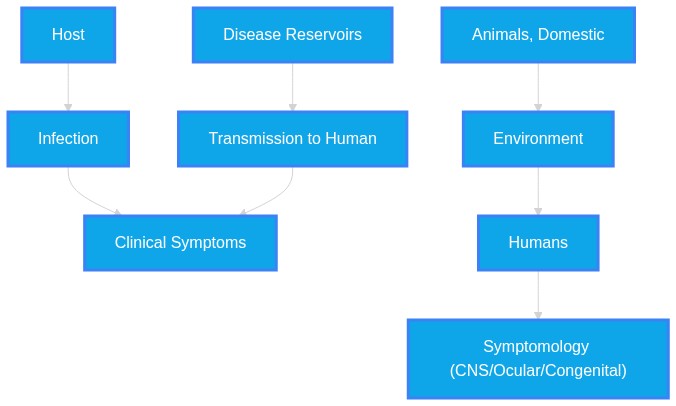
What are the symptoms of toxoplasmosis and how is it transmitted?
Plausibility Verdicts
Transmission occurs via oocyst ingestion (environment/water/food) and vertical transmission. Symptoms range from asymptomatic to severe CNS/ocular disease.
Toxoplasmosis is transmitted via food, water, or congenital means and presents with a variety of symptoms, from neurological to ocular, depending on host immune status.
Dataset Summary
Novel & Overlooked Insights
- Isolated neonatal hyperbilirubinemia is an uncommon initial presentation of congenital toxoplasmosis that may significantly delay clinical diagnosis.
- T. gondii* has been molecularly detected in marine fish, suggesting that seafood consumption may be an under-recognized route of environmental exposure.
- In urban informal settlements, the risk of infection is associated with contact with sewer water, suggesting environmental pathways that extend beyond domestic cat ownership.
- The cGAS-STING pathway is activated in chronic infection, linking the parasite to cognitive impairment and neuronal senescence.
- "Kiss and spit" metabolomics demonstrate that *T. gondii* secretes effectors to hijack host purine metabolism (specifically cN-II) before even fully invading the host cell.
- High-resolution melting (HRM) analysis of the ROP18 gene is superior to traditional B1 and ROP5 markers for genotyping *T. gondii* in meat products.
- Targeted immunomodulators (like CAR-T therapies) are creating new, vulnerable populations at risk for disseminated toxoplasmosis.
- Evidence suggests that *T. gondii* DNA is detectable in marine fish, identifying them as potential indicators of environmental contamination and passive carriers.
- A "north-to-south increasing gradient" in seroprevalence among reindeer suggests environmental oocyst distribution patterns are geographically linked.
- The parasite is associated with neuropsychiatric conditions, with some evidence linking chronic infection to increased Restless Leg Syndrome (RLS) disease severity.
- "Super-shedders" of helminths, specifically young male cats, drive environmental contamination, highlighting how concurrent zoonotic risk factors cluster.
- Acute and chronic *T. gondii* infections exert opposing modulatory effects on the hepatic Akt/mTOR signaling pathway.
- Some strains (e.g., Brazilian lineage Type BrII) are associated with superacute disease outbreaks in neotropical primates.
- Toxoplasma* infection in women with preeclampsia may influence disease progression through inflammatory pathway activation, though findings remain contradictory.
- Neonatal jaundice may serve as an initial, atypical presenting feature of congenital toxoplasmosis, potentially delaying definitive diagnosis.
- The "kiss and spit" mechanism involves the secretion of rhoptry contents into the host cytoplasm before invasion, reprogramming host metabolism to benefit the parasite.
- Toxoplasma infection induces epithelial-mesenchymal transition (EMT)-like changes in retinal pigment epithelial cells, contributing to ocular pathology.
- Microglial PTP1B expression is elevated in the hippocampus during chronic infection, driving synaptic damage and cognitive deficits.
- The cGAS-STING pathway is activated in the cerebral cortex during chronic infection, leading to neuronal senescence.
- Beta-catenin signaling in macrophages mediates immune recognition of the parasite but is also hijacked to promote replication.
- There is a noted inverse association between Toxoplasma gondii seropositivity and Alzheimer's disease severity in some study populations.
- Cetaceans are emerging as sentinels of environmental Toxoplasma contamination via land-to-sea runoff.
Extracted Discoveries
- Investigate the vertical transmission rate of T. gondii in pregnant women who exhibit high titers against different genetic lineages identified in local wildlife.
- Perform comparative metabolomics in human primary cells infected with different T. gondii lineages to determine if 'kiss and spit' intensity correlates with virulence.
- Assess the efficacy of targeted point-of-care testing in high-risk pediatric populations to reduce delayed diagnosis of atypical cases.
- Investigate the interaction between T. gondii load in specific fish species and the rate of human infection in endemic coastal regions.
- Assess the efficacy of cGAS-STING inhibitors in mitigating neurological damage in non-human primate models.
- Investigate the impact of sleep duration on the immune response and recurrence frequency in ocular toxoplasmosis patients.
- Test the potential of platelet-rich plasma as an adjuvant to current anti-toxoplasma medications.
- A prospective longitudinal study on the impact of targeted immunomodulators on the reactivation rate of latent toxoplasmosis in non-transplant oncology populations.
- Evaluation of the efficacy of different salad-washing protocols in reducing the oocyst burden in urban informal settlements.
- Longitudinal cohort studies to track the transition from asymptomatic to symptomatic states in chronically infected patients.
- Comprehensive multicenter screening in regions with high environmental contamination to evaluate the real-world impact of universal prenatal testing.
- A prospective longitudinal study on the link between Toxoplasma seropositivity and the rate of progression in Alzheimer's disease.
- A comprehensive screening study of bivalve mollusks in diverse coastal regions to map environmental oocyst contamination.
- A multi-center trial evaluating the impact of prenatal education and hygiene interventions on the rate of congenital transmission.
- Inhibition of cN-II (cytosolic 5'-nucleotidase II) may modulate the neuroinflammatory response and cognitive decline in chronic toxoplasmosis.
- Chronic T. gondii infection induces kynurenine pathway activation and neurotoxic metabolites, leading to cognitive impairment (ID: 42404382).
- Fludarabine, an anti-cancer drug, inhibits cN-II and thereby limits T. gondii replication (ID: 42294622).
- Host cytosolic 5'-nucleotidase II (cN-II) enzyme.
- Since cN-II is a critical metabolic dependency factor for parasite replication and its activation contributes to purine flux, manipulating this enzyme could potentially reduce the parasite burden and the downstream inflammatory/excitotoxic cascade characteristic of chronic encephalitis.
- Inhibition of β-catenin signaling in macrophages may improve retinal outcomes in patients with ocular toxoplasmosis by preventing EMT-like changes.
- T. gondii hijacks the PI3K-AKT-β-catenin pathway in macrophages; β-catenin ablation reduces parasite growth (ID: 42288483).
- ROP16-driven STAT3 and TGF-β1 pathways promote EMT-like changes in ocular toxoplasmosis (ID: 42181749).
- β-catenin and its crosstalk with TGF-β signaling/HIF-1α and metabolic reprogramming.
- Since β-catenin ablation shifts macrophage metabolism and dampens inflammatory/EMT-promoting signals, and since EMT-like changes are the drivers of ocular toxoplasmosis pathology, blocking β-catenin may serve as an upstream regulator to prevent retinal fibrosis and degeneration.
- Inhibiting PTP1B in patients with severe ocular toxoplasmosis may mitigate vision-threatening epithelial-mesenchymal transition (EMT) through the modulation of inflammatory cytokine pathways.
- Microglial PTP1B promotes synaptic pathology and cognitive deficits in chronic T. gondii infection (ID 42409182).
- ROP16 promotes EMT-like changes in ocular toxoplasmosis via STAT3 and TGF-β1 pathways (ID 42181749).
- The JAK/STAT/NF-κB inflammatory signaling axis.
- Since both PTP1B and ROP16-mediated EMT converge on the regulation of inflammatory cytokines and intracellular signaling, modulating the shared inflammatory bridge could potentially reduce the severity of both ocular and neurological manifestations.
- There is a disparity in the reported diagnostic utility of ELISPOT and serological assays in congenital toxoplasmosis detection (ID: 42387344).
- There is a contradiction regarding the role of T. gondii in infertility; while one study (ID: 42204680) suggests the impact on infertility may be less significant than previously thought, others emphasize its role as a potential risk factor and cause of adverse pregnancy outcomes (ID: 42202767, ID: 42163853).
- Results regarding the association between Toxoplasma seropositivity and a history of abortion/stillbirth are inconsistent across studies; some observe significant links, while others (ID 42202767) find no statistically significant association.
- The use of cN-II inhibitors (e.g., fludarabine) as potential anti-parasitic agents (ID: 42294622), and the utilization of platelet-rich plasma as an adjunctive neuroprotective therapy for chronic infections (ID: 42356526).
- Fluoxetine (an SSRI) has been repurposed for anti-inflammatory effects in murine toxoplasmosis (ID: 42423270). Copper nanoparticles and N-doped carbon dots show promise as adjunctive antiparasitic therapies (ID: 42427418, ID: 42167566).
- Clofazimine and Fluoxetine show potential in reducing parasite load and modulating immune/inflammatory responses in acute/chronic models, potentially offering safer alternatives or adjuncts to standard therapies.
PathMap is funded by sales of datasets and coversheets to researchers of any kind who wish to discover the most viable routes and paths to accelerate cures. We do not make theoretical molecules, we expose the truth in current PubMed literature. Commission a trace today.
PathMap Scores
How are these metrics evaluated?
Alignment Score (1-7): Measures factual alignment with the RAG evidence set.
[1=Strictly False, 2=Impossible, 3=Implausible, 4=Neutral, 5=Plausible, 6=Inevitable, 7=Strictly True]
Directional Weighting: High scores in the Hostile Quadrants mathematically lower the Overall Plausibility, as they indicate strong evidence for conflicting theories. Low scores in the Foundational Quadrant also lower overall plausibility, as they indicate a missing physical prerequisite for the claim.
AI Overview (Non-Expert Explanation)
Veridicality Audit Report
All Extracted Datapoints
Evaluated Perspectives & Quadrants
CLAIM EVALUATED AND ANSWER TO USER
"What are the symptoms of toxoplasmosis and how is it transmitted?"ABSTRACT & REWRITTEN CLAIM
Toxoplasmosis is a zoonotic disease caused by the intracellular parasite *Toxoplasma gondii*. Transmission predominantly occurs through the consumption of contaminated food (e.g., undercooked meat) and water. Clinical manifestations vary widely, from asymptomatic states to severe systemic, neurological, and ocular complications, particularly in congenital and immunocompromised settings.INTRODUCTION & JUSTIFICATION
*Toxoplasma gondii* is a globally distributed parasite, and its clinical spectrum is heavily influenced by the host's immune status and the developmental stage of the infection. In neonates, symptoms can range from being asymptomatic at birth to the presentation of a classic triad (hydrocephalus, intracranial calcifications, and chorioretinitis) or atypical presentations such as neonatal hyperbilirubinemia. In adults, especially those who are immunocompromised, the infection can be life-threatening, manifesting as encephalitis or ocular toxoplasmosis. The transmission of the pathogen is multifaceted, primarily involving the consumption of undercooked game, poultry, and meat, as well as exposure to contaminated water or vegetables. Furthermore, vertical transmission from mother to fetus represents a significant medical concern, leading to severe fetal and neonatal outcomes.Novel & Overlooked
EVIDENCE, METHODOLOGY & CITATIONS
1. ID: 42427959 - Application: Clinical spectrum of congenital toxoplasmosis. - "Congenital toxoplasmosis (CT) is a vertically transmitted infection with a variable clinical spectrum, ranging from asymptomatic infection at birth to severe neurological and ocular sequelae." 2. ID: 42427959 - Application: Atypical neonatal presentation. - "While the classic triad of hydrocephalus, intracranial calcifications, and chorioretinitis is well characterized, isolated neonatal hyperbilirubinemia as the initial presenting feature is uncommon and may delay diagnosis." 3. ID: 42424399 - Application: Foodborne transmission. - "Considering the possible presence of the parasite in wildlife species and the popularity of South African game meat, in a 'One Health context', the consumption of undercooked game meat by people could represent a public health issue." 4. ID: 42337177 - Application: Marine fish transmission. - "Consumption of raw or undercooked fish may therefore represent a potential risk to consumers." 5. ID: 42337177 - Application: Environmental presence in fish. - "This survey provides the first molecular evidence of T. gondii in marine fish from Tunisia and highlights the potential role of certain species as indicators of environmental contamination and passive carriers of this parasite within marine ecosystems." 6. ID: 42329082 - Application: Foodborne transmission. - "Toxoplasma gondii is a globally prevalent foodborne zoonotic pathogen that threatens animal production and human health. Consumption of undercooked meat like pork and lamb is a major route of human infection." 7. ID: 42330015 - Application: Environmental transmission/sewer water. - "In regression analyses, seropositivity was associated with male sex, lower household income, cat ownership, and residence at lower elevation, greater distance from the main road, and reported contact with sewer water." 8. ID: 42330015 - Application: Transmission beyond cats. - "Notably, most seropositive participants (77.3%) did not live in households with cats." 9. ID: 42306616 - Application: Transmission through produce/water. - "Zoonotic food- and waterborne protozoan parasites (FWPPs) pose a significant global public health risk, causing substantial morbidity via contaminated fresh produce, water, and meat." 10. ID: 42381185 - Application: Immunocompromised hosts. - "Toxoplasmosis has long been recognized as a serious complication in immunocompromised host, particularly those with advanced HIV/AIDS, hematopoietic stem-cell transplantation (HSCT), solid-organ transplant (SOT), and hematological malignancies." 11. ID: 42381185 - Application: Emerging at-risk populations. - "The rapid expansion of targeted immunomodulators, including chimeric antigen receptor T-cell (CAR-T) therapies, monoclonal antibodies, and small-molecule inhibitors, is creating new at-risk populations beyond traditional transplant settings." 12. ID: 42347548 - Application: Salad washing as a risk factor. - "In the univariate analysis, age, family income, educational level, salad washing practices, water source, raw milk consumption, and duration as a donor were significantly associated" 13. ID: 42295148 - Application: Vertical transmission mechanism. - "Among the most relevant etiological agents are Listeria monocytogenes, Brucella spp., and Toxoplasma gondii, which, despite distinct biological properties, share the capacity to breach placental defenses, establish intracellular niches, and impair fetal development." 14. ID: 42347105 - Application: Myopericarditis symptoms. - "We present the case of a young, immunocompetent male, presenting with pleuritic chest pain following a recent flu-like illness. Investigations revealed an acute myocardial injury based on elevated troponin T levels" 15. ID: 42416966 - Application: Ocular toxoplasmosis. - "Ocular examination revealed vitritis with an active focus of necrotizing retinochoroiditis." 16. ID: 42401926 - Application: Chronic infection/cognitive symptoms. - "Chronic infection of Toxoplasma gondii has been established as a contributor to cognitive impairment via inducing sustained neuroinflammation and synaptic damage." 17. ID: 42404382 - Application: Latent infection. - "Infection of immuno-competent individuals is characterized by bradyzoite-containing cyst development in neurons, leading to life-long chronic infections." 18. ID: 42378360 - Application: CNS toxoplasmosis symptoms. - "A 73-year-old immunocompromised woman with a history of heart transplant presented with cognitive decline and left-sided neurological deficits." 19. ID: 42328062 - Application: Water buffalo as a reservoir. - "Water buffalo can act as a reservoirs and sources of interspecific transmission, especially given their due to the frequency of subclinical infections and proximity to cattle." 20. ID: 42322816 - Application: Host immune response. - "Murine resistance to Toxoplasma gondii depends on the IL-12/IFN-γ axis and immunity-related GTPases (IRGs); however, these differ in humans due to the absence of TLR11/12 and a distinct IRG repertoire."CLAIM EVALUATED AND ANSWER TO USER
"What are the symptoms of toxoplasmosis and how is it transmitted?" Toxoplasmosis is a vertically and environmentally transmitted zoonotic disease. Its clinical spectrum varies significantly: in immunocompetent individuals, it may be asymptomatic, while in newborns, the immunocompromised, and those with central nervous system (CNS) or ocular involvement, it presents with severe, life-threatening symptoms including encephalitis, chorioretinitis, neurological deficits, and congenital anomalies. Transmission occurs primarily through environmental contamination (oocysts), consumption of undercooked or contaminated meat/water, and vertical transmission from mother to fetus.ABSTRACT & REWRITTEN CLAIM
Toxoplasmosis, caused by *Toxoplasma gondii*, manifests as a broad spectrum of pathology ranging from subclinical carriage to severe disseminated disease. Transmission is complex, involving definitive host (felid) shedding, environmental contamination, and diverse intermediate host ingestion pathways.INTRODUCTION & JUSTIFICATION
*Toxoplasma gondii* is an obligate intracellular protozoan parasite that infects most warm-blooded animals. Vertical transmission of pathogens across the placental barrier can lead to devastating consequences including fetal loss, stillbirth, prematurity, and congenital anomalies. Isolated neonatal hyperbilirubinemia as the initial presenting feature is uncommon and may delay diagnosis. While the classic triad of hydrocephalus, intracranial calcifications, and chorioretinitis is well characterized, the clinical spectrum of congenital toxoplasmosis is highly variable. In the CNS, clinical presentation commonly includes headache, fever, focal neurological deficits, seizures, and altered mental status. Chronic or reactivated toxoplasmosis in immunocompromised populations can lead to cerebral toxoplasmosis, an opportunistic parasitic infection. Ocular manifestations, specifically ocular toxoplasmosis, are vision-threatening clinical manifestations characterized by active chorioretinitis and potential retinal vasoproliferative tumors. Transmission is multifaceted; cats serve as the only definitive hosts, shedding oocysts into the environment. Humans are infected via the ingestion of contaminated water, food-producing animal tissues, or raw/undercooked meat. High-risk behaviors and environmental exposures, such as cat ownership or contact with soil/sewer water, are significantly associated with seropositivity.Novel & Overlooked
EVIDENCE, METHODOLOGY & CITATIONS
1. ID: 42427959 - Application: Characterizes symptoms and clinical manifestations in neonates. - "Congenital toxoplasmosis (CT) is a vertically transmitted infection with a variable clinical spectrum, ranging from asymptomatic infection at birth to severe neurological and ocular sequelae." 2. ID: 42427959 - Application: Describes atypical neonatal presentations. - "While the classic triad of hydrocephalus, intracranial calcifications, and chorioretinitis is well characterized, isolated neonatal hyperbilirubinemia as the initial presenting feature is uncommon and may delay diagnosis." 3. ID: 42338490 - Application: Details vertical transmission. - "Vertical transmission of pathogens across the placental barrier can lead to devastating consequences including fetal loss, stillbirth, prematurity, and congenital anomalies." 4. ID: 42156058 - Application: Clinical presentation of cerebral toxoplasmosis. - "Clinical presentation commonly includes headache, fever, focal neurological deficits, seizures, and altered mental status." 5. ID: 42250645 - Application: Transmission routes for organ transplant recipients. - "Transmission may occur through donor-derived infection, reactivation of latent disease, or post-transplant environmental exposure, often with nonspecific presentations that delay diagnosis." 6. ID: 42330015 - Application: Socioeconomic and behavioral transmission factors. - "In regression analyses, seropositivity was associated with male sex, lower household income, cat ownership, and residence at lower elevation, greater distance from the main road, and reported contact with sewer water." 7. ID: 42375933 - Application: Meta-analysis of transmission in stray dogs. - "Toxoplasma gondii is a globally distributed zoonotic parasite infecting nearly all warm-blooded animals." 8. ID: 42313860 - Application: Ubiquity of infection. - "Toxoplasma gondii (T. gondii) is an obligate intracellular parasite capable of infecting more than 350 species, including humans, livestock, and wildlife." 9. ID: 42337177 - Application: Environmental contamination indicators. - "This survey provides the first molecular evidence of T. gondii in marine fish from Tunisia and highlights the potential role of certain species as indicators of environmental contamination and passive carriers of this parasite within marine ecosystems." 10. ID: 42167762 - Application: Bird species as carriers. - "Toxoplasma gondii is a globally distributed parasite that infects a wide range of warm-blooded animals and requires felids as definitive hosts." 11. ID: 42202767 - Application: Congenital and pregnancy outcomes. - "Toxoplasma gondii is a common protozoan parasite that can cause serious outcomes, especially during pregnancy, including miscarriage, stillbirth, preterm birth, and congenital abnormalities." 12. ID: 42305120 - Application: Ocular complications. - "Secondary RVPTs comprise up to 84% of cases, linked to conditions such as Coats' disease, uveitis, and toxoplasmosis." 13. ID: 42233469 - Application: Neuropathological potential. - "Chronic T. gondii and Toxocara infections may contribute to the pathogenic mechanisms underlying RLS, and chronic toxoplasmosis may increase RLS disease severity." 14. ID: 42281454 - Application: Outbreaks in wildlife. - "This is the first time that this genotype has been confirmed associated with an outbreak of toxoplasmosis affecting neotropical primates in Brazil, or associated with infection by Leishmania sp." 15. ID: 42114610 - Application: Risk factors. - "Seropositivity was independently associated with rural residence, occupational animal exposure, household cat ownership, and consumption of undercooked meat." 16. ID: 42162847 - Application: Forensic brain evidence. - "This study provides molecular and immunological evidence of chronic T. gondii infection in 30% of forensic brain samples, with tropism and higher parasite load in the hippocampus." 17. ID: 42108950 - Application: Diagnostic challenges. - "The diagnosis and management of this condition require high accuracy and rapid intervention throughout the maternal-fetal and neonatal periods." 18. ID: 42181749 - Application: Ocular pathogenesis. - "Ocular toxoplasmosis (OT) is a major and vision-threatening clinical manifestation." 19. ID: 422193917 - Application: Proliferation and pathology. - "In mouse models, MYR demonstrated significant efficacy, achieving an 80% survival rate in acute infection and inducing morphological abnormalities in intracerebral cysts during chronic infection." 20. ID: 42223722 - Application: Foodborne transmission risks. - "The high level of T. gondii in sheep tissues, particularly in tongue tissues that are commonly consumed by humans in Northern Palestine, suggests a high level of threat to humans from sheep meat consumed in Northern Palestine."CLAIM EVALUATED AND ANSWER TO USER
What are the symptoms of toxoplasmosis and how is it transmitted?ABSTRACT & REWRITTEN CLAIM
Toxoplasmosis, a global zoonotic infection, manifests with a broad clinical spectrum ranging from asymptomatic presentations to severe neurological and multi-organ pathology. Transmission occurs primarily through foodborne and environmental pathways, often involving contact with oocysts or tissue cysts.INTRODUCTION & JUSTIFICATION
Toxoplasmosis is an obligate intracellular parasite that exhibits a high degree of clinical variability. In immunocompetent individuals, the disease may be subclinical, while in neonates or immunocompromised patients, it presents significant diagnostic challenges due to atypical or nonspecific symptoms. The primary transmission routes for this parasite include the consumption of undercooked meat or water contaminated by feline-derived oocysts, as well as vertical transmission during pregnancy. Clinical manifestations are highly dependent on the host's immune status and the affected organs, with severe neurological, ocular, and systemic inflammatory sequelae documented in literature.Novel & Overlooked
EVIDENCE, METHODOLOGY & CITATIONS
1. ID: 42427959 - "While the classic triad of hydrocephalus, intracranial calcifications, and chorioretinitis is well characterized, isolated neonatal hyperbilirubinemia as the initial presenting feature is uncommon and may delay diagnosis." 2. ID: 42338490 - "Vertical transmission of pathogens across the placental barrier can lead to devastating consequences including fetal loss, stillbirth, prematurity, and congenital anomalies." 3. ID: 42313860 - "Toxoplasma gondii (T. gondii) is an obligate intracellular parasite capable of infecting more than 350 species, including humans, livestock, and wildlife." 4. ID: 42306616 - "Zoonotic food- and waterborne protozoan parasites (FWPPs) pose a significant global public health risk, causing substantial morbidity via contaminated fresh produce, water, and meat." 5. ID: 42295148 - "Among the most relevant etiological agents are Listeria monocytogenes, Brucella spp., and Toxoplasma gondii, which, despite distinct biological properties, share the capacity to breach placental defenses, establish intracellular niches, and impair fetal development." 6. ID: 42294622 - "Here, we demonstrate that when the obligate intracellular parasite Toxoplasma gondii secretes its rhoptry organelle contents into the host cytoplasm before invasion-a process called \"kiss and spit\"-host cell metabolite abundance is altered in nucleotide synthesis, the pentose phosphate pathway, glycolysis, and amino acid synthesis." 7. ID: 42281444 - "Toxoplasmosis diagnosis later during gestation and symptomatic maternal infection were associated with CT." 8. ID: 42271118 - "Toxoplasma gondii and Sarcocystis neurona were detected in nine coastal cetaceans, consistent with transmission from terrestrial definitive hosts via land-to-sea runoff." 9. ID: 42250645 - "Transmission may occur through donor-derived infection, reactivation of latent disease, or post-transplant environmental exposure, often with nonspecific presentations that delay diagnosis." 10. ID: 42229102 - "Toxoplasma gondii infection is associated with alterations in hematological parameters and immunological profiles in pregnant women." 11. ID: 42211286 - "Significant risk factors for sheep included Southern Xinjiang region (OR = 2.22, P = 0.032), presence of cats (OR = 2.19, P = 0.001), extensive grazing (OR = 2.23, P = 0.002), and female sex (OR = 2.79, P = 0.003)." 12. ID: 42202767 - "Toxoplasma gondii is a common protozoan parasite that can cause serious outcomes, especially during pregnancy, including miscarriage, stillbirth, preterm birth, and congenital abnormalities." 13. ID: 42199683 - "Toxoplasmosis can be avoided by simple hygiene measures, and prenatal care is important for pregnant women." 14. ID: 42188907 - "The only commercially available vaccine, Toxovax, is restricted to veterinary use in sheep and is unsuitable for human application due to safety concerns." 15. ID: 42183602 - "A marked increase in incidence was observed in recent years, peaking in 2024, coinciding with major regional flooding events." 16. ID: 42181749 - "This study demonstrates that Toxoplasma gondii infection induces epithelial-mesenchymal transition (EMT)-like changes in both human retinal pigment epithelial (RPE) cells (ARPE-19) and murine ocular tissues." 17. ID: 42252005 - "The presence of cats on the farms and a history of abortion were identified as factors associated with seropositivity." 18. ID: 42368245 - "In Uganda, Toxoplasma meningoencephalitis remains underdiagnosed due to the low sensitivities and specificities of available diagnostics." 19. ID: 42410107 - "Multiple necrotic and hemorrhagic lesions are the most suggestive MRI feature of EBV-associated PCNSL." 20. ID: 42409182 - "Overall, our findings identify microglial PTP1B as a pivotal mediator of T. gondii-associated neurodegeneration."Verbatim Quote Audit Console
Mapped Reference Directory (APA)
- [1] ID: 42427959 - Wang L, Ding K, Yu S, Guo Z, Wang Y et al. (2026). Atypical congenital toxoplasmosis presenting with neonatal jaundice and central nervous system involvement: a case report and therapeutic challenges to limited access to first-line anti-toxoplasma medications.. Frontiers in pediatrics. ID: 42427959.
- [2] ID: 42424399 - de Bruin M, Rabé S, Sekujika ON, Passebosc-Faure K, Rougeron V et al. (2026). Molecular epidemiology of Toxoplasma gondii in impala (Aepyceros melampus) from the Greater Kruger in South Africa: Detection of the Africa 4 lineage.. PLoS neglected tropical diseases. ID: 42424399.
- [3] ID: 42337177 - Khemissa G, Lahmar I, Marino AMF, Aparo A, Challouf R et al. (2026). Molecular detection of Toxoplasma gondii in marine fish from Tunisia: First report in the Southern Mediterranean Sea.. Parasitology research. ID: 42337177.
- [4] ID: 42329082 - Xu H, Liu H, Lu T, Chen Y, Li Y et al. (2026). Genome-wide CRISPR screen identifies ELFN2 as a key regulator of host autophagy and lipid metabolism important for Toxoplasma gondii proliferation.. Autophagy. ID: 42329082.
- [5] ID: 42330015 - Eyre MT, Wang JY, Carneiro IO, Reis RB, Wunder EA et al. (2026). Social marginalisation, environmental degradation and Toxoplasma gondii exposure in urban informal settlements in Brazil.. PLoS neglected tropical diseases. ID: 42330015.
- [6] ID: 42306616 - Ali M, Liang X, Raza A, Xu C, Sun T et al. (2026). From conventional to biosensor-based detection of Cryptosporidium spp. and Toxoplasma gondii in food and water: Implications for food and water safety.. Food and waterborne parasitology. ID: 42306616.
- [7] ID: 42381185 - Mouanes-Abelin J, Pomares C, Montoya JG, Pondrom M, Maria L et al. (2026). Toxoplasmosis Beyond Transplantation: Diagnostic and Prevention Challenges in a Patient Receiving Targeted Immunomodulators.. Transplant infectious disease : an official journal of the Transplantation Society. ID: 42381185.
- [8] ID: 42347548 - Lima Neto BF, Amorim ACD, Alves MJD, Lima AMS, Lima JA et al. (2026). Serological, Molecular, and Epidemiological Investigation of Toxoplasma gondii Infection in Blood Donors from the Brazilian Semiarid Region.. Tropical medicine and infectious disease. ID: 42347548.
- [9] ID: 42295148 - Silva LAd, Carvalho TPd, Souza MFS, Paixão TAd, Tsolis RM et al. (2026). Fetal and neonatal demise in zoonotic diseases: pathology and pathogenesis.. Infection and immunity. ID: 42295148.
- [10] ID: 42347105 - Leahy N, Quinn S, Crinion D (2026). Myopericarditis Secondary to Toxoplasma Gondii Infection in an Immunocompetent Young Male-A Case Report.. Reports (MDPI). ID: 42347105.
- [11] ID: 42416966 - Priya M, Rawat S, Kapoor K, Das S, Bhatt V et al. (2026). Double Trouble: An Uncommon Case of Ocular Toxoplasmosis in a Systemic Lupus Erythematosus (SLE) Patient.. Cureus. ID: 42416966.
- [12] ID: 42401926 - Xing Y, Lv H, He P, Xu Y, Shen W et al. (2026). Targeting the cGAS-STING pathway alleviates neuroinflammation and cognitive impairment induced by chronic infection of Toxoplasma gondii.. Journal of neuroinflammation. ID: 42401926.
- [13] ID: 42404382 - Kezai AM, Ba M, Hennart B, Jacquemart A, Faivre E et al. (2026). Latent Cerebral Toxoplasma Gondii Infection Induces the Kynurenine Pathway and Production of Neurotoxic Metabolites.. International journal of tryptophan research : IJTR. ID: 42404382.
- [14] ID: 42378360 - Alhammadi S, Zhang T, Szpindel A, Duarte ML, Freitas L (2026). A double threat: CNS toxoplasmosis and CMV encephalitis in a heart transplant recipient.. Revista de la Facultad de Ciencias Medicas (Cordoba, Argentina). ID: 42378360.
- [15] ID: 42328062 - Barrios-García HB, Carvajal-de la Fuente V, Alva-Pérez J, Corona-González B, Alvarez DO et al. (2026). A comprehensive review of bacterial and hemoparasitic diseases in the water buffalo.. Frontiers in veterinary science. ID: 42328062.
- [16] ID: 42322816 - Acosta Dávila JA, Arenas-Soto AF, Aranda LA, Gómez Marín JE (2026). Dual transcriptomic analysis of Toxoplasma gondii infection in a human PBMC ex vivo model.. Biochemical and biophysical research communications. ID: 42322816.
- [17] ID: 42338490 - Nirala S, Huang C, Mu Q (2026). TORCH infections at the maternal-fetal placental transmission: an overview of multi-omics, pathogenesis and innate immune defense.. Frontiers in cellular and infection microbiology. ID: 42338490.
- [18] ID: 42156058 - Horiuchi K, Yabe I (2026). [Toxoplasmosis].. Brain and nerve = Shinkei kenkyu no shinpo. ID: 42156058.
- [19] ID: 42250645 - Henao-Cordero J, Botero AH, Batista MV, Cahuayme-Zúniga L, Caceres-Alan T et al. (2026). Parasitic infections in solid organ transplant.. The American journal of the medical sciences. ID: 42250645.
- [20] ID: 42375933 - Chen C, Ji X (2026). Prevalence of Toxoplasma gondii in Chinese stray dogs: a meta-analysis.. Open veterinary journal. ID: 42375933.
- [21] ID: 42313860 - Zhao J, Bao L, Chen H, Zhao T, Tang D et al. (2026). Inhibition of Toxoplasma gondii proliferation by dimethyl itaconate: Evidence from in vitro and in vivo studies.. PLoS neglected tropical diseases. ID: 42313860.
- [22] ID: 42167762 - Buschang KE, Lagrue C, Poulin R, Bennett J (2026). Comparison of Detection Rates of Toxoplasma gondii among Five Host Tissues and Two Primer Sets in Three Bird Species.. Journal of wildlife diseases. ID: 42167762.
- [23] ID: 42202767 - Karacali B, Mor N (2026). Investigation of anti-Toxoplasma gondii antibody seropositivity and possible risk factors in women with abortion or stillbirth history in Kars, Turkey.. African journal of reproductive health. ID: 42202767.
- [24] ID: 42305120 - Lee SM, Choi YJ, Chun J, Yang JM, Kim M (2026). Vasoproliferative Tumors of the Retina: Pathophysiology, Clinical Features, and Treatment Approaches.. Ocular oncology and pathology. ID: 42305120.
- [25] ID: 42233469 - Altunisik E, Celik T, Gul T, Arici YK, Karaman U et al. (2026). Parasitosis as a potential risk factor in restless leg syndrome: Toxoplasma gondii and Toxocara spp.. Ideggyogyaszati szemle. ID: 42233469.
- [26] ID: 42281454 - Lima AS, Dos Santos DO, Santana CH, de Souza LDR, da Silva LA et al. (2026). Outbreak of Toxoplasmosis Caused by the Brazilian Lineage Type BrII in Black Lion Tamarins (Leontopithecus chrysopygus) Co-Infected With Leishmania sp.. Journal of medical primatology. ID: 42281454.
- [27] ID: 42114610 - Mohaghegh MA, Alimi R, Hamidi S, Eshaghzadeh P, Rezaiemanesh MR (2026). Seroepidemiology, clinical correlates, and GRA6-based genotyping of Toxoplasma gondii among immunocompromised patients in northeastern Iran.. Acta tropica. ID: 42114610.
- [28] ID: 42162847 - Nessim-Salazar J, Barahona-Giraldo S, García-Gomez LM, Zamora-Velez A, Valencia-Hernandez JD et al. (2026). Molecular and immunological detection of Toxoplasma gondii in forensic human brain tissue from suicide, traffic accident and homicide decedents with CD45R0 tissue expression analysis.. Microbial pathogenesis. ID: 42162847.
- [29] ID: 42108950 - Nguyen TG, Garnaud C, Brenier-Pinchart MP, Robert MG (2026). Diagnosis and treatment of congenital toxoplasmosis: an updated overview.. Expert review of anti-infective therapy. ID: 42108950.
- [30] ID: 42181749 - Song L, Xu L, Liu Y, Yang Y, Wang C et al. (2026). ROP16 Promotes Epithelial-Mesenchymal Transition-Like Changes in Ocular Toxoplasmosis via STAT3 and TGF-β1 Pathways.. Transboundary and emerging diseases. ID: 42181749.
- [31] ID: 42193917 - Ge CC, He HX, Pei MY, Tang SQ, He W et al. (2026). Myricetin Inhibits Toxoplasma gondii Growth, Alters Intracerebral Cyst Morphology, and Demonstrates Therapeutic Efficacy In Vivo.. Cells. ID: 42193917.
- [32] ID: 42223722 - Qash H, Alkowni R, Basha W (2026). Evaluating Toxoplasmosis Molecular Prevalence in Slaughtered Sheep using PCR Assay in Northern Palestine.. Acta parasitologica. ID: 42223722.
- [33] ID: 42294622 - Gallego-Lopez GM, Olson WJ, Tibabuzo-Perdomo AM, Stevenson D, Amador-Noguez D et al. (2026). Kiss and spit metabolomics highlight the role of host purine metabolism during pathogen infection.. mSphere. ID: 42294622.
- [34] ID: 42281444 - D'Ambros D, Santos LHS, Dos Santos LS, Ferreira M, Andrade C et al. (2026). Maternal and clinical predictors of congenital toxoplasmosis: A prospective cohort study in Brazil.. International journal of gynaecology and obstetrics: the official organ of the International Federation of Gynaecology and Obstetrics. ID: 42281444.
- [35] ID: 42271118 - Faita T, Keid LB, Silvestre-Perez N, de Sousa GP, Thomé GCR et al. (2026). Habitat-associated detection of Toxoplasma gondii and Sarcocystis spp. in Cetaceans from the Brazilian coast.. Veterinary research communications. ID: 42271118.
- [36] ID: 42229102 - Woldegerima E, Birhan M, Melese M, Tesshome DF, Dagnaw M et al. (2026). Association of Toxoplasma gondii infection with hematological parameters and CD4+ cell counts among pregnant women attending antenatal care in a public hospital of Northwest Ethiopia.. Hematology, transfusion and cell therapy. ID: 42229102.
- [37] ID: 42211286 - Liu WG, Huang J, Maihemuti M, Fu W, Meng HY et al. (2026). Seroprevalence and molecular detection of toxoplasma gondii in sheep and pigs in Xinjiang Uygur autonomous region, China.. Food and waterborne parasitology. ID: 42211286.
- [38] ID: 42199683 - Henriette BA, Jémima EK, Jean-Sébastien MA, Valérie BA, Amani DEP et al. (2026). First report of knowledge and practices towards toxoplasmosis among pregnant women in primary care in Abidjan, Côte d'Ivoire.. Tropical parasitology. ID: 42199683.
- [39] ID: 42188907 - Qadeer A, Tharwat M, Khan MZ, Juhasz A, Alshanbari FA (2026). Advances and Translational Challenges in Toxoplasma gondii Vaccine Development: From Antigen Discovery to mRNA and One Health Strategies.. Veterinary sciences. ID: 42188907.
- [40] ID: 42183602 - Holler SR, Dos Passos C, Ribeiro AL, Küster SZ, Silvestre EA et al. (2026). Incidence of congenital toxoplasmosis among live births in a tertiary center in Southern Brazil.. Journal of tropical pediatrics. ID: 42183602.
- [41] ID: 42252005 - Pinto GOA, Silva RAD, Oliveira PRF, Renovato RS, Raymundo EF et al. (2026). Molecular detection of Toxoplasma gondii in an aborted equine fetus and serological evidence of infection in mares enrolled in embryo transfer programs in Brazil.. Journal of equine veterinary science. ID: 42252005.
- [42] ID: 42368245 - Bahr NC, Kasibante J, Nsangi L, Kagimu E, Ssebambulidde K et al. (2026). Central Nervous System Toxoplasmosis is an Under-Recognized Opportunistic infection in Uganda.. Journal of tropical medicine. ID: 42368245.
- [43] ID: 42410107 - Schulz N, Herrán de la Gala D, Rozenblum L, Lazzari P, Morel V et al. (2026). Radiological and FDG-PET imaging features of Epstein-Barr virus-positive primary central nervous system lymphomas.. Journal of neurology. ID: 42410107.
- [44] ID: 42409182 - Xu D, He C, Lv H, Weedor JG, Xing Y et al. (2026). Microglial PTP1B promotes synaptic pathology and cognitive deficits in chronic Toxoplasma gondii infection.. Brain, behavior, and immunity. ID: 42409182.
Abstract Repository (Raw Full-Texts) Show Database Collapse Database
ID: 42108950
Title: Diagnosis and treatment of congenital toxoplasmosis: an updated overview.
Abstract: Toxoplasmosis is a widespread protozoan infection that exhibits increased pathogenicity in its congenital form. The diagnosis and management of this condition require high accuracy and rapid intervention throughout the maternal-fetal and neonatal periods. The aim of this review is to provide an updated overview of screening and diagnostic confirmation strategies for congenital toxoplasmosis, covering prenatal screening, neonatal assessment and long-term follow-up. It also examines therapeutic options for prenatal treatment based on gestational age. Diagnostic strategies for congenital toxoplasmosis remain highly heterogeneous worldwide, ranging from intensive prenatal screening to a complete absence of systematic testing. When implemented, screening programs promote early diagnosis and treatment, with a positive impact on transmission and disease severity. The recent withdrawal of various key serological tests has forced laboratories to adopt and validate alternative diagnostic algorithms in complex situations. Pyrimethamine-sulfonamide is the cornerstone of treatment, but its toxicity profile remains a major limitation of current management. Cotrimoxazole appears to be a better-tolerated alternative that warrants consideration, although studies are still scarce.
View on PubMed
ID: 42114610 Title: Seroepidemiology, clinical correlates, and GRA6-based genotyping of Toxoplasma gondii among immunocompromised patients in northeastern Iran. Abstract: Toxoplasma gondii is a globally prevalent zoonotic protozoan and a significant cause of morbidity in immunocompromised individuals. Although toxoplasmosis is endemic in Iran, integrated serologic, clinical, and molecular data from northeastern regions are scarce. This cross-sectional study evaluated 1206 immunocompromised adults recruited from tertiary centers in Razavi Khorasan Province, Iran, including patients with HIV infection, liver transplant (LT), kidney transplant (KT), and hematopoietic cell transplantation (HCT), and malignancies under active treatment. Anti-T. gondii IgG/IgM antibodies and IgG avidity were assessed using ELISA. Recent infection was defined by low avidity, IgG seroconversion, or a > 2-fold increase in IgG titers. Patients with compatible clinical features and suggestive serology underwent PCR testing, and positive samples were genotyped using GRA6-based nested PCR and RFLP analysis. Demographic and exposure data were collected via structured questionnaires, and predictors of IgG seropositivity were identified using multivariable logistic regression. Overall, 46.0% of immunocompromised patients were IgG-seropositive, and 2.9% were IgM-positive, with recent infection detected in 2.9% of participants, primarily among HCT and LT recipients. Seropositivity was independently associated with rural residence, occupational animal exposure, household cat ownership, and consumption of undercooked meat. Clinically, mononucleosis-like illness, seizures, and pulmonary manifestations were more frequent among seropositive patients. GRA6 genotyping revealed a predominance of Type II strains, with occasional Type I and III lineages. These findings demonstrate a considerable burden of latent and recent T. gondii infection among immunocompromised patients in northeastern Iran, supporting the need for targeted screening and preventive strategies in high-risk populations.
View on PubMed
ID: 42156058
Title: [Toxoplasmosis].
Abstract: Toxoplasmic encephalitis (TE) is a life-threatening opportunistic infection of the central nervous system caused by reactivation of the protozoan parasite Toxoplasma gondii. Although infection is widespread and typically asymptomatic in immunocompetent individuals, TE predominantly affects those with severe cellular immunodeficiency, particularly individuals with acquired immunodeficiency syndrome and CD4 counts below 100 cells/μL. Key aspects of TE include epidemiology, the parasite life cycle, and the pathophysiology of latent cyst reactivation in the brain. Clinical presentation commonly includes headache, fever, focal neurological deficits, seizures, and altered mental status. A significant diagnostic challenge involves differentiating TE from primary central nervous system lymphoma as both may present with ring-enhancing lesions on neuroimaging. Diagnosis relies on serologic testing, cerebrospinal fluid analysis for T. gondii DNA, and characteristic magnetic resonance imaging findings, such as the eccentric target sign. Therapeutic strategies include a first-line combination of pyrimethamine and sulfadiazine, alternative regimens, and maintenance therapy. Early diagnosis and prompt initiation of therapy are critical to improving patient outcomes.
View on PubMed
ID: 42162847
Title: Molecular and immunological detection of Toxoplasma gondii in forensic human brain tissue from suicide, traffic accident and homicide decedents with CD45R0 tissue expression analysis.
Abstract: Studies have linked toxoplasmosis to neuropsychiatric disorders. However, no previous reports exist on parasite tissue cyst frequency in suicide or violent death autopsies, or its variation among brain behavior-associated regions (amygdala or hippocampus). Amygdala, hippocampus, prefrontal, and occipital areas from forensic brain tissues were examined using real-time PCR with T. gondii RE sequence and indirect immunofluorescence antibody test (IFAT) on brain tissue using anti-BAG1 monoclonal antibodies. CD45R0 was analyzed by immunohistochemistry. Serum postmortem samples were analyzed using ELFA assay. T. gondii was detected in 30% of brain tissue samples (PCR-positive in 29.3% [17/57]; IFAT-positive in 30% [6/20]). Serum IgG antibodies were positive in 45.2% (19/42), with all IgM negative, indicating chronic infection. PCR positivity was higher in the hippocampus of homicide victims (18.6%) than other causes (2.4%). The hippocampus showed highest parasite loads (lowest mean Ct values: 14.7) and density (approximately 470 cysts/gram), indicating regional tropism. CD45RO expression was significantly higher in the hippocampus of Toxoplasma-seropositive decedents than seronegative individuals (p = 0.002, effect size r = 0.97), with no significant difference in the amygdala. A positive correlation existed between hippocampal CD45RO expression and cyst count (Spearman's ρ = 0.721, p = 0.001). This study provides molecular and immunological evidence of chronic T. gondii infection in 30% of forensic brain samples, with tropism and higher parasite load in the hippocampus. Toxoplasma brain infection is strongly associated with elevated CD45RO expression specifically in the hippocampus, suggesting localized neuroinflammatory response that may underline neuropsychiatric associations.
View on PubMed
ID: 42167762
Title: Comparison of Detection Rates of Toxoplasma gondii among Five Host Tissues and Two Primer Sets in Three Bird Species.
Abstract: Toxoplasma gondii is a globally distributed parasite that infects a wide range of warm-blooded animals and requires felids as definitive hosts. Although birds are recognized carriers of T. gondii, in New Zealand species morbidity and mortality events have been sporadically reported, and systematic data are lacking. The objective of this study was to determine the prevalence and tissue distribution of T. gondii in three common aquatic birds in New Zealand: the native Red-billed Gull (Chroicocephalus scopulinus) and Black-backed Gull (Larus dominicanus), and the introduced Mallard (Anas platyrhynchos). Birds were collected between September 2022 and April 2025 and screened using nested PCR with two commonly used primer sets (B1, targeting the B1 gene, and FOOD, targeting the pppk-dhps region). Five organs (liver, lung, heart, brain, and spleen) were tested to compare detection rates across tissues. Overall, prevalence was low but consistent across primers and tissues in all three species. Black-backed Gulls and Mallards showed higher prevalence than Red-billed Gulls, probably reflecting differences in diet, habitat, and behavior. Brain and heart tissues yielded the highest detection rates, and the FOOD primers were approximately twice as sensitive as the B1 set. These findings provide practical guidance for primer and tissue selection in avian T. gondii studies and represent the first assessment of infection in these three bird species in New Zealand. They also highlight potential ecologic differences among species that may influence exposure to T. gondii.
View on PubMed
ID: 42181749
Title: ROP16 Promotes Epithelial-Mesenchymal Transition-Like Changes in Ocular Toxoplasmosis via STAT3 and TGF-β1 Pathways.
Abstract: Toxoplasmosis is a globally significant infectious disease, affecting approximately one-third of the world's population. Ocular toxoplasmosis (OT) is a major and vision-threatening clinical manifestation. However, its pathogenesis remains elusive, and effective targeted therapies are unavailable. This study demonstrates that Toxoplasma gondii infection induces epithelial-mesenchymal transition (EMT)-like changes in both human retinal pigment epithelial (RPE) cells (ARPE-19) and murine ocular tissues. Mechanistic investigations, employing rhoptry protein 16 (ROP16) knockout parasites and ROP16 overexpression models, revealed that the parasite-derived protein ROP16 promotes EMT-like changes by activating the host signal transducer and activator of transcription 3 (STAT3) and transforming growth factor β1 (TGF-β1) signaling pathway. Furthermore, pharmacological inhibition of STAT3 or TGF-β1 significantly attenuated EMT-like changes in vitro and ameliorated OT pathology in mice. In summary, our findings identify the ROP16-STAT3 and TGF-β1 pathways as a key regulatory pathway in OT pathogenesis, providing novel insights into the disease mechanism and suggesting STAT3 and TGF-β1 inhibitors as promising therapeutic candidates.
View on PubMed
ID: 42183602
Title: Incidence of congenital toxoplasmosis among live births in a tertiary center in Southern Brazil.
Abstract: Toxoplasmosis affects approximately one-third of the global population. Despite the high seroprevalence in Brazil, contemporary data on the incidence and clinical spectrum of congenital toxoplasmosis (CT) in tertiary-care settings remain limited. Few studies have specifically addressed the incidence of symptomatic CT, limiting the identification of risk factors, preventive strategies, and optimal patient management, particularly in the context of recent healthcare disruptions and environmental changes. This study aims to determine the incidence of exposure to gestational toxoplasmosis and CT among live births in a tertiary center in Southern Brazil, and to identify factors associated with vertical transmission and disease manifestations. We conducted a retrospective cohort study of newborns exposed to gestational toxoplasmosis between 2015 and 2024 at a tertiary referral center. Clinical, laboratory, and imaging data were extracted from medical records. Statistical analyses included Chi-square and Student's t-test, with significance set at P < .05. Among 222 exposed infants, 18 developed CT, corresponding to an incidence of 6.2 per 10 000 live births. A marked increase in incidence was observed in recent years, peaking in 2024, coinciding with major regional flooding events. Positive neonatal IgM serology was present in 10 cases (55.6%). Neurological abnormalities on brain imaging were identified in 59% of infected infants, ocular lesions in 39%, and auditory impairment in 5.6%. Late gestational seroconversion and suboptimal prenatal care were associated with infection. This study provides contemporary, real-world epidemiological data from a tertiary referral center in Southern Brazil, highlighting temporal trends potentially linked to environmental and healthcare disruptions, as well as persistent gaps in prenatal screening and treatment. These findings underscore the need for improved prenatal care strategies and surveillance systems to reduce the burden of CT.
View on PubMed
ID: 42188907
Title: Advances and Translational Challenges in Toxoplasma gondii Vaccine Development: From Antigen Discovery to mRNA and One Health Strategies.
Abstract: Toxoplasmosis, caused by the obligate intracellular parasite T. gondii, is one of the most prevalent parasitic infections worldwide, affecting approximately one-third of the global population. Despite decades of intensive research, no effective human vaccine exists. The only commercially available vaccine, Toxovax, is restricted to veterinary use in sheep and is unsuitable for human application due to safety concerns. Beyond summarizing the literature, this review offers a critical appraisal of why translation has stalled and where the field should focus next. Live-attenuated vaccines remain the most immunogenic in preclinical models but face significant translational barriers for human use. Key antigenic targets include surface antigens (SAG), dense granule antigens (GRA), rhoptry proteins (ROP), and microneme proteins (MIC). Protective immunity relies critically on Th1-type immune responses characterized by interferon-gamma production. Major obstacles include the parasite's complex life cycle, strain diversity, and difficulty achieving sterile immunity. Subunit and mRNA-based platforms offer more favorable safety profiles and established clinical precedents, representing the most viable pathway toward a human vaccine. Recent advances in CRISPR/Cas9 gene editing and emerging mRNA vaccine platforms offer promising new directions. This review advances the field in three ways. (i) It prioritizes mRNA and adjuvanted subunit formulations targeting multistage conserved antigens as the most realistic near-term human candidates. (ii) It identifies the limited targeting of bradyzoite-stage biology as a principal, under-addressed gap. (iii) It argues that future development must be differentiated into three complementary One Health goals-prevention of congenital disease in humans, reduction in tissue-cyst burden in livestock, and interruption of environmental transmission by vaccinating cats. In practice, a veterinary-first deployment strategy is the most immediate and impactful pathway to reducing the human and zoonotic burden of toxoplasmosis.
View on PubMed
ID: 42193917
Title: Myricetin Inhibits Toxoplasma gondii Growth, Alters Intracerebral Cyst Morphology, and Demonstrates Therapeutic Efficacy In Vivo.
Abstract: Toxoplasma gondii (T. gondi) is a widespread zoonotic parasite that poses a significant threat to global public health, yet effective therapeutic options remain limited. In this study, we found that the flavonoid compound myricetin (MYR) can significantly inhibit the proliferation of T. gondii. This effect is associated with the inhibition of dihydroorotase (TgDHO) activity in the de novo pyrimidine biosynthesis pathway, and this inhibition can be partially reversed by exogenous supplementation with uracil. Further studies revealed that MYR treatment can induce cell cycle arrest in tachyzoites and impair bradyzoite proliferation, concurrently disrupting the UDP-GlcNAc glycosylation of the cyst wall. In mouse models, MYR demonstrated significant efficacy, achieving an 80% survival rate in acute infection and inducing morphological abnormalities in intracerebral cysts during chronic infection. Collectively, these findings elucidate the anti-Toxoplasma activity and multifaceted mechanisms of MYR, providing valuable insights for developing novel therapeutics against toxoplasmosis.
View on PubMed
ID: 42199683
Title: First report of knowledge and practices towards toxoplasmosis among pregnant women in primary care in Abidjan, Côte d'Ivoire.
Abstract: Toxoplasmosis is a zoonotic infectious disease caused by Toxoplasma gondii (T. gondii). This infection can lead to important manifestations in children with placental transmission. Toxoplasmosis can be avoided by simple hygiene measures, and prenatal care is important for pregnant women. This study aimed to investigate knowledge about toxoplasmosis and practices that prevent this infection among pregnant women. The study was conducted in 19 selected primary healthcare units in the district of Abidjan, Côte d'Ivoire. A completed survey form was administered to each woman after obtaining informed consent. The questionnaire included items on the parasite T. gondii, transmission modes, symptoms, diagnosis, treatment, and prevention and control strategies. Pregnant women were unaware of toxoplasmosis and its effects; only 8% indicated that they had heard or seen information about toxoplasmosis. Among pregnant women, 7% owned a cat, and 13.51% of them cleaned up their cat's droppings. Gardening was practiced by 8%. Seroprevalence of toxoplasmosis was 52%. The main risk factors for contamination were lack of knowledge about toxoplasmosis and consumption of undercooked meat, raw milk, and untreated water. This is the first study regarding the knowledge and practice of toxoplasmosis in pregnant women in Côte d'Ivoire. Poor knowledge regarding T. gondii infection and practices among pregnant women was found. Educational interventions are highly needed for pregnant women prenatally. This information could help reduce the vertical transmission of Toxoplasma infection during pregnancy.
View on PubMed
ID: 42202767
Title: Investigation of anti-Toxoplasma gondii antibody seropositivity and possible risk factors in women with abortion or stillbirth history in Kars, Turkey.
Abstract: Toxoplasma gondii is a common protozoan parasite that can cause serious outcomes, especially during pregnancy, including miscarriage, stillbirth, preterm birth, and congenital abnormalities. This study was designed to determine the seroprevalence of T. gondii and explore associated risk factors among women with a history of abortion or stillbirth in Kars, Turkey. A total of 274 women were included -137 with a history of abortion or stillbirth, and 137 healthy controls. Participants completed a 26-item questionnaire assessing possible risk factors for infection. Serum samples were analysed using the micro-ELISA method. In the patient group, IgG and IgM seropositivity rates were 32.8% and 1.5%, respectively while in the control group, IgG and IgM were 35% and 0.7% respectively. Overall, the prevalences of IgG and IgM in the two groups were 33.9% and 1.1% respectively. The difference between the groups was not statistically significant (p > 0.05). Significant associations were found in the patient group between seropositivity and factors such as educational level, number of previous pregnancies, abortions, and preterm births, and the source of drinking water (p < 0.05). In the control group, income level, feeding cats in the garden, and consumption of raw milk were significantly associated with seropositivity (p < 0.05). However, no statistically significant association was found between T. gondii seropositivity and a history of abortion or stillbirth when compared with the control group. The findings also reveal a relatively high seroprevalence of T. gondii in the region and suggest that several sociodemographic and behavioral factors may contribute to exposure to the parasite. Therefore, public health interventions tailored to local hygiene and dietary habits are recommended. Toxoplasma gondii est un parasite protozoaire largement répandu pouvant entraîner des issues graves, en particulier pendant la grossesse, notamment des fausses couches, des mortinaissances, des naissances prématurées et des anomalies congénitales. Cette étude a été conçue afin de déterminer la séroprévalence de T. gondii et d’explorer les facteurs de risque associés chez des femmes ayant des antécédents de fausse couche ou de mortinatalité à Kars, en Turquie. Au total, 274 femmes ont été incluses, dont 137 présentant des antécédents de fausse couche ou de mortinatalité et 137 témoins en bonne santé. Les participantes ont rempli un questionnaire de 26 items visant à évaluer les facteurs de risque potentiels d’infection. Les échantillons de sérum ont été analysés à l’aide de la méthode micro-ELISA. Dans le groupe de patientes, les taux de séropositivité des IgG et des IgM étaient respectivement de 32,8 % et 1,5 %, tandis que dans le groupe témoin, ils étaient de 35 % et 0,7 %. Globalement, la prévalence des IgG et des IgM dans les deux groupes était respectivement de 33,9 % et 1,1 %. Aucune différence statistiquement significative n’a été observée entre les groupes (p > 0,05). Dans le groupe de patientes, des associations significatives ont été observées entre la séropositivité et des facteurs tels que le niveau d’instruction, le nombre de grossesses antérieures, les fausses couches, les naissances prématurées et la source d’eau utilisée (p < 0,05). Dans le groupe témoin, le niveau de revenu, le fait de nourrir des chats dans le jardin et la consommation de lait cru étaient significativement associés à la séropositivité (p < 0,05). Toutefois, aucune association statistiquement significative n’a été mise en évidence entre la séropositivité à T. gondii et les antécédents de fausse couche ou de mortinatalité par rapport au groupe témoin. Les résultats révèlent également une séroprévalence relativement élevée de T. gondii dans la région et suggèrent que plusieurs facteurs sociodémographiques et comportementaux peuvent contribuer à l’exposition au parasite. Par conséquent, des interventions de santé publique adaptées aux habitudes locales d’hygiène et d’alimentation sont recommandées.
View on PubMed
ID: 42211286
Title: Seroprevalence and molecular detection of toxoplasma gondii in sheep and pigs in Xinjiang Uygur autonomous region, China.
Abstract: Toxoplasma gondii is a globally distributed, foodborne zoonotic protozoan parasite, yet systematic epidemiological data on its prevalence in local livestock remain limited in the Xinjiang Uygur Autonomous Region, China. This study determined the seroprevalence of T. gondii in sheep and pigs across Xinjiang, From April 2024 to July 2025, 1011 sheep and 700 pig serum samples were collected from farms in Northern, Southern, and Eastern Xinjiang. Antibodies were detected using indirect hemagglutination test (IHAT). Muscle tissue samples (300 sheep, 300 pigs) from retail outlets were analyzed by nested PCR targeting the B1 gene, and positive samples were genotyped using multilocus PCR-RFLP (Mn-PCR-RFLP) at 10 genetic markers. The overall seroprevalence was 11.8% (95% CI: 9.8-13.8) in sheep and 17.6% (95% CI: 14.8-20.4) in pigs. Significant risk factors for sheep included Southern Xinjiang region (OR = 2.22, P = 0.032), presence of cats (OR = 2.19, P = 0.001), extensive grazing (OR = 2.23, P = 0.002), and female sex (OR = 2.79, P = 0.003). For pigs, significant factors were presence of cats (OR = 1.81, P = 0.042) and age 2-3 years (OR = 2.58, P = 0.018). Tissue cyst DNA was detected in 8.7% (26/300) of sheep and 13.3% (40/300) of pigs. ToxoDB#9 and #10 were the predominant genotypes among successfully typed isolates (4/6 sheep and 6/8 pigs), with others showing mixed or alternative genotypes. These findings reveal widespread T. gondii infection in Xinjiang livestock, highlighting the need for improved farm biosecurity and public health education regarding safe meat consumption practices.
View on PubMed
ID: 42223722
Title: Evaluating Toxoplasmosis Molecular Prevalence in Slaughtered Sheep using PCR Assay in Northern Palestine.
Abstract: This research aimed to conduct the first molecular survey of how prevalent T. gondii is in slaughtered sheep in Northern Palestine, focusing on how it is distributed among tissues to estimate the threat it poses to humans as a foodborne pathogen. A total of 1062 tissue samples from 346 sheep were obtained from abattoirs in Northern Palestine: 252 liver samples, 74 lung samples, 280 heart samples, 254 brain samples, and 202 tongue samples. The phenol-chloroform-isoamyl alcohol method was used to obtain DNA from the tissues. The REP-529 DNA fragment was identified using PCR. The overall prevalence of T. gondii DNA in sheep was 25.7% (89/346), with ewes showing a significantly higher infection rate (52%) than rams (21.3%, p < 0.001). Regionally, Nablus had a higher infection rate (31.7%) than Jenin (19.3%, p = 0.008). Among 1,062 tissue samples, the highest infection rate was found in tongue tissue (21.8%), followed by lung (21.6%), heart (7.9%), liver (4.8%), and the lowest in brain (2.4%). Gender-specific analysis revealed that ewes had consistently higher tissue infection rates than rams, most notably in heart (30.4% vs. 3.4%, p < 0.001), brain (8.7% vs. 1%, p = 0.004), and tongue (36.4% vs. 17.7%, p = 0.008). The high level of T. gondii in sheep tissues, particularly in tongue tissues that are commonly consumed by humans in Northern Palestine, suggests a high level of threat to humans from sheep meat consumed in Northern Palestine.
View on PubMed
ID: 42229102
Title: Association of Toxoplasma gondii infection with hematological parameters and CD4+ cell counts among pregnant women attending antenatal care in a public hospital of Northwest Ethiopia.
Abstract: Toxoplasma gondii affects one-third-of the global population and may alter hematological parameters and CD4+ T cell counts, especially during pregnancy. This study evaluated the association of T. gondii with alterations in hematological values in pregnant women attending a public antenatal care hospital in Northwest Ethiopia. An analytic cross-sectional study of 554 pregnant women (301 seropositive, 253 seronegative) attending antenatal care at a public hospital from 2022 to 2023 assessed T. gondii exposure using ELISA IgG/IgM kits (Human Diagnostics, Germany). Blood samples collected in EDTA tubes were analyzed for hematological profiles using a Coulter Hematology analyzer, and the CD4+ cell count with a BD FACSPresto™. Data were analyzed with SPSS 21.0. Descriptive statistics and independent sample t tests were performed: normality was confirmed using the Kolmogorov-Smirnov test RESULTS: Significant differences were observed in hematological values (white blood cell count, hemoglobin, hematocrit, red blood cell count, lymphocytes, neutrophils, and mean corpuscular volume) between seropositive and seronegative women (p-value < 0.001). Platelet counts showed no significant variation (p-value = 0.811). However, CD4+ cell counts were significantly lower in toxoplasmosis-infected women (p-value < 0.001). Toxoplasma gondii infection is associated with alterations in hematological parameters and immunological profiles in pregnant women. Routine screening during antenatal care and preventive education are recommended.
View on PubMed
ID: 42233469 Title: Parasitosis as a potential risk factor in restless leg syndrome: Toxoplasma gondii and Toxocara spp. Abstract: The pathophysiology of restless leg syndrome is not yet clear, but the dopaminergic system is thought to play a role in its pathogenesis. Recent studies have shown that pre- and postsynaptic dopaminergic neuronal receptor abnormalities exist in the basal ganglia in restless leg syndrome. This study aimed to investigate whether Toxoplasma gondii and Toxocara spp. infections are possible causes of neuropathological involvement in restless leg syndrome (RLS) patients. The study sample comprised a total of 174 participants, including 99 pa-tients with RLS and 75 healthy controls. The presence of anti-T. gondii IgG and anti-Toxocara IgG antibodies was subsequently investigated using ELISA (EUROIMMUN). The relationship between the severity of the disease, as categorized into four stages, and the seropositivity of T. gondii and Toxocara were examined. The rate of anti-T. gondii anti-body positivity was significantly higher in the patient group than in the control group (p. Chronic T. gondii and Toxocara infections may contribute to the pathogenic mechanisms underlying RLS, and chronic toxoplasmosis may increase RLS disease severity. This study may help improve screen- ing approaches in the management of RLS. A nyugtalan láb szindróma patofiziológiája még nem tisztázott, de a dopaminerg rendszer feltételezhetően szerepet játszik a patogenezisében. A legújabb vizsgálatok kimutatták, hogy a nyugtalan láb szindrómában a bazális ganglionokban pre- és posztszinaptikus dopaminerg neuronalis receptor-rendellenességek vannak. E tanul mány célja annak vizsgálata volt, hogy a Toxoplasma gondii és a Toxocara spp. fertőzés oka lehet-e a nyugtalan láb szindrómás (RLS) betegek neuropatológiai érintettségének. A vizsgálatba összesen 174 résztvevőt vontunk be, köztük 99 RLS-beteget és 75 egészséges kontrollt. A T. gondii elleni IgG és a Toxocara elleni IgG antitestek jelenlétét ezt követően ELISA (EUROIMMUN) segítségével vizsgáltuk. Megvizsgáltuk a betegség négy stádiumba sorolt súlyossága, valamint a T. gondii- és a Toxocara-szeropozitivitás közötti kapcsolatot. Az anti-T. gondii antitest-pozitivitás aránya szignifikánsan nagyobb volt a betegcsoportban, mint a kontrollcsoportban (p < 0,001; OR: 4,38). A Toxocara-ellenes antitest-pozitivitás aránya szignifikánsan magasabb volt a betegcsoportban, mint a kontrollcsoportban (p = 0,026; OR: 2,44). Mindkét parazita együttes szeropozitivitási aránya szignifikánsan nagyobb volt a betegcsoportban, mint a kontrollcsoportban (p = 0,010; OR: 13,37). A T. gondii-szeropozitivitás szignifikánsan magasabb volt a nagyon súlyos, súlyos és közepesen súlyos betegségben szenvedő betegeknél, mint az enyhe betegségben szenvedőknél (p = 0,043). A krónikus T. gondii- és Toxocara-fertőzések hozzájárulhatnak az RLS alapjául szolgáló patogén mechanizmusokhoz, és a krónikus toxoplazmózis fokozhatja az RLS súlyosságát. Ez a tanulmány reményeink szerint javítja a szűrési megközelítést az RLS kezelésében.
View on PubMed
ID: 42250645
Title: Parasitic infections in solid organ transplant.
Abstract: Parasitic infections in solid organ transplant recipients are uncommon but potentially devastating. Transmission may occur through donor-derived infection, reactivation of latent disease, or post-transplant environmental exposure, often with nonspecific presentations that delay diagnosis. Clinically important pathogens include Toxoplasma gondii, Plasmodium spp., Babesia spp., Trypanosoma cruzi, Strongyloides stercoralis, Schistosoma spp., and selected free-living amoebae and intestinal apicomplexans. Diagnosis requires integration of epidemiologic risk, microscopy, serology, molecular testing, and tissue evaluation, each with limitations in immunocompromised hosts. Prevention relies on targeted donor and recipient screening, prophylaxis when indicated, and careful post-transplant surveillance. Because delayed recognition can lead to severe disseminated disease and high mortality, a systematic risk-based approach is essential to improve outcomes in this vulnerable population.
View on PubMed
ID: 42252005
Title: Molecular detection of Toxoplasma gondii in an aborted equine fetus and serological evidence of infection in mares enrolled in embryo transfer programs in Brazil.
Abstract: Toxoplasma gondii infection is widely recognized as an important cause of reproductive losses in goats and sheep. However, the impact of this parasitic infection in mares remains poorly investigated, reflecting the neglect of this pathogen in equine production. The present study aimed to conduct a serological survey in 100 mares from farms enrolled in embryo transfer (ET) programs in Northeastern Brazil, report the first molecular detection of T. gondii in the placenta and aborted fetus of a mare in the country, and evaluate potential risk factors associated with infection. Anti-T. gondii IgG antibodies were detected using the indirect fluorescent antibody assay (IFA) with a cutoff of 1:64, followed by serial titration. Placentas and fetal organs from three mares from a farm with an abortion outbreak were also analyzed by PCR targeting the 18S rRNA gene of the family Sarcocystidae and the 529-bp repetitive element of T. gondii. A total of 31% of mares were seropositive (95% CI: 22.3-40.9), and both the fetus and placenta from one mare tested positive for the 18S rRNA gene and the 529-bp RE. The presence of cats on the farms and a history of abortion were identified as factors associated with seropositivity. These findings provide novel evidence contributing to the understanding of T. gondii infection in equine production systems.
View on PubMed
ID: 42271118
Title: Habitat-associated detection of Toxoplasma gondii and Sarcocystis spp. in Cetaceans from the Brazilian coast.
Abstract: Cetaceans are sentinels of marine ecosystem health and are increasingly exposed to protozoal pathogens. This study investigated the occurrence and molecular identity of Sarcocystidae protozoa in 159 stranded cetaceans representing 21 species along the Brazilian coast. Molecular analysis based on PCR amplification and sequencing of the sarcocystid internal transcribed spacer 1 (ITS1) region revealed infections in 14 individuals, showing a clear habitat-associated distribution. Toxoplasma gondii and Sarcocystis neurona were detected in nine coastal cetaceans, consistent with transmission from terrestrial definitive hosts via land-to-sea runoff. In contrast, a distinct Sarcocystis lineage consistently reported in cetaceans and pinnipeds was identified in six pelagic individuals. Analyses of mitochondrial cytochrome c oxidase subunit I and 18S rDNA markers revealed close similarity to species reported in avian definitive hosts, suggesting a life cycle involving marine or pelagic birds. This ecological segregation reflects differences in parasite transmission pathways and host-habitat interactions. This study provides the first report of S. neurona in Brazilian cetaceans and the first global record of this parasite in Guiana dolphin (Sotalia guianensis). Overall, these findings emphasize the role of habitat use in shaping infection patterns and reinforce the importance of a One Health framework to understand land-sea and potentially marine-specific pathogen transmission, as well as its implications for marine wildlife health and conservation.
View on PubMed
ID: 42281444
Title: Maternal and clinical predictors of congenital toxoplasmosis: A prospective cohort study in Brazil.
Abstract: Congenital toxoplasmosis (CT) remains a major global health concern, with particularly high incidence in Latin America. Despite its relevance, prospective data from Brazilian cohorts are scarce. We conducted a prospective cohort study at the Instituto de Puericultura e Pediatria Martagão Gesteira (IPPMG/UFRJ), Rio de Janeiro, including 55 pregnant women with confirmed Toxoplasma gondii infection and their infants (January 2022-April 2025). Maternal sociodemographic, obstetric, behavioral, and clinical data were collected prospectively. Infants were classified as infected or exposed based on serological, molecular, radiologic, and clinical criteria. Regression analysis was used to compare the groups. Among 55 mother-infant pairs followed, 11 (20%) infants were diagnosed with CT. No significant associations were observed with maternal sociodemographic or environmental factors. However, mothers of infected infants had diagnosis later during gestation (24.3 vs. 16.4 weeks; P = 0.02), cohort entry later during gestation (31.2 vs. 24.3 weeks; P = 0.02), and more prenatal visits (7.7 vs. 4.9; P = 0.04 visits) (more prenatal visits likely reflecting increased monitoring after diagnosis). Adenomegaly (P = 0.04) and other systemic symptoms (P = 0.05) were more frequent among mothers of infected infants. Neonatal parameters did not differ significantly, but five infected infants presented neuroimaging abnormalities, five had ophthalmologic lesions, and six tested positive for IgM and/or PCR. Toxoplasmosis diagnosis later during gestation and symptomatic maternal infection were associated with CT. These findings highlight the need for systematic maternal screening, considering maternal clinical manifestations, timely referral, and close clinical monitoring to prevent vertical transmission and adverse neonatal outcomes.
View on PubMed
ID: 42281454
Title: Outbreak of Toxoplasmosis Caused by the Brazilian Lineage Type BrII in Black Lion Tamarins (Leontopithecus chrysopygus) Co-Infected With Leishmania sp.
Abstract: Toxoplasmosis and leishmaniosis are zoonotic diseases that affect several species of neotropical primates. Three black lion tamarins (Leontopithecus chrysopygus) kept at a Brazilian zoo died due to a superacute disease. Tissue samples were collected for histopathology, cytology, PCR, and genotyping by PCR-RFLP and microsatellite (MS) analysis. Toxoplasma gondii was detected by PCR in all tissue samples analyzed. The Brazilian lineage Type BrII (ToxoDB-PCR-RFLP #11 genotype) was identified in three animals, and the analysis with MS confirmed the same source of infection. Amastigotes of Leishmania sp. were visualized in cytology and confirmed by IHC in the three animals. This is the first time that this genotype has been confirmed associated with an outbreak of toxoplasmosis affecting neotropical primates in Brazil, or associated with infection by Leishmania sp.
View on PubMed
ID: 42294622
Title: Kiss and spit metabolomics highlight the role of host purine metabolism during pathogen infection.
Abstract: Intracellular bacteria and protists rely on the host cell to supply many metabolites, but the mechanisms through which pathogens manipulate host metabolism to their benefit are not understood. Here, we demonstrate that when the obligate intracellular parasite Toxoplasma gondii secretes its rhoptry organelle contents into the host cytoplasm before invasion-a process called "kiss and spit"-host cell metabolite abundance is altered in nucleotide synthesis, the pentose phosphate pathway, glycolysis, and amino acid synthesis. U-13C6-labeling metabolomics confirmed that kiss and spit increased the flow of carbon through the pentose phosphate pathway and nucleotide synthesis. An increase in 2,3-bisphosphoglycerate abundance led us to investigate the activation of host cytosolic nucleosidase II (cN-II) to provide purines for the parasite. We found that T. gondii manipulates the host cN-II enzyme to dephosphorylate GMP and IMP that it needs for replication. Furthermore, we found that the approved anti-cancer drug fludarabine, which inhibits cN-II, also inhibits Toxoplasma replication. These results reveal Toxoplasma host cell manipulation and highlight potential therapies for toxoplasmosis.IMPORTANCEA fundamental challenge in parasitology is understanding how intracellular parasites rapidly reprogram host metabolism to support replication. This study reveals that Toxoplasma gondii initiates profound metabolic reprogramming through a "kiss-and-spit" mechanism, secreting effector molecules without invasion. We demonstrate that T. gondii specifically hijacks host cytosolic 5'-nucleotidase II (cN-II) by elevating 2,3-bisphosphoglycerate levels, which allosterically activates this enzyme to generate purines essential for parasite survival. Genetic deletion of host cN-II significantly impairs parasite replication, establishing cN-II as a critical host dependency factor. These findings have important implications for antiparasitic drug development while advancing our understanding of purine metabolism in apicomplexan parasites. More broadly, elucidating the molecular mechanism linking parasite effector secretion to specific host enzyme activation provides a framework for understanding metabolic manipulation across other intracellular pathogens.
View on PubMed
ID: 42295148
Title: Fetal and neonatal demise in zoonotic diseases: pathology and pathogenesis.
Abstract: Zoonotic infections constitute a major cause of reproductive failure and perinatal mortality in humans and animals. Among the most relevant etiological agents are Listeria monocytogenes, Brucella spp., and Toxoplasma gondii, which, despite distinct biological properties, share the capacity to breach placental defenses, establish intracellular niches, and impair fetal development. This review aims to synthesize current knowledge on the pathological and pathogenic mechanisms underlying fetal and neonatal death associated with these pathogens, with a focus on placental infection, vertical transmission, and tissue injury. The outcome of infection is highly dependent on the gestational stage at exposure: early gestational infection is frequently associated with embryonic loss or resorption, whereas infection in later stages more commonly results in abortion, stillbirth, or congenital disease. Elucidation of these mechanisms is essential for the development of targeted preventive and control strategies for zoonotic reproductive diseases.
View on PubMed
ID: 42305120
Title: Vasoproliferative Tumors of the Retina: Pathophysiology, Clinical Features, and Treatment Approaches.
Abstract: Retinal vasoproliferative tumors (RVPTs) are rare, benign lesions appearing as elevated, pink masses in the peripheral retina. Initially considered acquired retinal capillary hemangioblastomas, RVPTs are now recognized as distinct entities, with idiopathic and secondary forms. Though primarily affecting individuals between 30 and 50 years of age, their pathogenesis remains under investigation. Recent histopathological evidence suggests RVPTs have a predominantly glial rather than vascular origin. Clinically, RVPTs cause visual deterioration, floaters, and photopsia, often with subretinal/intraretinal exudation, epiretinal membranes, vitreous hemorrhage, or retinal detachment. Fluorescein angiography reveals telangiectatic vessels with intense late-phase hyperfluorescence. Secondary RVPTs comprise up to 84% of cases, linked to conditions such as Coats' disease, uveitis, and toxoplasmosis. Management depends on tumor size, location, and complications. Small, asymptomatic lesions may be observed, while vision-threatening cases require intervention. Treatment options include cryotherapy, laser photocoagulation, photodynamic therapy, intravitreal anti-vascular endothelial growth factor/corticosteroid injections, plaque brachytherapy, and vitreoretinal surgery. While some tumors remain stable without treatment, surgical interventions, particularly pars plana vitrectomy, effectively control complications and tumor activity. The evolving understanding of RVPT pathogenesis necessitates multicenter studies to establish standardized diagnostic and therapeutic guidelines. Integrating histopathological insights with clinical findings will optimize management strategies and improve patient outcomes for these rare retinal tumors.
View on PubMed
ID: 42306616
Title: From conventional to biosensor-based detection of Cryptosporidium spp. and Toxoplasma gondii in food and water: Implications for food and water safety.
Abstract: Zoonotic food- and waterborne protozoan parasites (FWPPs) pose a significant global public health risk, causing substantial morbidity via contaminated fresh produce, water, and meat. Despite their notable impact, surveillance and detection technologies remain inadequate for high-priority protozoans such as Cryptosporidium spp. and Toxoplasma gondii, as current World Health Organization (WHO) and Food and Agriculture Organization (FAO) guidelines primarily focus on bacterial pathogens. This review evaluates the global burden of Cryptosporidium spp. and T. gondii, and highlights the limitations of conventional detection methods, justifying the forward-looking perspective on biosensors' applications in detecting protozoan parasites (PPs), and future strategies in this regard. The complex nature and varied transmission routes of these parasites, along with challenges such as culturing, sample preparation, and morphological similarities, complicate their detection by conventional methods like microscopy, serology, and molecular assays. Additionally, these limitations include time-intensive protocols, infrastructure requirements, cost, and lack of portability, which restrict their suitability for rapid, on-site detection. Recent advances in biosensor technology may offer rapid, sensitive, and accurate on-site detection of FWPPs, driving a paradigm shift toward a smart food safety system. This review highlights the potential of emerging biosensor technologies, especially electrochemical, optical, and piezoelectric (gravimetric) biosensors, for the detection of Cryptosporidium spp. and T. gondii in food and water. Integrating biosensors with nanotechnology, artificial intelligence, point-of-care systems and microfluidics to create portable, cost-effective biosensors may revolutionize food safety surveillance, mitigating the impact of FWPPs, and aligning with Hazard Analysis and Critical Control Points (HACCP) priorities to safeguard public health.
View on PubMed
ID: 42313860
Title: Inhibition of Toxoplasma gondii proliferation by dimethyl itaconate: Evidence from in vitro and in vivo studies.
Abstract: Toxoplasma gondii (T. gondii) is an obligate intracellular parasite capable of infecting more than 350 species, including humans, livestock, and wildlife. However, available clinical drugs for toxoplasmosis not only cause severe adverse effects but also demonstrate reduced therapeutic efficacy due to the emergence of drug-resistant strains, highlighting the urgent need for novel therapeutic interventions. This study aimed to evaluate the activity of dimethyl itaconate (DI) against T. gondii both in vitro and in vivo and to elucidate its underlying mechanism of action. The in vitro antiparasitic effects of DI were comprehensively investigated using transmission electron microscopy (TEM), plaque assays, quantitative PCR (qPCR), mitochondrial functional assays, ELISA, and transcriptomic profiling. In vivo evaluations were conducted in T. gondii-infected mouse models to assess survival rates, parasite loads, histopathological changes, and oxidative stress modulation. The results revealed that DI-treated tachyzoites exhibited marked organelle disruption, loss of membrane integrity, and activation of autophagy. Plaque assays combined with qPCR analysis consistently demonstrated a dose-dependent suppression of T. gondii proliferation. Notably, DI induced mitochondrial dysfunction, characterized by reduced mitochondrial membrane potential, ATP depletion, and a concomitant increase in reactive oxygen species (ROS) levels, consistent with the transcriptomic profiling data. This mechanistic evidence suggests that DI exerts its inhibitory effects on T. gondii tachyzoites primarily by disrupting the parasite's energy metabolism pathways. In vivo, DI administration increased survival rates, partially alleviated histopathological damage, significantly reduced parasite loads in target organs, and mitigated oxidative stress and inflammatory responses. Overall, DI exhibits promising anti-T. gondii activity both in vitro and in vivo, suggesting its potential as a candidate compound for the treatment of toxoplasmosis.
View on PubMed
ID: 42322816
Title: Dual transcriptomic analysis of Toxoplasma gondii infection in a human PBMC ex vivo model.
Abstract: The mechanisms governing host-parasite interactions in human toxoplasmosis remain insufficiently characterized, as research has relied on murine models that fail to capture human cellular responses. Murine resistance to Toxoplasma gondii depends on the IL-12/IFN-γ axis and immunity-related GTPases (IRGs); however, these differ in humans due to the absence of TLR11/12 and a distinct IRG repertoire. We implemented the EXMOWS (ex vivo model without supplements) to investigate early human host-parasite interactions without the biological artifacts induced by fetal bovine serum (FBS) or cryopreservation. Peripheral blood mononuclear cells (PBMCs) were freshly isolated from five healthy individuals (three Toxoplasma IgG+, two seronegative) and infected with T. gondii (RH strain; multiplicity of infection, 1:3) in supplement-free media. Global transcriptional profiling was performed using dual RNA-seq at 0, 1, and 6 h post-infection (hpi). We identified differentially expressed host genes (DEGs), characterized by potent early activation of innate immune sensing, nuclear factor-κB (NF-κB) signalling, and type I/II interferon signalling pathways. Key overexpressed hubs included IL1B, IL1A, CXCL8, IL6, and TNF, whereas NFBIA and IL10 were significantly downregulated. Simultaneously, T. gondii modulated hundreds of genes, including major virulence factors, such as ROP16, ROP18, GRA7, and GRA15. The EXMOWS model reveals that human primary cells initiate a robust transcriptional Th1 and NF-κB response within 6 h of infection, potentially preceding or overcoming early parasite-mediated suppressive mechanisms. These results provide a standardized, high-resolution framework for identifying protective molecular signatures in human toxoplasmosis.
View on PubMed
ID: 42328062
Title: A comprehensive review of bacterial and hemoparasitic diseases in the water buffalo.
Abstract: Water buffalo exhibit low mortality rates and high resistance to pathogens. They are less susceptible to developing diseases common in other bovids; however, they are susceptible to various bacterial agents and hemoparasites. Although buffalo are relatively resistant to the clinical form of many diseases, they can serve as reservoirs for various pathogens, facilitating their spread to other susceptible species, which is particularly relevant in a One Health perspective. This review compiles information on economically important infectious diseases affecting buffalo herds, including bacterial infections (brucellosis, tuberculosis, paratuberculosis, leptospirosis, salmonellosis, etc.), vector-borne diseases (anaplasmosis, babesiosis, theileriosis, trypanosomiasis), neosporosis, and toxoplasmosis, among others. To this end, a systematic review was conducted, analyzing 180 articles from scientific databases such as Web of Science, PubMed, Google Scholar, and SciELO. The inclusion criteria were studies focused on different bacterial and parasitic etiological agents reported to affect water buffalo. The review findings indicate epidemiological trends of increasing involvement of water buffalo in the circulation of infectious diseases in mixed livestock systems. Water buffalo can act as a reservoirs and sources of interspecific transmission, especially given their due to the frequency of subclinical infections and proximity to cattle. These findings highlight the need to include this species in surveillance and health management programs. However, gaps remain in research on specific epidemiology and there is a lack of systematic studies. The increasing global expansion of buffalo production and the associated risks to animal and public health underscore the importance of conducting evidence-based studies to strengthen disease control and prevention strategies.
View on PubMed
ID: 42329082
Title: Genome-wide CRISPR screen identifies ELFN2 as a key regulator of host autophagy and lipid metabolism important for Toxoplasma gondii proliferation.
Abstract: Toxoplasma gondii is a globally prevalent foodborne zoonotic pathogen that threatens animal production and human health. Consumption of undercooked meat like pork and lamb is a major route of human infection. In this study, we performed a genome-wide CRISPR knockout screen in the porcine cell line PK15 to identify host factors that are critical for T. gondii replication. The results showed that disrupting the ELFN2 (extracellular leucine rich repeat and fibronectin type III domain containing 2) gene in PK15 did not affect host cell growth, but significantly reduced the proliferation of Toxoplasma parasites. Loss of ELFN2 decreased macroautophagy/autophagy in PK15 cells and impaired lipid metabolism, resulting in reduced lipid availability for the parasites and consequent suppression of T. gondii proliferation. Exogenous lipid supplementation or pharmacological activation of autophagy could fully restore the replication of parasites in ΔELFN2 cells. The requirement of host ELFN2 for optimal parasite proliferation in vivo was validated by constructing elfn2-/- mice, which showed increased resistance to T. gondii infection and reduced parasite burden, highlighting the value of ELFN2 in breeding Toxoplasma-resistant animals. Notably, naturally occurring loss-of-function mutations in ELFN2 could be found in certain pig breeds, further indicating the feasibility of breeding T. gondii-resistant animals like pigs, to reduce the transmission of Toxoplasma.Abbreviations: 3-MA: 3-methyladenine; ATG5: autophagy related 5; ATG7: autophagy related 7; BODIPY-C12: BODIPY FL C12; CCK-8: Cell Counting Kit-8; ComN2: complemented with an ectopic copy ofELFN2; ELFN2: extracellular leucine rich repeat and fibronectin type III domain containing 2;elfn2-/-:elfn2homozygous knockout; FASII: type II synthesis pathway; GFP: green fluorescent protein; KO: knockout; LD: lipid droplets; MG: monoacylglycerol; MOI: multiplicity of infection; MTORC1: mechanistic target of rapamycin kinase complex 1; PV: parasitophorous vacuole; PVM: parasitophorous vacuole membrane; T. gondii: Toxoplasma gondii; WT: wild type.
View on PubMed
ID: 42330015
Title: Social marginalisation, environmental degradation and Toxoplasma gondii exposure in urban informal settlements in Brazil.
Abstract: Toxoplasma gondii infection poses a substantial global health burden, yet transmission pathways and population susceptibility in urban informal settlements remain poorly characterised, particularly for women of childbearing age. We analysed archived samples from a cross-sectional serosurvey of 728 children and adolescents aged 4-18 years living in a marginalised urban community in Salvador, Brazil, to characterise exposure patterns and identify demographic, socioeconomic, behavioural, household, and environmental factors associated with seropositivity and to assess spatial heterogeneity in exposure risk. Overall seroprevalence was 49%, increasing with age and higher in males than females; Bayesian serocatalytic models estimated sex-specific forces of infection of 0.078 for males and 0.050 for females, with approximately half of female participants still susceptible upon reaching childbearing age, highlighting the risk of congenital toxoplasmosis. In regression analyses, seropositivity was associated with male sex, lower household income, cat ownership, and residence at lower elevation, greater distance from the main road, and reported contact with sewer water. Notably, most seropositive participants (77.3%) did not live in households with cats. Geostatistical modelling demonstrated fine-scale spatial heterogeneity, with clustered hotspots exceeding 50-60% predicted prevalence. Adjustment for measured covariates attenuated but did not eliminate spatial clustering, indicating residual fine-scale spatial structure consistent with unmeasured environmental processes operating beyond individual households, alongside additional unstructured variation that may reflect household-level or peridomestic differences not captured by the measured covariates. Together, these findings provide evidence consistent with an important role for household and peridomestic environmental exposure pathways in T. gondii transmission in informal settlements, extending beyond households with domestic cats and shaped by social marginalisation and environmental vulnerability.
View on PubMed
ID: 42337177
Title: Molecular detection of Toxoplasma gondii in marine fish from Tunisia: First report in the Southern Mediterranean Sea.
Abstract: Toxoplasmosis, caused by Toxoplasma gondii (T. gondii), is a ubiquitous zoonotic parasitic disease increasingly reported in marine ecosystems, raising concerns about seafood contamination and potential human exposure. Consumption of raw or undercooked fish may therefore represent a potential risk to consumers. This study aimed to investigate the presence of T. gondii DNA in marine fish from the Tunisian coast and to assess their potential role as indicators of environmental contamination. A total of 559 specimens, representing 32 species, were collected and grouped into 100 pooled samples by species. Tissue samples (gills, skin/muscle, and intestine) were analyzed using real-time PCR. Overall, 16% (16/100) of pooled samples were tested positive for T. gondii, involving 13 fish species. Positive detections were observed in both wild and farmed fish, including caged Sparus aurata. Gill tissues showed the highest frequency of detection (9/16), followed by lower detection rates in skin/muscle (4/16) and intestinal (3/16) samples. Demersal species showed the highest number of positive pools, followed by pelagic and benthopelagic specimens. However, Carnivorous fish showed higher detection rates (36%) compared to omnivorous (31.6%) and herbivorous species (14.3%). This survey provides the first molecular evidence of T. gondii in marine fish from Tunisia and highlights the potential role of certain species as indicators of environmental contamination and passive carriers of this parasite within marine ecosystems.
View on PubMed
ID: 42338490
Title: TORCH infections at the maternal-fetal placental transmission: an overview of multi-omics, pathogenesis and innate immune defense.
Abstract: The maternal-fetal interface represents a dynamic immunological frontier where pregnancy outcomes are determined by the delicate balance between host defense and microbial pathogenesis. Vertical transmission of pathogens across the placental barrier can lead to devastating consequences including fetal loss, stillbirth, prematurity, and congenital anomalies. The classic TORCH acronym encompasses Toxoplasma gondii, Other agents, Rubella virus, Cytomegalovirus, and Herpes simplex virus, though emerging viruses including Zika virus and SARS-CoV-2 have expanded this spectrum. This review synthesizes current understanding of molecular mechanisms underlying vertical transmission, emphasizing the placenta's multi-layered defense system encompassing the syncytiotrophoblast physical barrier, specialized decidual immune cell populations including decidual natural killer cells and macrophages, and constitutive antimicrobial signaling pathways focusing on the placenta's multi-layered defense system encompassing the syncytiotrophoblast physical barrier, specialized decidual immune cell populations including decidual natural killer cells and macrophages, and constitutive antimicrobial signaling pathways. Concurrently, we examine pathogen strategies to subvert these defenses through receptor manipulation, immune evasion, and intracellular replication niches. A major focus is dedicated to the impact of proteomics and single-cell multi-omics in deconvoluting the host-pathogen interactome and identifying biomarkers of fetal injury. Recent seroprevalence studies demonstrate that younger women represent the most susceptible population to acute TORCH infections, highlighting the need for targeted screening programs. This synthesis provides a framework for developing precision diagnostics and targeted interventions to prevent vertical transmission and reduce the global burden of congenital infections.
View on PubMed
ID: 42347105
Title: Myopericarditis Secondary to Toxoplasma Gondii Infection in an Immunocompetent Young Male-A Case Report.
Abstract: Background and Clinical Significance: Inflammatory myopericardial syndrome is an umbrella term recently introduced by the European Society of Cardiology, which encapsulates the overlap that exists in clinical practice between myocardial and pericardial disease. It has a heterogeneous aetiology and a broad spectrum of severity in terms of its clinical features. Toxoplasma gondii is a rare but recognised infectious cause of myopericarditis and is typically seen in immunocompromised individuals. Case Presentation: We present the case of a young, immunocompetent male, presenting with pleuritic chest pain following a recent flu-like illness. Investigations revealed an acute myocardial injury based on elevated troponin T levels, in the absence of ventricular dysfunction. Toxoplasma immunoserology was consistent with primary toxoplasma infection. The remainder of his viral panel was negative. There was prompt symptom improvement following commencement of treatment with colchicine and a non-steroidal anti-inflammatory agent. Cardiac magnetic resonance imaging post-discharge revealed findings consistent with prior myocarditis. Conclusions: This case is an example of the rare occurrence of toxoplasma myopericarditis in an immunocompetent individual. Cardiac MRI is an invaluable imaging modality used to evaluate myocardial function and tissue characteristics in patients presenting with inflammatory myopericardial syndrome.
View on PubMed
ID: 42347548
Title: Serological, Molecular, and Epidemiological Investigation of Toxoplasma gondii Infection in Blood Donors from the Brazilian Semiarid Region.
Abstract: This study aimed to determine the prevalence and risk factors associated with Toxoplasma gondii infection in blood donors from the Brazilian Semiarid region, and to explore its implications for transfusion safety. Samples were collected from 646 donors at blood donation centers in the states of Ceará and Paraíba. Serological diagnosis was performed using BIOLISA TOXOPLASMOSE ELISA kits for anti-T. gondii IgM and IgG antibodies, and molecular diagnosis was conducted by conventional PCR targeting a 529-bp noncoding repetitive fragment. Epidemiological questionnaires on variables associated with infection were administered, and statistical analysis was performed in univariate and multivariate stages, using multiple logistic regression. Among the 646 donors, 43.4% (281/646) were positive for anti-T. gondii IgG antibodies, 0.3% (2/646) for IgM antibodies, and none tested positive by PCR. In the univariate analysis, age, family income, educational level, salad washing practices, water source, raw milk consumption, and duration as a donor were significantly associated, whereas in the multivariate analysis only "age" and "salad washing practices" remained significant. A substantial IgG seroprevalence was observed among blood donors in the Brazilian Semiarid. The low IgM frequency, concurrent IgG positivity, and negative PCR results are consistent with a low transfusion risk in the region. However, these findings should be interpreted cautiously, as negative PCR results do not completely rule out the presence of circulating parasites. Age was identified as a risk factor, whereas proper salad washing showed a protective effect.
View on PubMed
ID: 42368245
Title: Central Nervous System Toxoplasmosis is an Under-Recognized Opportunistic infection in Uganda.
Abstract: In Uganda, Toxoplasma meningoencephalitis remains underdiagnosed due to the low sensitivities and specificities of available diagnostics. In our recent publication, we identified 15 cases of possible Toxoplasma gondii meningoencephalitis by cerebrospinal fluid metagenomic next-generation sequencing in patients with suspected meningitis. We herein discuss, in detail, these cases to highlight the ongoing limitations of utilizing clinical symptoms to diagnose Toxoplasma gondii meningoencephalitis, the importance of access to rapid diagnostics, and the frequency of toxoplasmosis as a possible co-infection with other opportunistic diseases among people with advanced HIV.
View on PubMed
ID: 42375933
Title: Prevalence of Toxoplasma gondii in Chinese stray dogs: a meta-analysis.
Abstract: Toxoplasma gondii is a globally distributed zoonotic parasite infecting nearly all warm-blooded animals. However, data on the prevalence of T. gondii in stray dogs across China remain fragmented. To estimate the pooled prevalence of T. gondii in stray dogs in China. Five databases (PubMed, China National Knowledge Infrastructure, Wanfang, VIP, and Baidu Scholar) were searched for studies reporting the serological or molecular detection of T. gondii in stray dogs. A random-effects model was used to calculate pooled prevalence. Subgroup analyses were performed according to sex, age, detection method, period, and region. Sensitivity analysis and publication bias were performed to assess study robustness. Seventeen studies (2009-2022) involving 2,320 stray dogs from 14 provinces were included. The pooled seroprevalence of T. gondii was 31% (95% confidence interval: 22%-40%). No significant differences were found among sex, age, region, or study period (p > 0.05), whereas seroprevalence estimates were significantly higher in studies using ELISA compared with IHA (Q = 19.24, df = 1, p < 0.0001). Only three studies detected T. gondii DNA, with reported positivity rates ranging from 2% to 47%, precluding pooled estimation. Toxoplasma gondii infection is widespread among stray dogs in China, highlighting the need for strengthened surveillance and integrated control measures.
View on PubMed
ID: 42378360
Title: A double threat: CNS toxoplasmosis and CMV encephalitis in a heart transplant recipient.
Abstract: A 73-year-old immunocompromised woman with a history of heart transplant presented with cognitive decline and left-sided neurological deficits. Imaging revealed atypical brain lesions. Initial biopsy was inconclusive. Despite extensive infectious workup, diagnosis remained unclear until a second brain biopsy confirmed central nervous system toxoplasmosis and cytomegalovirus (CMV) encephalitis. Treatment with antiparasitic and antiviral agents was initiated, but the patient's condition deteriorated, leading to palliative care. This case highlights diagnostic challenges in immunocompromised patients, the importance of considering atypical presentations of CNS infections, and the potential necessity of repeat biopsies when initial evaluations are non-diagnostic.
View on PubMed
ID: 42381185
Title: Toxoplasmosis Beyond Transplantation: Diagnostic and Prevention Challenges in a Patient Receiving Targeted Immunomodulators.
Abstract: Toxoplasmosis has long been recognized as a serious complication in immunocompromised host, particularly those with advanced HIV/AIDS, hematopoietic stem-cell transplantation (HSCT), solid-organ transplant (SOT), and hematological malignancies. The rapid expansion of targeted immunomodulators, including chimeric antigen receptor T-cell (CAR-T) therapies, monoclonal antibodies, and small-molecule inhibitors, is creating new at-risk populations beyond traditional transplant settings. We present a 9-year-old boy with high-risk B-cell acute lymphoblastic leukemia (B-ALL), who developed prolonged fever and macrophage activation syndrome (MAS). After an extensive unrevealing workup, disseminated acute toxoplasmosis was identified incidentally on bone marrow aspirate via morphologic identification of tachyzoites and confirmed by Toxoplasma gondii PCR. This case exemplifies the emerging threat of toxoplasmosis in non-transplant immunomodulated hosts and supports three core mitigation strategies. First, baseline Toxoplasma IgG and IgM serology should be obtained in all patients initiating targeted immunotherapy, recognizing that B-cell depletion or hypogammaglobulinemia may render IgG unreliable, and that IgM may be falsely negative, delayed, or persistently positive in immunocompromised individuals. Second, targeted PCR from clinically relevant compartments or metagenomic next-generation sequencing when conventional diagnostics is unrevealing should be applied early. Third, prevention requires a bundled approach: baseline screening, patient education for seronegative individuals, and trimethoprim-sulfamethoxazole prophylaxis with or without serial qPCR monitoring for seropositive patients. Toxoplasmosis is no longer a transplant-exclusive concern. As targeted immunomodulators reshape practice across rheumatology, oncology, neurology, and autoimmune disease, infectious diseases specialists must lead efforts to raise cross-specialty awareness, establish guidelines, and build registries to define the true burden of toxoplasmosis in these growing populations.
View on PubMed
ID: 42401926
Title: Targeting the cGAS-STING pathway alleviates neuroinflammation and cognitive impairment induced by chronic infection of Toxoplasma gondii.
Abstract: Chronic infection of Toxoplasma gondii has been established as a contributor to cognitive impairment via inducing sustained neuroinflammation and synaptic damage. However, the underlying mechanisms remain poorly understood. As a key regulator of both neuroinflammation and cellular senescence, Cyclic GMP-AMP synthase-stimulator of interferon genes (cGAS-STING) pathway is implicated in pathogenesis induced by T. gondii infection. Here, we found that cGAS-STING pathway was activated in the cerebral cortex of mouse chronically infected with T. gondii, as indicated by the elevated protein levels of cGAS and STING, and increased phosphorylation of TBK1 and IRF3. Pharmacological inhibition of this pathway with RU.521 and H151, specific inhibitors of cGAS and STING, significantly alleviated T. gondii-induced cognitive impairment and neuronal damage. Moreover, chronic T. gondii infection was shown to trigger senescence characterized by increased expression of senescence markers P16, P21 and P53, and senescence-associated secretory phenotypes (SASPs), including Il-1β, Il-6, Tnf-α, Cxcl1, Cxcl10 and Mmp9. In addition, elevated expression of β-galactosidase, a senescence marker, was predominantly observed in neurons compared to microglia and astrocytes, indicating a primary role for neurons in infection-associated senescence. Notably, these phenotypes of senescence were rescued by inhibition of the cGAS-STING pathway. Collectively, our findings demonstrate that chronic infection of T. gondii activates the cGAS-STING pathway, which in turn drives neuroinflammation and cognitive dysfunction in which neuronal senescence plays a contributory role. Targeting this pathway alleviates T. gondii-induced cognitive decline, highlighting its therapeutic potential against infection-triggered neurodegenerative diseases.
View on PubMed
ID: 42404382
Title: Latent Cerebral Toxoplasma Gondii Infection Induces the Kynurenine Pathway and Production of Neurotoxic Metabolites.
Abstract: The kynurenine pathway (KP) has been implicated in a broad range of neurological disorders. KP activation in brain resident immune cells, including astrocytes and microglia, contributes to the release of neuroactive metabolites with strong impact on neuronal functions. KP activation is triggered by inflammatory cues, however the contribution of chronic brain infections on KP activation remains poorly explored. Toxoplasmosis is 1 of the most common infections caused by protozoan parasites. Infection of immuno-competent individuals is characterized by bradyzoite-containing cyst development in neurons, leading to life-long chronic infections. Control of latent toxoplasmosis relies on an IL-12-induced T-cell derived IFNγ response, and results in a sustained inflammation of the brain characterized by activation of recruited and resident immune cells. Here, we investigated a possible link between induction of a persistent neuroinflammation induced by Toxoplasma gondii long-term infection, modulation of the KP and production of key neuroactive metabolites. Our findings demonstrate that chronic infection with either of 2 Toxoplasma gondii strains- causing encephalitis and the other inducing latency-leads to sustained activation of the KP, resulting in increased production of quinolinic acid, an excitotoxic metabolite known to have detrimental effects on neurons.
View on PubMed
ID: 42409182
Title: Microglial PTP1B promotes synaptic pathology and cognitive deficits in chronic Toxoplasma gondii infection.
Abstract: Chronic infection with the neurotropic pathogen Toxoplasma gondii has been epidemiologically associated with a risk of neurodegeneration; however, the mechanisms driving infection-associated cognitive decline remain unclear. We investigated the role of microglial protein-tyrosine phosphatase 1B (PTP1B) as a potential driver of neuropathology in chronic toxoplasmosis. Using a murine model, we demonstrate that PTP1B expression is elevated in the hippocampus following infection. Global genetic ablation or pharmacological inhibition of PTP1B rescued infection-induced cognitive deficits and mitigated neuroinflammation. Crucially, microglia-specific deletion of Ptp1b prevented synaptic loss and cognitive impairment. Mechanistically, we show that microglial PTP1B potentiates the nuclear factor-kappa B (NF-κB) pathway, promoting complement component 1q (C1q)-mediated synaptic tagging and subsequent neuronal structural damage. Validating the clinical relevance of these findings, we observed significantly elevated PTP1B levels in peripheral blood mononuclear cells from T. gondii-seropositive individuals, which correlated with inflammatory markers. Overall, our findings identify microglial PTP1B as a pivotal mediator of T. gondii-associated neurodegeneration.
View on PubMed
ID: 42410107
Title: Radiological and FDG-PET imaging features of Epstein-Barr virus-positive primary central nervous system lymphomas.
Abstract: Epstein-Barr virus (EBV)-associated primary central nervous system lymphoma (PCNSL) is a rare form of extranodal non-Hodgkin's lymphoma closely linked to immunodeficiency. Imaging characteristics of EBV-associated are reported to differ from those of typical EBV-negative PCNSL. This study aims to describe the radiological and nuclear medicine imaging features in a large cohort of patients with EBV-associated PCNSL. We conducted a multicenter retrospective descriptive study between 2008 and 2025 on patients with a diagnosis of EBV-associated PCNSL. MRI variables and FDG-PET/CT uptake were assessed. Fifty-eight cases of EBV-associated PCNSL were included. All but 1 patient were immunosuppressed. Multiple lesions were present in 71% of cases (41/58). Supratentorial involvement was observed in 90% of cases (52/58). Heterogeneous contrast enhancement was noted in 90% (52/58), with ring-like enhancement in 41% (24/58). Leptomeningeal enhancement occurred in 31% of cases (18/58), and within this group, 50% showed perivascular space enhancement. Lesions showed hypercellularity in 83% (48/58) and intralesional hemorrhage in 81% (47/58). An "eccentric target" sign was present in 26% of cases (15/58), while a "concentric target" sign in 14% (5/35). On FDG-PET, 25/30 patients had hypermetabolic lesions (25/30, 83%). Diagnosing EBV-associated PCNSL is challenging due to its rarity and the broad differential diagnosis. Multiple necrotic and hemorrhagic lesions are the most suggestive MRI feature of EBV-associated PCNSL. "Eccentric" and "concentric" target signs, typically associated with CNS toxoplasmosis, can be observed. FDG-PET often reveals hypermetabolic lesions that support a neoplastic diagnosis. Histological confirmation remains essential for confidently treating this tumor entity.
View on PubMed
ID: 42416966
Title: Double Trouble: An Uncommon Case of Ocular Toxoplasmosis in a Systemic Lupus Erythematosus (SLE) Patient.
Abstract: Systemic lupus erythematosus (SLE) is a chronic autoimmune condition characterized by immune dysregulation and use of immunosuppressive therapy, predisposing patients to opportunistic infections. Although infections are a major cause of morbidity and mortality in SLE, ocular toxoplasmosis is rarely reported in these patients and may pose a diagnostic challenge due to its ability to mimic other inflammatory or infectious ocular conditions. Early recognition is essential for timely management and improved visual outcomes. Here we report the case of a 21-year-old woman, a known case of SLE on maintenance immunomodulatory therapy, who presented with a blurring of vision in the right eye since 15 days. Ocular examination revealed vitritis with an active focus of necrotizing retinochoroiditis. Multimodal imaging, including ultrawide field fundus photography, fundus autofluorescence, and spectral domain optical coherence tomography, supported the clinical diagnosis of ocular toxoplasmosis. Serological evaluation showed positive immunoglobulin G (IgG) for Toxoplasma gondii, with negative IgM. The patient was treated with oral trimethoprim-sulfamethoxazole and corticosteroids, resulting in a progressive clinical improvement and resolution of the lesion with scarring. During follow-up, the patient also developed an SLE flare and herpes zoster infection, highlighting the complexity of persistent immune dysregulation in such patients, despite apparent clinical stability. Although uncommon, ocular toxoplasmosis should be considered in the differential diagnosis of posterior uveitis in SLE patients. Clinical examination supported by multimodal imaging remains crucial for diagnosis, particularly when serological tests are inconclusive. Prompt diagnosis and appropriate therapy can lead to favourable visual outcomes and prevent potentially life-threatening systemic complications.
View on PubMed
ID: 42424399
Title: Molecular epidemiology of Toxoplasma gondii in impala (Aepyceros melampus) from the Greater Kruger in South Africa: Detection of the Africa 4 lineage.
Abstract: Toxoplasma gondii is an apicomplexan parasite that causes toxoplasmosis, a widespread zoonotic disease. Despite the clinical significance of this zoonotic parasite, little is known regarding its prevalence in South Africa, particularly in wildlife. Considering the possible presence of the parasite in wildlife species and the popularity of South African game meat, in a 'One Health context', the consumption of undercooked game meat by people could represent a public health issue. The objective of this study was to determine the prevalence of T. gondii and any genotypes in impala from the Greater Kruger region destined for game meat. Serum and seven different tissue samples were collected from 138 impala (Aepyceros melampus) from the Timbavati Private Nature Reserve in South Africa. The seroprevalence of T. gondii was determined using the Modified Agglutination Test (MAT). The presence of T. gondii DNA within the impala tissues and possible tissue tropism were determined using a quantitative PCR (qPCR). For strong qPCR-positive samples, T. gondii DNA was genotyped using a panel of 15 microsatellite markers. The seroprevalence was determined to be 8.7%. The qPCR identified T. gondii DNA in at least one tissue type of 7.2% of the impala. The T. gondii DNA was detected in the brain and tongue samples from two impala respectively, and were genotyped as belonging to the Africa 4 lineage. To place the two genotypes identified in this study within the broader context of the genetic diversity of T. gondii in Africa, a genetic tree was constructed using all African strains genotyped with 15 microsatellite markers. These results shed light on serological versus molecular techniques in determining infection of T. gondii in impala, and also point to possible tissue tropism during infection. The results identify Africa 4 strains circulating in South African wildlife intended for human consumption, and the importance of genotype and phenotype characterisation to assess the potential public health risks.
View on PubMed
ID: 42427959
Title: Atypical congenital toxoplasmosis presenting with neonatal jaundice and central nervous system involvement: a case report and therapeutic challenges to limited access to first-line anti-toxoplasma medications.
Abstract: Congenital toxoplasmosis (CT) is a vertically transmitted infection with a variable clinical spectrum, ranging from asymptomatic infection at birth to severe neurological and ocular sequelae. While the classic triad of hydrocephalus, intracranial calcifications, and chorioretinitis is well characterized, isolated neonatal hyperbilirubinemia as the initial presenting feature is uncommon and may delay diagnosis. We report a case of CT in a Chinese neonate who presented with jaundice and was subsequently found to have subclinical active chorioretinitis, cerebral edema, and bilateral central auditory pathway dysfunction. The case also illustrates therapeutic challenges related to the availability of first-line anti-parasitic agents. A 9-day-old term male infant was admitted for persistent jaundice. He was born at 39 + 4 weeks' gestation, with a prenatal history notable only for maternal cat exposure and treated hypothyroidism. Initial serological testing at the referring hospital revealed positive Toxoplasma gondii IgM and IgG. After transfer, two consecutive blood metagenomic next-generation sequencing (mNGS) tests detected T. gondii DNA (reads: 6 and 7). The combination of negative first-trimester maternal serology, postpartum maternal IgM/IgG positivity, neonatal IgM positivity, and repeated detection of T. gondii DNA in neonatal blood strongly supported congenital toxoplasmosis. Cerebrospinal fluid (CSF) analysis showed pleocytosis and elevated protein, while CSF mNGS was negative, possibly reflecting low pathogen burden or compartmentalized infection. Further evaluation demonstrated bilateral active chorioretinitis on fundoscopic examination, abnormal brainstem auditory evoked potentials consistent with bilateral central auditory pathway dysfunction, and brain MRI showing cerebral edema with punctate hemorrhages. Due to initial unavailability of pyrimethamine, azithromycin followed by trimethoprim-sulfamethoxazole was administered; however, no clear improvement in CSF inflammatory indices was observed during this period. After initiation of standard therapy with pyrimethamine, sulfadiazine, and folinic acid, the patient demonstrated rapid clinical improvement and radiological resolution of brain lesions on follow-up MRI, with marked improvement of chorioretinal scars. Clinicians should consider congenital toxoplasmosis in neonates with unexplained jaundice, even in the absence of classic clinical manifestations. Comprehensive multi-organ evaluation, including neuroimaging, ophthalmologic examination, and auditory testing, is essential for early disease characterization. Standard pyrimethamine-sulfadiazine-folinic acid therapy may be associated with better clinical and radiological outcomes and should be used when available. Long-term multidisciplinary follow-up is necessary to monitor potential sequelae.
View on PubMed
Investigator Profile