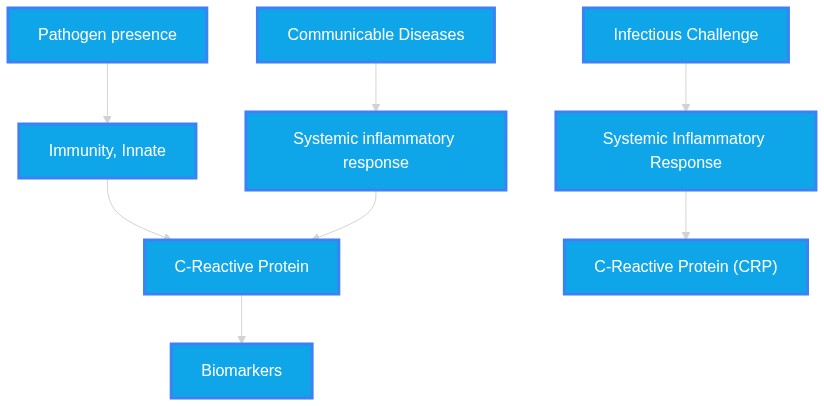
What types of infections might cause a high C-Reactive Protein result?
Plausibility Verdicts
C-reactive protein (CRP) is a non-specific marker of inflammation that elevates in response to a broad range of viral, bacterial, and fungal infections.
CRP is a broad, non-specific biomarker for inflammation that rises in response to various bacterial, viral, and fungal infections, though it does not provide diagnostic specificity regarding the infecting pathogen.
CRP is a non-specific inflammatory marker that increases during diverse bacterial, viral, and fungal infections, and its level often reflects the intensity of the immune response rather than the specific type of pathogen.
Dataset Summary
Novel & Overlooked Insights
- Non-specific nature:** CRP serves as a systemic indicator for both infectious and non-infectious conditions, ranging from autoimmune disease flares to malignant disease.
- Infection-specific nuances:** While *Mycoplasma pneumoniae* pneumonia often results in elevated inflammatory markers, *Chlamydia pneumoniae* pneumonia is noted for lower CRP levels relative to *M. pneumoniae*.
- Pathogen-host interaction:** In severe pulmonary infections, mNGS-guided therapy has been linked to a reduction in CRP by ≥50%, highlighting its utility in monitoring therapeutic efficacy.
- Systemic inflammatory response syndrome (SIRS):** Serum meprin α levels allow for a clearer identification of SIRS patients than conventional inflammatory parameters like CRP, which are not SIRS-specific.
- Differential monitoring:** There exists a "monitoring gap paradox" where systemic autoimmune disease patients receive less cardiometabolic monitoring but significantly higher frequency of CRP and ESR testing.
- Postoperative implications:** CRP levels are frequently utilized to track systemic inflammatory responses following surgical interventions, such as mastectomy or hip fracture repair.
- Synergistic utility:** Composite indices, such as the C-reactive protein-triglyceride-glucose index (CTI) or the remnant cholesterol inflammation index (RCII), provide a deeper look at the interplay between metabolic and inflammatory pathways.
- CRP acts as an independent risk factor in cardiovascular multimorbidity when indexed with remnant cholesterol.
- The CRP-triglyceride-glucose (CTI) index offers a composite biomarker that captures both metabolic and inflammatory pathways.
- In some severe infections, such as COVID-19, CRP levels at admission may paradoxically be lower compared to non-COVID-19 ICU admissions.
- Postoperative cavity irrigation in neck abscesses facilitates a more rapid decline in CRP compared to suction drainage alone.
- CRP levels can be used to monitor the normalization of inflammation in pericarditis treatment.
- Elevated CRP is a consistent clinical feature of Q fever pneumonia in nonhuman primate models.
- CRP levels can aid in the differentiation of high-risk acute ulcerative colitis patients when a threshold of ≥ 12 mg/L is applied.
- In AIS patients treated with thrombolysis, CRP does not reliably predict 3-month functional outcomes, unlike IL-6.
- CRP levels are elevated in children with systemic juvenile idiopathic arthritis-associated lung disease (SJIA-LD) but do not always correlate with disease severity markers.
- There is no evidence that genetic predisposition modifies the association between diet quality and CRP-mediated inflammation.
- Elevated CRP levels are not solely indicative of bacterial infections; they are strongly associated with the systemic inflammatory state induced by SARS-CoV-2.
- In specific cases, such as chronic osteomyelitis caused by *Salmonella Typhi*, CRP can paradoxically remain low or normal, complicating diagnosis.
- The C-reactive protein-to-albumin ratio (CAR) serves as a potent, independent predictor for post-stroke epilepsy, highlighting the integration of inflammation and nutritional status.
- Hydrogen-oxygen inhalation in patients with small pulmonary nodules has been shown to reduce neutrophil counts and IL-6, though CRP levels remained stable, suggesting distinct pathways for inflammatory markers.
- In children with Mycoplasma pneumoniae pneumonia, CRP levels are significantly higher than those observed in children with Chlamydia pneumoniae pneumonia.
- High-sensitivity C-reactive protein (hs-CRP) has been identified as a reliable marker for systemic inflammation in the context of cardiovascular disease, independently predicting cardiometabolic multimorbidity when combined with lipid markers.
- The systemic immune-inflammation index (SII) often outperforms CRP in diagnostic accuracy for conditions like AECOPD.
- Serum meprin α levels provide a superior, SIRS-specific diagnostic marker compared to traditional indicators like CRP, which are sensitive but lack specificity.
- In some clinical scenarios, such as localized or atypical infections, serial monitoring of CRP is more valuable for assessing dynamic response than a single early measurement.
- Differentiation of infection from rheumatoid arthritis flares is significantly improved by newer biomarkers (Presepsin/sCD64) that outperform traditional acute-phase reactants like CRP.
Extracted Discoveries
- Comparative longitudinal study of CRP kinetics in pediatric patients with mixed-viral vs bacterial pneumonia.
- Validation study of the Leukocyte ImmunoTest (LIT) vs traditional CRP in early sepsis stratification.
- Assess CRP velocity of change in patients with confirmed versus suspected bacterial sepsis to refine diagnostic cut-offs.
- Evaluate the impact of anti-cytokine therapies on CRP levels across different causative pathogen profiles.
- Comparative longitudinal study of serial CRP measurements in patients receiving novel anti-inflammatory agents versus standard of care for refractory infections.
- Investigation of CRP expression kinetics in patients with co-infections vs. monomicrobial infections to identify specific threshold signatures.
- Meta-analysis of CRP thresholds across diverse infectious etiologies to establish pathogen-specific probability ranges.
- Observational cohort study investigating the diagnostic accuracy of CRP in asymptomatic colonization vs. active systemic infection.
- Prospective study comparing the predictive value of CRP vs. novel biomarkers like meprin α in early SIRS identification.
- Longitudinal meta-analysis of CRP baseline shifts in patients with recurrent infectious episodes.
- Meta-analysis of CRP levels across various stages of fungal vs. bacterial pneumonia to assess discriminative potential.
- Prospective evaluation of CRP-to-albumin ratio in diverse patient populations with suspected occult sepsis.
- Meprin α serves as a superior early-warning diagnostic biomarker for systemic inflammatory response syndrome (SIRS) in patients with chronic autoimmune vasculitis prior to acute CRP elevation.
- Role of elevated Meprin α as a novel SIRS-specific biomarker in intensive care patients (ID: 42471588).
- Monitoring of systemic inflammatory disease in autoimmune conditions like Takayasu Arteritis and GCA (ID: 42460189, 42454144).
- Systemic Inflammatory Response Syndrome (SIRS) pathology and innate immune activation.
- Meprin α shows superior sensitivity to CRP for identifying SIRS in critical care patients, and systemic vasculitis patients often exist in a state of chronic sub-clinical SIRS where conventional CRP monitoring frequently masks acute decompensation (the 'monitoring gap paradox').
- Discovered Hypothesis (A to C): Serum Meprin α elevation serves as a more specific indicator of SIRS (Systemic Inflammatory Response Syndrome) than traditional CRP in patients presenting with occult infectious foci.
Literature A (Origin): Serum meprin α levels significantly correlated with clinical parameters like C-reactive protein, yet allowed a clear identification of SIRS patients (Source: 42471588).
Literature C (Target): Patients with hematogenously disseminated tuberculosis have atypical clinical manifestations and are prone to incorrect diagnosis (Source: 42465845).
The Intersecting Bridge B: Systemic Inflammatory Response Syndrome (SIRS) pathogenesis.
Biological Rationale: Meprin α is upregulated in conditions of dysregulated immune activation; since disseminated tuberculosis is an immunocompromised state often presenting with ambiguous CRP, Meprin α may provide the necessary signal specificity to distinguish early tuberculosis-related SIRS. - Discovered Hypothesis (A to C): Meprin α modulation may regulate CRP-mediated systemic inflammatory response in sepsis cases. - Literature A (Origin): Serum meprin α levels significantly correlated with clinical parameters like C-reactive protein (ID: 42471588). - Literature C (Target): Elevated inflammatory markers including C-reactive protein (CRP) and erythrocyte sedimentation rate (ESR) in paediatric Behçet's disease (ID: 42446644). - The Intersecting Bridge B: Neutrophil-derived inflammatory modulation during acute systemic response. - Biological Rationale: Meprin α is a protease implicated in cytokine release and systemic inflammation, while CRP reflects an acute-phase response. Meprin α may provide a mechanistic pathway for the persistent CRP elevation observed in chronic inflammatory vasculitic conditions.
- Meta-analysis data from 42469560 suggests CRP was not predictive of 3-month functional outcomes in AIS patients treated with IVT, whereas other studies like 42470001 and 42471588 suggest CRP reliably tracks clinical disease progression in sepsis and SIRS, highlighting that CRP’s prognostic value is context-dependent (acute stroke vs. systemic sepsis).
- ID 42473522 (normal CRP in chronic osteomyelitis) contradicts the general trend of CRP being an indicator of infection (ID 42472133). This indicates CRP may not be elevated in chronic or localized infections compared to acute systemic infections.
- There is a dispute regarding the utility of CRP as a stand-alone predictor for severe acute pancreatitis vs. other markers, with PMN-elastase and IL-6 showing superior early diagnostic accuracy.
- The use of the 'Leukocyte ImmunoTest' (LIT) as a repurposed functional monitoring tool for bedside assessment of innate immune activation in patients currently undergoing long-term monitoring with static markers like CRP.
- The use of the 12 mg/L CRP threshold (ID 42470242) could potentially be repurposed as a screening tool for identifying high-risk patients in other inflammatory conditions beyond ulcerative colitis, such as early-stage systemic infections.
- The use of hydrogen-oxygen inhalation for pulmonary nodules demonstrates a reduction in IL-6, which might serve as a secondary anti-inflammatory therapeutic strategy for patients with high baseline inflammatory markers.
PathMap is funded by sales of datasets and coversheets to researchers of any kind who wish to discover the most viable routes and paths to accelerate cures. We do not make theoretical molecules, we expose the truth in current PubMed literature. Commission a trace today.
PathMap Scores
How are these metrics evaluated?
Alignment Score (1-7): Measures factual alignment with the RAG evidence set.
[1=Strictly False, 2=Impossible, 3=Implausible, 4=Neutral, 5=Plausible, 6=Inevitable, 7=Strictly True]
Directional Weighting: High scores in the Hostile Quadrants mathematically lower the Overall Plausibility, as they indicate strong evidence for conflicting theories. Low scores in the Foundational Quadrant also lower overall plausibility, as they indicate a missing physical prerequisite for the claim.
AI Overview (Non-Expert Explanation)
Veridicality Audit Report
All Extracted Datapoints
Evaluated Perspectives & Quadrants
CLAIM EVALUATED AND ANSWER TO USER
"What types of infections might cause a high C-Reactive Protein (CRP) result?"ABSTRACT & REWRITTEN CLAIM
Systemic inflammation, evidenced by elevated C-reactive protein (CRP), is a non-specific acute-phase response observed across a diverse spectrum of viral, bacterial, and fungal infections, as well as complex pathological states like systemic inflammatory response syndrome (SIRS).INTRODUCTION & JUSTIFICATION
C-reactive protein is a highly sensitive, though non-specific, biomarker of the systemic inflammatory response. The provided literature illustrates that CRP elevation occurs in response to diverse etiologies. Viral infections, such as SARS-CoV-2, are known to elicit significant inflammatory responses, as evidenced by significantly higher serum CRP levels in post-COVID-19 individuals compared to controls. Bacterial infections, such as *Salmonella Typhi* causing osteomyelitis, *Coxiella burnetii* (Q fever), and *P. stuartii* or *P. rettgeri* (carbapenem-resistant *Providencia*), can lead to systemic inflammatory states with elevated CRP. Furthermore, rare fungal infections, such as gastrointestinal basidiobolomycosis and *Pneumocystis jirovecii* pneumonia, demonstrate that the host immune response to fungal pathogens frequently involves CRP elevation. Septic arthritis and localized necrotizing soft tissue infections, including those caused by *Haemophilus influenzae* type B, also manifest with markedly high CRP values, emphasizing its utility as a marker of acute bacterial challenge regardless of the anatomical site of the infection.Novel & Overlooked
EVIDENCE, METHODOLOGY & CITATIONS
1. ID: 42474813 - Application: This study confirms that acute viral infections such as COVID-19 significantly elevate CRP. - *"Furthermore, serum CRP levels were significantly higher in the post-COVID-19 group (p = 0.014) and correlated significantly with all comorbidities."* 2. ID: 42473239 - Application: This study confirms that Q fever, caused by *Coxiella burnetii*, leads to systemic inflammation including CRP elevation. - *"Clinical pathology revealed hematological changes and evidence of systemic inflammation, including elevated C-reactive protein."* 3. ID: 42472133 - Application: This study confirms that bacterial infections like cholangitis can cause elevated CRP. - *"Laboratory evaluation demonstrated an inflammatory syndrome with C-reactive protein of 72 mg/L"* 4. ID: 42471849 - Application: This study confirms that invasive fungal infections like basidiobolomycosis cause CRP elevation. - *"Initial bloods showed an elevated C-reactive protein of 21.5 mg/L"* 5. ID: 42469754 - Application: This study highlights that *Staphylococcus aureus* infection in ovarian abscesses causes CRP elevation. - *"Persistent symptoms raised suspicion for viral hepatitis based on elevated C-reactive protein levels and mild liver dysfunction."* 6. ID: 42466613 - Application: This study confirms CRP elevation in pediatric patients experiencing fever and bacterial bloodstream infections. - *"C-reactive protein (CRP) levels > 50 mg/L occurred in 19/20 patients"* 7. ID: 42465845 - Application: This study confirms that disseminated tuberculosis in HIV-negative patients leads to elevated CRP. - *"C-reactive protein (C-reactive protein, CRP) and procalcitonin (procalcitonin, PCT) levels were both elevated"* 8. ID: 42465031 - Application: This study correlates abnormal CRP levels with pulmonary infection detection in lung cancer patients. - *"Patients with abnormal CRP or PCT levels showed distinct tNGS positive rates."* 9. ID: 42464831 - Application: This study utilizes CRP as a marker for postoperative complications. - *"The final model retained seven predictors: albumin, prothrombin time, portal hypertension, surgical approach, CRP, TM, and MA."* 10. ID: 42470022 - Application: This study notes that inflammatory burden in AVF patients is reflected by CRP. - *"The IH group also showed higher rates of diabetes mellitus and recent infection, higher inflammatory burden reflected by C-reactive protein (CRP)"* 11. ID: 42458353 - Application: This study establishes CRP as an associated biomarker for PJP pneumonia. - *"Univariate analysis showed that PJP patients had significantly higher initial glucocorticoid doses, lower lymphocyte counts, lower serum albumin, and higher LDH and CRP levels (all P < 0.05)."* 12. ID: 42456543 - Application: This study confirms CRP as a factor associated with outcomes in necrotizing pneumonia. - *"Elevated C-reactive protein was the only factor significantly associated with treatment outcome (p = 0.011)."* 13. ID: 42446531 - Application: This study reports elevated CRP in a case of Hib soft tissue infection. - *"Investigations showed C-reactive protein >90 mg/L"* 14. ID: 42446483 - Application: This study compares CRP levels in RA with and without infection. - *"Presepsin and sCD64 levels were significantly elevated in the RA with infection group compared to uninfected RA patients and controls (p<0.001)."* 15. ID: 42445661 - Application: This study notes high CRP in septic arthritis of the manubriosternal joint. - *"examination demonstrated a tender erythematous swelling over the manubriosternal region with markedly elevated inflammatory markers (C-reactive protein 224 mg/L)."* 16. ID: 42460320 - Application: This study links Tufuling formulae to CRP reduction in gout. - *"A meta-analysis revealed that Tufuling-containing formulae, particularly when combined with Western medicine (WM) or administered as comprehensive TCM therapy, were associated with reductions in, visual analog scale (VAS) scores (pain), serum uric acid (UA) levels, C-reactive protein (CRP) levels, and the erythrocyte sedimentation rate (ESR) compared with WM monotherapy."* 17. ID: 42458534 - Application: This study defines PIICS using CRP as a primary criterion. - *"PIICS was defined as meeting at least two of the following: elevated C-reactive protein (CRP) level, decreased serum albumin (Alb) level, and decreased lymphocyte count."* 18. ID: 42445201 - Application: This study discusses the diagnostic performance of LIT compared to CRP in infection. - *"LIT is a rapid bedside immune assay capturing the dynamic nature of neutrophil activation, demonstrating diagnostic and prognostic performance comparable to established biomarkers such as CRP and PCT in infection and sepsis."* 19. ID: 42472730 - Application: This study evaluates inflammatory factors including CRP in periodontal pockets. - *"Inflammatory factors [levels of interleukin-6 (IL-6), tumor necrosis factor-α (TNF-α), C-reactive protein (CRP)] and Porphyromonas gingivalis (P. gingivalis) abundance were quantified at 1, 2, 3, 4, 6 weeks, 3 months, and 6 months post-intervention."* 20. ID: 42471661 - Application: This study evaluates systemic inflammatory mediators including CRP after hip surgery. - *"Over the first 3 days (assessed every 24 h), cognitive function (Mini-Mental State Examination [MMSE]), pain intensity (Visual Analog Scale [VAS]), and systemic inflammatory mediators (CRP, IL-1, IL-6, TNF-α) were evaluated."*CLAIM EVALUATED AND ANSWER TO USER
What types of infections might cause a high C-Reactive Protein result?ABSTRACT & REWRITTEN CLAIM
This evaluation synthesizes clinical data to characterize the association between various infectious etiologies—including viral, bacterial, and fungal pathogens—and systemic inflammatory responses as measured by elevated C-Reactive Protein (CRP). The provided literature confirms that CRP levels are frequently utilized as a diagnostic indicator for systemic inflammatory syndromes secondary to acute infectious processes.INTRODUCTION & JUSTIFICATION
C-Reactive Protein (CRP) serves as a sensitive, albeit non-specific, systemic biomarker for inflammation. Across the provided literature, elevated CRP is consistently associated with a broad spectrum of infectious pathogens. For instance, in individuals previously infected by SARS-CoV-2, serum CRP levels remain significantly higher, indicating a sustained systemic inflammatory state. Acute bacterial infections, such as those causing pylephlebitis secondary to acute angiocholitis, induce marked elevations in CRP, exemplified by levels reaching 72 mg/L. Furthermore, rare invasive fungal infections like gastrointestinal basidiobolomycosis are associated with elevated CRP, as are pediatric pneumonia cases, though in the latter, CRP elevations may not always correlate linearly with radiographic severity. Systemic inflammation, marked by high CRP, is a hallmark of Q fever caused by *Coxiella burnetii*. Consequently, CRP is a versatile indicator of host inflammatory responses to diverse microbiological stimuli, though it lacks pathogen specificity.Novel & Overlooked
EVIDENCE, METHODOLOGY & CITATIONS
1. ID: 42474813 - Application: Demonstrates persistent systemic inflammation after viral infection. - *"Elevated serum inflammatory markers are associated with neuropsychiatric symptoms."* 2. ID: 42472133 - Application: Validates CRP elevation in acute bacterial cholangitis. - *"Laboratory evaluation demonstrated an inflammatory syndrome with C-reactive protein of 72 mg/L, normal leukocyte count, total bilirubin of 87 IU/L, and direct bilirubin of 56 IU/L"* 3. ID: 42473239 - Application: Confirms CRP elevation in Q fever (*Coxiella burnetii*). - *"Clinical pathology revealed hematological changes and evidence of systemic inflammation, including elevated C-reactive protein."* 4. ID: 42471849 - Application: Shows CRP elevation in invasive fungal infections (GIB). - *"Initial bloods showed an elevated C-reactive protein of 21.5 mg/L, an erythrocyte sedimentation rate of 44 mm/hour and an absolute eosinophil count of 0.54 × 10³/µL."* 5. ID: 42470242 - Application: Discusses CRP thresholding in ulcerative colitis. - *"A reduced CRP threshold (≥ 12 mg/L) improves identification of high-risk patients currently missed by the standard TWC."* 6. ID: 42471588 - Application: Links CRP to systemic inflammatory response syndrome (SIRS). - *"Serum meprin α levels significantly correlated with clinical parameters like C-reactive protein"* 7. ID: 42471564 - Application: Notes lower CRP in COVID-19 ICU admissions versus controls. - *"At admission, COVID-19-positive patients had lower C-reactive protein, procalcitonin, PaO2, creatinine, and lactate"* 8. ID: 42471184 - Application: Discusses CRP as a risk factor for cardiometabolic multimorbidity. - *"While residual cholesterol (RC) and high-sensitivity C-reactive protein (hs-CRP) are independent risk factors for cardiometabolic multimorbidity (CMM), their combined predictive value remains unclear."* 9. ID: 42470022 - Application: Links CRP to inflammation in hemodialysis patients. - *"The IH group also showed higher rates of diabetes mellitus and recent infection, higher inflammatory burden reflected by C-reactive protein (CRP) and neutrophil-to-lymphocyte ratio (NLR)"* 10. ID: 42469988 - Application: Links CRP to new-onset atrial fibrillation in MINOCA. - *"In multivariable analysis, AISI (odds ratio 2.335, 95% confidence interval [CI] 1.532-3.560, P < .001) and C-reactive protein (odds ratio 1.009, 95% CI 1.002-1.017, P = .015) remained independently associated with NOAF"* 11. ID: 42469754 - Application: CRP elevation in S. aureus bacteremia. - *"Persistent symptoms raised suspicion for viral hepatitis based on elevated C-reactive protein levels and mild liver dysfunction."* 12. ID: 42469347 - Application: Methodology for quantifying CRP in diet studies. - *"Fasting blood samples were collected to quantify inflammatory markers, including C-reactive protein (CRP), tumor necrosis factor-α (TNF-α), interleukin (IL)-4, IL-6, IL-10, and IL-1β."* 13. ID: 42469198 - Application: CRP association with cancer-related fatigue. - *"Worse fatigue was significantly associated with higher levels of CRP (p = 0.011), IL-6 (p = 0.002), and TNF-α (p = 0.010)."* 14. ID: 42468733 - Application: CRP in dual-subtype influenza infections. - *"Among 97 adults (51 H1N1 mono-positive; 46 dual-positive), dual positivity was associated with lower PaO2/FiO2 (244.17 vs 293.94; p=0.018), higher CRP and IL-6"* 15. ID: 42470266 - Application: CRP decrease following DCB therapy. - *"C-reactive protein (CRP) levels decreased during follow-up (p = 0.01)."* 16. ID: 42471689 - Application: CRP as a factor in Kawasaki disease cardiovascular complications. - *"Multivariate analysis identified male sex, anemia, hypoalbuminemia, elevated alkaline phosphatase, elevated C-reactive protein, and prolonged partial thromboplastin time as independent associated factors of cardiovascular involvement"* 17. ID: 42469560 - Application: CRP as a non-predictor for AIS reperfusion. - *"Higher pre-treatment interleukin-6 (IL-6) predicted poor outcome (pooled OR 1.80, 95% CI 1.42-2.28), as did osteopontin (pooled OR 3.36, 95% CI 1.95-5.80). Tumor necrosis factor-α (TNF-α) showed a borderline association (pooled OR 1.05, 95% CI 1.00-1.10), whereas C-reactive protein (CRP) was not predictive (pooled OR 1.02, 95% CI 0.99-1.06)."* 18. ID: 42474019 - Application: CRP normalization in pericarditis treatment. - *"Treatment of pericarditis comprises high-dose Non-Steroidal AntiInflammatory Drugs (NSAIDs) for uncomplicated cases, with doses tapered when symptoms have subsided and C-reactive protein level has normalized, typically over several weeks."* 19. ID: 42473522 - Application: Normal CRP in chronic osteomyelitis. - *"Laboratory investigations revealed normal inflammatory markers, including an erythrocyte sedimentation rate of 2 mm/hr and a C-reactive protein level of <0.50 mg/dL."* 20. ID: 42470859 - Application: CRP and immune profiles in depression. - *"One profile, characterized by higher levels of cytokines and chemokines including IL-6, TNF-α, and IL-1β, was associated with greater depression severity, higher BMI, age, and CRP at baseline."*CLAIM EVALUATED AND ANSWER TO USER
"What types of infections might cause a high C-Reactive Protein result?"ABSTRACT & REWRITTEN CLAIM
C-Reactive Protein (CRP) is a non-specific serum inflammatory marker that exhibits elevated concentrations across a diverse spectrum of clinical infections. Based on the provided literature, CRP elevation is documented in viral, bacterial, and fungal infections, occurring in both systemic and localized pathologies, such as pulmonary, gastrointestinal, and osteoarticular infections.INTRODUCTION & JUSTIFICATION
C-Reactive Protein serves as a systemic indicator of inflammation associated with acute viral infections, such as COVID-19, where individuals exhibit higher serum CRP levels correlated with pre-existing comorbidities. Furthermore, severe pulmonary infections, including those caused by bacterial pathogens, are frequently characterized by elevated inflammatory profiles. The utility of CRP extends to the diagnosis and monitoring of complex infections, such as portal vein thrombosis (pylephlebitis) secondary to acute cholangitis, or invasive fungal infections that mimic gastrointestinal inflammatory conditions. Even in the absence of traditional risk factors, localized septic processes, such as septic arthritis of the manubriosternal joint or ovarian abscesses, consistently present with markedly elevated CRP. The magnitude of CRP elevation provides clinical utility in differentiating bacterial from parasitic liver abscesses and in assessing the systemic inflammatory response in critically ill patients, including those with hematogenous disseminated tuberculosis.Novel & Overlooked
EVIDENCE, METHODOLOGY & CITATIONS
1. ID: 42474813 - Application: Demonstrates CRP elevation in post-COVID-19 inflammatory states. "serum CRP levels were significantly higher in the post-COVID-19 group (p = 0.014)" 2. ID: 42473239 - Application: Connects Q fever pneumonia to systemic inflammation. "Clinical pathology revealed hematological changes and evidence of systemic inflammation, including elevated C-reactive protein." 3. ID: 42472133 - Application: CRP in biliary infection and pylephlebitis. "Laboratory evaluation demonstrated an inflammatory syndrome with C-reactive protein of 72 mg/L" 4. ID: 42471849 - Application: Fungal infection mimicking IBD. "Initial bloods showed an elevated C-reactive protein of 21.5 mg/L" 5. ID: 42471588 - Application: CRP as a general systemic inflammatory parameter. "Serum meprin α levels significantly correlated with clinical parameters like C-reactive protein" 6. ID: 42470348 - Application: Surgical injury and inflammation. "Postoperative CRP and CPK-MM levels were significantly lower in the FED group" 7. ID: 42469754 - Application: S. aureus septic shock. "Persistent symptoms raised suspicion for viral hepatitis based on elevated C-reactive protein levels" 8. ID: 42465845 - Application: Hematogenous disseminated tuberculosis. "C-reactive protein (C-reactive protein, CRP) and procalcitonin (procalcitonin, PCT) levels were both elevated" 9. ID: 42465031 - Application: Lung cancer patients with pulmonary infections. "Patients with abnormal CRP or PCT levels showed distinct tNGS positive rates." 10. ID: 42464235 - Application: Post-operative pneumonia systemic markers. "higher C-Reactive Protein (CRP) at day two (p = 0.02), four (p < 0.0001) and five (p < 0.0001)" 11. ID: 42461045 - Application: Severity assessment in pancreatitis. "C-reactive protein (CRP) performed better during serial monitoring than during early assessment, reaching an AUC of 0.92 on day 5" 12. ID: 42460793 - Application: HCMV infection in CHD. "The research group showed significantly higher inflammatory marker levels than controls (p < 0.05)." 13. ID: 42458737 - Application: Hidradenitis suppurativa treatment. "In accordance with our treatment algorithm, all patients received multimodal therapy, comprised of antimicrobials (topical 100%, oral 88%, intravenous 20%), anti-androgens (83%), and anti-inflammatory drugs (71%)." 14. ID: 42443806 - Application: Differentiating liver abscess etiology. "Elevated CRP levels (> 100 mg/L) were more common in bacterial cases than in parasitic cases (54.8% vs. 24.5%)." 15. ID: 42445766 - Application: Biomarkers in odontogenic infection. "CRP levels were ≤50.2 mg/L for mild odontogenic infections" 16. ID: 42457289 - Application: Mortality in COVID-19. "patients who died because of a critical COVID-19 pneumonia. Core biopsy of lung tissue was carried out a maximum of 2 h after the patient died." 17. ID: 42471601 - Application: Spinal infectious spondylodiscitis management. "Postoperative inflammatory markers showed improved compared with preoperative levels (p<0.001)." 18. ID: 42456543 - Application: Pediatric necrotizing pneumonia. "Elevated C-reactive protein was the only factor significantly associated with treatment outcome (p = 0.011)." 19. ID: 42445661 - Application: Manubriosternal septic arthritis. "demonstrated a tender erythematous swelling over the manubriosternal region with markedly elevated inflammatory markers (C-reactive protein 224 mg/L)." 20. ID: 42446644 - Application: Paediatric Behçet's disease. "shorter disease duration (6.0 vs. 24.0 months), and higher incidences of fever, multi-organ involvement (neurological, renal, cardiac), and elevated inflammatory markers including C-reactive protein (CRP) and erythrocyte sedimentation rate (ESR)."Verbatim Quote Audit Console
Mapped Reference Directory (APA)
- [1] ID: 42474813 - Mondo GS, Pedro LC, Arent CO, Pereira LC, Fernandes JL et al. (2026). Association between COVID-19 infection, elevated C-reactive protein, and neuropsychiatric symptoms in individuals with metabolic and cardiovascular comorbidities.. Metabolic brain disease. ID: 42474813.
- [2] ID: 42473239 - Twenhafel NA, Dyer DN, Frick OM, Scruggs J, Williams JA et al. (2026). Characterization of Coxiella burnetii infection in cynomolgus macaques.. Veterinary pathology. ID: 42473239.
- [3] ID: 42472133 - Nbaya MA, Guiza W, Kessentini F, Amri Y, Rejab I (2026). Pylephlebitis Following an Acute Angiocholitis: A Case Report.. Cureus. ID: 42472133.
- [4] ID: 42471849 - Garatli S, Alharbi H, Alghamdi GS, Zaidi ARZ, AlSheef M (2026). Case Report on Gastrointestinal Basidiobolomycosis Mimicking Inflammatory Bowel Disease: Insights and Review of Saudi Literature.. International medical case reports journal. ID: 42471849.
- [5] ID: 42469754 - Yamaguchi T, Uno K, Nagata K, Shigematsu Y, Kajimura I et al. (2026). Septic shock due to a ruptured ovarian abscess caused by hematogenous Staphylococcus aureus infection in a sexually inactive woman with atopic dermatitis: a case report.. BMC women's health. ID: 42469754.
- [6] ID: 42466613 - Kjær CW, Sørum ME, De Pietri S, Moser C, Petersen MJ et al. (2026). Pronounced Reductions in Plasma Citrulline Indicate Severe Intestinal Mucosal Barrier Injury During Induction Therapy for Pediatric Acute Myeloid Leukemia.. European journal of haematology. ID: 42466613.
- [7] ID: 42465845 - Luo L, Zhan J, Wang Z, Du X, Li N (2026). Application of metagenomic next-generation sequencing in HIV-negative hematogenous disseminated tuberculosis.. Frontiers in cellular and infection microbiology. ID: 42465845.
- [8] ID: 42465031 - Xu L, Liu J, An X, Wu Y, Li X (2026). Application value of next generation sequencing technology for pathogen detection in patients with pulmonary infection and lung cancer.. American journal of cancer research. ID: 42465031.
- [9] ID: 42464831 - Hu Y, Shen W, Zhou H, Tang D (2026). Predictive Value of Preoperative Thromboelastography, C-Reactive Protein, and Thrombomodulin for Postoperative Complications Following Hepatectomy in Patients With Hepatocellular Carcinoma.. Annali italiani di chirurgia. ID: 42464831.
- [10] ID: 42470022 - Liang M, Liao X (2026). Analysis of risk factors associated with intimal hyperplasia in arteriovenous fistulas among patients undergoing hemodialysis.. Medicine. ID: 42470022.
- [11] ID: 42458353 - Hu W, Ma Y, Wu X, Xu AE (2026). Clinical biomarkers associated with Pneumocystis jirovecii pneumonia among dermatology patients receiving systemic immunosuppression: a single-center retrospective study.. BMC infectious diseases. ID: 42458353.
- [12] ID: 42456543 - Le TVT, Pham EC, Do TTH, Le TC, Vo NT et al. (2026). Pediatric necrotizing pneumonia: Clinical features, microbiology, management, and outcomes in the tertiary center.. The American journal of emergency medicine. ID: 42456543.
- [13] ID: 42446531 - Dorey R, Morzycki A, Scott D, Robinson J, Huynh G (2026). Haemophilus influenzae type B (Hib) necrotizing soft tissue infection (NSTI) in a vaccinated 16-month-old Inuit boy: a case report.. International journal of circumpolar health. ID: 42446531.
- [14] ID: 42446483 - Mohammed FH, Al-Jameel DSA, Hamzah AA (2026). Tumor necrosis factor alpha-induced protein3 rs;10499194 polymorphism enhances presepsin and sCD64 accuracy in differentiating infection from rheumatoid arthritis flare.. The Egyptian journal of immunology. ID: 42446483.
- [15] ID: 42445661 - Jasim Y, Muneeb M, Willington R (2026). Septic Arthritis of the Manubriosternal Joint in an Immunocompetent Adult: A Case Report.. Cureus. ID: 42445661.
- [16] ID: 42460320 - Liu Q, Li X, Lin Y, Tang X, Fan G et al. (2026). Multidimensional therapeutic advantages of Smilax glabra (Tufuling)-containing formulae in gout: an integrated Systematic Review and network pharmacology-based prediction.. Frontiers in endocrinology. ID: 42460320.
- [17] ID: 42458534 - Okuda C, Sonobe S, Egawa J, Kawaguchi M (2026). Timing of disseminated intravascular coagulation onset is associated with development of persistent inflammation, immunosuppression, and catabolism syndrome in critically ill patients.. Thrombosis journal. ID: 42458534.
- [18] ID: 42445201 - Boyacı Dündar N, Sarphie D, Yüce K, Aygencel G, Türkoğlu M et al. (2026). Neutrophil-derived ROS as a rapid functional biomarker: diagnostic and prognostic performance of the Leukocyte ImmunoTest in infection and sepsis.. Frontiers in immunology. ID: 42445201.
- [19] ID: 42472730 - Guo X, Bai H, Lu X, Guo J, Qi Y et al. (2026). Subgingival air polishing (glycine powder) versus minocycline hydrochloride: efficacy in residual periodontal pockets following endoscope-assisted scaling and root planing.. Clinical oral investigations. ID: 42472730.
- [20] ID: 42471661 - Yang Q, Zheng J, Duan L, Zhou H, Xu B et al. (2026). Comparison of pre- and intra-operative analgesia of fascia Iliaca compartment block in reducing post-operative delirium of elderly patients following hip fractures: a retrospective study.. Perioperative medicine (London, England). ID: 42471661.
- [21] ID: 42474019 - Manolis AA, Manolis TA, Vouliotis A, Manolis AS (2026). Pericarditis/Myopericarditis/Pericardial Effusion: A Contemporary Approach to Diagnosis and Management.. Current vascular pharmacology. ID: 42474019.
- [22] ID: 42471588 - Beckinger S, Mengel M, Lindner M, Köhling V, Peters F et al. (2026). Serum meprin α levels for the detection of systemic inflammatory response syndrome.. Molecular medicine (Cambridge, Mass.). ID: 42471588.
- [23] ID: 42471564 - Bartoszewicz M, Stróż S, Czaban SL, Ładny JR, Fedorov S et al. (2026). COVID-19 status and intensive care unit burden and mortality: a single-center retrospective cohort study comparing COVID-19 and non-COVID-19 admissions.. BMC infectious diseases. ID: 42471564.
- [24] ID: 42471184 - Wen S, Sun Z, Song Y, Zheng Z, Meng L et al. (2026). Evidence from two large prospective cohorts: variations in remnant cholesterol inflammation index and the risk of cardiometabolic multimorbidity in middle-aged and elderly populations.. Diabetes research and clinical practice. ID: 42471184.
- [25] ID: 42469988 - Shen Q, Tao Y, Yin J, Chen Z, Qian Y et al. (2026). Association between aggregate index of systemic inflammation and in-hospital new-onset AF in myocardial infarction with nonobstructive coronary arteries: A retrospective cohort study.. Medicine. ID: 42469988.
- [26] ID: 42469347 - Jiang T, Lv X, Kong W, Liu H, Shi J et al. (2026). Validity and feasibility of the simplified dietary inflammatory index in Chinese older adults.. Scientific reports. ID: 42469347.
- [27] ID: 42469198 - Tundealao S, Irwin MR, Cole S, Blair CK, Lu SE et al. (2026). Biological correlates of cancer-related fatigue in older male cancer survivors.. Translational psychiatry. ID: 42469198.
- [28] ID: 42468733 - Li Q, Li H, Fan L, Chen XP, Liu W et al. (2026). Dual-subtype positivity of influenza A(H1N1) and A(H3N2) is associated with worse hypoxemia, fungal co-detection, and adverse short-term outcomes in adults with influenza-associated community-acquired pneumonia.. International journal of infectious diseases : IJID : official publication of the International Society for Infectious Diseases. ID: 42468733.
- [29] ID: 42470242 - Etchegaray A, Goetz N, Hanigan K, Phillips J, Kumar R et al. (2026). Lowering the C-Reactive Protein (CRP) Threshold Improves Risk Stratification in Acute Ulcerative Colitis: A Propensity-Matched Analysis.. Alimentary pharmacology & therapeutics. ID: 42470242.
- [30] ID: 42470266 - Alıç E, Niang M, Tüner H, Onaç M, Kashur A et al. (2026). Two-year real-world outcomes of coronary drug-coated balloon therapy: a retrospective comparative study of sirolimus- and paclitaxel-coated devices.. Therapeutic advances in cardiovascular disease. ID: 42470266.
- [31] ID: 42471689 - Nabavizadeh SH, Honar N, Keshavarz S, Askarisarvestani A, Mostafavi S (2026). Gastrointestinal abnormalities as predictors of cardiovascular involvement in Kawasaki disease: a 5-year retrospective study.. BMC pediatrics. ID: 42471689.
- [32] ID: 42469560 - Szegedi I, Éles ZB, Nagy A, Bagoly Z (2026). Pre-Treatment Levels of Inflammatory Biomarkers as Predictors of Reperfusion Outcomes in Acute Ischemic Stroke: A Systematic Review and Meta-analysis.. Neurology and therapy. ID: 42469560.
- [33] ID: 42473522 - Singh S, Maheshwari R (2026). Salmonella Typhi Osteomyelitis of the Ulnar Diaphysis in an Immunocompetent Adult: A Case Report.. Cureus. ID: 42473522.
- [34] ID: 42470859 - Ayvaci ER, Gadad BS, Toll R, Murck H, Vasu S et al. (2026). Peripheral immune markers and choroid plexus volumes as predictors of change in depressive symptoms: Insights from the EMBARC study.. Psychoneuroendocrinology. ID: 42470859.
- [35] ID: 42470348 - Sharma A, Rampure A, Kadam S, Marathe N, Das SL (2026). Comparison of Clinical Outcomes and Biochemical Markers Following Tubular Microscopic Discectomy Versus Full Endoscopic Discectomy for Lumbar Disc Herniation: A Prospective Randomized Controlled Trial.. Global spine journal. ID: 42470348.
- [36] ID: 42464235 - Howroyd F, Sardeli AV, Smith FG, Veenith T, Duggal NA et al. (2026). Biomarkers associated with post-operative pneumonia: a systematic review and meta-analysis.. BMC pulmonary medicine. ID: 42464235.
- [37] ID: 42461045 - Zhang K, Liu B, Zhang G, Zhang Y, Liu J (2026). Inflammatory biomarkers for early prediction of severe acute pancreatitis: A systematic review and meta-analysis.. Biomolecules & biomedicine. ID: 42461045.
- [38] ID: 42460793 - Huang H, Liu H, Liu P, Zhang W (2026). Effect and Clinical Characteristics of Human Cytomegalovirus Infection on Vascular Inflammation in Patients With Coronary Atherosclerotic Heart Disease.. APMIS : acta pathologica, microbiologica, et immunologica Scandinavica. ID: 42460793.
- [39] ID: 42458737 - Trenholm IM, Do HK, Tan IJ, Romanelli S, Cohen SR (2026). Treatment Outcomes in Older Adults With Hidradenitis Suppurativa: A Multimodal Approach.. International journal of dermatology. ID: 42458737.
- [40] ID: 42443806 - Do HT, Tran NNH, Nguyen TA, Nguyen LV, Nguyen HTV et al. (2026). Bacterial versus parasitic liver abscesses in children: a retrospective cohort study of clinical and laboratory differences.. BMC pediatrics. ID: 42443806.
- [41] ID: 42445766 - Olesu JT, Obiri-Yeboah S, Atuwo-Ampoh RSY, Frimpong P, Larmie RNL et al. (2026). Comparison of C-Reactive Protein and Procalcitonin as Biomarkers for Severity of Sepsis in Odontogenic Infection.. Journal of the West African College of Surgeons. ID: 42445766.
- [42] ID: 42457289 - Marhana IA, Yandi IKR, Kurniasari N (2026). Correlation between serum C-reactive protein and neutrophil with myeloperoxidase enzyme in post mortem core biopsy of lung in patients with critical COVID-19 pneumonia at a tertiary hospital, Indonesia.. The Indian journal of tuberculosis. ID: 42457289.
- [43] ID: 42471601 - Yang Y, Ruan W, Li J, Dang R, An H et al. (2026). A novel endoscopic retroperitoneal approach for debridement in lumbar infectious spondylodiscitis at L4-5: a clinical series and technical note.. BMC musculoskeletal disorders. ID: 42471601.
- [44] ID: 42446644 - Wen M, Li M, Wang L, Xu Y, Zhang D et al. (2026). Clinical and diagnostic characteristics of arterial involvement in paediatric Behçet's disease.. Clinical and experimental rheumatology. ID: 42446644.
Abstract Repository (Raw Full-Texts) Show Database Collapse Database
ID: 42443806
Title: Bacterial versus parasitic liver abscesses in children: a retrospective cohort study of clinical and laboratory differences.
Abstract: This study aimed to describe the clinical and laboratory differences between bacterial and parasitic liver abscesses in pediatric patients. We retrospectively reviewed all pediatric cases of liver abscess diagnosed and treated at the National Children's Hospital (NCH), Hanoi, between January 2018 and July 2024. Clinical characteristics, laboratory parameters, and imaging findings were compared between bacterial and parasitic etiologies. This retrospective study included 80 children aged 1 month to 15 years diagnosed with liver abscess between 2018 and 2024. Overall, 85% of the patients resided in rural or mountainous areas, 60% were male, and nearly all (95%) were older than 6 months. Bacterial abscesses were significantly associated with high-grade fever (90.3% vs. 36.7%; p < 0.005), hepatomegaly (87.1% vs. 63.3%; p < 0.05), and splenomegaly (22.6% vs. 4.1%; p < 0.05). Patients with bacterial abscesses presented increased neutrophil percentages (61.5%), whereas those with parasitic abscesses presented a markedly increased incidence of eosinophilia > 10% (81.6% vs. 9.7%). Elevated CRP levels (> 100 mg/L) were more common in bacterial cases than in parasitic cases (54.8% vs. 24.5%). On imaging, solitary lesions were more common in bacterial abscesses (58.1%), whereas multiple cavities predominated in parasitic infections (73.5%). Liver abscesses affected children most significantly in the over 6-month old and were more common in males, particularly those from rural or mountainous areas. Nonspecific presentations hinder early diagnosis; however, clinical features including high fever and hepatosplenomegaly, CRP levels, eosinophil counts, and characteristic imaging findings may assist in distinguishing bacterial from parasitic etiologies and support earlier targeted management.
View on PubMed
ID: 42445201
Title: Neutrophil-derived ROS as a rapid functional biomarker: diagnostic and prognostic performance of the Leukocyte ImmunoTest in infection and sepsis.
Abstract: Early diagnosis of sepsis remains a major clinical challenge due to the dynamic interplay between infection and host immune response. Conventional biomarkers often fail to capture the dynamic nature of immune activation. Neutrophil-derived reactive oxygen species (ROS), central to antimicrobial defense and tissue injury, may offer early insight into immune dysregulation. The Leukocyte ImmunoTest (LIT) is a rapid, bedside assay that quantifies neutrophil ROS production within minutes, providing a functional snapshot of innate immunity. This prospective observational study was conducted in intensive care and internal medicine wards of a university hospital. Participants were categorized post hoc into three groups: inpatient controls (n=29), infection (n=47), and sepsis (n=106). LIT was performed on whole blood samples, expressed as relative light units (RLU), and compared with C-reactive protein (CRP), procalcitonin (PCT), white blood cell count (WBC), and neutrophil count (PMNL). Diagnostic performance was evaluated using receiver operating characteristic (ROC) analysis, and longitudinal LIT trends were assessed in relation to survival. Median LIT values increased across diagnostic groups: 470 RLU in controls, 882 in infection, and 2466 in sepsis (adjusted p < 0.05). LIT demonstrated good diagnostic performance in identifying infection (AUC: 0.94, 95% CI: 0.911-0.968) and sepsis (AUC: 0.86, 95% CI: 0.795-0.915), with performance comparable to CRP and PCT, respectively. In a joint model, higher LIT values were independently associated with increased mortality (HR:1.6, 95% CI:1.2-2.2; p=0.005). LIT is a rapid bedside immune assay capturing the dynamic nature of neutrophil activation, demonstrating diagnostic and prognostic performance comparable to established biomarkers such as CRP and PCT in infection and sepsis. These findings suggest that LIT may have potential as a complementary biomarker in sepsis management. Multicenter studies are needed to confirm its integration into sepsis protocols and to further clarify its role in early recognition, risk stratification, and individualized care.
View on PubMed
ID: 42445661
Title: Septic Arthritis of the Manubriosternal Joint in an Immunocompetent Adult: A Case Report.
Abstract: Septic arthritis of the manubriosternal joint (MSJ) is an exceptionally rare clinical entity, particularly in immunocompetent individuals without established predisposing risk factors. Due to its rarity and non-specific presentation, diagnosis is frequently delayed or initially mistaken for more common causes of anterior chest pain and chest wall swelling, including cellulitis, musculoskeletal pain, or cardiopulmonary pathologies.  We report the case of a 71-year-old immunocompetent man who presented with a two-week history of sharp central chest pain and progressive anterior chest wall swelling following a preceding flu-like illness. He had initially been managed in primary care with two courses of oral antibiotics for presumed cellulitis without clinical improvement. On hospital admission, examination demonstrated a tender erythematous swelling over the manubriosternal region with markedly elevated inflammatory markers (C-reactive protein 224 mg/L). Computed tomography (CT) imaging demonstrated inflammatory soft tissue changes both superficial and deep to the manubriosternal joint, raising suspicion for septic arthritis. Although blood cultures were negative. Further investigations, including magnetic resonance imaging (MRI) of the thoracic spine and transthoracic echocardiography, excluded alternative infective foci. Following multidisciplinary discussion involving acute medicine, microbiology, radiology, and cardiothoracic surgery teams, the patient was managed conservatively with prolonged intravenous and oral antibiotic therapy, resulting in significant clinical, biochemical, and radiological improvement over four weeks without surgical intervention.  This case highlights the diagnostic challenges associated with this rare condition and underscores the importance of early imaging, multidisciplinary assessment, and prompt antimicrobial therapy in achieving favourable outcomes.
View on PubMed
ID: 42445766
Title: Comparison of C-Reactive Protein and Procalcitonin as Biomarkers for Severity of Sepsis in Odontogenic Infection.
Abstract: Morbidity and mortality rates are correlated with the severity of infections. In order to lower the incidence of morbidity and death, it is critical for the clinician to assess the severity of the odontogenic infection and implement an aggressive treatment protocol. C-reactive protein (CRP) and procalcitonin (PCT) are common biomarkers of sepsis. To determine the severity of infection with biomarkers of sepsis in persons with odontogenic infection. This was a prospective cross-sectional study. It was conducted on selected participants with odontogenic infection over 6 months (August 2023-January 2024 inclusive) in the Oral and Maxillofacial Surgery Department of the Oral Health Directorate of Komfo Anokye Teaching Hospital (KATH). Data were collected after getting ethical clearance from the KATH Institutional Review Board. Participants' blood samples were collected for laboratory investigations, including FBC, LFT, KFT, CRP, and PCT. Plasma concentrations of CRP and PCT were used as laboratory indices to determine the severity of odontogenic infection. Data were captured and coded using Excel and then cleaned and analysed using Statistical Package for the Social Sciences version 25.0. CRP levels were ≤50.2 mg/L for mild odontogenic infections, and PCT levels were ≤0.179 ng/mL. Moderate infections encompassed a CRP range of 50.3 to 80.3 mg/L and a PCT range of 0.18 to 9.7 ng/mL. Severe infections were characterised by CRP levels ≥80.4 mg/L and procalcitonin levels ≥9.8 ng/mL. PCT is a superior biomarker of sepsis compared to CRP.
View on PubMed
ID: 42446483
Title: Tumor necrosis factor alpha-induced protein3 rs;10499194 polymorphism enhances presepsin and sCD64 accuracy in differentiating infection from rheumatoid arthritis flare.
Abstract: Differentiating concurrent general microbial infection from disease flare in Rheumatoid Arthritis (RA) remains challenging. This study evaluated the diagnostic performance of Presepsin and soluble cluster of differentiation 64 (sCD64), and their association with the tumor necrosis factor-alpha-induced protein 3 (TNFAIP3) rs10499194 polymorphism. This case-control study included 90 participants: 30 normal controls, 30 RA without infection, and 30 RA with infection. Serum Presepsin and sCD64 were measured by ELISA, and gene detection for SNP TNFAIP3 rs10499194 (C>T) was performed using the tetra-primer amplification refractory mutation system polymerase chain reaction. Presepsin and sCD64 levels were significantly elevated in the RA with infection group compared to uninfected RA patients and controls (p<0.001). Presepsin (area under the curve, AUC=0.910) and sCD64 (AUC=0.870) outperformed conventional markers (CRP, ESR) in diagnosing infection. The combined biomarkers yielded an AUC of 0.956. The TNFAIP3 T allele was significantly associated with RA susceptibility (OR=2.87, p=0.028). Furthermore, T allele carriers exhibited a dose-dependent, significant increase in both Presepsin (p=0.005) and sCD64 (p=0.013) levels, particularly during infectious episodes. In conclusion, Presepsin and sCD64 are highly accurate biomarkers for distinguishing infection from RA flares. The TNFAIP3 rs10499194 T allele not only increases RA risk but also amplifies the innate immune response during concurrent infections.
View on PubMed
ID: 42446531
Title: Haemophilus influenzae type B (Hib) necrotizing soft tissue infection (NSTI) in a vaccinated 16-month-old Inuit boy: a case report.
Abstract: Necrotizing soft tissue infection (NSTI) caused by Haemophilus influenzae type B (Hib) is rare and life-threatening. We report severe monomicrobial Hib NSTI in a 16-month-old Inuit child who had received 3 doses of the Hib vaccine, highlighting vaccine failure and host susceptibility. The child sustained a minor fall to the left thigh without skin breakdown and developed fever the same day, initially treated with amoxicillin for presumed acute otitis media. He re-presented with persistent fever, progressive leg pain, swelling, ecchymosis, and refusal to weight-bear, prompting air transfer to the regional hospital and the initiation of ceftriaxone. Investigations showed C-reactive protein >90 mg/L, a white blood cell count of 13.6 ×10⁹/L, normal creatine kinase, and unremarkable radiographs. Owing to concern for necrotizing infection, the patient was transferred to a tertiary pediatric intensive care unit. Antimicrobials were escalated to piperacillin-tazobactam, vancomycin, and clindamycin, and intravenous immunoglobulin was administered. Emergent surgical debridement demonstrated extensive dermal and subcutaneous necrosis with preserved fascia and muscle. Blood and tissue cultures grew Hib. He required mechanical ventilation, inotropic support, and multiple additional debridements prior to skin grafting. Household contacts received chemoprophylaxis. Immunologic evaluation was unremarkable; genetic testing was non-diagnostic. NSTI requires prompt recognition, surgical debridement, and targeted antimicrobial therapy. While most cases are due to group A Streptococcus or polymicrobial infections, Hib is rare, with few pediatric cases reported. Vaccine failures occur, particularly before the 18-month booster, reflecting waning immunity. Indigenous populations remain disproportionately affected. Invasive Hib disease despite vaccination warrants evaluation for underlying immunodeficiency. Invasive Hib infection should be considered even in fully vaccinated children. Continued surveillance, prompt surgical management, public health response and investigations of host susceptibility remain essential.
View on PubMed
ID: 42446644
Title: Clinical and diagnostic characteristics of arterial involvement in paediatric Behçet's disease.
Abstract: To explore the clinical features, diagnosis, treatment and prognosis of arterial involvement in paediatric Behçet's disease (BD) for clinical reference. A retrospective cohort study analysed 76 paediatric BD patients (January 2013 - May 2024). Nineteen with arterial involvement were the experimental group, and 57 without vascular involvement were the control group. The experimental group mainly involved medium-sized (15/19, 78.95%), large-sized (13/19, 68.42%) or both (9/19, 47.37%) arteries, most commonly abdominal aorta (8/19, 42.11%), pulmonary artery (7/19, 36.84%) and femoral artery (7/19, 36.84%). Notably, we found a high prevalence of coronary artery involvement, exclusively manifesting as left main coronary artery dilation. Lesions were mainly wall thickening (9/19, 47.37%), lumen dilation (8/19, 42.11%) and stenosis (7/19, 36.84%). Compared with the control group, it had later onset age (11.0 vs. 7.0 years), shorter disease duration (6.0 vs. 24.0 months), and higher incidences of fever, multi-organ involvement (neurological, renal, cardiac), and elevated inflammatory markers including C-reactive protein (CRP) and erythrocyte sedimentation rate (ESR). It also had more intensive treatment and surgery but had significantly higher rates of cerebrovascular accidents (15.79% vs. 0%), cardiac complications (31.58% vs. 0%), and mortality (10.53% vs. 0%). Paediatric BD with arterial involvement is a severe phenotype with a poor prognosis, characterized by intense inflammation and multi-organ damage. This underscores the critical need for early identification, aggressive treatment, and close monitoring to improve long-term outcomes.
View on PubMed
ID: 42456543
Title: Pediatric necrotizing pneumonia: Clinical features, microbiology, management, and outcomes in the tertiary center.
Abstract: Pediatric necrotizing pneumonia (PNP) is a rare but life-threatening complication of pneumonia. This study aimed to describe the clinical characteristics, paraclinical features, interventional treatments, and outcomes of PNP. This was a retrospective study of PNP identified from hospitalized pneumonia cases at a tertiary center. Diagnosis was based on clinical presentation and imaging findings (CXR, ultrasound, or CT). Demographic, clinical, microbiological, laboratory, treatment, and outcome data were analyzed. Associations between clinical variables and outcomes were analyzed, with statistical significance set at p < 0.05. Among 963 pediatric pneumonia hospitalizations, 15 patients (1.6%) were diagnosed with PNP, with a median age of 3 years. At admission, respiratory failure (SpO2 < 94%) was present in 73.3% of patients. Respiratory support was administered to all patients and categorized according to the highest level of support received: invasive mechanical ventilation (40.0%), nasal continuous positive airway pressure (NCPAP) (33.3%), and low-flow oxygen via nasal cannula (26.7%); no patients received high-flow nasal cannula (HFNC) or bilevel positive airway pressure (BiPAP). No patients received corticosteroids or nebulized therapy before admission, whereas corticosteroids and nebulized therapy were administered during hospitalization in 13.3% and 20.0% of patients, respectively. Streptococcus pneumoniae was the predominant pathogen (53.3%), followed by Staphylococcus aureus (13.3%), and polymicrobial infections were identified in 46.7% of cases. PCR showed a higher pathogen detection rate than conventional culture (64.7% vs. 20.3%), particularly in respiratory and pleural specimens. Pleural effusion or empyema was identified in 73.3% of patients, and surgical intervention was required in 53.3%, primarily involving video-assisted thoracoscopic surgery (VATS) with pleural drainage. Initial antimicrobial therapy mainly consisted of β-lactams combined with vancomycin (60 mg/kg/day), with dose escalation to 80 mg/kg/day required in 60.0% of patients. Median durations of hospitalization and antibiotic therapy were 25 and 28 days, respectively. Overall survival was 93.3%, with one death attributed to septic shock and multi-organ failure. Elevated C-reactive protein was the only factor significantly associated with treatment outcome (p = 0.011). Persistent fever, respiratory failure, or prolonged pneumonia after 72 h of antibiotics warrants evaluation for complications. Diagnosis relies on chest imaging (CXR, ultrasound, or CT), with prolonged intravenous antibiotics targeting Streptococcus pneumoniae and Staphylococcus aureus. Therapeutic drug monitoring is essential for vancomycin. Surgical intervention (debridement, pleural drainage) is indicated for persistent infection, significant pleural effusion, or extensive necrosis leading to uncontrolled sepsis or respiratory failure.
View on PubMed
ID: 42457289
Title: Correlation between serum C-reactive protein and neutrophil with myeloperoxidase enzyme in post mortem core biopsy of lung in patients with critical COVID-19 pneumonia at a tertiary hospital, Indonesia.
Abstract: Coronavirus disease 2019 (COVID-19) is a global pandemic with a high mortality rate and is associated with cytokine storms due to excessive immune response. Serum C-reactive protein (CRP) and neutrophils are markers of inflammation. Myeloperoxidase (MPO) is an important part of neutrophil extracellular traps (NETs) that accumulate in inflamed lung tissue. This study aims to analyze the correlation between serum CRP and neutrophil with MPO enzyme in post mortem core biopsy of lung. This was an observational analytic with a retrospective cohort design in patients who died because of a critical COVID-19 pneumonia. Core biopsy of lung tissue was carried out a maximum of 2 h after the patient died. The correlation between serum CRP, serum neutrophils, and lung tissue MPO enzymes was analyzed statistically. The majority of lung tissue MPO enzymes was scoring 1 (43.6 %), the characteristics of lung tissue MPO enzymes was dominant in intra-vascular and intra-alveolar (IVA) simultaneously (53.84 %). Serum CRP in MPO enzyme IV and MPO enzyme IVA showed no significant difference (p = 0.774), while serum neutrophil in MPO enzyme IV and MPO enzyme IVA showed a significant difference (p = 0.025). There was no significant correlation between serum CRP and lung tissue MPO enzyme (p = 0.331), and also serum neutrophils and lung tissue MPO enzyme (p = 0.073). The increasing of serum CRP and neutrophils were not correlated with lung tissue MPO enzyme. Serum neutrophil in MPO enzyme IV and MPO enzyme IVA in patients with critical COVID-19 pneumonia was significant different. Serum CRP and neutrophil levels do not directly reflect the local lung inflammation based on MPO enzyme expression. The distribution of MPO in COVID-19 lung tissue indicates intense NETs activity, particularly in vascular and alveolar compartments.
View on PubMed
ID: 42458353
Title: Clinical biomarkers associated with Pneumocystis jirovecii pneumonia among dermatology patients receiving systemic immunosuppression: a single-center retrospective study.
Abstract: Pneumocystis jirovecii pneumonia (PJP) is a rare but potentially fatal complication among dermatology patients receiving systemic immunosuppression. Data on early clinical biomarkers in this population remain limited. To identify clinical and laboratory biomarkers associated with PJP in patients with severe dermatologic diseases undergoing systemic immunosuppressive therapy. We conducted a retrospective cohort study of hospitalized dermatology patients receiving systemic immunosuppression. Patients who developed PJP were included at the time of diagnosis, whereas non-PJP patients were required to remain free of PJP during at least 6 months of clinical follow-up after initiation of systemic immunosuppressive therapy. Given the limited number of PJP events, multivariable analysis was restricted to three clinically prioritized variables (initial glucocorticoid dose, LDH, and serum albumin) to avoid model overfitting, and Firth's penalized likelihood correction was applied to mitigate small-sample bias. Among 636 patients with severe dermatologic diseases, 18 developed PJP (2.8%). The median interval from the diagnosis of the primary dermatologic disease to PJP onset was 60 days (IQR 30-110 days). Univariate analysis showed that PJP patients had significantly higher initial glucocorticoid doses, lower lymphocyte counts, lower serum albumin, and higher LDH and CRP levels (all P < 0.05). In exploratory multivariable logistic regression using Firth's penalized likelihood correction, elevated LDH (adjusted OR 1.006, 95% CI 1.003-1.014; P = 0.006) and decreased serum albumin (adjusted OR 0.68, 95% CI 0.43-0.87; P = 0.030) remained independently associated with PJP. ROC curve analysis showed good discriminatory performance for LDH (AUC 0.938; sensitivity 94.4%) and serum albumin (AUC 0.861; sensitivity 73.7%). The optimal internally derived cut-off values were 302.0 U/L for LDH and 28.5 g/L for serum albumin. These thresholds were derived from the same retrospective cohort and require external validation before clinical implementation. Dynamic monitoring of LDH and serum albumin, particularly during the early months after initiation of systemic immunosuppression, may help raise clinical suspicion for PJP. Exceeding these thresholds should prompt closer surveillance and timely diagnostic evaluation, rather than automatically triggering prophylactic treatment. The cut-off values derived from this cohort are hypothesis-generating and require external validation; all findings should therefore be interpreted as exploratory.
View on PubMed
ID: 42458534
Title: Timing of disseminated intravascular coagulation onset is associated with development of persistent inflammation, immunosuppression, and catabolism syndrome in critically ill patients.
Abstract: Persistent inflammation, immunosuppression, and catabolism syndrome (PIICS) is a post-critical illness characterized by sustained inflammation, immune suppression, and hypercatabolism, the mechanisms of which remain unclear. Coagulopathy, which frequently accompanies critical illness, has been suggested to be associated with PIICS; however, few studies have directly investigated this relationship. We hypothesized that the timing of onset of disseminated intravascular coagulation (DIC), a representative form of coagulopathy, is associated with the development of PIICS and aimed to clarify their relationship. This study included 100 patients admitted to the intensive care unit (ICU) for ≥ 15 days. PIICS was defined as meeting at least two of the following: elevated C-reactive protein (CRP) level, decreased serum albumin (Alb) level, and decreased lymphocyte count. The primary outcome was the association between the timing of DIC and PIICS development. For each ICU day (days 1-15), risk ratios (RRs) for PIICS were calculated using 2 × 2 contingency tables comparing DIC-positive and DIC-negative patients, and statistical significance was assessed using Fisher's exact test. Multivariable logistic regression analysis was performed to estimate adjusted associations with PIICS development. Statistical analyses were performed via R software. Variables for logistic regression were selected based on previous literature and clinical relevance, with significance level set at p < 0.05. From approximately day 8 onward, the RR of PIICS in patients with DIC showed an increasing trend. In multivariable analysis, age, cumulative CRP level, and cumulative SOFA score were independently associated with PIICS development. The logistic regression model demonstrated good discrimination (AUC of 0.80). DIC occurring after approximately day 8 of ICU admission may be associated with an increased risk of PIICS development. These findings suggest that persistent coagulopathy during the middle phase of ICU stay may contribute to the pathogenesis of PIICS.
View on PubMed
ID: 42458737
Title: Treatment Outcomes in Older Adults With Hidradenitis Suppurativa: A Multimodal Approach.
Abstract: Studies of hidradenitis suppurativa (HS) in patients ≥ 60 years old are limited. Although multimodal therapy has been proposed as safe and effective, there is no consensus regarding optimal management in this population. We conducted a retrospective review of 41 patients, aged ≥ 60 years, representing 6.7% (n = 616) of individuals receiving care at the Weill Cornell Dermatology Center for HS. Among 41 older adults with HS, mean (  ± SD $$ \pm \mathrm{SD} $$  ) age was 68.3 ± 5.3 years; 63% were female. Mean body mass index (BMI) was 31.3 ± 7.0 kg/m2. Mean age of onset was 38.5 ± 18.6 years, with a diagnostic delay of 13.8 ± 17.1 years. At presentation, mean disease duration was 29.3 ± 19.9 years. More than half (51%) exhibited moderate-to-severe disease. In accordance with our treatment algorithm, all patients received multimodal therapy, comprised of antimicrobials (topical 100%, oral 88%, intravenous 20%), anti-androgens (83%), and anti-inflammatory drugs (71%). Among patients with longitudinal follow-up, there were significant decreases in HS-physician global assessment (HS-PGA; Δ-1.6), numerical rating scale for pain (NRS-pain; Δ-2.4), erythrocyte sedimentation rate (ESR; Δ-27.5 mm/h), C-reactive protein (CRP; Δ-10.9 mg/L), and interleukin-6 (IL-6; Δ-9.1 pg/mL). At most recent visit, 34 of 41 patients (83%) had clear-to-mild disease. While previous reports emphasized the intractable nature of HS in older adults, our older patients experienced significant improvement of disease severity, pain scores, and inflammatory markers. These findings provide preliminary observational data regarding treatment outcomes in older adults with HS and warrant further investigation in larger prospective studies.
View on PubMed
ID: 42460320
Title: Multidimensional therapeutic advantages of Smilax glabra (Tufuling)-containing formulae in gout: an integrated Systematic Review and network pharmacology-based prediction.
Abstract: Gout, an inflammatory form of arthritis triggered by monosodium urate (MSU) crystal deposition, poses a substantial global health burden with increasing prevalence and younger onset, particularly in China. In traditional Chinese medicine (TCM), dampness-heat accumulation is a predominant pattern associated with gout. Smilax glabra (Tufuling), a medicinal and edible herb with a history of use for detoxification and elimination of dampness, is also known to promote joint mobility. It is widely used for these purposes. This study aimed to systematically evaluate the clinical efficacy and safety of Tufuling-containing TCM formulae-typically used in combination with other Chinese herbs and/or Western medicine-for gout patients with dampness-heat accumulation, and to generate testable mechanistic hypotheses using network pharmacology. A systematic review (SR) and meta-analysis were conducted by searching PubMed, Embase, CNKI, and other databases from inception to June 2025, including randomized controlled trials (RCTs) of formulae containing Tufuling interventions for gout. Network pharmacology was utilized to identify active compounds, target genes, and key pathways involved in gout treatment, followed by molecular docking to generate mechanistic hypotheses. A total of 56 RCTs involving 4,605 participants were included in this analysis. A meta-analysis revealed that Tufuling-containing formulae, particularly when combined with Western medicine (WM) or administered as comprehensive TCM therapy, were associated with reductions in, visual analog scale (VAS) scores (pain), serum uric acid (UA) levels, C-reactive protein (CRP) levels, and the erythrocyte sedimentation rate (ESR) compared with WM monotherapy. A lower reported incidence of gastrointestinal adverse events was observed (73 vs. 161 cases); however, adverse event reporting was incomplete, treatment durations were short, and the follow-up data were limited. Meta-analysis suggested that simpler interventions may be associated with fewer adverse events. Network pharmacology predicted 11, 3, and 14 active compounds for Tufuling, Huangbo, and Bixie, respectively. Target mapping predicted 49 targets for Tufuling, 81 for the Tufuling-Huangbo pair, and 7 for Bixie-all nested within the Tufuling target set. The Tufuling PPI network (48 nodes, 348 edges) identified four core targets: PTGS2, IL1B, PPARG, and TP53. The Tufuling-Huangbo PPI network (76 nodes, 1,054 edges) yielded seven core targets; four overlapped with Tufuling, while CCL2, BCL2, and CXCL8 were Huangbo-specific. KEGG analysis of 48 Tufuling targets identified 228 pathways, with key enrichment in metabolism, lipid and atherosclerosis, PI3K-Akt, TNF, and IL-17 signaling. The 76 Tufuling-Huangbo targets revealed 233 pathways, showing enhanced enrichment in PI3K-Akt, NOD-like receptor, MAPK, TNF, and IL-17 signaling relative to Tufuling alone. Molecular docking predicted For the Tufuling, diosgenin would bound PTGS2 most strongly (-11.6 kcal/mol), followed by TP53 (-9.8kcal/mol) and IL1B (-8.0kcal/mol); beta-sitosterol would bound PPARG (-9.2kcal/mol). For the Tufuling-Huangbo pair, beta-sitosterol additionally would bound BCL2 (-7.9kcal/mol). For Bixie, diosgenin would bound PLA2G4A (-10.3kcal/mol) and PTGS2 (-9.9kcal/mol), while EINECS 213-897-0 would bound NR3C2 (-8.9kcal/mol). Tufuling-containing formulae may be associated with symptomatic improvements in acute gout with dampness-heat accumulation, including analgesic, anti-inflammatory, and uric acid-lowering effects, although the certainty of evidence ranges from low to moderate. The safety profile appears promising but remains inadequately characterized due to incomplete reporting and short follow-up. The efficacy of this treatment may be mediated by multiple compounds and multi-target modulation of inflammatory and metabolic pathways. Tufuling-based interventions have been identified as potentially valuable adjunctive therapies for the treatment of gout. However, further rigorous RCTs and experimental studies are needed to validate its long-term efficacy and mechanism of action. https://www.crd.york.ac.uk/prospero/, identifier CRD420251060498.
View on PubMed
ID: 42460793
Title: Effect and Clinical Characteristics of Human Cytomegalovirus Infection on Vascular Inflammation in Patients With Coronary Atherosclerotic Heart Disease.
Abstract: This study evaluated the impact of human cytomegalovirus (HCMV) infection on vascular inflammation and clinical characteristics in patients with coronary atherosclerotic heart disease (CHD). A total of 180 CHD patients with HCMV infection (research group) and 90 CHD patients without HCMV infection (control group) were enrolled. Serum levels of hs-CRP, TNF-α, IL-6, and Lp-PLA2 were measured, and clinical data were collected. The research group showed significantly higher inflammatory marker levels than controls (p < 0.05). Mean viral load was 4.58 ± 1.01 copies/mL, and high-load patients had higher marker levels than low-load patients (p < 0.05). Significant between-group differences were observed in CHD severity, number of diseased vessels, stenosis degree, cardiac function, angina grade, and carotid atherosclerosis (p < 0.05). HCMV viral load was positively correlated with all inflammatory markers and clinical severity indices (p < 0.05). These findings indicate that HCMV infection is associated with exacerbated vascular inflammation and worse CHD progression, suggesting the need for timely antiviral intervention.
View on PubMed
ID: 42461045
Title: Inflammatory biomarkers for early prediction of severe acute pancreatitis: A systematic review and meta-analysis.
Abstract: Acute pancreatitis (AP) can rapidly progress to severe disease, making accurate early risk stratification essential for timely treatment. This systematic review and meta-analysis evaluated the predictive performance of inflammatory biomarkers for AP severity. PubMed, Web of Science, the Cochrane Library, and Embase were searched from inception to November 5, 2025, for diagnostic accuracy studies in adults with AP. Study quality was assessed using the Quality Assessment of Diagnostic Accuracy Studies 2 (QUADAS-2) tool, and diagnostic performance was pooled using bivariate or conventional random-effects models. Overall, 88 studies comprising 12,318 participants and evaluating 17 biomarkers were included. Polymorphonuclear neutrophil elastase (PMN-elastase) showed the strongest overall performance, with an area under the curve (AUC) of 0.96 within 1 day after admission and sensitivity and specificity of 0.93 and 0.94, respectively, at admission. Interleukin-6 (IL-6) also demonstrated strong early predictive performance, with an AUC of 0.93 within 1 day and sensitivity and specificity of 0.96 and 0.80, respectively, within 2 days. C-reactive protein (CRP) performed better during serial monitoring than during early assessment, reaching an AUC of 0.92 on day 5 and a diagnostic odds ratio (DOR) of 177.22 on day 6. The CRP-to-albumin ratio, procalcitonin, interleukin-8, carboxypeptidase B activation peptide, and neopterin showed moderate-to-high predictive performance. By contrast, the neutrophil-to-lymphocyte ratio and white blood cell count showed modest accuracy, whereas the platelet-to-lymphocyte ratio, erythrocyte sedimentation rate, and interleukin-10 had limited predictive value. PMN-elastase and IL-6 are promising biomarkers for early assessment of AP severity, whereas CRP is more suitable for dynamic monitoring. However, substantial methodological and clinical heterogeneity precludes direct ranking of biomarkers and highlights the need for standardized, prospective studies evaluating multimarker models.
View on PubMed
ID: 42464235
Title: Biomarkers associated with post-operative pneumonia: a systematic review and meta-analysis.
Abstract: Post-operative pneumonia is a commonly occurring surgical complication associated with poor patient outcomes. This study aimed to synthesise pre-operative and post-operative blood-based biomarkers associated with post-operative pneumonia. Electronic databases were searched up to April 14th, 2026. Primary studies investigating blood-based biomarkers in adults hospitalised after surgery were included. Meta-analysis was performed using the random effects model to compare pooled data for pneumonia and no-pneumonia groups using standardised mean difference. Risk of bias was assessed using the ROBINS-E tool. Thirty-seven studies (n = 15,842 patients) were included, with an overall pneumonia rate of 17.8% [15.8-20.0%]. One hundred and fifteen biomarkers were identified. Meta-analysis identified that patients who developed post-operative pneumonia had significantly lower platelet-to-neutrophil ratio (p < 0.0001), red blood cell count (p = 0.001), haemoglobin (p = 0.002), albumin (p = 0.005) and lymphocyte count (p = 0.008) and significantly higher monocyte-to-lymphocyte ratio (p < 0.0001), systemic immune inflammation index (p < 0.001), systemic inflammatory response index (p < 0.0001) and blood urea nitrogen (p = 0.0001) at pre-operative baseline, compared to those without pneumonia. Patients who developed post-operative pneumonia were associated with significantly higher procalcitonin (PCT) at post-operative day one (p = 0.03), two (p = 0.0001), three (p = 0.0004) and six (p < 0.0001); higher C-Reactive Protein (CRP) at day two (p = 0.02), four (p < 0.0001) and five (p < 0.0001); higher interleukin (IL)-6 at day three (p = 0.001) and four (p = 0.0002); and higher white blood cell (WBC) count at day three (p = 0.01) and day four (p = 0.001) post-operatively, compared to those without pneumonia. In addition, pre-operative CRP was associated with mortality within the patients who later developed post-operative pneumonia (r = 0.70, p = 0.0009). The results identify blood-based biomarker signals associated with post-operative pneumonia. However, interpretation is limited by heterogeneous pneumonia definitions and inconsistent reporting of diagnosis timing across studies. The certainty of evidence is therefore limited, and thus these biomarkers cannot currently be used for prediction or diagnosis in clinical practice. Further high‑quality, prospective studies are required to establish clinically meaningful thresholds. PROSPERO: CRD42024570654.
View on PubMed
ID: 42464831
Title: Predictive Value of Preoperative Thromboelastography, C-Reactive Protein, and Thrombomodulin for Postoperative Complications Following Hepatectomy in Patients With Hepatocellular Carcinoma.
Abstract: Postoperative complications following hepatectomy remain common and are closely associated with patient prognosis. Conventional preoperative assessment may not adequately capture perioperative coagulation disturbances, systemic inflammation, and endothelial injury. This study aimed to develop and internally validate a multidimensional preoperative prediction model integrating thromboelastography (TEG)-related parameters with inflammatory and endothelial biomarkers. This single-center retrospective cohort study included 195 consecutive patients who underwent elective hepatectomy between March 2022 and May 2025. The cohort was randomly divided into a training set (n = 136) and a validation set (n = 59) at an approximate 7:3 ratio. The primary outcome was the occurrence of Clavien-Dindo grade ≥II complications within 30 days postoperatively. All clinically relevant candidate variables were entered into a least absolute shrinkage and selection operator (LASSO) regression model for feature selection. Variables retained by LASSO were further evaluated before inclusion in the multivariable model. Two multivariable logistic regression models were subsequently constructed: a baseline clinical model (Model 1) and an extended biomarker model (Model 2), which additionally incorporated C-reactive protein (CRP), thrombomodulin (TM), and thromboelastography maximum amplitude (MA). Model discrimination, reclassification, calibration, and potential clinical utility were assessed, and Shapley Additive exPlanations (SHAP) were applied as a supplementary interpretability analysis. A total of 195 patients were included, of whom 56 (28.72%) developed postoperative complications. The final model retained seven predictors: albumin, prothrombin time, portal hypertension, surgical approach, CRP, TM, and MA. Model 2 demonstrated superior discriminative performance compared with Model 1 in the training cohort (area under the curve (AUC) 0.88 vs. 0.74, p = 0.006); a similar advantage was observed in the validation cohort (AUC 0.84 vs. 0.67, p = 0.001). Model 2 also achieved higher net reclassification improvement (NRI) and integrated discrimination improvement (IDI) values in both cohorts. Incremental value analysis indicated that the performance gain of Model 2 was primarily attributable to MA, while CRP and TM provided only limited additional predictive value. Calibration and decision curve analyses further supported the overall performance and potential clinical utility of Model 2. The extended preoperative prediction model demonstrated superior overall predictive performance compared with the model based solely on conventional clinical indicators. This improvement was driven primarily by MA, while CRP and TM, included as exploratory biomarkers within the extended framework, contributed only modest incremental value. These findings should be considered preliminary and require confirmation in larger multicenter studies with external validation before broader clinical implementation.
View on PubMed
ID: 42465031
Title: Application value of next generation sequencing technology for pathogen detection in patients with pulmonary infection and lung cancer.
Abstract: This study aimed to evaluate the clinical value of next-generation sequencing (NGS) in diagnosing pulmonary infection pathogens among lung cancer patients. A total of 350 lung cancer patients with pulmonary infection were retrospectively enrolled from 2022 to 2024. Sputum samples were examined by targeted next generation sequencing (tNGS) and CMT (conventional microbiological tests). The diagnostic efficacy of these two methods was compared. The tNGS positive detection rate reached 90.00%, significantly higher than 70.86% of routine tests (P<0.05). The top common pathogens included Mycobacterium tuberculosis, Candida albicans and Pseudomonas aeruginosa. tNGS presented shorter detection time and a markedly higher detection rate of mixed infections (50.86% vs. 18.57%, P<0.001). Patients with abnormal CRP or PCT levels showed distinct tNGS positive rates. The AUC of tNGS was 0.784, indicating better diagnostic accuracy than that of CMT. In conclusion, tNGS featured high positive rate, rapid detection and prominent advantages in identifying mixed infections, which is suitable for clinical etiological detection of pulmonary infection in lung cancer patients.
View on PubMed
ID: 42465845
Title: Application of metagenomic next-generation sequencing in HIV-negative hematogenous disseminated tuberculosis.
Abstract: Hematogenous disseminated tuberculosis (Hematogenous disseminated tuberculosis, HDTB) is a rare, critical form of tuberculosis with a high case fatality ratio and is uncommon in HIV-negative patients. Early recognition of this disease is difficult, and limitations of traditional testing methods often lead to delayed diagnosis. This study aims to investigate the value of metagenomic Next-Generation Sequencing (metagenomic Next-Generation Sequencing, mNGS), as a promising tool, in the diagnosis of hematogenous disseminated tuberculosis in HIV-negative (Human Immunodeficiency Virus, HIV) patients. A retrospective analysis was conducted of the clinical data of 10 HIV-negative patients with hematogenous disseminated tuberculosis confirmed by mNGS. All patients had pre-existing diseases that could lead to impaired immune function. Common symptoms included hyperpyrexia, cough, and dyspnea, and 6 patients developed respiratory failure. C-reactive protein (C-reactive protein, CRP) and procalcitonin (procalcitonin, PCT) levels were both elevated, and PCT was markedly elevated in more than half of the patients, using 0.5 ng/mL as the cutoff value. Most patients had markedly elevated D-dimer levels accompanied by thrombotic events, including 3 patients with concomitant pulmonary embolism. Chest imaging showed patchy pulmonary opacities, and 2 patients had atypical bilateral pleural effusion; these nonspecific findings were easily confused with those of other diseases. Blood mNGS detected Mycobacterium tuberculosis within 2 to 3 days. According to the presence or absence of concomitant pulmonary tuberculosis, the patients were divided into the pulmonary tuberculosis subgroup (pulmonary tuberculosis subgroup, PTB) and the non-pulmonary tuberculosis subgroup (non-pulmonary tuberculosis subgroup, non-PTB). The oxygenation index was significantly lower in the pulmonary tuberculosis subgroup than in the non-pulmonary tuberculosis subgroup (P = 0.037). All cases of pulmonary embolism occurred in the pulmonary tuberculosis subgroup, but the difference was not statistically significant. HIV-negative patients with hematogenously disseminated tuberculosis have atypical clinical manifestations and are prone to incorrect diagnosis. The application of mNGS helps shorten diagnostic delays and accelerate disease control, providing an effective supplementary diagnostic pathway when conventional testing methods cannot identify the pathogen.
View on PubMed
ID: 42466613
Title: Pronounced Reductions in Plasma Citrulline Indicate Severe Intestinal Mucosal Barrier Injury During Induction Therapy for Pediatric Acute Myeloid Leukemia.
Abstract: Pediatric acute myeloid leukemia (AML) chemotherapy regimens are frequently burdened by fever episodes, systemic inflammation and bloodstream infections (BSI). Mucosal barrier injury may contribute to these complications, but its role in childhood AML remains uninvestigated. This study assessed mucosal barrier injury using plasma citrulline and examined associations with inflammation, fever, and BSI. Twenty children (1-16 years) with AML were prospectively studied during two induction courses (NOPHO-DBH AML 2012 protocol). Plasma citrulline was measured weekly from days 1-29 of each course. All patients exhibited marked reductions in citrulline during both inductions, reaching nadir on day 15 and recovering by day 29. C-reactive protein (CRP) levels > 50 mg/L occurred in 19/20 patients, and 10/20 developed BSI. Fever occurred in all patients during induction I and in 16/19 during induction II. Severe mucosal damage (citrulline AUC) correlated with higher CRP and more febrile days, particularly in induction II (rs = -0.72, p = 0.0011; rs = -0.47, p = 0.06). Patients with BSI showed lower citrulline on days 22 and 29 following induction II (11.1 vs. 16.2 μM, p = 0.024) and (10.1 vs. 17.3 μM, p = 0.012). Pediatric AML treatment causes significant mucosal barrier injury, which is associated with inflammatory and infectious complications and may represent a target for supportive interventions.
View on PubMed
ID: 42468733
Title: Dual-subtype positivity of influenza A(H1N1) and A(H3N2) is associated with worse hypoxemia, fungal co-detection, and adverse short-term outcomes in adults with influenza-associated community-acquired pneumonia.
Abstract: Dual-subtype influenza A positivity is poorly characterized. We evaluated whether detection of A(H1N1) and A(H3N2) during the same admission identifies a high-risk phenotype in adults hospitalized with influenza-associated community-acquired pneumonia. This retrospective single-center study linked clinical and bronchoalveolar lavage fluid pathogen-spectrum records. Influenza A was detected by RT-PCR and BALF pathogens by targeted next-generation sequencing. The primary endpoint was composite adverse hospital disposition (in-hospital death or discharge against medical advice [DAMA]); components were reported separately. Associations were estimated with binomial generalized linear models and Firth sensitivity analyses. Among 97 adults (51 H1N1 mono-positive; 46 dual-positive), dual positivity was associated with lower PaO2/FiO2 (244.17 vs 293.94; p=0.018), higher CRP and IL-6, more invasive ventilation (23.9% vs 7.8%; p=0.047), and more fungal co-detection (47.8% vs 25.5%; p=0.034). Composite adverse disposition occurred in 26.1% versus 3.9% (OR 8.65; p=0.003); the age- and sex-adjusted OR was 8.24 (p=0.010) and attenuated after PaO2/FiO2 adjustment (OR 4.38; p=0.147). In-hospital death was 15.2% versus 3.9% (p=0.081). Dual positivity identified a severe hypoxemic phenotype with greater fungal co-detection. Oxygenation was the principal clinical correlate of excess risk.
View on PubMed
ID: 42469198
Title: Biological correlates of cancer-related fatigue in older male cancer survivors.
Abstract: Older male cancer survivors often experience chronic fatigue. Although the pathogenesis of cancer-related fatigue (CRF) remains unclear, circulating inflammatory markers and gene expression profiles may provide insights into the underlying biological mechanisms of persistent CRF. We examined the potential biological correlates of CRF in older male cancer survivors. This is a secondary analysis of baseline data from a randomized controlled trial that examined the effects of Tai Chi Qigong on fatigue and inflammation biology among 107 older male cancer survivors (≥ 55 years). Fatigue was assessed with the Functional Assessment of Chronic Illness-Fatigue Scale. Blood samples were collected for circulating inflammatory biomarkers (C-reactive protein, IL-6, IL-8, IL-10, IFN-γ, TNF-α), and for genome-wide transcriptional profiling. Pearson's correlation and multivariable linear regression were used to assess these relationships while adjusting for sociodemographic and clinical factors. Due to multiple testing, false discovery rate-corrected p-values were reported. Worse fatigue was significantly associated with higher levels of CRP (p = 0.011), IL-6 (p = 0.002), and TNF-α (p = 0.010). Fatigue was also significantly correlated with increased expression of three immune-related genes, namely [CXCR4 (p = 0.023), IRF-7 (p = 0.009), and TGM2 (p = 0.018)], one mitochondrial-related gene [HSPA2 (p = 0.001)], one transcription factor gene [ETS1 (p = 0.037)], one neuropeptide [OPRL1 (0.036)], and decreased expression of two immune-related genes [LY6E (p = 0.029), COMMD9 (p = 0.034)], and three RNA/DNA processing genes [SNORD89 (p < 0.001), TFIP11 (p = 0.017), and UNG (p = 0.003)]. CRF was associated with inflammatory profiles and coordinated transcriptional shifts involving immune activation, neuro-immune signaling, mitochondrial dysfunction, and impaired nucleic acid processing, thereby offering a coherent biological context for CRF in this population. Clinical Trial Registration: The HERO Trial was registered in the NIH Clinical Trials Registry on November 17, 2017 (NCT03345563).
View on PubMed
ID: 42469347
Title: Validity and feasibility of the simplified dietary inflammatory index in Chinese older adults.
Abstract: Chronic low-grade systemic inflammation contributes to chronic diseases. The dietary inflammatory index (DII) is a validated tool for quantifying diet-related inflammation; however, its assessment methods are limited. This study developed a simplified DII (S-DII) based on a 25-item food frequency questionnaire (FFQ25). To validate the S-DII, we evaluated 269 community-dwelling older adults in China. Dietary intake data were measured using the FFQ25 and 24-h dietary recall (24HR). Fasting blood samples were collected to quantify inflammatory markers, including C-reactive protein (CRP), tumor necrosis factor-α (TNF-α), interleukin (IL)-4, IL-6, IL-10, and IL-1β. To examine applicability, an additional 983 older adults were recruited. The S-DII demonstrated moderate concordance with the DII calculated from 24HR data (r = 0.640, intraclass correlation coefficient = 0.615, p < 0.05) and was supported by Bland-Altman analysis. CRP and IL-1β were positively associated with the S-DII after controlling covariates, whereas no significant associations were found for S-DII with TNF-α, IL-4, IL-6, or IL-10. In the larger cohort (n = 983), intake of cereals, tubers, red meat, poultry, soybeans, nuts, vegetables, and fruits was significantly higher among adults with the lowest S-DII values, while dairy and egg consumption showed an inverse trend (p < 0.05). Higher S-DII scores were significantly associated with higher odds of hypertension and coronary heart disease after covariate adjustment. The S-DII demonstrated strong validity and feasibility as an assessment tool for diet-related inflammation. These preliminary findings indicated that the S-DII could serve as a time-efficient screening tool for dietary inflammatory potential, assisting targeted nutritional prevention of chronic diseases among community-dwelling older adults with similar regional characteristics.
View on PubMed
ID: 42469560
Title: Pre-Treatment Levels of Inflammatory Biomarkers as Predictors of Reperfusion Outcomes in Acute Ischemic Stroke: A Systematic Review and Meta-analysis.
Abstract: Acute ischemic stroke (AIS) remains a major cause of disability and death despite effective reperfusion therapies, intravenous thrombolysis (IVT) and mechanical thrombectomy (MT). Systemic inflammation critically shapes ischemic injury and recovery, but the prognostic value of inflammatory biomarkers in reperfused patients is unclear, and previous reviews have not consistently addressed pre-treatment inflammatory markers in patients treated with IVT or MT. We conducted a systematic review and meta-analysis in accordance with the Preferred Reporting Items for Systematic Reviews and Meta-Analyses (PRISMA) guidelines. PubMed, Cochrane Library, Web of Science, and Scopus were searched through November 30, 2024, for studies assessing associations between circulating inflammatory biomarkers measured before IVT or MT and 3-month functional outcome (modified Rankin Scale, mRS). Data were pooled using random-effects models, with odds ratios (OR) and 95% confidence intervals (CI) calculated for poor outcome (mRS 3-6). Thirty-seven studies (8780 patients) met inclusion criteria; ten contributed to meta-analysis. Four biomarkers were evaluable in IVT-treated cohorts. Higher pre-treatment interleukin-6 (IL-6) predicted poor outcome (pooled OR 1.80, 95% CI 1.42-2.28), as did osteopontin (pooled OR 3.36, 95% CI 1.95-5.80). Tumor necrosis factor-α (TNF-α) showed a borderline association (pooled OR 1.05, 95% CI 1.00-1.10), whereas C-reactive protein (CRP) was not predictive (pooled OR 1.02, 95% CI 0.99-1.06). Evidence in MT cohorts was limited and heterogeneous. Among patients with AIS treated with IVT, pre-treatment IL-6 showed the most consistent association with poor 3-month functional outcome, whereas CRP showed no reliable prognostic association. Osteopontin emerged as a promising but preliminary candidate biomarker based on limited evidence, and TNF-α showed only modest prognostic relevance. Evidence in patients undergoing MT remains insufficient for quantitative conclusions. Larger standardized prospective studies are needed to validate inflammatory biomarkers and determine their added prognostic value beyond established clinical and imaging predictors. Stroke is a major cause of death and long-term disability. Treatments such as intravenous thrombolysis and mechanical thrombectomy can restore blood flow in the brain, but even with timely treatment, many patients still experience poor recovery or die. This makes it important to identify early, simple markers that can help doctors estimate a patient’s prognosis soon after hospital admission. Inflammation plays an important role in brain injury after stroke, especially when blood flow is restored. Substances in the blood, such as inflammatory proteins and signaling molecules, may reflect how strongly the body is reacting to the stroke. In this study, we reviewed and combined results from previously published research to examine whether these inflammatory markers, measured before treatment, are linked to patient outcomes after thrombolysis or thrombectomy. We found that higher levels of certain inflammatory markers—particularly interleukin-6 and osteopontin—were associated with a greater risk of poor recovery after thrombolysis. In contrast, other commonly used markers, such as C-reactive protein, did not show a clear relationship with outcomes. Evidence in patients treated with thrombectomy was limited and less consistent. These findings suggest that some inflammatory markers may help identify patients at higher risk of poor outcomes early in their care. Because these markers can be measured from routine blood samples, they could potentially complement clinical assessment and brain imaging. However, larger and more standardized studies are needed before they can be routinely used in clinical practice.
View on PubMed
ID: 42469754
Title: Septic shock due to a ruptured ovarian abscess caused by hematogenous Staphylococcus aureus infection in a sexually inactive woman with atopic dermatitis: a case report.
Abstract: Tubo-ovarian abscess is a severe form of pelvic inflammatory disease that is typically caused by ascending polymicrobial infections in sexually active women. However, it is extremely rare in sexually inactive women, and its pathogenesis in such cases remains poorly understood. Atopic dermatitis is associated with impaired skin barrier function and increased susceptibility to Staphylococcus aureus bacteremia. Here, we present a rare case of septic shock due to a ruptured ovarian abscess caused by S. aureus in a sexually inactive woman with atopic dermatitis. A 44-year-old Japanese woman with no history of sexual intercourse presented with a prolonged fever lasting 4 weeks. Six weeks before admission, she developed pruritic blisters between the right index and middle fingers due to atopic dermatitis, which subsequently ruptured. Seventeen days before referral, she had watery diarrhea and was diagnosed with enteritis at a clinic. Persistent symptoms raised suspicion for viral hepatitis based on elevated C-reactive protein levels and mild liver dysfunction. Subsequently, the patient developed recurrent high-grade fever and lower abdominal pain. Imaging revealed a large pelvic abscess with ascites, and she was transferred to our hospital. On arrival, she was in septic shock, with a blood pressure of 80/40 mmHg and a pulse rate of 125 bpm. A ruptured left ovarian abscess arising from an infected mature cystic teratoma was diagnosed, and emergency laparoscopic surgery was performed. The procedure revealed severe intraperitoneal inflammation with purulent ascites. S. aureus was isolated from both blood cultures and abscess contents. Postoperatively, the patient underwent intensive care management for septic shock and acute kidney injury, gradually recovering with appropriate antibiotic therapy. She was discharged without complications and remained recurrence-free at the 1-year follow-up. No gastrointestinal or gynecological source of infection was identified despite extensive evaluation, raising the possibility of a hematogenous route of infection. The patient's atopic dermatitis may have contributed to increased susceptibility to S. aureus bacteremia through skin blistering, potentially resulting in bacterial seeding of the ovary. This case underscores the diagnostic challenges associated with atypical ovarian abscesses and highlights the importance of including them in the differential diagnosis of atypical, prolonged fever and abdominal symptoms, even in sexually inactive women, particularly those with atopic dermatitis.
View on PubMed
ID: 42469988
Title: Association between aggregate index of systemic inflammation and in-hospital new-onset AF in myocardial infarction with nonobstructive coronary arteries: A retrospective cohort study.
Abstract: In recent years, with a growing understanding of coronary microvascular dysfunction, myocardial infarction with nonobstructive coronary arteries (MINOCA) has been proposed as a distinct type of myocardial infarction. The management of atrial fibrillation (AF) coexisting with myocardial infarction remains a major challenge in clinical practice. This study aims to explore the association between the inflammatory marker aggregate index of systemic inflammation (AISI) and new-onset AF (NOAF) in patients with MINOCA. In this single-center, retrospective study, we consecutively enrolled patients with MINOCA from January 2019 to June 2025. AISI was calculated as (Neutrophil count × Platelet count × Monocyte count)/Lymphocyte count from procedural complete blood count. NOAF was defined as new-onset AF after admission in patients with no previous history of AF. Multivariable logistic regression was employed to screen for factors associated with NOAF. Restricted cubic spline was used to characterize the dose-response relationships between AISI and NOAF. Receiver operating characteristic curves were constructed to evaluate the discriminative performance of AISI. Among 409 patients with MINOCA, 38 (9.3%) developed NOAF. In multivariable analysis, AISI (odds ratio 2.335, 95% confidence interval [CI] 1.532-3.560, P < .001) and C-reactive protein (odds ratio 1.009, 95% CI 1.002-1.017, P = .015) remained independently associated with NOAF, which suggests that AISI provides additional information independent of the traditional inflammatory marker C-reactive protein in relation to NOAF. Restricted cubic spline analysis suggested an initial nonlinear dose-response relationship between AISI and NOAF in the unadjusted model; however, this association was no longer statistically significant after adjustment for relevant clinical covariates. In receiver operating characteristic analysis, AISI yielded an area under the curve of 0.712 with an optimal cutoff of 750 (sensitivity 0.737, specificity 0.650, 95% CI 0.617-0.808, P < .001). Higher AISI is independently associated with in-hospital NOAF in patients with MINOCA, although its discriminative performance is moderate, suggesting that AISI may serve as an adjunctive rather than a standalone risk marker.
View on PubMed
ID: 42470022
Title: Analysis of risk factors associated with intimal hyperplasia in arteriovenous fistulas among patients undergoing hemodialysis.
Abstract: Arteriovenous fistula (AVF) intimal hyperplasia (IH) is a major pathological basis of AVF stenosis and dysfunction in patients undergoing maintenance hemodialysis. This single-center retrospective observational cohort study enrolled adult hemodialysis patients with a native AVF at our institution between May 2021 and May 2023. IH was determined primarily by duplex ultrasound (DUS) evidence of pathologic venous intimal thickening and/or hemodynamically significant stenosis attributable to IH, with angiographic confirmation when clinically indicated. Demographic characteristics, hemodialysis vintage, dialysis prescription and adequacy, vascular access profiles, comorbidities, medication exposure, and routine laboratory indices were extracted from electronic medical records, the hemodialysis information platform, and the vascular access imaging database. Comparisons were performed between the IH group (n = 38) and the control group (n = 126), followed by univariate and multivariable logistic regression analyses. Patients with IH were slightly older and had longer hemodialysis vintage and a longer interval from AVF creation to evaluation. The IH group also showed higher rates of diabetes mellitus and recent infection, higher inflammatory burden reflected by C-reactive protein (CRP) and neutrophil-to-lymphocyte ratio (NLR), lower albumin, higher d-dimer, and higher serum phosphate. In multivariable analysis, longer time from AVF creation to evaluation, diabetes mellitus, higher CRP, and higher phosphate independently correlated with IH, whereas higher albumin was protective. These findings suggest that cumulative access exposure, metabolic disease, systemic inflammation, nutritional status, and disordered mineral metabolism jointly contribute to IH risk and may inform targeted surveillance and preventive management in routine hemodialysis care.
View on PubMed
ID: 42470242
Title: Lowering the C-Reactive Protein (CRP) Threshold Improves Risk Stratification in Acute Ulcerative Colitis: A Propensity-Matched Analysis.
Abstract: Real-world data demonstrate that patients hospitalised with non-acute severe UC (NASUC) experience intravenous corticosteroid (IVCS) failure rates approaching those of ASUC, yet no dedicated management guidelines exist. We aimed to determine whether inpatient medical therapy and colectomy risk differ between TWC-positive ASUC, compared to hospitalised patients who did not meet TWC (NASUC), and evaluate if a reduced CRP threshold (≥ 12 mg/L) improves case capture of high-risk patients. We analysed 503 consecutive acute UC admissions to a tertiary IBD centre (2015-2024). Patients not meeting TWC for ASUC were classified as NASUC. Propensity score matching (PSM) compared colectomy risk between ASUC and NASUC after adjustment for gender, endoscopic severity, disease extent and therapy on admission. A total of 145 (29%) acute UC admissions did not meet TWC for ASUC. The predominant NASUC phenotype was stool frequency ≥ 6/24 h without systemic toxicity (77%). Lowering the CRP threshold to ≥ 12 mg/L would have reclassified 26% of NASUC patients as ASUC, capturing 43% (6/14) of patients who required colectomy within 1-year. After PSM, there was no significant difference in colectomy between ASUC and NASUC at 30-days (9% vs. 5%, p = 0.367), 90-days (11% vs. 5%, p = 0.158) or 1-year (18% vs. 13%, p = 0.479) and until last follow-up (p = 0.77). NASUC is not a benign clinical entity. Colectomy risk were comparable between ASUC and NASUC inpatients when matched for objective disease severity and treatment exposure. A reduced CRP threshold (≥ 12 mg/L) improves identification of high-risk patients currently missed by the standard TWC.
View on PubMed
ID: 42470266
Title: Two-year real-world outcomes of coronary drug-coated balloon therapy: a retrospective comparative study of sirolimus- and paclitaxel-coated devices.
Abstract: Drug-coated balloons (DCBs) represent a "leave-nothing-behind" strategy in percutaneous coronary intervention (PCI), particularly for small vessel disease and in-stent restenosis. However, long-term comparative real-world data between paclitaxel- and sirolimus-coated balloons remain limited, and the impact of lesion characteristics on outcomes is not fully understood. This study aimed to evaluate the 2-year clinical outcomes of coronary DCB therapy and compare the performance of sirolimus- and paclitaxel-coated balloons in a real-world cohort. Single-center retrospective cohort study. A total of 92 consecutive patients who underwent DCB-based PCI between January 2020 and December 2022 were retrospectively analyzed. Patients were grouped according to DCB type (sirolimus vs paclitaxel). The primary endpoints were restenosis, target lesion revascularization (TLR), and major adverse cardiac events (MACE), defined as a composite of cardiac death, myocardial infarction, and TLR. Secondary outcomes included changes in angina frequency and severity, and selected laboratory parameters. Outcomes were assessed over 24-month follow-up period. The overall 2-year restenosis rate was 13.0%, with TLR occurring in 7.6% of patients, and MACE in 9.8%. Significant improvements in angina frequency and severity were observed at 3 months (both p < 0.001). C-reactive protein (CRP) levels decreased during follow-up (p = 0.01). Patients with diabetes had numerically higher rates of restenosis (15.0% vs 11.0%) and MACE (12.5% vs 9.6%) compared with nondiabetic patients, although differences were not statistically significant. Similarly, sirolimus-coated balloons were associated with lower rates of restenosis (11.7% vs 15.6%) and TLR (6.7% vs 9.4%) compared with paclitaxel-coated balloons, without statistical significance. Larger vessel diameter was associated with an increased risk of restenosis (p = 0.004). In this real-world cohort, coronary DCB therapy was associated with acceptable 2-year clinical outcomes and significant symptom improvement. Although sirolimus-coated balloons showed numerically favorable results, no definitive conclusions regarding superiority can be drawn. Larger prospective studies are needed to confirm these findings and to better define optimal patient and lesion selection. Not applicable. Comparing two types of drug-coated balloons in coronary artery disease: a two-year real-world studyCoronary artery disease is one of the leading causes of heart problems worldwide. It occurs when the blood vessels supplying the heart become narrowed or blocked. One common treatment is a procedure called percutaneous coronary intervention (PCI), which helps restore blood flow. Traditionally, small metal tubes called stents are placed in the artery to keep it open. However, stents remain permanently in the body and may lead to long-term complications in some patients. Drug-coated balloons (DCBs) are a newer treatment option. They deliver medication directly to the artery wall during a short inflation and do not leave any permanent device behind. In this study, we evaluated the outcomes of 92 patients who were treated with DCBs and followed for two years. We compared two commonly used types of drug-coated balloons: one coated with paclitaxel and the other with sirolimus. Overall, the results showed that DCB treatment was safe and effective. Most patients experienced improvement in their symptoms, such as chest pain. The rates of repeat narrowing of the artery and major heart-related events were relatively low. Patients with diabetes had slightly higher event rates, but the differences were not statistically significant. We also found that larger artery size was associated with a higher chance of the artery narrowing again after treatment. This finding suggests that the size and characteristics of the artery may influence how well the treatment works. In summary, drug-coated balloon therapy appears to be a safe and effective option for selected patients with coronary artery disease. Further studies with larger patient groups are needed to better understand which patients benefit the most from this treatment.
View on PubMed
ID: 42470348
Title: Comparison of Clinical Outcomes and Biochemical Markers Following Tubular Microscopic Discectomy Versus Full Endoscopic Discectomy for Lumbar Disc Herniation: A Prospective Randomized Controlled Trial.
Abstract: Study DesignProspective randomized controlled trial.ObjectiveTo compare clinical outcomes and biochemical markers in patients undergoing tubular microscopic discectomy (TMD) versus full endoscopic discectomy (FED).MethodsThis prospective randomized controlled trial was conducted at a tertiary spine center between February 2022 and December 2023. A total of 209 patients with symptomatic lumbar disc herniation were randomized using a sealed opaque envelope allocation method to undergo either FED or TMD. For subgroup analysis, FED cases were stratified into interlaminar (IL-FED) and transforaminal (TF-FED) approaches. Clinical outcomes were systematically evaluated using the Visual Analog Scale (VAS), Oswestry Disability Index (ODI) and modified MacNab criteria preoperatively, immediately postoperatively, and at 3-, 6- and 12-month follow-up intervals. Biochemical markers, including C-reactive protein (CRP) and creatine phosphokinase-MM (CPK-MM) were measured preoperatively and at 24 hours postoperatively to assess muscle injury and inflammatory response. Secondary outcomes included perioperative complications and time to return to work.ResultsBoth groups demonstrated statistically significant improvement in VAS and ODI scores across all follow-up intervals. Although baseline VAS differed statistically between groups, the magnitude of this difference was not clinically meaningful and did not influence postoperative outcomes. The FED group demonstrated significantly better ODI and MacNab scores, reflecting improved functional recovery and patient satisfaction. Postoperative CRP and CPK-MM levels were significantly lower in the FED group, indicating reduced paraspinal muscle injury and systemic inflammatory response.ConclusionBoth TMD and FED are effective treatment modalities. However, FED is associated with reduced muscle injury and accelerated postoperative recovery.
View on PubMed
ID: 42470859
Title: Peripheral immune markers and choroid plexus volumes as predictors of change in depressive symptoms: Insights from the EMBARC study.
Abstract: Changes in choroid plexus (ChP) volume and peripheral inflammation have been associated with Major Depressive Disorder (MDD), yet their individual and combined impact on depressive symptoms is unclear. This study investigated whether baseline immune markers and ChP volumes predict changes in depressive symptoms during the 8-week treatment period among Establishing Moderators and Biosignatures of Antidepressant Response in Clinical Care (EMBARC) study participants who received either sertraline or placebo. Adults (n = 222) with MDD with peripheral blood samples were included. Circulating chemokines and cytokines were examined using a 40-plex assay. Depressive symptoms were assessed over 8 weeks using the Hamilton Depression Rating Scale (HAMD-17). Principal component analysis (PCA) was used for dimension reduction. Mixed-effects models were used to examine whether immune profiles and ChP volumes, and their interaction predicted HAMD-17, adjusting for demographic/clinical covariates and baseline depression severity. PCA identified three immune profiles. One profile, characterized by higher levels of cytokines and chemokines including IL-6, TNF-α, and IL-1β, was associated with greater depression severity, higher BMI, age, and CRP at baseline. Higher levels of these immune markers were associated with less improvement in depressive symptoms at 8 weeks (estimate = 1.211, p = 0.018) in models adjusting for right and left ChP volume (right ChP model: estimate = 1.034, p = 0.005; left ChP model: estimate = 0.993, p = 0.007). Interactions between immune markers and ChP volumes were not significant. Future investigations are warranted to examine the relationships between immune markers and ChP volume beyond structural changes in the context of depression symptoms.
View on PubMed
ID: 42471184
Title: Evidence from two large prospective cohorts: variations in remnant cholesterol inflammation index and the risk of cardiometabolic multimorbidity in middle-aged and elderly populations.
Abstract: While residual cholesterol (RC) and high-sensitivity C-reactive protein (hs-CRP) are independent risk factors for cardiometabolic multimorbidity (CMM), their combined predictive value remains unclear. We investigated the predictive utility of the remnant cholesterol inflammation index (RCII) for CMM incidence. The RCII was derived from 5,870 participants in the China Health and Retirement Longitudinal Study (CHARLS) and 2,295 in the English Longitudinal Study of Ageing (ELSA), calculated as RC (mg/dL) × hs-CRP (mg/L) / 10. Longitudinal analyses in a subcohort (n = 5,966) further assessed the associations between cumulative RCII, changes in RCII and CMM incidence. Each ln-unit increase in baseline RCII was associated with a 14% (CHARLS: HR 1.14, 95% CI 1.09-1.19) and 21% (ELSA: HR 1.21, 95% CI 1.10-1.34) higher CMM risk. Similarly, cumulative RCII increments raised CMM risk by 20% (CHARLS: HR 1.20, 95% CI 1.11-1.29) and 30% (ELSA: HR 1.30, 95% CI 1.11-1.51). Transition patterns analysis showed that stable high RCII levels conferred the highest CMM risk compared to stable low RCII levels. RCII demonstrated moderate independent predictive capability for CMM and outperformed RC or hs-CRP alone. By integrating lipid and inflammatory pathways, the RCII was significantly associated with incident CMM and may enhance early risk stratification.
View on PubMed
ID: 42471564
Title: COVID-19 status and intensive care unit burden and mortality: a single-center retrospective cohort study comparing COVID-19 and non-COVID-19 admissions.
Abstract: Coronavirus disease 2019 (COVID-19) placed substantial pressure on intensive care units (ICUs), but long-period comparisons with non-COVID-19 ICU patients remain useful for distinguishing disease-associated patterns from the general burden of critical illness. We addressed the gap in single-center data linking COVID-19 status with mortality, healthcare-associated infections, admission physiology, and Therapeutic Intervention Scoring System-28 (TISS-28) workload in a mixed tertiary ICU. This single-center retrospective cohort study included first admissions to the adult ICU of the University Clinical Hospital in Białystok, Poland, between January 1, 2017, and June 1, 2023. Patients were classified as COVID-19-positive (n = 355) or COVID-19-negative (n = 2971) according to reverse transcription-polymerase chain reaction testing. Baseline characteristics, comorbidities, healthcare-associated infections, admission laboratory and arterial blood gas variables, and TISS-28 variables were compared using Welch t-tests, chi-square tests, or Fisher exact tests, as appropriate. Effect sizes are reported with 95% confidence intervals. Logistic regression estimated the association between COVID-19 status and in-hospital mortality in unadjusted, baseline-adjusted, and exploratory complete-case models. In-hospital mortality was higher in COVID-19-positive patients than in COVID-19-negative patients (227/355 [63.9%] vs. 1320/2971 [44.4%]; odds ratio [OR] 2.22, 95% CI 1.77 to 2.79). This association remained after baseline adjustment (adjusted OR 2.03, 95% CI 1.60 to 2.58) and in the exploratory complete-case model including admission physiology and laboratory markers (adjusted OR 2.73, 95% CI 1.60 to 4.64). Among non-survivors, time to death was shorter in the COVID-19-positive group (10.7 [SD 7.4] vs. 14.3 [SD 20.0] days; mean difference - 3.63 days, 95% CI -5.07 to -2.18). Bacterial bloodstream infection was more frequent in COVID-19-positive patients (22.8% vs. 9.9%; OR 2.70, 95% CI 2.05 to 3.56). At admission, COVID-19-positive patients had lower C-reactive protein, procalcitonin, PaO2, creatinine, and lactate, but higher PaCO2, glucose, sodium, potassium, bicarbonate, and hemoglobin values. TISS-28 profiles differed by COVID-19 status, most notably for respiratory physiotherapy recorded at least once (97.5% vs. 62.0%; OR 23.63, 95% CI 11.76 to 47.52) and longer duration of respiratory physiotherapy (mean difference 4.89 days, 95% CI 3.57 to 6.22). In this retrospective cohort, COVID-19-positive status was associated with higher in-hospital mortality, shorter time to death among non-survivors, more frequent bacterial bloodstream infection, and a distinct ICU workload profile. These findings should be interpreted as associations rather than causal effects because of the single-center design, long heterogeneous study period, incomplete severity-score data, and lack of shift-level staffing and high-dependency-unit data.
View on PubMed
ID: 42471588
Title: Serum meprin α levels for the detection of systemic inflammatory response syndrome.
Abstract: Systemic inflammatory response syndrome (SIRS) is a frequent critical condition in clinical patients marked by dysregulated immune activation and high mortality. Early initiation of appropriate interventions are important for patient outcome, but molecular markers for diagnosis are not SIRS-specific. We performed hematological analyses and health-status assessments on a transgenic disease mouse model that recapitulates elevated epidermal levels of the metalloprotease meprin α (K5Mα) reported in inflammatory skin diseases. In a cohort of intensive care patients that either developed SIRS (n = 19) or not (n = 29), we measured parameters associated with systemic inflammation and organ function as well as serum meprin α levels. K5Mα mice developed fatal SIRS characterized by hypothermia, severe weight loss, hypochromic microcytic anemia, neutrophilic leukocytosis and cytokine release syndrome. Serum concentrations of meprin α correlated with disease progression in K5Mα mice. We detected high meprin α levels in the serum of intensive care patients who developed SIRS but in none of the patients who did not develop SIRS. Serum meprin α levels significantly correlated with clinical parameters like C-reactive protein, procalcitonin and white blood cell count, but unlike all other measured inflammatory parameters allowed a clear identification of SIRS patients. We propose serum meprin α levels as a potential biomarker for SIRS. However, we would like to emphasize that due to our limited cohort size subsequent larger-scale, multicentered studies are warranted to validate our findings and potentially provide more detailed insight into whether there is an association between elevated meprin α serum levels and specific causes of SIRS or dysfunction of particular organ systems.
View on PubMed
ID: 42471601
Title: A novel endoscopic retroperitoneal approach for debridement in lumbar infectious spondylodiscitis at L4-5: a clinical series and technical note.
Abstract: The L4-5 is one of the most commonly affected levels in lumbar infectious spondylodiscitis. Surgical intervention is typically required when conservative antibiotic therapy fails. For patients with extensive anterior abscess formation or widespread lesions, an anterior approach is often necessary. However, at the L4-5 level, the dense distribution of the lumbar plexus and the close proximity of the iliac vessels to the lesion demand particular caution when selecting an anterior approach. The present study aims to evaluate the feasibility, safety, and preliminary clinical efficacy of a novel endoscopic retroperitoneal approach for debridement combined with posterior percutaneous pedicle screw fixation in the treatment of lumbar infectious spondylodiscitis at the L4-5 level. This retrospective study analyzed patients with L4-5 lumbar infectious spondylodiscitis who underwent endoscopic retroperitoneal debridement at our institution between July 2022 and July 2024. Baseline patient characteristics, operative time, intraoperative blood loss, postoperative lesion clearance, changes in inflammatory markers(e.g, C-reactive protein[CRP] and erythrocyte sedimentation rate[ESR]), complication rates, Visual analog scale (VAS) scores for back pain, Oswestry Disability Index (ODI) scores, kyphotic angle changes at the infected level, and radiological follow-up outcomes were recorded. Of the 28 patients, 27 (27/28, 96.43%) showed improvement in clinical symptoms. During follow-up, all patients demonstrated significant improvements in VAS scores and ODI scores compared to preoperative values (p<0.05). At the final follow-up, all patients exhibited a kyphotic angle change of less than 8°, and no spinal instability was observed. Computed tomography (CT) at the 12-month follow-up demonstrated intervertebral bone fusion in 26 cases (26/28, 92.86%). Postoperative inflammatory markers showed improved compared with preoperative levels (p<0.001). No infection recurrence or serious surgery-related complications were observed during the postoperative follow-up period. Endoscopic retroperitoneal debridement combined with posterior percutaneous pedicle screw fixation appears to be a safe and effective minimally invasive approach for treating L4-5 lumbar infectious spondylodiscitis. However, long-term efficacy requires further validation through prospective studies with larger sample sizes and extended follow-up periods.
View on PubMed
ID: 42471661
Title: Comparison of pre- and intra-operative analgesia of fascia Iliaca compartment block in reducing post-operative delirium of elderly patients following hip fractures: a retrospective study.
Abstract: Hip fractures significantly impact the physiological and psychological well-being of elderly patients. Post-operative delirium (POD) is a common complication after hip fractures in this population, severely affecting treatment outcomes and recovery. Effective pain management during the peri-operative period is crucial for reducing POD, yet the best analgesic approach remains debated. A retrospective study (from January 2015 to December 2020) included 198 elderly hip fracture patients who received preoperative (PO-) or intraoperative (IO-) fascia iliaca compartment block (FICB) with 50 mL of 0.25% ropivacaine. Over the first 3 days (assessed every 24 h), cognitive function (Mini-Mental State Examination [MMSE]), pain intensity (Visual Analog Scale [VAS]), and systemic inflammatory mediators (CRP, IL-1, IL-6, TNF-α) were evaluated. Postoperative delirium (POD) incidence was daily assessed via the Confusion Assessment Method (CAM) for 72 h by a trained surgeon. Statistical analyses included intergroup comparisons of MMSE/VAS scores and inflammatory markers; cumulative POD incidence was analyzed using Kaplan-Meier curves. Normally distributed data were compared via independent-samples t-test, and categorical data (expressed as percentages) via chi-square (χ²) test. Patients were allocated to two groups: PO-FICB (n = 100) and IO-FICB (n = 98). Postoperatively, the PO-FICB group had significantly higher MMSE scores on days 1-3 (27.85 ± 1.923, 27.49 ± 2.807, 27.23 ± 1.698 vs. 25.80 ± 1.864, 25.73 ± 2.197, 22.57 ± 2.128; all P < 0.01) and lower levels of inflammatory mediators (CRP, IL-1, IL-6, TNF-α; all P < 0.05). VAS pain scores were lower in the PO-FICB group (1.58 ± 0.702, 2.26 ± 0.647, 2.40 ± 0.492 vs. 2.70 ± 0.659, 3.02 ± 0.853, 2.33 ± 0.620), with significant differences on days 1-2 (P < 0.0001) but not day 3 (P = 0.068). POD incidence was significantly lower in the PO-FICB group (5% [5/100]) than in the IO-FICB group (15.3% [15/98]; P = 0.0168). No severe complications or mortality were observed during 12-month follow-up. Compared with IO-FICB, PO-FICB may confer more targeted analgesia and is associated with a lower incidence of POD in elderly hip fracture patients. These associations might relate to PO-FICB's potential early effects of inhibiting inflammation and exerting putative neuroprotective-like actions, which are consistent with current multimodal perioperative management strategies and geriatric neuroprotective concepts. This finding provides preliminary support for considering PO-FICB as a viable option in perioperative regional anesthesia selection for this patient population.
View on PubMed
ID: 42471689
Title: Gastrointestinal abnormalities as predictors of cardiovascular involvement in Kawasaki disease: a 5-year retrospective study.
Abstract: Kawasaki disease (KD) is an acute, self-limited vasculitis in children that can lead to significant cardiovascular complications. Gastrointestinal manifestations and related laboratory abnormalities are common in KD, but their association with cardiovascular involvement remains incompletely understood. This study aimed to evaluate the relationship between gastrointestinal-related laboratory and imaging findings and echocardiographic outcomes in pediatric KD. We conducted a retrospective study of 258 children with KD admitted from 2019 to 2024. Demographic, clinical, laboratory, and imaging data, including echocardiography and abdominal ultrasonography, were collected. Univariate and multivariate logistic regression analyses were performed to identify cardiovascular involvement, including coronary artery aneurysm, dilatation, brightness, and valvular abnormalities. Among 258 patients (mean age 3.53 ± 2.69 years; 67.4% male), abnormal echocardiographic findings were observed in 70.7%. Coronary artery aneurysms and dilatation occurred in 9.8% and 9.4%, respectively. Abnormal abdominal sonography was detected in 21.3%. Multivariate analysis identified male sex, anemia, hypoalbuminemia, elevated alkaline phosphatase, elevated C-reactive protein, and prolonged partial thromboplastin time as independent associated factors of cardiovascular involvement in KD patients. Gastrointestinal-related laboratory abnormalities are significantly associated with cardiovascular involvement in children with KD. Early recognition of high-risk patients, particularly males with anemia, hypoalbuminemia, elevated inflammatory markers, and abnormal liver enzymes, may assist in early risk stratification and intensified cardiac surveillance in the acute phase of KD.
View on PubMed
ID: 42471849
Title: Case Report on Gastrointestinal Basidiobolomycosis Mimicking Inflammatory Bowel Disease: Insights and Review of Saudi Literature.
Abstract: Gastrointestinal basidiobolomycosis (GIB) is a rare invasive fungal infection of immunocompetent hosts that is endemic to Saudi Arabia and the wider Gulf region. Its presentation overlaps with inflammatory bowel disease (IBD), intestinal tuberculosis and malignancy, and many patients reach a definitive diagnosis only after surgery. We report a 39-year-old Saudi woman who presented with a 7-day history of right lower quadrant pain and non-bloody watery diarrhea. Initial bloods showed an elevated C-reactive protein of 21.5 mg/L, an erythrocyte sedimentation rate of 44 mm/hour and an absolute eosinophil count of 0.54 × 10³/µL. Contrast-enhanced computed tomography (CT) demonstrated segmental wall thickening of the terminal ileum, cecum and proximal transverse colon, with a 3×5 cm intramural cecal collection. Colonoscopy revealed ulcerated congested mucosa and an ileocecal stricture; targeted biopsies showed an eosinophil-rich granulomatous inflammation with broad, sparsely septate fungal hyphae demonstrating the Splendore-Hoeppli phenomenon, positive on Grocott methenamine silver and periodic acid-Schiff stains; and tissue culture grew Basidiobolus spp. Interventional radiology and surgical drainage were considered but were technically not feasible because of the intramural location, so the patient was managed medically with oral itraconazole at 200 mg every 8 hours for 3 days followed by 200 mg once daily, with monthly liver enzyme monitoring. Surgery was avoided. A repeat CT scan at 2 months showed near complete resolution of wall thickening, and follow-up colonoscopy at 5 months was normal. The patient self-discontinued itraconazole at 9 months because of symptom resolution and remained asymptomatic at follow-up 2 months later. Clinicians working in endemic regions should consider GIB in any patient with an ileocecal mass or abscess, eosinophilia and an IBD-like presentation, because early biopsy with fungal stains and prompt azole therapy can avert surgery.
View on PubMed
ID: 42472133
Title: Pylephlebitis Following an Acute Angiocholitis: A Case Report.
Abstract: Acute cholangitis is a potentially life-threatening infection of the biliary tract that usually results from biliary obstruction, most commonly secondary to choledocholithiasis. Although prompt diagnosis and treatment often lead to favorable outcomes, uncommon complications such as pylephlebitis (septic thrombosis of the portal vein) may significantly increase morbidity and mortality. We report the case of a 47-year-old woman with no significant past medical history who presented with right upper quadrant abdominal pain, fever (38.2°C), asthenia, and nausea. Physical examination revealed diffuse abdominal tenderness and mild jaundice. Abdominal point-of-care ultrasound (POCUS) made by the emergency physician on call showed multiple gallbladder calculi with sludge but without visible biliary dilatation. Laboratory evaluation demonstrated an inflammatory syndrome with C-reactive protein of 72 mg/L, normal leukocyte count, total bilirubin of 87 IU/L, and direct bilirubin of 56 IU/L, and cholestatic liver enzyme abnormalities, including alkaline phosphatase (ALP) of 190 IU/L and gamma-glutamyl transferase (GGT) of 108 IU/L. The diagnosis of acute angiocholitis was thus suspected. Abdominal imaging (computed tomography (CT) with contrast) showed intrahepatic and extrahepatic biliary dilatation caused by a distal common bile duct stone, multiple gallbladder calculi, and segment II left portal vein thrombosis consistent with pylephlebitis. A diagnosis of acute cholangitis secondary to choledocholithiasis complicated by pylephlebitis was established. The patient was treated with intravenous (IV) antibiotics, fluid resuscitation, and supportive care, with planned biliary decompression and definitive surgical management. This case highlights a rare but serious vascular complication of biliary stone disease. Clinicians should maintain a high index of suspicion for portal venous involvement in patients with cholangitis and persistent systemic symptoms. Early imaging, timely antimicrobial therapy, and coordinated multidisciplinary management are essential to reduce the risk of severe complications and improve outcomes.
View on PubMed
ID: 42472730
Title: Subgingival air polishing (glycine powder) versus minocycline hydrochloride: efficacy in residual periodontal pockets following endoscope-assisted scaling and root planing.
Abstract: To evaluate the effects of subgingival air polishing (glycine powder) or minocycline hydrochloride on periodontal parameters and inflammatory levels in residual periodontal pockets following periodontal endoscope-assisted scaling and root planing. This single-center, randomized controlled trial (RCT) enrolled 80 patients with periodontitis(Stage II-IV, Grade A-C), who were randomly assigned at the patient level to four groups: scaling and root planing alone (SRP group), endoscope-assisted SRP (E-SRP group), endoscope-assisted SRP plus minocycline hydrochloride (E-SRP + M group), or endoscope-assisted SRP plus subgingival air polishing (E-SRP + AP group). The primary outcome was mean reduction in probing depth (PD) at 6 months post-intervention in residual pockets (PD ≥ 4 mm at baseline). Periodontal parameters, including probing depth (PD), bleeding index (BI), and clinical attachment loss (CAL), were assessed at 6 weeks, 3 months, and 6 months post-intervention. Inflammatory factors [levels of interleukin-6 (IL-6), tumor necrosis factor-α (TNF-α), C-reactive protein (CRP)] and Porphyromonas gingivalis (P. gingivalis) abundance were quantified at 1, 2, 3, 4, 6 weeks, 3 months, and 6 months post-intervention. Linear mixed-effects models (LMM) with Bonferroni correction for multiple comparisons were used for longitudinal continuous outcomes, and exact P-values, effect sizes (Cohen's d), and 95% confidence intervals (95% CI) were reported. Levels of P. gingivalis, IL-6, TNF-α, and CRP in deep periodontal pockets showed a slight increase following endoscope-assisted SRP. However, these levels, as well as the bacterial load, remained significantly lower than those in the SRP-alone group. Additionally, periodontal indices demonstrated greater improvement in the endoscope-assisted group compared to the SRP-alone group at the 6-week follow-up. Comparison between the combination therapy groups (endoscope-assisted SRP plus either minocycline hydrochloride or subgingival air polishing) and the endoscope-assisted SRP-alone group revealed that the combination therapies were superior in reducing both bacterial load and inflammatory factor levels within the first 4 weeks. This superior efficacy extended to periodontal indices after 6 weeks. No significant difference was observed between the two combination therapy groups at any time point. A ≥1 mm reduction in PD was defined as a clinically significant improvement (per 2022 EFP guidelines), with 89.2% of sites in combination therapy groups achieving this at 6 months, vs. 71.7% in the E-SRP group and 55.2% in the SRP group. Combining E-SRP with glycine air polishing or local minocycline improved periodontal conditions, suppressed early biofilm and inflammation, and promoted healing of deep residual pockets. Both treatments produced equivalent outcomes at all follow-up time points, with stage-specific therapeutic effects observed among patients at different periodontal stages. The 4-week early adjunct approach is practicable in clinical settings and aligns with 2022 EFP guidelines. Based on the present results, glycine air polishing is a reasonable option for Stage II patients, while local minocycline may be better suited for advanced periodontitis. This study provides preliminary data to support early adjunct therapy following E-SRP. The choice of adjunctive therapy should be tailored to individual patient characteristics (e.g., antibiotic sensitivity, periodontitis stage/grade).
View on PubMed
ID: 42473239
Title: Characterization of Coxiella burnetii infection in cynomolgus macaques.
Abstract: Q fever, caused by Coxiella burnetii, leads to debilitating human infections that are often recalcitrant to antibiotics. The development of new medical countermeasures is critical, as the only available vaccine has significant limitations that prevent its widespread or rapid use. To address this, we characterized aerosol C. burnetii infection in 16 cynomolgus macaques (Macaca fascicularis), providing the first detailed pathological description of Q fever pneumonia in a nonhuman primate model. Following exposure, all animals developed clinical signs consistent with human Q fever, including sustained fever, respiratory distress, and weight loss. Clinical pathology revealed hematological changes and evidence of systemic inflammation, including elevated C-reactive protein. Although clinical signs resolved by day 28, significant pathology persisted, including granulomatous interstitial pneumonia, pleuritis, carditis, hepatitis, and nephritis. Infection was confirmed in tissues using immunohistochemistry and electron microscopy. The cynomolgus macaque model faithfully replicates key features of human Q fever, validating its utility for studying disease pathogenesis and serving as a pivotal model for evaluating next-generation vaccines and therapies.
View on PubMed
ID: 42473522
Title: Salmonella Typhi Osteomyelitis of the Ulnar Diaphysis in an Immunocompetent Adult: A Case Report.
Abstract: Salmonella Typhi is an uncommon cause of chronic osteomyelitis and may present diagnostic challenges, particularly in patients without identifiable predisposing factors. We report the case of a 22-year-old immunocompetent man who presented with progressive pain and swelling over the middle third of the left forearm for four months. Laboratory investigations revealed normal inflammatory markers, including an erythrocyte sedimentation rate of 2 mm/hr and a C-reactive protein level of <0.50 mg/dL. Plain radiographs demonstrated cortical thickening, periosteal reaction, and sequestrum formation involving the ulnar shaft, while MRI showed chronic intramedullary osteomyelitis with cortical cloaca formation and an intracortical abscess. The patient underwent surgical sequestrectomy and debridement. Intraoperative bone cultures grew S. Typhi resistant to ciprofloxacin, levofloxacin, and azithromycin but sensitive to ceftriaxone and cotrimoxazole. Histopathological examination confirmed chronic osteomyelitis. Treatment with intravenous ceftriaxone followed by oral cotrimoxazole resulted in complete clinical and radiological recovery without recurrence. This case emphasizes the importance of obtaining tissue cultures in chronic osteomyelitis to identify unusual pathogens and guide appropriate antimicrobial therapy. Salmonella Typhi should be considered among the potential etiological agents of chronic osteomyelitis, even in the absence of recognized risk factors.
View on PubMed
ID: 42474019
Title: Pericarditis/Myopericarditis/Pericardial Effusion: A Contemporary Approach to Diagnosis and Management.
Abstract: Pericarditis is a common disease caused by various factors such as viral infections, systemic diseases, or drugs. A diagnosis of pericarditis is rendered in up to 5% of Emergency Room (ER) visits for non-ischemic chest pain. It is diagnosed when pleuritic chest pain is present, accentuated in the supine position, accompanied by ECG changes comprising new extensive ST-segment elevation and PR depression, a pericardial friction rub, and new or increased pericardial effusion on echocardiography. In North America and Western Europe, the most common causes of acute pericarditis are idiopathic or viral, followed by post-procedural (iatrogenic) pericarditis, radiation therapy, and cardiac surgery. Tuberculosis is the most common cause of pericarditis in endemic areas and is managed with antituberculosis therapy, with corticosteroids used when there is concurrent constrictive pericarditis. New diagnostic techniques have aided the sampling and analysis of pericardial fluid and in determining its cause. Treatment of pericarditis comprises high-dose Non-Steroidal AntiInflammatory Drugs (NSAIDs) for uncomplicated cases, with doses tapered when symptoms have subsided and C-reactive protein level has normalized, typically over several weeks. Colchicine (often a 3-6-month course) is needed to both alleviate symptoms and decrease recurrences, while glucocorticoids and newer therapies with interleukin-1 blockers are reserved for recurrences and/or failures of prior therapies. Integrated use of new imaging methods facilitates more precise detection and better management of complications such as pericardial effusion or constriction. The diagnostic yield of extensive laboratory evaluation and pericardiocentesis remains low; hence, invasive procedures should be limited mostly to patients in whom a therapeutic intervention is needed. The majority of pericardial effusions can be safely drained with an echo-guided percutaneous technique. Pericardiectomy remains the definitive treatment for constrictive pericarditis and provides symptomatic relief in most cases. Importantly, differentiation of constrictive pericarditis from restrictive cardiomyopathy remains a clinical challenge, but is facilitated by tissue Doppler and colour M-mode echocardiography. All these issues are reviewed herein.
View on PubMed
ID: 42474813
Title: Association between COVID-19 infection, elevated C-reactive protein, and neuropsychiatric symptoms in individuals with metabolic and cardiovascular comorbidities.
Abstract: Elevated serum inflammatory markers are associated with neuropsychiatric symptoms. This process is potentially more intense in individuals with chronic comorbidities such as obesity, systemic arterial hypertension (SAH), and diabetes mellitus (DM). Such conditions already establish a basal inflammatory state, which can be aggravated by acute viral infections, such as COVID-19, worsening neuropsychiatric outcomes. Given this panorama, this cross-sectional study aimed to analyze the association between the presence of pre-existing comorbidities, elevated plasma C-reactive protein (CRP) levels, and symptoms of stress, anxiety, and depression in individuals previously infected by SARS-CoV-2. The research included 350 participants: 114 in the post-COVID-19 group and 236 in the control group. The post-COVID-19 group had a higher prevalence of comorbidities, notably obesity (17.9%; p = 0.044), DM (13.3%; p < 0.01), and SAH (22.1%; p = 0.024). Furthermore, serum CRP levels were significantly higher in the post-COVID-19 group (p = 0.014) and correlated significantly with all comorbidities. The post-COVID-19 group presented higher stress (p = 0.02) and severity of depressive symptoms (p = 0.034). Specifically, the presence of SAH and obesity was associated with a significant increase in stress levels, depression, and anxiety severity (p = 0.027). In conclusion, the results demonstrate that individuals with pre-existing comorbidities, besides being more prevalent in the post-COVID-19 group, exhibit a higher systemic inflammatory state (high CRP), associated with the exacerbation of neuropsychiatric symptoms.
View on PubMed
Investigator Profile