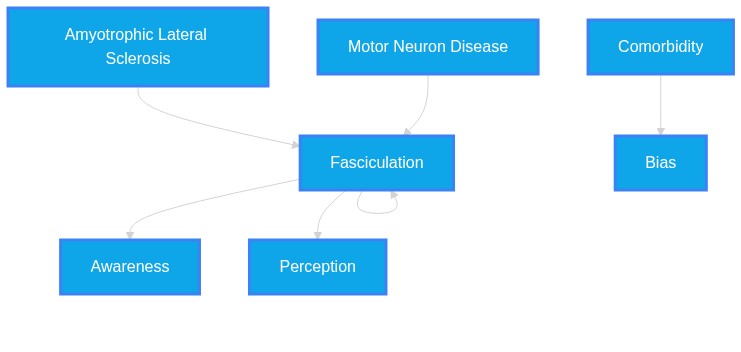
What does muscle twitching in Amyotrophic Lateral Sclerosis feel like compared to other neurological disorders or normal spasms?
Plausibility Verdicts
Muscle twitching in ALS is often objectively visible but frequently goes unperceived by the patient, whereas in benign syndromes or other neurological conditions, twitching is often a source of significant subjective awareness or distress.
Fasciculations in ALS are often unperceived, unlike the anxiety-driven perception seen in BFS.
Dataset Summary
Novel & Overlooked Insights
- A majority of ALS patients remain unaware of their clinically visible fasciculations.
- Healthcare workers exhibit significantly higher rates of Benign Fasciculation Syndrome (BFS) than the general population.
- Fasciculations in SBMA show a distinct, high-intensity predilection for the tongue compared to ALS.
- Peroneus brevis tendon subluxation can mimic neurogenic fasciculations, demonstrating that not all twitching is of motor neuron origin.
- Fasciculations in early-stage ALS are specifically modulated by descending corticospinal input, differentiating them from pure LMN disorders.
- Psychological factors like anxiety are strongly associated with the prevalence and perception of benign fasciculations.
- Specific nutrients, such as monosodium glutamate, have been linked to reversible fasciculation-inducing syndromes.
- The "bright tongue sign" on MRI serves as a diagnostic indicator of fatty infiltration and neurogenic atrophy in bulbar-onset ALS.
- Fasciculation awareness is low in ALS, with most patients (62%) showing clinical signs without subjective perception.
- BFS is five times more prevalent in healthcare workers than the general population, suggesting a psychological susceptibility.
- Peroneus brevis subluxation presents as a non-neurogenic cause of rhythmic fasciculations, mimicking ALS.
- Ultrasound duration is a critical technical factor; scanning for ≥30s improves sensitivity for detecting ALS fasciculations.
- The "Bright Tongue Sign" on MRI is a surrogate marker for neurogenic fatty infiltration associated with ALS.
- Corticospinal input significantly modulates fasciculation frequency, distinguishing ALS from other LMN disorders.
- Concordance between ultrasound-observed fasciculations and needle EMG potentials is approximately 92.6%.
- Even in juvenile-onset ALS, the presence of tongue fasciculations is a critical diagnostic indicator.
- ALS patients commonly exhibit objective fasciculations without any subjective awareness of them occurring.
- Healthcare workers are at a five-fold increased risk for BFS compared to the general population, likely due to high levels of anxiety and fear regarding motor neuron disease.
- Unlike benign twitching, ALS-associated fasciculations are markers of denervation and their frequency correlates with disease progression (e.g., ALSFRS-R score decline).
- Structural abnormalities in musculoskeletal systems, such as peroneus brevis subluxation, can mimic neurogenic fasciculations, demonstrating that "fasciculations" are not exclusively indicative of motor neuron death.
- Fasciculations in ALS are often not perceived, and "No patient exhibited subjective awareness without objective fasciculations."
- There is a clear clinical distinction between ALS-related fasciculations and myokymic discharges, the latter of which requires simultaneous EMG-ultrasound to differentiate.
- The frequency of fasciculation potentials is modifiable via cortical inhibition (cTBS) in ALS, whereas such inhibition does not alter the frequency in benign control groups.
Extracted Discoveries
- Longitudinal comparison of patient awareness scores of fasciculations in ALS vs. BFS groups using standardized twitch-frequency logging.
- Application of continuous theta-burst stimulation to measure cortical influence on fasciculation perception thresholds in ALS vs. non-ALS neurogenic patients.
- Compare somatosensory evoked potentials (SEPs) in ALS patients with high vs. low subjective fasciculation awareness.
- Evaluate the role of psychological intervention on the perception of fasciculations in BFS vs. ALS cohorts.
- Quantitative sensory testing (QST) comparing perception thresholds for muscle twitches in BFS versus ALS patients.
- Functional MRI during induced fasciculations to evaluate cortical processing differences in patients with ALS vs. high-anxiety BFS.
- Multicenter prospective study correlating fasciculation intensity (via ultrasound) with patient-reported quality-of-life impact across various motor neuron diseases.
- Systematic review of the psychological comorbidities (GAD-7, PHQ-9) associated with fasciculation-related anxiety in non-ALS versus ALS populations.
- Longitudinal prospective study on the emergence of subjective awareness of fasciculations relative to disease progression stage in ALS.
- Comparative MRI analysis of cortical areas involved in proprioceptive feedback between BFS and ALS patients.
- Longitudinal prospective study on the prevalence of subjective vs. objective twitching in early-onset vs. late-onset ALS.
- Comparative analysis of psychological metrics (GAD-7/PHQ-9) in patients with clinically confirmed ALS versus BFS and their correlation with twitch perception.
- {"Discovered Hypothesis (A to C)":"Inhibiting specific GPI-anchored protein interactions may mitigate peripheral nerve hyperexcitability seen in early ALS.","Literature A (Origin)":"PIGG deficiency-related peripheral nerve hyperexcitability (ID: 41744056)","Literature C (Target)":"Early-stage ALS fasciculation generation via UMN\/LMN pathways (ID: 42407013)","The Intersecting Bridge B":"GPI-anchored proteins (e.g., contactin-1\/2)","Biological Rationale":"Since contactin proteins are involved in nodal\/paranodal signaling and linked to both PIGG-related hyperexcitability and early-stage ALS excitability, their stabilization could potentially modulate the FP frequency observed in the prodromal phase."}
- Modulation of anxiety-related neurocircuitry could potentially shift the sensory perception threshold of fasciculations in motor neuron diseases.
- Psychological comorbidity/anxiety in Benign Fasciculation Syndrome (ID: 41314187).
- Subjective unawareness of fasciculations in ALS (ID: 41213224).
- Somatosensory cortex processing of peripheral input/hypervigilance pathways.
- The psychological stress in BFS may heighten sensory gating, whereas the neurodegeneration in ALS may involve a dampening or restructuring of the pathway through which motor-unit activity is consciously perceived.
- Upregulation of heat shock proteins via localized thermal modulation may stabilize motor units in early-stage ALS by modulating the hyperexcitability of the corticospinal pathway.
- CBIT2 / therapeutic fever (ID: 41294911) which induces heat shock protein expression.
- Cortical inhibition (cTBS) (ID: 42407013) which reduces fasciculation potential frequency in early ALS.
- Heat shock protein HSP70 and neuronal proteostasis.
- Since both fever-induced heat shock proteins and corticomotor inhibition target the hyperexcitability and proteostatic stress of motor neurons, HSP-mediated stabilization could theoretically provide the long-term neuroprotection that transient cortical inhibition cannot.
- There is a tension regarding the utility of ultrasound in fasciculation detection; some studies cite its high sensitivity (ID 41940896) while others indicate that fasciculation frequency may not change significantly during longitudinal disease progression in ALS (ID 42324866).
- None found within the provided set.
- There is a tension between the 'benign' nature of BFS and the reported clinical features of perceived weakness/sensory symptoms in health care workers with the syndrome (ID: 41314187), suggesting the 'benign' label may ignore the significant symptomatic burden reported by patients.
- The use of 'therapeutic fever' or heat shock protein modulation (ID: 41294911) is proposed as a potential pathway for restoring proteostasis in motor neurons, contrasting with traditional pharmacologic management.
- Use of BFS screening tools (GAD-7/PHQ-9) to distinguish neurogenic-driven fasciculation perception from psychologically-driven perception in early ALS diagnostic settings.
- The use of computerized thermofebrile therapy (CBIT2) as a non-invasive, brain-guided modulation strategy for restoring proteostasis in motor neuron disease (ID: 41294911).
PathMap is funded by sales of datasets and coversheets to researchers of any kind who wish to discover the most viable routes and paths to accelerate cures. We do not make theoretical molecules, we expose the truth in current PubMed literature. Commission a trace today.
PathMap Scores
How are these metrics evaluated?
Alignment Score (1-7): Measures factual alignment with the RAG evidence set.
[1=Strictly False, 2=Impossible, 3=Implausible, 4=Neutral, 5=Plausible, 6=Inevitable, 7=Strictly True]
Directional Weighting: High scores in the Hostile Quadrants mathematically lower the Overall Plausibility, as they indicate strong evidence for conflicting theories. Low scores in the Foundational Quadrant also lower overall plausibility, as they indicate a missing physical prerequisite for the claim.
All Extracted Datapoints
Evaluated Perspectives & Quadrants
CLAIM EVALUATED AND ANSWER TO USER
"What does muscle twitching in Amyotrophic Lateral Sclerosis feel like compared to other neurological disorders or normal spasms?"ABSTRACT & REWRITTEN CLAIM
Scientific synthesis of fasciculation perception in Amyotrophic Lateral Sclerosis (ALS) versus alternative neuromuscular syndromes, including Benign Fasciculation Syndrome (BFS), spinal and bulbar muscular atrophy (SBMA), and various medication-induced or metabolic-related twitching.INTRODUCTION & JUSTIFICATION
In Amyotrophic Lateral Sclerosis (ALS), fasciculations are hallmark signs of lower motor neuron (LMN) hyperexcitability, yet the subjective patient experience is notably counterintuitive. Unlike benign or reactive fasciculations that often prompt clinical attention, ALS-associated twitching is frequently unperceived by the patient. Research confirms that while fasciculations are objectively visible in clinical evaluations, a majority of patients remain unaware of them. Conversely, in conditions such as Benign Fasciculation Syndrome (BFS), patients often report profound awareness, sometimes associated with psychological distress, anxiety, or depression. Other neuromuscular disorders present distinctive patterns: in SBMA, fasciculations show high intensity and specific distribution (notably in the tongue), while in autoimmune or metabolic conditions (like Morvan syndrome or electrolyte imbalances), twitching may be accompanied by pain, cramps, or behavioral shifts. The differentiation between these states relies on electrophysiological identification of neurogenic versus myokymic or benign spontaneous activity, as surface observation alone is often misleading.Novel & Overlooked
EVIDENCE, METHODOLOGY & CITATIONS
1. ID: 41213224 - Application: Patients' subjective awareness of fasciculations in ALS. - "More than half (19, 56 %) had never noticed twitching. In the fasciculation analysis, patients showing objective fasciculations without subjective awareness were most common (21/34, 62 %)" 2. ID: 41314187 - Application: BFS prevalence among healthcare workers. - "Our study revealed a significantly higher prevalence of Benign Fasciculation Syndrome (BFS) among healthcare workers (13.9%) compared to the general population (3.0%)." 3. ID: 39063341 - Application: Food-induced fasciculation triggers. - "One set of patients reversibly experienced acute onset of headache, flushing, muscle stiffness and fasciculations following the consumption of umami-flavored food containing a large concentration of monosodium glutamate." 4. ID: 42125544 - Application: Differentiation between fasciculation and myokymia. - "Because both fasciculations and myokymia may appear in Isaacs syndrome, ultrasonography alone can be misleading when discharge frequency is low, and correlation with needle EMG is essential for accurate differentiation." 5. ID: 41822653 - Application: Mimicry of ALS in intraneural perineurioma. - "An electromyogram (EMG) showed findings concerning for an anterior horn cell process, including amyotrophic lateral sclerosis (ALS). Nerve conduction studies (NCS) demonstrated axonal findings only in motor nerves, and needle EMG demonstrated denervation and fasciculations" 6. ID: 42407013 - Application: UMN/LMN contribution to ALS fasciculations. - "The reduction in FP frequency after cortical inhibition suggests that FPs in early ALS are driven by a combination of both UMN and LMN hyperexcitability" 7. ID: 41940896 - Application: Accuracy of MUS in ALS. - "Muscle ultrasonography demonstrates good pooled diagnostic accuracy for detecting fasciculations in ALS and may serve as a useful adjunct to electrodiagnostic evaluation." 8. ID: 41060339 - Application: Predictive value of fasciculation severity. - "Patients with low levels of the total fasciculation score had a significantly lower risk of rapid ALSFRS-R progression during follow-up compared to those with high levels of the total fasciculation score" 9. ID: 41322012 - Application: Metabolic cause of twitching. - "Reported here is a case of a 13-year-old girl who presented in a rural county hospital with a 1-year duration of muscle twitching and persistent headache." 10. ID: 40583986 - Application: Radiological clues in ALS. - "Magnetic resonance imaging (MRI) brain imaging revealed a Diffuse T1 Weighted image (T1WI) hyperintense of tongue known as \"bright tongue sign\" indicating fatty infiltration of tongue muscles, consistent with neurogenic atrophy." 11. ID: 41137739 - Application: Prodromal symptoms in ALS. - "Mild motor symptoms were defined as fasciculations, cramps, stiffness, atrophy, reduced sports performance, or mobility issues. 26.6% of patients and 17.5% of caregivers reported a prodromal phase" 12. ID: 40886730 - Application: Serotonin syndrome mimicry. - "Despite an initially mild withdrawal course, he developed worsening tremors, nausea, diarrhea, diaphoresis, muscle twitching, rigidity, and restlessness beyond the typical AWS timeframe." 13. ID: 40297747 - Application: Fasciculation patterns in SBMA. - "In SBMA patients, fasciculations were most frequently found in the tongue (100%), FDI (93%) and tibialis anterior (80%), whereas less frequently present in the proximal limb and trunk muscles" 14. ID: 41744056 - Application: Phenotype of PIGG deficiency. - "This case report expands the clinical spectrum of PIGG-related disorders by identifying peripheral nerve hyperexcitability as a defining feature." 15. ID: 41800271 - Application: Morvan syndrome presentation. - "Neurological examination revealed muscle twitching in the limbs. Electromyography indicated increased peripheral nerve excitability, with serum testing showing weak positivity for anti-Leucine-rich Glioma Inactivated 1 (LGI-1) IgG antibodies" 16. ID: 41673629 - Application: Mechanical cause of fasciculation. - "This study identifies peroneus brevis subluxation as a novel potential cause of persistent, visible fasciculations, adding to the traditional view that fasciculations always indicate a neurogenic origin." 17. ID: 38485225 - Application: Misdiagnosis of Kennedy's disease. - "A 57-year-old man developed worsening early morning headaches, muscle cramps and falls over 12 months. He had widespread fasciculation and was diagnosed with motor neurone disease" 18. ID: 40896228 - Application: Zuranolone side effects. - "Some adverse reactions related to Zuranolone were reported frequently but were not documented in the prescribing information, including Insomnia, Vertigo, Vision blurred, Migraine, and Muscle twitching." 19. ID: 40373763 - Application: Ultrasound characteristics in ALS. - "Fasciculation differences in the trapezius, triceps brachii, extensor digitorum communis, thenar, and first dorsal interosseous muscles were observed." 20. ID: 41756294 - Application: Overlap syndromes. - "Neurological examination demonstrated bilateral lower-limb weakness with reduced tendon reflexes. Moreover, electrophysiological studies confirmed diffuse multifocal peripheral nerve injury with superimposed peripheral nerve hyperexcitability."CLAIM EVALUATED AND ANSWER TO USER
"What does muscle twitching in Amyotrophic Lateral Sclerosis feel like compared to other neurological disorders or normal spasms?" The experience of fasciculations (muscle twitching) in Amyotrophic Lateral Sclerosis (ALS) is paradoxically characterized by a lack of subjective awareness. Clinical data indicates that the majority of patients with ALS are entirely unaware of their visible fasciculations. In contrast, benign fasciculation syndrome (BFS) is strongly correlated with severe anxiety and psychological distress. While BFS patients often report symptoms accompanied by perceived weakness, the "feeling" in ALS is often absent despite objective clinical visibility, highlighting a significant divergence in patient perception between neurodegenerative and benign conditions.ABSTRACT & REWRITTEN CLAIM
This review synthesizes evidence regarding the subjective and objective experience of fasciculations in ALS, contrasting this with benign fasciculation syndrome (BFS) and other motor disorders. It evaluates the concordance between visible twitching and patient-reported symptoms, identifying fasciculation awareness as a clinical variable influenced by psychopathology in non-ALS conditions.INTRODUCTION & JUSTIFICATION
In Amyotrophic Lateral Sclerosis, fasciculations occur as a primary manifestation of lower motor neuron hyperexcitability. The literature suggests that the sensory perception of these twitching events is significantly lower than their objective presence. In a structured study of 34 ALS patients, it was observed that "patients showing objective fasciculations without subjective awareness were most common (21/34, 62 %)" and "More than half (19, 56 %) had never noticed twitching." This stands in sharp contrast to Benign Fasciculation Syndrome (BFS), where the psychological component is paramount. Research demonstrates that "The condition is strongly associated with and likely precipitated by high rates of severe anxiety and depression within this cohort." Furthermore, while fasciculations in ALS are often an unperceived symptom, in conditions such as peroneus brevis subluxation, they may be physically linked to mechanical stimulation, suggesting that "This study identifies peroneus brevis subluxation as a novel potential cause of persistent, visible fasciculations, adding to the traditional view that fasciculations always indicate a neurogenic origin."Novel & Overlooked
EVIDENCE, METHODOLOGY & CITATIONS
1. ID: 41213224 - Application: Indicates the low awareness of fasciculations. - "patients showing objective fasciculations without subjective awareness were most common (21/34, 62 %)" 2. ID: 41213224 - Application: Confirms frequency of unperceived twitching. - "More than half (19, 56 %) had never noticed twitching." 3. ID: 41314187 - Application: Links BFS to psychological factors. - "The condition is strongly associated with and likely precipitated by high rates of severe anxiety and depression within this cohort." 4. ID: 41673629 - Application: Identifies mechanical causes of twitching. - "This study identifies peroneus brevis subluxation as a novel potential cause of persistent, visible fasciculations, adding to the traditional view that fasciculations always indicate a neurogenic origin." 5. ID: 42407013 - Application: Explains the cortical drive of ALS fasciculations. - "The reduction in FP frequency after cortical inhibition suggests that FPs in early ALS are driven by a combination of both UMN and LMN hyperexcitability" 6. ID: 42382427 - Application: Concordance between U-fas and N-fas. - "Corresponding N-fas were detected in 437 events, yielding an overall concordance rate of 92.6%" 7. ID: 41940896 - Application: Impact of scan duration. - "Scan duration appears to significantly affect the diagnostic performance, with longer scanning improving sensitivity at the cost of reduced specificity." 8. ID: 40583986 - Application: Radiologic markers. - "Magnetic resonance imaging (MRI) brain imaging revealed a Diffuse T1 Weighted image (T1WI) hyperintense of tongue known as \"bright tongue sign\" indicating fatty infiltration of tongue muscles" 9. ID: 40373763 - Application: Comparison with mimics. - "ALS patients had smaller proximal median and ulnar nerve CSAs than those of ALS mimics" 10. ID: 39581840 - Application: Distribution of symptoms. - "ALS patients demonstrated a higher frequency and more generalised distribution of fasciculations compared to mimics." 11. ID: 42157222 - Application: Technical heterogeneity. - "High heterogeneity was observed in recording methods, analysis, and reporting strategies." 12. ID: 42115814 - Application: Clinical features of ALS vs MMN. - "The patients with ALS had greater muscle weakness, more frequent muscle atrophy and fasciculation, UMN signs, and body weight loss." 13. ID: 41872984 - Application: Muscle imaging as a frontier. - "Despite the huge impact of lower motor neuron dysfunction on the patients' independence, survival and quality of life, muscle imaging is a glaringly overlooked frontier" 14. ID: 41855303 - Application: Historical context. - "The Bellinghen case illustrates the evolution of neurological semiology, particularly the early recognition of fasciculations and asymmetrical muscle wasting." 15. ID: 41827952 - Application: Overlap with autoimmune. - "Anti-GQ1b antibodies should be interpreted with caution, as they may reflect either a true clinicopathological overlap with Guillain-Barré syndrome or a secondary phenomenon" 16. ID: 41137739 - Application: Prodromal phase definition. - "Mild motor symptoms were defined as fasciculations, cramps, stiffness, atrophy, reduced sports performance, or mobility issues." 17. ID: 39371851 - Application: Juvenile-onset presentation. - "We report a rare case of a 22-year-old Filipino male patient who exhibited early-onset weakness, muscle atrophy, and tongue fasciculations" 18. ID: 40324968 - Application: Kennedy's disease presentation. - "The majority presented with symmetric proximal limb weakness with bulbar symptoms and were found to have gynecomastia, lower motor neuron (LMN) facial weakness, and facial and lingual fasciculations." 19. ID: 41060339 - Application: Fasciculation frequency as a predictor. - "Patients with low levels of the total fasciculation score had a significantly lower risk of rapid ALSFRS-R progression during follow-up compared to those with high levels of the total fasciculation score" 20. ID: 40955296 - Application: Misdiagnosis insight. - "Five years after the initial diagnosis of MSA, the patient developed signs of lower motor neuron involvement, including fasciculations and muscle atrophy, ultimately leading to a revised diagnosis of ALS."CLAIM EVALUATED AND ANSWER TO USER
"What does muscle twitching in Amyotrophic Lateral Sclerosis feel like compared to other neurological disorders or normal spasms?" The literature indicates that fasciculations (muscle twitching) in Amyotrophic Lateral Sclerosis (ALS) are often clinically "invisible" to the patient, as the majority of visible fasciculations go unperceived. This contrasts significantly with benign conditions such as Benign Fasciculation Syndrome (BFS) or Cramp-Fasciculation Syndrome (CFS), where patients often experience persistent, symptomatic twitching frequently linked to psychological comorbidities like anxiety. ALS fasciculations are mechanistically distinct, driven by both upper and lower motor neuron hyperexcitability, and are often devoid of the subjective sensation of twitching that leads patients to seek care for non-ALS conditions.ABSTRACT & REWRITTEN CLAIM
Scientific synthesis: ALS-related fasciculations represent a neurogenic phenomenon associated with progressive denervation, whereas fasciculations in other disorders (e.g., BFS) are often benign, symptomatic, and disproportionately associated with high anxiety/depression. Subjective patient awareness of these twitches is markedly low in ALS, distinguishing them from the perceived muscle activity in non-ALS disorders.INTRODUCTION & JUSTIFICATION
The clinical sensation and perception of fasciculations (muscle twitching) vary drastically between amyotrophic lateral sclerosis (ALS) and benign disorders. In ALS, fasciculations are often an objective clinical sign rather than a subjective experience, evidenced by the fact that "Fasciculations in ALS are rarely the initial or presenting symptom and are often unperceived by patients despite being clinically visible." Conversely, in conditions like benign fasciculation syndrome, the condition is "strongly associated with and likely precipitated by high rates of severe anxiety and depression." This psychological burden in BFS contrasts with the neurodegenerative trajectory of ALS, where "The reduction in FP frequency after cortical inhibition suggests that FPs in early ALS are driven by a combination of both UMN and LMN hyperexcitability, distinguishing them from fasciculations in other neurogenic disorders." Thus, the patient's "feeling" of the twitch is often a byproduct of emotional distress in benign conditions, while the "feeling" in ALS is often entirely absent, even when the twitching is objectively profound.Novel & Overlooked
EVIDENCE, METHODOLOGY & CITATIONS
1. ID: 41213224 - "Fasciculations in ALS are rarely the initial or presenting symptom and are often unperceived by patients despite being clinically visible." 2. ID: 41213224 - "No patient exhibited subjective awareness without objective fasciculations." 3. ID: 42407013 - "The reduction in FP frequency after cortical inhibition suggests that FPs in early ALS are driven by a combination of both UMN and LMN hyperexcitability, distinguishing them from fasciculations in other neurogenic disorders." 4. ID: 42407013 - "Patients with ALS with a normal FDI EMG demonstrated an even greater reduction in FP frequency (54.5%)." 5. ID: 41314187 - "Unlike the fasciculations that characterizes the most serious condition like amyotrophic lateral sclerosis (ALS), the BFS is not associated with weakness or muscle atrophy." 6. ID: 41314187 - "Statistical analysis confirmed that healthcare workers with anxiety or depression had a five-fold increased risk of having BFS compared to their non-affected colleagues" 7. ID: 41314187 - "Among affected healthcare workers, the most frequently reported clinical features accompanying fasciculations were perceived motor weakness (33.3%), sensory symptoms (26.7%), and tremor (26.7%)." 8. ID: 41940896 - "Muscle ultrasonography for fasciculation detection in ALS yielded a pooled sensitivity of 0.87 (95% CI 0.83-0.91) and specificity of 0.91 (95% CI 0.86-0.94)." 9. ID: 42125544 - "Spontaneous muscle twitching observed on clinical examination can be challenging to distinguish between myokymia and fasciculation, particularly in peripheral nerve hyperexcitability syndromes where both phenomena may coexist." 10. ID: 41673629 - "This study identifies peroneus brevis subluxation as a novel potential cause of persistent, visible fasciculations, adding to the traditional view that fasciculations always indicate a neurogenic origin." 11. ID: 42125544 - "Simultaneous needle electromyography and ultrasound of the left vastus medialis demonstrated low-amplitude grouped discharges recurring at intervals of approximately 4-9 s" 12. ID: 39514515 - "Patients with fast ALS progression had a higher percentage of muscles with FPs (93.1% vs. 37.9%, P<0.001)" 13. ID: 39063341 - "Cramp-fasciculation syndrome (CFS) is a rare and benign neuromuscular disorder that may initially masquerade as motor neuron disease/amyotrophic lateral sclerosis." 14. ID: 42382427 - "Ultrasonographically detected fasciculations may serve as a supplementary indicator of lower motor neuron involvement in amyotrophic lateral sclerosis." 15. ID: 42392979 - "Mutations in the human SPTLC1 gene have recently been linked to early-onset amyotrophic lateral sclerosis (ALS), characterized by global atrophy, motor impairments, and symptoms such as tongue fasciculations." 16. ID: 42158079 - "Electromyography (EMG) showed motor neurogenic changes with ongoing denervation and fasciculations in the right upper limb, with possible anterior horn cell (AHC) involvement." 17. ID: 42157222 - "High heterogeneity was observed in recording methods, analysis, and reporting strategies." 18. ID: 42051912 - "At the clinic presentation, he exhibited dysarthria, tongue fasciculations, weakness in all extremities, muscle atrophy, widespread fasciculations, and upper extremity hyperreflexia, meeting clinical criteria for ALS." 19. ID: 41928471 - "We provide detailed molecular and phenotypic information for two pediatric patients who possess unique variants in PRPS1, one of whom presents with bilateral tongue fasciculations, extending the cranial neuropathy spectrum described in these conditions." 20. ID: 40757593 - "Needle electromyography disclosed chronic denervation involving cervical, thoracic, lumbosacral, and bulbar levels associated with acute denervation, including positive sharp waves, fasciculations, and fibrillation potentials."Verbatim Quote Audit Console
Mapped Reference Directory (APA)
- [1] ID: 41213224 - Hokkoku K, Inoue M, Yamada S, Namba H, Matsukura K et al. (2025). Clinically visible but often unperceived: Low awareness of fasciculations in amyotrophic lateral sclerosis.. Journal of the neurological sciences. ID: 41213224.
- [2] ID: 41314187 - Taher Y, Ibrahim S, Ahmed D (2025). BENIGN FASCICULATION SYNDROME AMONG HEALTH CARE WORKERS, A SINGLE CENTER STUDY.. Georgian medical news. ID: 41314187.
- [3] ID: 39063341 - Lagrange E, Vernoux JP, Chambon C, Camu W, Spencer PS (2024). Cramp-Fasciculation Syndrome Associated with Natural and Added Chemicals in Popular Food Items.. Foods (Basel, Switzerland). ID: 39063341.
- [4] ID: 42125544 - Sugimoto T, Naito H, Tachiyama K, Yokosaki M, Hironaka A et al. (2026). A case of low-frequency myokymia visualized by simultaneous EMG-ultrasound recording.. Clinical neurophysiology practice. ID: 42125544.
- [5] ID: 41822653 - Tiongson E, Tamrazi B, Hawes D (2026). An Unsuspected Intraneural Perineurioma in a Pediatric Patient: A Case Report.. Cureus. ID: 41822653.
- [6] ID: 42407013 - Oliveira Santos M, Castro J, Castro I, Swash M, de Carvalho M (2026). Role of the Upper Motor Neuron in the Generation of Fasciculations in Early Disease Stages of Amyotrophic Lateral Sclerosis.. Neurology. ID: 42407013.
- [7] ID: 41940896 - Tang Z, Lei Y, Huang J, He R, Wu Y et al. (2026). Accuracy of muscle ultrasonography in detecting fasciculations for the diagnosis of amyotrophic lateral sclerosis: a systematic review and meta-analysis.. Journal of neurology. ID: 41940896.
- [8] ID: 41060339 - Hu N, Qi M, Tian H, Ding J, Shen D et al. (2025). Fasciculation in limbs serves as the predictor of ALS progression: an ultrasound study.. Neurological sciences : official journal of the Italian Neurological Society and of the Italian Society of Clinical Neurophysiology. ID: 41060339.
- [9] ID: 41322012 - Wamalwa P, Amolo P (2025). Pseudohypoparathyroidism Presenting With Recurrent Twitching: Challenges Making a Diagnosis in a Low-Resource Environment.. Case reports in endocrinology. ID: 41322012.
- [10] ID: 40583986 - Shobe SM, Melka D, Mulugeta M, Adane L (2025). Bright tongue sign as a radiological clue of bulbar onset amyotrophic lateral sclerosis: A case report.. Radiology case reports. ID: 40583986.
- [11] ID: 41137739 - van Wijk IF, Kraneburg L, van Eijk RPA, Veldink JH, van Es MA et al. (2026). Prodromal symptoms in amyotrophic lateral sclerosis from the perspective of the patient and of the caregiver.. Amyotrophic lateral sclerosis & frontotemporal degeneration. ID: 41137739.
- [12] ID: 40886730 - Choi M, Wang X, Singh M, Weleff J (2026). Serotonin Syndrome Masquerading as Alcohol Withdrawal: A Case Report.. Journal of addictive diseases. ID: 40886730.
- [13] ID: 40297747 - Nara T, Shibuya K, Ikeda S, Kuroiwa R, Otani R et al. (2025). Different patterns of fasciculation in spinal and bulbar muscular atrophy and amyotrophic lateral sclerosis: a muscle ultrasonographic study.. BMJ neurology open. ID: 40297747.
- [14] ID: 41744056 - de Arruda Sampaio PHM, Moreno CAM, di Pace F, Dousseau GC, Camelo CG et al. (2026). Expanding the Phenotype of Biallelic PIGG Variants: Motor Neuropathy With Peripheral Nerve Hyperexcitability.. American journal of medical genetics. Part A. ID: 41744056.
- [15] ID: 41800271 - Li J, Li M, Ma H, Hu Y, Dong Q (2026). Morvan Syndrome Masquerading as Anxiety Disorder: A Case Report Highlighting the Importance of Recognizing Organic Signs in Psychiatric Settings.. International medical case reports journal. ID: 41800271.
- [16] ID: 41673629 - Wang LL, Tang XR, Fei J, Zhang KW, Tan PY et al. (2026). Anatomical reduction for focal fasciculations in peroneus brevis spondylolisthesis: a case report suggesting a mechanism of peripherally derived tremor.. BMC musculoskeletal disorders. ID: 41673629.
- [17] ID: 38485225 - Devine H, Solomons M, Zampedri L, Hanna MG, Rinaldi C et al. (2024). Kennedy's disease.. Practical neurology. ID: 38485225.
- [18] ID: 40896228 - Huang D, Luo Z, Gong X, Zou K, Peng Y et al. (2025). Post marketing safety assessment of the novel postpartum depression drug, Zuranolone: evidence from real-world pharmacovigilance analysis based on the FDA adverse event reporting system.. Frontiers in psychiatry. ID: 40896228.
- [19] ID: 40373763 - Wu J, Song H, Arkin M, Zhang S, Huang X et al. (2025). Characteristics of Neuromuscular Ultrasound in Patients with Amyotrophic Lateral Sclerosis.. Neuro-degenerative diseases. ID: 40373763.
- [20] ID: 41756294 - Wu Y, Tang X, Guan T, Xu J, Lv P et al. (2026). A rare presentation of CASPR2-associated Morvan syndrome overlapping with GM1-positive AMSAN: a case report.. Frontiers in immunology. ID: 41756294.
- [21] ID: 42382427 - Sugimoto T, Tachiyama K, Hironaka A, Naito H, Nakamori M et al. (2026). Simultaneous ultrasound and needle electromyography recording of fasciculations in amyotrophic lateral sclerosis.. Clinical neurophysiology practice. ID: 42382427.
- [22] ID: 39581840 - Hannaford A, Pavey N, Menon P, van den Bos MAJ, Kiernan MC et al. (2025). Muscle ultrasound aids diagnosis in amyotrophic lateral sclerosis.. Clinical neurophysiology : official journal of the International Federation of Clinical Neurophysiology. ID: 39581840.
- [23] ID: 42157222 - Bayer PA, O'Bryan SJ, Thomas HJ, Del Vecchio A, Jain G et al. (2026). The use of high-density surface electromyography in amyotrophic lateral sclerosis: a scoping review.. Journal of neuroengineering and rehabilitation. ID: 42157222.
- [24] ID: 42115814 - Fang SY, Jih KY, Chao YC, Sytwu HP, Shih YC et al. (2026). Clinical and electrophysiological features for differentiating MMN from hand-onset ALS.. Journal of the Chinese Medical Association : JCMA. ID: 42115814.
- [25] ID: 41872984 - Toomey A, Kleinerova J, Tan EL, Siah WF, Bede P (2026). Muscle MRI and Muscle Ultrasound Applications in MND/ALS: Academic Insights and Clinical Opportunities.. European journal of neurology. ID: 41872984.
- [26] ID: 41855303 - Drouin E, Pereon Y (2026). Historical and Clinical Analysis of a Case of Progressive Muscular Atrophy (1853-1871).. European neurology. ID: 41855303.
- [27] ID: 41827952 - Hayashi K, Suzuki A, Sato M, Nakaya Y, Uchida T et al. (2026). Motor Neuron Disease with Guillain-Barré Syndrome? Motor Band Sign with Anti-GQ1b Antibodies.. Diagnostics (Basel, Switzerland). ID: 41827952.
- [28] ID: 39371851 - Po K, Olaivar M (2024). Juvenile Amyotrophic Lateral Sclerosis: A Case Report of a Rare and Aggressive Presentation in a 22-Year-Old Filipino Male.. Cureus. ID: 39371851.
- [29] ID: 40324968 - Gomathy SB, Macken WL, Rani N, Agarwal A, Singh R et al. (2025). Kennedy's disease from India: An Indian Cohort with multisystemic manifestations.. Journal of neuromuscular diseases. ID: 40324968.
- [30] ID: 40955296 - Tang H, Yao J, Wang Z (2025). Amyotrophic Lateral Sclerosis Masquerading as Multiple System Atrophy with Parkinsonism and Anxiety as Initial Manifestations.. Degenerative neurological and neuromuscular disease. ID: 40955296.
- [31] ID: 39514515 - Ohnari K, Mafune K, Adachi H (2024). Fasciculation potentials are related to the prognosis of amyotrophic lateral sclerosis.. PloS one. ID: 39514515.
- [32] ID: 42392979 - Pant DC, Lone MA, Parameswaran J, Ma F, Ziak N et al. (2026). Deletion of exon 2 in ALS-linked Sptlc1 causes lethality in homozygous mice but not in heterozygotes.. Life science alliance. ID: 42392979.
- [33] ID: 42158079 - Koh HY, Fong J, Huang Y (2026). Hirayama disease in a young Indonesian male: a case report.. Journal of spine surgery (Hong Kong). ID: 42158079.
- [34] ID: 42051912 - File C, Price AM, Ahmad R, Shanina E, Sun RL (2026). Amyotrophic lateral sclerosis and chronic inflammatory demyelinating polyneuropathy coexistence in a patient with a C9orf72 variant: case report.. Frontiers in dementia. ID: 42051912.
- [35] ID: 41928471 - Braid T, Scholten S, Yoganathan S, Alsalamah AK, Deschênes D et al. (2026). Broadening the phenotypic and molecular spectrum of PRS deficiency in females.. HGG advances. ID: 41928471.
- [36] ID: 40757593 - Orsini M, Pinto WBVR, Sgobbi P, Oliveira ASB (2024). PRKAG2 Variant, Motor Neuron Disease, and Parkinsonism: Fortuitous Association or a Potentially Underestimated Pathophysiological Mechanism?. Muscles (Basel, Switzerland). ID: 40757593.
Abstract Repository (Raw Full-Texts) Show Database Collapse Database
ID: 38485225
Title: Kennedy's disease.
Abstract: A 57-year-old man developed worsening early morning headaches, muscle cramps and falls over 12 months. He had widespread fasciculation and was diagnosed with motor neurone disease, and treated with nocturnal hypoventilation. Based on this diagnosis, he made significant personal and financial decisions including retiring and selling his house. He subsequently developed a lump in his right breast and was found to have gynaecomastia. This triggered genetic testing for Kennedy's disease leading to the correct diagnosis. This case highlights an unusual presentation of a rare disease leading to misdiagnosis and major repercussions for the patient. Recent genetic analysis from the 100 000 genome project suggests Kennedy's disease may be four times more prevalent in the population than previously thought, highlighting the need to consider genetic testing, especially if there is a suggestion of multisystem disease.
View on PubMed
ID: 39063341
Title: Cramp-Fasciculation Syndrome Associated with Natural and Added Chemicals in Popular Food Items.
Abstract: Cramp-fasciculation syndrome (CFS) is a rare and benign neuromuscular disorder that may initially masquerade as motor neuron disease/amyotrophic lateral sclerosis. While CFS may have a familial disposition, we report on cases associated with high consumption of popular food items. One set of patients reversibly experienced acute onset of headache, flushing, muscle stiffness and fasciculations following the consumption of umami-flavored food containing a large concentration of monosodium glutamate. A second group of patients consuming food derived from lupin seed developed acute cholinergic toxicity, CFS, and, with chronic intake, significant, self-limiting, but incompletely reversible upper and lower motor neuron deficits. While these cases may improve our knowledge about the possible causes of CFS, our series also demonstrates that excessive consumption of some popular foods is not harmless. This warrants further research on their safety at all stages of human development from a neurological point of view.
View on PubMed
ID: 39371851
Title: Juvenile Amyotrophic Lateral Sclerosis: A Case Report of a Rare and Aggressive Presentation in a 22-Year-Old Filipino Male.
Abstract: Amyotrophic Lateral Sclerosis (ALS) is a rare neurodegenerative disorder primarily affecting adults, but juvenile-onset ALS is exceptionally rare. We report a rare case of a 22-year-old Filipino male patient who exhibited early-onset weakness, muscle atrophy, and tongue fasciculations, followed by rapidly progressive dysphagia and respiratory distress. Electromyography - Nerve Conduction Velocity (EMG-NCV) findings showed evidence for a chronic, active predominantly motor neuronal-axonal loss type of neuropathy involving the tongue and limb muscles bilaterally consistent with a motor neuron disease. The patient was treated with riluzole with no significant improvement in symptoms. Despite multidisciplinary interventions, the disease rapidly progressed, highlighting the challenges in managing juvenile ALS cases. This case report emphasizes the importance of considering ALS in the differential diagnosis of progressive motor dysfunction in younger patients and the complexities involved in their care.
View on PubMed
ID: 39514515
Title: Fasciculation potentials are related to the prognosis of amyotrophic lateral sclerosis.
Abstract: Some prognostic biomarkers of amyotrophic lateral sclerosis (ALS) have been described; however, they are inadequate for satisfactorily predicting individual patient outcomes. Fasciculation potentials (FPs) on electromyography (EMG) are useful for the early diagnosis of ALS, and complex FPs are associated with shorter survival in ALS. In this study, we investigated the relationship between the proportion of muscles with FPs, biochemical markers, and the prognosis of ALS. 89 Patients with ALS were retrospectively classified into three groups based on the interval from onset to death or tracheostomy (less than 1 year: fast progression; from 1 year to less than 3 years: average progression; 3 years or more: slow progression). We performed statistical analysis of the electrophysiological findings, including the percentage of examined muscles with FPs, and biochemical markers evaluated on admission. Patients with fast ALS progression had a higher percentage of muscles with FPs (93.1% vs. 37.9%, P<0.001) and lower uric acid (UA) levels (male: 4.19 mg/dl vs 5.55 mg/dl, P<0.001; female: 3.71 mg/dl vs 5.41 mg/dl, P<0.001) than patients with slow progression. Survival curves demonstrated a relationship between these factors and the survival time in patients with ALS. Furthermore, UA levels were correlated with the percentage of muscles with FPs. Our electrophysiological findings suggest that ALS presents with multisystem neurological manifestations, and these manifestations differed among the groups classified by disease progression. The percentage of muscles with FPs on EMG and serum UA levels were especially associated with the prognosis of ALS.
View on PubMed
ID: 39581840
Title: Muscle ultrasound aids diagnosis in amyotrophic lateral sclerosis.
Abstract: There is a need for improved diagnostic tools in Amyotrophic Lateral Sclerosis (ALS). Our objective was to assess muscle ultrasound as a diagnostic tool in patients with ALS and determine a simplified screening protocol to aid implementation in clinical practice. Ultrasound of bulbar and limb muscles was prospectively performed on all patients referred to a single centre with suspected ALS. Clinical measures of disease severity and upper motor neuron impairment were also recorded. Receiver operating characteristic (ROC) curves were calculated to assess the diagnostic utility of muscle ultrasound. 94 patients initially suspected of ALS were recruited to this observational cohort study. Forty-four were subsequently diagnosed as ALS and 50 as disease mimics. ALS patients demonstrated a higher frequency and more generalised distribution of fasciculations compared to mimics. A simplified 5 muscle screening protocol exhibited an AUC of 0.94 (95 %CI 0.89-0.99) in discriminating ALS from mimics. The presence of ≥ 3 fasciculating muscles detected using this screening protocol was 89 % sensitive and 88 % specific for the diagnosis of ALS. Muscle ultrasound, screening as few as 5 muscles, has diagnostic utility in ALS. Muscle ultrasound enhances clinical diagnosis in ALS.
View on PubMed
ID: 40297747
Title: Different patterns of fasciculation in spinal and bulbar muscular atrophy and amyotrophic lateral sclerosis: a muscle ultrasonographic study.
Abstract: The usefulness of muscle ultrasonography for detection of fasciculations has been increasingly recognised, particularly in amyotrophic lateral sclerosis (ALS). This study aimed to elucidate distributions and characteristics of fasciculations in spinal and bulbar muscular atrophy (SBMA) and to compare the results of those in ALS. In 24 SBMA and 16 ALS patients, muscle ultrasonography was systematically performed in the tongue, upper limb muscles (biceps brachii, triceps brachii, first dorsal interosseous (FDI), abductor pollicis brevis and abductor digiti minimi), trunk muscles (Th10 paraspinals and rectus abdominis) and lower limb muscles (vastus lateralis, biceps femoris, tibialis anterior and gastrocnemius). We assessed the presence of fasciculations and the fasciculation intensity (scored from 0 to 3) for each muscle. All SBMA and ALS patients showed fasciculations at least in two muscles. In SBMA patients, fasciculations were most frequently found in the tongue (100%), FDI (93%) and tibialis anterior (80%), whereas less frequently present in the proximal limb and trunk muscles, irrespective of age, disease duration and CAG repeat numbers. By contrast, in ALS patients, fasciculations were more diffusely distributed including the proximal limb and trunk muscles. When fasciculations were present, the intensity was higher in ALS patients, except for the tongue. Whereas both diseases exhibit extensive fasciculations, the distribution and intensity are different. SBMA is characterised by prominent involvement in the tongue and distal limb muscles, suggesting different pathophysiology of motor neuronal death in SBMA and ALS.
View on PubMed
ID: 40324968
Title: Kennedy's disease from India: An Indian Cohort with multisystemic manifestations.
Abstract: BackgroundKennedy's disease (KD) is a rare, insidiously progressive lower motor neuron syndrome characterised by amyotrophy involving the appendicular or bulbar musculature of adult males in their fourth to fifth decade. There are no large series from the Indian subcontinent describing the clinical-genetic and laboratory spectrum of KD.AimTo describe the clinical, electrophysiologic, metabolic and genetic profile of patients with KD.MethodsWe conducted a retrospective review of ten genetically confirmed KD patients.ResultsThe mean age of the cohort was 47 years, with a mean age of onset of illness at 41.3 ± 9.9 years. The median duration of symptoms before presentation was 5 (3-12) years. The most common referral diagnosis was ALS. The majority presented with symmetric proximal limb weakness with bulbar symptoms and were found to have gynecomastia, lower motor neuron (LMN) facial weakness, and facial and lingual fasciculations. Electrophysiology revealed sensory neuropathy in five patients and chronic neurogenic changes consistent with anterior horn cell disease in all. Metabolic profile showed impaired glycemia, hyperlipidemia and evidence of non-alcoholic fatty liver disease in the majority. All had elevated serum creatine kinase. Genetic testing revealed a median of 46 CAG repeats. The phenotypes of our patients aligned with global data that is predominantly derived from participants of European ancestry.ConclusionWe describe a series of patients with KD from India with significant multisystemic involvement.
View on PubMed
ID: 40373763
Title: Characteristics of Neuromuscular Ultrasound in Patients with Amyotrophic Lateral Sclerosis.
Abstract: Neuromuscular ultrasound has been increasingly used in the detection and diagnosis of amyotrophic lateral sclerosis (ALS), commonly characterized by peripheral nerve atrophy, degeneration, and muscle fasciculations. The aim of this study was to assess the ultrasound characteristics of ALS patients. A total of 67 consecutive patients with sporadic ALS and 19 with ALS mimics (63.16% peripheral neuropathy) were recruited. Ultrasound and electrophysiological examinations were performed; the peripheral nerve cross-sectional area (CSA) and fasciculation grades were compared between the groups, and correlations between ultrasound and electrophysiological data in ALS patients were determined. ALS patients had smaller proximal median and ulnar nerve CSAs than those of ALS mimics, who exhibited asymmetric changes. Fasciculation differences in the trapezius, triceps brachii, extensor digitorum communis, thenar, and first dorsal interosseous muscles were observed. In ALS patients, the CSA and fasciculation relative scores were correlated with electrophysiological indicators. Ultrasound is a valuable tool for monitoring peripheral nerve CSA and muscle fasciculations, both of which correlate with electrophysiological indices, in ALS patients.
View on PubMed
ID: 40583986
Title: Bright tongue sign as a radiological clue of bulbar onset amyotrophic lateral sclerosis: A case report.
Abstract: Amyotrophic lateral sclerosis (ALS) is a fatal neurodegenerative disease characterized by degeneration of motor neurons, with the tongue often involved in clinical presentation. In this case, a 60-year-old female presented with progressive choking episodes and speech slurring over 9 months, exhibiting dysarthria, prominent tongue atrophy, fasciculations, and hyperreflexia. Needle electromyography (EMG) showed diffuse chronic neurogenic changes with signs of active denervation changes prominent on the tongue and right arm with normal sensory nerve studies. Magnetic resonance imaging (MRI) brain imaging revealed a Diffuse T1 Weighted image (T1WI) hyperintense of tongue known as "bright tongue sign" indicating fatty infiltration of tongue muscles, consistent with neurogenic atrophy. This case underscores the importance of recognizing this characteristic tongue hyperintensity as a valuable radiological clue in diagnosing bulbar-onset ALS and highlights the potential for early diagnosis to improve patient management and outcomes.
View on PubMed
ID: 40757593
Title: PRKAG2 Variant, Motor Neuron Disease, and Parkinsonism: Fortuitous Association or a Potentially Underestimated Pathophysiological Mechanism?
Abstract: A 72-year-old Brazilian woman presented with a 4-year history of rest tremors of the hands, followed by slowness of movement, and a diagnosis of idiopathic Parkinson's disease. She was started on dopamine agonists with significant improvement. After three years, she complained about slowly progressive dysphagia, dysphonia, quadriparesis, and cramps and fasciculations. A neurological examination disclosed distal-dominant quadriparesis, dysarthria, atrophy and fasciculation of the tongue, global brisk tendon reflexes, fasciculations, bilateral ankle clonus, and moderate spasticity of the lower limbs. She had also palpitations, dyspnea, and one episode of paroxysmal atrial fibrillation. Electrocardiography revealed a short PR interval, a widened QRS complex, and the delta wave, suggestive of Wolff-Parkinson-White syndrome. Brain and spine MR imaging, a cerebrospinal fluid analysis, and general serum lab exams were unremarkable. Needle electromyography disclosed chronic denervation involving cervical, thoracic, lumbosacral, and bulbar levels associated with acute denervation, including positive sharp waves, fasciculations, and fibrillation potentials. This patient fulfilled the diagnostic criteria for amyotrophic lateral sclerosis associated with parkinsonism. A broad next-generation sequencing-based panel disclosed the presence of the novel heterozygous variant c.1247C > T (p.Pro416Leu) in the PRKAG2 gene (NM_016203.4). Clinicians must be aware of the possibility of PRKAG2 variants in complex clinical scenarios associating cardiac arrhythmia, preexcitation syndromes, hypertrophic cardiomyopathy, motor neuron disease, and parkinsonism.
View on PubMed
ID: 40886730
Title: Serotonin Syndrome Masquerading as Alcohol Withdrawal: A Case Report.
Abstract: Alcohol withdrawal syndrome (AWS) and serotonin syndrome (SS) share several overlapping symptoms, complicating diagnosis in patients with alcohol use disorder (AUD) on serotonergic treatment. We describe a 54-year-old male with a history of AUD and anxiety disorder who presented to a residential treatment center after patient report about 11 days of alcohol abstinence. Despite an initially mild withdrawal course, he developed worsening tremors, nausea, diarrhea, diaphoresis, muscle twitching, rigidity, and restlessness beyond the typical AWS timeframe. His medication regimen included multiple serotonergic agents. Neurological examination revealed hyperreflexia, clonus, and persistent hypertension, fulfilling the Hunter Serotonin Toxicity Criteria for SS. All serotonergic medications were discontinued and supportive care was initiated, leading to rapid symptom improvement and resolution. Thorough evaluation of medication history and symptom timeline during clinical assessment is critical for differentiating AWS and SS. Clinicians are encouraged to remain vigilant for SS in patients with AUD on serotonergic agents to prevent adverse outcomes and potential mortality.
View on PubMed
ID: 40896228
Title: Post marketing safety assessment of the novel postpartum depression drug, Zuranolone: evidence from real-world pharmacovigilance analysis based on the FDA adverse event reporting system.
Abstract: Zuranolone, the latest oral medication for postpartum depression, was approved in the United States in August 2023. Due to its pharmacokinetic characteristics and rapid onset of action, it is hailed as a breakthrough and enhanced version of the drug. However, there is limited information on adverse drug reactions associated with its use. The primary objective of this study is to assess the post-marketing safety of Zuranolone. This study utilizes the FAERS database to analyze the safety of Zuranolone and provide a reference for clinical safety. Data on Zuranolone were collected from the FAERS database, covering the period from the third quarter of 2023 to the second quarter of 2024. Disproportionate analysis was used to quantify adverse drug reaction signals associated with Zuranolone and to detect risk signals from the data in the FAERS database. The Reporting Odds Ratio (ROR), Proportional Reporting Ratio (PRR), Bayesian Convolutional Probabilistic Neural Network (BCPNN), and Multi-Item Gamma Poisson Shrinker (MGPS) were used collectively to detect risk signals. This study identified 154 reports primarily suspecting Zuranolone and 426 adverse drug events from a total of 1,626,204 adverse event (AE) reports. A total of 142 Preferred Terms (PTs) were identified across 18 System Organ Classes (SOCs). Most reports originated from the United States, with various health professionals and consumers being the main reporters. Adverse reactions following Zuranolone administration predominantly involved Nervous system disorders and Psychiatric disorders. Specific adverse reactions included Somnolence, Dizziness, Fatigue, Sedation, Suicidal ideation, Tremor, Feeling abnormal, Headache, Anxiety, and Nausea. The onset of AEs related to Zuranolone was not prolonged (average onset time of 4 days, with a median onset time of 2 days). Compared to Brexanolone, Zuranolone's adverse reactions were more focused on nervous system diseases, while the latter was primarily associated with psychiatric disorders, General disorders and administration site conditions, and Injury, poisoning and procedural complications. Some adverse reactions related to Zuranolone were reported frequently but were not documented in the prescribing information, including Insomnia, Vertigo, Vision blurred, Migraine, and Muscle twitching. This study revealed potential AEs of Zuranolone, confirming known safety information about Zuranolone, providing comprehensive data for medical practice and public health decision-making, and laying the foundation for further clinical research. It also provides more comprehensive and updated evidence for the clinical safety of Zuranolone.
View on PubMed
ID: 40955296
Title: Amyotrophic Lateral Sclerosis Masquerading as Multiple System Atrophy with Parkinsonism and Anxiety as Initial Manifestations.
Abstract: Amyotrophic lateral sclerosis (ALS) and multiple system atrophy (MSA) are both neurodegenerative disorders. While ALS may present with clinical features resembling Parkinsonism, there have been no definitive reports of ALS mimicking MSA, only cases of Primary lateral sclerosis (PLS) mimicking Parkinsonism. This article reports a case of ALS presenting with Parkinsonism and anxiety as the initial symptoms. Five years after the initial diagnosis of MSA, the patient developed signs of lower motor neuron involvement, including fasciculations and muscle atrophy, ultimately leading to a revised diagnosis of ALS. This study combines literature analysis to explore the reasons for misdiagnosis and identifies key differentiating features. Specifically, muscle rigidity in ALS is characterized by a velocity-dependent increase in muscle tone caused by damage to the upper motor neurons. This symptom tends to be more pronounced in the lower limbs than in the upper limbs and is often accompanied by spastic gait. Objective examinations may reveal early atrophy of the frontal and temporal lobes of the cerebrum on head magnetic resonance (MR) imaging, whereas 18F-FDG brain positron emission tomography (PET) may reveal reduced metabolism in the frontal and parietal lobes of the cerebrum with normal basal ganglial function, distinguishing ALS from basal ganglial metabolic decline in MSA. To our knowledge, this is the first case of ALS misdiagnosed as MSA. Clinically, patients with parkinsonism who do not respond to dopaminergic drugs should be cautious about atypical ALS. Muscle rigidity manifesting as upper motor neuron damage, and MR and 18F-FDG brain PET imaging can provide early differential diagnosis indicators.
View on PubMed
ID: 41060339
Title: Fasciculation in limbs serves as the predictor of ALS progression: an ultrasound study.
Abstract: To explore the predictive effects of fasciculation by ultrasound in amyotrophic lateral sclerosis (ALS) progression. Sporadic ALS patients were consecutively recruited and followed up 3 to 6 months after the initial visit. Muscle ultrasound examination was conducted at the baseline to detect the severity score of fasciculations on bilateral elbow flexor and extensor, ankle dorsiflexor and plantar flexor of each patient, the sum of which was defined as the total fasciculation score. Baseline and follow-up ALS functional research scale-revised (ALSFRS-R) score and muscle strength were collected. The progression of ALS was reflected by the decline rate of ALSFRS-R score and proportion of muscles with decreased strength. Among 33 ALS patients who completed the follow-up, the total fasciculation score was positively correlated with the ALSFRS-R progression rate (rho = 0.029, p < 0.001). Patients with low levels of the total fasciculation score had a significantly lower risk of rapid ALSFRS-R progression during follow-up compared to those with high levels of the total fasciculation score (HR 0.132, 95%CI 0.037-0.476). The frequencies of decline in muscle strength at the follow up were 76.32% and 16.54% among muscles with and without high-grade fasciculation (p < 0.001) after exclusion of muscles with 0-1 the medical research council (MRC) levels of strength at the baseline. The severity of fasciculations was correlated with the rate of decrease in ALSFRS-R score and the decline in muscle strength, which might be used as a biological marker to predict the progression rate of ALS for prognostic judgment or clinical trial grouping.
View on PubMed
ID: 41137739
Title: Prodromal symptoms in amyotrophic lateral sclerosis from the perspective of the patient and of the caregiver.
Abstract: Clinically manifest ALS is preceded by a prodromal phase in gene mutation carriers, characterized by mild motor impairment. A well-defined prodromal phase could enable earlier diagnosis and treatment. We investigated the presence of a prodromal phase in sporadic ALS, from the perspective of patients and caregivers. A survey was conducted of symptom onset in 279 ALS patients from a population-based registry and 150 caregivers. 244 patients and 123 caregivers were included in the primary qualitative analysis, followed by quantitative analysis of identified themes. A prodromal phase was defined as symptoms, in response to open-ended questions, before onset of recorded weakness, bulbar complaints or shortness of breath. Mild motor symptoms were defined as fasciculations, cramps, stiffness, atrophy, reduced sports performance, or mobility issues. 26.6% of patients and 17.5% of caregivers reported a prodromal phase, primarily with mild motor symptoms (patients 23.0%; caregivers 11.4%). Prodromal symptoms occurred a median of 6.0 months (IQR 2.8-11.8 months) before recorded disease onset. In closed-ended questions, 19.2% of patients and 22.2% of caregivers reported cognitive or behavioral symptoms before weakness onset, compared to only 0.6% and 1.8% in open-ended questions. In sporadic ALS, approximately a quarter of patients report a prodromal phase characterized primarily by mild motor symptoms. However, mild motor symptoms alone are unlikely to contribute to earlier disease recognition. Cognitive or behavioral symptoms are often not recognized as part of the clinical spectrum. These findings emphasize the need for reliable biomarkers to detect ALS pathology at an early stage.
View on PubMed
ID: 41213224
Title: Clinically visible but often unperceived: Low awareness of fasciculations in amyotrophic lateral sclerosis.
Abstract: Fasciculations are a key clinical sign of amyotrophic lateral sclerosis (ALS) but also occur in other conditions such as benign fasciculation syndrome. Patients often present with perceived twitching fearing ALS; however, the extent to which ALS patients themselves perceive fasciculations has not been systematically examined. We therefore aimed to clarify how often ALS patients are aware of fasciculations that are clinically visible. We prospectively studied 34 ALS patients. First, a structured questionnaire assessed initial symptoms, chief complaints, and awareness of twitching. Then, the frequency and concordance between objective fasciculations and subjective awareness of fasciculations (twitching) were analyzed across five body regions (bilateral upper and lower limbs and trunk) based on simultaneous visual observation and patient reports. In the questionnaire, only one of the 34 patients (3 %) reported twitching as the initial symptom, and none presented with twitching as the chief complaint. More than half (19, 56 %) had never noticed twitching. In the fasciculation analysis, patients showing objective fasciculations without subjective awareness were most common (21/34, 62 %), whereas those with objective fasciculations accompanied by subjective awareness were fewer (10/34, 29 %), indicating relatively low concordance between visible fasciculations and patient awareness. No patient exhibited subjective awareness without objective fasciculations. These findings suggest that the majority of visible fasciculations in ALS are not perceived by patients. Fasciculations in ALS are rarely the initial or presenting symptom and are often unperceived by patients despite being clinically visible.
View on PubMed
ID: 41314187
Title: BENIGN FASCICULATION SYNDROME AMONG HEALTH CARE WORKERS, A SINGLE CENTER STUDY.
Abstract: Benign fasciculation syndrome (BFS) is a neurological disease manifested as persistent muscle twitching with the absence of a serious underlying pathology. Unlike the fasciculations that characterizes the most serious condition like amyotrophic lateral sclerosis (ALS), the BFS is not associated with weakness or muscle atrophy. Although the exact underlying mechanism of BFS is not well understood, it seems that anxiety, depression and the fear from having ALS play an important role especially among health care workers. To detect the frequency and characteristics of BFS among a group of health care workers and to verify its possible correlation with the anxiety, depression and fear of having MND. In this comparative cross-sectional study, BFS was diagnosed in health care workers as well as the comparative group reflecting general population based on the clinical characteristics of fasciculation and by having normal neurological examination and normal nerve conduction study (NCS) and electromyograph (EMG). Anxiety and depression will be assessed according to generalized anxiety disorder 7 score (GAD-7) and patients health questionnaire 9 (PHQ-9). Our study revealed a significantly higher prevalence of Benign Fasciculation Syndrome (BFS) among healthcare workers (13.9%) compared to the general population (3.0%). This difference was statistically significant (p=0.002), indicating that healthcare workers face over five times the odds of developing BFS. Among affected healthcare workers, the most frequently reported clinical features accompanying fasciculations were perceived motor weakness (33.3%), sensory symptoms (26.7%), and tremor (26.7%). The average duration of symptoms was just over three years. A striking finding was the strong association between BFS and psychological comorbidities. Within the BFS group, 60% of individuals suffered from anxiety, with over half of these cases classified as severe. Similarly, 33.3% of BFS patients were diagnosed with depression. Statistical analysis confirmed that healthcare workers with anxiety or depression had a five-fold increased risk of having BFS compared to their non-affected colleagues (p=0.003 and p=0.016, respectively). In conclusion, this study identifies healthcare workers as a population at significantly increased risk for Benign Fasciculation Syndrome (BFS). The condition is strongly associated with and likely precipitated by high rates of severe anxiety and depression within this cohort. These findings underscore the critical importance of integrating psychological screening and mental health support into the diagnostic and therapeutic management of BFS for healthcare professionals.
View on PubMed
ID: 41322012
Title: Pseudohypoparathyroidism Presenting With Recurrent Twitching: Challenges Making a Diagnosis in a Low-Resource Environment.
Abstract: Pseudohypoparathyroidism (PHP) is a metabolic disorder that occurs due to target end-organ resistance to parathyroid hormone (PTH). It is a rare cause of severe symptomatic hypocalcemia as it characteristically manifests with high phosphate and low calcium. The clinical presentation, biochemical features, and severity vary from patient to patient leading to delay in diagnosis. Reduced awareness and lack of recognition of this rare clinical syndrome coupled with limited resources in rural health facilities also contribute to missed or late diagnosis. Reported here is a case of a 13-year-old girl who presented in a rural county hospital with a 1-year duration of muscle twitching and persistent headache. She had been managed with anticonvulsant therapy without resolution. Upon admission to our facility calcium levels were noted to be very low with high phosphate, high PTH levels, and normal vitamin D levels. The brain CT scan revealed calcifications in the basal ganglia. A diagnosis of PHP was henceforth made. She was put on intravenous calcium gluconate with subsequent oral calcium and calcitriol with resultant resolution of twitching. This case points to delayed diagnosis of a rare cause of symptomatic hypocalcemia signifying importance of early biochemistry testing and careful interpretation in a patient presenting with persistent twitching in low-resource set ups.
View on PubMed
ID: 41673629
Title: Anatomical reduction for focal fasciculations in peroneus brevis spondylolisthesis: a case report suggesting a mechanism of peripherally derived tremor.
Abstract: CASE: A 9-year-old girl presented with visible, rhythmic fasciculations in the peroneal muscle groove of her right ankle at rest, accompanied by pain and mild movement limitation. Dynamic ultrasonography showed persistent intrasheath subluxation of the peroneus brevis tendon, with fasciculations correlating with tendon dislocation. After excluding motor neuron disease and metabolic disorders, she underwent surgery involving fibular groove deepening and retinaculum repair. At the 6-month follow-up, ultrasound demonstrated tendon stability and no recurrence of fasciculations at rest or during exercise. CONCLUSION: This study identifies peroneus brevis subluxation as a novel potential cause of persistent, visible fasciculations, adding to the traditional view that fasciculations always indicate a neurogenic origin. In this case, anatomical reduction that eliminated abnormal biomechanical stimulation successfully resolved symptoms, supporting the hypothesis that surrounding tissue structure abnormalities can cause focal fasciculation in children. This finding offers a new direction for diagnosing and treating disorders involving sensorimotor integration dysfunction and highlights the important interplay between musculoskeletal structural abnormalities and neurological symptoms in clinical practice.
View on PubMed
ID: 41744056
Title: Expanding the Phenotype of Biallelic PIGG Variants: Motor Neuropathy With Peripheral Nerve Hyperexcitability.
Abstract: Pathogenic variants in PIGG (phosphatidylinositol glycan anchor biosynthesis, class G) disrupt glycosylphosphatidylinositol (GPI) anchoring of cell-surface proteins. Recently, biallelic PIGG variants have been linked to motor neuropathy with conduction block and temporal dispersion, suggesting a role for defective GPI anchoring in peripheral nerve function. We describe a 27-year-old woman carrying a homozygous nonsense variant in PIGG, c.1515G>A (p.Trp505*), presenting with continuous lower limb myokymia, gait ataxia, tremor and distal weakness since early adolescence. Electrophysiological evaluation revealed widespread myokymic discharges on electromyography, consistent with peripheral nerve hyperexcitability, and a pure motor polyneuropathy with temporal dispersion. This case report expands the clinical spectrum of PIGG-related disorders by identifying peripheral nerve hyperexcitability as a defining feature. The potential mechanistic link between defective GPI anchoring and neuronal hyperexcitability mediated through impaired function of GPI-anchored proteins such as contactin-1 and contactin-2 offers a compelling hypothesis connecting peripheral neuropathy, hyperexcitability, and cerebellar dysfunction.
View on PubMed
ID: 41756294
Title: A rare presentation of CASPR2-associated Morvan syndrome overlapping with GM1-positive AMSAN: a case report.
Abstract: Morvan syndrome is a rare autoimmune disorder characterized by peripheral nerve hyperexcitability with autonomic and central nervous system involvement, most commonly associated with antibodies against contactin-associated protein-like 2 (CASPR2). Acute motor and sensory axonal neuropathy (AMSAN) is an axonal variant of Guillain-Barré syndrome linked to anti-ganglioside antibodies and often manifests as severe limb weakness. Their concurrent presentation is unusual and raises the possibility of shared immune targets within peripheral nerve microdomains. A 70-year-old man presented with a relapsing course of progressive lower-limb weakness accompanied by widespread muscle twitching, severe insomnia with nocturnal hyperarousal, and refractory constipation. He had a prior episode diagnosed as AMSAN that improved after immunotherapy but relapsed four months after treatment was discontinued. Neurological examination demonstrated bilateral lower-limb weakness with reduced tendon reflexes. Moreover, electrophysiological studies confirmed diffuse multifocal peripheral nerve injury with superimposed peripheral nerve hyperexcitability. In addition, immunologic testing revealed serum anti-GM1 antibodies and anti-CASPR2 IgG in both serum and cerebrospinal fluid. Collectively, these findings supported a diagnosis of recurrent AMSAN coexisting with CASPR2-associated Morvan syndrome. Combined immunotherapy with corticosteroids and intravenous immunoglobulin, alongside symptomatic management, resulted in marked clinical improvement. This case report describes a rare overlap of relapsing AMSAN and Morvan syndrome. This antibody-defined coexistence is hypothesis-generating and may reflect synergistic immune injury involving nodal and paranodal regions. This case underscores the importance of recognizing overlapping phenotypes to guide diagnostic profiling and immunomodulatory therapy.
View on PubMed
ID: 41800271
Title: Morvan Syndrome Masquerading as Anxiety Disorder: A Case Report Highlighting the Importance of Recognizing Organic Signs in Psychiatric Settings.
Abstract: Morvan syndrome is a rare subtype of autoimmune encephalitis, primarily characterized by increased peripheral nerve excitability, autonomic dysfunction, and severe insomnia. This report presents a 28-year-old female patient who sought medical attention due to widespread pain, refractory insomnia, limb sensory abnormalities, and low mood, initially diagnosed as "anxiety disorder". Neurological examination revealed muscle twitching in the limbs. Electromyography indicated increased peripheral nerve excitability, with serum testing showing weak positivity for anti-Leucine-rich Glioma Inactivated 1 (LGI-1) IgG antibodies and strong positivity for anti-Contactin-associated Protein-like 2 (CASPR2) IgG antibodies. Cerebrospinal fluid Pandy's test was weakly positive. The final diagnosis was Morvan syndrome complicated by anxiety disorder. Following treatment, the patient's symptoms significantly improved. This case highlights the diagnostic challenges of Morvan syndrome, particularly when patients present with prominent psychiatric symptoms that mimic functional disorders. It underscores the critical importance of screening for subtle organic signs-specifically fasciculations and widespread pain-in patients with refractory anxiety to prevent misdiagnosis and facilitate timely immunotherapy.
View on PubMed
ID: 41822653
Title: An Unsuspected Intraneural Perineurioma in a Pediatric Patient: A Case Report.
Abstract: Perineuriomas are rare tumors arising from perineurial cells that form the protective layer surrounding peripheral nerve fascicles. Four types of perineuriomas have been described: (i) intraneural, (ii) soft tissue (extraneural), (iii) sclerosing, and (iv) mucosal. Intraneural perineuriomas are rarely reported nerve sheath tumors that primarily affect the peripheral nerves of the upper and lower extremities. In this report, we present a pediatric case in which the diagnosis of perineurioma was not suspected until lesional tissue was obtained, and the final pathologic diagnosis was made. The patient is a 17-year-old girl who presented with a three-year history of symptoms involving the left upper extremity, including weakness and cramping, which became progressively worse over time. Diagnostic workup included magnetic resonance imaging (MRI), which showed enlargement and contrast enhancement of two of the left brachial plexus nerve trunks, suggestive of an inflammatory or infectious etiology, with schwannoma or neurofibroma also listed as less likely possibilities. An electromyogram (EMG) showed findings concerning for an anterior horn cell process, including amyotrophic lateral sclerosis (ALS). Nerve conduction studies (NCS) demonstrated axonal findings only in motor nerves, and needle EMG demonstrated denervation and fasciculations in multiple muscles. An initial biopsy of the brachial plexus was performed but was non-diagnostic. Ultimately, resection of the involved nerve trunks was performed. The diagnosis of intraneural perineurioma was not suspected preoperatively and was made only after histologic and immunohistochemical examination.
View on PubMed
ID: 41827952
Title: Motor Neuron Disease with Guillain-Barré Syndrome? Motor Band Sign with Anti-GQ1b Antibodies.
Abstract: A 79-year-old former marathoner, with memory impairment since age 78, developed increasing stumbling and progressively worsening waddling gait. Three months after gait disturbance onset, she noted mild dysphagia. With declining walking distance and endurance, she presented to our hospital six months after onset, exhibiting frontal signs, Parkinsonism with marked trunk rigidity, and hyperreflexia of the jaw and limbs. L-dopa challenge tests showed no improvement. At seven months post-onset, she had difficulty rising. By nine months, she relied on a walker, and speech disturbance appeared. At 10-11 months, both dysarthria and dysphagia rapidly worsened, she became bed-ridden, and upper limb weakness developed (though she could still use chopsticks). Neurological examination at one year revealed severe dysarthria/dysphagia, four extremity fasciculations and muscle weakness (grade 2 in upper limbs, grade 1 in lower limbs), trunk-dominant rigidity, and hyperreflexia in the jaw and limbs. Brain MRI, specifically susceptibility-weighted imaging, revealed motor band signs. Cerebrospinal fluid study revealed albuminocytological dissociation. Needle electromyography revealed acute denervation and chronic reinnervation in the cranial nerve, cervical, and lumbar areas, which was suggestive of motor neuron disease (MND). Serum anti-GQ1b antibodies were detected. Immunotherapy was followed by mild improvement, which might suggest a reversible component, although definitive pathological overlap remains unconfirmed. This case highlights a diagnostic challenge where an acute immune-mediated neuropathy could potentially be superimposed on a chronic neurodegenerative process. Anti-GQ1b antibodies should be interpreted with caution, as they may reflect either a true clinicopathological overlap with Guillain-Barré syndrome or a secondary phenomenon (epiphenomenon) related to the primary neurodegenerative process.
View on PubMed
ID: 41855303
Title: Historical and Clinical Analysis of a Case of Progressive Muscular Atrophy (1853-1871).
Abstract: Progressive muscular atrophy (PMA) emerged in the mid-19th century as a distinct clinical entity within the evolving field of French neurology, notably through the work of François Amilcar Aran, Duchenne de Boulogne, and later Jean-Martin Charcot. During this period, uncertainties persisted regarding its nosological status, pathophysiology, and relationship to amyotrophic lateral sclerosis (ALS). Longitudinal clinical observations from this era remain rare but are essential for understanding both the natural history of motor neuron diseases and the historical construction of neurological knowledge. This article presents a historical and clinical analysis of a unique case of PMA observed for over nearly 2 decades (1853-1871) in Parisian hospitals. The case concerns Auguste-Joseph Bellinghen, whose condition was first documented in an unpublished handwritten manuscript in 1853 and later published with photographic illustrations in 1871. Through a comparative analysis of these two observations, the study traces the slow, asymmetrical, and irreversible progression of muscular atrophy, marked by early fasciculations, the absence of sensory disturbances, and eventual severe motor disability. The case is examined within its institutional, nosological, and therapeutic contexts, highlighting hospital circulation, the role of medical interns, and the empirical treatments of the time, including electrotherapy and thermal baths. Reinterpreted in light of contemporary neurology, this historical observation likely corresponds to a spinal-onset motor neuron disease closely related to ALS. Beyond its clinical significance, the case illustrates the transition from descriptive clinical medicine to anatomoclinical correlation and contributes to the historiography of neurology by illuminating how individual patient trajectories shaped medical knowledge in the 19th century. (1) Long-term historical clinical observations provide valuable insights into the natural history of PMA and motor neuron diseases. (2) The Bellinghen case illustrates the evolution of neurological semiology, particularly the early recognition of fasciculations and asymmetrical muscle wasting. (3) This case highlights the transition from Aran's initial clinical description of PMA to Charcot's anatomopathological framework linking PMA to ALS. (4) Historical medical archives offer not only scientific data but also a window into the social consequences of chronic neurological disease in the 19th century. (5) Integrating historical and clinical analysis enriches contemporary understanding of motor neuron disease nosology and medical memory.
View on PubMed
ID: 41872984
Title: Muscle MRI and Muscle Ultrasound Applications in MND/ALS: Academic Insights and Clinical Opportunities.
Abstract: There is an unmet need for the clinically relevant ALS biomarkers to facilitate an accurate diagnosis in suspected cases, monitor disease progression and evaluate response to therapy in clinical trials. While the MND/ALS literature is dominated by innovative brain studies, motor disability in ALS is primarily driven by neurogenic muscle change impacting mobility, dexterity, respiratory and bulbar function. With the intention of raising awareness of muscle-derived imaging markers in ALS, a systematic review has been conducted. Study designs, imaging methods, data interpretation frameworks, and cohort characteristics were systematically evaluated to identify innovative approaches and barriers to clinical implementation. A total of 219 studies were screened and 73 original studies selected for systematic review; 37 muscle MRI studies and 36 studies using ultrasound, PET or CT. All of the selected studies successfully captured ALS-associated muscle degeneration and their methods included the evaluation of muscle dimensions (thickness/volumes n = 34), 'acute' denervation (water content, n = 15), fasciculation counts (n = 14), 'chronic' neurogenic change (fat content, n = 21), metabolic changes (n = 4), diffusion alterations (n = 8) and echo intensity changes (n = 13). Despite the huge impact of lower motor neuron dysfunction on the patients' independence, survival and quality of life, muscle imaging is a glaringly overlooked frontier of MND/ALS research. This is a missed opportunity, as a variety of non-invasive quantitative muscle imaging techniques have been successfully used in other neurological conditions; these protocols are easy to implement on commercial MRI and ultrasound platforms and recent studies have demonstrated their ease of use and potential clinical utility.
View on PubMed
ID: 41928471
Title: Broadening the phenotypic and molecular spectrum of PRS deficiency in females.
Abstract: Phosphoribosylpyrophosphate synthetase (PRS) deficiency is a rare X-linked disorder caused by variants in the PRPS1 gene. While males typically exhibit severe phenotypes, heterozygous females may or may not be affected, most likely explained by skewed X chromosome inactivation and its impact on enzyme activity. In this study, we describe and study both unique and previously described variants in PRPS1 in female patients. We provide detailed molecular and phenotypic information for two pediatric patients who possess unique variants in PRPS1, one of whom presents with bilateral tongue fasciculations, extending the cranial neuropathy spectrum described in these conditions. We summarize and compare published cases of females with PRPS1 deficiency to establish common phenotypic features and demonstrate that all disease-causing variants are missense variants scattered across the protein. In silico modeling was performed for all variants causing PRS deficiency in females to highlight different unique impacts on the protein. Altogether, these findings expand the molecular and phenotypic spectrum of PRS deficiency in females, demonstrate that heterozygous females can manifest significant neurological and sensory impairment early in life, and highlight cranial nerve XII involvement. Continued functional and clinical studies are required to refine genotype-phenotype correlations and inform targeted diagnostic and therapeutic strategies.
View on PubMed
ID: 41940896
Title: Accuracy of muscle ultrasonography in detecting fasciculations for the diagnosis of amyotrophic lateral sclerosis: a systematic review and meta-analysis.
Abstract: This systematic review and meta-analysis aims to evaluate the diagnostic accuracy of muscle ultrasonography in detecting fasciculations for the diagnosis of amyotrophic lateral sclerosis (ALS). Following PRISMA-DTA guidelines, we systematically searched PubMed, Embase, Cochrane Library, Ovid Medline, Sinomed, Web of Science, CNKI and VIP for studies published up to July 8, 2025 that evaluated muscle ultrasonography to detect fasciculations for ALS diagnosis. The study protocol was registered in PROSPERO (CRD420251057866). Studies were screened using predefined inclusion and exclusion criteria and data were extracted. Risk of bias was assessed with QUADAS-2. Statistical analyses (Stata 16.0 and R 4.5.1 with the "midas," "metandi," and "mada" packages) were used to calculate pooled sensitivity (Sen), specificity (Spe), positive likelihood ratio (LR+), negative likelihood ratio (LR-), and diagnostic odds ratio (DOR). We constructed forest plots, hierarchical summary receiver operating characteristic (HSROC) curves, summary ROC (SROC) curves and calculated the area under the SROC curve (AUC). Univariate meta-regression and subgroup analyses explored sources of heterogeneity. Publication bias was assessed using Deeks' funnel plot asymmetry test. Fagan nomograms were also used to illustrate the changes from pre-test to post-test probability and to enhance clinical interpretability. Thirteen studies involving 1176 participants met the inclusion criteria. Muscle ultrasonography for fasciculation detection in ALS yielded a pooled sensitivity of 0.87 (95% CI 0.83-0.91) and specificity of 0.91 (95% CI 0.86-0.94). The pooled LR+ was 9.81 (95% CI 6.25-15.40) and LR- was 0.14 (95% CI 0.10-0.19), with a DOR of 70.03 (95% CI 41.72-117.56). The area under the SROC curve was 0.94 (95% CI 0.91-0.95). Meta-regression identified scan duration as a primary factor influencing diagnostic accuracy, with scan durations ≥ 30 s associated with higher sensitivity but relatively lower specificity. Deeks' funnel plot showed no significant asymmetry (p = 0.61), indicating no notable publication bias. Fagan nomograms showed that, at a pre-test probability of 30%, the post-test probability increased to 81% after a positive MUS result and decreased to 6% after a negative result. Muscle ultrasonography demonstrates good pooled diagnostic accuracy for detecting fasciculations in ALS and may serve as a useful adjunct to electrodiagnostic evaluation. Scan duration appears to significantly affect the diagnostic performance, with longer scanning improving sensitivity at the cost of reduced specificity. We speculate that prolonged scanning may be more useful in clinical scenarios where fasciculations are subtle or atypical, whereas shorter scanning may be sufficient when fasciculations are already readily apparent. Nevertheless, further large-scale prospective studies are needed to validate standardized scanning protocols and to better define the clinical role of MUS in ALS diagnostic pathways.
View on PubMed
ID: 42051912
Title: Amyotrophic lateral sclerosis and chronic inflammatory demyelinating polyneuropathy coexistence in a patient with a C9orf72 variant: case report.
Abstract: The C9orf72 variation has been strongly implicated in the inheritance of familial ALS, frontotemporal dementia (FTD), and combined ALS-FTD cases. Increasing evidence implicates immune changes and inflammation in some ALS patients. Several studies demonstrated that ALS coexists with CIDP or polyneuropathy. Mouse models of C9orf72 loss-of-function mutations exhibit fatal immune dysregulation. A 62-year-old Caucasian man developed right foot drop, and he underwent fibular nerve release without significant improvement. At the same time, he developed progressive weakness and numbness in his bilateral hands. MRI revealed cervical canal stenosis and neuroforaminal narrowing that prompted neurosurgical decompression without clinical improvement. Subsequently, he developed left foot drop. At the clinic presentation, he exhibited dysarthria, tongue fasciculations, weakness in all extremities, muscle atrophy, widespread fasciculations, and upper extremity hyperreflexia, meeting clinical criteria for ALS. Genetic testing identified a pathogenic variant in the C9orf72 gene, confirming a C9orf72 variant, commonly linked to familial ALS. Brain MRI demonstrated the motor band sign. Although EMG/NCS findings were consistent with lower motor neuron disease, he also had signs of demyelinating polyneuropathy based on conduction parameters. Neuromuscular ultrasound showed significant multifocal nerve enlargement typical of immune-mediated neuropathy. CSF studies revealed albuminocytologic dissociation (protein: 112 mg/dL, with normal cell count) and high albumin quotient and index. He fulfilled the 2021 EAN/PNS criteria for possible typical CIDP. He was treated with intravenous immunoglobulin in addition to riluzole with temporary improvement. This is the first case of the co-existence of CIDP and ALS in the setting of a pathogenic C9orf72 variant.
View on PubMed
ID: 42115814
Title: Clinical and electrophysiological features for differentiating MMN from hand-onset ALS.
Abstract: Multifocal motor neuropathy (MMN) and amyotrophic lateral sclerosis (ALS) can be difficult to differentiate, particularly at early disease stages for patients with hand-onset weakness and without upper motor neuron (UMN) signs. This study aimed to identify clinical and electrophysiological features that may facilitate early differentiation between MMN and ALS. We retrospectively analyzed the clinical, laboratory, and electrophysiological characteristics of patients diagnosed with MMN and ALS who underwent an identical nerve conduction study protocol comprising extended motor stimulation. A total of 125 patients (74 men and 51 women) were included, consisting of eight patients with MMN and 117 patients with ALS, including 42 with hand-onset ALS. The patients with MMN had a significantly younger mean age at symptom onset than those with ALS (43.1 vs 58.7 years, p = 0.004). The patients with ALS had greater muscle weakness, more frequent muscle atrophy and fasciculation, UMN signs, and body weight loss. Compared with both the overall ALS and hand-onset ALS groups, the MMN group had significantly lower serum creatine kinase (CK) levels and higher serum IgM levels. Elevated CK levels were observed in approximately one-third of patients with hand-onset ALS, whereas none of the MMN patients had elevated CK levels. Conduction blocks (CB) on nerve conduction studies were more common in the MMN group (87.5%) than in the overall ALS (19.7%, p < 0.001) and hand-onset ALS groups (31.0%, p = 0.005). MMN patients more frequently exhibited definite CBs involving multiple nerves (85.7%) compared with the overall ALS (17.4%, p = 0.002) and hand-onset ALS groups (7.7%, p = 0.001). Our findings suggest that a combination of clinical features, serum CK and IgM levels, and electrophysiological evidence of CB provides valuable clues for distinguishing MMN from ALS.
View on PubMed
ID: 42125544
Title: A case of low-frequency myokymia visualized by simultaneous EMG-ultrasound recording.
Abstract: Spontaneous muscle twitching observed on clinical examination can be challenging to distinguish between myokymia and fasciculation, particularly in peripheral nerve hyperexcitability syndromes where both phenomena may coexist. Because both fasciculations and myokymia may appear in Isaacs syndrome, ultrasonography alone can be misleading when discharge frequency is low, and correlation with needle EMG is essential for accurate differentiation. We report a 53-year-old man with an 11-year history of progressive lower-limb twitching, cramps, and nocturnal muscle pain, in whom superficial muscle contractions were difficult to classify visually. Neuromuscular ultrasound revealed spontaneous contractions in multiple muscles, but their appearance overlapped with isolated fasciculations. Simultaneous needle electromyography and ultrasound of the left vastus medialis demonstrated low-amplitude grouped discharges recurring at intervals of approximately 4-9 s, most frequently 6-8 s, with burst durations of 60-200 ms and amplitudes generally below 200 μV, findings consistent with very low-frequency myokymic discharges. Needle EMG also showed widespread fibrillation potentials, positive sharp waves, and fasciculation potentials. Based on these clinical, electrophysiological, and imaging findings, the patient met the diagnostic criteria for probable Isaacs syndrome. Treatment with intravenous methylprednisolone followed by prednisolone 10 mg/day led to improvement in muscle cramps. This case demonstrates that visually similar ultrasonographic muscle contractions may correspond to fundamentally different electrophysiological phenomena on needle EMG, depending on the underlying pathophysiology, such as low-frequency myokymic discharges. Recognition of this distinction may help refine the interpretation of spontaneous muscle activity observed on ultrasonography and avoid oversimplified labeling as fasciculations.
View on PubMed
ID: 42157222
Title: The use of high-density surface electromyography in amyotrophic lateral sclerosis: a scoping review.
Abstract: Amyotrophic lateral sclerosis (ALS) is characterised by progressive degeneration of motor neurons, resulting in muscle weakness and atrophy. This neuronal loss is partially compensated for by the collateral sprouting of surviving motor neurons, leading to the formation of enlarged motor units (MUs). These MU adaptations, together with hyperexcitability and altered descending messages from the brain, lead to altered characteristics of the MU action potential shape and discharge pattern, that can be captured using high-density surface electromyography (HDsEMG). The aim of this review is to survey all available literature, investigating how HDsEMG has been used in ALS, and highlight differences in methods and outcomes to allow comparison between studies. A systematic literature search was conducted using four databases (PubMed, Scopus, IEEE Xplore, and Academic Search Ultimate) to identify studies employing HDsEMG in individuals diagnosed with ALS. Eligible studies were reviewed to examine experimental protocols, hardware and software configurations and reported outcome measures. Out of 168 identified articles, 26 were included in this review. High heterogeneity was observed in recording methods, analysis, and reporting strategies. Based on measurable features of MU behaviour and morphology, the outcomes reported in the studies were grouped into five main categories: fasciculations, MU properties, MU discharge characteristics, multiple discharges and number of MUs. HDsEMG represents a promising non-invasive technique that allows for repeated, longitudinal measurements as well as the detection of multiple MUs and their individual analysis, the potential of which has not been fully explored. HDsEMG has a strong potential for clinical use in ALS, but its application should first be based on a clear understanding of disease pathophysiology. The findings of this review highlight the urgent need for a consensus on standardised protocols and reporting practices for the application of HDsEMG in ALS research, along with the development of methods that can sensitively indicate disease-specific physiological changes to improve comparability, reproducibility. This understanding will improve how HDsEMG findings are interpreted and support the translation of HDsEMG into a diagnostic tool.
View on PubMed
ID: 42158079
Title: Hirayama disease in a young Indonesian male: a case report.
Abstract: Hirayama disease (HD) is a rare, self-limiting lower motor neuron disorder predominantly affecting young males in Asia. It is caused by dynamic compression of the lower cervical spinal cord during neck flexion, resulting in ischemic injury to the anterior horn cells. A 15-year-old Indonesian male presented with a 6-month history of progressive right upper limb weakness and muscle wasting without sensory deficits or spasticity. Electromyography (EMG) showed motor neurogenic changes with ongoing denervation and fasciculations in the right upper limb, with possible anterior horn cell (AHC) involvement. Cervical magnetic resonance imaging (MRI) in the neutral position appeared normal initially. However, a repeat dynamic MRI cervical spine demonstrated anterior displacement of the posterior dural sac and dilatation of the posterior epidural venous plexus from C3-6 with neck flexion, confirming the diagnosis of HD. The patient was managed conservatively with a hard cervical collar and physiotherapy. At 8 months' follow-up, symptoms continued to be stable with no further progression. Although rare, HD should be considered in adolescents presenting with unilateral distal upper limb weakness. It can often be underdiagnosed due to normal findings on neutral MRI cervical spine. As such, flexion imaging is essential for detecting the hallmark signs like anterior dural displacement and posterior epidural venous engorgement. With early recognition, conservative management with a cervical collar can halt disease progression and preserve neurological function.
View on PubMed
ID: 42382427
Title: Simultaneous ultrasound and needle electromyography recording of fasciculations in amyotrophic lateral sclerosis.
Abstract: Fasciculations can be detected using both muscle ultrasonography and needle electromyography, yet the correspondence between ultrasonographically observed fasciculations (U-fas) and needle electromyography-detected fasciculation potentials (N-fas) has not been clarified. This study investigated their correspondence using fully synchronized recordings. Adult patients showing fasciculation-like contractions on muscle ultrasonography were enrolled; all were subsequently diagnosed with amyotrophic lateral sclerosis. Ultrasound and needle electromyography were recorded simultaneously in up to three muscles per patient, with a recording duration of 3 min per muscle. For each ultrasonographically observed fasciculation, the presence of a corresponding electromyographic event and contraction duration assessed by M-mode imaging were evaluated. Ten patients with amyotrophic lateral sclerosis were included. A total of 472 focused U-fas events were analyzed. Corresponding N-fas were detected in 437 events, yielding an overall concordance rate of 92.6% (95% confidence interval, 90.2-95.0%). U-fas contraction duration ranged from 343 to 971 ms, whereas N-fas duration ranged from 10.9 to 76.4 ms. The number of phases of N-fas observed during U-fas events ranged from 1 to 10. Most ultrasonographically observed fasciculations corresponded to electromyography-detected events on simultaneous recording. Ultrasonographically detected fasciculations may serve as a supplementary indicator of lower motor neuron involvement in amyotrophic lateral sclerosis.
View on PubMed
ID: 42392979
Title: Deletion of exon 2 in ALS-linked Sptlc1 causes lethality in homozygous mice but not in heterozygotes.
Abstract: Mutations in the human SPTLC1 gene have recently been linked to early-onset amyotrophic lateral sclerosis (ALS), characterized by global atrophy, motor impairments, and symptoms such as tongue fasciculations. All known ALS-linked SPTLC1 mutations cluster within exon 2, and a specific variant, c.58G>T, results in exon 2 skipping. However, it is unclear how the exon 2 deletion affects SPTLC1 function in vivo and contributes to ALS pathogenesis. Leveraging the high genomic sequence similarity between mouse and human SPTLC1, we created a novel knock-in mouse model with a CRISPR/Cas9-mediated deletion of exon 2 in the endogenous murine Sptlc1 locus. Although heterozygous mice did not develop motor defects or ALS-like neuropathology, homozygous mutants died prematurely. These findings provide valuable insights into SPTLC1 exon 2 biology and serve as a useful resource for future mechanistic studies.
View on PubMed
ID: 42407013
Title: Role of the Upper Motor Neuron in the Generation of Fasciculations in Early Disease Stages of Amyotrophic Lateral Sclerosis.
Abstract: The origin of fasciculation potentials (FPs) in the early stages of amyotrophic lateral sclerosis (ALS) remains a subject of debate. We investigated the role of the motor cortex in FP generation by comparing resting FP frequency in the first dorsal interosseous (FDI) muscle before and after motor cortex inhibition induced by continuous theta-burst stimulation (cTBS). We studied patients with early-stage ALS (G1) and a disease-control group (G2) comprising individuals with chronic lower motor neuron (LMN) disorders or benign fasciculation syndrome without upper motor neuron (UMN) involvement. Inclusion required a right FDI strength of MRC grade 4+ or 5. At baseline, we recorded FP frequency and amplitude in the right FDI (3 replicates) and the motor evoked potential (MEP) amplitude. These measures were repeated immediately after cTBS-induced corticomotor inhibition. Statistical significance was set at p < 0.05. Twenty-two patients with ALS (14 men; median age 65.5 years; 72.7% spinal onset) were included, with a median disease duration of 6.4 months and a mean ALSFRS-R score of 44. The control group (G2) consisted of 11 participants. Notably, 50% of the ALS cohort showed no neurogenic features on needle EMG of the right FDI at enrollment. Baseline peripheral and cortical amplitudes and left hemisphere motor thresholds were comparable between groups. After cTBS, MEP amplitudes decreased significantly in both G1 (0.93 vs 0.50 mV, p = 0.02) and G2 (1.23 vs 0.38 mV, p = 0.02). However, a significant reduction in FP frequency (39.5%) occurred only in the ALS group (0.43 vs 0.26 Hz, p < 0.001), whereas no change was observed in G2 (0.60 vs 0.77 Hz, p = 0.14). Patients with ALS with a normal FDI EMG demonstrated an even greater reduction in FP frequency (54.5%). FP amplitudes remained stable across both groups after cTBS. Our findings indicate that in early ALS, LMN excitability is significantly modulated by descending corticospinal input. The reduction in FP frequency after cortical inhibition suggests that FPs in early ALS are driven by a combination of both UMN and LMN hyperexcitability, distinguishing them from fasciculations in other neurogenic disorders.
View on PubMed
Investigator Profile