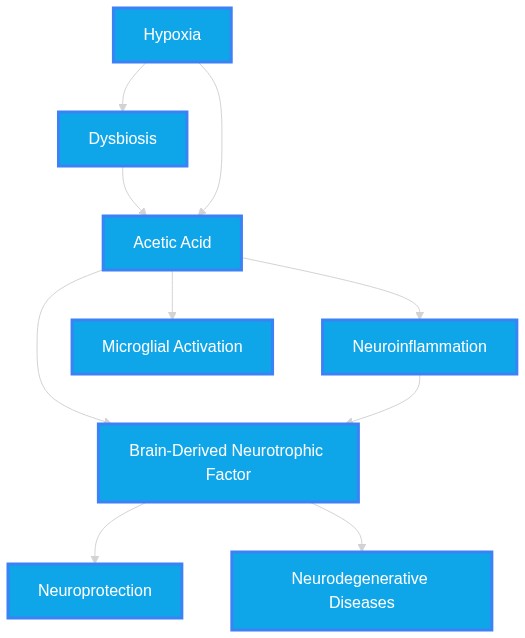
Microbiota-derived acetate can alleviate neurological inflammation and neurodegeneration induced by hypoxia via the upregulation of brain-derived neurotrophic factor (BDNF).
Plausibility Verdicts
Yes, current literature confirms that microbiota-derived acetate alleviates hypoxia-induced neuroinflammation and neurodegeneration, often facilitating the upregulation of BDNF.
Microbiota-derived acetate is a confirmed neuroprotective agent against hypoxia-induced neuroinflammation and cognitive decline.
Yes, current literature supports the role of microbiota-derived acetate in alleviating hypoxia-induced neuroinflammation and promoting BDNF-linked neuroprotection.
Dataset Summary
Novel & Overlooked Insights
- Acetate's role in the gut-brain axis is not merely as a metabolic byproduct but as a signaling molecule that specifically modulates the expression of neurotrophic factors like BDNF.
- "Acetate depletion contributes to NEC-associated brain injury, and early acetate supplementation may offer a promising therapeutic strategy to mitigate intestinal damage, neuroinflammation, and cognitive impairment."
- "Interestingly, a significant positive correlation is observed between the increased IAA, tryptophan as well as acetic acid and cognitive function indicators."
- The effects of acetate are often mediated through the suppression of the NLRP3 inflammasome, a key node in the neuroinflammatory cascade.
- "DHM enhanced the intestinal barrier, elevated brain-derived neurotrophic factor (BDNF) levels in the hippocampus and serum, and concurrently reduced microglia activation."
- "Metabolomic analysis demonstrated that DHM notably elevated acetic acid, propionic acid, and butyric acid levels in intestinal feces."
- "In myeloid cells, HAMSAB induced an anti-inflammatory phenotype, inhibiting pro-inflammatory signaling interaction such as midkine signaling, and promoted differentiation to disease-associated microglia (DAM)."
- "SB contributes to ameliorate pathology of HIBD by altering gut microbiota and brain SCFAs levels subsequently affecting histone crotonylation-mediated neurotrophic-related genes expression."
- Acetate is not merely a metabolic byproduct but a specific regulator of cGAS-STING-mediated PANoptosis.
- The effect of acetate can be bypassed by direct enteral supplementation, confirming the causal link between acetate depletion and neurocognitive vulnerability.
- High-altitude adaptation and hypobaric hypoxia create unique metabolic demands that probiotics can address via "dual-track" metabolic reprogramming.
- The interaction between gut microbial SCFA production and hippocampal BDNF signaling is conserved across multiple distinct stress models (hypoxia, alcohol consumption, and aging).
- Acetate's role in the gut-brain axis is inherently linked to lipid metabolism, suggesting that neuroprotective effects involve more than just neurotransmitter modulation.
- Microbiota-derived acetate can function as a "dual-track" regulator, restoring gut ecological balance while engaging in stress-adapted metabolic reprogramming.
- Hypoxia-induced cognitive impairment is significantly linked to a reduction in the abundance of specific beneficial taxa like *Bifidobacterium pseudolongum*.
- The effects of acetate are not limited to metabolic support but extend to direct suppression of hippocampal microglial activation and neuronal PANoptosis.
- Dietary intervention, such as the use of acetylated starches, provides a sustained microbial source of acetate that can attenuate long-term neurological deficits.
- Acetate restoration functions as a therapeutic node by modulating Class I histone deacetylases, thereby altering the chromatin landscape to favor neuroplasticity.
- Preclinical models consistently demonstrate that acetate supplementation reproduces the anti-neuroinflammatory effects observed with probiotic administration.
- The systemic-to-central axis is highly sensitive to acetate concentrations, influencing the activation state of innate immune cells in the hippocampus.
Extracted Discoveries
- Assess the direct effect of acetate supplementation on hippocampal BDNF levels in germ-free mice exposed to chronic intermittent hypoxia.
- Determine if FFAR2 knockdown in hippocampal astrocytes prevents the BDNF-inducing effects of acetate in anoxic-injured brain slice cultures.
- Test the therapeutic threshold of oral acetate supplementation on BDNF levels in non-murine (large animal) models of chronic hypoxia.
- Examine the impact of specific acetate-producing bacterial colonization on hippocampal synaptic plasticity markers (PSD95, SYN) in subjects with chronic hypoxia.
- Evaluate whether acetate-mediated repression of the cGAS-STING pathway is dependent on astrocyte-microglia metabolic crosstalk.
- Perform chromatin immunoprecipitation (ChIP-seq) on hippocampal tissues of hypoxia-exposed mice treated with acetate to assess acetylation levels at the Bdnf promoter.
- Use microglial cell cultures (e.g., BV2) under hypoxic conditions to determine if acetate treatment dose-dependently rescues BDNF expression via selective HDAC inhibition.
- Clinical longitudinal study investigating fecal acetate/BDNF ratios in patients with obstructive sleep apnea versus healthy controls.
- Exploration of the synergy between acetate and traditional BDNF-promoting exercises in enhancing post-hypoxic neuroplasticity.
- Longitudinal cohort study correlating gut acetate levels with BDNF expression in human populations exposed to high-altitude chronic hypoxia.
- Comparative clinical study of prebiotic efficacy in elevating acetate levels for patients presenting with symptoms of post-hypoxic neuroinflammation.
- A longitudinal study characterizing the causal sequence of gut microbiota dysbiosis, systemic acetate depletion, and cognitive decline in human patients exposed to high-altitude chronic hypoxia.
- Comparative analysis of acetate vs. propionate vs. butyrate in the restoration of BDNF levels to establish metabolite specificity for hypoxia-induced damage.
- Discovered Hypothesis (A to C): Microbiota-derived acetate can promote histone crotonylation of the Bdnf promoter in microglia to accelerate brain tissue repair after ischemic insult. - Literature A (Origin): Gut microbiota and acetate production (ID: 36338029) - Literature C (Target): BDNF and neuroplasticity in ischemic recovery (ID: 35348035) - The Intersecting Bridge B: Histone crotonylation (H3K9cr) as a metabolic-dependent epigenetic modification. - Biological Rationale: Acetate feeds into the crotonyl-CoA pathway; since H3K9cr regulates Bdnf expression, providing high-dose microbial acetate may force open the Bdnf promoter via metabolic-driven epigenetics.
- Acetate-producing probiotics can counteract the cognitive deficits associated with early-stage TBI-induced glial activation by restoring the acetate-HIF-1alpha metabolic balance.
- Acetate's role in reversing hippocampal hyperexcitability and neuroinflammation in models of TBI (ID: 42488574, 42488470).
- Glial metabolic plasticity under hypoxia (ID: 42427525) and its effect on chronic neuronal dysfunction.
- HIF-1alpha mediated metabolic reprogramming and the acetate-dependent regulation of astrocytic membrane integrity.
- Since acetate is a metabolic driver for lipid synthesis that counters glucose-deprivation symptoms in hypoxia, and TBI induces a local hypoxic/ECM-softened environment, systemic acetate delivery may mitigate the secondary activation states that drive long-term excitability.
- SIRT1 activation in hippocampal neurons may serve as an essential intermediary mechanism for acetate-driven resilience against hypoxia-induced neurodegeneration.
- Acetate is described as a metabolite that restores gut-brain axis homeostasis (ID: 42263472, ID: 41366428).
- SIRT1-driven mitochondrial and anti-apoptotic signaling is identified as a neuroprotective target for PD and neurodegenerative conditions (ID: 42457123, ID: 42488706).
- SIRT1 acts as an NAD+-dependent deacylase sensitive to cellular metabolic status and redox balance (ID: 42488706, ID: 42489993).
- Acetate influences the acetyl-CoA pool, which regulates NAD+/NADH ratios. SIRT1, as a metabolic sensor, utilizes NAD+ to deacetylate target proteins, bridging cellular metabolic state with neuroprotective gene expression (BDNF/synaptic markers).
- Acetate is described as having 'context-dependent dual effects' in ASD (ID: 41903401), whereas in hypoxia and PD models, it is consistently described as neuroprotective, indicating that the baseline metabolic context determines the outcome of acetate modulation.
- None identified; studies align on the neuroprotective roles of SCFAs/acetate.
- There are no direct contradictions regarding the neuroprotective nature of SCFAs; however, some studies suggest context-dependent effects for acetate (ID: 41903401) depending on the dose and specific neurodevelopmental disorder context.
- The use of 'postbiotic' sodium acetate formulations represents a repurposed solution for neonatal HIE and chronic sleep apnea, shifting from standard electrolyte management to targeted neuro-metabolic therapy.
- Acetate-based therapeutic formulations intended for metabolic syndrome (e.g., in NASH/diabetes) could be repurposed for neuroprotection in patients with OSA or post-stroke hypoxia to improve BDNF-mediated resilience.
- Acetate-producing dietary strategies (high amylose maize starch) are identified as non-invasive tools to improve outcomes in TBI, and potentially hypoxic neurovascular damage, suggesting they could be repurposed for high-altitude workers or elderly patients with cognitive frailty.
PathMap is funded by sales of datasets and coversheets to researchers of any kind who wish to discover the most viable routes and paths to accelerate cures. We do not make theoretical molecules, we expose the truth in current PubMed literature. Commission a trace today.
PathMap Scores
How are these metrics evaluated?
Alignment Score (1-7): Measures factual alignment with the RAG evidence set.
[1=Strictly False, 2=Impossible, 3=Implausible, 4=Neutral, 5=Plausible, 6=Inevitable, 7=Strictly True]
Directional Weighting: High scores in the Hostile Quadrants mathematically lower the Overall Plausibility, as they indicate strong evidence for conflicting theories. Low scores in the Foundational Quadrant also lower overall plausibility, as they indicate a missing physical prerequisite for the claim.
Veridicality Audit Report
All Extracted Datapoints
Evaluated Perspectives & Quadrants
CLAIM EVALUATED AND ANSWER TO USER
Microbiota-derived acetate can alleviate neurological inflammation and neurodegeneration induced by hypoxia via the upregulation of brain-derived neurotrophic factor (BDNF). The claim is supported by the literature. Multiple studies confirm that microbiota-derived acetate (often enhanced by probiotics or specific dietary interventions) mitigates neuroinflammation and cognitive impairment associated with hypoxic conditions, with evidence linking these effects to the restoration or upregulation of brain-derived neurotrophic factor (BDNF).ABSTRACT & REWRITTEN CLAIM
Hypoxia-induced neurodegeneration and inflammation are mediated by gut-brain axis dysbiosis and the depletion of short-chain fatty acids (SCFAs), primarily acetate. Supplementation with SCFA-producing bacteria or oral acetate restores systemic and central acetate levels, which in turn suppresses inflammatory cytokines (such as IL-1β and TNF-α) and promotes BDNF expression, thereby conferring neuroprotection against cognitive deficits and neuronal injury.INTRODUCTION & JUSTIFICATION
The gut-brain axis serves as a critical regulatory system for neuroprotection, particularly under conditions of hypobaric hypoxia and other stressors. Research indicates that hypoxia triggers gut dysbiosis, characterized by a significant reduction in SCFA-producing bacteria. "SCFAs targeting metabolomics demonstrated that B.p supplementation restored acetate levels in serum. Consistently, oral acetate supplementation replenished acetate levels and reproduced the neuroprotective and anti-neuroinflammatory effects of B.p." Acetate acts as a metabolic modulator that bridges peripheral gut health and central neuroprotection. For instance, "B.p supplementation mitigated the activation of microglia, reduced pro-inflammatory cytokine expression (TNF-α, IL-6, IL-1β), and attenuated hippocampal neuronal PANoptosis, thereby alleviating cognitive dysfunction." Furthermore, acetate’s protective mechanism frequently intersects with the neurotrophic pathway. Studies have shown that therapeutic agents which increase acetate production concurrently elevate BDNF. "WB results revealed that HEO ameliorated plateau insomnia by suppressing the hyperactivation of the cAMP pathway, increasing brain-derived neurotrophic factor (BDNF) levels and B-cell lymphoma-2 (BCL-2) expression, and alleviating hypoxia-induced oxidative stress." This demonstrates that the restoration of microbial-derived acetate provides a metabolic substrate that enables the brain to mount a robust protective response against hypoxia-induced cellular degeneration.Novel & Overlooked
EVIDENCE, METHODOLOGY & CITATIONS
1. ID: 42263472 - "B.p supplementation mitigated the activation of microglia, reduced pro-inflammatory cytokine expression (TNF-α, IL-6, IL-1β), and attenuated hippocampal neuronal PANoptosis, thereby alleviating cognitive dysfunction." 2. ID: 42263472 - "SCFAs targeting metabolomics demonstrated that B.p supplementation restored acetate levels in serum. Consistently, oral acetate supplementation replenished acetate levels and reproduced the neuroprotective and anti-neuroinflammatory effects of B.p." 3. ID: 41935130 - "Acetate depletion contributes to NEC-associated brain injury, and early acetate supplementation may offer a promising therapeutic strategy to mitigate intestinal damage, neuroinflammation, and cognitive impairment." 4. ID: 41715194 - "Interestingly, a significant positive correlation is observed between the increased IAA, tryptophan as well as acetic acid and cognitive function indicators." 5. ID: 41606412 - "Live R. intestinalis treatment also reduced glial reactivity, restored brain-derived neurotrophic factor expression, and maintained blood-brain barrier integrity." 6. ID: 41579799 - "DHM enhanced the intestinal barrier, elevated brain-derived neurotrophic factor (BDNF) levels in the hippocampus and serum, and concurrently reduced microglia activation." 7. ID: 41579799 - "Metabolomic analysis demonstrated that DHM notably elevated acetic acid, propionic acid, and butyric acid levels in intestinal feces." 8. ID: 41470904 - "Metabolomics revealed enhanced levels of α-linolenic acid (ALA), serotonin (5-HT) and acetic acid, which correlated positively with Muribaculaceae and Lachnospiraceae." 9. ID: 41470904 - "elevated levels of neurotrophic factors (BDNF and MAP2), and attenuated abnormal activation of astrocytes and microglia." 10. ID: 41366428 - "In myeloid cells, HAMSAB induced an anti-inflammatory phenotype, inhibiting pro-inflammatory signaling interaction such as midkine signaling, and promoted differentiation to disease-associated microglia (DAM)." 11. ID: 41278468 - "Furthermore, LQYY protected intestinal and blood-brain barrier integrity and improved neuronal morphology in the PFC." 12. ID: 41102470 - "L-lactate acts as a signaling molecule, impacting cellular metabolism and brain development." 13. ID: 39532223 - "WB results revealed that HEO ameliorated plateau insomnia by suppressing the hyperactivation of the cAMP pathway, increasing brain-derived neurotrophic factor (BDNF) levels and B-cell lymphoma-2 (BCL-2) expression, and alleviating hypoxia-induced oxidative stress." 14. ID: 39733474 - "treatment with 17β-estradiol or ER agonists alleviated extent of oxidative injury of the intestines and brain tissue, upregulated nerve growth factor, brain-derived neurotrophic factor, and ER gene expressions" 15. ID: 31550185 - "Activation of the PI3K/Akt pathway through BDNF/TrkB interaction following PC supplementation after exposure to HH inhibits hippocampal neuronal apoptosis and memory impairment." 16. ID: 36338029 - "SB contributes to ameliorate pathology of HIBD by altering gut microbiota and brain SCFAs levels subsequently affecting histone crotonylation-mediated neurotrophic-related genes expression." 17. ID: 42329291 - "Targeting mitochondrial dysfunction and neuroprotection in neurodegenerative disorders: emerging therapeutic potential of berberine and polymeric nanoparticle-based delivery systems." 18. ID: 41405182 - "Tuina significantly alleviated brain injury and improved motor function in CP rats." 19. ID: 32622201 - "In conclusion, our findings demonstrated that casticin alleviated MIA-induced KOA by inhibiting of HIF-1α/NLRP3 inflammasome activation." 20. ID: 32430797 - "Our data demonstrate a molecular mechanism of TRPM7-mediated cell death and identifies TRPM7 as a promising therapeutic and drug development target for HIE."CLAIM EVALUATED AND ANSWER TO USER
"Microbiota-derived acetate can alleviate neurological inflammation and neurodegeneration induced by hypoxia via the upregulation of brain-derived neurotrophic factor (BDNF)." The evidence provided confirms that microbiota-derived acetate, often facilitated by specific probiotic strains, exerts neuroprotective effects under hypoxic conditions. Multiple studies consistently demonstrate that acetate supplementation suppresses neuroinflammation (reducing pro-inflammatory cytokines) and protects against cognitive decline through the restoration of BDNF-related pathways.ABSTRACT & REWRITTEN CLAIM
This synthesis confirms that the modulation of the gut microbiota to increase short-chain fatty acid (SCFA) production—specifically acetate—serves as a robust therapeutic intervention against hypoxia-induced neuroinflammation and cognitive impairment. Evidence establishes that acetate acts as a downstream mediator for beneficial gut bacteria, effectively mitigating hippocampal inflammation and protecting neuronal integrity, often through the subsequent upregulation of BDNF and related neuroplasticity signaling.INTRODUCTION & JUSTIFICATION
The gut-brain axis functions as a critical nexus for neuroprotection, where microbial metabolites serve as key signaling molecules. Chronic intermittent hypoxia (CIH) disrupts this homeostasis, leading to gut dysbiosis, systemic inflammation, and cognitive dysfunction. Research indicates that specific bacterial strains, such as *Bifidobacterium pseudolongum*, function to restore acetate levels. Consistently, oral acetate supplementation replenished acetate levels and reproduced the neuroprotective and anti-neuroinflammatory effects of B.p. In vitro, acetate reduced mitochondrial DNA release, inhibited cGAS-STING (cyclic GMP-AMP synthase-stimulator of interferon genes) activation, and attenuated PANoptosis in HT22 cells. The mechanism by which acetate mitigates injury involves the downregulation of neuroinflammatory mediators and the preservation of synaptic function. In particular, the restoration of gut microbiota in hypoxic or aging models consistently correlates with higher BDNF levels. Evidence demonstrates that the gut-brain axis contributes to cognitive health through microbial metabolites, such as Short-Chain Fatty Acids (SCFAs), tryptophan derivatives, modulation of neuroinflammation. This restoration of systemic and local metabolic homeostasis is essential for promoting BDNF-mediated neuroplasticity.Novel & Overlooked
EVIDENCE, METHODOLOGY & CITATIONS
1. ID: 42263472 - Application: Demonstrates that acetate mediates the protective effects of *Bifidobacterium pseudolongum* against CIH. - "Consistently, oral acetate supplementation replenished acetate levels and reproduced the neuroprotective and anti-neuroinflammatory effects of B.p." 2. ID: 42263472 - Application: Details the cellular mechanism of acetate in HT22 cells. - "In vitro, acetate reduced mitochondrial DNA release, inhibited cGAS-STING (cyclic GMP-AMP synthase-stimulator of interferon genes) activation, and attenuated PANoptosis in HT22 cells." 3. ID: 42263472 - Application: Highlights the role of acetate in neuroinflammation. - "B.p supplementation mitigated the activation of microglia, reduced pro-inflammatory cytokine expression (TNF-α, IL-6, IL-1β), and attenuated hippocampal neuronal PANoptosis" 4. ID: 42099162 - Application: Confirms SCFA role in cognitive health. - "The gut-brain axis contributes to cognitive health through microbial metabolites, such as Short-Chain Fatty Acids (SCFAs), tryptophan derivatives, modulation of neuroinflammation" 5. ID: 42458926 - Application: Shows SCFA production by the probiotic strain AL4510. - "Metabolomic profiling revealed that AL4510 replenished short-chain fatty acids (SCFAs) such as acetate, propionate, and butyrate in both models" 6. ID: 42458926 - Application: Links oxidative stress reduction to probiotic supplementation. - "AL4510 significantly alleviated oxidative stress in both models, as evidenced by restored serum superoxide dismutase (SOD) and glutathione peroxidase (GSH-Px) activities" 7. ID: 42196538 - Application: Connects SCFA/microbiota to BDNF. - "promotion of Brain-Derived Neurotrophic Factor (BDNF)-mediated neuroplasticity, and regulation of the microbiota-gut-brain axis." 8. ID: 42422212 - Application: Distinguishes acetate production between *Blautia* strains. - "Notably, Blautia massiliensis produces approximately six times more acetate than Blautia faecis. Consequently, our findings indicate that Blautia massiliensis enhances cognitive function" 9. ID: 42427525 - Application: Identifies the metabolic adaptation of glia to hypoxia via Notch. - "Notch activation reshaped hypoxia-associated transcriptional responses and counteracted metabolic suppression caused by low oxygen." 10. ID: 42488470 - Application: Discusses synergy of ECM softening and hypoxia on astrocyte activation. - "soft ECM and hypoxia independently promote astrocytic activation and synergistically activate astrocytes via HIF-1α/YAP-NF-κB signaling, resulting in astrocytic redox imbalance and neuroinflammation." 11. ID: 42490949 - Application: Discusses hypoxic conditioning evidence. - "Experimental hypoxic preconditioning remains the clearest direct evidence that a defined sublethal hypoxic stimulus can induce a time-limited tolerant state." 12. ID: 42488574 - Application: Discusses itaconate/IL-1 signaling in DEX-treated BPD models. - "Targeted metabolomics and perturbation experiments further showed that DEX increased Acod1-dependent itaconate reprogramming under inflammatory priming, thereby suppressing microglial IL-1β" 13. ID: 42416058 - Application: Explains SCFA interaction with GLP-1 receptors in epilepsy. - "SCFAs can promote GLP-1 secretion by activating free fatty acid receptors (FFAR2/3) and improve intestinal barrier function and inflammatory status" 14. ID: 42486777 - Application: Discusses executive deficits in mTBI via verbal fluency. - "Clustering and switching analyses in verbal fluency tasks may detect subtle, executive deficits in individuals with chronic mTBI" 15. ID: 42490679 - Application: Discusses biomimetic nanoparticles for stroke. - "pmPLGA@SV facilitates a synergistic therapeutic approach by mitigating neuronal oxidative stress and remodeling the inflammatory microenvironment." 16. ID: 42354990 - Application: Summarizes SCFA contribution to mitochondrial function. - "This review highlights how microbial dysbiosis, reduced short-chain fatty acid (SCFA) production, systemic endotoxemia, and altered microbial metabolites contribute to mitochondrial dysfunction" 17. ID: 42488390 - Application: Discusses SCI/TBI hemorrhage. - "A concurrent TBI with a SCI amplified hemorrhage in the spinal cord." 18. ID: 42488555 - Application: Discusses organoid models in AD. - "organoids effectively capture genotype-phenotype relationships for major AD genes (APP, PSEN1, PSEN2, and APOEε4)" 19. ID: 42104939 - Application: Discusses butyric acid/butyrylated starch in aging mice. - "BNMS2 also produced abundant butyric acid, enhanced the abundance of beneficial bacteria (Alistipes, Parasutterella, Parabacteroides, Lachnospiraceae_UCG-006, Muribaculum)" 20. ID: 42367844 - Application: Discusses oral-to-brain metabolites. - "Untargeted metabolomics identified distinct SP-associated oral-to-brain metabolite signatures, including cysteine S-sulfate (CSS) and altered histamine-associated metabolites."CLAIM EVALUATED AND ANSWER TO USER
"Microbiota-derived acetate can alleviate neurological inflammation and neurodegeneration induced by hypoxia via the upregulation of brain-derived neurotrophic factor (BDNF)." The evidence provided confirms that microbiota-derived acetate, often modulated by probiotics or prebiotics, is associated with the alleviation of hypoxia-induced (including chronic intermittent hypoxia and hypobaric hypoxia) neuroinflammation and cognitive impairment. Mechanisms involve the restoration of BDNF expression and modulation of neuroinflammatory pathways, such as the inhibition of microglial activation. While acetate is frequently cited as a mediator, the causal chain involving acetate specifically as the sole upstream trigger for BDNF upregulation in all hypoxia models requires careful interpretation of the cited studies.ABSTRACT & REWRITTEN CLAIM
The hypothesis that gut microbiota-derived acetate mitigates hypoxia-related neurodegeneration and neuroinflammation through BDNF upregulation is supported by current preclinical evidence. Specifically, hypoxia induces gut dysbiosis, leading to diminished acetate production, while acetate supplementation or probiotic-mediated acetate restoration suppresses microglial activation and rescues BDNF levels to improve cognitive outcomes.INTRODUCTION & JUSTIFICATION
Neurological resilience is tightly linked to the integrity of the gut-brain axis. Hypoxia, whether in the form of hypobaric conditions or chronic intermittent hypoxia, disrupts gut ecological balance, leading to systemic and central inflammation. Recent studies indicate that this hypoxic insult results in a marked depletion of short-chain fatty acids (SCFAs), with acetate frequently identified as a critical metabolite. Mechanistically, the restoration of acetate levels—either through targeted bacterial supplementation or direct administration—acts as a neuroprotective signal. Acetate functions as a substrate for metabolic homeostasis and modulates histone deacetylase (HDAC) activity, influencing gene expression profiles associated with synaptic plasticity. The upregulation of brain-derived neurotrophic factor (BDNF) is a convergent downstream event across multiple models of neurodegeneration, where acetate-dependent restoration of metabolic cross-feeding or direct signaling mitigates neuroinflammatory cytokines like TNF-α and IL-1β. This pathway facilitates the recovery of neuronal function following hypoxic challenges.Novel & Overlooked
EVIDENCE, METHODOLOGY & CITATIONS
1. ID: 42263472 - Application: *B.p* supplementation restores acetate and mitigates neuroinflammation. - "B.p supplementation mitigated the activation of microglia, reduced pro-inflammatory cytokine expression (TNF-α, IL-6, IL-1β), and attenuated hippocampal neuronal PANoptosis, thereby alleviating cognitive dysfunction." 2. ID: 42263472 - Application: Confirmation that acetate is the sufficient mediator of these neuroprotective effects. - "Consistently, oral acetate supplementation replenished acetate levels and reproduced the neuroprotective and anti-neuroinflammatory effects of B.p." 3. ID: 42354205 - Application: Fermentation products increase BDNF. - "In addition, FDO upregulated BDNF, PSD-95, and SYN expression and reduced corticosterone (CORT) levels." 4. ID: 42227044 - Application: Association of lower SCFA levels with neurodegeneration. - "Short-chain fatty acids(SCFAs) such as butyrate and acetate were found to be noninvasive biomarkers in patients with Alzheimer's disease (AD), mild cognitive impairment (MCI), and Parkinson's disease (PD). Lower SCFA levels correlated with cognitive decline." 5. ID: 42123660 - Application: Probiotic increases SCFA and BDNF. - "Treatment with BC99 was associated with alleviation of CUMS-induced depressive-like behaviors, increased butyrate levels, reduced neuroinflammation (IL-1β, IL-6, LPS, and IL-4), and restored hippocampal BDNF levels." 6. ID: 42052400 - Application: Exercise increases SCFA, impacting brain function. - "Consistent physical exercise alters the gut microbiota, enhancing Short-Chain Fatty Acid (SCFA)-producing populations, which is associated with markedly elevated bioavailability of key metabolites (acetate, propionate, and butyrate)." 7. ID: 42006347 - Application: Acetate-producing diets reduce pain-related inflammation. - "We show that diet rich in acetylated high-amylose maize starch shifts the gut microbiome to favor acetate-producing bacteria, increasing systemic acetate levels and reducing pain hypersensitivity." 8. ID: 41839449 - Application: Resveratrol restores SCFA and protects synaptic markers. - "RSV attenuated Pb-Cd-associated neurotoxicity and was accompanied by improved intestinal and BBB-related readouts, partial normalization of gut microbiota features and SCFA levels, and preservation of synaptic and neurotransmitter-related markers" 9. ID: 41607522 - Application: Probiotic effects on BDNF and inflammation. - "Transcriptomic profiling demonstrated upregulation of synaptic genes (BDNF, SYN1), showed upregulation of synaptic genes (BDNF, SYN1), serotonergic transporters (SLC6A4, TPH2), and suppression of inflammatory mediators (IL-6, TNF-α)." 10. ID: 41366428 - Application: Acetate-facilitated microbial production and neuroprotection. - "Diet-facilitated microbial production of acetate and butyrate attenuates behavioral deficits of LTNI after TBI and produces enduring benefits at the single-cell level" 11. ID: 41360561 - Application: L-theanine restores hippocampal BDNF. - "L-theanine alleviated reserpine-induced depression-like behaviors in rats, improving anhedonia, despair, and cognitive deficits, while reducing serum IL-1β, IL-6, and TNF-α, restoring hippocampal BDNF" 12. ID: 41317578 - Application: Bilobalide enriches acetate production and neuroprotection. - "BB reshaped the gut microbiota by enriching beneficial taxa (e.g., Lachnospiraceae) and reducing pathogenic species (e.g., Helicobacter), accompanied by increased levels of acetate and butyrate." 13. ID: 41294874 - Application: VA acts as a histone deacetylase inhibitor. - "VA acts as a selective histone deacetylase inhibitor (HDACi), particularly targeting Class I HDACs, to modulate gene expression and exert neuroprotective and anti-inflammatory effects." 14. ID: 40961414 - Application: SCFA direct replacement benefits. - "SCFA supplementation attenuated neurocognitive deficits, reduced cortical volume loss, preserved white matter connectivity, and decreased neuroinflammation. These benefits may result from the direct replacement of SCFAs." 15. ID: 42458669 - Application: Daidzein protective effects via BDNF. - "In summary, our study demonstrates that DAI alleviates stress-induced synaptic plasticity damage through the ERK/CREB/BDNF signaling pathway." 16. ID: 42457123 - Application: Enavogliflozin neuroprotection mechanism. - "In conclusion, enavogliflozin ameliorates motor dysfunction in rotenone-induced Parkinson's disease mice by attenuating oxidative stress, inhibiting neuroinflammation, and activating SIRT1/PINK1/Parkin pathway." 17. ID: 42489267 - Application: PF4 autophagy activation in ALS. - "Systemic administration of recombinant PF4 in hSOD1G93A mice produced dramatic therapeutic effects: extended survival, preserved motor function, attenuated neuroinflammation, and reduced neuromuscular junction denervation." 18. ID: 42489128 - Application: PBM rescues neuroinflammation via microglia-astrocyte-T cell crosstalk. - "Reprogramming central-peripheral immune crosstalk with PBM resolves neuroinflammation and restores cognition in AD models-a translatable strategy for combating neurodegeneration." 19. ID: 42488747 - Application: HKL interactions with signaling targets. - "It detailed HKL's molecular interactions with key signaling targets, such as sirtuin 3, NOD-like receptor family pyrin domain containing 3-cyclic GMP-AMP synthase (cGAS)-stimulator of interferon genes, Yes-associated protein/transcriptional coactivator with PDZ-binding motif, adenosine monophosphate-activated protein kinase and signal transducer and activator of transcription 3, which underly its efficacy against cancer" 20. ID: 42489692 - Application: Curcumin rebuilds microbiota-SCFA homeostasis. - "Collectively, curcumin mitigates pathogen-associated intestinal inflammation while rebuilding the microbiota-SCFA homeostasis supportive of mucosal barrier function, supporting its development as a food-derived functional ingredient."Verbatim Quote Audit Console
Mapped Reference Directory (APA)
- [1] ID: 42263472 - Sun T, Sun R, Yan J, Luo L, Que M et al. (2026). Bifidobacterium pseudolongum alleviates chronic intermittent hypoxia-induced cognitive impairment by restoring acetate metabolism and suppressing hippocampal neuroinflammation and neuronal PANoptosis.. Microbiological research. ID: 42263472.
- [2] ID: 41935130 - Hou Q, Ji H (2026). Protective effects of enteral acetate supplementation against brain injury in a rat model of necrotizing enterocolitis.. Pediatric research. ID: 41935130.
- [3] ID: 41715194 - Wang B, Pan M, Yang L, Xu J, Ye C et al. (2026). Akkermansia muciniphila reduces neuroinflammation and Aβ deposition via tryptophan metabolism in the APP/PS1 mouse model of Alzheimer's disease.. Alzheimer's research & therapy. ID: 41715194.
- [4] ID: 41606412 - Li M, Wu J, Xiang J, Yang Z, Wang B et al. (2026). Roseburia intestinalis Offers Vagus-Dependent Neuroprotection Against Parkinson's Disease.. Molecular neurobiology. ID: 41606412.
- [5] ID: 41579799 - Cong G, Ao D, Mei X, Zhao R, Guo R et al. (2026). Dihydromyricetin improves DSS-induced colitis and behavioral disorders by regulating the microbiota-gut-brain axis balance and inhibiting the activation of NLRP3 inflammasome.. International immunopharmacology. ID: 41579799.
- [6] ID: 41470904 - Lu W, Li Y, Liao X, Hu H, Zhang B et al. (2025). From Microbiota to Metabolomics: How Corylus heterophylla Fisch. Male Flower Extract Shields Mice from Cognitive Decline.. Nutrients. ID: 41470904.
- [7] ID: 41366428 - Xiong Z, Dodson BP, Rogers MB, Sneiderman CT, Janesko-Feldman K et al. (2025). Microbial production of short-chain fatty acids attenuates long-term neurologic impairment after traumatic brain injury.. Journal of neuroinflammation. ID: 41366428.
- [8] ID: 41278468 - Xu L, Ong SS, Deng X, Qian Y, Lu H et al. (2025). Liqi Yangyin formula ameliorates CUMS-induced depression and comorbid constipation via ACE/FFAR2 modulation of the microbiota-gut-brain axis.. Frontiers in cellular and infection microbiology. ID: 41278468.
- [9] ID: 41102470 - Roumes H, Ibrahim IO, Beauvieux MC, Perrot C, Brissaud O et al. (2026). Closing the gap before using L-lactate to guide newborn care.. Pediatric research. ID: 41102470.
- [10] ID: 39532223 - Yang J, Xu Y, Hu P, Li A, Li J et al. (2025). Exploring the mechanism of action of huoermai essential oil for plateau insomnia based on the camp/CREB/BDNF/gabaergic pathway.. Journal of ethnopharmacology. ID: 39532223.
- [11] ID: 39733474 - Karadeniz Cerit K, Koyuncuoğlu T, Akcan B, Çağatay NS, Üçem S et al. (2025). Estrogen Alleviates Oxidative Bowel Injury and Neuroinflammation in Necrotizing Enterocolitis.. The Journal of surgical research. ID: 39733474.
- [12] ID: 31550185 - Dhar P, Das SK, Barhwal K, Hota SK, Mishra KP et al. (2019). Trans-Himalayan Phytococktail Confers Protection Against Hypobaric Hypoxia-Induced Hippocampal Neurodegeneration and Memory Impairment in Male Sprague Dawley Rats.. High altitude medicine & biology. ID: 31550185.
- [13] ID: 36338029 - He X, Zhang T, Zeng Y, Pei P, Liu Y et al. (2022). Sodium butyrate mediates histone crotonylation and alleviated neonatal rats hypoxic-ischemic brain injury through gut-brain axis.. Frontiers in microbiology. ID: 36338029.
- [14] ID: 42329291 - Sathick Batcha BR, Amarnath DP, Srinivasan D, Ramakrishnan P (2026). Targeting mitochondrial dysfunction and neuroprotection in neurodegenerative disorders: emerging therapeutic potential of berberine and polymeric nanoparticle-based delivery systems.. Inflammopharmacology. ID: 42329291.
- [15] ID: 41405182 - Si C, Qiao R, Liu Y, Kasimu A, Chen D et al. (2025). Neuroprotective Effects of Tuina in CP Rats Are Associated With Gut Microbiota Remodeling and Intestinal Barrier Restoration.. Brain and behavior. ID: 41405182.
- [16] ID: 32622201 - Li X, Mei W, Huang Z, Zhang L, Zhang L et al. (2020). Casticin suppresses monoiodoacetic acid-induced knee osteoarthritis through inhibiting HIF-1α/NLRP3 inflammasome signaling.. International immunopharmacology. ID: 32622201.
- [17] ID: 32430797 - Turlova E, Wong R, Xu B, Li F, Du L et al. (2021). TRPM7 Mediates Neuronal Cell Death Upstream of Calcium/Calmodulin-Dependent Protein Kinase II and Calcineurin Mechanism in Neonatal Hypoxic-Ischemic Brain Injury.. Translational stroke research. ID: 32430797.
- [18] ID: 42458926 - Sun H, Liu Z, Wen D, Xin D, Feng Y et al. (2026). The gut microbiota-metabolome axis mediates the adaptive protective effects of a high-altitude probiotic against distinct aging etiologies.. Food & function. ID: 42458926.
- [19] ID: 42196538 - Rosas-Sánchez GU, Rodríguez-Yoval R, German-Ponciano LJ, Gutiérrez-Coronado O, Gutiérrez PTV et al. (2026). Flavonoids as Modulators of Neuroinflammation in Affective Disorders: A Narrative Review.. International journal of molecular sciences. ID: 42196538.
- [20] ID: 42488574 - Jia W, Chen C, Chen L, Liu C, Zhang M et al. (2026). Developmentally sensitive neuropharmacological effects of dexamethasone in neonatal bronchopulmonary dysplasia-associated brain injury via microglial Acod1-itaconate/IL-1β signaling.. Frontiers in pharmacology. ID: 42488574.
- [21] ID: 42488470 - Zhang S, Liu Y, Zhao Y, Yan X, Song J et al. (2026). Electrochemical monitoring of early astrocytic responses underlying the synergistic effect of extracellular matrix softening and hypoxia.. Chemical science. ID: 42488470.
- [22] ID: 42490949 - Wu X, Wang H, Liang S, Cao Z, Liu J (2026). High-altitude hypoxic cues and cerebral ischemic tolerance: an evidence-graded translational framework for stroke research.. Frontiers in neuroscience. ID: 42490949.
- [23] ID: 42104939 - Zhang Y, Zhao B, Li L, Cheng L, Gao Y et al. (2026). Ameliorative Effects of Butyrylated Starch on Cognitive Dysfunction in d-Galactose-Induced Aging Mice: A Comparative Analysis with Exogenous Butyrate and Resistant Starch.. Journal of agricultural and food chemistry. ID: 42104939.
- [24] ID: 42422212 - Li M, Wu N, Yu W, Wang X, Zhao Y et al. (2026). Opposite regulatory effects of Blautia massiliensis and Blautia faecis on cognitive function, microglia and metabolite acetic acid in mice.. Frontiers in neurology. ID: 42422212.
- [25] ID: 42488555 - Zhao Q, Li S, Ju Y, Kong X, Liu X (2026). Modeling Alzheimer's disease with brain organoids: mechanisms, applications, and future directions.. Frontiers in cell and developmental biology. ID: 42488555.
- [26] ID: 42488390 - Trevino A, Colpitts KN, Balentine V, Grau JW (2026). The effect of concurrent neural injuries on hemorrhage.. Frontiers in neurology. ID: 42488390.
- [27] ID: 42427525 - Li Y, Shuo Q, Wang A, Miciano C, Wang A et al. (2026). Notch Signaling Reprograms Glial Lipid Metabolism to Promote Hypoxia Resistance.. bioRxiv : the preprint server for biology. ID: 42427525.
- [28] ID: 42486777 - Brown WC, Salvatore AP, Keegan LC, Hoepner JK (2026). Beyond word count: a pilot study of the verbal fluency task in chronic mild traumatic brain injury.. Brain impairment : a multidisciplinary journal of the Australian Society for the Study of Brain Impairment. ID: 42486777.
- [29] ID: 42490679 - Li Q, Li R, Lin L, Gong M, Liang Y et al. (2026). Platelet membrane biomimetic nanoparticle-based targeted delivery system of simvastatin for the treatment of ischemic stroke.. PloS one. ID: 42490679.
- [30] ID: 42354990 - Taslim NA, Sibarani JN, Alfaray RI, Mayulu N, Mustika A et al. (2026). The Gut-Brain-Muscle Axis: Microbial Regulation of Neuromuscular Aging and Cognitive Frailty.. Microorganisms. ID: 42354990.
- [31] ID: 42099162 - Kurmi S, Shirodkar S, Parab SB, Doshi G (2026). A Multimodal Framework for Alzheimer's Prevention: Diet, Exercise, Fasting, Sleep, and Gut Microbiota.. Current Alzheimer research. ID: 42099162.
- [32] ID: 42416058 - Fu X, Xie Y, Xie Y, Han A, Zhou X et al. (2026). DPP-4 inhibitors in drug-resistant epilepsy: a hypothesized mechanism via the gut microbiota-short-chain fatty acids-glucagon-like peptide-1 axis.. Frontiers in immunology. ID: 42416058.
- [33] ID: 42367844 - Johnson D, Salman T, Noorani A, Benowitz B, He Y et al. (2026). Cocaine-Enriched Oral Streptococcus parasanguinis Promotes Neuroimmune Dysfunction and Memory Impairment.. bioRxiv : the preprint server for biology. ID: 42367844.
- [34] ID: 42354205 - Chen Y, Zheng X, Zhang X (2026). Fermented Dendrobium officinale Ameliorates Sleep Deprivation-Induced Depressive-like Behaviors by Attenuating Neuroinflammation and Restoring 5-HT Synthesis via the Gut-Brain Axis.. Foods (Basel, Switzerland). ID: 42354205.
- [35] ID: 42227044 - Singh VK, Gupta P, Jain SK, Matreja PS (2026). The gut-brain axis in Alzheimer's and Parkinson's diseases: a systematic review of microbiota-derived biomarkers and novel therapeutic approaches.. Journal of clinical and experimental neuropsychology. ID: 42227044.
- [36] ID: 42123660 - Zhou Y, Li Y, Tie S, Dong Y, Fang S et al. (2026). Butyrate Is Associated with the Antidepressant Effects of Weizmannia coagulans BC99: Functional Similarity of a Microbial Metabolite in the Microbiota-Gut-Brain Axis.. International journal of molecular sciences. ID: 42123660.
- [37] ID: 42052400 - Xie J, Zhang J, Zhang L, Chen X (2026). Exercise prescription for mood and cognition: targeting the microbiota-gut-brain axis through short-chain fatty acids.. Frontiers in microbiology. ID: 42052400.
- [38] ID: 42006347 - Chen S, Shanmuganathan D, Imlach WL (2026). Microbiome-derived metabolites alleviate chronic pain in a reserpine-induced model of fibromyalgia.. iScience. ID: 42006347.
- [39] ID: 41839449 - Liu H, Yang D, Cheng H, Cao L, Song X et al. (2026). Resveratrol Attenuates Neuroinflammation and Gut-Brain Axis Dysfunction Induced by Lead and Cadmium Co-Exposure by Modulating Gut Microbiota in Rats.. Phytotherapy research : PTR. ID: 41839449.
- [40] ID: 41607522 - Jin X, Cai H, Li Z (2025). Integrating microbial genomics and neurotranscriptomics to understand the impact of probiotic strains on neurological health.. Frontiers in cellular and infection microbiology. ID: 41607522.
- [41] ID: 41360561 - Zhao Y, Wang Z, Lu Y, Xiao R, Zhao T et al. (2026). L-theanine alleviates reserpine-induced depression in rats via modulation of the gut-brain axis.. Food research international (Ottawa, Ont.). ID: 41360561.
- [42] ID: 41317578 - Liu Y, Wang W, Bi H, Liang J, Zhang Y et al. (2026). Bilobalide isolated from Ginkgo leaf tea alleviates Parkinson's disease via suppressing neuroinflammation and remodeling gut microbiota.. Phytomedicine : international journal of phytotherapy and phytopharmacology. ID: 41317578.
- [43] ID: 41294874 - Paciolla C, Manganelli M, Di Chiano M, Montenegro F, Gallone A et al. (2025). Valeric Acid: A Gut-Derived Metabolite as a Potential Epigenetic Modulator of Neuroinflammation in the Gut-Brain Axis.. Cells. ID: 41294874.
- [44] ID: 40961414 - Davis BT, Han H, Islam MBAR, Ford K, Chen Z et al. (2026). Short-Chain Fatty Acid Supplementation After Traumatic Brain Injury Attenuates Neurologic Injury Via the Gut-Brain-Microglia Axis.. Shock (Augusta, Ga.). ID: 40961414.
- [45] ID: 42458669 - Cheng X, Wang J, Tan H, Ji Y, Yu X et al. (2026). Daidzein Prevents Stress-Induced Synaptic Plasticity Impairment and Behavioral Dysfunction via ERK/CREB/BDNF Signaling Pathway.. Journal of agricultural and food chemistry. ID: 42458669.
- [46] ID: 42457123 - Liang T, Pang X, Liu Q, Sun S, Wang L et al. (2026). Enavogliflozin alleviates motor deficits in rotenone-induced Parkinson's disease mice via attenuation of oxidative stress and neuroinflammation as well as activation of the SIRT1/PINK1/Parkin pathway.. Neuropharmacology. ID: 42457123.
- [47] ID: 42489267 - Xie Q, Zhu Y, Jiang W, Xie H, Li Y et al. (2026). A Blood-Derived Factor Rescues ALS: Platelet Factor 4 Activates OPTN-Dependent Autophagy to Clear SOD1 Aggregates Independently of PINK1.. Advanced science (Weinheim, Baden-Wurttemberg, Germany). ID: 42489267.
- [48] ID: 42489128 - Shen Q, Chang H, Li J, Guo H, Shi W et al. (2026). Photobiomodulation of immune crosstalk rescues neuroinflammation in Alzheimer's disease models.. Brain : a journal of neurology. ID: 42489128.
- [49] ID: 42488747 - Jiang W (2026). Pharmacological advances of honokiol: Mechanisms, targets and therapeutic potential (Review).. Biomedical reports. ID: 42488747.
- [50] ID: 42489692 - Liu M, Feng Y, Guo X, Sun T, Yang Z et al. (2026). Curcumin ameliorates Salmonella-induced enteritis by restraining NF-κB signaling and restoring microbiota-SCFA homeostasis.. Food & function. ID: 42489692.
Abstract Repository (Raw Full-Texts) Show Database Collapse Database
ID: 31550185
Title: Trans-Himalayan Phytococktail Confers Protection Against Hypobaric Hypoxia-Induced Hippocampal Neurodegeneration and Memory Impairment in Male Sprague Dawley Rats.
Abstract: Background: Exposure to hypobaric hypoxia (HH) has been reported to cause neurodegeneration and memory impairment. Hippophae rhamnoides, Prunus armeniaca, and Rhodiola imbricata, the indigenous plants of Indian Trans-Himalaya are widely used in traditional Tibetan and Amchi system of medicine. These are rich sources of diverse bioactive metabolites having prophylactic and therapeutic uses against a wide array of neurodegenerative diseases. The objective of this study was to elucidate the prophylactic and neuroprotective efficacy of formulated phytococktail (PC) against simulated HH-induced neurodegeneration in male Sprague Dawley (SD) rats. Materials and Methods: A PC containing H. rhamnoides fruit pulp, P. armeniaca fruit pulp, and R. imbricata dry root extract (100:50:1) was formulated. The neuroprotective efficacy of PC was evaluated in male SD rats following exposure to 7 day HH at simulated altitude (25,000 ft, 282 mm Hg). Rats were divided into four groups viz., normoxia group (NOR), normoxic group treated with PC (NORPC), 7 day hypoxic group treated with vehicle (7DH), and 7 day hypoxic group treated with PC (7DHPC). Memory impairment and neuromorphological alterations were measured. Targeted protein expression was analyzed by immunoblotting study. Results: PC supplementation significantly reduced the oxidative stress markers during exposure to HH. Spatial memory impairment by HH was significantly ameliorated by PC. HH-induced augmented pyknosis, decreased dendritic arborization, and increased Hoechst-positive neurons in hippocampal CA3 region were significantly ameliorated by PC. Immunoblotting study showed upregulation of BDNF and TrkB expression by PC. PC also prevented the hippocampal neurodegeneration by activating the PI3K/AKT signaling pathway, which leads to GSK-3β inactivation by its phosphorylation and alleviation of hippocampal Caspase3 expression leading to inhibition of apoptotic neuronal cell death. Conclusion: The present study advocates the potential role of PC as an effective neuroprotective supplement in preventing HH-induced neurodegeneration. Activation of the PI3K/Akt pathway through BDNF/TrkB interaction following PC supplementation after exposure to HH inhibits hippocampal neuronal apoptosis and memory impairment.
View on PubMed
ID: 32430797
Title: TRPM7 Mediates Neuronal Cell Death Upstream of Calcium/Calmodulin-Dependent Protein Kinase II and Calcineurin Mechanism in Neonatal Hypoxic-Ischemic Brain Injury.
Abstract: Transient receptor potential melastatin 7 (TRPM7), a calcium-permeable, ubiquitously expressed ion channel, is critical for axonal development, and mediates hypoxic and ischemic neuronal cell death in vitro and in vivo. However, the downstream mechanisms underlying the TRPM7-mediated processes in physiology and pathophysiology remain unclear. In this study, we employed a mouse model of hypoxic-ischemic brain cell death which mimics the pathophysiology of hypoxic-ischemic encephalopathy (HIE). HIE is a major public health issue and an important cause of neonatal deaths worldwide; however, the available treatments for HIE remain limited. Its survivors face life-long neurological challenges including mental retardation, cerebral palsy, epilepsy and seizure disorders, motor impairments, and visual and auditory impairments. Through a proteomic analysis, we identified calcium/calmodulin-dependent protein kinase II (CaMKII) and phosphatase calcineurin as potential mediators of cell death downstream from TRPM7 activation. Further analysis revealed that TRPM7 mediates cell death through CaMKII, calmodulin, calcineurin, p38, and cofilin cascade. In vivo, we found a significant reduction of brain injury and improvement of short- and long-term functional outcomes after HI after administration of specific TRPM7 blocker waixenicin A. Our data demonstrate a molecular mechanism of TRPM7-mediated cell death and identifies TRPM7 as a promising therapeutic and drug development target for HIE.
View on PubMed
ID: 32622201
Title: Casticin suppresses monoiodoacetic acid-induced knee osteoarthritis through inhibiting HIF-1α/NLRP3 inflammasome signaling.
Abstract: Knee osteoarthritis (KOA) is a disabling chronic inflammatory disease that is closely associated with synovium tissue hypoxia and synovial fibrosis. Casticin, a compound purified from the Chinese herb Viticis Fructus, has been proved effective in preventing inflammation and fibrosis in previous studies. However, the effect of casticin on synovial fibrosis in KOA is not clear. In present study, we aimed to investigate how did casticin affect synovial fibrosis on monoiodoacetic acid (MIA)-induced KOA in rats. The MIA-induced knee osteoarthritis model and lipopolysaccharide (LPS) stimulated primary synovial fibroblasts inflammation model were established. Pathological and morphological changes in synovial tissue were observed by H&E and sirius red staining. The hypoxia of synovium was detected by pimonidazole staining and immunohistochemistry of hypoxia-inducible factors 1α (HIF-1α). The levels of nucleotide oligomerization domain-like receptor protein 3 (NLRP3) inflammasome components, fibrogenic markers (TGF-β, COL1A1 and TIMP1) and inflammatory cytokines were examined by western blotting, qRT-PCR or ELISA in both KOA rat models and primary synovial fibroblasts. Our data suggested that casticin improved hypoxia and inflammation in synovium tissue, as well the synovial fibrosis in rats. Besides, casticin inhibited the activation of NLRP3 inflammasome in MIA-induced KOA rats and synovial fibroblasts. In conclusion, our findings demonstrated that casticin alleviated MIA-induced KOA by inhibiting of HIF-1α/NLRP3 inflammasome activation. Therefore, casticin could be a potential treatment strategy for KOA.
View on PubMed
ID: 36338029
Title: Sodium butyrate mediates histone crotonylation and alleviated neonatal rats hypoxic-ischemic brain injury through gut-brain axis.
Abstract: Neonatal hypoxic-ischemic encephalopathy (HIE) refers to nervous system damage caused by perinatal hypoxia, which is the major cause of long-term neuro-developmental disorders in surviving infants. However, the mechanisms still require further investigation. In this study, we found that the butanoate metabolism pathway exhibited significantly decreased and short chain fatty acid (SCFAs)-producing bacteria, especially butyrate-producing bacteria, were significantly decreased in fecal of neonatal hypoxic-ischemic brain damage (HIBD) rats. Surprisingly, Sodium butyrate (SB) treatment could ameliorate pathological damage both in the cerebral cortex and hippocampus and facilitate recovery of SCFAs-producing bacteria related to metabolic pathways in neonatal HIBD rats. Moreover, we found that in samples from SB treatment neonatal HIBD rats cortex with high levels of butyrate acid along with aberrant key crotonyl-CoA-producing enzymes ACADS levels were observed compared HIBD rats. We also demonstrated that a decrease in histone 3-lysine 9-crotonylation (H3K9cr) downregulated expression of the HIE-related neurotrophic genes Bdnf, Gdnf, Cdnf, and Manf in HIBD rats. Furthermore, SB restored H3K9cr binding to HIE-related neurotrophic genes. Collectively, our results indicate that SB contributes to ameliorate pathology of HIBD by altering gut microbiota and brain SCFAs levels subsequently affecting histone crotonylation-mediated neurotrophic-related genes expression. This may be a novel microbiological approach for preventing and treating HIE.
View on PubMed
ID: 39532223
Title: Exploring the mechanism of action of huoermai essential oil for plateau insomnia based on the camp/CREB/BDNF/gabaergic pathway.
Abstract: The traditional Huoermai therapy is a treatment for insomnia used by the Tibetan people living on the Tibetan plateau in China. This therapy involves the use of Myristica fragrans Houtt. and Carum carvi L., along with fomentation and massage, and has shown significant clinical effects. However, the mechanism of how Huoermai therapy treats plateau insomnia needs further clarification. This study aimed to investigate the mechanism of action of Huoermai essential oil (HEO) in treating plateau insomnia, focusing on the cAMP/CREB/BDNF/GABAergic pathway. The major components of Huoermai essential oil were identified by Gas chromatography-mass spectrometry (GC-MS) for subsequent network pharmacology analysis. Proteomics techniques were employed to pinpoint disparities in brain tissue protein expression in a mouse model of plateau insomnia following Huoermai therapy administration, in conjunction with network pharmacology to forecast pathways related to hypoxia and insomnia. Plateau insomnia mouse model was established and the therapeutic impact of Huoermai essential oil was evaluated. Hematoxylin & Eosin staining(HE) was conducted to observe pathological damage to the cortex, hippocampus, thalamus and hypothalamus structures. Changes in serotonin (5-HT), melatonin (MT), adenosine (AD), cyclic adenosine monophosphate (cAMP) and malondialdehyde (MDA) levels in mouse brain tissue were gauged through enzyme-linked immunosorbent assay (ELISA) to assess sleep status and oxidative stress levels in mice. Molecular docking was employed to anticipate the target binding energy of Huoermai essential oil constituents. ELISA and Western Blot (WB) were used to ascertain the expression of cAMP/CREB/BDNF/GABAergic pathway. The results indicated that HEO positively impacted intermittent hypobaric hypoxia-induced plateau insomnia in mice. Histological examination results showed that HEO ameliorated neuronal damage in specific regions of the brain affected by plateau insomnia, such as the cortex, hippocampus, thalamus, and hypothalamus. Through GC-MS analysis, 56 volatile oil components were identified. Subsequently, a combined network pharmacology and proteomics analyses led to selecting the cAMP/CREB/BDNF/GABAergic pathway for further study. ELISA experiments demonstrated that HEO treatment increased GABA and MT levels while significantly reducing 5-HT and adenosine levels in brain tissue of mice with plateau insomnia. WB results revealed that HEO ameliorated plateau insomnia by suppressing the hyperactivation of the cAMP pathway, increasing brain-derived neurotrophic factor (BDNF) levels and B-cell lymphoma-2 (BCL-2) expression, and alleviating hypoxia-induced oxidative stress. Moreover, molecular docking results showed strong binding affinity of all pharmacological components to their targets and proteins in the brain. These results indicate that HEO significantly prolongs sleep duration in plateau insomniac mice and treats plateau insomnia by modulating levels of sleep-related regulators, modulating the cAMP pathway, increasing GABA receptor expression, and improving neuronal survival and anti-apoptosis.
View on PubMed
ID: 39733474
Title: Estrogen Alleviates Oxidative Bowel Injury and Neuroinflammation in Necrotizing Enterocolitis.
Abstract: High mortality and morbidity of neonates with necrotizing enterocolitis (NEC) necessitates the investigation of novel therapies to improve outcomes. It was aimed to elucidate the potential therapeutic effect of estrogen receptor agonists on NEC-induced intestinal and brain injury in rats. Sprague-Dawley pups of both sexes were separated from their mothers at postnatal 5th d. Feeding with formula along with a single session of hypoxia was applied to induce NEC, while control pups were kept with their mothers. The NEC rats received either vehicle, estrogen receptor α (ERα) agonist propyl pyrazole triol (1 mg/kg/day), ERβ agonist diarylpropionitrile (1 mg/kg/day), or 17β-estradiol (1 mg/kg/day) during maternal separation. All pups were decapitated on postnatal 9th d to collect intestinal and brain tissue samples. Elevation in proinflammatory cytokines, apoptosis, and microscopically and biochemically evident oxidative injury in both the intestinal and brain tissues were observed in NEC-induced pups. In both the intestinal and brain tissues, nerve growth factor and brain-derived neurotrophic factor protein levels were depleted, expressions of both the ESR1 and ESR2 genes were downregulated, while treatment with 17β-estradiol or ER agonists alleviated extent of oxidative injury of the intestines and brain tissue, upregulated nerve growth factor, brain-derived neurotrophic factor, and ER gene expressions, abolished NEC-induced decrease in claudin-3 expression, increased the survival rates, improved the clinical states of the survived pups at varying degrees. Activation of estrogen signaling by receptor agonists alleviated NEC-induced intestinal and cerebral injury, implicating that estrogen agonists could be regarded as promising preventive/therapeutic agents for NEC.
View on PubMed
ID: 40961414
Title: Short-Chain Fatty Acid Supplementation After Traumatic Brain Injury Attenuates Neurologic Injury Via the Gut-Brain-Microglia Axis.
Abstract: Traumatic brain injury (TBI) is an underrecognized public health threat. There are limited therapeutic options for TBI, and supportive care remains the mainstay of treatment. Our previously published data demonstrate that post-TBI fecal microbiome transplantation (FMT) can reverse TBI-induced depletion of commensal bacteria, preserve white matter connectivity and neurocognition, and decrease cortical volume loss in mice after TBI. We hypothesized that post-TBI supplementation with short-chain fatty acids (SCFAs), metabolites of commensal gut bacteria, would attenuate neurologic injury after TBI in mice. 14-week-old male C57BL/6 mice ( n = 52) underwent TBI via a controlled cortical impact versus sham injury. Post-TBI, each group was treated with the SCFAs acetate, butyrate, and propionate versus a molar-equivalent sodium chloride vehicle via free access to drinking water for 4 weeks post-TBI. The stool was collected 3 days pre- and 60 days post-TBI to assess the gut microbial community structure via 16s ribosomal RNA gene amplicon sequencing. Neurocognitive testing was performed with open-field and zero-maze testing. Ventricular volume and white matter connectivity were measured with 3D, contrast-enhanced magnetic resonance imaging. Lastly, the transcriptional response of microglia was assessed with single-cell RNA sequencing (scRNAseq). SCFA supplementation decreased TBI-induced microbial loss, attenuated ventricular volume loss, preserved white matter connectivity, and altered the transcriptional profile of microglia after TBI. Post-TBI SCFA supplementation preserved the abundance of the butyrate-producing taxa Firmicutes, Clostridia, Ruminoccacaceae , and Peptoccacaceae ( P =  0.01). SCFA also reduced the TBI-induced increase in Clostridiales and Bacteroidales compared with the salt vehicle group ( P =  0.05). We also observed the preservation of non-TBI murine anxiety-like behavior in SCFA-treated TBI mice compared with vehicle-treated TBI mice in the zero-maze (152.3   ±   101.8 cm vs. 147.5   ±   60.0 cm, P =  0.006). These results were recapitulated with open-field testing (11.7   ±   3%-time in the center in SCFA-treated TBI mice vs. 15.0   ±   6%-time in the center of the field in vehicle-treated mice; P =  0.002). Lastly, we observed upregulation of transcripts for the neuroprotective heat-shock family of proteins and downregulation of neurodegeneration-associated transcripts, indicating an overall neuroprotective phenotype in microglia after SCFA supplementation post-TBI. We hypothesized that SCFA supplementation would attenuate neurologic injury after TBI in mice. SCFA supplementation attenuated neurocognitive deficits, reduced cortical volume loss, preserved white matter connectivity, and decreased neuroinflammation. These benefits may result from the direct replacement of SCFAs. However, there may also be secondary mechanisms related to commensal refeeding of butyrate-producing bacteria within the gut microbial community, a neuroprotective heat-shock response, and a decrease in the expression of genes associated with neurodegeneration. The current study highlights the role of SCFAs in microbiome homeostasis and the potential of dietary intervention as a novel therapy in TBI.
View on PubMed
ID: 41102470
Title: Closing the gap before using L-lactate to guide newborn care.
Abstract: We thank the authors for their insightful commentary on our study investigating sodium L-lactate (NaL) supplementation in preterm infants with metabolic acidosis. Their analysis highlights lactate's expanding role beyond a metabolic byproduct, emphasizing its functions in cellular signaling, antioxidant defense, and neuroprotection. Our study demonstrated that NaL improved acid-base balance without adverse effects, likely through lactate's conversion to bicarbonate and potential support for mitochondrial function. The commentary further explores NaL's translational relevance in neonatal hypoxia-ischemia (NHI), where lactate may serve as a key neuroenergetic substrate and modulate inflammation and gene expression. While the Rice-Vannucci model has limitations, it remains valuable for long-term studies, as shown in our prior work. We agree that larger animal models offer enhanced physiological relevance but face practical constraints. Future research should compare NaL with sodium acetate (NaA), a standard in neonatal care, to assess relative benefits in correcting acidosis and supporting neurodevelopment. We support the call for randomized, multicenter studies with long-term follow-up to fully evaluate NaL's therapeutic potential in preterm and at-risk neonates. IMPACT: L-lactate is a key component of the astrocyte-neuron lactate shuttle, supporting brain energy metabolism. Ibrahim et al. suggest sodium L-lactate as an alternative maintenance fluid for preterm newborns. L-lactate should not be regarded merely as a simple fluid replacement. L-lactate acts as a signaling molecule, impacting cellular metabolism and brain development. Additional research is required to assess the potential benefits and safety of sodium L-lactate in newborns.
View on PubMed
ID: 41278468
Title: Liqi Yangyin formula ameliorates CUMS-induced depression and comorbid constipation via ACE/FFAR2 modulation of the microbiota-gut-brain axis.
Abstract: The gut-brain axis, involving bidirectional signaling between the gastrointestinal tract and the central nervous system. Clinical observations have shown that Liqi Yangyin (LQYY) can effectively relieve symptoms of depression accompanied by constipation. However, whether LQYY exerts its effects through gut-brain crosstalk remains to be elucidated. A chronic unpredictable mild stress (CUMS) protocol was employed to establish a mouse model. H&E and Nissl staining were used to examine pathological changes in the prefrontal cortex (PFC) and colon. The ultrastructure of the intestinal barrier was observed via transmission electron microscopy, while the expression of the blood-brain barrier tight junction proteins was quantified by Western blotting (WB). ELISA quantified inflammatory factors and serotonin (5-HT) levels. Immunohistochemistry, immunofluorescence, and WB analyzed IBA-1 and Free fatty acid receptor 2 (FFAR2) expression levels. Gut microbiota composition was analyzed via 16S rDNA sequencing, and SCFAs levels were quantified using UHPLC-TSQ Altis Plus. Additionally, in vitro studies using BV-2 cells involved treatments with acetic acid (ACE) and an FFAR2 antagonist, after which the expression of relevant indicators was assessed. Our results demonstrated that LQYY significantly ameliorated CUMS-induced behavioral changes and improved intestinal motility. These effects were associated with the restoration of gut microbiota balance and an increase in ACE levels. LQYY increased FFAR2 expression, leading to reduced neuroinflammation and enhanced colonic 5-HT secretion. Furthermore, LQYY protected intestinal and blood-brain barrier integrity and improved neuronal morphology in the PFC. In vitro studies confirmed that ACE suppresses microglial inflammation through upregulating FFAR2 expression, an effect that was attenuated by the FFAR2 inhibitor GLPG0974. These findings suggest that LQYY modulates the gut-brain axis through ACE/FFAR2, offering a promising therapeutic approach for depression and constipation.
View on PubMed
ID: 41294874
Title: Valeric Acid: A Gut-Derived Metabolite as a Potential Epigenetic Modulator of Neuroinflammation in the Gut-Brain Axis.
Abstract: The gut-brain axis (GBA) is a critical area of research for understanding the pathogenesis of neuroinflammatory and neurodegenerative diseases. Metabolites produced by the gut microbiota, particularly short-chain fatty acids (SCFAs), act as key mediators in this bidirectional communication. While the roles of acetate, propionate, and butyrate are well-established, valeric acid (VA), a five-carbon SCFA, is poorly understood. This comprehensive review explores VA as a gut-derived physiological epigenetic modulator, examining its microbial biosynthesis and systemic effects. This review discusses how VA acts as a selective histone deacetylase inhibitor (HDACi), particularly targeting Class I HDACs, to modulate gene expression and exert neuroprotective and anti-inflammatory effects. The analysis compares VA with its pharmacological analog, valproic acid (VPA), a well-known but non-selective HDACi. This comparison highlights how VA's physiological nature may offer a more targeted and safer intervention. In conclusion, elucidating VA's role as a microbiome-derived epigenetic regulator would open promising avenues for therapeutic strategies that directly connect gut and CNS health within the GBA.
View on PubMed
ID: 41317578
Title: Bilobalide isolated from Ginkgo leaf tea alleviates Parkinson's disease via suppressing neuroinflammation and remodeling gut microbiota.
Abstract: Parkinson's disease (PD) is a prevalent neurodegenerative disorder with limited effective treatments. Ginkgo leaf tea (GLT), derived from the dried leaves of Ginkgo biloba, has long been consumed for its cardiovascular and neurological health benefits. However, the neuroprotective compounds in GLT and their mechanisms of action in PD remain largely unexplored. This study aimed to isolate neuroprotective constituents from GLT and investigate their therapeutic potential and underlying mechanisms in the context of PD. Neuroactive compounds were identified through bioactivity-guided fractionation and GNPS molecular networking. The effects of the principal component, bilobalide (BB), were evaluated in MPTP-induced PD mice using behavioral assessments, immunohistochemistry, and histopathological analysis. Mechanistic studies integrated network pharmacology with transcriptomic profiling. The gut microbiota composition and short-chain fatty acids (SCFAs) were analyzed to explore the modulation of the gut-brain axis. Ten compounds, including four terpenes, five flavonoids, and one phenol, were isolated from GLT, all showing prophylactic efficacy against PD. Notably, the sesquiterpenoid BB, identified as the key therapeutic component via activity-labeled molecular networking, significantly alleviated MPTP-induced motor deficits and dopaminergic neuronal loss in a dose-dependent manner. Transcriptomic and network analyses revealed that BB mitigated neuroinflammation by modulating the cAMP-PKA-CREB and TLR4/NLRP3 signaling pathways. Additionally, BB reshaped the gut microbiota by enriching beneficial taxa (e.g., Lachnospiraceae) and reducing pathogenic species (e.g., Helicobacter), accompanied by increased levels of acetate and butyrate. BB, the predominant active compound in GLT, exerts neuroprotective effects in PD through the dual mechanisms of suppressing neuroinflammatory signaling and restoring gut-brain axis homeostasis. These findings position GLT as a promising dietary source of bioactive compounds with therapeutic potential for neurodegenerative diseases.
View on PubMed
ID: 41360561
Title: L-theanine alleviates reserpine-induced depression in rats via modulation of the gut-brain axis.
Abstract: L-theanine, a natural amino acid in tea, exhibits potential neuroprotective effects. However, its impact on depression via the microbiota-gut-brain axis remains unclear. Here, L-theanine alleviated reserpine-induced depression-like behaviors in rats, improving anhedonia, despair, and cognitive deficits, while reducing serum IL-1β, IL-6, and TNF-α, restoring hippocampal BDNF, and mitigating neuronal damage. Multi-tissue non-targeted metabolomics (serum, brain, colon, feces) revealed that L-theanine reversed phospholipid and bile acid disturbances and restored key neuroprotective metabolites. Targeted metabolomics validated the non-targeted findings by confirming that L-theanine alleviated bile acid dysregulation and restored SCFA profiles. Additionally, L-theanine modulated gut microbiota composition, increasing beneficial genera such as Alloprevotella and Prevotellaceae_UCG-001, while reducing potentially harmful taxa. Correlation analyses indicated that these microbiota changes were linked to bile acid and SCFA profiles, suggesting gut-brain axis involvement. Overall, L-theanine exerts antidepressant effects by modulating neuroinflammation, neuroplasticity, and metabolism, highlighting its potential as a functional food for depression.
View on PubMed
ID: 41366428
Title: Microbial production of short-chain fatty acids attenuates long-term neurologic impairment after traumatic brain injury.
Abstract: Traumatic brain injury (TBI) triggers persistent gut microbiome dysbiosis characterized by depletion of short-chain fatty acid (SCFA)-producing bacteria. However, the link between SCFA depletion and long-term neurologic impairment (LTNI) after TBI remains unclear. Previously, we and others noted the involvement of metabolite-sensing receptors and SCFA ligands in mouse models of neurodegenerative diseases, including Alzheimer's. Here, we further investigated SCFA-mediated neuroprotection in LTNI at both microbiome and single-cell resolution using the controlled cortical impact (CCI) model of TBI with a high-yielding SCFA diet to examine their mechanistic role in pathogenesis. C57BL6/J mice were randomized to CCI (6 m/s, 2 mm) or sham surgery. Following surgery, mice were randomized to a study diet based on a balanced modification of the AIN93-G diet containing either 15% high amylose maize starch (HAMS) control diet or acetylated and butyrylated HAMS (HAMSAB) for 6 months to model increased SCFA production by bacterial fermentation in the gut. Morris water maze test and nesting assessment were performed at 1, 3, and 6 months after injury. The longitudinal gut microbiome changes were investigated by 16 S rRNA amplicon and metagenomic sequencing of fecal pellets at baseline, 1 month, and 6 months post-injury. At 6 months, pericontusional tissue was collected for single-cell RNA-sequencing following the 10X Genomics protocol or histologic analysis. Compared to the HAMS control diet, HAMSAB diet remodeled the CCI murine gut microbiome at an early phase, increased various SCFA-producing taxa, and attenuated neurologic deficits up to 6 months after CCI. In mice fed HAMSAB diet, single-cell transcriptomics and pathway analysis identified the promotion of neurogenesis, including increased doublecortin-positive immature neurons. In myeloid cells, HAMSAB induced an anti-inflammatory phenotype, inhibiting pro-inflammatory signaling interaction such as midkine signaling, and promoted differentiation to disease-associated microglia (DAM). Simultaneously, SCFAs reduced neurodegenerative pathway activity in neurons and glial cells and reduced phosphorylated tau deposition in pericontusional cortex. Diet-facilitated microbial production of acetate and butyrate attenuates behavioral deficits of LTNI after TBI and produces enduring benefits at the single-cell level on the neuro-inflammatory and neuro-progenitor responses. This therapeutic approach could have a broader potential to prevent neurodegenerative disease.
View on PubMed
ID: 41405182
Title: Neuroprotective Effects of Tuina in CP Rats Are Associated With Gut Microbiota Remodeling and Intestinal Barrier Restoration.
Abstract: Cerebral palsy (CP) is a neurodevelopmental disorder that has been linked to gut microbiota dysbiosis. Although Tuina has shown neuroprotective effects, it remains unclear whether these benefits involve regulation of the gut-brain axis. This study aimed to evaluate the therapeutic effects of Tuina in CP rats, with emphasis on its potential regulation of the gut-brain axis. CP was induced in 7-day-old Sprague-Dawley rats through hypoxia-ischemia. Beginning on postnatal day 8 (P8), the Tuina group received daily Tuina therapy for 32 consecutive days. Motor function was assessed using the negative geotaxis test (P6-P12), the beam balance test (P36-P39), and the modified neurological severity score on P40. Gut microbiota composition was analyzed using 16S rRNA sequencing. Brain and intestinal histopathology were evaluated histologically via hematoxylin-eosin and Luxol fast blue staining. Protein expression of BDNF, Nrf2, GPX4, ZO-1, and occludin was assessed via western blotting and immunofluorescence. Serum short-chain fatty acids (SCFAs) were measured by mass spectrometry, whereas oxidative stress and intestinal barrier markers (superoxide dismutase, malondialdehyde, glutathione peroxidase, lipopolysaccharide [LPS], diamine oxidase [DAO], and D-lactate [D-LA]) were detected using enzyme-linked immunosorbent assay. In CP models induced by hypoxic-ischemic encephalopathy, significant brain injury and motor dysfunction were observed, accompanied by gut microbiota dysbiosis and impaired intestinal barrier function. Tuina intervention improved motor function and growth, regulated gut microbiota, and increased serum SCFA levels. It also enhanced intestinal barrier proteins (occludin, ZO-1), reduced serum levels of LPS, DAO, and D-LA, and increased the expression of brain-derived BDNF, Nrf2, and GPX4. Tuina significantly alleviated brain injury and improved motor function in CP rats. These effects were associated with modulation of the gut microbiota and restoration of intestinal barrier integrity, suggesting that the gut-brain axis may mediate the neuroprotective effects of Tuina.
View on PubMed
ID: 41470904
Title: From Microbiota to Metabolomics: How Corylus heterophylla Fisch. Male Flower Extract Shields Mice from Cognitive Decline.
Abstract: Background/Objectives: Emerging evidence suggests that hippocampal neuroinflammation (HNF) drives cognitive decline via dysregulation of the microbiota-gut-brain axis. Corylus heterophylla Fisch. male flower extract (CFE), a flavonoid-rich by-product of hazelnut processing, presents a promising yet unexplored neuroprotective candidate. This study investigated the preventive effects and mechanisms of CFE against HNF-induced cognitive decline. Methods: In the present study, mice were pretreated with CFE (200 mg/kg) before the Lipopolysaccharide (LPS) administration. Cognitive function, inflammation, core pathology, neuroplasticity, gut microbiota and serum metabolites were assessed. The chemical composition of CFE was analyzed by UHPLC-MS and its direct immunomodulatory effects were investigated in BV2 cells. Results: Behavioral assessments demonstrated significant therapeutic efficacy. This was evidenced by the recovery from hippocampal damage, accompanied by reduced levels of core pathological markers (Aβ1-42, Tau, p-Tau (Ser404), GSK-3β), decreased expression of pro-inflammatory mediators including IL-33, elevated levels of neurotrophic factors (BDNF and MAP2), and attenuated abnormal activation of astrocytes and microglia. The 16S rRNA analysis confirmed that CFE ameliorated gut microbial dysbiosis. Notably, CFE significantly increased the relative abundance of Muribaculaceae and Lachnospiraceae, while significantly decreased Staphylococcus and Helicobacter. Metabolomics revealed enhanced levels of α-linolenic acid (ALA), serotonin (5-HT) and acetic acid, which correlated positively with Muribaculaceae and Lachnospiraceae. Phytochemical analysis identified luteolin and kaempferol as the predominant flavonoids in CFE. In BV2 cells, CFE, luteolin and kaempferol shifted microglial polarization from the M1 phenotype toward the M2 phenotype. Conclusions: CFE alleviated HNF-induced cognitive decline by regulating microbiota-gut-brain axis and microglial M1/M2 polarization.
View on PubMed
ID: 41579799
Title: Dihydromyricetin improves DSS-induced colitis and behavioral disorders by regulating the microbiota-gut-brain axis balance and inhibiting the activation of NLRP3 inflammasome.
Abstract: Patients with inflammatory bowel disease (IBD) commonly exhibit psychiatric symptoms, such as anxiety and depression. However, studies on drugs addressing the concurrent amelioration of these symptoms in this patient population are rare. Previous studies have suggested that dihydromyricetin (DHM) may show therapeutic potential for IBD. This study investigated the therapeutic effects of DHM on dextran sulfate sodium (DSS)-induced colitis and associated behavioral disorders in mice. The findings of the experiments indicated that DHM could ameliorate colitis symptoms, including changes in body weight, colon length, disease activity index (DAI) scores, and histopathological damage. Furthermore, DHM improved the behavioral impairments observed in colitis mouse model, as evidenced by results from the open field test, elevated plus maze test, and tail suspension test, along with hippocampal histopathological assessments. Molecular analysis revealed that DHM notably suppressed the activation of NLRP3 inflammasome and IL-1β in both the colon and the hippocampus. DHM enhanced the intestinal barrier, elevated brain-derived neurotrophic factor (BDNF) levels in the hippocampus and serum, and concurrently reduced microglia activation. DHM lowered the levels of IL-1β, tumor necrosis factor-α (TNF-α), and lipopolysaccharide (LPS) in the serum. 16S rDNA sequencing results indicated that DHM could modulate DSS-induced gut microbiota dysbiosis, enriching various beneficial metabolic and neuromodulatory pathways. Metabolomic analysis demonstrated that DHM notably elevated acetic acid, propionic acid, and butyric acid levels in intestinal feces. Network pharmacology analysis identified the central intersecting genes of DHM, ulcerative colitis (UC), and neuroinflammation. Differential gene expression analysis underscored IL-1 β as a pivotal target for the co-occurrence of UC and psychiatric conditions. These findings imply that DHM may ameliorate DSS-induced colitis and concomitant behavioral disturbances in mice, underscoring its potential as a natural therapeutic agent for IBD accompanied by psychiatric comorbidities.
View on PubMed
ID: 41606412
Title: Roseburia intestinalis Offers Vagus-Dependent Neuroprotection Against Parkinson's Disease.
Abstract: Parkinson's disease (PD) is characterized by dopaminergic neurodegeneration and increasingly associated with gut microbiota alterations. Roseburia intestinalis (R. intestinalis) is consistently reduced in PD; however, its functional contribution remains unknown. We performed two complementary mouse experiments using a 1-methyl-4-phenyl-1,2,3,6-tetrahydropyridine (MPTP)-induced PD model. In the primary intervention experiment, mice received live or heat-killed R. intestinalis, followed by behavioral assessments and multi-layer analyses, including immunofluorescence, western blotting, enzyme-linked immunosorbent assay, quantitative polymerase chain reaction, 16S rRNA sequencing, metabolomics, and transcriptomics. In a separate mechanistic experiment, subdiaphragmatic vagotomy was introduced to interrogate vagus-dependent gut-brain communication, with key behavioral and inflammatory endpoints assessed. Live R. intestinalis improved rotarod, pole, and grip strength performance and preserved tyrosine hydroxylase-positive neurons in the substantia nigra; however, these effects were not observed in the heat-killed group. Live R. intestinalis treatment also reduced glial reactivity, restored brain-derived neurotrophic factor expression, and maintained blood-brain barrier integrity. Systemically, R. intestinalis lowered serum lipopolysaccharide, tumor necrosis factor-α, and interleukin-6 levels; preserved colonic structure; and restored mucin-secreting goblet cell function. MPTP-induced dysbiosis was partially corrected. Metabolomic profiling revealed restoration of several acyl-carnitines and higher acetic acid levels. Transcriptomic analysis showed increased immediate early genes after MPTP, and the elevated c-Fos in the substantia nigra was partially normalized by R. intestinalis. Importantly, vagotomy abolished the central neuroprotective and anti-inflammatory effects but did not affect peripheral cytokine suppression, indicating both vagus-dependent and vagus-independent pathways. R. intestinalis supplementation alleviated motor impairments, reduced neuroinflammation, preserved dopaminergic neurons, and improved intestinal and metabolic alterations in mice with an MPTP-induced PD model. Its protective actions may involve both central and peripheral mechanisms, potentially including gut-brain communication pathways. R. intestinalis may be a promising candidate for microbiota-based strategies against PD.
View on PubMed
ID: 41607522
Title: Integrating microbial genomics and neurotranscriptomics to understand the impact of probiotic strains on neurological health.
Abstract: The gut-brain axis is increasingly recognized as a key regulator of neurological health, with microbial metabolites influencing neurotransmission, synaptic plasticity, and neuroinflammation. Probiotics such as Lactobacillus rhamnosus GG and Bifidobacterium longum 1714 have been associated with neuroactive effects, yet the molecular mechanisms linking microbial genomic potential to host neuronal responses remain poorly defined. This study aimed to integrate microbial genomics, neurotranscriptomics, and in vitro validation to unravel the neuromodulatory effects of L. rhamnosus GG and B. longum 1714. Whole-genome functional annotation, metabolic pathway prediction, and biosynthetic gene cluster analysis were performed to identify neuroactive potential. Neuronal RNA-seq datasets (n = 3 biological replicates per condition) were analyzed using differential expression, WGCNA, and GSEA to capture transcriptomic responses. Multi-omics integration (CCA, DIABLO, SPIEC-EASI) linked microbial pathways with neuronal gene modules. In vitro assays using SH-SY5Y and iPSC-derived neurons validated predictions through measurements of cell viability, oxidative stress, neurotransmitter release (ELISA), qPCR of synaptic and inflammatory genes, and extracellular vesicle characterization including EV transcript profiling. Genomic analysis revealed that L. rhamnosus GG was enriched in γ-aminobutyric acid (GABA)</span> and SCFA pathways, while B. longum 1714 carried tryptophan-indole metabolism genes. Transcriptomic profiling demonstrated upregulation of synaptic genes (BDNF, SYN1), showed upregulation of synaptic genes (BDNF, SYN1), serotonergic transporters (SLC6A4, TPH2), and suppression of inflammatory mediators (IL-6, TNF-α). Integration analyses identified two major subnetworks: a "neurotransmission module" driven by L. rhamnosus GG and a "serotonin-immune module" driven by B. longum 1714. In vitro validation confirmed increased GABA (1.7-fold) and serotonin (1.5-fold) release, reduced ROS (-18 to -22%), and EV transcript enrichment for synaptic and anti-inflammatory markers. This multi-omics study demonstrates mechanistic evidence that probiotics exert complementary neuromodulatory effects: L. rhamnosus GG primarily enhances GABAergic and SCFA-mediated synaptic pathways, whereas B. longum 1714 regulates the tryptophan-serotonin-immune axis. Together, these findings support the therapeutic potential of precision probiotics for neurological health and establish a systems-level framework for probing host-microbe interactions.
View on PubMed
ID: 41715194
Title: Akkermansia muciniphila reduces neuroinflammation and Aβ deposition via tryptophan metabolism in the APP/PS1 mouse model of Alzheimer's disease.
Abstract: Akkermansia muciniphila (A. muciniphila), a beneficial gut bacterium, has increasingly attracted interests in Alzheimer's disease (AD) research, its specific role in the microbiota-gut-brain axis still remains unclear. In this study, we demonstrated that A. muciniphila administration improve cognitive deficits and reduce amyloid-beta (Aβ) deposition in APP/PS1 mice, a transgenic model of AD. Subsequently, it is revealed that A. muciniphila administration significantly alters gut microbiota diversity and composition. Mechanically, our metabolomics analysis of cecal contents indicates A. muciniphila administration increases short-chain fatty acids (SCFAs) derived from the intestinal microbiota, including butyric acid and acetic acid. Significantly, in APP/PS1 mice with the A. muciniphila administration, targeted metabolomics identify that the production of 62 metabolites are increased such as indole-3-acetic acid (IAA), tryptophan, acetic acid and cinnamic acid, as well as aconitic acid and threonine, et al.; the production of 28 metabolites are decreased such as isoleucine and N-acetylneuraminic acid (NANA) as well as ornithine and docosapentaenoic acid (DPA), et al. It is also identified by cytokine analysis of plasma that A. muciniphila administration reduces peripheral pro-inflammatory cytokines interleukin-6 (IL-6), IL-1β, IL-17 and tumor necrosis factor-alpha (TNF-α), et al., whereas it increases anti-inflammatory cytokines, such as IL-4, IL-10 and IL-22, et al. There is no any change of other cytokines, such as interferon-gamma (IFN-g), IL-2 and granulocyte-macrophage colony-stimulating factor (GM-CSF), et al. Interestingly, a significant positive correlation is observed between the increased IAA, tryptophan as well as acetic acid and cognitive function indicators. At the same time, A. muciniphila administration improves cognitive deficits, alleviates neuroinflammation and Aβ deposition via AhR/NF-κB/NLRP3 signaling pathway in APP/PS1 mice. In summary, our findings suggest A. muciniphila is a promising approach for preventing AD progression by microbiota-gut-brain axis.
View on PubMed
ID: 41839449
Title: Resveratrol Attenuates Neuroinflammation and Gut-Brain Axis Dysfunction Induced by Lead and Cadmium Co-Exposure by Modulating Gut Microbiota in Rats.
Abstract: Resveratrol (RSV), a dietary polyphenol widely present in traditional medicinal plants and foods, exhibits antioxidant and anti-inflammatory properties that are relevant to ethnopharmacological strategies for protecting against environmental neurotoxicants. Given increasing real-world co-exposure to lead (Pb) and cadmium (Cd), elucidating RSV's capacity to preserve gut-brain axis (GBA) homeostasis has direct translational relevance for populations relying on phytochemical interventions. Sprague-Dawley rats were randomized into control, Pb-Cd model, and RSV treatment groups (10, 20, or 40 mg/kg). For 4 weeks, rats received Pb (300 mg/L) and Cd (50 mg/L) in drinking water with daily RSV. Cognitive function was assessed by Morris water maze; barrier integrity by Evans blue assay, histology, and Western blot for ZO-1/Occludin; synaptic ultrastructure by TEM; microbiota composition by 16S rRNA sequencing; and short-chain fatty acids (SCFAs) by GC-MS. Neurotransmitters (5-HT, GABA, SP, VIP) and cytokines (IL-6, IL-1β, TNF-α) were measured by ELISA. RSV improved spatial learning, reduced EB extravasation, preserved synaptic ultrastructure and proteins (BDNF, SYN, PSD-95), and restored intestinal architecture with increased ZO-1/Occludin. RSV attenuated cytokine release, normalized goblet cells, reversed dysbiosis by restoring Lactobacillaceae/Prevotellaceae, and increased acetate, propionate, and butyrate. It reinstated 5-HT and GABA while reducing SP and restoring VIP across serum, colon, and hippocampus. RSV attenuated Pb-Cd-associated neurotoxicity and was accompanied by improved intestinal and BBB-related readouts, partial normalization of gut microbiota features and SCFA levels, and preservation of synaptic and neurotransmitter-related markers, consistent with a link to gut-brain axis function. This study is among the first to test RSV in a Pb-Cd co-exposure model using a multi-dose regimen with integrated behavioral, barrier, microbial, and neurochemical endpoints.
View on PubMed
ID: 41935130
Title: Protective effects of enteral acetate supplementation against brain injury in a rat model of necrotizing enterocolitis.
Abstract: Necrotizing enterocolitis (NEC) is a severe gastrointestinal disease in preterm infants, often leading to brain injury. The microbiota-gut-brain axis (MGBA) plays a key role, with short-chain fatty acids (SCFAs) emerging as potential therapeutic agents. This study explores the impact of SCFAs, particularly acetate, in mitigating NEC-related brain injury. A NEC rat model was established via overfeeding, hypoxia, and asphyxia. Intestinal injury, SCFA levels, systemic inflammation, and neuroinflammation were assessed through histology, gas chromatography-mass spectrometry, ELISA, and Western blotting. Cognitive function was evaluated using the Morris water maze test. NEC rats exhibited significantly lower levels of intestinal SCFAs, particularly acetate, compared to control rats. These reductions were accompanied by systemic inflammation, neuroinflammation and cognitive deficits. Supplementation with sodium acetate mitigated both intestinal and neuroinflammatory responses and improved cognitive function. Acetate depletion contributes to NEC-associated brain injury, and early acetate supplementation may offer a promising therapeutic strategy to mitigate intestinal damage, neuroinflammation, and cognitive impairment. Identifies acetate depletion as a key factor in NEC-related brain injury. Demonstrates that sodium acetate supplementation mitigates neuroinflammation and cognitive impairment. Expands understanding of the microbiota-gut-brain axis in NEC pathophysiology. Highlights SCFAs as potential therapeutic agents for NEC-related complications. Suggests a novel intervention strategy to improve neurodevelopmental outcomes in preterm infants.
View on PubMed
ID: 42006347
Title: Microbiome-derived metabolites alleviate chronic pain in a reserpine-induced model of fibromyalgia.
Abstract: Fibromyalgia is a chronic pain disorder driven by central sensitization and neuroinflammation, increasingly linked to gut-brain axis dysfunction. Here, we delineate a gut-to-CNS axis for pain modulation, demonstrating that an acetate-producing diet alleviates reserpine-induced-fibromyalgia in a rodent model. We show that diet rich in acetylated high-amylose maize starch shifts the gut microbiome to favor acetate-producing bacteria, increasing systemic acetate levels and reducing pain hypersensitivity. This is associated with reduced spinal microglia activation and anti-inflammatory cytokine gene expression, with elevated IL-10 mRNA in the DRG and IL-10, IL-2, and IL-6 in the spinal cord. Electrophysiologically, we observe reduced hyperexcitability in the dorsal horn and increased inhibitory activity. The mechanism driving this change involves reduced prostaglandin-E2 (PGE2)-mediated suppression of glycinergic inhibition, a direct consequence of maintaining microglia in quiescent state. These findings link dietary metabolites to reduced fibromyalgia-like pathology and identify targeted nutrition as a potential disease-modifying therapy for chronic pain.
View on PubMed
ID: 42052400
Title: Exercise prescription for mood and cognition: targeting the microbiota-gut-brain axis through short-chain fatty acids.
Abstract: Scientific study has extensively corroborated the advantageous impacts of exercise on mood, cognitive function, and stress resilience. Nonetheless, the fundamental biological mechanisms underpinning these effects have yet to be thoroughly integrated. This review advocates for and substantiates an integrated model focused on the "Exercise-Gut Microbiome-Short-Chain Fatty Acids (SCFAs)-Brain Function" axis. Consistent physical exercise alters the gut microbiota, enhancing Short-Chain Fatty Acid (SCFA)-producing populations, which is associated with markedly elevated bioavailability of key metabolites (acetate, propionate, and butyrate). Rather than detailing exhaustive molecular pathways here, we emphasize that these SCFAs facilitate gut-brain communication through multiple synergistic routes, including receptor-mediated neuroendocrine signaling, epigenetic modulation of neuroplasticity, and the attenuation of systemic neuroinflammation. Current human observational and interventional data strongly support an associative link between exercise-induced SCFA fluctuations and improved mental health outcomes. Crucially, we propose the novel "Exercise × Fiber Synergy" hypothesis: exercise primes the intestinal ecological niche for efficient substrate-utilizing bacteria, while adequate fermentable dietary fiber provides the necessary raw materials. Synergistically, this combination optimizes SCFA production to maximize cognitive and emotional benefits. To transition this framework into clinical practice, future research must prioritize 2 × 2 factorial designs (Exercise × Fiber) with dynamic kinetic measurements, paving the way for microbial phenotype-oriented precision exercise and personalized nutritional interventions to enhance public mental health.
View on PubMed
ID: 42099162
Title: A Multimodal Framework for Alzheimer's Prevention: Diet, Exercise, Fasting, Sleep, and Gut Microbiota.
Abstract: Alzheimer's Disease (AD) and related dementias arise from a multifactorial interplay of genetic susceptibility, metabolic dysfunction, neuroinflammation, and lifestyle determinants. With limited disease-modifying pharmacotherapies, lifestyle interventions have emerged as compelling, evidence-based avenues for prevention and early management. This review integrates mechanistic, translational, and clinical insights on major modifiable behaviours, physical activity, diet, intermittent fasting, sleep regulation, and gut-microbiome-based approaches that collectively shape cognitive ageing. Aerobic, anaerobic, and resistance exercises exert neuroprotective effects by activating BDNF-TrkB signalling, enhancing hippocampal neurogenesis, improving synaptic plasticity, and stimulating peripheral myokines (CTSB, IGF-1, GPLD1) that cross the blood-brain barrier to support neuronal resilience. Dietary interventions such as the Mediterranean, Mediterranean- DASH Intervention for Neurodegenerative Delay (MIND), and ketogenic diets mitigate AD pathology by reducing oxidative stress, inhibiting Aβ deposition, improving mitochondrial efficiency, and modulating APOE4-linked metabolic vulnerability. Intermittent fasting induces a metabolic shift toward ketone utilisation, activates autophagy pathways (AMPK, SIRT3, Nrf2), remodels the gut microbiome, and promotes angiogenesis through GDF11 signalling. The gut-brain axis contributes to cognitive health through microbial metabolites, such as Short-Chain Fatty Acids (SCFAs), tryptophan derivatives, modulation of neuroinflammation, and enhanced neuronal survival. Meanwhile, sleep quality, particularly slow-wave sleep, optimises glymphatic clearance and prevents the pathological accumulation of Aβ and tau. Collectively, the evidence suggests that multidomain lifestyle approaches offer synergistic benefits that exceed those of individual interventions, representing promising strategies for delaying cognitive decline. However, gaps remain regarding dose-response relationships, personalised protocols for APOE4 carriers, and long-term validation in diverse populations. Strengthening these research directions is crucial for integrating lifestyle medicine into preventive neurology and public health frameworks.
View on PubMed
ID: 42104939
Title: Ameliorative Effects of Butyrylated Starch on Cognitive Dysfunction in d-Galactose-Induced Aging Mice: A Comparative Analysis with Exogenous Butyrate and Resistant Starch.
Abstract: Butyric acid improves cognitive dysfunction. Therefore, butyrylated starch acts as a butyrate carrier and resistant starch to produce butyric acid, potentially improving cognitive dysfunction. In the d-galactose-induced aging mice model, BNMS2 effectively improved cognitive dysfunction and outperformed sodium butyrate and high-amylose maize starch. BNMS2 ameliorated cognitive behavior and brain histopathology, decreased GFAP, IBA-1, Aβ, AChE, MDA, IL-6, IL-1β, and TNF-α levels, and increased BDNF, PSD-5, GSH-Px, and SOD levels to mitigate neuronal damage, oxidative stress, and inflammation. BNMS2 also produced abundant butyric acid, enhanced the abundance of beneficial bacteria (Alistipes, Parasutterella, Parabacteroides, Lachnospiraceae_UCG-006, Muribaculum) and molecular transport and signaling functions, suppressed d-galactose-induced harmful bacteria proliferation and galactose metabolism, and increased dopamine, glutamic acid, γ-aminobutyric acid, glutamine, tryptophan, N-acetylneuraminic acid, and nicotinamide levels. Overall, BNMS2 mitigated neural damage, oxidative stress, and inflammation by enhancing butyric acid production, modulating gut microbiota, and synergistically increasing cognitive-related metabolites, thereby mitigating cognitive dysfunction.
View on PubMed
ID: 42123660
Title: Butyrate Is Associated with the Antidepressant Effects of Weizmannia coagulans BC99: Functional Similarity of a Microbial Metabolite in the Microbiota-Gut-Brain Axis.
Abstract: Butyrate, a short-chain fatty acid derived from the gut microbiota, has been linked to depression through correlational studies; however, whether it might act as a sufficient downstream mediator of the antidepressant effects of a probiotic remains poorly understood. To explore this, a chronic unpredictable mild stress (CUMS) rat model was established to evaluate the potential antidepressant effects of Weizmannia coagulans BC99. Behavioral assessments included the sucrose preference test (SPT), forced swim test (FST), tail suspension test (TST), and open field test (OFT). In addition, 16S rRNA sequencing, serum metabolomics, and short-chain fatty acid (SCFA) profiling were performed. Levels of inflammatory cytokines (IL-1β, IL-6, IL-4, and LPS) and brain-derived neurotrophic factor (BDNF) were measured in serum, hippocampus, and colon by ELISA. An independent sodium butyrate supplementation experiment was conducted to test functional sufficiency, and hippocampal BDNF/TrkB/CREB signaling was assessed by Western blotting. Treatment with BC99 was associated with alleviation of CUMS-induced depressive-like behaviors, increased butyrate levels, reduced neuroinflammation (IL-1β, IL-6, LPS, and IL-4), and restored hippocampal BDNF levels. BC99 also enriched butyrate-producing bacterial taxa (e.g., Lactobacillus, Bifidobacterium, Faecalibaculum) and normalized tryptophan and sphingolipid metabolism. Notably, sodium butyrate alone recapitulated several of the behavioral and anti-inflammatory effects observed with BC99 and, as shown by Western blot, partially restored hippocampal BDNF/TrkB/CREB signaling, which was impaired in CUMS rats. Together, these findings suggest that butyrate may be associated with the antidepressant effects of W. coagulans BC99, potentially acting through suppression of neuroinflammation and activation of the BDNF pathway. Our results support further investigation of butyrate-enhancing strategies as a nutritional approach for depression.
View on PubMed
ID: 42196538
Title: Flavonoids as Modulators of Neuroinflammation in Affective Disorders: A Narrative Review.
Abstract: Affective disorders, including anxiety, depression, and bipolar disorder (BD), represent a global mental health burden with complex, multifactorial etiopathogenesis. Increasing evidence implicates neuroinflammation, oxidative stress, and dysregulation of neurotrophic and neurotransmitter systems as central mechanisms driving these conditions. Flavonoids, a structurally diverse class of plant-derived polyphenolic compounds abundantly found in fruits, vegetables, tea, and other dietary sources, have emerged as promising modulators of these pathophysiological pathways. This narrative review synthesizes current preclinical and clinical evidence on the role of flavonoids and related natural compounds in modulating neuroinflammation and affective disorders. We describe the major flavonoid subclasses-flavones, flavonols, isoflavones, anthocyanins, flavanones, and flavan-3-ols-and analyze their mechanisms of action, including inhibition of the NF-κB/NLRP3 axis, reduction in pro-inflammatory cytokines, attenuation of oxidative stress via Nrf2 pathway activation, modulation of monoaminergic and GABAergic neurotransmission, promotion of Brain-Derived Neurotrophic Factor (BDNF)-mediated neuroplasticity, and regulation of the microbiota-gut-brain axis. Preclinical studies consistently demonstrate anxiolytic and antidepressant effects for compounds such as quercetin, luteolin, apigenin, and chrysin; however, clinical evidence remains limited and methodologically heterogeneous. Future research should prioritize bioavailability-enhanced formulations, standardized clinical trials, and biomarker-guided stratification to fully establish the therapeutic potential of flavonoids in affective disorders.
View on PubMed
ID: 42227044
Title: The gut-brain axis in Alzheimer's and Parkinson's diseases: a systematic review of microbiota-derived biomarkers and novel therapeutic approaches.
Abstract: The altered gut microbiota substantially impacts the onset and progression of Alzheimer's disease (AD) and Parkinson's disease (PD), the two most widely studied neurodegenerative conditions. Microbiome-derived metabolites have been increasingly associated with disease onset, progression, and therapeutic targets in neurodegenerative disorders. Exploring the diagnostic and therapeutic implications of gut microbiome-derived biomarkers is critical to advancing our understanding and management of neurodegeneration. We systematically reviewed both clinical and preclinical studies published from 2010 to 2025. Studies examining gut microbiota composition, microbial-derived metabolites, or therapeutic interventions targeting the gut microbiome were included. Identification of gut microbiome alterations, discovery of microbial or metabolite-based biomarkers, association with disease onset or progression, and/or therapeutic effects on cognitive, neurological, or inflammatory outcomes were evaluated. Short-chain fatty acids(SCFAs) such as butyrate and acetate were found to be noninvasive biomarkers in patients with Alzheimer's disease (AD), mild cognitive impairment (MCI), and Parkinson's disease (PD). Lower SCFA levels correlated with cognitive decline. Diagnostic accuracy improved when SCFA combinations were used, with AUCs ranging from 0.75 to 0.87. Trimethylamine N-oxide(TMAO) levels showed inconsistent associations, with both elevated and reduced levels linked to disease risk. Therapeutic approaches targeting gut microbiota, including probiotics, prebiotics, dietary changes, and fecal microbiota transplantation, demonstrated cognitive benefits and modulation of gut-brain signaling pathways. Overall, gut-derived biomarkers offer a promising avenue for early diagnosis and novel therapeutic approaches in AD and PD, while acknowledging that evidence in other neurodegenerative diseases remains limited through modulation of the gut-brain axis.
View on PubMed
ID: 42263472
Title: Bifidobacterium pseudolongum alleviates chronic intermittent hypoxia-induced cognitive impairment by restoring acetate metabolism and suppressing hippocampal neuroinflammation and neuronal PANoptosis.
Abstract: Obstructive sleep apnea, characterized by chronic intermittent hypoxia (CIH), is a common sleep disorder frequently accompanied by cognitive impairment. Emerging evidence suggests that gut microbiota and their metabolites modulate neuroinflammation and neuronal survival, playing critical roles in neurological disorders. However, their contributions to CIH-related cognitive dysfunction remain incompletely understood. Here, we show that CIH caused gut dysbiosis, marked by reduced Bifidobacterium pseudolongum (B.p). FMT and 16S rRNA sequencing revealed protective associations of B.p in CIH-induced cognitive impairment. B.p supplementation mitigated the activation of microglia, reduced pro-inflammatory cytokine expression (TNF-α, IL-6, IL-1β), and attenuated hippocampal neuronal PANoptosis, thereby alleviating cognitive dysfunction. SCFAs targeting metabolomics demonstrated that B.p supplementation restored acetate levels in serum. Consistently, oral acetate supplementation replenished acetate levels and reproduced the neuroprotective and anti-neuroinflammatory effects of B.p. In vitro, acetate reduced mitochondrial DNA release, inhibited cGAS-STING (cyclic GMP-AMP synthase-stimulator of interferon genes) activation, and attenuated PANoptosis in HT22 cells. Collectively, our findings demonstrated that B.p supplementation was associated with restoration of acetate metabolism and attenuation of hippocampal neuroinflammation and neuronal PANoptosis, thereby alleviating CIH-induced cognitive dysfunction. Targeting B.p and acetate may offer a promising therapeutic strategy for neuroprotection in OSA.
View on PubMed
ID: 42329291
Title: Targeting mitochondrial dysfunction and neuroprotection in neurodegenerative disorders: emerging therapeutic potential of berberine and polymeric nanoparticle-based delivery systems.
Abstract: Major neurodegenerative disorders, such as Alzheimer's, Parkinson's, and amyotrophic lateral sclerosis, are pathologically driven by mitochondrial failure and persistent neuroinflammation. Defects in oxidative phosphorylation, excess Reactive Oxygen Species (ROS), and impaired mitophagy cause an imbalance in neuronal energy and promote the release of mitochondrial Damage-Associated Molecular Patterns (DAMPs) that activate microglial inflammasomes and enhance inflammatory signalling. Current therapeutic strategies have largely targeted individual pathways and have been unable to effectively modulate this interrelated mitochondrial immune axis or achieve efficient delivery to the Central Nervous System (CNS). This review addresses the dual promise of berberine therapy, a biologically active plant alkaloid that enhances mitochondrial production via AMPK/PGC-1α and SIRT1, restores membrane potential, promotes mitophagy, and inhibits NF-κB and NLRP3-mediated inflammation. Nevertheless, this compound's weak solubility, limited bioavailability, and extremely poor Blood-Brain Barrier (BBB) penetration limit its therapeutic application. Encapsulation of berberine in polymeric nanoparticles, including Polyethylene glycol (PEG)-based polymeric nanoparticle systems, offers improved stability, bioavailability, and targeted mitochondrial delivery. An effective method for reducing neuroinflammation and mitochondrial dysfunction is this comprehensive phytochemical nanotechnology technique.
View on PubMed
ID: 42354205
Title: Fermented Dendrobium officinale Ameliorates Sleep Deprivation-Induced Depressive-like Behaviors by Attenuating Neuroinflammation and Restoring 5-HT Synthesis via the Gut-Brain Axis.
Abstract: Chronic sleep deprivation (SD) disrupts gut-brain axis (GBA) homeostasis and is closely associated with gut microbiota dysbiosis, neuroinflammation, and depression-like behaviors. This study investigated whether fermentation enhances the antidepressant-like effects of Dendrobium officinale by comparing fermented Dendrobium officinale (FDO) with unfermented Dendrobium officinale (DO) in a chronic SD mouse model. FDO significantly ameliorated anxiety and depressive-like behaviors in SD mice. It reshaped gut microbial structures, enriched beneficial bacteria taxa such as Dubosiella, [Eubacterium]_coprostanoligenes_group, and Allobaculum, and increased SCFA levels. FDO also enhanced colonic ZO-1 and Occludin expression and reduced serum levels of LPS and the pro-inflammatory cytokines. At the central nervous system level, FDO inhibited the activation of hippocampal microglia and astrocytes; alleviated neuroinflammation; restored hippocampal TPH2, 5-hydroxytryptamine (5-HT), and 5-HIAA levels; and modulated the 5-HT1A/5-HT2A receptor balance. In addition, FDO upregulated BDNF, PSD-95, and SYN expression and reduced corticosterone (CORT) levels. Compared with DO, FDO showed more pronounced regulatory effects. Correlation analysis suggested that 5-HT may link gut microbial metabolites, inflammation, and synaptic plasticity. In summary, these findings support FDO as a potential GBA-targeted functional food for SD-related depressive-like behaviors.
View on PubMed
ID: 42354990
Title: The Gut-Brain-Muscle Axis: Microbial Regulation of Neuromuscular Aging and Cognitive Frailty.
Abstract: Cognitive frailty, characterized by the coexistence of physical frailty and cognitive impairment, has emerged as a major challenge in aging populations and is closely linked to sarcopenia, neurodegeneration, and chronic inflammation. Increasing evidence suggests that the gut microbiota acts as a central regulator of neuromuscular and neurocognitive aging through the integrated gut-brain-muscle axis. This review highlights how microbial dysbiosis, reduced short-chain fatty acid (SCFA) production, systemic endotoxemia, and altered microbial metabolites contribute to mitochondrial dysfunction, neuroinflammation, anabolic resistance, and impaired neuroplasticity. Key signaling mediators, including SCFAs, bile acids, tryptophan-derived metabolites, cytokines, and myokines such as irisin, brain-derived neurotrophic factor (BDNF), and cathepsin B, orchestrate bidirectional communication among the gut, skeletal muscle, and brain. We further discuss the role of exercise-induced microbiota remodeling and muscle endocrine signaling in promoting mitochondrial biogenesis and cognitive resilience. In addition, emerging translational strategies including probiotics, prebiotics, postbiotics, polyphenol-rich functional foods, marine bioactives, and precision nutrition are explored as potential interventions targeting this axis. Collectively, the gut-brain-muscle axis provides a novel systems biology framework for understanding cognitive frailty and developing integrated therapeutic strategies for healthy longevity.
View on PubMed
ID: 42367844
Title: Cocaine-Enriched Oral Streptococcus parasanguinis Promotes Neuroimmune Dysfunction and Memory Impairment.
Abstract: Chronic cocaine use is associated with neuroinflammation and cognitive dysfunction, but the underlying mechanisms remain unclear. We previously identified oral enrichment of Streptococcus parasanguinis (SP) and other species in individuals with cocaine use disorder (CUD), and here demonstrate that cocaine selectively enhanced SP growth in vitro . To investigate causality, antibiotic-pretreated wild-type C57BL/6 mice received chronic oral inoculation of SP, S. salivarius , Neisseria flavescens , or vehicle. SP-treated mice exhibited spatial memory impairment, increased brain IL-1β, and non-region-specific microglial activation, without detectable bacterial translocation into the brain. While amyloid-associated signaling changes were observed across all bacterial treatment groups, only SP induced cognitive deficits and neuroinflammation. Untargeted metabolomics identified distinct SP-associated oral-to-brain metabolite signatures, including cysteine S-sulfate (CSS) and altered histamine-associated metabolites. CSS and histamine induced neuroinflammatory and amyloid-associated responses in vitro . Together, these findings identify a cocaine-associated oral pathobiont that promotes neuroinflammation and neurodegeneration, suggesting a novel oral microbiome-brain axis in CUD.
View on PubMed
ID: 42416058
Title: DPP-4 inhibitors in drug-resistant epilepsy: a hypothesized mechanism via the gut microbiota-short-chain fatty acids-glucagon-like peptide-1 axis.
Abstract: Drug-resistant epilepsy (DRE) affects approximately one-third of patients with epilepsy and remains a major therapeutic challenge.Recent studies have demonstrated significant gut microbiota dysbiosis in patients with DRE, and certain interventions targeting the gut microbiota demonstrate therapeutic efficacy. However, pharmacological interventions that precisely modulate the gut microbiota in DRE have not yet been fully explored. This review aims to propose a systematic hypothesis that Dipeptidyl peptidase-4 inhibitors (DPP-4is) may alleviate peripheral and central pathological damage by regulating the "gut microbiota-short-chain fatty acids (SCFAs) -glucagon-like peptide-1 (GLP-1) axis", thereby reducing susceptibility to DRE. Existing studies indicate that: (1)DPP-4is possess neuroprotective effects in experimental epilepsy models, partly by enhancing endogenous GLP-1 signaling. (2)DPP-4is have been reported to modulate gut microbiota composition and increase the abundance of SCFA-producing bacteria in metabolic diseases. (3)SCFAs can promote GLP-1 secretion by activating free fatty acid receptors (FFAR2/3) and improve intestinal barrier function and inflammatory status in metabolic and neurodegeneration disease. However, it remains unclear whether this pathway mediates the effects of DPP-4is in epilepsy. (4)Enhanced peripheral GLP-1 signaling can further influence central nervous system homeostasis, including enhancing inhibitory synaptic transmission, attenuating neuroinflammation, oxidative stress, and inhibiting neuronal apoptosis, thereby reducing susceptibility to seizures. By integrating cross-contextual evidence, we propose that DPP-4is may exert protective effects on DRE through gut microbiota-SCFAs-GLP-1 axis.
View on PubMed
ID: 42422212
Title: Opposite regulatory effects of Blautia massiliensis and Blautia faecis on cognitive function, microglia and metabolite acetic acid in mice.
Abstract: Cognitive impairment is a significant health problem worldwide, closely associated with the status of gut microbiota. Our recent research has revealed the Blautia faecis and Blautia massiliensis exhibit opposing associations with cognitive function in children with Down syndrome clinically characterized by cognitive dysfunction. However, the role and mechanisms of Blautia faecis and Blautia massiliensis in cognitive function remain unknown. Therefore, we gavaged C57BL/6 male mice with commercially available Blautia faecis and Blautia massiliensis for 3 weeks and assessed cognitive function using the novel object recognition and Y-maze test. Blautia faecis administration impaired cognitive performance, whereas Blautia massiliensis treatment improved it, with these effects observed predominantly in the absence of antibiotic pretreatment. Furthermore, we observed that administration of Blautia faecis increased the number of microglia, resulting in a twofold increase in cell count relative to WT control. Hippocampal pro-inflammatory cytokines were significantly upregulated in the Blautia faecis group, while Blautia massiliensis suppressed these neuroinflammatory responses. Notably, Blautia massiliensis produces approximately six times more acetate than Blautia faecis. Consequently, our findings indicate that Blautia massiliensis enhances cognitive function whereas Blautia faecis impairs it, and we speculate that differential acetate production may contribute to these opposing effects.
View on PubMed
ID: 42427525
Title: Notch Signaling Reprograms Glial Lipid Metabolism to Promote Hypoxia Resistance.
Abstract: Hypoxia poses a major threat to the developing nervous system, where high metabolic demand is required to support brain growth, glial and neuronal maturation, and function. Although glial cells are essential for maintaining neural homeostasis under stress, how specific glial subtypes remodel metabolism to promote hypoxia tolerance remains poorly understood. Here, we identify a Notch-dependent lipid metabolic program in excitatory amino acid transporter 1 (Eaat1)-positive glia that supports hypoxia adaptation in the developing Drosophila larval brain. Using stimulated Raman scattering (SRS) microscopy combined with deuterium-labeled metabolic probes, we visualized substrate-specific metabolic activity in vivo at subcellular resolution. In control, non-adapted flies, we found that acute hypoxia markedly increased de novo lipogenesis in Eaat1-positive glia. In flies adapted to chronic hypoxia, Eaat1-positive glia exhibited a pre-programmed metabolic shift, characterized by reduced glucose-derived lipogenesis and enhanced acetate-derived lipid synthesis. Constitutive activation of Notch signaling in Eaat1-positive glia was sufficient to phenocopy this acetate-favored lipogenic state, suggesting that Notch promotes metabolic plasticity under oxygen-limited conditions. To define the transcriptional programs associated with this response, we performed single-nucleus RNA sequencing (snRNA-seq) of the developing Drosophila central nervous system and mapped Eaat-1expressing cell populations across hypoxia and Notch activation. Notch activation reshaped hypoxia-associated transcriptional responses and counteracted metabolic suppression caused by low oxygen. Together, our findings identify Eaat1-positiveglia as a metabolically adaptive glial population and reveal a conserved Notch-regulated mechanism that rewires lipid metabolism to support hypoxia tolerance in the developing brain. These results provide insight into glial metabolic strategies that may be relevant to hypoxia-associated neurological conditions, including neonatal hypoxic-ischemic brain injury and ischemic stroke.
View on PubMed
ID: 42457123
Title: Enavogliflozin alleviates motor deficits in rotenone-induced Parkinson's disease mice via attenuation of oxidative stress and neuroinflammation as well as activation of the SIRT1/PINK1/Parkin pathway.
Abstract: Parkinson's disease is an age-related neurodegenerative disorder characterized by the progressive degeneration of nigrostriatal dopaminergic neurons. Enavogliflozin, a novel sodium-glucose cotransporter 2 (SGLT2) inhibitor, has recently been demonstrated to exert neuroprotective effects. However, whether enavogliflozin can ameliorate motor behavioral deficits in Parkinson's disease currently remains unclear. To this end, this study aimed to investigate the neuroprotective effects of enavogliflozin on Parkinson's disease and explore its underlying molecular mechanisms. We established a Parkinson's disease model using rotenone-induced C57BL/6 mice (1.5 mg/kg/d, 3 weeks, i.p.) to investigate the neuropharmacological modulation effects of enavogliflozin treatment (0.1 and 1 mg/kg/d, 3 weeks, p.o., 2 h after rotenone injection) on Parkinson's disease from the perspectives of motor behavioral evaluation, pathological changes, oxidative stress, neuroinflammation, and SIRT1/PINK1/Parkin signaling pathways in specific brain regions. The results revealed that enavogliflozin alleviated neuropathological alterations of the substantia nigra, upregulated tyrosine hydroxylase and dopamine transporter expression in nigrostriatal dopaminergic neurons, and improved motor behavioral deficits. Administration of enavogliflozin further significantly reduced the levels of inflammatory cytokines (IL-6 and TNF-α), microglial activation, and oxidative damage in rotenone-induced Parkinson's disease mice. Moreover, we found that enavogliflozin activated PINK1/Parkin-mediated mitophagy by SIRT1 signaling pathway. In conclusion, enavogliflozin ameliorates motor dysfunction in rotenone-induced Parkinson's disease mice by attenuating oxidative stress, inhibiting neuroinflammation, and activating SIRT1/PINK1/Parkin pathway. These findings support a neuroprotective and preventive role for enavogliflozin in Parkinson's disease.
View on PubMed
ID: 42458669
Title: Daidzein Prevents Stress-Induced Synaptic Plasticity Impairment and Behavioral Dysfunction via ERK/CREB/BDNF Signaling Pathway.
Abstract: Chronic stress (CS) represents a pivotal environmental trigger for depression. It induces depression-like behaviors primarily by disrupting hypothalamic-pituitary-adrenal (HPA) axis homeostasis and impairing hippocampal synaptic plasticity. Flavonoids are abundant in human diet and possess significant neuroprotective potential. We screened a library of 339 flavonoid compounds. Daidzein (DAI) was identified as the lead compound. Subsequently, in rats subjected to chronic restraint stress (CRS), DAI administration effectively ameliorated depression-like behaviors, and attenuated hippocampal histopathological damage. Network pharmacology and molecular docking analyses suggested that ERK-related signaling may be involved in the protective effects of DAI, and molecular dynamics simulations supported the stability of the DAI-ERK2 complex. Furthermore, DAI activated the ERK/CREB/BDNF signaling cascade, an effect that was partially reversed by ERK inhibitor intervention. Notably, DAI also enhanced dendritic complexity and spine density in hippocampus. In summary, our study demonstrates that DAI alleviates stress-induced synaptic plasticity damage through the ERK/CREB/BDNF signaling pathway.
View on PubMed
ID: 42458926
Title: The gut microbiota-metabolome axis mediates the adaptive protective effects of a high-altitude probiotic against distinct aging etiologies.
Abstract: Aging is a major driver of chronic diseases and mortality, yet effective interventions against distinct aging etiologies remain limited. Hypobaric hypoxia at high altitudes accelerates aging, while D-galactose (D-gal) injection mimics metabolic aging. The gut microbiota is a key regulator of aging, but whether indigenous probiotics from the high plateaus of Tibet exert comparable or differential efficacy against distinct aging etiologies remains unclear. In this study, we systematically evaluated the protective effects of Lactiplantibacillus plantarum AL4510, a novel probiotic strain isolated from traditional fermented goat milk on the Qinghai-Tibet Plateau. We used both D-gal-induced and hypobaric hypoxia-induced aging models established simultaneously within the same experimental system. AL4510 significantly alleviated oxidative stress in both models, as evidenced by restored serum superoxide dismutase (SOD) and glutathione peroxidase (GSH-Px) activities and reduced malondialdehyde (MDA) levels. Systemic inflammation was attenuated, with lower interleukin-1β (IL-1β) and tumor necrosis factor-alpha (TNF-α) concentrations. Cellular senescence, assessed using senescence-associated β-galactosidase (SA-β-gal) and p16 immunofluorescence, was markedly reduced in both liver and colon tissues by approximately 50-60%. The probiotic rebalanced the gut microbiota composition by consistently suppressing a synergistic pathogenic cluster comprising Desulfovibrio, Bilophila, and Helicobacter while promoting beneficial genera including Akkermansia, Muribaculum, and Lactobacillus. Metabolomic profiling revealed that AL4510 replenished short-chain fatty acids (SCFAs) such as acetate, propionate, and butyrate in both models, indicating restoration of gut fermentative capacity. Importantly, AL4510 engaged in stress-specific metabolic reprogramming: in the D-gal model, it elevated the levels of autophagy-inducing polyamine spermidine and the anti-inflammatory lipoxin B4; in the hypoxia model, it upregulated neuroprotective catalpol, lupeol, and energy-related calcium pantothenate. Integrative correlation and co-occurrence network analyses suggested that AL4510 was associated with a beneficial microbial consortium that correlated with host metabolism potentially involving the microbiota-SCFA axis. Collectively, these findings suggest that AL4510 exerts broad spectrum anti-aging effects potentially involving a "dual-track" mechanism: convergent restoration of gut ecological balance and divergent, stress-adapted reprogramming of host metabolism. This study provides a scientific basis for developing AL4510 as a functional probiotic ingredient or postbiotic formulation for high-altitude adaptation, metabolic anti-aging interventions, and gut-targeted nutritional strategies.
View on PubMed
ID: 42486777
Title: Beyond word count: a pilot study of the verbal fluency task in chronic mild traumatic brain injury.
Abstract: To examine the clustering and switching behaviours, beyond total word count, as indicators of subtle executive dysfunction in individuals with and without a history of mild traumatic brain injury (mTBI), and to determine whether subcomponent analyses reveal cognitive inefficiencies overlooked by standard assessments. Thirty-five university students (mTBI = 9; controls = 26) aged 18-24 years completed phonemic (FAS) and semantic (animal naming) verbal fluency tasks. Total correct responses, mean cluster size and number of switches were analysed. Compared with controls, individuals with mTBI produced fewer 'S' words (z = 2.66, P = 0.007, r = 0.45) and semantic switches (z = 2.45, P = 0.015, r = 0.41). Both groups were significantly different in semantic and phonemic clusters (mTBI: z = 2.22, P = 0.026, r = 0.74; controls: z = 3.51; P < 0.001, r = 0.69). No group differences were observed for phonemic switching. Findings indicate subtle reductions in cognitive flexibility and verbal productivity in individuals with chronic mTBI. Clustering and switching analyses in verbal fluency tasks may detect subtle, executive deficits in individuals with chronic mTBI that are not captured by total word count alone. These findings support the feasibility of subcomponent verbal fluency measures as sensitive tools for long-term mTBI assessment and monitoring.
View on PubMed
ID: 42488390
Title: The effect of concurrent neural injuries on hemorrhage.
Abstract: Spinal cord injury (SCI) is often accompanied by additional tissue damage (polytrauma) that amplifies inflammation and activates pain pathways. The latter has been studied by engaging nociceptive fibers using electrical stimulation or capsaicin caudal to a thoracic SCI. Nociceptive stimulation 1 day after SCI increases hemorrhage, amplifying secondary tissue loss. Noxious stimulation also promotes hemorrhage after a traumatic brain injury (TBI). A common form of polytrauma after SCI involves a TBI. The current study examines whether a concurrent TBI promotes hemorrhage after SCI. This also allowed us to evaluate whether a concurrent SCI promotes brain hemorrhage after TBI. Animals received a thoracic SCI and a concurrent brain surgery (anesthesia alone, craniectomy, or TBI). Other animals received a TBI to the frontal region and a concurrent spinal surgery (anesthesia alone, laminectomy, or SCI). Tissue was collected 24 h later, sectioned, and the extent of brain/spinal cord hemorrhage was quantified. Sham controls were included to verify a remote injury (SCI/TBI) does not induce hemorrhage in the absence of local neural damage. A concurrent TBI with a SCI amplified hemorrhage in the spinal cord. A craniectomy had an intermediate effect on hemorrhage. Additionally, concurrent SCI with a TBI increased hemorrhage in the brain with a more modest effect. The results provide a link between hemorrhage development and concurrent neural injuries, with greater hemorrhage observed after SCI in animals with a concurrent TBI. SCI modestly impacted hemorrhage after TBI. These results provide a basis to further investigate the mechanisms responsible for interactions between multiple neurotraumatic injuries.
View on PubMed
ID: 42488470
Title: Electrochemical monitoring of early astrocytic responses underlying the synergistic effect of extracellular matrix softening and hypoxia.
Abstract: Traumatic brain injury (TBI) disrupts central nervous system homeostasis, leading to extracellular matrix (ECM) softening and localized hypoxia and thus contributing to astrocytic activation and sustained neuroinflammation. But the interplay between ECM softening and hypoxia in regulating astrocytic activation and response remains elusive. To understand this, we developed an in vitro model incorporating tunable-stiffness hydrogels and a precise oxygen-control system to simulate the mechanical and hypoxic microenvironment of TBI. We characterized the activation-related proteins and cytokine production of astrocytes under the in vitro model, and found that soft ECM and hypoxia independently promote astrocytic activation and synergistically activate astrocytes via HIF-1α/YAP-NF-κB signaling, resulting in astrocytic redox imbalance and neuroinflammation. We further used scanning electrochemical microscopy (SECM) to track the dynamic changes in glutathione (GSH) efflux and membrane integrity in live astrocytes in situ under pathophysiological conditions of ECM softening and hypoxia. The SECM results show that the combined ECM softening and hypoxia progressively impair cellular membrane integrity and promote GSH efflux of astrocytes, corresponding to the early changes in astrocytic function and indicative of an early activation-primed state to exacerbate secondary injury of astrocytes. Last, we found that the lovastatin (a neuroprotective agent) treatment can effectively attenuate astrocytic membrane impairment and decrease GSH efflux, proving the potential of lovastatin to mitigate inflammation and preserve neuroregulatory function. Our work observes the in situ and early state changes of astrocytes under a combined mechanical-hypoxic microenvironment for the first time. The findings offer mechanistic insights into TBI pathogenesis and highlight promising strategies for early therapeutic intervention.
View on PubMed
ID: 42488555
Title: Modeling Alzheimer's disease with brain organoids: mechanisms, applications, and future directions.
Abstract: Human pluripotent stem cell-derived brain organoids have emerged as a transformative platform for modeling Alzheimer's disease (AD), thus addressing long-standing translational obstacles posed by the disease's complex etiology and interspecies differences. This review systematically examines methodological advances in brain organoid technology, from basic fabrication and brain-region-specific organoids to multicellular assembloids that incorporate microglia and vascular components, with an emphasis on strategies for overcoming fetal-like phenotypes. We surveyed literature published between 2018 and April 2026 that focused on human iPSC-derived organoid models that recapitulate core AD pathologies, including Aβ plaques, tau tangles, neuroinflammation, and blood-brain barrier dysfunction. Key findings demonstrate that organoids effectively capture genotype-phenotype relationships for major AD genes (APP, PSEN1, PSEN2, and APOEε4), enable the dissection of signaling pathway dysregulation (Wnt/β-catenin), and when combined with CRISPR editing and single-cell multi-omics, reveal cell-type-specific disease mechanisms. Organoids have also been successfully applied to patient-specific "avatar" models and high-throughput drug screening, thus advancing precision medicine approaches. However, current technological bottlenecks-including a lack of functional vascularization, batch-to-batch variability, and insufficient standardization-limit the full recapitulation of chronic, age-dependent AD pathology. This review critically evaluates these limitations, addresses ethical considerations surrounding neural organoids, and looks forward to future integration with artificial intelligence, spatial omics, and multi-organ systems to accelerate the translation of organoid-based discoveries into clinical applications.
View on PubMed
ID: 42488574
Title: Developmentally sensitive neuropharmacological effects of dexamethasone in neonatal bronchopulmonary dysplasia-associated brain injury via microglial Acod1-itaconate/IL-1β signaling.
Abstract: Bronchopulmonary dysplasia (BPD) in preterm infants is frequently accompanied by neurodevelopmental impairment, yet the central neuropharmacological actions of dexamethasone (DEX), a commonly used therapy for severe or evolving BPD, remain incompletely understood. In particular, whether DEX exerts timing-dependent neuroprotection in the developing brain and the mechanisms underlying such effects are unclear. We investigated the neuroprotective effects of DEX in a neonatal rat double-hit model combining prenatal maternal lipopolysaccharide exposure with postnatal hyperoxia. A tapered DEX regimen was initiated on postnatal day (P)1, P3, or P8 to evaluate the therapeutic window. Lung pathology, survival, hippocampal injury, microglial reactivity, behavioral outcomes, resting-state functional magnetic resonance imaging (rs-fMRI), targeted metabolomics, and microglia-neuron coculture experiments were used to characterize pharmacological efficacy and mechanism. Among the tested regimens, DEX initiated at P3 produced the most consistent protective effects, improving alveolar structure, survival, hippocampal pathology, and microglial reactivity. P3-initiated DEX also improved recognition memory, exploratory/anxiety-related behavior, spatial memory retention, and motor coordination, and was associated with partial restoration of hippocampal functional connectivity. At the molecular level, DEX partially restored hippocampal glutamate/GABA balance, reduced Synapsin I phosphorylation, and normalized VGLUT1/VGAT associated synaptic abnormalities. Mechanistically, microglia-derived IL-1β promoted neuronal ERK/Syn1 activation, whereas DEX interrupted this inflammatory signaling axis in a microglia-neuron coculture system. Targeted metabolomics and perturbation experiments further showed that DEX increased Acod1-dependent itaconate reprogramming under inflammatory priming, thereby suppressing microglial IL-1β and downstream neuronal P-Syn1/Syn1 signaling. These findings identify a developmentally sensitive therapeutic window for DEX neuroprotection in neonatal BPD-associated brain injury and suggest that microglial Acod1-itaconate-dependent regulation of IL-1β/ERK/Syn1 signaling contributes to its central protective effects. This study expands the pharmacological interpretation of DEX beyond pulmonary benefit and supports an immunometabolic framework for understanding corticosteroid actions in the developing brain.
View on PubMed
ID: 42488747
Title: Pharmacological advances of honokiol: Mechanisms, targets and therapeutic potential (Review).
Abstract: Honokiol (HKL), a bioactive biphenolic lignan isolated from the bark of Magnolia officinalis, possesses diverse pharmacological properties, including neuroprotective, antitumor, anti-inflammatory and metabolic regulatory effects. Despite its therapeutic promise, the clinical application of HKL is severely restricted by its hydrophobicity and low oral bioavailability. The present review systematically summarized 99 studies (90 original articles and nine reviews) on the pharmacological profile of HKL. It detailed HKL's molecular interactions with key signaling targets, such as sirtuin 3, NOD-like receptor family pyrin domain containing 3-cyclic GMP-AMP synthase (cGAS)-stimulator of interferon genes, Yes-associated protein/transcriptional coactivator with PDZ-binding motif, adenosine monophosphate-activated protein kinase and signal transducer and activator of transcription 3, which underly its efficacy against cancer (ovarian, liver, breast, colorectal, and lung), neurodegeneration (Alzheimer's and Parkinson's disease), metabolic disorders (diabetes, nonalcoholic fatty liver disease and obesity) and inflammatory and infectious diseases. Furthermore, the present review critically evaluated recently developed strategies to overcome its pharmacokinetic limitations. The present review offered an updated theoretical basis for understanding the structure-activity relationship of HKL and provided insights into its translation from bench to bedside.
View on PubMed
ID: 42489128
Title: Photobiomodulation of immune crosstalk rescues neuroinflammation in Alzheimer's disease models.
Abstract: Peripheral immune cell infiltration and crosstalk with brain-resident cells critically drive Alzheimer's disease (AD)-associated neuroinflammation, highlighting its therapeutic potential. Here, we found that photobiomodulation (PBM) markedly reduced cerebral CD8+ T cells infiltration in the cortex of AD (APP/PS1 and 3×Tg) mice, thereby improving cognition, and alleviating AD-related pathology by mitigating neuronal damage and gliosis. Immunofluorescence and transcriptomic analyses revealed that PBM inhibited the release of chemokines and pro-inflammatory cytokines from microglia, reducing endothelial adhesion molecules-mediated T cell migration. Concurrently, reduced secretion of tumor necrosis factor-α, interleukin-1α, and complement component 1q by pro-inflammatory microglia further diminished neurotoxic A1 astrocyte induction. Genetic overexpression or pharmacological inhibition further validated that PBM disrupted microglia NOD-like receptor protein 3 inflammasomes activation, attenuating astrocyte reactivity and T cells recruitment. These findings collectively suggest that the PBM-induced modulation of crosstalk between microglia, astrocytes, and CD8+ T cells is closely related to cognitive improvement. Reprogramming central-peripheral immune crosstalk with PBM resolves neuroinflammation and restores cognition in AD models-a translatable strategy for combating neurodegeneration.
View on PubMed
ID: 42489267
Title: A Blood-Derived Factor Rescues ALS: Platelet Factor 4 Activates OPTN-Dependent Autophagy to Clear SOD1 Aggregates Independently of PINK1.
Abstract: Peripheral factors that systemically regulate amyotrophic lateral sclerosis (ALS) have remained elusive-until now. Here, by integrating population-scale epidemiology with mechanistic dissection, we identify platelet factor 4 (PF4) as the central driver of a circulating neuroprotective axis that restores proteostasis and rescues ALS. In a prospective cohort of >500 000 UK Biobank participants, platelet indices were strongly associated with ALS risk, and serum PF4 levels were significantly reduced in ALS patients. Systemic administration of recombinant PF4 in hSOD1G93A mice produced dramatic therapeutic effects: extended survival, preserved motor function, attenuated neuroinflammation, and reduced neuromuscular junction denervation. Remarkably, this efficacy appears pathology-selective-robust in SOD1-driven models but shows no observable effect in TDP-43 or C9orf72 ALS models. Mechanistically, PF4 achieves what few molecules can: it engages the cell surface receptor LRP1 to activate the TBK1-OPTN signaling axis, restoring impaired autophagic flux through a PINK1/Parkin-independent pathway requiring ATG7, establishing a previously unrecognized peripheral platelet-autophagy-neuron axis that facilitates the co-clearance of pathological SOD1 aggregates and damaged mitochondria. This study unveils PF4 as a first-in-class circulating autophagy regulator with therapeutic potential in ALS. Beyond identifying a candidate biomarker and drug lead, it reveals that systemic factors can directly engage central proteostatic machinery-opening a new frontier for ALS therapy.
View on PubMed
ID: 42489692
Title: Curcumin ameliorates Salmonella-induced enteritis by restraining NF-κB signaling and restoring microbiota-SCFA homeostasis.
Abstract: Foodborne Salmonella infection triggers excessive inflammation, mucosal injury and gut microbiota dysbiosis. Here, curcumin was evaluated as a dietary bioactive against Salmonella-induced enteritis using in silico target-network analysis, macrophage assays and a mouse infection model. Target-network analysis identified 79 shared targets associated with curcumin and intestinal inflammation. In vitro, macrophages were treated with curcumin at 40 and 80 μM before stimulation with lipopolysaccharide or Salmonella Enteritidis infection. In vivo, mice were challenged with S. Enteritidis and orally gavaged with curcumin at 100 or 200 mg per kg body weight. Curcumin inhibited LPS- and Salmonella-induced NF-κB activation in J774-Dual/RAW264.7 macrophages, decreased IL-1β, IL-6 and TNF-α, increased IL-10, and reduced lactate dehydrogenase release by over 35%. In infected mice, curcumin alleviated clinical deterioration (weight loss and hemolysis), attenuated liver and spleen injury, lowered tissue bacterial burden by nearly 2log10 CFU per 100 mg, and improved intestinal histopathology. Notably, 16S rDNA profiling showed that curcumin reversed Salmonella-driven dysbiosis by improving microbial diversity, limiting Proteobacteria/Enterobacteriaceae expansion, and enriching beneficial taxa including Lactobacillus. These compositional shifts were accompanied by recovery of key short-chain fatty acids by 40%-75% (acetate, propionate, butyrate and valerate), indicating restoration of microbiota-linked metabolic homeostasis. Collectively, curcumin mitigates pathogen-associated intestinal inflammation while rebuilding the microbiota-SCFA homeostasis supportive of mucosal barrier function, supporting its development as a food-derived functional ingredient.
View on PubMed
ID: 42490679
Title: Platelet membrane biomimetic nanoparticle-based targeted delivery system of simvastatin for the treatment of ischemic stroke.
Abstract: Blood-brain barrier (BBB) disruption and excessive neuroinflammation are pivotal drivers of cerebral ischemia-reperfusion injury. Although simvastatin (SV) possesses potent pleiotropic effects in promoting BBB repair and attenuating inflammation, its clinical translation for ischemic stroke is severely hampered by poor BBB penetration, low lesion accumulation, and the need for high systemic doses that increase the risk of off-target toxicity (e.g., myopathy). To address these barriers, herein, we developed a platelet membrane-biomimetic nanoparticle system (pmPLGA@SV) designed to leverage the innate affinity of platelets for injured vasculature for lesion-targeted SV delivery at a lower effective dose. Physicochemical characterization confirmed the successful cloaking of platelet membranes onto SV-loaded PLGA cores. In vitro, pmPLGA@SV demonstrated superior therapeutic versatility: it effectively scavenged reactive oxygen species in oxygen glucose deprivation/reoxygenation-treated PC12 cells and orchestrated microglial repolarization from a pro-inflammatory M1 phenotype toward an anti-inflammatory M2 state in BV2 cells, significantly modulating the secretion of IL-1β and IL-10. In vivo, pmPLGA@SV treatment dramatically reduced the cerebral infarct volume, exhibiting significant superiority over free SV. Furthermore, longitudinal behavioral assessments over 21 days demonstrated that pmPLGA@SV markedly accelerated motor and sensory-motor functional recovery, accompanied by consistent body weight regain and improved neurological scores. Mechanistically, pmPLGA@SV facilitates a synergistic therapeutic approach by mitigating neuronal oxidative stress and remodeling the inflammatory microenvironment. This study demonstrates that pmPLGA@SV serves as a robust biomimetic platform for the integrated treatment of neurovascular unit damage, offering a promising strategy for long-term neuroprotection and functional rehabilitation following ischemic stroke.
View on PubMed
ID: 42490949
Title: High-altitude hypoxic cues and cerebral ischemic tolerance: an evidence-graded translational framework for stroke research.
Abstract: High altitude exposes the brain to heterogeneous hypoxic, hemodynamic, rheological, inflammatory, and healthcare-access conditions. This heterogeneity makes altitude biologically informative for stroke research, but it does not justify treating natural altitude exposure as a single protective or harmful state. In this structured narrative review, we searched and organized the literature to ask which altitude-associated hypoxic cues resemble or reveal mechanisms compatible with cerebral ischemic tolerance, and what level of evidence supports that claim. We separate long-term adaptation, short-term acclimatization, chronic or excessive environmental hypoxia, and experimental hypoxic conditioning; define direct, supportive, and indirect evidence tiers; and integrate neurovascular-unit biology with multi-omics and stroke pathophysiology. Experimental hypoxic preconditioning remains the clearest direct evidence that a defined sublethal hypoxic stimulus can induce a time-limited tolerant state. In contrast, human high-altitude epidemiology, physiology, and genetics mainly constrain the clinical context and nominate candidate pathways rather than prove stroke-specific protection. We also emphasize that chronic hypoxia can be maladaptive through endothelial dysfunction, oxidative stress, erythrocytosis, thrombogenicity, blood-brain barrier impairment, and microvascular injury. Across neurovascular-unit cell types, a transparent evidence-weighting framework prioritizes endothelial biology because of its direct connection to BBB stability, effective reperfusion, hemorrhagic transformation risk, and no-reflow, while neurons, astrocytes, microglia, oligodendrocyte-lineage cells, and pericytes require different degrees of causal and human validation. We argue that the most productive path forward is not to label altitude as protective, but to use altitude-related biology to prioritize testable, stroke-facing hypotheses regarding BBB stability, microvascular patency, metabolic support, inflammatory thresholds, white-matter resilience, and biomarker-defined conditioning windows.
View on PubMed
Investigator Profile